
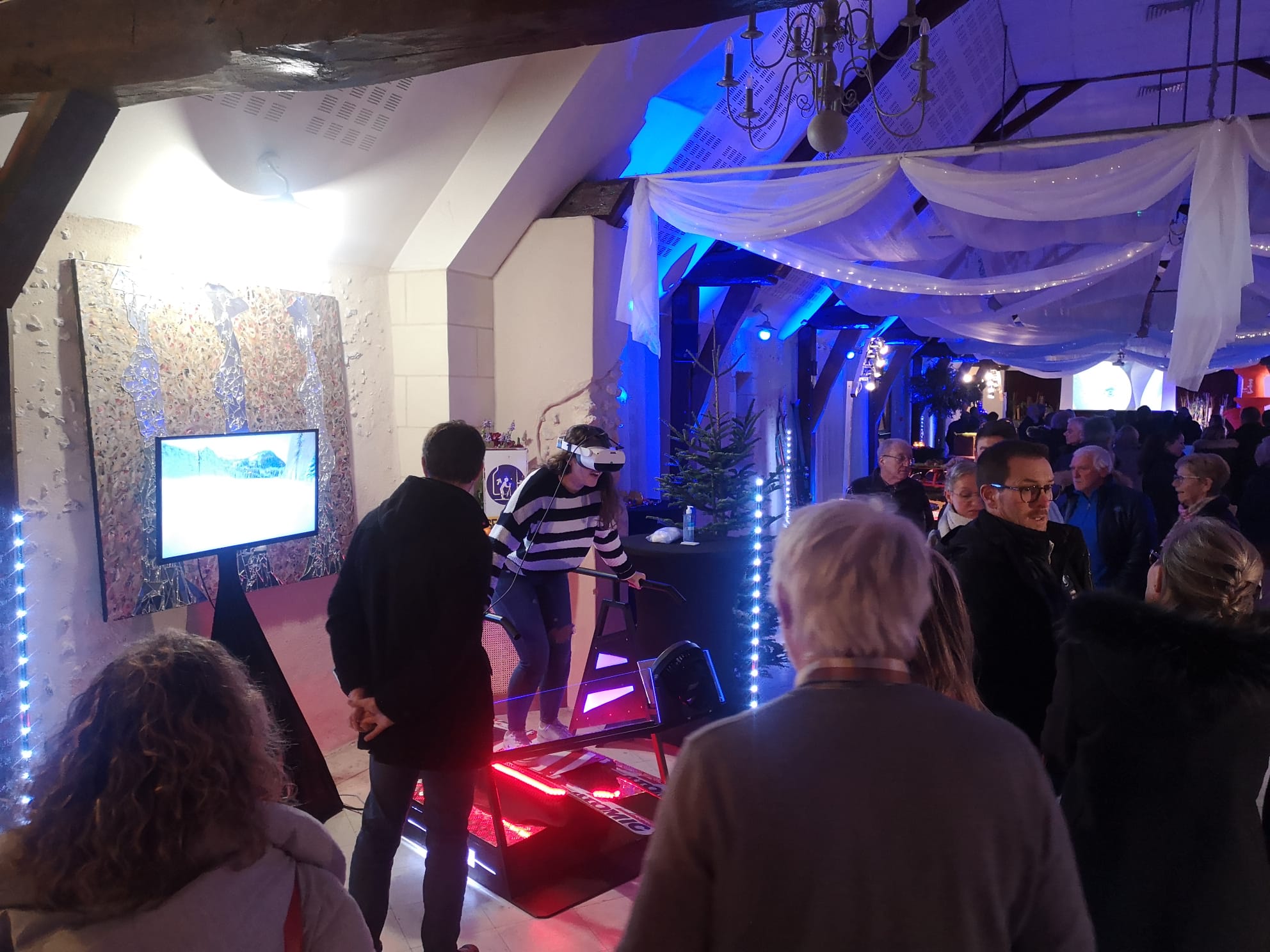
Ski Simulator in Laval for corporate events that need real engagement
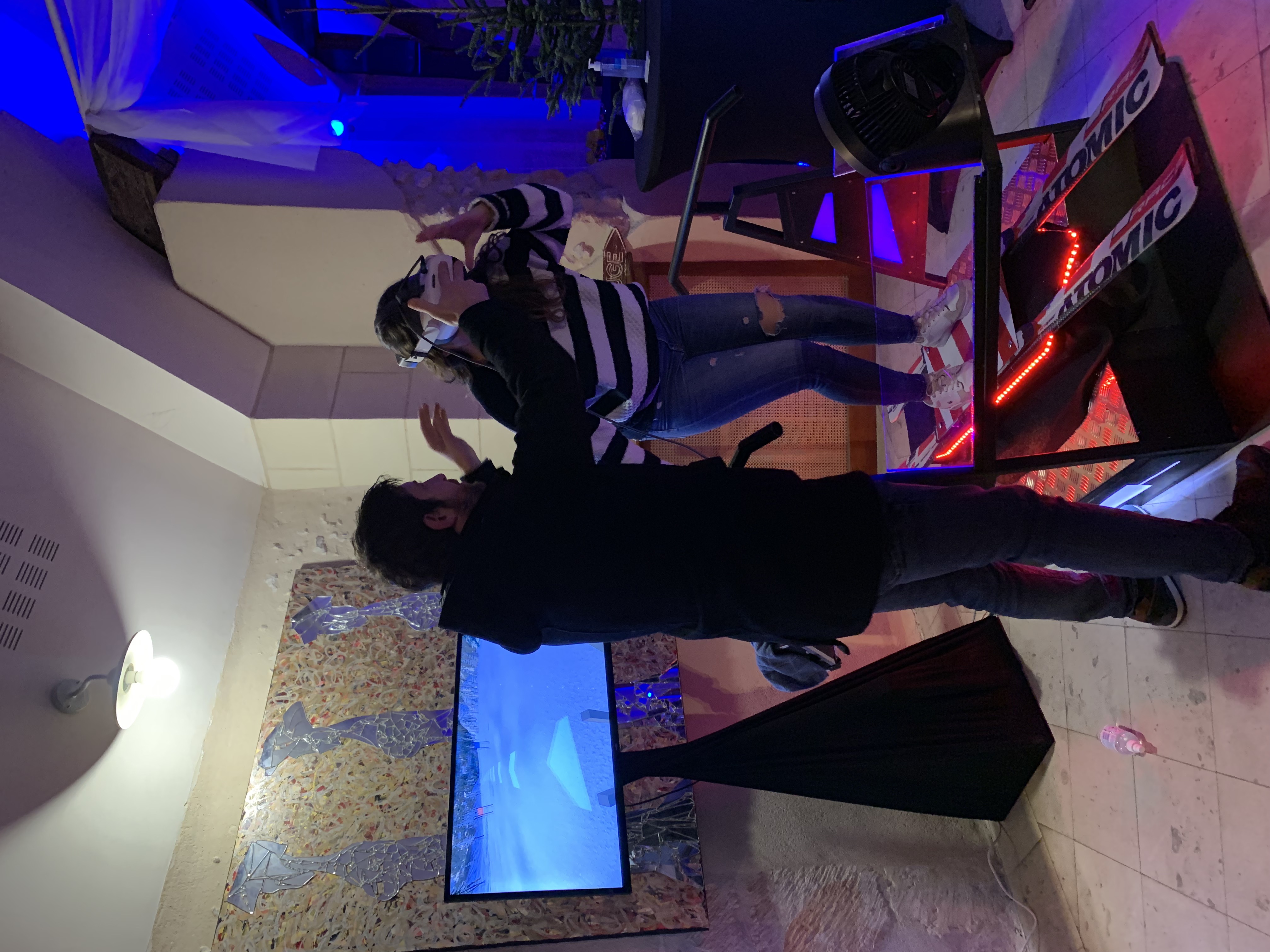
INNOV'events is a Montréal-based agency delivering Ski Simulator activations across Laval for leadership events, HR moments and brand-facing corporate gatherings. Typical formats run smoothly from 50 to 800 attendees, with structured throughput and on-site staffing. We handle planning, transport, installation, safety briefings, operator team, and event-day coordination—so your internal team can stay focused on guests and messaging.
Sommaire
At a corporate event, entertainment isn’t “extra”: it’s the mechanism that keeps people in the room, creates cross-team interaction, and protects the agenda (speakers, awards, announcements) from the energy drop that happens after dinner or between plenaries. A Ski Simulator is effective because it gives a clear challenge, measurable outcomes, and a natural conversation starter—without needing alcohol, loud music, or a stage takeover.
Organizations in Laval are usually looking for something that reads as professional and controlled: fast setup in a hotel ballroom, reliable throughput at a tradeshow booth, or a high-compliance format inside a workplace environment. HR and communications teams want predictable flow, clear safety rules, and a branded experience that supports employer brand—not a “gadget” that becomes a risk or a bottleneck.
Our team works regularly on the North Shore, with realistic site constraints in mind: loading dock schedules, elevators, union or venue rules, and tight changeovers. INNOV'events brings operational discipline—run-of-show, signage, staffing ratios, contingency planning—so your Ski Simulator in Laval feels like part of the event plan, not a standalone attraction.
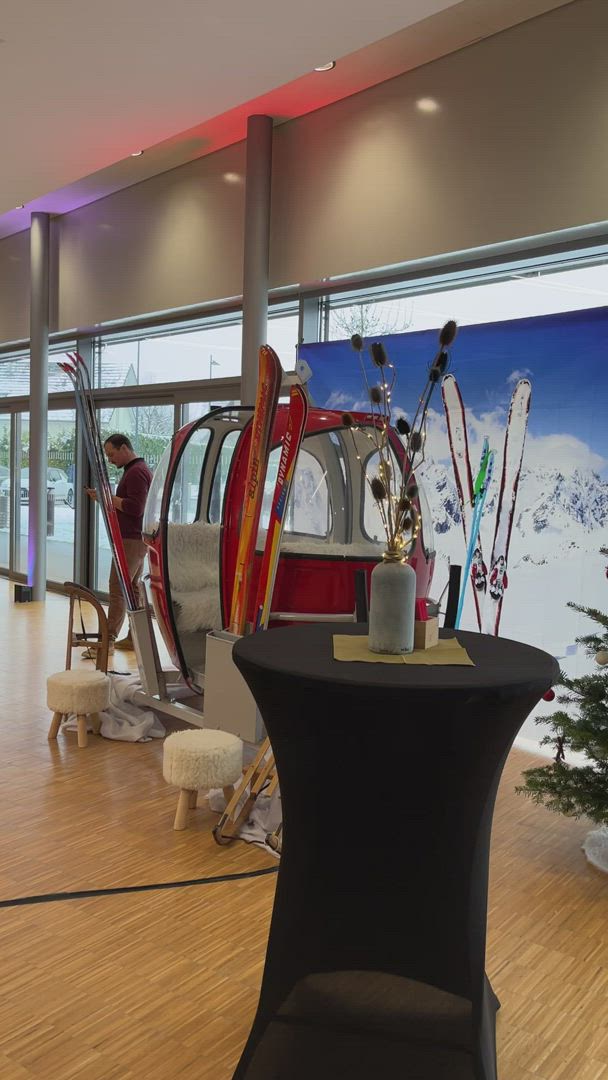
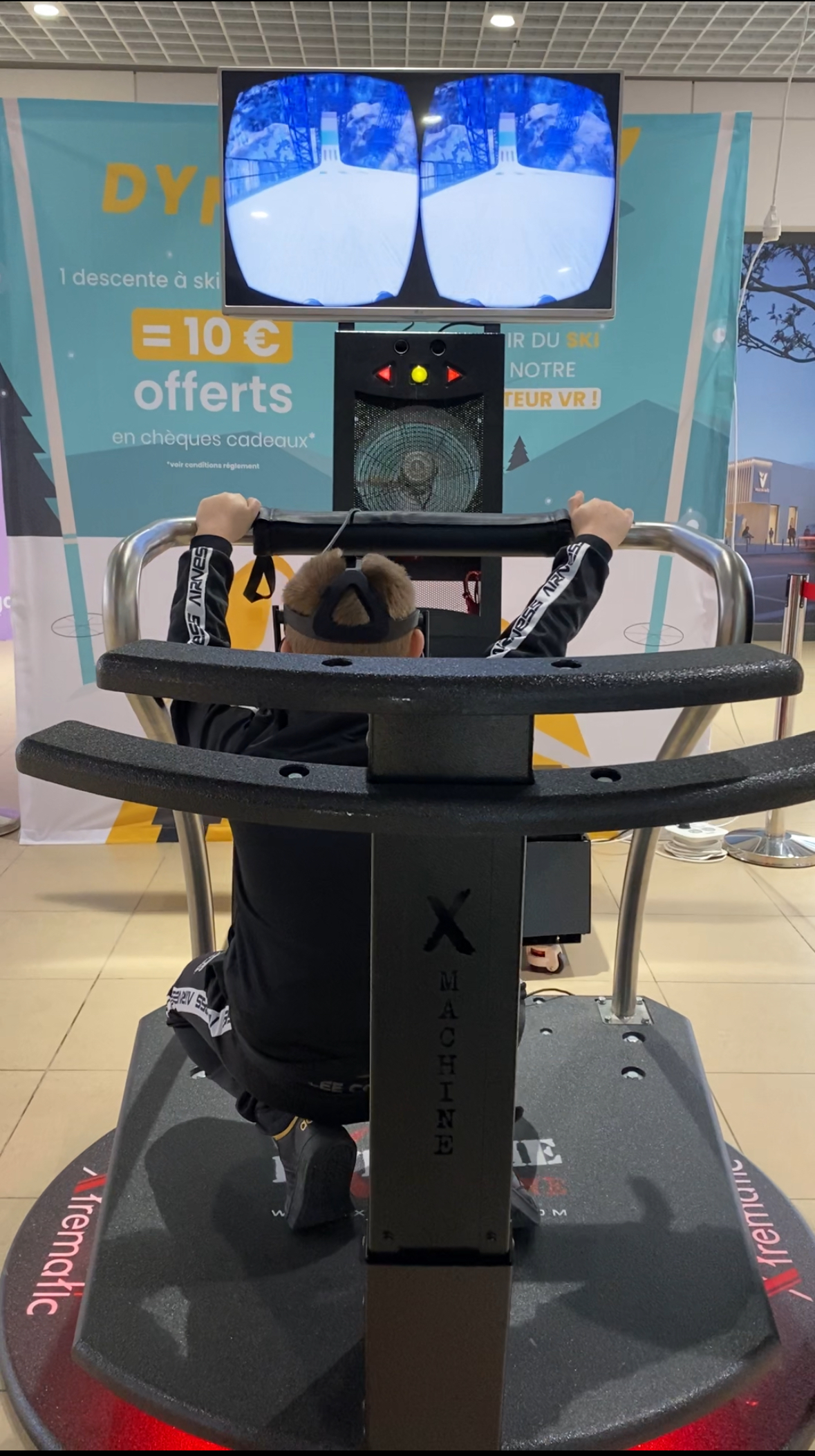
Operational benchmarks we bring to Laval events
10+ years delivering corporate entertainment across Québec, with repeat programs for HR, sales kickoffs and brand activations.
Typical simulator throughput engineered for events: 25–45 riders/hour depending on format (trial runs vs. competition mode) and onboarding intensity.
Standard staffing model: 2 to 4 on-site specialists (operator + queue/briefing + MC/brand ambassador when needed) to keep flow and safety consistent.
Event-day reliability: redundant critical accessories (straps, pads, signage, cables) and an on-site checklist designed for venue inspections and corporate compliance.
Corporate delivery in Laval built on repeat collaboration
In Laval, a lot of corporate programming is built around recurring moments—annual recognition events, quarterly town halls, recruitment pushes, and multi-site culture initiatives. Our reality on the ground is that the strongest signal of trust isn’t a one-off project: it’s when an organization calls back the next year because the activation held up under pressure and didn’t create extra work for internal teams.
We regularly support companies and institutions across the territory—near Centropolis, Laval-des-Rapides, Duvernay, Saint-Vincent-de-Paul and the industrial zones—where logistics can change quickly (dock access, security protocols, floor protection rules). We design each corporate event entertainment in Laval with those local conditions in mind: clear load-in/load-out windows, documented safety approach, and a realistic plan for guest volume and flow.
If you want, we can share relevant examples from comparable events (attendance, room configuration, staffing, timing, and outcomes) during a call—so you can evaluate fit objectively before committing.
 Besoin d’un devis rapide ?
Nous vous envoyons une première proposition sous 24h.
Why add a Ski Simulator to a Laval corporate event agenda?
A Ski Simulator works in corporate contexts because it gives you an activation that is easy to understand, easy to join, and easy to report back on. Executives get a visible “pulse” of engagement on the floor, HR gets a structured social dynamic that supports culture, and communications gets content with clear brand framing.
Protect your event rhythm: we use timed heats and a controlled queue so your agenda isn’t derailed by long lineups or unclear rules.
Drive cross-team mixing without forcing it: the challenge format naturally brings departments together (finance cheering on operations, leaders competing with new hires) in a way that feels organic.
Make recognition visible: we can build a “leaderboard moment” that pairs well with awards, years-of-service recognition, or sales milestones—without turning the night into a nightclub.
Create measurable engagement: number of participants, peak times, heat structure, opt-in rate vs. attendance, and content capture opportunities for internal comms.
Support employer brand for recruitment events: a simulator zone with clear visual identity helps attract and retain attention, especially when you’re competing with multiple booths or internal initiatives.
Offer inclusive participation paths: not everyone rides—so we design spectator engagement (MC prompts, photo frame, team heats) to avoid a “few people only” effect.
Laval has a pragmatic business culture: leaders want initiatives that look good, but they also want them to run cleanly—on time, on budget, and without risk. That’s exactly how we position the simulator: high engagement, controlled operations.
What decision-makers in Laval expect from corporate entertainment suppliers
In Laval, many events happen in venues with strict operating rules—hotel ballrooms, conference centers, municipal or institutional spaces, and multi-tenant office environments. The expectations are clear: suppliers need to be autonomous, insured, and able to work inside a defined load-in schedule without “discovering” constraints on event day.
From our field experience, the most common executive-level concerns sound like this:
- “We cannot miss the schedule.” If your CEO speech is at 19:30, the activation must be ready before doors open, with signage, lighting and staff in position.
- “We need predictable guest flow.” A popular attraction can become a bottleneck. We plan throughput (ride time, reset time, briefing time) and adjust staffing accordingly.
- “No incident, no reputational risk.” Safety briefings, age/condition disclaimers, footwear guidance, and clear exclusion criteria (e.g., certain medical conditions) are handled professionally and consistently.
- “Our brand has standards.” The activation must look clean: tidy cables, floor protection, branded queue signage, and staff who know how to speak with executives and VIPs.
This is why we treat the Ski Simulator in Laval as a mini-operational zone inside a larger event plan—integrated with your run-of-show and your venue’s realities.
Which corporate entertainment pairs well with a Ski Simulator in Laval?
A Ski Simulator works best when it’s part of an ecosystem: one strong interactive anchor plus complementary touchpoints that balance energy, networking, and brand messaging. In Laval, we often build event floors that allow executives to circulate, HR to connect with employees, and communications to capture content—without turning the evening into a noisy fair.
Interactive animations in Laval
Timed team heats + leaderboard: structured 10–15 minute blocks by department or table. Practical when you want to avoid one long lineup and keep participation broad.
Photo booth with branded frame: placed near the simulator exit to capture “after-ride” reactions. We plan lighting so the content is usable for internal channels.
Reaction-time wall or precision challenge: gives non-riders a fast participation option and spreads traffic across zones.
Host/MC with corporate tone: not hype; a facilitator who can keep the line moving, announce heats, and respect the organization’s culture.
Art animations in Laval
Acoustic duo or jazz trio: supports networking and executive conversation while the simulator provides the energy spike. Useful in hotel or conference venues where volume must stay controlled.
Roaming close-up magician: works during cocktails when executives are greeting clients or partners; minimal technical needs and strong “conversation glue.”
Innovative animations in Laval
Hot chocolate / coffee bar with service rhythm: pairs naturally with the winter-sport theme and keeps guests circulating. We plan service speed so it doesn’t compete with the simulator queue.
Local tasting station: for client-facing evenings, a controlled tasting experience balances the competitive vibe of the simulator with a premium touch.
Gourmand animations in Laval
Data capture for trade shows: opt-in scanning tied to participation (e.g., raffle entry after a ride). We design the flow so it remains compliant and doesn’t slow down the line.
Branded mini-awards: fastest time, best style, best team spirit—kept light but structured. Ideal when leadership wants a clear moment to reinforce values.
The common thread: alignment with brand image. A professional corporate event entertainment in Laval plan protects your tone—whether you’re a conservative B2B organization, a tech employer competing for talent, or a consumer brand focused on experience and shareable content.
Where to install a Ski Simulator in Laval without logistical surprises
The venue changes everything: not only the “look,” but also how safely and efficiently the activation runs. Ceiling height, loading access, floor type, power availability, and noise constraints will determine whether the simulator becomes a centerpiece or a headache. In Laval, we often validate these points early because many venues run tight turnaround schedules with multiple events in the same day.
| Venue type | For which objective? | Main strengths | Possible constraints |
|---|---|---|---|
Hotel ballroom / conference space in Laval | Holiday party, recognition night, leadership meeting with a cocktail segment | Professional ambience, easy integration with catering and AV, predictable guest flow | Strict load-in windows, floor protection requirements, noise limits during speeches |
Corporate office / cafeteria / lobby (Laval headquarters) | Employer brand, internal culture activation, recruitment day, milestone celebration | High participation from employees, low travel friction, strong internal comms impact | Elevator access, security protocols, limited storage/staging, power planning needed |
Expo hall / trade show venue (Laval territory) | Lead generation, booth magnet, product launch with measurable foot traffic | High visibility, scalable staffing, easy to pair with data capture | Union/venue rules, tighter footprint, stronger competition from nearby activations |
We strongly recommend a site visit (or at minimum a detailed venue tech pack review) before confirming. A Ski Simulator in Laval should be approved on power, access, floor load, and exact placement—so there are no compromises on event day.
What does a Ski Simulator cost in Laval for a corporate event?
Pricing depends less on the word “simulator” and more on how you want it to run: number of hours, staffing intensity, throughput expectations, branding, and site constraints. In Laval, venue access rules (dock hours, security, long walks from parking) can also affect labor time and therefore budget.
Duration and schedule: a 3–4 hour cocktail activation is not priced like a full-day trade show (setup, doors-open coverage, teardown).
Staffing level: one operator is rarely enough for corporate standards. A second staff member to manage queue and briefing is often the difference between smooth and chaotic.
Throughput design: shorter rides increase participation but require tighter control and clearer briefing signage.
Venue access complexity: long load-in routes, freight elevator bookings, or restricted dock times increase handling time and crew needs.
Branding and comms add-ons: signage, branded backdrops, leaderboard display, photo capture support, and on-site facilitation.
Risk management: floor protection, barriers, and additional supervision when alcohol service is involved.
As a planning reference, corporate deployments typically land in the $2,500–$6,500 CAD range for a standard evening format in Laval, and can go higher for trade show days or multi-unit configurations. The ROI is rarely “fun”; it’s reduced friction for your team, higher participation rates, and a cleaner brand outcome—especially when leadership and clients are present.
Why work with an event agency in Laval for a Ski Simulator?
Local execution is not about proximity for the sake of it—it’s about reducing operational risk. When you’re coordinating executives, HR stakeholders, venue teams and suppliers, the fastest way to protect the event is to work with a partner who understands how Laval venues and corporate sites actually operate.
That’s why many clients choose INNOV'events as their event agency in Laval: we anticipate access constraints, plan staffing to avoid bottlenecks, and keep a professional tone on the floor. You get an activation that is managed like a service delivery, not a “drop-off rental.”
- Faster site validation: we can confirm load-in routes, power points, and placement with fewer back-and-forths.
- Better coordination with local venues: clearer communication on schedules, protection requirements and event-day responsibilities.
- Event-day responsiveness: if a ballroom layout changes, a schedule shifts, or a VIP request appears, we adapt without compromising safety or flow.
- Consistent corporate etiquette: staff who can brief safely, interact with executives, and keep the activation aligned with your brand voice.
As a planning reference, corporate deployments typically land in the $2,500–$6,500 CAD range for a standard evening format in Laval, and can go higher for trade show days or multi-unit configurations. The ROI is rarely “fun”; it’s reduced friction for your team, higher participation rates, and a cleaner brand outcome—especially when leadership and clients are present.




What we’ve delivered across Laval: formats, constraints, outcomes
Our simulator deployments in Laval typically fall into three categories, each with different operational requirements.
1) Holiday parties and recognition nights: The main challenge is integrating the activation with speeches, dinner service, and the “photo moments” leadership cares about. We often position the simulator near the cocktail zone (not beside the stage), run timed heats after the main speech, and then switch to open participation. This reduces lineups during key program moments and keeps noise controlled.
2) Trade shows and client activations: The challenge is throughput and brand clarity. We set a tight ride cycle, keep the onboarding script short, and design a queue that doesn’t block aisles. If lead capture is part of the mandate, we place the opt-in point after participation so it doesn’t slow the line, and we brief staff to keep the interaction professional and compliant.
3) Internal culture and recruitment: The challenge is inclusivity and safety. In office environments, we double down on signage, footwear guidance, and a clear “no pressure” approach, while offering spectator participation so non-riders still feel involved. We also plan timing around shift changes when applicable, so the activation serves more employees without creating a hallway jam.
Across all formats, the measure of success is consistent: participation rate, no incidents, clean integration with the run-of-show, and an activation that supports—not competes with—your leadership message.
Common mistakes we prevent on Laval simulator activations
Underestimating queue management: a popular activation without a queue plan creates frustration, cuts into networking, and reflects poorly on organizers.
Placing the simulator in the wrong spot: too close to speeches, too tight to emergency exits, or positioned where cables become a trip concern.
No clear ride policy when alcohol is served: the rule must be decided in advance and enforced consistently by staff.
Skipping floor protection: venues in Laval can be strict; failure here risks damage claims and strained venue relationships.
Overcomplicating the “competition”: too many rules slows the line. We keep scoring simple and visible.
Not planning for corporate hierarchy: VIPs and executives often need a respectful priority flow without making it look unfair; we manage that discreetly.
Our role is to absorb these risks before they show up on event day: site validation, flow design, staffing, and clear operating rules—so your team isn’t troubleshooting in front of employees, clients, or leadership.
Why Laval clients renew with INNOV'events year after year
Repeat business comes from operational consistency. HR and communications teams remember who required constant supervision—and who delivered a clean zone that ran on schedule with minimal internal effort. Our focus is long-term partnership: we document what worked, what didn’t, and what to improve for the next edition.
Post-event debrief within 5 business days when requested: what we observed on flow, peak times, and participation, with pragmatic recommendations.
Standardized checklists for load-in, safety briefing, and venue protection to reduce variability between editions.
Scalable configurations: the same concept can run for 80 people in a lounge or 800 in a hall—without reinventing the plan.

Loyalty is the most concrete proof in this industry. If your internal stakeholders want fewer surprises and more predictability next year, the best choice is a partner who treats delivery like an operational discipline—not a one-night performance.
Our delivery process for a Ski Simulator in Laval
👉 Step 1 (Laval): clarify objective, audience and constraints
We start with a short working call: event type, attendee count, audience profile (employees, clients, partners), agenda constraints, and the tone you want to protect. We confirm whether success is participation volume, brand visibility, recruitment interactions, or leadership engagement. This is also where we flag key constraints: alcohol service, age limits, accessibility expectations, union venue rules, and security protocols common on corporate sites in Laval.
👉 Step 2: venue validation and placement plan
We review the venue tech pack and/or do a site visit. We validate access (dock, elevators, door widths), power, ceiling height, floor type, emergency egress, and the exact footprint. We then propose placement that supports flow: entry point, briefing position, queue direction, and spectator zone—so the simulator adds energy without blocking service paths.
👉 Step 3: operating model (throughput, staffing, safety rules)
We define ride cycle time, briefing script, staffing roles, and any priority flow (VIP or leadership). Safety rules are documented and communicated: footwear guidance, exclusions, and a consistent approach if alcohol is present. This is where we transform a “fun idea” into a controlled activation that meets corporate expectations.
👉 Step 4: branding and communications integration
If you want the activation to support employer brand or client messaging, we align visuals and wording: signage, backdrop, optional leaderboard naming, and photo angles that make sense for internal communications. We coordinate with your comms team on what content is needed (and what should not be captured) to respect privacy policies.
👉 Step 5 (Laval): event-day execution and coordination
We arrive within the agreed window, protect floors, install, test, and run the activation with the agreed staffing. We coordinate with venue staff on timing and adjust live if the agenda shifts. At teardown, we restore the space cleanly and provide any wrap-up information you need (participation estimate, peak time observations, and operational notes).
FAQ sur l'organisation Ski Simulator à Laval
How much space is needed for a Ski Simulator in Laval?
Plan for 10' x 15' to 15' x 20' depending on the model and whether you want a queue/spectator buffer. For corporate venues in Laval, we also plan clear access paths and a safe perimeter so the activation doesn’t conflict with exits or service corridors.
How many guests per hour can we run in Laval?
In most corporate formats, we target 25–45 participants per hour. The range depends on ride duration (45–90 seconds), briefing time, and whether you run an open line or timed heats by group.
Is a Ski Simulator safe for a corporate event in Laval?
Yes, when it’s operated with rules and staffing. We run a consistent safety briefing, manage the queue, and apply clear exclusions (for example, certain medical conditions). If alcohol is served, we define and enforce a ride policy in advance to protect guests and the organization.
Can you install the simulator in a Laval office building?
Often yes. The key checks are access (freight elevator or door widths), floor protection, power availability, and a placement that doesn’t block circulation. We confirm these points before the event so security and building management are comfortable with the plan.
What lead time should we plan for Laval event dates?
For standard dates, 2–4 weeks is workable. For peak season (November–December) or multi-supplier events, we recommend 6–10 weeks to secure the best schedule, complete venue validation, and align branding and staffing.
Request a Ski Simulator quote in Laval with a clear operating plan
If you’re comparing agencies, we can make the decision straightforward: share your date, venue type, estimated attendance, and agenda timing. We’ll come back with a practical proposal for a Ski Simulator in Laval that includes throughput assumptions, staffing, load-in needs, safety approach, and a realistic price range.
Book early—especially for Q4—because the best event-day crew and the cleanest delivery windows are the first to go. If your priority is a professional activation that protects your brand and your schedule, INNOV'events will build the plan and run it end-to-end.
INNOV'events Laval Agency
Thierry GRAMMER is the manager of the INNOV'events Laval office. Reach out directly by email at canada@innov-events.ca or via the contact form.
Contact the Laval agencyToutes nos prestations & animations Laval, Quebec
Découvrez nos prestations événementielles
Découvrez nos animations événementielles disponibles au Quebec
- Event Hostess in Laval
- Escape Game in Laval
- MasterChef-Style Cooking Workshop in Laval
- Corporate Magician in Laval
- Tent Rental in Laval
- Color Analysis Workshop in Laval
- Inflatable Games in Laval
- Valet Service in Laval
- Soccer Simulator in Laval
- LED Furniture Rental in Laval
- LED Branding Activation in Laval
- Immersive Culinary Experience in Laval
- Light Painting Activity in Laval
- Immersive Mystery Night in Laval
- Promotional Contest in Laval
- Promotional Materials (POS) in Laval
- Virtual Reality Experience in Laval
- Molecular Gastronomy Workshop in Laval
- Halloween Event in Laval
- Fireworks Show in Laval
- Sports Challenge – Giant Games in Laval
- Professional Event Host in Laval
- Photo Booth Animation in Laval
- Santa Claus Appearance in Laval
- Kids Entertainment in Laval
- Guided Tour in Laval
- Urban Rally in Laval
- Ball Pit Activity in Laval
- Flight Simulator in Laval
- Food Truck Rental in Laval
- World Record Attempt in Laval
- Surf Simulator in Laval
- Soccer Simulator in Laval
- Wine Casino in Laval
- Makeover Workshop in Laval
- Perfume Creation Workshop in Laval
- Acting Workshop in Laval
- CSR Activities in Laval
- Archery Activity in Laval
- Event Security Guard in Laval
- Wine Tasting Workshop in Laval
- Mime Performance in Laval
- TV Game Show Animation in Laval
- Funfair Event in Laval
- Crisis Management Workshop in Laval
- Crisis Negotiation Workshop in Laval
- Arcade Games in Laval
- Indoor Skydiving Simulator in Laval
- Ski Simulator in Laval
- Racetrack Driving Experience in Laval
- Introductory Flight Experience in Laval
- Tasting Experience in Laval
- Build Your Own Foosball Workshop in Laval
- 2CV Rally in Laval
- LEGO Challenge in Laval
- Casino Night in Laval
- Interpreter / Translator in Laval
- Promotional Merchandise in Laval
- Shuttle / Transportation Service in Laval