
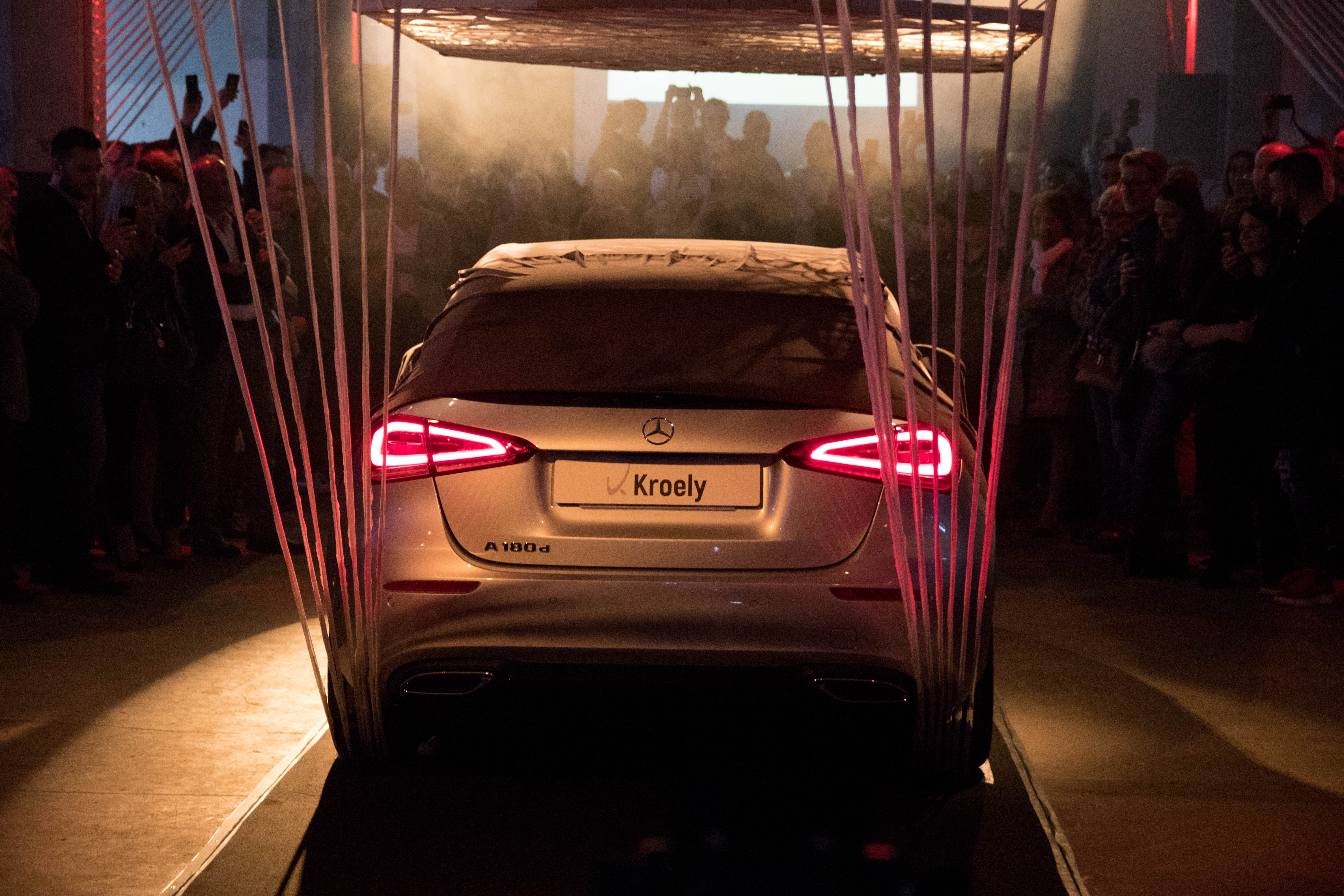
Product Launch Event in Laval that stays on message and on schedule
INNOV'events is a Montréal-based team that produces Product Launch Event programs in Laval for 30 to 1,500+ attendees. We manage the operational backbone: venue, supplier coordination, AV rehearsals, guest experience, risk controls, and the day-of show call.
For executives, HR, and communications teams, our role is simple: protect the brand, control the timeline, and make sure the product story lands with the right people.
Table of contents
Entertainment in a corporate launch is not “extra”; it’s a tool to control attention. In a Product Launch Event in Laval, the right activation prevents hallway drift, keeps VIPs in the room for the reveal, and gives your comms team usable content (photos, quotes, demos) without disrupting the core narrative.
Local organizations expect operational discipline: tight schedules around traffic and parking, bilingual signage, smooth check-in, and AV that works the first time. In Laval, the difference between a polished launch and a stressful one is usually rehearsal time, vendor alignment, and contingency planning—not big claims.
We’re on the ground in the Montréal–Laval corridor every week, which means realistic load-in timing, supplier availability, and quick on-site decisions. INNOV’events brings field-tested processes: show calling, cue sheets, stakeholder approvals, and a production approach built for executive visibility.
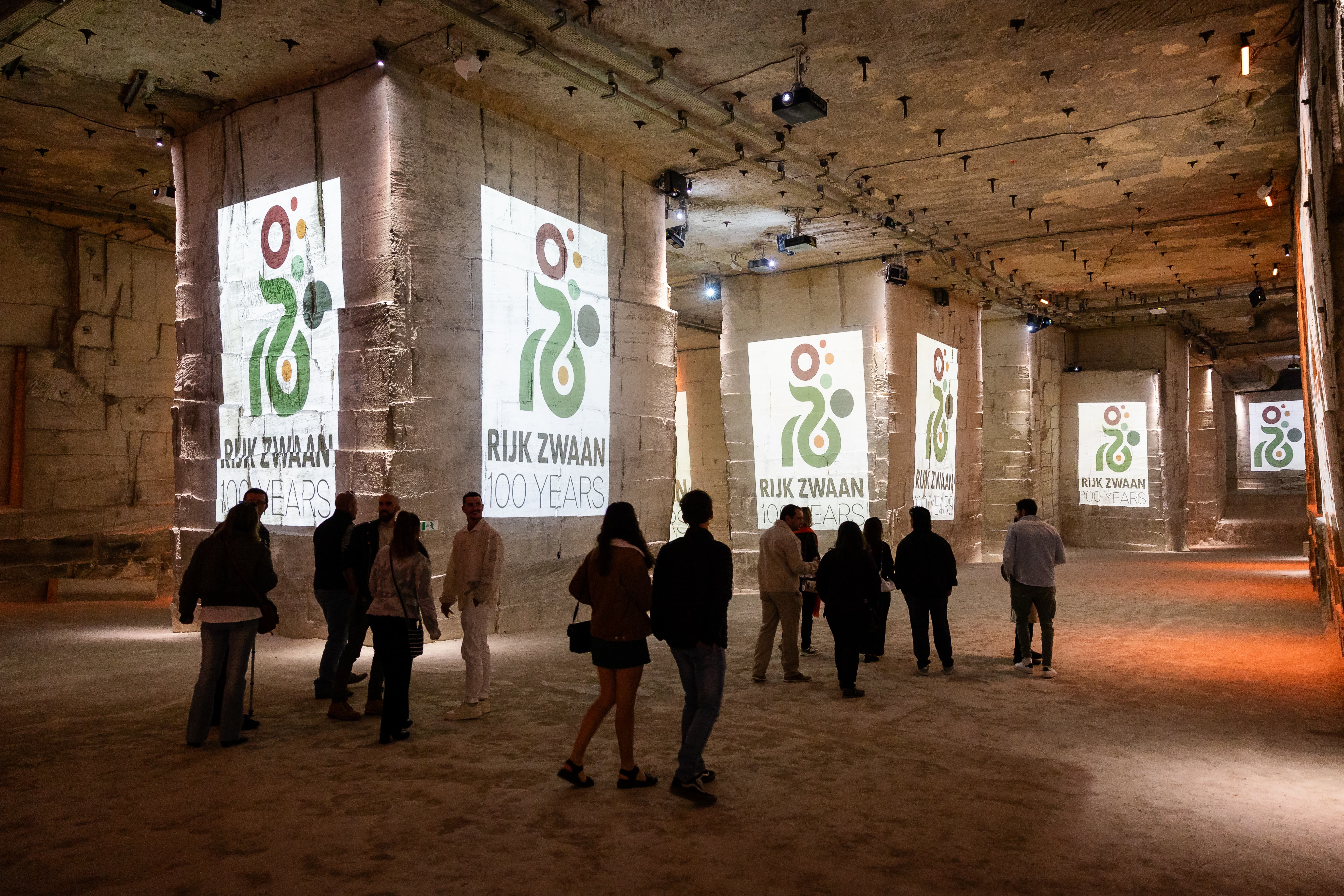
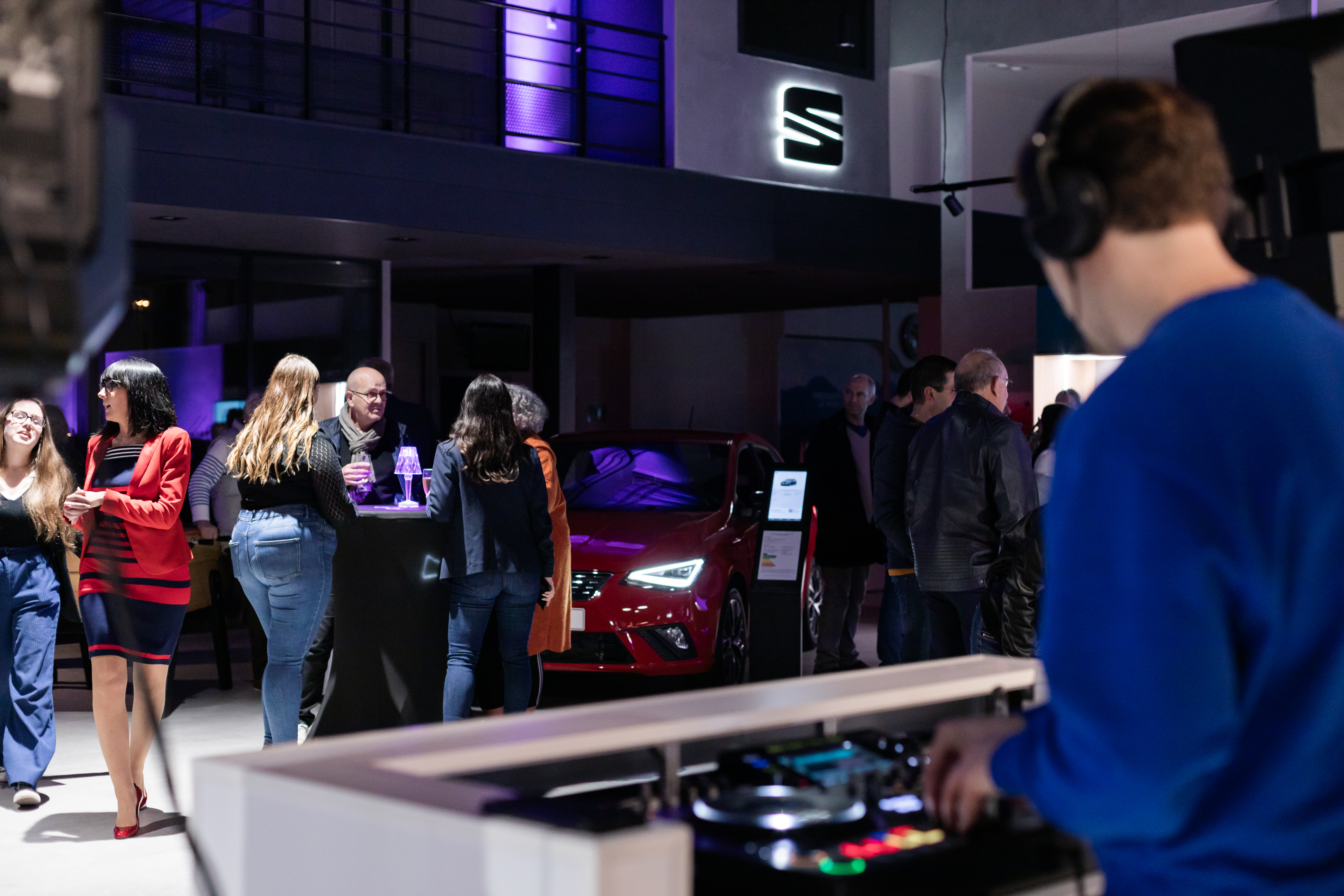
INNOV'events performance markers you can verify in Laval projects
12+ years producing corporate events across Québec, with repeated mandates from HR and communications teams.
300+ corporate events delivered (launches, internal announcements, media moments, partner showcases), with structured project documentation (run-of-show, floor plans, cue lists).
30–1,500+ attendees managed with scalable staffing models (registration, floor management, VIP handling, backstage).
Single point of accountability: one producer responsible for vendor alignment, approvals, and day-of decisions.
Compliance-first approach: insurance certificates, venue rules, health & safety basics, and practical crowd-flow planning.
How to organize a professional event in Laval?
- Define the objective (cohesion, announcement, fidelity, performance).
- Set date, format and size (20–1 000 people).
- Secure the venue and accommodation according to seasonality.
- Lock down technical, suppliers and logistics.
- Drive the day J (timing, scene, entrance, flow).
Laval relationships: recurring mandates and practical local know-how
We support organizations that operate in Laval and the North Shore—manufacturing, distribution, professional services, and consumer brands that need launches to do more than “look good.” Many of our mandates repeat year after year because internal teams value consistency: the same production language, the same approval rhythm, and fewer surprises for leadership on event day.
In practice, that means we’re used to the reality of Laval projects: coordinating with venues that have strict dock hours, managing parking and shuttle patterns for mixed audiences, and building schedules that respect executive availability. We also understand the internal dynamics behind a launch: product teams want demos, sales wants leads, HR cares about employee inclusion, and communications needs clean messaging. Our job is to reconcile those priorities into one coherent show.
If you have internal references you want us to align with (previous event decks, brand standards, or past suppliers), we integrate them early so your team isn’t forced into last-minute rewrites or rushed approvals.
We send you a first proposal within 24h.
Why hold a Product Launch Event in Laval instead of a simple announcement?
A launch is a business decision, not a party. When you bring people into a room—clients, partners, media, employees—you control the context: what they see first, what they touch, who answers questions, and what proof points are reinforced. A well-produced Product Launch Event reduces uncertainty around the product and accelerates adoption.
In Laval, this is especially relevant when your stakeholders are spread across the Montréal region and the North Shore: a local, well-located event can increase attendance while keeping travel time reasonable for decision-makers.
Compress the sales cycle: live demos and guided use cases answer objections faster than a PDF. We often structure the room so prospects move from reveal to demo to technical Q&A without losing momentum.
Align internal teams: launches frequently expose misalignment (pricing narrative, feature prioritization, support readiness). A structured show call and rehearsal forces clarity before the market sees it.
Protect brand credibility: executives don’t get a second first impression. We build quality controls around AV, stage management, and spokesperson prep so the brand looks stable and deliberate.
Create content that is actually usable: instead of random photos, we plan “capture moments” (reveal angle, demo stations, interview corner) so your communications team leaves with assets for weeks of follow-up.
Strengthen partner confidence: distributors and integrators need to feel you’ll support them post-launch. Dedicated partner briefings and structured networking can be built into the run-of-show without hijacking the main message.
Support HR and employer brand: if employees are part of the audience, a well-paced internal segment can boost pride and retention—without turning the event into an internal town hall.
Laval has a pragmatic business culture: people expect clarity, proof, and efficient use of time. A launch that respects those expectations—tight program, hands-on demo, credible speakers—lands better than an overproduced show with little substance.
What decision-makers in Laval expect from a launch day supplier
Executives and communications leads in Laval typically judge a launch on three things: operational control, brand discipline, and stakeholder experience. Operational control means you can answer practical questions early: What are the load-in times? Where does the truck go? Who is responsible for power distribution? How do we prevent lineups at registration? Brand discipline means the staging, lighting, signage, and speaker content all tell the same story—no mismatched visuals, no off-brand playlists, no vendor improvisation.
Stakeholder experience in Laval has its own constraints. Many attendees will drive, so parking and wayfinding can’t be an afterthought. If you’re inviting a mix of employees and external guests, you need clear access control and a plan for VIP arrivals. If alcohol is involved, you need to align service pace with the speaking program so the room doesn’t empty during key messages. And if you’re doing a hands-on demo, you need enough stations and staffing to avoid bottlenecks; nothing kills perceived product value like a 25-minute wait to try it.
Finally, bilingual reality matters. Even when the audience is mostly francophone, many Laval organizations want bilingual touchpoints for partners, out-of-town executives, or product documentation. We plan signage, host scripts, and on-site staffing accordingly, with a review loop that keeps legal and compliance comfortable.
Which corporate event entertainment works best for a Laval product launch?
Entertainment should serve the product story, not compete with it. In a Product Launch Event, we use entertainment to manage energy between program segments, encourage interaction at demo stations, and create structured moments for content capture. In Laval, the most effective activations are often the ones that reduce friction: they guide people, start conversations, and keep the pace moving.
Interactive animations in Laval
Guided demo challenges: timed “use case” stations where guests complete a short task (2–4 minutes) with a staff member. This keeps lineups short and gives your sales team a natural opening question.
Live polling integrated into the keynote: not a gimmick—questions are written to surface objections (price sensitivity, implementation concerns) and allow your spokesperson to address them in real time.
Lead capture without awkwardness: QR-based station check-ins tied to badge scanning, with clear consent language. Practical for B2B launches where follow-up is the point.
Executive Q&A moderation: a professional moderator keeps questions sharp and time-boxed, protecting leadership while still showing transparency.
Art animations in Laval
Short-form musical stings (30–90 seconds) between segments: useful when you need room resets, product roll-ins, or speaker transitions without dead air.
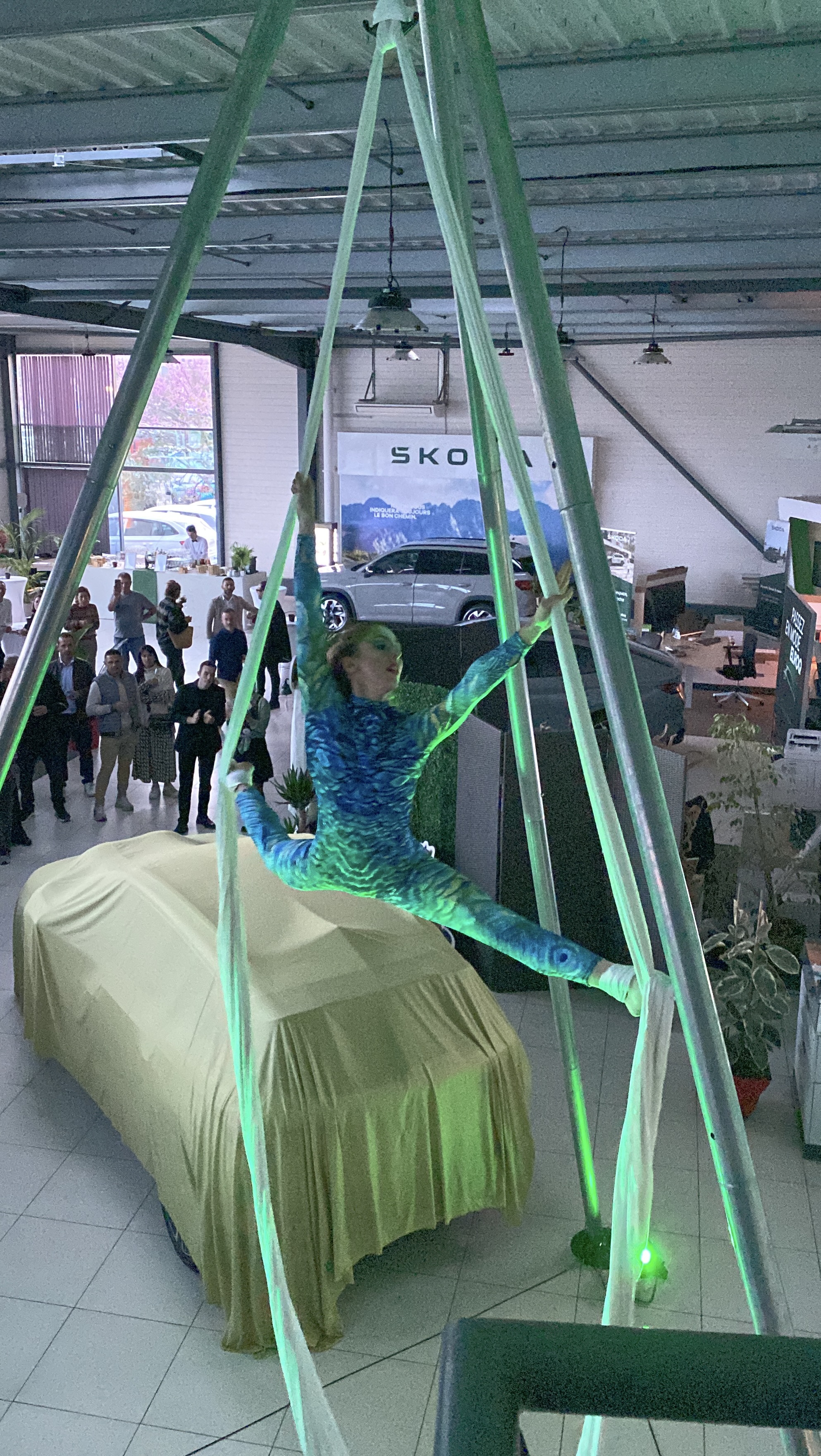
Brand-safe ambient performance: for cocktail periods, we recommend formats that keep conversation possible (volume discipline, small ensemble placement, clear set timings).
Reveal-support lighting cues: treated as part of the show design. The “art” is in precision: a controlled blackout, a timed hit, and a clean camera angle for your content team.
Innovative animations in Laval
Product-paired tasting stations: when the product has a clear lifestyle or usage context, we build food or beverage pairings that reinforce the narrative (and we control service pacing so the keynote doesn’t compete with bar lines).
High-throughput cocktail formats: in Laval, where many guests arrive around the same time, we often recommend pre-batched service or dual service points to prevent the first 20 minutes from becoming a lineup.
Dietary planning as logistics: not just labels—separate pick-up points and clear signage to avoid crowding and to show genuine care for attendees.
Gourmand animations in Laval
AR-assisted product exploration: used sparingly and only when it clarifies a feature (for example, visualizing internal components). We plan device logistics, lighting, and staff training so it doesn’t turn into tech support.
Mini content studio on-site: a controlled interview corner for leadership, product managers, and key clients. This creates immediate material for LinkedIn, internal comms, and partner updates.
Timed reveal sequence with synchronized media: video, lighting, and live product appearance coordinated through a show caller. This is where a launch feels “tight” rather than improvised.
The best corporate event entertainment in Laval is the kind that supports your positioning. If your brand is premium, we prioritize pacing, sound control, and visual coherence. If your brand is technical, we prioritize clarity, hands-on proof, and well-moderated Q&A. Alignment is not a slogan—it’s a series of production choices that your audience notices immediately.
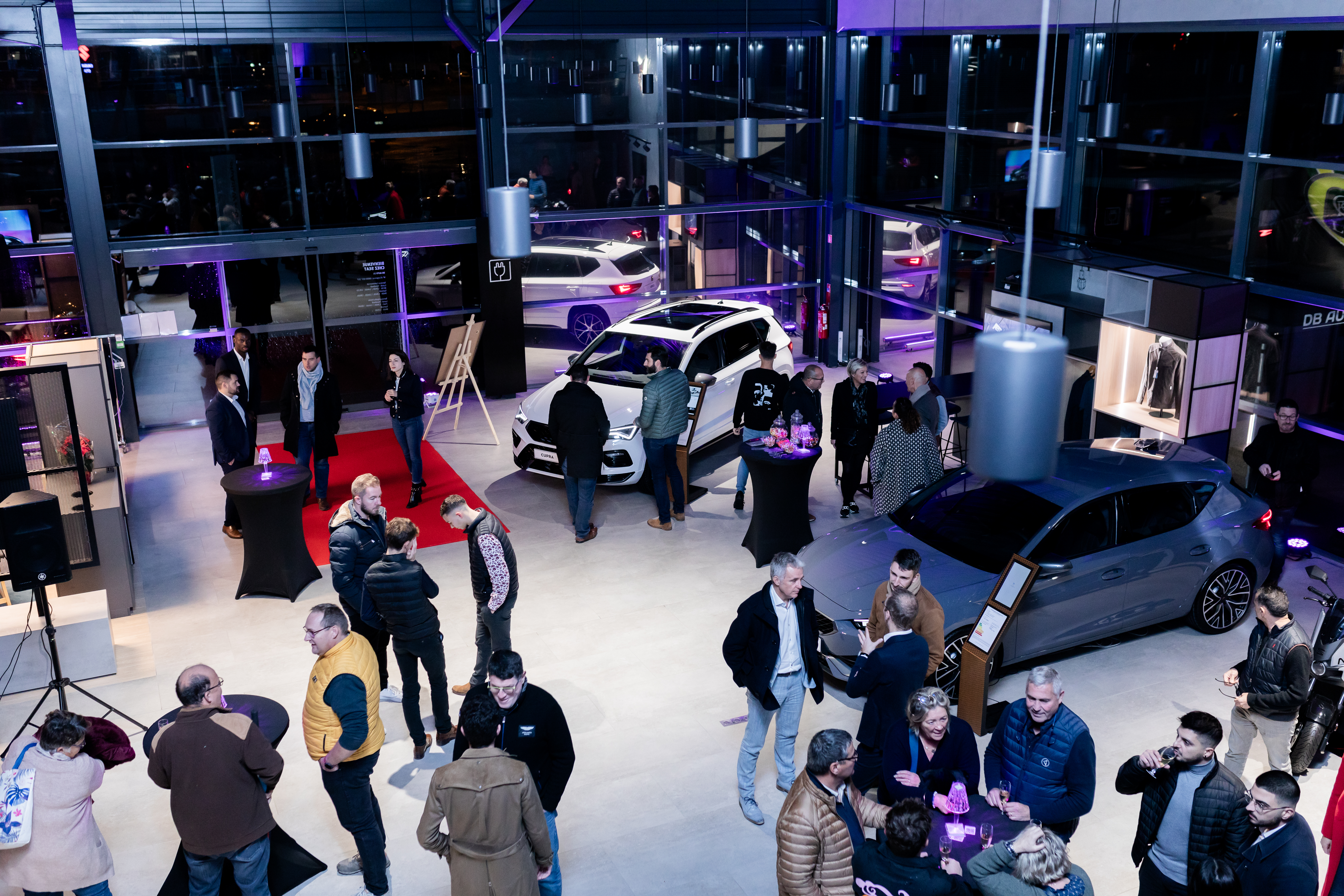
How to choose a venue in Laval for a product reveal
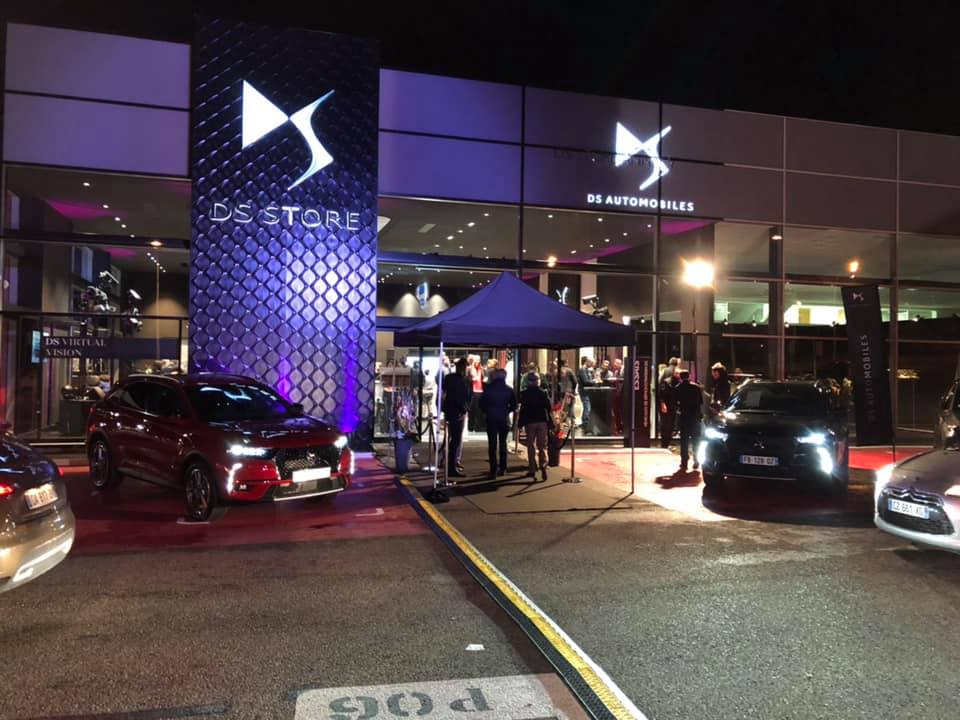
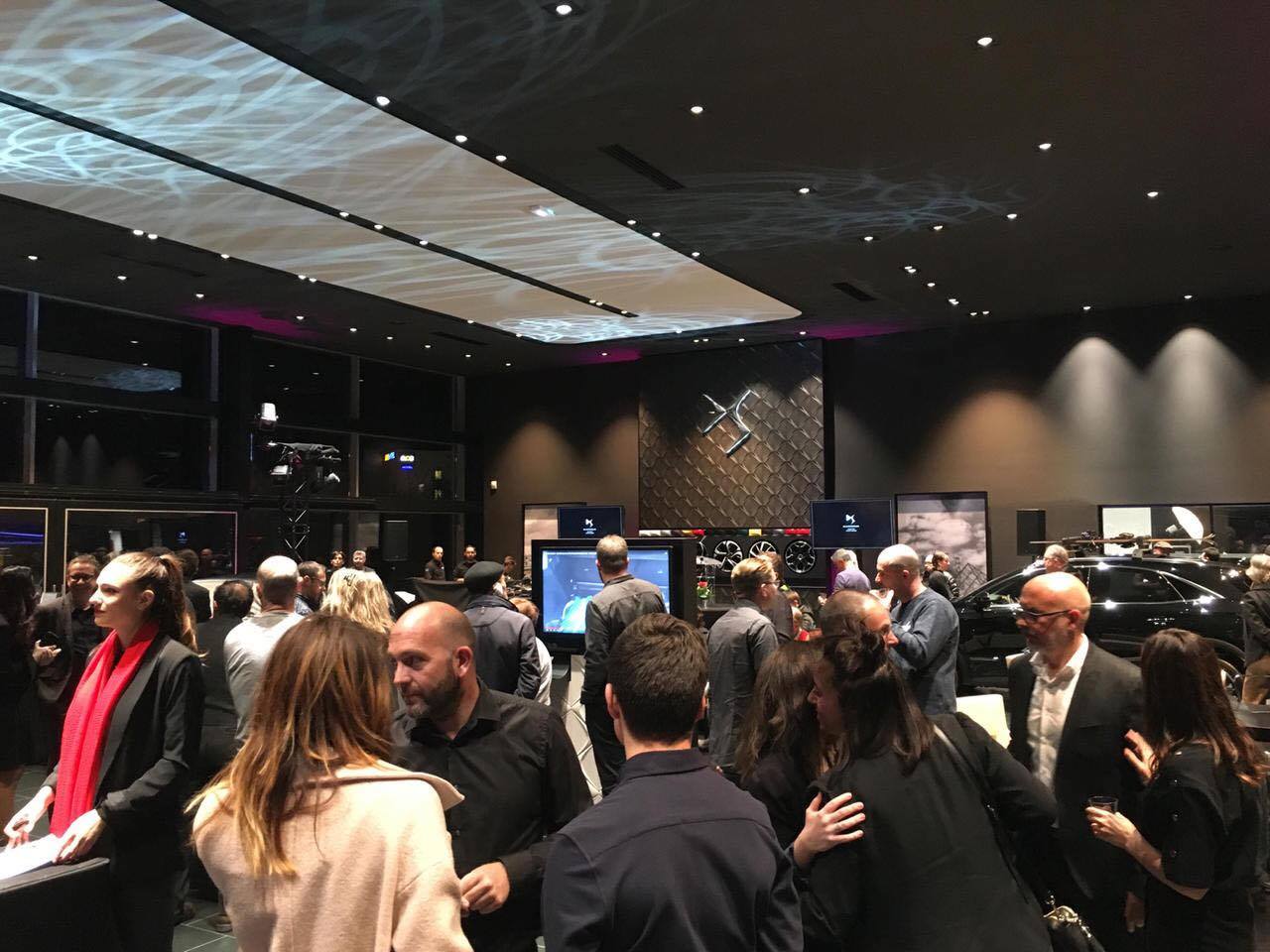
The venue shapes perceived product value before anyone touches the product. Ceiling height affects lighting and screens, acoustics affect speaker authority, and loading access affects whether your setup is calm or chaotic. For a Product Launch Event in Laval, we recommend selecting venues based on production needs first (power, rigging, sightlines), then guest experience (access, parking, flow), then aesthetics.
| Venue type | For which objective? | Main strengths | Possible constraints |
|---|---|---|---|
Conference hotel / meeting centre in Laval | Executive-friendly launch with keynote + breakout demos | Built-in AV options, predictable logistics, strong guest services, easier accessibility for mixed audiences | Union rules or venue exclusivities, limited rigging flexibility, catering constraints, branding restrictions |
Industrial-chic space / warehouse-style venue | High-impact reveal with strong visual staging and large product displays | Volume for scenic builds, flexible zoning for demos, distinctive look for content capture | Power distribution to plan, acoustics management, washroom capacity, additional permits and insurance considerations |
Corporate headquarters / showroom on the 450 territory | Partner and client launch that emphasizes credibility and operational strength | Brand immersion, easier access to product inventory, controlled environment for technical demos | Security and access control, limited parking, neighbour noise considerations, extra effort to reach “event-grade” production |
We strongly recommend site visits with your AV and staging needs in mind. A room that looks perfect in photos can fail on sightlines, ceiling height, or load-in access. A 45-minute walkthrough in Laval can prevent hours of last-minute fixes—and protects your leadership from day-of compromises.
What does a product launch cost in the 450 area?
Budget for a Product Launch Event depends on production complexity, guest count, and what you expect the event to achieve (media content, lead generation, partner alignment, internal mobilisation). In practice, most cost swings come from AV/staging, venue constraints, and staffing requirements—not from “nice-to-have” details.
For planning purposes, many Laval launches fall into these broad ranges: $25,000–$60,000 for a controlled corporate launch (100–250 guests) with solid AV, branding, and demo stations; $60,000–$150,000+ when the reveal is show-driven (custom stage, advanced lighting, multiple demo zones, higher-end content capture). We refine this quickly once objectives and venue direction are clear.
Venue and constraints: exclusivity clauses, mandatory in-house suppliers, dock hours, and overtime rules can change labour costs.
AV and staging: screen size and placement, audio coverage, lighting design, show calling, and rehearsal time. The “big” cost is usually what makes the reveal reliable.
Guest flow and staffing: registration team size, VIP handling, floor managers, demo facilitators, and security. Understaffing is a common false economy.
Branding and content capture: scenic elements, signage, step-and-repeat alternatives, photo/video crew, and a shot list aligned with comms needs.
Food and beverage: service model (seated vs. stations), throughput planning, and bar setup to avoid lineups during key program moments.
Permits, insurance, transportation: depending on location and activation type, these can be minor or material. We flag them early, not in week two.
We frame budget as an ROI lever: if your goal is pipeline, we design for lead capture and product proof. If your goal is reputation, we prioritize production reliability and executive presence. Either way, the spend should translate into measurable outcomes, not just “a nice evening.”
Why work with an event partner in Laval for your launch?
Local execution is not about proximity for its own sake; it’s about faster decisions and fewer blind spots. When your Product Launch Event in Laval is approaching, the risk is rarely strategy—it’s execution under time pressure. A team that knows Laval venues, supplier realities, and typical on-site constraints can prevent the issues that executives remember: late doors, weak audio, long bar lines, and confusing guest flow.
As INNOV’events, we operate across Montréal and Laval, and we can mobilize quickly for site visits, rehearsals, and last-minute adjustments. If you need a reliable local partner, start here: event agency in Laval.
- Faster on-site resolution: when a room layout changes or a delivery is delayed, a local production lead can be on site quickly and make decisions within your brand guardrails.
- Supplier coordination that reflects reality: we schedule load-ins and tech checks based on real traffic patterns and venue rules, not best-case assumptions.
- Network leverage: vetted AV, catering, staging, and staffing options, with clear scope definitions to avoid budget drift.
- Operational bilingual comfort: guest-facing touchpoints, signage, and staff briefing that respect Québec corporate expectations.
We frame budget as an ROI lever: if your goal is pipeline, we design for lead capture and product proof. If your goal is reputation, we prioritize production reliability and executive presence. Either way, the spend should translate into measurable outcomes, not just “a nice evening.”







Examples of launch scenarios we deliver in Laval business contexts
Our launch work ranges from discreet partner reveals to high-attendance brand moments. A common Laval scenario is a B2B company introducing a new offering to distributors and key accounts: we design a tight 60–75 minute program, followed by structured demos with staffed stations and a moderated Q&A. The success metric is often simple: number of qualified follow-ups booked in the two weeks after the event, plus partner confidence measured through post-event feedback.
Another frequent situation is an internal-first launch: leadership wants employees aligned before the market push. Here, the show is built to support HR and communications: clear messaging, controlled questions, and content capture for internal channels. We often include a short “customer perspective” segment (video or speaker) to connect teams to the business value, then transition to hands-on product access so employees can speak credibly about it.
We also manage launches where product is physically complex (large equipment, fragile prototypes, or regulated demonstrations). In those cases, the event plan includes safety zones, demo scheduling, backup demo methods (video capture, cutaway models), and a clear responsibility matrix so engineering and comms aren’t pulled into last-minute operational decisions.
Common product launch mistakes we prevent in Laval
Overloading the agenda: too many speakers, too many messages. We tighten the narrative to what decision-makers need to remember and what sales needs to repeat.
Skipping a real technical rehearsal: “We tested the slides” is not a rehearsal. We run cues with microphones, videos, walk-ons, and demo transitions.
Underestimating check-in and parking flow: in Laval, many guests arrive by car. Without a plan, the first impression becomes a lineup.
Demo bottlenecks: not enough stations, unclear station scripting, or missing staff training. Guests leave without having tried the product.
AV specified too late: screen placement, sound coverage, and lighting need to be tied to the run-of-show early, not “confirmed” a week out.
Unclear decision authority: when approvals are fragmented, last-minute changes create costs and risk. We establish who can decide, and when.
Content capture as an afterthought: without a shot list and planned moments, you end up with random images that don’t support your communications plan.
Our role is to remove these risks before they show up on the floor. When leadership walks in, they should see calm execution: clear signage, confident staff, and a program that starts on time and stays on track.
Why teams in the 450 keep the same agency for launches
Repeat business in events is earned through predictability. HR and communications directors come back when they don’t have to re-explain basics: how approvals work, how brand standards are enforced, how risks are flagged, and how the day-of command structure is run.
We build loyalty by documenting decisions, communicating in a way executives appreciate (clear options, clear trade-offs), and protecting internal teams from supplier noise. When something changes—as it always does—we manage it without drama and without forcing you into rushed compromises.
Most recurring mandates come from internal teams who value consistency in project management and vendor control.
Typical planning windows: 6–12 weeks for standard launches; 12–20 weeks when custom staging, video production, or multi-zone demos are involved.
Day-of staffing commonly ranges from 4 to 20+ depending on guest count, access control, and demo complexity.

Loyalty is proof of quality because it reflects real operational experience, not a one-off success. For a high-visibility Product Launch Event in Laval, that consistency is often what protects your brand the most.
Our Laval launch process from brief to show call
👉 Step 1 (Laval): clarify objectives, audience, and non-negotiables
We start with a working session that includes communications, sales leadership, and the product owner. We define: the single message the audience must retain, the proof points required, and the behaviours you want after the event (book a meeting, request a quote, adopt internally). We also capture constraints early: compliance, spokesperson availability, prototype limits, and any sensitive competitive context.
Deliverables: written objectives, audience map, and a first draft of the event architecture (reveal + proof moments).
👉 Step 2 (450): venue and production feasibility planning
We shortlist venue options based on production reality (load-in, ceiling height, acoustics, power, rigging), not just aesthetics. We then build a preliminary production plan: AV needs, staging footprint, demo zones, back-of-house requirements, and staffing.
Deliverables: venue comparison, high-level floor plan, and a budget framework tied to production choices.
👉 Step 3 (Laval): program design and run-of-show locking
We structure the agenda to protect attention: precise speaking blocks, transitions, and buffer time where needed. We prepare a detailed run-of-show with responsibilities (who triggers what), speaker call times, and contingency notes. For leadership, we provide a clear on-stage flow: where to stand, when to move, what to hold, and what the cameras need.
Deliverables: timed run-of-show, cue list draft, speaker brief, and content capture plan.
👉 Step 4 (450): vendor coordination and technical rehearsal
We manage supplier alignment (AV, staging, catering, staffing, décor, security) with clear scopes and timelines. We schedule a technical rehearsal that reflects reality: microphones, walk-ons, video playback, demo transitions, and lighting cues. If there’s a live demo, we rehearse the demo like a performance, including fallback options.
Deliverables: final cue sheets, updated floor plans, rehearsal notes, and a day-of staffing schedule.
👉 Step 5 (Laval): day-of production, show calling, and post-event wrap
On event day, we run a clear command structure: one show caller, floor managers, and a single client point of contact to prevent conflicting instructions. We manage check-in, VIP handling, stage timing, and vendor pacing. After the event, we do a structured wrap: what worked, what to improve, and what data to hand off (lead lists, attendance, content assets).
Deliverables: post-event recap, supplier close-out, and recommendations for the next launch cycle.
FAQ sur l'organisation Product Launch Event à Laval
How far in advance should we book a Laval venue?
For a standard corporate launch (100–250 guests), plan 6–10 weeks ahead. For higher production complexity (custom staging, major video, multi-zone demos), plan 12–20 weeks. If the date is tied to a market announcement, we can compress timelines, but you’ll need faster approvals.
What budget range is realistic for a Laval product launch?
Many Product Launch Event in Laval projects land between $25,000 and $150,000+ depending on guest count and AV/staging. The biggest drivers are production (sound, lighting, screens), staffing, and venue constraints. We can produce a clear range after a 30–45 minute brief.
Do we need a rehearsal for a Product Launch Event in Laval?
Yes if you care about timing and credibility. We recommend at least 1 technical rehearsal; for a live demo or complex reveal, 2 rehearsals (one technical, one with speakers). This is where most avoidable failures are prevented.
How many staff do we need on-site in Laval?
Typical staffing is 4–8 for a 100-guest launch (registration + floor + producer). For 250–500 guests with demos and VIP handling, plan 10–18+. The right number depends on check-in complexity, number of demo stations, and access control.
What entertainment works without distracting from the launch?
Choose entertainment that supports flow and messaging: short transition stings, moderated Q&A, guided demo challenges, and ambient performance with volume discipline. We avoid formats that pull attention away from the product during key segments, and we schedule activations around the reveal and proof moments.
Get a Laval launch plan and quote that your executives can approve
If you’re planning a Product Launch Event in Laval, the fastest way to de-risk the project is a structured brief: objectives, audience, desired outcomes, and constraints. From there, we can propose a venue direction, production approach, and a budget range tied to real operational choices.
Send us your target date, estimated attendance, and the product demo requirements. We’ll come back with practical options, a clear timeline, and the level of production needed to protect your message on launch day.
INNOV'events Laval Agency
Thierry GRAMMER is the manager of the INNOV'events Laval office. Reach out directly by email at canada@innov-events.ca or via the contact form.
Contact the Laval agencyAll our services & entertainment Laval, Quebec
Discover our event services
Discover our event entertainment available in the Quebec
- Event Hostess in Laval
- Escape Game in Laval
- MasterChef-Style Cooking Workshop in Laval
- Corporate Magician in Laval
- Tent Rental in Laval
- Color Analysis Workshop in Laval
- Inflatable Games in Laval
- Valet Service in Laval
- Soccer Simulator in Laval
- LED Furniture Rental in Laval
- LED Branding Activation in Laval
- Immersive Culinary Experience in Laval
- Light Painting Activity in Laval
- Immersive Mystery Night in Laval
- Promotional Contest in Laval
- Promotional Materials (POS) in Laval
- Virtual Reality Experience in Laval
- Molecular Gastronomy Workshop in Laval
- Halloween Event in Laval
- Fireworks Show in Laval
- Sports Challenge – Giant Games in Laval
- Professional Event Host in Laval
- Photo Booth Animation in Laval
- Santa Claus Appearance in Laval
- Kids Entertainment in Laval
- Guided Tour in Laval
- Urban Rally in Laval
- Ball Pit Activity in Laval
- Flight Simulator in Laval
- Food Truck Rental in Laval
- World Record Attempt in Laval
- Surf Simulator in Laval
- Soccer Simulator in Laval
- Wine Casino in Laval
- Makeover Workshop in Laval
- Perfume Creation Workshop in Laval
- Acting Workshop in Laval
- CSR Activities in Laval
- Archery Activity in Laval
- Event Security Guard in Laval
- Wine Tasting Workshop in Laval
- Mime Performance in Laval
- TV Game Show Animation in Laval
- Funfair Event in Laval
- Crisis Management Workshop in Laval
- Crisis Negotiation Workshop in Laval
- Arcade Games in Laval
- Indoor Skydiving Simulator in Laval
- Ski Simulator in Laval
- Racetrack Driving Experience in Laval
- Introductory Flight Experience in Laval
- Tasting Experience in Laval
- Build Your Own Foosball Workshop in Laval
- 2CV Rally in Laval
- LEGO Challenge in Laval
- Casino Night in Laval
- Interpreter / Translator in Laval
- Promotional Merchandise in Laval
- Shuttle / Transportation Service in Laval