
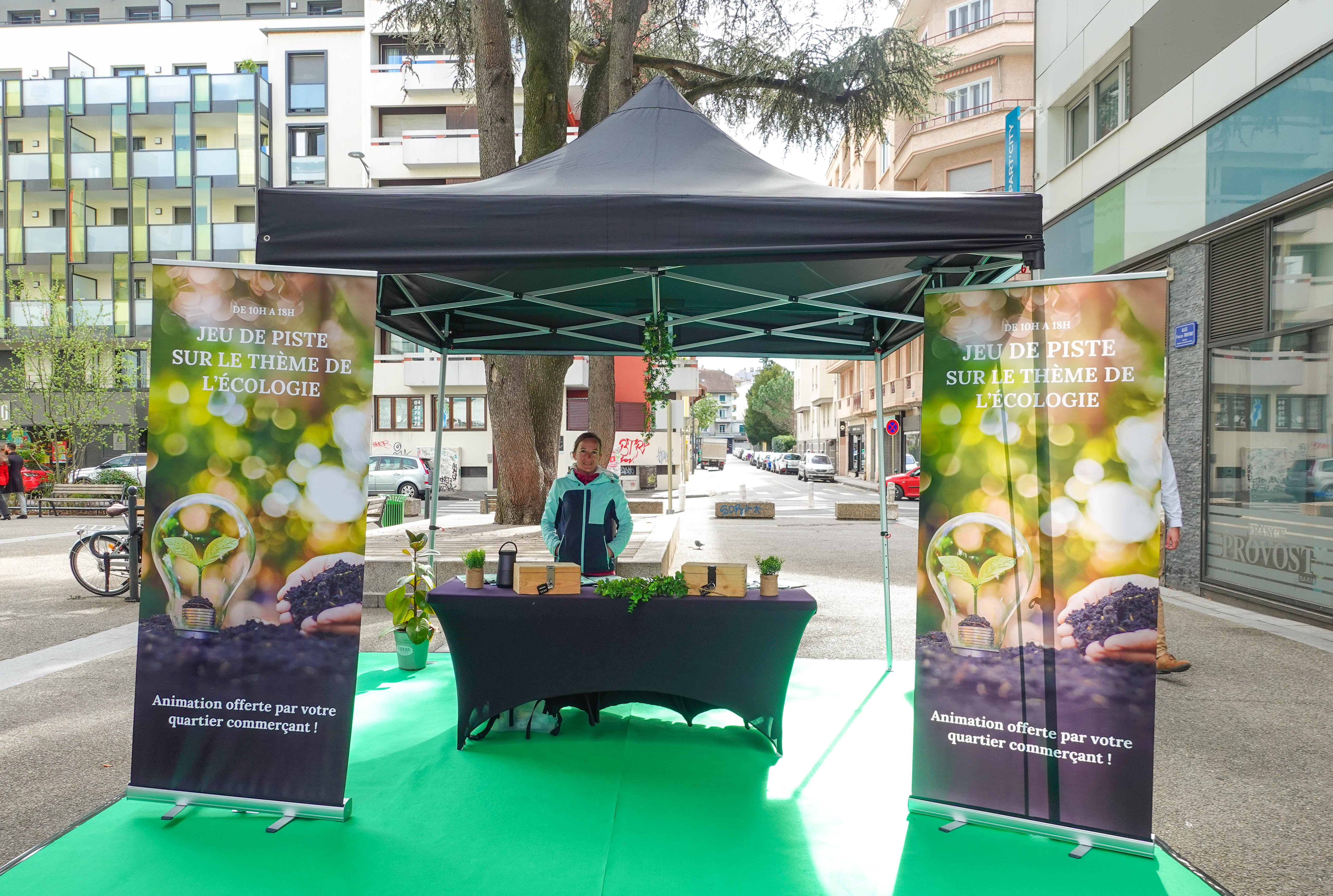
CSR Activities in Laval that deliver real impact and real engagement
INNOV'events is a Montréal-based agency that designs and delivers CSR Activities for companies operating in Laval, from executive offsites to large team days. Typical formats range from 20 to 600+ participants, with clear impact reporting and tight operational control.
We handle the full chain: activity design, partner selection (NGOs, suppliers), risk management, on-site coordination, and post-event measurement—so your HR, Communications, and leadership teams can focus on the message and the people.
Sommaire
In a corporate context, “CSR” is not a theme—it’s a reputational and managerial lever. Well-structured CSR Activities in Laval help you convert a budget line into something your people can feel, share, and defend internally, without losing a full day to operational friction.
Organizations in Laval usually expect three things: a credible partner ecosystem (not improvised volunteering), a participant experience that respects shift realities and schedules, and proof the initiative aligns with governance and ESG commitments. If any of those are weak, the initiative risks being seen as symbolic.
Our team works on the ground across the North Shore and Greater Montréal: we pre-validate venues, plan loading/access routes, manage supplier call times, and build activities that stand up to executive scrutiny. The goal is simple: meaningful impact, zero chaos on event day.
Operational proof points for Laval decision-makers
10+ years delivering corporate events and engagement programs across Québec, with repeat clients who require consistent execution standards.
Capacity to deploy multiple activity stations simultaneously (parallel workshops, staggered start times) for groups of 20 to 600+ without bottlenecks.
Established supplier network across Greater Montréal (AV, catering, transport, staffing) to reduce single-point-of-failure risk.
Event-day governance: run-of-show, call sheets, safety briefings, and on-site incident escalation—built for HR and communications teams who can’t afford surprises.
Who we support in Laval and how relationships are built
In Laval, CSR is often driven by a combination of HR priorities (retention, recognition, culture) and communications imperatives (employer brand, community credibility). We typically support organizations that want to do this properly: planning ahead, aligning the activity with internal narratives, and choosing partners that can actually absorb a corporate group without disrupting their operations.
Many of our engagements are renewed year after year because teams don’t want to restart vendor due diligence each time. Once the right CSR format is validated—participant flow, safety, impact measurement, and stakeholder messaging—companies prefer a partner who can replicate quality while refreshing the concept. That continuity is particularly valuable when leadership changes, budgets fluctuate, or internal committees rotate.
If you have internal constraints (unionized teams, multiple shifts, multi-site participation, or strict brand and media approvals), we design the CSR activity around those realities—so you avoid last-minute compromises that dilute impact.
 Besoin d’un devis rapide ?
Nous vous envoyons une première proposition sous 24h.
Why run CSR Activities in Laval instead of another team event?
For executives and HR leaders, CSR Activities are one of the few event formats that can serve culture, talent, and reputation at the same time—if the experience is operationally solid and the impact is demonstrable.
Turn values into observable behaviors: we structure tasks so participants must collaborate, prioritize, and problem-solve—skills you can reinforce in performance conversations later, not just “feel good” for a day.
Reduce cynicism with verifiable outcomes: when participants see counts, delivery proof, and partner feedback (e.g., kits assembled, meals packed, shoreline meters cleaned), engagement becomes tangible and shareable.
Strengthen employer brand without risky optics: we avoid “photo-op volunteering” by building partner protocols (consent, dignity, messaging guardrails) that protect the communities served and your organization’s credibility.
Create cross-functional links faster: CSR formats mix departments naturally—operations, sales, finance, and tech—without forcing artificial networking. We often see stronger post-event collaboration when teams “built something real” together.
Support ESG reporting and internal governance: we can capture participation numbers, volunteer hours, donation value (when applicable), and qualitative partner feedback—useful for internal reports and stakeholder updates.
Laval has a pragmatic business culture: leadership teams want initiatives that are community-rooted and measurable, but also efficient. A well-run CSR program respects that reality—impact first, logistics under control, and communications aligned with what you can credibly claim.
What Laval organizations expect from CSR event delivery
On the ground in Laval, the expectation is rarely “bigger” or “flashier”—it’s “cleaner.” Clean execution means: realistic participant throughput, a venue that supports arrivals and staging, partners who are prepared, and a plan that still works when weather changes or a department is late coming off shift.
We frequently see the same friction points in the territory: teams spread between Laval and Montréal, limited availability for full-day events, and internal stakeholders who need to approve messaging (HR, communications, legal, sometimes ESG). That’s why we propose CSR formats that can run in 90 minutes to 4 hours, with optional add-ons (speaker, debrief, recognition component) rather than forcing a full-day agenda.
Another local reality: the best community partners are busy and mission-driven. If a corporate group arrives with unclear tasks or unrealistic expectations, it can create disruption. We pre-brief partners, validate capacity, define what “success” looks like, and ensure your group adds value instead of consuming resources.
Finally, Laval decision-makers are sensitive to reputational alignment: the initiative must match the company’s industry and risk posture. For example, regulated sectors often need stricter photo policies, and industrial employers may require higher H&S standards. We build those constraints into the plan from day one.
Which CSR activity formats work best in Laval for executives?
Engagement comes from clarity, not hype. A CSR activity works when participants can connect their effort to an outcome, and when leaders can explain the initiative in one paragraph without stretching the truth. Below are formats we deploy in Laval, chosen for operational reliability and measurable impact.
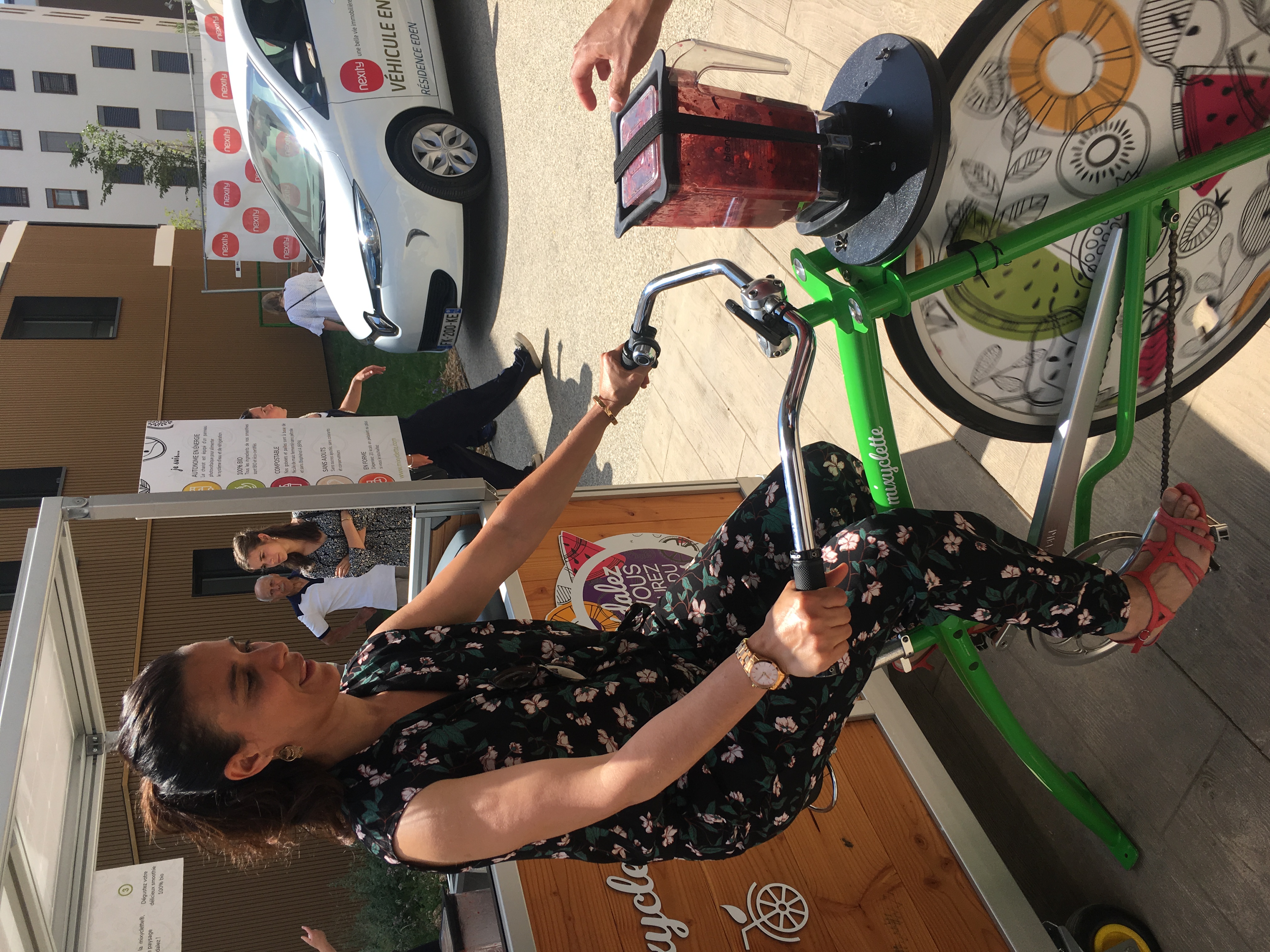
Interactive animations in Laval
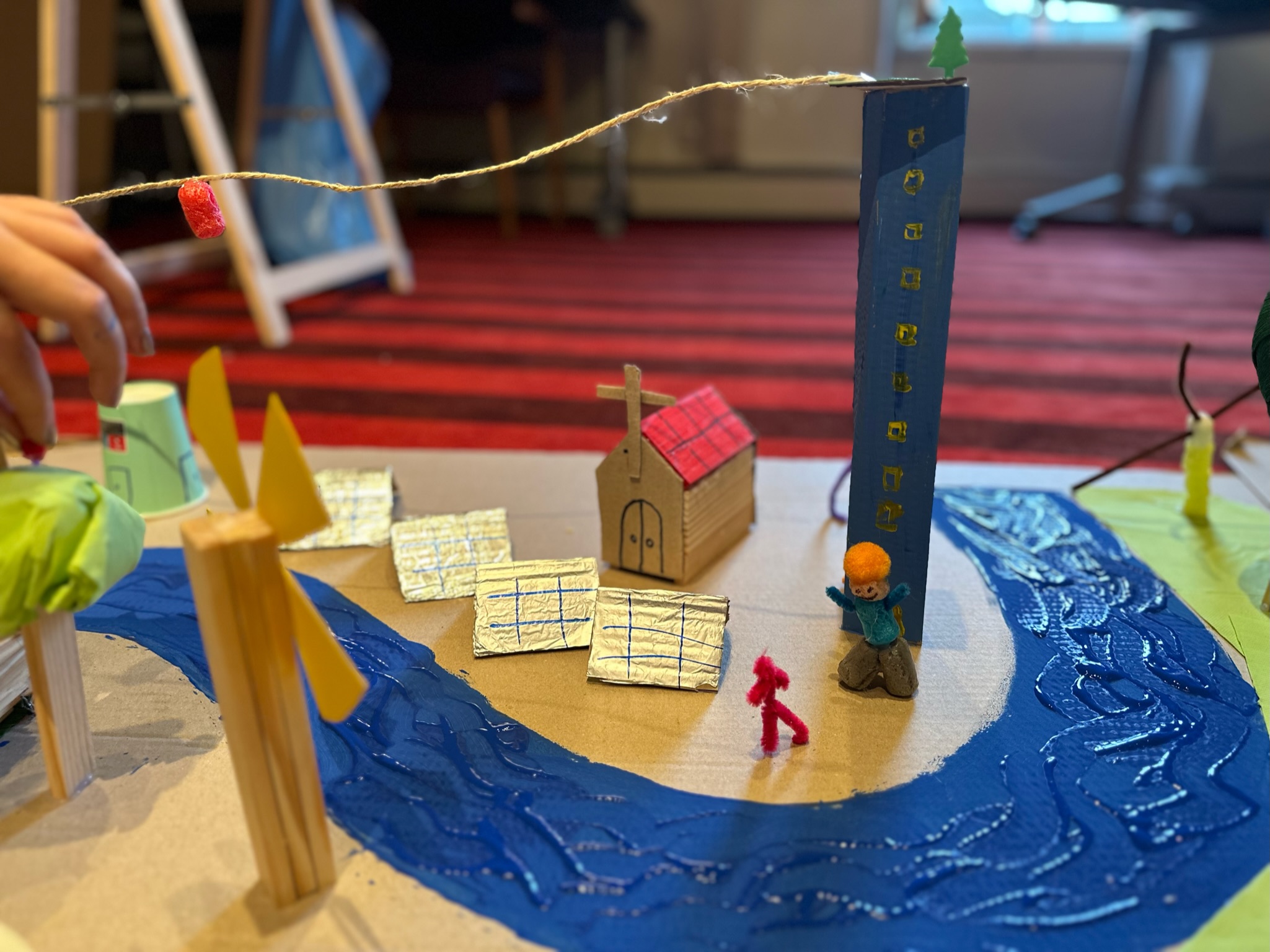
Impact assembly lines (kits, hygiene, school supplies): participants assemble standardized kits based on partner-defined specs. Best for 50–400 people. Operational advantage: indoor, scalable, measurable (units completed). We manage QC checks, station pacing, and packaging.
Skills-based micro-consulting: facilitated sessions where teams help a nonprofit with concrete deliverables (process mapping, simple comms plan, volunteer recruitment funnel). Best for leadership groups or high-skill teams (15–60). We frame scope to avoid unrealistic recommendations.
Donation strategy + matching mechanics: when you want impact without heavy logistics. We design internal campaigns with clear rules (matching caps, eligible items, proof of donation) and integrate a short on-site activation for visibility and recognition.
Art animations in Laval
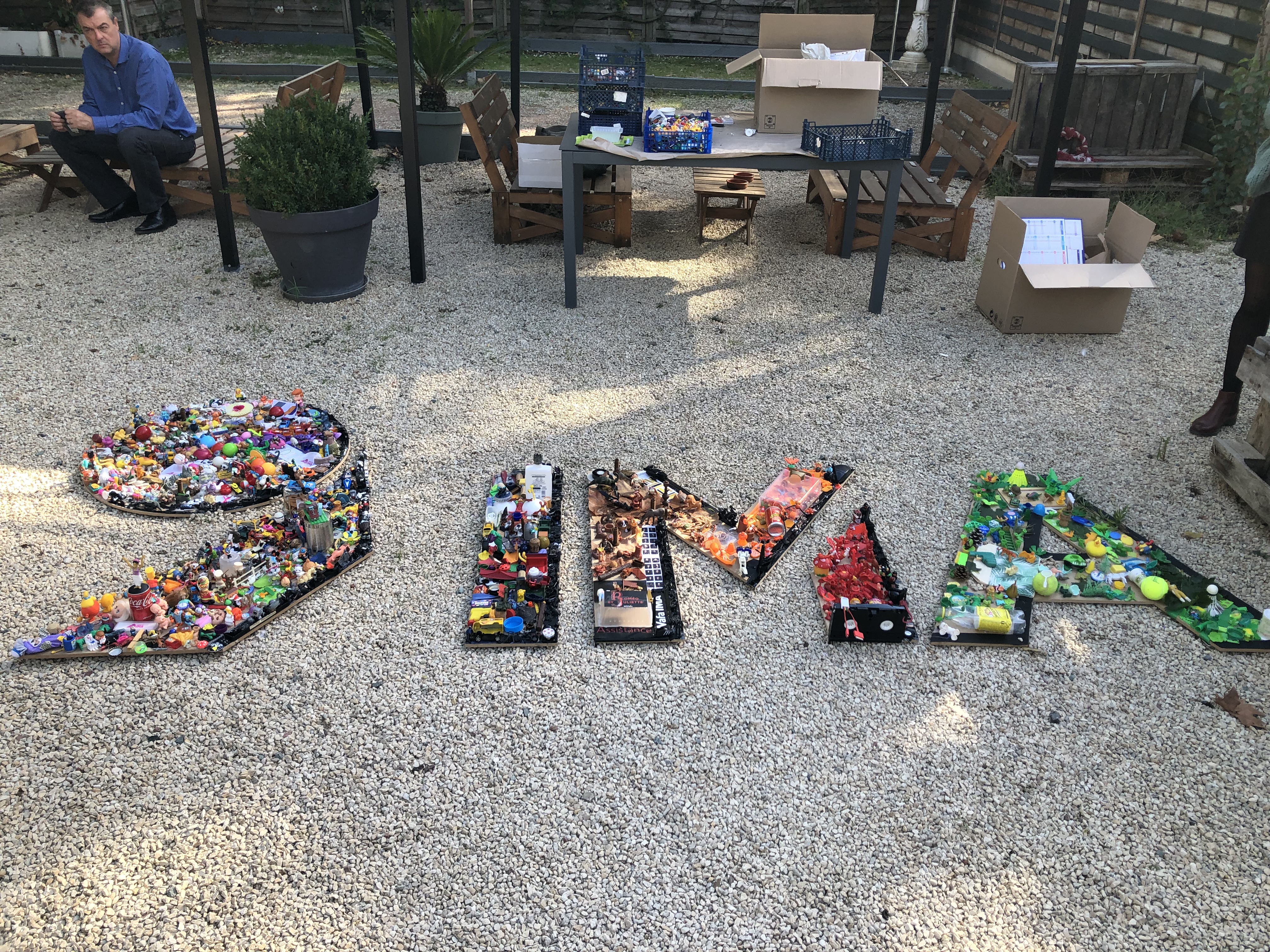
Community art build with partner commissioning: teams create modular pieces (murals on panels, installations) that a community organization can actually use. We handle artist brief, brand boundaries, and installation logistics. Best when your comms team wants a visual outcome without “branding the cause.”
Storytelling with beneficiary advocates: carefully curated speakers connected to the cause (not trauma-based narratives). Works well for executive kickoffs and reinforces dignity. We pre-brief content and align with your internal comms guardrails.
Innovative animations in Laval
Meal packing with verified food safety workflow: teams portion and pack meals under partner-defined hygiene standards. Suitable for 80–500 people with the right venue. We plan glove changes, allergen control, and waste management—details that protect your employer brand.
Local supply-chain tasting + donation component: highlight Laval/Québec producers while linking to a concrete giving mechanism (e.g., part of the budget funds a partner’s procurement list). Works well for client-facing events where you need elegance and accountability.
Gourmand animations in Laval
Carbon-smart challenge with operational follow-through: a gamified sprint where teams identify real emissions and waste reductions in your operations, then commit to 2–3 implementable actions. We structure it so it doesn’t become a brainstorming free-for-all: owners, timelines, and measurable KPIs are defined.
Urban biodiversity builds: installations like pollinator habitats or tree-planting support with certified partners. We plan permits, landowner approvals, and weather contingencies—critical in the North Shore climate realities.
Inclusive hiring and accessibility simulations: designed with credible organizations, focused on practical changes (interview process, onboarding, workplace adjustments). Best for HR-driven agendas; impact is measured in policy updates and implementation commitments.
Whatever the format, we validate alignment with your brand and governance: what can be claimed publicly, what should remain internal, and how to avoid “CSR theater.” In Laval, credibility travels fast—especially across professional networks—so we design experiences that stand up to scrutiny.
Where to host CSR Activities in Laval for smooth logistics?
The venue influences not only comfort but operational reliability: loading access, waste handling, parking, and acoustics for briefings. For CSR Activities in Laval, we select spaces based on throughput and partner requirements, not just aesthetics.
| Venue type | For which objective? | Main strengths | Possible constraints |
|---|---|---|---|
| Corporate office / warehouse in Laval | Maximize participation with minimal travel; integrate CSR into a workday | Low transport cost; familiar environment; easier compliance with internal H&S rules | Requires space planning, noise management, and clear segregation from operations; may need extra wash stations and waste plan |
| Hotel conference space (Laval) | Executive-friendly CSR session paired with meetings or a town hall | Reliable infrastructure; controlled climate; AV-ready; strong flow management | Loading windows and union rules may affect setup; some CSR formats need added protection for floors and stricter waste handling |
| Community or cultural venue in Laval | Anchor the initiative in the community; invite local partners to co-present | Strong narrative legitimacy; often accessible; good for partner visibility | Availability constraints; stricter rules on food, storage, and signage; requires early coordination |
| Outdoor park / shoreline area (Laval) | Environmental action (cleanup, biodiversity, planting) with visible impact | High perceived authenticity; team energy; strong photo assets (with the right approvals) | Weather risk; permits; participant PPE; transportation and staging complexity; seasonal limitations |
We recommend a site visit (or at minimum a technical walk-through) before confirming. Small details—elevator size, loading dock distance, parking overflow, or where you can stage waste—are often what separates a smooth CSR day from a day that drains your internal team.
What budget to plan for CSR Activities in Laval?
Pricing for CSR Activities in Laval depends less on “the idea” and more on operational load: staffing ratios, partner fees, materials, venue constraints, and the level of measurement/reporting you need. A credible plan includes both event-day execution and the behind-the-scenes coordination that protects your brand and timelines.
Group size and pacing: 30 people in one room is straightforward; 300 people in rotating waves requires more facilitators, staging, and production management.
Format complexity: indoor kit builds are usually more predictable than outdoor environmental actions that require permits, tools, transport, and contingency planning.
Partner ecosystem: some NGOs require training, supervision, or paid coordination time. This is not a “hidden fee”; it’s what prevents mission disruption and ensures safety.
Materials and waste: packaging, PPE, tables, bins, transport of completed items, and responsible disposal all affect cost—especially at scale.
Measurement and communications deliverables: if you need a post-event impact report (counts, hours, partner confirmation, participant feedback), we scope it explicitly so your ESG/communications team can reuse it.
Accessibility and bilingual delivery: English/French facilitation, accessible venues, and adapted materials can add staffing and production needs but reduce participant friction.
Executives usually ask the right question: “What’s the return?” For CSR, ROI shows up as retention signals, internal engagement metrics, leadership credibility, and a community impact you can document. We structure budgets so you can defend them: clear line items, explicit assumptions, and a delivery plan that reduces the risk of costly last-minute changes.
Why choose an event agency in Laval for CSR delivery?
Working with a team that knows Laval means fewer unknowns: realistic travel times, understanding of venue constraints, and access to local supplier and community networks. In CSR, that local knowledge protects you from the most common failure mode—great intention, weak execution.
When we deliver CSR programs on the North Shore, we plan around real operational realities: parking and arrival flow for large groups, local labor and loading rules, and the fact that many participants will come from different sites. We also know which partners can handle corporate-scale participation without compromising their mission.
If you’re comparing agencies, look for one that can translate your objective into a run-of-show, staffing plan, and measurable outcomes—without pushing you into a format that only works on paper. That’s exactly how we operate as an event agency in Laval integrated into the Greater Montréal ecosystem.
- Faster site validation: technical checks, access routes, and contingency planning done early—before your internal stakeholders commit.
- Stronger partner fit: we match causes to your culture and risk posture (photo policy, messaging approvals, participant safety).
- Supplier reliability: local staffing, AV, logistics, and transport options that can respond quickly if conditions change.
- Better governance: clear decision points and documentation that executives can approve without endless back-and-forth.
Executives usually ask the right question: “What’s the return?” For CSR, ROI shows up as retention signals, internal engagement metrics, leadership credibility, and a community impact you can document. We structure budgets so you can defend them: clear line items, explicit assumptions, and a delivery plan that reduces the risk of costly last-minute changes.





Examples of CSR formats delivered around Laval
Across Greater Montréal and the North Shore, we’ve delivered CSR activations ranging from compact executive sessions to high-volume team builds. The common thread is operational discipline: clear partner scope, participant flow engineering, and a measured outcome that HR and communications can stand behind.
Typical projects include: large-scale kit assembly with real-time quality control and packing validation; meal packing workflows designed around hygiene and allergen constraints; and outdoor environmental actions where permit timelines and weather contingencies are built into the production schedule. For leadership groups, we’ve facilitated skills-based sessions that produce usable deliverables—simple process maps, volunteer recruitment funnels, or communications assets—rather than generic advice.
We also regularly adapt to corporate realities: last-minute attendance changes, VIP participation that needs special handling without disrupting the group, and internal comms requirements (approved messaging, photo consent workflows, bilingual assets). Our job is to keep the experience meaningful while protecting your internal team from operational overload.
Common CSR event mistakes we prevent in Laval
Choosing a cause before defining the objective: when the “why” isn’t clear, the activity becomes symbolic and hard to defend. We lock the objective first, then select the right partner and format.
Underestimating throughput: too few stations, unclear task design, and long lineups kill engagement. We model capacity and pace based on group size and venue constraints.
Weak partner readiness: even great nonprofits can be overwhelmed by corporate groups. We confirm supervision, training needs, and what the partner can realistically absorb.
Uncontrolled optics: photos taken in the wrong context, beneficiary privacy issues, or messaging that overclaims impact can become reputational risks. We implement consent and comms guardrails.
No contingency plan: outdoor actions without a weather back-up, or indoor builds without material redundancy, create last-minute stress. We build plan B and define decision deadlines.
Skipping impact confirmation: if you can’t verify what was delivered (counts, deliveries, partner acknowledgment), the initiative loses credibility internally. We secure proof points and reporting.
Our role is not just to “run an activity.” It’s to protect your leadership team from preventable risk: operational, reputational, and internal alignment. In Laval, where networks are tight, that protection matters.
Why Laval clients renew their CSR programs with us
Renewal happens when the CSR initiative becomes easier to repeat than to replace. Teams come back when they know the next edition will be as controlled as the last—while still feeling fresh for participants.
Planning efficiency: once your brand guardrails, partner preferences, and logistics are documented, we reduce meeting load and accelerate approvals for future editions.
Quality consistency: stable facilitation standards, reliable staffing ratios, and predictable participant flow—even when your attendance changes.
Impact continuity: year-to-year partner relationships that improve outcomes (better task design, smoother supervision, clearer reporting).
Executive confidence: leadership can support the program publicly because the claims are measured and the delivery is controlled.

Loyalty isn’t a slogan; it’s a procurement signal. When HR and communications teams in Laval rebook, it’s usually because the program reduced internal workload while delivering credible impact and clean execution.
Our CSR event process for Laval teams
👉 Laval discovery call and constraint mapping
We align on objectives (culture, ESG, employer brand), audience profile, timing, and constraints (photo policy, safety, union rules, bilingual needs). You get a decision-ready summary: what we’re solving, what we’re not, and what trade-offs matter.
👉 Partner and format selection with measurable outcomes
We propose 2–3 CSR formats with clear operational implications: staffing, space, materials, and impact measurement. We validate partner capacity and confirm what will be delivered (units, hours, installations, or concrete outputs).
👉 Venue and logistics plan in Laval
We confirm access, loading, staging, waste management, and participant flow. For large groups, we design wave schedules, station maps, signage, and facilitator scripts. We also confirm emergency procedures and on-site escalation roles.
👉 Internal communications and leadership messaging
We help your HR/Comms teams frame the initiative: what to say, what not to say, and how to invite participation without pressure. If needed, we implement photo consent processes and provide content guidelines for internal sharing.
👉 Event-day execution and on-site command
Our team manages setup, partner arrival, staff briefing, timekeeping, and transitions. We monitor throughput, adjust pacing, and handle issues discreetly so leaders and participants stay focused on the mission.
👉 Impact confirmation and post-event reporting
We consolidate participation numbers, verified outputs (counts, deliveries, partner acknowledgment), and participant feedback. You receive a usable recap for leadership, HR, and communications—grounded in what actually happened.
FAQ sur l'organisation CSR Activities à Laval
How long should CSR Activities in Laval last?
Most corporate formats perform best at 2 to 3.5 hours on site, plus arrivals. For executive offsites, we often run a 90-minute CSR block integrated into meetings. For outdoor environmental actions, plan 3 to 4 hours to account for transport and safety briefings.
What group size can you handle in Laval?
We commonly design programs for 20 to 600+ participants. Scale is achieved through station-based setups, staggered start waves, and facilitator ratios adapted to task complexity and venue constraints.
How do you measure impact for CSR Activities in Laval?
We define impact metrics before confirming the format: units assembled, meals packed, volunteer hours, installations completed, or partner-validated deliverables. After the event, we provide counts and confirmation from the community partner, plus participant feedback if requested.
Can we do CSR Activities in Laval in winter?
Yes. In winter, indoor formats are usually the most reliable: kit builds, meal packing (with the right venue), skills-based sessions, or hybrid programs combining a short CSR activation with a town hall. If outdoor action is required, we build a firm weather plan B and decision deadlines.
What is a realistic budget for CSR Activities in Laval?
Budgets vary by format and scale, but many corporate CSR events fall between $75 and $250 per person when you include facilitation, materials, partner coordination, and production management. For leadership-only skills-based sessions, budgets are often scoped as a project fee rather than per-person. We provide a transparent estimate with assumptions and options.
Plan your CSR Activities in Laval with a clear, defensible proposal
If you need CSR Activities in Laval that are credible, measurable, and operationally tight, we’ll give you a decision-ready proposal—not a vague concept. Share your date range, headcount, internal constraints, and whether the priority is culture, ESG reporting, or community visibility.
Reach out early—ideally 6 to 10 weeks ahead for partner coordination and venue availability (faster is possible for simpler indoor formats). We’ll come back with 2–3 options, clear budgets, and a delivery plan your leadership team can approve with confidence.
INNOV'events Laval Agency
Thierry GRAMMER is the manager of the INNOV'events Laval office. Reach out directly by email at canada@innov-events.ca or via the contact form.
Contact the Laval agencyToutes nos prestations & animations Laval, Quebec
Découvrez nos prestations événementielles
Découvrez nos animations événementielles disponibles au Quebec
- Event Hostess in Laval
- Escape Game in Laval
- MasterChef-Style Cooking Workshop in Laval
- Corporate Magician in Laval
- Tent Rental in Laval
- Color Analysis Workshop in Laval
- Inflatable Games in Laval
- Valet Service in Laval
- Soccer Simulator in Laval
- LED Furniture Rental in Laval
- LED Branding Activation in Laval
- Immersive Culinary Experience in Laval
- Light Painting Activity in Laval
- Immersive Mystery Night in Laval
- Promotional Contest in Laval
- Promotional Materials (POS) in Laval
- Virtual Reality Experience in Laval
- Molecular Gastronomy Workshop in Laval
- Halloween Event in Laval
- Fireworks Show in Laval
- Sports Challenge – Giant Games in Laval
- Professional Event Host in Laval
- Photo Booth Animation in Laval
- Santa Claus Appearance in Laval
- Kids Entertainment in Laval
- Guided Tour in Laval
- Urban Rally in Laval
- Ball Pit Activity in Laval
- Flight Simulator in Laval
- Food Truck Rental in Laval
- World Record Attempt in Laval
- Surf Simulator in Laval
- Soccer Simulator in Laval
- Wine Casino in Laval
- Makeover Workshop in Laval
- Perfume Creation Workshop in Laval
- Acting Workshop in Laval
- CSR Activities in Laval
- Archery Activity in Laval
- Event Security Guard in Laval
- Wine Tasting Workshop in Laval
- Mime Performance in Laval
- TV Game Show Animation in Laval
- Funfair Event in Laval
- Crisis Management Workshop in Laval
- Crisis Negotiation Workshop in Laval
- Arcade Games in Laval
- Indoor Skydiving Simulator in Laval
- Ski Simulator in Laval
- Racetrack Driving Experience in Laval
- Introductory Flight Experience in Laval
- Tasting Experience in Laval
- Build Your Own Foosball Workshop in Laval
- 2CV Rally in Laval
- LEGO Challenge in Laval
- Casino Night in Laval
- Interpreter / Translator in Laval
- Promotional Merchandise in Laval
- Shuttle / Transportation Service in Laval