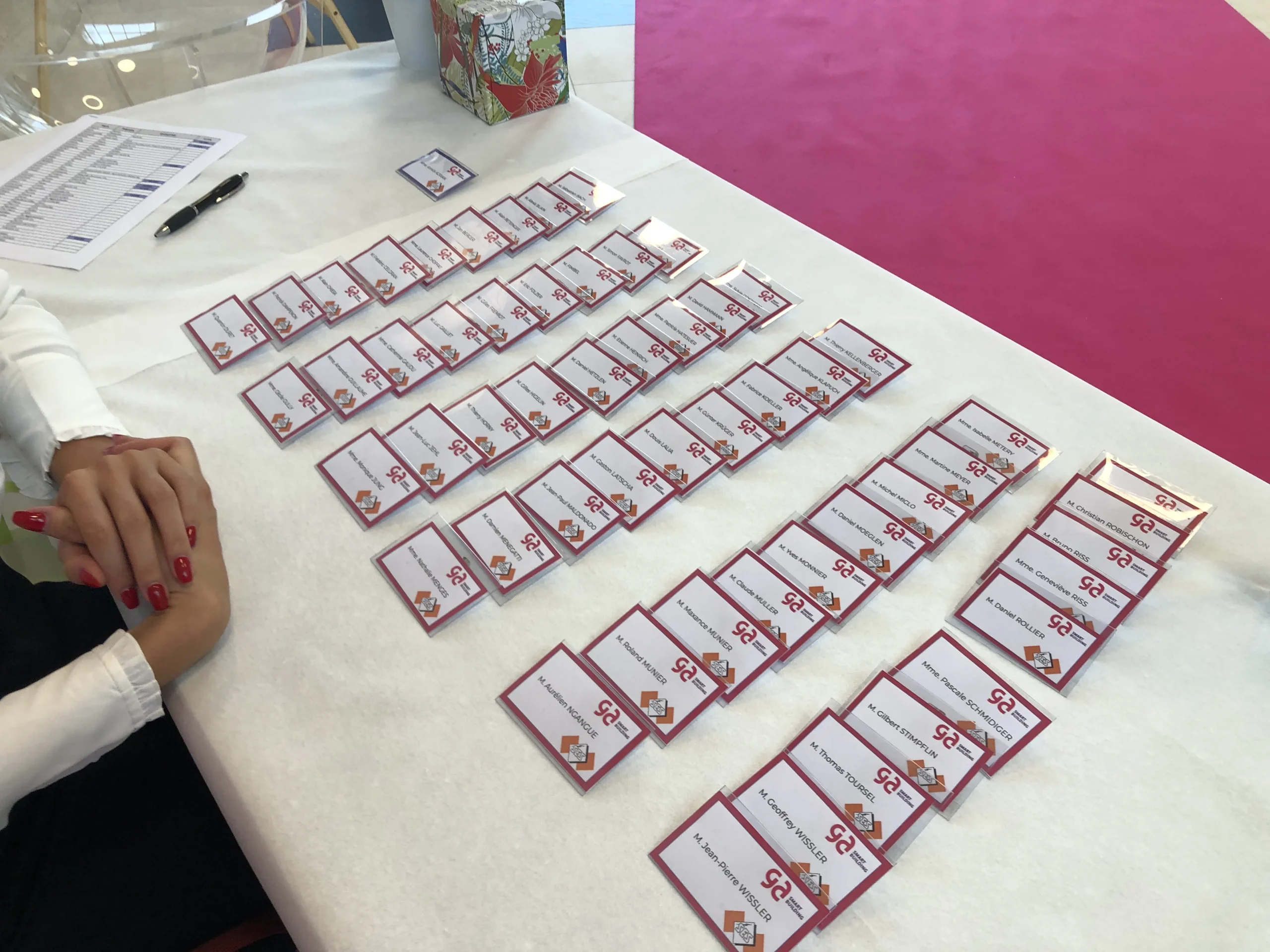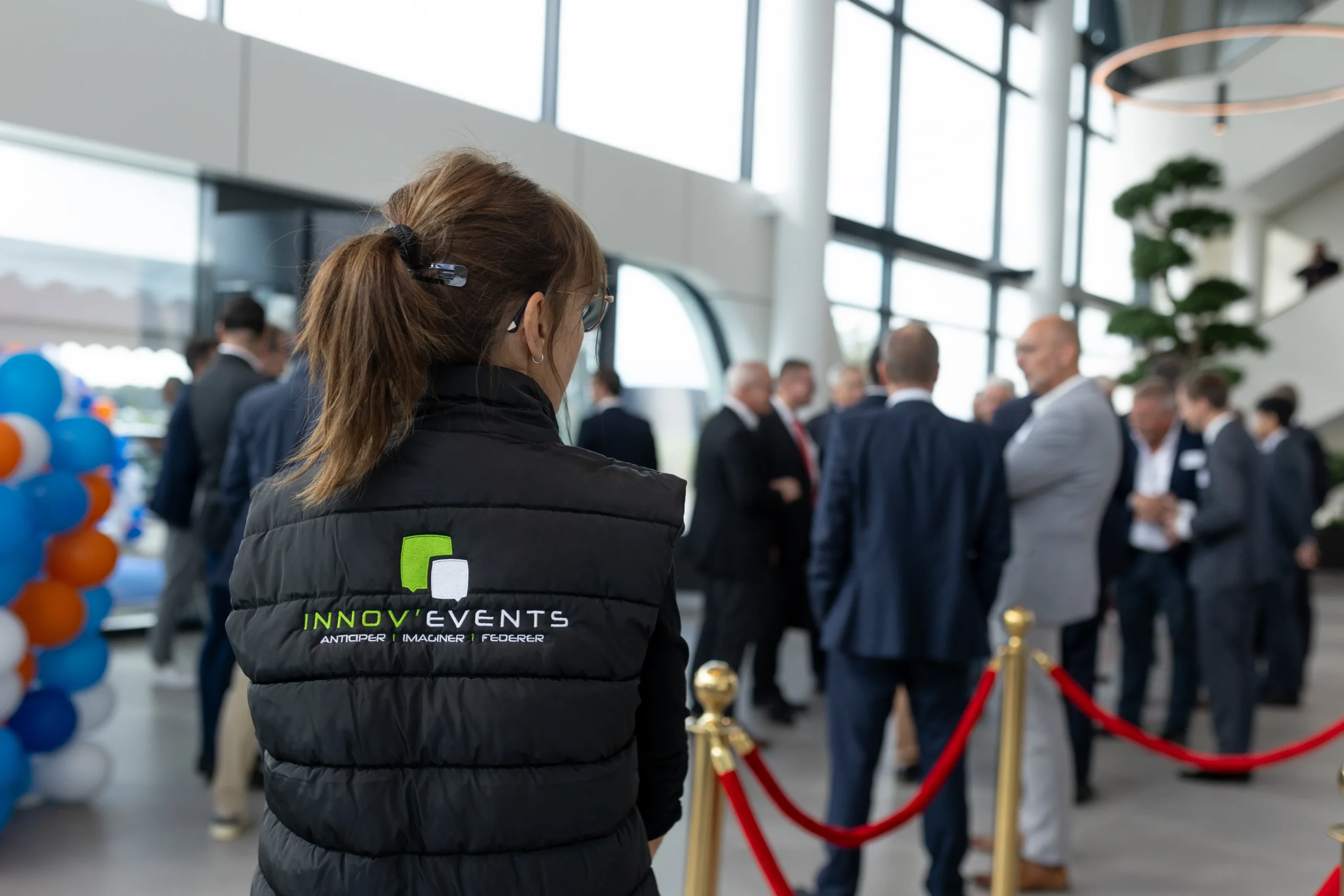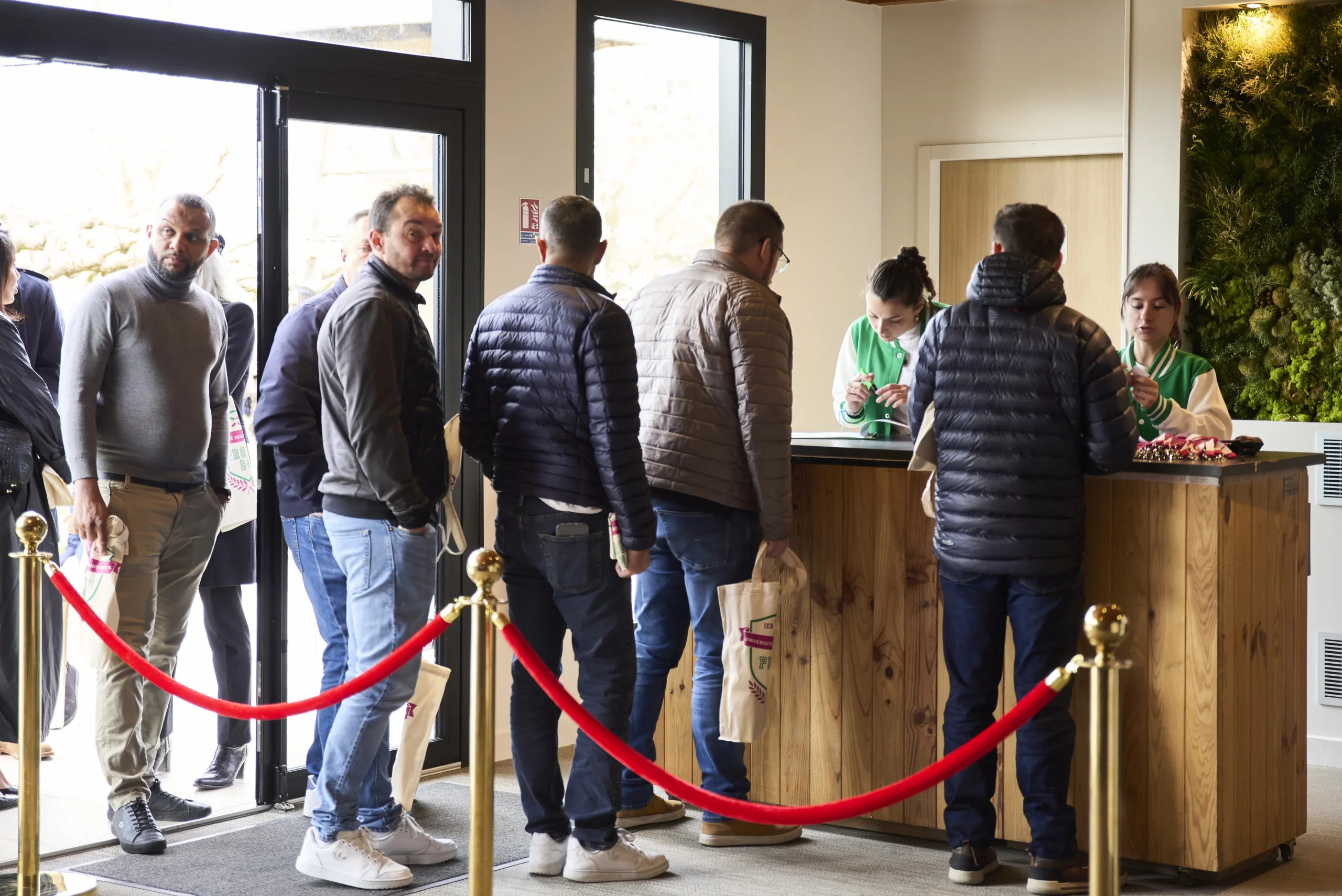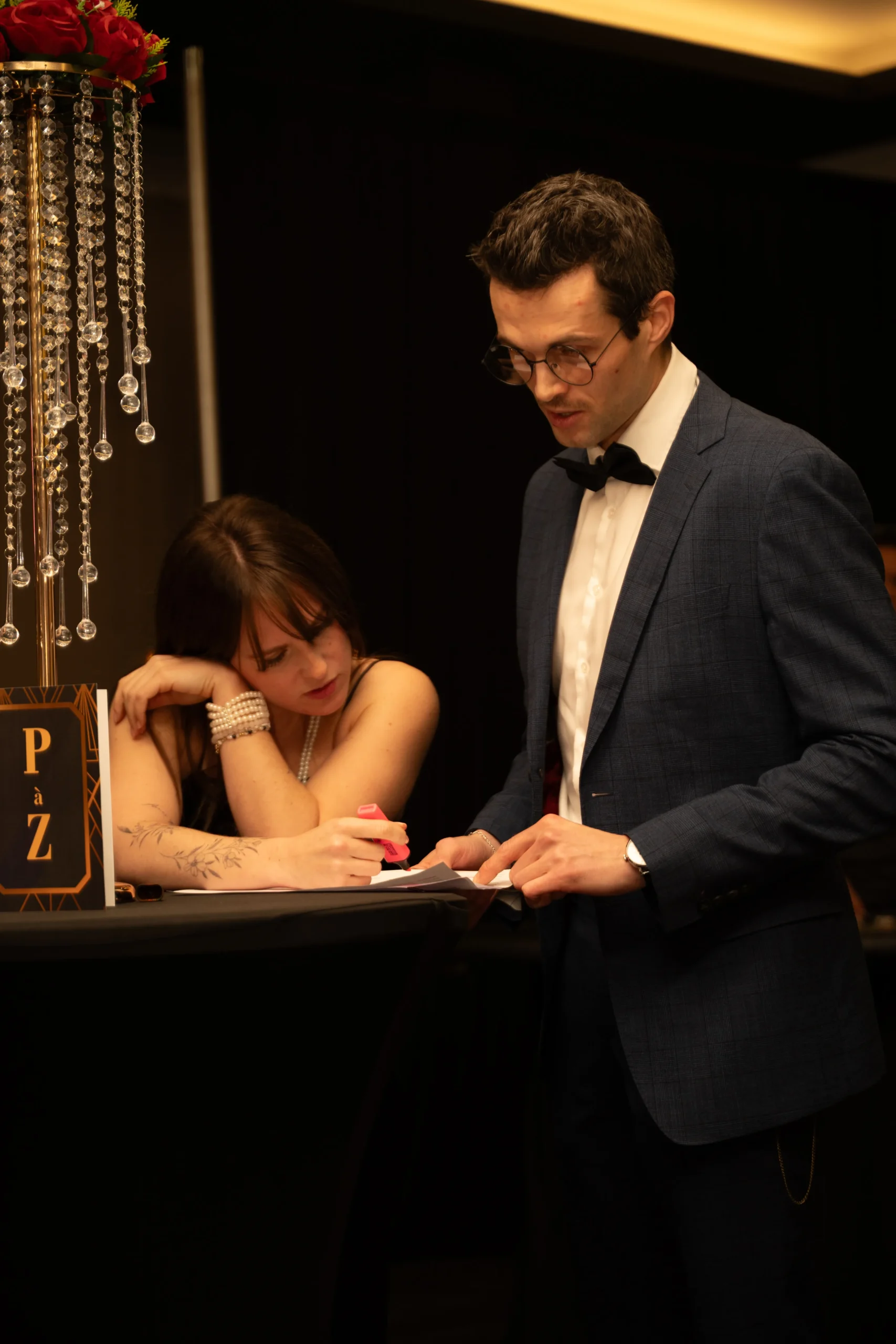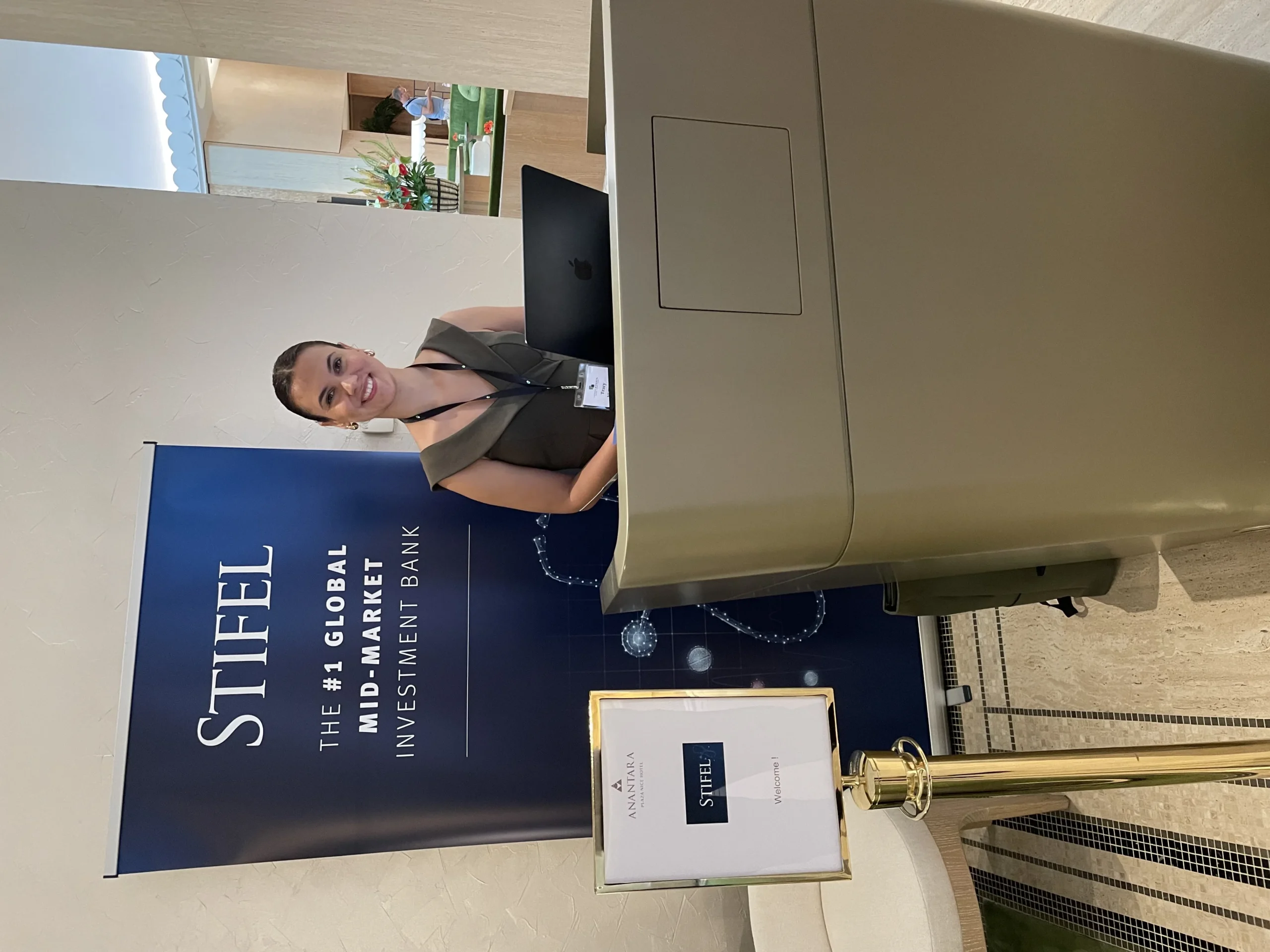
INNOV’events provides Event Hostess in Laval services for corporate events from 30 to 2,000+ attendees. We cover guest flow, check-in, badge issuance, VIP protocol, and on-floor coordination so your executives and internal teams stay focused on objectives—not logistics.
Whether you’re running a town-hall, product launch, recruitment event, client evening, or internal celebration in Laval, we staff and manage the front line with measurable discipline: timing, brand compliance, incident handling, and clear reporting.
In corporate events, reception is not “nice-to-have.” It’s your first operational control point: it dictates traffic, perceived professionalism, and how quickly guests reach the right conversations. A weak front-of-house creates delays that ripple into speeches, catering, and AV cues—especially when leadership is on a tight run-of-show.
Organizations in Laval typically expect bilingual service, clean brand execution, and zero friction at arrival: fast registration, clear directions, and discreet VIP handling. HR and Comms teams also need consistent tone—welcoming, but not improvisational—and a team that can enforce access rules without creating tension.
INNOV’events is a Montréal-based agency with frequent deployments across Laval (industrial parks, corporate campuses, hotels, and event venues). Our advantage is field discipline: briefings that stick, staff who understand protocols, and coordinators who anticipate the pressure points of event day.
10+ years supporting corporate and institutional events across Greater Montréal, including recurring mandates on the North Shore.
300+ events staffed and coordinated (receptions, conferences, internal activations, trade events, VIP evenings).
40–120 staff mobilized on peak days through our network (host/hostess, supervisors, check-in teams, floor runners).
Bilingual coverage (FR/EN) as a default operating standard for front-of-house in Québec, with briefing scripts and escalation protocols.
We regularly support corporate clients whose teams and guests circulate between Montréal and Laval: head offices, manufacturing sites, distribution centers, and mixed on-site/remote events. In practice, this means we’re used to operational realities like staggered arrivals after shifts, last-minute VIP confirmations, and compliance constraints (access control, visitor logs, PPE in industrial contexts).
Many mandates are renewal-based because reception quality is easy to evaluate: lines are visible, delays are measurable, and guest feedback lands directly on HR and Comms. When a client comes back year after year, it’s usually for two reasons: they want consistent staff who already know their tone and they want predictable execution under pressure.
If you have internal reference requirements (procurement, vendor onboarding, insurance certificates, CNESST expectations on certain sites), we can provide the documentation and operate within your approval process without slowing the project down.
Nous vous envoyons une première proposition sous 24h.
Executives don’t evaluate an event only on content; they evaluate it on control. A trained host/hostess team is a low-cost way to protect your schedule, your image, and your stakeholders’ experience—especially when your internal team is already stretched between logistics, leadership requests, and last-minute changes.
Faster guest flow, fewer bottlenecks: dedicated roles (greeter, check-in, badge, coat check, wayfinding) reduce queue time and prevent the “single-table pile-up” that damages first impressions.
Brand compliance at the front line: hosts follow your script, tone, and dress code; they don’t improvise answers about sensitive topics (pricing, HR policies, incident details). We use a briefing sheet with approved phrases and escalation contacts.
VIP and stakeholder protocol: board members, partners, elected officials, or media require discrete handling—escort, reserved seating, and controlled access to leadership. A trained team prevents awkward moments that become internal post-mortems.
Operational relief for HR and Comms: your team should be managing objectives (engagement, employer branding, internal comms) rather than reprinting badges or directing traffic to washrooms.
Better data capture: accurate attendance counts, no-show rate, late arrivals, and on-site changes are tracked in real time, then summarized for post-event reporting.
Risk mitigation: controlled access, wristband logic, bagde checks at entry points, and clear escalation if a guest is not on the list or if capacity is reached.
Laval has a pragmatic business culture: people value efficiency, clarity, and professionalism. When reception runs like a well-managed operation, it reinforces confidence in your leadership and your organization’s standards.
In Laval, many corporate events combine employees, suppliers, and external guests in the same room. That mix requires a reception approach that is welcoming but controlled. We often see three non-negotiables from Directors and HR leads: bilingual service, line management, and the ability to handle exceptions calmly (guest not registered, name mismatch, plus-ones, late VIP additions).
Local reality also includes traffic and timing constraints. Guests may arrive from Montréal via bridges, from the North Shore, or directly from industrial areas after a shift change. We plan for arrival waves rather than a single start time: separate check-in lanes, pre-printed badge sets by company/team, and a clear “cutoff” rule aligned with your room capacity and security requirements.
Finally, there is a strong expectation of discretion. Executives don’t want operational noise: no visible panic when something changes, no staff huddles blocking an entrance, no improvisation in front of clients. We structure the floor with one identifiable supervisor, radio/phone communication, and a simple chain of command that your internal stakeholders can trust.
Reception is not only a checkpoint; it can create immediate engagement when done with discipline. The key is to choose add-ons that support your objective (networking, employer brand, product discovery) without slowing down arrival. We prefer “light-touch” activations that start the conversation while keeping the queue moving.
Smart check-in + badge logic: color-coded badges for attendee categories (employee, VIP, partner, media) so staff can direct guests instantly and your team can identify the right contacts without asking awkward questions.
Welcome wall with structured prompts: not a generic photo wall—an HR- or Comms-driven board with 2–3 prompts tied to your strategy (e.g., “Which initiative should we accelerate in 2026?”). Hosts guide participation and prevent crowding.
Micro-wayfinding stations: a host positioned at key junctions (elevators, corridor splits, ballroom entrance) reduces late seating and minimizes interruptions once content starts.
Acoustic trio or solo instrumental at arrival: used to pace the room and reinforce brand tone (premium, understated). We coordinate placement so sound supports conversation and doesn’t interfere with registration communication.
Live calligraphy for name cards (VIP/partners): works well for smaller executive events where personalization is valued; hosts manage the queue and ensure it doesn’t block access.
Arrival beverage station with controlled service: a simple but effective way to reduce perceived waiting time. We coordinate with catering so service starts only when doors open and avoids spills near registration equipment.
Local tasting corner: if your stakeholders are coming from outside Laval, a curated Québec product tasting can act as a conversation starter—managed so it doesn’t create congestion at the entrance.
QR-based agenda + push reminders: reduces printed material and helps late arrivals catch up. Hosts assist guests who are less comfortable with mobile access.
On-site feedback capture in 2 questions: a host-led micro-survey near the exit for measurable insights (NPS-style satisfaction and one improvement point). This is particularly useful for HR and Comms reporting.
Whatever you choose, we align it to your brand image and operational constraints. If an activation increases arrival time by even 30–60 seconds per guest, it must be justified—and compensated with extra lanes or staffing. That’s how we keep engagement high without sacrificing control.
The venue determines how reception feels and how it performs. Ceiling height, entry width, coat check location, and proximity to parking all influence flow. In Laval, we often plan around arrival surges from parking lots and the need for clear signage from the main entrance to registration. A site that looks great can still underperform if the entry corridor is narrow or if coat check blocks the first visual contact.
| Venue type | For which objective? | Main strengths | Possible constraints |
|---|---|---|---|
| Hotel ballroom / conference center (Laval) | Conferences, awards nights, leadership town-halls with AV requirements | Predictable logistics, built-in coat check options, staff familiar with event cadence, strong AV infrastructure | Arrival bottlenecks if pre-function space is small; strict load-in/load-out windows; signage must be approved |
| Corporate office / headquarters site (North Shore) | Employer branding, internal milestones, executive announcements | Brand immersion, easier leadership access, controlled guest list and security | Elevator capacity, parking management, compliance constraints (restricted areas), noise limits for neighbors |
| Industrial site with visitor protocol (Laval) | Client tours, partner briefings, milestone celebrations tied to operations | Authenticity, storytelling around operations, strong credibility for stakeholders | PPE needs, mandatory visitor logs, limited aesthetic flexibility, stricter safety briefing before access |
| Restaurant buyout / private dining room | Client retention, executive dinners, smaller partner evenings | High service ratio, controlled atmosphere, simplified logistics | Less room for check-in lanes; coat check may be limited; acoustics can reduce speech clarity |
We recommend a site visit whenever reception complexity is medium to high (multiple guest categories, VIP protocol, scanning, coat check). A 20-minute walkthrough typically reveals the real constraints: door widths, power access for check-in stations, signage placement, and the best spot for a supervisor to monitor flow.
Pricing depends on staffing volume, responsibilities, and the level of supervision required. A single host for a simple welcome is not the same as a team handling multi-lane check-in, VIP escort, coat check, and data capture. For corporate clients, we budget based on roles and risk points, then optimize to avoid overspending where it doesn’t improve outcomes.
Number of guests and arrival pattern: 100 guests arriving over 60 minutes is manageable with fewer lanes than 100 guests arriving in 15 minutes after a shuttle drop-off.
Scope of tasks: greeting only vs. check-in + badge printing + coat check + wayfinding + session door management.
Required supervision: for multi-station reception, a dedicated supervisor is often what prevents small issues from becoming public friction.
Hours and schedule: early access for setup, overtime risk, split shifts for multi-part programs, and teardown expectations.
Tools and materials: scanning apps, badge stock, lanyards, signage, table skirting, stanchions/queue barriers (when venue doesn’t provide them).
Dress code and brand requirements: standard corporate attire vs. branded uniforms, and whether the client supplies brand elements.
Compliance context: ID verification, controlled access lists, confidentiality requirements, or additional briefing time for sensitive environments.
From an ROI perspective, reception staffing is often justified by what it protects: executive time, schedule integrity, and stakeholder confidence. When a leadership segment starts 15 minutes late because of lines, the cost is rarely “just time”—it’s lost attention, rushed content, and a perception of weak control. We budget to prevent that.
A local approach is not about “being nearby” on paper; it’s about operational responsiveness. In Laval, we can pre-visit venues quickly, adapt to last-minute room changes, and mobilize staff without relying on long-distance logistics. For Directors, the real value is predictability: you want to know who is showing up, how they will behave in front of your stakeholders, and who is accountable when something changes.
As an agency, we also integrate with your process: procurement requirements, insurance documents, and clear single-point accountability. If your event touches multiple departments (HR, Sales, Comms, Facilities), we help reduce internal coordination load by clarifying responsibilities and decision points upfront.
For broader event support, our team operates as your event agency in Laval for reception staffing as well as on-site coordination and production partners when needed.
From an ROI perspective, reception staffing is often justified by what it protects: executive time, schedule integrity, and stakeholder confidence. When a leadership segment starts 15 minutes late because of lines, the cost is rarely “just time”—it’s lost attention, rushed content, and a perception of weak control. We budget to prevent that.
Our work typically falls into a few recurring scenarios, each with specific operational requirements. For leadership town-halls, the main challenge is timing: executives want a clean start, reserved seating for managers, and zero noise during key messages. We structure entry waves, assign a door lead to manage late arrivals, and keep an escalation path for VIP adjustments without disrupting the room.
For client and partner evenings, the pressure point is first impression and stakeholder handling. We often run a dual reception: one lane for general guests and one for VIPs/partners, with discreet escort to the host executive. Coat check is treated as a throughput station (staffing, tagging logic, and placement) rather than an afterthought, because it can become the biggest bottleneck in winter months.
For HR recruitment events, the emphasis is on warmth and data integrity. We manage check-in plus wayfinding to recruiters or department pods, track attendance by segment, and coordinate a simple exit flow so HR can follow up effectively. In every case, the front line is trained to represent your employer brand consistently—without overpromising or improvising answers that should come from your internal team.
Underestimating arrival surges: one table for 250 guests creates visible chaos. We plan lanes, pre-sorted badges, and a fallback manual process if scanning slows down.
No clear rule for exceptions: “not on the list” guests can derail the line. We define decision rights (who can approve), set up a side desk, and keep the main queue moving.
Coat check placed in the wrong spot: when it blocks registration or the entrance corridor, it causes immediate congestion. We map the flow and adjust positions before doors open.
Unbriefed staff improvising brand messaging: hosts must know what to say, what not to say, and who to refer questions to—especially for HR policies, pricing, or sensitive corporate topics.
No supervisor on the floor: without a clear lead, small issues become public. A supervisor monitors timing, reassigns staff, and keeps your internal team out of micro-problems.
Signage that looks good but doesn’t work: unclear arrows, wrong language balance, or signs placed after the decision point. We validate signage placement from the guest’s point of view.
Our role is to remove these risks before they show up in front of your guests. On event day, reception issues are the ones everyone sees. We treat front-of-house as an operational function, not a cosmetic one.
Renewal happens when the event becomes easier for internal teams. Directors and HR leaders come back to the same partner when they can delegate with confidence: the staff shows up prepared, the execution is consistent, and the agency is accountable for results—not just presence.
High renewal behavior on recurring formats (annual town-halls, holiday receptions, recruitment cycles) because the same reception plan can be improved year over year.
Reduced internal workload reported by HR and Comms teams when hosts manage guest flow, exceptions, and wayfinding without constant escalation.
Fewer day-of surprises thanks to pre-briefs, role cards, and a clear chain of command (client lead ↔ supervisor ↔ hosts).
Loyalty is the most practical proof point in our industry: if a client in Laval rebooks, it’s because the event day felt controlled—and their leadership noticed.
We start with concrete parameters: venue entry points, parking and arrival waves, audience segments (employees, clients, VIPs, media), and the exact moment your program must start. We confirm what “on time” means in your context and identify the two or three failure points most likely to hurt perception (lines, noise, VIP handling).
We break reception into roles: greeter, check-in, badge runner, coat check lead, wayfinding, door management, VIP escort, and supervisor. Each role gets a short script, brand tone guidance, and an escalation path (who approves exceptions, who handles complaints, who speaks to media). This is what prevents improvisation.
We align on guest list format, badge layout, language preferences, and whether you want scanning, manual check-in, or both. We validate equipment needs (tables, power, Wi-Fi, printers if applicable), queue barriers, signage placement, and contingency supplies (blank badges, markers, extra lanyards).
Before doors open, we do a floor walkthrough with the client lead and venue contact: where queues form, where coat check starts, where the “exception desk” sits, and where the supervisor stands to see everything. We confirm radio/phone communication and timing checkpoints tied to your run-of-show.
During arrivals, we actively manage flow: opening extra lanes, redirecting guests, isolating exceptions, and ensuring VIPs are handled discreetly. During the program, we manage doors and transitions so the room stays quiet when it matters. We keep your internal team informed without pulling them into micro-issues.
After the event, we provide a short operational debrief: attendance counts, peak arrival times, issues encountered and resolved, and recommended adjustments for the next edition. For HR/Comms, we can also share practical insights (e.g., where guests got confused, which signage worked, how long check-in took).
As a working baseline in Laval: 1 host per 75–120 guests for a simple welcome, and 1 per 40–60 guests for check-in with badges (depending on arrival concentration). Add 1 supervisor when you have multiple stations, VIP protocol, or a strict start time.
Yes. Bilingual (FR/EN) front-of-house is standard for our Event Hostess in Laval deployments. We also prepare short bilingual scripts for greeting, directions, and exception handling to keep messaging consistent.
Yes. We set a specific VIP flow: separate check-in, discreet escort, reserved seating coordination, and a clear point of contact for last-minute changes. The goal is to keep VIP handling invisible to the main line while protecting leadership time.
Most corporate bookings in Laval (53) start at 4 hours per host (often plus setup time depending on scope). Larger events usually require earlier access for positioning, materials, and a pre-brief before doors open.
For standard corporate events, we recommend 2–4 weeks. For peak periods (holiday season, large conferences, multi-date roadshows), aim for 6–10 weeks to secure the right profiles and allow time for venue walkthroughs and approval cycles.
If you’re comparing agencies, we can make the decision easy: share your event date, venue (or shortlist), estimated attendance, and the type of reception you need (welcome only, check-in/badges, VIP, coat check, wayfinding). We’ll respond with a staffing plan, role breakdown, and a realistic budget range—built for corporate constraints in Laval.
Plan early if your event has a fixed start time, multiple guest categories, or leadership visibility. Reception is where operational issues become visible first; it’s also where disciplined staffing creates immediate confidence. Contact INNOV’events to schedule a quick briefing call and lock the right team.
Thierry GRAMMER is the manager of the INNOV'events Laval office. Reach out directly by email at canada@innov-events.ca or via the contact form.
Contact the Laval agency