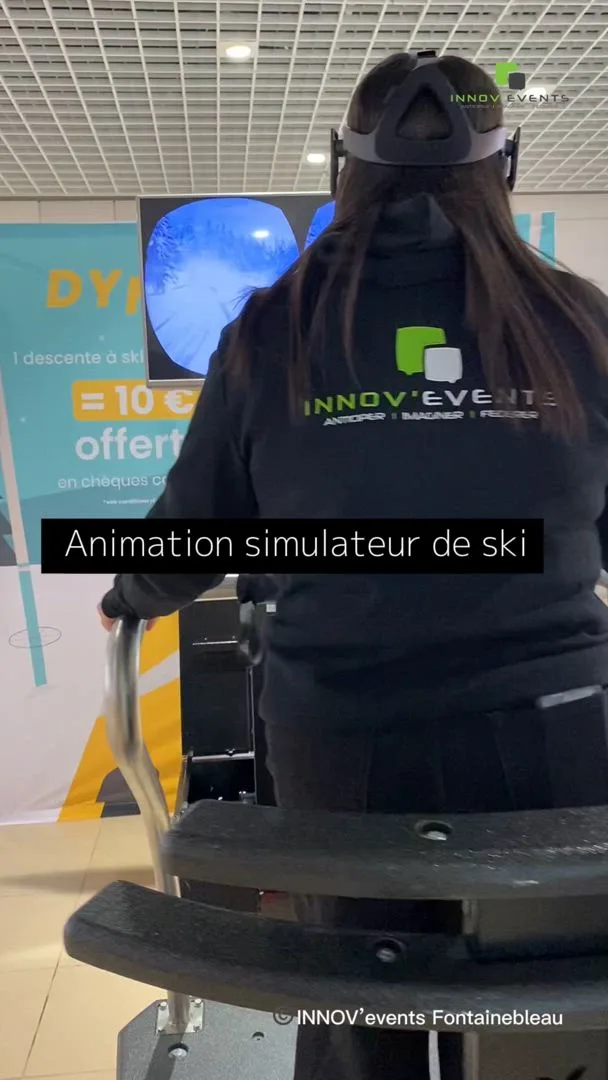
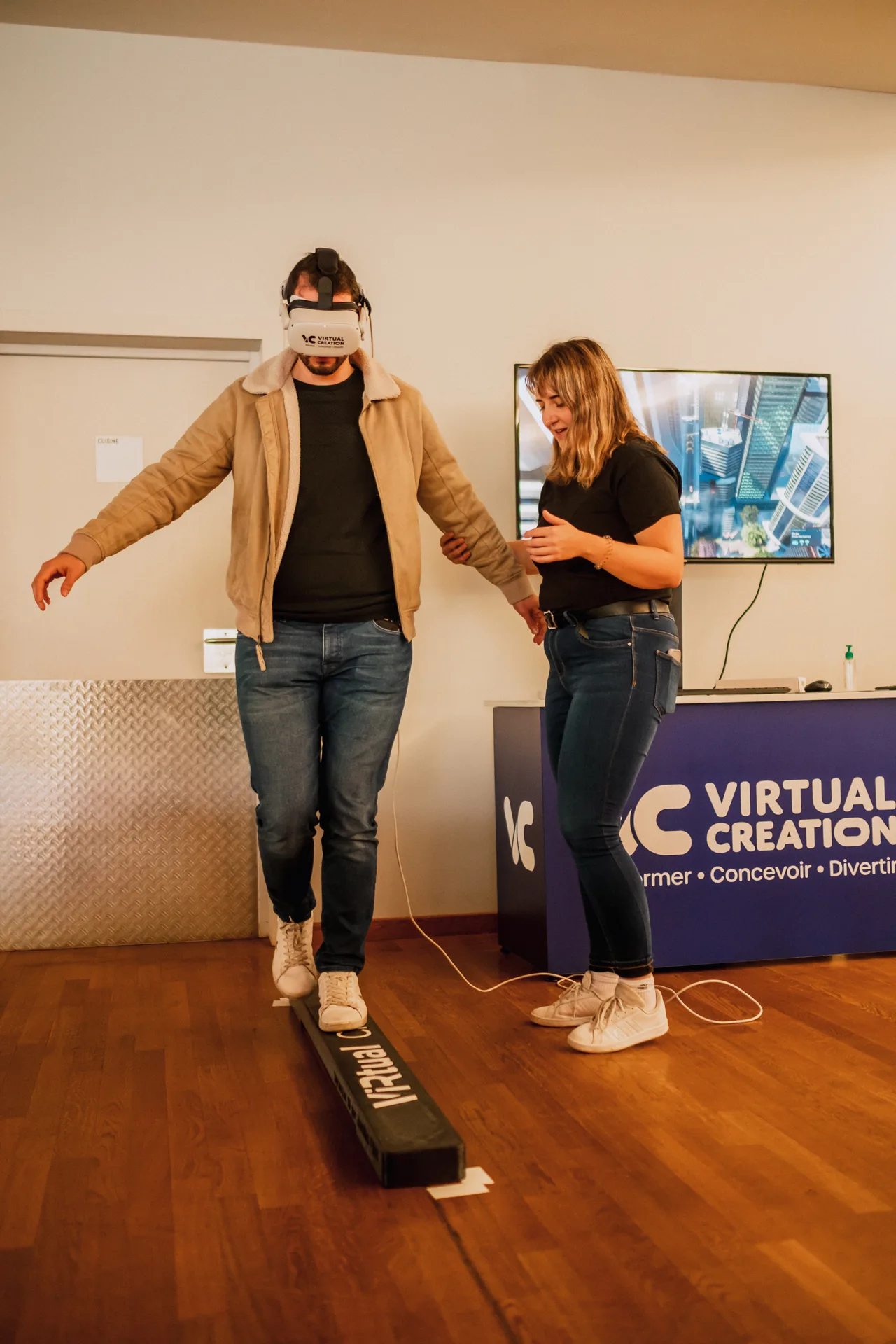
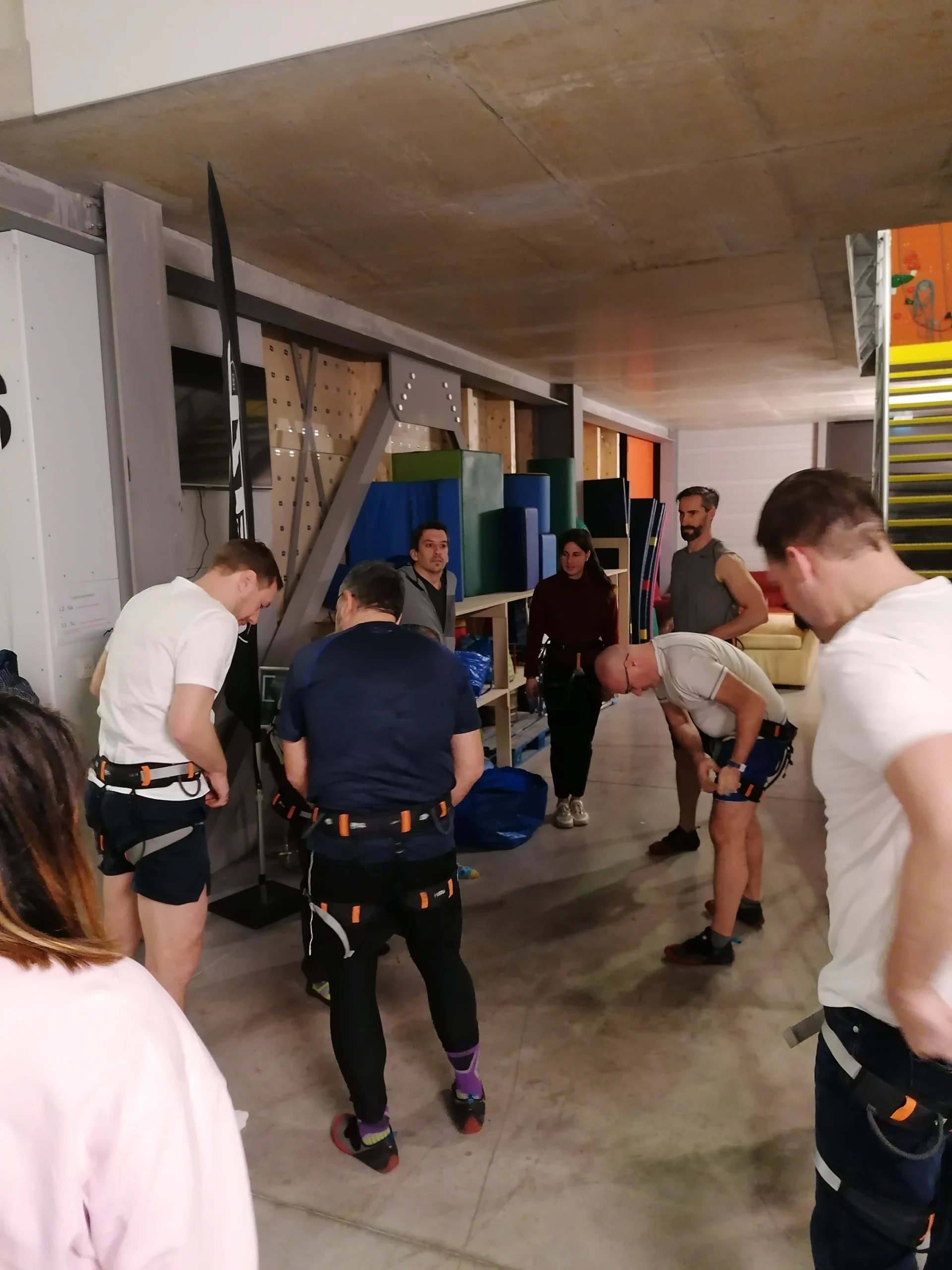
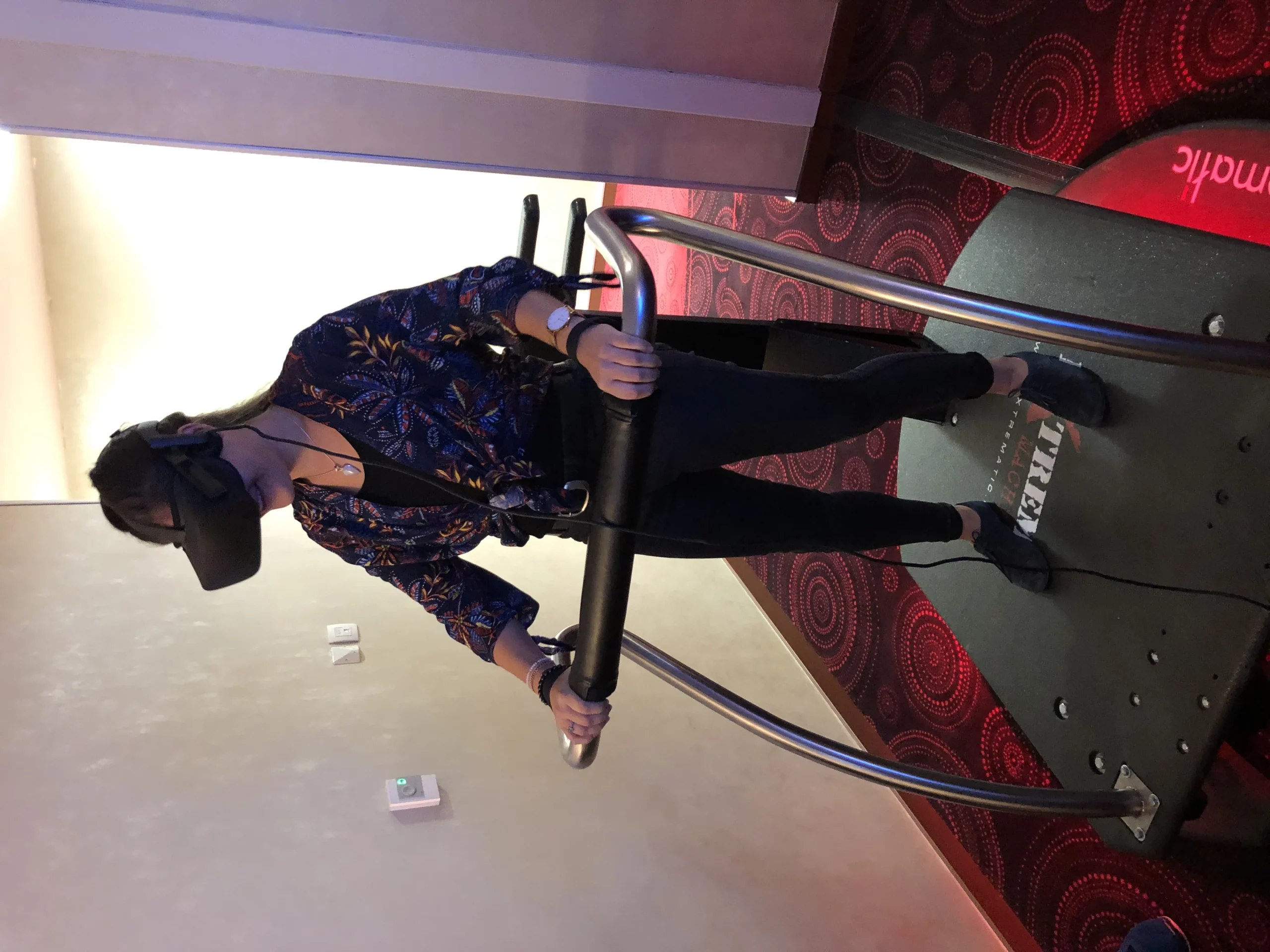
INNOV'events is a Montréal-based corporate event partner delivering the Indoor Skydiving Simulator for executive events, HR activations and internal communications across Laval. Typical formats range from 30 to 600 attendees, from a leadership offsite to a full company celebration. We handle vendor coordination, safety framework, floor plan, staffing, run-of-show and on-site management so your team stays focused on people, not logistics.
In a corporate event, entertainment is not “extra”; it is a management lever. A well-run Indoor Skydiving Simulator creates a shared challenge that accelerates introductions, breaks silos and gives leaders a concrete moment to reinforce behaviors like trust, feedback and accountability—without forcing participation.
In Laval, organizations expect precision: clear schedules, predictable guest flow, bilingual facilitation, and a risk-managed activity that won’t compromise brand image. Executives also want optics that read “professional and controlled,” not “stunt for social media.”
Our team works on the ground with Laval venues and suppliers, and we plan the experience the same way we plan a product launch: constraints first (space, power, safety, acoustics), then flow and messaging. That’s what keeps the event smooth when the CEO arrives early, when the room fills faster than planned, or when the agenda shifts at 4:45.
10+ years supporting corporate events across Greater Montréal, with repeat mandates from HR and communications teams who need predictable delivery.
200+ corporate events planned and produced (recognition nights, offsites, conferences, brand activations), including multi-stakeholder projects with procurement, legal and HSE involved.
30–600 attendees is our most frequent operating range; we design guest flow and staffing ratios accordingly so the room stays calm even at peak traffic.
Bilingual operations (FR/EN) on-site: briefing, signage, hosting and safety instructions adapted to mixed Laval teams.
We regularly support organizations in and around Laval, often on an annual cadence (holiday parties, recognition events, summer gatherings, or leadership kickoffs). Over time, what matters most is not the “idea” but the reliability: knowing the run-of-show is respected, that safety is documented, and that the internal team won’t be pulled into last-minute firefighting.
When a company renews year after year, it’s usually because their internal stakeholders trust the process: HR gets an inclusive experience, Communications gets controlled optics and brand alignment, and executives get an event that runs on time with clear responsibilities. If you share the company names you want us to include as references, we will integrate them here in a compliant way (with the level of detail you authorize).
Nous vous envoyons une première proposition sous 24h.
The Indoor Skydiving Simulator works in corporate contexts because it creates a safe, structured “first step outside comfort” that is easy to explain and easy to measure. Done properly, it becomes a platform for recognition (trying, supporting, improving) rather than a high-risk thrill. This is exactly what many Laval organizations want when they are aligning culture after growth, re-orgs, or hybrid-work friction.
Faster team bonding without forced vulnerability: colleagues naturally coach each other, share tips, and celebrate progress in short cycles (2–4 minute rotations).
Inclusive participation with clear opt-in levels: “watch + cheer,” “try once,” or “take a second run,” which reduces pushback from HR and improves overall satisfaction scores.
Executive messaging that lands: you can tie the activity to concrete themes (trust, preparation, feedback loops, safety culture) and reinforce it with a short leadership talk at the right moment in the agenda.
High engagement per square meter: compared with many activities, a simulator zone can host a steady flow while leaving room for cocktail, awards, or a town hall.
Content for internal comms that is brand-safe: short clips, reaction photos, and employee spotlights, produced within agreed guidelines (no chaotic background, no unsafe-looking angles).
Operational predictability: with the right staffing plan, queue management, and briefing cadence, you get a smooth rhythm that respects the venue’s noise constraints and your program timing.
Laval has a pragmatic business culture: leaders want an event that motivates people and protects reputation at the same time. The simulator is a good fit when it is treated like an operational module—planned, staffed, briefed and integrated into your overall narrative.
In Laval, the approval path is often multi-layered: HR validates inclusivity and employee experience, Communications validates brand and content, and Finance/Procurement validate risk and cost control. We build the project to satisfy all three from the first proposal, not after questions start.
Concretely, Laval-based organizations commonly ask for: documented safety procedures, proof of staffing and supervision, clear load-in/load-out timing that respects the venue, and an agenda that does not disrupt core programming (conference segments, awards, or a CEO message). Another frequent expectation is bilingual delivery: a French-first briefing with English coverage, plus signage that avoids misunderstanding during safety instructions.
Finally, traffic realities matter: late arrivals from the bridges, tighter windows for executives, and guests splitting between Laval and Montréal. We design guest flow and check-in accordingly (staggered rotations, clear “what to do when you arrive,” and a buffer for peak entry).
The simulator becomes more effective when it is part of a coherent entertainment plan. For executives, the goal is not “more activities,” but a balanced program that protects attention span, supports networking, and avoids bottlenecks. In Laval, we often build a layered experience: a strong anchor activity (the Indoor Skydiving Simulator) plus secondary modules that keep non-participants engaged and support internal messaging.
Leadership challenge bracket: timed rotations by department (optional), with an emcee who keeps it respectful and avoids embarrassing anyone. Works well for sales kickoffs and integration after a merger.
Coaching station: a facilitator helps participants set a simple objective (posture, stability) and debrief in 60 seconds. This turns “I tried” into “I improved,” which resonates with performance culture.
Live polling + culture prompts: short questions on screens between rotations (values, customer focus, safety culture). Communications teams appreciate the ability to capture sentiment without a formal survey.
MC with corporate discipline: someone who respects agenda constraints, pronounces names correctly, and can switch FR/EN naturally—critical in Laval rooms with mixed teams.
Ambient DJ with controlled peaks: music that supports energy without drowning briefings or speeches; we coordinate sound checks around the simulator’s operating cycle.
Short-format stage moments: 5–7 minute segments (employee recognition, milestone story) scheduled between simulator waves to avoid crowd drift.
Efficient cocktail service design: we position bars and passed appetizers away from the simulator queue to prevent traffic conflict; this is a frequent hidden issue in ballroom layouts.
Local Laval/Greater Montréal stations: curated stations that can handle volume (rather than slow “show cooking” that creates lines). We select based on your guest count and service time.
Non-alcoholic premium bar: supports inclusivity and duty-of-care; executives increasingly ask for this as a visible policy signal.
Brand-safe content capture: a controlled photo/video corner with lighting and a clean background so the company’s internal comms team gets usable assets, not random clips.
Digital scoreboard: optional, for friendly competition (team points for participation, coaching, cheering). We keep it opt-in to avoid HR concerns.
Client/VIP window: for events hosting partners, we create reserved time blocks with higher-touch facilitation so hospitality feels deliberate.
The key is alignment with your employer brand and leadership style. A conservative organization can still use the Indoor Skydiving Simulator in Laval successfully—by focusing on safety, coaching and participation levels rather than spectacle. That framing is what protects credibility in front of directors and external guests.
The venue directly affects perception and operational risk. Ceiling height, access doors, load-in timing, power availability, noise constraints and emergency egress will decide whether the simulator feels seamless or looks improvised. For Laval events, we also consider parking capacity, proximity to major axes, and how quickly the room can be reset between a plenary session and the activity zone.
| Venue type | For which objective? | Main strengths | Possible constraints |
|---|---|---|---|
Hotel ballroom in Laval | Recognition night, holiday party, mixed-format event with speeches | Professional service flow, predictable guest experience, built-in AV options | Load-in windows can be tight; noise limits; careful floor plan needed to protect bar/banquet operations |
Conference center / large event hall (Laval territory) | Town hall + activation, larger headcounts, sponsor-style setups | More flexibility for simulator footprint, easier crowd flow, stronger rigging/power options | May require additional decor to match brand standards; staffing for multiple zones becomes critical |
Industrial-chic / converted spaces near Laval | Employer brand, recruitment, modern internal comms content | Strong visual identity, great for photo/video, adaptable layout | Acoustics can be challenging; power distribution and climate control must be validated early |
We strongly recommend a site visit (or a full technical walkthrough) before confirming. Small details—like an elevator size, a corridor turn, or where the nearest panel is—can change the plan. In Laval, that preparation is what prevents day-of compromises that your leadership team will notice immediately.
Pricing for a Indoor Skydiving Simulator depends on the operational reality, not just the equipment. The same activity can vary significantly based on guest volume, run time, venue constraints, staffing, and the level of production required to match your brand. For Finance and Procurement, we structure budgets with transparent line items and clear assumptions.
Event duration and throughput: number of operating hours and expected participants. A 2-hour activation for 80 people is not the same staffing and flow design as a 5-hour corporate evening for 400.
Staffing and supervision: safety lead, facilitators, host/MC coordination, and queue management. Understaffing is the #1 cause of delays and guest dissatisfaction.
Venue access and logistics in Laval: load-in routes, door dimensions, elevator use, protection of floors, and time constraints imposed by the venue.
Power and technical requirements: dedicated circuits, cabling, and backup planning; we coordinate with venue technicians to avoid surprises.
Branding and communication: signage, briefing scripts, bilingual materials, photo/video framing, and optional scoreboard or stage integration.
Insurance and compliance: certificate requirements from the venue and corporate policies, plus any waiver process design needed to keep participation smooth.
From an ROI perspective, decision-makers usually look at two outcomes: participation rate (who actually engaged) and post-event impact (new cross-team connections, better attendance, improved internal comms metrics). We can help you define success indicators before the event so the budget is justified internally—especially when the event is used to support retention or a culture shift.
For an activity with safety, traffic flow and technical constraints, proximity is not a comfort—it is risk management. An agency that knows Laval can validate venues faster, anticipate access issues, and mobilize the right suppliers without learning the territory during your event week. At INNOV'events, we operate daily across Greater Montréal and coordinate Laval projects with the same rigor as a corporate production.
When you work with a local partner, you also get faster iteration: quick site checks, last-minute floor plan changes, and realistic scheduling based on local traffic patterns and venue practices. If you want to see how we support teams locally, our event agency in Laval page outlines our approach and operational coverage.
From an ROI perspective, decision-makers usually look at two outcomes: participation rate (who actually engaged) and post-event impact (new cross-team connections, better attendance, improved internal comms metrics). We can help you define success indicators before the event so the budget is justified internally—especially when the event is used to support retention or a culture shift.
We produce corporate events where the entertainment must serve a business purpose and remain controllable. In Laval, that often means mixing a structured agenda (town hall, awards, Q&A) with an activation that keeps energy high without creating chaos.
Typical scenarios we handle:
Across these formats, our role is to keep the experience predictable: the right people are briefed, the queue stays fluid, and leaders can focus on relationships rather than operational details.
Underestimating briefing time: without a clear cadence, rotations slip and the agenda suffers. We set a rhythm that protects speeches and service timing.
Placing the simulator where it blocks flow: queues that cut through the bar line or the entrance create immediate frustration. We design a footprint that respects guest circulation.
Noise conflicts with the program: if the activity runs during key messages, you lose attention and credibility. We plan operating windows and sound checks accordingly.
Missing bilingual safety communication: in Laval, mixed-language teams are common. We prepare bilingual briefings and clear signage to reduce risk and confusion.
No plan for non-participants: participation drops when observers feel idle. We integrate secondary engagement (coaching station, photo moment, light challenge prompts) without pressuring anyone.
Vague responsibility split: when it’s unclear who decides, who pauses the activity, or who handles an incident, the event slows down. We assign roles in writing and brief everyone on-site.
Our job is to remove operational risk before it becomes visible. In an executive setting, the audience rarely remembers the technical details—but they immediately notice delays, confusion, or anything that feels unsafe. That’s why we plan the Indoor Skydiving Simulator in Laval with the same discipline as any high-stakes corporate program.
Repeat business is rarely about novelty; it’s about trust under pressure. When internal teams have limited bandwidth and leadership expects a flawless experience, they come back to the partners who make the day predictable and protect reputational risk.
High repeat rate on annual moments (holiday party, summer event, recognition): clients value continuity in supplier coordination and a team that already knows their approval process.
Stable core team on projects: fewer handoffs, faster decisions, and better accountability on event day.
Documented playbooks: floor plans, staffing models, briefing scripts and run-of-show templates that accelerate planning and reduce surprises.
Loyalty is proof of quality because it reflects internal confidence: HR, Comms and Exec teams don’t risk repeating a partner who created stress. When you’re planning in Laval, that consistency is often more valuable than any “new concept.”
We start with a 30–45 minute working call with HR and Communications (and often an executive sponsor) to confirm objectives, success indicators, guest profile, and constraints: venue short list, agenda immovables, bilingual requirements, risk tolerance, and brand standards. This is where we decide whether the simulator is the anchor activity or a supporting module.
We produce a floor plan and a flow model: where guests enter, where they wait, how the briefing happens, rotation duration, and how we prevent bottlenecks at the bar, washrooms and coat check. We define staffing positions and responsibilities so the experience stays calm at peak volume.
We validate access, power, ceiling clearance, acoustics and load-in rules with the Laval venue. We also coordinate with AV for microphone placement and sound checks. If something is borderline, we propose alternatives early (layout changes, operating windows, or a different room) rather than improvising on event day.
We organize insurance certificates, safety briefings, bilingual signage and any waiver workflow required. Communications receives an approval-ready package: messaging, content capture guidelines, and a plan for where photos/videos are taken so visuals remain brand-safe.
On event day, we manage load-in, cueing, briefings, timing, and coordination with the venue’s banquet/AV teams. We keep a clear chain of command for decisions (pause/resume, VIP arrivals, schedule shifts) and we debrief afterward with practical feedback for your next Laval event.
For a corporate setup, plan roughly 20 to 40 participants per hour depending on briefing length, rotation time, and how strict your safety/compliance process is. If your objective is high participation, we structure shorter rotations and add staff to keep the queue moving.
Yes, when it’s supervised and properly briefed. We set clear participation criteria and offer opt-in levels (watch, try once, repeat). For corporate duty-of-care, we also plan a calm briefing area, controlled flow, and a documented incident protocol aligned with venue requirements.
Validate ceiling height/clearance, power availability (dedicated circuits), load-in access (doors/elevators), and noise limits. These four points determine feasibility and whether the simulator integrates smoothly with speeches and service.
Most corporate projects land in a broad range depending on duration and production level. As a planning reference, expect a meaningful difference between a short activation and a full-evening installation with staffing, compliance, and AV coordination. We provide a line-item budget with assumptions so Finance can validate quickly.
For the best venue and supplier availability, plan 6 to 10 weeks in advance. For peak periods (holiday season, year-end, major conference windows), 10 to 16 weeks is safer—especially if you need a specific room configuration and bilingual staffing.
If you’re comparing agencies, we can make the decision simple: share your date window, estimated headcount, venue (confirmed or short list), and the role of the activity in your program (team-building, recognition, client hospitality). We will respond with a clear operational plan, a transparent budget structure, and realistic participation assumptions for Laval.
The earlier we align on constraints—venue access, noise, run-of-show and compliance—the smoother the event day will be. Contact INNOV'events to plan your Indoor Skydiving Simulator in Laval with executive-level rigor.
Thierry GRAMMER is the manager of the INNOV'events Laval office. Reach out directly by email at canada@innov-events.ca or via the contact form.
Contact the Laval agency