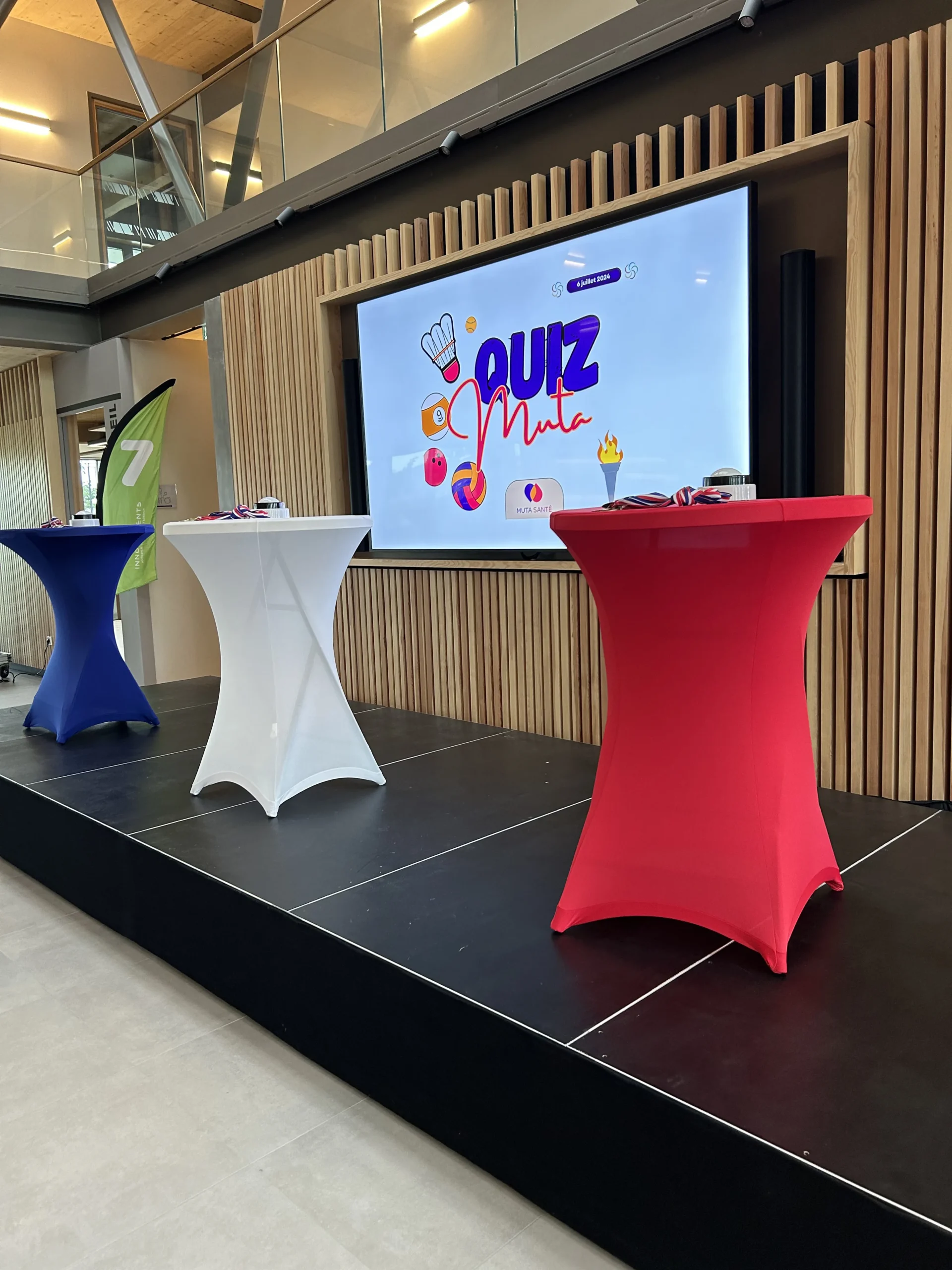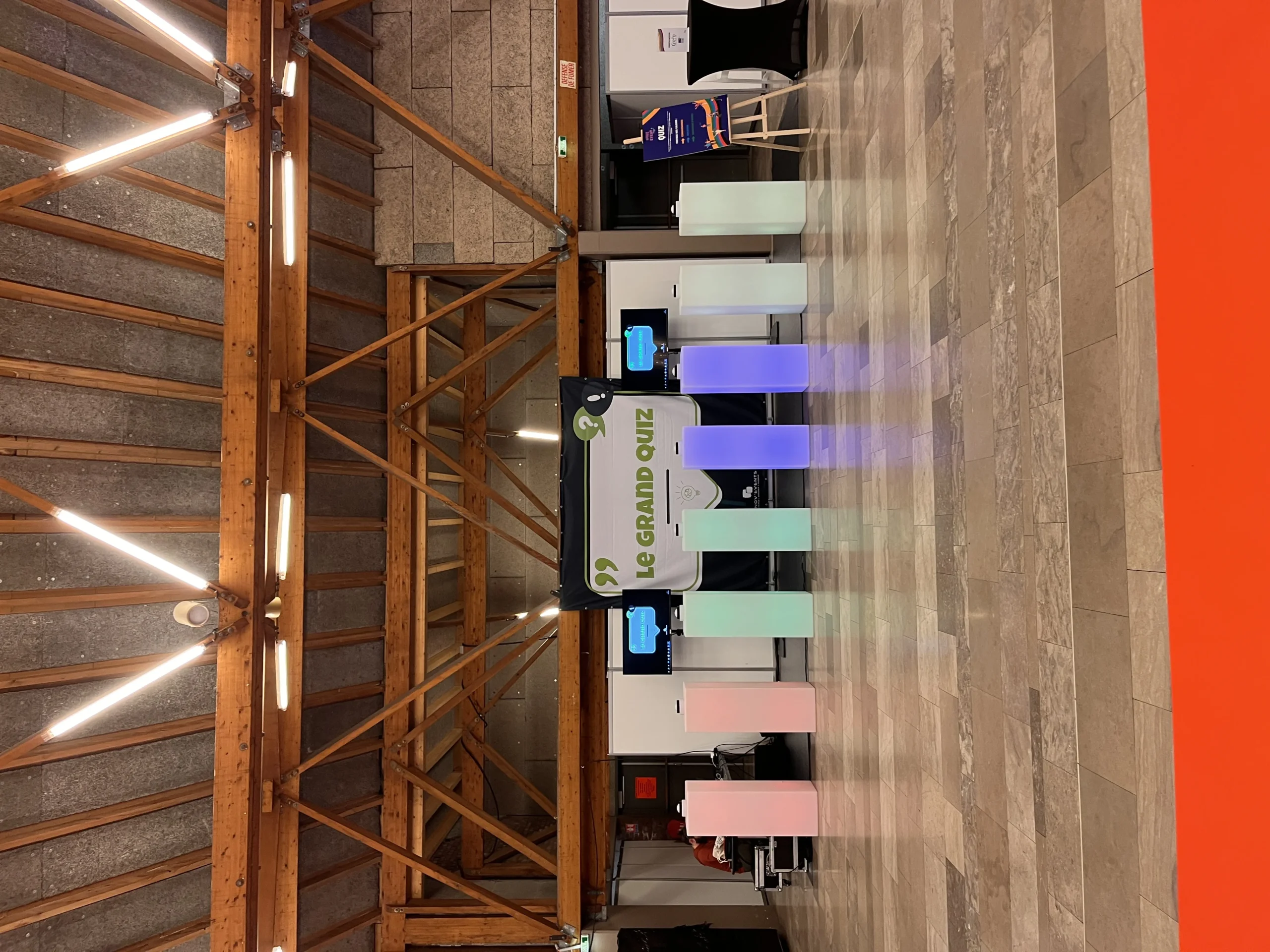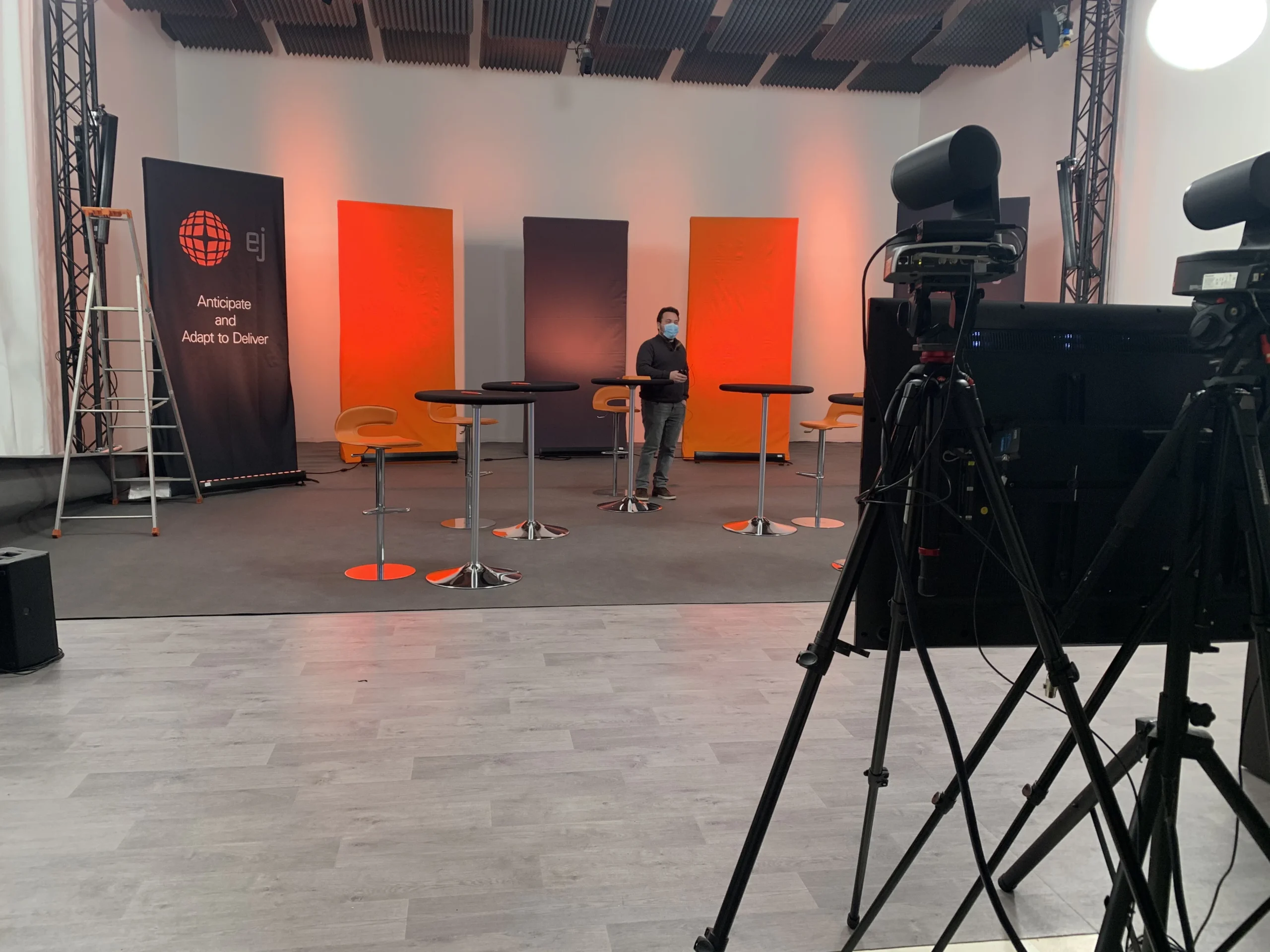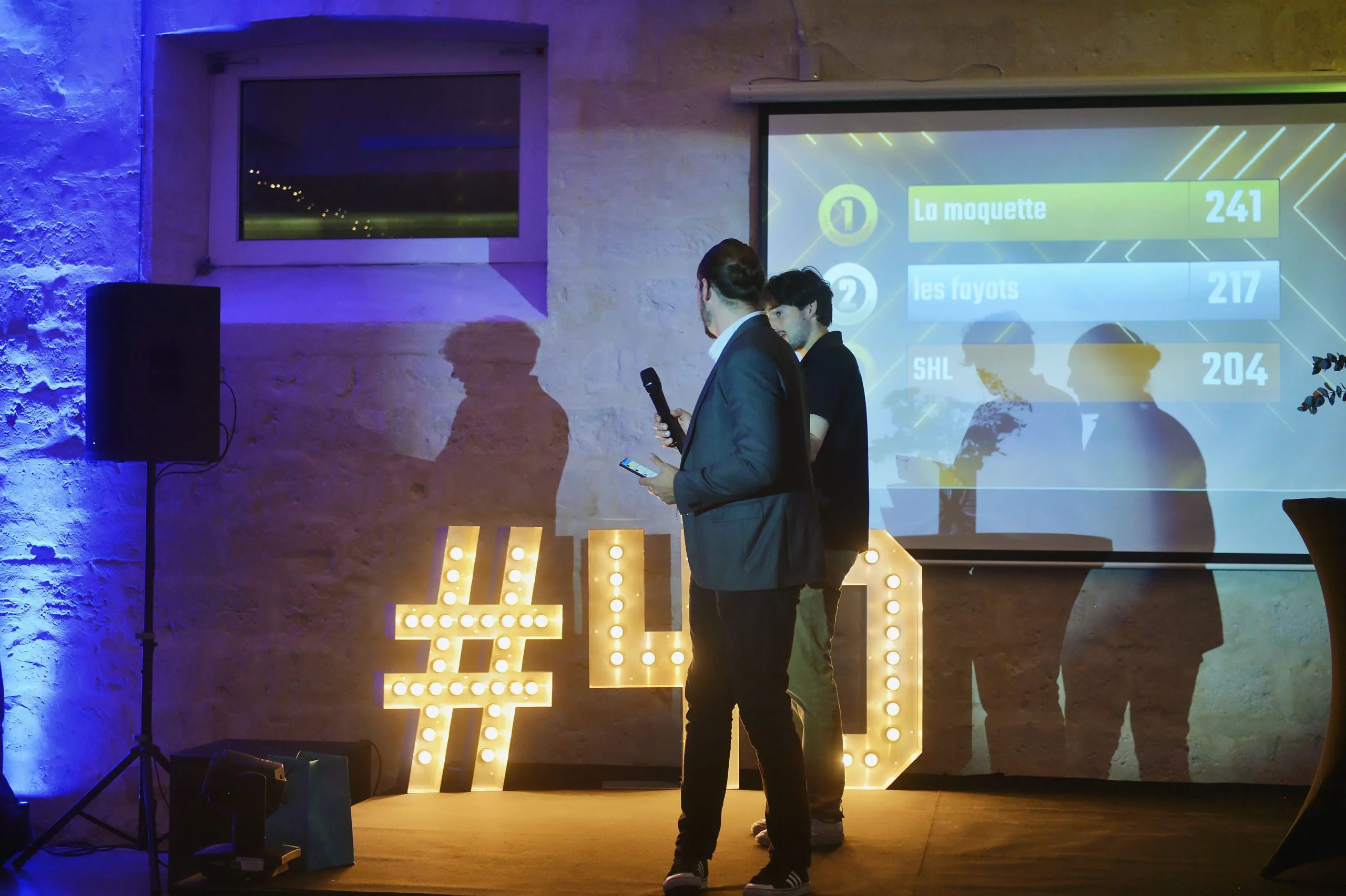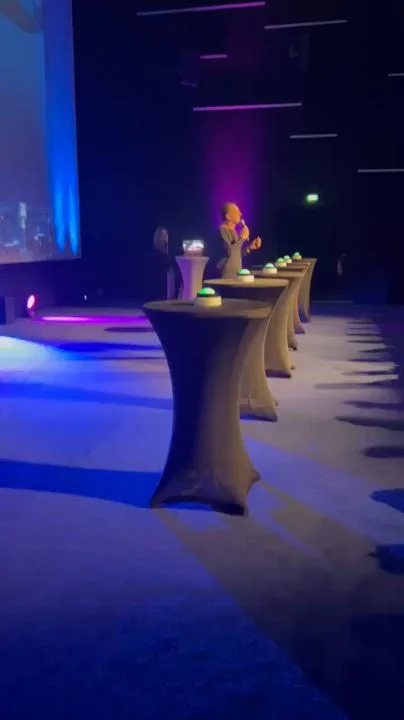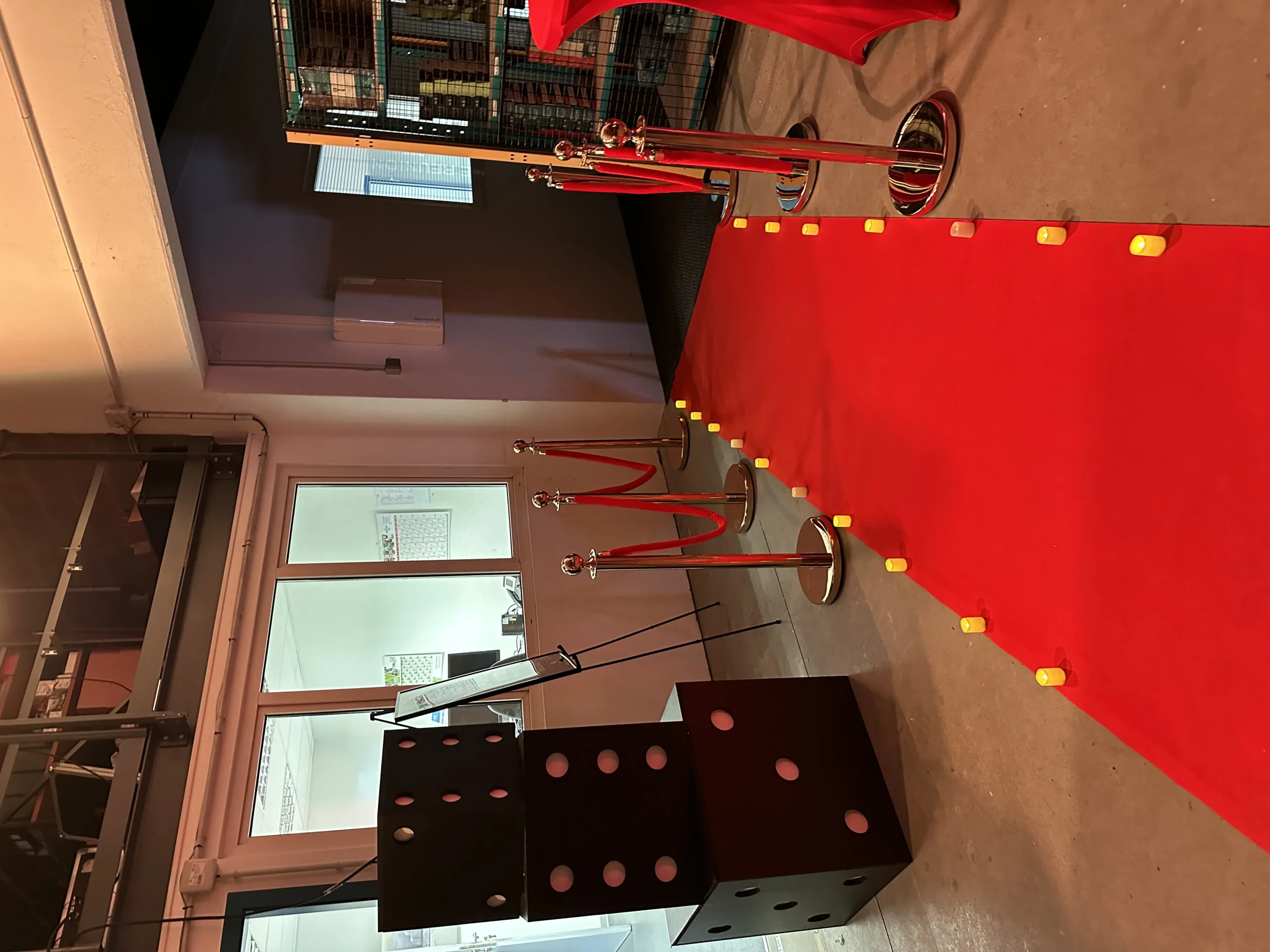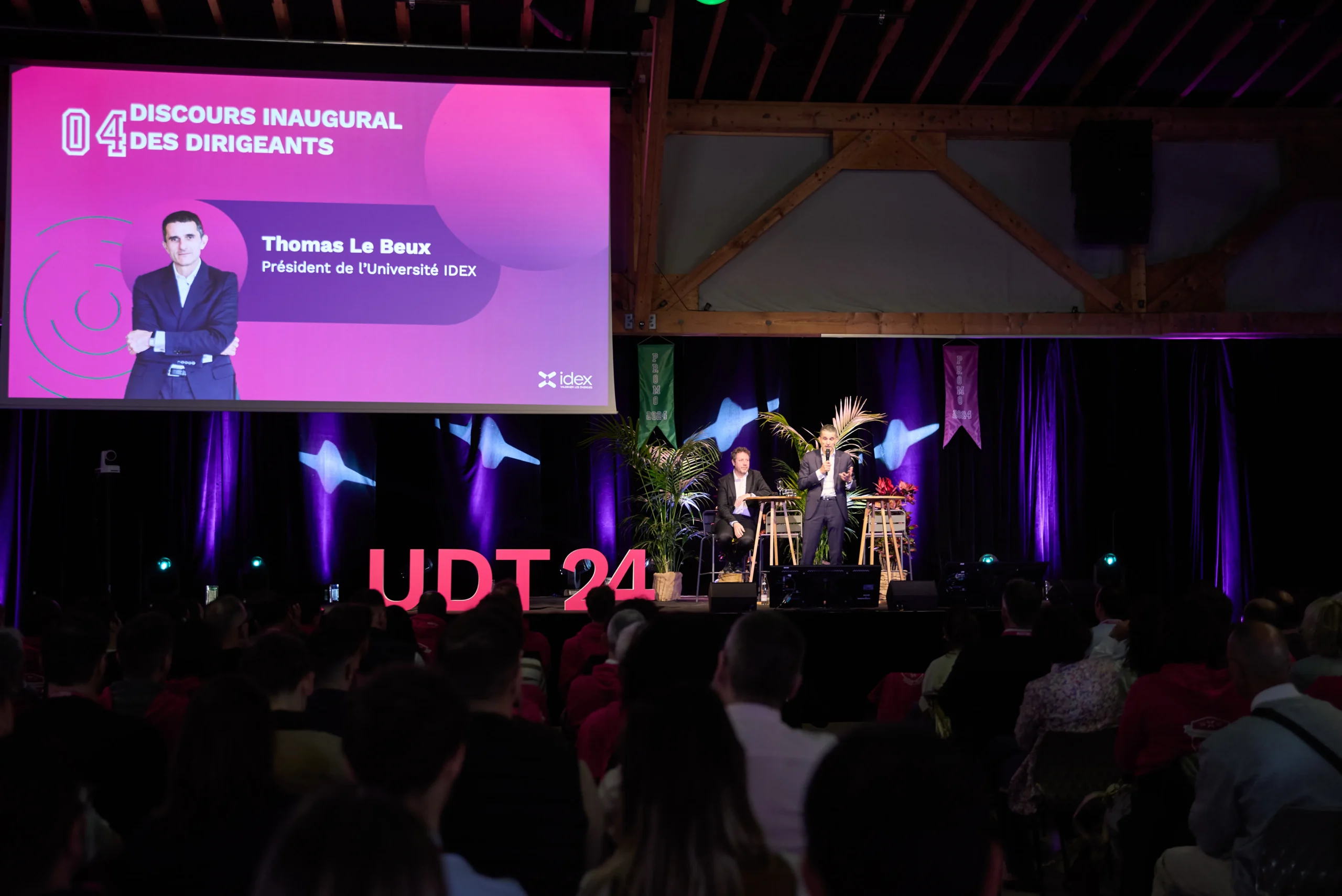
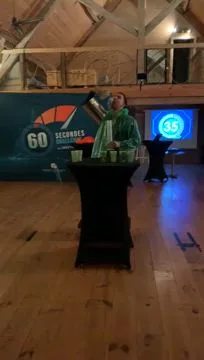
INNOV'events produces TV Game Show Experience formats in Laval for executive teams, HR and communications—typically 30 to 600 participants, in-person or hybrid. We manage the full run-of-show: concept, casting of players, host, scoring, audiovisual, rehearsals, and on-site production so your leaders can focus on people, not logistics.
This is a structured, measurable entertainment format: participation rates, cross-team mixing, timeboxing, and clear outcomes (energy, recognition, and alignment). You get a professional show feel without risking your brand image.
In a corporate event, entertainment is not “nice to have”: it is one of the few levers that reliably changes group dynamics in under two hours. A well-produced TV Game Show Experience creates a shared reference point that helps executives land messages (strategy, values, safety, client focus) and makes networking easier for people who don’t naturally mingle.
Organizations in Laval typically expect efficiency and predictability: clear timing, bilingual capability when needed, respect for diverse comfort levels (not everyone wants to be on stage), and an approach that fits union, plant, healthcare, or professional-services realities. Your teams want to have fun, but leadership needs control: tone, brand alignment, and zero operational surprises.
We are a Montréal-based agency that works week in/week out in Laval venues and corporate sites. We bring production discipline (cueing, contingency plans, rehearsals) and local supplier reflexes—so the show runs like a broadcast, not like an improvised party game.
10+ years producing corporate events across Québec and Canada, with repeat programs for multi-site organizations.
30–600 participants per session, with scalable formats (single room, multi-room, or hybrid) and controlled pacing.
2–6 production staff on site depending on complexity (host, stage manager, tech lead, assistants), with defined roles and escalation paths.
15–45 minutes typical setup window on site for the show layer when venue AV is in place; 90–180 minutes when we deploy full audiovisual and staging.
99%+ on-time start target: we design a run-of-show with buffer, load-in sequencing, and a Plan B for late arrivals or delayed dinners.
We regularly support organizations operating in Laval and the North Shore corridor—head offices, industrial sites, service centers, and multi-site employers bringing teams together a few times a year. Many clients renew because they want the same thing every time: a show that looks polished, stays on schedule, and doesn’t create HR headaches.
When a company repeats a program year after year, the bar rises: new questions, fresher content, tighter timing, and more inclusive participation. We plan for that from the first edition by documenting what worked (game types, question difficulty, team composition, host tone) and what should be adjusted next time (sound coverage, stage visibility, registration flow, or pacing between courses).
If you share your internal context—culture, sensitivities, and what leadership wants to reinforce—we’ll propose a game architecture that fits. The objective is to be credible with a demanding director who has seen “fun activities” fail because they weren’t professionally produced.
Nous vous envoyons une première proposition sous 24h.
A TV Game Show Experience in Laval is effective because it uses proven mechanics: short rounds, clear rules, visible scoring, and the social permission to participate. In practice, it helps you solve common executive-level issues during offsites, recognition events, and all-hands meetings: attention span, silos, and uneven engagement.
Accelerate cross-team networking without forcing awkward icebreakers: mixed teams, rotating players, and structured prompts create real interactions in minutes.
Make corporate messaging stick: we integrate a limited number of branded questions (values, KPIs, safety, client scenarios) so the content lands as a game, not a lecture.
Reduce “spectator mode”: we design audience participation (live voting, rapid-fire rounds, table challenges) so even introverts contribute without being put on the spot.
Support recognition and culture: custom segments allow managers to spotlight teams, milestones, or project wins with controlled tone and approvals.
Protect your employer brand: professional hosting and tight moderation avoid risky humor, insensitive references, or situations that can trigger complaints after the event.
Deliver measurable structure: defined timing by round, clear transitions between dinner/service and show moments, and a cue sheet that keeps venue staff aligned.
Laval has a pragmatic business culture: people want something energizing, but they also want it to be well-managed and respectful of operational realities. A game show format delivers high engagement while staying controllable—exactly what leadership teams usually ask for.
In Laval, we frequently see audiences that are operationally diverse: head office employees, field teams, technicians, and managers in the same room. That mix changes the design: references must be accessible, rules must be explained clearly, and participation must not privilege only the most outspoken people.
Time is also a constraint. Many events start after shifts, after quarter-end pushes, or between site visits. We plan the TV Game Show Experience so it can start even if dinner runs late: modular rounds, optional “buffer” segments, and a host briefed to compress transitions without sounding rushed.
Finally, bilingual or multilingual realities matter. Some Laval organizations operate in French-first environments; others require bilingual hosting for mixed teams. We plan language early (slides, on-screen prompts, host script) to avoid awkward live translation that slows down the show and breaks momentum.
Entertainment creates engagement when it gives people a role. In a TV Game Show Experience in Laval, the role can be “player,” “team strategist,” “audience voter,” or “supporter.” The format must match your culture and the stakes of the event: recognition, change management, integration after a merger, or recruitment branding.
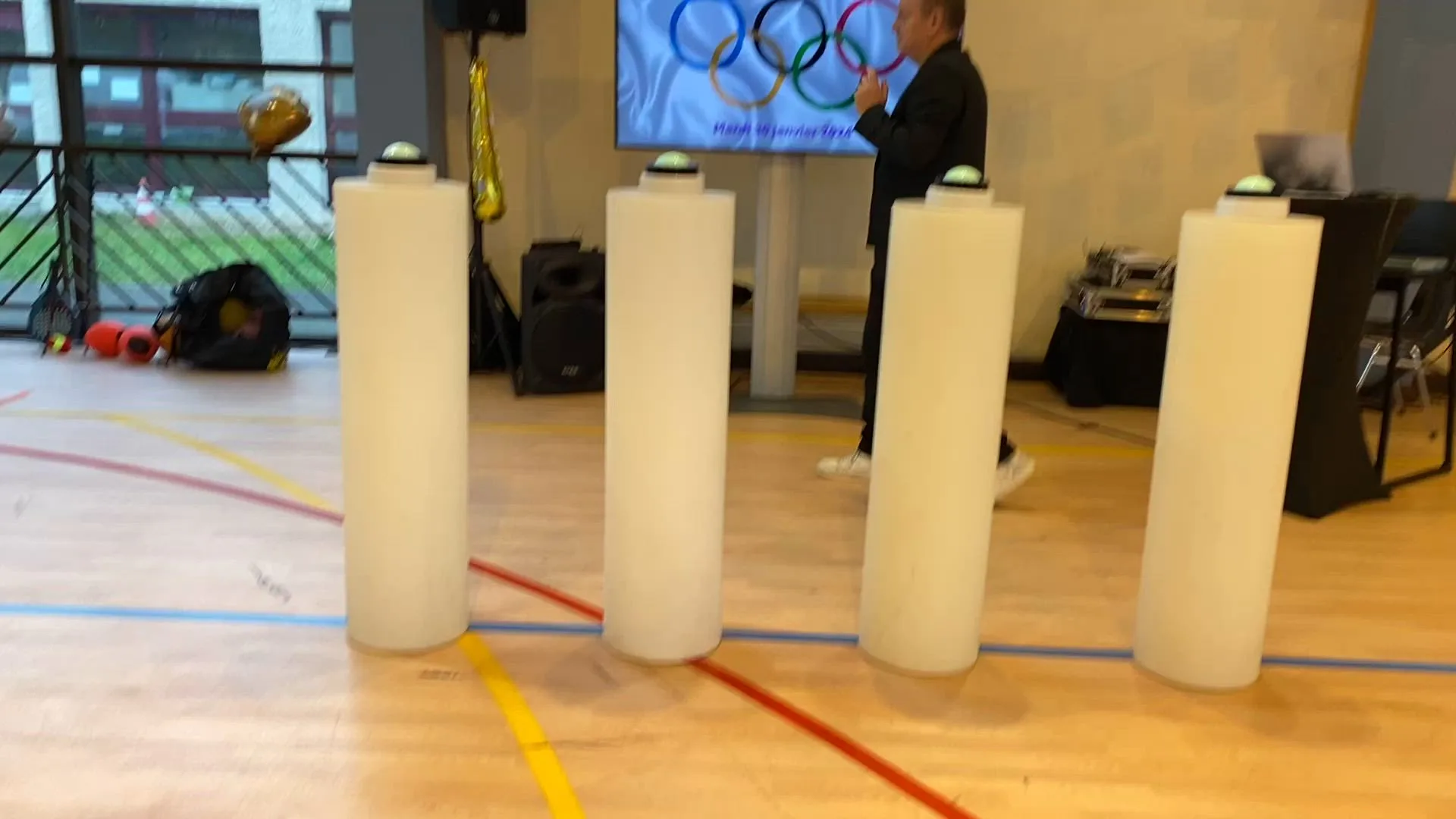
Buzz-in trivia with controlled difficulty: we build question pyramids (easy/medium/hard) to keep teams in the game and avoid a single table dominating. Ideal for 60–300 guests.
Scenario rounds (client, safety, operations): short case prompts where teams choose the best response. Useful when leadership wants alignment without making it feel like training.
Speed rounds between meal courses: 3–5 minute micro-challenges designed to fit catering timing (service delays happen; we plan for them).
Audience live voting: phones or table cards depending on connectivity and privacy requirements. Great for inclusive participation and instant energy shifts.
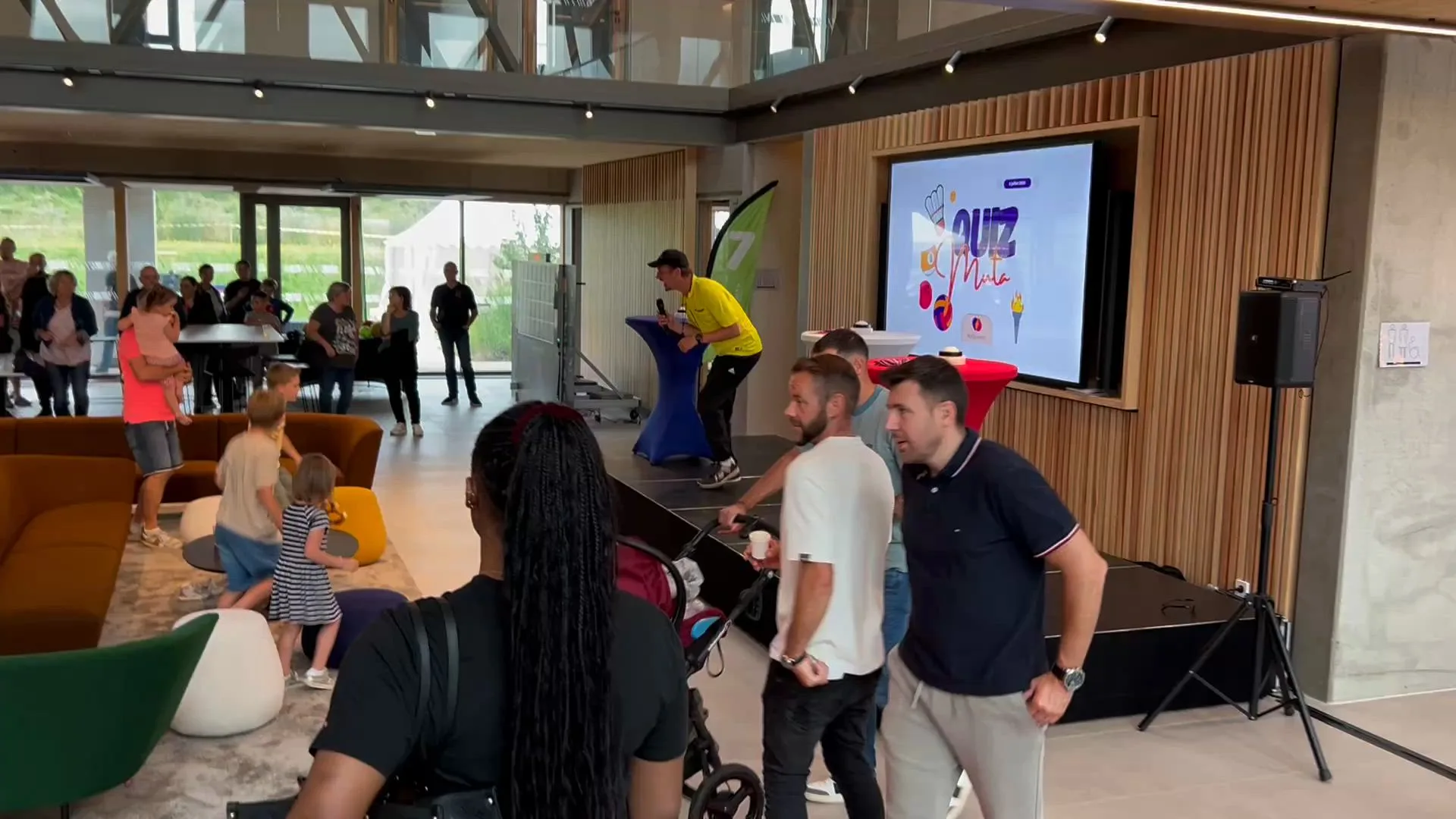
Host + musical stings + walk-up moments: broadcast-style cues that make participants feel supported on stage and keep transitions smooth.
Brand-safe humor framework: we brief the host on “no-go” areas (internal conflicts, sensitive incidents, personal traits). This is an HR-protection measure as much as a tone choice.
Game show + tasting checkpoints: teams unlock a tasting (mocktail, dessert flight) after a round. Works well for cocktail formats in Laval where networking is the priority.
Kitchen-friendly pacing: we coordinate with catering so challenges never block service corridors and never require staff to pause their workflow.
Hybrid scoring for multi-site Laval organizations: in-room teams compete with remote teams on a controlled platform, with equal chances through standardized response windows.
Data-lite participation modes: for companies with strict IT policies, we can run participation without public Wi‑Fi, using local devices and offline scoring.
Content governance: we offer an approval workflow for internal questions (Legal/HR/Comms), so nothing goes live without validation.
The best corporate event entertainment in Laval is the one that reinforces your brand image. We align the game tone, visuals, and questions with your culture—whether you’re formal and premium, or operational and down-to-earth—so the show feels like it belongs to your organization.
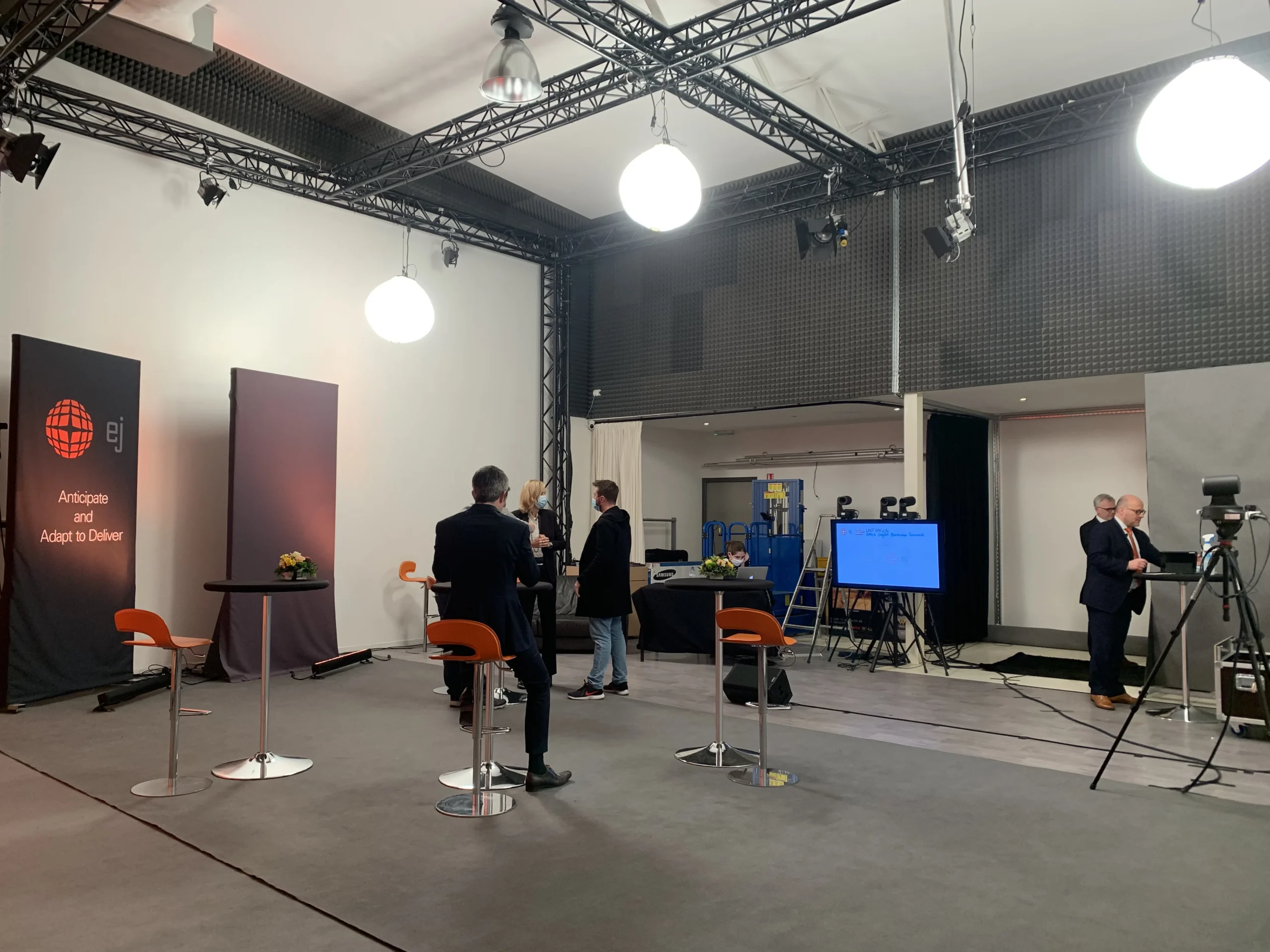
The venue changes how the show is perceived. A TV Game Show Experience needs controlled sound, clear sightlines, and predictable lighting. In Laval, we often adapt to multipurpose rooms, hotel ballrooms, and corporate facilities—each with different constraints on rigging, load-in, and rehearsal time.
| Venue type | For which objective? | Main strengths | Possible constraints |
|---|---|---|---|
Hotel ballroom in Laval | All-hands, annual party, recognition night (100–600) | Built-in banquet flow, professional staffing, predictable acoustics, easier stage placement | Union/house AV rules, limited rigging points, strict load-in windows |
Corporate HQ / cafeteria / training center (Laval site) | Townhall, change management, internal culture moments (30–250) | Strong employer-brand context, easier participation, no transportation friction | Power distribution, acoustics, ceiling height, security access, need for careful space planning |
Event space / loft-style venue in Laval | Leadership offsite, client appreciation, recruitment event (50–250) | More “show” look, flexible layouts, strong photo/video output for comms | AV may be limited, sound restrictions, parking flow, vendor access limitations |
We recommend a site visit or at minimum a technical call with photos/videos of the room. Most last-minute issues—echo, screen visibility, stage placement, cable runs—are preventable when we validate the room early and build the production plan around real constraints.
Budgeting a TV Game Show Experience in Laval depends on production level and operational constraints—not on a vague “package.” The two main cost drivers are (1) how many people must actively participate and (2) how much audiovisual we need to bring versus what the venue already provides.
Group size and format: 30–80 (single host, simple scoring) vs. 200–600 (larger screens, multiple mics, stage management, stronger sound reinforcement).
AV scope: use of in-house screens/sound vs. full deployment (projectors/LED, audio, lighting accents, playback, cabling, technician time).
Customization level: adding branded rounds, company scenarios, executive participation, and an approval cycle with HR/Legal/Comms.
Bilingual delivery: bilingual host, bilingual graphics, and additional rehearsal/briefing to keep pacing tight in both languages.
Venue constraints: short load-in windows, limited access elevators, or strict rigging rules that require additional labor and earlier setup.
Schedule realities: rehearsals, sound checks, and coordination with speeches, awards, and meal service to avoid overtime.
From an ROI perspective, leaders usually justify this line item when it reliably improves participation and message retention while lowering risk. A controlled show reduces “event-day firefighting,” protects brand image, and increases the likelihood that people actually talk to colleagues outside their silo—one of the few outcomes that carries back into operations after the event.
When you run a TV Game Show Experience, proximity is not just convenience—it is risk management. A local team knows the access realities (parking, loading docks, building security), the usual AV standards in common venues, and the supplier ecosystem. That translates into fewer surprises and faster fixes on the day-of.
For directors, the practical advantage is response time. If a room changes, if the schedule shifts, or if a last-minute executive request alters the script, you want a partner who can get on a call quickly, visit the site if needed, and adapt without re-quoting everything.
For more on our local operations, you can also see how we work as an event agency in Laval and what that changes in practice (technical prep, staffing, and vendor coordination).
From an ROI perspective, leaders usually justify this line item when it reliably improves participation and message retention while lowering risk. A controlled show reduces “event-day firefighting,” protects brand image, and increases the likelihood that people actually talk to colleagues outside their silo—one of the few outcomes that carries back into operations after the event.
Our projects vary because corporate realities vary. We’ve delivered game-show blocks inside annual meetings where the CEO needed a clean transition from financial results to culture—without losing the room to post-lunch fatigue. We’ve also supported HR teams during recognition nights where participation had to be inclusive: not everyone is comfortable speaking on a stage, and some groups are sensitive to competitive pressure.
We often work with communications teams who need content capture: photos, short clips, and a consistent visual identity that can be reused internally. That influences staging, lighting, and screen graphics. We also coordinate with internal stakeholders who must approve the content (HR, Health & Safety, Legal) so the show is engaging but never risky.
Finally, we’re used to last-minute constraints: a delayed dinner service, a room flip, or a speaker who wants to add five minutes. We build modular rounds and keep a precise cue sheet so we can compress without the audience noticing—this is where experienced production makes a visible difference.
Overestimating people’s willingness to be on stage: you need a structure where the audience can participate safely from their seat, with optional spotlight moments.
Letting AV be an afterthought: poor sound coverage, delayed screen switching, or weak microphones instantly makes the experience feel amateur and damages credibility.
Using internal jokes without governance: what feels funny in a small group can become a reputational issue in a room of 300 with mixed roles and backgrounds.
Ignoring room geometry: long rooms, columns, low ceilings, or daylight can break visibility; the game must be designed for the actual space.
No timing ownership: if no one controls transitions between speeches, service, and show moments, you end up rushing the best part—or running into overtime costs.
One-speed pacing: back-to-back trivia rounds fatigue the room; alternating mechanics (visual, strategy, lightning) keeps attention stable.
Our role is to prevent these risks before you sign off internally. We do it with a technical checklist, an approved run-of-show, and on-site leadership that can make fast decisions without improvising the core experience.
Loyalty comes from predictability and continuous improvement. After each program, we debrief with your stakeholders: what leadership observed, where engagement peaked, what segments were too long, and what the venue/catering timing required. That feedback is documented and used to refine the next edition.
Post-event debrief within 5–10 business days with clear recommendations (timing, participation design, AV adjustments).
Two-level documentation: a client-facing recap and an internal production report (cue improvements, tech notes, staffing plan).
Content refresh cycle so repeat events don’t feel recycled: updated rounds, new question banks, and revised visuals aligned to your current priorities.
Repeat business is not about promises; it is the outcome of consistent delivery. When a client in Laval comes back, it is usually because the event ran on time, the tone was right, and leadership felt supported rather than exposed.
We start with a focused call with the event owner (HR, Comms, EA to the CEO, or an executive sponsor). We confirm the event objective, audience profile, sensitivities, and success criteria. We also clarify operational constraints: venue, schedule, union rules, bilingual requirements, and whether this is a standalone show or part of a dinner/awards program.
We propose a game architecture: number of rounds, participation model, scoring logic, and exact timing. We define where executives participate (if desired) and how we protect them from awkward moments. You receive a draft run-of-show with timecodes, transition scripts, and identified dependencies (meal service, speeches, award moments).
If we integrate internal content, we run an approval workflow with your HR/Legal/Comms contacts. We validate language, brand tone, and sensitive topics. We also ensure questions are fair across roles (not only corporate knowledge) and that the difficulty curve keeps the room engaged.
We complete a technical advance: room layout, stage position, screens, audio coverage, microphone plan, and power requirements. We coordinate with venue AV and catering to avoid conflicts (service paths, speaker locations, volume limits). We build the cue sheet and confirm staffing: host, stage manager, and technicians.
On site, we manage load-in, sound checks, and final briefings. During the show, we run cues, handle participant onboarding, and maintain pacing. We keep a Plan B ready (offline scoring, alternate participation mode, buffer rounds) so the program stays professional even if conditions change.
Most TV Game Show Experience in Laval formats work best for 30 to 600 people. For 30–120, we can run high participation with frequent player rotation. For 120–600, we use table teams plus audience interaction so engagement stays high without putting too many people on stage.
Plan 45–90 minutes for a strong game-show block. If you want awards, speeches, and a more varied arc, 90–120 minutes is safer. We also build optional buffer segments (3–5 minutes each) so we can adapt if dinner or speeches run late.
Yes. We can work with venue AV or bring full production depending on what’s already installed. At minimum, you typically need 1–2 wireless microphones, a screen visible to all tables, and reliable audio playback. For larger rooms, we add additional mics, confidence monitors, and dedicated tech support to keep transitions tight.
Yes. We can deliver bilingual hosting and bilingual on-screen content. The key is maintaining pace: we prepare scripts and graphics to avoid slow live translation. In mixed rooms, we often use bilingual prompts with short, clear wording and a host briefed to keep transitions crisp.
Budgets vary with production level, but many corporate groups land between $4,500 and $18,000 for a professional TV Game Show Experience in Laval. Smaller in-house setups can be lower when AV is already available; larger ballroom productions with expanded AV, more staff, and deeper customization sit at the higher end.
If you’re comparing agencies, we suggest starting with three decisions: your target attendance, the venue (or shortlist), and the role you want leadership to play (on stage, in the room, or only in messaging). With that, we can recommend the right TV Game Show Experience in Laval format and provide a clear budget and production plan.
Contact INNOV'events with your event date, estimated headcount, and preferred venue area in Laval. We’ll come back with a structured proposal (run-of-show options, technical needs, staffing, and content approach) so you can validate internally with confidence—and avoid last-minute surprises.
Thierry GRAMMER is the manager of the INNOV'events Laval office. Reach out directly by email at canada@innov-events.ca or via the contact form.
Contact the Laval agency