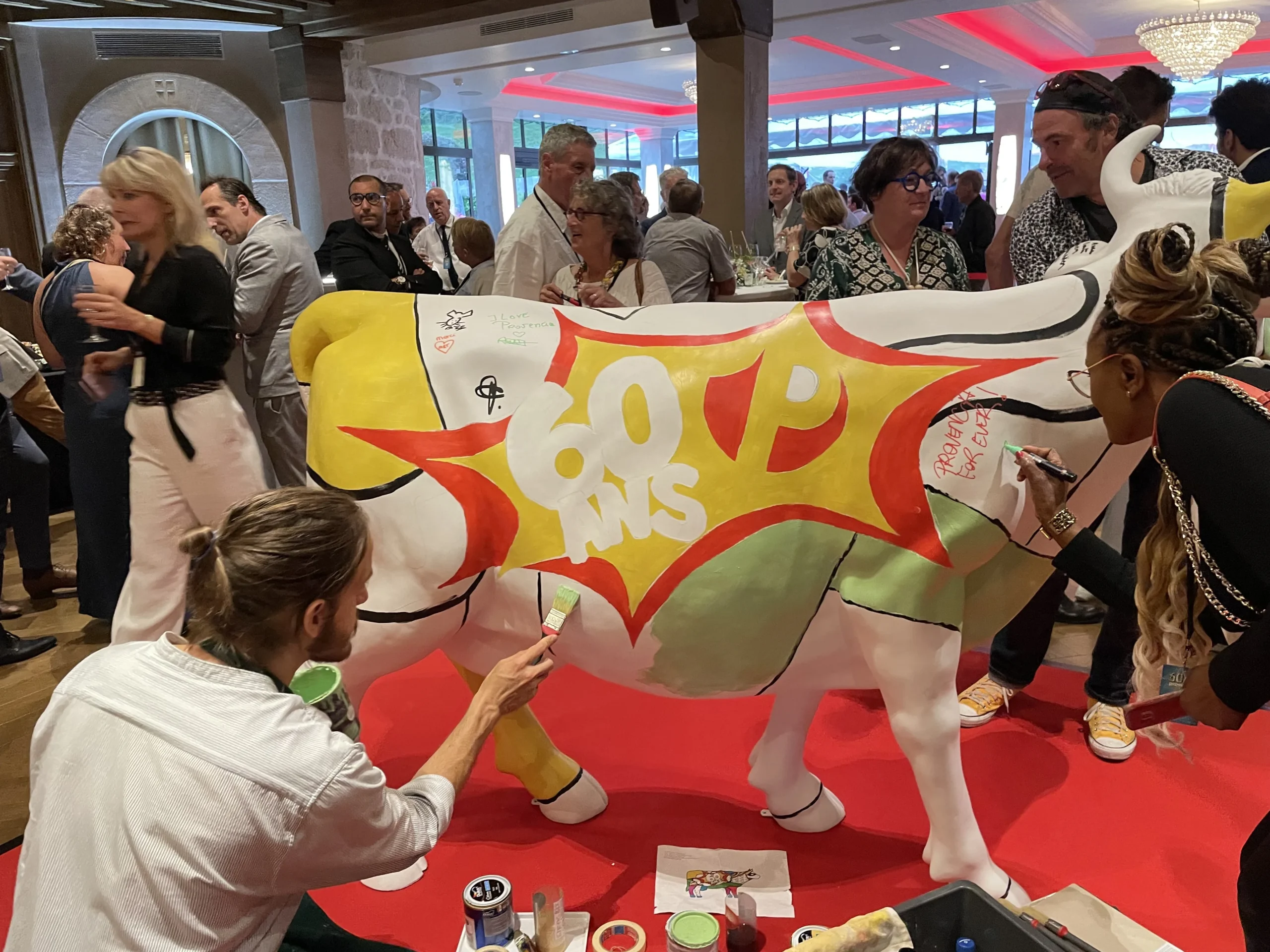
At INNOV'events, we design and facilitate Acting Workshop formats in Laval for leadership teams, HR and communications departments—typically from 10 to 250 participants. We handle the facilitation, pacing, room setup needs, and the operational details that make the day run cleanly (timing, transitions, AV cues, participant flow).
The goal is practical: build presence, clarity and alignment in how your managers speak, listen and lead—without turning it into theatre for theatre’s sake.
In a corporate event, an Acting Workshop is not “fun content”; it is a lever to reduce communication friction that costs time: unclear messages, hesitant leadership, and meetings where decisions don’t land. When it’s well facilitated, you see immediate effects in how leaders frame priorities, handle pushback, and carry a message consistently.
Organizations in Laval typically expect a tight schedule, measurable learning objectives, and a format that respects different comfort levels (especially with senior leaders). They also expect the event to protect brand image: nothing awkward, no forced participation, and a facilitator who can read a room quickly.
INNOV'events is a Montréal agency active across the North Shore, with recurring mandates in Laval. We build workshops the way executives want them: clear outcomes, disciplined facilitation, and an operational plan that prevents “event-day surprises”.
15+ years delivering corporate facilitation and event production in Quebec, with repeat mandates and multi-site rollouts.
500+ corporate events supported (workshops, conferences, executive offsites, recognition evenings), with on-site coordination and AV integration.
Operational comfort from 10-person exec sessions to 1,000+ attendees plenaries through a vetted supplier network (AV, staging, catering, venues).
Facilitation approach built for business outcomes: pre-brief with HR/Comms, scenario design, and structured debrief to translate insights into day-to-day behaviours.
We regularly work with organizations that operate in and around Laval, and several clients come back annually because they need consistency: the same level of professionalism, the same respect for internal culture, and a partner that can integrate quickly with HR and communications. In practice, that means we know how to work with internal constraints like unionized environments, multi-shift teams, bilingual audiences, and leadership calendars that change last minute.
You mentioned providing company names as references; we can include them once you share the list. In the meantime, what we can commit to is the way we run references: we align on what you want to validate (facilitation quality, logistics reliability, executive comfort, risk management), then we provide comparable mandates (similar audience size, similar stakes, similar industry context).
Whether your event is hosted near Centropolis, in an industrial sector, or at a hotel meeting space in Laval, our job remains the same: make the workshop credible for senior leadership and useful for the organization the week after.
Nous vous envoyons une première proposition sous 24h.
Many leadership teams only notice communication problems when they become reputational or operational issues: a poorly received change announcement, a tense town hall, or a manager who cannot de-escalate conflict. A well-designed Acting Workshop in Laval gives you a controlled environment to practice high-stakes interactions—without putting the business at risk.
Executive presence that reads as confident, not aggressive: posture, breathing, pace, and grounding so leaders can speak calmly under pressure (board updates, difficult conversations, media-adjacent moments).
Clearer messages in fewer minutes: structured speaking patterns to reduce “meeting drift”, improve decision clarity, and protect time—especially valuable for directors managing cross-functional priorities.
Better change communication: practice delivering a difficult message with empathy and firmness, including how to handle interruptions and emotional reactions without losing the narrative.
Alignment between HR and Communications: a shared language for tone, consistency and intent—so employee communications feel coherent across departments and sites.
Concrete tools for managers: techniques like intention-setting, audience calibration, and “message laddering” that translate directly into stand-ups, one-on-ones and town halls.
Psychological safety without softness: a facilitation frame where people can take risks, receive feedback and improve—while still maintaining professional standards expected by senior teams.
Laval has a pragmatic business culture: time is scarce, teams are busy, and credibility is earned through results. That’s why our workshops are built around real scenarios you face—announcing a reorg, handling a service failure, defending a budget, or bringing a team back into alignment after conflict.
In Laval, many companies operate with a mix of headquarters roles and operational teams. That creates a recurring tension we see in the field: leaders communicate “strategy”, while supervisors and frontline teams experience “constraints”. In an Acting Workshop, we address that gap directly by building scenarios that force clarity: What exactly are we asking people to do? What are we not saying? What reactions should we anticipate?
Executives also expect discretion. Workshops often surface sensitive realities—tension between departments, uneven leadership styles, or credibility issues after a tough quarter. We design the day so participants can engage honestly without feeling exposed: clear ground rules, structured feedback methods, and facilitator control of tempo.
Finally, local expectations are operational. Parking, access, punctual start times, AV reliability, and smooth transitions matter because they signal professionalism. If the room layout blocks sightlines, if microphones fail, or if the schedule drifts, you lose the room—especially with senior leaders. Our planning includes those details because they are not “nice-to-haves”; they protect outcomes.
Engagement comes from relevance. In Laval, participants commit when they recognize the scenarios: a tense client call, a difficult performance conversation, or a town hall after change. Below are formats we deploy depending on audience size, risk tolerance and objectives.
Leadership presence lab (10–20 people): short filmed speaking moments (optional), immediate coaching on clarity, structure and non-verbal signals. Best for directors, high-potential leaders, and spokesperson roles.
Difficult conversations simulations (12–30 people): structured role-play with defined objectives, “pause and reset” coaching, and debrief on language that escalates vs. de-escalates. Ideal for HR-driven leadership programs.
Message discipline under pressure (15–40 people): participants practice staying on-message when interrupted, challenged, or pulled into details. Useful for change announcements and sensitive internal communications.
Cross-functional alignment scenarios (20–60 people): teams practice explaining priorities to other departments in a way that reduces friction (operations vs. sales, HQ vs. site teams). Strong fit for matrix organizations in Laval.
Voice and diction for professionals (10–40 people): breathing, projection, articulation and pace—applied to real presentations and meetings. Not “acting” for show; it’s vocal hygiene and influence.
Storytelling for leadership communications (12–50 people): how to structure a narrative that is credible, concise and aligned with business realities (results, constraints, next steps). Especially useful for internal town halls.
Working lunch debrief (10–80 people): facilitated reflection over a meal to convert learning into commitments (what we stop, start, continue). This works well when leadership time is tight and you need efficiency in Laval schedules.
Coffee-based micro-practice stations (30–150 people): short practice drills during breaks (voice reset, elevator message, stakeholder framing) to keep momentum without extending the day.
On-camera leadership module (10–30 people): practical coaching for Teams/Zoom presence: camera angle, lighting, vocal energy, and handling Q&A. A frequent need for multi-site organizations operating from Laval.
Scenario design from your real cases (12–60 people): we build simulations based on your internal reality (without naming individuals). This increases buy-in and reduces the “this is not our world” reaction.
Facilitated peer feedback framework (15–40 people): teach managers how to give feedback that is specific, respectful and actionable—then apply it to communication behaviours in the room.
The right format must align with brand image and leadership posture. If your culture is reserved, we design low-ego exercises; if your culture is fast-paced, we design high-intensity drills with tight timeboxes. In all cases, the Acting Workshop must protect credibility: participants should leave feeling more equipped, not exposed.
The venue affects behaviour. For an Acting Workshop in Laval, you need a space that supports movement, audibility, and focused attention. A beautiful room that restricts interaction can undermine outcomes; a functional training room with the right layout often performs better.
| Venue type | For which objective? | Main strengths | Possible constraints |
|---|---|---|---|
Hotel meeting room in Laval | Leadership offsite, quarterly planning with a skills module | AV options, catering on-site, professional atmosphere, easy logistics for mixed seniority groups | Room acoustics vary; some layouts limit movement—needs pre-check and layout control |
Dedicated training center (North Shore / 53) | Manager training cohorts and repeat sessions | Designed for learning: writable surfaces, breakout capacity, predictable tech setup | Often less “prestige” for executive audiences; must ensure comfort and privacy |
Company site meeting space in Laval | Operational teams, supervisor development, practical scenarios | Highest relevance, minimal travel, easy integration with real workplace cases | Distractions and interruptions; requires strict room control and clear boundaries |
We strongly recommend a site visit or at minimum a detailed virtual walkthrough. For workshops, details like ceiling height, echo, HVAC noise, and chair type can change the entire facilitation dynamic. Our role is to validate the space against the workshop method—before your executives arrive.
Pricing for a corporate Acting Workshop in Laval depends less on “the concept” and more on operational scope: number of facilitators, duration, customization level, and what you expect us to take off your team’s plate.
As an orientation, many corporate workshops land between $2,500 and $12,000 for a half-day to full-day session, and can go beyond that for multi-cohort programs, on-camera setups, or executive coaching add-ons. We quote after clarifying objectives and constraints, because small differences (group size, room type, bilingual delivery) change the real cost drivers.
Group size and facilitation ratio: a 1-facilitator format can work up to ~25 depending on intensity; beyond that, adding a co-facilitator protects participation quality and timing.
Duration and learning depth: a 90-minute conference-style module is not the same as a 3.5-hour workshop with drills and debriefs, or a full-day with scenario rotations.
Customization level: using your real situations (change announcements, conflict patterns, service issues) requires design time, stakeholder interviews, and sometimes pre-work surveys.
Bilingual delivery needs: English-only, French-only, or bilingual facilitation changes staffing and materials—common in Laval audiences.
AV and room configuration: lavalier mics, handhelds for Q&A, camera for optional playback, confidence monitor, and the room layout plan all affect production needs.
Risk management and sensitivity: if the topic is delicate (culture issues, post-merger tension), we build a stronger facilitation frame and tighter feedback protocols.
From an ROI perspective, the question is often: how many miscommunications, escalations, or lost meetings does this prevent? When leadership teams communicate with more clarity and composure, the gains show up quickly—in speed of execution, employee trust, and fewer reputational “fires” for HR and Comms to manage.
Having a partner that knows Laval reduces operational risk. Traffic patterns, venue realities, supplier reliability, and local timing constraints are not theoretical on event day. When your VP arrives late because of a last-minute schedule change, you need a facilitator and producer who can adapt without derailing the learning arc.
As INNOV'events, we coordinate closely with your internal stakeholders (HR, communications, executive assistants, and site leads). We also bring the supplier network that makes delivery predictable: AV technicians who understand workshop needs (not just conferences), photographers who can stay discreet, and venue contacts who respond quickly when you need a room reset.
If you’re comparing providers, a simple test is this: ask them how they prevent awkward moments in front of executives. Our answer is operational and behavioural—clear brief, controlled progression, and on-site discipline. For local coordination and venue support, our Laval page is here: event agency in Laval.
From an ROI perspective, the question is often: how many miscommunications, escalations, or lost meetings does this prevent? When leadership teams communicate with more clarity and composure, the gains show up quickly—in speed of execution, employee trust, and fewer reputational “fires” for HR and Comms to manage.
Our mandates vary, but they share the same pressure: executives need results without losing time. We’ve delivered leadership communication workshops as part of annual planning days, manager development tracks, and internal conferences where the workshop needed to fit between business-critical presentations.
A common situation: HR wants a “communication skills” workshop, but leaders fear it will feel soft or theatrical. We address that by anchoring the design in operational realities—how to run a hard meeting, how to hold boundaries, how to deliver a message that will be repeated accurately across teams. Another recurring situation: Communications teams need leaders to stay consistent in messaging during change. We build drills that simulate real pushback and teach leaders to respond without improvising new policy in the room.
We also adapt to audience diversity. In Laval, you often have mixed groups: tenured supervisors, newer managers, technical experts promoted into leadership, and senior directors in the same program. The workshop has to respect each profile: giving experienced leaders advanced refinement while offering practical structures to newer managers.
Choosing a “performance” angle instead of a business angle: participants disengage fast if exercises feel disconnected from their job. We keep everything tied to work scenarios and leadership outcomes.
Overexposing participants too early: forced role-play in the first 10 minutes creates resistance. We use progressive exposure and clear opt-in mechanics while still maintaining accountability.
No alignment with HR/Comms on sensitive topics: if leaders improvise policy answers during a simulation, you create confusion. We define boundaries and escalation paths in advance.
Room setup that blocks facilitation: fixed boardroom tables, poor acoustics, and bad sightlines reduce participation. We validate layouts and AV needs before the day.
Underestimating timing: workshops fail when discussions run long and exercises get cut. We run with a disciplined clock and pre-planned “compression options”.
Skipping the debrief: without structured debrief, it feels like an activity, not development. We translate behaviours into commitments and next steps.
Our role is to protect you from these risks—because HR and communications teams are the ones who absorb the fallout when a workshop feels unprofessional. We build a controlled experience that keeps leaders engaged and your brand protected in Laval.
Renewal happens when the workshop is not just well received, but useful months later. Our returning clients typically value the same things: predictability, discretion, and a facilitation style that respects executive time while still creating real practice.
60–80% of our workshop mandates lead to follow-up requests (additional cohorts, advanced modules, or integration into leadership programs), because organizations prefer consistency once a facilitation approach is validated internally.
Many clients move from a one-off Acting Workshop to a 2–4 session progression (presence basics → difficult conversations → on-camera leadership → executive messaging).
For multi-site organizations, we often replicate the same framework across locations to reduce variance in leadership communication.
Loyalty is not about “liking the day”; it’s proof the workshop created a repeatable method leaders can use. That’s what we aim to deliver for teams in Laval and across Quebec.
We start with a working session with HR and Communications to define outcomes in operational terms: what leaders must do differently after the workshop (examples: handle interruptions, deliver bad news, frame priorities, de-escalate conflict). We also identify non-negotiables: tone, brand posture, and what must not happen in front of executives. This step typically includes stakeholder interviews (1–5 people) and review of internal context (town hall format, leadership principles, recent changes).
We build exercises around your reality: real meeting moments, cross-functional tensions, customer escalation patterns, or change narratives. We define group sizes, rotation logic, and the facilitation ratio required. If needed, we propose cohorts so people can practice safely (for example: supervisors separately from directors, or mixed groups with clear framing). Deliverables include a run-of-show, facilitation plan, and participant instructions that feel professional—not childish.
We validate venue constraints (room dimensions, acoustics, seating, lighting, AV). For workshops, we pay attention to movement space and audibility. We confirm arrival times, room access, and transitions. If you need bilingual materials or internal branding on slides/handouts, we integrate that here. This is where we remove friction for your internal team.
On the day, we run the workshop with disciplined timing and a clear safety frame. We manage energy, keep exercises purposeful, and handle resistance professionally (common with senior leaders who have seen “training” that wastes time). If a sensitive moment appears, we contain it, debrief it, and steer the group back to the objective. Your executives should feel the day is well led—because it is.
We close with a structured debrief: what worked, what to keep, and what to adjust in real meetings. For HR/Comms, we can provide a concise recap of themes and recommended follow-ups (additional cohort, refresher module, leadership messaging clinic). The objective is transfer: behaviours that show up Monday morning, not just feedback forms.
Most corporate formats in Laval work best in 2.5 to 4 hours for real practice and debrief. For executive teams with limited time, a focused 90–120 minutes module can work if objectives are narrow (presence, message clarity). For deeper behaviour change (difficult conversations, conflict), plan one full day or a 2–4 session progression.
For high participation, we recommend 12–24 participants per facilitator for drill-based workshops. You can go up to 40–60 if the design includes structured breakouts and tight timing. For 100+, we shift to a hybrid model: a plenary module plus breakout rotations with additional facilitators.
Yes, if the design is business-first and progressive. We start with low-risk exercises (voice, intention, structure) and move toward simulations with clear roles and boundaries. No one is forced to “perform”; participation is guided and respectful. Reserved leaders often appreciate the practical framing: influence, clarity, and composure under pressure.
Yes. In Laval, bilingual audiences are common. We can deliver in English, French, or bilingual formats. The most effective approach is usually one main facilitation language with bilingual materials, plus bilingual Q&A support. For fully bilingual facilitation, we may add a co-facilitator depending on group size and schedule.
To quote accurately, we need: date range, participant count, target audience (executives, managers, mixed), preferred duration (90 min/half-day/full-day), venue status (secured or not), language needs, and the top 2–3 scenarios you want to practice (change announcement, conflict conversation, stakeholder update, etc.). With that, we can propose a clear scope and a budget range within 24–72 hours.
If you’re evaluating options, we suggest starting with a short scoping call. We’ll confirm the right format for your audience in Laval, propose a realistic agenda, and identify the logistical and reputational risks to manage. The earlier we align (ideally 4–8 weeks before the date), the easier it is to secure the right room setup, facilitation team and timing.
Send us your participant count, objectives, and preferred timing window, and we’ll come back with a concrete recommendation and a quote that reflects real delivery conditions—not assumptions.
Thierry GRAMMER is the manager of the INNOV'events Laval office. Reach out directly by email at canada@innov-events.ca or via the contact form.
Contact the Laval agency