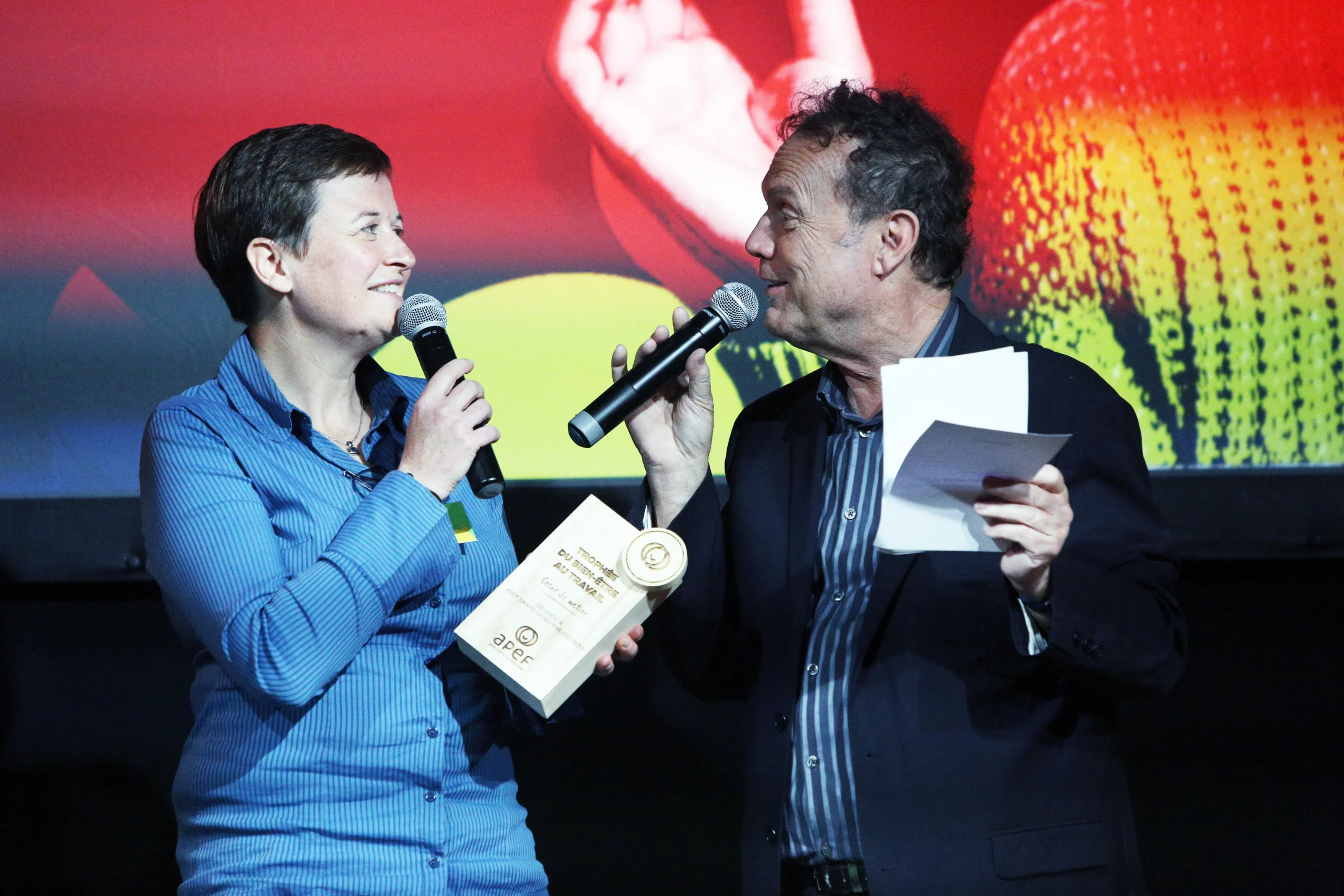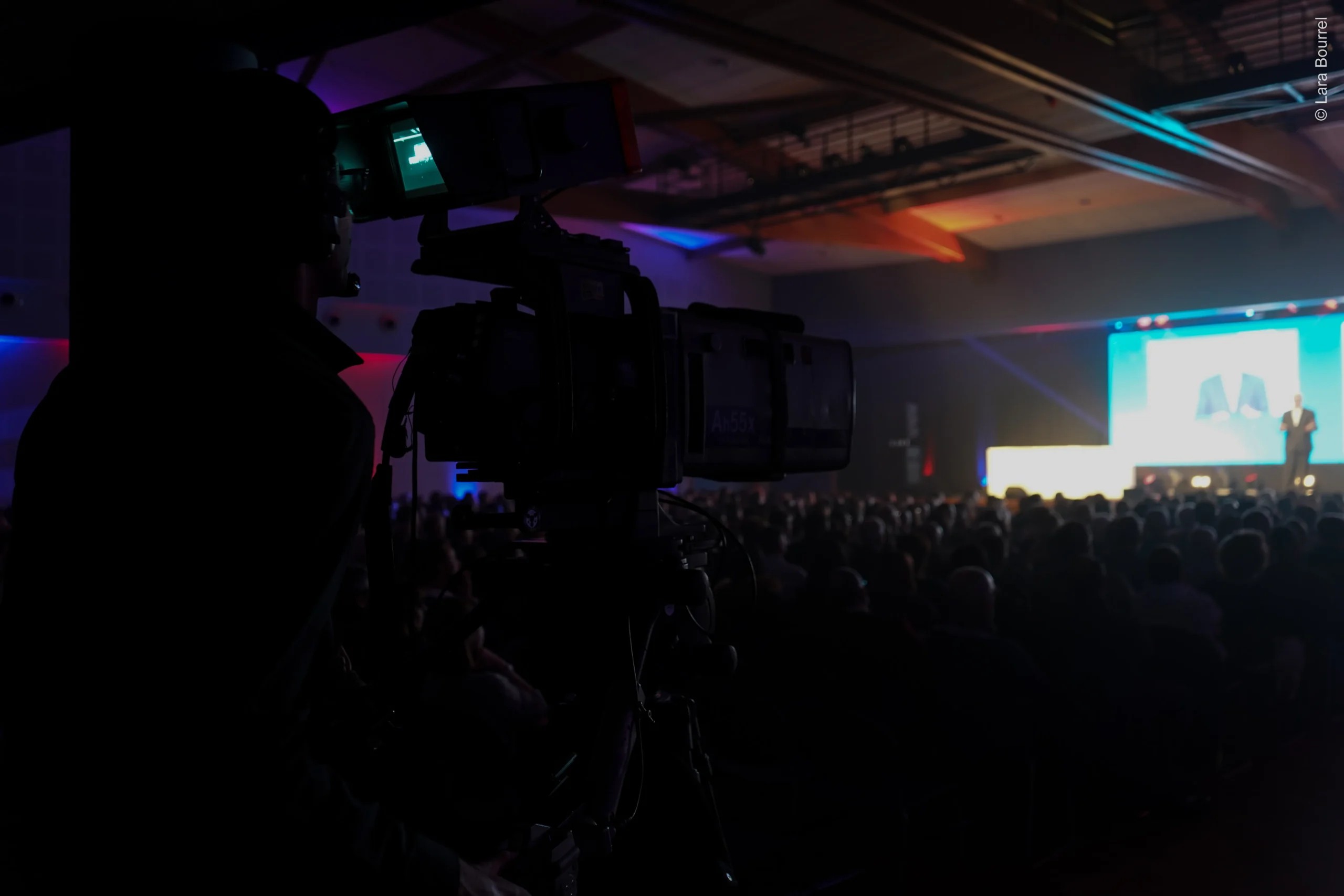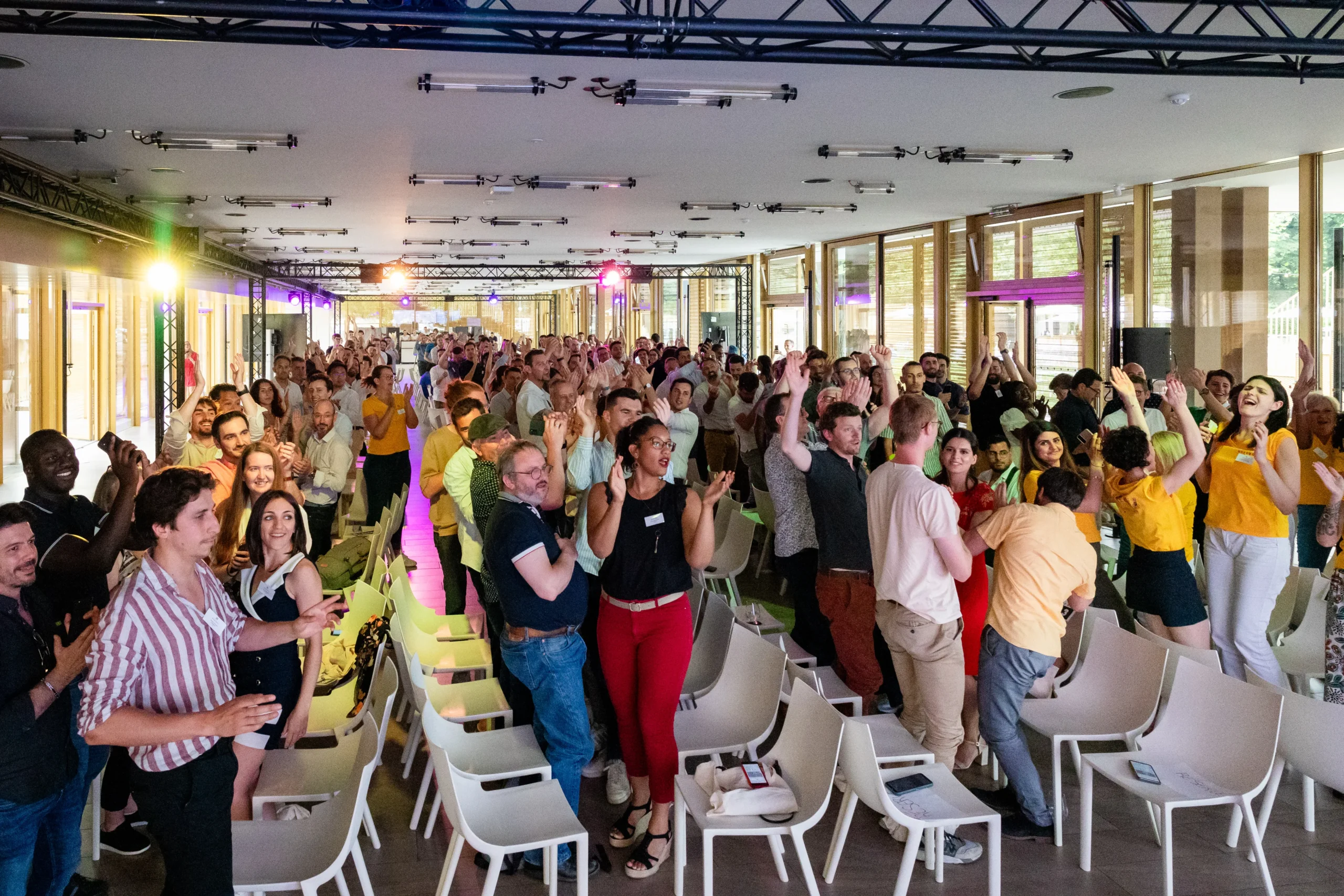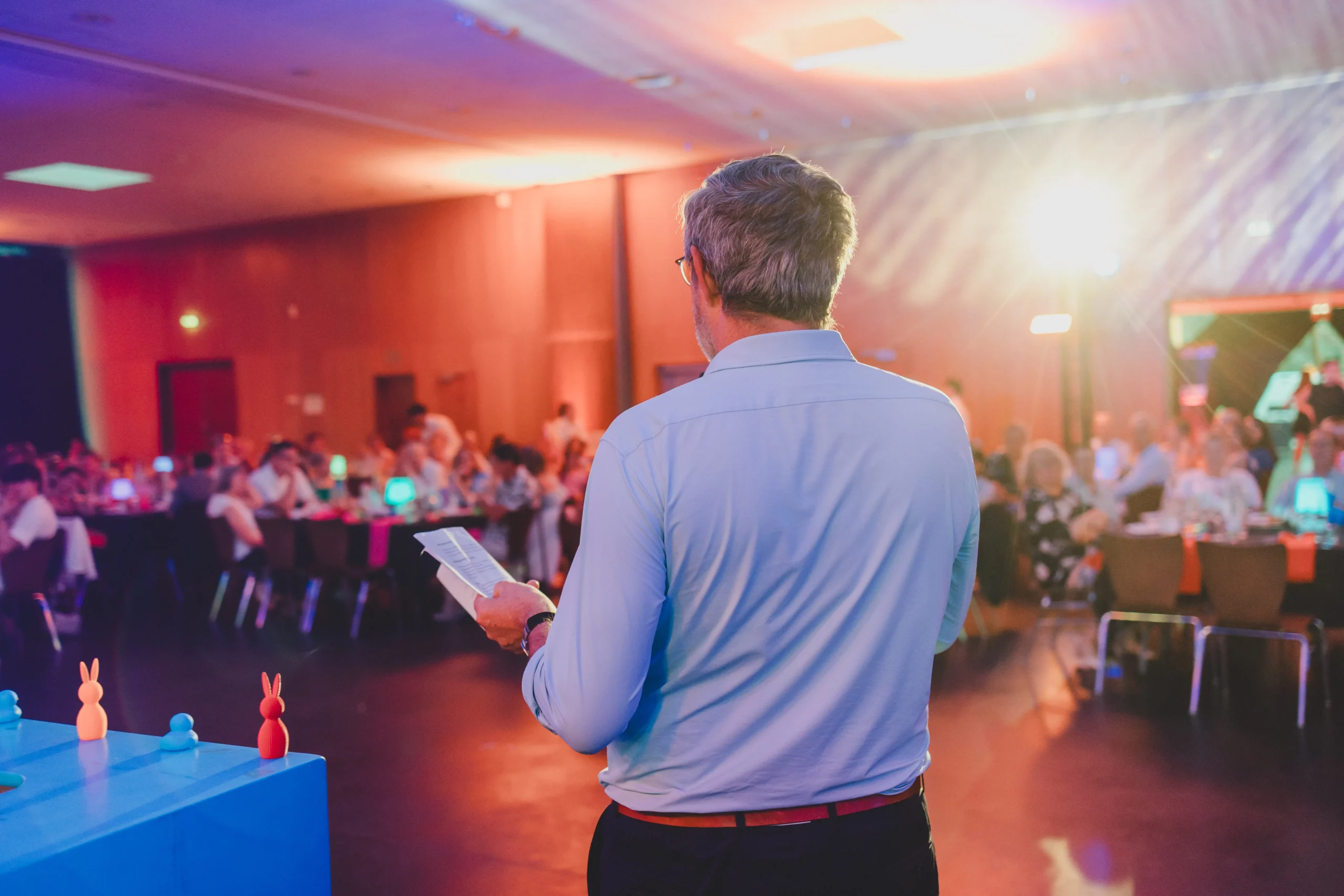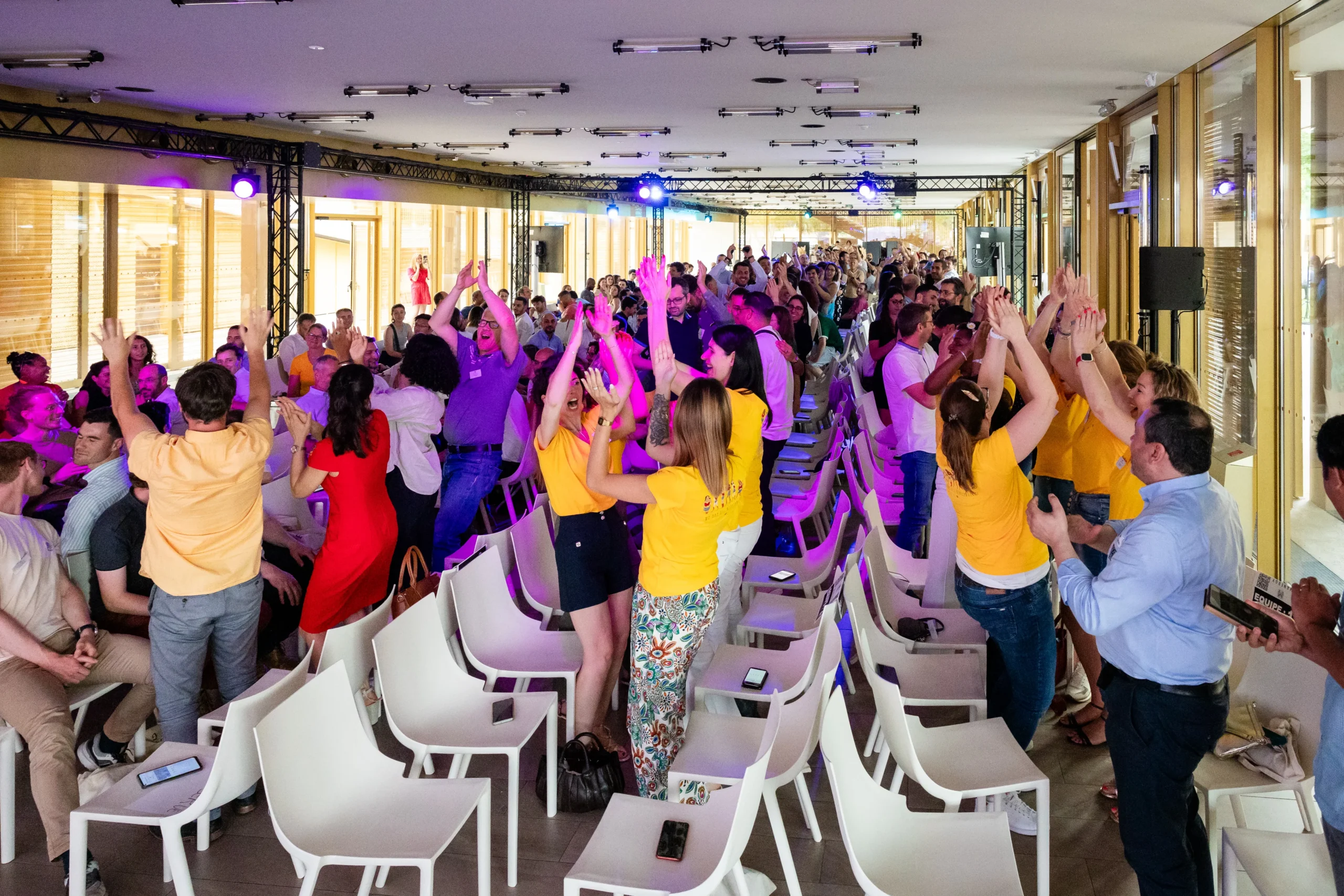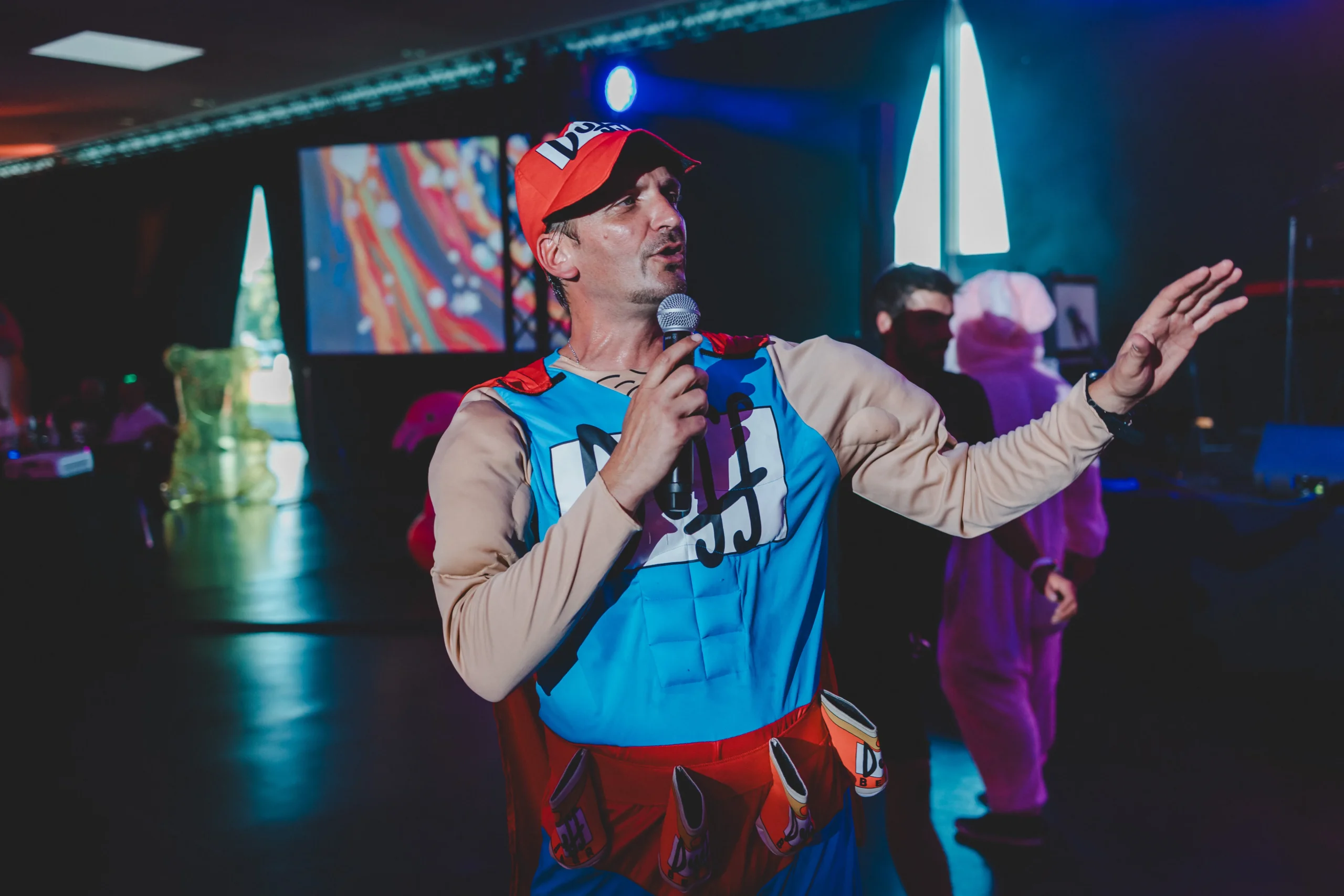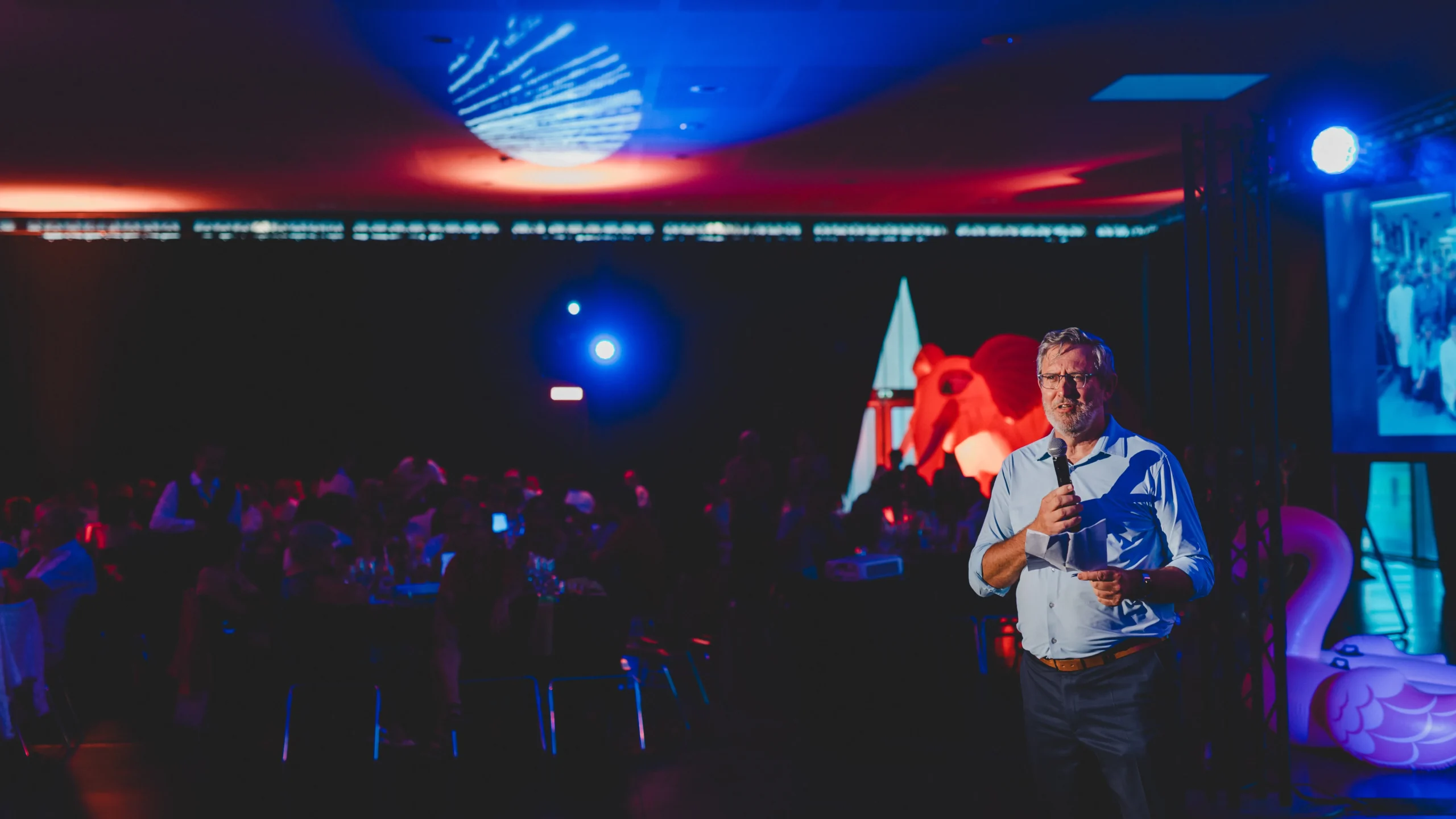
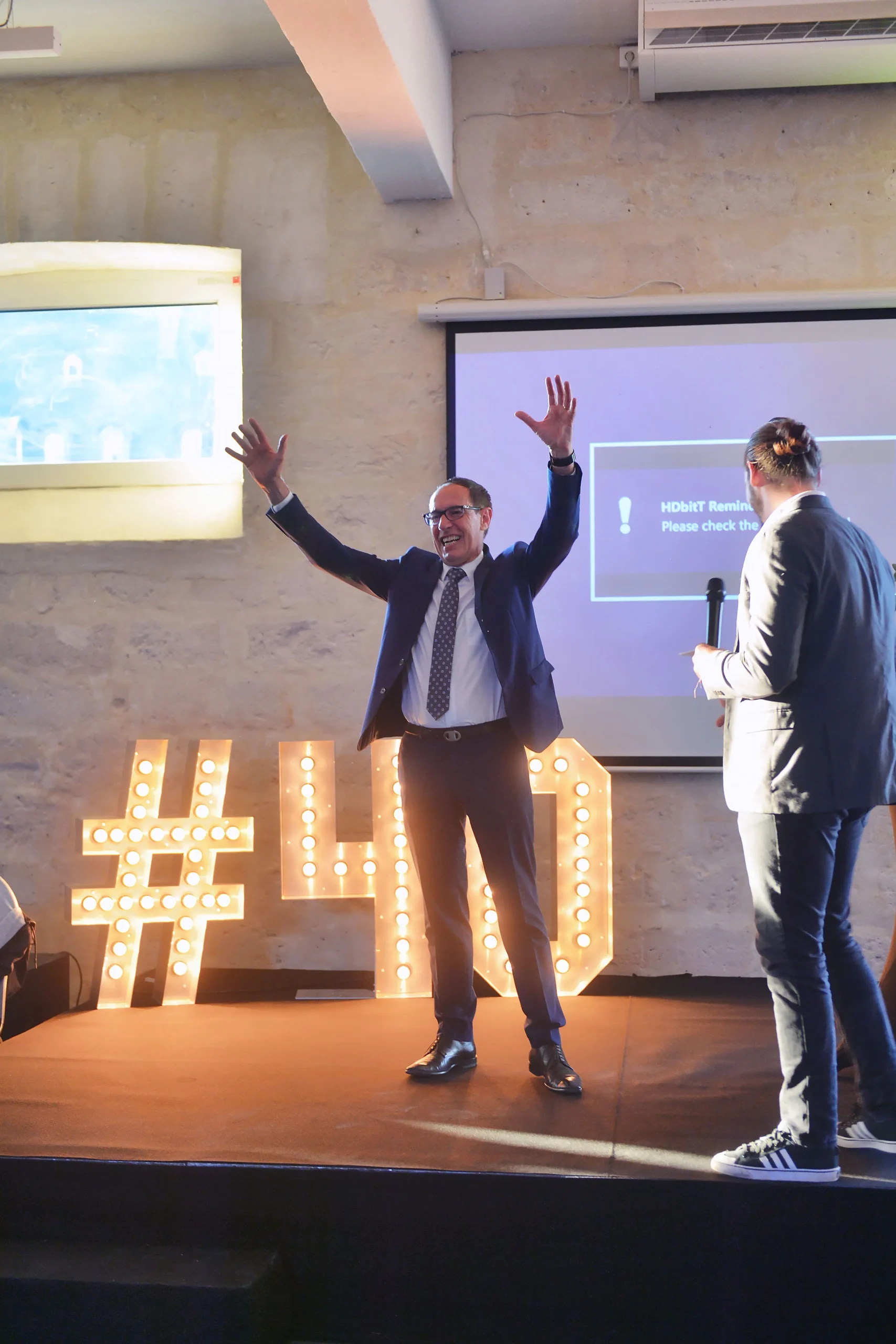
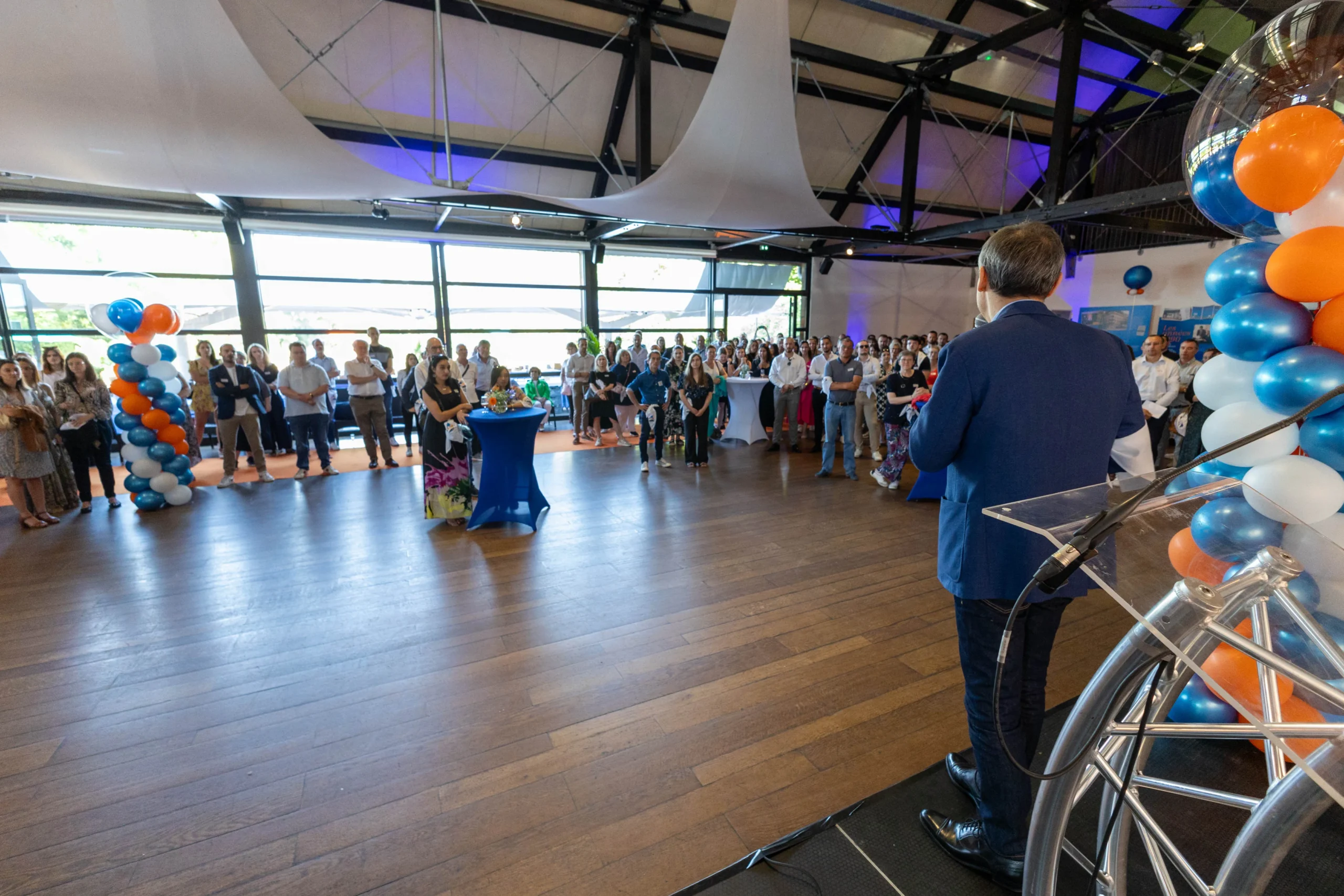
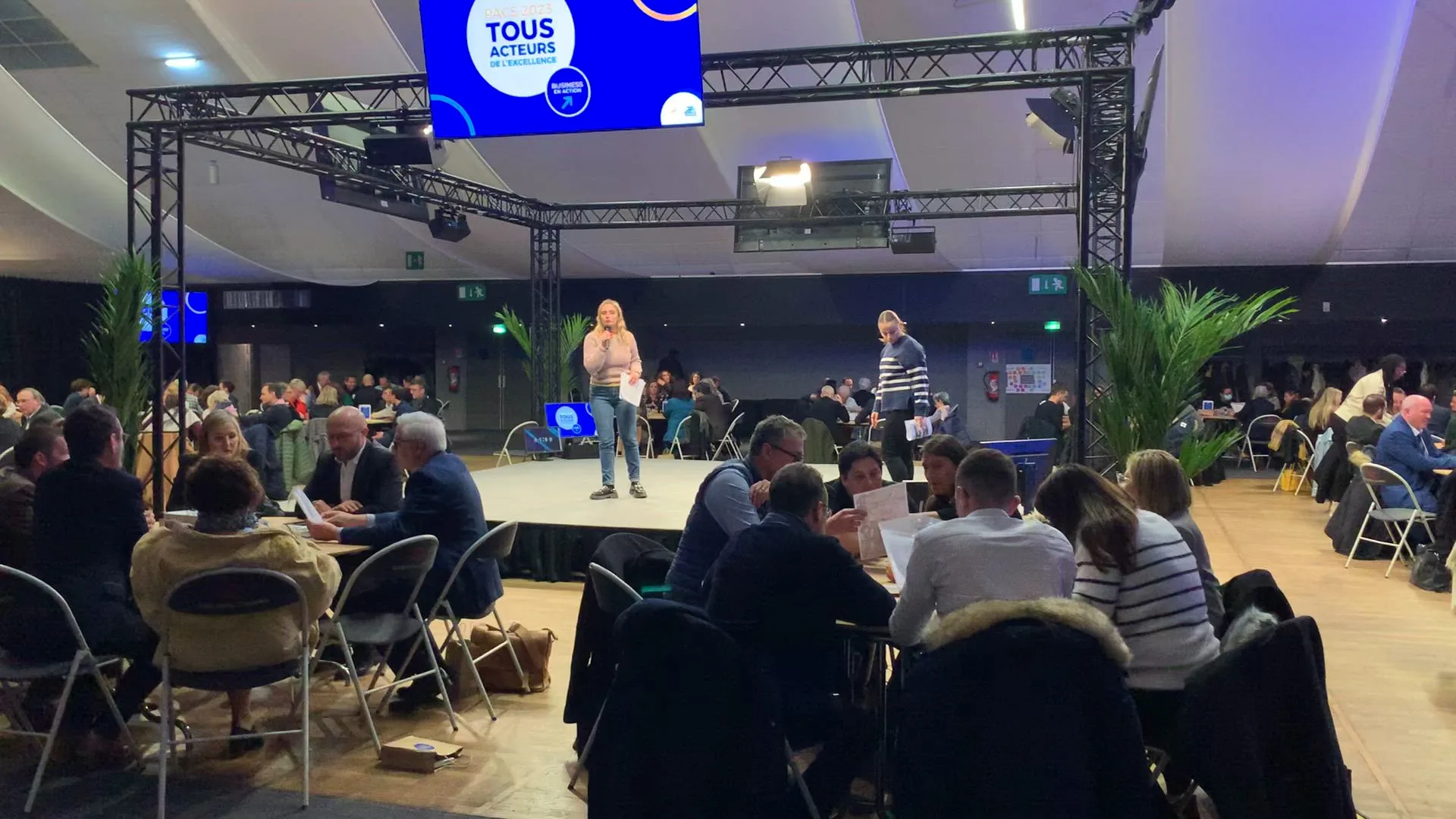
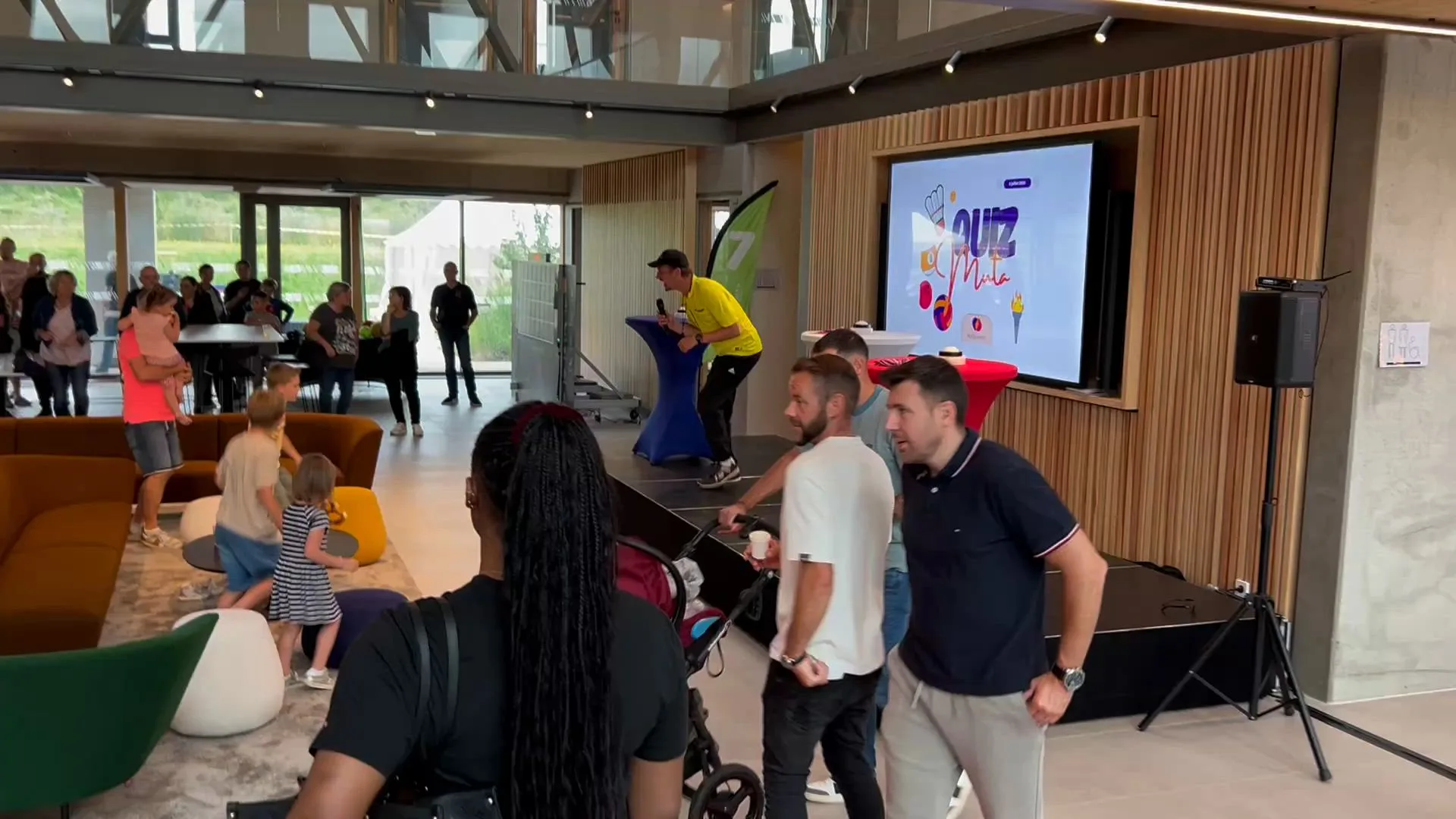
INNOV'events provides Professional Event Host services for corporate audiences from 30 to 2,000+ attendees in Laval. We manage the run-of-show, speaker flow, audience engagement, bilingual transitions, and the “day-of” pressure so your leadership can focus on outcomes.
Whether it’s a town hall, recognition evening, sales kickoff, client summit, or HR-driven culture event, we host with the discipline of a stage manager and the diplomacy of an executive advisor.
In a corporate setting, “entertainment” is rarely about being loud; it’s about controlling attention. A solid host protects your key messages, keeps speakers credible, and prevents the time drift that quietly destroys Q&A, networking, and executive alignment.
Organizations in Laval expect professionalism that matches their brand: concise stage time, bilingual ease, respectful humor, and zero awkward moments with employees, unions, clients, or partners in the room.
From our Montréal base, we operate weekly on the North Shore and in Laval, with hosts who understand local venues, vendor realities, and the practical constraints of corporate calendars, compliance, and stakeholder expectations.
10+ years supporting corporate and institutional events in Greater Montréal, with regular mandates in Laval.
300+ hosted segments (town halls, awards, panels, plenaries) with bilingual moderation and executive messaging constraints.
2–3 hosting profiles proposed per mandate (tone, sector familiarity, bilingual level), plus a structured rehearsal and cueing system.
Same-day risk coverage: run-of-show, stage cues, mic handoffs, speaker rescue, audience management, and vendor coordination.
We routinely support organizations that operate in Laval and the surrounding economic corridor (industrial parks, head offices, health, education, distribution). Many mandates repeat year after year for a simple reason: once a leadership team experiences an event that starts on time, stays on message, and closes with the right energy, they want the same operational calm next time.
In practice, repeat collaborations usually come from three recurring needs: (1) leadership town halls where the CEO needs a disciplined pace and clean transitions; (2) HR recognition events where tone management matters as much as timing; and (3) client-facing evenings where the host must protect the brand while keeping the room warm.
If you share the company names you want displayed as local references, we can integrate them precisely in this section (with the right level of discretion and context).
Nous vous envoyons une première proposition sous 24h.
A hosted corporate event is a management tool. It’s one of the few moments where executives can align a large group quickly, publicly, and with a controlled narrative—if the stage is well managed. In Laval, where many organizations are balancing growth, retention, operational pressures, and bilingual realities, a host becomes the “traffic controller” that keeps the event useful instead of merely pleasant.
Protect executive time and priorities: a strong host enforces the run-of-show without embarrassing speakers—cutting gently, moving Q&A forward, and keeping announcements crisp.
Increase message retention: we frame segments with clear context (“why this matters”), summarize takeaways, and create natural repetitions without sounding repetitive—crucial for strategy launches, change management, and safety initiatives.
Reduce reputational risk: the host prevents awkward moments (mic issues, late VIPs, sensitive jokes, uneven awards pacing) and manages crowd dynamics when alcohol, emotions, or internal tensions are present.
Improve employee trust: well-managed Q&A and respectful moderation signal that leadership takes questions seriously—even when answers must be careful.
Support HR outcomes: for recognition nights, we keep applause credible, protect the dignity of awardees, and avoid the “never-ending list” syndrome that disengages the room.
Create sponsor and partner value: for mixed audiences (clients, suppliers, community partners), we integrate acknowledgments with correct protocol and timing—without turning the event into a sales pitch.
Laval has a practical business culture: leaders want events that work, not events that wander. When the hosting is disciplined, the event becomes a lever for alignment, retention, and credibility.
In Laval, we often see corporate audiences that are operationally grounded: manufacturing, logistics, public services, education, and fast-growing HQ teams. That changes what “good hosting” means. People want clarity, respect, and efficiency. They notice immediately when a host overplays humor, stretches transitions, or mispronounces names and job titles.
We also adapt to local realities that are rarely written in briefs:
Our job is to translate these constraints into a stage plan that feels simple to attendees but is actually tightly engineered behind the scenes.
For corporate audiences, corporate event entertainment in Laval works when it supports attention, participation, and brand tone. We design entertainment as a tool: to reset energy after dense content, to facilitate networking, or to spotlight culture and recognition without turning the evening into a show that competes with leadership messaging.
Moderated live Q&A with filters: we use a structured flow (priority themes, anonymous option, time-boxed answers). It increases participation while protecting leadership from “gotcha” dynamics.
Panel moderation with real outcomes: instead of generic questions, we build a panel grid (3 themes, 2 questions each, 1 audience prompt) and manage speaking time so no single executive dominates.
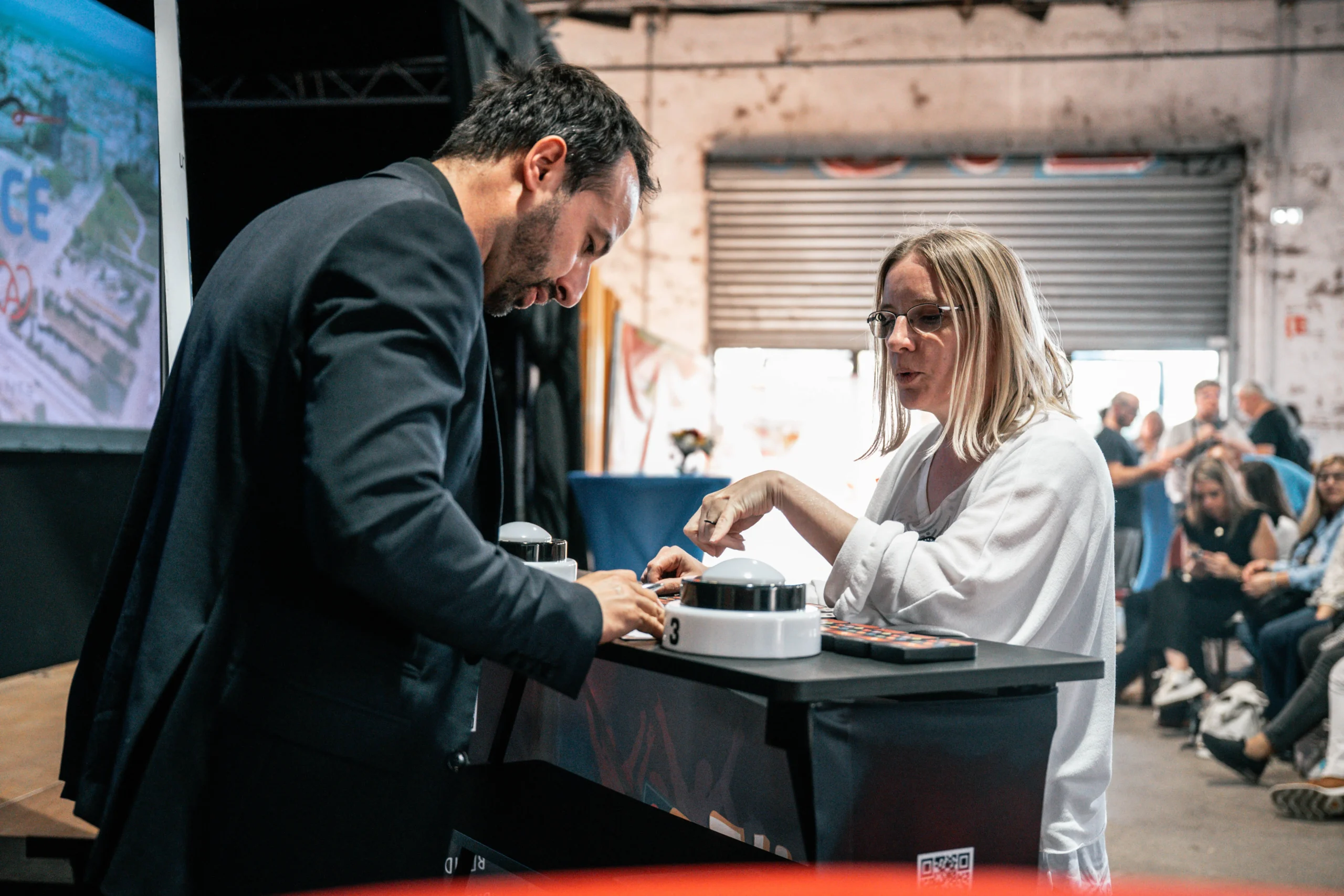
Interactive quiz anchored to company content: safety milestones, product knowledge, values, or history—hosted briskly with clear rules, controlled timing, and prizes that don’t feel childish.
Recognition moments with pacing: we restructure long award lists (grouped categories, scripted handoffs, photo timing) to keep applause authentic and avoid fatigue.
Ambient music sets for networking: jazz trio, acoustic duo, or DJ with corporate-appropriate volume—scheduled to support conversation and then lifted for the opening/closing peaks.
Short-format performances between segments: 3–5 minute interventions timed as “energy resets” (not 25-minute blocks). It’s the difference between keeping momentum and losing the room.
Host-led storytelling: for anniversaries or leadership transitions, we build a narrative arc with verified facts, respectful tone, and carefully chosen anecdotes that won’t embarrass anyone internally.
Guided tasting with tight facilitation: microbrewery, coffee, chocolate, or mocktail stations. The host keeps it moving and ensures it remains inclusive (non-alcoholic options, allergies, cultural considerations).
Chef-led “service rhythm” coordination: we align stage time with kitchen timing so speeches don’t happen over plates and clinking cutlery—one of the fastest ways to lose attention.
Hybrid-ready hosting: when part of the audience is remote, we host for both rooms: camera-aware pacing, explicit cues (“for those online…”), and managed Q&A so remote attendees aren’t second-class.
Content capture moments: we integrate short “pull-aside” interview slots for internal comms (employee stories, leader soundbites) without disrupting the live program.
Data-driven engagement: quick polls at key moments (before/after) to measure alignment on a strategy or change initiative—useful for HR and comms reporting.
The best entertainment choice is the one that matches your brand posture. A financial services team in Laval won’t want the same tone as a sales kickoff, and an HR recognition evening requires more emotional intelligence than volume. Our role is to align the hosting style, content, and rhythm so the event looks and feels like your organization—not like an external show dropped into your room.
The venue shapes how your message is received. Ceiling height, room geometry, acoustics, loading access, and service rhythm directly affect hosting quality. In Laval, choosing the right setting is also about accessibility for teams coming from industrial zones, the North Shore, and Montréal—plus the practical reality of parking and end-of-night exits.
| Venue type | For which objective? | Main strengths | Possible constraints |
|---|---|---|---|
Hotel ballroom in Laval | Town hall, awards night, client dinner with speeches | Built-in service rhythm, AV-friendly infrastructure, easy guest flow | Union/service rules, fixed catering timelines, sometimes limited load-in windows |
Conference center / auditorium (Laval area) | CEO message, panel, training day with strong content density | Seating visibility, stage sightlines, controlled acoustics, strong “corporate” perception | Less flexible for networking cocktails; strict technical regulations |
Industrial-chic or showroom-style venue in Laval | Product reveal, partner evening, brand-forward experience | High brand impact, flexible layouts, photo-friendly | More AV build required, potential sound limitations, weather/logistics sensitivity |
We strongly recommend a site visit with your host and AV lead. Small details—where the teleprompter sits, how presenters enter, whether a handheld mic can circulate smoothly—often decide whether the event feels executive-grade or improvised.
Pricing for a Professional Event Host in Laval depends less on “time on stage” and more on preparation and risk level. A 60-minute hosted segment inside a larger event can require more work than a three-hour gala if the content is sensitive, bilingual, and involves multiple executives.
Format and complexity: town hall, panel, awards, hybrid, client-facing—each has different rehearsal and cueing needs.
Bilingual requirements (FR/EN): fully bilingual hosting, translated scripts, and bilingual audience management add prep time.
Number of speakers and assets: every additional presenter, video, walk-up, and award category increases cue points and rehearsal needs.
Rehearsal scope: quick tech check vs. structured rehearsal with speaker coaching and timing adjustments.
Risk profile: sensitive HR topics, media presence, VIP protocol, sponsor commitments—these require tighter scripting and escalation plans.
On-site coverage: single host vs. host + stage manager support, especially for larger venues or multi-room flows.
From an ROI standpoint, the hosting fee is often justified by what it prevents: overtime AV, rushed executive messaging, audience drop-off, sponsor dissatisfaction, and the reputational cost of a messy stage. If you want, we can scope two budget options—“essential hosting” vs. “executive-grade hosting with rehearsal”—so you can choose based on stakes.
When the host is backed by a team that knows the territory, you gain speed and fewer surprises. Laval events often require quick adjustments: traffic delays, last-minute attendee count changes, or a venue constraint that only becomes obvious on site. Local operational familiarity helps us react without stressing your internal team.
We also collaborate with your suppliers while keeping one accountable point of contact. If you need broader support beyond hosting—content structure, AV coordination, registration flow, speaker management—you can rely on our full services as an event agency in Laval without adding layers of communication.
From an ROI standpoint, the hosting fee is often justified by what it prevents: overtime AV, rushed executive messaging, audience drop-off, sponsor dissatisfaction, and the reputational cost of a messy stage. If you want, we can scope two budget options—“essential hosting” vs. “executive-grade hosting with rehearsal”—so you can choose based on stakes.
Our hosting mandates typically fall into a few high-stakes categories where professionalism is measurable.
Across these formats, the common thread is operational discipline: scripts that match reality, cues that are shared with AV, and a host who can calmly recover when something changes.
Starting late without a plan: when registration runs long, we use a structured “soft opening” (music, instructions, a short welcome) that protects the official program while keeping the room informed.
Overloading the agenda: many teams try to fit “everything” into one night. We help cut or re-sequence so the most strategic messages land when attention is highest.
Uncontrolled bilingual segments: repeating everything twice doubles time and loses energy. We design bilingual moments with intention (key points bilingual, some segments single-language with support) based on audience profile.
Awkward award pacing: long walks, missing trophies, unclear photo timing. We create a stage protocol and rehearsal so winners know where to go and photographers get what they need.
Speaker drift: executives and subject-matter experts often exceed time. We agree on signals and “exit ramps” so the host can close gracefully.
AV surprises: wrong mic type, video audio mismatch, no confidence monitor. We confirm technical needs early and integrate them into the cue sheet.
Unmanaged Q&A risk: without rules, Q&A can become a complaint session. We implement moderation methods that keep it fair, useful, and aligned with your communication obligations.
Our role is not to “add personality.” It’s to reduce operational and reputational risk while maintaining a human tone. When things go off-script—and they sometimes do—your event should still look controlled from the audience’s perspective.
Repeat mandates happen when internal teams feel supported, not sold to. HR and communications teams are usually managing this on top of their day jobs; executives want confidence that the event will not become another operational fire. We build loyalty by being predictable in process and flexible in execution.
48-hour planning kickoff: after confirmation, we deliver a first run-of-show structure and hosting angle within 2 business days.
One accountable lead: a single point of contact for hosting content, timing, and coordination, reducing email loops and last-minute confusion.
Version control: we manage script versions and cue sheets so stakeholders aren’t working from different documents the day before.
Loyalty is proof of quality because it’s earned under real pressure: the next event is booked only if the previous one protected time, message, and brand—especially in front of employees and partners who know your organization well.
We start with a 30–45 minute working call with HR/comms and the event owner. We clarify: the top 3 messages, what success looks like (alignment, recognition, fundraising, retention), the audience profile (employees, clients, mixed), and any sensitive zones (reorg, safety, labor context). This is where we decide the hosting posture: formal, warm, celebratory, or “town hall direct.”
We draft a realistic run-of-show with timecodes, segment owners, AV dependencies, and “decision points” (what gets shortened first if we’re behind). We also define cue responsibilities: who triggers videos, who hands microphones, where speakers wait, and how walk-up music is managed.
We write the host script with your vocabulary and brand guardrails. We also prepare speaker cards: correct names/titles, pronunciation notes, and intro lengths. For leadership teams, we propose transitions that reinforce strategy (“why this initiative now”) rather than empty filler.
We coordinate with AV on mic plan (lav, handheld, headset), confidence monitor needs, timer visibility, and stage lighting. When possible, we run a rehearsal: walking entrances/exits, testing videos, verifying podium height, and practicing awards flow. This step is where most “event-day stress” is removed.
On site, we arrive early to validate room readiness, coordinate with the venue and AV, and brief speakers again right before stage time. During the event, we manage pacing, transitions, Q&A, and audience energy. If something changes—late VIP, technical glitch, missing award—we implement the contingency plan without pulling executives into operational decisions.
Within a week, we share a short debrief: what worked, what caused friction (timing, service rhythm, AV, speaker prep), and what to adjust next time. For recurring calendars in Laval, this becomes a practical playbook that saves hours at each edition.
For prime dates (June and September–December), plan 6–10 weeks ahead. For a standard corporate evening, 3–4 weeks can work if speakers are responsive. For a town hall with sensitive content or bilingual scripting, aim for 4–8 weeks to include rehearsal.
Yes. We design bilingual hosting so it stays efficient: key moments bilingual (welcome, safety, key announcements), and other segments adapted to audience profile. Expect a slightly longer program if every leadership segment must be delivered in both languages; we’ll propose a structure that protects timing.
We need: date, venue type, audience size, language needs, event format (town hall/panel/awards/dinner), number of speakers, number of videos/award categories, and whether rehearsal is required. With that, we can usually provide a clear range within 48 hours.
Yes. Our hosting includes a practical run-of-show with timecodes and responsibilities. For complex events, we also deliver a cue sheet aligned with AV (videos, walk-up music, lighting notes) and a speaker flow plan (where to stand, mic type, entrances/exits).
Most corporate hosting mandates in Laval fall between $1,200 and $3,500 CAD depending on bilingual requirements, rehearsal time, number of segments, and risk level. Large-scale galas, hybrid productions, or events with extensive scripting and coordination can exceed that range.
If you’re comparing agencies, we can make your decision easier with a practical approach: a clear hosting recommendation (tone + structure), a realistic run-of-show framework, and two scope options based on your stakes and internal capacity.
Send us your date, venue area in Laval, audience size, and the top messages you must land. We’ll come back with a concrete plan and a quote you can defend internally—especially to leadership and finance—without guessing what “hosting” really includes.
Thierry GRAMMER is the manager of the INNOV'events Laval office. Reach out directly by email at canada@innov-events.ca or via the contact form.
Contact the Laval agency