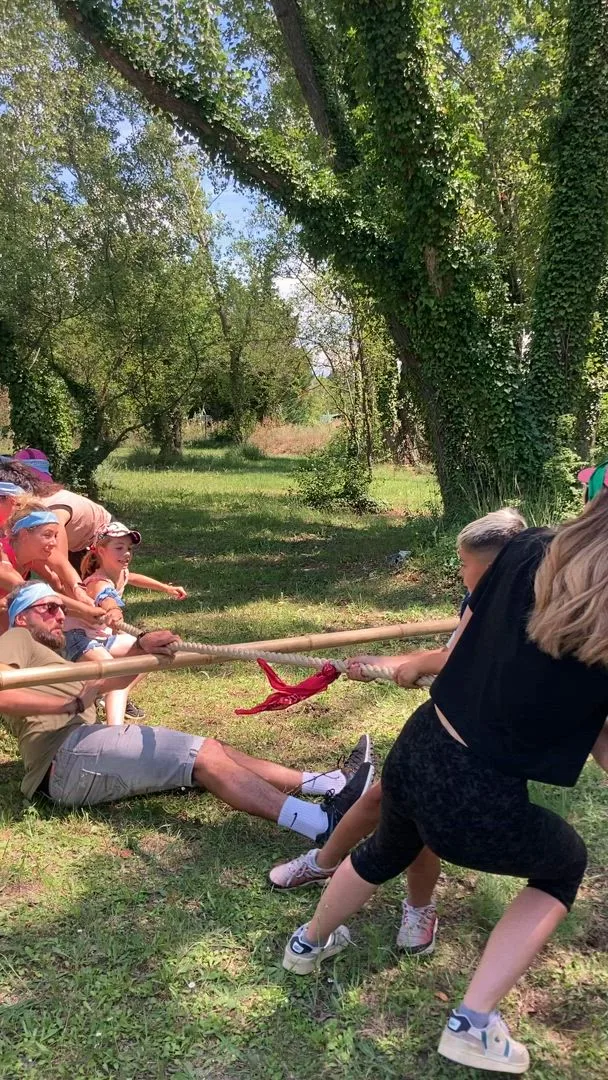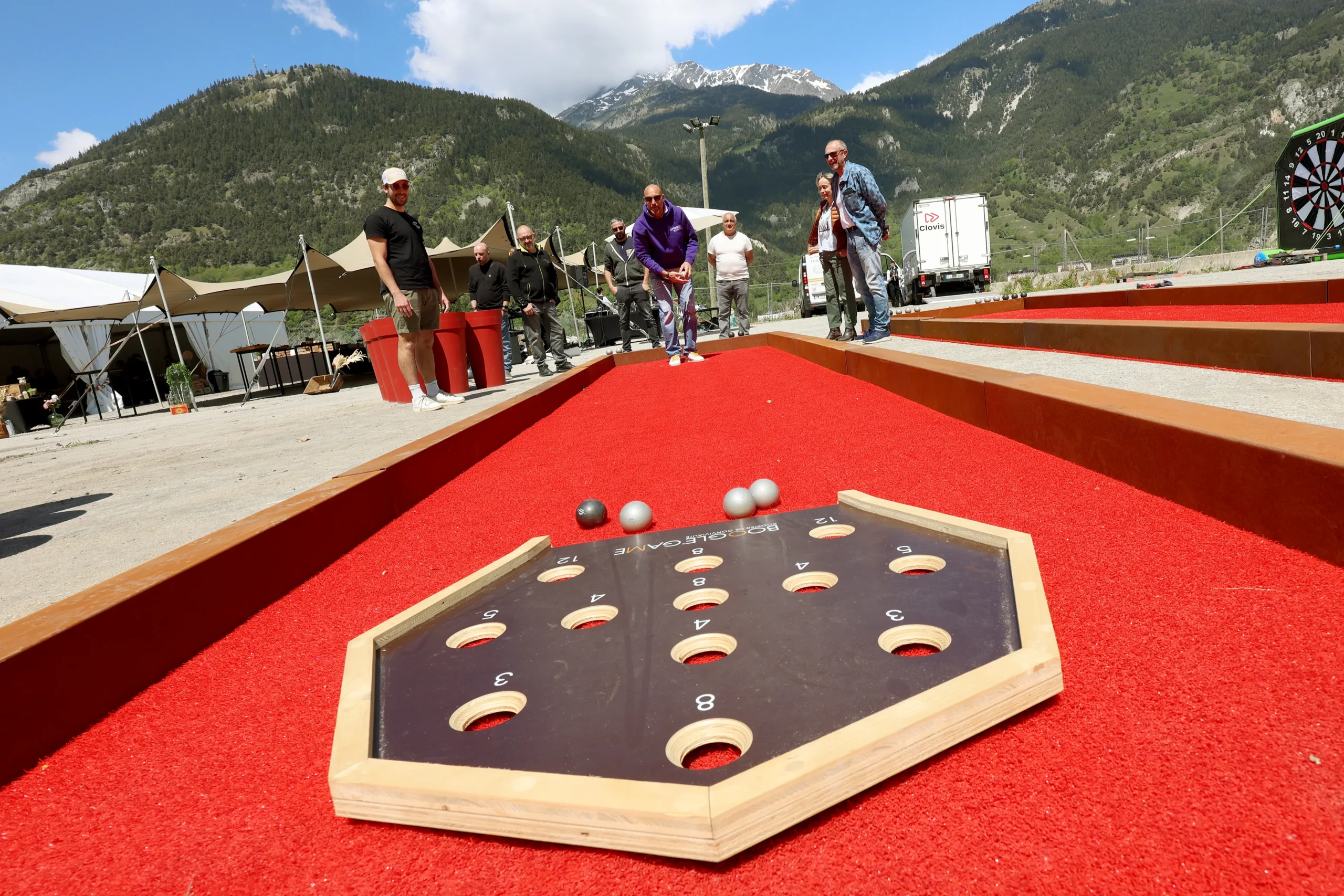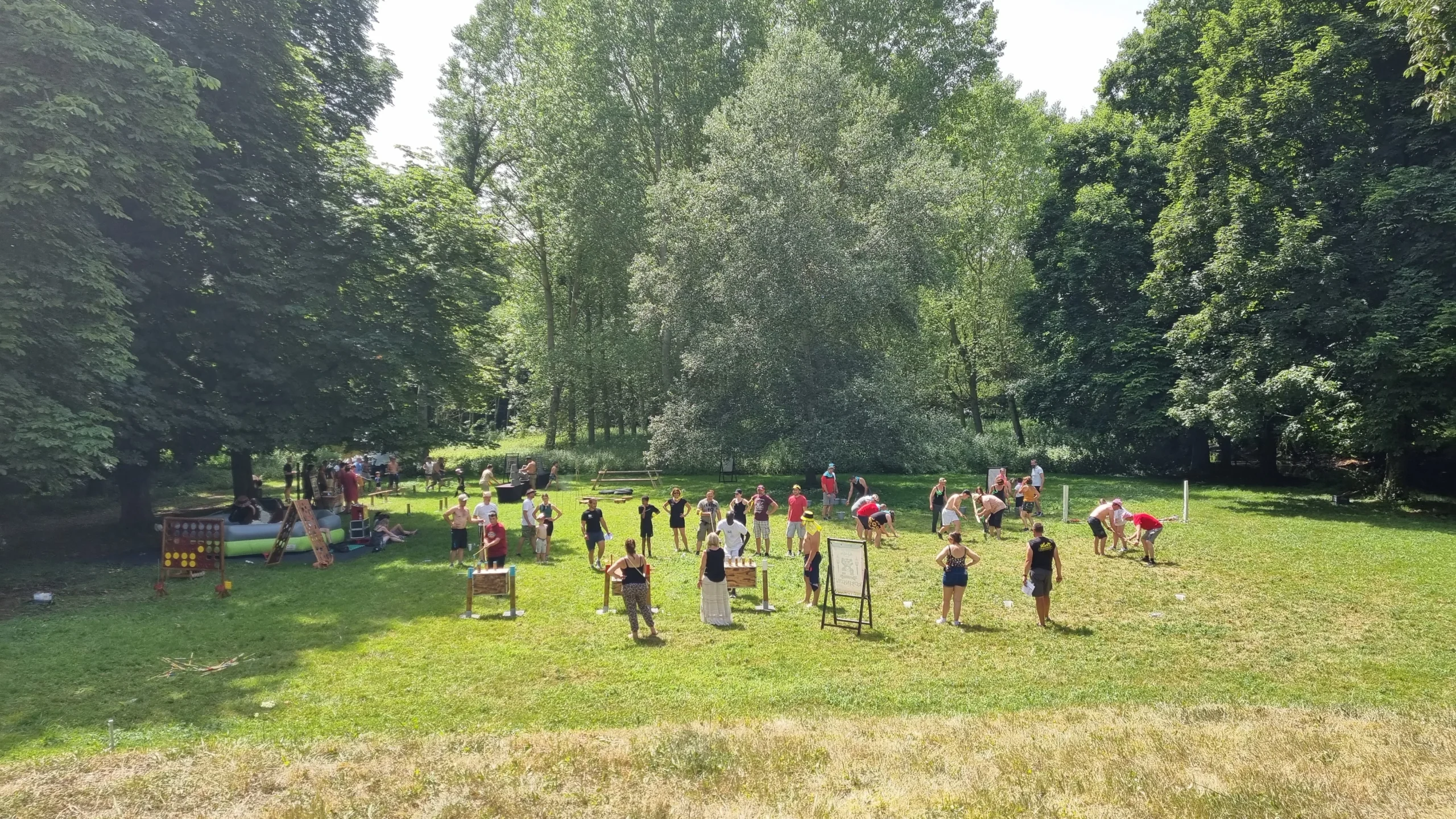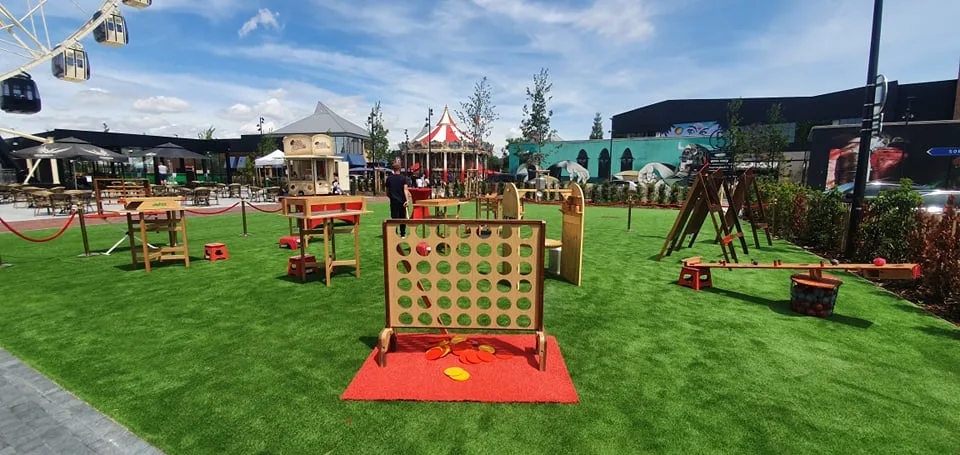
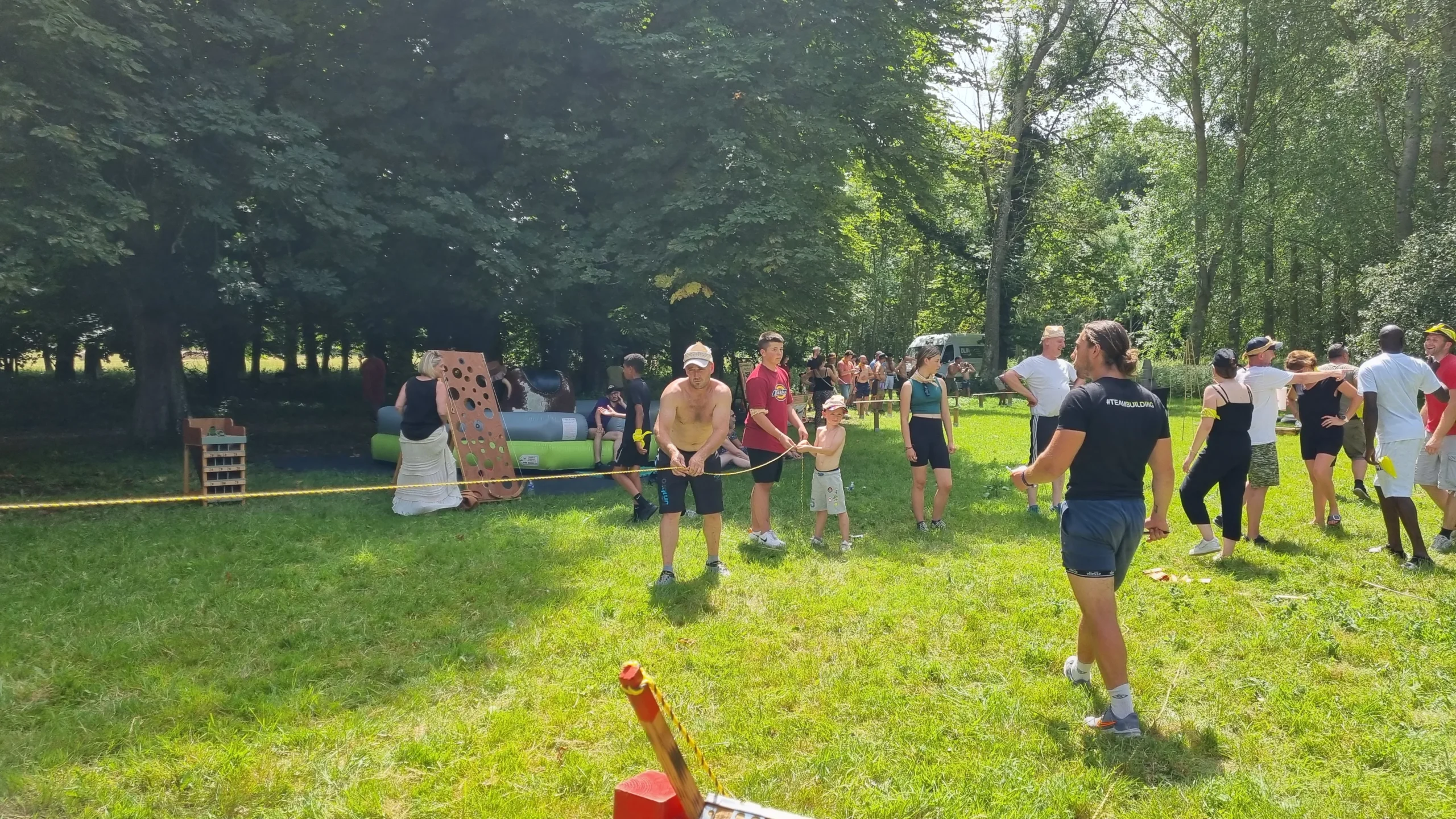
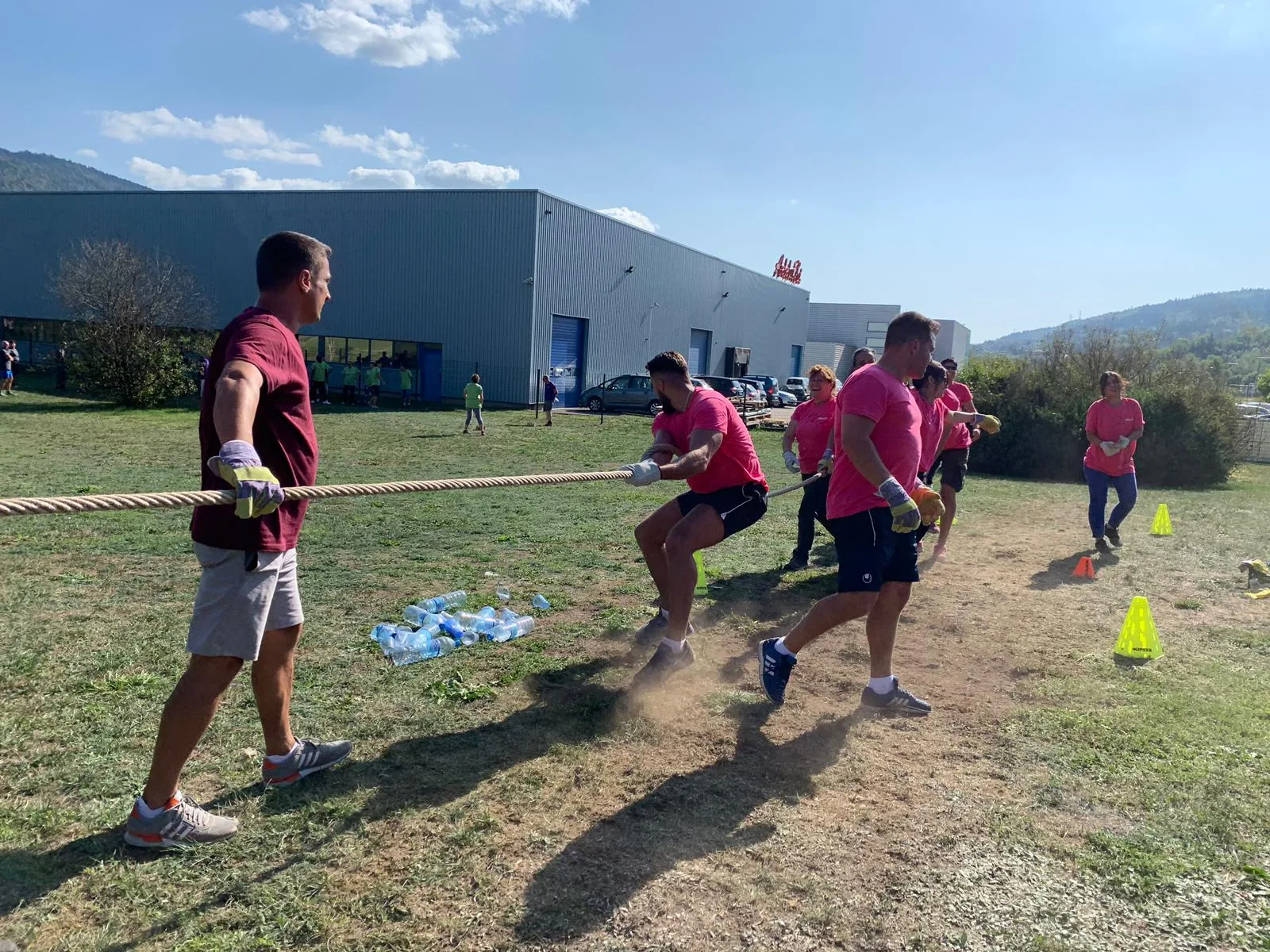
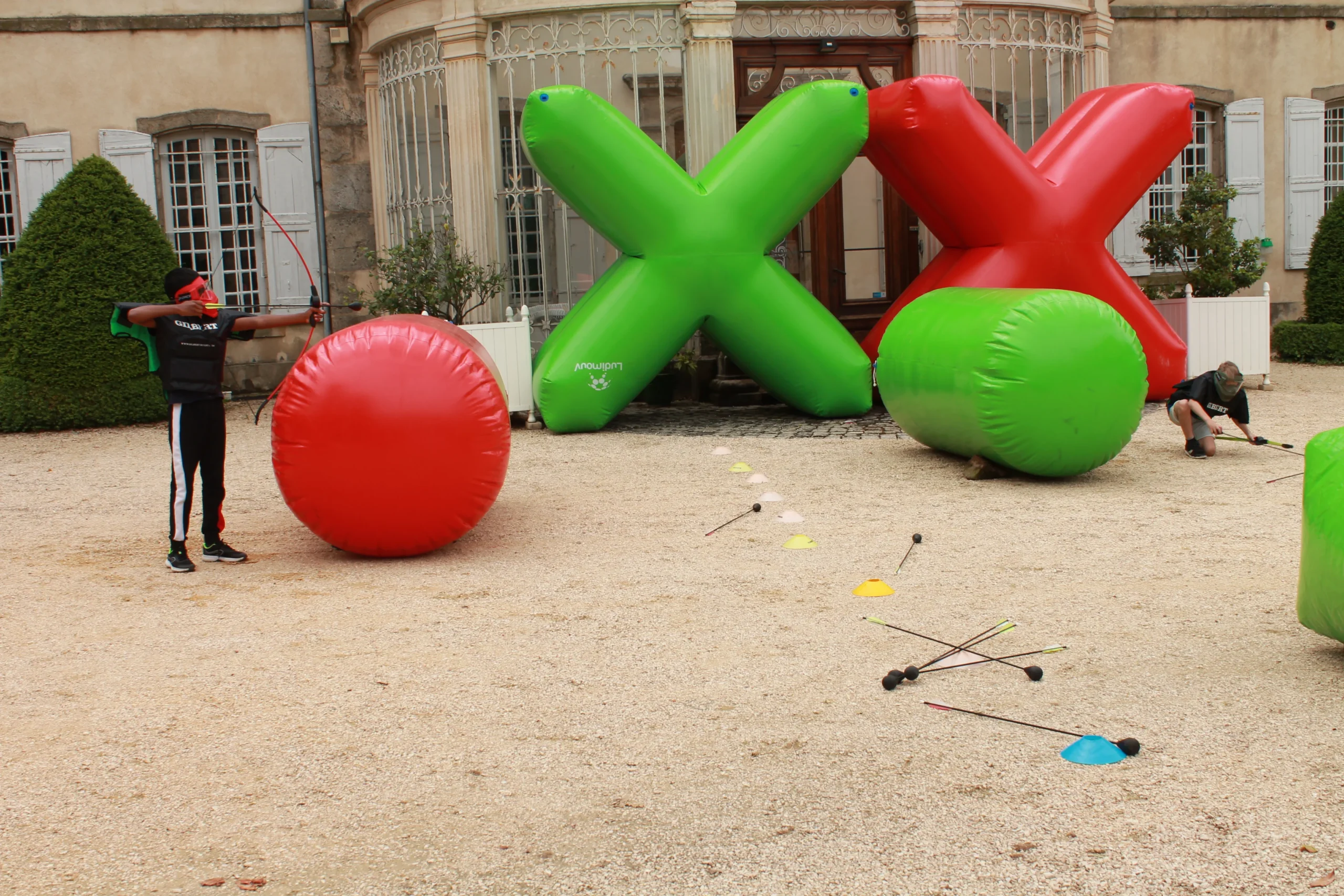
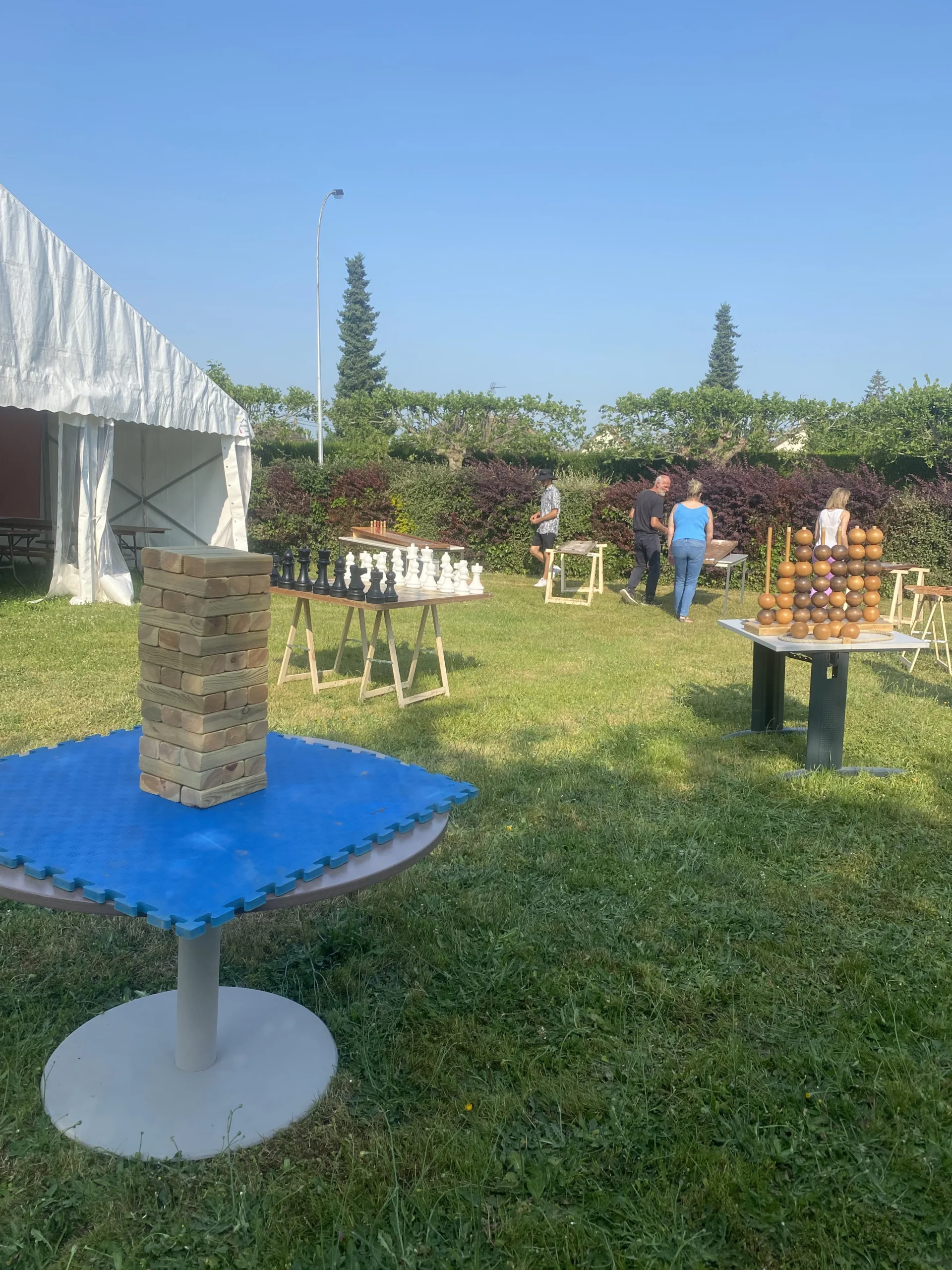
INNOV'events is a Montréal-based event agency delivering Sports Challenge – Giant Games formats across Quebec for leadership teams, HR, and internal communications. Typical groups range from 20 to 500+ participants, in rotations designed to keep energy high without creating bottlenecks.
We handle the operational reality: venue fit, equipment logistics, bilingual facilitation, risk controls, scoring, timing, and contingency plans so your team can focus on participation and brand image—without improvising on event day.
In a corporate context, entertainment is not “nice to have”: it is a management tool. A well-built Sports Challenge – Giant Games gives you a controlled environment to observe collaboration, leadership, and decision-making under mild pressure—useful when teams are hybrid, newly merged, or scaling quickly in Quebec.
Organizations here expect punctuality, concrete deliverables, and a tight on-site rhythm. In Quebec, directors want an activity that is fun but still professional: clear rules, fair scoring, bilingual instructions when needed, and an experience that respects workplace realities (safety, accessibility, and brand standards).
From Montréal, our producers deploy across Quebec with the same playbook: pre-event site checks, load-in planning, staffing ratios, and an emcee who can keep pace with executives and frontline teams alike. We design giant games to fit your objectives—not the other way around.
8–14 giant game stations in our standard inventory, allowing true rotations instead of long lines.
1 facilitator per 25–40 participants (depending on venue and complexity) to maintain safety, flow, and consistent rulings.
45–90 minutes typical challenge block, plus structured warm-up and closing to avoid drift and “dead time”.
24–72 hours typical turnaround for an initial budget range and recommended format after a scoping call.
We support organizations across Quebec that run recurring internal moments: annual kickoffs, department retreats, recognition days, and summer gatherings. Many teams come back year after year because they want predictability: the same level of discipline on logistics, the same clarity on safety, and a format that evolves without reinventing everything.
If you want us to include specific local references (company names, sectors, or venues you already use), we can integrate them once you confirm what can be publicly shared. In practice, our strongest relationships in Quebec are built on confidentiality: we understand that internal culture and employer brand are sensitive, and we treat them accordingly.
Nous vous envoyons une première proposition sous 24h.
Executives rarely ask for “more activities.” They ask for improved collaboration, retention, and an employer brand that feels credible. A Sports Challenge – Giant Games in Quebec works when it is framed as a structured, time-boxed program with measurable outcomes: participation rate, cross-team mixing, and a clean narrative for internal communications.
Accelerate cross-team connections without forcing networking. Giant games create natural conversation because rules and roles are shared. We deliberately design rotations so people don’t stay with their usual circles (same department, same seniority, same site).
Reinforce leadership behaviors in a low-risk context. You’ll see who clarifies instructions, who listens, and who manages conflict. HR often uses this as a non-evaluative observation moment to inform future coaching themes.
Support change management in a way employees accept. After restructures, system rollouts, or rapid hiring, “another town hall” can increase fatigue. A challenge format creates engagement first, then opens the door for messages from leadership.
Create clean content for internal communications. With visible stations and clear moments (kickoff, team win, leaderboard), comms teams get usable photos and short clips without staging. We can coordinate a shot list aligned with brand guidelines.
Protect your schedule. In real companies, meetings run late and buses arrive in waves. Our challenge architecture (multiple stations + modular start) absorbs delays while keeping the event on time.
Reduce risk versus “open play.” We manage crowd flow, equipment checks, and clear rules. This is critical for mixed groups (office + operations) and for venues with hard floors, limited exits, or shared public areas.
Quebec business culture values competence and humility: people quickly spot when an activity is improvised. A well-run sports challenge shows operational seriousness while still feeling human, inclusive, and energizing.
Across Quebec, we see the same non-negotiables coming from HR and communications: safe execution, bilingual capacity where applicable, and an experience that doesn’t look like a trade-show gimmick. Employees want to feel respected; directors want to feel in control of the day.
Concrete examples we plan for in the field:
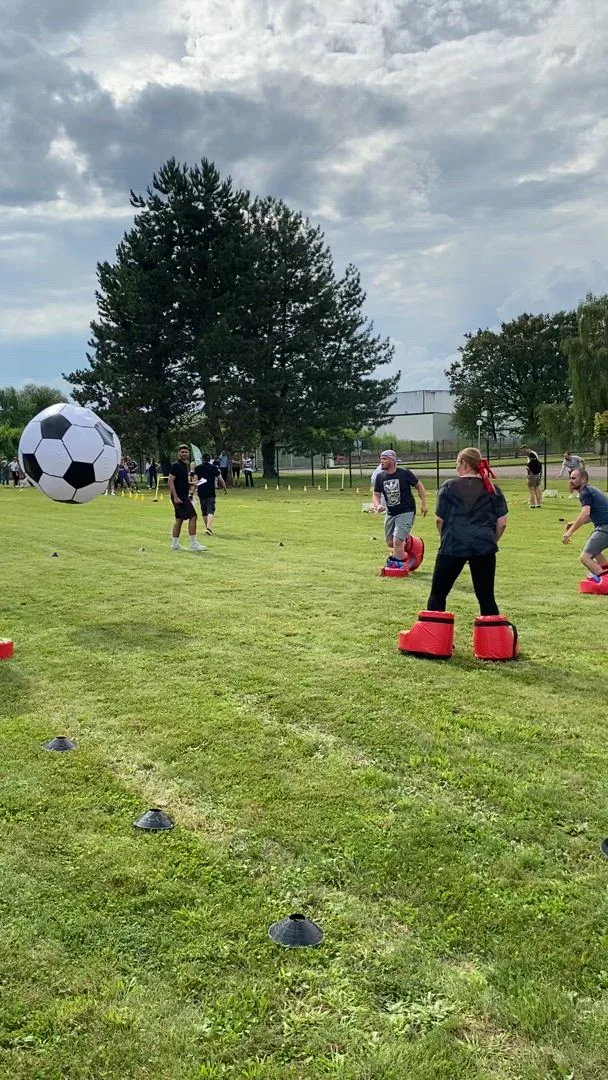
Engagement comes from clarity and quick wins: people join when they understand the rules in under a minute and can contribute regardless of fitness level. For a Sports Challenge – Giant Games in Quebec, we curate stations that balance physical play, precision, coordination, and team strategy so participation stays high across departments.
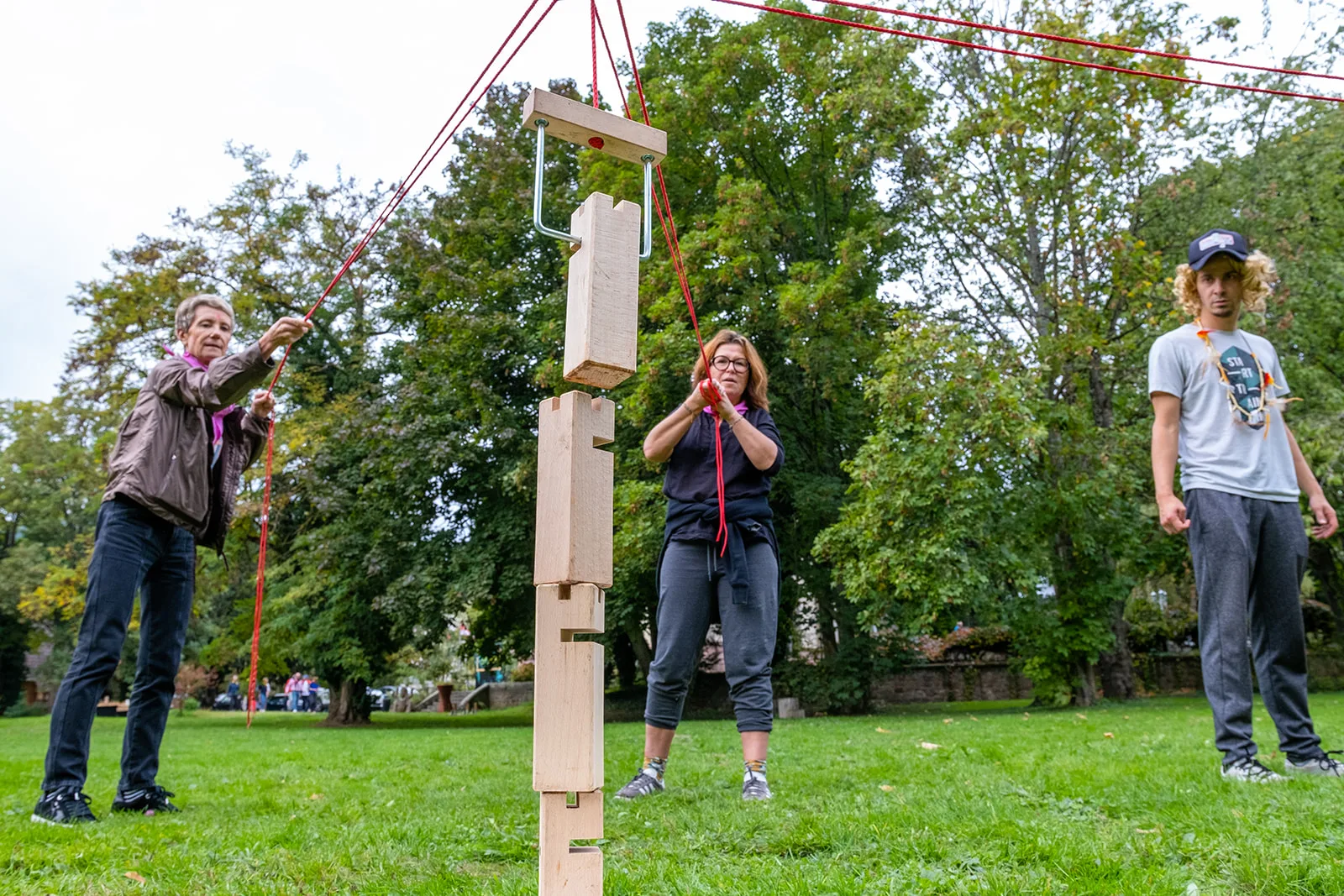
Giant Jenga strategy rounds. We run this as a timed station with a “communication twist” (one player can’t speak, another can’t touch). It reveals how teams plan and how they react under pressure—without being physically intense.
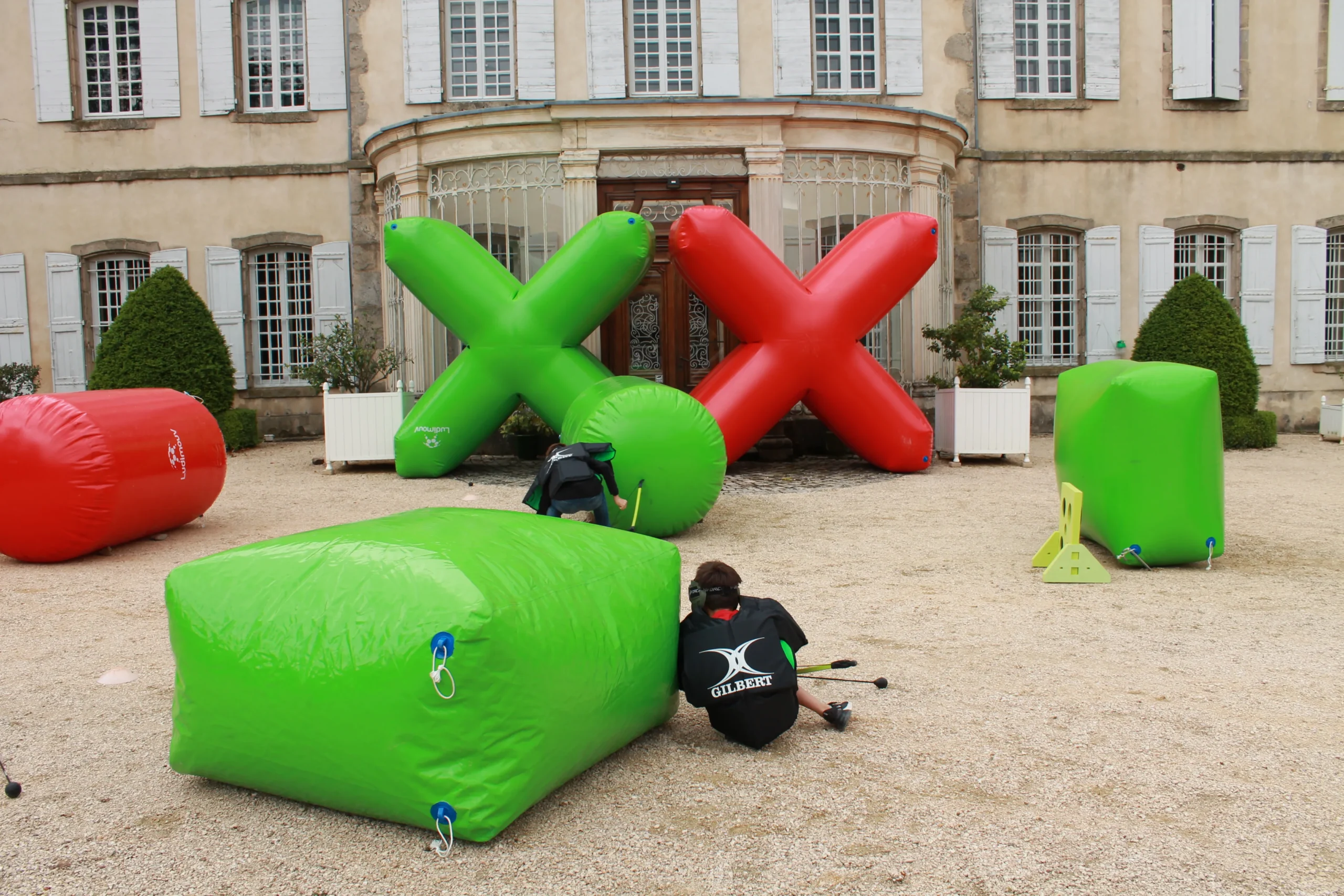
Oversized connect-style games with scoring rules. Instead of casual play, we use short matches (2–4 minutes) with brackets. This reduces waiting, increases perceived fairness, and produces a visible leaderboard for internal comms.
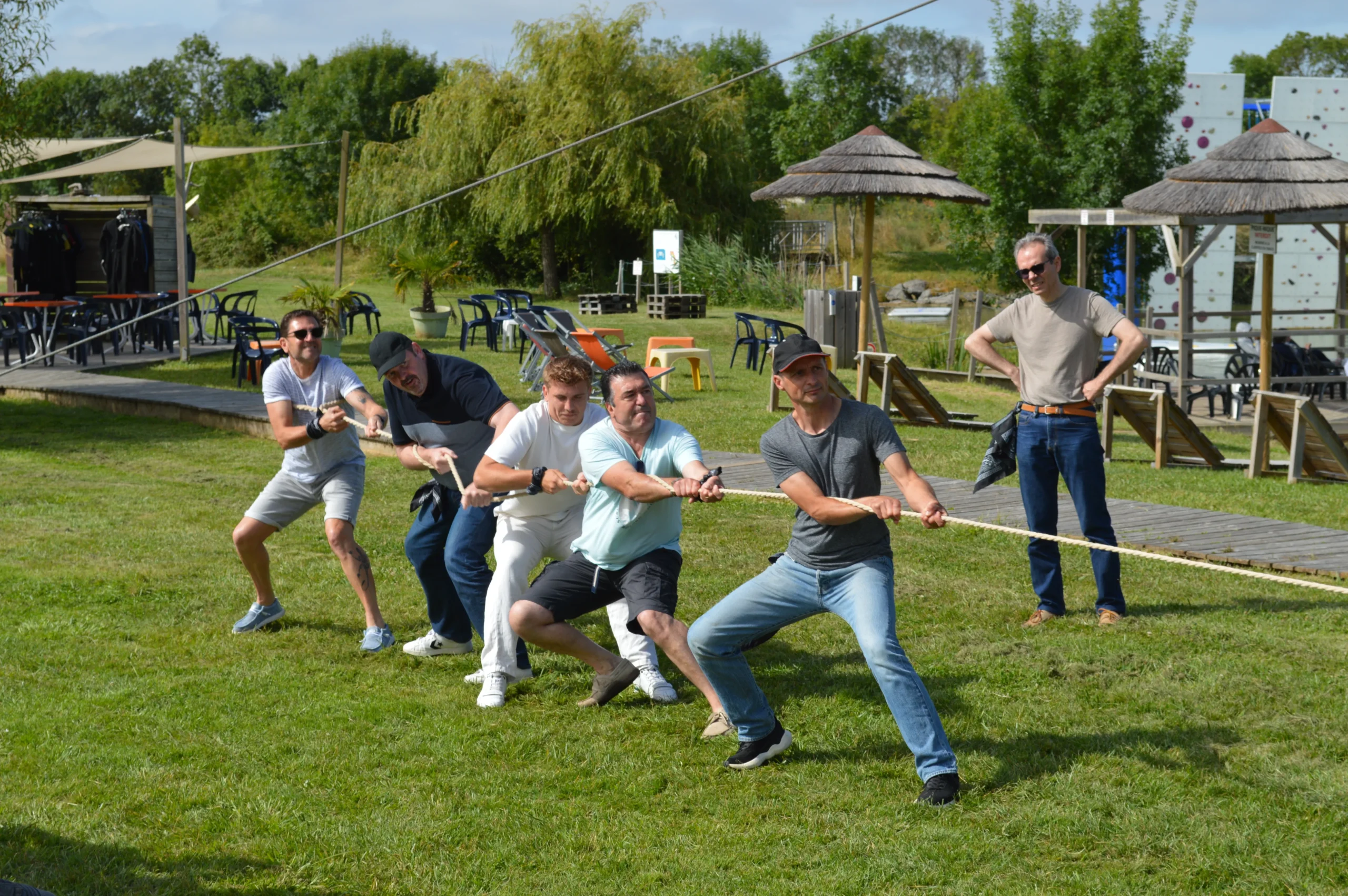
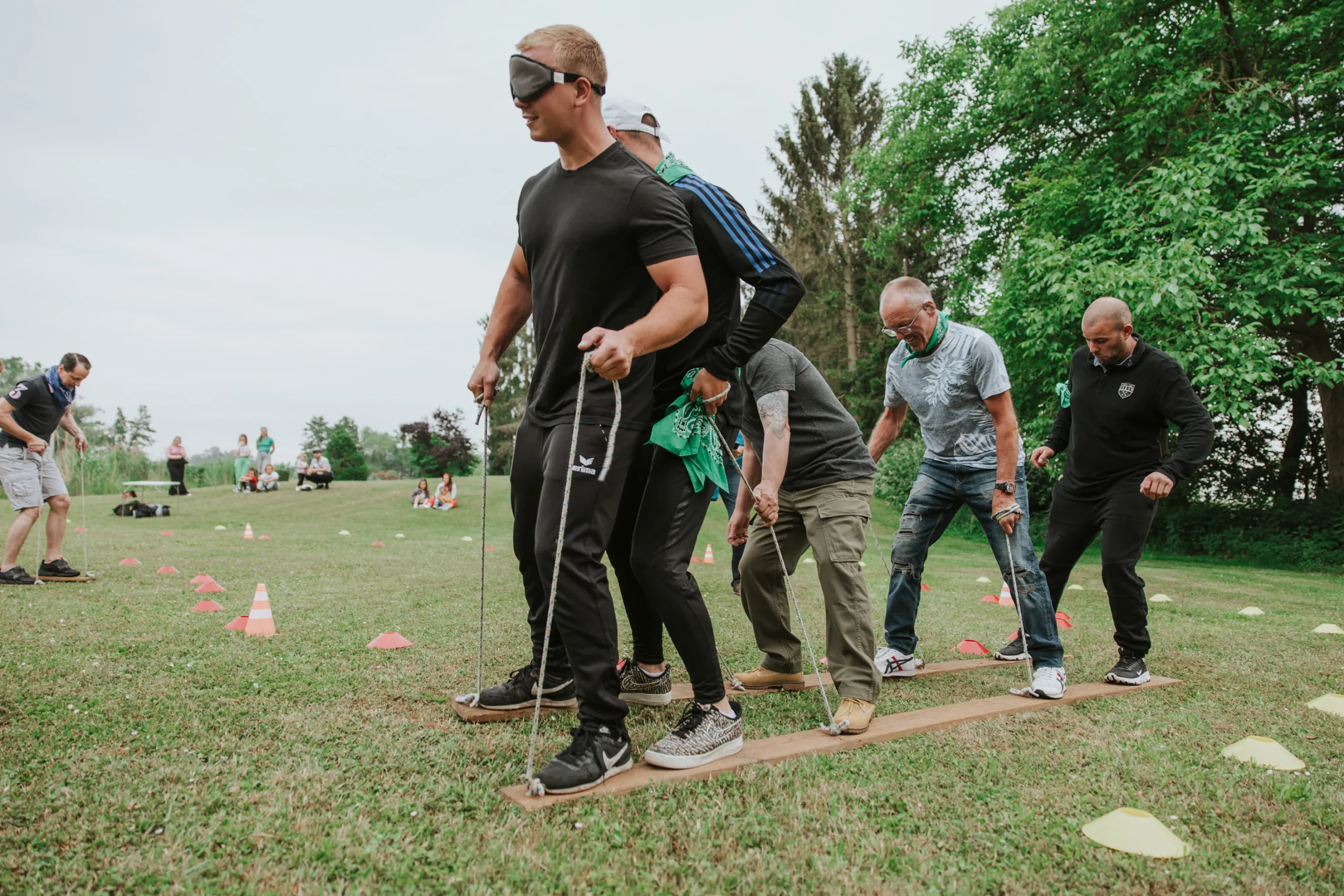
Team ski coordination (multi-person planks). Excellent for cross-functional groups because success depends on rhythm and leadership voice. We add a “silent round” to keep it fun and inclusive.
Giant ring toss precision station. Ideal for mixed ability groups. We can weight scoring by distance so it remains challenging for competitive teams while still accessible.
Emcee + DJ pairing. In many Quebec corporate contexts, a DJ alone isn’t enough; you need an emcee who can manage transitions, keep the tone professional, and avoid inside jokes that don’t translate across teams.
Awards moment with brand-safe scripting. We prepare a short script aligned with your leadership tone (recognition-focused vs performance-focused) and keep it on time. This is where many events lose control if it’s improvised.
Hydration and recovery bar. For outdoor or high-energy formats, we recommend water stations plus simple recovery options (fruit, granola, electrolyte add-ons). It reduces fatigue and improves participation in the second half.
Local snack integration. When appropriate, we coordinate with your caterer on Quebec products that are practical on-site (handheld, allergen-labeled, easy to serve between rotations).
Digital scoring with QR check-ins. Teams scan a code at each station; facilitators validate results. This reduces disputes and speeds up awards. It also gives HR/Comms clean participation data (useful for internal reporting).
Inclusion-first station mix. We pre-build a station matrix with “low impact” and “high impact” options so employees with limitations can still contribute meaningfully and not be sidelined.
Leadership micro-challenges. Short optional add-ons (60–90 seconds) that reward planning over speed—useful when you have many managers and want to avoid a purely athletic vibe.
The best results come when the challenge matches your employer brand: a safety-first manufacturer doesn’t need a high-contact format; a tech company may prefer fast rotations and data-driven scoring; a professional services firm often wants polished facilitation and a strong awards narrative. We align the corporate event entertainment in Quebec with what your organization wants to signal internally and externally.
The venue dictates everything: station spacing, noise tolerance, flooring, load-in, and how “serious” the event feels to employees and leadership. For Sports Challenge – Giant Games, we prioritize venues with clear circulation, safe surfaces, and enough storage to stage equipment without clutter.
| Venue type | For which objective? | Main strengths | Possible constraints |
|---|---|---|---|
Corporate campus / large parking + green space | High participation, easy access for employees, short format during workday | Logistics control, minimal transport time, easy branding, good for 20–300 | Permits, noise rules, surface quality, weather Plan B required |
Hotel ballroom + adjacent terrace | Executive-friendly day with meals, awards, and clean audiovisual | Professional service, washrooms, climate control, simple run of show | Ceiling height and flooring protection, load-in windows, union rules in some sites |
Indoor sports complex / arena floor | Winter-safe challenge or large group with multiple stations | Big footprint, predictable environment, clear safety perimeter | Availability, acoustics, signage needs to guide participants |
Urban park with reserved section | Summer gathering with relaxed vibe + structured challenge | Great atmosphere, easy content capture, family-day compatibility | Public cohabitation, permits, power access, weather variability |
We strongly recommend a site visit (or at minimum a technical call with photos and measurements). In Quebec, two venues that look similar online can behave very differently on event day: load-in routes, floor transitions, and shared public access are the details that make or break a smooth challenge.
Pricing depends less on “the idea” and more on execution parameters: how many stations you need at the same time, how long the challenge runs, how complex scoring is, and how far logistics must travel. Our role is to give you a format that matches your objective and your budget without hidden operational compromises.
Headcount and rotation design. A 40-person challenge can run with fewer stations and staff; a 300-person event requires parallel capacity, more facilitation, and a stronger flow plan to avoid queues.
Indoor vs outdoor and season. Outdoor setups may require tents, weighting, additional signage, and a robust weather Plan B. Winter in Quebec often shifts choices toward indoor venues with higher rental costs but more predictability.
Duration and schedule constraints. A short, high-energy 60-minute block costs differently than a half-day program with multiple waves, breaks, and a final.
Staffing and language needs. Bilingual facilitation, additional marshals for safety, and a dedicated producer on-site impact budget but reduce risk and protect your timeline.
Branding and communications needs. Custom signage, team kits, photo/video coordination, and scripted awards moments add cost but are often the difference between “activity” and a leadership-approved internal campaign.
Logistics and access. Downtown access, limited loading docks, long carries, or strict time windows can require more crew and time. We budget those realities upfront to avoid day-of surprises.
For most organizations, ROI shows up in participation rate, internal sentiment, and the quality of cross-team interactions—plus the ability for HR and communications to reuse content and momentum after the event. If you tell us your target outcome (cohesion, recognition, onboarding, culture reset), we’ll recommend the most cost-effective build to get there.
For leadership teams, the main risk is not “will people have fun,” it’s operational failure: delays, unclear rules, safety incidents, or a format that doesn’t fit the venue. Working with an agency established in Quebec reduces those risks because we know the venues, the suppliers, the seasonal constraints, and the expectations of local corporate stakeholders.
When the mandate is sensitive—executive presence, internal brand image, tight run of show—local execution matters. If your event is outside Montréal, we can still coordinate seamlessly through our network and on-the-ground partners, including our team page here: event agency in Quebec.
For most organizations, ROI shows up in participation rate, internal sentiment, and the quality of cross-team interactions—plus the ability for HR and communications to reuse content and momentum after the event. If you tell us your target outcome (cohesion, recognition, onboarding, culture reset), we’ll recommend the most cost-effective build to get there.
We adapt Sports Challenge – Giant Games based on what the organization is trying to solve. Here are formats we regularly execute across Quebec:
What stays consistent is our operational discipline: we plan for flow, fairness, safety, and a clean story your communications team can share internally without overexplaining what happened.
Underestimating space and circulation. Giant games need safe clearances. Without proper spacing, you get bottlenecks, safety risks, and a messy visual environment.
Too many rules, not enough tempo. When instructions take longer than the game, participants disengage. We script rules to be delivered in under 45–60 seconds and train facilitators to reset quickly.
One-size-fits-all athletic bias. If every station rewards speed or strength, participation drops—especially in mixed groups. We balance station types and add inclusive scoring mechanics.
No credible Plan B for weather. In Quebec, weather changes fast. A real Plan B is pre-approved, reserved, and compatible with your schedule—not “we’ll see.”
Unclear decision-making on-site. If nobody owns the call on timing, safety, or program changes, the event drifts. We define an escalation path: client lead, agency producer, venue contact.
Weak awards moment. Ending matters. A rushed or chaotic closing undermines the day. We set a precise wrap-up: last rotation cutoff, score validation, and a short, brand-safe awards script.
Your team should not have to “manage the activity.” Our role is to anticipate and remove these risks so executives can be present, HR can observe and connect, and communications can capture the right moments without firefighting.
Renewal is rarely about novelty; it’s about trust under pressure. Clients come back when the event runs on time, participants feel included, and leadership feels the activity supported the message—not distracted from it.
60–75% of our corporate clients request a follow-up format within 12–18 months (seasonal recurrence, annual gathering, or department series), depending on internal cycles.
0 tolerance for safety shortcuts: we use pre-event checks, clear safety perimeters, and facilitator briefings as standard practice.
One producer accountable end-to-end: one point of contact for run of show, vendor coordination, and day-of decisions.
Loyalty is the most concrete signal in our industry. When teams in Quebec renew, it’s because the experience was professionally managed, predictable in the right ways, and improved year over year without creating extra workload for HR or communications.
We start with a short working call focused on decision-maker criteria: purpose (cohesion, recognition, onboarding, culture), attendee count, audience mix, budget range, preferred date, and any internal sensitivities. We also confirm bilingual needs, accessibility requirements, and how success will be measured (participation rate, photo/video deliverables, leadership messaging).
We deliver a clear recommendation: challenge structure, number of stations, staffing ratio, timing, and the site footprint required. If you already have a venue, we map the participant flow; if not, we can advise on venue types that fit the Sports Challenge – Giant Games footprint and your brand expectations.
We confirm load-in/out, power needs, signage, weather Plan B, and safety perimeter. You receive a run of show with precise timings: arrival waves, kickoff, rotations, breaks, score validation, awards, and teardown. This is the document executives and internal teams rely on to stay confident.
Our producer runs on-site coordination while facilitators manage stations and scoring. We maintain tempo, handle late arrivals through modular entry points, and adjust rotations if needed without compromising fairness. If leadership wants to add a short address, we integrate it cleanly rather than letting it derail timing.
After the event, we provide a short debrief: what worked, what to improve, and practical recommendations for your next internal moment. If we implemented digital scoring, we can share participation and station performance insights to help HR and communications report outcomes internally.
Most formats work well from 20 to 500+ participants. The key is not the headcount alone; it’s concurrent capacity. We size the number of stations and facilitators so average waiting time stays around 5–8 minutes per rotation.
Yes. Indoor setups are common from November to April. We adapt station selection to flooring and ceiling height, add floor protection if needed, and adjust sound management for ballrooms or sports complexes.
For corporate groups, budgets often fall between $4,500 and $18,000+ depending on attendee count, number of stations, duration, staffing, and venue constraints. After a scoping call, we can provide a concrete range within 24–72 hours.
Yes. We build a balanced station mix (precision, coordination, strategy, low-impact options) and structure scoring so teams benefit from diverse strengths. We also plan accessibility routes and provide clear participation alternatives so no one is sidelined.
For peak dates (June–September and December), plan 6–10 weeks ahead to secure staff and venue windows. For smaller groups or off-peak dates, 2–4 weeks can be workable, especially if the venue is already confirmed.
If you’re comparing agencies, we can make the decision easier: share your date, city in Quebec, estimated headcount, venue (if known), and what you want to achieve (cohesion, recognition, onboarding, leadership alignment). We’ll come back with a recommended Sports Challenge – Giant Games in Quebec format, staffing ratio, footprint needs, and a realistic budget range—so you can validate feasibility quickly.
For best results, start early enough to secure the right venue conditions, confirm a weather Plan B, and align the challenge narrative with your internal communications plan. Contact INNOV'events and we’ll propose a structured, operationally sound solution that protects your timeline and your brand.
Thierry GRAMMER is the manager of the INNOV'events Quebec office. Reach out directly by email at canada@innov-events.ca or via the contact form.
Contact the Quebec agency