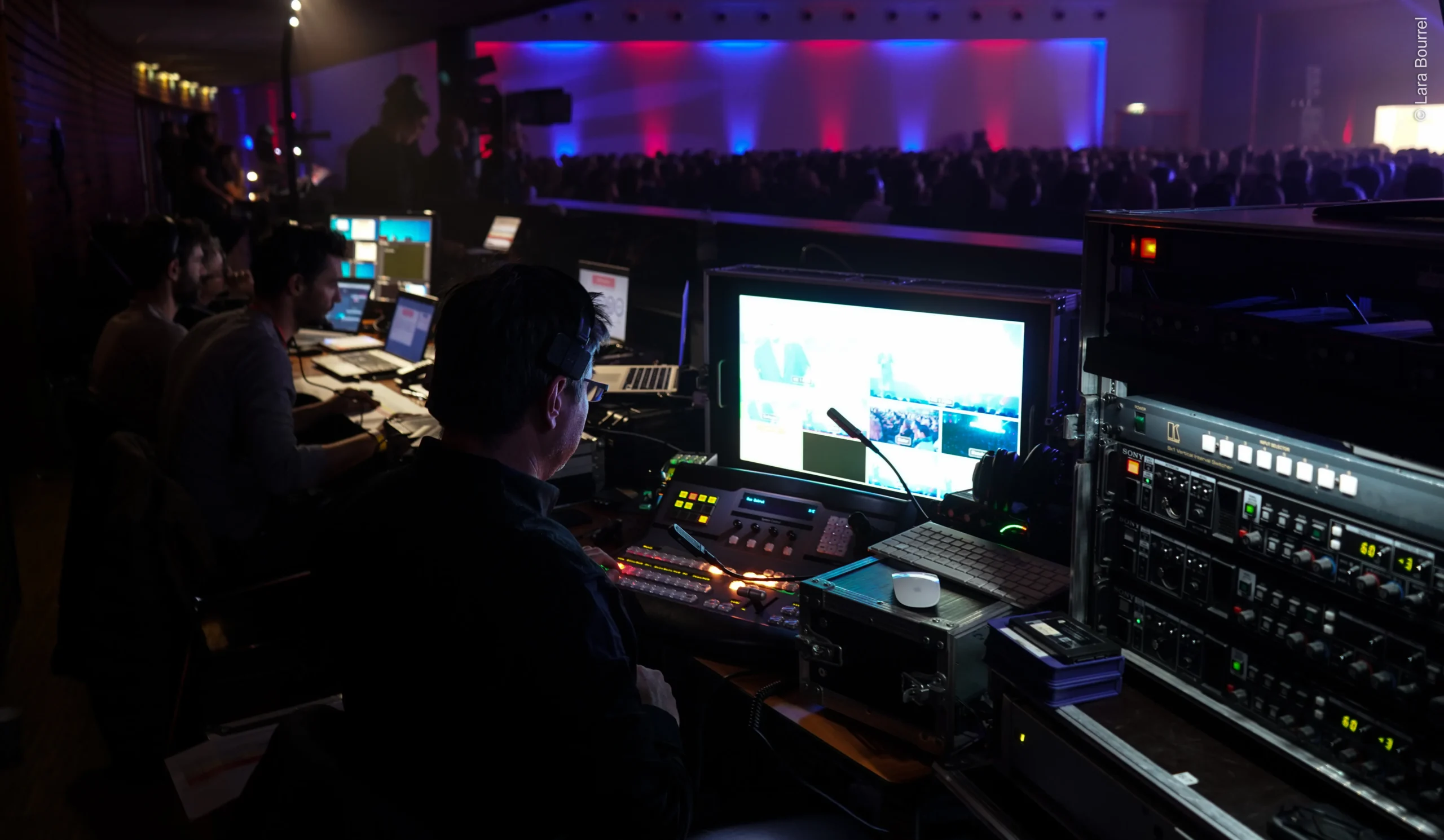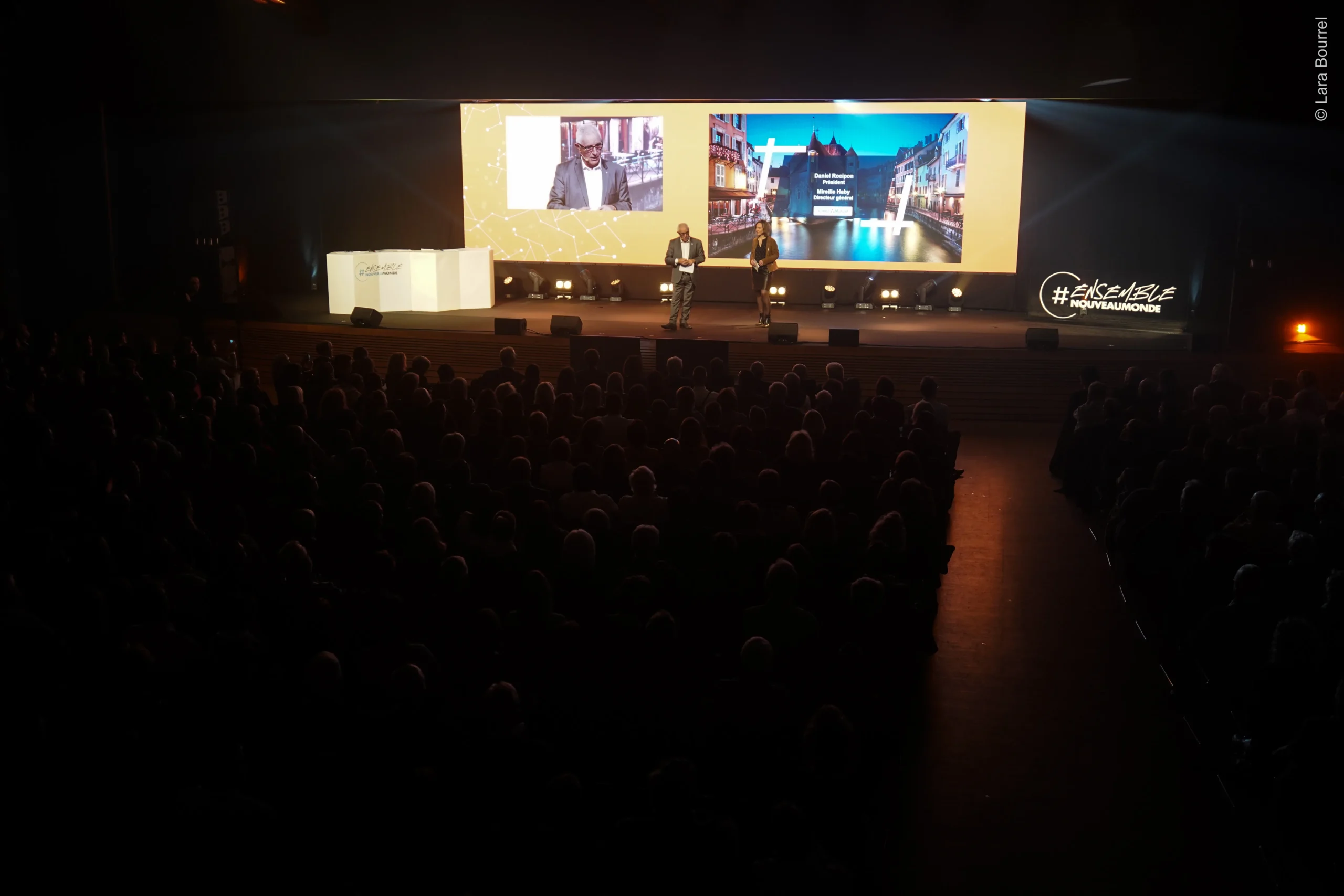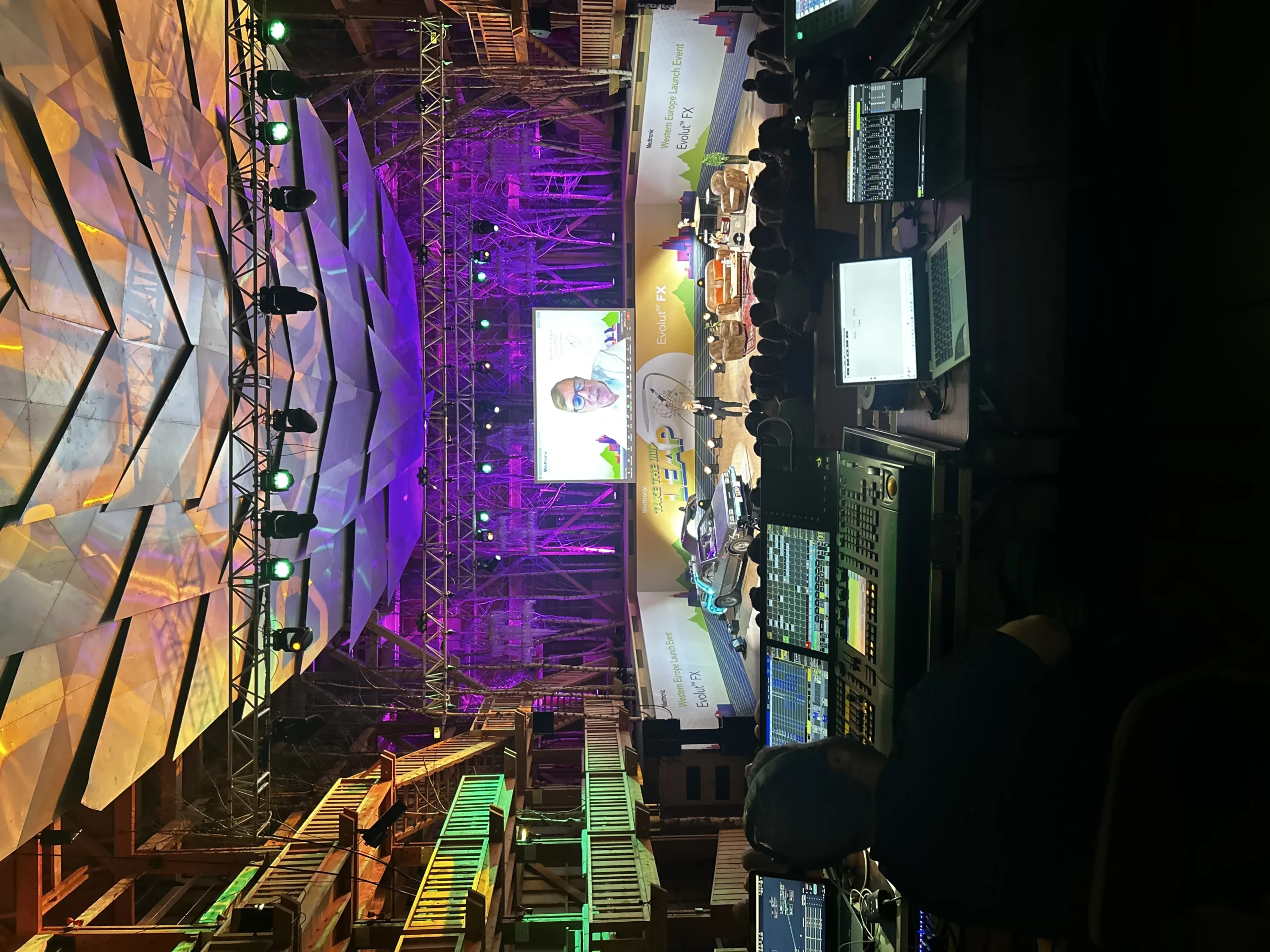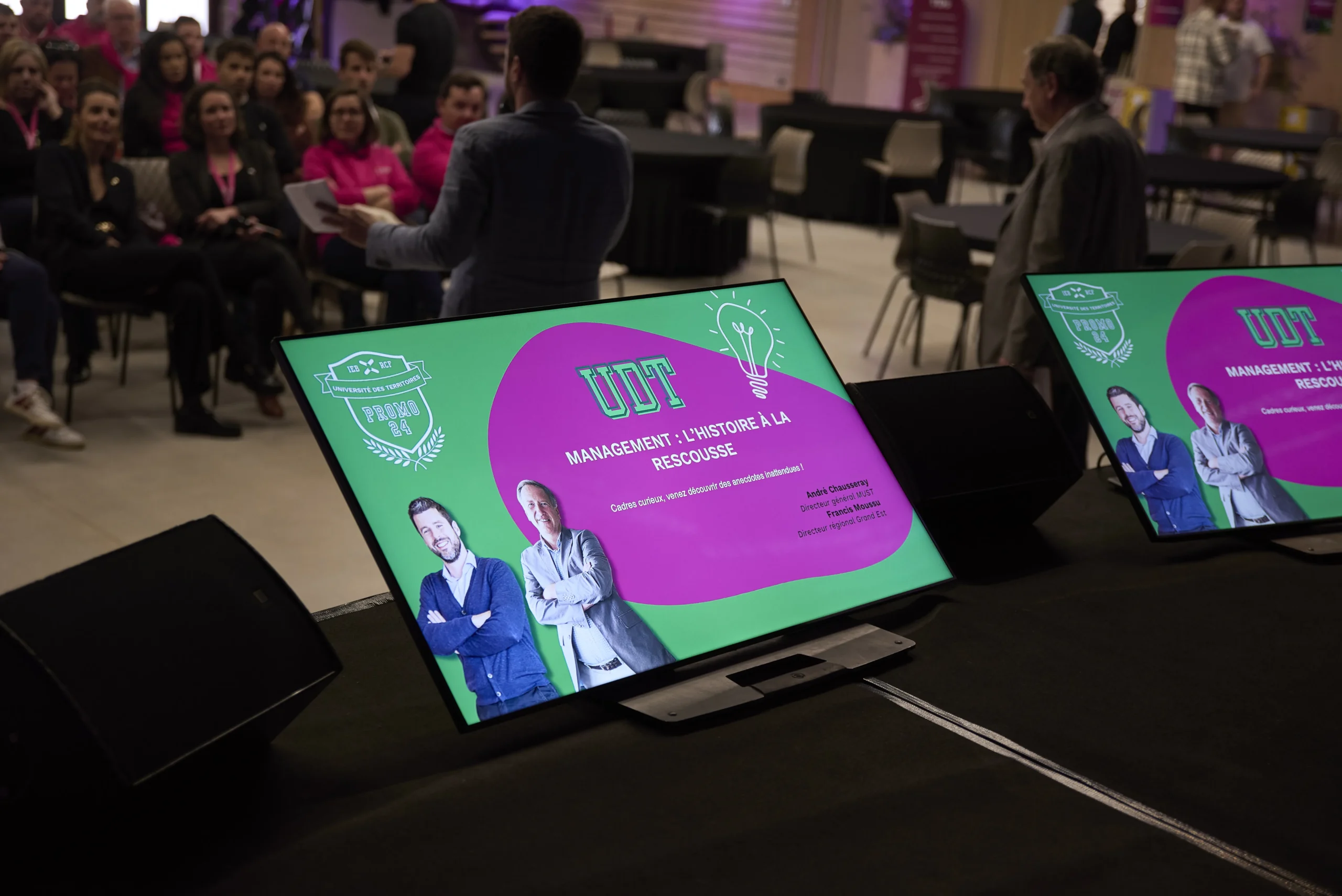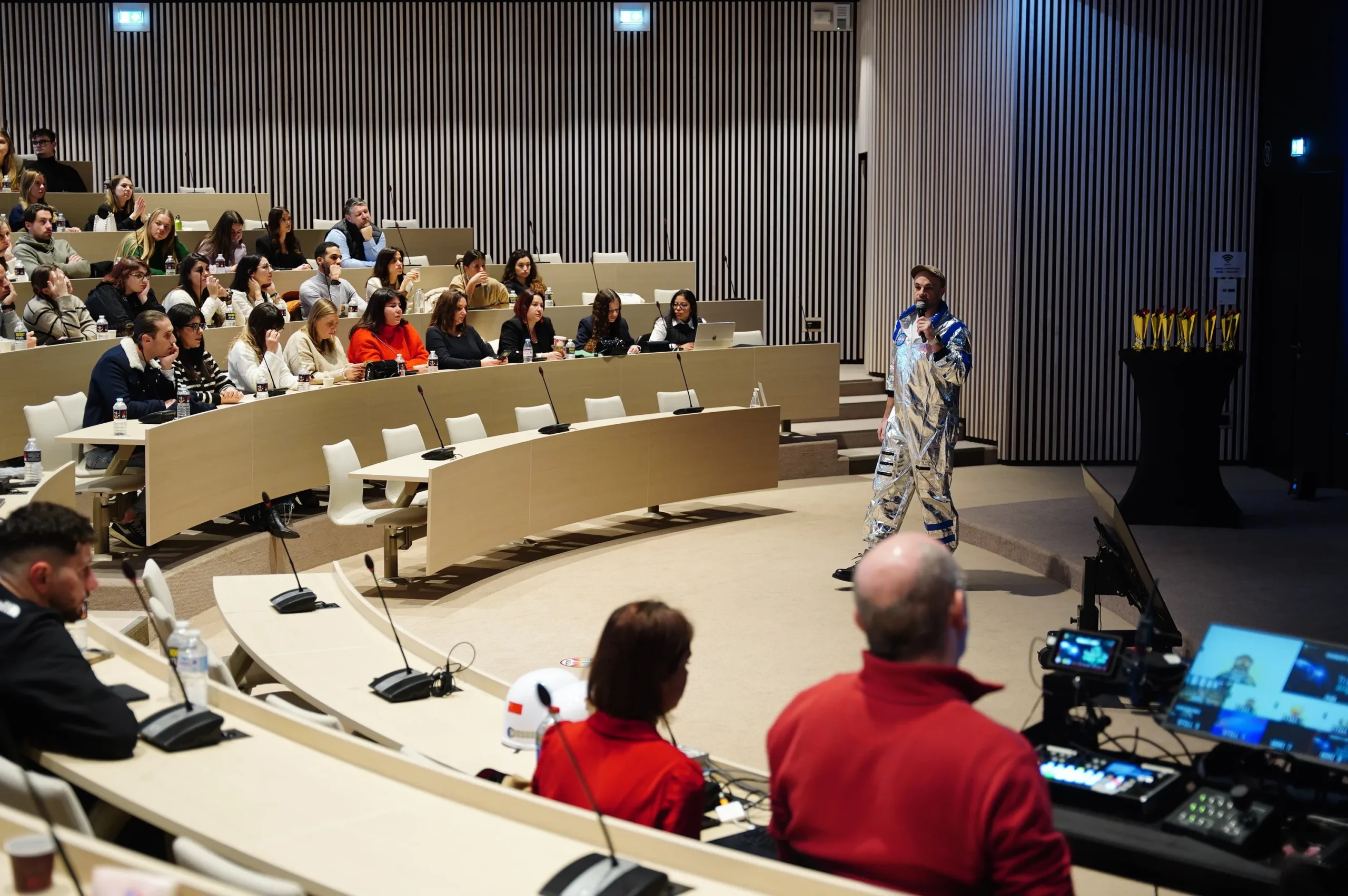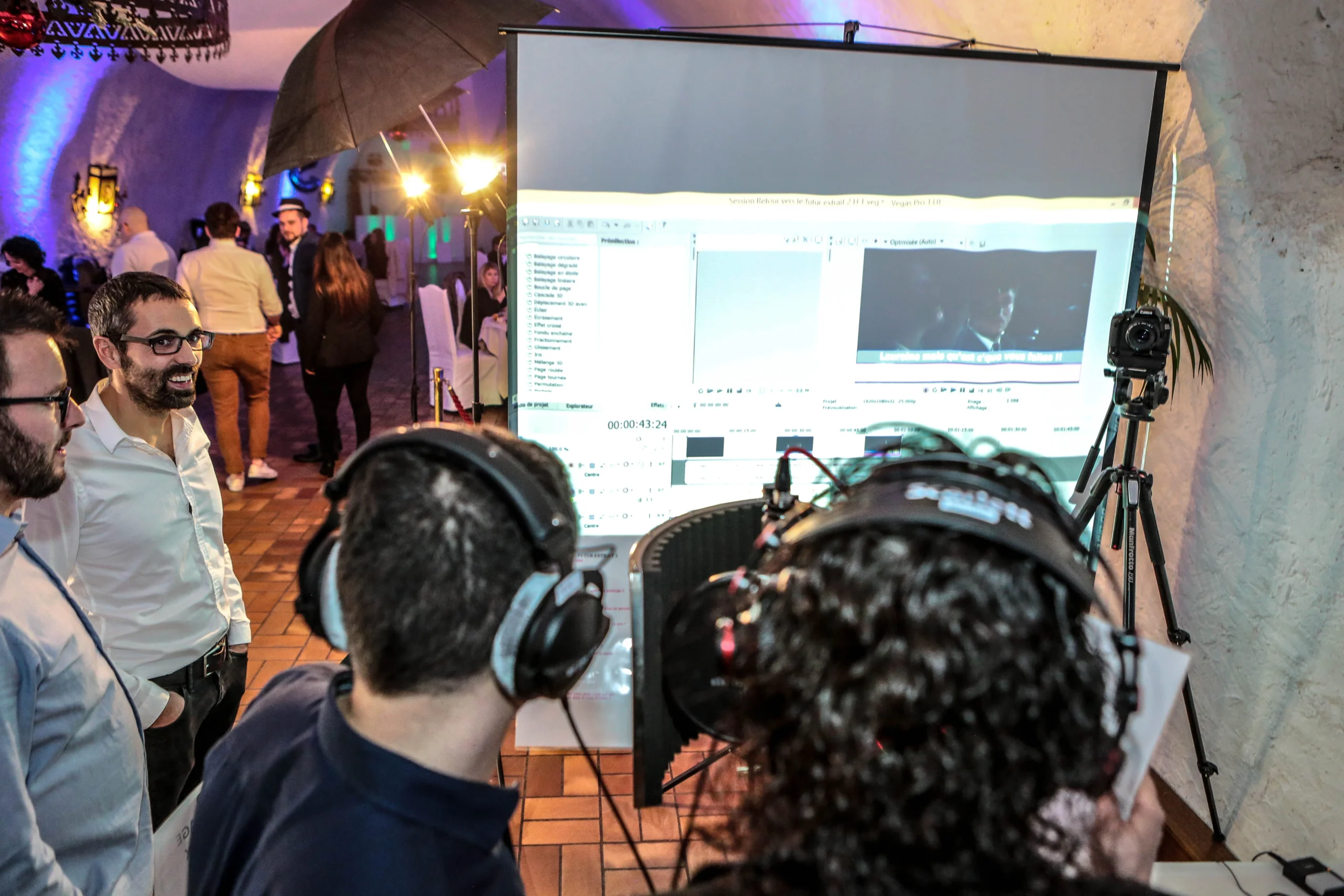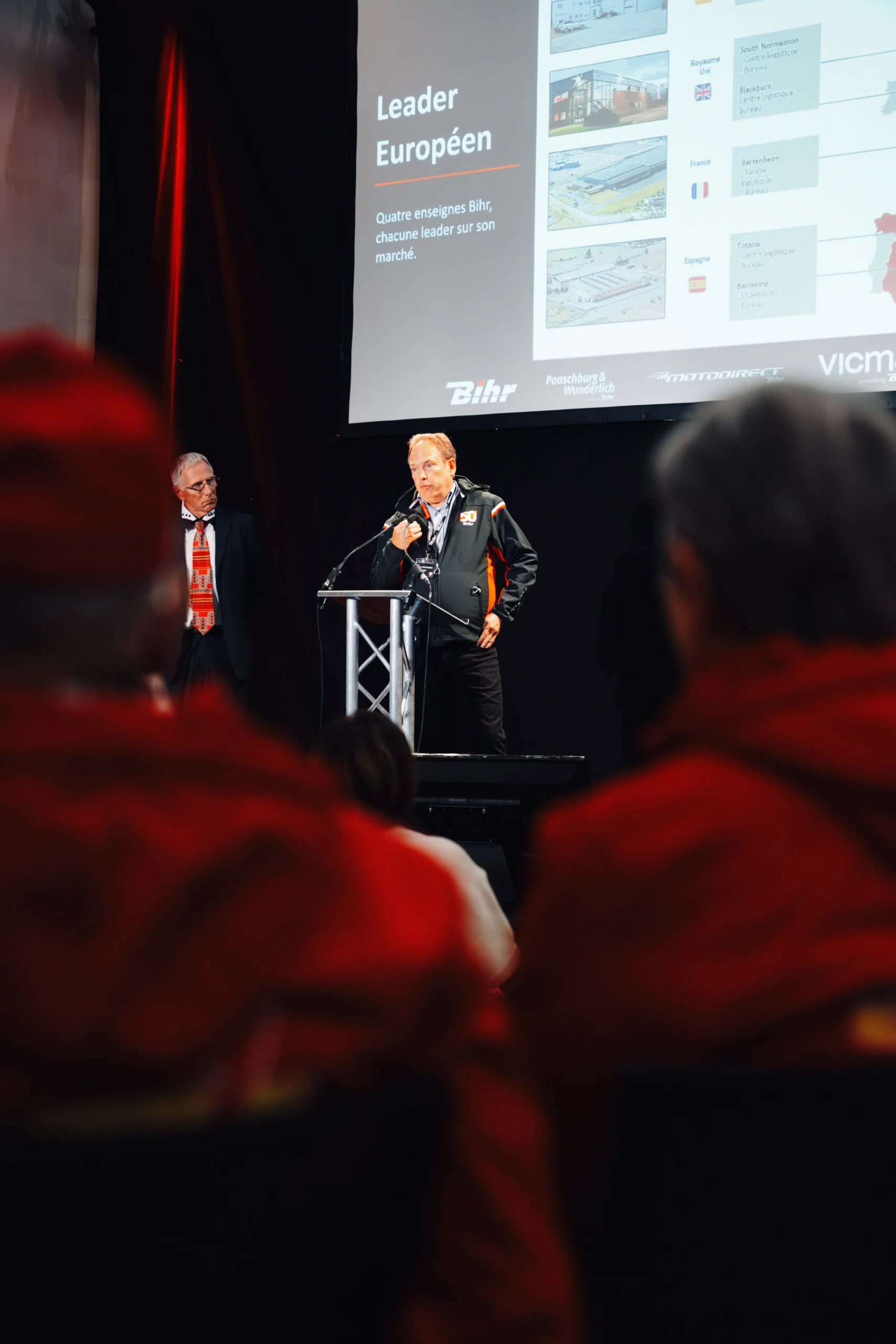
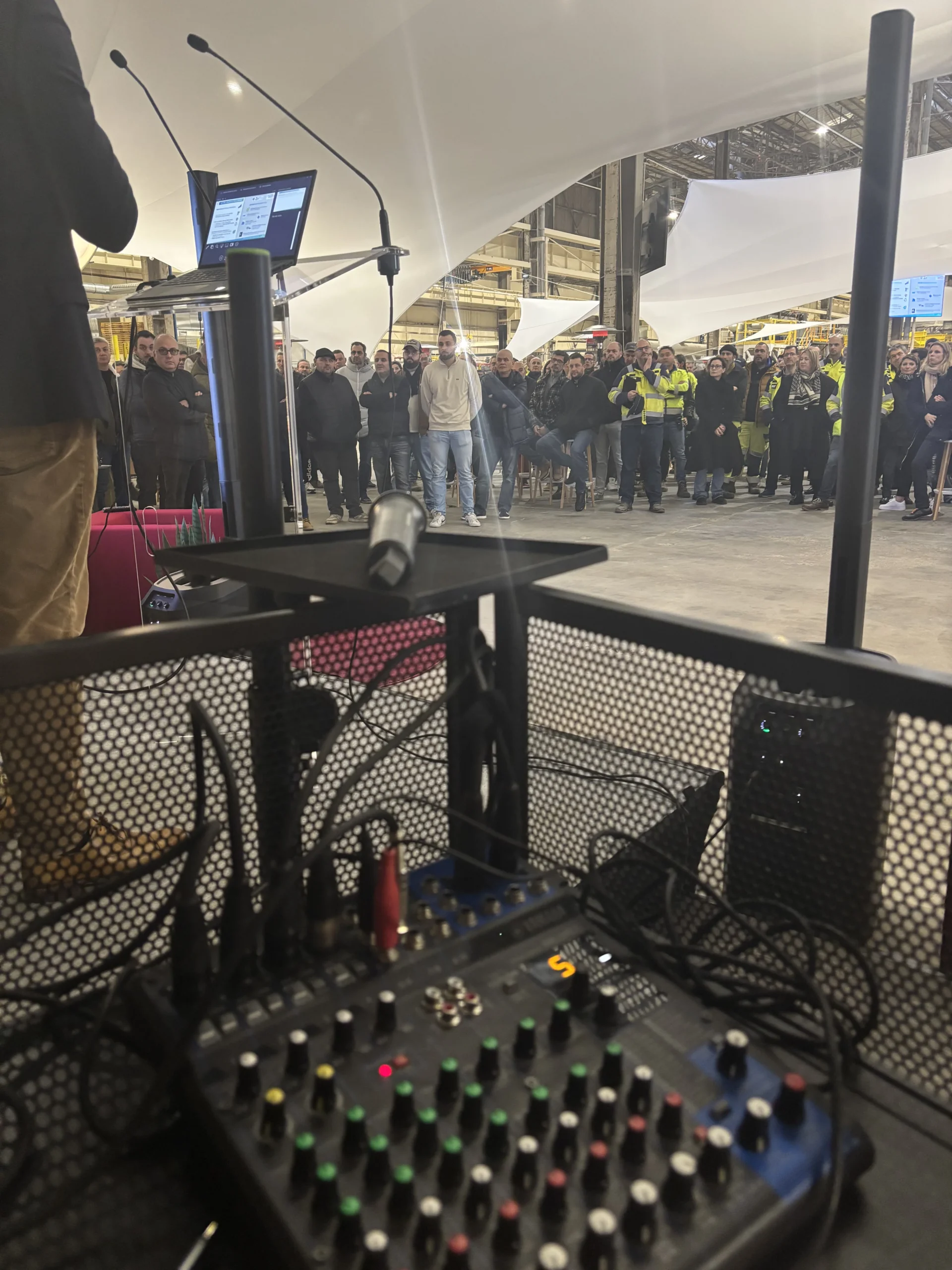
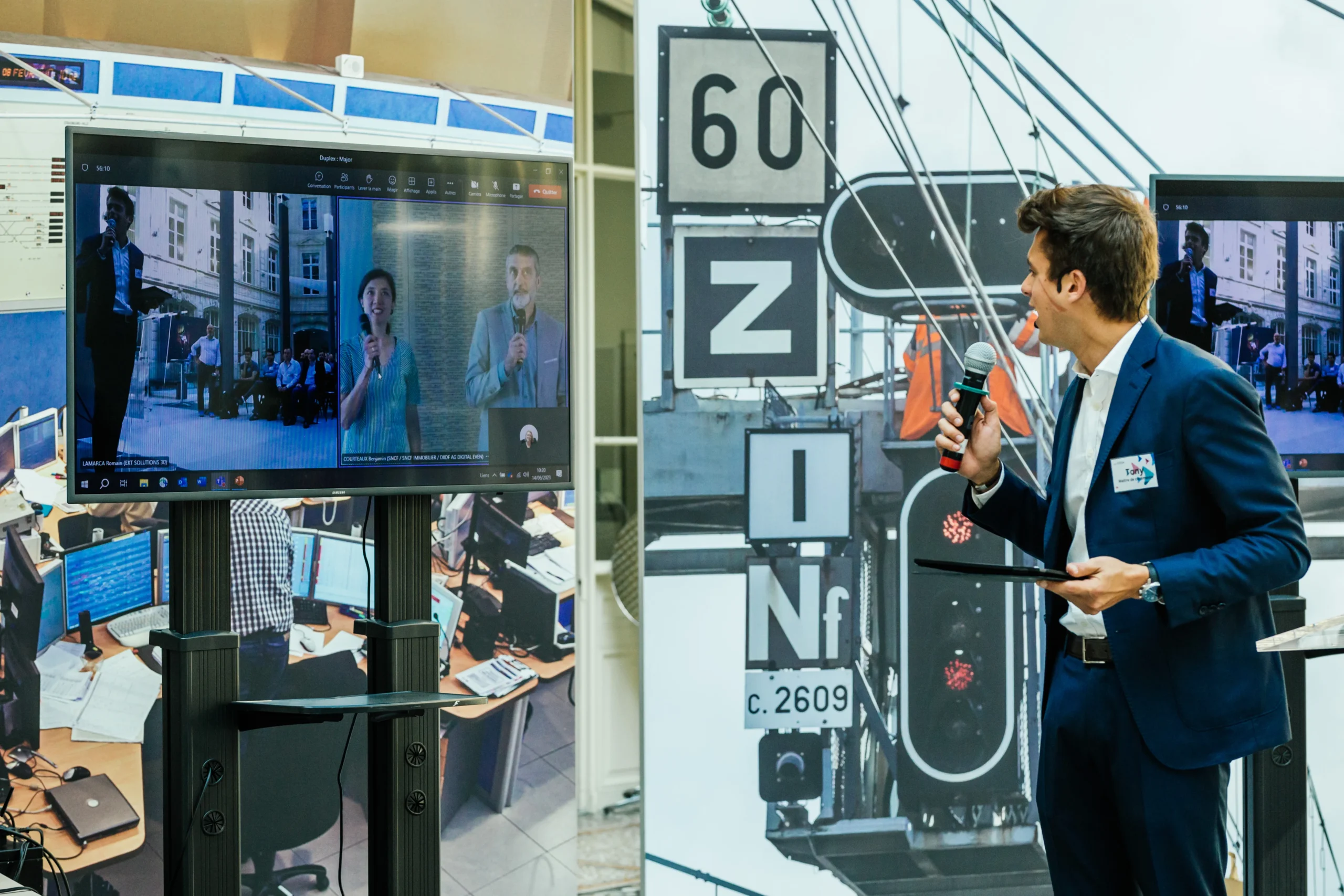
INNOV'events supports executives, HR and communications teams across Quebec with professional Interpreter / Translator services for board meetings, town halls, trainings, press briefings and international delegations—typically from 20 to 2,000+ attendees.
We handle interpreter sourcing, preparation (glossaries, speaker notes, terminology validation), and the operational layer: AV, headsets/receivers, booths or RSI platforms, stage cues, and a run-of-show that keeps your message intact.
In a corporate event, language is not a “nice-to-have”. It is risk management: one ambiguous term in a Q&A, one poorly translated safety instruction, or one misinterpreted HR announcement can create reputational, legal, or labour-relations consequences. A strong Interpreter / Translator setup protects the clarity of your decisions and the credibility of your leadership.
Organizations in Quebec expect bilingual delivery to feel natural—not performative. Stakeholders want French respected, English understood, and neither audience left behind. That means real-time interpretation that is stable, discreet, and aligned with union realities, government standards, and the local corporate culture.
We are an event agency based in Montréal, with field teams used to “event day pressure”: last-minute speaker changes, hybrid rooms, tight rehearsal windows, and complex terminology (industrial, financial, public-sector adjacent). Our approach is operational first: secure the message, then make it easy for your speakers and attendees.
300+ corporate mandates delivered across Canada (events, meetings, activations), with recurring accounts in Quebec.
48–72 hours typical turnaround to staff interpreters for standard topics; 5–10 business days recommended for technical sectors and hybrid events.
99%+ show-rate secured through backup planning (standby resources, redundancy on critical roles, and contingency logistics for headsets/RSI).
Capacity: from single-room consecutive interpretation to multi-room simultaneous with parallel breakout tracks.
In Quebec, we work with leadership teams that have zero tolerance for approximation: HR departments rolling out sensitive policy updates, communications teams managing brand tone in both languages, and executives presenting results to mixed-language audiences.
Many of our mandates come from organizations that rebook year after year because they want the same operational calm: a consistent approach to terminology, speaker comfort, and technical reliability. Typical recurring formats include annual kick-offs, executive roadshows between Montréal and Québec City, compliance trainings, and stakeholder meetings involving international partners.
If you have internal reference standards (brand voice, DEI vocabulary, product naming conventions, unionized workplace terminology), we integrate them and keep them consistent across events—so your French and English outputs feel like one organization speaking, not two versions competing.
Nous vous envoyons une première proposition sous 24h.
When your audience is bilingual, the real question is not “Do we interpret?” but “What will it cost us if we don’t?” In Quebec, interpretation is often the difference between a message being received and a message being debated.
Protect executive intent: financial guidance, strategic pivots, and organisational changes land as intended when terminology is controlled (e.g., “position elimination” vs “layoff”, “optimization” vs “cutbacks”).
Reduce HR and labour-relations friction: bilingual Q&A can become emotionally charged; a seasoned interpreter keeps tone neutral, avoids escalation, and ensures both sides hear the same meaning.
Increase participation: employees engage more when they can ask questions in their first language without feeling they are slowing the room. Participation rates in Q&A and workshops typically increase when interpretation is seamless.
Safeguard compliance and safety: technical briefings (EHS, cybersecurity, legal updates) require precision. Interpretation paired with written translation of key slides reduces misinterpretation and limits exposure.
Strengthen brand credibility: for external events (press, partners, customers), high-quality bilingual delivery signals respect for Quebec and professionalism—especially for organizations headquartered outside the province.
Quebec business culture values clarity, respect, and preparedness. Interpretation done properly is not “extra production”; it is the infrastructure that lets your leadership communicate with authority across language lines.
In the field, the expectations are very specific. A Montréal audience will notice immediately if interpretation feels improvised: delays, inconsistent terminology, or a speaker who has to repeat themselves because the interpreter isn’t fed with context. In Quebec, bilingual delivery is often judged as part of corporate maturity.
We see three recurring expectations from executives and communication teams:
We also account for practical realities: last-minute leadership changes, speakers who go off-script, and hybrid participants joining from plants, regional offices, or remote sites with variable connectivity. Our planning anticipates these constraints instead of reacting to them on stage.
Interpretation is a service, but it also shapes the event experience: how people interact, how confidently leadership speaks, and whether bilingual audiences feel equally included. Below are formats we deploy in Quebec, with practical implications for HR and communications teams.
Bilingual moderated Q&A (with floor language control): We set rules so questions are asked naturally, interpreted instantly, and answered once—without doubling time. Useful for town halls where the wrong tone can escalate quickly.
Breakout workshops with rotating interpreters: For leadership training or change-management sessions, we staff interpreters per room or per track, with timed rotations to avoid fatigue and maintain accuracy.
Interpretation for live polling and employee feedback: If you use Slido or similar tools, we align bilingual prompts and ensure the interpreter team receives questions in real time to avoid awkward pauses.
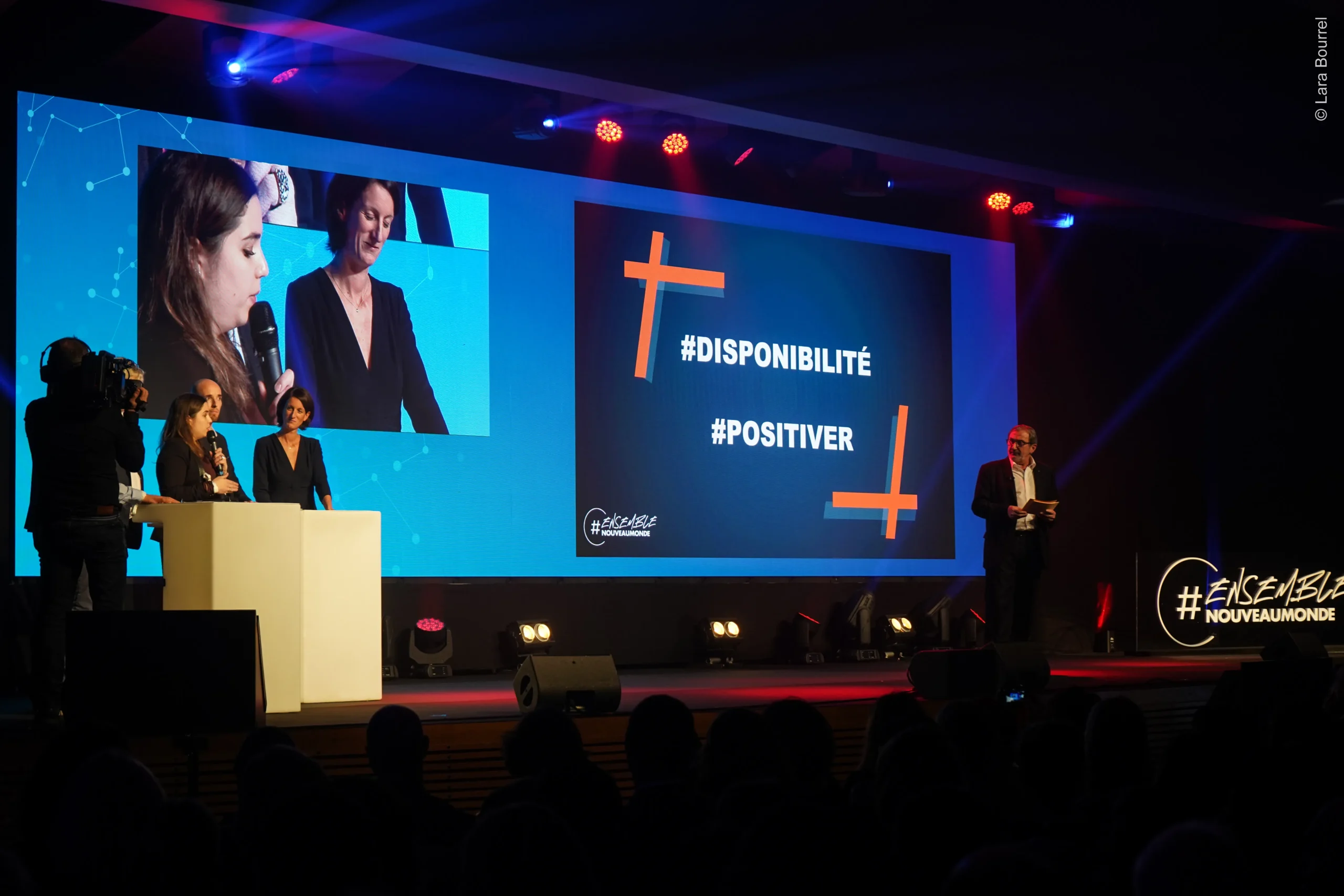
Bilingual master of ceremonies support: When your MC is strong in one language, interpretation allows the event to keep a single pacing and tone while respecting both audiences—particularly effective for awards nights and executive recognitions.
Panel interpretation with cue discipline: Panels are where most interpretation fails (overlaps, interruptions). We brief panelists on mic etiquette and speaking turns so interpretation stays clean and the recording remains usable.
Bilingual culinary stations and signage: For receptions, we translate menu descriptions and allergen notes consistently. This is not “nice copy”—it reduces risk and improves guest flow, especially with international delegations.
Chef demos with interpreted commentary: When the content matters (sponsors, VIPs), we interpret live narration so both language groups experience the same story and brand cues.
RSI (Remote Simultaneous Interpretation) for hybrid audiences: Participants can join language channels on their own devices. We manage onboarding instructions, QR access, and contingency if corporate firewalls block platforms.
Multi-language expansion beyond French/English: For global teams, we can add Spanish, German, or Mandarin channels when needed—while keeping French/English as the operational base for Quebec.
Recording-ready interpretation: If you need usable replay content, we plan interpretation audio routing for clean tracks (separate language stems), avoiding the “room echo” that makes recordings unusable.
The right format is the one that protects your brand and your message under real conditions: imperfect speakers, changing agendas, and time pressure. We align the interpretation design with your event objectives, your leadership style, and the expectations of audiences in Quebec.
The venue determines how well interpretation will work: ceiling height and acoustics, power availability for booths and receivers, FOH mix position, and whether breakouts can be isolated from ambient noise. In Quebec, the “best-looking” room is not always the most interpretable room.
| Venue type | For which objective? | Main strengths | Possible constraints |
|---|---|---|---|
Hotel conference floor (Montréal / Québec City) | Town halls, sales kick-offs, multi-room training | Built-in AV infrastructure, breakout availability, controlled acoustics, easy interpreter positioning | Union/house AV rules, load-in windows, receiver distribution logistics at peak arrival |
Corporate HQ auditorium or large boardroom | Executive updates, HR policy launches, leadership panels | Brand-controlled environment, security, easier speaker prep and rehearsal access | Often underpowered audio, limited space for booths, HVAC noise, IT restrictions for RSI |
Convention centre or large event space | Conferences with parallel tracks and partner presence | Scale, professional rigging, multiple language-channel management, strong back-of-house | Longer build schedules, higher labour costs, more complex audience routing and signage |
We recommend a site visit (or at minimum a technical walk-through) before confirming an interpretation approach. A Interpreter / Translator plan is only as good as the audio chain, and the venue is where most hidden constraints live.
In Quebec, interpretation budgets vary based on mode (simultaneous vs consecutive), duration, technical needs, and content complexity. The goal is to price the full system—people + preparation + audio—so there are no day-of surprises.
Interpretation mode: simultaneous typically requires more resources than consecutive, especially beyond 60–90 minutes of continuous content.
Team size and rotation: for sustained sessions, interpreters work in teams to maintain accuracy and avoid fatigue; this is not optional for high-stakes content.
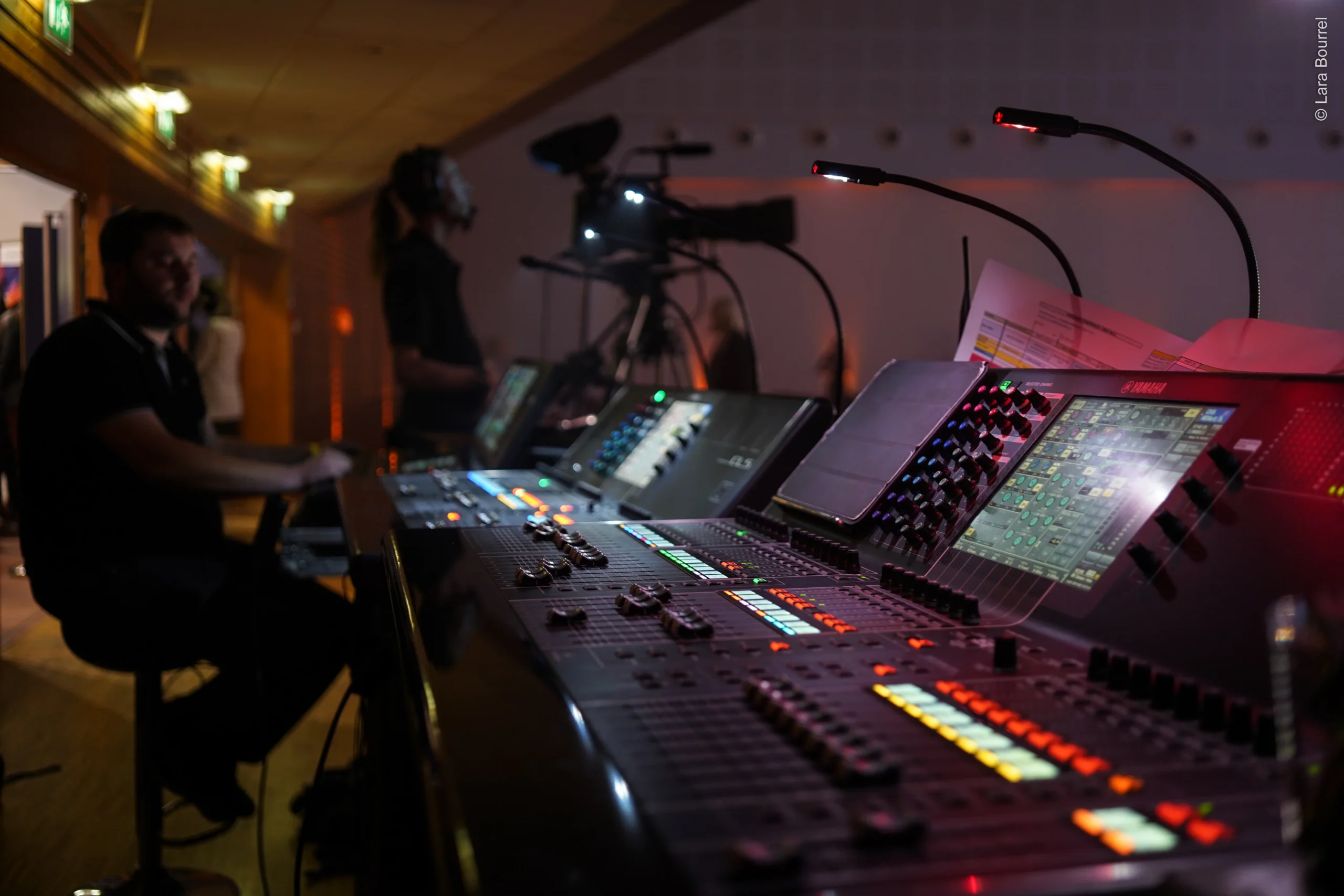
Technical package: booths (when required), headsets/receivers, transmitters, audio mixing, microphones, and onsite technicians.
Hybrid/RSI platform costs: channel setup, licensing, participant access management, testing, and IT coordination (including firewall constraints).
Preparation level: glossary building, speaker briefings, slide translation, and terminology validation with SMEs. The prep time is often what separates “acceptable” from “board-ready”.
Scheduling realities: evenings, early mornings, multi-day events, travel within Quebec, and last-minute booking lead times.
We frame budget in terms of ROI: protecting an executive message, reducing internal friction, and ensuring that decisions land consistently across languages. For many organizations, the cost of one miscommunication—especially in HR, safety, or investor-facing contexts—exceeds the cost of doing interpretation properly.
Interpretation is as much operations as language. Working with a team established in Quebec means faster access to vetted local interpreters, technicians, and equipment—and fewer assumptions about what “bilingual” means in a Quebec context.
At INNOV'events, we coordinate the full chain: interpreter staffing, show flow, and AV integration. When issues happen (a speaker changes their deck at 7:45 a.m., a mic fails, a VIP arrives late), local proximity and established vendor relationships are what keep the event stable.
For projects in Québec City and the Capitale-Nationale region, our extended network also supports planning continuity with our partner resources as an event agency in Quebec ecosystem—useful when your program moves between cities or when your internal teams are split across the province.
We frame budget in terms of ROI: protecting an executive message, reducing internal friction, and ensuring that decisions land consistently across languages. For many organizations, the cost of one miscommunication—especially in HR, safety, or investor-facing contexts—exceeds the cost of doing interpretation properly.
Our mandates range from discreet board-level meetings to large-scale employee communications. The common thread is that interpretation must hold under pressure.
Examples of field situations we manage:
We also adapt to different corporate cultures: some want strict bilingual symmetry; others want French primary with English support. Our job is to operationalize your intent and keep it stable from rehearsal to show close.
Underestimating audio: relying on room speakers without dedicated interpreter feeds leads to muffled interpretation and audience disengagement.
Booking “bilingual staff” instead of trained interpreters: fluency is not interpretation. Without technique, accuracy collapses under speed, acronyms, and pressure.
No prep package: if interpreters see slides five minutes before stage time, you will hear terminology drift and hesitation—especially in finance, legal, or industrial contexts.
Poor mic etiquette: panels with cross-talk, handheld mics passed late, or audience questions without microphones create gaps and frustration for interpreted listeners.
No plan for Q&A: Q&A is where risk concentrates. Without moderation rules, interpretation doubles time and tensions rise.
Ignoring fatigue: long sessions without interpreter rotation reduce quality. This shows up as simplified phrasing, missed details, and inconsistent names or numbers.
Hybrid platform surprises: corporate firewalls, Wi-Fi density, and late participant onboarding can derail RSI if not anticipated.
Our role is to de-risk the event: align language, people, and technology so your leadership team can focus on content—not on whether the room understood it.
Rebooking happens when interpretation becomes predictable: speakers feel supported, the comms team sees consistency, and HR trusts that sensitive messages won’t drift. In Quebec, that reliability is what earns long-term relationships.
60–70% of our interpretation-related mandates come from repeat clients or internal referrals within the same organization.
1 central terminology file per client (updated over time) to keep recurring programs consistent across quarters and leadership cycles.
0 dependence on a single individual: we build bench strength so your event is not exposed if one interpreter becomes unavailable.
Loyalty is not about discounts; it’s about fewer surprises. For directors comparing agencies, repeat business is the most concrete proof that delivery holds up in real-life Quebec conditions.
We start with a short discovery focused on decision-maker needs: who must understand what, when, and with what level of precision. We identify risk points (HR announcements, legal wording, numbers, safety topics, media presence) and define success criteria (timing, interactivity level, recording needs).
We propose interpreter profiles based on topic and format: town hall, training, board meeting, press briefing. We prioritize proven sector exposure (finance, industrial operations, tech, public-sector adjacent) and align the team’s style with your event tone (formal, conversational, crisis-sensitive).
We collect decks (even drafts), speaker notes, internal acronyms, product naming, and “do-not-translate” elements. When needed, we build a bilingual glossary and validate it with communications or subject-matter experts. This step is where accuracy is won.
We coordinate the AV plan: microphones, interpreter audio feeds, booth/receiver logistics, RSI platform channels, and signage/participant instructions. We integrate interpretation cues into the run-of-show (start/stop points, video playback, Q&A rules, panel mic discipline) so pacing stays executive-grade.
On site (or virtually), we manage distribution (headsets/QR access), interpreter placement, sound checks, and live troubleshooting. We keep a tight feedback loop with stage management and moderators. If a speaker goes off-script or timing shifts, we adjust without compromising comprehension.
We debrief quickly: what terminology should be locked for next time, what technical adjustments are needed, and whether any content requires follow-up written translation (minutes, key messages, replay captions). For recurring programs, we update the glossary and keep your standards documented.
For simultaneous interpretation, plan 2 interpreters per language direction for sessions longer than 60–90 minutes to maintain accuracy (rotation every 15–30 minutes). For short executive meetings using consecutive interpretation, 1 interpreter can be enough depending on pace and stakes.
For standard corporate topics, book 2–3 weeks ahead when possible. For technical sectors, multi-day conferences, or hybrid RSI setups, aim for 4–8 weeks. If you’re inside 72 hours, we can often staff it, but interpreter choice and prep depth will be more limited.
Interpretation is spoken, live (simultaneous or consecutive). Translation is written (slides, scripts, signage, policies). For leadership events in Quebec, the best results come from combining both: translate key materials to control terminology, then interpret live to manage Q&A and delivery.
Yes. We coordinate the full technical package: receivers/headsets, transmitters, and booths when required by event format or venue standards. We also plan distribution (check-in flow, deposit rules if needed, spare units) and integrate it with your security and registration setup.
We build a client-specific glossary and validate sensitive terms with HR/communications before the event (examples: employment status wording, benefits terminology, DEI vocabulary, program names). We brief interpreters on “preferred phrasing” and “avoid lists,” and we update the glossary post-event so the next town hall uses the same language.
If your next town hall, training, or executive meeting involves bilingual stakeholders, plan interpretation early. The best outcomes come from aligning interpreters, terminology, and AV before the agenda is locked—especially for hybrid formats and sensitive HR communications.
Send us your date, city in Quebec, expected attendance range, languages required, and whether you need onsite or RSI. INNOV'events will come back with a clear recommendation (mode, staffing, technical needs) and a realistic budget—so your leadership team can speak once and be understood by everyone.
Thierry GRAMMER is the manager of the INNOV'events Quebec office. Reach out directly by email at canada@innov-events.ca or via the contact form.
Contact the Quebec agency