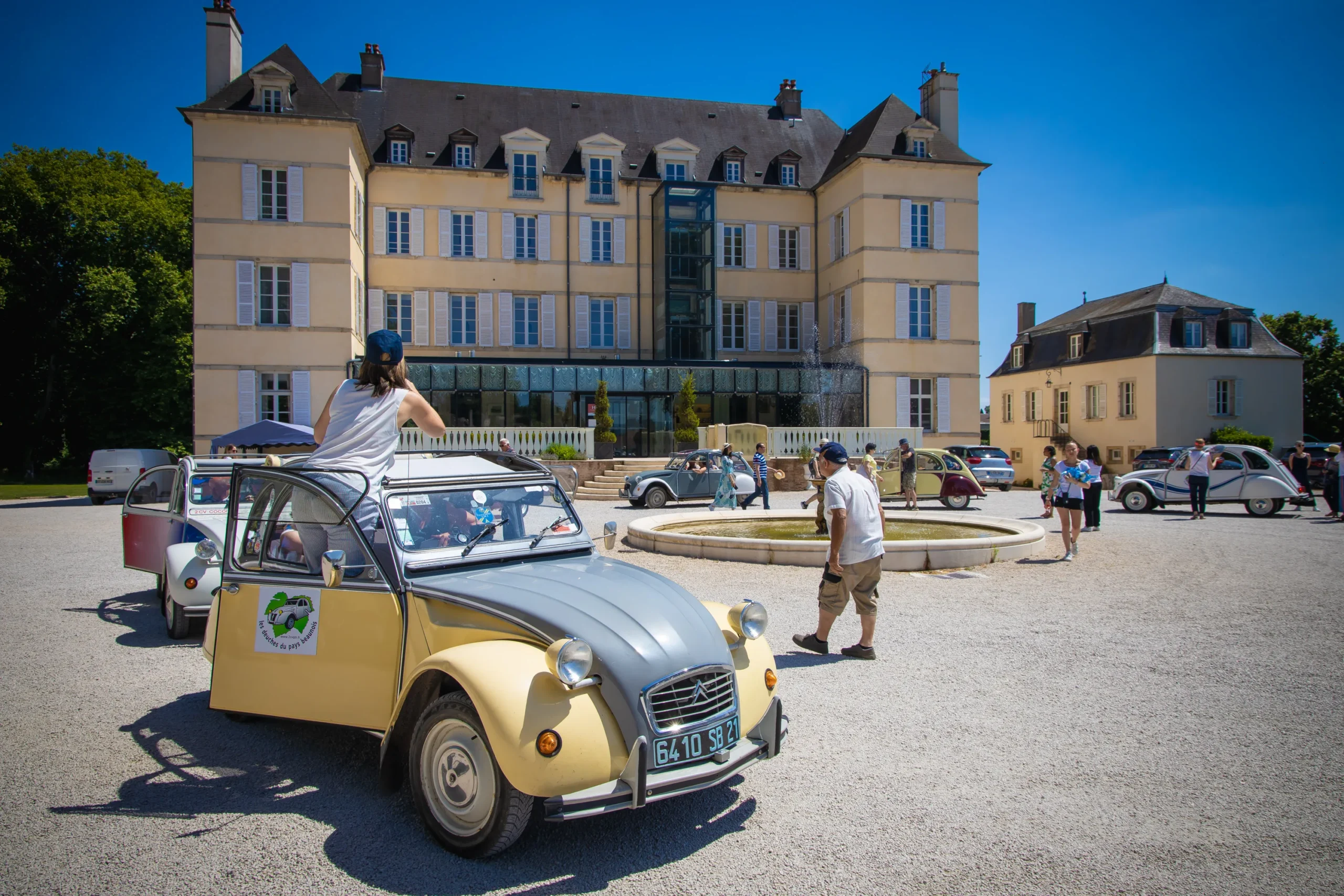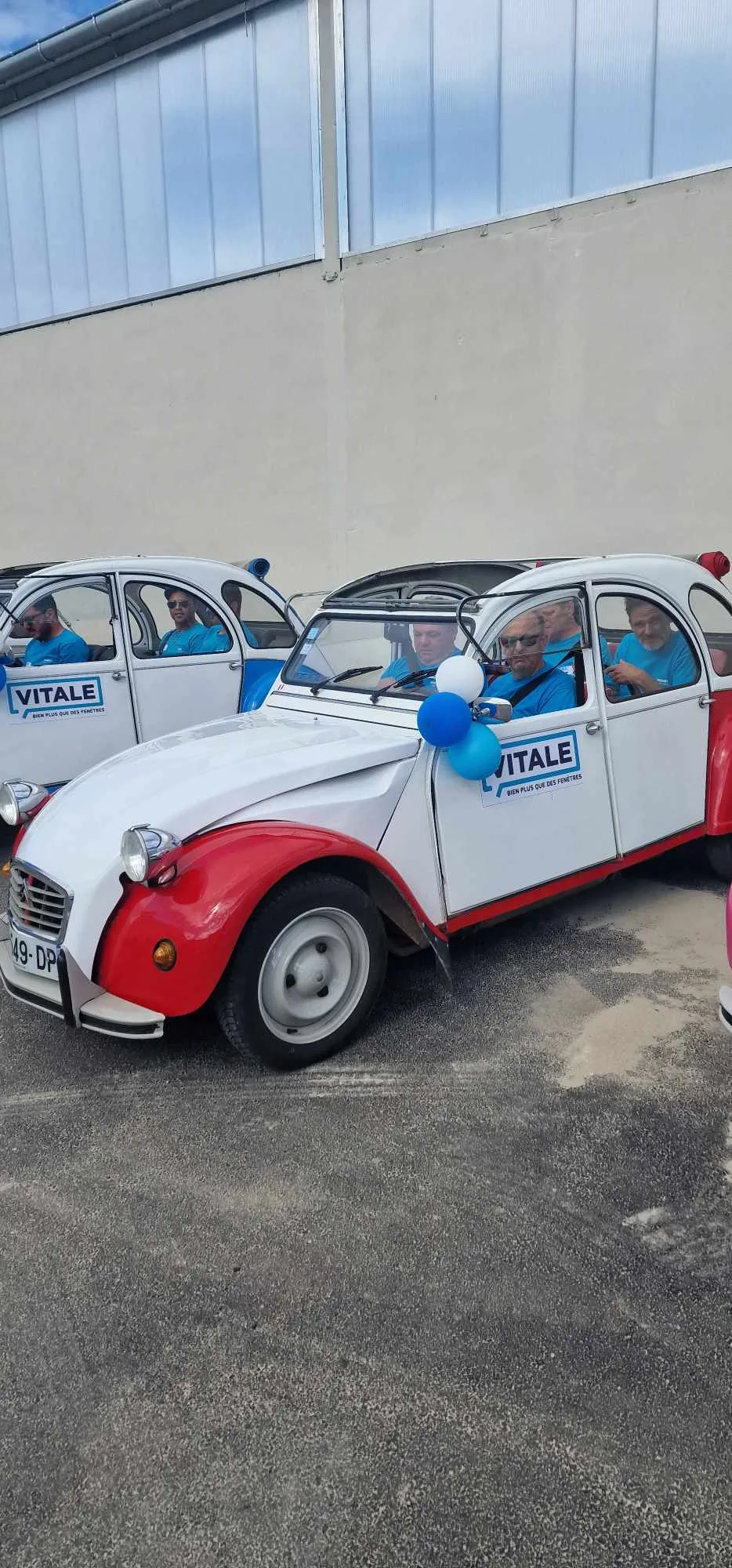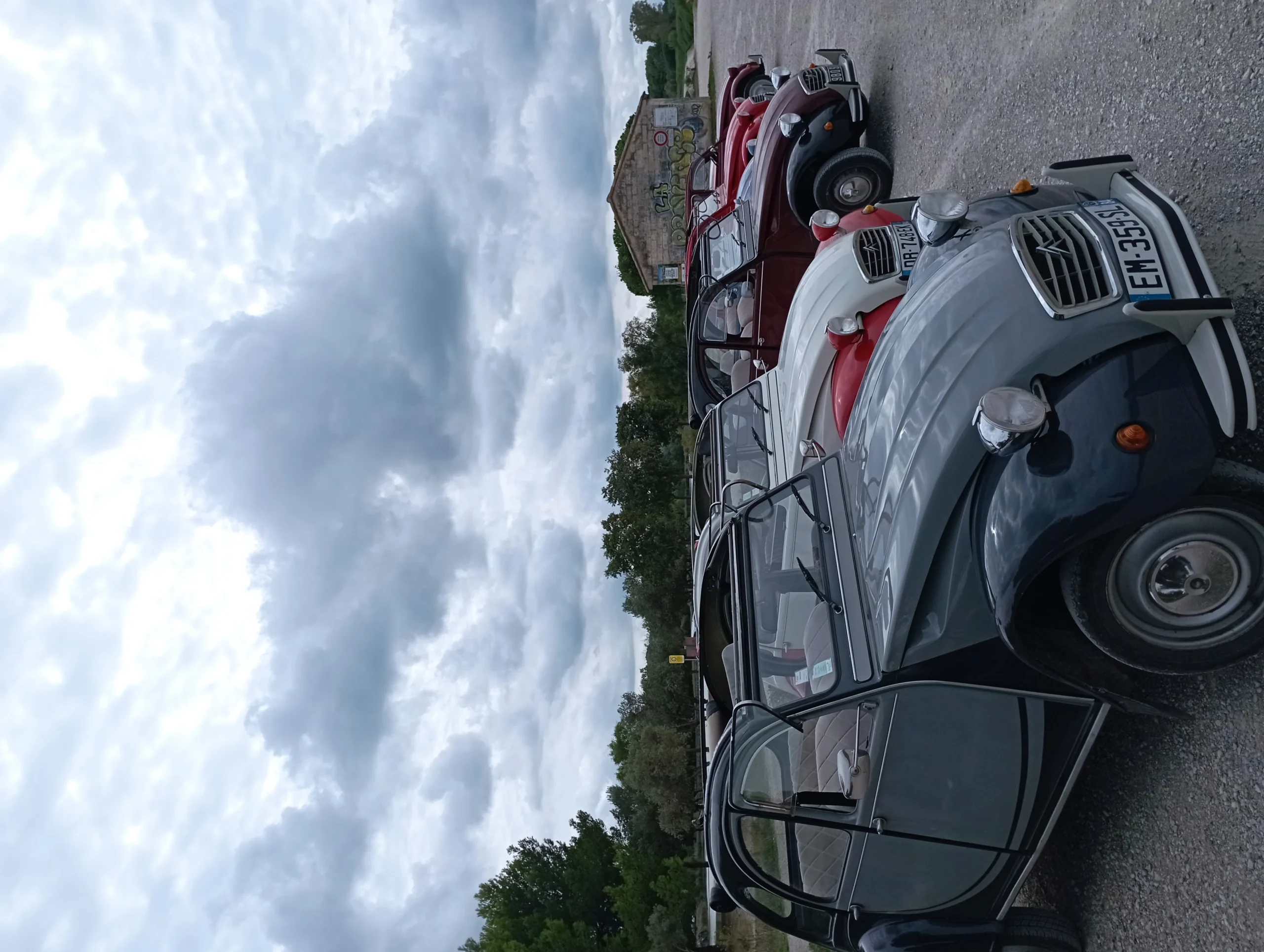
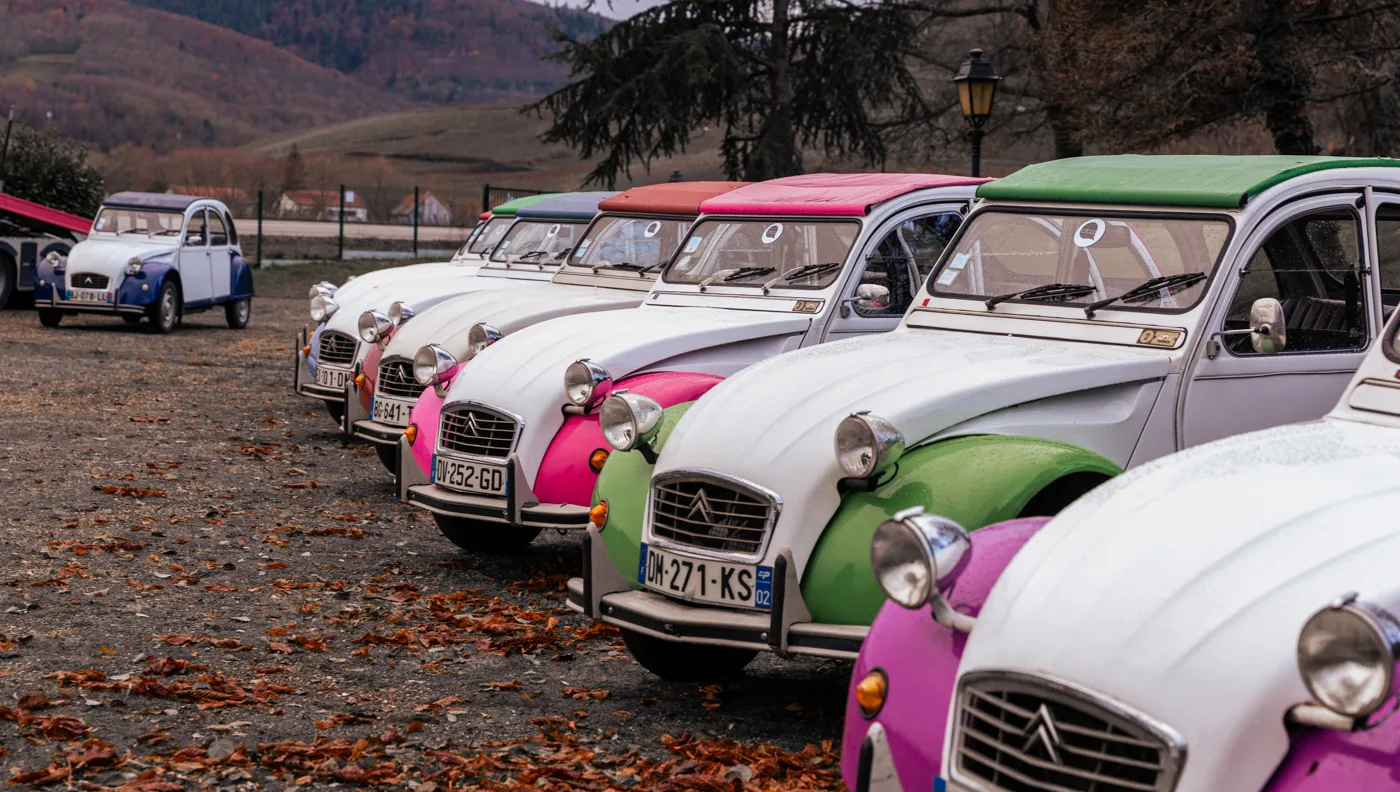
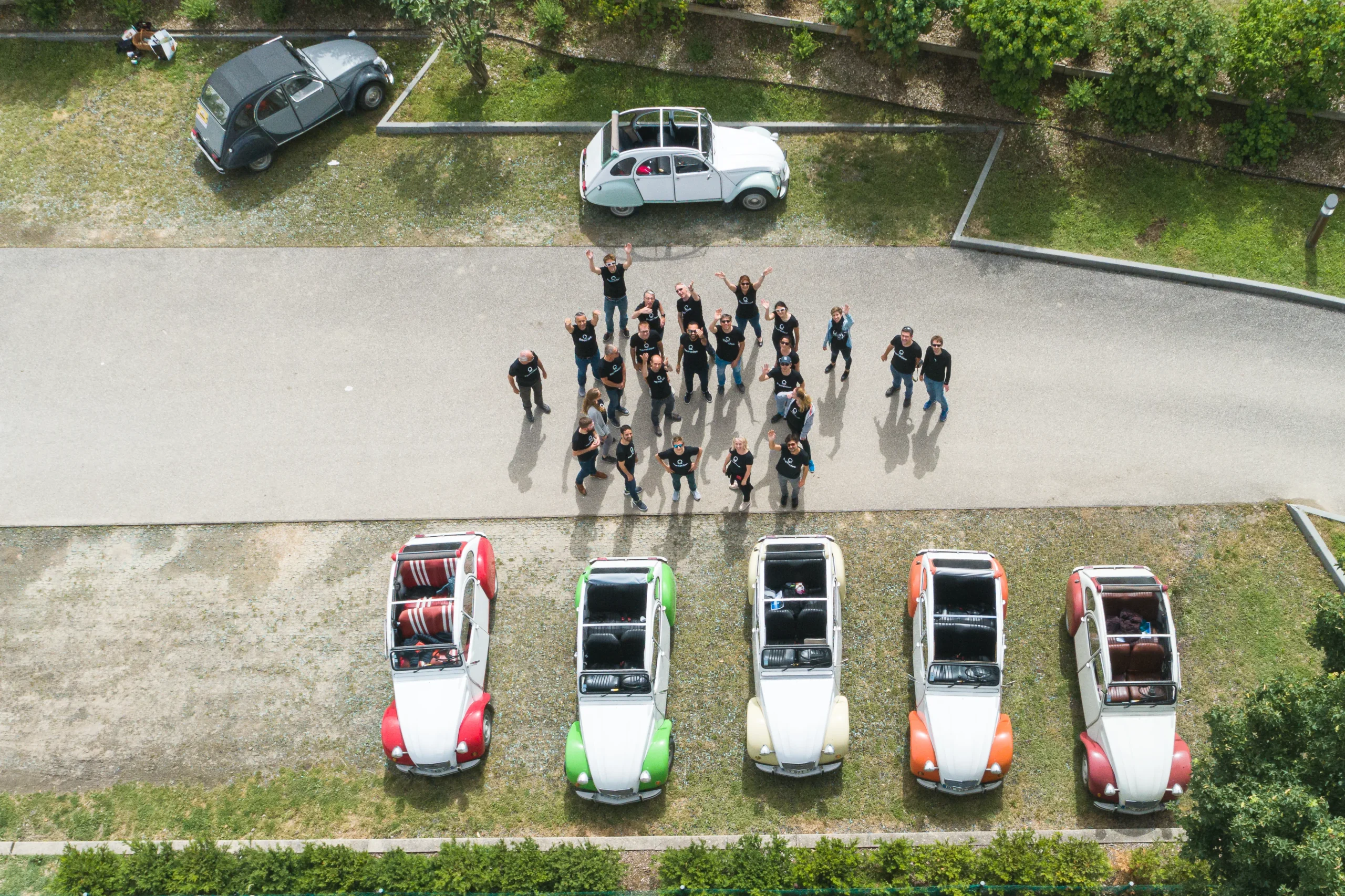
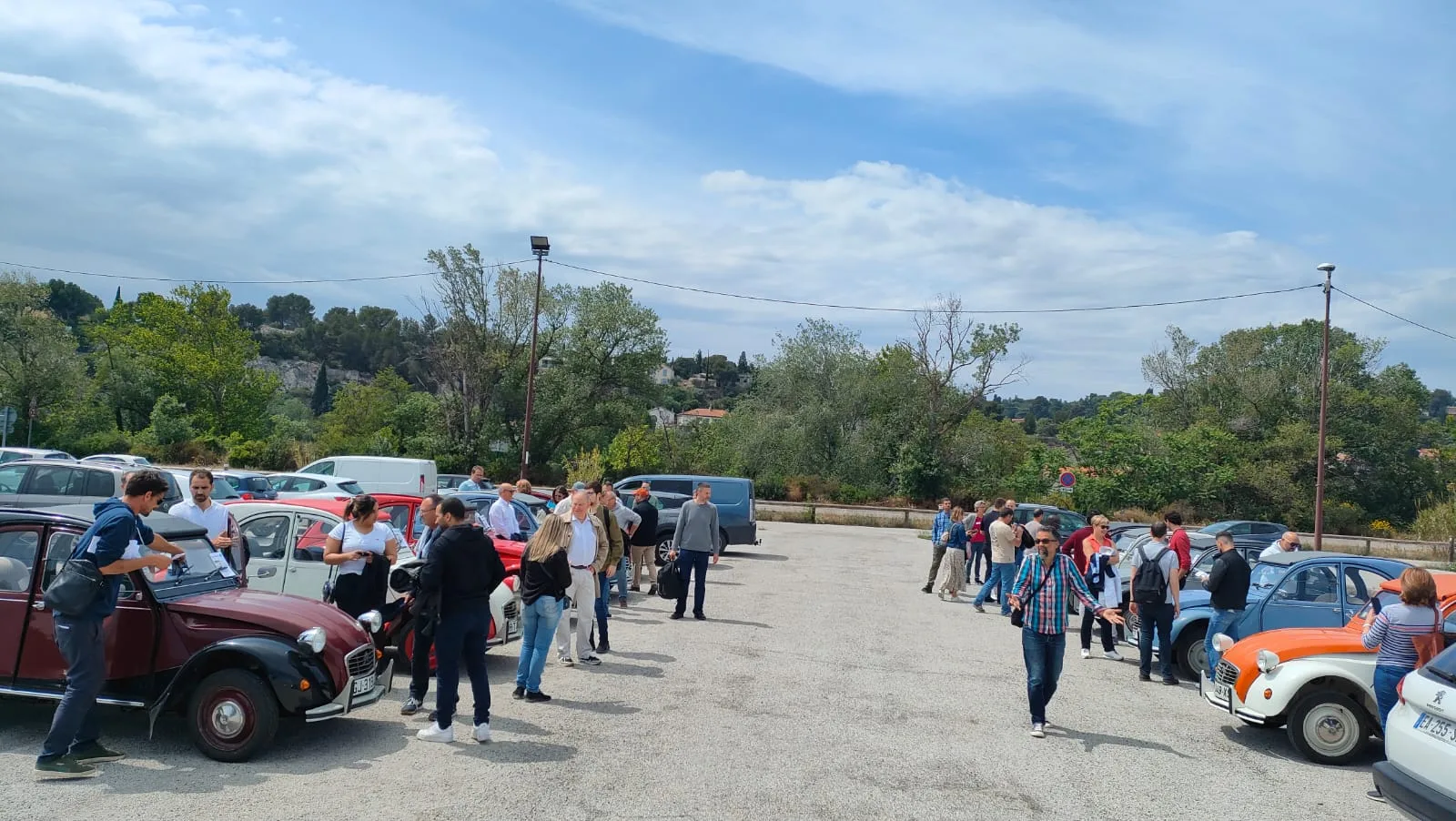
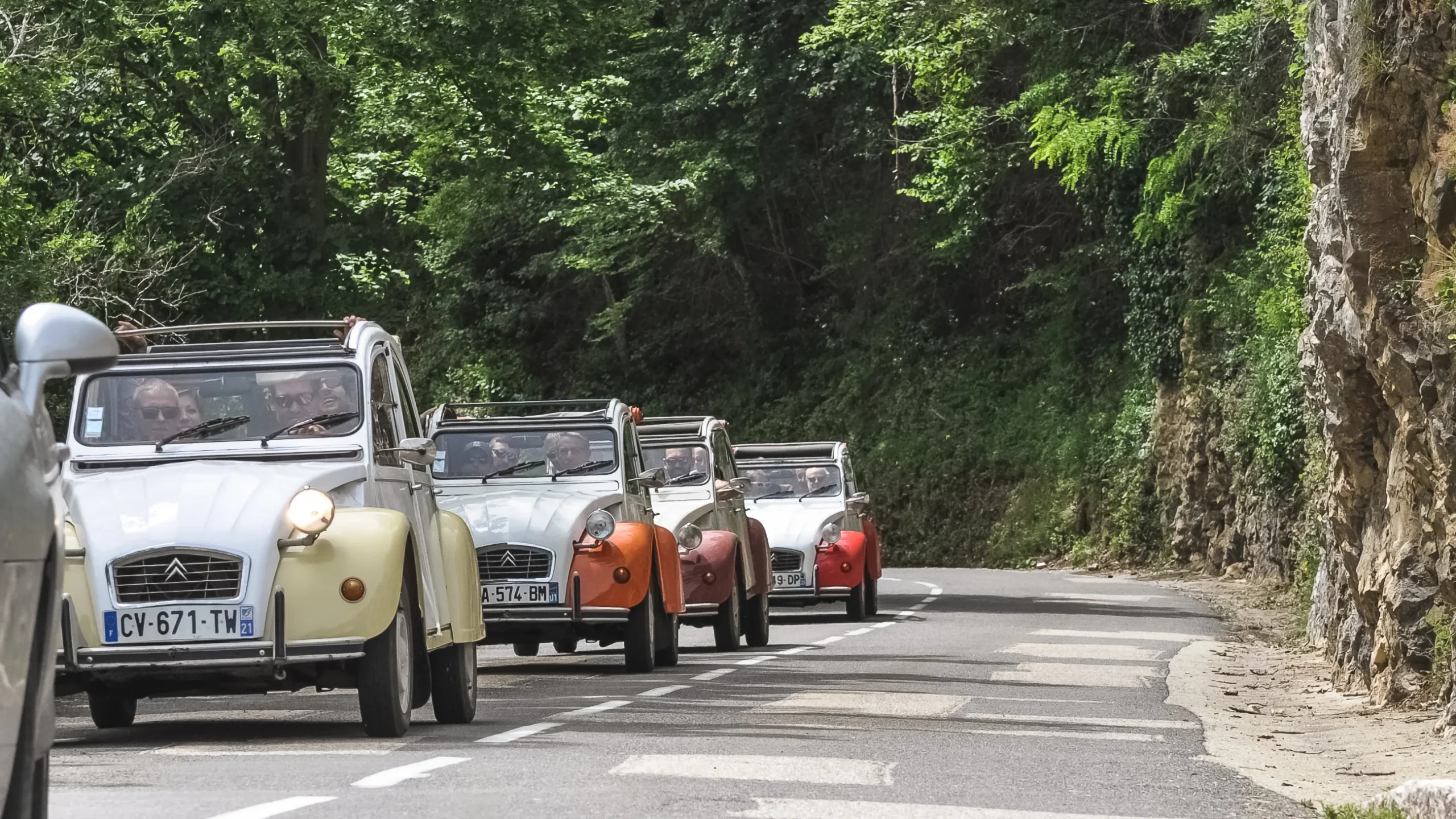
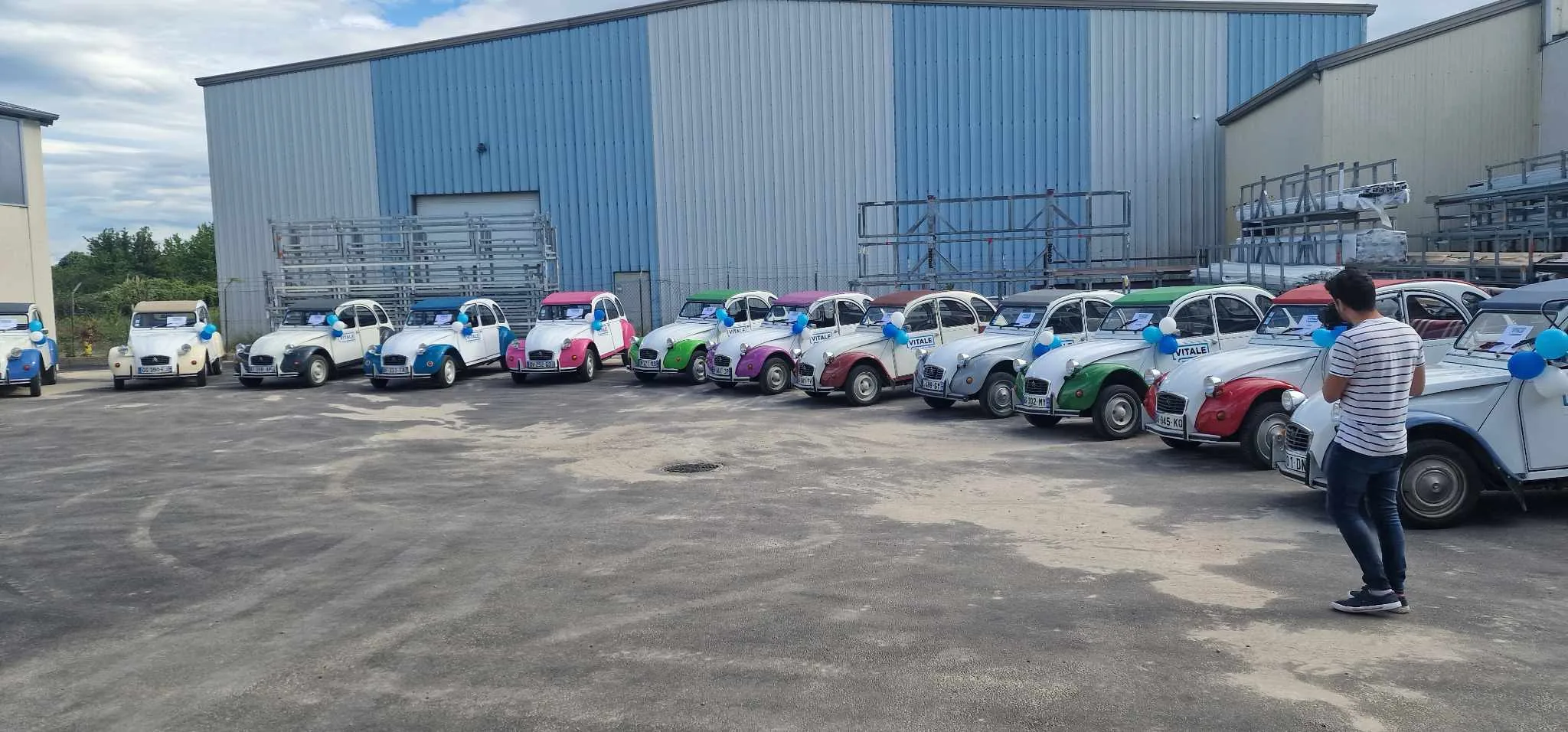
INNOV'events (Montréal) designs and runs 2CV Rally programs across Quebec for executive offsites, sales kickoffs, and employer-brand events, typically from 20 to 250 participants.
We handle the operational realities: vehicle sourcing, route creation, permits, safety plan, bilingual facilitation, timing, and contingency scenarios—so your leadership team can focus on business outcomes.
In a corporate agenda that is often packed with presentations, a 2CV Rally is one of the rare formats that produces observable behaviours: decision-making under time pressure, delegation, cross-team communication, and follow-through. When HR or Communications needs a moment that truly supports culture—not just entertainment—this format gives you measurable engagement without requiring participants to be “sporty.”
Organizations in Quebec expect events to be well-run, respectful of schedules, and aligned with brand image. That means clear safety rules, credible logistics, bilingual communication, and a route that makes sense for the region (traffic patterns, seasonal constraints, and realistic driving times), not a “template” copied from elsewhere.
As a Montréal-based team, we work with local suppliers and field teams who know the territory: where convoys can park without creating tension, which roads are pleasant versus congested, and how to keep a group moving even when the weather changes. This local operational knowledge is what keeps the day smooth for executives and stress-free for internal organizers.
15+ years coordinating corporate activations and complex logistics across Quebec, including multi-stop programs and tight executive schedules.
20–250 participants per day managed on rally formats (multiple departures, staggered starts, checkpoint staffing, and end-of-day wrap-up).
Up to 60 vehicles coordinated in controlled convoys with route briefings, safety protocols, and live timing updates.
Bilingual delivery (FR/EN) with facilitation scripts adapted to unionized, mixed-collar, and multi-site teams.
Same-day contingency playbooks (weather, mechanical issues, road closures) tested on real events—so the agenda holds.
We support organizations across Quebec that need reliable execution and a partner who can speak “corporate reality”: schedule pressure, compliance requirements, brand risk, and the internal workload on HR and Communications. Many teams come back year after year because they don’t want to re-teach an agency how their approvals work, what their risk tolerance is, and what “on-time” really means when executives are connecting from different sites.
If you want to sanity-check our approach before committing, we can share comparable rally case studies (group size, timing, venue type, and operational constraints) and outline how we would adapt them to your context—without forcing you into a fixed package.
Nous vous envoyons une première proposition sous 24h.
A 2CV Rally in Quebec is not a “fun drive.” For executives, HR, and Communications, it’s a structured field exercise that surfaces how teams plan, communicate, and execute—while keeping the tone accessible for a wide range of profiles. It works especially well when you need to connect teams across functions or sites without creating a competitive atmosphere that alienates quieter participants.
Leadership visibility without a stage: you see who clarifies goals, who listens, who keeps the team calm, and who actually closes tasks. That’s valuable for leadership development and succession conversations.
Cross-silo collaboration under constraints: teams must share roles (driver/navigator/timekeeper), process information quickly, and make trade-offs. This mirrors real operational contexts—especially in project-based or multi-site organizations.
Employer-brand and internal comms content: the vehicles, checkpoints, and team moments produce authentic visuals. With a simple media plan, Communications can generate usable content (in both languages) without feeling staged.
Inclusive participation: unlike high-intensity sports activities, a rally can be adapted for different mobility levels. We plan options that respect accessibility and comfort without diluting the experience.
Time discipline: the day is built around departures, checkpoints, and a hard end time. For executive offsites, this matters—nobody wants a “team-building” that eats into strategic workshops.
The business culture in Quebec values authenticity and operational competence. A rally format works when it’s grounded in reality: clear briefings, respectful pacing, and logistics that don’t make your internal organizers carry the stress.
In Quebec, corporate groups are generally pragmatic: they appreciate originality, but they judge an event on the fundamentals. The first expectation is operational reliability—participants arrive on time, vehicles are ready, instructions are clear, and the schedule is respected. The second is risk management: you want an activity that feels adventurous without exposing the company to unnecessary liability or reputational risk.
We also see very concrete constraints that shape a 2CV Rally here: mixed-language groups (and not always comfortable bilingualism), participants coming from multiple sites (Montréal, Laval, Montérégie, Laurentides, Estrie), and the reality of seasonal variability. A plan that works in July may be too ambitious in October. In spring, road conditions and construction zones change the practical driving experience week to week.
Finally, executive teams expect maturity in facilitation. They don’t want forced “cheerleading.” They want a confident, professional tone, a clear purpose, and a debrief that connects the experience to workplace behaviours: coordination, role clarity, decision cadence, and how teams handle the unexpected.
Entertainment only creates engagement when it’s designed to fit the participants’ profiles and the company’s objectives. In a 2CV Rally in Quebec, the best “animations” are those that add structure and shared reference points—without slowing down the convoy or turning the day into a scavenger hunt that feels childish.
Strategy checkpoints (8–12 minutes each): short, business-relevant tasks (resource allocation puzzle, rapid prioritization exercise, negotiation scenario) that force role clarity between driver and navigator.
Live scoring with transparency: we use simple scoring rules (time windows, accuracy, team behaviour points) and publish standings at defined moments. This keeps motivation high without constant interruptions.
Bilingual micro-briefs: short prompts in FR/EN to keep mixed groups aligned and prevent the common “half the group missed the rule” issue.
Photo storytelling mission: teams build a mini narrative (3–5 shots) linked to your values (safety, innovation, service, collaboration). Communications receives a clean asset set for internal channels.
Heritage angle (when relevant): if your brand aligns with craftsmanship or longevity, we integrate a short segment on the vehicle story to create meaning—not as a lecture, but as context for the experience.
Local tasting checkpoint: a controlled, timed stop with non-alcoholic options and allergen-aware planning. This works well in Montérégie/Estrie circuits where local producers can be integrated without adding long detours.
End-of-rally reception: structured arrival (parking, welcome, refreshment, quick recap) so people don’t “scatter” and the leadership message lands.
Real-time operations channel: a dedicated event channel for alerts and updates (departure waves, route notes, time windows). It reduces stress and prevents dozens of ad hoc calls to your internal team.
Behaviour-based awards: instead of only “fastest team,” we add categories like best collaboration, calmest under pressure, best planning. This supports culture and reduces overly aggressive driving behaviour.
Whatever the format, we align the rally mechanics with your brand image and risk posture. A public company, a regulated sector, and a startup will not be facilitated the same way. A professional corporate event entertainment in Quebec should feel coherent with how you lead internally.
The venue and the territory drive perception. The same 2CV Rally can feel smooth or chaotic depending on departure access, parking control, and the realism of travel times. For executive groups, we prioritize: easy coach or car access, controlled staging area for briefings, and a finish location that can absorb a convoy without disrupting other guests.
| Venue type | For which objective? | Main strengths | Possible constraints |
|---|---|---|---|
| Hotel with large parking + meeting rooms (Montréal area) | Executive offsite with workshops before/after the rally | One address for the day, AV-ready rooms, smooth guest flow, strong weather backup | Parking logistics must be validated for convoy staging; downtown locations can add traffic unpredictability |
| Country club / golf club (Montérégie or Laurentides) | Client relationship day or leadership retreat | Premium perception, controlled access, good arrival experience, easy end-of-day cocktail | Membership/private rules, noise/time restrictions, limited capacity at peak season |
| Agrotourism site / vineyard-style property (Estrie or Montérégie) | Culture-building with a strong local and social component | Natural checkpoints, strong photo content, tasting integration, calm roads nearby | Seasonality, weather dependence, strict alcohol management, bus access to confirm |
We always recommend a site visit (or at minimum a technical walkthrough) before confirming. In practice, 20 minutes on the ground often reveals the real constraints: where the convoy can line up, how participants move to the briefing zone, and whether the finish location can absorb arrivals without bottlenecks.
A 2CV Rally in Quebec budget is primarily driven by vehicle availability, route complexity, staffing density, and risk management. Two programs can look similar on paper but differ significantly in cost once you account for mechanical support, permits, multi-language facilitation, and the level of production expected by a leadership team.
Group size and vehicle ratio: common planning is 2–3 people per car. More cars means more staging time, more checkpoints, and more staff to keep timing tight.
Vehicle sourcing and contingency: classic vehicles require reserves. We plan spare cars and on-call support to protect the schedule. That operational safety net is a real cost driver—and usually the difference between a “cute idea” and a corporate-grade delivery.
Route length and geography: a compact circuit near Montréal reduces exposure to traffic and long transfers. Longer routes increase fuel, staffing hours, and risk of delays.
Permits, parking control, and security: depending on departure/finish sites and checkpoint locations, you may need permissions, paid parking control, or security presence for crowd/vehicle management.
Food and beverage structure: a light checkpoint break versus a full end-of-day reception changes vendor needs, staffing, and time on site. Alcohol management also adds operational requirements.
Branding and communications: branded roadbooks, bibs, signage, photo coverage, and internal recap assets can be scaled from simple to highly produced.
From an ROI perspective, executives typically value three outcomes: participation rate, observable collaboration behaviours, and internal communication assets that extend the impact beyond one day. We help you choose the production level that matches these outcomes—without overbuilding.
When you run a rally format, local execution is not a “nice to have.” It’s what prevents delays, confusion, and brand risk. A team established in Quebec understands the realities: seasonal road conditions, municipal constraints, supplier reliability, and the practical differences between regions (Montréal congestion patterns versus more open circuits in Estrie or Montérégie).
If your program is closer to Québec City or you have sites there, partnering with a strong local network matters. We collaborate within the province and can coordinate with our partners as needed, including via this resource: event agency in Quebec.
From an ROI perspective, executives typically value three outcomes: participation rate, observable collaboration behaviours, and internal communication assets that extend the impact beyond one day. We help you choose the production level that matches these outcomes—without overbuilding.
We’ve delivered rally-style programs in Quebec for a wide range of corporate contexts: executive offsites where the rally must start and finish between two strategic workshops, sales meetings where energy needs to rise after a long morning of content, and multi-site team-buildings where participants don’t all share the same corporate culture yet.
In practice, what changes from one organization to another is not the “idea” but the operating model: departure wave management, the density of checkpoints, how competitive the scoring can be, the tone of facilitation (more discreet for senior groups), and the level of brand exposure. We also adapt to internal constraints we regularly see: unionized environments with strict time windows, regulated sectors with zero tolerance for alcohol during activities, or leadership teams that require a calmer pace and more space for conversation.
Our role is to translate your objectives into a rally that runs like a professional production—clear timing, clear responsibilities, and a finish that feels controlled rather than improvised.
Underestimating staging time: classic cars attract attention; people take photos, chat, and drift. We build a controlled staging zone and staggered departures so your first checkpoint doesn’t start late.
Routes built on maps, not reality: construction, school zones, and seasonal traffic can destroy timing. We validate routes and prepare alternates with clear trigger points.
Rules that create unsafe behaviour: if “speed” is rewarded, you’ll see risky decisions. We use time windows, accuracy, and behaviour points to keep driving responsible.
Weak communication during the activity: when participants don’t know what to do after a detour or a separation, they call internal organizers. We provide a clear escalation path and a live operations channel.
Not planning for mechanical variability: classic vehicles can have issues. We plan spare cars, mechanical support, and a fast swap process so the team stays in the game.
Finish location bottlenecks: if parking and arrivals are not managed, the end of the day feels messy. We choreograph arrival waves and guest flow to the reception area.
Our job is to remove these predictable risks before they become your problem on event day—so HR and Communications are not placed in a reactive posture in front of leadership.
Most renewals happen for one reason: internal teams don’t want to relive the operational load. When a rally is delivered properly, it becomes a reliable tool you can reuse—new route, same confidence. We document what worked, what to adjust, and we keep your internal constraints on file (brand rules, approvals, safety posture, language requirements).
On-time discipline: our rally schedules are built with buffer where it matters (departures, first checkpoint, finish) to protect leadership agendas.
Repeatable production: we maintain operational checklists and staff roles so the delivery quality doesn’t depend on one person’s memory.
Stakeholder comfort: executives appreciate a calm, competent facilitation style; internal organizers appreciate not being “the help desk” during the activity.
Loyalty is rarely about novelty. In Quebec, it’s a proof of execution quality and risk control—especially for formats involving vehicles and public roads.
We start with a structured call with HR/Comms and the business sponsor. We confirm objectives (culture, integration, leadership, client relationship), non-negotiables (timing, alcohol policy, accessibility), and practical constraints (arrival patterns, bilingual needs, risk posture). We also identify who must approve what—so you’re not chasing validations at the last minute.
We define the vehicle ratio (often 2–3 participants per car), the staffing density (start zone, checkpoints, finish), and the contingency level (spares, mechanical support). You receive a preliminary budget with transparent drivers so you can arbitrate: fewer checkpoints, shorter route, lighter branding, or a more produced finish.
We propose circuits adapted to your starting point and finish objective, then validate them through reconnaissance. We check road comfort, timing realism, parking opportunities, and safe stopping points. We also prepare alternates and define decision triggers (e.g., weather, congestion, road closure) so the team can pivot without improvisation.
We design the rally mechanics: checkpoints, tasks, scoring, and the overall narrative. For executive groups, we keep it sharp and respectful—no forced humour, no infantilizing prompts. For broader employee groups, we ensure inclusivity and clarity. All participant-facing materials are prepared in FR/EN as required.
We finalize operations: permits/permissions when needed, parking plan, signage, staff briefings, emergency contacts, and a clear incident protocol. We also align with your internal policies (conduct, alcohol, photo consent) and ensure your legal/HR expectations are reflected in participant communications.
We run the start zone, departures, checkpoints, and finish with a designated production lead. We manage time, participant questions, and incidents through a single escalation path—so your internal organizers can participate. We close with a short debrief and, if requested, a communications-ready recap (key moments, award rationale, and photo selection guidance).
Most corporate groups plan 2–3 participants per vehicle. In practice, we see efficient formats from 20 to 250 participants, depending on vehicle availability, departure space, and checkpoint staffing.
For corporate agendas, the sweet spot is 3 to 5 hours including briefing and a controlled finish. If you add a reception or awards, plan 4.5 to 6.5 hours total so the day remains compatible with executive workshops.
It depends on the departure/finish sites and any reserved spaces. Public-road driving typically doesn’t require a permit, but reserved parking, exclusive access, or municipal spaces may. We validate permissions early and document the operating rules to avoid day-of surprises.
We plan for it. For corporate-grade delivery, we include a spare vehicle strategy and an on-call support process. The goal is a swap within a practical window (often 15–45 minutes depending on location) so the team can continue without derailing the overall schedule.
Yes. Teams are built with roles beyond driving (navigation, timekeeping, checkpoint tasks). We also design the program so no one is pressured to drive. If you have accessibility constraints, we adapt the route, tasks, and pacing and can propose alternative roles or parallel activities at checkpoints.
If you’re comparing agencies, we suggest starting with a 20–30 minute scoping call. We’ll confirm feasibility in your chosen region of Quebec, propose 1–2 route options, and give you a budget range tied to concrete drivers (vehicles, staffing, checkpoints, finish setup).
To keep executive calendars and venue availability on your side, aim to lock the date and vehicle plan 8–12 weeks in advance (more during peak summer and early fall). Send us your target date, approximate headcount, start/finish location, and any non-negotiables—INNOV'events will come back with a clear, operationally credible proposal.
Thierry GRAMMER is the manager of the INNOV'events Quebec office. Reach out directly by email at canada@innov-events.ca or via the contact form.
Contact the Quebec agency