
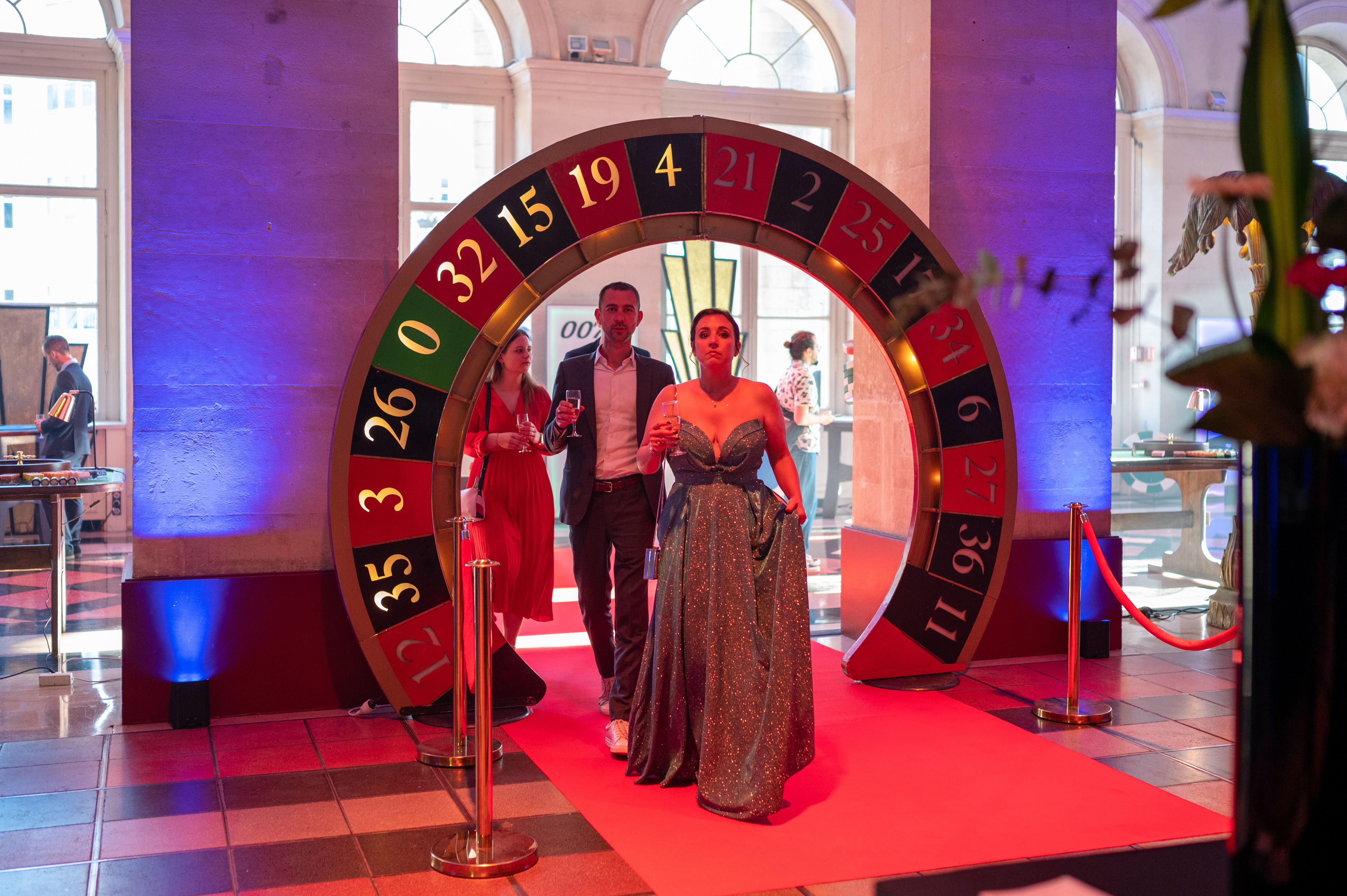
Wine Casino in Montréal for corporate teams who want real interaction
INNOV'events delivers Wine Casino formats in Montréal for executive committees, HR teams, and communication departments—typically 30 to 600 attendees. We handle the full stack: concept, sommelier staff, gaming tables, glassware, compliance, venue coordination, and run-of-show.
You get a structured, brand-safe activity that drives conversation across departments—without turning your cocktail into a noisy “party” that’s hard to control.
Sommaire
In a corporate event, entertainment is not a “nice-to-have”: it’s what converts a room of colleagues into a network. A well-run Wine Casino creates purposeful interactions (cross-team, cross-level) and gives executives measurable outcomes: participation rate, engagement time, and post-event sentiment.
In Montréal, organizations expect professionalism: punctual setup, bilingual facilitation when needed, safe alcohol service, and an activity that respects brand image. HR and Communications also need something that fits the venue’s constraints—sound limits, union rules, traffic windows—without improvisation on event day.
INNOV'events is an event agency rooted in Montréal. We build these evenings with the same rigor as a corporate production: staffing plan, floor plan, timing, responsible service, and contingency options for VIPs, late arrivals, and venue changeovers.
INNOV'events benchmarks in Montréal decision-makers can validate
10+ years delivering corporate entertainment and hospitality formats across Quebec and Canada, with repeat programs for internal communications and client events.
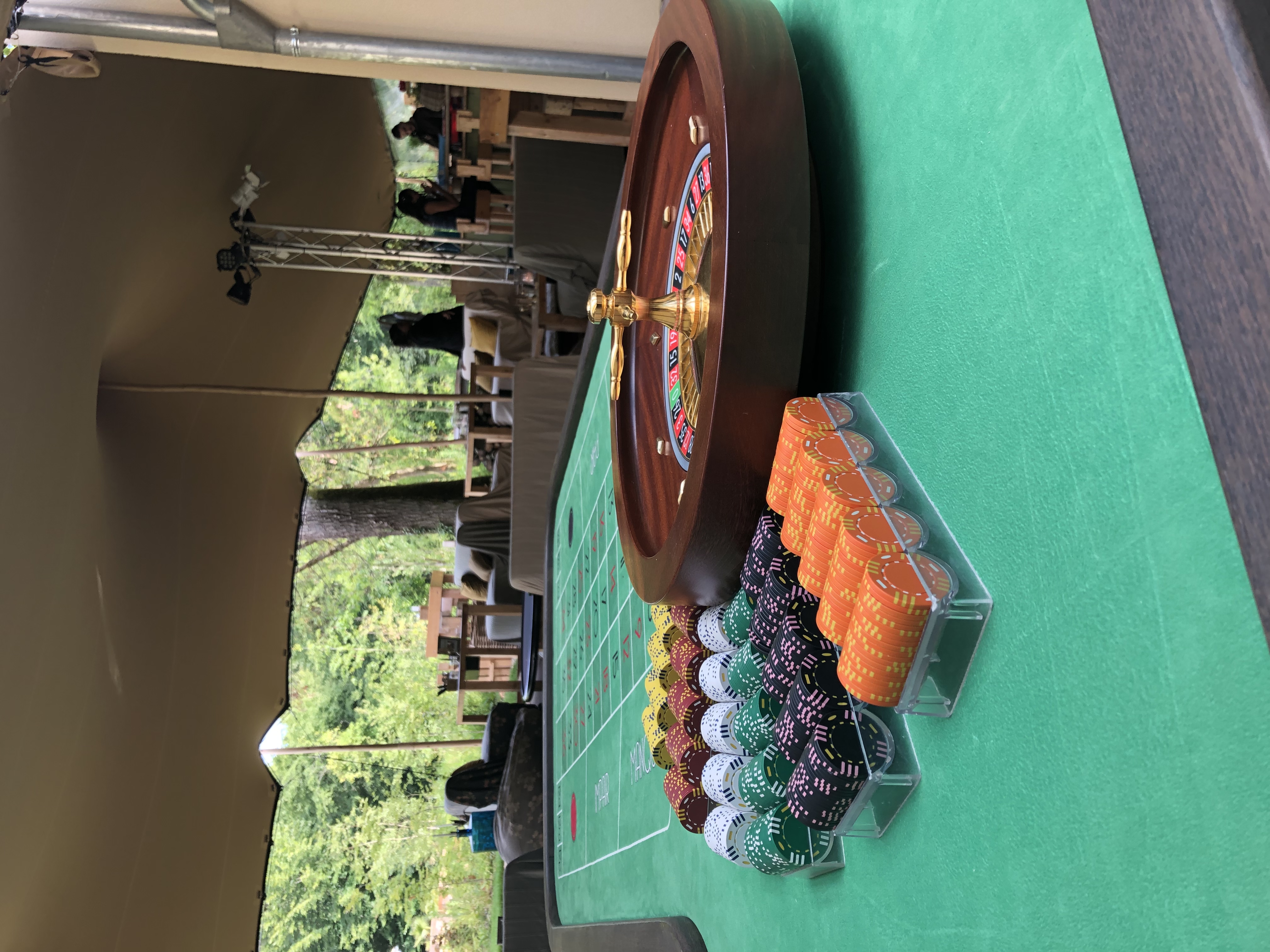
Operational capacity: up to 12 casino-style stations running in parallel (wine tables + side games), designed to keep lines under 5 minutes and maintain flow for 300+ guests.
Typical satisfaction targets we manage with clients: 75–90% participation rate in the activity, and a minimum 45–60 minutes of sustained engagement during cocktail windows.
Event-day reliability: written run-of-show, staffing call sheets, and venue technical checks completed 7–10 days before the event for most Montréal venues.
Local references across Montréal business sectors
We produce events for organizations that operate at Montréal pace: tight calendars, brand exposure, and high expectations from leadership. We routinely support corporate teams in finance, professional services, real estate, pharma, tech, and manufacturing with formats that need to look polished and run on time.
If you have specific internal references you want highlighted (client names, venues, business units), we can integrate them in the final version of this page and align the messaging to your procurement or communications standards. Many of our Montréal clients renew year after year because the operational approach remains consistent: same level of staffing, same discipline on timing, and the same focus on risk management around alcohol service.
 Besoin d’un devis rapide ?
Nous vous envoyons une première proposition sous 24h.
Why plan a Wine Casino in Montréal for executives and HR?
A Wine Casino in Montréal works when you need more than a cocktail and less than a seated gala. It creates structured conversation without forcing networking, and it gives your hosts a clear framework to welcome stakeholders, circulate, and connect departments.
For leadership teams, the value is not “fun”—it’s that the format produces repeated micro-interactions that are hard to generate in a standard 5@7. For HR and Communications, it’s a controlled environment that supports culture, recognition, and employer brand without risking a chaotic vibe.
Cross-team interaction by design: guests rotate between stations, compare notes, and “trade” chips for tastings—creating natural bridges between departments that rarely mix (Sales/Operations, HQ/field, management/frontline).
Executive-friendly hosting: leaders can join a table for 8–10 minutes, contribute a quick insight, and move on—without getting stuck in long conversations or awkward networking circles.
Brand-safe sophistication: the tone is curated (lighting, music level, staff script, service rhythm). You avoid the common Montréal pitfall where a cocktail becomes too loud too early and stakeholders disengage.
Content for Communications: tasting cards, branded chips, a “house rules” board, and a photo moment that looks corporate—not like a consumer pop-up. We plan visuals so your internal comms can publish within 24–48 hours.
Inclusive participation: we integrate non-alcoholic pairings and “aroma” stations so everyone can play (pregnancy, religious constraints, sobriety, medication). This matters for HR policies and psychological safety.
Measurable engagement: we can track station throughput, participation, and approximate dwell time—useful when you need to justify budget internally or report on event objectives.
Montréal’s economic culture is relationship-driven: partnerships form over conversation, not presentations. A structured activity like Wine Casino fits that reality while respecting corporate standards and governance.
What Montréal organizations expect from corporate entertainment
Montréal audiences are experienced. Many guests attend multiple corporate events per year, so they quickly notice when a concept is under-staffed, poorly timed, or lacking in polish. The standard is higher than “we booked an activity”—you’re expected to have a plan for flow, sound, signage, and service pace.
We also see concrete operational constraints specific to the city: load-in windows that are short (especially downtown), elevators shared with other tenants, strict glass policies in certain venues, and noise restrictions that impact how you balance ambiance with speech moments. Add winter conditions, traffic, and the reality that many guests arrive in waves after work—your entertainment must still start cleanly without penalizing late arrivals.
From an HR standpoint, Montréal employers increasingly require responsible alcohol service, inclusive alternatives, and a clear stance on safety. We plan accordingly: service caps per guest, food pacing, water availability, visible staff supervision, and a run-of-show that avoids “free-pour drift.” For Communications, the expectation is bilingual readiness and brand consistency—from welcome signage to staff language capability and on-site messaging.
Which Wine Casino formats work best in Montréal corporate events?
Entertainment creates engagement when it gives people a reason to speak to someone new and a shared topic to discuss after the event. With a Wine Casino in Montréal, the “game” is a social framework: guests compare aromas, challenge assumptions, and make low-stakes decisions together—exactly the kind of interaction that strengthens internal networks and client relationships.
Below are the formats we deploy most often for corporate contexts, with practical implications for timing, staffing, and brand image.
Interactive animations in Montréal
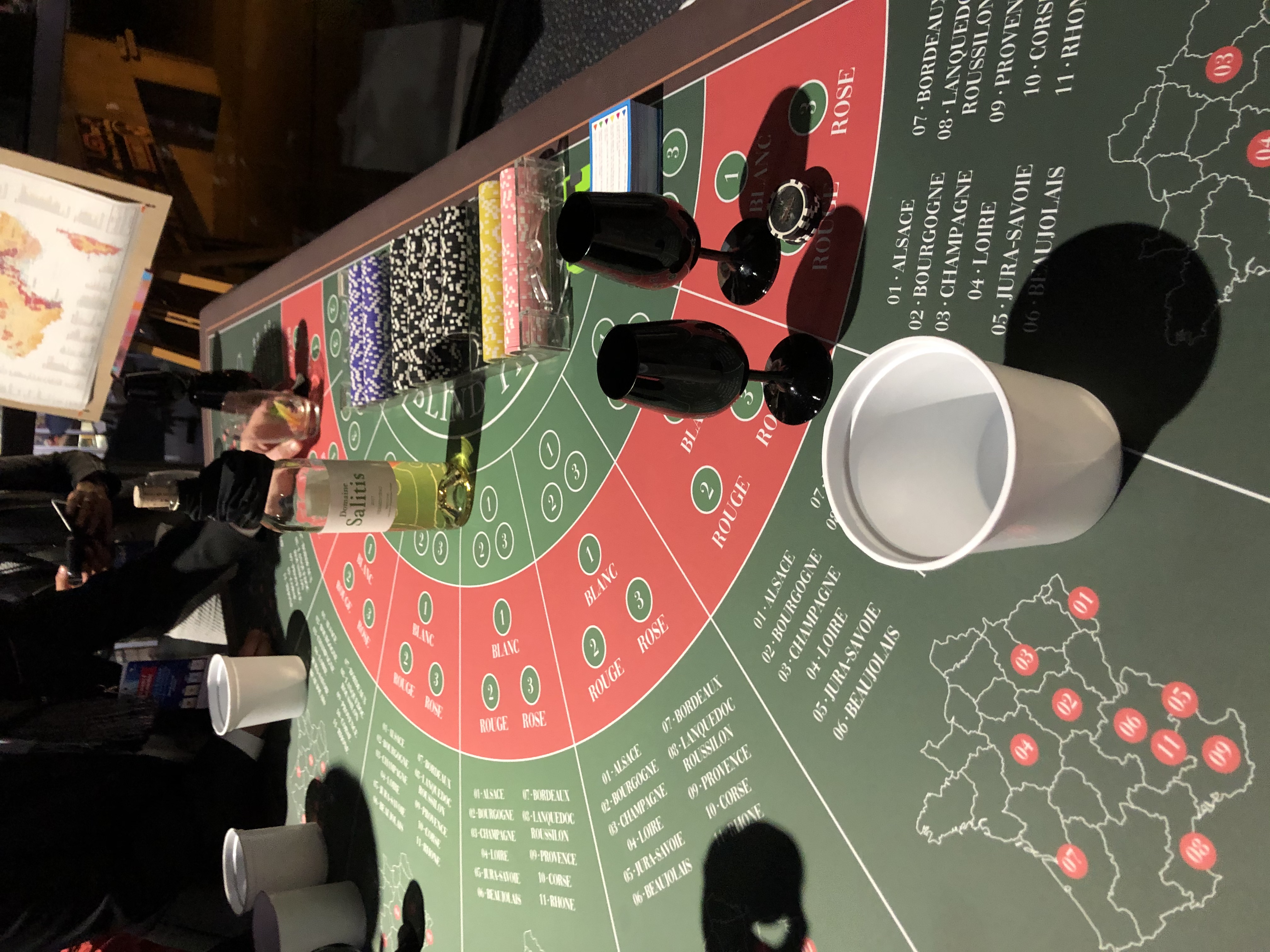
Blind Tasting Blackjack: guests “bet” chips on grape variety, region, or food pairing; correct answers double their chips. Works well for 80–400 attendees with high networking objectives because it creates quick team-ups.
Aroma Roulette Station: guests identify aromas (citrus, pepper, vanilla, stone fruit) before tasting. Strong option when HR asks for inclusivity: we can offer non-alcoholic aroma recognition so everyone participates.
Trading Floor Challenge: teams receive a starter chip set and must reach a target through smart tasting choices. This format fits leadership offsites and sales kickoffs because it mirrors decision-making under uncertainty.
Art animations in Montréal
Table-host storytelling (short, controlled): instead of a long wine lecture, each sommelier has two story modules (60 seconds each): a producer note and a Montréal-relevant context (local market, import rules, seasonal pairing). It sounds informed without slowing the room.
Brand-aligned visuals: we can integrate your color palette into table dressing, chip design, and tasting cards so the event photographs like a corporate program—not a public festival.
Innovative animations in Montréal
Food-pairing side bets: small bites (cheese, charcuterie, plant-based options) become part of the game. Operationally, this requires tight coordination with the caterer to ensure replenishment; we build it into the timing so stations don’t run out mid-peak.
Local discovery flight: for organizations that want a Québec signal without turning the event into a “tourism” theme, we can integrate a discreet local flight and frame it around procurement realities (availability, seasonal variation, responsible sourcing).
Gourmand animations in Montréal
Digital scorecards: QR-based scoring reduces paper, supports bilingual content, and gives Communications a clean recap metric (participation, top answers). It’s also helpful when you need to report engagement internally.
Executive table for VIP hosting: a dedicated station positioned for visibility, with a slightly higher service level and a calmer sound zone. This is useful for client entertainment when you need space for real conversation.
Non-alcoholic parallel casino: not a “mocktail corner,” but a real station with complexity (teas, dealcoholized wines, kombucha pairings) so sober guests feel equally included.
The best choice is the one aligned with your brand image and your internal culture. A law firm cocktail, a manufacturing town hall, and a tech recruitment evening do not require the same tone, pacing, or level of show. Our role is to recommend the right format—and then deliver it with operational discipline.
How to choose a venue in Montréal for a Wine Casino
The venue drives perception more than most teams expect. With a Wine Casino in Montréal, you need enough space for multiple stations, circulation, and controlled sound. If the room is too tight, guests queue and disengage. If it’s too large without zoning, energy drops and networking becomes fragmented.
We plan venues around three practical criteria: load-in access, station layout, and service rules (alcohol, glassware, caterer exclusivity). Below are venue types that typically support this format well.
| Venue type | For which objective? | Main strengths | Possible constraints |
|---|---|---|---|
Downtown hotel ballroom or large reception room | Client reception, awards night cocktail, large headcount (150–600) | Predictable logistics, AV support, coat check, staff availability, weather-friendly access | Higher rental/F&B minimums; strict time windows; sometimes less “warmth” without strong decor |
Private loft / event studio in central Montréal | Employer branding, leadership offsite cocktail, mid-size (60–200) | Modern look for internal comms photos; flexible layout for multiple stations | Load-in can be complex; sound restrictions; limited storage for glass/ice |
Restaurant buyout with private rooms | VIP client evening, executive dinner with an interactive pre-dinner activity (30–120) | High-quality food pairing; professional service; controlled atmosphere | Less space for many stations; supplier exclusivity; tight timing around service |
We strongly recommend a site visit (or a technical walkthrough) before confirming the layout. In Montréal, small venue details—freight elevator access, coat check placement, bar positioning—directly impact guest flow and the perceived quality of the evening.
What does a Wine Casino cost in Montréal?
Pricing for a Wine Casino in Montréal depends on format complexity, staffing, and what is included (wine, glassware, tables, decor, digital scoring, and responsible service measures). The goal is to build a budget that matches your objective and your risk tolerance—especially when clients or leadership are present.
As a reference, corporate programs often land between $4,000 and $25,000+ depending on headcount and production level. Below are the main cost drivers we review with procurement, HR, and Communications.
Number of stations and sommeliers: more stations reduce wait time and improve experience, but increase staffing and equipment. For 150 guests, we often plan 3–5 stations depending on venue flow.
Wine selection and quantities: entry-level approachable wines vs. premium flights; also depends on whether you want a “discovery” focus or a higher-end client program.
Service format: tasting-size pours with pacing controls vs. more open service. Responsible service design affects both cost and risk.
Inclusions: glassware rental, linens, branded chips, signage, scorecards, and whether we integrate non-alcoholic stations at equal quality.
Venue constraints: limited load-in, union labor requirements, elevator access, and late-night breakdown rules can all add labor time.
Food pairing: whether bites are provided by the venue/caterer or integrated by us, and how replenishment is managed.
We frame budget as ROI: the right spend is the one that protects your brand and delivers the objective. For many Montréal organizations, avoiding a single operational failure (queues, service issues, poor sound management, or an alcohol-related incident) is worth more than marginal savings on staffing.
Why hire a Montréal agency for a Wine Casino?
Executing a Wine Casino is logistics-heavy. Working with a team established in Montréal reduces risk because we know the venues, the access realities, and the supplier ecosystem that determines whether your event runs smoothly or becomes a series of last-minute fixes.
We also know how Montréal corporate events actually behave: waves of arrivals after work, bilingual expectations, and the need to protect your leadership team from operational distractions. A local agency is not about “being nearby”—it’s about having the right reflexes, contacts, and contingency plans.
Learn more about our broader production approach as an event agency in Montréal and how we structure corporate projects from brief to event-day operations.
- Venue and supplier familiarity: we anticipate load-in, storage, and service policies that impact station design and timing.
- Faster on-site support: if a last-minute delivery or staffing adjustment is required, local capacity matters.
- Compliance and responsible service discipline: we build protocols that align with corporate expectations and venue rules.
- Bilingual readiness: staff allocation and guest experience planned for English/French audiences when required.
We frame budget as ROI: the right spend is the one that protects your brand and delivers the objective. For many Montréal organizations, avoiding a single operational failure (queues, service issues, poor sound management, or an alcohol-related incident) is worth more than marginal savings on staffing.




Examples of Wine Casino deployments in Montréal corporate contexts
We deliver Wine Casino in Montréal across different corporate realities, because the same concept must adapt to the organization’s objective and risk profile.
- End-of-year recognition cocktail (200–350 guests): we design multiple stations with a clear rotation logic so employees from different shifts mix. We also plan a short speech window with sound management so leadership can speak without competing with music or crowd noise.
- Client entertainment for professional services (60–120 guests): we create a calmer VIP-friendly setup with fewer stations but higher facilitator ratio, so the experience supports real conversation. The “game” stays discreet—enough to break the ice without dominating the business purpose.
- Recruitment / employer brand evening (80–180 guests): we integrate non-alcoholic parallel stations and ensure the visuals (cards, signage, table dressing) are consistent with brand standards for internal and external communications.
- Sales kickoff (120–250 guests): we use a team challenge format that reinforces collaboration and decision-making. Timing is aligned with program moments (awards, targets, leadership messaging) so entertainment supports the agenda rather than fighting it.
In each case, the deliverable is the same: a controlled, professional flow that keeps guests engaged while giving your internal team the confidence that the night will stay on track.
Common Wine Casino mistakes we prevent in Montréal
Under-staffed stations that create queues: lines kill engagement and push people back to the bar. We plan capacity based on headcount, arrival waves, and venue geometry.
Overly complex rules: if guests need a briefing longer than 2 minutes, participation drops. We design rules that can be explained in 30–60 seconds.
Sound conflicts with program moments: without a run-of-show and a sound plan, speeches become stressful and guests disengage. We coordinate timing, music levels, and mic checks.
Alcohol service drift: open-ended pours and missing pacing increase risk. We build tasting sizes, water points, and food pacing into the format.
No plan for non-drinkers: a “token mocktail” feels exclusionary. We integrate equivalent stations so participation is real, not symbolic.
Weak signage and unclear flow: guests cluster where they enter. We design entry experience, starter instructions, and visual cues to distribute the room.
Late deliveries or venue access surprises: in downtown Montréal, access is often the hidden risk. We confirm load-in rules early and create a contingency schedule.
Our role is to remove these risks before they appear. That’s what executives and HR teams are actually buying: predictability, brand protection, and an experience that employees and clients can trust.
Why Montréal clients renew their Wine Casino program
When a corporate team renews, it’s rarely because the concept was “fun.” It’s because the agency made the internal organizer look good: deadlines were respected, stakeholders were aligned, and event day felt controlled.
We build loyalty by documenting what worked (and what to improve) and by creating repeatable operations: staffing ratios, venue checklists, signage templates, and a clear decision path for budget trade-offs.
Most repeat clients keep the same core structure and adjust only 20–30% year to year (wine themes, scoring mechanics, visual identity), which reduces planning time for HR and Communications.
For multi-year programs, we typically schedule a post-event debrief within 5 business days and lock the next year’s preferred window early—especially for peak Montréal dates in November–December.

Loyalty is the best proof of quality in corporate events: when the pressure is high, teams return to partners that deliver consistent operations and protect reputations.
Our Montréal delivery process for a Wine Casino
👉 Step 1 (Montréal): Brief, constraints, and success criteria
We start with a structured intake: objective (HR, client, leadership), audience profile, venue short list, timing, brand constraints, and alcohol policy. We also identify what would make the event a failure in your context (queues, noise, optics, compliance) and design around those risks.
👉 Step 2 (Montréal): Format design and staffing plan
We propose station count, rotation logic, and game mechanics aligned to headcount. You receive a staffing plan (sommeliers, floor manager, setup crew), a draft floor plan, and a run-of-show that integrates speeches, awards, or key messaging moments.
👉 Step 3 (Montréal): Wine, inclusivity, and responsible service protocol
We curate wines (or integrate your sponsor/partner bottles if needed), define tasting sizes and pacing, and build a parallel non-alcoholic experience. We confirm water/food pacing and align with venue rules. This is where HR comfort is won or lost—so we document it clearly.
👉 Step 4 (Montréal): Production checklist and venue coordination
We validate load-in/out times, elevator access, storage, waste management, and glass policies. We coordinate with catering and AV so stations don’t conflict with bar service or speech moments. A final operations sheet is shared before event day.
👉 Step 5 (Montréal): On-site execution and post-event debrief
On-site, a floor manager is accountable for timing, flow, and troubleshooting. After the event, we debrief: participation, bottlenecks, wine performance, and what to adjust. This creates a reliable foundation for your next Montréal program.
FAQ sur l'organisation Wine Casino à Montréal
How many guests can a Wine Casino handle in Montréal?
Most Montréal setups work best for 30 to 600 guests. For 150 guests, we typically recommend 3–5 stations depending on arrival waves and room layout to keep wait times low.
How long should a Wine Casino run at a Montréal event?
Plan 60 to 120 minutes for the core activity. For a cocktail with speeches, a common structure is 75–90 minutes of Wine Casino plus two short host moments (welcome + final chip exchange).
What budget range is typical for a Wine Casino in Montréal?
Many corporate events fall between $4,000 and $25,000+. Price moves with station count, wine level, staffing, glassware, branding elements, venue constraints, and whether you include a full non-alcoholic parallel experience.
Can we offer non-alcoholic options at our Montréal Wine Casino?
Yes. We can run a parallel station with dealcoholized wines, teas, or complex pairings so non-drinkers participate fully. This is often essential for HR policy alignment and typically adds a modest incremental cost depending on the products and staffing.
How far ahead should we book a Wine Casino in Montréal?
For peak periods (especially November–December), we recommend 6–10 weeks. For off-peak dates, 3–6 weeks can work, but earlier booking secures the best venue access windows and sommelier staffing.
Plan your Wine Casino in Montréal with a clear quote and a real plan
If you’re comparing agencies, we can make the decision easy: share your date, venue (or shortlist), headcount, and objective. We’ll respond with a clear recommendation (station count, timing, staffing), a realistic budget range, and the operational assumptions behind it.
For Montréal corporate calendars, earlier planning protects your options—especially for downtown venues and end-of-year windows. Contact INNOV'events to structure a Wine Casino in Montréal that is engaging for guests and predictable for your leadership team.
INNOV'events Montréal Agency
Thierry GRAMMER is the manager of the INNOV'events Montréal office. Reach out directly by email at canada@innov-events.ca or via the contact form.
Contact the Montréal agencyToutes nos prestations & animations Montréal, Quebec
Découvrez nos prestations événementielles
- Employee Party in Montréal
- Corporate Christmas Party in Montréal
- Networking Cocktail Event in Montréal
- Shopping Mall Activation in Montréal
- Grand Opening Event in Montréal
- Product Launch Event in Montréal
- Open House Event in Montréal
- Field Brand Activation in Montréal
- Event Catering Service in Montréal
Découvrez nos animations événementielles disponibles au Quebec
- Event Hostess in Montréal
- Escape Game in Montréal
- MasterChef-Style Cooking Workshop in Montréal
- Corporate Magician in Montréal
- Tent Rental in Montréal
- Color Analysis Workshop in Montréal
- Inflatable Games in Montréal
- Valet Service in Montréal
- Soccer Simulator in Montréal
- LED Furniture Rental in Montréal
- LED Branding Activation in Montréal
- Immersive Culinary Experience in Montréal
- Light Painting Activity in Montréal
- Immersive Mystery Night in Montréal
- Promotional Contest in Montréal
- Promotional Materials (POS) in Montréal
- Virtual Reality Experience in Montréal
- Molecular Gastronomy Workshop in Montréal
- Halloween Event in Montréal
- Fireworks Show in Montréal
- Sports Challenge – Giant Games in Montréal
- Professional Event Host in Montréal
- Photo Booth Animation in Montréal
- Santa Claus Appearance in Montréal
- Kids Entertainment in Montréal
- Guided Tour in Montréal
- Urban Rally in Montréal
- Ball Pit Activity in Montréal
- Flight Simulator in Montréal
- Food Truck Rental in Montréal
- World Record Attempt in Montréal
- Surf Simulator in Montréal
- Soccer Simulator in Montréal
- Wine Casino in Montréal
- Makeover Workshop in Montréal
- Perfume Creation Workshop in Montréal
- Acting Workshop in Montréal
- CSR Activities in Montréal
- Archery Activity in Montréal
- Event Security Guard in Montréal
- Wine Tasting Workshop in Montréal
- Mime Performance in Montréal
- TV Game Show Animation in Montréal
- Funfair Event in Montréal
- Crisis Management Workshop in Montréal
- Crisis Negotiation Workshop in Montréal
- Arcade Games in Montréal
- Indoor Skydiving Simulator in Montréal
- Ski Simulator in Montréal
- Racetrack Driving Experience in Montréal
- Introductory Flight Experience in Montréal
- Tasting Experience in Montréal
- Build Your Own Foosball Workshop in Montréal
- 2CV Rally in Montréal
- LEGO Challenge in Montréal
- Casino Night in Montréal
- Interpreter / Translator in Montréal
- Promotional Merchandise in Montréal
- Shuttle / Transportation Service in Montréal