
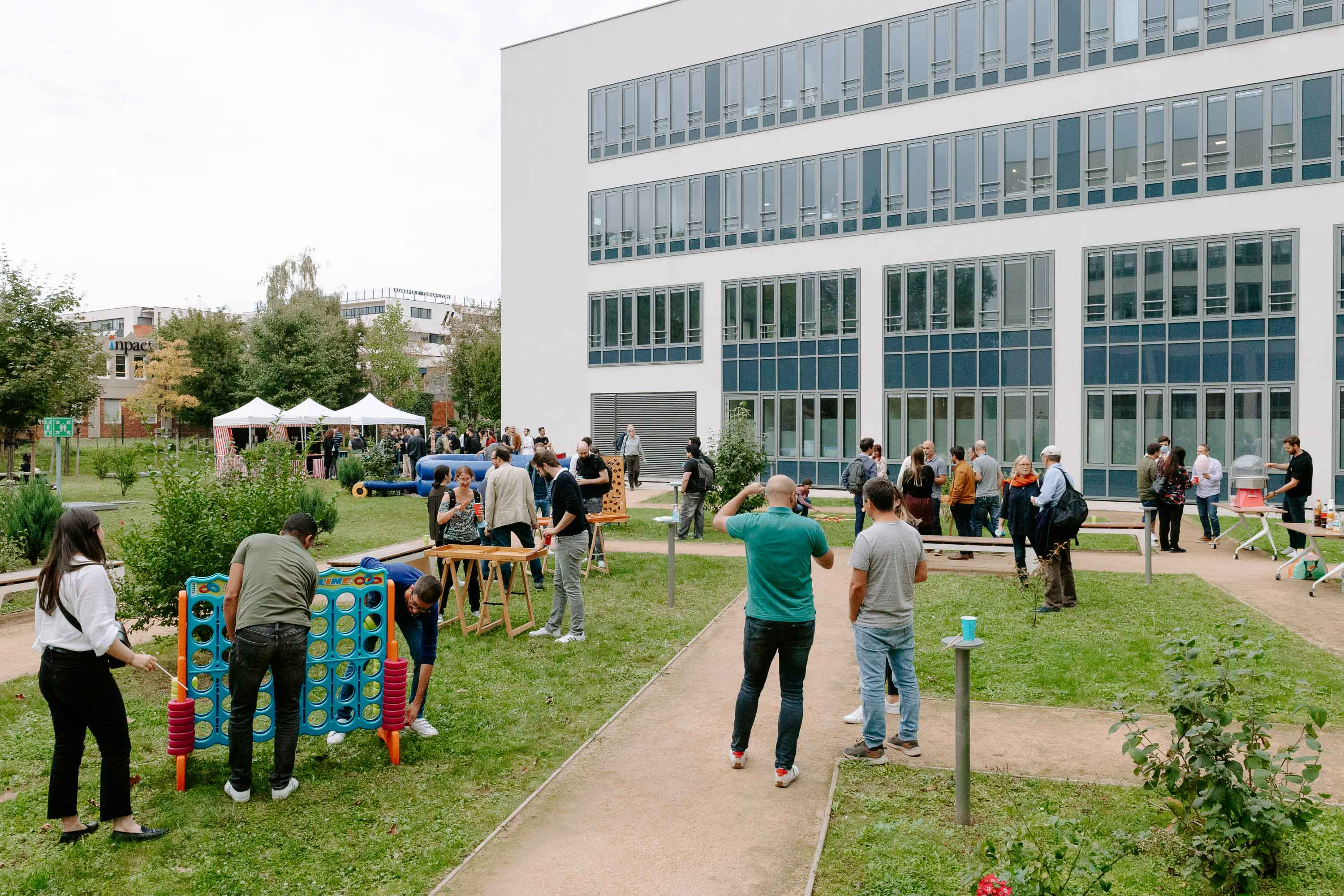
Sports Challenge – Giant Games in Montréal for teams that need real cohesion
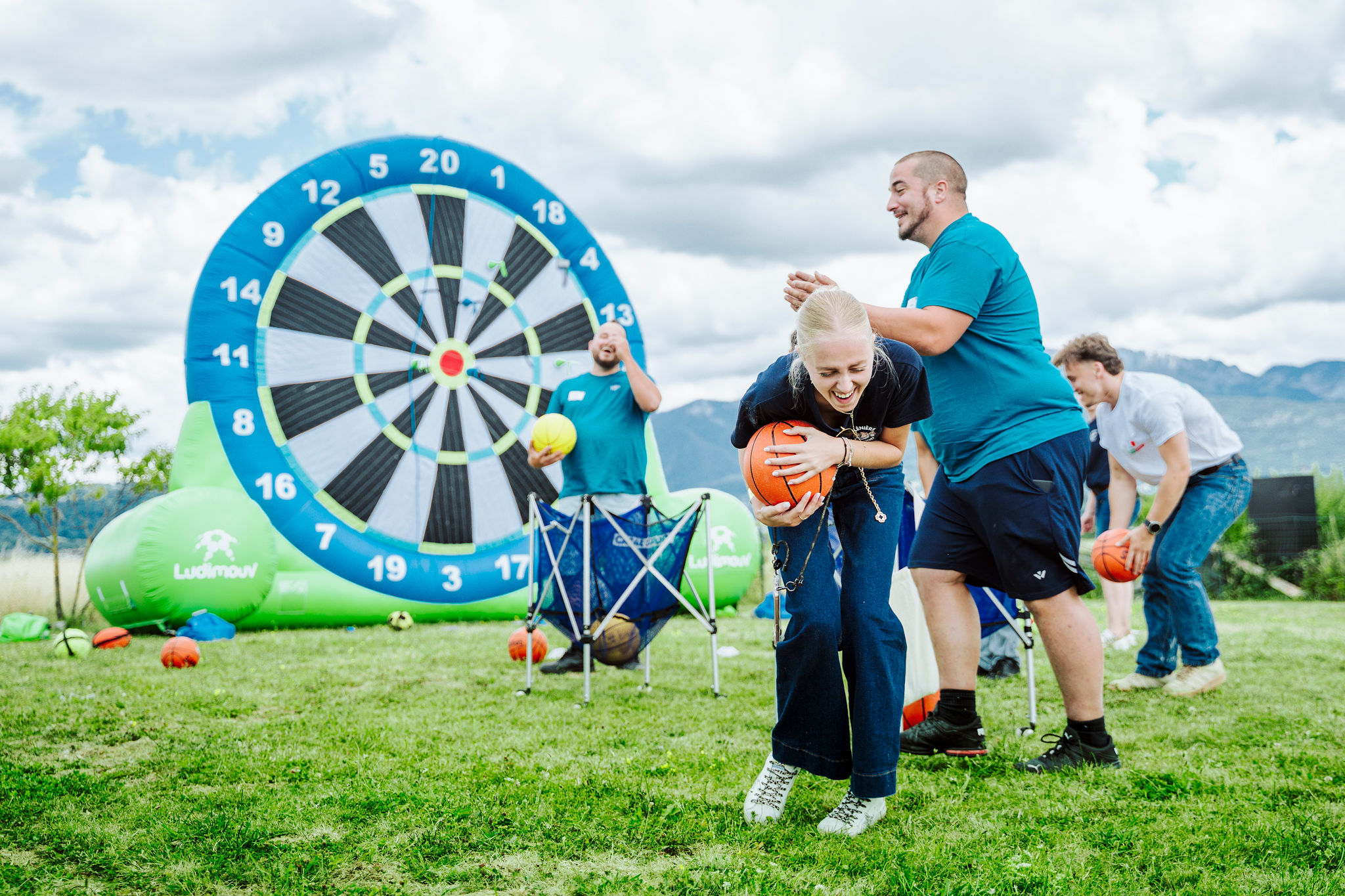
INNOV'events designs and runs Sports Challenge – Giant Games activations in Montréal for executives, HR and communications teams who want measurable engagement, not just “fun.” Typical formats work well for 30 to 500+ participants, indoors or outdoors, with timed rotations and clear scoring.
We handle the operational load: site plan, permits when needed, staffing, safety briefings, equipment transport, set-up/tear-down, facilitation in English/French, and a results framework you can actually report back to leadership.
Sommaire
At a corporate event, entertainment is not a “nice-to-have.” In practice, it is one of the only levers that reliably changes group dynamics in a single afternoon: it breaks silos, accelerates informal connections, and gives leaders a live read on collaboration under light pressure.
Organizations in Montréal expect operations that respect tight schedules, mixed language groups, and venues with strict rules (noise, access, insurance). They also expect a format that feels inclusive for different fitness levels and avoids putting anyone on the spot.
INNOV'events is a Montréal-based team used to real event-day constraints: loading docks, last-minute attendee shifts, weather plans, union venue protocols, and executive visibility. Our role is to keep the experience high-energy while staying methodical and risk-managed.
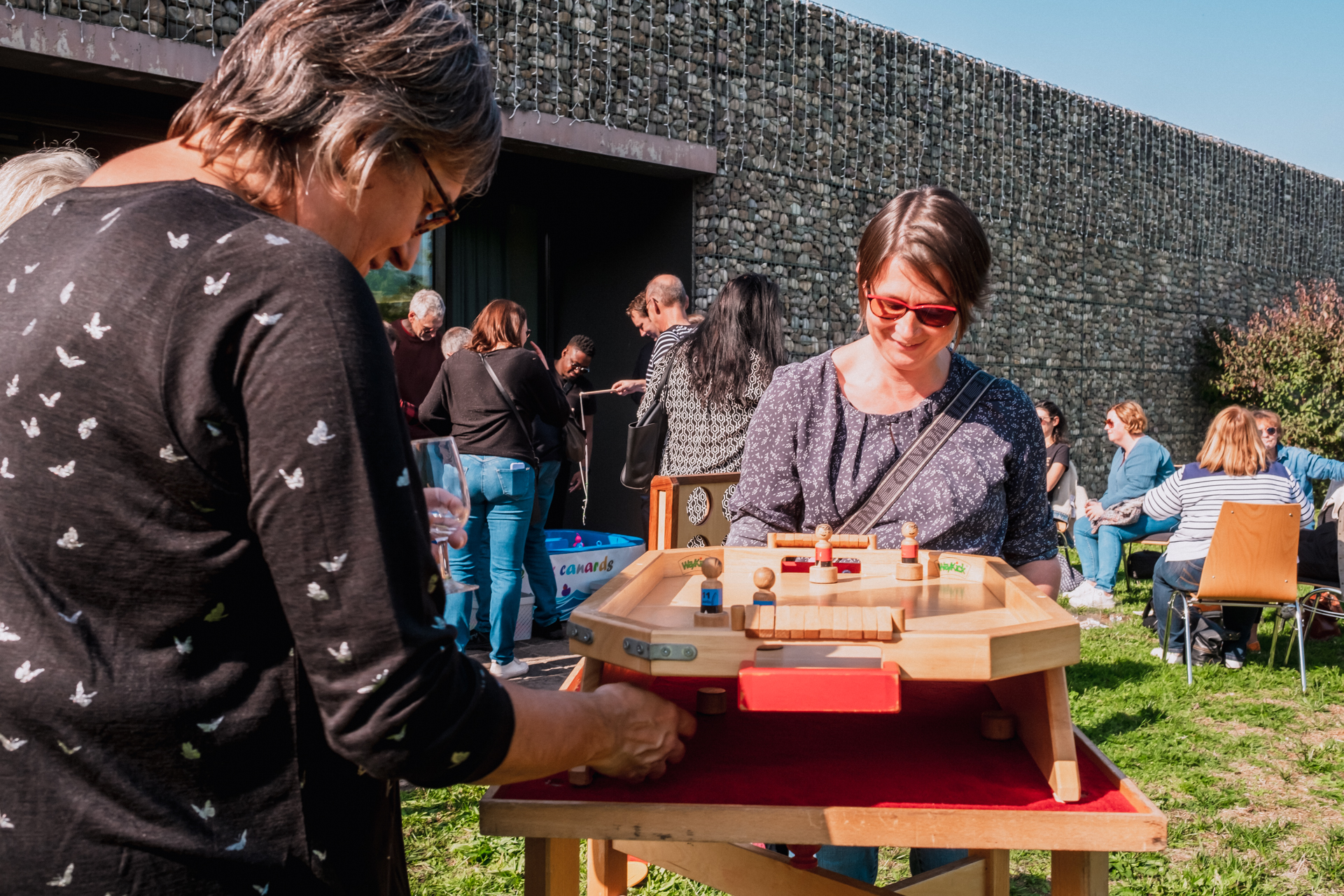
INNOV'events benchmarks used by Montréal decision-makers
10+ years delivering corporate events across Quebec and Canada, with repeat accounts that prioritize operational rigor over spectacle.
Formats proven from 30 to 500+ attendees, with scalable staffing ratios (typically 1 facilitator per 20–35 participants depending on venue and complexity).
Typical on-site build windows managed: 2 to 6 hours for giant games zones, including safety perimetering, signage, and test runs before doors open.
Standard deliverables for leadership teams: run-of-show, risk register, site map, scoring logic, and post-event recap with participation indicators.
Who we support in Montréal year after year
We regularly support Montréal organizations that run multiple internal moments per year—summer parties, leadership offsites, onboarding cohorts, and end-of-year celebrations—where consistency and brand alignment matter. In practice, many teams come back because they don’t want to re-explain internal realities every time: unionized venues, security check-ins, hybrid attendance patterns, multilingual groups, and a zero-tolerance approach to safety incidents.
If you share company names you’re comfortable with, we can integrate them as local references on this page. In the meantime, what we can say credibly is this: our returning clients tend to be HR and internal communications departments who need an agency that can operate inside corporate constraints (procurement, compliance, DEI, accessibility) while still delivering an activation that people actually participate in.
 Besoin d’un devis rapide ?
Nous vous envoyons une première proposition sous 24h.
Why choose Giant Games for a Montréal corporate objective?
A Sports Challenge – Giant Games in Montréal works when your goal is more than morale. It creates a structured context where teams collaborate quickly, leadership sees natural behaviors, and you generate tangible outputs (participation rates, team rankings, shared language) that can reinforce a change message or culture initiative.
Faster cross-team connection without forced networking: giant-format games create “micro-wins” every few minutes. We see Finance and Sales mix naturally when the task is clear and the rules are simple.
Inclusive challenge design: we build stations that reward coordination and strategy, not just speed or strength—critical for mixed fitness levels, different ages, and attendees who don’t identify as “sporty.”
Clear structure for busy executives: a timed rotation plan makes the experience predictable. Leaders can join for one segment without derailing the schedule, and we protect key moments (opening, awards, photo call) for internal comms.
Culture reinforcement you can feel: when a company wants to push values like accountability, collaboration, or customer mindset, we translate those into station mechanics (handoffs, shared constraints, role rotation) rather than a speech.
Reduced operational risk compared to open-play activations: with controlled start/stop, defined safety perimeters, and staff at each zone, we cut down on injuries, equipment misuse, and the “where do we go now?” downtime that kills energy.
Content-friendly without being staged: giant props read well on camera. We plan “photo-ready” angles and pacing so your communications team gets usable assets without interrupting participation.
In Montréal, where teams are often bilingual and talent is competitive, these moments serve a practical purpose: they strengthen internal cohesion in a way employees will actually talk about after Monday’s stand-up.
What Montréal organizations expect on event day
Local expectations are rarely about “bigger” or “flashier.” They’re about operational control and reputational safety. In Montréal, many corporate venues have tight loading rules, limited elevator access, and strict timelines for install/strike. Outdoor spaces can be incredible, but weather volatility requires a real Plan B—not a vague “we’ll adapt.”
We also see consistent realities in Montréal-based companies: bilingual facilitation is often mandatory, participants may include remote hires meeting in person for the first time, and DEI expectations are high. That means avoiding formats that single out individuals, ensuring accessibility routes, and offering station choices so participation feels voluntary but encouraged.
Finally, executive stakeholders here expect professionalism: clear signage, controlled crowd flow, a tight run-of-show, and an agency team that can coordinate with venue security and catering without creating friction. If your brand is regulated or public-facing, you also need an activation that looks compliant: no uncontrolled physical contact, no questionable “shock value,” and an incident response plan that’s actually understood by staff.
Which Giant Games formats work best in Montréal corporate events?
Entertainment creates engagement when it is designed to remove friction: people understand what to do in seconds, they can contribute without feeling judged, and the pace stays consistent. For corporate event entertainment in Montréal, we typically build a mix of low-barrier stations and a few higher-intensity options so participants self-select while still feeling part of a shared challenge.
Interactive animations in Montréal
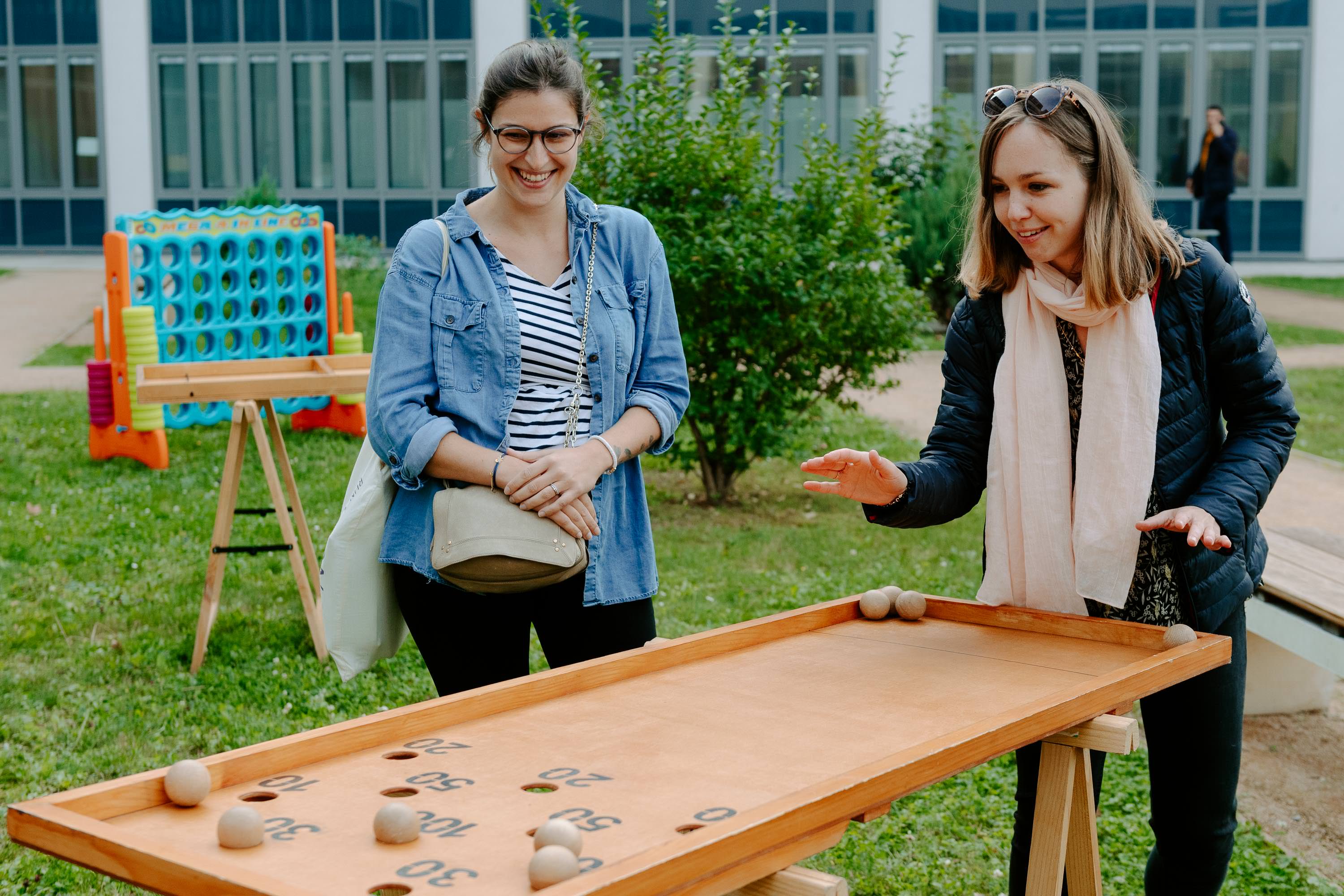
Timed Giant Jenga strategy rounds: not “just stacking.” We add constraints (communication rules, hand-off limitations, decision roles) to make collaboration visible and fair for all fitness levels.
Oversized team puzzles and relay logic games: ideal for leadership offsites because they reward planning, delegation, and calm execution under time pressure.
Giant ring toss / target accuracy league: works very well during cocktail formats; it creates quick participation spikes and is friendly to mixed attire (no need to change clothes).
Human-sized board game circuits: participants become the pieces; we use it for cross-functional mixing and to avoid the “same department stays together” pattern.
Art animations in Montréal
MC-style facilitation (bilingual): clean, corporate tone—energy without forcing people to perform. This is important when executives and external guests are present.
Branded zone design: signage and station naming that reflect your internal language (values, pillars, product themes). It looks intentional and supports internal comms content.
Awards moment with credible categories: we avoid gimmicks. Examples: “best collaboration,” “most consistent team,” “smartest strategy,” and a recognition track that doesn’t embarrass anyone.
Innovative animations in Montréal
Hydration and recovery points: for outdoor Montréal summer events, we coordinate water stations and shade zones so the activation remains safe and comfortable.
Snack timing aligned with rotations: we plan micro-breaks (5–10 minutes) so catering flow doesn’t collide with station transitions.
Zero-mess options near play zones: we advise on foods that won’t damage equipment or create slip risks (a frequent venue concern).
Gourmand animations in Montréal
Digital scoring without complexity: QR-based or tablet capture managed by staff, so participants aren’t forced into app downloads or personal data collection.
Team balancing logic: we can create teams on-site based on simple inputs (department, role, tenure) to avoid “all leaders together” or “all new hires together,” which reduces social friction.
Hybrid-friendly recap: if part of your staff is remote, we package highlights and results so remote employees can follow the story and feel included post-event.
The best Sports Challenge – Giant Games in Montréal is the one that protects your brand image: the tone matches your culture, the challenge is inclusive, and the operational execution looks as professional as the rest of your event.
Where to host Giant Games in Montréal without logistics surprises
The venue is not a backdrop—it sets the ceiling for what’s possible. Ceiling height, floor type, loading access, and noise rules determine whether the activation runs smoothly or becomes a compromise. In Montréal, we validate these details early because a giant games zone can require more footprint than teams anticipate, especially once you add circulation lanes and safe distances.
| Venue type | For which objective? | Main strengths | Possible constraints |
|---|---|---|---|
Hotel ballroom / conference center | Leadership offsite, winter event, predictable timing | Controlled environment, easy AV integration, strong comfort for executives | Loading dock schedules, ceiling height limits for certain props, stricter noise policies |
Corporate office / headquarters common areas | Culture activation, onboarding cohorts, lower travel friction | High participation (people are already there), easy leadership presence, strong internal branding | Elevator constraints, floor protection, security/access badges, limited storage and staging |
Outdoor park / waterfront space | Summer party, large attendance, high-energy team challenge | Space for multiple zones, natural “festival” feel, great visuals for comms | Weather plan required, permits and site rules, sound restrictions, ground unevenness |
We strongly recommend a site visit (or at minimum a detailed venue walkthrough with photos and measurements). It’s the fastest way to prevent day-of compromises like blocked access routes, unusable corners, or a station map that doesn’t match real circulation.
What does a Sports Challenge cost in Montréal?
Pricing for Sports Challenge – Giant Games in Montréal depends on the operational build, not only the number of games. A simple 2-hour activation for 40 people is a different project than a 4-hour rotation for 350 attendees with bilingual facilitation, digital scoring, branding, and an indoor contingency plan.
Headcount and rotation model: a single-zone free-play format costs less than a multi-station, timed rotation requiring more staff and a producer.
Duration and schedule constraints: short formats often require more staffing intensity to keep flow tight; longer formats require endurance planning and more resets.
Venue access and load-in complexity in Montréal: downtown loading limitations, elevator-only access, and strict strike windows affect labor and transport time.
Indoor/outdoor and contingency planning: outdoor events require weather planning and sometimes additional equipment protection or flooring solutions.
Branding and communications needs: signage, branded station naming, photo-ready backdrops, and content pacing can add design and production time.
Safety and compliance: higher-risk environments may require additional barriers, more supervision, or modified station selection.
From an ROI perspective, leaders usually evaluate this against retention and engagement levers: a well-run challenge increases participation (which protects your event investment), creates internal content, and reduces the “we didn’t really connect” feedback that often follows passive formats.
Why hire a Montréal event agency for Giant Games?
When you’re accountable for an event in Montréal, local execution is not a preference—it’s a risk control. A local team knows typical venue constraints, understands traffic and load-in realities, and can respond quickly if a supplier changes rules or weather shifts the plan. It also means faster site visits and fewer assumptions in the production plan.
As an event agency in Montréal, we’re used to coordinating with local venues, security teams, and caterers without creating operational noise for your internal stakeholders. The difference shows on event day: fewer delays, clearer communication, and a team that can make decisions on-site without escalating every detail.
- Local staffing and bilingual facilitation: consistent tone in English/French and smoother participant management.
- Shorter lead times for site checks: we can validate layouts, access, and safety constraints early, reducing last-minute rework.
- Better contingency response: if a weather plan or venue change is required, local logistics make the pivot realistic.
- Supplier network familiarity: we align quickly with AV, rentals, and venue operations commonly used in Montréal corporate events.
From an ROI perspective, leaders usually evaluate this against retention and engagement levers: a well-run challenge increases participation (which protects your event investment), creates internal content, and reduces the “we didn’t really connect” feedback that often follows passive formats.





What we’ve delivered in Montréal with giant games constraints
In real corporate contexts, the challenge is rarely “finding fun games.” It’s making them work inside a schedule, a venue, and a leadership expectation. We’ve delivered giant games activations where the floor plan had to keep emergency exits fully clear, where noise had to stay controlled because adjacent rooms were running training, and where the group was split across multiple arrival waves due to shift schedules.
We’ve also managed projects where the executive team wanted high energy but HR required an inclusive design: no elimination brackets that leave people waiting, no physical-contact games, and station options that let participants contribute strategically. In these cases, we build a points system that rewards participation and teamwork behaviors rather than pure performance.
Another common Montréal reality is last-minute headcount change. We plan for this operationally: extra team templates, flexible station capacity, and a facilitator brief that explains how to rebalance rotations without making it visible to participants. That’s the difference between a program that feels effortless and one that looks improvised.
Common Montréal pitfalls with Giant Games (and how we prevent them)
Underestimating space: giant props need circulation lanes, safety distance, and spectator space. We map it before we commit to a station count.
Free-play chaos during cocktail: without a flow plan, you get crowding at two popular games and empty zones elsewhere. We assign facilitators and use timed mini-rounds to distribute traffic.
One-size-fits-all difficulty: if stations are too athletic, participation drops; if too simple, leaders disengage. We build a balanced portfolio and optional “strategy multipliers.”
Weak scoring logic: unclear scoring leads to disputes and kills energy. We use simple, auditable rules and capture points consistently.
No real Plan B for weather: Montréal outdoor events require a true indoor pivot or a modified program that still achieves objectives.
Ignoring venue operational rules: load-in windows, floor protection, and noise limits are non-negotiable. We integrate them into the production plan from day one.
Our role is to remove these risks before your internal stakeholders feel them. On event day, you should be focused on your people and your message—not troubleshooting logistics.
Why Montréal clients rebook INNOV'events
Repeat business in corporate events is earned in the details: predictable delivery, transparent communication, and an agency that makes your internal team look organized. Many of our Montréal clients return because we document decisions, respect procurement realities, and keep the event-day chain of command clear.
Typical planning window: 3 to 8 weeks for most giant games activations; 8 to 12+ weeks when branding, multiple suppliers, or outdoor permits are involved.
On-site staffing ratios: commonly 1 facilitator per 20–35 participants depending on station intensity and venue layout.
Participation targets: with a rotation model, we aim for 80–95% active participation (vs. free-play formats that often stall around 50–70% in corporate settings).

Loyalty is the most practical proof: it means the event ran smoothly enough that teams were comfortable attaching their name to the next one.
How we deliver a Sports Challenge in Montréal from brief to recap
👉 Step 1 (Montréal) — Align on objectives, constraints, and success measures
We start with a working session (30–45 minutes) with HR/Comms and the event owner: why this activation exists, what behaviors you want to reinforce, and what cannot go wrong (timing, brand image, safety, executive participation). We confirm headcount ranges, audience profile, language needs, dress code, and any accessibility considerations. We then propose a recommended format: number of stations, rotation model, and facilitator plan.
👉 Step 2 (QC) — Build the operational plan and station portfolio
We design the station set based on venue footprint and objectives: a mix of strategy, coordination, and light physical options. We produce a site plan (zones, safety perimeters, circulation), a run-of-show, and a scoring approach that is easy to explain and defend. If outdoors, we document a real weather contingency with a go/no-go decision time.
👉 Step 3 (Montréal) — Pre-event coordination with venue and internal teams
We coordinate load-in, parking, elevator routes, and security protocols. We confirm who approves day-of changes, where participants will gather for briefings, and how we’ll manage late arrivals. If you have other suppliers (AV, photographer, catering), we align timing so transitions don’t conflict. This is where many events win or lose professionalism.
👉 Step 4 (QC) — On-site delivery, safety, and energy management
Our lead producer manages set-up, staff briefing, and test rounds. Facilitators run each station with consistent rules and safety checks. We keep transitions crisp, handle rebalancing discreetly if headcount changes, and protect executive moments (welcome, drop-ins, awards). If something shifts—weather, room change, schedule compression—we execute the contingency without turning it into a spectacle.
👉 Step 5 (Montréal) — Post-event recap for HR and communications
Within an agreed timeline, we deliver results and learnings: what worked, participation indicators, station engagement, and recommendations for the next iteration. If your communications team needs it, we also provide a structured highlight narrative (winners, team moments, leadership presence) to support internal messaging.
FAQ sur l'organisation Sports Challenge – Giant Games à Montréal
How many participants can you handle in Montréal?
Most formats run smoothly from 30 to 500+ participants. For 120–250, we typically recommend 6–10 stations with timed rotations. Above 300, we scale with parallel zones, more facilitators, and a stricter flow plan to avoid bottlenecks.
Is the Sports Challenge safe for mixed fitness levels in Montréal?
Yes—when it’s designed correctly. We prioritize coordination, accuracy, and strategy stations and avoid physical-contact mechanics. We also run a short safety briefing, maintain clear perimeters, and staff each station so rules are applied consistently. If you have specific constraints (injury risk, accessibility), we adapt the station mix.
Can you run Giant Games indoors during Montréal winter?
Yes. Indoor programs are common from November to March. The key constraints are ceiling height, floor protection, and sound rules. We propose stations that work on hard flooring and confirm load-in logistics (elevators, dock access) early to keep the build on schedule.
What is the typical budget range in Montréal?
Budgets vary by scope, but for corporate realities in Montréal: a facilitated giant games zone often starts around $3,500–$6,500 for smaller groups, while multi-station rotation formats for 150–350 participants commonly land in the $9,000–$22,000 range. Branding, extended duration, complex venues, and contingency requirements can move this upward.
How far in advance should we book in Montréal?
Plan for 3–8 weeks for most activations, and 8–12+ weeks for peak dates (June, September, December) or outdoor formats requiring permits and a robust Plan B. If you’re inside a procurement process, earlier is safer so we can lock venue constraints and staffing.
Request a Montréal quote with a clear plan and no surprises
If you’re comparing agencies, we can make your decision easier: share your date, venue (or shortlist), estimated headcount, and your primary objective (integration, recognition, leadership alignment). We’ll respond with a structured recommendation—station mix, timing model, staffing, and budget range—so you can assess fit quickly.
For Sports Challenge – Giant Games in Montréal, earlier planning protects the two things executives care about most: schedule control and reputational safety. Contact INNOV'events to secure your date and build a program your HR and communications teams can confidently stand behind.
INNOV'events Montréal Agency
Thierry GRAMMER is the manager of the INNOV'events Montréal office. Reach out directly by email at canada@innov-events.ca or via the contact form.
Contact the Montréal agencyToutes nos prestations & animations Montréal, Quebec
Découvrez nos prestations événementielles
- Employee Party in Montréal
- Corporate Christmas Party in Montréal
- Networking Cocktail Event in Montréal
- Shopping Mall Activation in Montréal
- Grand Opening Event in Montréal
- Product Launch Event in Montréal
- Open House Event in Montréal
- Field Brand Activation in Montréal
- Event Catering Service in Montréal
Découvrez nos animations événementielles disponibles au Quebec
- Event Hostess in Montréal
- Escape Game in Montréal
- MasterChef-Style Cooking Workshop in Montréal
- Corporate Magician in Montréal
- Tent Rental in Montréal
- Color Analysis Workshop in Montréal
- Inflatable Games in Montréal
- Valet Service in Montréal
- Soccer Simulator in Montréal
- LED Furniture Rental in Montréal
- LED Branding Activation in Montréal
- Immersive Culinary Experience in Montréal
- Light Painting Activity in Montréal
- Immersive Mystery Night in Montréal
- Promotional Contest in Montréal
- Promotional Materials (POS) in Montréal
- Virtual Reality Experience in Montréal
- Molecular Gastronomy Workshop in Montréal
- Halloween Event in Montréal
- Fireworks Show in Montréal
- Sports Challenge – Giant Games in Montréal
- Professional Event Host in Montréal
- Photo Booth Animation in Montréal
- Santa Claus Appearance in Montréal
- Kids Entertainment in Montréal
- Guided Tour in Montréal
- Urban Rally in Montréal
- Ball Pit Activity in Montréal
- Flight Simulator in Montréal
- Food Truck Rental in Montréal
- World Record Attempt in Montréal
- Surf Simulator in Montréal
- Soccer Simulator in Montréal
- Wine Casino in Montréal
- Makeover Workshop in Montréal
- Perfume Creation Workshop in Montréal
- Acting Workshop in Montréal
- CSR Activities in Montréal
- Archery Activity in Montréal
- Event Security Guard in Montréal
- Wine Tasting Workshop in Montréal
- Mime Performance in Montréal
- TV Game Show Animation in Montréal
- Funfair Event in Montréal
- Crisis Management Workshop in Montréal
- Crisis Negotiation Workshop in Montréal
- Arcade Games in Montréal
- Indoor Skydiving Simulator in Montréal
- Ski Simulator in Montréal
- Racetrack Driving Experience in Montréal
- Introductory Flight Experience in Montréal
- Tasting Experience in Montréal
- Build Your Own Foosball Workshop in Montréal
- 2CV Rally in Montréal
- LEGO Challenge in Montréal
- Casino Night in Montréal
- Interpreter / Translator in Montréal
- Promotional Merchandise in Montréal
- Shuttle / Transportation Service in Montréal