
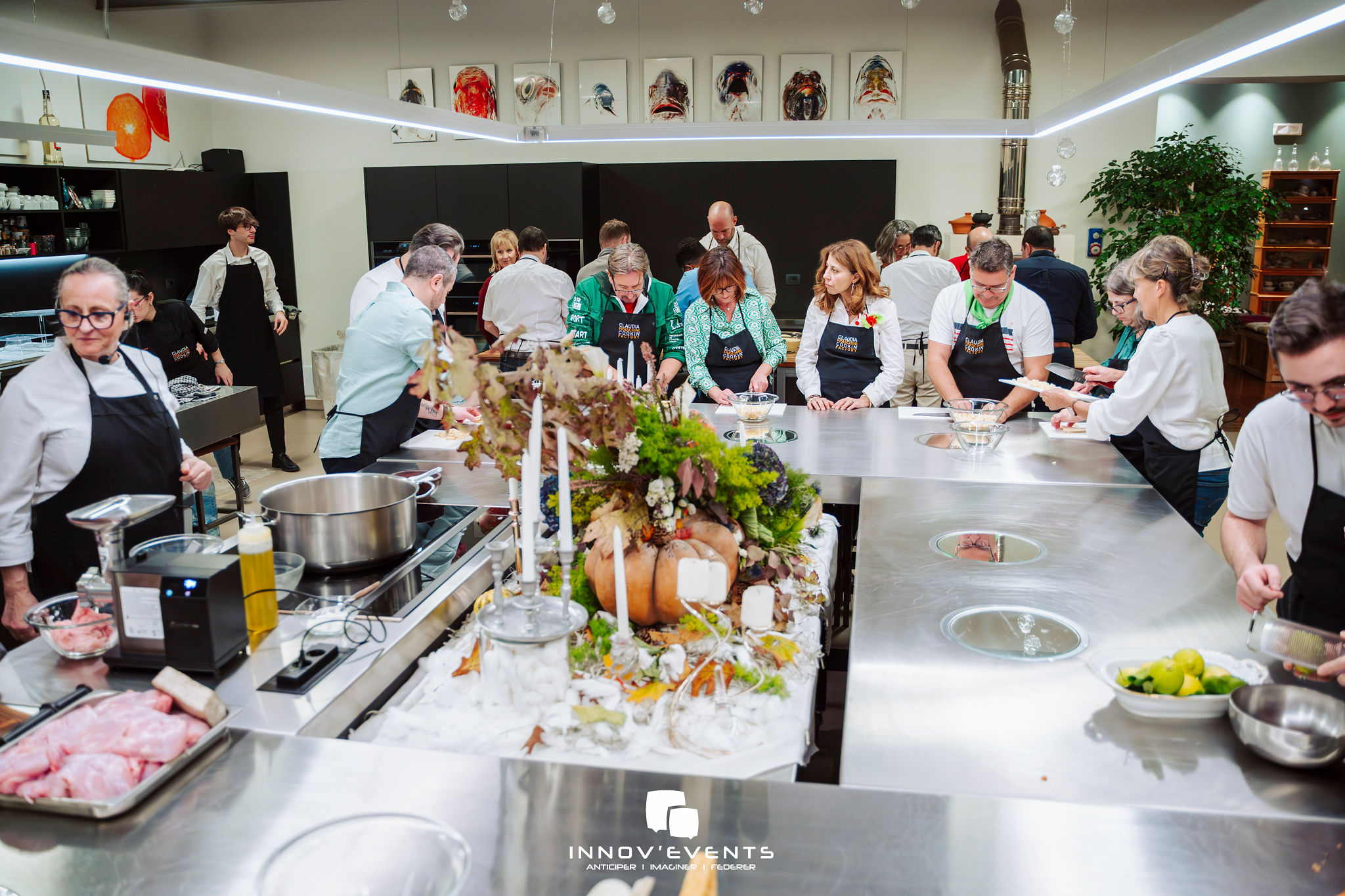
Molecular Gastronomy Workshop in Montréal for corporate teams who need flawless execution
INNOV'events is a event agency in Montréal delivering a Molecular Gastronomy Workshop in Montréal for 12 to 250 participants, designed for executive events, HR programs, and communication-driven gatherings.
We handle the operational reality: venue fit, food-safety controls, facilitator sourcing, bilingual flow, timed service, and on-site coordination—so your agenda stays on time and your brand stays protected.
Sommaire
In a corporate agenda, entertainment is only “fun” if it serves a purpose: creating cross-functional interaction, accelerating trust, and giving leaders a credible, controlled moment to reinforce culture without turning the event into a spectacle.
In Montréal, organizations expect bilingual facilitation, punctual run-of-show, and standards aligned with board-level scrutiny: food safety, brand reputation, privacy, and the ability to deliver under last-minute constraints.
Our team is on the ground in Montréal, used to coordinating with downtown hotels, Old Port venues, and corporate offices—while keeping a rigorous operational plan (prep lists, timing sheets, contingency stock, and clear roles).
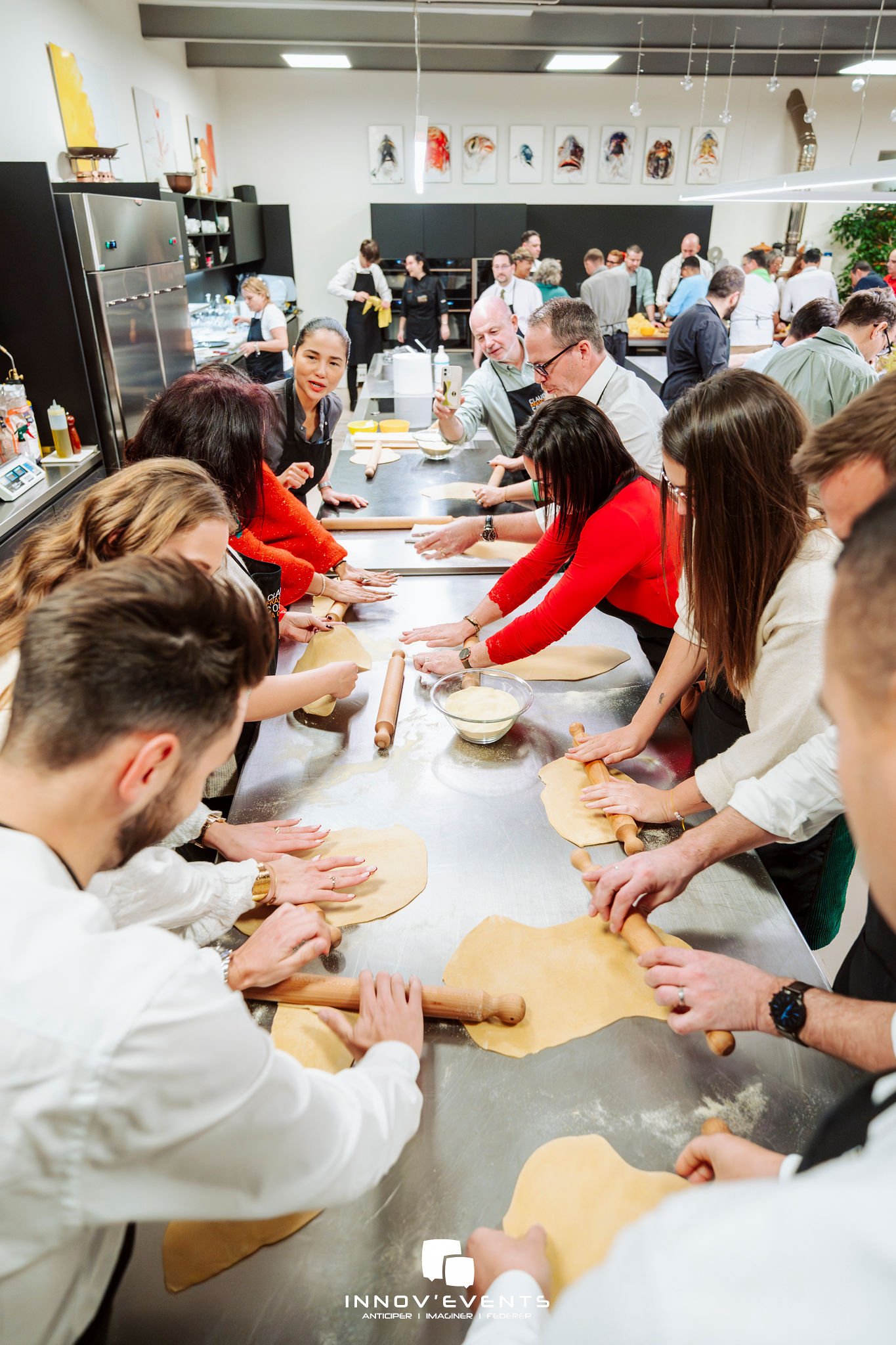
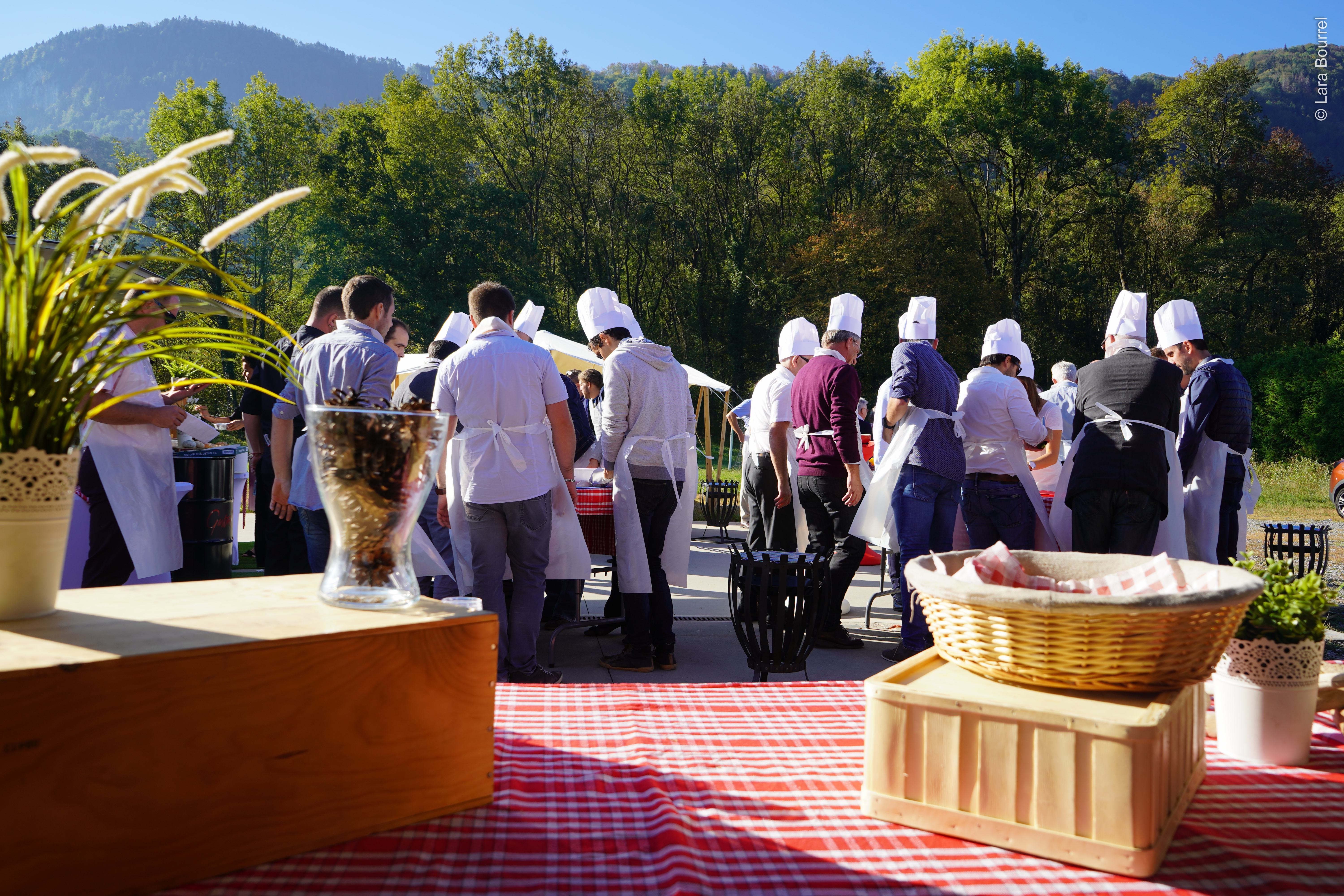
Operational track record in Montréal you can audit quickly
10+ years supporting corporate events in Québec, with recurring accounts in Montréal (annual kickoffs, leadership offsites, client evenings).
250+ corporate activations delivered across Canada through our partner network and local crew model (facilitators, culinary partners, AV, venue teams).
98% of programs delivered on schedule based on our internal post-event reports (run-of-show adherence, service windows, participant flow).
Bilingual delivery (EN/FR) available for all workshops, including scripts, signage, and facilitator briefings.
Local corporate references in Montréal and repeat collaboration
We support Montréal organizations that run high-stakes moments where execution matters as much as creativity: leadership townhalls, employee recognition, client dinners, and recruiting events. Our work is often renewed year after year because teams want the same two things: reliable delivery and zero surprises.
Typical repeat scenarios we see in Montréal: an HR team planning a quarterly culture event with changing headcount; a communications director managing media-sensitive brand positioning; an executive assistant needing a “no-drama” program that fits into a tight board dinner schedule. In these contexts, the Molecular Gastronomy Workshop works when it’s framed as a structured, controlled experience—backed by a clear operations plan and food-handling standards.
If you want, we can share Montréal-specific case notes during a call (venue constraints, timing, staffing ratios, and learnings) to help your internal approval process.
 Besoin d’un devis rapide ?
Nous vous envoyons une première proposition sous 24h.
Why choose a Molecular Gastronomy Workshop in Montréal for leadership and HR goals
A Molecular Gastronomy Workshop in Montréal is not a cooking class in disguise. When designed properly for corporate audiences, it becomes a practical collaboration lab: precise steps, shared resources, measurable outcomes, and a built-in conversation framework that removes the awkwardness of “forced networking.”
Executives and HR leaders choose this format when they need engagement without losing control of tone, timing, or brand image. It gives participants something concrete to do, produces a visible result in minutes, and creates neutral ground between departments.
Break silos quickly without childish icebreakers: small teams rotate roles (prep, plating, documentation), which naturally reveals strengths and improves collaboration in a low-risk setting.
Support leadership messaging with a credible metaphor: precision, experimentation, iteration, and quality control mirror operational excellence—useful for change management, transformations, and post-merger integration.
Deliver inclusive engagement for mixed seniority groups: the activity is structured so junior staff can contribute without being “on the spot,” while leaders remain visible and approachable.
Create content for internal communications: photo moments are built into the process (safe, clean stations, controlled plating), allowing Comms to capture brand-aligned visuals for intranet, LinkedIn, or recruiting.
Manage energy in a multi-block agenda: the workshop can be calibrated to act as a mid-day reset (30–45 min) or a full team-building block (90–120 min) without derailing plenary timing.
Offer a premium experience without premium risk: compared to open-bar entertainment, a culinary-science format tends to reduce behavioral incidents while still feeling high-end.
Montréal is built on food culture, hospitality standards, and international talent. That makes participants more demanding—and also more receptive—when the experience is executed with real culinary discipline rather than gimmicks.
What Montréal decision-makers expect before approving this workshop
In Montréal, approvals for a culinary activation typically involve more stakeholders than expected: HR, Communications, Finance, sometimes Legal, and often the venue’s own banquet team. What gets a “yes” is not a glossy concept—it’s a plan that answers operational questions.
Here are the realities we design around:
- Bilingual participant experience: signage, facilitator cues, and timing instructions must work seamlessly in English and French, without slowing the flow.
- Venue constraints downtown and Old Montréal: elevators, narrow corridors, heritage floors, and strict load-in windows change how we package equipment and schedule setup.
- Food safety and allergen credibility: executives expect clear allergen handling, labeled ingredients, glove policies, and a real sanitation plan—not just “we’re careful.”
- Noise and AV coexistence: many corporate venues in Montréal run concurrent functions; we plan for sound levels and microphone needs, and we coordinate with AV so instructions are heard without disrupting nearby rooms.
- Timing discipline: Montréal corporate events are often stacked (plenary, breakout, cocktail, transport). The workshop must be engineered to hit service windows, especially when the chef segment transitions into a reception.
- Brand and reputational risk: for finance, pharma, tech, and public-sector-adjacent organizations, “playful” must still look professional. We avoid visuals or ingredients that could be interpreted as messy, unsafe, or off-brand.
Our role is to translate your internal constraints into an experience that looks effortless on event day—because the approval committee will judge you on execution, not intent.
Which Molecular Gastronomy Workshop formats work best in Montréal corporate events
Engagement comes from clarity and progression: participants need to understand the objective, see quick wins, then build complexity. We design formats that keep momentum while respecting corporate constraints like dress code, time windows, and the expectation of professional presentation.
Interactive animations in Montréal
Station rotation challenge (45–90 min): groups rotate through 3–4 micro-techniques (spherification pearls, flavored foams, rapid infusions, texturizers). Best for internal team-building because it drives movement and cross-team mixing.
Executive “quality control” role: leaders act as judges with structured criteria (taste balance, plating discipline, process cleanliness). Works well when you want executives visible without forcing them to “perform.”
Speed brief + sprint: 10-minute training, then a timed creation sprint with a checklist. Ideal when you have tight schedule blocks between plenary sessions.
Art animations in Montréal
Plating and visual discipline module: we integrate composition rules (contrast, height, negative space) so results look professional in photos—useful for communications teams collecting content.
Brand-color ingredient strategy: when appropriate, we can align plating tones to brand palettes using naturally colored components (without artificial-looking gimmicks), while staying tasteful and credible.
Innovative animations in Montréal
“Cocktail lab” pairings (non-alcoholic or alcoholic): structured pairing between a molecular bite and a drink (e.g., citrus air + tonic base). Strong for client hosting in Montréal where food-and-beverage expectations are high.
Dessert-focused workshop: safer for dietary management and generally more inclusive. Often chosen for afternoon programs where you want energy without heavy savory service.
Local product spotlight: optional integration of Québec ingredients (maple, berries, local cheeses) in a modern technique—useful for out-of-town leadership groups visiting Montréal.
Gourmand animations in Montréal
R&D mindset scenario: teams receive constraints (budget, allergens, brand tone) and must prototype, document, and present decisions like a product team. Works well for tech and innovation departments.
Data-driven judging: scoring grids and quick feedback loops. Practical for organizations that dislike subjective “games” and prefer measurable evaluation.
Hybrid-friendly capture: for partially distributed teams, we can structure a segment that streams cleanly (single camera angle + mic + tight instructions) while keeping in-room participants fully engaged.
Whatever the format, alignment with brand image is non-negotiable: cleanliness, pacing, facilitator tone, and photo-readiness must match how your organization wants to be perceived—especially in corporate event entertainment in Montréal where guest expectations are high.
Where to host a Molecular Gastronomy Workshop in Montréal without logistics issues
The venue dictates the experience more than most teams anticipate: access to water, prep surfaces, waste removal, ventilation, and storage directly impacts timing and participant comfort. A workshop that looks controlled and premium requires the right room conditions—especially when you’re hosting executives or clients.
| Venue type | For which objective? | Main strengths | Possible constraints |
|---|---|---|---|
Downtown hotel ballroom or meeting suite | Leadership offsite, client hosting, programs tied to conferences | Reliable back-of-house, predictable AV, professional banquet staff, controlled temperature and lighting | Strict load-in times, union rules in some properties, menu/ingredient approvals and kitchen access restrictions |
Old Montréal heritage venue | Client appreciation, brand moments, executive dinners with a “Montréal” signature | Strong atmosphere, premium perception, memorable architecture that supports communications content | Access constraints (stairs/elevators), narrow corridors, strict preservation rules, limited prep space |
Modern corporate event loft / studio space | Team-building, innovation days, internal celebrations | Flexible layouts, easier station zoning, good for movement and rotations, often more freedom on suppliers | Variable kitchen infrastructure; may require additional sinks, power distribution, and waste planning |
In-office (boardroom area, cafeteria, or converted open space) | HR engagement, employer branding, minimizing travel time | High attendance predictability, easy leadership participation, reduced venue spend | Security access, limited storage, elevator scheduling, need for strict cleanup to protect facilities |
We strongly recommend a site visit or, at minimum, a technical venue call with photos and measurements. In Montréal, the difference between a smooth setup and a late start is often a single freight elevator rule or a missing water point.
What a Molecular Gastronomy Workshop in Montréal costs and why
Budgeting for a Molecular Gastronomy Workshop in Montréal is less about “price per person” and more about production variables: staffing, complexity of techniques, venue constraints, and food safety requirements. We quote based on what will keep your event controlled, on time, and compliant.
Group size and staffing ratio: as a baseline, hands-on stations typically require more supervision than a demo. Expect staffing to scale materially as you move past 40–60 participants.
Format length: 45 minutes (activation module) vs 90–120 minutes (full workshop) changes prep volume, ingredient quantities, and on-site labor.
Technique level: simple spherification and foams are efficient; multi-step plating with temperature control or multiple textures increases equipment and timing risk.
Dietary and allergen profile: higher complexity (gluten-free, dairy-free, nut-free) can require parallel ingredients, separate tools, and more labeling—meaning higher labor and logistics.
Venue constraints in Montréal: limited load-in windows, long distances from truck to room, or lack of sinks/power can require additional equipment rental and more setup time.
Branding and comms requirements: if you need branded menus, photo-ready plating standards, or a structured content capture window, we plan for it (and staff accordingly).
Service integration: adding a tasting reception or pairing component (mocktails/cocktails) affects permits, glassware, bar staffing, and timing with the venue.
From an ROI perspective, this workshop performs when it replaces passive attendance with visible collaboration—and when your internal team doesn’t lose days managing logistics. The real cost is not the activity; it’s a program that runs late, looks messy, or creates reputational risk. We price to prevent those outcomes.
Why using a Montréal agency reduces risk on event day
For culinary-science entertainment, local execution matters. A remote provider can sell a concept, but what protects you is local control of timing, people, and suppliers—especially when the venue changes a load-in rule, when a shipment is delayed, or when attendance shifts at the last minute.
As an agency established in Montréal, we can do real pre-checks, coordinate directly with venue teams, and deploy staff who know the city’s operational realities (downtown access, parking restrictions, winter logistics, last-minute supplier availability).
- Faster problem resolution: local supplier relationships for replacement equipment, ice, consumables, and last-minute staffing.
- Venue familiarity: we anticipate constraints typical of Montréal locations (heritage buildings, freight elevator schedules, unionized environments).
- Better stakeholder coordination: we integrate with your internal teams and the venue’s banquet/AV leads using clear run-of-show and contact trees.
- Consistency for recurring programs: when you repeat the workshop quarterly or annually, we keep the learnings and refine the playbook.
From an ROI perspective, this workshop performs when it replaces passive attendance with visible collaboration—and when your internal team doesn’t lose days managing logistics. The real cost is not the activity; it’s a program that runs late, looks messy, or creates reputational risk. We price to prevent those outcomes.



Recent Montréal-style scenarios we handle in the field
Our projects range from internal HR engagement to client-facing experiences where brand risk is high. What stays constant is the discipline of production.
- Leadership offsite module: a 60-minute workshop between two plenary sessions, with strict timing, bilingual facilitation, and a clean transition to networking. Key challenge: maintaining energy without delaying the next speaker block.
- Client reception add-on: molecular bites integrated into a cocktail in a downtown venue. Key challenge: aligning with venue service standards while keeping the “lab” feel professional and not messy.
- In-office culture event: running stations across a converted cafeteria space with building security protocols and tight cleanup requirements. Key challenge: protecting the workspace and keeping corridors clear for normal operations.
- Mixed seniority team-building: ensuring executives participate without dominating, while still being visible. Key challenge: designing roles and judging criteria that feel respectful and business-appropriate.
When you speak with us, we’ll translate your context into a realistic plan: what the room needs, how many staff, how long setup takes, and what the contingency looks like if the schedule moves.
Common mistakes Montréal teams face with molecular workshops
Underestimating space and flow: too many participants per station creates bottlenecks, idle time, and frustration—especially in heritage venues with fixed layouts.
Choosing a “performer” instead of a facilitator: a chef who can impress on stage may struggle to manage multiple groups, enforce hygiene, and keep timing tight.
Weak allergen management: unlabeled ingredients or unclear processes create risk and discomfort for participants. In corporate settings, that becomes an HR and reputational issue.
Ignoring venue operations: not coordinating with banquet/AV teams leads to conflicts over power, noise, setup timing, and waste removal.
No contingency stock: missing extra gloves, replacement tools, backup ingredients, or extra signage turns small issues into visible problems.
Unclear “why”: if the workshop doesn’t link to a business objective (culture, collaboration, client relationship), executives perceive it as filler and engagement drops.
Our role is to prevent these risks with a clear production plan, the right staffing model, and local Montréal coordination—so your event is judged on outcomes, not on operational friction.
Why Montréal clients rebook INNOV'events for corporate culinary activations
Repeat business in events is rarely about novelty—it’s about trust. HR and Communications teams rebook when the agency reduces their workload, protects their credibility internally, and delivers a consistent participant experience even when constraints change.
60–70% of our corporate activity comes from repeat clients and referrals (internal tracking across recent seasons).
2 to 4 events/year is a common rhythm for Montréal organizations that use workshops as recurring culture touchpoints (quarterly engagement, annual kickoff, leadership series).
On-site incident prevention: we operate with checklists for hygiene, station setup, and timing, which reduces last-minute escalations to your executives.

Loyalty is proof of quality because it reflects what happens after the pitch: punctual load-in, stable staffing, clean execution, and the ability to handle real-world constraints in Montréal.
Our Montréal delivery process from brief to event day
👉 Discovery and success criteria in Montréal
We start with a practical brief: why this workshop, who is attending, what success looks like, and what could go wrong. We confirm the audience (executives, clients, mixed teams), the tone (formal vs relaxed), and any constraints: alcohol policy, photography approvals, confidentiality, accessibility, union rules, and dietary profile.
Output: a clear recommendation on format (demo vs hands-on), duration (45/90/120 minutes), and the staffing approach required to keep the experience controlled.
👉 Technical planning with Montréal venues and internal stakeholders
We validate room specs and operational rules: load-in path, setup times, power capacity, water access, waste removal, and storage. We coordinate with the venue banquet/AV lead and your internal point person to avoid day-of conflicts.
Output: floorplan zoning (stations, handwash, demo area), equipment list, and a realistic setup/strike schedule that respects Montréal access constraints.
👉 Program design and facilitator briefing
We design the workshop so participants stay moving and engaged without confusion: scripted intro, safety and hygiene briefing, station instructions, and structured team roles. Facilitators are briefed on your organization: terminology, brand tone, and what to avoid (sensitive topics, off-brand humor, confidentiality).
Output: run-of-show, facilitator script cues (EN/FR), signage text, and judging/feedback framework if included.
👉 Food safety, allergens, and compliance controls
We implement labeling, ingredient separation where required, glove policies, and sanitation cycles. We confirm any venue requirements and align on handling rules. For corporate audiences, we prioritize clarity: participants should never wonder what they’re consuming.
Output: allergen plan, station labels, and operational checklist used by the on-site lead.
👉 On-site production and executive-level communication
On event day, we arrive early, set stations with contingency stock, and run a pre-brief with venue/AV. During the workshop, one lead manages timing and escalations, while facilitators focus on participants. If the agenda shifts (late keynote, room change), we adjust the format without sacrificing safety or presentation.
Output: a controlled experience that ends on time, with clean teardown and minimal burden on your internal team.
👉 Post-event debrief for Montréal recurring programs
For teams running recurring activations, we capture learnings: actual timing, participation patterns, dietary feedback, and venue notes. This makes the next edition smoother and often more cost-efficient.
Output: short debrief notes and recommendations for the next Montréal session (format tweaks, staffing, flow, content capture).
FAQ sur l'organisation Molecular Gastronomy Workshop à Montréal
How long should a Montréal molecular gastronomy workshop last?
Most corporate groups in Montréal choose 60 to 90 minutes. For a tight agenda, a 45-minute activation works if the techniques are simplified. For deeper team-building and presentations, plan 120 minutes including tasting and photos.
What group size works best in Montréal for this workshop?
The sweet spot is 20 to 80 participants for hands-on stations. We can run from 12 to 250 by adjusting the model (multiple waves, more facilitators, or a hybrid demo + station approach). The limiting factor is usually floor space and staffing ratio, not the concept.
Can you manage allergies and dietary restrictions in Montréal events?
Yes—this is planned upfront. We use labeled ingredients, structured station rules, and where needed, separate tools/ingredients for specific restrictions. In corporate contexts, we recommend collecting dietary data at least 10–14 days before the event to avoid last-minute substitutions.
Do we need a kitchen on-site in Montréal venues?
Not always. Many formats can run with prep done off-site and brought in safely, then executed at stations with power and limited water access. A kitchen helps for complex menus, but the true requirements are power distribution, handwashing/sanitation, and a load-in plan that fits the Montréal venue rules.
How far ahead should we book in Montréal?
For peak periods (September–December and May–June), we recommend 4–8 weeks. For large groups or high-constraint venues in Montréal, 8–12 weeks is safer to secure facilitators, confirm venue logistics, and collect dietary info.
Request a Montréal quote with a clear plan and a realistic budget
If you’re comparing agencies, we can help you make a decision quickly with facts: recommended format, staffing ratio, technical needs, and a budget range aligned with your constraints. Share your date, venue (if known), attendee count, and objectives, and we’ll come back with a practical proposal for your Molecular Gastronomy Workshop in Montréal.
For corporate calendars, earlier planning reduces cost and risk: it secures the right facilitators, avoids rushed venue compromises, and gives HR/Comms time to manage invitations and dietary data properly. Contact INNOV'events to schedule a short scoping call.
INNOV'events Montréal Agency
Thierry GRAMMER is the manager of the INNOV'events Montréal office. Reach out directly by email at canada@innov-events.ca or via the contact form.
Contact the Montréal agencyToutes nos prestations & animations Montréal, Quebec
Découvrez nos prestations événementielles
- Employee Party in Montréal
- Corporate Christmas Party in Montréal
- Networking Cocktail Event in Montréal
- Shopping Mall Activation in Montréal
- Grand Opening Event in Montréal
- Product Launch Event in Montréal
- Open House Event in Montréal
- Field Brand Activation in Montréal
- Event Catering Service in Montréal
Découvrez nos animations événementielles disponibles au Quebec
- Event Hostess in Montréal
- Escape Game in Montréal
- MasterChef-Style Cooking Workshop in Montréal
- Corporate Magician in Montréal
- Tent Rental in Montréal
- Color Analysis Workshop in Montréal
- Inflatable Games in Montréal
- Valet Service in Montréal
- Soccer Simulator in Montréal
- LED Furniture Rental in Montréal
- LED Branding Activation in Montréal
- Immersive Culinary Experience in Montréal
- Light Painting Activity in Montréal
- Immersive Mystery Night in Montréal
- Promotional Contest in Montréal
- Promotional Materials (POS) in Montréal
- Virtual Reality Experience in Montréal
- Molecular Gastronomy Workshop in Montréal
- Halloween Event in Montréal
- Fireworks Show in Montréal
- Sports Challenge – Giant Games in Montréal
- Professional Event Host in Montréal
- Photo Booth Animation in Montréal
- Santa Claus Appearance in Montréal
- Kids Entertainment in Montréal
- Guided Tour in Montréal
- Urban Rally in Montréal
- Ball Pit Activity in Montréal
- Flight Simulator in Montréal
- Food Truck Rental in Montréal
- World Record Attempt in Montréal
- Surf Simulator in Montréal
- Soccer Simulator in Montréal
- Wine Casino in Montréal
- Makeover Workshop in Montréal
- Perfume Creation Workshop in Montréal
- Acting Workshop in Montréal
- CSR Activities in Montréal
- Archery Activity in Montréal
- Event Security Guard in Montréal
- Wine Tasting Workshop in Montréal
- Mime Performance in Montréal
- TV Game Show Animation in Montréal
- Funfair Event in Montréal
- Crisis Management Workshop in Montréal
- Crisis Negotiation Workshop in Montréal
- Arcade Games in Montréal
- Indoor Skydiving Simulator in Montréal
- Ski Simulator in Montréal
- Racetrack Driving Experience in Montréal
- Introductory Flight Experience in Montréal
- Tasting Experience in Montréal
- Build Your Own Foosball Workshop in Montréal
- 2CV Rally in Montréal
- LEGO Challenge in Montréal
- Casino Night in Montréal
- Interpreter / Translator in Montréal
- Promotional Merchandise in Montréal
- Shuttle / Transportation Service in Montréal