
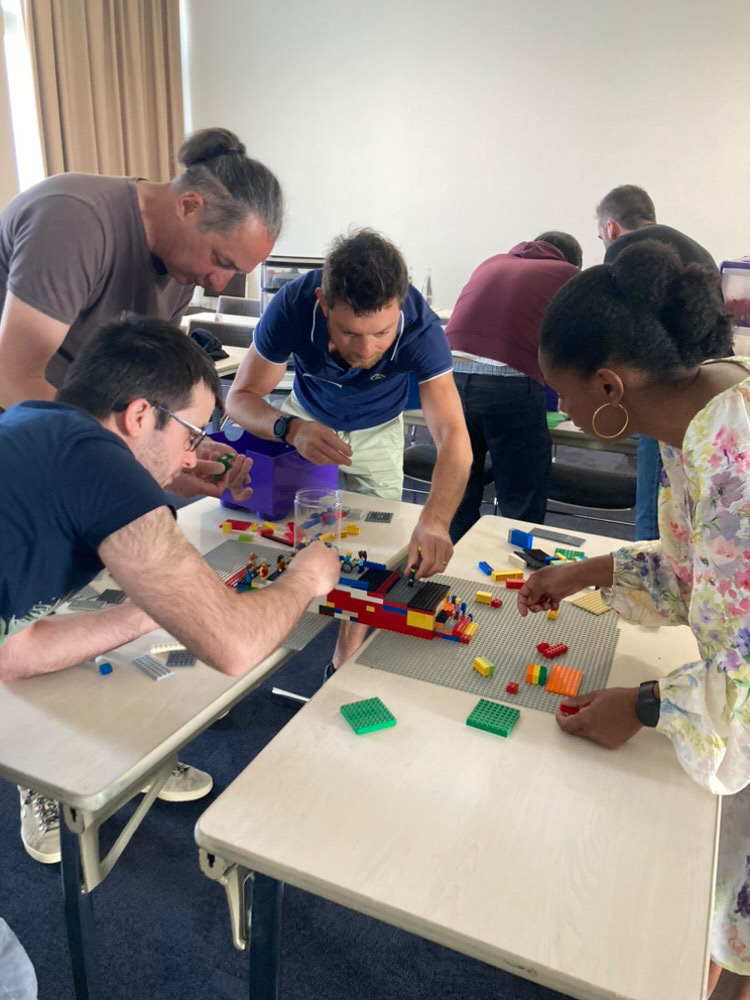
LEGO Challenge in Montréal for teams that need measurable collaboration
INNOV'events delivers a structured LEGO Challenge in Montréal designed for executives, HR and communications teams who need real engagement—not noise. Typical formats run from 60 to 150 minutes and scale from 20 to 500+ participants with clear roles, scoring and facilitation. We manage the end-to-end: kits, room flow, timing, host, music/AV cues, safety, and post-activity debrief.
Sommaire
In a corporate event, “entertainment” is rarely just entertainment. It is a controlled moment where you test collaboration under time pressure, create cross-silo contact, and protect leadership credibility in front of the room. A well-run LEGO Challenge gives you observable behaviours (decision-making, conflict handling, planning) without putting anyone on the spot.
In Montréal, organizations expect precision: bilingual facilitation, punctual transitions with venue constraints, and an activity that works equally well for tech, professional services, public sector and industrial teams. HR also needs inclusivity (no athletic bias), while communications needs photo-ready results without disrupting brand tone.
INNOV'events is on the ground in Montréal, and we design LEGO-based formats with operational rigor: participant flow, kit management, hygiene, scoring logic, and debrief tools you can reuse internally. You get a confident event day, not a “nice idea” that becomes stressful at 4:45 p.m.
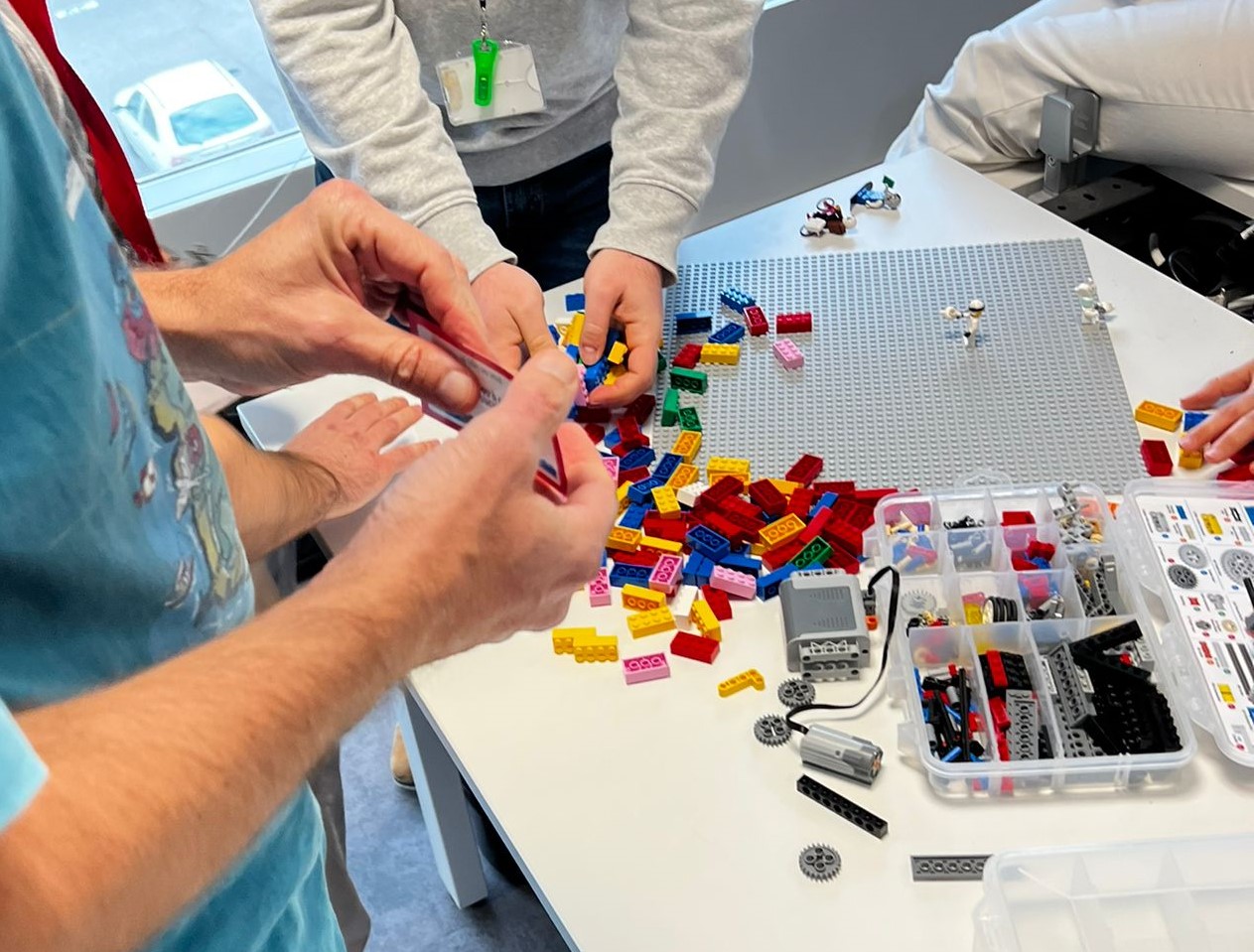
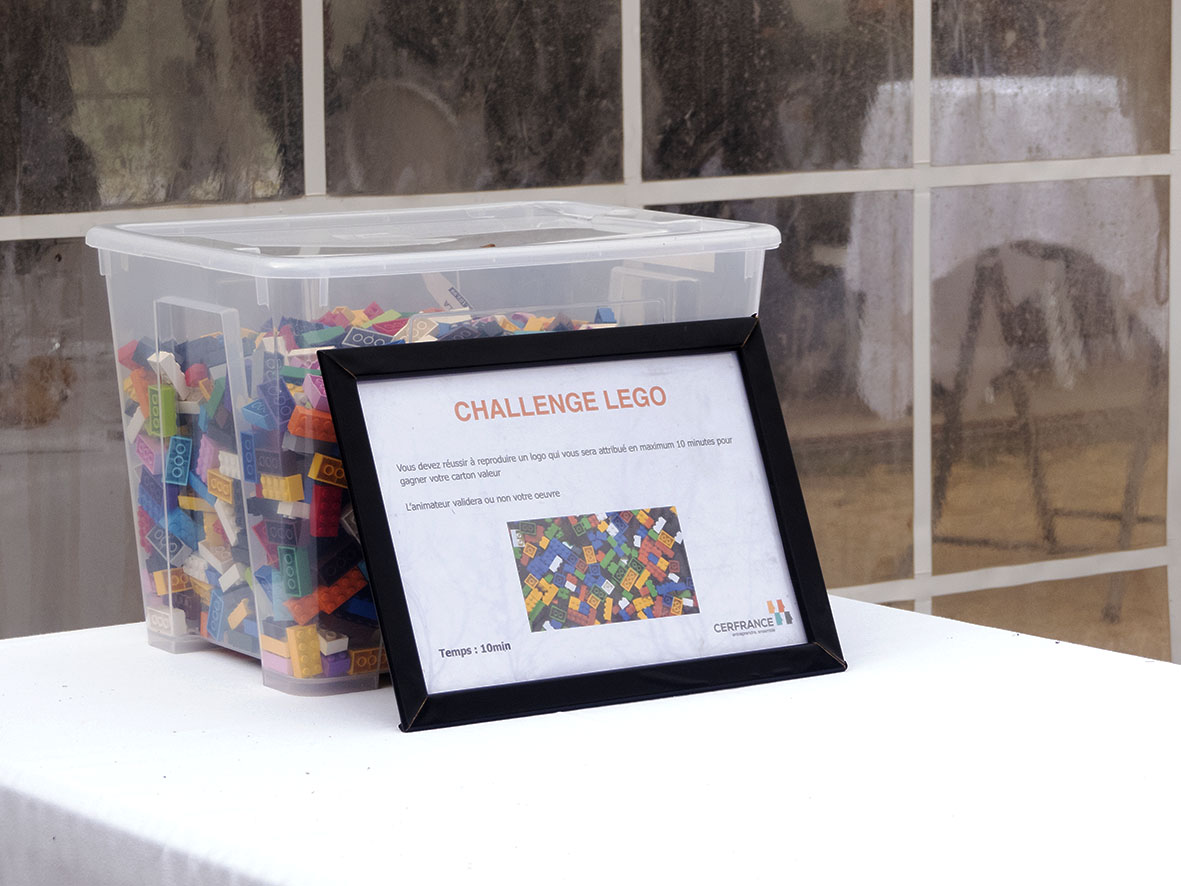
Operational proof points for Montréal decision-makers
10+ years supporting corporate events across Canada, with a dedicated production team based in Montréal for rapid venue coordination and supplier follow-up.
Scalable facilitation: from 1 host for 20–40 people to 4–8 facilitators for 300–500+ participants, with standardized run-of-show and contingency roles.
Typical on-site setup windows managed: 60–180 minutes depending on room access and kit volume, with pre-counted kits and labeling to reduce setup risk.
Safety and compliance: activity designed for low physical risk; we align with venue rules (loading docks, fire codes, room capacities) and corporate requirements (NDAs, privacy, brand usage).
Montréal delivery experience that fits real corporate calendars
We regularly support teams working in the Montréal business ecosystem—companies that operate on tight timelines, multi-stakeholder approvals and high visibility moments (leadership offsites, annual meetings, client events, internal change initiatives). Many of our clients renew year after year because the same operational challenges keep coming back: last-minute headcount changes, mixed seniority groups, bilingual rooms, and venues with strict access windows.
If you have internal references you want us to align with (previous event formats, brand standards, internal comms style, or a specific leadership narrative), we integrate them early. That’s where a LEGO Challenge in Montréal moves from “fun activity” to a reliable tool supporting your culture and your message.
 Besoin d’un devis rapide ?
Nous vous envoyons une première proposition sous 24h.
Why choose a LEGO Challenge in Montréal for leadership and HR goals?
A LEGO Challenge is one of the few team activities that creates immediate collaboration without forcing extroversion. It produces tangible outputs (models, stories, photos), measurable dynamics (time management, role clarity), and a low-barrier environment where new hires and senior leaders can contribute equally.
Make collaboration observable: teams must plan, allocate roles, negotiate scope, and deliver under a fixed deadline—exactly the behaviours you want to reinforce after a reorg, merger, or strategic pivot.
Break silos without awkward networking: when Finance builds with Product and Operations, the conversation becomes practical and natural. In Montréal, where many organizations operate in hybrid mode, this is a strong re-connection lever.
De-risk the event agenda: unlike activities that depend on talent or physical ability, LEGO-based formats are inclusive and predictable. Executives can confidently sponsor the moment without fearing someone will be singled out or embarrassed.
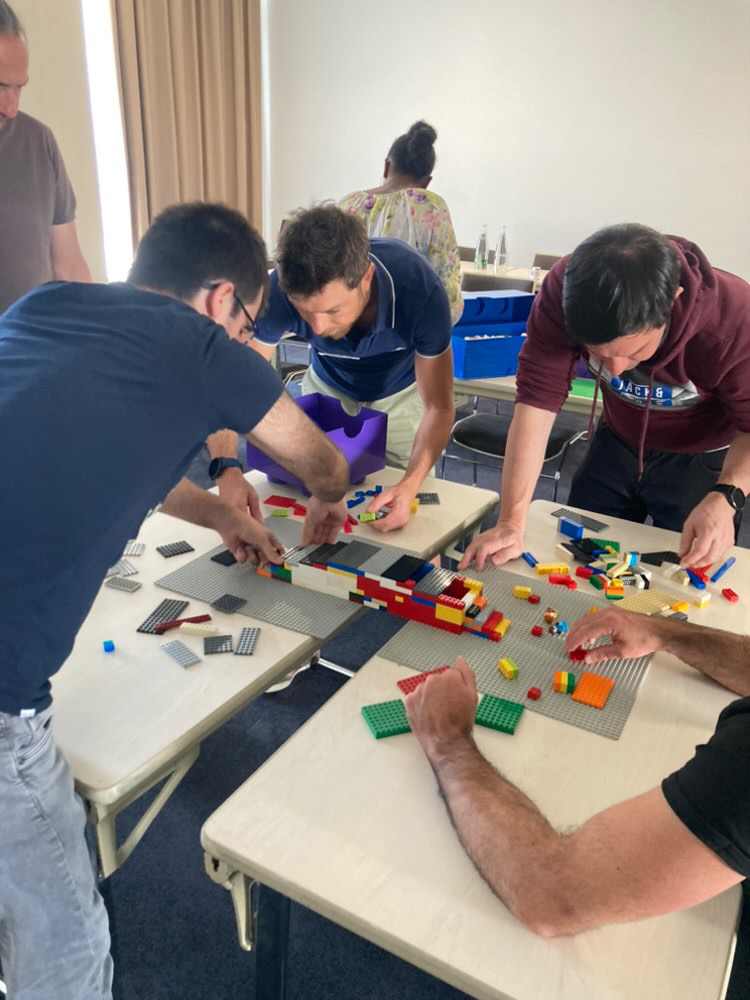
Create content that communications can actually use: the builds photograph well, and we structure a short “gallery walk” so you capture clean visuals, team naming, and a storyline aligned with your internal campaign.
Support change management: we can align the challenge brief to themes like customer experience, operational excellence, ESG, safety culture, or innovation—then facilitate a debrief that links the activity back to concrete workplace realities.
Montréal organizations tend to value pragmatic outcomes: good energy, yes, but also credibility, inclusivity, and an activity that respects time. A well-designed LEGO Challenge fits that culture: structured, efficient, and human.
What Montréal teams expect on event day (and what can go wrong)
Most corporate rooms in Montréal are time-boxed: you may have a fixed access window, a unionized venue crew, strict sound limits, and an agenda that must remain on schedule because executives have travel, media, or client commitments. That means the activity must be operationally “quiet”: minimal mic issues, fast transitions, no chaotic distribution of materials, and a scoring system that does not create arguments at the end.
We also see recurring realities: bilingual groups where some participants are more comfortable in French; hybrid teams meeting in person for the first time; and organizations that are careful about inclusivity (neurodiversity, mobility, sensory sensitivity). For a LEGO Challenge in Montréal, we design instructions that work with short, clear phrasing; we manage background music levels; we propose team roles that fit different profiles (builder, planner, storyteller, quality control); and we keep the competitive element friendly and transparent.
Finally, Montréal weather and traffic matter. In winter, late arrivals are common, and in summer, festival season affects mobility downtown. Our format includes headcount buffers, a quick on-ramp for latecomers, and a room layout that doesn’t collapse if you lose 10% of the participants in the first 10 minutes.
Which Montréal-friendly LEGO Challenge formats work for corporate events?
Engagement comes from structure: a clear brief, visible progress, and a finish line. We design LEGO Challenge formats that fit your agenda slot and the type of audience in the room—whether it’s a leadership retreat in Montréal or a company-wide town hall with mixed roles and seniority.
Interactive animations in Montréal
Build-to-Strategy Sprint (60–90 min): teams build a model representing your strategic pillars (customer, growth, talent, execution). We provide a briefing deck, timing cues, and a gallery walk where each team gets 60–90 seconds to present—ideal when leadership needs a common language without adding another presentation.
Constraints Challenge (75–120 min): mid-way, we introduce “real-life” constraints (budget cut, new regulation, urgent client request). Teams must adapt their build and plan. This mirrors operational reality and generates meaningful discussion, especially for transformation programs.
Cross-Team Relay Build (45–75 min): teams rotate builders every few minutes, forcing handoffs and documentation. It’s a strong metaphor for hybrid work, shared services, and multi-site operations—common in Montréal-based organizations.
Art animations in Montréal
Brand Story Gallery: we align colours and elements with your visual identity and ask teams to build a “brand promise” scene. Communications teams appreciate the controlled visuals and the ability to capture consistent photos without looking staged.
Architectural Montréal Theme: optional local prompt (bridge, skyline, neighbourhood identity) that creates immediate connection for local and visiting employees—useful for national meetings hosted in Montréal.
Innovative animations in Montréal
Build + Tasting Flow: if your agenda includes a cocktail or networking break, we design the challenge in two rounds with a planned pause. It prevents the typical Montréal event issue where food service and activity timing collide. We coordinate with catering to keep hands clean and tables manageable.
Judging with Snack Stations: while teams do the gallery walk, guests circulate through food stations. This reduces crowding, improves photos, and keeps energy stable—particularly in downtown venues with limited foyer space.
Gourmand animations in Montréal
Scoreboard + KPI-style criteria: we use clear scoring categories (clarity of concept, structural integrity, teamwork process, and narrative). For executive audiences, we keep it transparent and “business-like,” avoiding subjective judging that can frustrate participants.
Facilitated debrief toolkit: we provide a short debrief guide that managers can reuse internally (questions, observation points, and next-step commitments). This is often what HR in Montréal asks for when the activity supports engagement surveys or culture initiatives.
The best format is the one that matches your brand posture. A regulated organization may prefer a calm, structured sprint with clear rules; a creative company may embrace open-ended builds. Our job is to align the corporate event entertainment in Montréal with how you want your organization to feel—and how you need it to perform.
Where to host a LEGO Challenge in Montréal without logistics friction?
The venue shapes everything: acoustics for instructions, table space for builds, storage for kits, and traffic flow during judging. In Montréal, we often see events succeed or fail based on room access timing, loading dock rules, and whether the floor plan supports circulation without bottlenecks.
| Venue type | For which objective? | Main strengths | Possible constraints |
|---|---|---|---|
Hotel ballroom (downtown Montréal) | Town hall, annual meeting, large-group team building | Strong AV infrastructure, predictable service, easy to integrate stage moments and scoring reveals | Access windows can be tight; union labour rules; higher costs for furniture reconfiguration |
Corporate office / training centre (Montréal or Greater Montréal) | Leadership offsite, onboarding day, internal culture workshop | Brand-controlled environment, easy alignment with internal comms, minimal travel for teams | Elevator and security constraints; limited storage; acoustics can be challenging in open spaces |
Industrial-chic / event loft space (Montréal neighbourhood venues) | Innovation theme, cross-team networking, creative culture moments | Flexible layouts, strong atmosphere for photos, natural flow for gallery walks | Need to validate lighting and sound; fewer built-in AV options; variable load-in logistics |
We strongly recommend a short site visit or a virtual walkthrough with measurements. For a LEGO Challenge in Montréal, we verify table counts, power, storage, mic coverage, and where we can stage the judging zone so the room stays calm and professional.
What does a LEGO Challenge cost in Montréal (and what drives it)?
Pricing for a LEGO Challenge in Montréal depends less on “the idea” and more on production reality: headcount, facilitation ratio, venue access, and the level of structure you want (scoring, branding, debrief, photo-ready outputs). A serious corporate delivery includes more than bricks—it includes a run-of-show, trained facilitators, and risk controls.
Number of participants: most budgets scale in tiers (e.g., 20–40 / 40–80 / 80–150 / 150–300 / 300+). This affects kit volume, staffing, and room flow complexity.
Facilitation and bilingual delivery: a bilingual room often benefits from additional facilitators to avoid instruction loss and to keep timing tight. For executive audiences, we also plan tighter stage management.
Format complexity: single-round builds are simpler; multi-round formats with surprise constraints, judging panels, and awards require more production, cues, and rehearsal.
Venue logistics in Montréal: downtown load-in, limited elevators, paid parking, and strict access windows can increase setup staff and time on site.
Branding and content needs: branded briefs, custom scoring cards, on-screen visuals, and photo capture add cost but often increase internal comms value.
Timing in your agenda: a 45-minute slot needs a tighter “no-fail” design than a 2-hour workshop. Short slots can cost more per minute because staffing and pre-production remain similar.
From an ROI perspective, the question is: what replaces this moment if you don’t do it? When a LEGO Challenge is designed to support onboarding, post-merger cohesion, or leadership alignment, it can save weeks of friction. We’ll propose a format that fits your budget ceiling while protecting what matters most: delivery quality on event day.
Why hire an event agency in Montréal for a LEGO Challenge?
When the agenda is tight and leadership visibility is high, local execution is not a “nice to have.” A team established in Montréal can visit venues quickly, coordinate directly with local AV and catering crews, and adapt fast when something changes (room swap, delayed access, weather impacts, last-minute VIP additions).
At INNOV'events, our production approach is built for the realities of Montréal events: multi-language rooms, strict downtown logistics, and the expectation that everything runs on time. If you are comparing suppliers, ask who owns the run-of-show, who arrives first on site, who manages kit inventory, and who has the authority to make calls if the venue changes the plan at the last minute. That’s where a local partner makes the difference.
For broader event support beyond this activity, our team operates as your event agency in Montréal with the same standards: clear production documents, supplier control, and accountable on-site management.
- Faster decisions and fewer surprises: local venue knowledge helps anticipate restrictions (freight elevators, storage, noise limitations) before they become day-of problems.
- Supplier leverage: established relationships with Montréal technicians and venues improve reliability and response times.
- On-site accountability: a local producer can manage transitions, timing, and stakeholder expectations without delegating critical moments to venue staff.
- Better participant experience: smoother flow, clearer instructions, and an activity that feels professional—important for employer brand.
From an ROI perspective, the question is: what replaces this moment if you don’t do it? When a LEGO Challenge is designed to support onboarding, post-merger cohesion, or leadership alignment, it can save weeks of friction. We’ll propose a format that fits your budget ceiling while protecting what matters most: delivery quality on event day.




Montréal case realities: what we’ve delivered and what we learned
We’ve delivered LEGO Challenge formats in contexts that look very different on paper but share the same constraints in real life: leadership teams who want depth without awkwardness, HR teams who need inclusivity, and communications teams who need clean moments on schedule.
Examples of typical project situations we handle in Montréal:
Post-reorg alignment: departments who don’t naturally collaborate are mixed intentionally. We design roles and scoring to prevent one function from dominating and to encourage listening under time pressure.
Hybrid re-connection: teams meeting in person after months of remote work. We use structured icebreakers tied to the build so it doesn’t feel forced, and we keep instructions short to reduce cognitive load.
Client-facing events: when guests are present, we adjust competition mechanics to avoid overly “internal” jokes and we maintain brand posture with a polished host script and controlled sound.
Union/venue constraints: we adapt setup plans to fixed access windows and coordinate with on-site crews so your internal team is not negotiating logistics 15 minutes before start.
In each case, the lesson is consistent: the activity succeeds when it is treated as a production, not a prop. That’s the standard we apply in every LEGO Challenge in Montréal.
Common Montréal pitfalls with a LEGO Challenge (and how we prevent them)
Underestimating room layout: too little table space leads to frustration and noise. We validate table counts, team size, and circulation for judging before event day.
Unclear scoring: subjective judging creates end-of-activity tension. We use simple, visible criteria and explain them in 2 minutes max.
Kit chaos: distributing bricks last-minute burns time and energy. We pre-count, label and stage kits by team, with a quick replacement process.
Wrong facilitation ratio: one host cannot manage 150 people effectively while also troubleshooting. We staff facilitators by participant tier and assign a dedicated floor lead.
Bilingual drift: repeating instructions doubles time and still leaves gaps. We design bilingual prompts and split facilitation roles so timing stays tight.
No debrief: without a wrap-up, it becomes “a fun moment” with no managerial value. We close with a short, guided reflection tied to your objective.
Agenda compression: trying to squeeze a full challenge into 30 minutes creates a rushed feeling. We’ll recommend a micro-format or redesign the flow to protect quality.
Our role is to prevent these risks before they hit your leadership team’s agenda. A LEGO Challenge should lower stress on event day—not add it. That’s why we plan like producers and deliver like facilitators.
Why Montréal clients rebook INNOV'events for team activities
Rebooking happens when an activity is dependable under real constraints: last-minute changes, sensitive internal dynamics, and brand exposure. Our clients come back because we document, communicate, and execute with the same discipline they expect from their own teams.
Repeatable formats: we keep a documented base structure that can be adapted to different audiences without reinventing logistics each time.
Predictable staffing: returning clients value seeing the same senior producer and lead facilitator—less ramp-up, fewer explanations, and smoother approvals.
Decision-ready proposals: we provide clear options (timing, headcount ranges, facilitation levels) so executives can approve without endless back-and-forth.

Loyalty is not about “liking the activity.” It’s proof that the delivery held up under pressure, in a real Montréal event environment.
Our Montréal delivery process for a LEGO Challenge you can defend internally
👉 Montréal discovery call and objective lock
We confirm your context (type of event, stakeholders, brand posture, bilingual needs) and define success criteria: what you want people to do differently after the activity. We also confirm constraints: agenda slot, venue type, union rules if any, and sensitivity points (merger dynamics, leadership visibility, internal politics).
👉 Format design and run-of-show
We propose 2–3 formats with clear timing (setup, briefing, build, judging, awards, debrief). We define team sizes (typically 5–8), facilitation ratio, scoring categories, and how winners are selected. You receive a concise run-of-show you can share with leadership, HR and communications.
👉 Venue coordination in Montréal
We confirm room layout, tables, power, mic needs, music limits, loading dock access, storage, and setup windows. If needed, we do a site visit. We also coordinate with AV and catering so the activity doesn’t fight with service timing or sound checks.
👉 Production prep and kit management
We pre-count and label kits by team, prepare bilingual instruction cards, and build a troubleshooting plan (missing pieces, late arrivals, room changes). For large groups, we assign zones and facilitators to keep the room controlled and supportive.
👉 On-site delivery and debrief
We arrive early, set the room, and run the activity with precise timing cues. After judging and awards, we facilitate a short debrief connected to your objective. If desired, we provide a post-event summary (what we observed and suggested next steps) that HR can use internally.
FAQ sur l'organisation LEGO Challenge à Montréal
How long should a LEGO Challenge last in Montréal?
Most corporate formats in Montréal work best in 60–120 minutes. If you only have 30–45 minutes, we recommend a simplified sprint with pre-set kits and a fast judging method; otherwise the experience feels rushed and the debrief disappears.
How many participants can you handle in Montréal venues?
We commonly run 20 to 500+ participants, depending on room size and table inventory. For 150+, we plan multiple facilitation zones, a clear kit distribution plan, and a judging flow that avoids crowding—important in downtown Montréal ballrooms and foyers.
Do you offer bilingual facilitation in Montréal events?
Yes. In Montréal, we frequently deliver bilingual (FR/EN) rooms. We use bilingual prompts and split facilitation roles so timing stays tight and participants don’t feel excluded. We confirm language balance during discovery to staff appropriately.
What venue setup is needed for a Montréal LEGO Challenge?
Plan for round tables or pods with enough surface area for builds, plus a small judging/display zone. As a baseline, teams of 5–8 need clear circulation lanes for a gallery walk. We also validate storage for kit boxes and access timing—two common constraints in Montréal venues.
What is a realistic budget range for Montréal delivery?
Budgets vary with headcount and staffing. As a reference, a professionally facilitated LEGO Challenge in Montréal for 30–60 people is often in the low-to-mid four figures; 100–200 people typically moves into the mid four figures to low five figures depending on complexity, bilingual staffing, and venue logistics. We’ll quote based on your exact agenda slot, venue and objectives.
Plan your LEGO Challenge in Montréal with a clear quote and a real run-of-show
If you’re comparing agencies, we can make your decision easier: share your date, venue (or shortlist), headcount range, and the objective you need this moment to serve (culture, onboarding, leadership alignment, change). We’ll respond with a structured proposal: recommended format, timing, staffing plan, and the production requirements that protect event day.
For Montréal calendars, we recommend securing your slot early—especially for Q4, year-end events, and peak downtown venue periods. Contact INNOV'events to build a LEGO Challenge that your executives can sponsor confidently and your teams will actually benefit from.
INNOV'events Montréal Agency
Thierry GRAMMER is the manager of the INNOV'events Montréal office. Reach out directly by email at canada@innov-events.ca or via the contact form.
Contact the Montréal agencyToutes nos prestations & animations Montréal, Quebec
Découvrez nos prestations événementielles
- Employee Party in Montréal
- Corporate Christmas Party in Montréal
- Networking Cocktail Event in Montréal
- Shopping Mall Activation in Montréal
- Grand Opening Event in Montréal
- Product Launch Event in Montréal
- Open House Event in Montréal
- Field Brand Activation in Montréal
- Event Catering Service in Montréal
Découvrez nos animations événementielles disponibles au Quebec
- Event Hostess in Montréal
- Escape Game in Montréal
- MasterChef-Style Cooking Workshop in Montréal
- Corporate Magician in Montréal
- Tent Rental in Montréal
- Color Analysis Workshop in Montréal
- Inflatable Games in Montréal
- Valet Service in Montréal
- Soccer Simulator in Montréal
- LED Furniture Rental in Montréal
- LED Branding Activation in Montréal
- Immersive Culinary Experience in Montréal
- Light Painting Activity in Montréal
- Immersive Mystery Night in Montréal
- Promotional Contest in Montréal
- Promotional Materials (POS) in Montréal
- Virtual Reality Experience in Montréal
- Molecular Gastronomy Workshop in Montréal
- Halloween Event in Montréal
- Fireworks Show in Montréal
- Sports Challenge – Giant Games in Montréal
- Professional Event Host in Montréal
- Photo Booth Animation in Montréal
- Santa Claus Appearance in Montréal
- Kids Entertainment in Montréal
- Guided Tour in Montréal
- Urban Rally in Montréal
- Ball Pit Activity in Montréal
- Flight Simulator in Montréal
- Food Truck Rental in Montréal
- World Record Attempt in Montréal
- Surf Simulator in Montréal
- Soccer Simulator in Montréal
- Wine Casino in Montréal
- Makeover Workshop in Montréal
- Perfume Creation Workshop in Montréal
- Acting Workshop in Montréal
- CSR Activities in Montréal
- Archery Activity in Montréal
- Event Security Guard in Montréal
- Wine Tasting Workshop in Montréal
- Mime Performance in Montréal
- TV Game Show Animation in Montréal
- Funfair Event in Montréal
- Crisis Management Workshop in Montréal
- Crisis Negotiation Workshop in Montréal
- Arcade Games in Montréal
- Indoor Skydiving Simulator in Montréal
- Ski Simulator in Montréal
- Racetrack Driving Experience in Montréal
- Introductory Flight Experience in Montréal
- Tasting Experience in Montréal
- Build Your Own Foosball Workshop in Montréal
- 2CV Rally in Montréal
- LEGO Challenge in Montréal
- Casino Night in Montréal
- Interpreter / Translator in Montréal
- Promotional Merchandise in Montréal
- Shuttle / Transportation Service in Montréal