
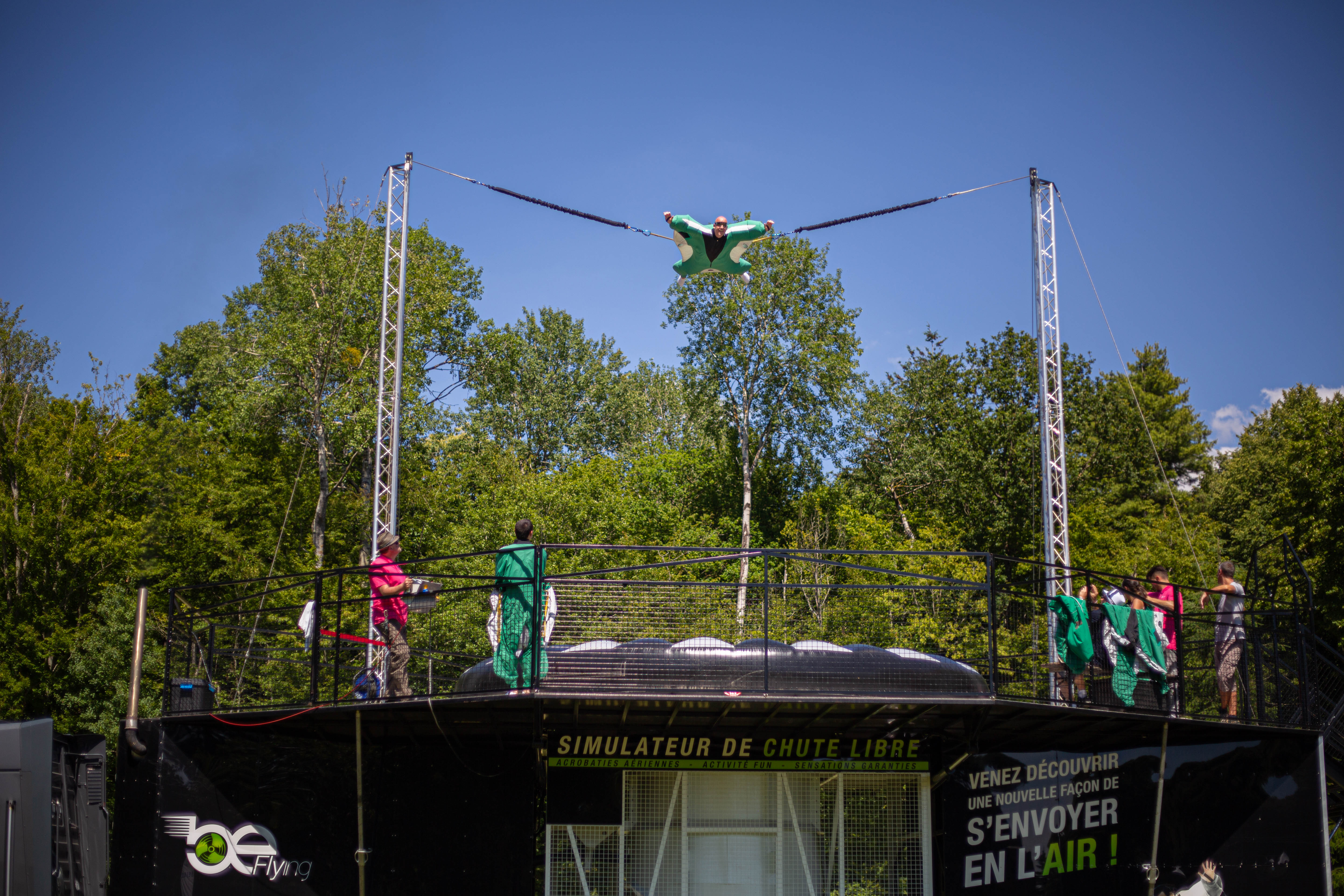
Indoor Skydiving Simulator in Montréal for corporate events that need real control
Sommaire
In a corporate agenda, entertainment is not “nice to have”: it’s a lever to drive participation, keep people onsite between content blocks, and create a shared story that internal comms can reuse. A well-executed Indoor Skydiving Simulator becomes a structured activation with throughput targets, clear queues, and a predictable schedule—exactly what executives expect when a program is tight.
In Montréal, organizations expect professional standards: bilingual guest flow, strict risk management, and an experience that fits union rules, venue constraints, and brand guidelines. HR also needs a solution inclusive enough for mixed comfort levels—people should be able to participate without feeling forced or exposed.
INNOV'events operates on the ground in Montréal, with supplier relationships that matter when you have short timelines or complex sites. We plan like a production: technical recce, staffing ratios, contingency plans, and a single point of accountability so your leadership team isn’t troubleshooting a queue, a waiver issue, or a noise complaint at 7:15 p.m.
Operational facts that matter in Montréal
10+ years coordinating corporate activations and high-attendance event logistics across Québec and Canada.
200+ corporate events delivered with documented run-of-show, vendor call sheets and on-site command structure.
30 to 600+ attendees is our typical operating range for an activation with throughput and queue management.
48 hours to provide a first structured budget range and feasibility feedback once we confirm your site and timing.
Montréal references and recurring mandates
We support organizations in Montréal that run events under real constraints: leadership time, brand image, and a workforce that expects professionalism. Several clients come back year after year because they want a partner who remembers their internal processes (security access, legal approvals, signage standards, union constraints) and can deliver without reinventing the wheel every quarter.
If you shared company names previously, we can integrate them as references in this section in the exact form you prefer (public case mention, “selected clients”, or anonymized by sector). In practice, we often work with repeat mandates in tech, finance, pharma, and public-facing services where risk management and brand consistency are non-negotiable.
Our approach is simple: we don’t sell an idea first—we validate feasibility (site, power, ceiling height, egress, noise, insurance), then we build the activation around your schedule and your people. That’s what creates trust with HR and communications teams who are accountable for employee experience and reputation in Montréal.
 Besoin d’un devis rapide ?
Nous vous envoyons une première proposition sous 24h.
Why run an Indoor Skydiving Simulator activation in Montréal now?
When your event includes strategy content, town-hall messaging, or culture priorities, you need a “participation engine” that reliably moves people from passive listening to active engagement. A Indoor Skydiving Simulator in Montréal works when it is treated as a managed activation, not a novelty: defined throughput, clear eligibility rules, and a facilitation style aligned with your culture.
Boost participation without derailing the agenda: We set capacity targets (participants per hour), queue design, and time slots that respect your plenary timing, so executives don’t see half the room disappear during key messages.
Create a shared moment across silos: In many Montréal organizations, teams are hybrid and don’t naturally mix. A simulator format creates organic cross-team interaction—when managed with fair rotation, not “first come, first served”.
Support HR goals (recognition, retention, wellbeing): We position the activation as opt-in, with alternative engagement options for those who prefer not to fly. That reduces pressure while still giving the team a collective experience.
Deliver comms assets that are actually usable: With a controlled photo/video setup (consent flow, branded backdrop, lighting), communications teams get material that fits internal channels and avoids privacy issues.
Provide a measurable outcome: Participation rate, average wait time, number of flights, and satisfaction snapshots can be captured without slowing operations—useful when leadership asks, “Was it worth the budget?”
Montréal is a market where employees compare experiences across employers. The companies that execute cleanly—safe, bilingual, inclusive, and on schedule—protect their employer brand while still giving teams a high-energy break that feels modern and credible.
What Montréal HR and comms teams expect on event day
In Montréal, the bar is operational maturity. HR and communications teams are judged internally on how smooth the day feels—especially when executives and external guests are present. For an Indoor Skydiving Simulator, the main expectation is not “wow”; it’s predictability and risk control.
We design the activation around the realities we see every week: bilingual audiences (FR/EN) and a sensitivity to tone; mixed mobility levels; varying comfort with physical activities; and venues where loading access, elevators, and dock timing are tightly controlled. If the event is downtown, we also plan around arrival waves (parking limitations, public transit, weather) that can compress your schedule and create queue spikes.
Another local reality: many corporate sites and larger venues have strict safety protocols, plus specific rules around equipment, noise and emergency egress. We anticipate these early, so you don’t learn at 5 p.m. that the simulator placement blocks an exit corridor or that power distribution requires an electrician.
Finally, Montréal organizations want partners who can collaborate with internal stakeholders: legal for waivers, procurement for vendor onboarding, facilities for access, and communications for brand use. Our value is coordinating those moving parts with a single accountable plan.
What to pair with an Indoor Skydiving Simulator in Montréal to raise participation
The simulator is a strong anchor, but in corporate contexts it performs best when supported by complementary touchpoints that keep non-flyers engaged and help communications teams collect content. In Montréal, we typically design a “participation ecosystem” around the Indoor Skydiving Simulator so your event experience remains inclusive and your crowd flow stays balanced.
Interactive animations in Montréal
Time-slot check-in + team leaderboard: We assign team windows (by department, office, or project) and track participation rate rather than “best performance”. This avoids risk-taking behavior while still creating friendly momentum.
Bilingual host + micro-briefings: A host explains the process in 20–30 seconds, in FR/EN, reducing repeated operator interruptions and keeping the queue moving.
Executive involvement without pressure: We script a short leadership “first flight” moment only if the executive is comfortable—otherwise, we use a symbolic kickoff (button press, ribbon moment, or team challenge start) that doesn’t put leaders on the spot.
Art animations in Montréal
Brand-safe content capture: A controlled photo/video corner with a neutral or branded backdrop, plus a consent workflow. This is critical for companies with strict internal policies and avoids ad-hoc filming that can create issues.
Ambient DJ or curated playlist management: We manage volume levels and transitions so the activation energizes without drowning speeches or creating complaints from adjacent rooms.
Innovative animations in Montréal
“Queue-friendly” catering: Handheld options that won’t spill near equipment (mini wraps, skewers, sealed beverages). We coordinate placement so food service doesn’t cross the safety perimeter.
Montréal-focused tasting station: If aligned with your brand, we can integrate local products (non-messy formats) to reinforce place-based identity while keeping operations clean.
Gourmand animations in Montréal
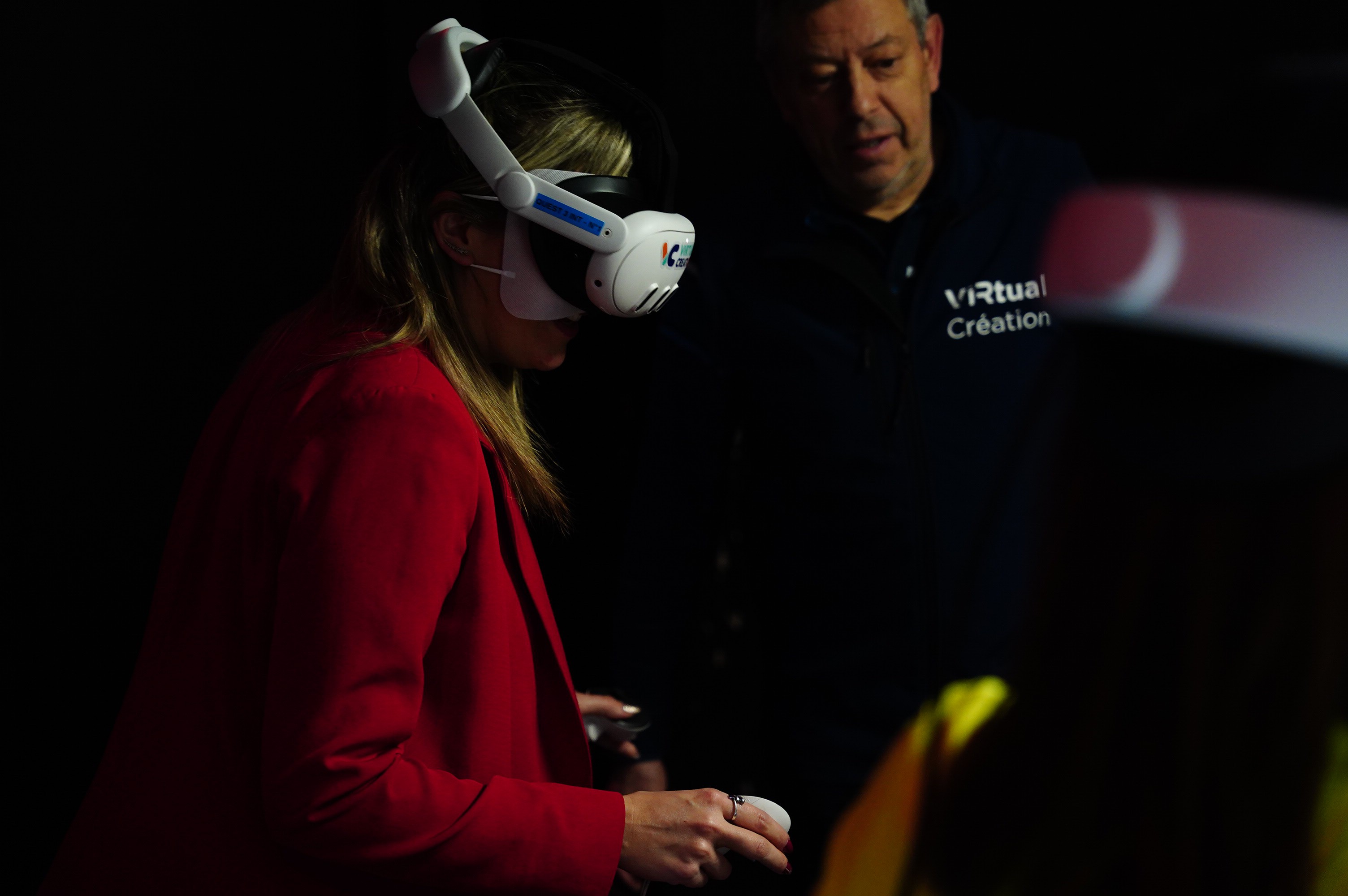
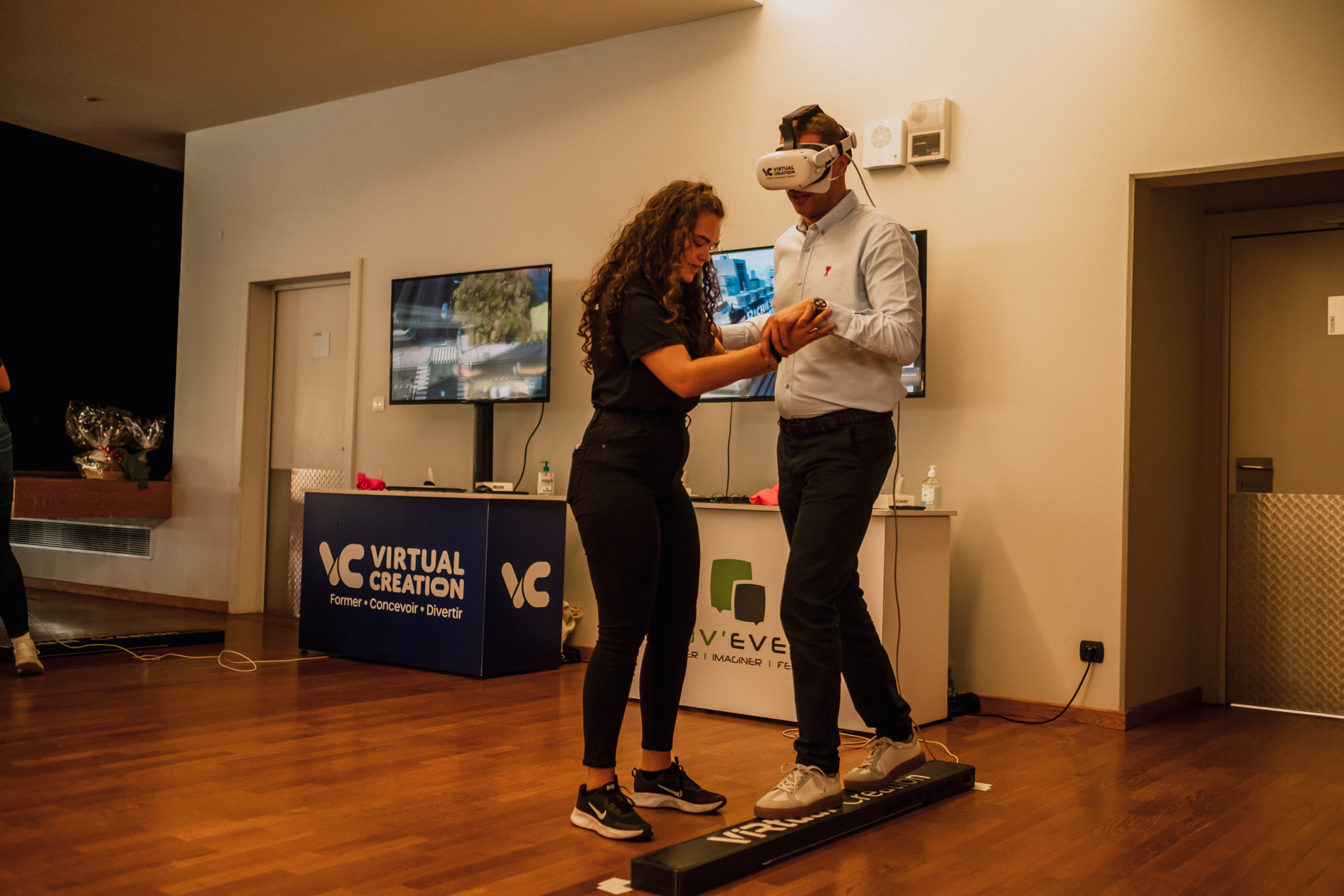
Hybrid inclusion layer: For guests who can’t or don’t want to fly, we add a parallel experience (VR flight module, wind reaction challenge, or motion capture mini-game) so participation doesn’t become binary.
Data capture that respects privacy: Optional badge scan or QR participation tracking to report engagement metrics to leadership without collecting sensitive data.
The guiding principle is alignment: the activation must match your employer brand and risk posture. A bank, a pharma group, and a gaming studio can all use an Indoor Skydiving Simulator in Montréal, but the tone, signage, consent approach, and hosting style should be materially different. We help you choose the right configuration so the experience supports your image rather than fighting it.
Which Montréal venues fit an Indoor Skydiving Simulator footprint?
Venue choice directly impacts perception and feasibility. For an Indoor Skydiving Simulator, we look beyond aesthetics: loading access, ceiling height, power availability, crowd circulation, and whether the site can support a controlled perimeter without blocking emergency paths. In Montréal, these details are often the difference between a premium experience and a stressful one.
| Venue type | For which objective? | Main strengths | Possible constraints |
|---|---|---|---|
| Hotel ballroom (downtown Montréal) | Executive-friendly gala or conference with controlled agenda | Predictable services (AV, security, catering), strong guest comfort, easy integration into plenary schedule | Loading dock time slots, ceiling height limits, strict noise and fire-code rules, union/house technician requirements |
| Converted industrial event space (Montréal) | Culture-forward internal event; higher energy brand positioning | Often more flexible layouts, stronger “wow” factor without overproducing, good for building a branded activation zone | Power distribution may need upgrades, acoustic management, HVAC considerations, more staffing for crowd control |
| Large conference centre / convention facility | High-attendance events (200–600+) requiring high throughput | Access logistics, ceiling heights, larger footprints, professional safety oversight, scalable queue design | More stakeholders to coordinate, higher service costs, strict scheduling for move-in/move-out |
We strongly recommend a site visit (or a technical recce with photos/measurements) before finalizing the concept. In Montréal, two venues that look similar online can behave very differently on load-in, sound bleed, and crowd movement. A short recce up front prevents last-minute compromises that executives will notice immediately.
What does an Indoor Skydiving Simulator cost in Montréal (514)?
Pricing for a Indoor Skydiving Simulator in Montréal is driven by operational parameters, not vague “packages”. We build budgets from the real constraints: event duration, expected throughput, site access, staffing ratios, and the level of brand integration and content capture required.
Duration and throughput targets: A 2-hour cocktail add-on is not priced like a full evening activation. More time usually means more staff rotation and more detailed queue management.
Attendee volume: We plan staffing and check-in capacity differently for 50 people than for 400. Volume affects queue hardware, hosting, and waiver processing.
Venue logistics in Montréal: Dock access, elevator size, distance from loading to activation zone, and permitted move-in windows can materially impact labor time.
Safety perimeter and equipment footprint: Some rooms require additional barriers, signage, or security staff to maintain a safe zone and protect the experience.
Bilingual facilitation: If your audience is mixed FR/EN (often the case), we staff accordingly to keep flow smooth and avoid repeating instructions.
Branding and content capture: Backdrops, lighting, photographer/videographer, and consent management can be scoped precisely—useful for communications teams that need deliverables, not just “coverage”.
Insurance, permits, and compliance: Depending on the site, we align certificates, risk documentation, and any venue-specific compliance requirements.
From an ROI standpoint, the right question is: what did it replace or improve? If the activation keeps attendance high between content blocks, reduces early departures, and provides reusable internal comms assets, leadership sees value beyond the moment itself. We can propose two budget scenarios—a lean operational setup versus a fully branded engagement zone—so you can decide based on impact, not guesswork.
Why hire a Montréal event agency for simulator activations?
With an Indoor Skydiving Simulator, the execution risk is operational: access, safety perimeter, queue management, and stakeholder coordination. An agency established in Montréal reduces friction because we know local venue realities, vendor onboarding practices, and what can realistically be approved by internal teams on a corporate timeline.
When your event date is close, local presence becomes a practical advantage: faster site visits, quicker coordination with venue managers, and the ability to adjust staffing or equipment when the plan changes. That’s the difference between a controlled experience and a day where your HR lead is stuck solving a waiver bottleneck while executives wait to be introduced.
INNOV'events operates as your single accountable partner. If you need broader support than the activation itself, our full team can step in through our event agency in Montréal services—without changing your point of contact or inflating complexity.
- Faster feasibility validation: quick recce, realistic floor plan, and early identification of blockers.
- Local supplier coordination: staffing, barriers, signage, and AV aligned to Montréal standards and venue policies.
- Better risk control: documented operating procedures, clearer emergency paths, and a calmer on-site command structure.
- More reliable timelines: dock schedules, elevator constraints, and move-in/move-out realities planned upfront.
From an ROI standpoint, the right question is: what did it replace or improve? If the activation keeps attendance high between content blocks, reduces early departures, and provides reusable internal comms assets, leadership sees value beyond the moment itself. We can propose two budget scenarios—a lean operational setup versus a fully branded engagement zone—so you can decide based on impact, not guesswork.





Montréal corporate event scenarios where the simulator works
We deploy simulator-style activations in real corporate scenarios, not just “party nights”. For example, during a leadership offsite in Montréal, we’ve used the activation as a structured break between strategic segments: time-slot rotation by leadership cohort, a quiet briefing zone, and a controlled photo deliverable for internal communications. The outcome leadership cares about is simple: people came back on time, energy stayed high, and the program remained credible.
For HR-driven recognition events, we often build an inclusion-first setup: clear opt-in messaging, a parallel engagement station for non-flyers, and hosts trained to keep the tone respectful. In practice, this avoids the “pressure to perform” dynamic that can backfire in front of peers.
For client-facing receptions, we tighten brand control: stricter perimeter, curated signage, and a more formal hosting script. Communications teams typically want this because one off-brand interaction can dilute months of positioning. Our role is to keep the activation impressive but disciplined—especially in sectors where reputation is the product.
Across these projects, the common thread is adaptability: we adjust the operating model to your audience profile, your venue limitations, and your executive tolerance for risk and noise. That’s what separates a simulator “rental” from a corporate-grade activation.
Common Montréal pitfalls to avoid with an Indoor Skydiving Simulator
Underestimating waiver and check-in time: One tablet and one staff member is not a plan for 200 people. We build parallel lanes and bilingual support to prevent a queue from consuming your cocktail hour.
Placing the activation where it blocks circulation: In many Montréal venues, corridors and doors are tightly regulated. Poor placement creates safety issues and tension with venue management.
No inclusion pathway for non-participants: When participation becomes binary, you risk disengaging a portion of the room. We design a parallel “engage without flying” option so everyone has a role.
Noise conflicts with speeches: If you place the simulator too close to a stage or breakout rooms, your agenda suffers. We plan zoning and sound management so your content remains respected.
Brand exposure without consent: Filming people in a corporate context requires clear consent handling. We implement a process that protects employees and your employer brand.
No contingency for schedule drift: Speakers run long; arrivals are delayed. We plan operational buffers and a clear shutdown protocol so the event still lands on time.
Our role is to prevent these risks before they appear on site. Executives shouldn’t see operational stress; HR shouldn’t have to police a queue; communications shouldn’t have to manage reputational exposure in real time. We do the planning and on-site command so your team can stay focused on stakeholders.
Why Montréal clients renew with INNOV'events
Renewal is rarely about the concept. It’s about whether the agency protected your internal credibility. When HR and communications teams choose to renew with us in Montréal, it’s usually because we delivered a clean process: clear approvals, realistic timelines, and a calm on-site presence that made them look organized in front of leadership.
Repeat mandates are common for teams running quarterly or annual moments (recognition, sales kickoffs, leadership offsites) where operational predictability matters more than novelty.
Documented playbooks: we retain site learnings, vendor access procedures, and show-flow preferences so the next edition starts ahead of schedule.
Stakeholder alignment: we know how to work with procurement, legal, facilities, and brand teams without creating email chaos or last-minute surprises.

Loyalty is the most reliable proof of quality in corporate events. It means we did the invisible work—risk control, timing, stakeholder management—well enough that your team wants the same level of certainty next time.
Our Montréal delivery process for a simulator activation
👉 Step 1 — Montréal feasibility call and risk framing
We start with a 30–45 minute working call with HR/communications and the event owner. We confirm audience profile, venue short list (or your preferred site), agenda constraints, and what “success” means for leadership. We also flag early risk points: waiver approach, inclusion needs, and noise/time conflicts.
👉 Step 2 — Site recce and layout validation in Montréal
We validate footprint, access routes, power, ceiling height, and safe perimeter requirements. We produce a practical layout recommendation and confirm where queues, briefing, and content capture will live—so you can sign off internally with confidence.
👉 Step 3 — Budget options and staffing plan
We propose two scenarios: a lean operational model and a more branded engagement zone. Each includes staffing ratios (operator, host(s), check-in support), queue hardware, signage, and a draft run-of-show. This is where we protect your budget by tying cost to measurable operational needs.
👉 Step 4 — Compliance, waivers, and communications alignment
We coordinate the waiver workflow (QR, bilingual forms, on-site support), insurance documentation, and any venue approvals. With communications, we align on consent for photo/video, brand usage, and messaging tone so the activation stays compliant and on-brand.
👉 Step 5 — Event-day command and live optimization
On site, we manage load-in, perimeter setup, rehearsals/briefing, and guest flow. We monitor wait times and adjust: add a second check-in lane, tighten briefing scripts, or re-balance time slots. Your internal team stays focused on stakeholders while we run operations.
👉 Step 6 — Post-event wrap and metrics
We provide a short wrap: participation count, peak wait times, notes for improvement, and delivery of approved content assets. This helps HR and communications report back to leadership with facts, not impressions.
FAQ sur l'organisation Indoor Skydiving Simulator à Montréal
How many participants per hour in Montréal can we plan?
For corporate flow in Montréal, plan roughly 30 to 80 participants per hour depending on briefing time, waiver process, and whether you run time slots. We confirm a realistic throughput after site and staffing validation.
What space do we need in Montréal for the simulator zone?
Most setups require a dedicated activation footprint plus a safe perimeter and a queue lane. As a working guideline, plan 300 to 800 sq. ft. total depending on the unit and your crowd volume. We validate exact dimensions during the recce.
Can we run it bilingual for Montréal employees and guests?
Yes. We staff a bilingual host and bilingual check-in support, and we prepare FR/EN signage and QR waiver access. This reduces repeated explanations and keeps flow smooth for mixed-language audiences in Montréal.
Is it safe and insurable for corporate events in Montréal?
Yes, when operated with a defined perimeter, trained staff, and documented procedures. We coordinate insurance certificates as required by the venue and ensure your waiver/consent workflow is clear. We also plan an explicit stop protocol and crowd-control measures.
How early should we book in Montréal for a key date?
For peak periods (fall and December) in Montréal, we recommend 6 to 10 weeks. For simpler activations or flexible dates, 3 to 5 weeks can work, but venue approvals and internal procurement can extend timelines.
Request a Montréal feasibility check and budget within 48 hours
If you’re comparing agencies, we suggest starting with a practical feasibility check: your venue (or shortlist), your agenda, and your target participation. We’ll tell you quickly what will work, what will create risk, and what it will cost at a realistic operational level for Montréal.
Contact INNOV'events to receive a first budget range and a proposed run-of-show for your Indoor Skydiving Simulator activation. The earlier we validate site logistics and waiver flow, the more control you keep over budget, compliance, and executive experience on event day.
INNOV'events Montréal Agency
Thierry GRAMMER is the manager of the INNOV'events Montréal office. Reach out directly by email at canada@innov-events.ca or via the contact form.
Contact the Montréal agencyToutes nos prestations & animations Montréal, Quebec
Découvrez nos prestations événementielles
- Employee Party in Montréal
- Corporate Christmas Party in Montréal
- Networking Cocktail Event in Montréal
- Shopping Mall Activation in Montréal
- Grand Opening Event in Montréal
- Product Launch Event in Montréal
- Open House Event in Montréal
- Field Brand Activation in Montréal
- Event Catering Service in Montréal
Découvrez nos animations événementielles disponibles au Quebec
- Event Hostess in Montréal
- Escape Game in Montréal
- MasterChef-Style Cooking Workshop in Montréal
- Corporate Magician in Montréal
- Tent Rental in Montréal
- Color Analysis Workshop in Montréal
- Inflatable Games in Montréal
- Valet Service in Montréal
- Soccer Simulator in Montréal
- LED Furniture Rental in Montréal
- LED Branding Activation in Montréal
- Immersive Culinary Experience in Montréal
- Light Painting Activity in Montréal
- Immersive Mystery Night in Montréal
- Promotional Contest in Montréal
- Promotional Materials (POS) in Montréal
- Virtual Reality Experience in Montréal
- Molecular Gastronomy Workshop in Montréal
- Halloween Event in Montréal
- Fireworks Show in Montréal
- Sports Challenge – Giant Games in Montréal
- Professional Event Host in Montréal
- Photo Booth Animation in Montréal
- Santa Claus Appearance in Montréal
- Kids Entertainment in Montréal
- Guided Tour in Montréal
- Urban Rally in Montréal
- Ball Pit Activity in Montréal
- Flight Simulator in Montréal
- Food Truck Rental in Montréal
- World Record Attempt in Montréal
- Surf Simulator in Montréal
- Soccer Simulator in Montréal
- Wine Casino in Montréal
- Makeover Workshop in Montréal
- Perfume Creation Workshop in Montréal
- Acting Workshop in Montréal
- CSR Activities in Montréal
- Archery Activity in Montréal
- Event Security Guard in Montréal
- Wine Tasting Workshop in Montréal
- Mime Performance in Montréal
- TV Game Show Animation in Montréal
- Funfair Event in Montréal
- Crisis Management Workshop in Montréal
- Crisis Negotiation Workshop in Montréal
- Arcade Games in Montréal
- Indoor Skydiving Simulator in Montréal
- Ski Simulator in Montréal
- Racetrack Driving Experience in Montréal
- Introductory Flight Experience in Montréal
- Tasting Experience in Montréal
- Build Your Own Foosball Workshop in Montréal
- 2CV Rally in Montréal
- LEGO Challenge in Montréal
- Casino Night in Montréal
- Interpreter / Translator in Montréal
- Promotional Merchandise in Montréal
- Shuttle / Transportation Service in Montréal