
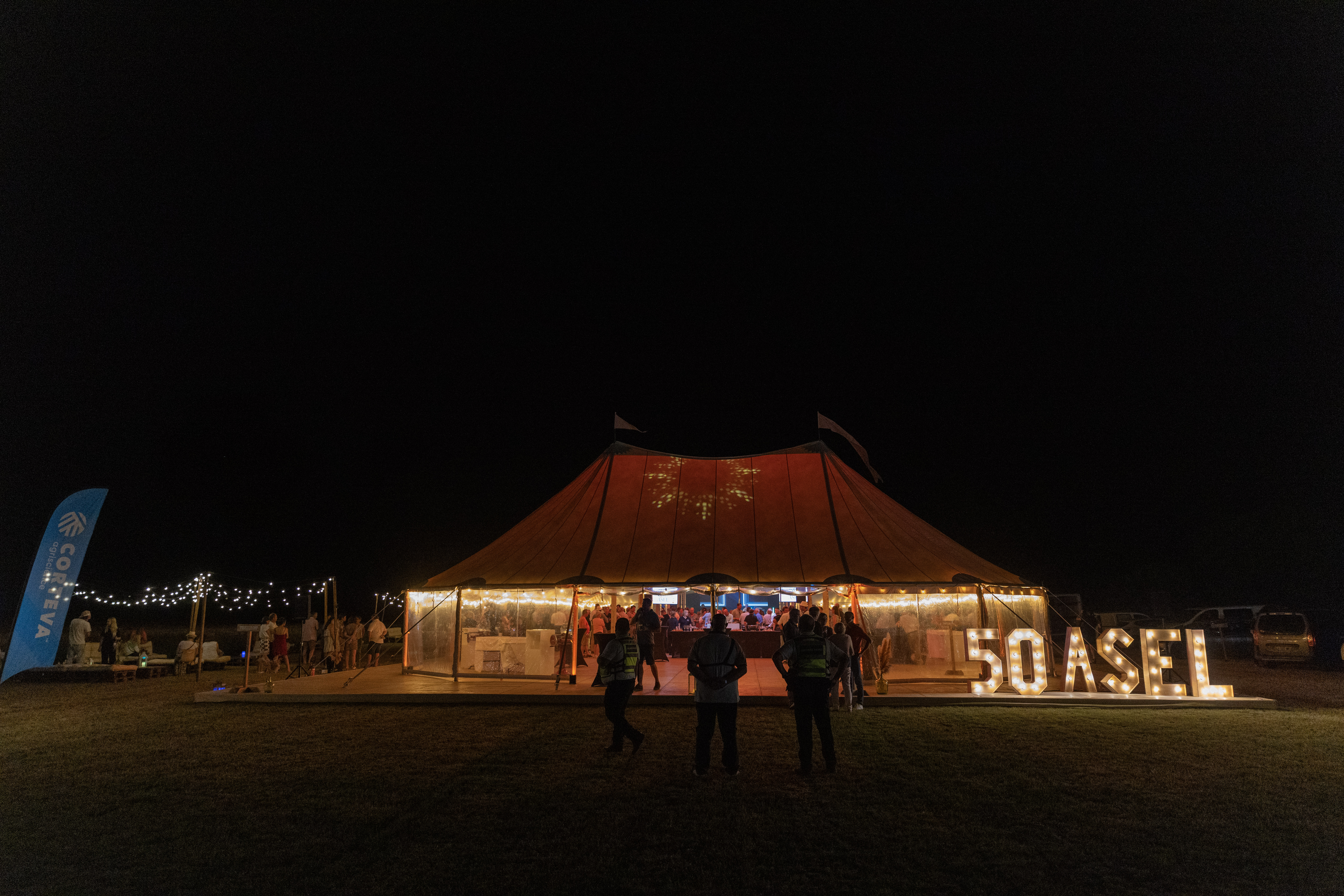
Tent Rental in Montréal for corporate events that must run on time
INNOV'events supports executives, HR and communication teams with Tent Rental for corporate events across Montréal, from 40 to 2,000+ guests.
We handle the full scope: site assessment, tent sizing, flooring, lighting, heating/cooling, power distribution, signage, safety plans, and the on-site crew for setup and dismantling.
Our goal is simple: a weather-proof, brand-aligned space that protects your agenda, your speakers, and your reputation.
Sommaire
In a corporate event, a tent is not “just coverage”: it is the room where decisions are announced, teams are recognized, and partners are hosted. A weak installation becomes a program risk (noise, temperature, delays), while a properly engineered structure protects the timeline and the executive message.
In Montréal, organizations expect punctual load-ins, clean finishes, and a site that stays compliant even when the weather changes quickly. Your internal stakeholders also expect clear responsibility: one accountable party who can coordinate venue rules, access windows, and safety documentation.
As a local agency, INNOV'events works with trusted tent partners and crews who understand urban constraints (limited staging space, narrow access lanes, bilingual signage, strict noise and safety requirements). We operate with the same discipline as an operations team: plan, verify, execute, and document.
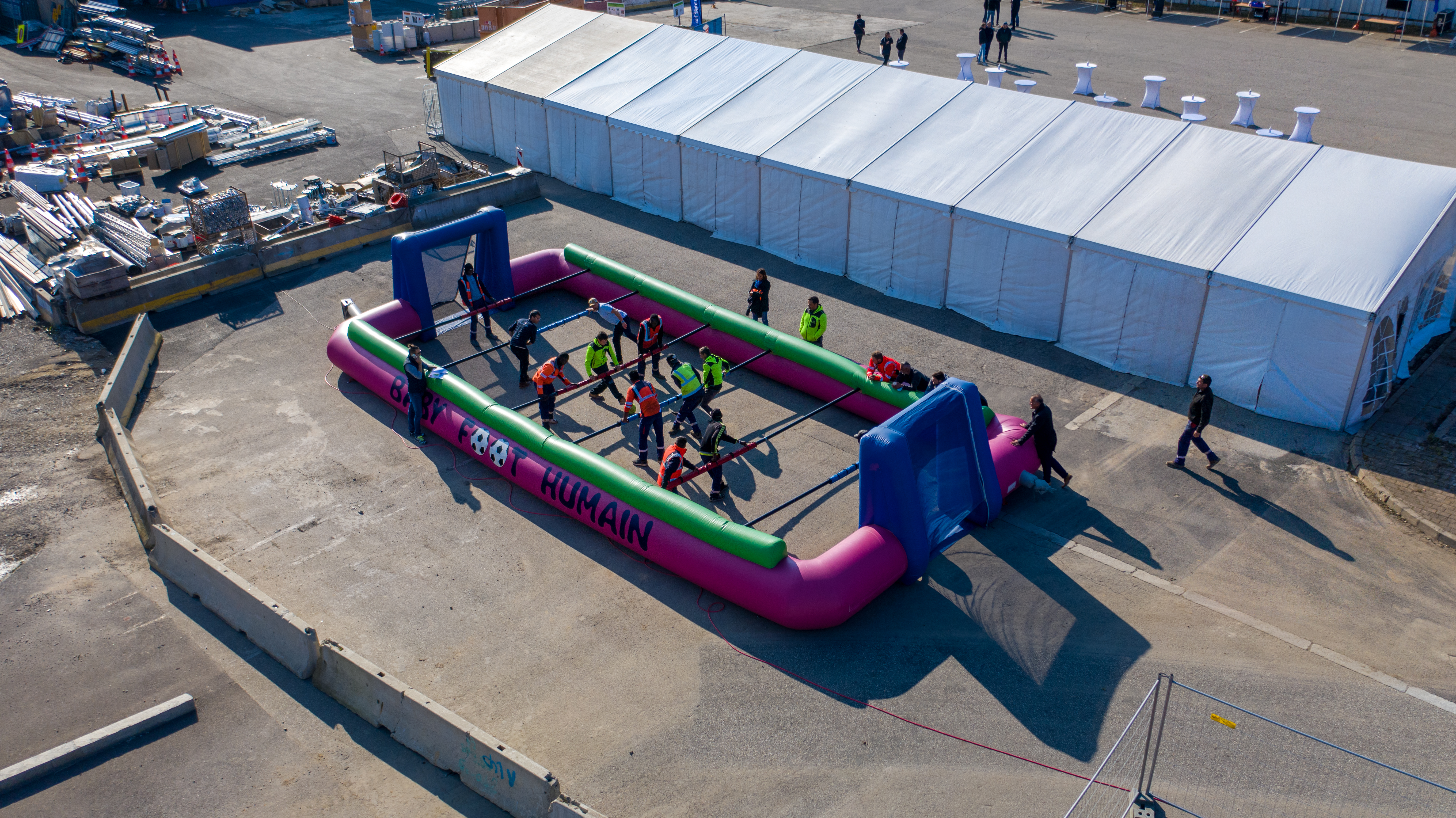
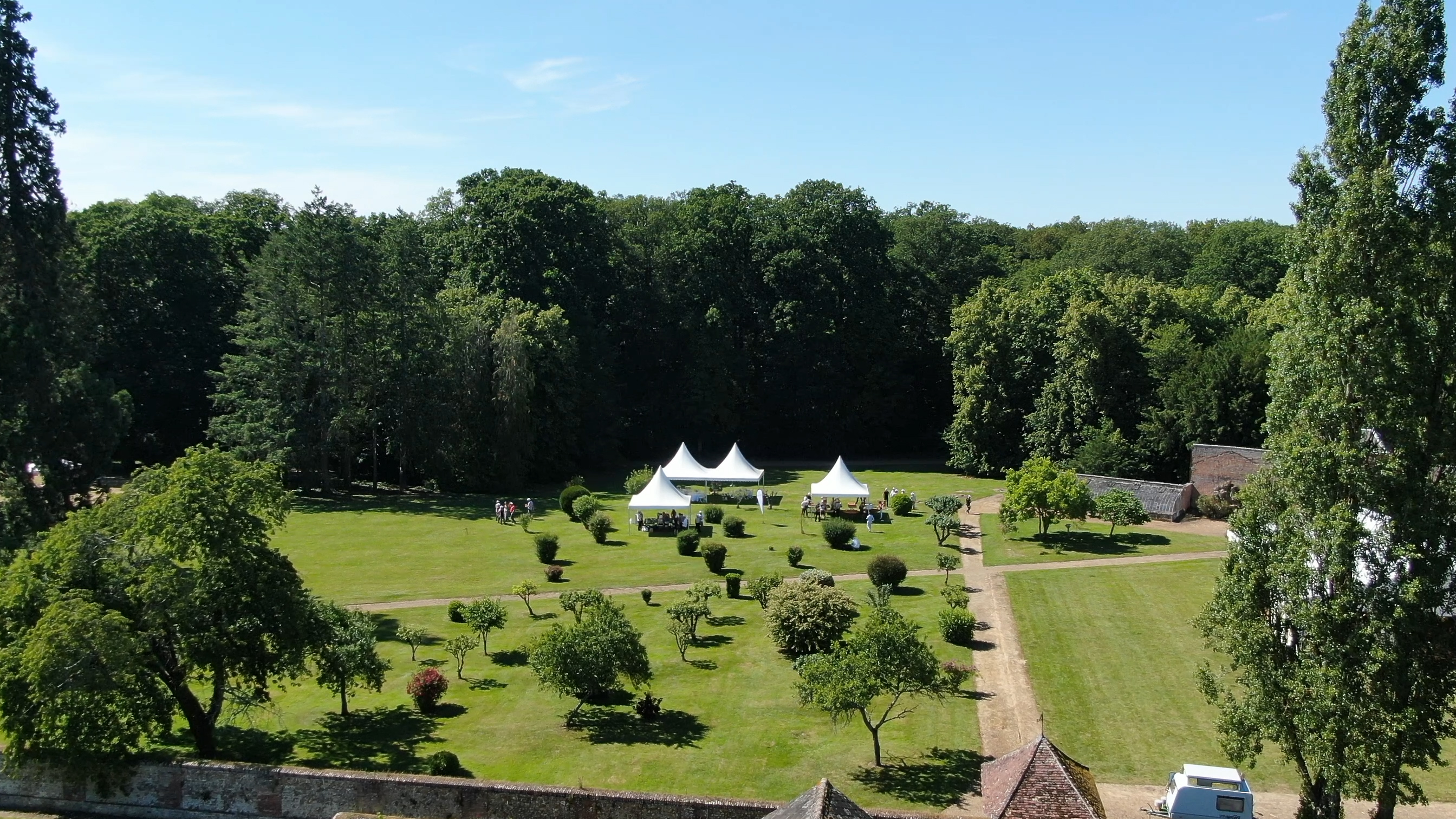
Montréal tent projects backed by measurable execution
10+ years coordinating corporate event production in Québec, including Tent Rental in Montréal with complex site constraints.
Capacity range: from compact 20’x20’ modules to multi-bay structures supporting 2,000+ attendees, with integrated flooring, power and climate control.
24–72h typical turnaround for a structured quote once the site details and objectives are confirmed (access, footprint, guest count, rain plan).
Operations approach: checklists for load-in/out, crew call sheets, vendor coordination, and a documented contingency plan for weather and power.
Corporate tent rentals in Montréal built for repeat clients
We regularly support organizations across Montréal that run multiple events per year—summer celebrations, product launches, executive town halls, recruitment open-houses, and partner receptions. When teams come back year after year, it’s usually for two reasons: predictable execution and fewer surprises on event day.
On a typical repeat account, the expectations evolve: the first year is about “making it work” (coverage, safety, flow). The second year becomes about optimizing guest experience and brand consistency (clean sightlines, acoustic control, premium flooring, backstage efficiency). Our role is to bring that continuous improvement mindset, not just deliver equipment.
If you share your internal constraints (union rules, procurement steps, brand standards, security requirements), we can align the technical solution early—before the tent footprint locks the entire site plan.
 Besoin d’un devis rapide ?
Nous vous envoyons une première proposition sous 24h.
Why Montréal companies choose tent rentals for high-stakes moments
A tent is often chosen when your organization needs a “temporary venue” that still meets corporate expectations: controlled flow, predictable program timing, and a setting that feels intentional rather than improvised. In Montréal, tented formats are also a practical answer to venue scarcity during peak seasons and the need to host on-site (HQ, plant, campus, parking lot, terrace).
Protect the agenda against weather volatility: With the right structure, sidewalls strategy, flooring, and HVAC plan, you reduce the risk of speeches shortened, tech failures, or guests leaving early due to cold, heat, or wind.
Create a branded environment on your own site: A tent allows controlled entry points, branded wayfinding, and an executive-ready space even when the event happens in an operational environment (warehouse yard, loading area, office courtyard).
Improve capacity and flow without changing locations: Adding a structure can unlock a larger guest count while keeping proximity to leadership, facilities, and internal teams—useful for town halls or multi-wave employee events.
Reduce friction with internal stakeholders: HR needs comfort and safety, Communications needs aesthetics and camera angles, Operations needs access and minimal disruption. A well-planned tent layout resolves these tensions by design (service corridors, backstage zone, controlled queues).
Enable multi-zone experiences: Reception + main plenary + catering + quiet meeting areas. With modular bays and clear circulation, you can host VIP partners without mixing flows that create bottlenecks.
Montréal has a fast-moving business culture: budgets are scrutinized, schedules are tight, and leadership wants measurable outcomes. A tent becomes strategic when it helps you deliver the message without compromising safety, comfort, or brand perception.
What changes in Montréal when you install a tent
In Montréal, success depends on planning for constraints that are not obvious on a quick walk-through. We routinely see access conditions that require a different equipment choice: underground parking height limits, freight elevator restrictions, narrow alley deliveries, or a courtyard that only accepts a specific truck size. When these realities are discovered late, it affects costs, schedules, and sometimes the feasibility of the chosen tent model.
Weather is the second major variable. A “nice summer event” can become a wind-and-rain scenario quickly, especially near the river or in open industrial areas. That changes the engineering choices: anchoring method (stakes vs. ballast), sidewalls strategy (solid vs. window vs. mixed), and the need for gutters between structures. For corporate events, we also pay attention to comfort thresholds: if your program includes seated segments, you cannot accept guests sitting at 16–18°C with humidity; heating and airflow become part of the production, not an optional add-on.
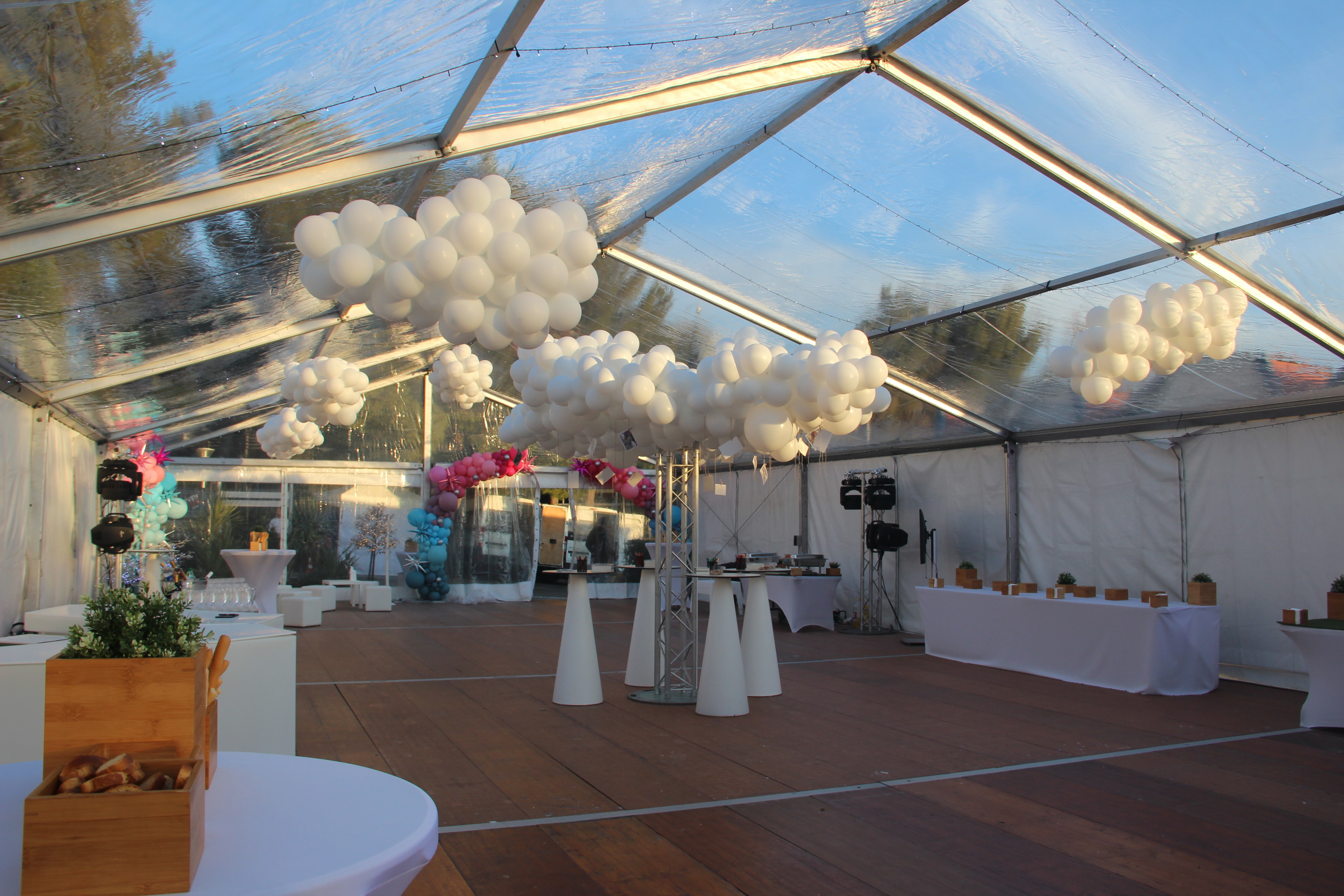
Finally, the local standard is higher than many teams anticipate for finishes. Executive audiences notice wrinkled liners, exposed cables, uneven flooring, or poor lighting temperature. The tent is your “venue”—so we treat it like one: clean sightlines, discreet power distribution, stable flooring transitions, and lighting that flatters both people and branding for photo/video coverage.
What to add under a tent in Montréal to keep people engaged
A tent solves the “space” problem; engagement solves the “why are we here” problem. In corporate environments, entertainment and activation work best when they support a business objective: recruitment visibility, culture and recognition, partner hospitality, or product education. Under a tent, the key is to choose experiences that respect flow, sound levels, and timing—especially if leadership is speaking.
Interactive animations in Montréal
Branded reception flow: a check-in experience with controlled queues, badge printing, and a short “welcome activation” (photo station with brand guidelines, quick pulse survey, or values wall) that creates content without blocking arrival.
Low-noise networking formats: guided conversation prompts on cocktail tables, facilitated meetups for cross-department connections, or short team challenges that can pause instantly when the program starts.
Hybrid-ready audience interaction: live polling integrated into the MC script and screens, useful for town halls where HR and Communications need real engagement data.
Art animations in Montréal
Music formats adapted to speech priorities: acoustic trio for arrival, then a controlled-volume band/DJ for the post-program segment. The operational point is scheduling sound checks and setting decibel expectations with the venue/neighbors.
Roaming performers for large footprints: when the tent is segmented (reception + catering + lounge), roaming acts maintain energy without requiring guests to relocate.
Stage management that respects executive constraints: if you have awards or recognition moments, we plan rehearsals, cueing, and on-stage flow so leadership is not stuck waiting backstage.
Innovative animations in Montréal
Service design that avoids bottlenecks: multiple service points, clear menu signage, and staff circulation corridors. In a tent, the wrong placement of bars or buffets can stall the entire event.
Montréal seasonal considerations: if evenings are cool, hot beverage stations and heat zones keep guests present longer—often more effective than adding “more entertainment.”
Back-of-house planning: catering needs a prep area, waste management, and power. We plan this early to avoid visible clutter and last-minute generator upgrades.
Gourmand animations in Montréal
Lighting design as an experience layer: architectural uplighting, warm wash for faces, and branded gobos for key moments. This is especially valuable for photo/video deliverables for Communications.
Content capture zones: a controlled interview corner for leadership, partner testimonials, or recruitment messaging—quiet, well-lit, and away from service noise.
Micro-experiences tied to KPIs: for example, a partner activation where guests scan QR codes to access product docs, book demos, or join a talent pipeline. The tent provides the controlled environment to track participation.
Whatever you add, alignment with brand image is non-negotiable: finishes, lighting temperature, sound levels, staff dress code, and signage should match your corporate standards. In Montréal, your guests will compare your event to the best they’ve seen—often in the same quarter—so details matter.
Where to install a tent in Montréal without compromising logistics
The location choice determines everything: anchoring method, noise management, power availability, guest arrival flow, and even the type of tent that is feasible. For corporate events, we start with the objective (who you’re hosting and what you need them to do) and then confirm whether the site can support the technical requirements—before committing to a layout.
| Venue type | For which objective? | Main strengths | Possible constraints |
|---|---|---|---|
Corporate campus / HQ parking area | Employee town hall, anniversary, recruitment open house | Control over access; proximity to facilities; easier stakeholder alignment | Underground utilities; limited truck access; need to maintain business continuity |
Industrial site / plant yard | Safety milestones, shift-based celebrations, supplier days | Large footprint; operational authenticity; strong internal engagement | Dust/noise; safety perimeter; power distribution often requires generators |
Private terrace / courtyard in dense areas | VIP reception, partner cocktail, media moment | Premium feel; central location; strong photo value | Crane or manual carry constraints; neighbor noise; strict load-in windows |
Park-adjacent or waterfront settings | Summer brand experience, fundraising, client hospitality | High perceived value; open air; attractive for guests | Wind exposure; permitting complexity; anchoring limitations (ballast planning) |
We strongly recommend a site visit (or at minimum a technical video walkthrough) before finalizing the tent size and finish level. In Montréal, the “last 50 metres” of access often decides whether your plan stays on budget and on schedule.
How Tent Rental pricing works in Montréal for corporate events
Pricing for Tent Rental in Montréal is driven by engineering choices and operational constraints more than by the tent alone. Two events with the same guest count can have very different budgets depending on surface conditions, access, finishes, and the level of comfort you need to guarantee.
Footprint and format: cocktail vs. seated; number of zones (reception, dining, stage, lounge); ceiling height needs for lighting or screens.
Anchoring method: stakes (when ground conditions allow) vs. concrete ballast. Ballast requires logistics planning and often adds trucking and labor.
Flooring: basic subfloor, premium flooring, or full leveling solutions for slopes. For executive events, stable flooring is usually a must, not a luxury.
Climate control: heating in shoulder seasons, cooling for heat waves, ventilation for dense seated programs. Comfort is tied directly to guest retention and program focus.
Lighting and electrical distribution: functional lighting for safety vs. designed lighting for brand presence; power needs for AV, catering, and charging stations; generator sizing and redundancy.
Walls, liners, and finishes: clear walls for views vs. solid walls for privacy; ceiling liners to improve acoustics and elevate aesthetics; drape to manage backstage and storage.
Access and labor windows: downtown constraints, night work, limited staging space, long carry distances, and strict load-in/out times impact crew size and schedule.
Permits, safety documentation, and coordination: depending on the site, you may need approvals, insurance certificates, and specific safety plans. We factor the time required to coordinate these properly.
From a return-on-investment perspective, the right budget focus is reliability: a tent solution that protects the program, reduces day-of decision fatigue for your team, and prevents visible “patches” that harm brand perception. Executives rarely regret paying for solid flooring, adequate power, and a credible weather plan—because these are the items that prevent failure.
Why choosing a Montréal event agency reduces tent rental risk
A tent project is a coordination project: vendors, crews, access rules, safety obligations, and time windows. A local agency reduces risk because we know how sites behave in real conditions—not just in floorplans. We also maintain working relationships with reliable suppliers and can secure the right crew size during peak summer weekends.
For decision-makers, the value is accountability. Instead of managing separate conversations (tent provider, AV, catering, power, security), you get one operational lead who translates your objectives into a workable plan and verifies the interfaces: where the cables run, how catering loads in, where the emergency exits land, what happens if rain starts during guest arrival.
When appropriate, we coordinate your tent build as part of a broader mandate as an event agency in Montréal, ensuring the tent is designed around the program rather than forcing the program to fit the tent.
- Faster on-site decisions: local presence means quicker visits, quicker adjustments, and day-of support when conditions change.
- Better vendor synchronization: confirmed load-in sequence, shared timelines, and clear responsibility prevent crew conflicts and delays.
- Realistic planning: we account for Montréal access realities (traffic, limited staging, neighbor constraints) in the schedule and labor plan.
- Executive-level polish: attention to finishes, signage, and guest flow so the tent reads as a controlled corporate environment.
From a return-on-investment perspective, the right budget focus is reliability: a tent solution that protects the program, reduces day-of decision fatigue for your team, and prevents visible “patches” that harm brand perception. Executives rarely regret paying for solid flooring, adequate power, and a credible weather plan—because these are the items that prevent failure.






What we deliver in Montréal beyond the tent structure
Our tent mandates typically combine multiple layers of production, because that is where corporate events succeed or fail. We deliver a coherent environment: tent, flooring, lighting, power, stage and seating layouts, backstage organization, signage, and operational staffing. The objective is to make the tent feel like a venue your leadership would be comfortable hosting in—without visible improvisation.
We’ve managed formats such as: an HQ courtyard transformed into a multi-zone employee event with a clear stage sightline; a plant celebration requiring strict safety separation between operational areas and guest zones; and a partner reception where noise control and a defined VIP flow were as important as the visuals. In each case, the tent choice was driven by function first (guest experience, program needs, risk profile), then refined for brand image.
Adaptability is often the differentiator. Weather shifts, last-minute guest count changes, or a speaker’s technical needs can force adjustments. We plan the build with realistic buffers and options—so changes remain controlled and do not cascade into budget overruns or schedule slips.
Common Montréal tent rental mistakes that hurt corporate events
Choosing a tent size before confirming the program: a stage, screens, or seated dining quickly changes the required footprint and ceiling height.
Underestimating flooring: uneven ground, slope, and drainage create comfort and safety issues. Flooring is one of the most frequent “late add-ons” that should be planned from day one.
Ignoring access realities: trucks that cannot reach the site, long carry distances, or short load-in windows lead to rushed builds and visible quality issues.
Assuming venue power is sufficient: AV, catering, and HVAC can exceed available circuits. Without a power plan, you risk outages during key moments.
No real weather plan: not just “we’ll close the walls”—you need drainage thinking, wind thresholds, arrival coverage, and a decision protocol.
Overlooking acoustic control: speeches inside a tent can suffer without soft goods, proper speaker placement, and controlled ambient noise zones.
Splitting responsibility across too many vendors: when nobody owns the full interface, problems appear at the worst time—during speeches or guest arrival.
Our role is to prevent these risks with upfront verification, realistic scheduling, and a build that is aligned with your corporate standards. In Montréal, the difference between “it held up” and “it looked professional” is planning discipline.
Why Montréal organizations renew their tent partner year after year
Repeat business in tented corporate events is rarely about novelty—it’s about trust under pressure. When leadership is present and the agenda is tight, teams want a partner who arrives prepared, communicates clearly, and manages trade-offs transparently.
Most repeat clients standardize their tent specs by year two: preferred finishes, flooring level, lighting temperature, signage templates, and a proven rain plan. This reduces internal approvals and speeds up planning.
Planning cycles typically shorten by 20–30% once the site is documented and the preferred build is known (access routes, power mapping, optimal footprint).
Fewer day-of escalations: when roles are clear and interfaces are tested, internal teams can focus on guests and leadership instead of troubleshooting.

Loyalty is a practical signal: when a client returns, it means the event delivered without operational drama and the tent solution supported the business objective. That’s the standard we aim for in Montréal.
Our Montréal process for corporate tent rental, from brief to dismantle
👉 Step 1 — Confirm objectives, audience, and success constraints in Montréal
We start with your business objective (employee engagement, partner hospitality, announcement, recruitment) and translate it into functional requirements: guest count by moment, seating vs. standing ratios, stage and screen needs, catering style, privacy level, and brand standards. We also identify non-negotiables early: executive arrival timing, bilingual signage requirements, security, and internal approvals.
👉 Step 2 — Site assessment and feasibility check in Montréal
We validate measurements, surface conditions, slope, drainage, anchoring possibilities, and access routes for trucks and crews. This step typically prevents the most expensive surprises: ballast needs, extra labor for long carries, or a tent footprint that conflicts with fire lanes and emergency exits. When needed, we propose layout options with pros/cons tied to your priorities.
👉 Step 3 — Tent concept, layout, and technical scope
We design the tented space as a venue: entry points, circulation, zones (reception, main program, dining, lounge, backstage), and service corridors. We align structural choices (clearspan vs. modular, wall types, gutters, doors) with comfort and aesthetics. We also define flooring specifications, lighting layers, and the sound/AV integration requirements.
👉 Step 4 — Power, climate, and safety planning
We map electrical loads (AV, catering, HVAC, lighting), confirm power sources, and size generators if required. We define cable paths to keep the space clean and safe. We also confirm climate strategy for the date range and occupancy level, including ventilation and contingency actions. Safety considerations include exit placement, fire safety interfaces, and crew protocols during build.
👉 Step 5 — Production schedule, vendor coordination, and documentation
We build a realistic load-in/out schedule with buffer time, crew call sheets, and a clear sequencing plan (flooring, tent build, power, lighting, AV, decor, catering). We coordinate vendors so the site does not become congested and responsibilities are clear. Procurement teams receive structured documentation: scope, timeline, insurance certificates, and operational notes.
👉 Step 6 — On-site execution, show-calling, and dismantle
On event day, we manage the site as a controlled operation: final checks, signage placement, climate adjustments, and issue resolution before guests arrive. If your event includes speeches or a program, we coordinate cues so leadership transitions smoothly. After the event, dismantle is planned to respect site rules and minimize disruption—especially important when the tent is on a functioning corporate site.
FAQ sur l'organisation Tent Rental à Montréal
How far ahead should we book tent rental in Montréal?
For peak season (late May to September), plan 6–12 weeks ahead for corporate builds, and 10–16 weeks if you need premium finishes, complex flooring, or limited load-in windows. For shoulder seasons, 3–6 weeks can work, provided the site is straightforward and decisions are fast.
What tent size do we need for 150 guests in Montréal?
As a working range: a cocktail format often starts around 1,500–2,000 sq ft depending on stations and furniture density. A seated dinner with stage and screens commonly moves toward 2,500–3,500 sq ft. The right answer depends on layout (bars, buffet, lounge), not only headcount—so we size from your program.
Can a tent be installed on asphalt in Montréal?
Yes. On asphalt, anchoring is usually done with ballast rather than stakes, and we plan truck access for ballast delivery. We also recommend flooring solutions to manage uneven areas and to protect guest comfort, especially for seated segments or formal footwear.
Do we need heating or AC for a Montréal tent event?
Often, yes. For evenings in May/September, heating is commonly required to keep comfort above typical corporate expectations. During summer heat waves, ventilation and cooling can be critical—especially for a dense seated program. We assess date, time, occupancy, and wall strategy to recommend a realistic HVAC plan.
What are typical load-in times for a tent build in Montréal?
Small modules can sometimes be installed within half a day. Corporate builds with flooring, liners, power, and lighting typically require 1–2 days, and larger multi-zone structures can require 2–4 days depending on access and finish level. We confirm timing after the site assessment and vendor scope.
Request a Tent Rental quote in Montréal with a clear plan
If your event has leadership visibility, a fixed agenda, or brand-sensitive guests, we recommend securing the tent concept early—before catering, AV, and flow decisions are locked. Share your date, location, guest count, and program format, and we’ll come back with a practical proposal: footprint options, finishes, power and climate assumptions, and a realistic build schedule.
Contact INNOV'events to plan your Tent Rental in Montréal with an operations-first approach—so your internal team can focus on people and messaging, not weather and logistics.
INNOV'events Montréal Agency
Thierry GRAMMER is the manager of the INNOV'events Montréal office. Reach out directly by email at canada@innov-events.ca or via the contact form.
Contact the Montréal agencyToutes nos prestations & animations Montréal, Quebec
Découvrez nos prestations événementielles
- Employee Party in Montréal
- Corporate Christmas Party in Montréal
- Networking Cocktail Event in Montréal
- Shopping Mall Activation in Montréal
- Grand Opening Event in Montréal
- Product Launch Event in Montréal
- Open House Event in Montréal
- Field Brand Activation in Montréal
- Event Catering Service in Montréal
Découvrez nos animations événementielles disponibles au Quebec
- Event Hostess in Montréal
- Escape Game in Montréal
- MasterChef-Style Cooking Workshop in Montréal
- Corporate Magician in Montréal
- Tent Rental in Montréal
- Color Analysis Workshop in Montréal
- Inflatable Games in Montréal
- Valet Service in Montréal
- Soccer Simulator in Montréal
- LED Furniture Rental in Montréal
- LED Branding Activation in Montréal
- Immersive Culinary Experience in Montréal
- Light Painting Activity in Montréal
- Immersive Mystery Night in Montréal
- Promotional Contest in Montréal
- Promotional Materials (POS) in Montréal
- Virtual Reality Experience in Montréal
- Molecular Gastronomy Workshop in Montréal
- Halloween Event in Montréal
- Fireworks Show in Montréal
- Sports Challenge – Giant Games in Montréal
- Professional Event Host in Montréal
- Photo Booth Animation in Montréal
- Santa Claus Appearance in Montréal
- Kids Entertainment in Montréal
- Guided Tour in Montréal
- Urban Rally in Montréal
- Ball Pit Activity in Montréal
- Flight Simulator in Montréal
- Food Truck Rental in Montréal
- World Record Attempt in Montréal
- Surf Simulator in Montréal
- Soccer Simulator in Montréal
- Wine Casino in Montréal
- Makeover Workshop in Montréal
- Perfume Creation Workshop in Montréal
- Acting Workshop in Montréal
- CSR Activities in Montréal
- Archery Activity in Montréal
- Event Security Guard in Montréal
- Wine Tasting Workshop in Montréal
- Mime Performance in Montréal
- TV Game Show Animation in Montréal
- Funfair Event in Montréal
- Crisis Management Workshop in Montréal
- Crisis Negotiation Workshop in Montréal
- Arcade Games in Montréal
- Indoor Skydiving Simulator in Montréal
- Ski Simulator in Montréal
- Racetrack Driving Experience in Montréal
- Introductory Flight Experience in Montréal
- Tasting Experience in Montréal
- Build Your Own Foosball Workshop in Montréal
- 2CV Rally in Montréal
- LEGO Challenge in Montréal
- Casino Night in Montréal
- Interpreter / Translator in Montréal
- Promotional Merchandise in Montréal
- Shuttle / Transportation Service in Montréal