
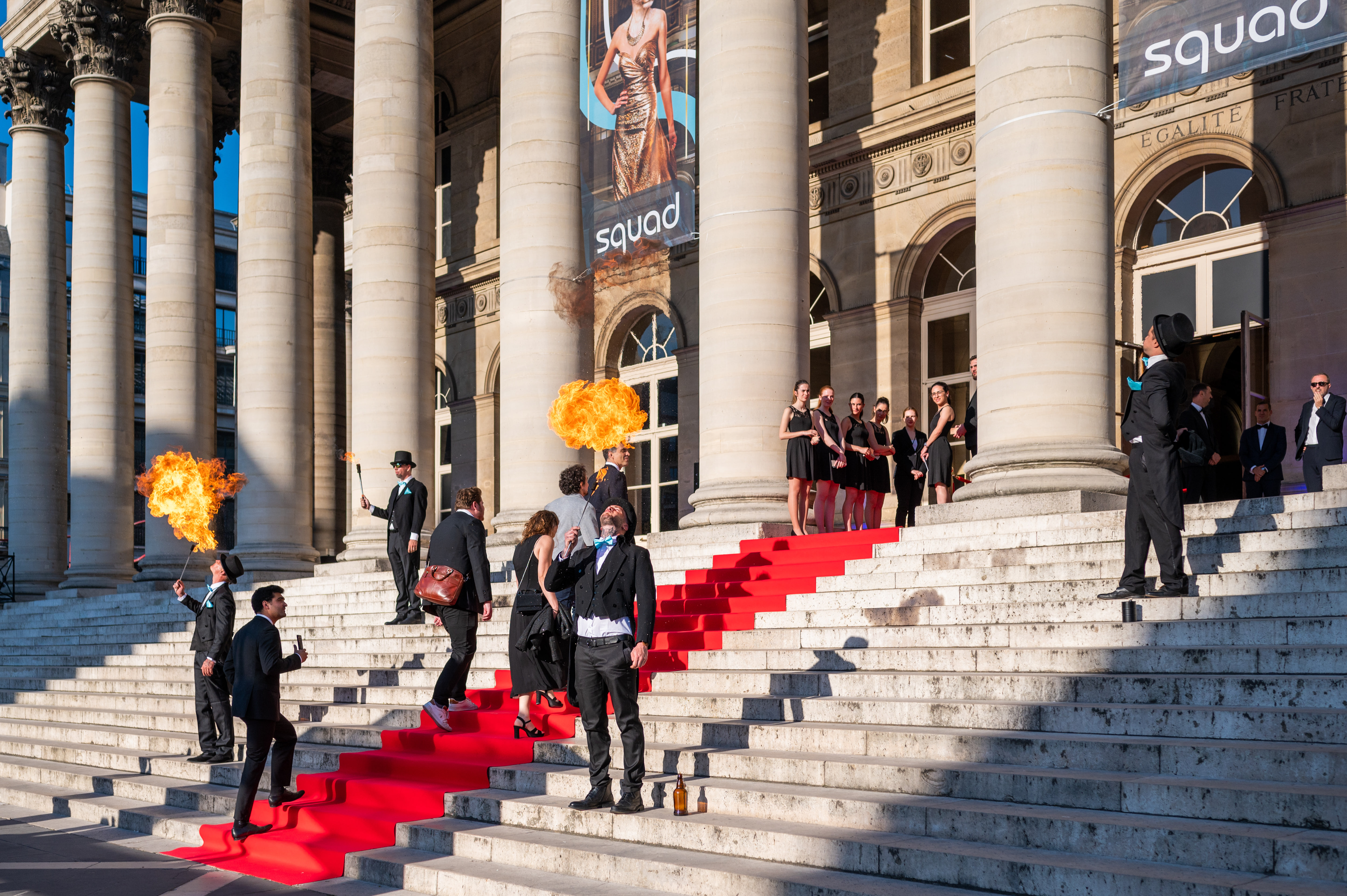
Event Security Guard in Montréal for corporate events that must run on time
INNOV'events deploys Event Security Guard teams in Montréal for corporate events from 50 to 3,000+ attendees, from leadership town halls to product launches and holiday parties.
We handle the operational security plan end-to-end: access control, bag checks when needed, VIP movements, crowd flow, backstage protection, incident escalation, and coordination with venue security and emergency services.
Your objective is simple: protect people, brand image, and schedule—without turning your event into a fortress.
Sommaire
In a corporate event, security is not a “nice-to-have”: it protects executives, employees, guests, and the company’s reputation. One uncontrolled entrance, one aggressive interaction at the bar, or one blocked evacuation route can derail months of planning in minutes.
Organizations in Montréal expect security that is discreet, bilingual, and capable of working with strict venue rules, unionized technical crews, and tight load-in windows downtown. They also expect clear reporting and zero surprises on event day.
As an event agency rooted in the city, INNOV'events works with vetted guard partners and builds practical, venue-ready security plans. We speak the language of HR, Communications, and Operations—because the pressure is shared, and the accountability is real.
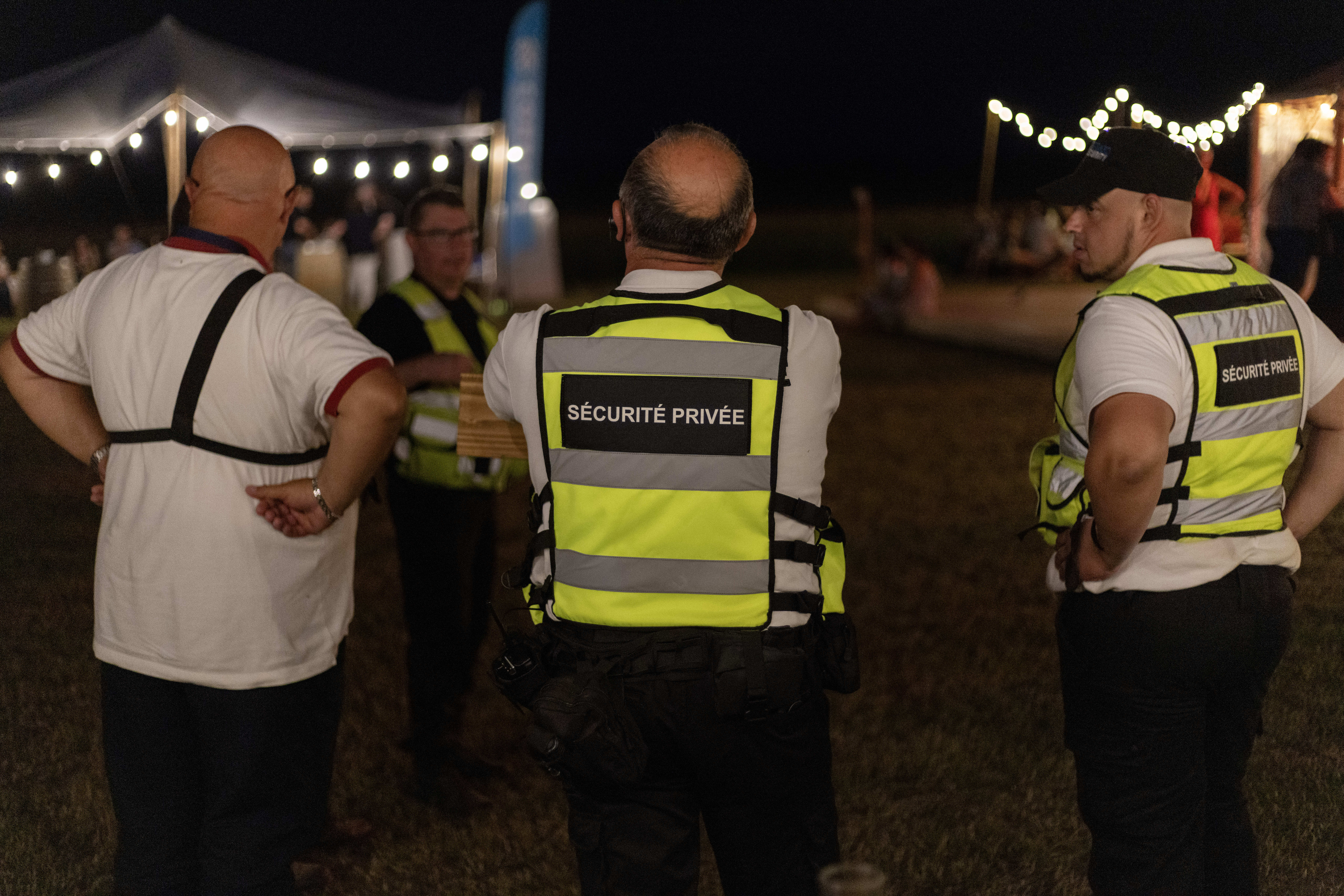
Operational security metrics we track across Montréal mandates
10+ years coordinating corporate event operations in Montréal, including security staffing, venue compliance, and production schedules.
50–3,000+ attendees covered per event: from executive breakfasts to multi-floor galas with VIP areas and supplier villages.
24–72 hours typical turnaround to secure additional guards in peak season when an RSVP list jumps or a risk factor changes.
1 incident log per event (even when “nothing happened”): time-stamped notes, actions taken, and recommendations for next edition.
Who we support in Montréal and why they renew
In Montréal, many companies and institutions operate on recurring event cycles: quarterly all-hands, annual recognition evenings, fundraising galas, stakeholder receptions, and high-visibility launches. Security becomes a continuity topic—something leaders don’t want to reinvent every time.
INNOV'events typically collaborates year after year when the internal team wants a predictable security framework: consistent guard briefing, stable access protocols, and a repeatable way to protect VIPs and sensitive areas (backstage, AV control, brand assets, sponsor gifts, confidential demos).
On returning mandates, we don’t “start from zero.” We reuse what worked (badge format, staff entrance, check-in flow, escalation contacts) and update what changes (new venue constraints, revised alcohol service, higher-profile guests, public-facing components). That’s what makes security feel smooth to attendees while remaining fully controlled behind the scenes.
 Besoin d’un devis rapide ?
Nous vous envoyons une première proposition sous 24h.
Why Montréal executives now budget security earlier
Security is increasingly a leadership topic because the event itself is now a corporate communication channel: employees film, clients post, and partners share. When something goes wrong, it is rarely “contained.” A solid security plan protects the organization’s people and its narrative.
Protect decision-makers and VIPs without disrupting visibility: we build routes, staging points, and controlled moments (arrival, photo ops, keynote transitions) so executives can be present and approachable while remaining protected.
Reduce HR risk and duty-of-care exposure: clear intervention thresholds for harassment, intoxication, and conflict; documented incident handling; predictable coordination with first aid and venue management.
Maintain schedule integrity: entry lines, bag checks (when justified), and credential verification are designed to avoid delays that cascade into AV, catering, and speaker timing.
Protect brand and assets: controlled access to backstage, technical control room, sponsor zones, gift storage, and product demo areas—especially important for launches and confidential showcases.
Reassure stakeholders and internal teams: communications and HR teams can confidently invite guests (partners, media, recruits) knowing there is a structured plan and a named security lead on site.
In Montréal, where downtown venues, mixed public/private spaces, and winter logistics add complexity, early security planning is a practical management decision—not a “nice extra.”
What Montréal venues and corporate teams really require
Security in Montréal is rarely “plug and play.” Many venues have their own security policies (sometimes mandatory in-house teams), specific rules for entrances, coat checks, elevators, and loading docks, and strict timelines for load-in/out. Corporate clients also expect a bilingual front line and a service approach aligned with the brand—firm when needed, never confrontational.
On the ground, the constraints are concrete:
- Downtown traffic and limited curb access: guest arrivals, VIP drop-offs, and supplier deliveries often share the same frontage. A guard post that seems optional on paper becomes critical in reality to avoid congestion and unsafe crossings.
- Multiple access points: hotels and large venues can have guest doors, conference doors, parking elevators, and service corridors. Without a defined plan, “side entries” become uncontrolled entrances.
- Cold-weather operations: winter coats, bulky bags, and boot traffic increase check-in time. Security and registration must be co-designed so lines don’t spill into public areas.
- Alcohol service realities: corporate holiday parties and client receptions require a sober, documented approach to managing intoxication, conflict, and safe departure—especially when the event ends late.
- Public-facing components: when an event includes a public expo zone, influencer presence, or open registration, the risk profile changes: credentialing and perimeter definition become non-negotiable.
Our role is to translate these realities into a security plan your team can defend internally: clear posts, measurable staffing, and simple procedures that work under pressure.
How entertainment choices in Montréal impact security requirements
Entertainment affects crowd behavior: where people gather, how they move, and what triggers peaks. When we plan Event Security Guard in Montréal staffing, we factor entertainment into the security grid—especially for alcohol service, VIP photo moments, and dense floor activity.
Interactive animations in Montréal
Photo activations and branded content corners: great for engagement, but they create lines and “line-cutting” tension. We position a roamer to manage queue etiquette and keep walkways clear, especially in hotel ballrooms with narrow pre-function areas.
Games and challenges (team stations, quizzes, giveaways): they create competitive energy. We recommend clear rules signage, staff briefings, and a nearby guard presence to prevent disputes when prizes are limited.
Art animations in Montréal
DJ, live band, or percussion troupe: volume and dance floor density change the risk profile. We plan for perimeter control, rapid access to exits, and a calm intervention approach for intoxication or conflict.
High-visibility performers (acrobats, roaming characters): they attract crowds and smartphones. We plan buffer zones and protect performer routes to prevent pushing, especially during transitions through corridors or near staircases.
Innovative animations in Montréal
Open bars and cocktail service: we coordinate cut-off times, water availability, and service pacing with catering. Guards are briefed on respectful, non-escalatory refusal support when staff needs backup.
Food stations and tasting counters: these can block circulation. Security supports flow by keeping aisles open and helping guests understand the intended direction, which reduces frustration.
Gourmand animations in Montréal
Product demos with confidential content: for tech or industrial companies, we set controlled entry, no-photo rules when required, and protect demo devices and storage cases.
Hybrid or livestream moments: camera areas and AV control become sensitive zones. We secure the technical perimeter so a curious guest doesn’t trip a cable, block a camera shot, or access restricted equipment.
Entertainment can elevate your event—but only if it aligns with your brand image and your risk tolerance. We help you make those trade-offs explicitly, so security supports the experience instead of fighting it.
Which Montréal venue type makes security easiest to control
The venue dictates security more than most teams expect: number of entrances, elevator access, public adjacency, and the ability to create a clean perimeter. A strong security plan starts with choosing a venue whose layout matches your guest profile and event objectives.
| Venue type | For which objective? | Main strengths | Possible constraints |
|---|---|---|---|
Downtown hotel ballroom | Leadership events, client receptions, awards nights with a formal flow | Controlled entrances, in-house security options, clear service corridors, reliable coat check areas | Shared public spaces, elevator traffic, union/house rules, limited flexibility on external guard posts |
Dedicated event venue / converted industrial space | Brand launches, larger parties, immersive setups with multiple zones | Flexible zoning, better perimeter control, easier backstage separation | More responsibility on the organizer (fire routes, crowd flow), fewer built-in staff, loading dock management |
Office-based event (HQ, terrace, atrium) | Internal town halls, employee celebrations, executive announcements | Known environment, access control integrated with building systems, brand consistency | Shared tenants/building policies, sensitive areas nearby, elevator bottlenecks, stricter duty-of-care on familiar staff |
We strongly recommend a site visit (or a technical walk-through) in Montréal before locking staffing. Small details—like a side stairwell, a public washroom corridor, or a shared lobby—often determine where incidents start and how fast you can respond.
What Event Security Guard costs in Montréal and what changes it
Security pricing depends on the staffing model, the risk profile, and the venue’s requirements. We avoid “flat guesses” because under-staffing is where costs explode—through delays, incidents, or last-minute rush fees.
Number of access points and zones: one ballroom with a single check-in is not the same as a multi-floor event with VIP lounge, backstage, and sponsor storage.
Schedule length: a 4-hour cocktail reception vs. a 10–12-hour load-in + event + load-out day requires different guard rotation and break planning.
Guest profile: public registration, high-profile speakers, political sensitivity, or media presence can justify higher staffing and stricter credentialing.
Alcohol service intensity: open bar, late end time, and dance floor density increase the need for proactive roaming and faster intervention capacity.
Bag checks / magnetometer expectations: not common for all corporate events, but sometimes requested by stakeholders. If implemented, it requires space, signage, and staffing to avoid long lines.
Venue constraints and mandatory in-house security: some locations require their own security team; we then complement with additional posts focused on your corporate objectives (VIP, backstage, sponsor assets).
Bilingual requirements and service approach: in Montréal, having front-line staff who can de-escalate in English and French is not optional for many organizations.
From an ROI perspective, security is an insurance policy you can actually operationalize: fewer disruptions, fewer reputational risks, and a smoother guest experience that protects your team’s credibility. We build budgets that executives can approve because each post has a purpose tied to a real risk.
Why a Montréal-based event agency improves security outcomes
Security is not isolated—it is connected to registration, production, catering, and venue operations. Working with a local team reduces friction and improves response time when reality hits: last-minute VIP additions, weather issues, a change in entrance, or a supplier delay.
As INNOV'events, we coordinate security within the broader event plan, and we do it with local reflexes: understanding downtown access limitations, knowing how venues typically enforce rules, and maintaining a network of vetted suppliers who can show up on time with the right briefing.
When you mandate event agency in Montréal support, you also gain an operational quarterback: one point of accountability who can align stakeholders (HR, Comms, venue, guards, production) so decisions are fast and consistent.
- Faster adjustments on event week: staffing changes, revised post orders, updated run-of-show, and revised VIP movements can be implemented without rewriting the whole plan.
- Better coordination with venues: we speak “venue operations” and align guard roles with house security to avoid overlaps or gaps.
- Local supplier reliability: fewer no-shows, clearer replacement procedures, and consistent briefing standards.
- On-site decision support: if a sensitive issue occurs, we help your leadership choose the least risky option (for people, legal exposure, and reputation) with documented actions.
From an ROI perspective, security is an insurance policy you can actually operationalize: fewer disruptions, fewer reputational risks, and a smoother guest experience that protects your team’s credibility. We build budgets that executives can approve because each post has a purpose tied to a real risk.










Examples of Event Security Guard deployments in Montréal
Our mandates vary because corporate risk varies. We regularly cover events where the security need is not obvious until you map the guest journey and the venue layout.
Executive town hall with confidential content: an organization needed to present sensitive restructuring information. We secured staff-only entrances, controlled access to the room with a verified list, and protected the AV control area. The goal was not “intimidation,” but preventing uninvited access and ensuring privacy for employees.
Holiday party with open bar and multiple zones: we planned static posts at key transitions (dance floor entry, VIP mezzanine, service corridor) and used roamers trained for early de-escalation. We coordinated with catering on pacing and cut-off, and with HR on intervention thresholds. The result: fewer disruptions and a safer end-of-night departure.
Client reception with VIP guest and media risk: we created a discreet arrival route, managed a controlled photo moment, and ensured no unauthorized access to the backstage holding area. Communications teams appreciated having a clear “who decides what” ladder if an unexpected guest or protest activity appeared.
Across these projects, the common thread is disciplined preparation: posts tied to real risks, and a calm presence that protects the experience rather than competing with it.
Common security mistakes we prevent in Montréal corporate events
Relying on “venue security” without defining roles: venue teams protect the building; they don’t automatically protect your VIP route, backstage assets, or sponsor inventory.
Underestimating entry timing: a coat check surge plus on-site registration can create a lobby crowd in 10 minutes. Without line control, you risk frustration, blocked exits, and late program starts.
No written post orders: when guards are not briefed with exact posts, radios, and escalation rules, decisions become inconsistent—especially under alcohol-related pressure.
Ignoring side doors and elevator access: the “informal entrance” becomes the uncontrolled entrance, especially when employees know the venue or work in the building.
Confusing security with enforcement: overly aggressive interventions create reputational harm. We prioritize de-escalation, discretion, and documentation.
Not planning for the end of the night: exits, rideshare pickup, taxi staging, and coat check congestion are frequent incident moments—this is where staffing must remain strong.
Our job is to prevent these risks before they become executive-level problems. That means building a plan that holds under real conditions: noise, time pressure, last-minute changes, and human behavior.
Why Montréal clients keep the same security partner
When an organization renews security support, it’s usually because the experience was calm and predictable for leadership. The best security compliment is: “We didn’t notice you, but everything was under control.” That result comes from preparation, not luck.
Year-over-year continuity: returning clients often reuse the same access model and post map, with adjustments for venue and program changes.
Reduced incident frequency: repeat events typically see fewer escalations because staff learn the environment, and organizers adopt better flow and alcohol pacing practices.
Faster approvals: once Finance and leadership trust the logic behind the staffing grid, budget validation becomes smoother for subsequent editions.

Loyalty is proof of quality in event security: it means the plan worked, the guards represented the brand properly, and the internal team felt supported—before, during, and after the event.
Our Montréal process for planning and supervising event security
👉 Step 1 (Montréal) — Security discovery aligned with HR and Communications
We start with a short working session to clarify what must be protected: people (employees, VIPs), spaces (backstage, AV, offices), and reputation (media risk, sensitive topics). We confirm attendee profile, alcohol plan, and any prior incidents you want to avoid repeating.
Deliverable: a first risk map and a decision list (what we must validate with the venue, what requires internal sign-off).
👉 Step 2 (QC) — Venue review and access-point mapping
We review venue floor plans and, when possible, perform a walk-through. We identify all real entrances (including elevators, service corridors, and emergency-only doors that people still try to use). We also align with house security requirements and building management policies.
Deliverable: access control plan, draft post list, and recommended signage/credential approach.
👉 Step 3 (Montréal) — Staffing model and post orders
We define the number of guards, roles (static vs. mobile), supervision, radio needs, and scheduling (including breaks and shift changes). We write post orders in plain operational language: where to stand, what to check, when to escalate, and who has authority for final decisions.
Deliverable: staffing grid with rationale, budget estimate, and post orders ready for guard briefing.
👉 Step 4 (Montréal) — Event-day coordination and incident management
On site, we coordinate security with registration, venue operations, and production. We monitor entry flow, adjust posts if lines build, and keep the escalation chain active (so HR/Comms are not surprised). If an incident occurs, we prioritize de-escalation, safe removal when needed, and documentation.
Deliverable: real-time decisions logged, with clear handoffs to venue security or emergency services when required.
👉 Step 5 (QC) — Post-event report and improvements for next edition
Within a few days, we provide a concise report: what worked, what was observed (even minor friction), and what to adjust next time (entry timing, badge design, bar pacing, staff briefing). This is especially valuable for annual events where leadership expects progress year over year.
Deliverable: incident log (if applicable) and recommendations ranked by impact and effort.
FAQ sur l'organisation Event Security Guard à Montréal
How many guards do I need in Montréal?
It depends on access points and zones, not just headcount. As a practical range: 2–4 guards for a 100–250-person reception with one entrance; 6–10 for 400–800 with VIP/backstage and open bar; 10–20+ for 1,000+ or multi-floor events. We confirm after mapping entrances, schedule peaks, and venue rules.
Do we need bag checks for a Montréal corporate event?
Not always. Bag checks are typically used when you have public registration, a high-profile guest, or a venue with public adjacency. If you choose bag checks, plan extra space and staffing to avoid delays—expect entry time to increase by 30–90 seconds per person depending on the method.
Can guards support VIP movements in Montréal venues?
Yes. We set a discreet route (arrival, holding area, stage access, departure) and coordinate with venue elevators, backstage corridors, and photo moments. The objective is low visibility and zero disruption—VIP protection should feel like good hosting, not “security theatre.”
Who has authority to remove someone at our Montréal event?
We define this in writing before the event. Typically, the on-site security lead recommends action, but final authority is aligned with the client’s designated decision-maker (often HR or the event director) and the venue’s policies. For immediate safety risks, security acts first and documents the situation immediately after.
What is the minimum lead time to book guards in Montréal?
For standard corporate events, 2–4 weeks is comfortable to align with venue rules, staffing, and briefings. We can sometimes secure coverage in 48–72 hours, but options narrow during peak periods (holiday season, major citywide conferences). Earlier planning also reduces rush fees and improves consistency.
Request a Montréal security plan that leadership can approve
If you’re comparing agencies, we can work with your realities: fixed date, executive visibility, HR duty of care, and a venue that has its own rules. Send us your event date, venue (if known), estimated attendance, program timing, and whether alcohol/VIP/media are involved.
INNOV'events will come back with a clear staffing recommendation, the logic behind each post, and a budget you can defend internally. The earlier we align—ideally 3–6 weeks ahead—the more options we have to keep security discreet, effective, and on schedule in Montréal.
INNOV'events Montréal Agency
Thierry GRAMMER is the manager of the INNOV'events Montréal office. Reach out directly by email at canada@innov-events.ca or via the contact form.
Contact the Montréal agencyToutes nos prestations & animations Montréal, Quebec
Découvrez nos prestations événementielles
- Employee Party in Montréal
- Corporate Christmas Party in Montréal
- Networking Cocktail Event in Montréal
- Shopping Mall Activation in Montréal
- Grand Opening Event in Montréal
- Product Launch Event in Montréal
- Open House Event in Montréal
- Field Brand Activation in Montréal
- Event Catering Service in Montréal
Découvrez nos animations événementielles disponibles au Quebec
- Event Hostess in Montréal
- Escape Game in Montréal
- MasterChef-Style Cooking Workshop in Montréal
- Corporate Magician in Montréal
- Tent Rental in Montréal
- Color Analysis Workshop in Montréal
- Inflatable Games in Montréal
- Valet Service in Montréal
- Soccer Simulator in Montréal
- LED Furniture Rental in Montréal
- LED Branding Activation in Montréal
- Immersive Culinary Experience in Montréal
- Light Painting Activity in Montréal
- Immersive Mystery Night in Montréal
- Promotional Contest in Montréal
- Promotional Materials (POS) in Montréal
- Virtual Reality Experience in Montréal
- Molecular Gastronomy Workshop in Montréal
- Halloween Event in Montréal
- Fireworks Show in Montréal
- Sports Challenge – Giant Games in Montréal
- Professional Event Host in Montréal
- Photo Booth Animation in Montréal
- Santa Claus Appearance in Montréal
- Kids Entertainment in Montréal
- Guided Tour in Montréal
- Urban Rally in Montréal
- Ball Pit Activity in Montréal
- Flight Simulator in Montréal
- Food Truck Rental in Montréal
- World Record Attempt in Montréal
- Surf Simulator in Montréal
- Soccer Simulator in Montréal
- Wine Casino in Montréal
- Makeover Workshop in Montréal
- Perfume Creation Workshop in Montréal
- Acting Workshop in Montréal
- CSR Activities in Montréal
- Archery Activity in Montréal
- Event Security Guard in Montréal
- Wine Tasting Workshop in Montréal
- Mime Performance in Montréal
- TV Game Show Animation in Montréal
- Funfair Event in Montréal
- Crisis Management Workshop in Montréal
- Crisis Negotiation Workshop in Montréal
- Arcade Games in Montréal
- Indoor Skydiving Simulator in Montréal
- Ski Simulator in Montréal
- Racetrack Driving Experience in Montréal
- Introductory Flight Experience in Montréal
- Tasting Experience in Montréal
- Build Your Own Foosball Workshop in Montréal
- 2CV Rally in Montréal
- LEGO Challenge in Montréal
- Casino Night in Montréal
- Interpreter / Translator in Montréal
- Promotional Merchandise in Montréal
- Shuttle / Transportation Service in Montréal