
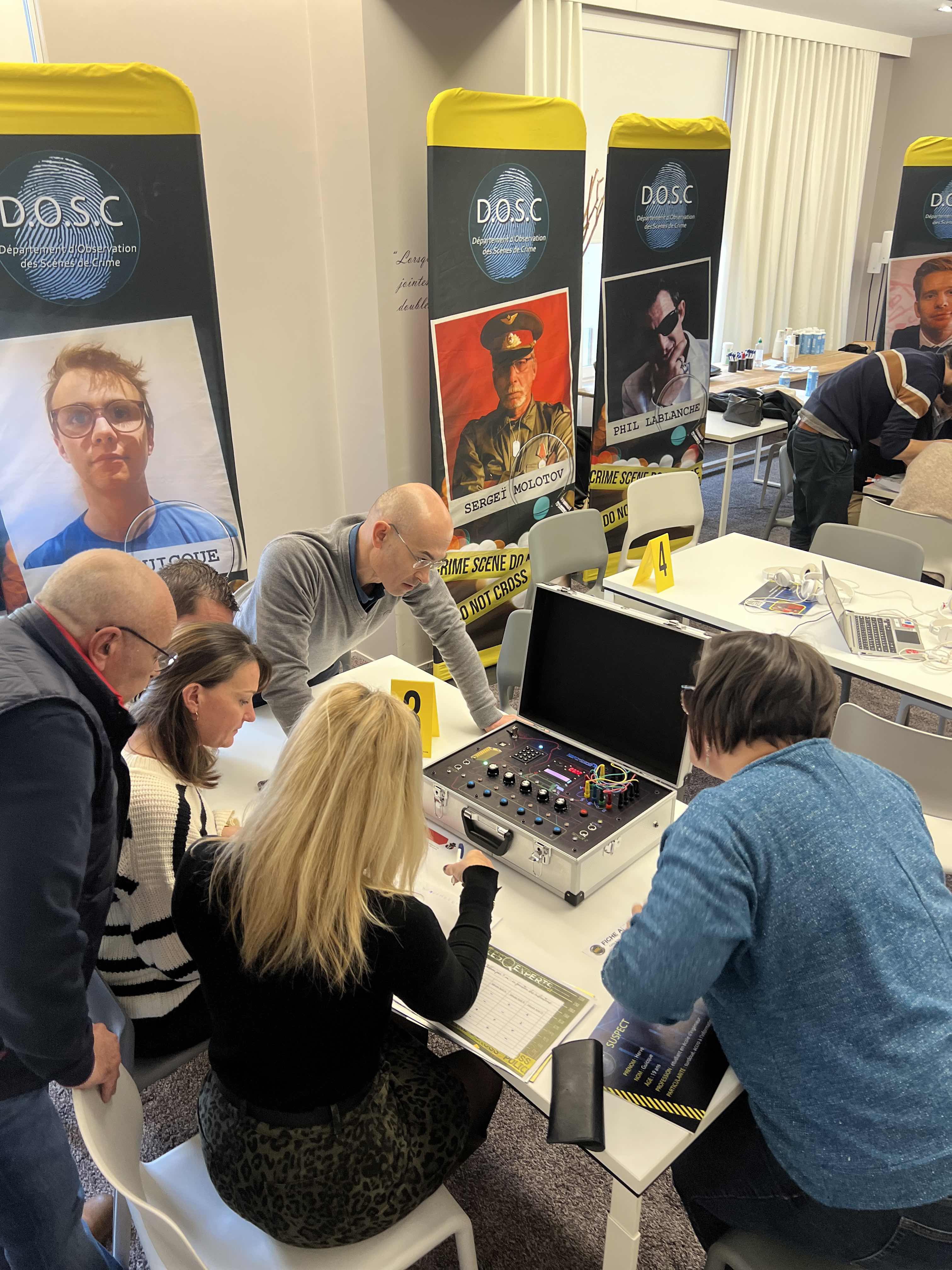
Escape Game in Quebec for teams that need real alignment
INNOV'events is a Montréal-based agency delivering Escape Game formats across Quebec, from leadership offsites to HR team-building days, typically for 12 to 600+ participants.
We handle scenario selection, bilingual facilitation, venue fit, run-of-show, tech, and on-site risk control so your leaders can focus on people—not problem-solving logistics.
Sommaire
In a corporate agenda, entertainment is never “just a break.” A well-designed Escape Game in Quebec becomes a controlled environment to observe collaboration, decision-making speed, and how teams handle uncertainty—without putting a real project at risk.
Organizations here expect operational rigor: punctual starts, bilingual delivery (FR/EN), clear safety rules for venues in winter, and a format that respects unionized schedules, shift realities, and executive time constraints.
From our base in Montréal, we produce corporate event entertainment in Quebec with the same discipline as a product launch: validated suppliers, rehearsed facilitators, backup plans, and measurable outcomes aligned with HR and communications objectives.
Quebec delivery you can trust: operational numbers
10+ years producing corporate experiences across Quebec, with repeat annual mandates in HR, communications, and sales enablement.
150+ facilitators and partners in our network (hosts, AV, venues, caterers), allowing consistent execution from Québec City to the Greater Montréal area.
12 to 600+ participants managed on the same day via multi-wave rotations, parallel rooms, and timed dispatching.
48-hour turnaround for a structured estimate (scope + assumptions), so you can move fast internally without guessing.
Corporate Escape Game references in Quebec: recurring clients and long cycles
We support companies across Quebec that come back because they need reliability, not improvisation: multi-site organizations, public-facing brands, and teams with strict internal approval paths. Some mandate us year after year for the same reason: once you’ve lived the pressure of event day—VIP arrivals, last-minute headcount changes, bilingual remarks, and tight room turns—you keep partners who protect your reputation.
In practice, our recurring mandates are typically built around quarterly leadership meetings, annual kick-offs, and internal communications moments where engagement must be visible and structured. We’re used to working with HR business partners, executive assistants, procurement, and security/operations teams—often all at once—so approvals don’t stall the project.
If you want, we can share relevant case examples during a call (sector, objectives, constraints, what worked) based on your context in Quebec, while respecting client confidentiality.
 Besoin d’un devis rapide ?
Nous vous envoyons une première proposition sous 24h.
Why run an Escape Game in Quebec for leadership and HR goals?
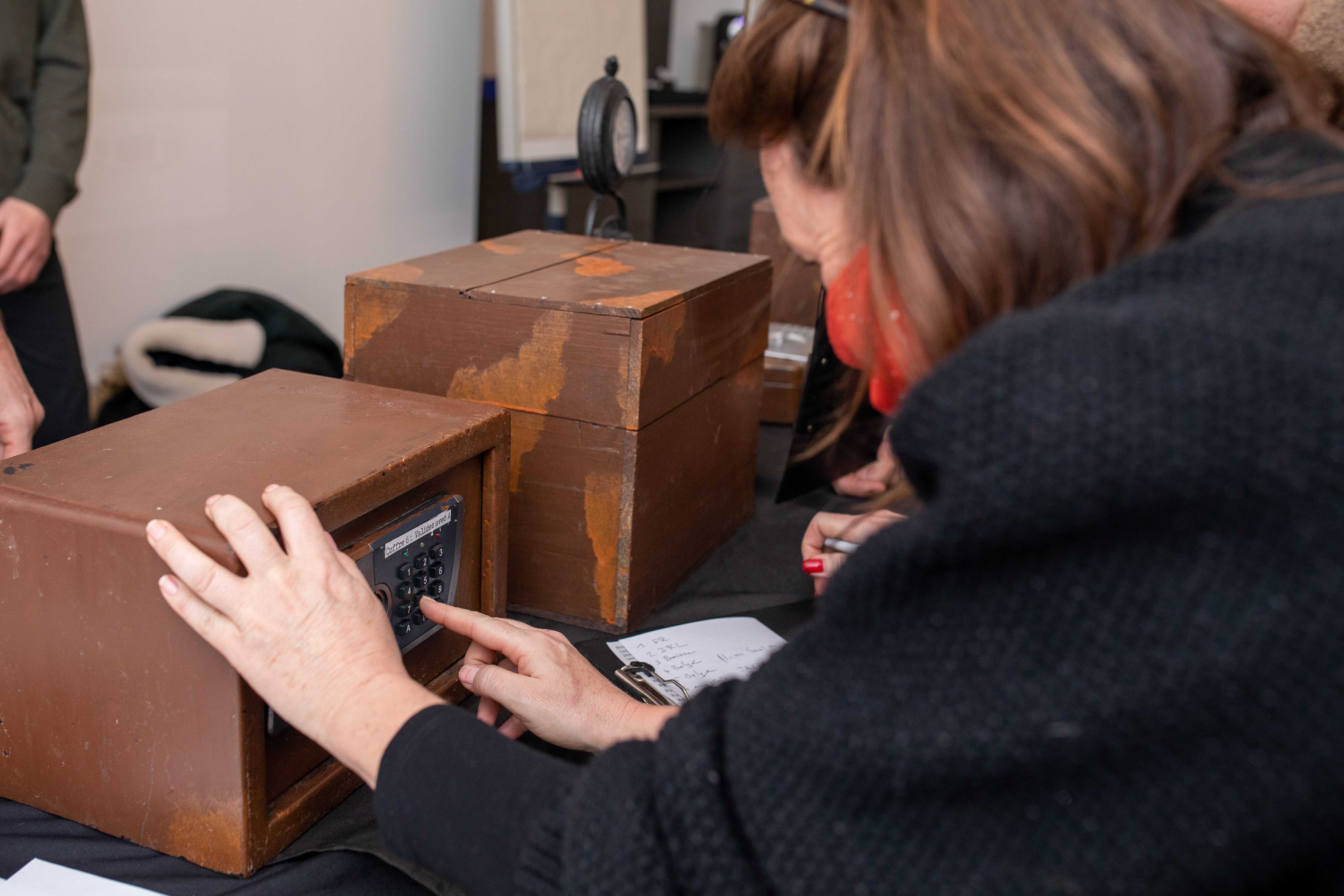
A corporate Escape Game is one of the rare entertainment formats that naturally produces observable behaviours: delegation, escalation, clarity of roles, listening quality, and how people behave under time pressure. For executives and HR, that’s valuable—because it turns “teamwork” into something you can see, discuss, and improve without making it personal.
Faster integration after reorgs or mergers: we structure mixed teams (functions, seniority, sites) and design debrief prompts so people leave with concrete working agreements, not just “we had fun.”
Leadership visibility without awkwardness: executives can participate or observe with a defined role (sponsor, wildcard, judge). This avoids the classic “leader dominates the room” dynamic and keeps psychological safety intact.
Real-time collaboration diagnostics: facilitators track collaboration patterns (who speaks, who decides, who gets ignored), then feed a short insight summary to HR/OD after the event.
Communications-friendly storytelling: the format produces photo-ready moments (clue walls, team huddles, final countdown). We plan these moments so internal comms gets usable content without disrupting play.
Operational fit for corporate schedules: the experience can be delivered in 30, 45, 60, or 90 minutes with rotations, which is critical for conferences, shift-based teams, and tight executive agendas.
In Quebec, where organizations often operate across multiple sites and languages, this format works because it creates a shared reference point quickly—something teams can use the next day in meetings and projects.
What Quebec organizations expect from corporate entertainment partners
In Quebec, decision-makers are pragmatic: they expect the agency to anticipate issues before they become visible. That starts with bilingual delivery that doesn’t feel “translated,” but genuinely hosted—briefings, rules, and debriefs included. It also includes sensitivity to workplace realities: unionized breaks, OHS requirements, accessibility constraints, and the difference between a head office culture and a plant or distribution center culture.
We also see strong expectations around brand image. Internal communications teams want an activity that won’t look childish on camera. Executives want something that respects time and avoids chaos. HR wants engagement without forcing extroversion. This is where the right scenario choice matters: a “spy mission” can energize sales teams, while a “crisis room” tends to resonate with operations and leadership groups who live in risk and mitigation.
Finally, the territory brings practical constraints: winter weather affects arrivals, coat check flows, and load-in times; venues can have strict noise limits; and some corporate buildings in Montréal or Québec City require pre-registered vendor lists and specific insurance language. We plan for these realities early so your day-of is calm.
Which Escape Game formats work best in Quebec corporate events?
Engagement comes from clarity: participants must understand the mission, the rules, and what “good collaboration” looks like. In Quebec corporate contexts, we often combine the Escape Game with structured facilitation so the activity supports HR and communications goals instead of competing with them.
Interactive animations in Quebec
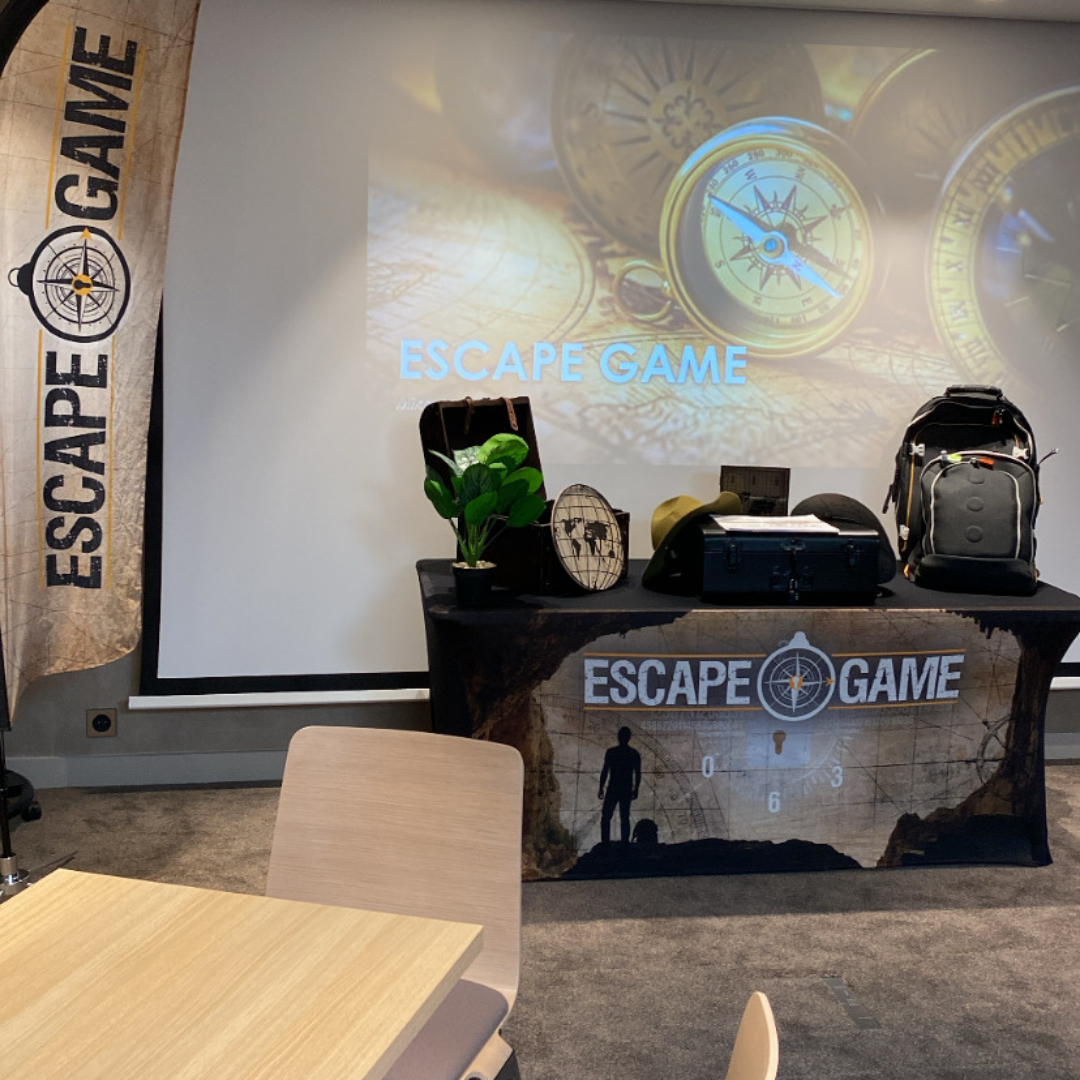
Tabletop Escape Game (conference-friendly): ideal for ballrooms or conference rooms where you can’t build sets. We run it in 45–60 minutes, with teams of 4–8, and add a short debrief to connect behaviours to workplace realities.
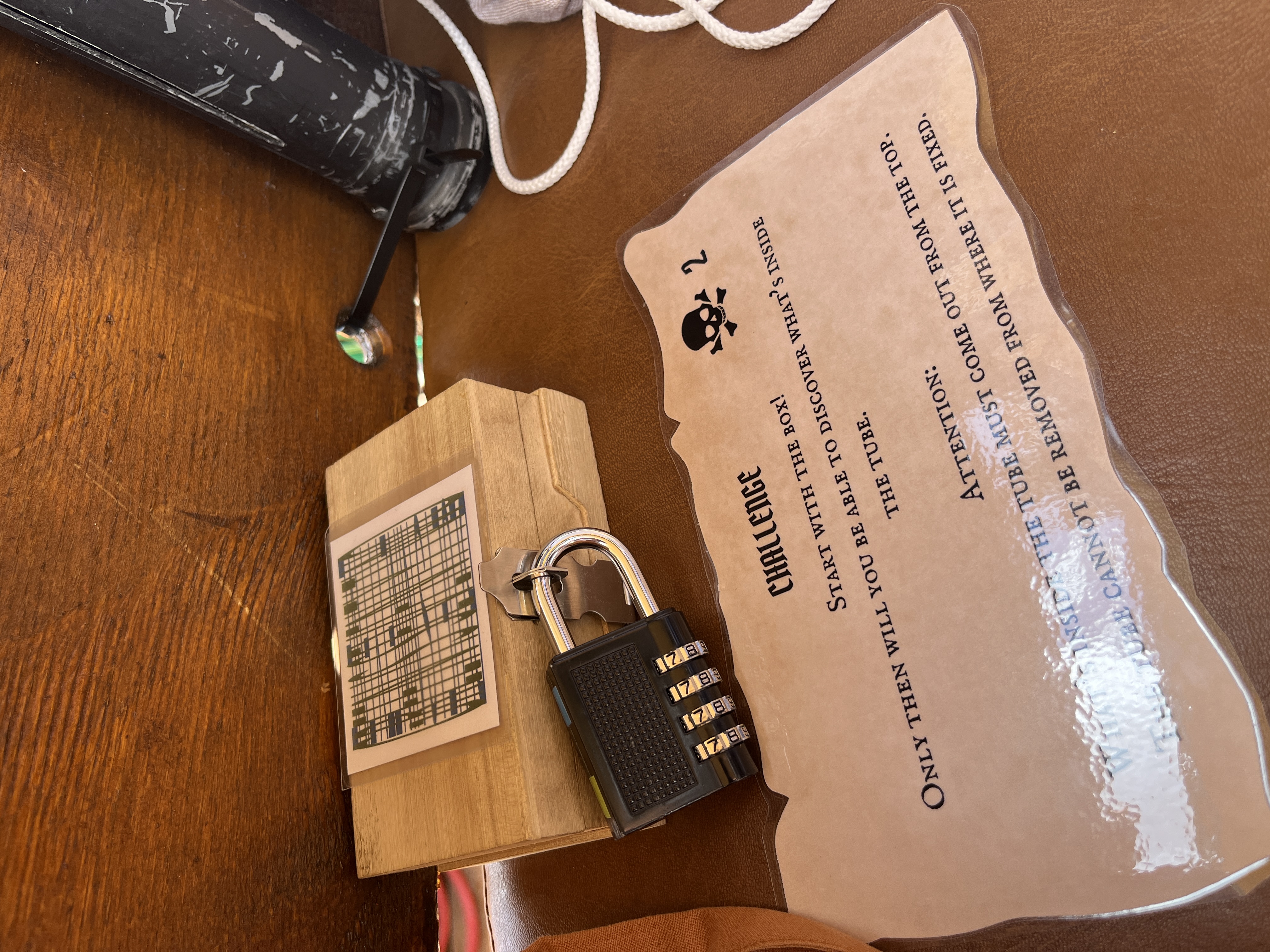
Mobile Escape Game (multi-room rotation): we transform meeting rooms into stations (logic, observation, code-breaking) and rotate waves. This works well for 80–400 participants where you need continuous flow.
Digital/hybrid Escape Game: useful when teams are split between Montréal, Québec City, and regional sites. We include a tech check, clear device requirements, and a bilingual helpdesk so the experience doesn’t become an IT support session.
Art animations in Quebec
Actor-led “crisis room”: a professional performer plays a role (investigator, journalist, auditor) to add realism. This is effective for leadership groups because it introduces controlled tension and forces prioritization.
Brand-aligned storytelling: we can integrate your values and internal vocabulary (without turning it into propaganda) so it feels relevant. Example: using real project constraints like budget caps, client escalation, or compliance checkpoints as game mechanics.
Innovative animations in Quebec
Escape Game + tasting checkpoints: participants unlock a local pairing (coffee, chocolate, mocktail) at key milestones. It keeps energy stable during long corporate days and supports internal networking without forcing it.
“Clue bar” service design: instead of a standard break, teams access refreshments by solving quick micro-puzzles. This reduces lineups and keeps the room dynamic—useful in tight venue footprints.
Gourmand animations in Quebec
Large-scale “city mission” in Quebec: for groups that want movement, we run an outdoor or campus-style mission with GPS and live facilitation. We design it with winter-safe routing, indoor fallback points, and timing that respects your conference agenda.
Measurement-enabled facilitation: we use observation grids (communication, role clarity, conflict handling) and deliver a short synthesis to HR after the event. This is not a psychological assessment—just structured event intelligence you can act on.
Whatever the format, we align the activity with your brand image: tone, visuals, language, and the level of competitiveness. A financial institution won’t choose the same staging as a creative studio—and in Quebec, internal perception travels fast across teams and sites.
Where to host an Escape Game in Quebec City or across Quebec?
The venue dictates the experience more than most teams expect: acoustics, ceilings, hallway widths, and load-in rules all affect game flow. In Quebec, we often work in hotels, corporate offices, and event spaces where you must respect strict schedules and unionized venue teams. Choosing the right setting is as much about operational fit as it is about aesthetics.
| Venue type | For which objective? | Main strengths | Possible constraints |
|---|---|---|---|
Hotel ballroom (Québec City / Montréal) | Conference add-on, high headcount rotations | Predictable logistics, onsite catering, easy AV integration for timers/briefings | Noise bleed between teams, strict load-in windows, union rules for setup |
Corporate office / headquarters in Quebec | Culture-building, cost control, minimal travel | Authentic environment, easy leadership presence, strong brand alignment | Security access, elevator constraints, limited storage, need for clean reset to business state |
Dedicated event space / loft | Employer brand, recognition events, more immersive staging | Flexible room layout, better atmosphere, easier to create “stations” | Parking and winter arrivals, variable acoustics, vendor restrictions |
We recommend a site visit (or at minimum a detailed floor plan review) before finalizing the format. It’s the most reliable way to confirm team circulation, noise management, accessibility, and where you can stage briefing/debrief moments without disrupting your broader event in Quebec.
What does a corporate Escape Game cost in Quebec (QC)?
Pricing for a corporate Escape Game in Quebec depends on format, staffing, timing constraints, and the level of production. The difference between a smooth executive-ready experience and a “DIY game” is usually facilitation and operational design—especially when you need bilingual delivery and tight rotations.
Participant volume and rotation model: a 30–60 person group can run in fewer waves; a 200+ person group typically requires parallel stations, additional facilitators, and more equipment.
Duration and agenda pressure: delivering in 45 minutes with strict start/stop times often costs more than a flexible 90-minute window because it requires tighter staffing and rehearsal.
Venue conditions: downtown load-in restrictions, union labor requirements, and long walking distances from dock to room affect setup time and crew needs.
Customization level: light branding (company vocabulary, executive message integration) versus full narrative adaptation (compliance themes, product knowledge, internal values translated into mechanics).
Bilingual facilitation: true dual-language hosting (not just translated materials) requires experienced staff and rehearsal to keep timing consistent across waves.
AV and technical layer: microphones, countdown screens, sound cues, and room zoning can elevate clarity—especially in larger venues—but must be planned.
From an ROI standpoint, the right budget is the one that protects outcomes: on-time agenda, visible engagement, and a debrief that leaders can reuse. If the activity runs late or feels disorganized, the hidden cost is credibility—especially for HR and communications teams in Quebec who carry the internal perception long after the event.
Why choose a Quebec event agency for an Escape Game mandate?
Choosing an agency established in Quebec is not about proximity for its own sake; it’s about reducing operational risk and speeding decision cycles. We know how venues here operate, how to plan around winter logistics, and how to staff bilingual facilitation without compromising quality. We also understand internal dynamics typical of Quebec organizations: consensus-based decision-making, strong attention to fairness, and the need to align HR, communications, and leadership expectations.
When your event is in Québec City, our production approach is the same: pre-reads, venue coordination, and a run-of-show that respects the on-site ecosystem. If your mandate includes multiple regions, we can coordinate through our network and you keep one accountable point of contact. For organizations specifically planning in the capital region, you can also review our dedicated page as an event agency in Quebec City.
- Faster vendor coordination: we already speak the language of local venues (load-in rules, insurance certificates, staffing windows).
- Reliable bilingual delivery: consistent facilitation quality in FR/EN so mixed groups don’t feel segmented.
- Contingency planning adapted to the territory: winter travel buffers, indoor fallback options, and realistic timelines.
- Executive-level accountability: one production lead who owns decisions and protects your internal stakeholders on event day.
From an ROI standpoint, the right budget is the one that protects outcomes: on-time agenda, visible engagement, and a debrief that leaders can reuse. If the activity runs late or feels disorganized, the hidden cost is credibility—especially for HR and communications teams in Quebec who carry the internal perception long after the event.






Examples of Escape Game projects delivered in Quebec contexts
Our Escape Game mandates in Quebec span very different realities: leadership retreats where confidentiality is critical; annual meetings where the activity must fit between plenary sessions; and employee recognition events where the goal is cross-team mingling without forced networking.
A typical example: a mid-size organization coming out of a reorg wants “team building,” but what they really need is a safer way to reset collaboration norms. We propose a structured tabletop game with mixed teams (operations + corporate functions), a 60-minute play window, and a 15-minute debrief focused on concrete behaviours (role clarity, escalation, decision protocols). The result is not a motivational speech—it’s a shared language that managers can reuse in week-one meetings.
Another common scenario: a communications team wants internal content and executive visibility, but the CEO’s agenda allows 20 minutes on site. We design a “mission briefing” moment where the executive launches the narrative, then exits while facilitators maintain energy. The team still gets leadership presence without putting the entire program at risk if VIP timing shifts.
We also routinely adapt to high constraints: venues with limited room access, groups arriving in waves from multiple sites, and last-minute headcount changes. Our approach is to build the operating model first (flows, staffing, reset time), then choose the scenario that fits—never the other way around.
Common Escape Game mistakes we prevent in Quebec events
Overestimating venue capacity: a room that “fits 200 seated” may not support 25 teams moving around with clue stations. We validate circulation and noise before confirming the format.
Understaffing facilitation: one host cannot manage fairness, timing, and engagement for multiple teams. We size staffing to your wave design and your expectation of professionalism.
Skipping bilingual run-through: bilingual is not a PDF translation. Without rehearsal, timing drifts and teams feel unequal. We script and test key moments in FR/EN.
No contingency for late arrivals: in Quebec, winter travel and parking are real. We design entry points so late participants can join without penalizing their team.
Choosing puzzles that reward only one profile: if everything is math, you lose half the room. We balance logic, observation, and communication so every participant has a role.
Forgetting the debrief: without a short, structured debrief, executives often feel the activity was “nice” but not useful. We keep it brief and operational.
Our role is to remove these risks early—before they reach your leadership team or become visible in front of employees. That’s what separates an agency-led corporate event entertainment in Quebec mandate from a last-minute activity booking.
Why Quebec clients renew Escape Game mandates with INNOV'events
Renewal is rarely about novelty; it’s about trust. When HR or communications rebooks, it’s because the event ran on time, executives were comfortable with the tone, and the agency handled problems without escalating stress internally.
High repeat rate on multi-year calendars: many clients re-engage us for annual meetings and leadership moments because the operating model is documented and transferable.
Shorter planning cycles after the first mandate: once your venue constraints and stakeholder preferences are known, we can typically reduce planning time by 30–40% on subsequent editions.
Consistent participant satisfaction signals: when the format is right, we see stable engagement across mixed seniority groups—an important marker for organizations in Quebec where internal fairness matters.

Loyalty is the best proof of quality in corporate events: it means the agency protected internal stakeholders and delivered predictably under real-world constraints.
Our Quebec production process for corporate Escape Games
👉 Discovery and objective lock (Quebec)
We run a structured intake with HR/communications and the event owner: objective, audience profile, cultural sensitivities, bilingual needs, and the “non-negotiables” (timing, brand tone, security, venue restrictions). We also identify what leadership wants to see: integration, collaboration, recognition, or message reinforcement.
👉 Format selection and operating model
We recommend the right Escape Game format (tabletop, mobile stations, digital/hybrid, actor-led) based on your headcount, room realities, and agenda pressure. Then we design the flow: team sizing, wave schedule, check-in, briefings, transitions, reset time, and how winners are recognized without creating negative competitiveness.
👉 Venue and vendor coordination in Quebec
We align with the venue on access times, docks/elevators, furniture plans, noise constraints, AV capabilities, and safety rules. We confirm insurance requirements and vendor registration needs (common in corporate towers and hotels). This step prevents day-of surprises that affect leadership perception.
👉 Bilingual facilitation and rehearsal
We script the key moments in FR/EN, validate timing, and ensure consistent rules across all waves. Facilitators receive a briefing on your audience profile (executives, managers, new hires) and on what behaviours to encourage (listening, delegation, role clarity).
👉 Event day delivery and risk control
We arrive with a clear run-of-show, staffing plan, and backup materials. A production lead manages timing, venue coordination, and stakeholder communications. If headcount changes or agenda shifts, we adjust wave timing and station staffing to keep your program on track.
👉 Debrief and post-event insights
We facilitate a short debrief (or provide a manager guide) connecting game behaviours to workplace practices. When requested, we deliver a concise summary to HR/OD: what we observed, what worked, and practical recommendations that fit your culture in Quebec.
FAQ sur l'organisation Escape Game à Quebec
How many people can join an Escape Game in Quebec?
Most corporate setups work well from 12 to 600+ participants. For 12–60, we can run a single wave or two waves. For 80–600+, we typically use parallel stations and timed rotations to keep plenary schedules on time.
How long should a corporate Escape Game last in Quebec?
The most common durations are 45 or 60 minutes of gameplay, plus 10–15 minutes for briefing and a short debrief. If your agenda is tight (conference context), we can fit a clean version in 30–40 minutes, but it requires stricter facilitation and fewer rule variations.
Can you deliver bilingual Escape Games in Quebec (FR/EN)?
Yes. We deliver bilingual hosting and materials, and we rehearse the bilingual script to keep timing consistent across waves. For mixed groups, we can run truly bilingual briefings or split facilitation by room—depending on what feels most natural for your culture.
What budget range for an Escape Game in Quebec (QC)?
Budgets vary based on headcount, staffing, customization, and venue constraints. As a practical range, corporate mandates often fall between CAD $2,500 and $25,000+. Small groups in a simple room setup sit toward the lower end; large multi-wave events with actor-led facilitation and AV production sit toward the higher end.
Can an Escape Game run inside our Quebec office building?
Yes, if we can confirm access, security rules, and available spaces. Offices are great for cost control and leadership presence, but we plan around elevator access, noise, meeting room availability, and the need to restore the space quickly. A floor plan review is usually enough to validate feasibility.
Request a Quebec Escape Game proposal that protects your agenda
If you’re comparing agencies, we can make the decision easier: share your date, city in Quebec, approximate headcount, language needs, and venue type. We’ll come back with a clear recommendation (format + timing + operating model) and a structured estimate you can circulate internally.
Plan early when possible—especially for peak dates and bilingual facilitation. Contact INNOV'events and we’ll build an Escape Game in Quebec that runs on time, fits your brand, and gives HR and leadership something concrete to work with after the event.
INNOV'events Quebec Agency
Thierry GRAMMER is the manager of the INNOV'events Quebec office. Reach out directly by email at canada@innov-events.ca or via the contact form.
Contact the Quebec agencyToutes nos prestations & animations Quebec, Quebec
Découvrez nos prestations événementielles
Découvrez nos animations événementielles disponibles au Quebec
- Event Hostess in Quebec
- Escape Game in Quebec
- MasterChef-Style Cooking Workshop in Quebec
- Corporate Magician in Quebec
- Tent Rental in Quebec
- Color Analysis Workshop in Quebec
- Inflatable Games in Quebec
- Valet Service in Quebec
- Soccer Simulator in Quebec
- LED Furniture Rental in Quebec
- LED Branding Activation in Quebec
- Immersive Culinary Experience in Quebec
- Light Painting Activity in Quebec
- Immersive Mystery Night in Quebec
- Promotional Contest in Quebec
- Promotional Materials (POS) in Quebec
- Virtual Reality Experience in Quebec
- Molecular Gastronomy Workshop in Quebec
- Halloween Event in Quebec
- Fireworks Show in Quebec
- Sports Challenge – Giant Games in Quebec
- Professional Event Host in Quebec
- Photo Booth Animation in Quebec
- Santa Claus Appearance in Quebec
- Kids Entertainment in Quebec
- Guided Tour in Quebec
- Urban Rally in Quebec
- Ball Pit Activity in Quebec
- Flight Simulator in Quebec
- Food Truck Rental in Quebec
- World Record Attempt in Quebec
- Surf Simulator in Quebec
- Soccer Simulator in Quebec
- Wine Casino in Quebec
- Makeover Workshop in Quebec
- Perfume Creation Workshop in Quebec
- Acting Workshop in Quebec
- CSR Activities in Quebec
- Archery Activity in Quebec
- Event Security Guard in Quebec
- Wine Tasting Workshop in Quebec
- Mime Performance in Quebec
- TV Game Show Animation in Quebec
- Funfair Event in Quebec
- Crisis Management Workshop in Quebec
- Crisis Negotiation Workshop in Quebec
- Arcade Games in Quebec
- Indoor Skydiving Simulator in Quebec
- Ski Simulator in Quebec
- Racetrack Driving Experience in Quebec
- Introductory Flight Experience in Quebec
- Tasting Experience in Quebec
- Build Your Own Foosball Workshop in Quebec
- 2CV Rally in Quebec
- LEGO Challenge in Quebec
- Casino Night in Quebec
- Interpreter / Translator in Quebec
- Promotional Merchandise in Quebec
- Shuttle / Transportation Service in Quebec