
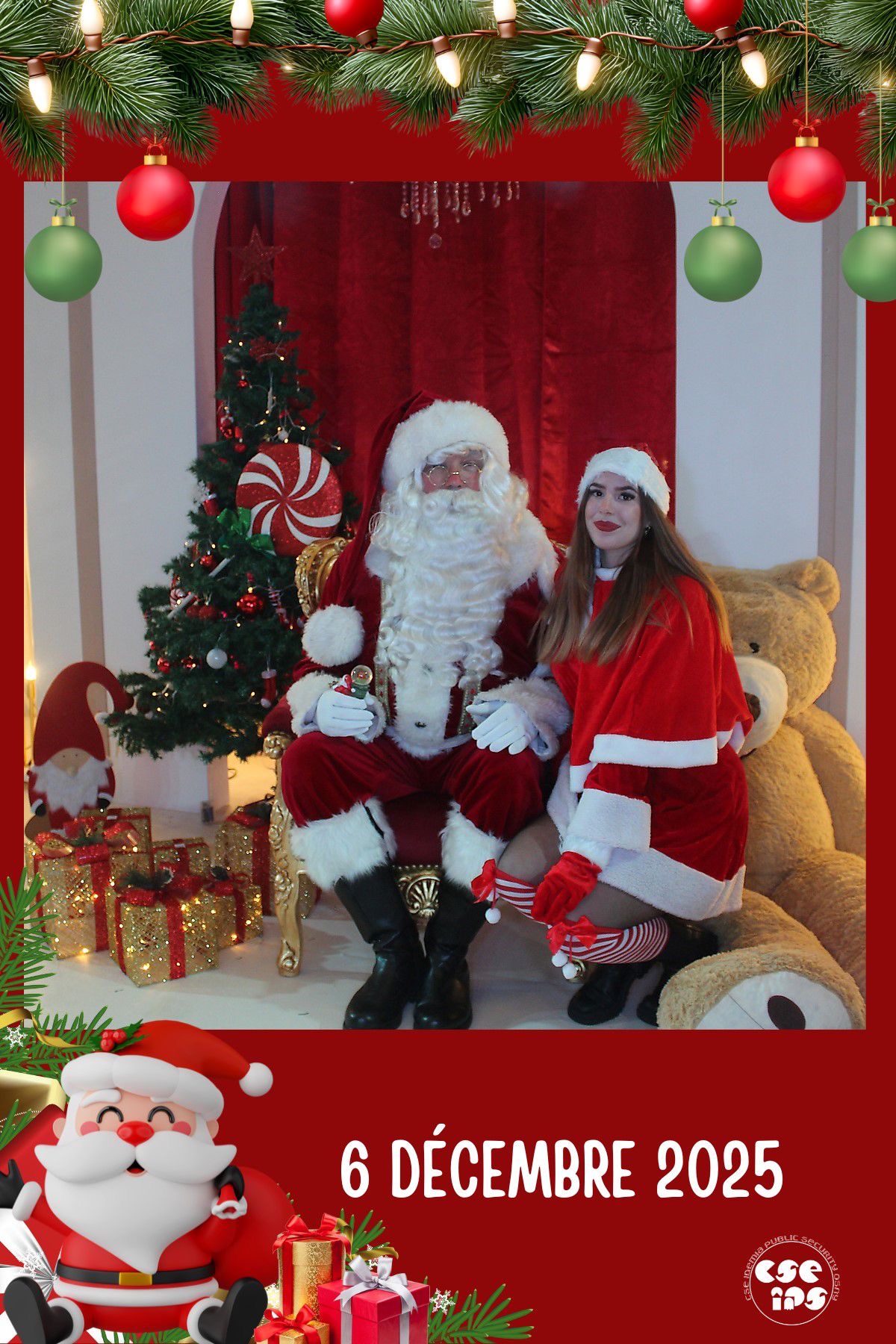
Santa Claus Appearance in Montréal that runs on time, looks on-brand, and keeps lines under control
Sommaire
In a corporate holiday event, entertainment isn’t “nice to have”: it’s a leadership tool. A well-executed Santa Claus Appearance creates a shared moment across departments, reinforces employer brand, and gives managers a natural way to interact with employees and families without forcing networking.
Organizations in Montréal expect tight scheduling, bilingual communication, and a setup that won’t clash with brand guidelines. They also want predictable flows: photo lines that don’t block emergency exits, kids’ zones that stay safe, and a Santa who behaves like a trained professional—not a costume rental.
Our strength is operational: we plan the route, rehearsals, queue logic, photo delivery, and contingency plans for weather and transport. As an event agency in Montréal, our suppliers, performers, and venue contacts are local—so we can move fast when the real world happens on event day.
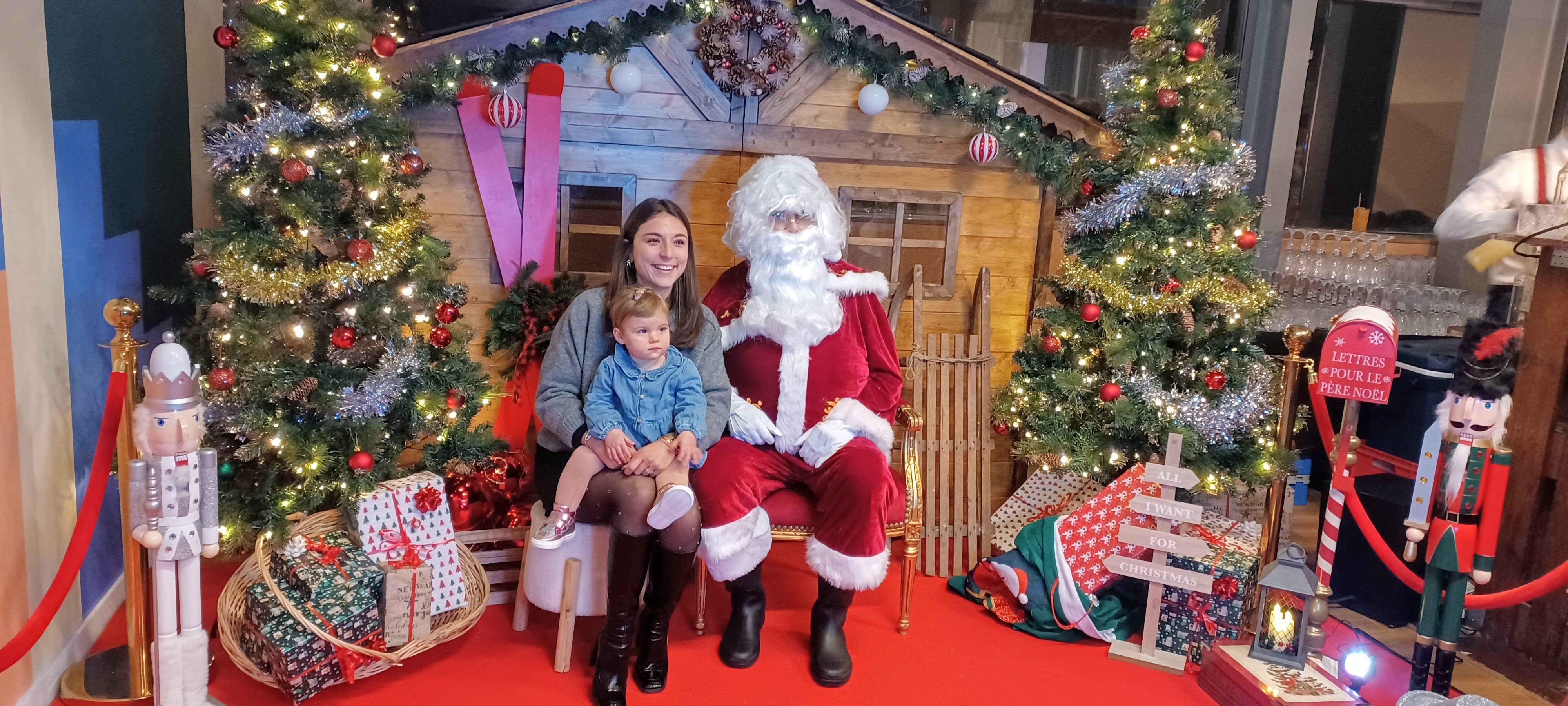
INNOV'events in numbers across Montréal and beyond
10+ years delivering corporate events and seasonal activations in Canada, including recurring holiday programs.
200+ events/year supported through our production network (corporate, institutional, retail, and community).
24–72 hours typical turnaround to propose 2–3 qualified performers and a first operational plan for a Santa Claus Appearance in Montréal.
0 “open-ended” timelines: every project includes a minute-by-minute run of show, staffing plan, and a day-of escalation path.
Montréal references and recurring holiday collaborations
We support organizations across Montréal—downtown, the West Island, and the North and South Shore—where holiday events often become a yearly internal ritual. In practice, many of our clients rebook because the pressure is real: HR wants a family-friendly moment, Communications needs a brand-safe visual, and executives expect a clean operational result with no surprises.
We regularly work with local teams that run multi-site operations (head office + distribution + retail), where timing and consistency matter more than “big show.” The same Santa must look and behave consistently across appearances, the same photo output must match brand standards, and the same safety approach must be applied whether you host 80 people in a boardroom lounge or 1,200 people in a hall.
If you share your internal constraints (union venue rules, building loading dock times, bilingual requirements, privacy concerns for children’s photos), we’ll translate them into a realistic plan and staffing—because that’s what makes the difference between an event that feels easy for your teams and one that becomes a second job.
 Besoin d’un devis rapide ?
Nous vous envoyons une première proposition sous 24h.
Why schedule a Santa appearance in Montréal for your company?
A Santa Claus Appearance is one of the rare formats that works simultaneously for executives, employees, and families. Done properly, it supports retention and internal culture without requiring a large stage show—provided the flow, safety, and brand framing are handled with the same rigor you’d apply to any corporate activation.
Employee experience you can actually measure: attendance rate, average dwell time in the kids’ zone, photo participation, and post-event eNPS are easier to capture than with a cocktail-only format.
Stronger employer brand with minimal “corporate speech”: families remember the quality of the welcome and the organization. That positive association tends to travel back into workplace conversations in January.
A structured moment for leadership visibility: executives can do short, authentic walk-throughs (5–10 minutes at a time) without monopolizing a microphone, which often feels more natural in Québec corporate culture.
Inclusive format: a bilingual MC, quiet time slots, and a sensory-friendly corner can make the event accessible for neurodiverse children and for employees who avoid loud parties.
Content without content-stress: Communications can capture a small set of approved visuals (arrival, gift moment, branded photo backdrop) without “paparazzi” behavior that annoys guests.
Montréal is a relationship-driven market: teams work hard, commute in winter conditions, and expect their company to respect their time. A well-orchestrated holiday appearance signals operational competence and care—two messages that land well in the local business culture.
What Montréal organizations expect from corporate holiday entertainment
In Montréal, holiday events are rarely “one audience.” We see mixed groups: office staff, plant/distribution teams, remote employees visiting for the day, and families with very different needs. The expectation is not spectacle; it’s smoothness—no chaos at the coat check, no confusion about where kids go, and no 45-minute line that blocks circulation.
Common local constraints we plan for upfront:
- Bilingual delivery (FR/EN): not just the MC—signage, cueing, and staff briefings must support both languages to avoid awkward moments on-site.
- Winter logistics: snowstorms, delayed couriers, and heavy outerwear change timelines. Coat-check capacity and stroller parking are not details; they are throughput constraints.
- Venue rules: many downtown buildings restrict loading dock hours, elevator use, fog/smoke effects, or open flames. Even “simple” décor can be limited by fire code or building security.
- Privacy and image control: parents may not want their children photographed. We implement opt-in stickers or wristbands and brief photographers accordingly.
- Expectation of professionalism: Montréal audiences quickly notice if Santa breaks character, looks tired, or behaves inconsistently. Corporate settings require a performer who understands boundaries and HR sensitivities.
When these elements are managed, the experience feels effortless. When they aren’t, the event becomes stressful for HR and reflects poorly on leadership—regardless of how good the cookies were.
Which Santa-related entertainment works best in Montréal workplaces?
A Santa Claus Appearance is strongest when it’s part of a short sequence: welcome → interaction → photo → optional gift moment → exit. To keep adults engaged (not just kids), we design adjacent activations that reduce waiting friction and create small “reasons to stay” around the main moment.
Interactive animations in Montréal
Timed meet-and-greet slots: ideal for 300+ attendees. We distribute time blocks by department or family arrival time, reducing peak congestion at 12:00–13:00.
Bilingual MC with micro-moments: 30–60 second announcements, not long speeches. Useful for guiding traffic, calling families, and keeping energy consistent.
Holiday postcard station: branded cards where employees write messages for local charities (if your CSR team wants a real tie-in). We handle materials and collection.
Quiet-time window: 20–30 minutes with reduced music and fewer lights for sensory-sensitive children—often appreciated in larger organizations.
Art animations in Montréal
Santa + elf duo: an elf acts as “line manager in character,” which keeps the experience warm while maintaining operational discipline.
Close-up magician in the waiting zone: positioned near the line to reduce perceived wait time; we plan sightlines so it doesn’t create a secondary crowd.
Acoustic holiday trio: works well in atriums and lobbies where sound must stay controlled; we coordinate with building security on decibel limits.
Innovative animations in Montréal
Hot chocolate bar with controlled service: two-sided service and pre-portioned toppings prevent bottlenecks. We recommend a non-dairy option and clear allergen signage.
Cookie decorating with sanitation plan: we set up glove use, hand-sanitizer points, and table resets every 20–30 minutes—important in office settings.
Corporate-friendly mocktail station: for mixed audiences where alcohol is not appropriate; keeps adults engaged while kids meet Santa.
Gourmand animations in Montréal
Instant branded photo delivery: QR retrieval in under 2 minutes, with an optional approval step to respect privacy rules.
Hybrid Santa cameo for remote teams: a short, scheduled video appearance integrated into a Teams/Zoom holiday meeting, coordinated with the on-site moment for consistency.
Charity-linked gift moment: instead of individual gifts, Santa “reveals” the company donation or toy drive total, giving the moment a purpose beyond photos.
The best choice depends on your brand posture. A financial institution won’t run the same tone as a creative studio, and a manufacturing site won’t have the same acoustic constraints as a downtown office. We align the entertainment with your internal culture, your risk profile, and the image you want associated with corporate event entertainment in Montréal.
Where to host a Santa appearance in Montréal for the best flow
The venue dictates guest movement, sound limits, photo quality, and how “premium” the experience feels. For a Santa Claus Appearance in Montréal, we prioritize: easy access for families, a waiting area that doesn’t obstruct exits, and a private space for Santa to reset between sets.
| Venue type | For which objective? | Main strengths | Possible constraints |
|---|---|---|---|
Office lobby / atrium (downtown) | Quick activation for employees + families after work | Zero travel for staff, strong internal visibility, easy to brand | Building security rules, limited loading access, sound restrictions |
Hotel ballroom / conference center | Large corporate holiday party with structured schedule | Controlled lighting for photos, coat-check capacity, professional staff | Minimum spends, union/venue labor rules, fixed load-in times |
Industrial site cafeteria / distribution center space | Inclusive event for shift workers and families | High participation, authentic culture moment, easier parking | Décor limitations, acoustic echo, requires stronger zoning & safety plan |
Community hall in Montréal boroughs | Family day with larger kids’ area and activities | Flexible layout, good for multi-activity stations, budget-efficient | Variable A/V quality, earlier booking needed, permit/insurance checks |
We recommend a short site visit (or a detailed venue walkthrough call with photos) before finalizing the plan. In Montréal, small constraints—like a single freight elevator or a narrow corridor—can dictate the entire flow of a Santa line and the quality of the guest experience.
What does a Santa Claus appearance cost in Montréal (06)?
Pricing for a Santa Claus Appearance depends on duration, performer level, photo setup, staffing, and the complexity of the crowd flow. In corporate settings, the biggest cost drivers are rarely the suit—it’s the operational structure that keeps the experience clean and brand-safe.
Performer profile: a professional actor with corporate experience, bilingual ability, and consistent character work costs more than a basic hire. Expect a meaningful difference between a “mall-style” Santa and a corporate-grade performer.
Duration and pacing: a 60–90 minute cameo is not the same as a 3–4 hour program with scheduled breaks. We plan rest periods to maintain performance quality and avoid fatigue.
Photo approach: no-photo, BYO phone, staffed photographer, on-site printing, branded digital delivery—each option changes equipment, staffing, and time per family.
Staffing for flow: queue manager, assistant/elf, MC, and a coordinator. For 500+ guests, staffing is what prevents reputational damage caused by disorder.
Décor and scenic: chair/throne, backdrop, lighting, holiday set dressing. Clean visuals matter if Communications will publish internally or externally.
Travel and timing within Montréal: downtown load-in constraints, parking, and multiple appearances in one day affect logistics and cost.
Risk and compliance: insurance certificates, venue requirements, child safety protocol, and any security needs.
We frame budget through ROI: if the event reduces HR workload, avoids complaints, and generates usable internal content, it protects leadership time and strengthens retention—often at a lower risk than high-production shows. We can propose a lean plan (core Santa + flow staff) or a premium setup (full holiday set + photo system) with clear trade-offs.
Why choose a Montréal event agency for Santa entertainment?
Holiday events compress timelines. When an executive asks for a Santa activation “before the break,” you don’t have room for supplier uncertainty. A team established in Montréal reduces risk because we know the venues, the seasonal traffic patterns, and the operational constraints that don’t appear in a quote.
We also know what Montréal audiences consider credible: punctuality, bilingual delivery, respect for families’ privacy, and a performer who understands local humor without crossing lines. That is difficult to guarantee from a distance.
For clients comparing agencies, the difference is often day-of control: who is physically on-site, who can source last-minute stanchions, who can replace a delayed vendor within hours, and who has relationships that make venues cooperative instead of defensive.
- Faster on-site response: local coordinators and supplier access when weather or transport disrupts the plan.
- Venue familiarity: downtown towers, hotels, and borough facilities each have specific load-in and security processes.
- Performer network: reliable, vetted Santas and supporting talent accustomed to corporate standards.
- Bilingual operations: staff briefings and guest-facing communication handled properly, not improvised.
We frame budget through ROI: if the event reduces HR workload, avoids complaints, and generates usable internal content, it protects leadership time and strengthens retention—often at a lower risk than high-production shows. We can propose a lean plan (core Santa + flow staff) or a premium setup (full holiday set + photo system) with clear trade-offs.








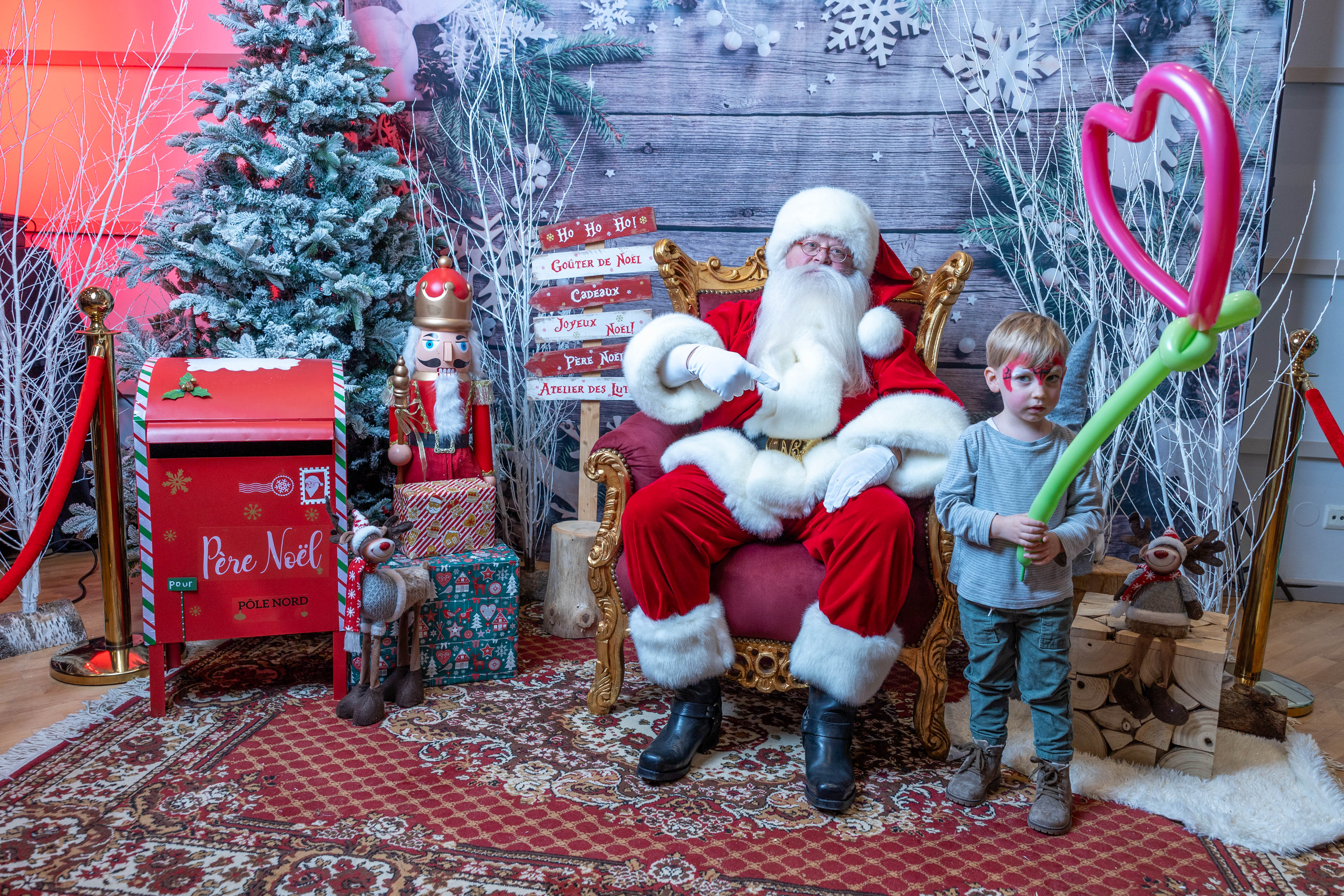
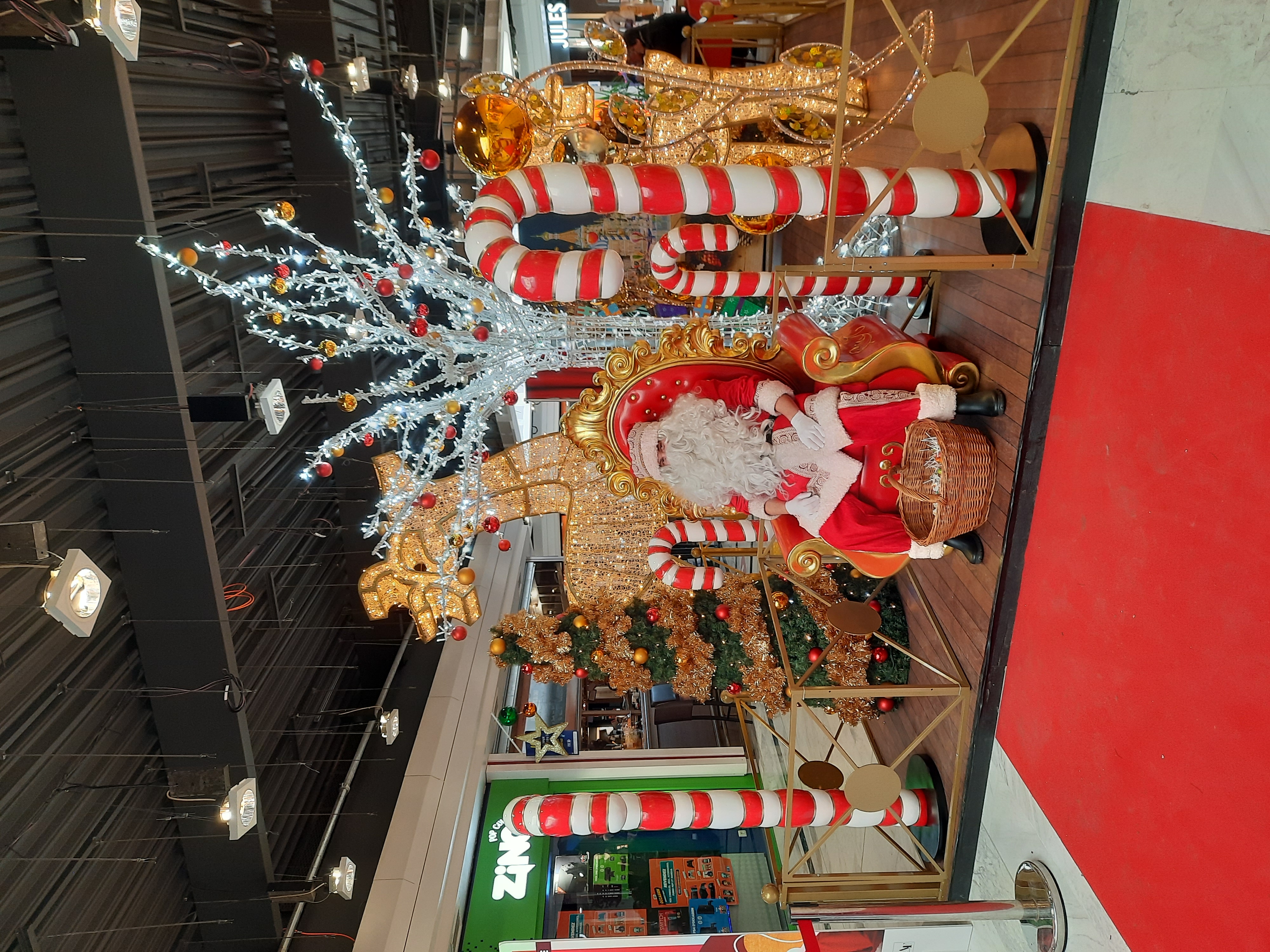
Examples of Santa activations delivered in Montréal environments
We deliver Santa Claus Appearance in Montréal programs in very different contexts, and our planning changes accordingly:
- Head office holiday reception (200–400 guests): we typically run a two-zone layout (photo + refreshments) with timed family slots and a bilingual MC managing transitions. Goal: avoid a lobby jam at 17:30 when everyone arrives at once.
- Multi-shift industrial site (300–900 across shifts): we plan repeated short sets (e.g., 3 × 45 minutes) aligned with shift changes, with clear circulation rules and a stricter safety perimeter. Goal: include non-office teams without disrupting operations.
- Client-facing activation: when your brand is public, we put extra emphasis on behavior rules, signage approvals, and photo rights. Goal: protect reputation and avoid complaints on social media.
- Hybrid company event: Santa appears on-site and records a short bilingual greeting for remote teams. Goal: one consistent message across locations without creating a second production.
In all cases, we document what was done (run of show, staffing, contact list, incident log if any) so your internal teams can report back with facts—not impressions.
Common mistakes we prevent for Santa appearances in Montréal
Underestimating line time: even at 30 seconds per family, 100 families means almost an hour. We calculate realistic cadence and add buffer.
No privacy plan for children’s photos: we implement opt-in logic and brief staff to avoid capturing kids whose parents declined.
Santa placed in the wrong spot: a beautiful set that blocks circulation or emergency exits creates immediate venue friction. We plan layout with safety first.
Not scheduling breaks: fatigue leads to lower-quality interactions and character breaks. We schedule rest and hydration discreetly.
Inconsistent brand visuals: mismatched backdrop, poor lighting, cluttered décor. We propose simple, controlled scenic elements that photograph well.
Ignoring bilingual operations: it’s not enough to “speak both.” We script key phrases and signage to avoid awkward moments.
No weather contingency: in Montréal winter, arrivals can shift. We plan flexible start windows and indoor queue options.
Our role is to eliminate these risks before they reach your employees and their families. When the event day arrives, your team should be hosting—not troubleshooting.
Why Montréal clients rebook their Santa appearances with INNOV'events
Holiday events are annual—so your internal stakeholders remember exactly what went wrong last year. Clients come back when the process feels controlled, the performer is consistent, and the agency removes work from HR and Communications instead of adding approvals and last-minute decisions.
Repeat-booking is common for holiday programs because operational templates can be refined year over year (run of show, layout, staffing ratios).
Planning lead time typically improves outcomes: teams who confirm key elements 6–10 weeks ahead reduce rush costs and increase performer availability.
Fewer escalations on event day: clear roles (who answers what) reduces internal stress and protects leadership time.

Loyalty is not sentiment—it’s risk management. When your organization in Montréal has a predictable partner, holiday events stop being a yearly fire drill and become a stable part of your culture calendar.
Our Montréal process to deliver a Santa appearance without surprises
👉 Step 1 (Montréal): clarify objectives, audience, and constraints
We start with a 20–30 minute call with HR and/or Communications: expected headcount, family ratio, bilingual needs, brand constraints, and whether photos are internal-only or public. We also confirm venue rules (load-in, security, insurance, union labor) and your internal approval path so we don’t lose time later.
👉 Step 2 (06): propose performer options and a flow plan
Within days, we share 2–3 performer profiles and a recommended format (duration, breaks, photo cadence). We provide a first layout sketch: where Santa sits, where the line starts, where families exit, and where the waiting activity goes to avoid congestion.
👉 Step 3 (Montréal): confirm production elements and brand visuals
We lock scenic items (chair/throne, backdrop, lighting), signage needs, and photo delivery method (BYO phone / photographer / print / digital). If your brand team has guidelines, we adapt colors, logo placement, and tone so the setup looks corporate-grade—not like a mall corner.
👉 Step 4 (06): finalize staffing, safety, and contingency
We confirm the on-site team: coordinator, queue manager, elf/assistant, photographer, MC. We establish lost-child protocol, privacy rules, and cleaning rhythm for high-touch props. We also plan winter contingencies (late arrivals, coat-check overflow) and define an escalation contact list.
👉 Step 5 (Montréal): deliver and debrief
On event day, our coordinator runs the schedule, manages the performer, and keeps stakeholders informed without burdening them. After the event, we debrief: what worked, what to adjust next year, and any measurable data you want (photo count, peak line time, attendance estimates).
FAQ sur l'organisation Santa Claus Appearance à Montréal
How long should a Santa appearance last in Montréal offices?
Most corporate setups work best with 60–120 minutes of guest-facing time, plus scheduled breaks. For larger volumes, we often run 2–3 sets of 45–60 minutes to keep performance quality and line cadence stable.
How many families can Santa meet per hour in Montréal?
Plan for 40–70 families/hour depending on photo method and whether gifts are handed out. If you add on-site printing or longer interactions, the realistic cadence drops. We calculate this with you before choosing a format.
Do we need a photographer for a Montréal Santa appearance?
Not always. BYO phone is simplest, but it can slow the line if families struggle with framing. A staffed photographer improves pace and image quality; add on-site printing only if you have enough space and staff to avoid bottlenecks.
Can you run a bilingual Santa appearance in Montréal?
Yes. We staff bilingual coordinators/MCs and brief Santa on bilingual cues. In practice, we keep interactions natural: short phrases in both languages, clear signage, and staff support so no family feels overlooked.
How early should we book a Santa in Montréal (06)?
For prime December dates, we recommend 6–10 weeks lead time. It’s possible to do it faster, but performer availability and venue constraints tighten quickly in Montréal during the last two weeks before the holidays.
Request a Montréal quote for a Santa appearance with a clear plan
If you’re comparing options, we can provide a concrete proposal: performer profile(s), recommended duration, staffing plan, photo approach, and a run of show aligned with your venue and brand constraints. Share your date(s), venue (or shortlist), estimated attendance, and whether you want photos/printing. We’ll come back with a realistic plan for a Santa Claus Appearance in Montréal that protects your time, your image, and your teams.
INNOV'events Montréal Agency
Thierry GRAMMER is the manager of the INNOV'events Montréal office. Reach out directly by email at canada@innov-events.ca or via the contact form.
Contact the Montréal agencyToutes nos prestations & animations Montréal, Quebec
Découvrez nos prestations événementielles
- Employee Party in Montréal
- Corporate Christmas Party in Montréal
- Networking Cocktail Event in Montréal
- Shopping Mall Activation in Montréal
- Grand Opening Event in Montréal
- Product Launch Event in Montréal
- Open House Event in Montréal
- Field Brand Activation in Montréal
- Event Catering Service in Montréal
Découvrez nos animations événementielles disponibles au Quebec
- Event Hostess in Montréal
- Escape Game in Montréal
- MasterChef-Style Cooking Workshop in Montréal
- Corporate Magician in Montréal
- Tent Rental in Montréal
- Color Analysis Workshop in Montréal
- Inflatable Games in Montréal
- Valet Service in Montréal
- Soccer Simulator in Montréal
- LED Furniture Rental in Montréal
- LED Branding Activation in Montréal
- Immersive Culinary Experience in Montréal
- Light Painting Activity in Montréal
- Immersive Mystery Night in Montréal
- Promotional Contest in Montréal
- Promotional Materials (POS) in Montréal
- Virtual Reality Experience in Montréal
- Molecular Gastronomy Workshop in Montréal
- Halloween Event in Montréal
- Fireworks Show in Montréal
- Sports Challenge – Giant Games in Montréal
- Professional Event Host in Montréal
- Photo Booth Animation in Montréal
- Santa Claus Appearance in Montréal
- Kids Entertainment in Montréal
- Guided Tour in Montréal
- Urban Rally in Montréal
- Ball Pit Activity in Montréal
- Flight Simulator in Montréal
- Food Truck Rental in Montréal
- World Record Attempt in Montréal
- Surf Simulator in Montréal
- Soccer Simulator in Montréal
- Wine Casino in Montréal
- Makeover Workshop in Montréal
- Perfume Creation Workshop in Montréal
- Acting Workshop in Montréal
- CSR Activities in Montréal
- Archery Activity in Montréal
- Event Security Guard in Montréal
- Wine Tasting Workshop in Montréal
- Mime Performance in Montréal
- TV Game Show Animation in Montréal
- Funfair Event in Montréal
- Crisis Management Workshop in Montréal
- Crisis Negotiation Workshop in Montréal
- Arcade Games in Montréal
- Indoor Skydiving Simulator in Montréal
- Ski Simulator in Montréal
- Racetrack Driving Experience in Montréal
- Introductory Flight Experience in Montréal
- Tasting Experience in Montréal
- Build Your Own Foosball Workshop in Montréal
- 2CV Rally in Montréal
- LEGO Challenge in Montréal
- Casino Night in Montréal
- Interpreter / Translator in Montréal
- Promotional Merchandise in Montréal
- Shuttle / Transportation Service in Montréal