
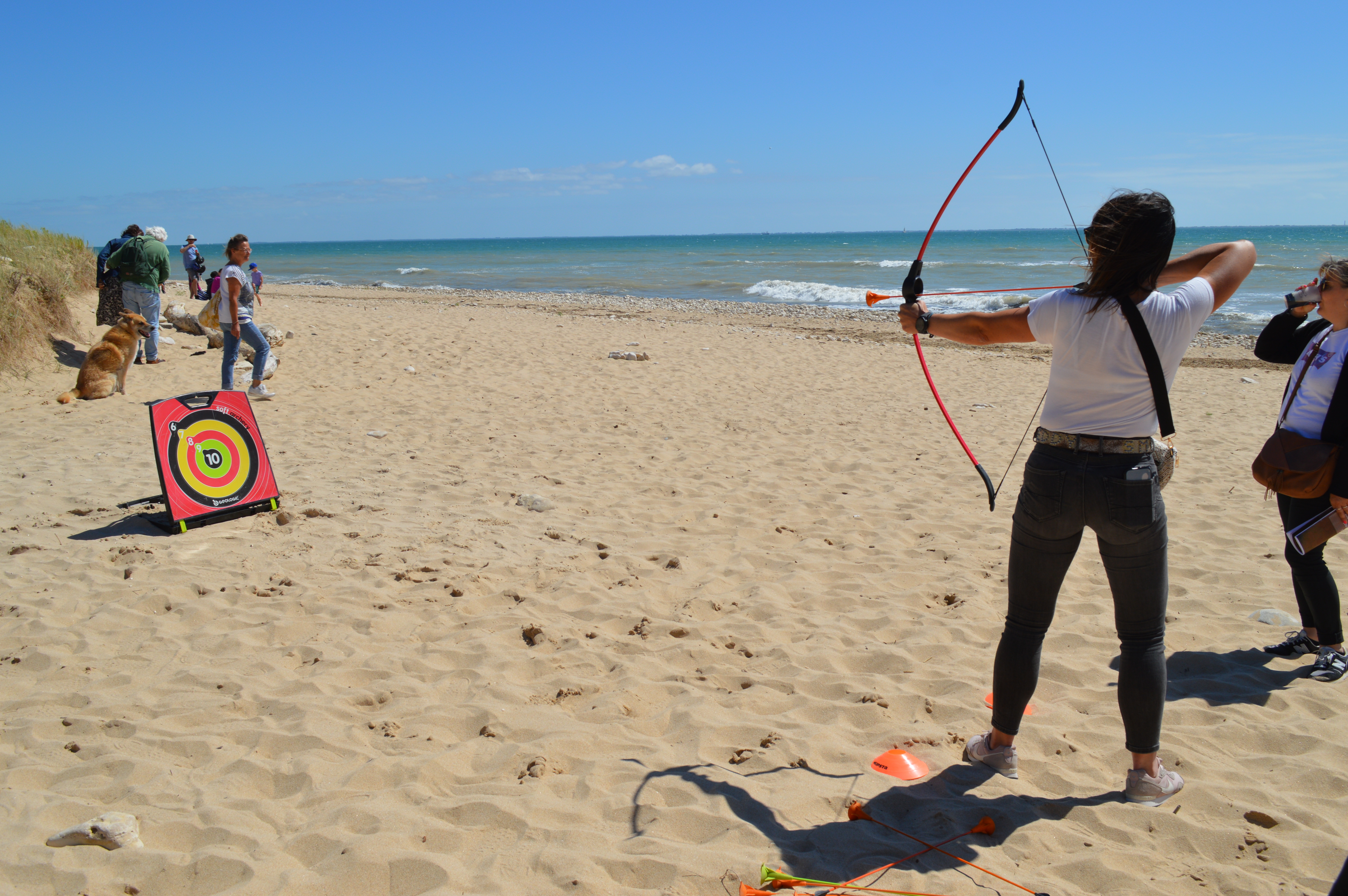
Archery Activity in Montréal that builds focus, calm, and team coordination
INNOV'events designs and delivers Archery Activity formats for corporate groups in Montréal, from 12 to 400 participants, indoors or outdoors. We handle venue constraints, safety protocols, staffing, and flow so your leadership team can stay present with guests. Expect a structured experience: clear rules, measured progression, and a pacing that fits your agenda (conference, offsite, holiday party, or team day).
Sommaire
In a corporate event, entertainment is not a “nice-to-have”: it’s the lever that changes the room dynamic. A well-run Archery Activity in Montréal creates shared attention, breaks down silos fast, and gives leaders a simple way to observe collaboration under light pressure (time, precision, turn-taking) without forcing people into awkward icebreakers.
Organizations in Montréal typically ask for three things: a serious safety framework (clear perimeter, supervision ratios, documentation), an experience that works for mixed profiles (from competitive sales to reserved technical teams), and an operation that respects strict schedules—because your event is often one component of a packed day.
We’re an event agency in Montréal with field teams who know local venues, loading constraints, bilingual facilitation realities, and the expectations of corporate stakeholders. Our role is to make the activity feel effortless for participants while being operationally robust for HR, communications, and executive sponsors.
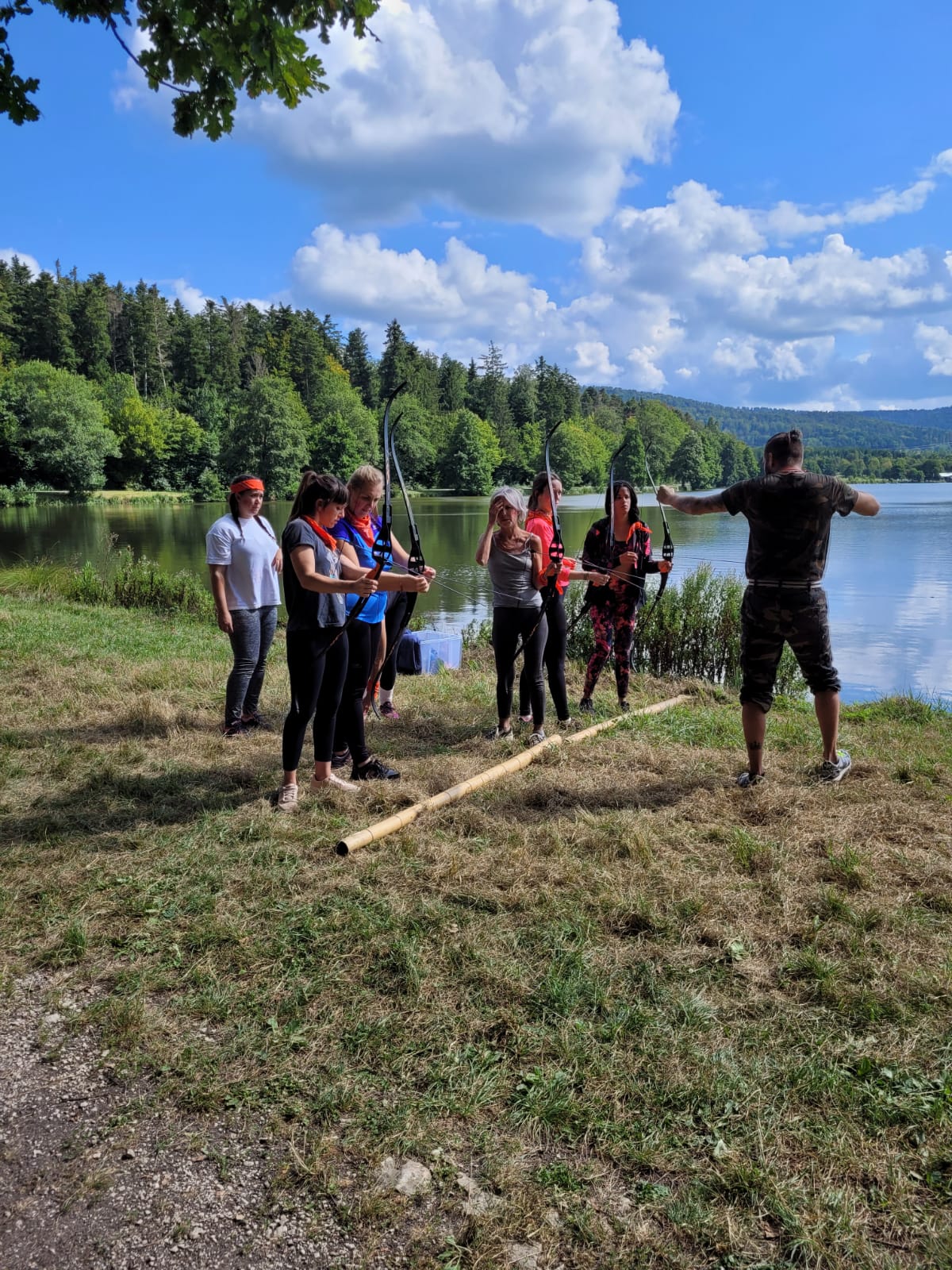
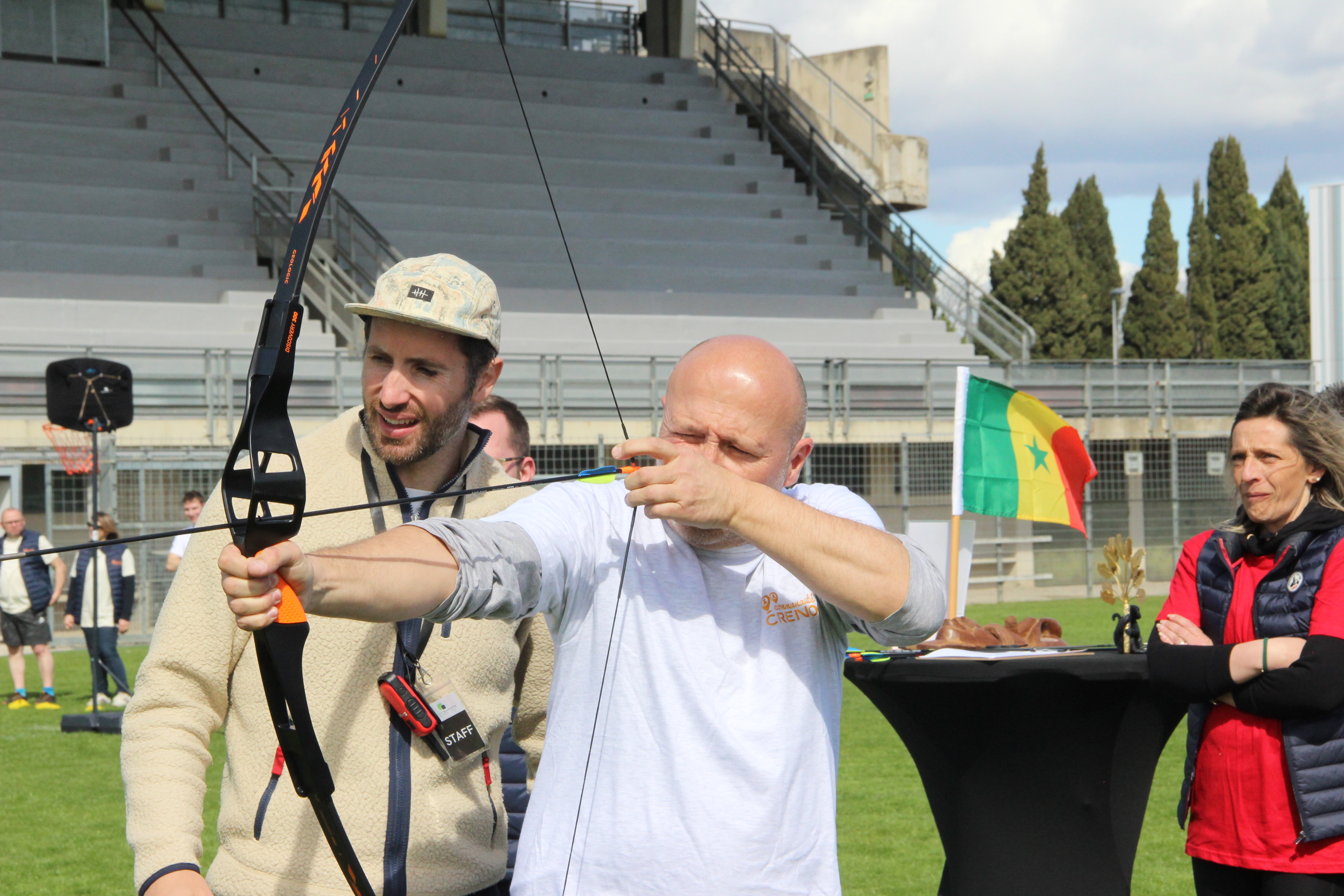
Montréal delivery you can rely on, with measurable operating standards
10+ years designing corporate activations in Québec, including corporate event entertainment in Montréal for leadership offsites, team days, and client receptions.
50–200 events/year supported across our network (planning, staffing, suppliers, and on-site management), with documented run-of-show and safety checklists.
12–400 participants per Archery Activity format, using wave scheduling and multi-lane setups to keep wait times controlled.
1 bilingual lead + 1 instructor per lane as a typical staffing baseline, adjusted to venue layout and group profile.
15-minute standard safety briefing, plus a progressive skill ramp (stance, draw, release, scoring) to reduce anxiety for first-timers.
Who books Archery Activity in Montréal and why they renew
In Montréal, our corporate clients usually come from three environments: head offices coordinating multi-team gatherings, fast-scaling tech companies standardizing internal culture rituals, and professional services firms that need a polished, low-risk activity that doesn’t dilute brand standards. Many collaborate with us year after year because the operational burden stays off their internal teams: the activity is predictable, documented, and easy to validate with internal stakeholders.
On real projects, HR often needs inclusivity and participation rates; communications needs clean visuals and a controlled brand presence; executives want a format that respects time and doesn’t feel childish. Our job is to reconcile those priorities and deliver an activation that is safe, paced, and credible in a corporate environment—whether it’s a downtown venue with strict access rules or a seasonal outdoor site with weather contingencies.
If you have internal reference companies you want us to reflect (industry peers, local partners, or recurring event sponsors), we can integrate them into the planning narrative and align the on-site tone to your organizational culture.
 Besoin d’un devis rapide ?
Nous vous envoyons une première proposition sous 24h.
Why choose an archery activity for a Montréal corporate event?
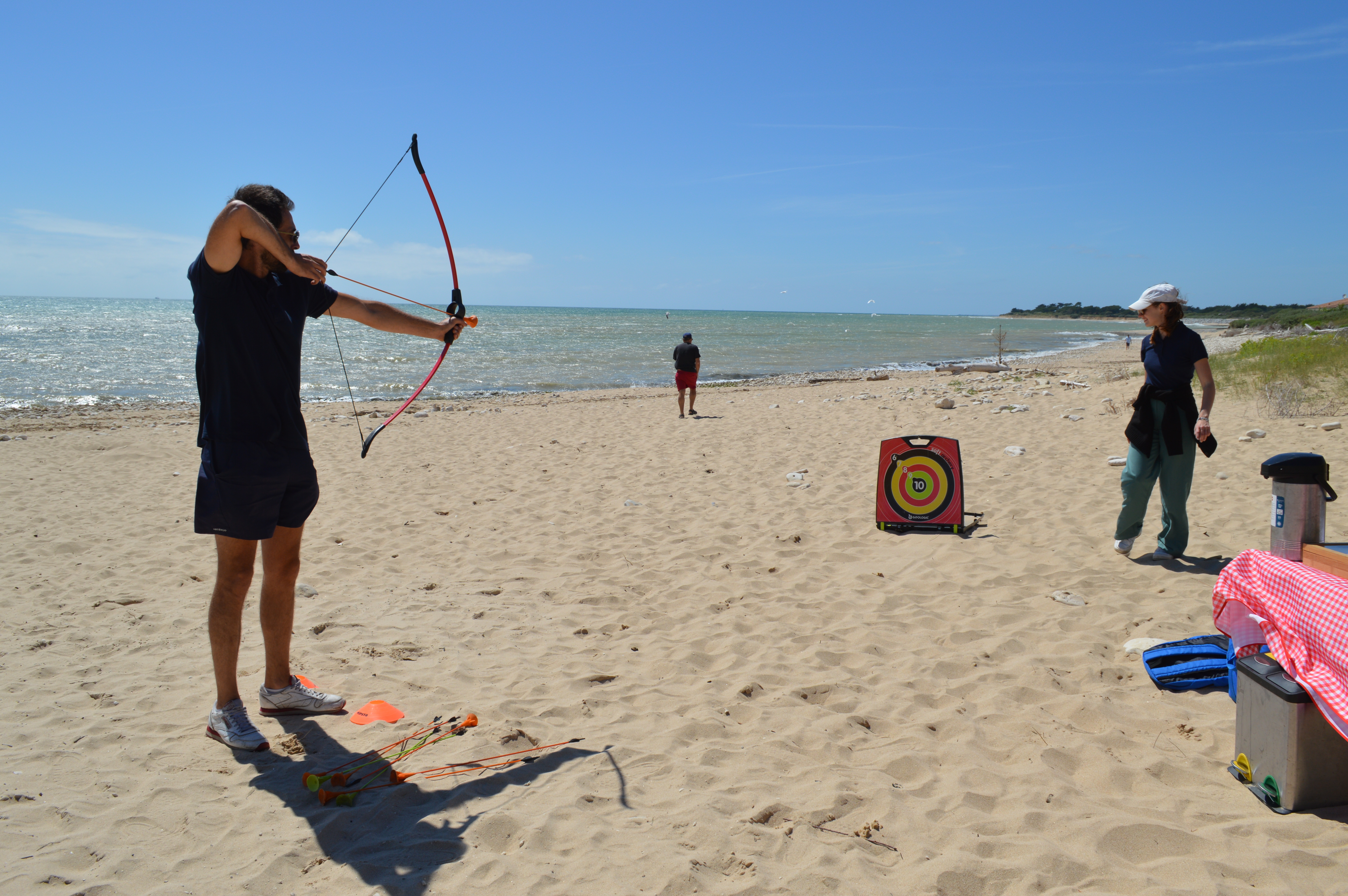
A corporate Archery Activity works because it’s simultaneously simple to understand and rich in managerial outcomes. You can run it as a short energizer between plenaries or as a structured tournament that supports recognition, cross-team mixing, and leadership visibility—without needing a sports background or high physical intensity.
Creates a shared focus quickly: the moment people step to the line, phones go away. This helps after long presentations or during strategic offsites where attention is a real constraint.
Supports psychological safety: participants can try, miss, adjust, and improve in minutes. For teams coming out of reorgs or high workload cycles, that “safe failure” loop is valuable and visible.
Offers a neutral playing field: unlike some team sports, archery doesn’t advantage extroverts or athletic profiles as strongly. With the right facilitation, quiet high-performers often shine.
Gives HR measurable participation: we can design scoring that rewards consistency, team contribution, or improvement—not only peak performance—useful when you want engagement without over-competition.
Produces clean content for internal comms: archery visuals are high-contrast and easy to capture. We set designated photo angles and timing so your comms team can get usable shots without disrupting safety.
Fits real corporate agendas: common modules include 45–60 minutes for small groups, or 2–3 hours for larger groups with rotations, awards, and networking time.
In Montréal, where corporate events often mix bilingual teams, international visitors, and tight venue constraints, archery succeeds because it’s structured. When the framework is clear, people relax, participate, and the event achieves its purpose: alignment, cohesion, and visible leadership presence.
What Montréal organizations expect from corporate entertainment
Local decision-makers in Montréal are pragmatic: you want an activity that will not create operational noise on event day. That means a supplier who understands building rules (freight elevator schedules, loading dock time slots, union or venue staffing requirements), and who can produce documentation that internal teams can circulate (risk notes, insurance confirmation, run-of-show, staffing plan).
We also see recurring expectations tied to the city’s corporate reality:
Bilingual facilitation without losing tempo. In practice, we deliver concise bilingual safety instructions and keep coaching mostly visual and demonstrative so the group stays in flow.
Inclusion across roles and ages. It’s common to have a mix of executives, new hires, remote team members meeting in person, and partners. We set participation rules that avoid pressure (opt-in lanes, observation zones, alternative roles like scorekeeper or photographer).
Brand-image control. Your event may be internal, client-facing, or partner-facing. We adapt the tone: more “team learning” for HR days; more “premium reception” for client events; more “friendly competition” for sales kickoffs—without crossing into gimmicky themes.
Weather and season planning. Montréal event calendars are affected by winter conditions and shoulder-season uncertainty. We always propose an indoor-ready plan (or covered setup) when the objective cannot tolerate cancellations.
These expectations are not theoretical; they are what keeps internal stakeholders comfortable signing off on entertainment that involves equipment and physical space management.
Which archery formats work best for Montréal corporate groups?
Engagement comes from clarity: people need to understand what to do, how to succeed, and how long it lasts. For corporate groups in Montréal, we build Archery Activity formats that are modular and easy to integrate into your agenda—without compromising safety or crowd management.
Interactive animations in Montréal
Initiation + guided progression (45–75 minutes): best for mixed groups where many are first-timers. We start with stance and release, then move into a simple points-based round. Executives like this format because everyone gets competent quickly and the atmosphere stays inclusive.
Team rotation tournament (90–180 minutes): ideal for 60–250 participants. Teams rotate through lanes with timed rounds. We can set scoring that rewards consistency and collaboration (team average, “improvement bonus,” or mixed-skill pairing) to avoid a purely competitive vibe.
Archery + strategic mini-challenges: for offsites where you want a business parallel without forced metaphors. Example: each round adds a constraint (time limit, communication rule, role swap) mirroring real project conditions.
Art animations in Montréal
Brand-forward set design: if your communications team needs a polished look, we can coordinate clean signage zones (not on the shooting line), consistent color palette for lane markers, and a controlled photo corner that doesn’t interfere with safety.
MC + awards pacing: for gala-style events, a bilingual MC can handle transitions, explain scoring succinctly, and keep the audience engaged while we manage rotations. This is where corporate tone matters: crisp, respectful, and time-aware.
Innovative animations in Montréal
Networking-friendly sequencing with catering: archery works well when guests alternate between activity and food stations. We recommend short waves (6–10 minutes) so people can grab a drink, shoot, and circulate without feeling stuck in a line.
Zero-mess snack pairing: if the activity is indoors in a downtown Montréal venue, we coordinate with catering on low-crumb options near the lanes to protect flooring and keep equipment handling clean.
Gourmand animations in Montréal
Data-light scoring that still feels modern: rather than complex apps that slow down the line, we use fast scoring boards and a central tally. If you need reporting, we can provide post-event recap (participation estimate, tournament winners, and a short operational note).
Hybrid engagement roles: for groups with mobility constraints or people who prefer not to shoot, we build roles like score captain, timekeeper, coach observer, or media lead—so participation is real, not performative.
The best format is the one that fits your brand and event objective. A regulated financial firm won’t want the same tone as a creative studio—and in Montréal, where employer brand matters, alignment is what keeps the activity credible rather than “just another game.”
Where to host an archery activity in Montréal: venue types that work
The venue determines everything: safety perimeter, participant comfort, noise management, and how premium the event feels. In Montréal, we often start by mapping your group size, your agenda, and the season, then shortlist venue types that can support a controlled shooting line and smooth guest circulation.
| Venue type | For which objective? | Main strengths | Possible constraints |
|---|---|---|---|
Corporate event hall or conference venue (indoors) | Offsites, town halls, holiday parties needing reliable conditions | Weather-proof, controlled lighting, easier AV integration and bilingual announcements | Loading dock schedules, ceiling height checks, stricter rules on protective flooring and tape |
Hotel ballroom in downtown Montréal | Executive gatherings, client events, multi-day meetings | Premium perception, strong service standards, simple logistics for out-of-town guests | Space segmentation, timing constraints with banquet service, strict safety perimeter definition |
Outdoor urban park or private green space | Summer team days, family days, large groups with rotations | High capacity, relaxed atmosphere, easy spectator flow and photo opportunities | Weather contingency required, permits/site rules, ground conditions and wind management |
We strongly recommend a site visit (or at minimum a detailed walkthrough with photos, dimensions, and venue rules) before confirming the concept. In practice, small details—like a pillar near the shooting axis, a service corridor behind the targets, or a shared emergency exit—can change the plan and the staffing needs.
How much does an archery activity cost in Montréal?
Pricing for a corporate Archery Activity in Montréal depends on setup complexity, staffing ratios, duration, and whether the activity is integrated into a broader program. We quote based on operational reality (space, flow, safety) rather than a simplistic “per person” that often hides constraints.
Group size and throughput: a 30-person initiation and a 250-person rotation tournament are different operations. More lanes and instructors reduce waiting time but increase staffing and equipment requirements.
Duration on site: include setup, briefing, activity time, and teardown. A common corporate footprint is 3–6 hours total presence depending on venue access and complexity.
Indoor vs outdoor: outdoor can require additional perimeter management, weather backup plans, and sometimes permitting. Indoor may require protective flooring and stricter access windows.
Facilitation level: bilingual MC, tournament management, awards scripting, and integration with your run-of-show affect the scope.
Branding and comms support: signage zones, photo management timing, and post-event recap deliverables can be included when communications teams need structure.
Risk and compliance needs: some organizations require additional documentation, pre-event briefings with OHS stakeholders, or security coordination—especially in high-traffic downtown buildings.
From an ROI perspective, the right budget is the one that protects your timeline and reputation. For executives, the value is not “archery equipment”—it’s a controlled experience where participation stays high, incidents stay at zero, and the event supports culture and retention rather than creating post-event issues for HR.
Why work with a Montréal agency for an archery activity?
Local execution is not a slogan; it’s a risk-control advantage. A Montréal-based team knows the venues’ access constraints, typical union or building rules, traffic realities for load-in, and the pace required when your event day is already tight. When something shifts—delayed room access, last-minute room flip, weather change—you want a partner who can adapt quickly with local resources and realistic options.
As INNOV'events, we also protect your internal stakeholders. HR and communications teams are often the ones who “own” the success in the eyes of leadership. Our job is to provide documentation, clear decision points, and a day-of structure that reduces surprises.
When you need a broader view than the activity itself, you can also leverage our planning capabilities as an event agency in Montréal—useful when archery is one component within a multi-activation program.
- Faster validation with venues: we ask the right technical questions early (dimensions, access, floor protection rules, scheduling), reducing late-stage changes.
- Operational staffing continuity: local staff who are accustomed to corporate pacing and bilingual groups.
- Weather-ready planning: realistic contingency options when outdoor plans are sensitive to Montréal conditions.
- On-site accountability: one clear owner for the activity who coordinates with your producer/AV/catering instead of fragmenting responsibilities.
From an ROI perspective, the right budget is the one that protects your timeline and reputation. For executives, the value is not “archery equipment”—it’s a controlled experience where participation stays high, incidents stay at zero, and the event supports culture and retention rather than creating post-event issues for HR.







Examples of Montréal corporate scenarios we build for
Our projects vary because corporate objectives vary. We’ve delivered Archery Activity modules as:
Leadership offsite energizers between strategy blocks: short, high-structure rounds that re-focus the room and create cross-functional mixing without dragging the schedule.
Sales kickoff tournaments: scoring systems designed to keep competitiveness positive, with team-based averages that reduce “winner-takes-all” dynamics and preserve morale.
Client appreciation receptions in downtown Montréal: premium tone, controlled visuals, and guest flow that respects networking priorities (no long lines, no confusion, no loud chaos).
HR culture days after reorgs or rapid growth: facilitation that prioritizes inclusion, low-pressure participation, and visible improvement rather than performance.
Across these scenarios, the same principle applies: the activity must serve the event purpose, not compete with it. We design the format around your constraints—time, brand posture, and stakeholder expectations—then engineer the operation to deliver reliably.
What can go wrong with archery entertainment in Montréal events?
Underestimating wait times: a single-lane setup for a large group creates frustration and disengagement. We solve this with lane math, rotation design, and clear wave calls.
Safety briefing that’s either too long or too loose: overly long briefings lose attention; overly casual briefings increase risk. We deliver concise, enforced commands and keep coaching practical.
Poor venue fit: insufficient depth, traffic behind the targets, or ceiling limitations (indoors) leads to last-minute changes. We validate feasibility before confirming the concept.
Mismatch with company culture: hyper-competitive scoring in a context where you need inclusion can backfire. We adjust scoring to your leadership intent (collaboration, consistency, improvement).
No weather contingency: outdoor setups in Montréal need a realistic Plan B (indoor alternative, covered space, or rescheduling strategy) aligned with your agenda and contracts.
Unclear ownership on event day: when nobody is responsible for timing, transitions, and coordination with catering/AV, the activity disrupts the program. We assign a lead who manages integration and escalation.
Our role is to prevent these risks with a disciplined pre-production process and a calm on-site command structure. For executive sponsors, that’s the difference between “an activity” and a controlled corporate experience.
Why Montréal clients renew with INNOV'events
Renewal happens when the internal workload goes down year over year. HR and communications teams don’t want to re-explain basics, renegotiate every detail, or worry about operational surprises. We build reusable frameworks: lane plans, timing models, safety notes, and vendor coordination habits that make next year easier.
70–85% of our recurring corporate accounts rebook within 12–18 months when the event is annual or semi-annual (team day, holiday season, leadership cycle).
24–72 hours typical turnaround for a first structured proposal once scope and venue constraints are clear (group size, date window, indoor/outdoor preference).
0 incident objective supported by enforced perimeter rules, staffing ratios, and a consistent command structure on site.

Loyalty is not about novelty; it’s about reliability under pressure. In Montréal, where schedules are tight and stakeholders are demanding, repeat business is the most honest indicator that the delivery is solid.
How we plan your archery activity in Montréal from A to Z
👉 Montréal scoping call and stakeholder alignment
We start with a short, structured call: objective (team cohesion, client experience, recognition), audience profile, group size range, language expectations, and agenda constraints. We also identify your internal approvers (HR, comms, HSE, executive sponsor) and the level of documentation required. The output is a validated concept direction and the operational assumptions we’ll base the quote on.
👉 Venue feasibility and lane plan
We validate the space: dimensions, ceiling height (if indoors), access times, loading constraints, spectator flow, and any venue rules affecting setup. We then build a lane plan and participant journey: check-in cue, briefing zone, shooting line, waiting zone, photo zone, and exits. This step prevents day-of compromises that reduce safety or create bottlenecks.
👉 Safety framework and staffing model
We define the safety perimeter, instructor positions, command language, and supervision ratios. We also plan participant handling (who can shoot, who observes, how rotations work). For corporate groups, we keep instructions short and consistent, and we enforce line discipline without making the tone heavy.
👉 Run-of-show integration with your Montréal event program
We sync with your producer or internal event owner: timing, transitions, announcements, catering waves, and any executive moments (welcome speech, awards, group photo). If the event is bilingual, we script key lines to avoid repetition and protect schedule. This is where the activity stops being a “side station” and becomes a controlled part of the event narrative.
👉 Day-of delivery and post-event recap
On site, a lead is accountable for execution and escalation. We manage setup, briefing, rotations, scoring, and teardown while coordinating with venue staff. After the event, we can provide a short recap for internal stakeholders: participation estimate, timing notes, what worked, and what to adjust next time—useful for HR and communications planning cycles.
FAQ sur l'organisation Archery Activity à Montréal
Can archery be hosted indoors in Montréal venues?
Yes, if the room depth and ceiling height allow a safe shooting distance and a controlled perimeter. We validate dimensions, spectator zones, and venue rules (floor protection, access times) before confirming. Indoors is often the most predictable option for Montréal calendars.
How many participants can cycle through in Montréal?
With multi-lane rotations, we typically handle 60–250 participants over 2–3 hours, depending on lane count and round duration. For smaller groups, 12–40 participants can run a solid initiation in 45–75 minutes.
Is an archery activity safe for corporate teams in Montréal?
It is safe when operated with strict perimeter rules, instructor supervision, and clear line commands. We run a 15-minute safety briefing, enforce a defined shooting line, and keep spectators in designated zones. Safety is managed actively throughout, not only at the start.
What should HR plan for accessibility in Montréal events?
We plan inclusive participation roles: shooting for those comfortable, plus scorekeeping, timekeeping, coaching support, or media roles for others. We can also adjust lane height and pacing. Tell us early if you have mobility constraints so the venue layout supports them.
How far ahead to book archery entertainment in Montréal?
For peak periods (summer team days, November–December holiday season), plan 6–10 weeks ahead. For standard dates, 3–6 weeks can work if the venue is confirmed. Shorter timelines are possible, but options narrow quickly for staffing and space.
Request a Montréal quote with a clear plan and real logistics
If you’re comparing agencies, we can help you make a clean decision quickly. Share your date window, venue (or shortlist), approximate headcount, and your objective (team cohesion, client reception, recognition). We’ll come back with a structured proposal for a Archery Activity in Montréal: lane plan, staffing model, timing, safety framework, and a transparent budget aligned with your constraints. The earlier we align on space and schedule, the smoother—and more defensible—the event becomes for HR, communications, and executive sponsors.
INNOV'events Montréal Agency
Thierry GRAMMER is the manager of the INNOV'events Montréal office. Reach out directly by email at canada@innov-events.ca or via the contact form.
Contact the Montréal agencyToutes nos prestations & animations Montréal, Quebec
Découvrez nos prestations événementielles
- Employee Party in Montréal
- Corporate Christmas Party in Montréal
- Networking Cocktail Event in Montréal
- Shopping Mall Activation in Montréal
- Grand Opening Event in Montréal
- Product Launch Event in Montréal
- Open House Event in Montréal
- Field Brand Activation in Montréal
- Event Catering Service in Montréal
Découvrez nos animations événementielles disponibles au Quebec
- Event Hostess in Montréal
- Escape Game in Montréal
- MasterChef-Style Cooking Workshop in Montréal
- Corporate Magician in Montréal
- Tent Rental in Montréal
- Color Analysis Workshop in Montréal
- Inflatable Games in Montréal
- Valet Service in Montréal
- Soccer Simulator in Montréal
- LED Furniture Rental in Montréal
- LED Branding Activation in Montréal
- Immersive Culinary Experience in Montréal
- Light Painting Activity in Montréal
- Immersive Mystery Night in Montréal
- Promotional Contest in Montréal
- Promotional Materials (POS) in Montréal
- Virtual Reality Experience in Montréal
- Molecular Gastronomy Workshop in Montréal
- Halloween Event in Montréal
- Fireworks Show in Montréal
- Sports Challenge – Giant Games in Montréal
- Professional Event Host in Montréal
- Photo Booth Animation in Montréal
- Santa Claus Appearance in Montréal
- Kids Entertainment in Montréal
- Guided Tour in Montréal
- Urban Rally in Montréal
- Ball Pit Activity in Montréal
- Flight Simulator in Montréal
- Food Truck Rental in Montréal
- World Record Attempt in Montréal
- Surf Simulator in Montréal
- Soccer Simulator in Montréal
- Wine Casino in Montréal
- Makeover Workshop in Montréal
- Perfume Creation Workshop in Montréal
- Acting Workshop in Montréal
- CSR Activities in Montréal
- Archery Activity in Montréal
- Event Security Guard in Montréal
- Wine Tasting Workshop in Montréal
- Mime Performance in Montréal
- TV Game Show Animation in Montréal
- Funfair Event in Montréal
- Crisis Management Workshop in Montréal
- Crisis Negotiation Workshop in Montréal
- Arcade Games in Montréal
- Indoor Skydiving Simulator in Montréal
- Ski Simulator in Montréal
- Racetrack Driving Experience in Montréal
- Introductory Flight Experience in Montréal
- Tasting Experience in Montréal
- Build Your Own Foosball Workshop in Montréal
- 2CV Rally in Montréal
- LEGO Challenge in Montréal
- Casino Night in Montréal
- Interpreter / Translator in Montréal
- Promotional Merchandise in Montréal
- Shuttle / Transportation Service in Montréal