
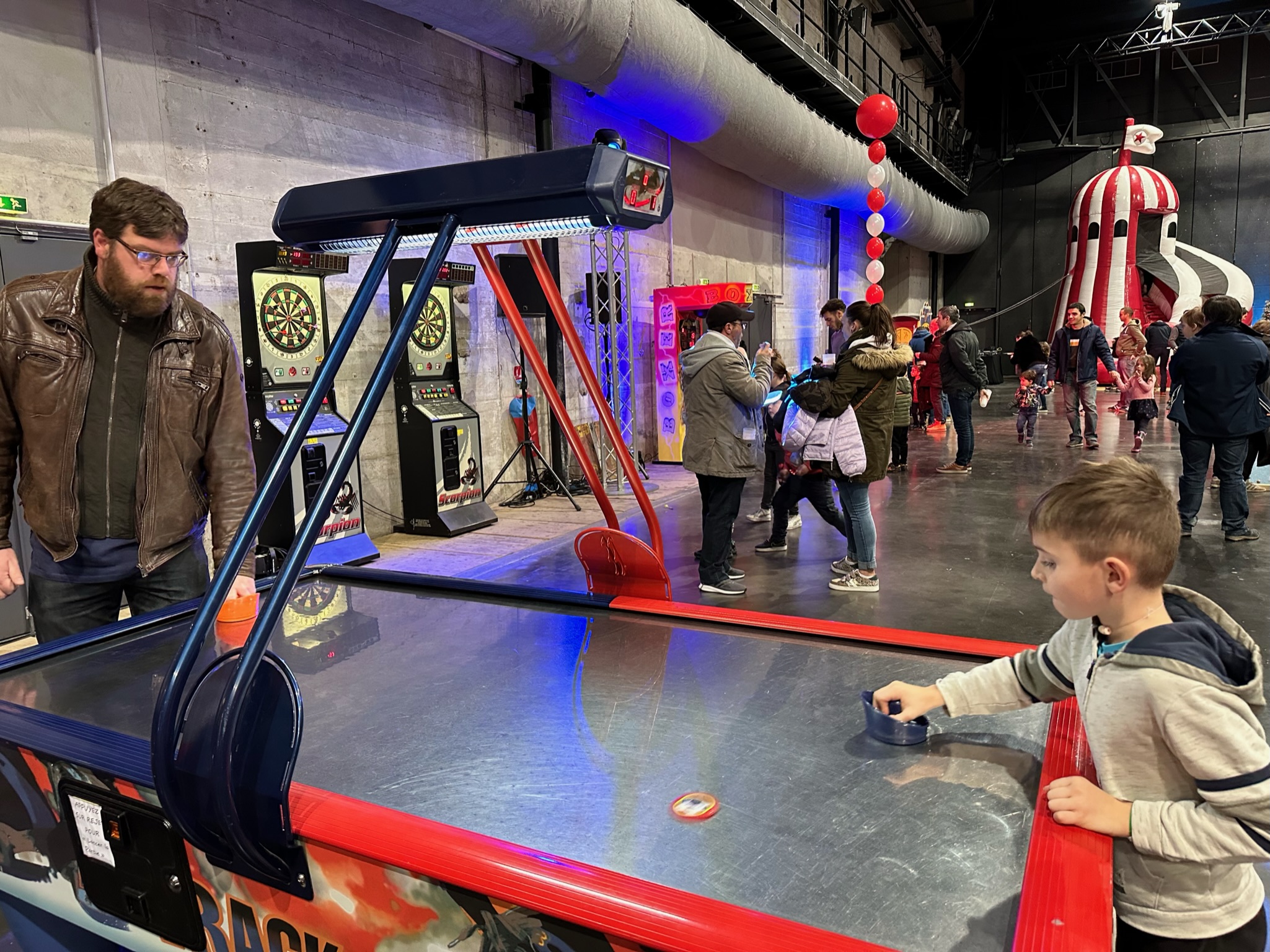
Arcade Games in Montréal for corporate events that actually move the needle
INNOV'events designs and operates Arcade Games activations in Montréal for executives, HR and communications teams who need a clean, controlled, and measurable event experience. We handle the selection of machines, delivery, power and network planning, floor layout, staffing, and on-site supervision.
Typical formats: 30 to 1,500+ participants, from office lounges to convention centres, for holiday parties, recruitment events, leadership offsites, and client evenings. You get a single point of contact, a production schedule, and a run-of-show that keeps your brand and your guests protected.
Sommaire
Entertainment is not “extra” in a corporate event: it is a tool to improve circulation, participation, and the quality of interactions. A well-designed Arcade Games zone reduces social friction, gives people a reason to stay longer, and creates natural cross-team conversations without forcing networking.
In Montréal, organizations expect fast setup windows, strict building rules, bilingual guest communications, and a polished visual presentation that fits the corporate tone. Decision-makers also want predictability: clear budgets, proven equipment, and a plan that works even when the venue schedule shifts.
INNOV'events is on the ground locally with technicians and event producers who know Montréal venues, loading docks, and union or security constraints. We design Arcade Games in Montréal with practical details in mind: electrical load plans, noise control, queue management, and photo-ready branding.
Proven delivery capacity in Montréal
10+ years producing corporate activations and entertainment across Québec and Canada, with repeat programs for HR and internal communications teams.
Operational formats from 30 to 1,500+ attendees, including multi-zone experiences (arcade + lounge + stage moments) managed under one run-of-show.
48–72 hours typical turnaround for first budget ranges and technical feasibility checks once venue details are confirmed.
Standardized production tools: site inspection checklist, power distribution mapping, load-in/load-out schedules, and on-site incident log (risk prevention, not after-the-fact fixes).
Who we support year after year in Montréal
INNOV'events works with Montréal-based organizations and Canadian headquarters that host recurring internal events, client receptions, and recruitment activations. Many of our mandates come back annually because the constraints stay the same: limited setup time, strict venue rules, and high visibility for the brand and leadership.
If you have internal preferred suppliers, security protocols, or a building engineering team that needs documentation (equipment specs, electrical draw, floor plan, insurance), we integrate early. That is typically what makes the difference between a smooth arcade zone and a “nice idea” that becomes stressful on event day.
We can also coordinate with your communications team for bilingual signage and on-brand visuals so the corporate event entertainment in Montréal feels like part of your environment—not an external add-on.
 Besoin d’un devis rapide ?
Nous vous envoyons une première proposition sous 24h.
Why Montréal companies use Arcade Games for employee events
Arcade activations are effective because they solve a real event problem: how to get people participating quickly, without long explanations, and across different personality types. For HR and communications leaders, it is a way to create connection at scale while keeping the evening structured and easy to manage.
Faster engagement within the first 10 minutes: guests understand arcade play instantly, which reduces “standing around” and helps the room come alive early.
Cross-team mixing without forced networking: friendly competition and cooperative games naturally create micro-groups (finance with operations, new hires with leaders) in a low-pressure context.
Predictable flow management: arcade zones create repeatable participation loops (play–watch–switch), which helps avoid bottlenecks at bars, buffets, or registration areas.
Employer brand and culture: when designed properly (visuals, tone, game choices), the arcade becomes a tangible expression of culture—innovative, accessible, performance-driven, or community-oriented.
Measurable touchpoints for communications teams: leaderboards, QR check-ins, or team tournaments allow you to report participation metrics and content outputs (photos, short clips, internal recap).
Inclusive by design: with the right selection (skill-based, casual, accessible controllers, varied game tempos), you avoid a setup that only appeals to one demographic.
Montréal’s economic culture is competitive and relationship-driven at the same time—tech, finance, professional services, higher education, and public-facing brands all need events that feel controlled, modern, and respectful of diverse teams. A well-run Arcade Games activation meets that expectation while remaining operationally reliable.
What changes when you run Arcade Games in Montréal venues
Montréal is not a “plug-and-play” market for event entertainment. The difference is not the machines—it is the operating context. Many downtown venues have constrained loading access, booked freight elevators, and strict load-in time windows. We routinely plan for staggered deliveries, quieter wheel systems, and protection for floors and walls to comply with building standards.
Power is another Montréal reality. Older buildings can have limited circuits, and modern venues may require using specific panels with on-site engineering approval. For Arcade Games in Montréal, we plan electrical draw per machine, distribute loads, and avoid daisy-chaining that trips breakers at peak hours. If your event includes AV, DJ, or a stage program, we coordinate power separation so entertainment does not compromise sound or lighting stability.
Finally, bilingual operations matter. Even when your event is primarily English or French, signage, on-site prompts, and staff greetings should be aligned with your internal culture. This is especially important for recruitment and client events where brand perception is part of the KPI.
Which Arcade Games formats work best for Montréal corporate events
Arcade entertainment works when it creates participation loops and social proof: people see others playing, understand the rules immediately, and feel comfortable joining. In Montréal, where events often mix departments, languages, and seniority levels, the format must reduce barriers and keep the experience elegant.
Interactive animations in Montréal
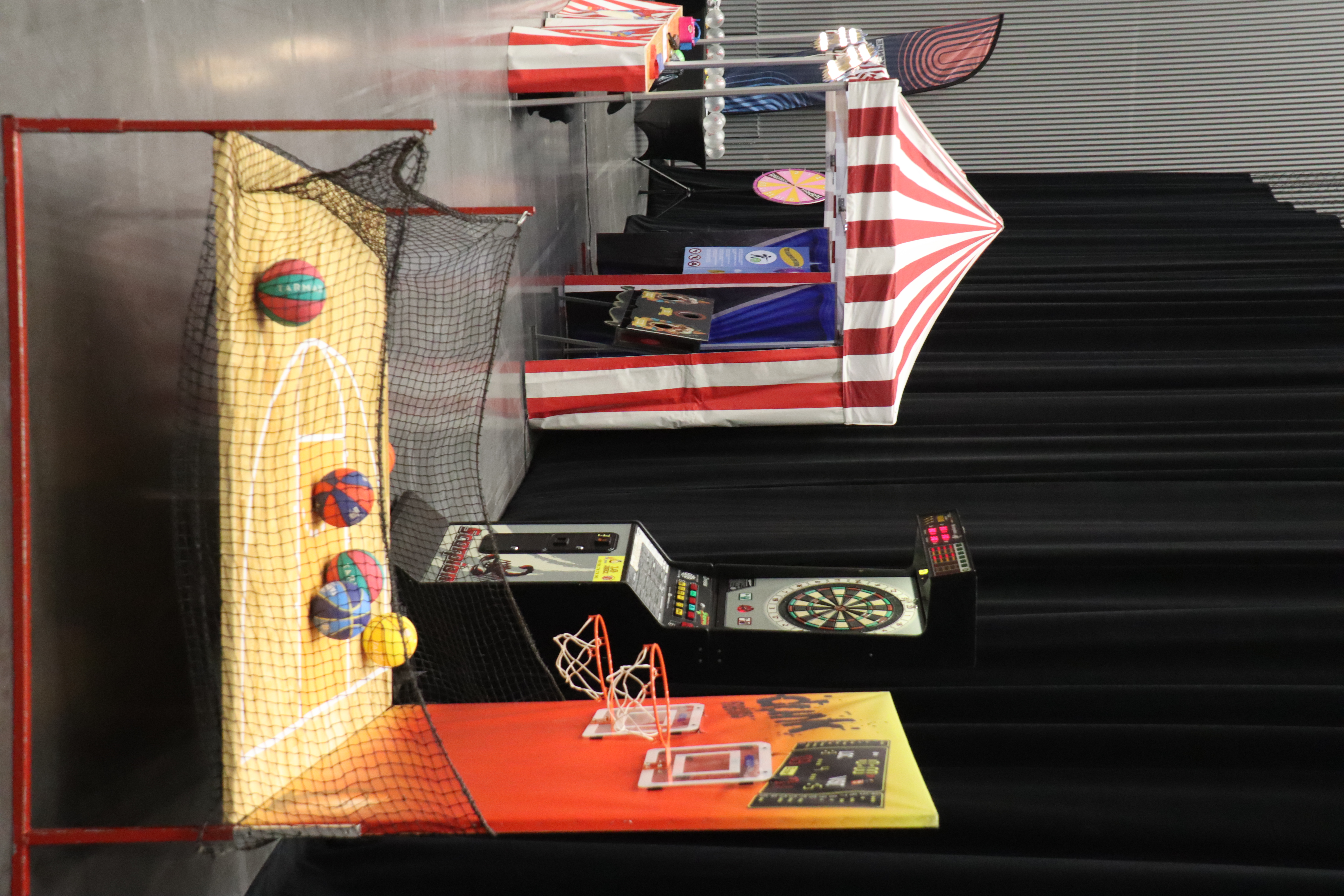
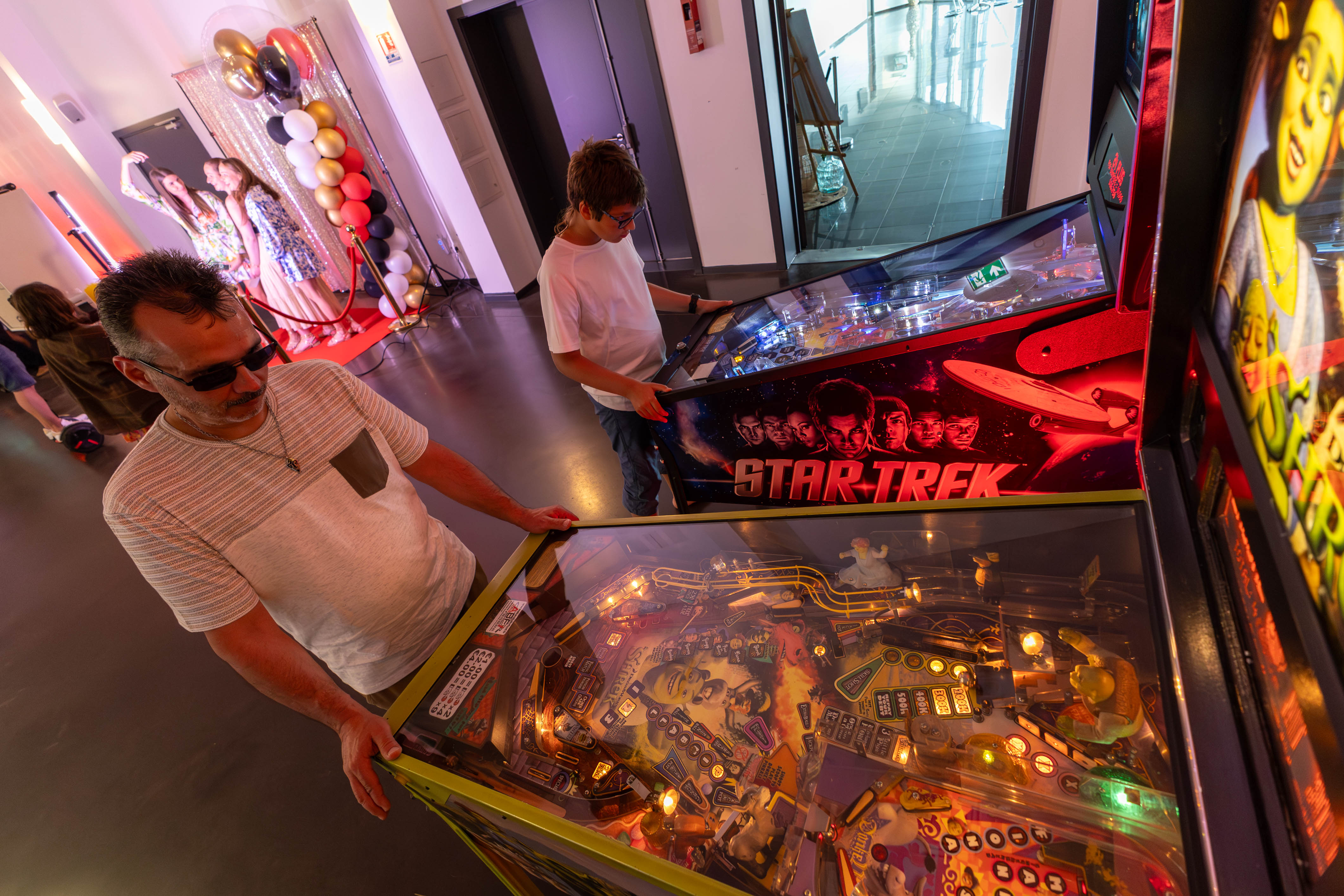
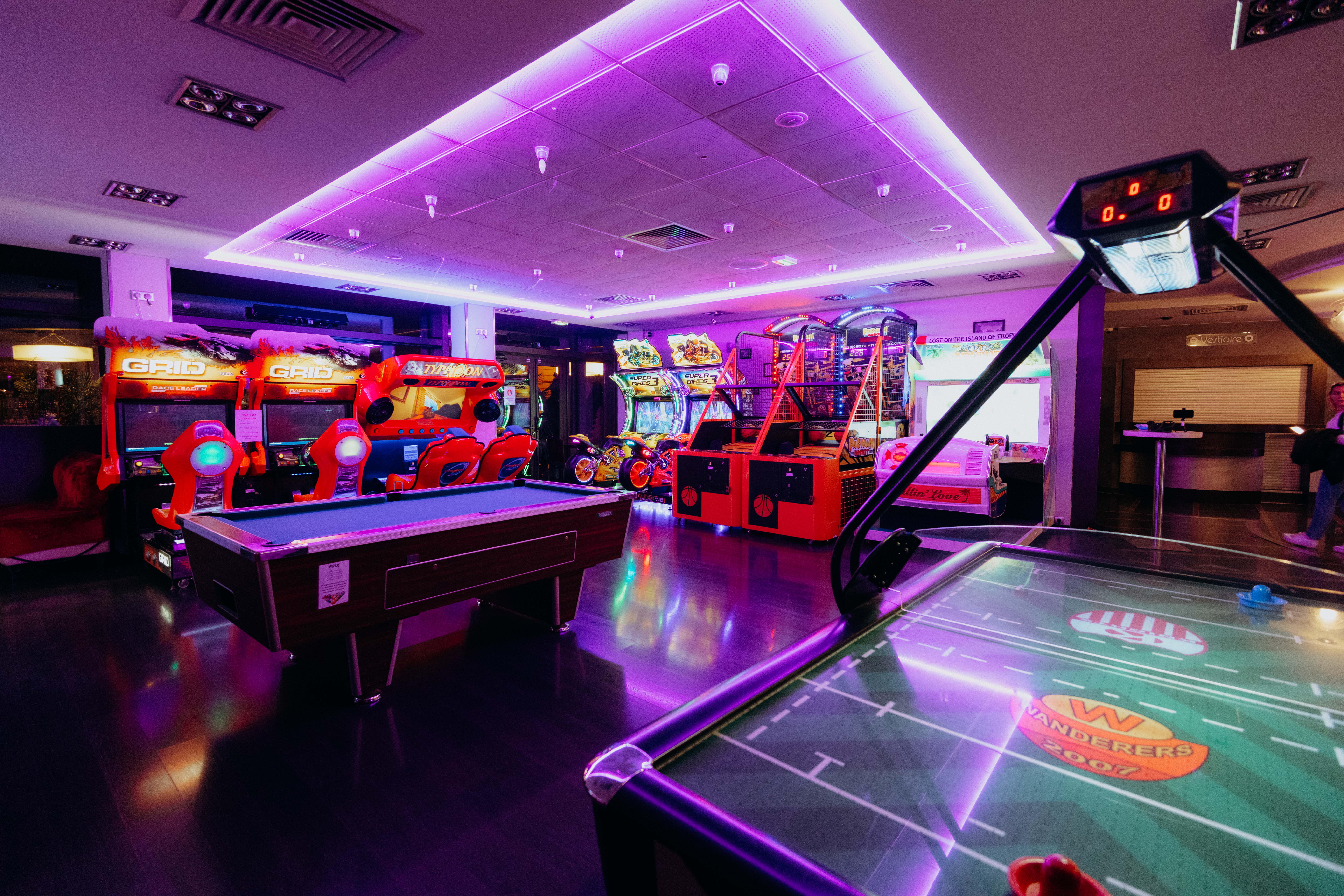
Classic arcade alley (8–20 machines): a curated selection of retro and modern cabinets with short rounds to keep turnover high. Best for receptions where you want continuous movement and multiple conversation starts.
Tournament with scheduled heats: 3–5 time slots of 10–20 minutes each, with a simple bracket and a visible scoreboard. Works well when you need a structured moment that can replace or complement speeches.
Team-based challenge cards: guests earn points by completing a set of mini-challenges across machines (speed runs, cooperative goals, “beat the staff”). Effective for team-building because it rewards collaboration, not just high scores.
Arcade + branded data capture: optional QR registration that links a participant to a nickname and team. Used for internal engagement metrics or sponsor reporting, with privacy-conscious setup (no unnecessary data fields).
Art animations in Montréal
LED and scenic integration: arcade area framed with clean architectural lighting and brand colour accents, designed to look like part of the event (not a trade show booth). Particularly relevant for gala-style rooms in downtown Montréal.
Live host (bilingual): a discreet MC who launches tournament rounds, announces leaderboards, and keeps transitions smooth without “over-hyping” a corporate audience.
Photo-ready winner moments: a controlled spot for podium photos (branding, lighting, and spacing). This is where communications teams get usable content for intranet and LinkedIn without staging issues.
Innovative animations in Montréal
Arcade lounge with Montréal-style snacks: we often pair play with a compact lounge and grab-and-go food so the area stays active without guests leaving for long buffet lines.
Non-alcoholic bar integration: for organizations prioritizing wellness or inclusive events, an NA cocktail station near the arcade keeps energy up and supports responsible hosting.
Gourmand animations in Montréal
Hybrid retro + modern: mixing vintage cabinets with contemporary competitive setups to appeal to different age groups and gaming familiarity levels.
Low-noise “executive-friendly” zone: curated machines and volume controls to keep the arcade engaging while preserving conversation quality—useful for client events or leadership attendance.
Accessibility-forward configuration: wider aisles, seated play options, and simplified control schemes. This is a practical inclusion measure, not just a statement, and it reduces risk at high-traffic moments.
Whatever the format, alignment with brand image is non-negotiable. We validate visual style, sound level, staff dress code, language, and the competitive tone (friendly vs. high-stakes) so the Arcade Games zone supports your culture and does not contradict it.
Which Montréal venues are best for Arcade Games setups
The venue determines what is realistic: ceiling height for signage, loading constraints for heavy machines, available power, and acoustic comfort. For Arcade Games in Montréal, we also pay attention to flooring, elevator access, and whether the space can handle concentrated foot traffic without creating bottlenecks near food and beverage.
| Venue type | For which objective? | Main strengths | Possible constraints |
|---|---|---|---|
| Downtown hotel ballroom | Holiday party, awards night, client reception with a structured program | Built-in AV, predictable service standards, strong guest comfort, easy to integrate arcade as a side zone | Strict load-in windows, union/house rules, power distribution may require venue engineering approval |
| Conference centre / large event hall | Large headcount events (300–1,500+), multi-zone experiences, recruitment fairs | Space for 15–40 machines, clear circulation, robust infrastructure, easier queue management | May feel “big” without scenic work; requires strong signage and zoning to keep energy concentrated |
| Office tower common areas / atrium | Employee appreciation, internal campaign launch, lunchtime activation | High participation due to convenience, ideal for short-format play, minimal guest travel | Security protocols, limited elevators for freight, noise sensitivity, strict protection of floors and walls |
| Industrial loft / converted warehouse | Brand-forward client event, creative team celebration, product launch | Strong aesthetic, flexible layouts, immersive look with lighting and branding | Power can be uneven; requires careful acoustic planning and clear emergency egress management |
We recommend a site visit or at minimum a technical walkthrough (photos, power maps, loading details). In Montréal, that step often prevents last-minute compromises: relocating machines away from a freight path, adjusting the number of cabinets to protect circuits, or rethinking layout to keep service areas clear.
How to budget Arcade Games in Montréal without guesswork
The price of Arcade Games in Montréal depends on the number and type of machines, the production complexity, and the venue constraints. A reliable budget is not a single line item; it is a controlled scope with clear assumptions (hours, access, staffing, branding, and support level).
Number of machines and format: a compact arcade corner (6–10 units) versus a full arcade alley (15–30+). More units also means more power planning and floor space.
Duration and access hours: a 3-hour cocktail differs from a full evening with early load-in, testing, and late-night load-out. Venues that restrict access can increase labour and coordination costs.
Staffing level: attendants for guest support, tournament management, and troubleshooting. For corporate audiences, adequate staffing protects guest experience and reduces risk of equipment misuse.
Power distribution and technical compliance: cables, distribution boxes, safe taping/covering, and coordination with building engineering when required.
Branding and communications: signage, leaderboards, bilingual instructions, and a winner moment area. These items are often what makes the activation look corporate rather than “rented.”
Logistics in Montréal: parking, loading dock booking, elevator reservations, and travel time between supplier warehouse and venue—especially during peak downtown traffic windows.
From an ROI perspective, executives typically evaluate arcade entertainment on participation density (how many people used it), time-on-site (did guests stay), and content value (usable internal/external assets). We can structure the activation to generate simple metrics—without turning your event into a data collection exercise.
Why choose a Montréal agency for Arcade Games logistics
Arcade activations look simple until you face Montréal realities: limited freight access, elevator reservations, building rules, and tight timelines between catering, AV, and entertainment. A local agency reduces friction because we know how venues operate here and we can coordinate quickly with on-site teams.
Working with INNOV'events means you are not only renting machines—you are buying operational certainty: a production schedule, a responsible team on the floor, and clear accountability if anything changes. If you are benchmarking partners, ask who owns the power plan, who supervises during peak time, and who has the authority to adapt layout on the spot.
As an event agency in Montréal, we also have short feedback loops with local suppliers and technicians, which is often what saves an event when a venue changes a load-in window or when attendance is higher than expected.
- Faster venue coordination with Montréal operations teams (security, engineering, banquet, union labour where applicable).
- More realistic production planning based on local traffic, parking constraints, and known load-in bottlenecks.
- On-site responsiveness: when a breaker trips or a machine needs a reset, local teams reduce downtime.
- Better risk management: documentation, insurance alignment, floor protection, and guest safety practices adapted to the venue.
From an ROI perspective, executives typically evaluate arcade entertainment on participation density (how many people used it), time-on-site (did guests stay), and content value (usable internal/external assets). We can structure the activation to generate simple metrics—without turning your event into a data collection exercise.





What we’ve delivered with Arcade Games in Montréal event programs
We deliver arcade activations across multiple corporate contexts because the operational fundamentals stay the same: the entertainment must support the event’s purpose, not compete with it. For HR teams, we have built arcade zones that act as a “social engine” during holiday parties—placed intentionally to prevent crowding near the bar and to keep participation steady between speeches and meal service.
For communications teams, we have structured tournaments with clean visual systems (leaderboard screens, branded signage, and a defined winner moment) so internal content is usable. The difference is planning camera angles, lighting levels, and ensuring the area looks organized even when busy—details that matter when your recap goes to leadership or external channels.
For executive groups, we often design quieter, more refined arcade corners that keep energy up without changing the room’s tone. That includes volume control, curated game selection, and staffing trained to support guests discreetly. The goal is simple: leaders feel comfortable circulating, and clients or employees feel welcomed into the experience.
Common Montréal mistakes that derail Arcade Games events
Underestimating power needs: plugging multiple machines into insufficient circuits leads to breaker trips at peak time—exactly when the room is full and leadership is present.
Poor zoning: placing arcade machines where lines block entrances, bars, buffet access, or emergency exits creates frustration and can trigger venue intervention.
Wrong game mix for the audience: only high-skill games can discourage participation; only slow games can create long waits. You need balance and turnover.
No staffing plan: without attendants, small issues become long downtimes, and guests hesitate to engage. For corporate events, that looks like poor organization.
Ignoring acoustics: arcade sound bleeding into speeches or networking areas forces you to lower volume or shut down machines, reducing value.
Late decisions on branding: signage and leaderboard elements added last minute often look improvised and clash with corporate visual standards.
Our role is to prevent these risks with a documented plan: venue feasibility, power mapping, layout validation, staffing levels, and a run-of-show that fits your program. The objective is not to “make it work”—it is to make it predictable.
Why Montréal HR and communications teams renew with INNOV'events
Client loyalty in corporate events usually comes down to one factor: reliability under pressure. When leadership attendance is confirmed late, when a venue changes access times, or when attendance shifts by 20%, you need a partner who adapts without drama and without compromising brand standards.
60–70% of our corporate mandates include a repeat component (annual party, quarterly activation, or multi-city program) once the first delivery meets operational expectations.
Typical planning windows range from 3 to 10 weeks, but we can execute faster when venue and scope are confirmed early.
For larger programs, we build a shared production calendar with milestones at T-21 / T-14 / T-7 days to protect approvals and vendor coordination.

Loyalty is not about novelty; it is about trust that your event will run on time, look professional, and be easy to defend internally—especially when budgets are scrutinized and executives expect zero operational surprises.
How we manage Arcade Games in Montréal from brief to teardown
👉 Montréal discovery call and feasibility scan
We start with your objective (HR engagement, client relationship, recruitment, leadership offsite), headcount, venue, date, and program constraints. We identify what could break the plan in Montréal: access hours, elevator/loading dock rules, power availability, noise limits, and security requirements. You receive an initial scope recommendation and budget range based on realistic assumptions.
👉 Game curation and floor plan design
We propose a balanced mix of Arcade Games aligned to your audience profile: quick-play vs. longer sessions, competitive vs. cooperative, seated vs. standing, accessibility considerations. We build a floor plan that manages queues, keeps service paths open, and positions the arcade for visibility without disrupting speeches or networking zones.
👉 Technical planning and venue coordination in Montréal
We confirm electrical requirements per machine, distribution strategy, cable routing, and safety protections. We coordinate with venue engineering/operations for approvals and confirm load-in/load-out schedules. If your event includes AV, catering, and décor, we align timing so teams are not fighting for the same access points.
👉 Branding, bilingual signage, and engagement mechanics
We align visuals with your brand (fonts, colours, tone) and prepare clear instructions. If you want tournament structure, we define rules, time slots, and a leaderboard approach that is easy to understand and easy to manage. Communications teams get a content-friendly setup: clean background, consistent signage, and controlled winner moments.
👉 On-site operations and guest experience control
Our team manages delivery, installation, testing, and a pre-open checklist. During the event, attendants support guest onboarding, troubleshoot quickly, and manage peak-time queues. A lead producer stays accountable for the zone and coordinates with your event lead and venue in real time.
👉 Teardown, venue compliance, and post-event recap
We dismantle within the agreed window, protect the venue, and confirm no damage or missing items. If requested, we provide a brief recap: participation indicators (tournament sign-ups, peak usage periods), operational notes, and recommendations for the next edition—useful for HR reporting and budget justification.
FAQ sur l'organisation Arcade Games à Montréal
How many Arcade Games should we plan in Montréal?
As a practical rule: 1 machine for 12–20 guests during peak periods. For a 200-person cocktail, we often recommend 10–14 machines depending on game length and whether you run a tournament. If you have a stage program, we can reduce the count and schedule play moments to avoid idle equipment.
What space is needed for Arcade Games in Montréal venues?
Plan roughly 30–50 sq. ft. per machine including guest standing room, plus circulation. A 12-machine zone typically needs 450–700 sq. ft. depending on aisle width and whether you add a leaderboard or lounge area. We adjust layout to respect venue egress routes and service paths.
Do Arcade Games setups in Montréal require special power?
Most arcade cabinets run on standard power, but what matters is circuit availability and distribution. We map the electrical draw and avoid overloading. In older Montréal buildings, we often separate entertainment from AV power and plan redundancy. We coordinate with venue engineering when panel access or approvals are required.
Can we run a tournament during a Montréal corporate event?
Yes. The cleanest format is 3–5 heats of 10–20 minutes with a simple bracket and visible scoring. For 150–300 guests, tournaments typically involve 24–64 players while the rest of the arcade remains open-play, keeping participation broad.
How early should we book Arcade Games in Montréal?
For standard inventory and simple logistics, 3–6 weeks is usually comfortable. For peak holiday dates (late November to mid-December) or complex venues downtown, we recommend 8–12 weeks to secure equipment, staffing, and the best load-in windows.
Request a Montréal quote and lock your Arcade Games plan
If you’re comparing agencies, we can quickly validate feasibility and provide a scoped proposal with clear assumptions: machine count, space plan, staffing, power distribution, and schedule. The earlier we confirm venue access and program timing, the more predictable the budget—and the smoother the event day for your team.
Send us your date, venue (or shortlist), estimated headcount, and the type of moment you’re planning (holiday party, client reception, recruitment, offsite). INNOV'events will come back with a practical recommendation for Arcade Games in Montréal that your leadership team can approve with confidence.
INNOV'events Montréal Agency
Thierry GRAMMER is the manager of the INNOV'events Montréal office. Reach out directly by email at canada@innov-events.ca or via the contact form.
Contact the Montréal agencyToutes nos prestations & animations Montréal, Quebec
Découvrez nos prestations événementielles
- Employee Party in Montréal
- Corporate Christmas Party in Montréal
- Networking Cocktail Event in Montréal
- Shopping Mall Activation in Montréal
- Grand Opening Event in Montréal
- Product Launch Event in Montréal
- Open House Event in Montréal
- Field Brand Activation in Montréal
- Event Catering Service in Montréal
Découvrez nos animations événementielles disponibles au Quebec
- Event Hostess in Montréal
- Escape Game in Montréal
- MasterChef-Style Cooking Workshop in Montréal
- Corporate Magician in Montréal
- Tent Rental in Montréal
- Color Analysis Workshop in Montréal
- Inflatable Games in Montréal
- Valet Service in Montréal
- Soccer Simulator in Montréal
- LED Furniture Rental in Montréal
- LED Branding Activation in Montréal
- Immersive Culinary Experience in Montréal
- Light Painting Activity in Montréal
- Immersive Mystery Night in Montréal
- Promotional Contest in Montréal
- Promotional Materials (POS) in Montréal
- Virtual Reality Experience in Montréal
- Molecular Gastronomy Workshop in Montréal
- Halloween Event in Montréal
- Fireworks Show in Montréal
- Sports Challenge – Giant Games in Montréal
- Professional Event Host in Montréal
- Photo Booth Animation in Montréal
- Santa Claus Appearance in Montréal
- Kids Entertainment in Montréal
- Guided Tour in Montréal
- Urban Rally in Montréal
- Ball Pit Activity in Montréal
- Flight Simulator in Montréal
- Food Truck Rental in Montréal
- World Record Attempt in Montréal
- Surf Simulator in Montréal
- Soccer Simulator in Montréal
- Wine Casino in Montréal
- Makeover Workshop in Montréal
- Perfume Creation Workshop in Montréal
- Acting Workshop in Montréal
- CSR Activities in Montréal
- Archery Activity in Montréal
- Event Security Guard in Montréal
- Wine Tasting Workshop in Montréal
- Mime Performance in Montréal
- TV Game Show Animation in Montréal
- Funfair Event in Montréal
- Crisis Management Workshop in Montréal
- Crisis Negotiation Workshop in Montréal
- Arcade Games in Montréal
- Indoor Skydiving Simulator in Montréal
- Ski Simulator in Montréal
- Racetrack Driving Experience in Montréal
- Introductory Flight Experience in Montréal
- Tasting Experience in Montréal
- Build Your Own Foosball Workshop in Montréal
- 2CV Rally in Montréal
- LEGO Challenge in Montréal
- Casino Night in Montréal
- Interpreter / Translator in Montréal
- Promotional Merchandise in Montréal
- Shuttle / Transportation Service in Montréal