
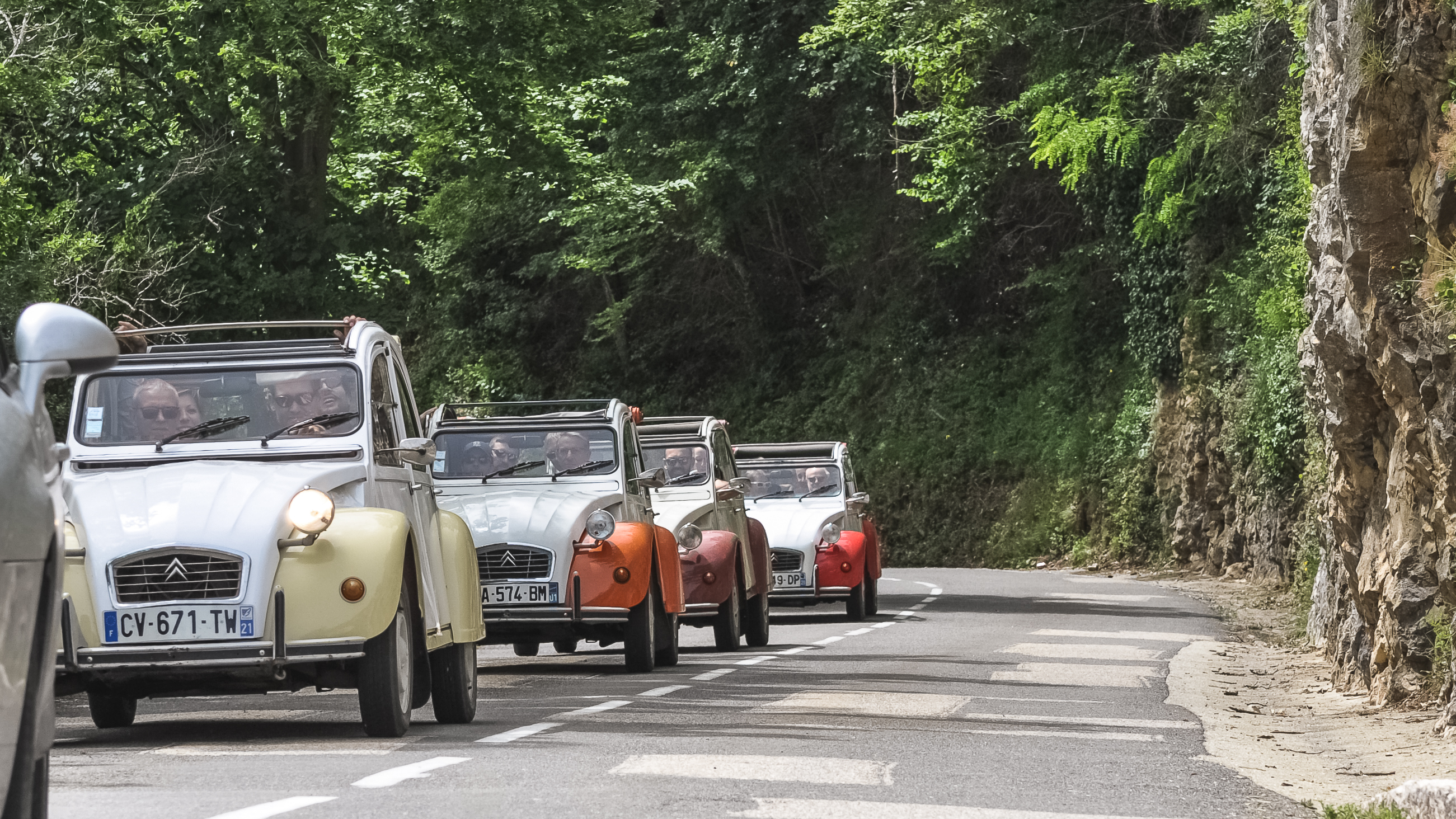
2CV Rally in Montréal that runs on time, safely, and on brand
Sommaire
In a corporate agenda, an activity is never “just fun”: it’s a controlled moment where engagement, leadership signals, and internal communication land (or fail). A 2CV Rally works when it is paced like a meeting: clear objectives, flawless transitions, and a risk plan that protects your reputation.
In Montréal, decision-makers expect professionalism under real constraints: traffic, bilingual facilitation, strict time windows between locations, and venues with precise loading rules. Your teams also expect clarity—where to park, what to wear, how teams are formed, and what happens if weather turns.
We are an event agency based in Montréal, used to C-suite expectations: precise run-of-show, budget transparency, and an on-site team that can solve issues quietly. Our role is to make the rally feel effortless for participants—because backstage has been engineered.
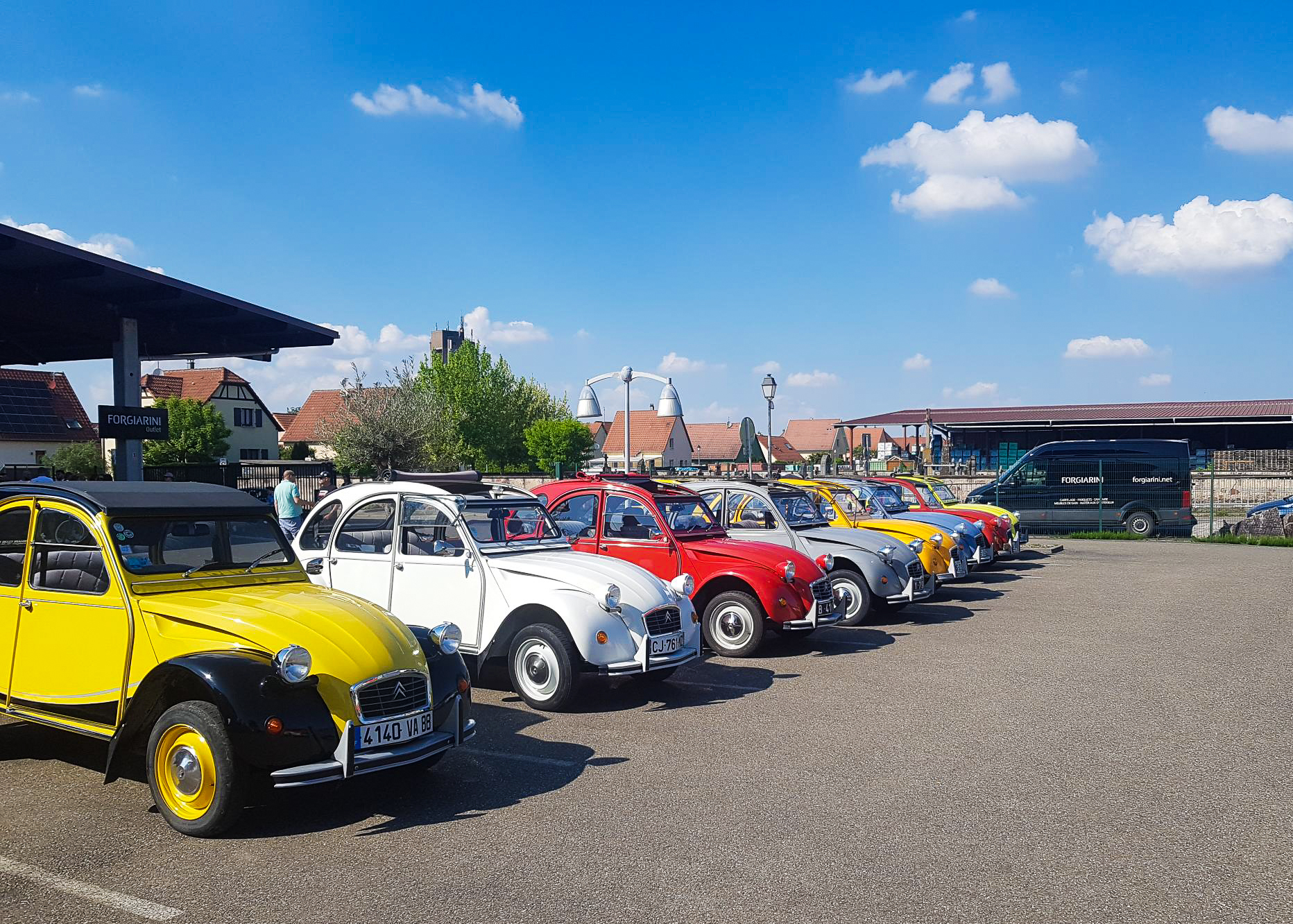
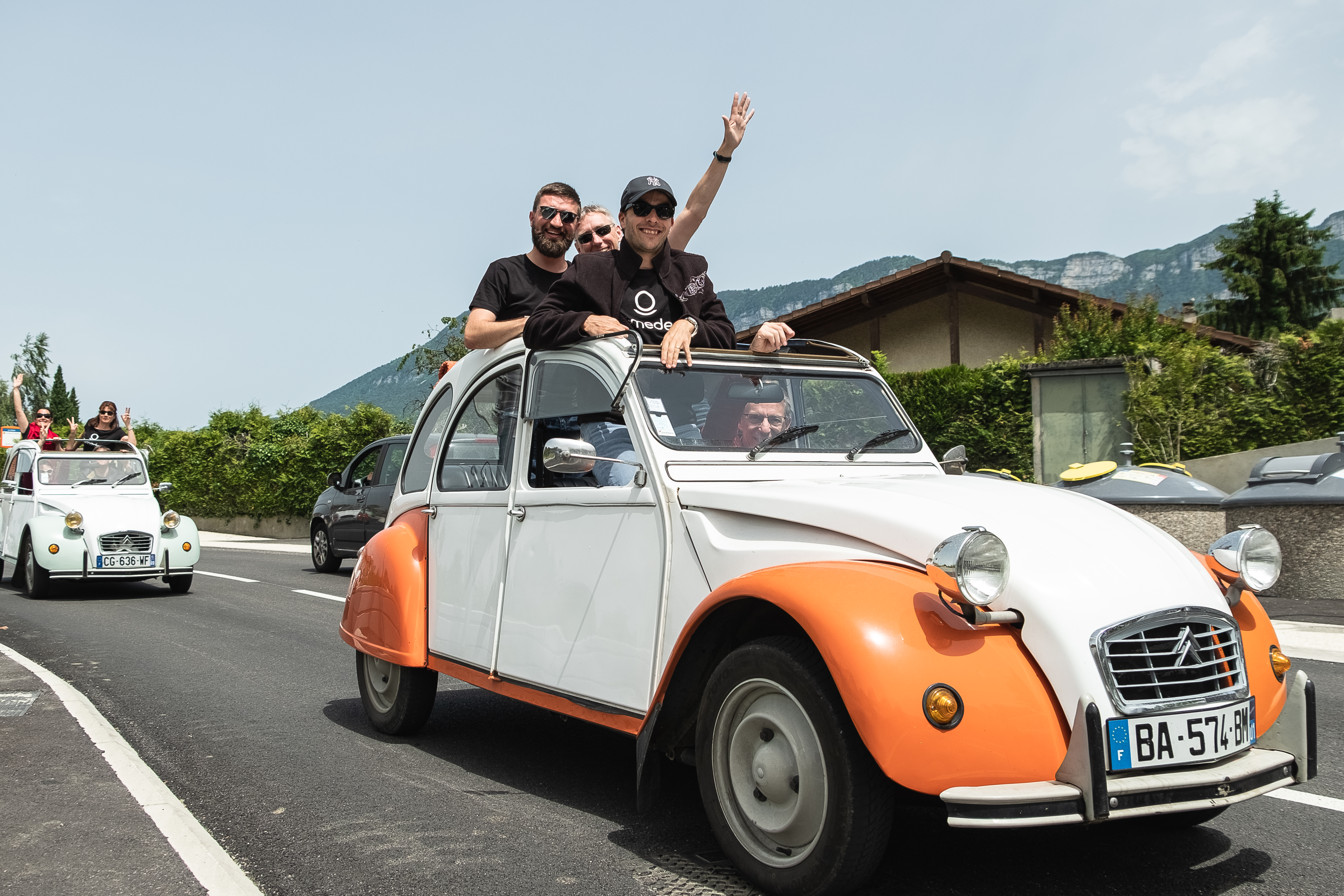
Operational benchmarks our Montréal clients ask for
10+ years delivering corporate events in Québec with repeat clients across finance, tech, manufacturing, and public organizations.
300+ corporate events produced through our network and local vendor base (transportation, venues, security, AV, catering).
On a typical 2CV Rally, we plan with a ratio of 1 field staff per 15–25 participants (depending on route complexity and the number of checkpoints).
Standardized deliverables for executive teams: run-of-show, risk register, participant comms kit, route book, and on-site escalation chain.
Montréal references and long-term partnerships
We support organizations that operate in Montréal and the Greater Montréal area, including teams that run a yearly cycle of gatherings (leadership offsites, sales kickoffs, client appreciation, and employee recognition). Many of our collaborations renew year after year because we keep the same operational rigor: the same level of briefing, the same budget controls, and the same on-site accountability.
In practice, that means we work the way internal teams work: structured approvals, brand compliance, and predictable timelines—especially when HR and Communications must align the activity with culture, DEI considerations, and employer brand. If you share your internal constraints (procurement rules, unionized sites, confidentiality, executive protection), we integrate them from the first version of the plan.
 Besoin d’un devis rapide ?
Nous vous envoyons une première proposition sous 24h.
Why a 2CV Rally in Montréal helps leadership and HR
A 2CV Rally in Montréal is a practical format for executives because it combines movement, collaboration, and controlled interaction. Unlike a cocktail where people cluster by department, the rally forces cross-functional pairing, shared decisions, and time-bound execution—exactly what you want when you’re trying to improve collaboration or reset momentum after a demanding quarter.
Visible leadership without a speech-heavy day: a short kickoff sets the tone, then leaders can circulate at checkpoints. Participants experience leadership as present and accessible—without turning the day into a town hall.
Cross-silo collaboration that can be designed: we build team rules (mixed departments, mixed seniority, language pairing) and challenges that require information-sharing rather than speed. This is where HR sees real value: you can observe behaviors safely.
A narrative for Communications: the route becomes a storyline (innovation, sustainability, local culture, customer journey). We structure photo moments and checkpoint scripts so your internal comms team gets usable content, not random snapshots.
Engagement with measurable outputs: checkpoint scoring, micro-surveys, and a short debrief allow you to capture sentiment and learning points in a way that is credible to leadership (not “people seemed happy”).
Controlled risk vs. “adventure” formats: the 2CV is iconic and accessible; the rally can be staged at low speeds with strict rules. We plan around safety briefings, route simplicity, and contingencies.
Montréal has a strong culture of pragmatism: people appreciate experiences that are well-run, respectful of time, and grounded in the city’s reality. When the logistics are tight, the rally reads as a serious investment in people—not a distraction.
What Montréal companies expect on the day of the rally
Local organizations rarely judge an event on the concept alone; they judge it on friction. In Montréal, friction shows up quickly: a bus stuck on Décarie, a loading dock that closes early, or a venue that requires security checks for every vendor. A 2CV Rally only works when participant flow is predictable and communications are precise.
We typically see five non-negotiables from executive sponsors here:
- Punctuality: the rally must start and end exactly as announced, because it often sits between meetings, flights, or family obligations.
- Bilingual delivery: not just translation—real facilitation in French and English, including safety briefings and route materials.
- Reputation protection: clear rules (speed, alcohol policy, behavior expectations), a documented safety plan, and vendors who can provide proof of insurance.
- Procurement reality: multiple quotes, vendor compliance, and transparent line items—especially when the event is charged to HR or internal comms budgets.
- Weather plan: Montréal weather is not a “maybe.” We plan with a rain/cold scenario that keeps the experience coherent and avoids last-minute improvisation.
Finally, many companies want the rally to feel local without being cliché. We incorporate Montréal in a concrete way—route logic, partner locations, and content that connects to your industry—so it feels relevant to your people, not staged.
Which corporate entertainment works with a 2CV Rally in Montréal
A 2CV Rally is the backbone; the entertainment is what turns it into a corporate tool. We use add-ons that reinforce your objective—culture, recognition, client loyalty, or employer brand—without slowing the day or creating noise.
Interactive animations in Montréal
Checkpoint “business puzzle” challenges: short, timed tasks tied to your company reality (e.g., customer journey mapping, values-based decisions, compliance scenarios). Useful when HR wants collaboration signals rather than speed-based competition.
Live scoring and team dashboard: we can run scoring via QR checkpoints with a controlled leaderboard. This keeps engagement high while avoiding the “everyone on their phone” effect—because interactions are time-boxed.
Leadership cameo checkpoints: executives host a checkpoint with a scripted prompt (one question, one decision). It’s a structured touchpoint that feels personal and keeps messaging consistent.
Art animations in Montréal
Brand-aligned photo direction: a professional photographer at a planned location, with lighting and staging that matches your brand standards (not random photos in a parking lot). Communications teams appreciate predictable assets.
Micro-performances at the finish: instead of a full show, we often recommend short formats (10–20 minutes) that fit the schedule and maintain a corporate tone—ideal for awards and closing remarks.
Innovative animations in Montréal
Timed tastings at checkpoints: small, controlled portions that don’t slow the route (coffee tasting, local pastries, non-alcoholic pairings). This works well in Montréal where food quality expectations are high.
Finish-line reception with clear service flow: we plan bar and catering staffing based on your headcount and arrival wave. This avoids long lines—the #1 complaint at corporate events.
Gourmand animations in Montréal
CSR-integrated rally tasks: teams complete short actions that feed into a donation mechanism (e.g., points converted into a contribution to a local cause). It’s credible when it’s simple, measured, and communicated transparently.
Audio-guided storytelling: optional short audio segments triggered by location to deliver company narrative or local context without requiring a guide in each car. Useful when you want consistency across many teams.
Every add-on must align with your brand image and internal reality. A regulated industry may need conservative messaging and strict alcohol rules; a tech team may want fast-paced gamification; a unionized environment may require specific vendor access protocols. We design entertainment so it supports your corporate objectives in Montréal, not just the theme.
Where to stage a 2CV Rally around Montréal without logistics issues
The venue strategy determines whether a 2CV Rally feels premium or chaotic. What executives notice first is not the car—it’s parking flow, signage, and how quickly people can be briefed and dispatched. We select start/finish locations based on vehicle access, participant comfort, and operational control.
| Venue type | For which objective? | Main strengths | Possible constraints |
|---|---|---|---|
| Private event venue with large outdoor lot (start/briefing) | On-time departures, brand-controlled kickoff, VIP welcome | Clear parking plan, space for safety briefing, easy signage and registration setup | Rental minimums, noise/time restrictions, vendor access rules |
| Hotel or conference center as finish line | Combine rally + meeting + awards dinner in one schedule | Professional service standards, AV readiness, weather-proof plan, executive-friendly | Loading dock windows, union/venue labor requirements, parking costs |
| Partner restaurant or private dining space (mid-route checkpoint) | Relationship-building and networking within teams | High perceived value, controlled timing for a tasting/checkpoint, local Montréal identity | Arrival waves must be managed, dietary constraints, tight service timing |
| Industrial/creative space for brand activation | Employer brand, product narrative, content creation | Visual impact, flexible layout, can host photo moments and short performances | Permits, insurance, limited amenities, weather dependence if outdoors |
We always recommend a site visit (or a structured technical call when timing is tight). In Montréal, small details—an access gate, a construction detour, a condo noise rule—can impact the entire run-of-show. A site visit is cheaper than a last-minute reroute on event day.
How to budget a 2CV Rally in Montréal without surprises
The cost of a 2CV Rally in Montréal is driven by operational variables more than by “concept.” The clearest budgets are built from headcount, route complexity, and the level of service expected by your executives or clients. We provide line-item visibility so you can defend the spend internally.
Number of vehicles and participants: most corporate formats run with 2–4 people per 2CV. Headcount affects fleet size, staffing, and checkpoint throughput.
Route length and complexity: a simple loop with 2 checkpoints is not priced like a multi-zone route with traffic-sensitive timing, multiple regroup points, and content capture.
Staffing and supervision level: more checkpoints and higher VIP expectations require more field managers, bilingual facilitators, and a tighter comms setup.
Permits, insurance, and compliance: depending on locations and partners, you may need additional insurance certificates, security, or venue compliance steps.
Branding and content: vehicle decals, checkpoint signage, printed rally books, photo/video production, and internal comms deliverables can be scoped from “lean” to “premium.”
Food and beverage strategy: coffee-only checkpoint vs. structured tasting vs. full finish-line reception changes both cost and timing.
Weather contingencies: tenting, indoor backup spaces, and transport options (if required) should be priced upfront to avoid day-of decisions.
We frame budget as risk management and impact. If the objective is retention or leadership alignment, the ROI is not a “fun day”—it’s fewer silos, better engagement signals, and a credible internal narrative. We’ll help you choose where to invest (and where not to) so the event performs in front of the people who matter.
Why choosing a Montréal agency changes the outcome
For a moving-format event like a 2CV Rally, local execution is not a nice-to-have. It affects timing accuracy, vendor responsiveness, and your risk exposure. When something shifts—construction, venue rules, weather, traffic—local teams resolve faster because they know the terrain and have immediate supplier access.
As an event agency in Montréal, we operate with local reflexes: realistic drive-time buffers, bilingual guest handling, and a vendor ecosystem that can deliver last-minute replacements without compromising compliance. This is what protects your internal credibility when executives and stakeholders are watching.
- Faster problem-solving: access to local fleet partners, towing options, and backup logistics when a vehicle issue occurs.
- Venue and city constraint awareness: we plan around loading windows, neighborhood rules, and seasonal constraints that out-of-town teams often discover too late.
- Bilingual participant management: not only bilingual documents, but bilingual on-site leadership so no group feels underserved.
- Procurement-friendly execution: Montréal-based vendor documentation, insurance certificates, and contract workflows that match corporate requirements.
We frame budget as risk management and impact. If the objective is retention or leadership alignment, the ROI is not a “fun day”—it’s fewer silos, better engagement signals, and a credible internal narrative. We’ll help you choose where to invest (and where not to) so the event performs in front of the people who matter.




What we’ve delivered in Montréal in comparable corporate contexts
Our rally projects sit within broader corporate programs: leadership days, annual meetings, client relationship events, and internal culture initiatives. The operational reality is consistent: senior stakeholders want creativity, but only if the event is predictable, safe, and defensible.
We’ve produced multi-activity days where the rally is one module among others (plenary session, workshop blocks, awards dinner). In these cases, the rally cannot drift; it must hand back the group on time for the next agenda item. We build the run-of-show with hard cutoffs, staggered departures, and controlled arrival waves to protect the overall program.
We also handle brand-sensitive environments where communications teams require pre-approved visual zones, controlled signage, and a clear consent process for photography. For HR-led events, we design team allocation rules and facilitation that avoid exclusion dynamics (driving comfort, accessibility constraints, language comfort) so the activity supports culture rather than creating friction.
Common Montréal pitfalls that can derail a 2CV Rally
Underestimating city timing: a route that looks short on a map can become late with construction or bridge traffic. Without buffers and regroup points, you lose the finish-line program.
Unclear participant instructions: when teams don’t know where to go, you create safety risk and reputational damage. A rally needs a real briefing and a clear “lost protocol.”
Checkpoint bottlenecks: too few staff or poorly designed tasks create long lines and frustration. This is where HR hears complaints.
Branding that ignores legal and venue rules: unauthorized signage, decals without approval, or content capture without consent can create internal escalation after the event.
No weather scenario: Montréal weather requires a Plan B that preserves the objectives, not a last-minute downgrade.
Inadequate insurance and documentation: missing certificates or unclear responsibilities can stop the event before it starts—especially in corporate venues.
Our role is to eliminate these risks through planning and on-site discipline. Executives don’t want explanations on the day—they want solutions before the first participant arrives.
Why Montréal clients renew with INNOV'events
Renewals happen when internal teams feel protected: HR can prove the event supported engagement, Communications gets clean content, and executives see punctual delivery. We build long-term relationships by keeping the same operational standards and by documenting what we learn each year.
Typical repeat pattern we see: companies renew the same core format annually, with 20–30% refresh in content (new checkpoints, new narrative, updated brand moments) to keep it relevant.
For multi-edition clients, we keep a living file: route performance notes, supplier performance, incident learnings, and stakeholder preferences—so planning time reduces significantly year-over-year.

Client loyalty is not about “liking the idea.” It’s proof that the day was smooth, the internal sponsor looked good, and the organization trusts the agency under pressure in Montréal.
Our Montréal process from brief to event day
👉 Discovery and constraints mapping (Montréal context)
We start with a short, structured call with the event owner (often HR or Comms) and, when possible, the executive sponsor. We confirm: objective (culture, recognition, client loyalty), audience profile, bilingual needs, risk tolerance, and hard constraints (timing, venue rules, procurement deadlines). We also identify what could create internal escalation: alcohol policy, accessibility, filming consent, brand governance.
👉 Concept + route architecture with operational options
We propose route scenarios with clear trade-offs: duration, checkpoint count, staffing level, and finish-line format. You receive a first budget range tied to real parameters—not a vague estimate. We validate feasibility early (parking, access, participant flow) so you’re not selling an idea internally that later becomes impossible.
👉 Vendor locking and compliance packaging
We secure vehicles, key vendors, and venues, then align documentation: insurance certificates, safety plan, and vendor coordination rules. This step is critical for Montréal corporate environments where building access, security, and procurement approvals can be strict.
👉 Participant communications and experience design
We create the participant kit (email templates, check-in instructions, what-to-wear, safety rules, route book, bilingual content). We also design checkpoint tasks that match your objective and prevent bottlenecks. If you need content capture, we define where and when it happens so it doesn’t disrupt the flow.
👉 Event-day operations and executive support
On the day, we run registration, briefing, dispatch waves, checkpoint coordination, and finish-line program. We maintain a clear escalation chain and keep leadership informed without overloading them: quick status updates, timing confidence, and immediate issue resolution if something shifts.
👉 Post-event wrap, reporting, and next-edition recommendations
Within days, you receive a wrap-up: timeline performance, participant feedback highlights, content delivery (if included), and a short list of improvements. This is what helps HR and Comms justify the initiative internally and plan the next edition with less effort.
FAQ sur l'organisation 2CV Rally à Montréal
How many participants can a 2CV Rally in Montréal handle?
Most corporate setups work best for 20 to 200 participants. Below 20, the logistics can outweigh the value; above 200, we typically split into departure waves and increase checkpoint staffing to keep timing controlled.
How long should we plan for a Montréal 2CV Rally?
A common format is 3 to 5 hours for the rally portion (briefing + route + checkpoints + finish). If you add a lunch, awards, or a meeting block, plan a half-day to full-day program with hard time anchors.
What happens if it rains on rally day in Montréal?
We plan a rain scenario upfront: route adjustments, indoor-friendly checkpoints, tenting if needed, and a modified scoring flow. The goal is to keep the objectives intact, not simply “continue anyway.” We also communicate the weather plan to participants 24–48 hours before the event.
Is a 2CV Rally safe for corporate events in Montréal?
Yes, when operated with clear rules and supervision. We implement a mandatory safety briefing, low-speed behavior expectations, a “lost protocol,” and an on-site escalation chain. We also align with your internal policies (alcohol, conduct, accessibility) and confirm insurance documentation before confirming the route.
What budget range for corporate entertainment in Montréal like this?
Budgets vary mainly by headcount, fleet size, route complexity, staffing, and food/beverage. For planning purposes, many companies land in a range of CAD 250 to 650+ per person for a professionally run rally program, depending on inclusions and service level. We provide a line-item quote to match procurement expectations.
Get a Montréal quote with a realistic route and operations plan
If you’re comparing agencies, we recommend starting with constraints: your date window, participant count, start/finish timing, and the level of brand visibility you need. We’ll come back with a route concept that is feasible in Montréal, a clear run-of-show, and a budget structure you can defend internally.
Share your objectives and any non-negotiables (bilingual delivery, compliance, VIP needs, weather tolerance). We’ll propose options and lock the operational plan early—because with a 2CV Rally, the difference between a smooth day and a stressful one is decided weeks before the first car rolls.
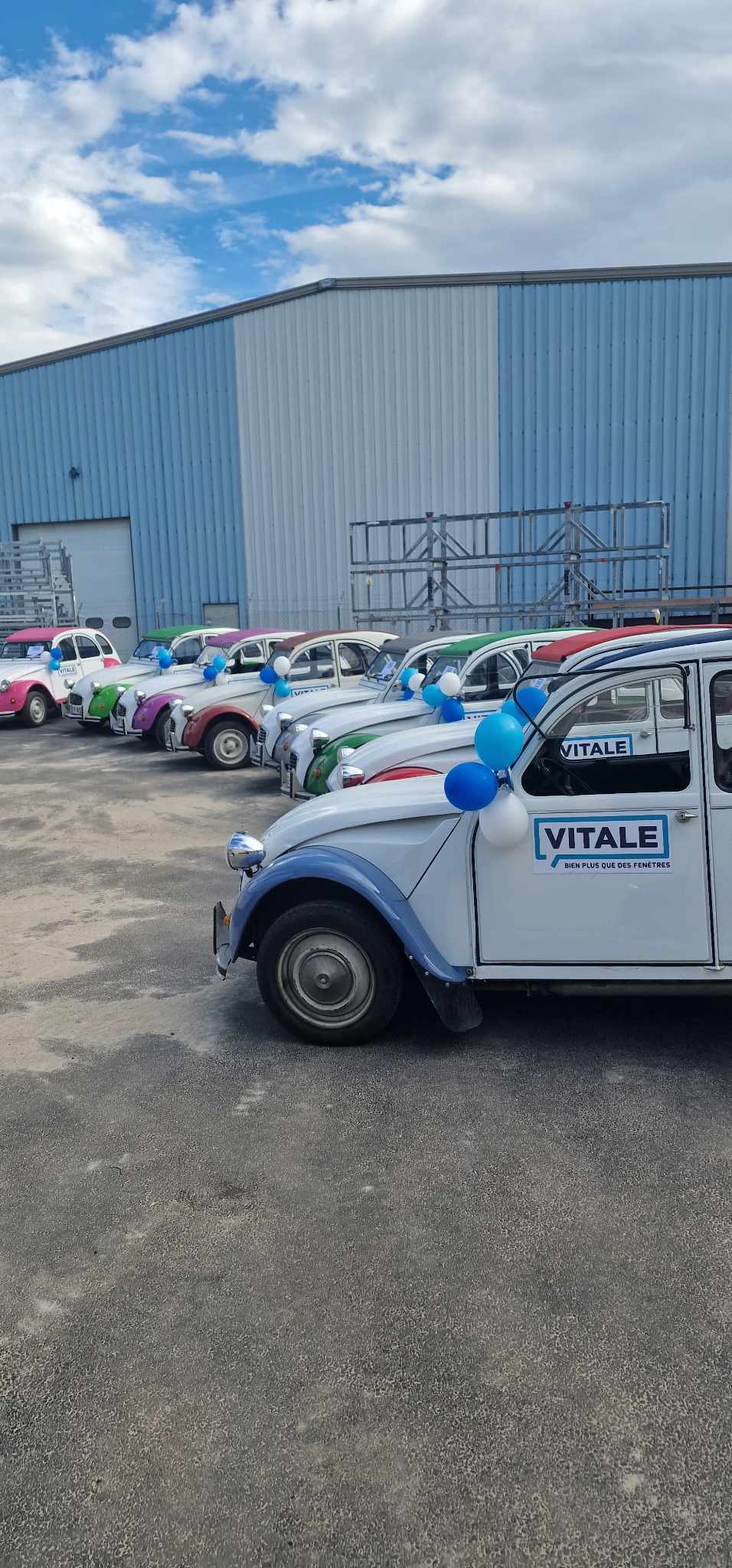
INNOV'events Montréal Agency
Thierry GRAMMER is the manager of the INNOV'events Montréal office. Reach out directly by email at canada@innov-events.ca or via the contact form.
Contact the Montréal agencyToutes nos prestations & animations Montréal, Quebec
Découvrez nos prestations événementielles
- Employee Party in Montréal
- Corporate Christmas Party in Montréal
- Networking Cocktail Event in Montréal
- Shopping Mall Activation in Montréal
- Grand Opening Event in Montréal
- Product Launch Event in Montréal
- Open House Event in Montréal
- Field Brand Activation in Montréal
- Event Catering Service in Montréal
Découvrez nos animations événementielles disponibles au Quebec
- Event Hostess in Montréal
- Escape Game in Montréal
- MasterChef-Style Cooking Workshop in Montréal
- Corporate Magician in Montréal
- Tent Rental in Montréal
- Color Analysis Workshop in Montréal
- Inflatable Games in Montréal
- Valet Service in Montréal
- Soccer Simulator in Montréal
- LED Furniture Rental in Montréal
- LED Branding Activation in Montréal
- Immersive Culinary Experience in Montréal
- Light Painting Activity in Montréal
- Immersive Mystery Night in Montréal
- Promotional Contest in Montréal
- Promotional Materials (POS) in Montréal
- Virtual Reality Experience in Montréal
- Molecular Gastronomy Workshop in Montréal
- Halloween Event in Montréal
- Fireworks Show in Montréal
- Sports Challenge – Giant Games in Montréal
- Professional Event Host in Montréal
- Photo Booth Animation in Montréal
- Santa Claus Appearance in Montréal
- Kids Entertainment in Montréal
- Guided Tour in Montréal
- Urban Rally in Montréal
- Ball Pit Activity in Montréal
- Flight Simulator in Montréal
- Food Truck Rental in Montréal
- World Record Attempt in Montréal
- Surf Simulator in Montréal
- Soccer Simulator in Montréal
- Wine Casino in Montréal
- Makeover Workshop in Montréal
- Perfume Creation Workshop in Montréal
- Acting Workshop in Montréal
- CSR Activities in Montréal
- Archery Activity in Montréal
- Event Security Guard in Montréal
- Wine Tasting Workshop in Montréal
- Mime Performance in Montréal
- TV Game Show Animation in Montréal
- Funfair Event in Montréal
- Crisis Management Workshop in Montréal
- Crisis Negotiation Workshop in Montréal
- Arcade Games in Montréal
- Indoor Skydiving Simulator in Montréal
- Ski Simulator in Montréal
- Racetrack Driving Experience in Montréal
- Introductory Flight Experience in Montréal
- Tasting Experience in Montréal
- Build Your Own Foosball Workshop in Montréal
- 2CV Rally in Montréal
- LEGO Challenge in Montréal
- Casino Night in Montréal
- Interpreter / Translator in Montréal
- Promotional Merchandise in Montréal
- Shuttle / Transportation Service in Montréal