
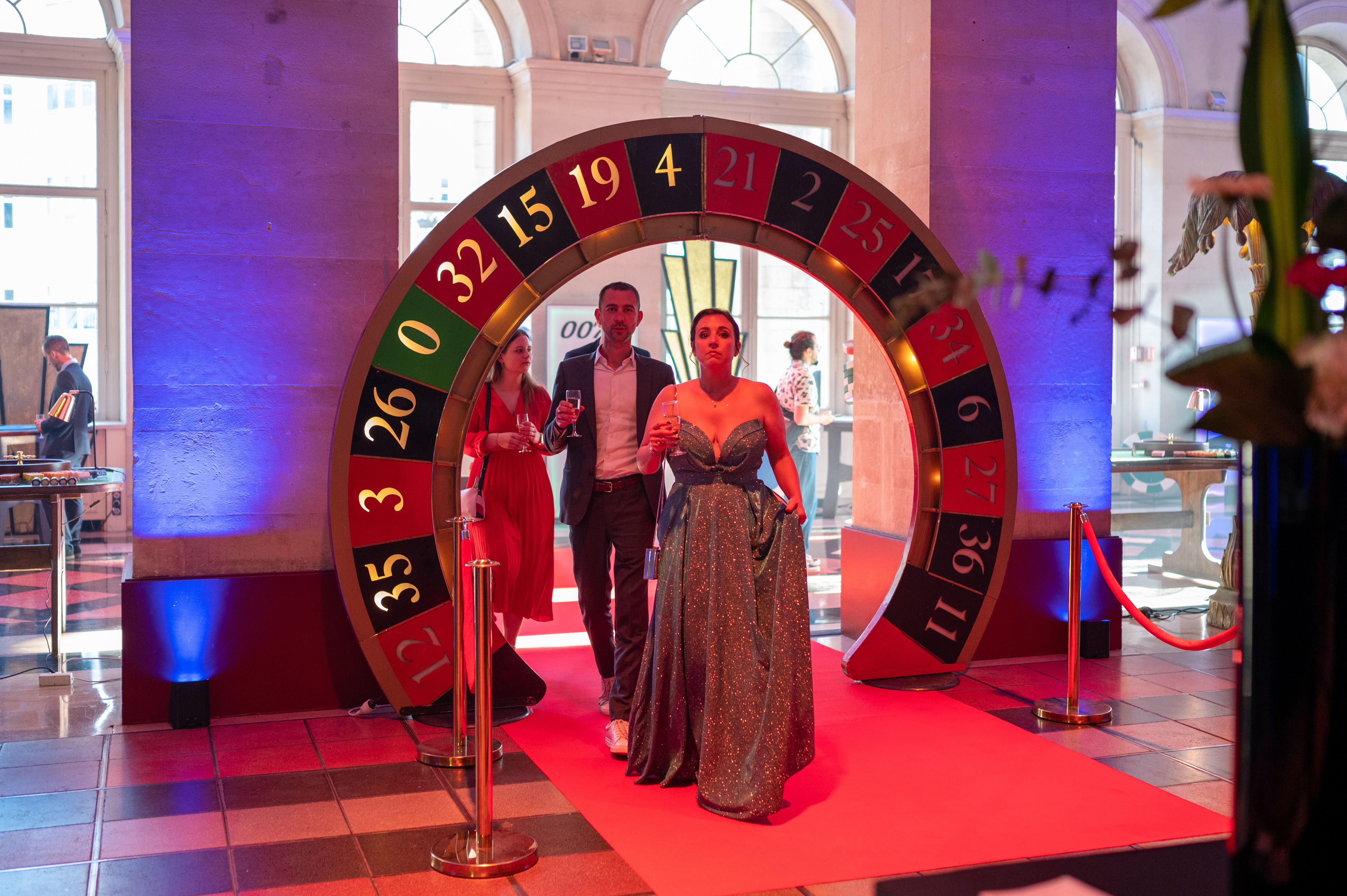
Wine Casino in Montréal that drives networking and measurable engagement
INNOV'events produces Wine Casino experiences for corporate groups in Montréal, typically from 30 to 600+ attendees, with the right balance between structured play and open networking.
We handle the full setup: wine selection and procurement, casino-style game mechanics, animation team, station design, venue coordination, responsible service requirements, and post-event reporting for HR and Comms.
Sommaire
In a corporate event, entertainment is not decoration; it is a tool to shape behavior. A well-run Wine Casino creates controlled mingling, accelerates cross-team conversations, and gives leaders a shared “third topic” beyond work—without losing the professional frame expected at an executive event.
In Montréal, organizations expect polished pacing, bilingual facilitation when needed, and strict respect of venues’ alcohol and noise policies. Your internal stakeholders also expect predictable run time, a discreet setup, and a program that doesn’t compete with speeches, awards, or strategic announcements.
Our team is based in Montréal and used to the operational realities of downtown load-ins, Old Montréal venue constraints, and winter logistics. We design the game so it supports your objectives: onboarding, recognition, employer brand, client relationship building, or simply improving turnout and participation.
Key figures for Montréal decision-makers
10+ years delivering corporate entertainment formats across Quebec and Canada, with repeat clients in finance, tech, manufacturing, and professional services.
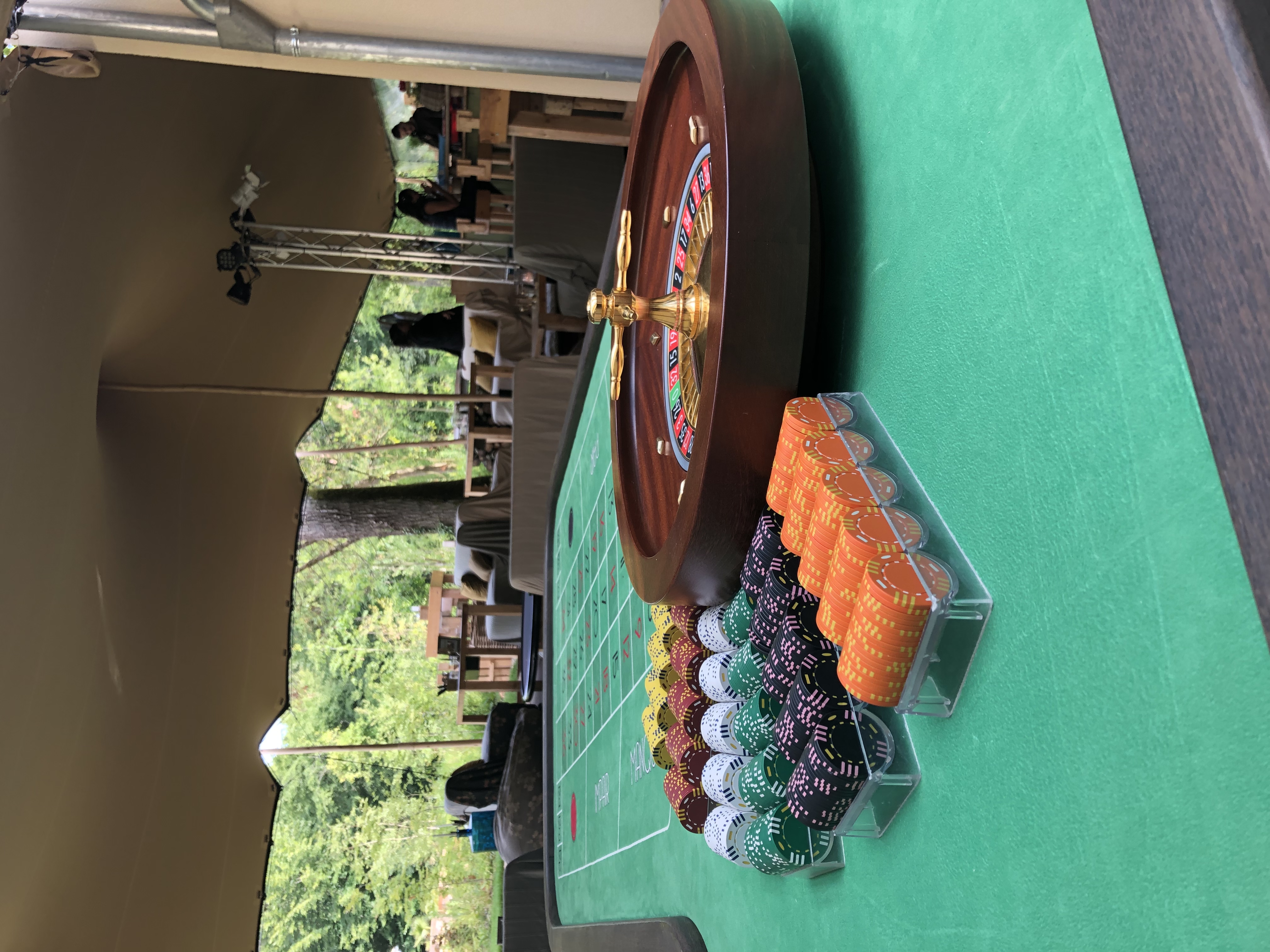
Operational capacity for 2 to 12 wine casino stations in one room, with a staffing model that keeps lines moving and preserves a premium guest experience.
Execution frameworks built for corporate standards: bilingual MC options, safety briefings, venue compliance checklists, and run-of-show discipline aligned with executive schedules.
Montréal experience that fits corporate realities
We deliver Wine Casino in Montréal for teams that need a safe, well-managed format—not a “party theme” that takes over the evening. Many of our mandates are annual: holiday parties, recognition evenings, leadership offsites, and client receptions where the entertainment must enhance the agenda, not distract from it.
Our work in Montréal is shaped by what you deal with internally: budget approvals, brand consistency, risk management (alcohol, crowd flow), and the pressure of a single event date that cannot slip. We plan with the same discipline your teams use in operations: clear deliverables, defined responsibilities, and contingency plans that are realistic for local venues.
If you want, we can share comparable Montréal case examples during a call (format, group size, venue type, and constraints) and explain what we would replicate—or avoid—for your audience.
 Besoin d’un devis rapide ?
Nous vous envoyons une première proposition sous 24h.
Why choose a Wine Casino for a Montréal corporate event?
A Wine Casino is a structured networking engine disguised as a tasting game. It works particularly well when you want energy in the room without turning your event into a loud show, and when you need guests to mix beyond their usual circles.
Predictable social mixing: the game mechanics create “permission to approach” and reduce awkwardness. This is useful for hybrid teams meeting in person, new leadership cohorts, or departments that rarely collaborate.
High participation without forcing it: guests can play seriously or casually. We design the station flow so an introvert can engage in short interactions, while extroverts can stay longer and trade strategies.
Supports executive messaging: we can build rounds around your agenda (values, product lines, milestones) without turning it into a quiz. The entertainment becomes a bridge between speeches and open networking.
Employer brand and client experience: a refined tasting format signals hospitality and attention to detail. For client receptions in Montréal, it reads as premium and culturally aligned—without crossing into excess.
Operational control: unlike an open bar + DJ scenario, a wine casino lets you manage timing, consumption pacing, and crowd movement. This matters for venues with strict policies and for HR teams monitoring risk.
Montréal has a strong culture of gastronomy and business networking—people value good product, knowledgeable service, and a smooth flow. A Wine Casino fits that culture when it’s executed with discipline: quality wine, clear rules, and professional animation.
What Montréal teams expect from corporate entertainment
In Montréal, stakeholders are often balancing two priorities that can conflict: creating a relaxed atmosphere, while keeping a corporate standard that protects brand and reputation. In practice, this translates into very concrete expectations.
Venue constraints are non-negotiable. Downtown hotels and Old Montréal spaces often have tight load-in windows, freight elevator rules, and restrictions on glassware, candles, and sound levels. We plan our station footprint and setup sequencing so you don’t end up improvising at 4:30 PM when doors open at 6:00 PM.
Bilingual guest management is often required. Even when the event is primarily English, guests may expect French touchpoints: signage, rules, and a host who can switch seamlessly. We design the experience so language never becomes a friction point at the table.
HR and Legal want clarity on alcohol. The difference between “fun” and “risk” is operational detail: portion control, water and food availability, pacing, and clear last-call coordination with the venue. We address those points early so your internal approval process is smooth.
Comms teams protect tone and visuals. In many Montréal organizations, the comms lead will look at lighting, signage, brand colors, and photo opportunities. We align station design to your event look, and we keep the room camera-friendly—no cluttered tables or cheap props that undermine your brand.
Which Wine Casino formats work best in Montréal venues?
Entertainment creates engagement when it gives guests a reason to move, talk, and compare experiences. A Wine Casino does this through light competition and guided discovery—without requiring a stage show. Below are formats we deploy in Montréal depending on your audience profile and event constraints.
Interactive animations in Montréal
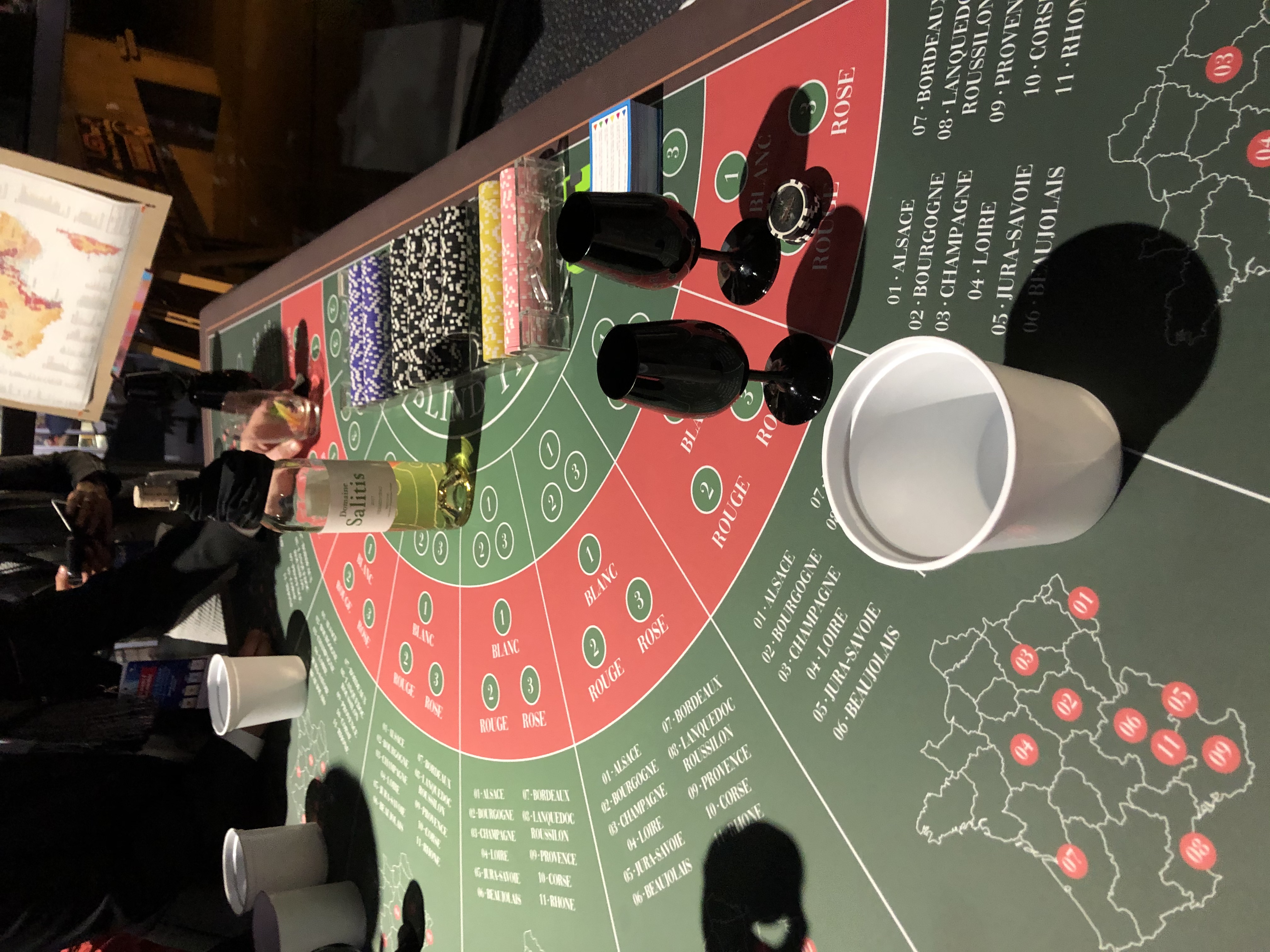
Blind tasting “betting rounds”: guests receive chips and place bets on grape, region, or aroma profile. This works well for mixed seniority groups because the playing field is equal; no one is “supposed” to be an expert.
Networking missions: each guest receives 2–3 conversation prompts linked to your objectives (onboarding, cross-functional projects). Completing missions earns extra chips. It’s subtle, but it improves mix across departments—useful for HR.
Team tables (department vs department): ideal for recognition nights. We structure it so competition stays friendly and doesn’t become noisy. We also avoid formats that encourage overconsumption to “win.”
Art animations in Montréal
Sommelier-led micro-stories: short, 2-minute storytelling moments about terroir, producers, and food pairings between rounds. In Montréal, this reads as sophisticated and culturally aligned, especially for client receptions.
Brand-safe MC pacing: a professional host who can bridge speeches, awards, and casino rounds without stealing focus. We keep language corporate, not stand-up comedy.
Innovative animations in Montréal
Pairing stations (wine + bite): coordination with caterers to offer small pairings (cheese, charcuterie, vegetarian options). This improves responsible service and elevates perception. It also helps venues that require food service with alcohol.
Local product focus: when relevant to your brand, we can integrate Quebec producers alongside international references. It’s appreciated by Montréal guests, but we keep it curated—no “tourist” feel.
Gourmand animations in Montréal
Digital scoring with QR check-ins: speeds up participation and reduces paper. Useful for large groups (200+) where manual scoring becomes slow. We can export participation metrics for internal reporting.
Hybrid-friendly structure: if part of your audience joins later (conference day + evening reception), we design entry points so late arrivals can join without disrupting rounds.
The best choice is the one that matches your brand image and audience maturity. For a law firm or financial institution in Montréal, we keep the tone refined and the visuals clean. For a tech scale-up, we can push interactivity and data-driven scoring—while keeping service standards consistent with corporate expectations.
Where to host a Wine Casino in Montréal for the right impact?
The venue shapes how the experience is perceived: premium reception, internal celebration, or client-focused hospitality. For a Wine Casino in Montréal, we also evaluate practical factors: lighting (to see wine color), acoustics (to keep conversation comfortable), and circulation (to avoid lineups at stations).
| Venue type | For which objective? | Main strengths | Possible constraints |
|---|---|---|---|
| Downtown hotel ballroom (Ville-Marie) | Large groups, predictable program, leadership messaging + networking | Strong AV infrastructure, controlled service standards, easy coat check and washrooms | Union/load-in rules, fixed catering packages, tighter flexibility on external alcohol procurement |
| Old Montréal heritage venue / loft | Client reception, brand positioning, premium hospitality | High perceived value, photogenic architecture, intimate atmosphere for conversations | Restricted access for trucks, limited storage/back-of-house, strict fire code and noise limits |
| Modern event space in Griffintown or Sud-Ouest | Team celebration, employer branding, product launch cocktail | Contemporary look, flexible layouts for stations, often better circulation for roaming play | Acoustics can be “live,” need sound management; some spaces require specific vendors |
| Corporate office or headquarters (on-site) | Town hall + reception, budget control, minimal guest travel | Brand immersion, simpler logistics for internal teams, easier alignment with security | Permits/responsible service planning, elevator constraints, cleaning/security overtime |
We strongly recommend a site visit (or a detailed tech walkthrough) before confirming station count and footprint. In Montréal, two venues with the same capacity can have very different load-in realities—this is where execution risk is won or lost.
What does a Wine Casino cost in Montréal?
Pricing for a Wine Casino in Montréal depends less on “the idea” and more on the operational model: number of stations, wine quality, staffing ratios, and venue constraints. We prefer transparent ranges early, then we refine once the room layout and schedule are confirmed.
Group size and station count: as a rule of thumb, we plan for one station per 25–40 active players at peak time, depending on whether it’s timed rounds or open play.
Wine selection level: the cost difference between an entry-level curated lineup and a premium selection is significant. We build options that match your brand and audience, and we avoid “mystery bottles” that undermine credibility.
Service model: staffed pourers vs self-serve (not recommended for corporate risk), presence of a sommelier lead, bilingual hosts, and a lead producer on site.
Duration and schedule complexity: a 60-minute feature during a cocktail is not the same as a 2-hour main program with awards and speeches. Longer programs require tighter pacing and more staff coverage.
Venue logistics in Montréal: limited load-in windows, paid parking for trucks, freight elevator bookings, or union requirements can add real costs. We flag these early to avoid last-minute surprises.
Branding and assets: custom signage, chips/cards design, scoreboards, and photo-ready station decor can be kept minimal or elevated depending on comms goals.
From an ROI perspective, a wine casino performs when it improves participation and networking quality without extending your evening. We look at practical indicators executives care about: attendance vs RSVPs, dwell time in the room, cross-team mixing, and whether the entertainment supported (or disrupted) leadership messaging.
Why work with a Montréal agency for a Wine Casino?
Choosing a local partner is not about proximity for its own sake; it’s about reducing execution risk. A Wine Casino in Montréal touches multiple moving parts—venue rules, staffing, alcohol service coordination, and schedule discipline. When your agency is established locally, you benefit from faster site access, vendor accountability, and a team that understands the pace and standards of Montréal corporate events.
INNOV'events operates as an event agency in Montréal, which means we can coordinate on short notice when a venue changes its load-in window, when AV needs shift, or when your internal agenda is updated by leadership two days before the event.
- Venue familiarity: we anticipate common friction points (freight access, storage, sound limits) and plan around them rather than discovering them on event day.
- Reliable staffing: trained hosts and service professionals who understand corporate tone—punctual, discreet, and aligned with brand expectations.
- Supplier network: better control on rentals, glassware, station fabrication, and last-minute replacements.
- On-site leadership: a producer who can make decisions quickly with your HR/Comms lead, protecting your executives from operational issues.
From an ROI perspective, a wine casino performs when it improves participation and networking quality without extending your evening. We look at practical indicators executives care about: attendance vs RSVPs, dwell time in the room, cross-team mixing, and whether the entertainment supported (or disrupted) leadership messaging.




What we’ve delivered in Montréal across different corporate contexts
Our corporate event entertainment in Montréal work spans very different contexts: 5@7 receptions after conferences, year-end parties with awards, leadership dinners with clients, and onboarding events for fast-growing teams. The common denominator is operational control—clear run-of-show, reliable staffing, and an experience that fits the organization’s tone.
For example, in a recognition evening, we often place the Wine Casino after the formal segment to keep guests in the room and prevent the “post-speech exit.” We structure play in short rounds so winners can be announced quickly without dragging the night. In a client reception, we prioritize service elegance: fewer stations, more guidance, and pairings that support conversation instead of competition.
We also adapt to real constraints we frequently see in Montréal: late access to the room, shared spaces with other events, strict vendor lists, and agenda changes driven by executive travel. Our planning anticipates these variables so your event still looks intentional and calm.
Common Wine Casino pitfalls we avoid in Montréal
Underestimating flow: too few stations for the peak moment creates lineups and disengagement. We calculate capacity based on arrival patterns and whether you have a speech block that releases everyone at once.
Overcomplicated rules: if the game requires a 5-minute explanation, guests stop listening. We keep rules simple, repeatable, and visible on signage.
Ignoring alcohol governance: no water plan, no food rhythm, or unclear last call creates HR risk. We coordinate with the venue and, when needed, with your internal policy guidelines.
Station design that looks “cheap” on camera: mismatched props, clutter, or poor lighting can harm employer brand. We design clean, corporate-friendly stations aligned with your event visuals.
No contingency plan: speakers run long, elevators break, deliveries are late. We build a plan B that keeps the guest experience intact and protects the schedule.
Our role is to remove uncertainty: to make sure the entertainment supports your objectives and that you’re not managing operational issues during your own event. In Montréal, that’s often the difference between an event that feels premium and one that feels improvised.
Why Montréal clients renew with INNOV'events
Renewal happens when an agency is easy to work with under pressure. Our repeat clients come back because we operate with the same priorities they do: predictable delivery, clear communication, and respect for internal approval processes.
Planning discipline: shared timelines, decision checkpoints, and a detailed run-of-show validated with HR/Comms and the venue.
On-site calm: a designated lead who manages suppliers, staff, and timing so your executives can host rather than troubleshoot.
Post-event clarity: debrief notes, participation observations, and practical recommendations for the next edition (what to keep, what to change).

Loyalty is not about promises; it’s proof that delivery matched expectations—especially on the details that matter to leadership: timing, tone, and risk control.
How we build a Wine Casino project in Montréal
👉 Montréal discovery call and objective framing
We clarify your non-negotiables: audience profile, business goal (retention, recognition, client development), agenda constraints, brand tone, and internal policies on alcohol. You get an initial recommendation on format (timed rounds vs open play) and a preliminary station count.
👉 Venue and logistics validation in Montréal
We review venue rules, load-in timing, floor plan, and catering/bar setup. We decide station placement based on circulation and sightlines, then confirm staffing ratios and the equipment list (tables, linens, signage, glassware, lighting if needed).
👉 Wine selection and responsible service plan
We propose wine options aligned with your budget and brand positioning, with clear quantities and tasting notes. We coordinate pacing: water points, food rhythm, and last call. If your event includes VIPs or clients, we can adapt the lineup by station to create a premium progression.
👉 Game design, branding, and bilingual assets
We finalize rules, scoring, signage, and any branded elements. If bilingual delivery is needed, we validate terminology and ensure the hosting script remains concise and corporate-appropriate.
👉 Event-day execution and run-of-show control
Our on-site producer manages setup, staff briefing, timing, and coordination with the venue and AV. We monitor station wait times and adjust in real time (opening an additional station, changing round length, or guiding guest flow) without disrupting your program.
👉 Debrief and next-edition recommendations
Within days, we provide a practical debrief: what worked, where flow tightened, participation patterns, and recommendations for the next iteration (station count, schedule adjustments, wine lineup, or room layout changes).
FAQ sur l'organisation Wine Casino à Montréal
How long should a Wine Casino run in Montréal?
Most corporate formats run 60 to 120 minutes. If it’s the main activity, plan 90 minutes with short rounds. If it’s during a cocktail, 60–75 minutes is usually enough to drive movement without competing with networking.
How many stations do we need for 200 people in Montréal?
For 200 attendees, we typically recommend 5 to 8 stations depending on your schedule. If everyone is released at once after a speech, you need more capacity. If arrivals are staggered and play is open, you can operate with fewer stations.
Can a Wine Casino in Montréal be bilingual?
Yes. We can deliver bilingual hosting and bilingual rules/signage. Operationally, we keep explanations under 60 seconds and use clear visual cues so language never slows down the line at a station.
Is a Wine Casino compatible with HR alcohol policies in Montréal?
Yes, when it’s structured properly: controlled pours, water availability, food pairing rhythm, and clear last-call coordination. We also recommend offering non-alcoholic alternatives so participation is inclusive and aligned with workplace standards.
How early should we book a Wine Casino in Montréal?
For peak dates (November–December), book 6 to 10 weeks ahead to secure venues and staffing. For other periods, 3 to 6 weeks is often workable, but earlier is safer if you need custom branding or complex logistics.
Request a Montréal quote for your Wine Casino
If you’re comparing agencies, we can make the decision easier with a clear proposal: recommended format, station count, staffing plan, wine options, logistics assumptions, and an actionable run-of-show. Share your date, estimated attendance, venue (if known), and the role of the activity in your agenda.
Contact INNOV'events to scope your Wine Casino in Montréal early—especially for peak season—so we can secure the right team and build an experience that supports your executives, your HR requirements, and your brand standards.
INNOV'events Montréal Agency
Thierry GRAMMER is the manager of the INNOV'events Montréal office. Reach out directly by email at canada@innov-events.ca or via the contact form.
Contact the Montréal agencyToutes nos prestations & animations Montréal, Quebec
Découvrez nos prestations événementielles
- Employee Party in Montréal
- Corporate Christmas Party in Montréal
- Networking Cocktail Event in Montréal
- Shopping Mall Activation in Montréal
- Grand Opening Event in Montréal
- Product Launch Event in Montréal
- Open House Event in Montréal
- Field Brand Activation in Montréal
- Event Catering Service in Montréal
Découvrez nos animations événementielles disponibles au Quebec
- Event Hostess in Montréal
- Escape Game in Montréal
- MasterChef-Style Cooking Workshop in Montréal
- Corporate Magician in Montréal
- Tent Rental in Montréal
- Color Analysis Workshop in Montréal
- Inflatable Games in Montréal
- Valet Service in Montréal
- Soccer Simulator in Montréal
- LED Furniture Rental in Montréal
- LED Branding Activation in Montréal
- Immersive Culinary Experience in Montréal
- Light Painting Activity in Montréal
- Immersive Mystery Night in Montréal
- Promotional Contest in Montréal
- Promotional Materials (POS) in Montréal
- Virtual Reality Experience in Montréal
- Molecular Gastronomy Workshop in Montréal
- Halloween Event in Montréal
- Fireworks Show in Montréal
- Sports Challenge – Giant Games in Montréal
- Professional Event Host in Montréal
- Photo Booth Animation in Montréal
- Santa Claus Appearance in Montréal
- Kids Entertainment in Montréal
- Guided Tour in Montréal
- Urban Rally in Montréal
- Ball Pit Activity in Montréal
- Flight Simulator in Montréal
- Food Truck Rental in Montréal
- World Record Attempt in Montréal
- Surf Simulator in Montréal
- Soccer Simulator in Montréal
- Wine Casino in Montréal
- Makeover Workshop in Montréal
- Perfume Creation Workshop in Montréal
- Acting Workshop in Montréal
- CSR Activities in Montréal
- Archery Activity in Montréal
- Event Security Guard in Montréal
- Wine Tasting Workshop in Montréal
- Mime Performance in Montréal
- TV Game Show Animation in Montréal
- Funfair Event in Montréal
- Crisis Management Workshop in Montréal
- Crisis Negotiation Workshop in Montréal
- Arcade Games in Montréal
- Indoor Skydiving Simulator in Montréal
- Ski Simulator in Montréal
- Racetrack Driving Experience in Montréal
- Introductory Flight Experience in Montréal
- Tasting Experience in Montréal
- Build Your Own Foosball Workshop in Montréal
- 2CV Rally in Montréal
- LEGO Challenge in Montréal
- Casino Night in Montréal
- Interpreter / Translator in Montréal
- Promotional Merchandise in Montréal
- Shuttle / Transportation Service in Montréal