
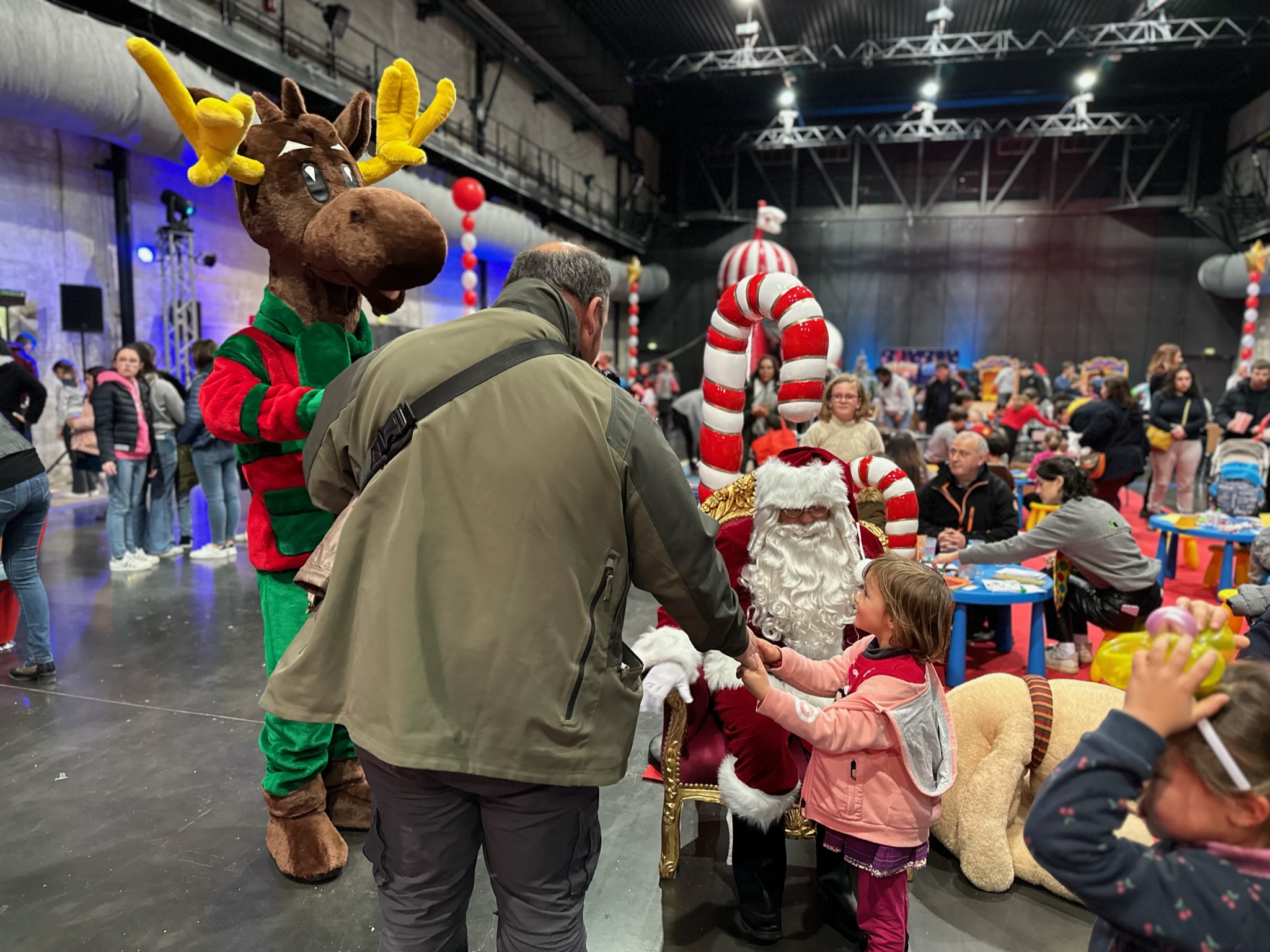
Kids Entertainment in Montréal that keeps families engaged—and your event running on time
INNOV’events designs and runs Kids Entertainment for corporate events across Montréal, from 40 to 2,000+ attendees, with formats that work in offices, venues, and large public sites. We manage performer booking, staffing ratios, safety/compliance, traffic flow, and on-site coordination so your teams can focus on hosting—not supervising.
Sommaire
In a corporate event, kids’ zones are not a “nice-to-have”: they directly influence adult presence time, networking quality, and the pace of your program. When children are occupied in a controlled, well-staffed space, parents stay available for key moments (speeches, awards, client introductions) instead of constantly stepping out.
Montréal organizations expect entertainment that is bilingual, respectful of diverse family dynamics, and operationally clean: proper check-in/out, clear boundaries, and staff who know how to de-escalate. If the kids’ area feels improvised, it reflects immediately on the employer brand and creates risk for HR and Communications.
As an event agency in Montréal, INNOV’events brings field-tested methods: pre-event site plans, staffing and timing grids, supplier vetting, and real on-the-ground show-calling. We design the kids’ experience to fit your venue, your schedule, and your risk tolerance—without slowing down the rest of the event.

Montréal delivery, backed by measurable event rigor
10+ years of corporate event operations across Québec and Canada, including family-inclusive formats where kids’ programming must coexist with executive-level objectives.
150+ vetted entertainers and facilitators in our extended network (performers, educators, bilingual animators, technicians), with documented references and clear scopes of work.
24–72 hours typical turnaround to propose a first programming plan and budget ranges once we have your venue, date, and guest profile.
0-compromise safety approach: staffing ratios, controlled access, incident logs, and contingency planning integrated into the run-of-show.
Montréal corporate teams we support—year after year
We regularly support Montréal employers and institutional organizations that need family-friendly programming without sacrificing protocol, brand image, or schedule. Some clients bring us back annually because the hardest part is not “finding an entertainer”—it’s delivering a kids’ space that stays stable at peak traffic, respects venue rules, and doesn’t create last-minute escalations for HR, security, or building management.
In practice, recurring collaborations often come from the same pain point: the first year, internal teams try to “make it work” with a few activities; by the second year, they want a professional operating model with clear responsibilities, predictable costs, and a program that scales. That’s the type of relationship we build in Montréal: repeatable, documented, and dependable under real event-day pressure.
 Besoin d’un devis rapide ?
Nous vous envoyons une première proposition sous 24h.
Why offer Kids Entertainment in Montréal at a corporate event?
Kids programming is a management lever: it protects attendance, supports inclusion, and reduces friction for parents—especially in end-of-year events, family days, summer picnics, and community initiatives. For executives and HR teams, the value is tangible when it is planned as an operational component (space, staffing, risk controls), not a last-minute add-on.
Higher participation and longer dwell time: parents stay for key segments when children are engaged in age-appropriate activities with visible supervision.
Better networking conditions: adults can hold real conversations when the kids’ area is within sight but not “in the middle of everything.”
Stronger employer brand: family-inclusive choices are noticed—particularly by mid-career talent balancing work and childcare responsibilities.
Reduced operational noise for HR and Communications: a professional check-in/out process and clear rules prevent on-the-spot debates about safety, allergies, or boundaries.
More controlled risk profile: proper ratios, signed activity rules, and controlled access reduce incidents and help you document due diligence.
Clearer budget governance: when kids entertainment is scoped correctly (ages, headcount, timing), you avoid scope creep and last-minute rentals or overtime.
In Montréal, where organizations host diverse workforces and multi-language audiences, the most successful events treat family inclusion as part of the event’s “service design”—with the same seriousness as catering, AV, and security.
What Montréal organizations expect from kids programming
Montréal audiences are demanding in a practical way: they expect warmth, but also structure. In corporate settings, we see three recurring expectations from decision-makers.
1) Bilingual facilitation without awkwardness. It’s not enough to translate a script. Activities must work naturally in English and French, especially with mixed groups where kids switch languages mid-sentence. We plan facilitator pairings and signage so the experience feels smooth rather than “split into two crowds.”
2) Venue compliance and neighbor sensitivity. Downtown venues, heritage buildings, and mixed-use sites can have strict sound limits, elevator access rules, and narrow load-in windows. A kids zone with amplified music can create immediate friction with building management or adjacent tenants. We use sound-light alternatives (silent disco headsets, low-noise interactive stations, acoustic sets) and place the zone strategically to control spillover.
3) Predictability for HR and Security. Internal teams want to avoid improvisation: who is allowed to drop off a child? What if a child leaves the zone? What about allergies and snacks? We implement simple, enforceable operating rules (bracelet systems, check-in forms, “parent on site” policies depending on your legal comfort, and incident escalation paths) so your leadership team is not pulled into micro-decisions during the event.
Kids Entertainment ideas that work well in Montréal corporate events
Engagement comes from clarity and rhythm: children need activities that start quickly, have a visible goal, and allow parents to step away for short periods without anxiety. Below are formats we regularly deploy in corporate event entertainment in Montréal, selected for reliability in real venues—not just for photos.
Interactive animations in Montréal
Rotating creative stations (45–90 minutes): bracelet-making, canvas mini-painting, LEGO®-style engineering challenges, or collaborative murals tied to company values (innovation, teamwork). Operational note: we build kits by age and pre-sort supplies to avoid bottlenecks.
Mini game-show for kids: short rounds with buzzers or cards (no heavy tech required). Works well when you need a strong “attention magnet” during speeches. We keep questions inclusive and bilingual, with visual prompts for younger children.
Movement circuit with controlled intensity: obstacle course using soft equipment, parachute games, or guided dance sessions. We select formats based on ceiling height and flooring; we add a queue system to prevent collisions at peak times.
STEM corner with facilitator-led demos: safe “wow” experiments (dry ice handled by trained staff only, simple chemical reactions, robotics demos). We document materials, handling rules, and cleanup needs for venue approval.
Art animations in Montréal
Magician or illusionist (30–45 minutes sets): ideal for mixed ages because the narrative keeps children seated. We brief the performer on corporate tone (avoid sensitive jokes) and schedule sets to match your program’s critical windows.
Balloon artist + face painting with hygiene protocol: still a top performer when done professionally—single-use applicators, visible sanitation, and time-slot management to avoid long lines. We often add a “quick design” menu to keep throughput high.
Storytelling in English and French: works especially well in quieter venues or daytime events. We use a structured arc and props so children stay engaged without amplification.
Costumed characters with controlled appearances: short, scheduled meet-and-greet windows rather than roaming. This reduces crowding and keeps photos organized for Communications teams.
Innovative animations in Montréal
Cookie decorating bar: portion-controlled kits, allergen labeling, and a “take-home box” system to keep crumbs out of common areas. Works well in winter events when families want a calm activity.
Mocktail lab for kids: non-alcoholic mixing with color changes (safe syrups), garnishes, and branded cups. We coordinate with catering to ensure food-safe handling and waste management.
Popcorn or cotton candy station with safety perimeter: effective for high-traffic family days, provided the equipment is placed with ventilation considerations and supervised queueing.
Gourmand animations in Montréal
Silent disco for families: headphones reduce noise complaints and allow bilingual channels (English/French) for instructions. This is a strong solution for downtown Montréal venues with strict sound constraints.
Digital scavenger hunt: QR-code based hunt across a controlled footprint (venue floors you approve). We set guardrails so kids don’t interfere with sponsor areas or restricted rooms.
Green-screen photo booth for kids: faster than complex props, easy for branded backdrops, and clean for venues. We provide an operator to control throughput and file delivery for Communications.
Calm/sensory lounge: low-light corner with tactile items and noise-reduction options. This is increasingly requested by HR teams aiming for inclusion without making it a “big announcement.”
Whatever the format, we align Kids Entertainment with your brand rules (visual identity, appropriateness, sponsor visibility) and your operational priorities (noise, cleanliness, traffic). A kids zone should support your corporate message—not compete with it.
Which Montréal venues suit Kids Entertainment best?
The venue determines what you can safely and efficiently deliver. Ceiling height, washroom proximity, flooring, load-in access, and acoustic separation matter more for kids programming than for many adult-only formats. We help you choose a setup that protects your main program and avoids “last-minute compromises” on event day.
| Venue type | For which objective? | Main strengths | Possible constraints |
|---|---|---|---|
| Corporate office / headquarters in Montréal | Employee appreciation, holiday party, after-school family moment | Brand immersion, minimal travel for staff, easier internal comms and timing control | Elevator/load-in limits, sound restrictions, protection of furniture/IT areas, coat-check congestion in winter |
| Hotel ballroom or conference center (Montréal) | Formal family gala, awards night with kids zone running in parallel | Clear service standards, built-in washrooms, predictable power/AV access, easier zoning with drape | Union/vendor constraints, strict load-in windows, additional fees for specialty equipment or late-night staffing |
| Community or cultural venue with multipurpose rooms in Montréal | Family day with diverse programming and larger activity footprint | Flexible rooms for age segmentation, often better acoustics separation, room to add sensory/quiet areas | Permits and insurance requirements can be strict; limited storage; varying accessibility depending on site |
We strongly recommend a site visit (or at minimum a technical walk-through call with photos and floor plans). In Montréal, small details—like where strollers can park or how coat-check flows—often decide whether the kids zone is smooth or stressful.
What does Kids Entertainment cost in Montréal?
Pricing for Kids Entertainment in Montréal depends on headcount, staffing ratios, duration, complexity (multiple stations vs. one stage show), and venue constraints (load-in time, power availability, union rules, security requirements). For corporate events, the goal is not to chase the lowest line item; it’s to purchase operational stability and a controlled risk profile.
Format and duration: a 45-minute magic show is priced differently than a 4-hour multi-station zone with continuous facilitation, rotations, and replenishment.
Number of children and age brackets: younger groups require tighter supervision and more staff; mixed-age events often need parallel activities to avoid boredom and behavioral spikes.
Staffing and roles: beyond entertainers, you may need check-in staff, a zone lead, floating facilitators for peak traffic, and a dedicated person for hygiene and restocking.
Equipment and consumables: craft kits, protective flooring, barriers, signage, sanitation stations, silent disco headsets, or photo booth gear can represent a significant share of the budget.
Venue constraints in Montréal: downtown load-in windows, parking, elevator bookings, and noise limitations can add labor time or require alternate solutions.
Compliance and documentation: insurance certificates, performer contracts, activity rules, and incident reporting procedures take time but reduce risk and internal stress.
We frame budget decisions in ROI terms that matter to leadership: higher attendance, reduced event-day escalations, better parent satisfaction scores, and fewer disruptions to the main program. A well-scoped kids zone often pays for itself by protecting the value of the entire corporate gathering.
Why choose a Montréal agency for kids entertainment logistics?
When kids programming is involved, distance is not your friend. A local agency is valuable not because it “knows the city,” but because it can act quickly, verify suppliers in person, and troubleshoot on-site under real conditions.
In Montréal, we routinely manage variables that outside providers underestimate: last-minute weather shifts, coat-check surges, bilingual signage needs, and venue-specific rules that affect noise, strollers, and access control. We also maintain relationships with local performers, rental partners, and technicians, which reduces the risk of cancellations and allows us to build redundancy (backup staff, alternate activities) without inflating costs.
- Faster on-site problem solving: if a delivery is late or a room layout changes, we can adjust immediately with local resources.
- Supplier vetting and accountability: we prioritize professionals who understand corporate expectations (punctuality, attire, conduct, documentation).
- Venue familiarity: we plan based on real constraints (loading docks, elevators, acoustic limits), not assumptions.
- More realistic staffing plans: local availability reduces the temptation to under-staff “to make it fit.”
We frame budget decisions in ROI terms that matter to leadership: higher attendance, reduced event-day escalations, better parent satisfaction scores, and fewer disruptions to the main program. A well-scoped kids zone often pays for itself by protecting the value of the entire corporate gathering.









Examples of Kids Entertainment delivered in Montréal contexts
Holiday party with parallel adult program: For a year-end event where leadership needed a tight 20-minute speech window, we scheduled a kids magic set to start exactly 5 minutes before the CEO took the stage, with a controlled seating layout and a quiet “late arrival” entrance to avoid disruption. Result: speeches ran on time, and parents remained in the main room instead of rotating in and out.
Family day in a mixed-use venue: The client faced strict sound constraints and shared walls with other tenants. We implemented silent disco, craft stations, and a bilingual scavenger hunt within a defined perimeter, plus a clear queueing plan for snacks. Result: high engagement with low noise spillover, no complaints to building management.
Office-based back-to-school event: Space was limited and the client wanted minimal disruption to sensitive areas. We created a compact “micro-zoning” plan (check-in corner, seated crafts, one movement activity in a corridor segment approved by facilities) and added visible rules and staff positioning to keep kids within boundaries. Result: smooth circulation and no damage to office infrastructure.
Across these projects, the common thread is operational clarity: defined zones, realistic staffing, and programming aligned with your corporate schedule—not just a list of activities.
Common mistakes in Montréal kids zones—and how we prevent them
Underestimating peak moments: arrivals, post-meal energy spikes, and “speech time” create predictable pressure. We plan surge capacity and schedule high-engagement segments at the right times.
No controlled check-in/out: without a simple process, staff are forced into ad hoc decisions. We implement bracelet or token systems and clear rules communicated at entry.
One activity for all ages: a single craft table rarely works from toddlers to pre-teens. We design parallel options and rotate content to avoid boredom.
Ignoring venue acoustics and cleanliness: noise and mess travel. We choose formats that fit the venue (e.g., silent disco) and include hygiene/cleanup roles and materials.
Relying on internal volunteers without structure: employee volunteers can help, but only with clear roles, short shifts, and a professional lead. Otherwise it becomes an HR issue and distracts from hosting.
No contingency plan: performer delays, equipment failure, or sudden crowd surges happen. We build backup activities and define escalation paths so the main event is protected.
Our role is to remove avoidable risk from your event day: we anticipate pressure points, document responsibilities, and keep the kids experience stable so your leadership team can stay focused on guests, messaging, and business outcomes.
Why Montréal clients renew their kids entertainment program
Repeat business in kids programming comes from reliability. HR and Communications teams don’t want to re-litigate basics every year; they want a partner who documents what worked, improves the plan, and protects them from last-minute surprises.
Year-over-year optimization: we keep floor plans, timing grids, supplier notes, and incident learnings to reduce planning time and improve flow each edition.
Predictable budgeting: by maintaining a stable “core” program and swapping only a few elements annually, clients control costs while keeping the experience fresh for employees’ families.
Lower internal workload: we reduce the need for internal volunteers, last-minute purchasing, and day-of firefighting—often the real hidden cost of family events.

Loyalty is not about novelty; it’s about confidence. When your team knows the kids zone will run smoothly in Montréal conditions, planning becomes simpler and the event’s business goals are easier to reach.
Our Montréal delivery process for Kids Entertainment
👉 1) Discovery aligned with HR, Comms, and Operations (Montréal)
We start with a 30–45 minute working call to capture objectives (retention, employer brand, client-facing hospitality), constraints (venue rules, security posture, union/vendor limitations), and audience profile (employee families, clients, community). We confirm age distribution estimates and define whether the kids zone is “drop-off with parent on site” or “parent stays nearby,” depending on your comfort and venue policies.
👉 2) Site plan and risk controls for Montréal venues
We produce a zone layout: entrance/check-in, activity islands, quiet area, stroller parking, queue lines, and emergency access. We include staffing positions, line-of-sight considerations, and timing assumptions. This is where we prevent common issues like craft supplies migrating into banquet spaces or noise spilling into keynote sessions.
👉 3) Programming proposal with clear scopes and options (Montréal)
You receive 2–3 programming scenarios (light, standard, premium) with transparent inclusions: number of staff, duration, rotations, equipment, consumables, and technical needs. We flag what changes the price (extra hours, higher child count, additional rooms, special compliance requirements) so approvals are easier at executive level.
👉 4) Supplier booking, documentation, and bilingual communications
We contract performers and facilitators, confirm insurance certificates when required, and prepare bilingual signage and rules (age guidance, allergy notes, check-in/out process). For internal communications, we can provide a short “what parents need to know” text to reduce confusion at arrival.
👉 5) On-site management and show-calling in Montréal
On event day, we manage load-in, set-up, staff briefing, and timing. The kids-zone lead coordinates with the main stage manager to avoid clashes with speeches or service. We monitor capacity, rotate activities, manage queues, and handle incidents discreetly with documented escalation. After the event, we provide a debrief with practical improvement points for the next edition.
FAQ sur l'organisation Kids Entertainment à Montréal
How many facilitators do we need in Montréal for 50 kids?
For most corporate settings in Montréal, plan 4 to 6 staff for 50 children, depending on age mix and whether you run multiple stations. As a practical baseline: more staff for ages 3–6 and for formats with movement activities; fewer for seated crafts with parents nearby. We also recommend 1 zone lead who coordinates with your event manager and handles escalations.
Can you run bilingual kids activities in Montréal events?
Yes. We staff bilingual facilitators and design activities that work without constant translation (visual instructions, demo-first teaching, simple bilingual signage). For stage moments, we can run short bilingual scripts or split micro-segments (French/English) while keeping the rhythm consistent for kids.
What is a realistic budget range in Montréal for a kids zone?
For corporate events in Montréal, a supervised kids area commonly falls between $1,500 and $8,000+. The lower end typically covers a short show or a small craft corner with limited staffing; the higher end covers multi-station zones, specialized equipment (photo booth, silent disco), longer duration, and higher staffing ratios.
How do you control check-in and child pick-up in Montréal venues?
We use a simple, enforceable system: a check-in desk, wristbands or matching tokens, and clear rules displayed at entry. We define who is authorized to pick up (often the same adult who checked in) and we keep a sign-out log. For higher-profile events, we can add a controlled boundary and a dedicated staff member whose sole role is monitoring access.
How far in advance should we book kids entertainment in Montréal?
For strong availability in Montréal, book 6–10 weeks ahead for standard formats and 10–16 weeks for peak season (December, late June) or complex setups with multiple performers and equipment. If you’re within 2–3 weeks, we can still help, but options narrow and staffing costs can rise due to scheduling.
Request a Montréal quote with a plan you can approve internally
If you’re comparing agencies, we’ll make your decision easier with a clear scope, staffing plan, and budget ranges adapted to your venue and audience. Share your date, location in Montréal, estimated number of children by age, and your event schedule (key speeches, meal time, doors). We’ll reply with structured options and the operational details HR and Communications need to sign off—without surprises on event day.
INNOV'events Montréal Agency
Thierry GRAMMER is the manager of the INNOV'events Montréal office. Reach out directly by email at canada@innov-events.ca or via the contact form.
Contact the Montréal agencyToutes nos prestations & animations Montréal, Quebec
Découvrez nos prestations événementielles
- Employee Party in Montréal
- Corporate Christmas Party in Montréal
- Networking Cocktail Event in Montréal
- Shopping Mall Activation in Montréal
- Grand Opening Event in Montréal
- Product Launch Event in Montréal
- Open House Event in Montréal
- Field Brand Activation in Montréal
- Event Catering Service in Montréal
Découvrez nos animations événementielles disponibles au Quebec
- Event Hostess in Montréal
- Escape Game in Montréal
- MasterChef-Style Cooking Workshop in Montréal
- Corporate Magician in Montréal
- Tent Rental in Montréal
- Color Analysis Workshop in Montréal
- Inflatable Games in Montréal
- Valet Service in Montréal
- Soccer Simulator in Montréal
- LED Furniture Rental in Montréal
- LED Branding Activation in Montréal
- Immersive Culinary Experience in Montréal
- Light Painting Activity in Montréal
- Immersive Mystery Night in Montréal
- Promotional Contest in Montréal
- Promotional Materials (POS) in Montréal
- Virtual Reality Experience in Montréal
- Molecular Gastronomy Workshop in Montréal
- Halloween Event in Montréal
- Fireworks Show in Montréal
- Sports Challenge – Giant Games in Montréal
- Professional Event Host in Montréal
- Photo Booth Animation in Montréal
- Santa Claus Appearance in Montréal
- Kids Entertainment in Montréal
- Guided Tour in Montréal
- Urban Rally in Montréal
- Ball Pit Activity in Montréal
- Flight Simulator in Montréal
- Food Truck Rental in Montréal
- World Record Attempt in Montréal
- Surf Simulator in Montréal
- Soccer Simulator in Montréal
- Wine Casino in Montréal
- Makeover Workshop in Montréal
- Perfume Creation Workshop in Montréal
- Acting Workshop in Montréal
- CSR Activities in Montréal
- Archery Activity in Montréal
- Event Security Guard in Montréal
- Wine Tasting Workshop in Montréal
- Mime Performance in Montréal
- TV Game Show Animation in Montréal
- Funfair Event in Montréal
- Crisis Management Workshop in Montréal
- Crisis Negotiation Workshop in Montréal
- Arcade Games in Montréal
- Indoor Skydiving Simulator in Montréal
- Ski Simulator in Montréal
- Racetrack Driving Experience in Montréal
- Introductory Flight Experience in Montréal
- Tasting Experience in Montréal
- Build Your Own Foosball Workshop in Montréal
- 2CV Rally in Montréal
- LEGO Challenge in Montréal
- Casino Night in Montréal
- Interpreter / Translator in Montréal
- Promotional Merchandise in Montréal
- Shuttle / Transportation Service in Montréal