
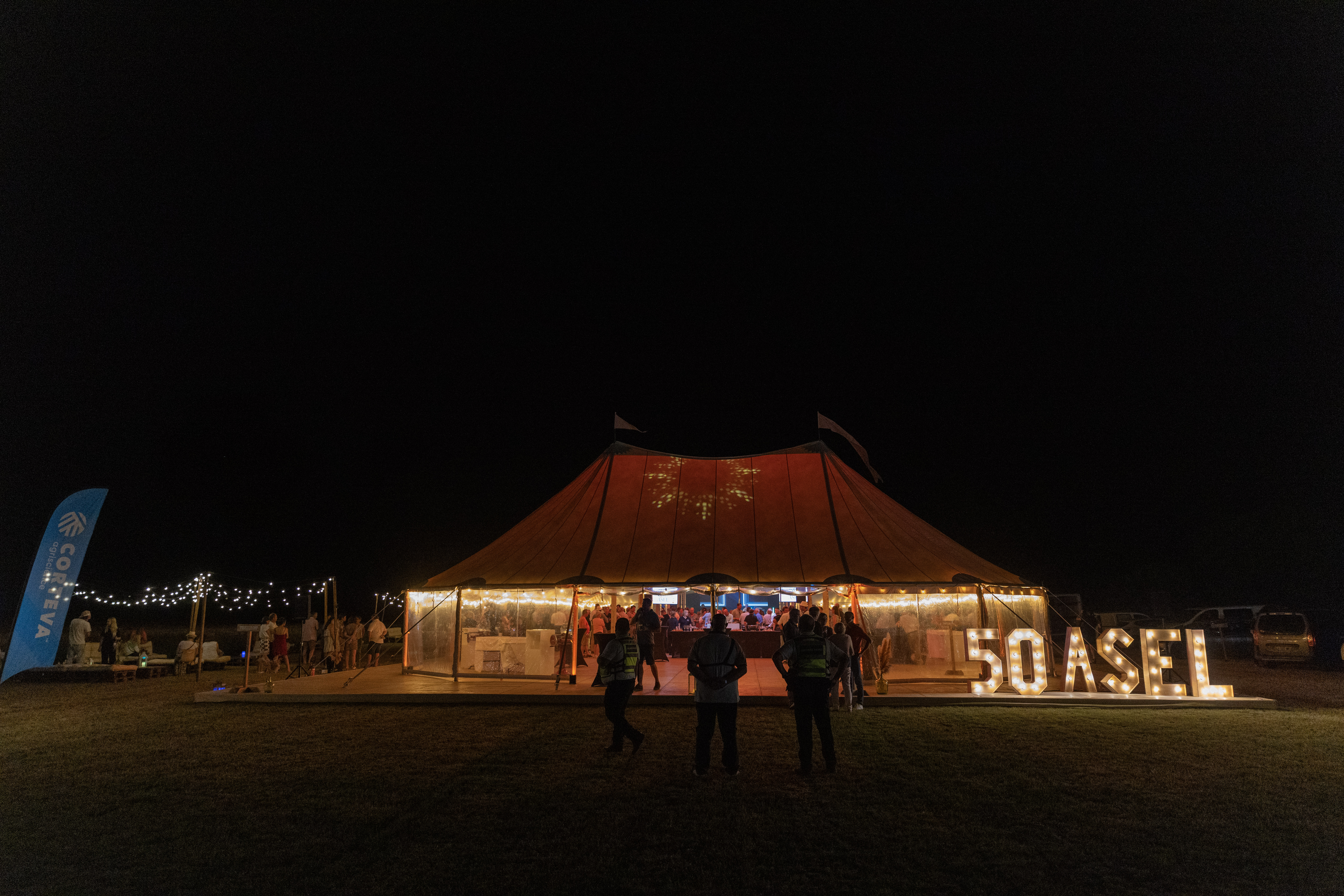
Tent Rental in Quebec for corporate events with zero operational surprises
INNOV'events is a Montreal-based event agency supporting organizations across Quebec for Tent Rental projects from 40 to 2,000+ guests. We take responsibility for technical planning, vendor coordination, site constraints, and event-day supervision—so your teams can focus on guests, brand, and internal stakeholders.
Sommaire
In a corporate event, a tent is not “just cover”: it becomes the event room. Done right, it protects your agenda, your AV, your catering timing, and your brand perception—especially when weather shifts fast in Quebec.
Executives and HR teams expect predictable guest flow, safe access, reliable power and heating, and a supplier plan that doesn’t collapse at the first permit request or delivery constraint.
At INNOV'events, we manage Tent Rental in Quebec as a full operational project: site survey, compliance, layout, risk management, and on-site coordination with your communications and facilities teams.
Operational benchmarks our Quebec clients ask for
10+ years of corporate event operations delivered across Quebec, including multi-vendor installs in constrained urban and industrial sites.
Network capacity to mobilize 20–80 technicians (rigging, flooring, tent crews, electricians, AV) when timelines are tight or installs require staging.
Typical tent projects managed from 1 to 5 days of on-site install/dismantle depending on surface, anchoring method, and interior build (flooring, walls, heating, lighting).
Safety-first approach: documented site plan, load considerations, emergency access, and vendor method statements requested upfront for higher-risk builds.
Tent logistics aligned with Quebec business realities
We support organizations across Quebec that need dependable tent infrastructure for town halls, plant celebrations, executive visits, brand activations, and year-end gatherings—often on their own sites where there’s no margin for improvisation. Many of our mandates come back annually because internal teams value a partner who remembers the terrain: the loading dock that can’t be blocked, the shift-change timing, the security protocols, and the approval chain that must be respected.
Our approach is designed for decision-makers who need operational clarity: what is feasible on your site, what it costs, what the risks are, and how we reduce them before your name is on the invite.
 Besoin d’un devis rapide ?
Nous vous envoyons une première proposition sous 24h.
Why Quebec companies choose tent rental for internal and client events
A tent is often the fastest way to create a controlled environment without booking a venue months in advance. For leadership, it’s a practical tool: you can host on-site, control the narrative, and reduce guest travel while keeping your event standards high.
Schedule control: you set the timeline around production constraints, shift changes, or client availability—without being limited by venue time slots.
Brand and message consistency: the tent becomes a branded space where staging, signage, and audiovisual support a CEO address, awards, or a product reveal.
Operational convenience: on-site events reduce shuttle complexity and let facilities/security maintain their normal controls (access lists, escort rules, restricted zones).
Capacity flexibility: modular tent sizing adapts to RSVP uncertainty, last-minute VIP additions, or a second service wave for food and beverage.
Risk mitigation in variable weather: proper walls, flooring, heating, and drainage planning protect guests, equipment, and catering service quality.
In Quebec, the economic culture rewards pragmatism: leaders want an event that looks sharp, runs on time, and doesn’t create operational fallout on Monday morning. A well-managed tent project delivers exactly that.
What decision-makers in Quebec expect from a tent setup
In Quebec, tent projects are rarely “plug-and-play.” We regularly see sites with mixed surfaces (asphalt + gravel + lawn), strict snow-load or wind considerations depending on season, and limited staging space for trucks. Your HR or communications team may want a premium guest experience, while your operations team is focused on safety, access, and not disrupting production. Our role is to reconcile these priorities with a plan you can defend internally.
Concrete expectations we hear from directors:
- No surprises on compliance: clarity on municipal or site permits, fire lanes, exits, occupancy assumptions, and documentation needed for insurers or landlords.
- A real power plan: identification of existing panels, distance runs, backup power, and separation of critical loads (AV, heating, catering).
- Comfort that matches the invite: temperature strategy (heaters, air distribution), door and wall selection, and flooring that stays stable in rain or freeze-thaw.
- Vendor accountability: one coordination point, clear responsibilities, and an event-day authority who can arbitrate quickly when conditions change.
We build proposals that address these items explicitly so your leadership team can approve with confidence.
Which event formats work best under a tent in Quebec
Under a tent, “entertainment” is often less about spectacle and more about keeping energy high while protecting your program. The most effective formats are those that respect sound constraints, support networking, and avoid bottlenecks at bars or food stations.
Interactive animations in Quebec
Guided networking stations: short, structured prompts hosted by a facilitator to help cross-department introductions (useful for post-merger integration or new leadership cycles).
Live polling + town hall Q&A: a moderated Q&A supported by screens and microphones; we plan seating geometry and audio zones so every question is audible.
Team recognition wall: curated content (photos, KPIs, client wins) with a defined flow so it doesn’t block circulation at peak arrival.
Art animations in Quebec
Acoustic trio or jazz quartet: appropriate during cocktails without overpowering conversation; we plan speaker placement to avoid hot spots.
MC + short ceremonial moments: awards, retirement tributes, safety milestones—kept tight and rehearsed with stage management to respect executive timing.
Lighting design as “entertainment”: intelligent lighting cues for transitions (welcome, speech, dessert) that elevate perception without adding schedule risk.
Innovative animations in Quebec
Chef stations with controlled queues: we design parallel lines and service points to reduce waiting time; ideal for 150–600 guests.
Local tasting bars: Quebec products with responsible service planning (permit, bar staffing ratios, water stations, and end-of-night taxi/shuttle messaging).
Late-night comfort service: a second wave (mini poutines, sandwiches, soup shots) that stabilizes energy and supports safe alcohol management.
Gourmand animations in Quebec
Silent conference headsets: useful when the tent is near operations or residential areas; it improves speech intelligibility and reduces external noise complaints.
Hybrid-ready staging: camera positions, uplink planning, and a dedicated quiet zone for speakers—critical when remote executives must appear live.
Space zoning for multiple objectives: a tent can host a formal plenary + lounge + demo area if circulation and power are designed from the start.
The right choices align with your brand image and internal culture: a financial institution will prioritize clarity, comfort, and controlled sound; a manufacturing group may emphasize safety milestones and team pride. We recommend formats that strengthen your message while keeping operations predictable.
Where to install a corporate tent in Quebec without operational friction
The site you choose determines installation complexity, guest perception, and hidden costs. A tent on a clean paved surface with nearby power and clear truck access is fundamentally different from a scenic lawn with long cable runs and uncertain drainage. We help you pick a site that fits your objectives and your risk tolerance.
| Venue type | For which objective? | Main strengths | Possible constraints |
|---|---|---|---|
| Corporate parking lot or yard (on-site) | Town hall, anniversary, client visit, plant milestone | High control, minimal guest travel, easier security and access lists | Ballast anchoring, power distribution planning, truck staging and keeping emergency lanes open |
| Hotel or conference property outdoor area | Executive reception, partner event with lodging needs | Existing guest services, washrooms, catering back-of-house support | Strict load-in windows, vendor rules, noise restrictions, potential premium fees |
| Public park or municipal waterfront space | Brand activation, community-facing corporate initiative | Strong scenery and visibility, high perceived value | Permits, curfews, ground protection, public access management and higher security needs |
We strongly recommend a site visit with your internal stakeholders (facilities, security, comms) before you validate the date. A 30–60 minute walkthrough prevents the common pitfalls: blocked delivery routes, insufficient power, or a tent footprint that conflicts with underground infrastructure.
What does tent rental cost in Quebec and what drives the price
The price of Tent Rental in Quebec depends on structure type, anchoring, season, and the level of interior build you need to meet corporate expectations. For leadership teams, the right question isn’t “what’s the cheapest tent,” but “what level of infrastructure guarantees our agenda and guest comfort.”
Tent size and structure: clear-span structures cost more but maximize usable space (no center poles) for staging, screens, and banquet layouts.
Anchoring method: staking on grass is often simpler; ballast on asphalt requires engineered weights and can increase trucking and labor.
Flooring and subfloor: from basic ground cover to cassette flooring with leveling; crucial for accessibility and a professional finish.
Walls, doors, and glazing: solid walls for weather control, transparent panels for daylight and premium look; door type impacts heat loss.
Heating, ventilation, or cooling: sized to volume and temperature; distribution and fuel logistics matter as much as heater count.
Electrical and lighting: safe distribution, distance runs, backup options, and lighting design (functional + ambience).
Site complexity: tight access, long carry distances, limited install windows, ground protection, or unionized environments.
Schedule and seasonality: peak dates (late spring to early fall) and short lead times typically increase costs and reduce inventory options.
We frame budgets in terms executives recognize: risk reduction, program continuity, and brand protection. A well-designed tent environment reduces no-shows, improves engagement, and avoids last-minute spends that happen when comfort and compliance weren’t planned upfront.
Why choose a Quebec-based event partner for tent rental
Managing a tent project is less about selling a structure and more about coordinating a temporary venue under real constraints. A team established in Quebec brings practical advantages: knowledge of seasonal realities, local supplier availability, and faster on-site response when decisions must be made. We also understand how internal approvals typically work here—Procurement, Health & Safety, Facilities, Security, and Communications—and we structure documentation accordingly.
For projects that extend beyond Montreal and require coordination with different municipal contexts, our team can also support you through our network, including our event agency in Quebec resources when Quebec City operations make more sense for the install and supervision.
- Faster problem-solving: when weather changes, access shifts, or suppliers need re-sequencing, local presence reduces delay and finger-pointing.
- Supplier accountability: we work with tent, power, flooring, and heating partners we can pressure-test—because we see them in the field, not just on quotes.
- Compliance readiness: we anticipate documentation requests (site plans, safety notes, occupancy assumptions) rather than reacting late.
- Operational bilingualism: smoother coordination with crews and on-site stakeholders across Quebec.
We frame budgets in terms executives recognize: risk reduction, program continuity, and brand protection. A well-designed tent environment reduces no-shows, improves engagement, and avoids last-minute spends that happen when comfort and compliance weren’t planned upfront.











Examples of Quebec tent projects we manage in real conditions
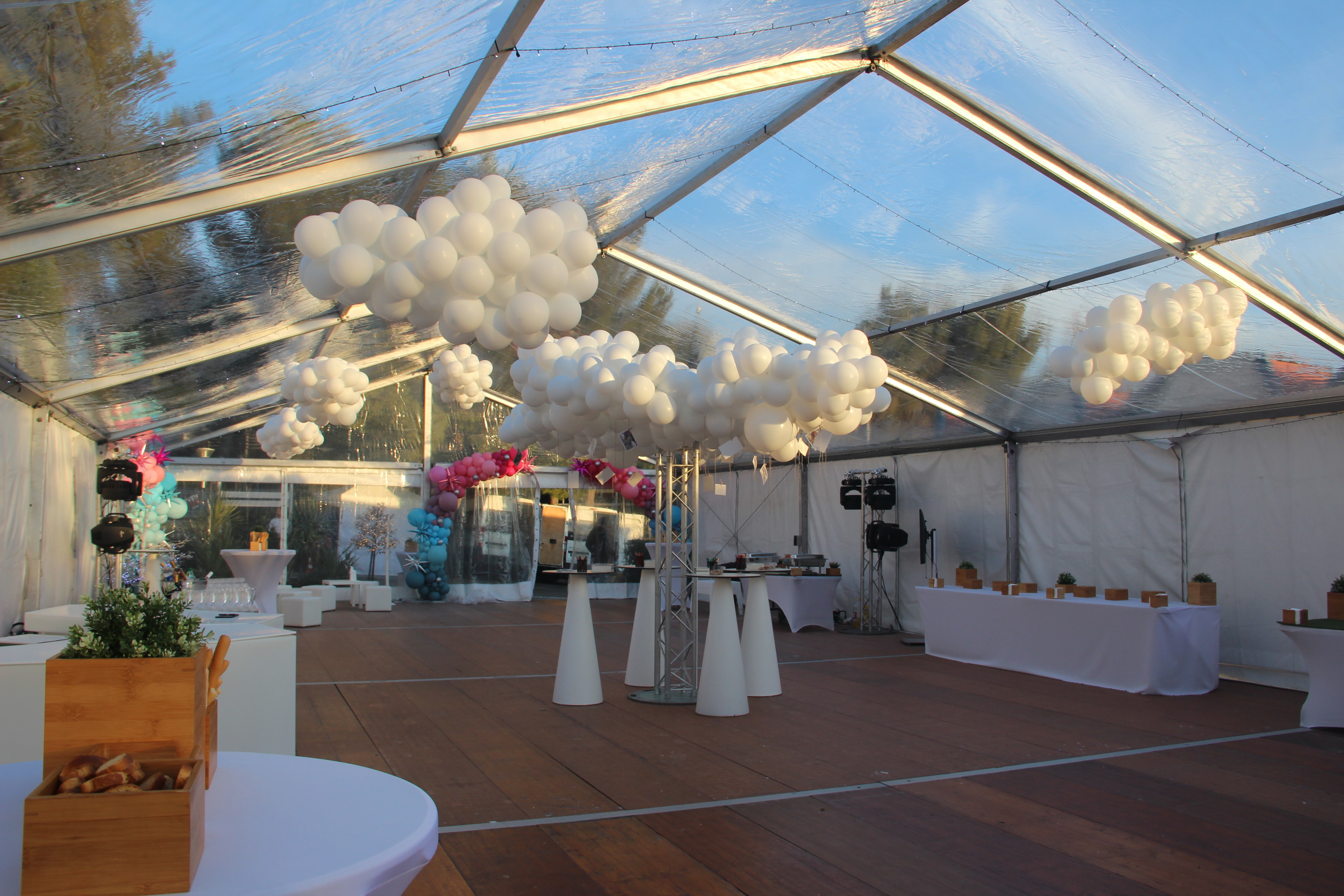
Our mandates range from executive receptions to large employee celebrations. A common scenario: a client wants to host on their own site to reinforce culture and reduce logistics, but the property was not designed for events. We assess truck access, choose an anchoring strategy, design circulation that respects emergency lanes, and build a power plan separating AV, heating, and catering loads.
We also handle mixed-format events where a tent must support both a formal segment (CEO speech, awards, strategic update) and a networking segment with food stations. That requires precise zoning, acoustic planning, and staff routing so service does not cross guest flow. When weather is a factor, we plan wall configurations and heating capacity early, rather than trying to fix comfort in the last 48 hours.
Across these projects, the consistent requirement is executive predictability: a schedule that holds, a space that looks intentional, and an operational plan that protects the organization’s image.
Common tent rental mistakes Quebec directors want to avoid
Underestimating the footprint: adding stage, screens, bars, buffet lines, and backstage space can increase required square footage by 20–40% versus a simple seated layout.
Skipping flooring decisions: a tent on grass without a proper flooring plan increases slip risk, damages footwear, and complicates accessibility expectations.
No clear power responsibility: assuming “the venue has outlets” leads to overloaded circuits and AV failures. A documented distribution plan is non-negotiable.
Weather planning as an afterthought: adding walls or heaters last minute often costs more and may not be available during peak season.
Ignoring sound and acoustics: reverberation and speaker placement can ruin leadership messaging; the solution is planning, not volume.
Load-in conflicts with operations: truck movements during shift change, blocked docks, or security clearance delays can cascade into late installs.
Unclear decision authority on event day: when conditions change, you need one operational lead empowered to decide quickly.
Our job is to identify these risks early, quantify their impact, and put a practical mitigation plan in place—before your event becomes an internal escalation.
Why Quebec clients renew their tent projects year after year
Repeat business happens when internal teams trust that the plan will hold under pressure. For tent projects, that trust comes from disciplined preparation, transparent budgeting, and an agency that is present on site—not just on email.
Typical planning lead time: 6–12 weeks for standard corporate installs; 12–20 weeks when permits, complex flooring, or multi-zone builds are involved.
Decision cadence we see most often: initial feasibility in 5–10 business days, layout validation in 1–2 weeks, final vendor lock once guest count stabilizes.
Operational impact target: protect business continuity by staging load-in/out to avoid blocking critical access points during business hours.

Loyalty is rarely about novelty—it’s proof that the event ran safely, looked professional, respected internal constraints, and was easy to defend in a post-event debrief.
Our Quebec tent rental process from first call to teardown
👉 Quebec feasibility call and decision criteria
We start with your objectives, audience profile, and non-negotiables (date constraints, VIP protocol, compliance, accessibility, brand standards). We ask operational questions directors care about: where trucks can stage, what surfaces exist, what the nearest power sources are, and what internal stakeholders must sign off (HSE, Facilities, Security, Procurement).
👉 On-site survey and footprint validation in Quebec
We schedule a site survey to confirm measurements, access routes, slope, drainage, and any underground constraints. We validate the tent footprint with real dimensions, not assumptions, and flag impacts on parking, emergency access, and daily operations.
👉 Layout, guest flow, and production plan
We produce a layout showing seating, stage, screens, catering/service corridors, bars, entrances, and back-of-house zones. This is where we protect your program: sightlines for speeches, microphone positions, queue management, and a run-of-show that matches the physical space.
👉 Technical design: structure, anchoring, flooring, heating, power
We lock the tent type, anchoring method (ballast/stake), flooring level, wall/door configuration, heating strategy, lighting, and power distribution. For corporate events, we separate circuits for critical loads and define backup options when failure is not acceptable.
👉 Supplier booking, permits, and safety documentation
We book vetted partners and align their responsibilities. When permits or landlord approvals are required, we assemble the documents and timelines early. We also align with your internal safety expectations and define emergency access, exits, and on-site safety rules.
👉 Install supervision and vendor coordination
During install, we manage sequencing (tent, flooring, power, lighting, AV, décor, catering). We run checks on access lanes, cable protection, exits, and finishes. This is where many projects fail without tight coordination—especially when multiple trucks and teams arrive in short windows.
👉 Event-day operations and teardown
We provide on-site management: supplier oversight, timeline control, and rapid response if weather shifts or guest flow changes. After the event, teardown is scheduled to respect site operations and minimize disruption—because your facilities team will remember how cleanly we leave the space.
FAQ sur l'organisation Tent Rental à Quebec
How far in advance should we book a tent in Quebec?
For peak season (late spring to early fall), plan 8–16 weeks ahead for a corporate-quality setup with flooring and lighting. For complex builds or limited-access sites, 12–20 weeks is safer to secure inventory and install windows.
Do we need flooring for a corporate tent in Quebec?
For executive or client-facing events, yes in most cases. Flooring improves safety, accessibility, and service quality. On grass or mixed surfaces, it also prevents sinking tables and unstable bar setups—especially after rain.
Can a tent stay comfortable in Quebec in cold weather?
Yes, if it’s designed for it: solid walls, appropriate door strategy, and heaters sized to the tent volume. Comfort depends on temperature, wind, and how often doors open; we plan heating distribution and buffering zones rather than relying on a single heater type.
What size tent do we need for 200 guests in Quebec?
As a planning range: a seated dinner with tables often requires roughly 2,400–3,600 sq ft once you include circulation. Add stage, screens, bars, and back-of-house and you may need 20–40% more. We confirm with your layout and program.
What are the biggest risks with tent rental in Quebec?
The main risks are weather exposure (wind/rain), underestimated power needs, inadequate anchoring/ballast, and insufficient install time due to access constraints. The solution is a documented plan: site survey, technical specs, sequencing, and clear on-site authority.
Get a Quebec tent rental plan you can approve with confidence
If you’re comparing agencies, we can help you quickly validate what is feasible on your site, what level of build is required (flooring, heating, power, lighting), and what budget range matches your standards. Share your date, location in Quebec, estimated guest count, and event format—we’ll come back with a clear proposal and the operational assumptions behind it. The earlier we lock the footprint and technical plan, the fewer surprises you’ll have during approvals and on event day.
INNOV'events Quebec Agency
Thierry GRAMMER is the manager of the INNOV'events Quebec office. Reach out directly by email at canada@innov-events.ca or via the contact form.
Contact the Quebec agencyToutes nos prestations & animations Quebec, Quebec
Découvrez nos prestations événementielles
Découvrez nos animations événementielles disponibles au Quebec
- Event Hostess in Quebec
- Escape Game in Quebec
- MasterChef-Style Cooking Workshop in Quebec
- Corporate Magician in Quebec
- Tent Rental in Quebec
- Color Analysis Workshop in Quebec
- Inflatable Games in Quebec
- Valet Service in Quebec
- Soccer Simulator in Quebec
- LED Furniture Rental in Quebec
- LED Branding Activation in Quebec
- Immersive Culinary Experience in Quebec
- Light Painting Activity in Quebec
- Immersive Mystery Night in Quebec
- Promotional Contest in Quebec
- Promotional Materials (POS) in Quebec
- Virtual Reality Experience in Quebec
- Molecular Gastronomy Workshop in Quebec
- Halloween Event in Quebec
- Fireworks Show in Quebec
- Sports Challenge – Giant Games in Quebec
- Professional Event Host in Quebec
- Photo Booth Animation in Quebec
- Santa Claus Appearance in Quebec
- Kids Entertainment in Quebec
- Guided Tour in Quebec
- Urban Rally in Quebec
- Ball Pit Activity in Quebec
- Flight Simulator in Quebec
- Food Truck Rental in Quebec
- World Record Attempt in Quebec
- Surf Simulator in Quebec
- Soccer Simulator in Quebec
- Wine Casino in Quebec
- Makeover Workshop in Quebec
- Perfume Creation Workshop in Quebec
- Acting Workshop in Quebec
- CSR Activities in Quebec
- Archery Activity in Quebec
- Event Security Guard in Quebec
- Wine Tasting Workshop in Quebec
- Mime Performance in Quebec
- TV Game Show Animation in Quebec
- Funfair Event in Quebec
- Crisis Management Workshop in Quebec
- Crisis Negotiation Workshop in Quebec
- Arcade Games in Quebec
- Indoor Skydiving Simulator in Quebec
- Ski Simulator in Quebec
- Racetrack Driving Experience in Quebec
- Introductory Flight Experience in Quebec
- Tasting Experience in Quebec
- Build Your Own Foosball Workshop in Quebec
- 2CV Rally in Quebec
- LEGO Challenge in Quebec
- Casino Night in Quebec
- Interpreter / Translator in Quebec
- Promotional Merchandise in Quebec
- Shuttle / Transportation Service in Quebec