
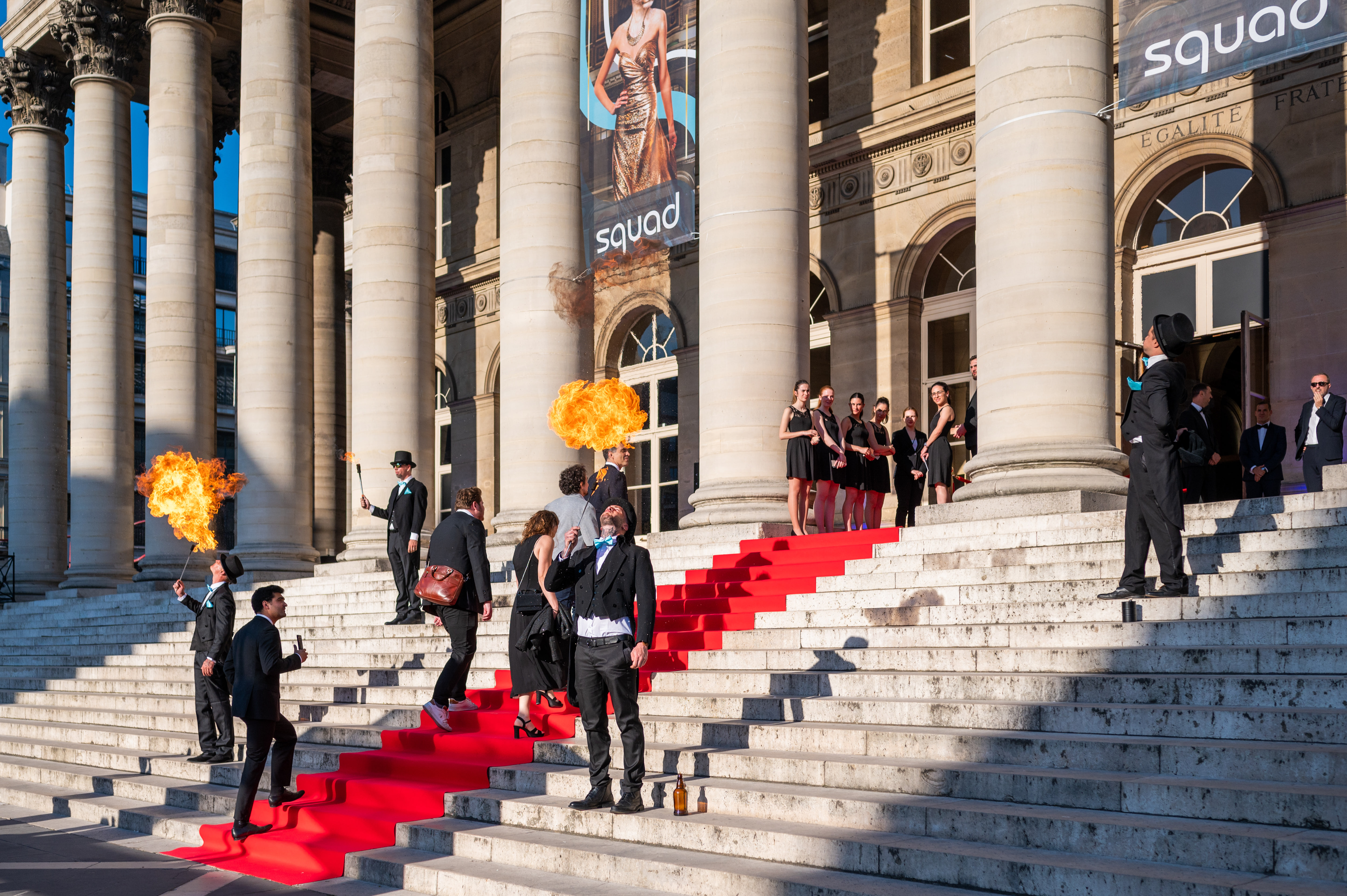
Event Security Guard in Montréal for corporate events that must run on time
INNOV'events deploys Event Security Guard teams in Montréal for corporate gatherings from 50 to 5,000+ attendees. We handle access control, wristbanding, bag checks, VIP flows, incident response, and the security coordination that keeps your program intact.
For executives, HR and communications, our job is simple: protect people, brand, and schedule—without turning your event into a fortress.
Sommaire
In a corporate event, “security” is not a checkbox: it protects keynote timing, sponsor obligations, HR duty of care, and your leadership’s credibility in front of employees and guests. A single access breach, confrontation at the bar, or medical emergency can derail a program in minutes—and it’s your organization that will be remembered for it.
In Montréal, organizations expect security that is both firm and diplomatic: bilingual interactions, respectful screening, and rapid de-escalation. They also expect operational rigor—clear sign-in, controlled vendor load-in, and a plan for protests, weather, and last‑minute VIP changes.
INNOV'events is an event agency in Montréal with field-driven security coordination. We work with vetted local partners, write venue-specific post orders, and stay on-site with an event lead so decisions are made fast—before small issues become incidents.
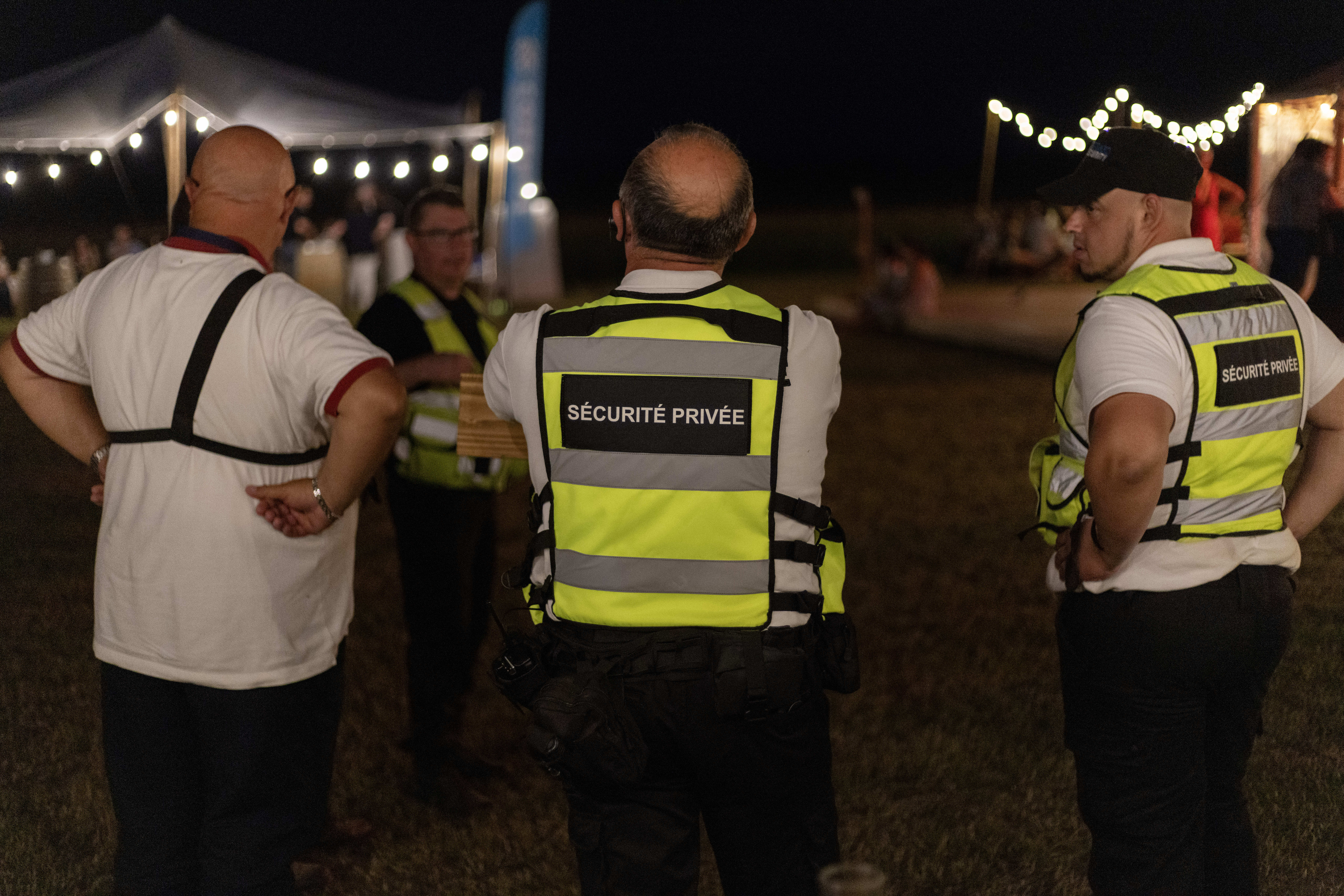
Montréal security deployment: quick proof we can deliver
10+ years coordinating corporate operations in Montréal with security as part of the event run-of-show (not an afterthought).
Network capacity to mobilize 2 to 30+ guards depending on crowd profile, venue constraints, and entry design.
Experience spanning 50 to 5,000+ attendees including conferences, product launches, town halls, holiday parties, and public-facing corporate activations.
On-site supervision: 1 security supervisor per deployment, with escalation protocol aligned with your internal stakeholders (HR, comms, facilities).
Documented deliverables: post orders, staffing grid, access plan, and incident log available upon request.
Who we support year after year in Montréal
In Montréal, many organizations return to the same partners because event risk is cumulative: you learn the building, the crowd profile, the internal politics, and the “what can go wrong” that isn’t written on a brief. At INNOV'events, we often support the same HR and communications teams across multiple moments in the year—leadership kickoffs, client forums, recruitment events, holiday gatherings—so security becomes more predictable and less stressful.
Our work is built on discretion: we can share references and comparable mandates during a call, and we can align quickly with your procurement and compliance requirements (COI/insurance, vendor onboarding, access to loading docks, and venue rules). What matters is not a logo list—it’s your confidence that the guard presence will be professional, bilingual, and calibrated to your brand.
 Besoin d’un devis rapide ?
Nous vous envoyons une première proposition sous 24h.
Why invest in event security guards in Montréal for corporate events?
Security staffing is one of the few event lines that directly reduces operational risk and protects executive outcomes. For HR, it’s duty of care. For communications, it’s reputational control. For leadership, it’s ensuring the event delivers its message without distractions.
Protects your schedule and stage time: controlled access prevents late surges at registration, keeps VIP arrivals smooth, and avoids interruptions during speeches and panels.
Reduces liability and HR exposure: clear conduct enforcement, controlled alcohol service zones, and documented incident handling support your internal policies and insurer expectations.
Prevents brand-damaging moments: one viral video of a confrontation at a corporate party can outweigh months of employer branding. Trained guards de-escalate early and discreetly.
Creates psychological safety: employees and guests engage more when they feel the environment is supervised and respectful—especially in large venues or evening events.
Improves guest experience: well-briefed guards act as wayfinding support, handle lost-and-found, and reduce friction at entry points without “security theatre.”
Supports executive and VIP protocols: dedicated routes, holding areas, and controlled photo zones reduce unwanted contact while keeping the tone warm and professional.
Montréal is a dense, event-heavy market—multiple conferences, festivals, and corporate activations can overlap the same week. When the city is busy, queues, traffic, and venue staffing strain increases. Planning your guard coverage as an operational function—not a last-minute add-on—is one of the most reliable ways to keep a corporate event under control.
What corporate teams in Montréal expect from an Event Security Guard
Security in Montréal has its own realities. Many corporate events are hosted in mixed-use buildings where public areas, hotel guests, and your attendees cross paths. That means access control must be designed to work inside real architecture: escalators, shared elevators, multiple entrances, and fire-code constraints.
We also see bilingual expectations as non-negotiable. A guard team must handle French-first interactions with employees and unionized venue staff, while also supporting English-speaking guests, speakers, and out-of-town executives. Poor communication at the door is one of the fastest ways to create tension and reputational damage.
Another local factor: arrival patterns. In downtown Montréal, guests often come in waves tied to metro timing and after-work traffic; in the West Island or industrial sectors, arrivals are more car-dependent and parking becomes the choke point. We plan staffing and stanchions around real flow, not theoretical headcounts.
Finally, many organizations require a measured, respectful security presence—especially for internal culture events. The goal is not intimidation; it’s control, prevention, and fast response. We brief guards on your tone: are we strict and formal (client forum with VIPs), or warm and discreet (holiday party with employees)?
How entertainment choices in Montréal change your security needs
Entertainment is often the trigger that changes the risk profile of a corporate event. A DJ set increases crowd density and movement. A cocktail format changes supervision needs around bar lines. A celebrity speaker changes backstage and arrival protocols. Security planning should follow the format—not the other way around.
Interactive animations in Montréal
Interactive badge pickup or QR entry: faster entry reduces queues outside (where incidents tend to happen). Security role shifts to exception handling (invalid QR, duplicate tickets, guest list disputes).
Photo activations and branded installations: these create “micro-queues.” We position a guard or host nearby to protect equipment, prevent line jumping, and keep walkways compliant.
Raffle draws and prize stations: cash-equivalent prizes attract attention. We recommend controlled distribution, clear rules, and a defined close-down procedure.
Art animations in Montréal
Live music bands: sound checks and backstage access require a controlled corridor. We define who is allowed near stage left/right and how guests approach the band safely.
Speakers and VIP talent: we plan green room privacy, controlled meet-and-greet windows, and a secure route from vehicle to backstage—especially in downtown Montréal venues where public access is close.
Performance acts (aerial, fire, acrobatics): additional perimeter control and safety zones are mandatory. We coordinate with technical directors to keep spectators at safe distances.
Innovative animations in Montréal
Open bar and cocktail formats: the main security need is not “bouncers”; it’s prevention—monitoring intoxication signs, supporting bar staff, and providing discreet interventions that protect HR and the host company.
Food stations and tastings: stations create crowd clusters. We plan lane widths, queue direction, and guard sightlines to reduce pushing, spilled drinks, and trip hazards.
Late-night service: the last 45 minutes is where incidents spike. We recommend reinforcing roaming coverage and aligning with transportation plans (rideshare pickup points, taxis, shuttles).
Gourmand animations in Montréal
Hybrid events with livestream: security includes controlling filming zones, protecting speakers from unscheduled access, and preventing unauthorized backstage entry that can disrupt broadcast.
Product demos (tech, medical, luxury): demo devices and prototypes are theft targets. We set controlled demo perimeters and define end-of-night inventory checks.
Public-facing brand activations: when your event touches the public realm, we plan crowd surge scenarios and coordinate with venue security and local rules for sidewalk or lobby flow.
In every case, security must match your employer brand and external image. A strong corporate culture event in Montréal can still be tightly controlled—by using trained guards, clear signage, and smart flow design rather than aggressive posture.
Which Montréal venues require stronger event security planning?
The venue determines the security architecture: number of access points, shared public areas, loading dock layout, and evacuation routes. Two events with the same headcount can require different guard staffing simply because of how the building is built and how guests arrive.
| Venue type | For which objective? | Main strengths | Possible constraints |
|---|---|---|---|
Downtown hotels with shared lobbies | Conferences, leadership meetings, client forums | Professional infrastructure, built-in security, clear back-of-house routes | Public traffic in lobby, multiple events in parallel, elevator control needed for VIP floors |
Converted industrial/loft spaces (Griffintown, Mile-Ex) | Product launches, creative brand nights, holiday parties | Strong ambiance, flexible layouts, good for large cocktail formats | Limited entrances, fewer fixed barriers, load-in constraints, higher need for perimeter control |
Convention centres and large halls | Large town halls, multi-track conferences, trade-style activations | Capacity, rigging options, structured emergency planning | Long walking distances, multiple doors to control, credentialing complexity and crowd surge risk |
Corporate offices and campuses | Internal events, executive announcements, employee recognition | Known environment, controlled access systems, minimal public exposure | Fire code limitations, elevator bottlenecks, need to keep business areas restricted |
We strongly recommend a site visit (or at minimum a structured venue walkthrough) before confirming staffing. In Montréal, small details—like a secondary stairwell that bypasses registration, or a loading door that opens onto a public alley—change the entire access plan.
What does an Event Security Guard cost in Montréal?
Security pricing depends less on your headcount than on the operational design: number of entrances, public exposure, alcohol service, VIP needs, and hours. A clear scope avoids overstaffing (wasted spend) or understaffing (real risk).
Hours and schedule: a 4-hour program can still require 7–10 hours of coverage when you include vendor load-in, doors, peak time, and close-out.
Number of access points: each door you keep open typically needs coverage, especially in mixed-use venues in Montréal where the public can circulate.
Type of event: alcohol, public guests, high-profile speakers, or visible brand activations increase staffing requirements and supervision.
Guard profiles: standard guards vs. supervisors, bilingual requirements, close protection experience for VIPs, or guards dedicated to loading dock/vendor control.
Equipment and infrastructure: stanchions, signage, wristbands, handheld scanners, radios, and secure storage can be included or coordinated separately.
Coordination and documentation: post orders, staffing grid, incident reporting, and stakeholder briefings take time but reduce day-of risk.
From an ROI perspective, security is an insurance policy you can operationalize: fewer program delays, fewer HR escalations, lower reputational exposure, and a calmer leadership team on event day. We’ll help you right-size coverage so you pay for control, not for optics.
Why choose a Montréal-based partner for event security staffing?
For corporate teams, the advantage of working with a local partner is speed and realism. In Montréal, conditions change quickly: street closures, weather, overlapping city events, last-minute speaker needs, and venue constraints. A local agency can do site visits, coordinate directly with venue security, and mobilize additional coverage without turning it into a procurement crisis.
We also understand how decisions are actually made in companies here: HR wants policy alignment, comms wants discretion and message protection, facilities wants compliance and smooth load-in, and executives want zero surprises. Our role is to translate those expectations into an operational plan the guard team can execute.
- Faster mobilization in Montréal: local guard network and supervisors who know typical downtown and neighbourhood venues.
- Venue-first planning: we anticipate common choke points (shared lobbies, elevators, dock constraints) rather than discovering them during doors open.
- Bilingual execution: frontline interactions that match your audience and reduce friction at access control.
- One accountable point of contact: an event lead who can arbitrate tradeoffs between guest experience and control.
- Better coordination with suppliers: AV, catering, décor and entertainment move through controlled corridors without delaying your schedule.
From an ROI perspective, security is an insurance policy you can operationalize: fewer program delays, fewer HR escalations, lower reputational exposure, and a calmer leadership team on event day. We’ll help you right-size coverage so you pay for control, not for optics.








Examples of security situations we handle in Montréal corporate events
VIP arrival in a shared hotel lobby: We often manage executive arrivals where your guests cross the public. We set a discreet holding area, control elevator access for a defined window, and coordinate with hotel security so the VIP route remains smooth without drawing attention.
Credential disputes at registration: A common scenario: a partner insists they were “added last minute,” or a subcontractor arrives without the right badge. We set an escalation chain (registration lead → client contact → security supervisor) and define what “exception approval” looks like. That prevents emotional confrontations at the front line.
Alcohol-related interventions without optics damage: At holiday parties, the objective is not to embarrass employees. We brief guards on discreet approach, involve HR only when necessary, and use calm relocation (water, seating, rideshare coordination) rather than public removal whenever safety allows.
Loading dock congestion and unauthorized access: When multiple vendors arrive simultaneously, doors get propped open and restricted areas become exposed. We assign a dedicated dock guard, verify vendor credentials, and keep a log of arrivals—simple measures that prevent theft and backstage intrusion.
Medical event response: Even with smaller groups, fainting, allergic reactions, or falls happen. We ensure a clear route for EMS, designate an incident documentation process, and protect privacy so comms doesn’t have to manage a public scene.
Common mistakes in Montréal event security planning (and how to avoid them)
Underestimating the entry peak: most incidents begin in queues. We plan stanchions, staffing and signage for the first 30 minutes—not the average flow.
Leaving secondary doors uncontrolled: one side entrance or stairwell can bypass your entire credential system. We decide what stays locked, what stays alarmed, and what gets a guard.
No clear authority for “exceptions”: if a guard must debate guest list changes with a VIP’s assistant, you lose control. We define who can override access and how.
Mixing security and hospitality roles without training: security can support wayfinding, but it must not dilute access control. We clarify roles: who checks, who welcomes, who escalates.
Ignoring the last hour of the night: fatigue, alcohol, and transportation pressure increase risk. We reinforce roaming coverage and plan rideshare pickup management.
No incident log: without documentation, HR and comms lose facts. We use simple, time-stamped notes that support internal follow-up.
Our role at INNOV'events is to remove uncertainty: we prevent the predictable issues and build a response plan for the unpredictable ones—so leadership can focus on the message and the relationships, not on managing incidents.
Why Montréal clients keep the same security partner
Repeat business in event security is rarely about price; it’s about confidence. Teams come back when the partner understands their internal culture, knows the venues, and can anticipate the stress points that happen every time: registration peaks, VIP movement, alcohol service, and vendor access.
High repeat engagement for recurring corporate calendars (kickoff + client event + holiday party), because the post orders and venue learnings carry forward.
Reduced day-of escalations when the same partner already knows your internal decision chain and approval style.
Faster planning cycles after the first mandate: staffing grids and access maps are reused and adapted rather than rebuilt from scratch.

Loyalty is the strongest proof point in this category: when an HR director trusts the security lead enough to focus on employees instead of doors, you know the operation is solid.
Our Montréal process for Event Security Guard deployments
👉 Montréal discovery call and risk scan
We confirm your event purpose, audience mix, and risk factors: alcohol, VIPs, public visibility, valuables, and any previous incidents you want to avoid repeating. We also identify your internal owners (HR, comms, facilities, executive office) so escalation is clear.
👉 Venue walkthrough and access design
We map entrances, choke points, back-of-house routes, and emergency exits. We decide which doors are active, which are controlled, and what the guest journey looks like from sidewalk to main room. This is where we prevent queue issues and accidental cross-traffic.
👉 Staffing plan, roles and post orders
We build a staffing grid by position (front door, registration support, roaming, stage/green room, loading dock). We write post orders in plain language: what to check, what to say, when to escalate, and how to document. Guards perform better when the “why” and “how” are explicit.
👉 Coordination with suppliers and internal teams
We align with the venue, AV, catering, décor, and any entertainment provider so load-in is controlled and restricted areas remain protected. We also confirm how HR and comms want sensitive issues handled (privacy, messaging, and decision thresholds).
👉 Event-day briefing, supervision and reporting
We run a pre-door briefing, confirm communications (radios/phone escalation), and maintain an on-site supervisor. After the event, we can provide a brief incident summary and improvement notes—useful for recurring events in Montréal.
FAQ sur l'organisation Event Security Guard à Montréal
How many security guards do I need in Montréal?
It depends on entrances, alcohol, and audience profile. As a practical range in Montréal: 2–4 guards for a 150–300 person corporate reception with one controlled entry; 6–12 guards for 500–1,200 guests with multiple doors and bars; 15–30+ for large public-facing activations or multi-hall events. We confirm after a venue access map and flow review.
Do I need security guards for a private Montréal corporate party?
Often yes, even for “private” events, because venues are frequently shared and alcohol increases risk. For an internal party, security typically focuses on access control, de-escalation, and closing-time transportation flow. The goal is discreet prevention, not a nightclub posture.
Can you manage VIP security in Montréal venues?
Yes. We plan a VIP route (vehicle-to-green-room), controlled access to backstage, and a meet-and-greet window if required. For higher-profile executives, we can deploy a dedicated guard near the principal while keeping the overall tone professional and non-disruptive.
What are typical security shifts for Montréal events?
Most corporate events require coverage beyond program hours. A common setup is 7–10 hours total: 2–3 hours for vendor load-in and room setup, then doors/program time, then 1–2 hours for close-out and guest departure. Larger builds or public-facing formats can extend beyond that.
How do you handle incidents discreetly in Montréal events?
We use predefined escalation steps: de-escalation first, relocation to a private area when possible, HR involvement only when necessary, and documentation via a time-stamped log. If medical or police support is required, we coordinate a clear route and protect privacy to avoid public scenes.
Request an Event Security Guard quote in Montréal
If your event date is confirmed, the best time to plan security is now—before invitations go out and before the venue finalizes access rules. Send us your basics (date, venue, headcount range, alcohol yes/no, VIPs, public visibility), and INNOV'events will come back with a staffing recommendation, an access-control approach, and a clear estimate.
When leadership is on site, you don’t get a second chance. Let’s build a security plan that protects people, brand, and schedule—professionally and discreetly in Montréal.
INNOV'events Montréal Agency
Thierry GRAMMER is the manager of the INNOV'events Montréal office. Reach out directly by email at canada@innov-events.ca or via the contact form.
Contact the Montréal agencyToutes nos prestations & animations Montréal, Quebec
Découvrez nos prestations événementielles
- Employee Party in Montréal
- Corporate Christmas Party in Montréal
- Networking Cocktail Event in Montréal
- Shopping Mall Activation in Montréal
- Grand Opening Event in Montréal
- Product Launch Event in Montréal
- Open House Event in Montréal
- Field Brand Activation in Montréal
- Event Catering Service in Montréal
Découvrez nos animations événementielles disponibles au Quebec
- Event Hostess in Montréal
- Escape Game in Montréal
- MasterChef-Style Cooking Workshop in Montréal
- Corporate Magician in Montréal
- Tent Rental in Montréal
- Color Analysis Workshop in Montréal
- Inflatable Games in Montréal
- Valet Service in Montréal
- Soccer Simulator in Montréal
- LED Furniture Rental in Montréal
- LED Branding Activation in Montréal
- Immersive Culinary Experience in Montréal
- Light Painting Activity in Montréal
- Immersive Mystery Night in Montréal
- Promotional Contest in Montréal
- Promotional Materials (POS) in Montréal
- Virtual Reality Experience in Montréal
- Molecular Gastronomy Workshop in Montréal
- Halloween Event in Montréal
- Fireworks Show in Montréal
- Sports Challenge – Giant Games in Montréal
- Professional Event Host in Montréal
- Photo Booth Animation in Montréal
- Santa Claus Appearance in Montréal
- Kids Entertainment in Montréal
- Guided Tour in Montréal
- Urban Rally in Montréal
- Ball Pit Activity in Montréal
- Flight Simulator in Montréal
- Food Truck Rental in Montréal
- World Record Attempt in Montréal
- Surf Simulator in Montréal
- Soccer Simulator in Montréal
- Wine Casino in Montréal
- Makeover Workshop in Montréal
- Perfume Creation Workshop in Montréal
- Acting Workshop in Montréal
- CSR Activities in Montréal
- Archery Activity in Montréal
- Event Security Guard in Montréal
- Wine Tasting Workshop in Montréal
- Mime Performance in Montréal
- TV Game Show Animation in Montréal
- Funfair Event in Montréal
- Crisis Management Workshop in Montréal
- Crisis Negotiation Workshop in Montréal
- Arcade Games in Montréal
- Indoor Skydiving Simulator in Montréal
- Ski Simulator in Montréal
- Racetrack Driving Experience in Montréal
- Introductory Flight Experience in Montréal
- Tasting Experience in Montréal
- Build Your Own Foosball Workshop in Montréal
- 2CV Rally in Montréal
- LEGO Challenge in Montréal
- Casino Night in Montréal
- Interpreter / Translator in Montréal
- Promotional Merchandise in Montréal
- Shuttle / Transportation Service in Montréal