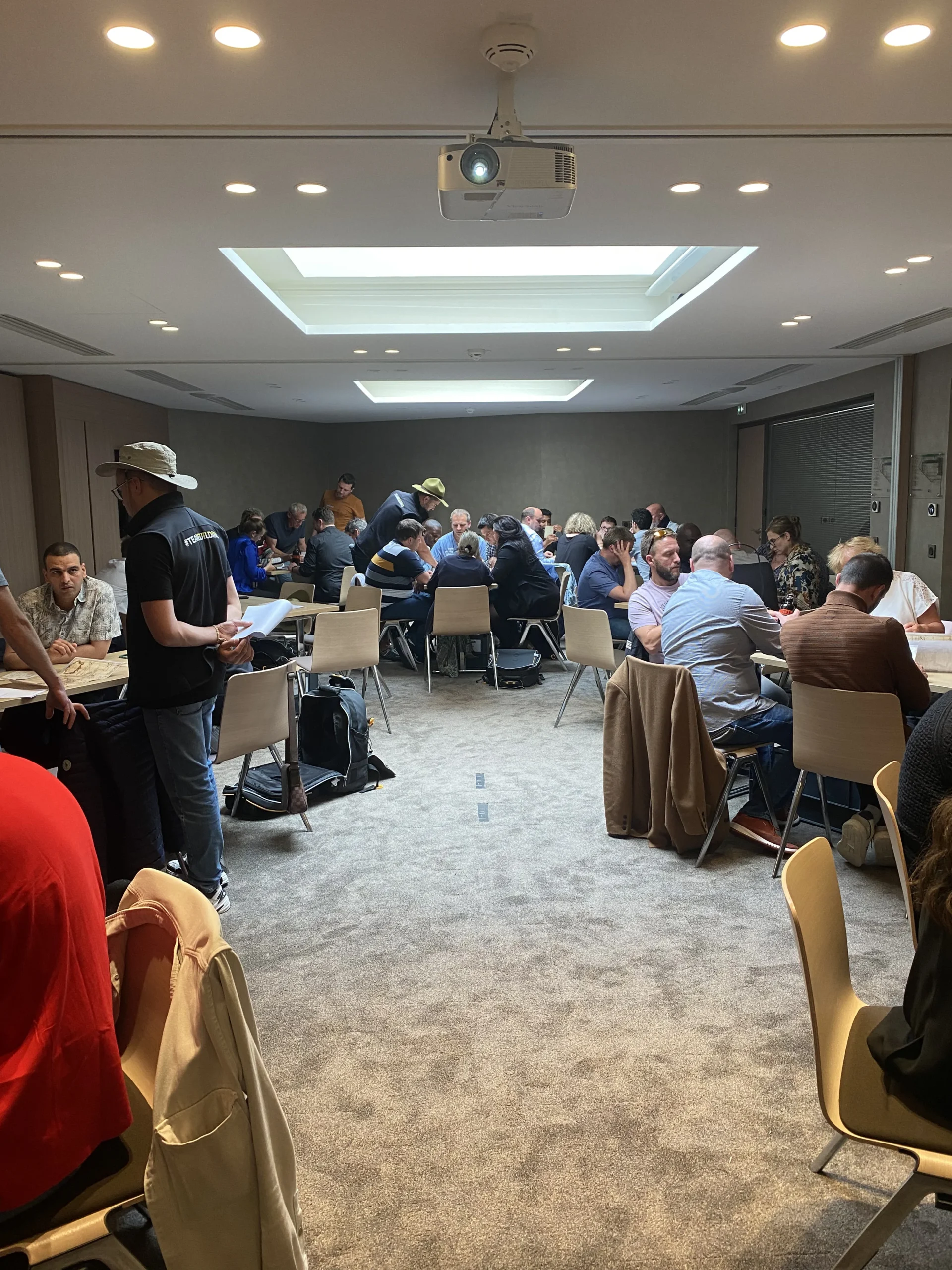
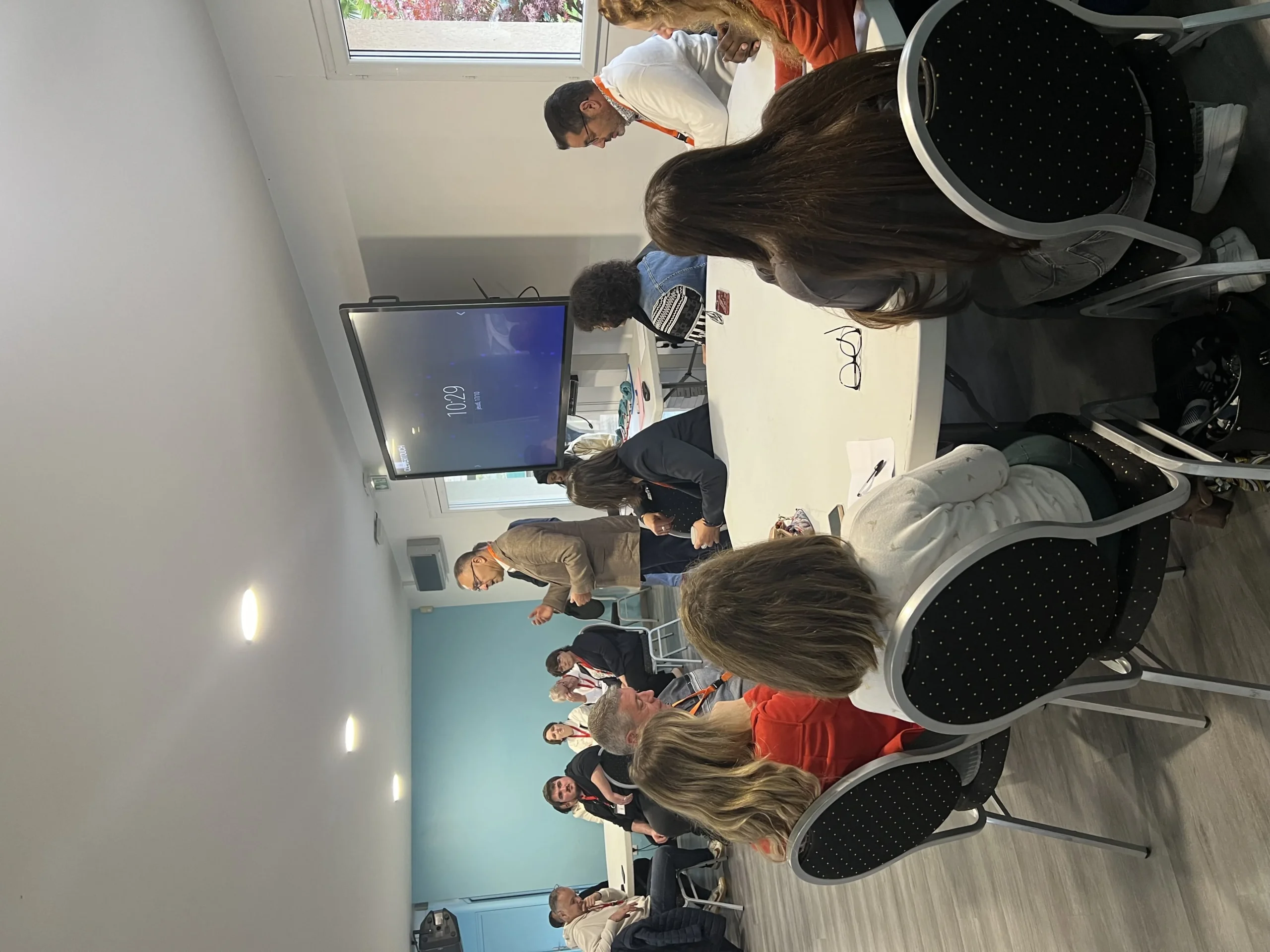
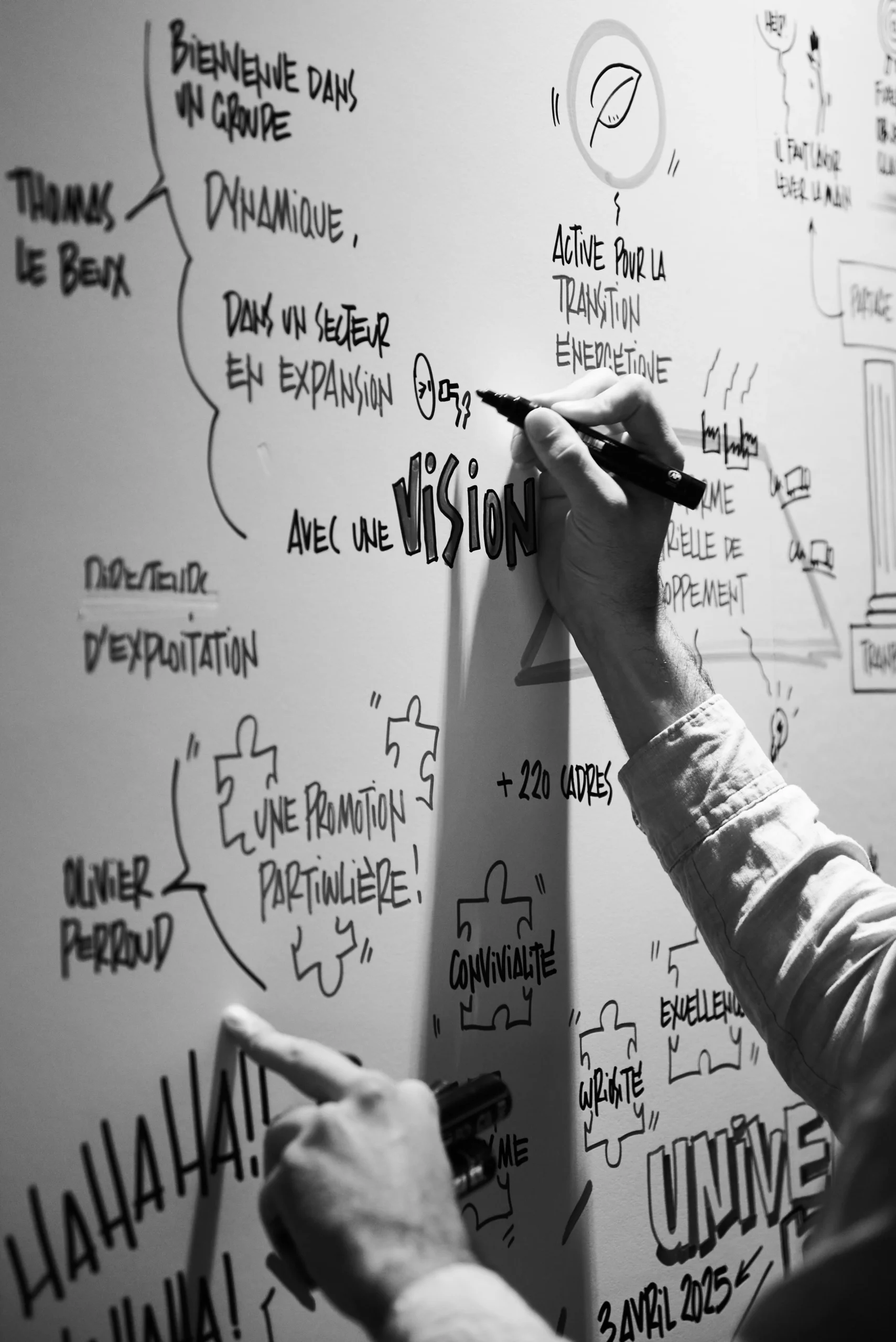
INNOV'events designs and facilitates Crisis Management Workshop formats in Montréal for executives, HR, Legal, Operations and communication teams—typically 8 to 60 participants, from a single crisis cell to multi-site organizations.
We handle the end-to-end build: scenario design based on your risks, facilitation, realistic injects (media, regulator, employee, vendor), debrief, and a practical improvement plan your team can implement within 30 days.
In a crisis, “engagement” is not about fun—it is about attention, decision quality and speed. A well-run workshop creates the same pressure patterns as a real incident: incomplete information, competing priorities, and reputational stakes. That’s where teams discover gaps that never show up in a slide deck.
Organizations in Montréal expect a workshop that respects time, governance and risk: clear roles for the crisis cell, realistic stakeholder pressure (clients, unions, regulators, media), and decisions documented as they would be in real life. They also expect bilingual realities and message approval cycles that match Quebec’s business environment.
INNOV'events is an event agency in Montréal with field experience in high-stakes corporate moments. We build workshops that feel operational: facilitation that keeps leaders in the decision seat, communications drills that protect brand credibility, and debriefs that convert stress into a concrete playbook.
10+ years supporting corporate events and learning formats across Canada, with crisis simulations designed for executive decision-makers.
Workshops delivered for groups from 8 to 200+ through modular formats (single crisis cell, cross-functional, or multi-site tabletop + live injects).
48–72 hours typical lead time to produce an adapted “rapid readiness” workshop when an organization needs immediate preparation (post-incident, merger, leadership change).
90-minute to full-day formats, with measurable outputs: updated call tree, role cards, message maps, and a prioritized remediation backlog.
We work with organizations operating in Montréal and across Quebec that must be ready for reputational, operational and people-related disruption. Some teams call us annually to run a refreshed simulation: leadership turnover, new product launch, new plant constraints, or simply because their risk register evolved.
Because you did not provide specific company names, we won’t invent logos. What we can do—during a call—is share anonymized case examples from comparable sectors in Greater Montréal (financial services, manufacturing, retail, public-facing services, and tech), along with the exact deliverables we produced and how the client used them internally after the workshop.
If you have internal constraints (unionized environment, franchise network, multi-language customer base, regulated communications, or cross-border coordination), we incorporate them directly into the scenario so your leaders train under conditions that match your reality—not an abstract “generic crisis.”
Nous vous envoyons une première proposition sous 24h.
Most crisis plans fail at the same moment: when leaders must decide with imperfect information, under time pressure, while protecting employees and the brand. A Crisis Management Workshop in Montréal is the fastest way to reveal friction points in governance and communications before they become public—and expensive.
For executives, HR and communication teams, the workshop is less about “learning” and more about alignment: who decides what, what gets documented, how messages are approved, and how the organization stays humane while staying in control.
Executive decision clarity: stress-test who has authority to declare a crisis, pause operations, or escalate to the board; identify when decisions get stuck in consensus.
Communication speed without losing accuracy: build message maps and approval paths that can produce a first holding statement in 30–60 minutes—without overpromising or contradicting legal obligations.
HR and people-risk readiness: practice scenarios involving employee injury, harassment allegations, social media exposure, or layoffs; align HR, Legal and Comms on what can be said to staff and when.
Operational continuity: validate the operational playbook (supplier disruption, IT outage, facility incident, product quality issue) and ensure the crisis cell can support Ops rather than adding noise.
Stakeholder management: rehearse how you handle clients, partners, landlords, municipalities, and regulators; define what information you can share at each stage and through which channel.
Reputation protection: practice tone, empathy, and proof points—so your public messaging doesn’t sound defensive, slow, or disconnected from the facts.
Measurable outputs: end the session with an agreed action list, owners, and deadlines—typically a 10–20 item remediation backlog prioritized by risk.
Montréal is a market where word travels fast—between employees, clients, communities and media. Preparedness is not a “nice to have”; it’s a leadership competency that protects both performance and trust.
In Montréal, you rarely manage a crisis in a vacuum. Many organizations operate in bilingual contexts, with teams split between downtown offices, industrial zones, and remote workers across Quebec. That means a credible workshop must include real communication constraints: translation time, approval loops, and different audiences (employees, customers, regulators, community stakeholders).
We often see three local realities that change the way crisis workshops should be run:
Finally, decision-makers here expect professionalism and respect for time: a tight agenda, disciplined facilitation, decisions captured in writing, and a debrief that translates into operational improvements—not a motivational speech.
In crisis preparedness, “animation” means facilitation mechanics that generate realistic pressure and cross-functional coordination. The objective is engagement with consequences: participants must decide, communicate, and document—while managing distractions and stakeholder demands. Below are formats we use in Montréal to move from discussion to readiness.
Timed decision rounds (15–20 minutes): executives must declare incident severity, assign roles, and choose the first three actions. We then measure cycle time and decision clarity.
Role-based breakouts: HR, Comms, Ops, Legal and IT work separately for a short burst (10–15 minutes) then re-synchronize to simulate real silo pressure.
Stakeholder call simulations: a facilitator plays a client, regulator, landlord, or board member on a live call; your team practices escalation, note-taking, and follow-up commitments.
Information verification drill: we inject conflicting data (e.g., “two injured” vs “one injured,” different timestamps). The team must decide what to publish and what to verify first.
Spokesperson performance coaching: not theatrical—practical. We work on posture, bridging techniques, and empathy statements that remain fact-based under pressure.
Video playback debrief: short recorded mock scrum (2–4 minutes) reviewed immediately to correct tone, clarity, and avoid speculative language.
Working lunch with structured debrief prompts: useful when executives can’t spare a full day. We keep energy stable while capturing decisions and action items.
“War room” hydration and breaks planning: in long simulations, fatigue changes decision quality. We plan breaks like an operational shift to keep performance consistent.
Live social media inject board: simulated posts, screenshots, and employee comments appear in real time; Comms must triage and propose responses aligned with legal constraints.
Multi-site coordination: when teams are split between downtown Montréal and plants/warehouses, we simulate latency and missed handoffs using separate channels and staggered updates.
Data breach + media escalation hybrid: realistic for many organizations. IT focuses on containment while Comms faces pressure to disclose. Executives practice decision thresholds and disclosure timing.
Every format must align with your brand and governance: a conservative financial institution will not manage messaging like a consumer retail brand, and a unionized environment won’t handle internal comms like a startup. The workshop is designed to strengthen your credibility—internally with employees and externally with stakeholders—without forcing a one-size-fits-all style.
Venue choice influences behaviour. A crisis simulation needs focus, confidentiality, and practical logistics: breakout spaces for functional teams, reliable connectivity, and a setup that supports a “war room” dynamic. In Montréal, we also consider commute patterns, parking constraints, and whether leadership is coming from multiple sites.
| Venue type | For which objective? | Main strengths | Possible constraints |
|---|---|---|---|
On-site boardroom / HQ meeting floor | Train the real crisis cell in its normal environment | Immediate access to internal tools, contact lists, decision protocols; realistic escalation to executives; easier participation for busy leaders | Harder to “disconnect” from daily interruptions; confidentiality requires controlled access; room layout may limit breakouts |
Confidential off-site meeting suite in Montréal | Create a protected space to test governance and messaging | Fewer interruptions; easier to stage injects (media calls, stakeholder visits); good for leadership alignment after a recent incident | Requires secure document handling; travel time; need to replicate access to internal systems safely |
Training centre with multiple breakout rooms | Cross-functional simulation with HR/Comms/Ops/IT groups | Breakouts and re-syncs run smoothly; supports multi-track exercises; can scale to 40–80 participants with observers | Less “real” than on-site; needs strong facilitation to avoid turning into a classroom; AV and connectivity must be tested |
We recommend a short site visit (or a detailed virtual walkthrough) before finalizing the format. Small details—soundproofing, hallway visibility, Wi‑Fi segmentation, proximity of breakouts—directly affect confidentiality and the realism of the simulation.
The cost of a Crisis Management Workshop in Montréal depends less on “duration” than on complexity: number of stakeholders simulated, the maturity of your existing plan, and how customized the scenario must be. A workshop designed to truly change behaviour includes preparation, facilitation, and a structured debrief with deliverables—not just a session on the calendar.
We typically frame budgets in tiers so you can choose the level of realism and output you need.
Preparation and risk intake: interviews (usually 3–8 stakeholders), review of your crisis plan, and mapping roles and escalation paths.
Scenario design depth: generic tabletop vs scenario built from your operational reality (vendors, sites, product lines, customer promises, regulatory environment).
Number of participants and functional tracks: one crisis cell (8–15) vs cross-functional groups with observers (20–60) vs multi-site coordination.
Inject production: prepared emails, social posts, mock journalist scripts, regulator requests, customer complaints—each increases realism and facilitation load.
Bilingual requirements: translating key injects and message templates, and ensuring approval workflows work in both languages.
Deliverables: updated role cards, contact tree validation, message map templates, after-action report, and a prioritized remediation plan.
Confidentiality and security constraints: handling sensitive incidents, NDAs, and secure storage of workshop outputs.
ROI is measured in avoided time loss and reputation damage. If your team can reduce decision latency by even 30–60 minutes during a real incident, that can materially change customer impact, media narrative, and internal stress. Our approach focuses on measurable readiness: faster first statement, clearer authority, and fewer contradictory messages.
In crisis readiness, logistics and context matter as much as content. Working with a team established in Montréal means you get facilitators who understand local stakeholder ecosystems and can operate quickly when priorities shift—without learning your environment from scratch.
We also know the operational realities of running sensitive sessions in the city: venue confidentiality, secure material handling, and the practical constraints of executive schedules. When your CEO can only spare a two-hour window, we build a format that still produces decisions and usable outputs.
ROI is measured in avoided time loss and reputation damage. If your team can reduce decision latency by even 30–60 minutes during a real incident, that can materially change customer impact, media narrative, and internal stress. Our approach focuses on measurable readiness: faster first statement, clearer authority, and fewer contradictory messages.
Our workshops reflect the incidents organizations actually face—not Hollywood crises. In Montréal, we frequently encounter scenarios where operational disruption becomes reputational because information travels faster than verification. We design exercises that force the same trade-offs leaders face: speed vs accuracy, empathy vs legal exposure, and transparency vs operational uncertainty.
Examples of situations we simulate (adapted to your context):
In every case, we capture decisions, draft messages, and build a practical improvement plan. The goal is not to “win the simulation”; it is to harden your process so the real event is managed with control and credibility.
Mixing roles and titles: people default to hierarchy instead of function. We prevent this by using role cards (Incident Commander, Comms Lead, HR Lead, Legal Counsel, Ops Lead, Scribe) and enforcing a clear decision cadence.
No single source of truth: facts circulate through side conversations, creating contradictions. We set up a live incident log and require all decisions to reference verified facts or explicitly label assumptions.
Communication drafted too late: teams wait for “perfect information.” We train the discipline of a holding statement within 30–60 minutes that acknowledges the situation, signals action, and commits to updates.
Legal-comms deadlock: approval loops can freeze. We clarify pre-approved language blocks and escalation thresholds so Legal protects the organization without immobilizing it.
Internal audiences ignored: employees learn from social media first. We integrate internal comms as a parallel track with clear timing and leadership talking points.
Debrief without ownership: lessons are identified but never implemented. We end with a prioritized backlog, owners, and timelines, and we can schedule a 30-day follow-up checkpoint.
Our role is to prevent these failures before they show up in public. The workshop is structured so weak points appear safely in the room—then get corrected with concrete changes to governance, templates and behaviour.
Organizations come back because crisis readiness is not a one-time project. Leadership changes, new risks appear, and what worked last year may fail under today’s communication speed. Our clients typically renew because the workshop produces usable outputs and because the facilitation style respects executive constraints.
Annual refresh cycle: many teams choose a 12-month cadence to re-test escalation, spokesperson readiness, and stakeholder maps.
30-day implementation window: we structure deliverables so a core set of improvements can be implemented within 4 weeks (templates, call tree, role clarity, first-statement process).
Two-level training: leadership crisis cell + operational teams. Clients often add a second session to align managers and frontline supervisors with the executive playbook.
Loyalty is not about comfort—it’s about results. If teams return, it’s because the workshop reduced ambiguity, improved communication speed, and strengthened leadership confidence under pressure.
We start with a focused call with the sponsor (often HR, Comms, or Risk) and one executive representative. We define objectives, participants, confidentiality rules, and success indicators (e.g., first statement time, decision log quality, role clarity). If needed, we execute NDAs and confirm how materials will be stored and shared.
We interview 3–8 stakeholders (Exec, HR, Comms, Ops, IT, Legal) and review relevant materials: crisis plan, escalation chart, contact lists, past incident notes, and brand/values guidelines. We identify where decisions slow down and where messages are likely to fragment.
We write a scenario aligned with your risk profile and industry constraints. Injects are built to test specific capabilities (verification, stakeholder management, internal comms, regulator response, spokesperson discipline). If bilingual operations are part of your reality, we prepare key injects and templates accordingly.
On the day, we set the room like a war room: clear roles, incident log, decision cadence, and timeboxed rounds. Facilitators apply pressure in controlled steps while keeping leaders accountable for explicit decisions and next actions. Communication outputs (holding statement, internal memo, Q&A) are produced and reviewed in real time.
We debrief with a disciplined framework: what happened, what we decided, what information we lacked, where governance broke, and what to fix. You receive an after-action report and a prioritized remediation plan with owners and deadlines. If requested, we facilitate a short follow-up session to confirm implementation progress.
Common formats are 2 to 4 hours for a leadership tabletop, or a 6 to 7.5-hour full-day simulation with breakouts and communications drills. If you need multi-site coordination or spokesperson practice with video review, plan closer to a full day.
For a crisis cell, 8 to 15 is ideal (Exec lead, Ops, HR, Comms, Legal, IT, plus a scribe). For cross-functional alignment, 20 to 60 works well with breakouts. Above that, we recommend observers and separate tracks to keep decision-making realistic.
Yes. We can facilitate in English with bilingual injects and templates, or run a bilingual facilitation model depending on participants. We plan translation and approval timing into the exercise so it reflects real operational constraints—not an idealized process.
Typically: a decision log summary, updated role cards, refined escalation steps, message map templates (holding statement, internal memo, Q&A), and an after-action report with a prioritized remediation backlog (often 10–20 actions) with owners and target dates.
As a planning range, many executive tabletops fall between CAD 6,000 and 15,000, while more complex simulations with multiple tracks, extensive inject production, and full after-action documentation often range from CAD 15,000 to 35,000+. Final pricing depends on preparation depth, participant count, and deliverables.
If you’re comparing agencies, we recommend a short scoping call first: your top risks, your current crisis governance, and what “success” looks like for your leadership team. We’ll tell you quickly whether a tabletop, a communications drill, or a multi-track simulation is the most efficient format.
To secure the right facilitators and allow proper scenario design, plan 3 to 6 weeks ahead when possible. If your organization needs faster readiness due to a recent incident, public announcement, or operational change, we can propose an accelerated plan within 48–72 hours.
Contact INNOV'events to request a quote and a proposed agenda for a Crisis Management Workshop in Montréal that your executives will consider time well spent.
Thierry GRAMMER is the manager of the INNOV'events Montréal office. Reach out directly by email at canada@innov-events.ca or via the contact form.
Contact the Montréal agency