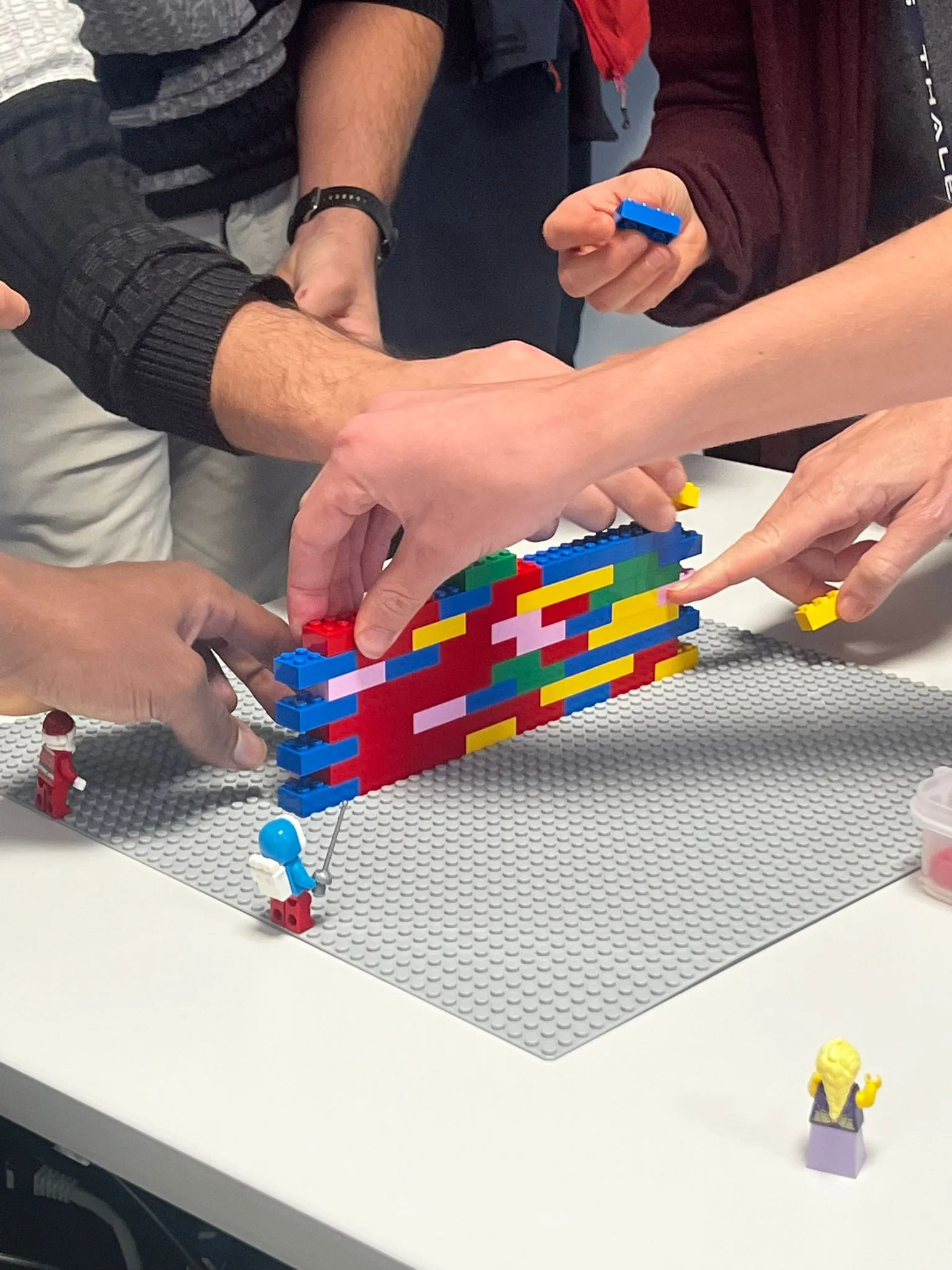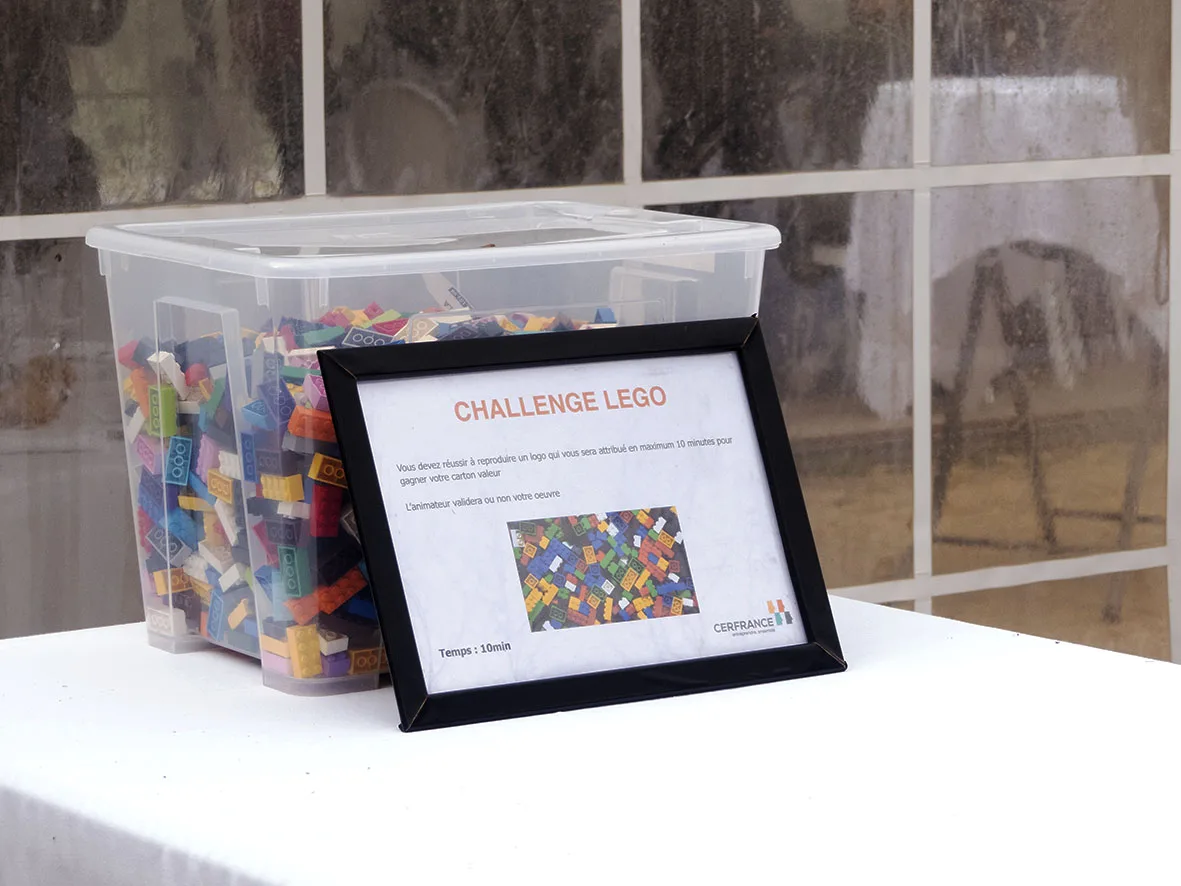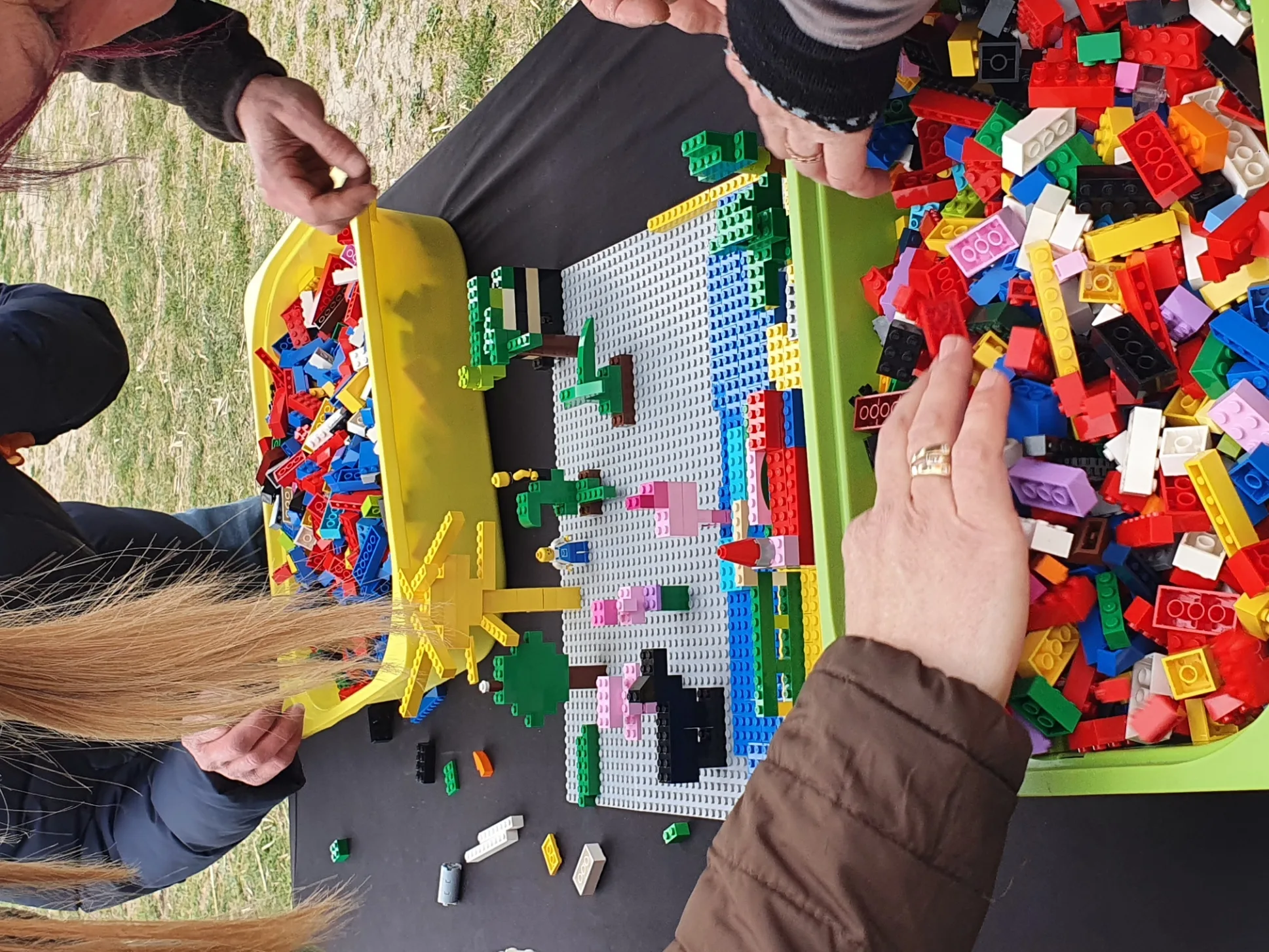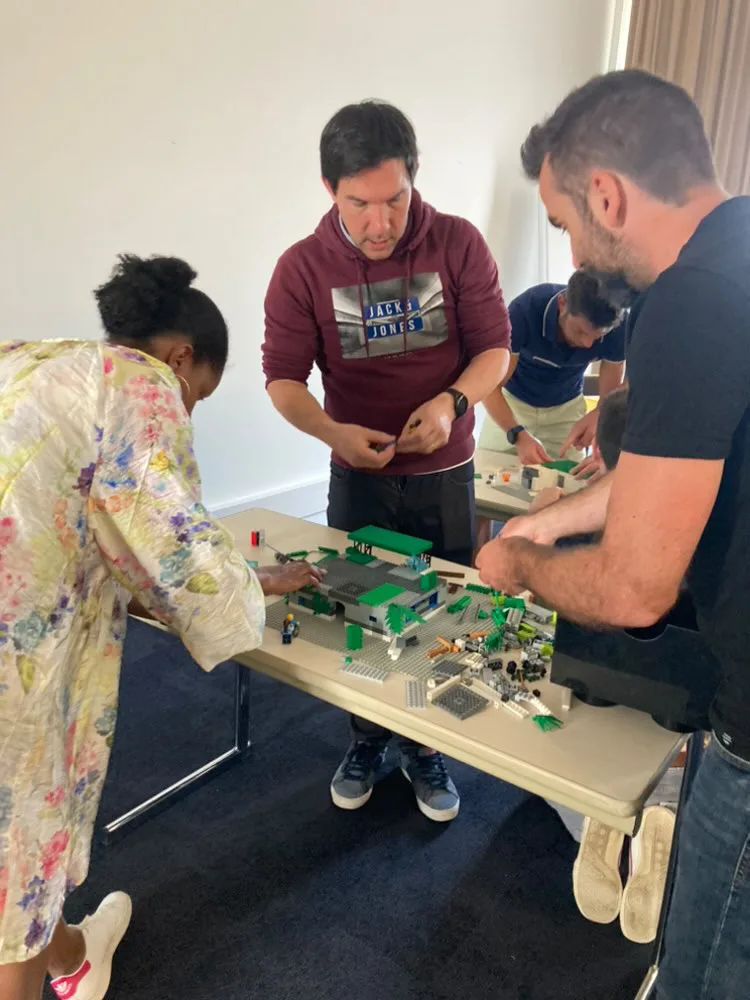
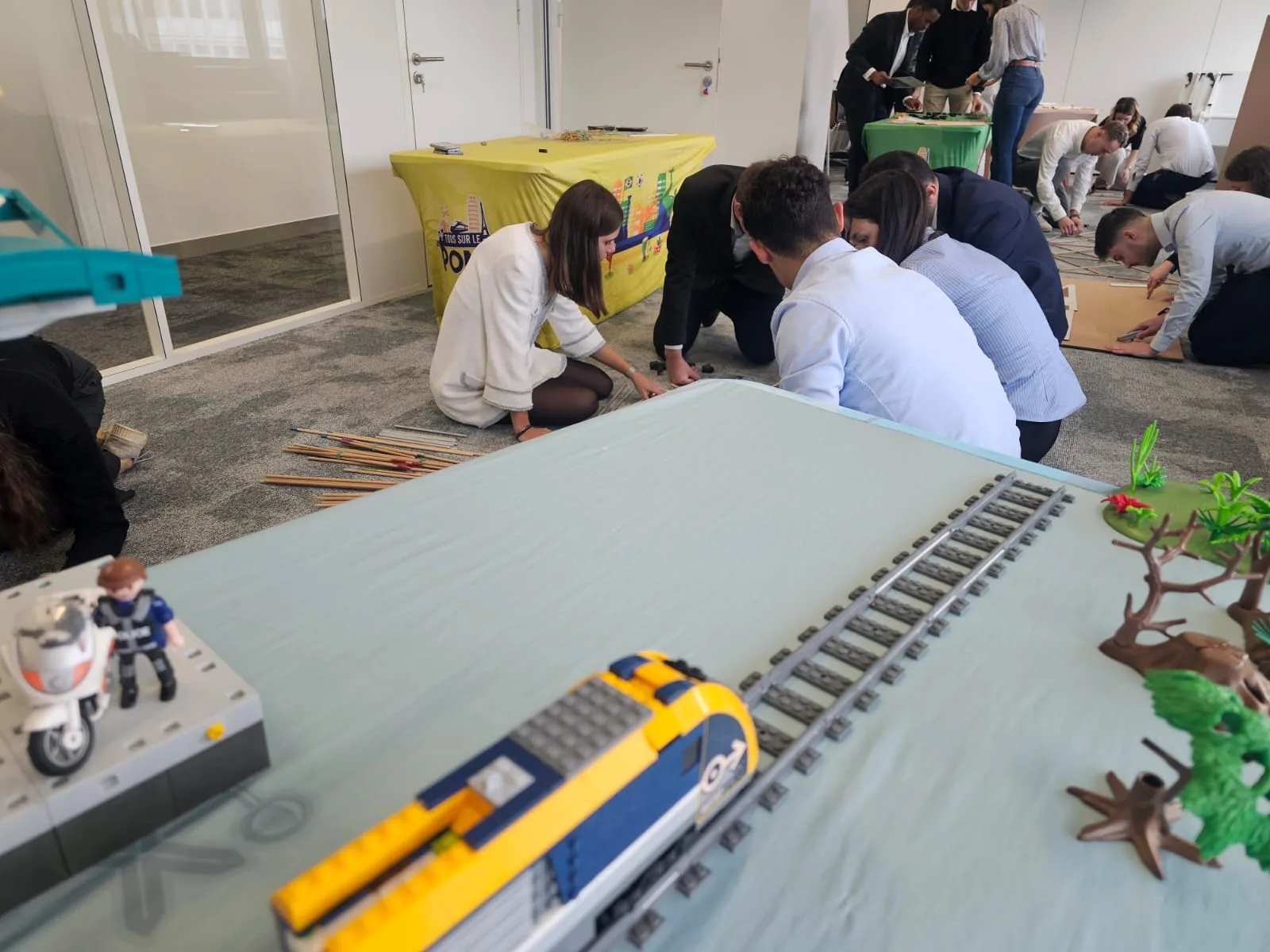
INNOV'events delivers a structured LEGO Challenge designed for executive, HR and communications goals: collaboration, prioritization, and clear decision-making under time pressure.
Typical formats run from 20 to 600+ participants, in French, English, or bilingual, and we handle facilitation, production schedule, room flow, materials, scoring, and on-site operations across Montréal.
In a corporate event, entertainment is not a “nice-to-have”: it’s the moment where people actually behave like a team, under a real constraint (time, resources, communication). A well-run LEGO Challenge makes that behavior visible, measurable, and debriefable—useful for leaders who want more than smiles in photos.
Organizations in Montréal expect a program that respects tight agendas, bilingual realities, and brand standards. They also expect operational rigor: punctual starts, clear instructions, and a format that works equally well for engineers, sales teams, and head office functions—without forcing anyone into uncomfortable “game show” energy.
We’re a local team used to downtown load-ins, hotel union rules, and multi-room event flow. INNOV'events brings facilitation discipline, risk management and real production experience so your LEGO Challenge in Montréal runs like a corporate program—not a birthday party.
10+ years designing corporate team-building and executive offsites across Québec and Canada, with repeat clients who measure results.
Capacity from 20 to 600+ participants in a single session through scalable kit logistics, multi-facilitator staffing, and disciplined timekeeping.
Typical run-of-show accuracy: start on time within ±5 minutes when the client schedule is respected (room access, mic check, and meal service aligned).
Risk-managed material inventory: surplus parts, replacement kits, and on-site “rapid reset” plan to keep flow stable even with late arrivals.
We work year-round with organizations that operate in Montréal—head offices, regional hubs, and international teams flying into YUL for leadership meetings. Many of our clients return because they need formats that can be repeated with different departments without feeling repetitive: same structure, new challenge, new business theme, and a fresh debrief.
You mentioned providing company names as references; to keep this page accurate and compliant, we can integrate them once confirmed (legal name, sector, and whether we can publish). In the meantime, we can share a short reference list on request and outline comparable mandates (financial services, professional services, technology, manufacturing, public sector) with constraints like bilingual facilitation, security badges, and strict brand governance.
Nous vous envoyons une première proposition sous 24h.
Executives and HR teams usually come to us with one of two problems: teams are busy but misaligned, or teams are aligned on paper but execution slips. A LEGO Challenge creates a safe, accelerated “work simulation” where communication patterns and decision quality appear quickly—then we structure a debrief so it translates back to day-to-day operations.
Make collaboration observable without putting people on the spot: who clarifies objectives, who assumes leadership, who listens, who rushes ahead. This is particularly valuable after reorgs, M&A integrations, or when a new director inherits mixed teams.
Test alignment under constraints: limited time, limited pieces, shifting requirements. We often mirror the reality of Montréal teams juggling client requests, internal governance, and cross-functional dependencies.
Build a shared language for performance: scope creep, change control, role clarity, and “definition of done.” A good debrief gives managers terms they can reuse in meetings the next morning.
Support leadership visibility without a speech-heavy agenda: leaders can observe team dynamics, then reinforce the intended behaviors (prioritization, clarity, accountability) during the closing.
Create meaningful content for communications: we can stage a final “showcase walk,” capture key moments, and provide a concise narrative that aligns with your internal messaging (strategy cycle, culture pillars, values).
Montréal organizations often operate at the intersection of speed and governance—fast-moving markets with strong process expectations. That’s exactly where a well-structured LEGO Challenge delivers value: it’s playful, but it exposes real work habits.
Local decision-makers are pragmatic: the activity must fit the venue, respect the schedule, and avoid awkward energy. In Montréal, we see recurring realities that shape delivery: bilingual rooms where not everyone is equally comfortable speaking; hybrid groups with remote colleagues joining for part of the day; and participants arriving from the South Shore or Laval, often delayed by traffic or weather.
From HR and comms, the expectation is also reputational: the activity must be inclusive, not infantilizing, and compliant with corporate standards (no unsafe materials, no uncontrolled crowd movement, no content that conflicts with DEI commitments). Executives expect a tight program: clear instructions, minimal “dead air,” and a facilitator who can manage a room with senior leaders present without losing authority.
What breaks trust quickly is a format that is too loose: unclear rules, scoring that feels arbitrary, or a debrief that sounds like generic motivational talk. Our approach is to treat the LEGO Challenge in Montréal like a business workshop with a playful interface: objectives stated, roles defined, timeboxed phases, and a debrief connected to your operating model.
Engagement comes from a clear challenge, visible progress, and a finish line people care about. In Montréal corporate settings, we recommend formats that respect mixed seniority and mixed personalities: structured enough to feel fair, flexible enough to match your culture.
Strategy-to-build challenge: teams receive a one-page “business brief” (new market, client pitch, operational redesign) and must translate it into a model with defined requirements. Best for leadership offsites and cross-functional alignment.
Process improvement sprint: round 1 exposes bottlenecks, round 2 introduces a constraint (quality control, compliance, supply chain disruption), round 3 rewards standardization. Useful when you’re deploying a new operating model or improving service delivery.
Role clarity build: assigned roles (product owner, builder, quality lead, timekeeper, communicator) with explicit decision rights. Excellent for newly formed teams or after internal mobility waves.
Client journey experience: teams build a “journey map” in LEGO form, highlighting friction points and moments of delight, then present improvement ideas. Strong for customer experience and internal service teams.
Brand architecture build: participants build an abstract representation of your brand pillars (trust, innovation, sustainability) and explain their design choices. Works well when comms teams need content that is on-message, not gimmicky.
Montréal skyline constraints: a creative constraint using recognizable local cues (bridge span, underground city, winter resilience) to stimulate storytelling without politicizing the content. Ideal for groups visiting from outside Québec.
Build + taste stations: short, timed “taste breaks” (coffee bar, local pastries) between rounds to manage energy and networking without losing momentum. Particularly effective in full-day meetings where attention drops mid-afternoon.
Judges’ table with pairing: executive judges score builds while a curated refreshment moment happens—keeps the crowd focused and prevents the “wandering room” problem.
Scoreboard + KPIs: teams are scored on measurable criteria (stability, compliance to brief, speed, communication) with weighted points that mirror your priorities. This is where the format becomes credible for senior leadership.
Scenario injections: timed “change requests” during the build (budget cut, client feedback, regulation update). This replicates real-life volatility and tests change management.
Hybrid-friendly variant: remote participants act as “architects” or “quality auditors” via video, reviewing designs and controlling part requests. Works when a Montréal meeting includes colleagues from Toronto, Calgary, or Europe.
Whatever the variant, the key is alignment with your brand image: if your culture is discreet and performance-driven, we keep the tone tight and the scoring rigorous; if your culture is creative and open, we can increase storytelling and showcase time. The objective is that the LEGO Challenge feels like a coherent extension of your company—not an add-on.
Venue choice impacts everything: acoustics, table density, visibility of instructions, and how professional the activity feels. For a LEGO Challenge in Montréal, we look for clean sightlines, controllable sound, and enough space for teams to move without turning the room into a corridor.
| Venue type | For which objective? | Main strengths | Possible constraints |
|---|---|---|---|
Hotel ballroom (downtown Montréal) | Annual meeting, leadership summit, large team-building block | Production infrastructure (AV, staging), predictable service, easy to combine with meals and plenaries | Load-in windows, union/venue rules, acoustics can require stronger mic discipline |
Conference center / corporate campus space | Internal offsite focused on outcomes and confidentiality | Control of agenda, easier security, can integrate with workshops and breakouts | Furniture constraints (fixed tables), limited ceiling height, stricter access times |
Industrial-loft / creative event space (Montréal) | Culture moment, employer brand, cross-team networking | Strong ambiance for showcases and photos, flexible layouts, memorable without being loud | AV can be non-standard, more vendor coordination, potential sound restrictions |
We recommend a site visit or at least a technical call with photos and a floorplan. In Montréal, two rooms that look identical online can behave very differently once you add staging, catering, and 40 tables. A 30-minute validation up front prevents 2 hours of improvisation on event day.
Budget is driven by scale, staffing, and production constraints—not by vague “packages.” For a corporate LEGO Challenge in Montréal, we typically build pricing around participant count, complexity of the scenario, and the level of facilitation and AV integration required to keep the experience professional.
Participant volume: the difference between 30 and 300 people is not linear—inventory, setup time, storage, and facilitation ratios change significantly.
Facilitation model: one lead facilitator with assistants vs. multiple facilitators for multi-room or bilingual split. For senior audiences, the value is often in tighter facilitation and debrief quality.
Customization level: generic building prompts vs. scenario mapped to your strategic priorities (culture pillars, client segments, operational challenges) with scoring weights that reflect what you want to reinforce.
Venue constraints: downtown freight elevator schedules, room flips between lunch and plenary, restricted setup windows, and required security protocols can add labor hours.
AV and visibility: large rooms may require screens for instructions, camera for close-ups, or a dedicated mic plan so the experience stays coherent.
Documentation: photo recap, scoring report, and debrief summary that HR/comms can reuse in internal channels.
When leaders evaluate ROI, we recommend measuring more than “participation.” A solid KPI set is: time-to-start, completion rate, quality score distribution, and 3–5 debrief commitments per team that managers can track over the next 30–60 days. That’s how the activity becomes a management tool, not a line item.
With complex group logistics, proximity matters. A local team can do pre-visits, adapt to last-minute venue changes, and mobilize additional staff or replacement materials quickly. In Montréal, the difference between a smooth program and a stressful one is often a practical detail: dock access, elevator booking, parking limitations, or the time it takes to source missing items the same day.
As an event agency in Montréal, we also know the rhythm of local corporate calendars: year-end parties, Q1 kickoffs, construction holiday periods, and peak dates when venues and AV suppliers are stretched. That experience helps us protect your timeline and avoid the “everything is booked” scenario when the request comes late.
Finally, local delivery is about accountability. If your VP decides the room should be reconfigured at 8:15 a.m., you need a partner who can make a decision on the spot, not someone waiting for head office approval from another province.
When leaders evaluate ROI, we recommend measuring more than “participation.” A solid KPI set is: time-to-start, completion rate, quality score distribution, and 3–5 debrief commitments per team that managers can track over the next 30–60 days. That’s how the activity becomes a management tool, not a line item.
We deliver team-building inside broader corporate programs: leadership offsites, all-hands meetings, sales kickoffs, and change-management roadshows. The common thread is integration: the activity has to fit your agenda, your audience, and your brand tone.
Typical real-world situations we handle in Montréal include: a merger integration day where two cultures must collaborate quickly; a professional services firm where partners want a format that remains “serious” and time-efficient; a tech company scaling from 80 to 220 employees where new managers need practical alignment tools; and a regulated organization where everything must be safe, documented, and consistent with internal policies.
Our adaptability shows in how we structure the same LEGO Challenge differently: shorter high-energy rounds for a gala agenda; deeper debrief for an HR-driven workshop day; or multi-room rollouts when you have limited ballroom capacity but need to include everyone.
Underestimating room logistics: too few tables, poor sightlines, or bottlenecks at the materials station. We map flow and pre-pack kits to avoid crowding.
Rules that sound simple but create disputes: scoring that feels subjective, unclear constraints, or inconsistent judging. We publish scoring criteria in writing and keep timekeeping visible.
No plan for late arrivals: in Montréal traffic, a 15-minute delay can happen. We design onboarding that doesn’t penalize teams or force a restart.
Facilitation that is either too loud or too shy: both reduce credibility with executives. Our facilitators manage energy without “game show” behavior.
Skipping the debrief: the activity becomes pure entertainment and loses executive value. We reserve a structured debrief and link it to your operating realities.
AV afterthought: in large rooms, instructions get lost and teams improvise different interpretations. We plan mic, screen content, and cueing like a real plenary.
Our role is to remove these risks before they reach your stakeholders. When HR and communications are accountable for the internal perception of an event, you need fewer surprises, not more. That’s what we engineer into every LEGO Challenge in Montréal.
Recurring clients don’t come back because an activity was “fun.” They come back because delivery was reliable, stakeholder expectations were protected, and the agency made the internal team look organized. In Montréal, many organizations repeat an annual moment (kickoff, strategy day, recognition event) and need a partner who can refresh content without resetting trust each time.
48 hours: typical turnaround to provide a first structured proposal and budget range once objectives, headcount, and venue status are clear.
2–4: recommended facilitator ratio ranges depending on headcount and bilingual requirements (we confirm after floorplan and agenda review).
15–25 minutes: the debrief window we protect in most programs to ensure learning capture and executive takeaways.
Loyalty is the most concrete indicator of quality in this industry: it means the client trusted us with the risk twice. We aim for that standard on the first mandate.
We start with a short working call (HR/Comms + event owner) to confirm the business intent: culture integration, cross-silo collaboration, leadership behaviors, or pure networking with structure. We also capture constraints: bilingual needs, senior leader presence, union/venue rules, security, and your non-negotiables (timing, tone, brand).
We propose 2–3 challenge concepts with clear mechanics and what they reveal (decision-making, execution, quality control). We define scoring criteria and weights so you can justify the format to executives. If needed, we integrate your themes into the brief (values, strategy, client segments) without turning it into internal jargon.
We confirm a floorplan with table count, stage position, materials distribution, and judge path. We plan the run-of-show down to the minute: briefing, build phases, scenario injections, presentations, judging, and debrief. We also align with catering and AV so the activity isn’t fighting the schedule.
We arrive with pre-packed kits, spares, signage, and a rapid reset plan. We validate mic, screen content, and timing cues. When executive stakeholders attend, we also brief them on their role (judging, closing remarks) to keep the moment tight and respectful of hierarchy.
During delivery, we control pace and clarity: time calls, rule reminders, and support for teams that stall. We manage judging so it’s quick and fair. We end with a structured debrief (what we observed, what teams learned, and what they will change) and can provide a concise recap for HR/comms.
Most corporate formats run 60 to 120 minutes door-to-door, including briefing, build rounds, presentations, and a debrief. If you want deeper learning (leadership behaviors, process), plan 120 to 150 minutes. For gala agendas, we can deliver a tighter 45–60 minute version with simplified scoring.
Operationally, we commonly deliver for 20 to 600+ participants. The key variable is the room and table capacity. For large groups, we scale through multiple facilitators, pre-packed kits, and a scoring system that stays fair across many teams.
Yes. We can run fully bilingual facilitation (French/English) with bilingual slides and printed rules. For larger groups, we often recommend a bilingual plenary briefing plus table-level support in both languages, or split facilitation by zone to keep instructions fast and clear.
As a rule of thumb, plan one team per table (typically 6–10 people) with enough clearance for facilitators to circulate. For a mid-size group (e.g., 100 people), a standard ballroom or large meeting room works well if it allows a central briefing area and a judging path. We confirm with a floorplan and venue specs before committing.
To provide a reliable budget range, we need: date window, venue status (booked or not), headcount range, languages, the objective (networking vs. leadership outcomes), and the time slot available. With that, we can typically deliver a first proposal within 48 hours.
If you’re comparing agencies, we recommend starting with a 20-minute scoping call: we’ll validate feasibility, propose 2–3 formats, and flag the operational risks specific to your venue and agenda in Montréal. The earlier we lock the room flow and AV needs, the fewer compromises you’ll make later.
Send us your date, approximate headcount, venue (if known), and your objective for the LEGO Challenge. We’ll come back with a structured plan you can share internally—timeline, staffing model, and a budget range that reflects real delivery conditions.
Thierry GRAMMER is the manager of the INNOV'events Montréal office. Reach out directly by email at canada@innov-events.ca or via the contact form.
Contact the Montréal agency