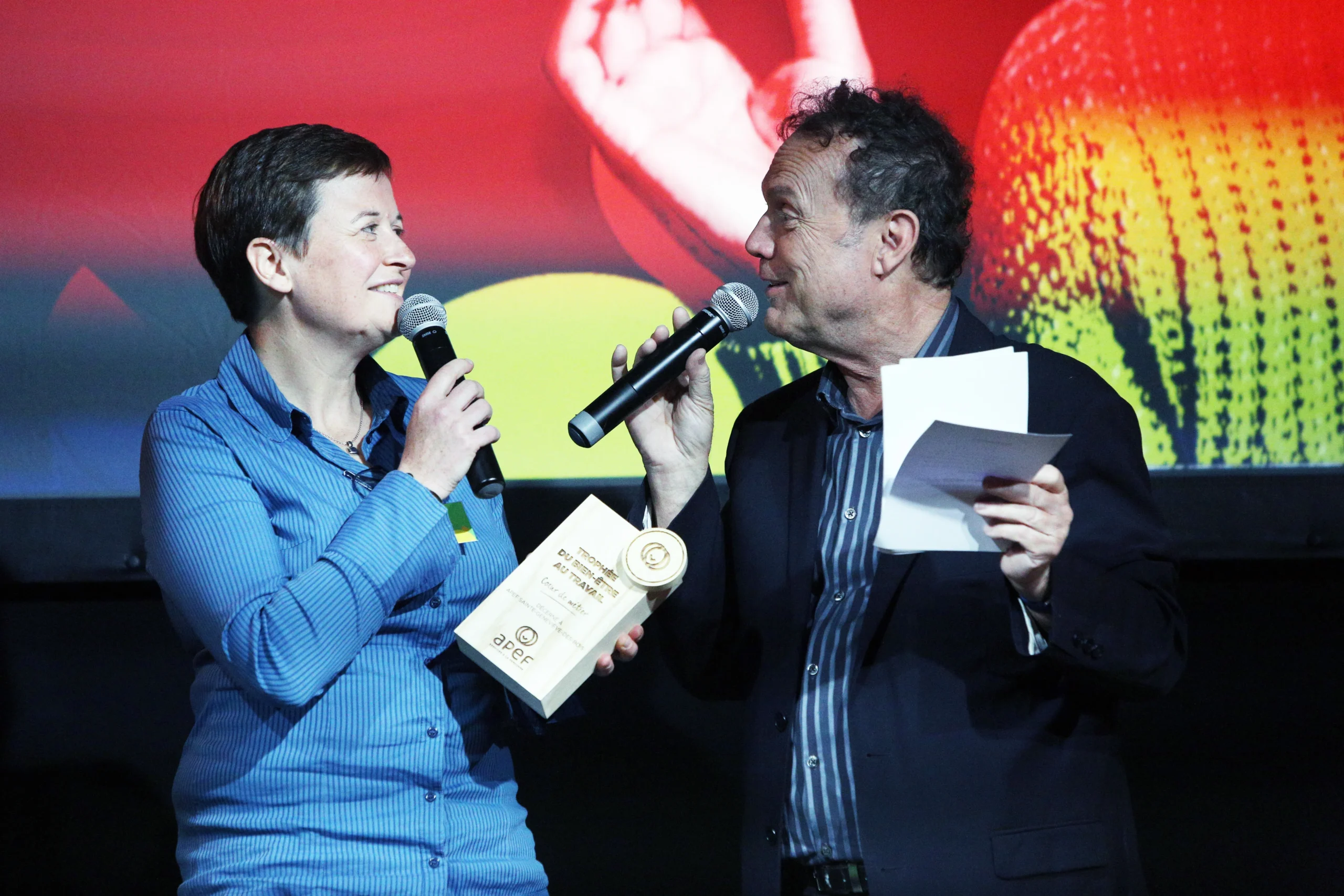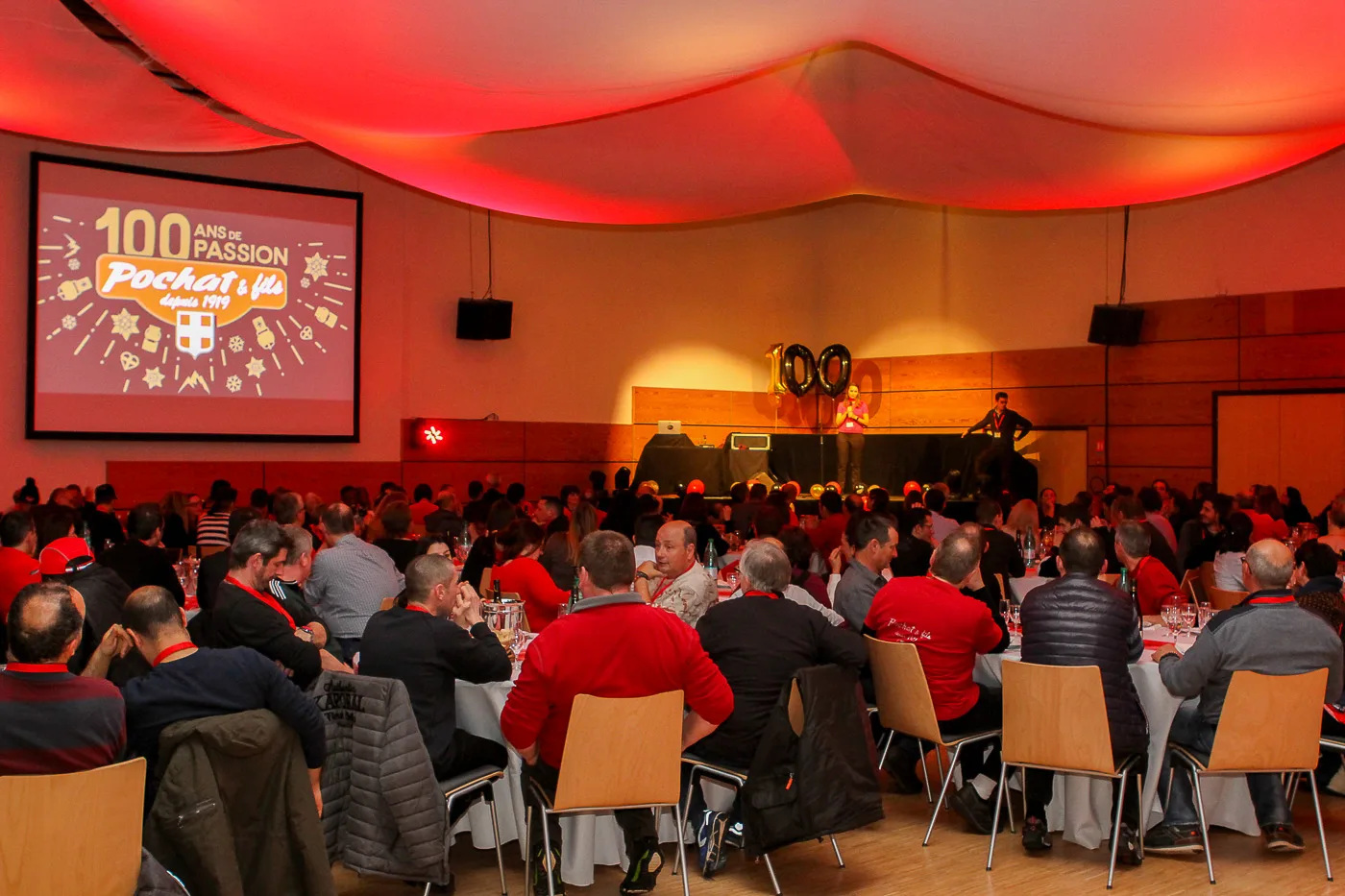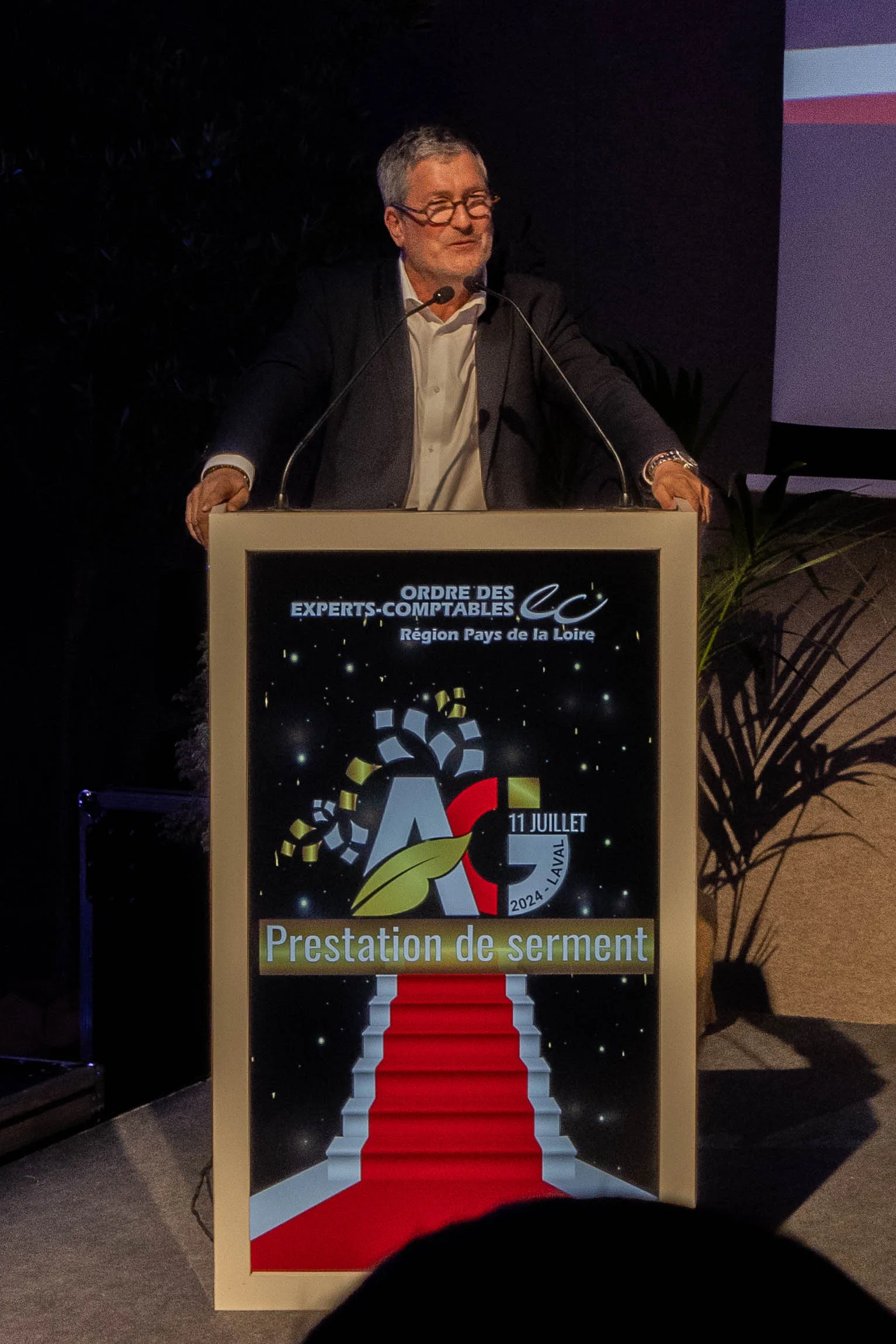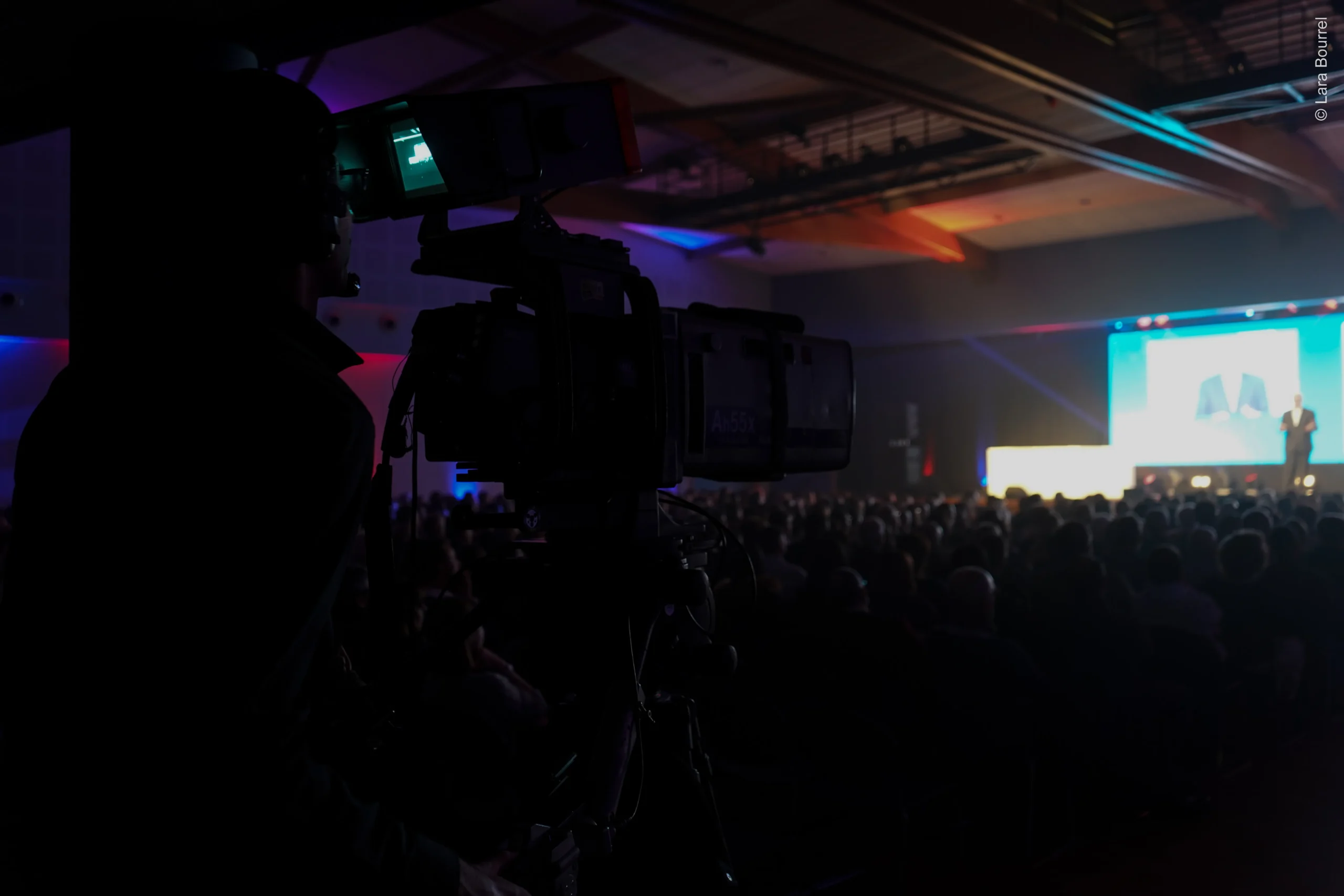
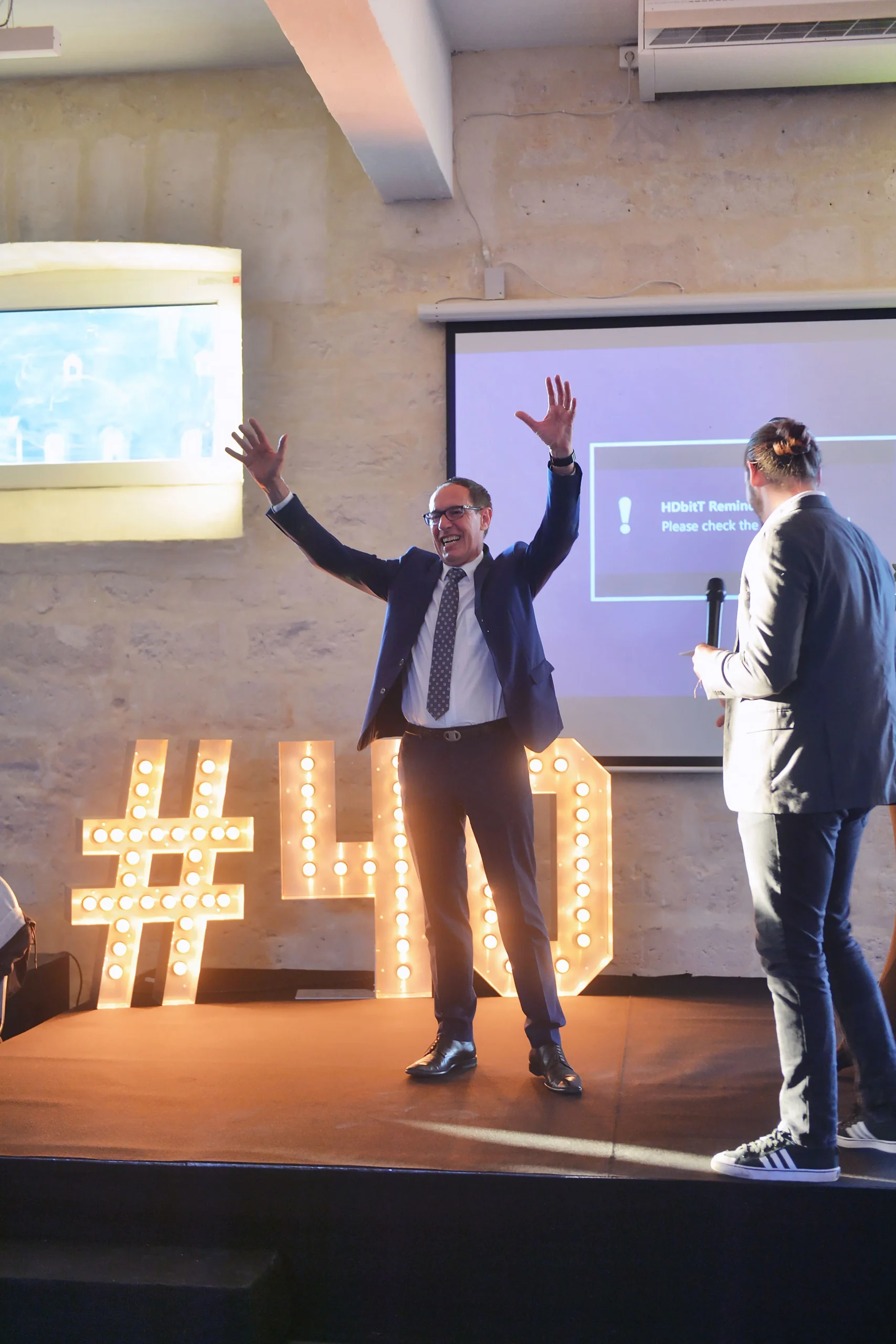
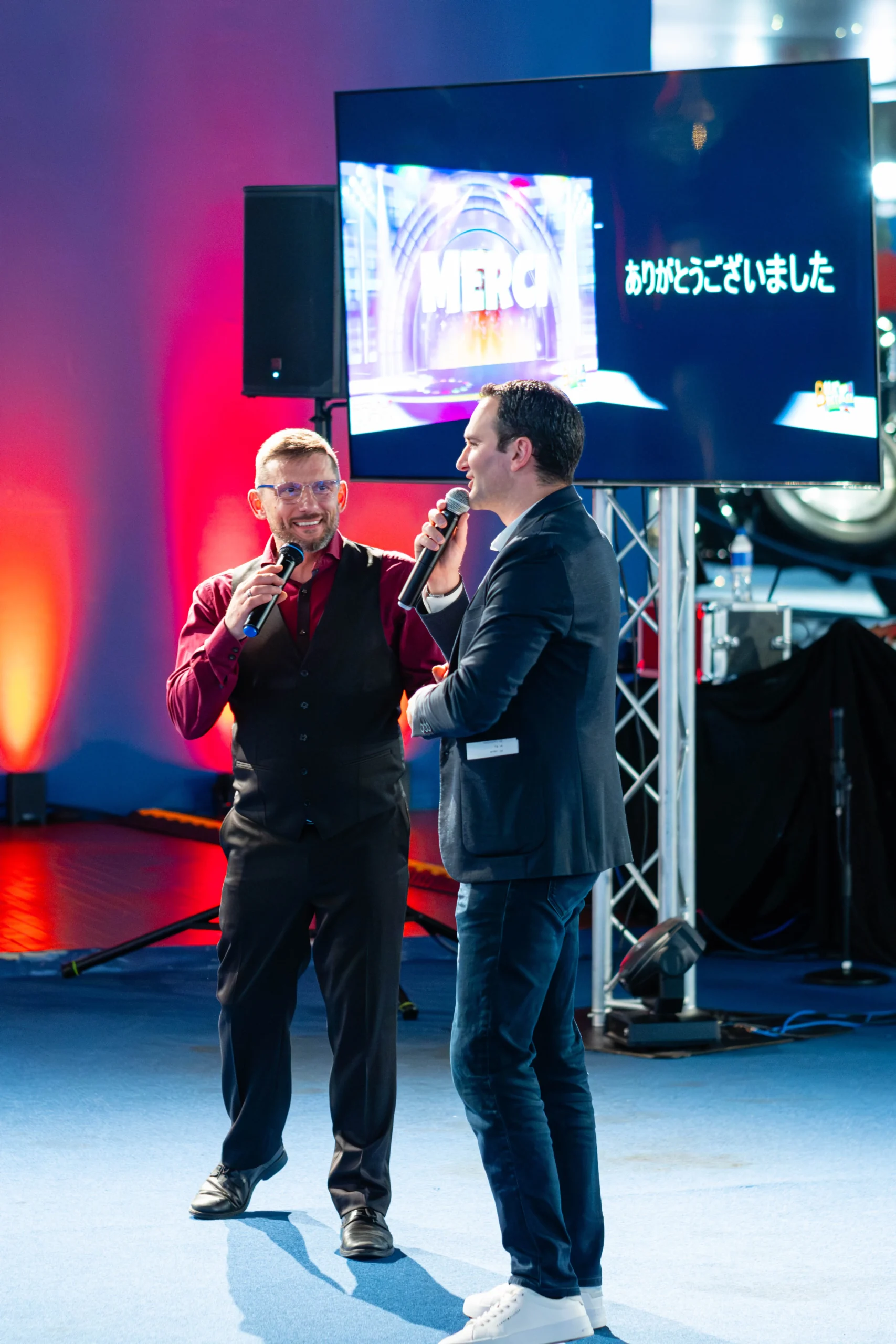
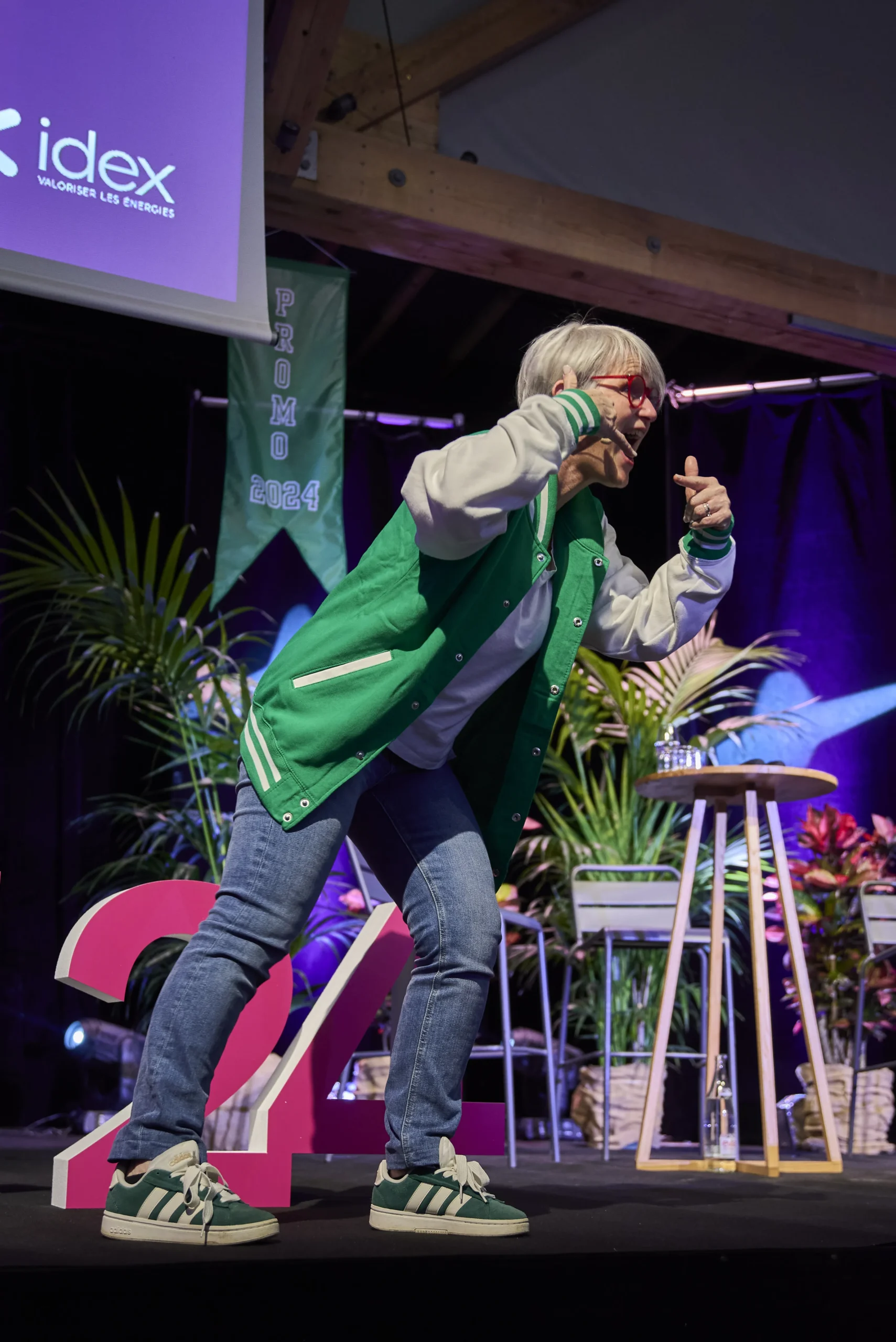
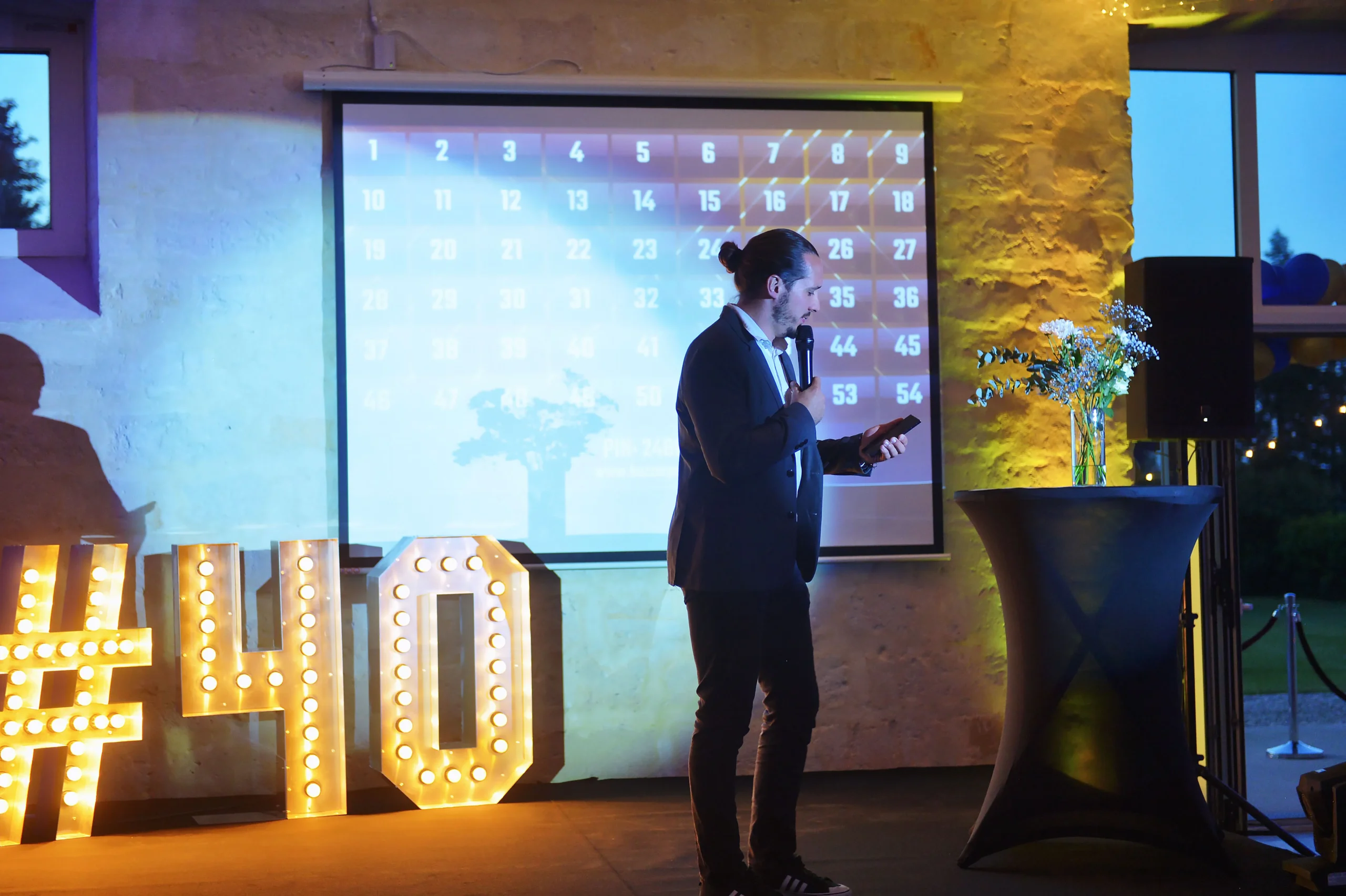
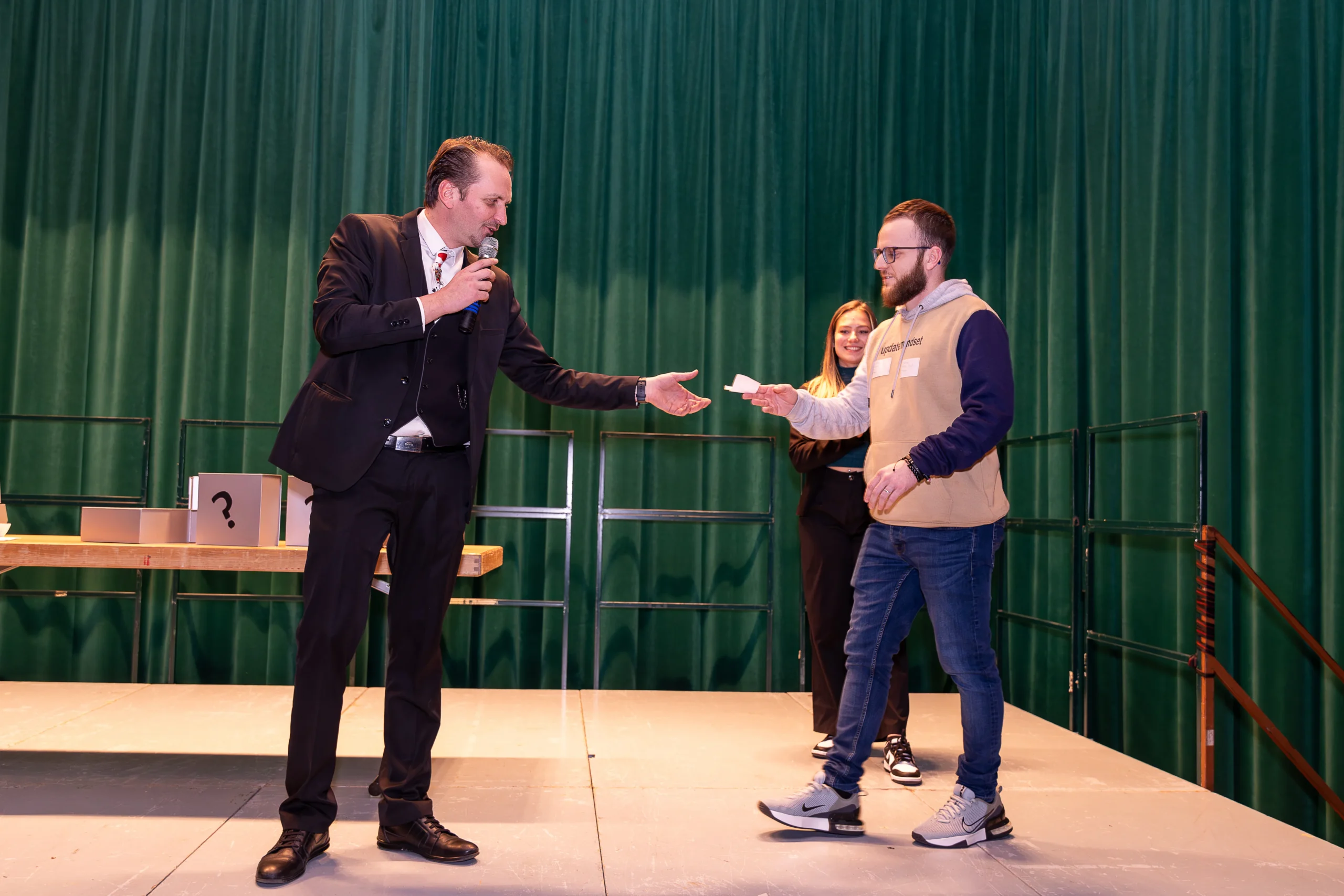
INNOV'events provides a Professional Event Host for corporate events across Montréal, from leadership town halls to client conferences and award nights. We typically support formats from 40 to 1,200 attendees, in French, English, or bilingual. We handle the stage flow, speaker comfort, timing, transitions, and coordination with AV so your executives can focus on content—not crisis management.
In a corporate event, “entertainment” is rarely about spectacle. It’s about attention management: keeping energy stable, protecting key messages, and preventing the long gaps, awkward handoffs, or timing drifts that dilute your leadership narrative.
In Montréal, organizations expect bilingual agility, a respectful tone aligned with company culture, and tight collaboration with unionized venues and experienced technical crews. Your host must elevate speakers while staying invisible when required.
Our hosts are supported by an event production team based in Montréal. We work with your HR and communications teams on the run-of-show, speaker prep, and contingency plans—because the difference between “fine” and “board-level” is usually operational discipline.
10+ years supporting corporate events and executive communications in Montréal and across Québec.
200+ hosted segments per year (panels, town halls, awards, leadership messages), with consistent timing control and speaker support.
3 languages available (FR/EN bilingual hosting, plus EN or FR only), with terminology prep for regulated industries.
0-surprise methodology: run-of-show locked, cue sheets validated, and tech rehearsals scheduled for every stage-based program.
We support companies and institutions across Montréal—from downtown headquarters to industrial sites on the island and meetings on the South Shore. Many clients rebook us year after year because they don’t want to re-explain their tone, internal politics, or brand constraints every time a key event comes up.
Typical situations we manage: leadership teams needing a tight agenda for a hybrid town hall, HR teams launching a culture initiative without turning it into a “show,” and communications teams wanting a host who can bridge French and English without losing nuance. If you share the company names you’d like referenced, we can integrate them cleanly and accurately in this section (without exaggeration and within your approval rules).
Nous vous envoyons une première proposition sous 24h.
When executives ask for a host, it’s rarely for “animation.” It’s because the stakes are high: internal credibility, employer brand, customer trust, and the time of senior leaders. A Professional Event Host in Montréal protects the intent of the event while making the experience smooth for the people on stage and in the room.
Protect executive time and agenda: a strong host keeps speakers on schedule, manages Q&A, and prevents the 10-minute drift that compresses the CEO segment or forces rushed conclusions.
Reduce speaker risk: we brief executives and subject-matter experts on timing, stage marks, mic technique, and “what to do if” scenarios (late start, missing slide, audio failure).
Improve message retention: the host frames transitions, recaps key points, and sets context so the audience doesn’t experience the event as disconnected blocks.
Support HR objectives without awkwardness: recognition moments, awards, and DEI-sensitive messaging land better when the host understands internal dynamics and avoids jokes or improvisation that can backfire.
Keep hybrid audiences engaged: online attendees often drop first when pacing is slow. We design short resets (polls, pointed questions, clean handoffs) that keep both rooms aligned.
Deliver a consistent brand tone: we align with your comms team on vocabulary, pronunciation, bilingual terminology, and how formal the tone must be (investor-grade vs. culture-forward).
Montréal is a market where bilingual clarity and operational precision are expected. A host who understands local corporate codes—without overdoing it—helps your event feel competent, credible, and worth people’s time.
In Montréal, audiences are sophisticated and impatient with filler. They notice when a host talks too much, when the French feels translated instead of natural, or when the flow ignores how local rooms operate (security check-in delays, elevator traffic, union calls, venue loading restrictions). We design hosting around those realities.
Here are constraints we routinely plan for:
This is why we approach hosting as part of production—integrated with your run-of-show, technical plan, and stakeholder management.
In corporate contexts, entertainment is effective when it reinforces the outcome: alignment, recognition, learning, or relationship-building. The goal is not to “add fun,” but to create controlled engagement without compromising brand image. Below are options that consistently perform well for corporate event entertainment in Montréal, with practical notes on when we recommend them.
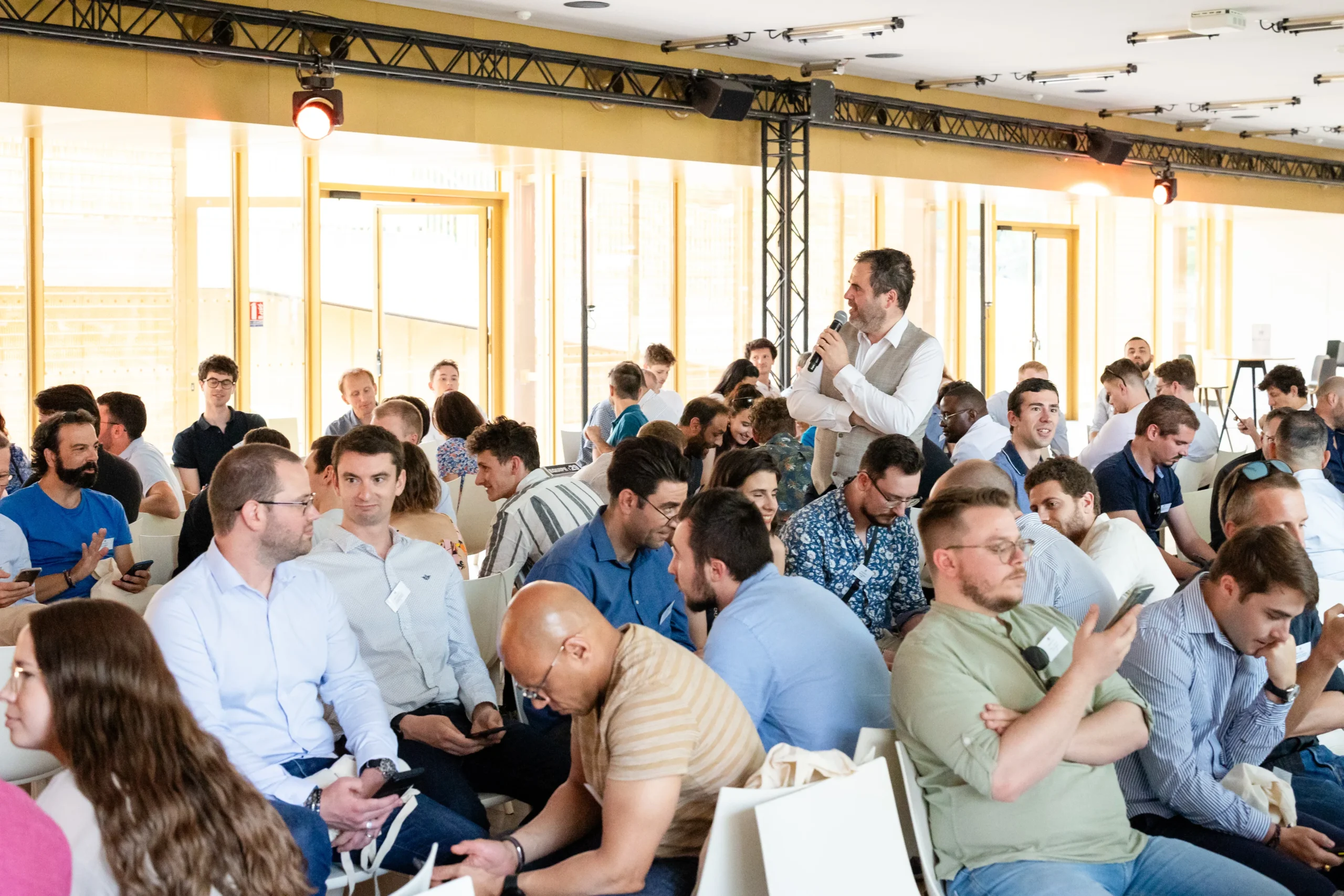
Moderated leadership Q&A: we collect questions (live and digital), cluster them by theme, and keep responses concise. This works well for town halls, strategy resets, or post-merger messaging—especially when employees want clarity but leadership wants structure.
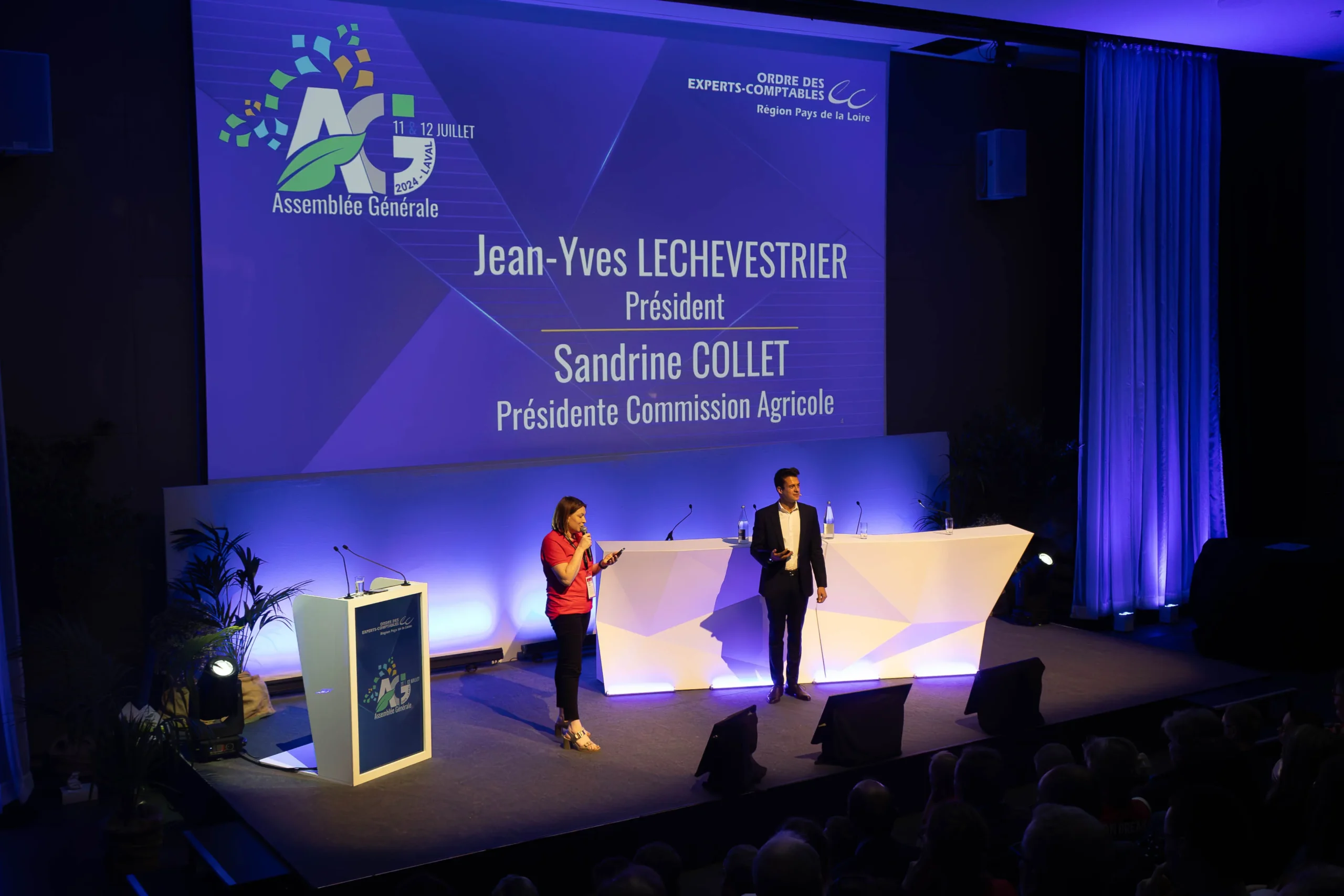
Panel facilitation with timeboxing: we prepare 6–10 strong questions, control panelist airtime, and cue the AV team for name keys and transitions. We avoid “panel drift,” which is one of the most common reasons audiences disengage.
Interactive polls tied to KPIs: quick pulses (“Top barrier to execution this quarter?”) create insight and credibility. We integrate results into the host script so it doesn’t feel like a gimmick.
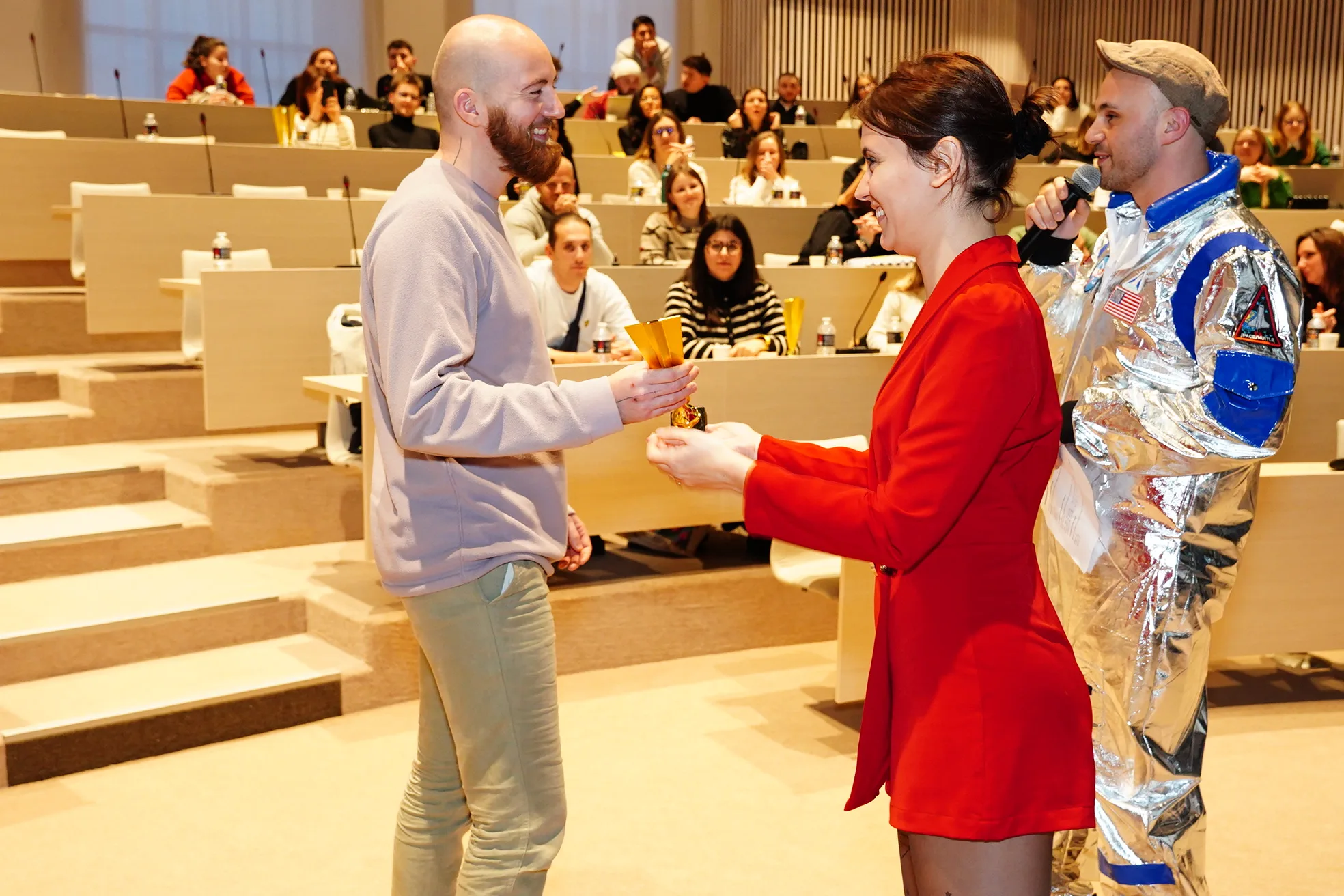
Recognition moments with narrative: instead of reading names, we frame awards with short impact stories (customer outcome, safety result, innovation). This keeps it dignified and aligned with employer brand.
Music sets designed for corporate pacing: short, controlled segments (10–20 minutes) placed to reset energy (arrival, after dinner, post-keynote). We plan sound checks and volume levels so networking remains possible.
Spoken-word or storytelling aligned to company themes: works when your culture values authenticity. We brief artists with boundaries (no sensitive topics, brand-safe language) and validate content in advance.
Stage moments with a host-driven arc: when you want a more “show” feel (awards night, milestone celebration), we build a clean sequence: intro, nominee structure, walk-on music cues, photo timing, and exit flow.
Guided tastings with clear timing: wine, local spirits, non-alcoholic pairings, or coffee tastings can work—if they are timeboxed and integrated with service constraints. We coordinate with catering so it doesn’t disrupt speeches.
Chef demo segments for client events: the host keeps it paced and client-friendly, and we ensure camera feed is planned for larger rooms. This is especially effective in Montréal when you want a local touch without turning the evening into a food festival.
Hybrid engagement that respects remote attention: short interactive beats every 8–12 minutes (poll, 1 question, recap) prevent drop-off. We coordinate with the virtual platform producer and keep the in-room audience from feeling “paused.”
Content capture with live framing: for internal comms, we can host with camera-first pacing so you leave with clean clips (executive soundbites, award moments, culture highlights) usable the next day.
Multi-room program navigation: for conferences or large internal days, the host becomes the “human signage,” directing flows between breakout rooms, sponsor moments, and plenary sessions—reducing confusion and late arrivals.
Whatever the format, we align entertainment with your brand standards: tone, inclusivity, confidentiality, and the level of formality expected by your executives and your audience in Montréal.
The venue affects everything a host can control: acoustics, sightlines, backstage access, rehearsal time, and how smoothly people move in and out. In Montréal, the right room often matters more than adding extra content. We evaluate venues with a production lens, not just a “nice space” lens.
| Venue type | For which objective? | Main strengths | Possible constraints |
|---|---|---|---|
| Downtown hotel ballroom | Awards nights, conferences, annual meetings with dinner | Built-in service flow, backstage areas, predictable AV infrastructure | Ballroom acoustics can be challenging; strict load-in/load-out windows |
| Conference centre / convention-style venue | Large town halls, multi-track internal conferences | Capacity, breakout flexibility, professional technical standards | More stakeholders to coordinate; signage and wayfinding become critical |
| Industrial or converted creative space | Brand launches, client experiences, innovation showcases | Strong ambiance, visual identity, flexible staging | Often requires full AV build; power, rigging, and sound control must be checked |
| Corporate office or HQ atrium | Leadership announcements, internal celebrations, hybrid broadcasts | Authenticity, cost efficiency, brand immersion | Security, limited backstage, sound bleed; rehearsal time needs protection |
We strongly recommend a site visit (or at minimum a technical walk-through) before locking the show flow. In Montréal, small venue details—freight elevator access, union rules, ceiling height, and rigging points—can make or break timing on event day.
Pricing for a Professional Event Host in Montréal depends on the event format, language requirements, rehearsal time, and how much production responsibility the host takes on. A one-hour stage facilitation is not the same scope as a full-day conference with executive prep, bilingual scripting, and hybrid coordination.
Duration and complexity: half-day vs full-day; single plenary vs multiple segments; number of speaker handoffs.
Preparation workload: scriptwriting, bilingual terminology, executive briefing calls, and alignment with communications and HR.
Rehearsal requirements: tech rehearsal length, speaker run-throughs, and coordination with stage manager and AV director.
Hybrid production: additional cues, remote Q&A, platform moderation, and camera-first pacing.
Travel and timing constraints: early call times, downtown access, unionized load-in windows, and multi-venue days across the island.
Risk profile: regulated messaging, media presence, VIP protocol, or investor-facing audiences require stricter validation.
We help you evaluate ROI in practical terms: reduced overrun risk (venue overtime), fewer speaker issues, higher audience retention, and cleaner content capture for internal comms. In many Montréal events, avoiding just 30–60 minutes of schedule drift can offset a significant part of hosting and stage management costs.
Booking a standalone host can work for simple formats. For executive-facing programs, the host is only as effective as the production ecosystem around them. Working with an agency established in Montréal means you gain local operational reflexes: venue realities, technician networks, bilingual expectations, and the ability to be onsite fast when something changes.
At INNOV'events, hosting is integrated into our production approach. If you need broader support (AV, stage management, planning, vendor coordination), we can scope it transparently through our event agency in Montréal services—so responsibilities are clear and nothing falls between chairs.
We help you evaluate ROI in practical terms: reduced overrun risk (venue overtime), fewer speaker issues, higher audience retention, and cleaner content capture for internal comms. In many Montréal events, avoiding just 30–60 minutes of schedule drift can offset a significant part of hosting and stage management costs.
Our work in Montréal covers a wide range of formats, and the hosting approach changes depending on the stakes and audience. A few typical projects we’re asked to run:
Across all of these, the consistent value is control: timing, tone, and speaker comfort—delivered in a way that reflects how Montréal organizations actually operate.
No true run-of-show: a “high-level agenda” is not enough. Without cue-by-cue timing, you get dead air, rushed conclusions, and confusion for AV.
Bilingual handled as an afterthought: repeating everything doubles time and kills energy. We design language strategy upfront to keep flow natural.
Over-reliance on improvisation: it increases reputational risk. Executive events need controlled spontaneity—planned flexibility, not winging it.
Underestimating transitions: awards handoffs, mic swaps, video loads, and walk-ons are where timing is lost. We build buffers and clear responsibilities.
Speaker comfort ignored: a nervous subject-matter expert can derail the room. Quick coaching on posture, breathing, mic technique, and timing makes a measurable difference.
Hybrid audience treated like a second room: remote attendees drop when they’re not addressed. We script moments for them and coordinate camera cues.
Our role is to remove these risks before they become visible. In Montréal, where audiences have high standards, professionalism is felt in the details—especially when something unexpected happens.
Repeat business in corporate events is earned. Teams come back when the host becomes a dependable extension of HR and communications—someone who respects internal dynamics, protects executives, and makes the day easier for everyone involved.
Most repeat clients book 2–4 key events per year: typically a town hall, a recognition moment, and at least one client-facing program.
Planning lead time often drops by 20–30% after the first mandate because tone, terminology, and stakeholder preferences are already documented.
Lower day-of load for internal teams: HR and comms report fewer last-minute requests because the host anticipates speaker and stage needs.
Loyalty is not about habit—it’s a signal that the hosting reduced friction and protected outcomes. That’s the standard we aim for in Montréal programs.
We start with a working session with HR, communications, and the event owner. We clarify the objective (alignment, recognition, client trust), audience mix (FR/EN), sensitivity level, and what “success” means in measurable terms (on-time finish, Q&A volume, participation rate, content capture).
We build the detailed run-of-show: segment timing, walk-ons, video cues, award flow, and transitions. We also define how bilingual delivery will work (who speaks what language, which moments are bilingual, and how to keep pacing tight).
We draft host scripts and speaker intros, validate titles and pronunciations, and schedule quick executive prep calls when needed. For panels, we write the question path and plan timeboxing so every speaker gets balanced airtime.
We coordinate with the AV lead and stage manager: mic plan, confidence monitor, timers, cueing responsibilities, walk-in music, and contingency triggers. We conduct a tech rehearsal proportional to complexity—because timing is won during rehearsal, not on stage.
On event day, the host operates as the visible conductor while the team runs the backstage plan. We manage timing, adjust on the fly (late speakers, segment overruns), and keep executives protected. Afterward, we debrief on what to improve for the next program.
Yes. We provide French, English, and bilingual hosting in Montréal. We plan language flow upfront to avoid repeating everything twice; typically, key transitions and inclusive moments are bilingual, while some segments can be unilingual depending on audience composition.
For executive town halls and conferences in Montréal, we recommend 4–8 weeks when scripts, bilingual terminology, and rehearsals are involved. For simpler receptions, 2–3 weeks can work, but availability tightens quickly during peak seasons (fall and year-end).
For Montréal, professional hosting commonly ranges from $1,500 to $6,000+, depending on duration, bilingual requirements, preparation (scriptwriting, executive prep), rehearsal time, and whether the host also supports facilitation (panels, Q&A structuring) and hybrid coordination.
Yes. We facilitate town halls in Montréal with structured Q&A: question collection (live mics or digital), clustering by theme, timeboxing, and respectful phrasing for sensitive topics. The objective is transparency without losing control of time or messaging.
Yes—this is part of the job. In Montréal, last-minute changes often come from VIP delays, room access issues, or AV constraints. We prepare contingency transitions and decision rules in advance, then coordinate with stage management and AV to keep the audience experience smooth.
If you’re comparing options, we can help you decide quickly whether you need a standalone Professional Event Host or a broader production approach. Share your date, venue area in Montréal, attendee count, language needs, and agenda draft. We’ll come back with a clear scope, a realistic preparation plan, and a fee range—so your team can approve with confidence and lock the right resources early.
Thierry GRAMMER is the manager of the INNOV'events Montréal office. Reach out directly by email at canada@innov-events.ca or via the contact form.
Contact the Montréal agency