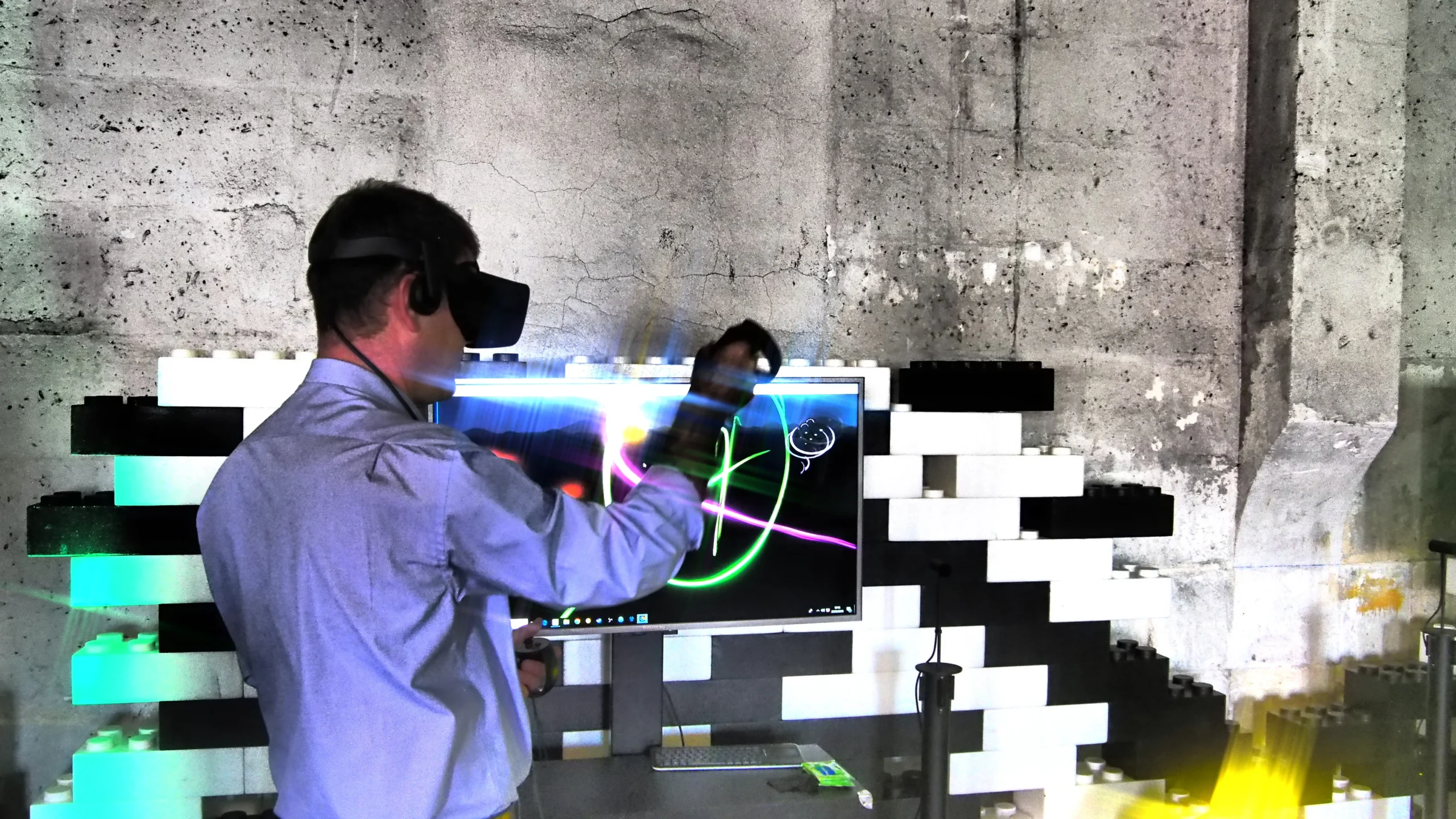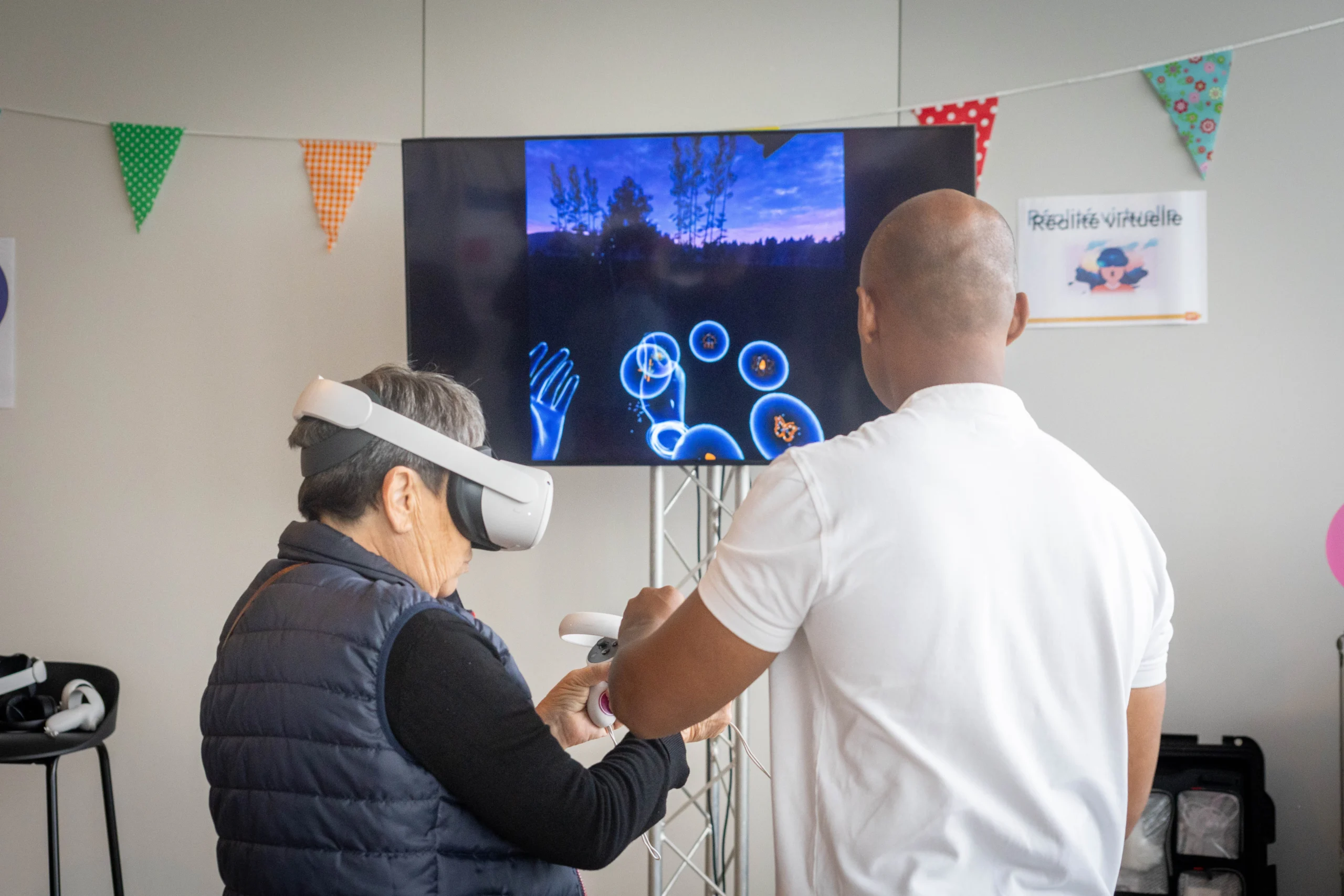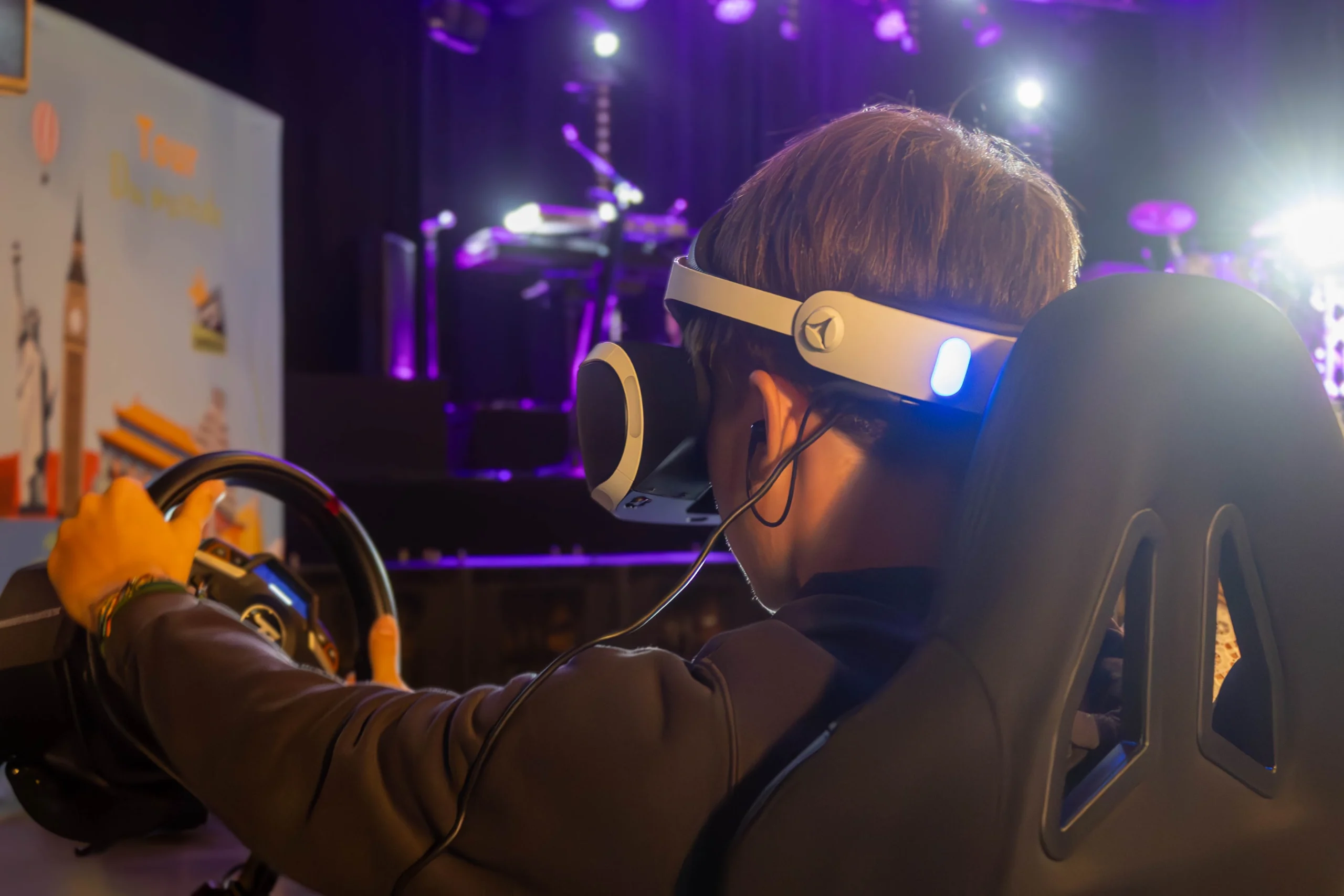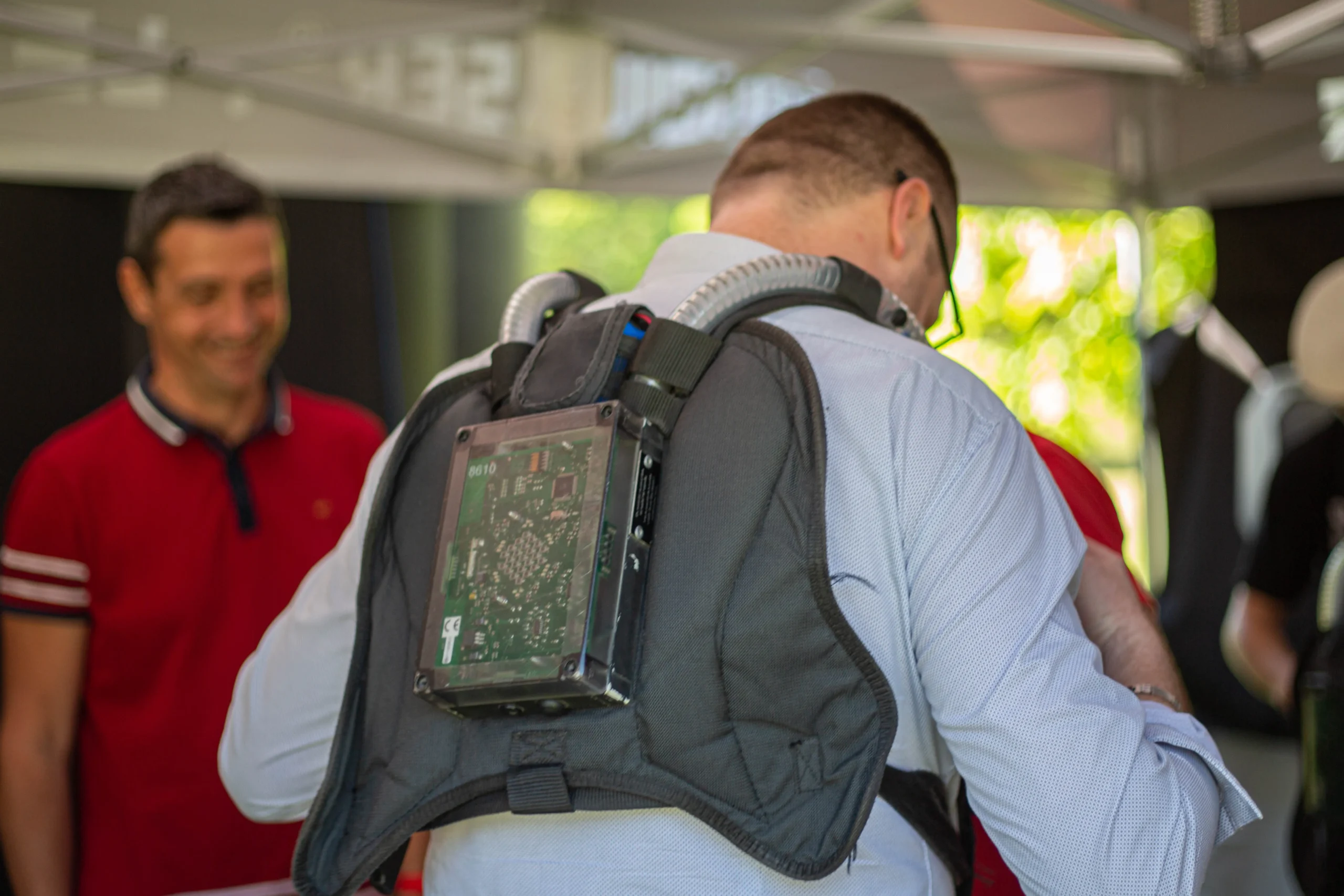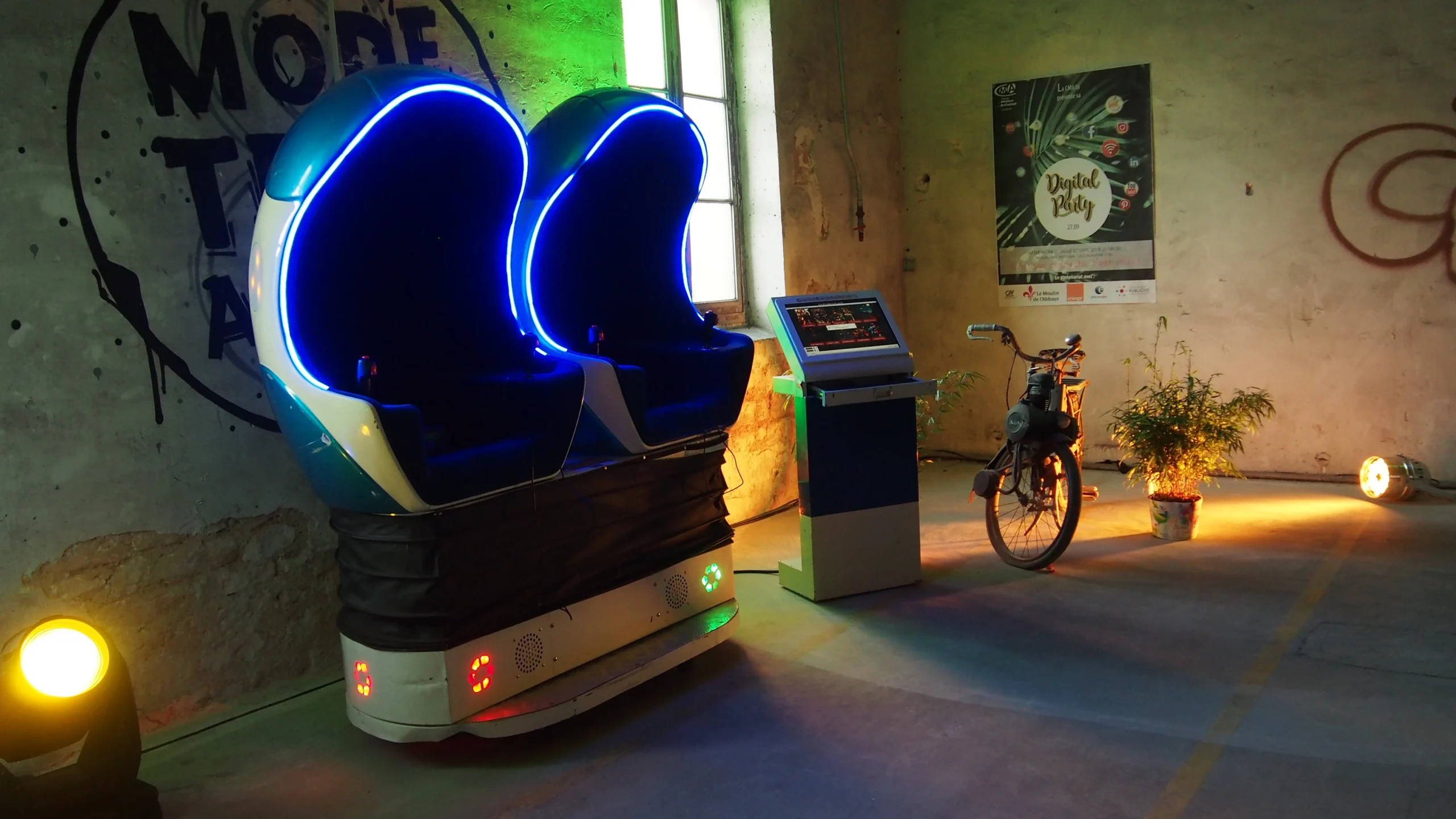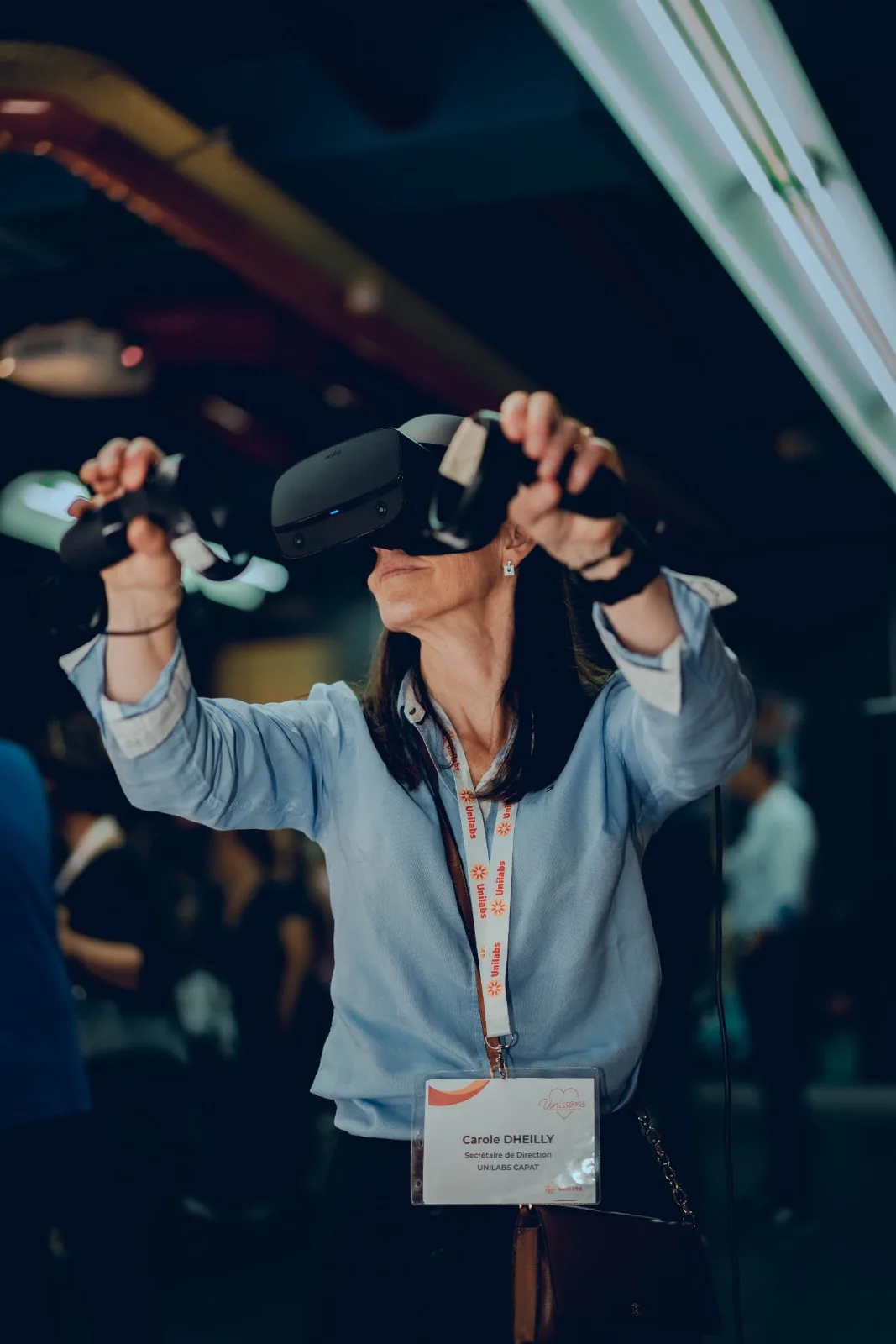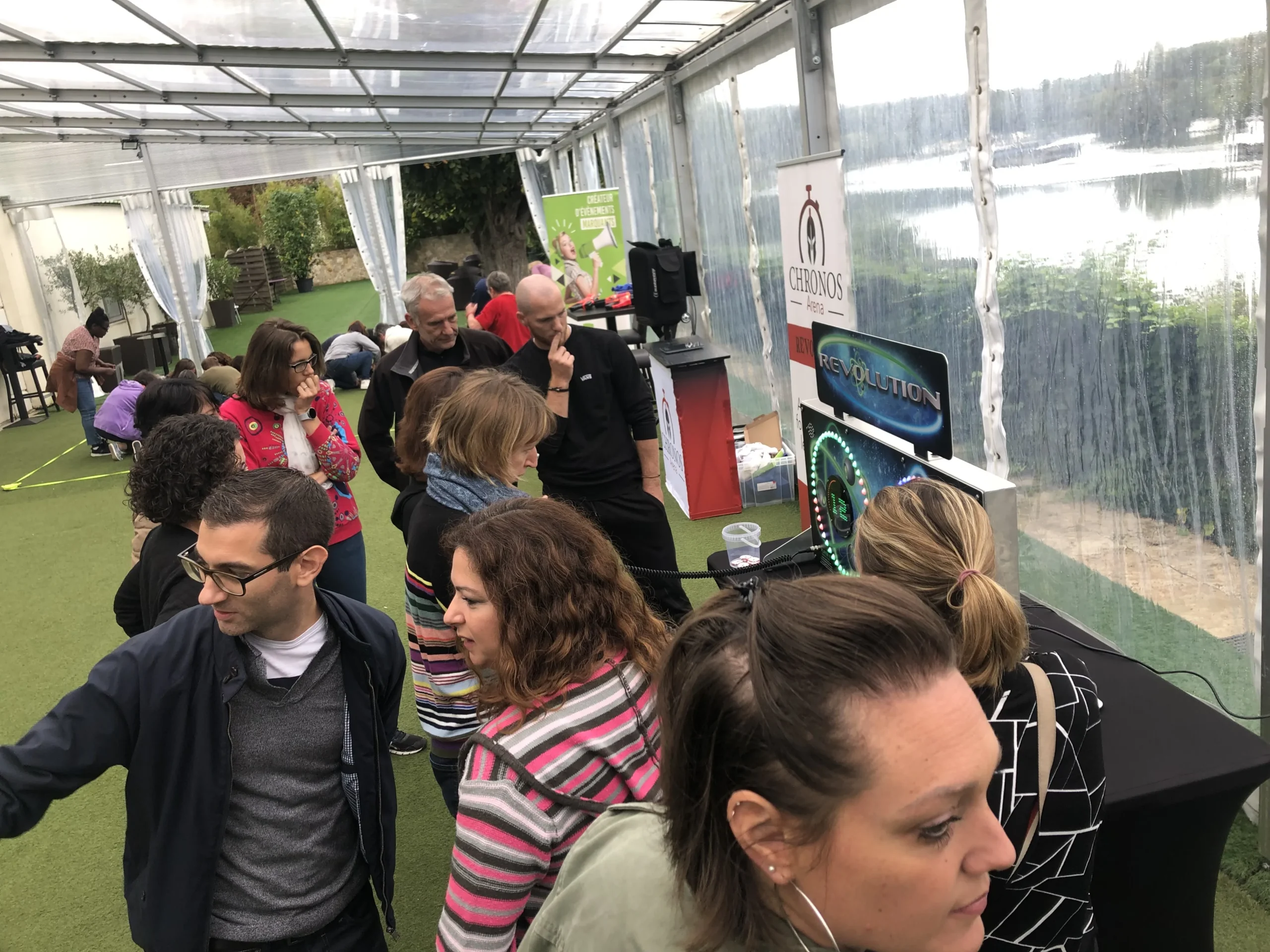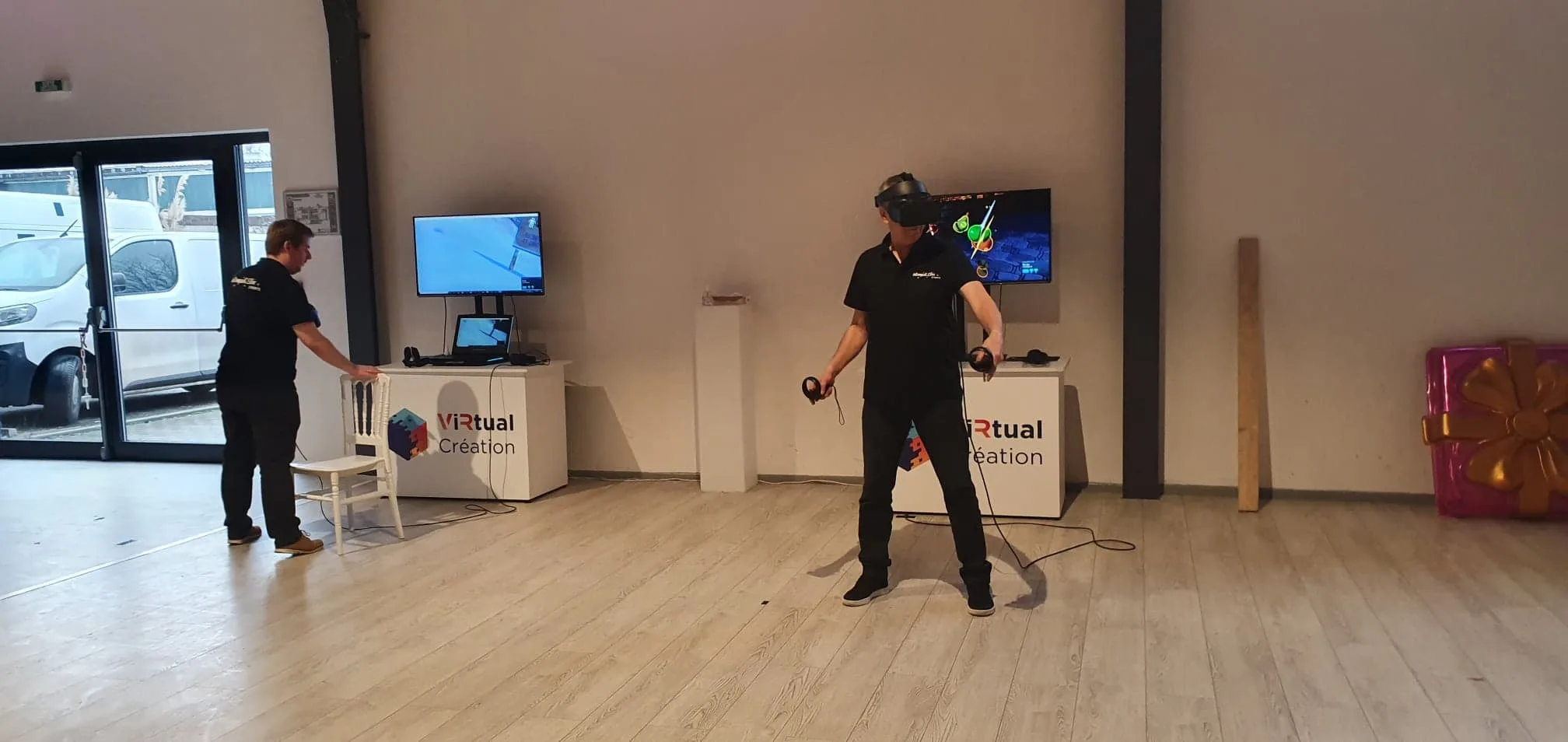
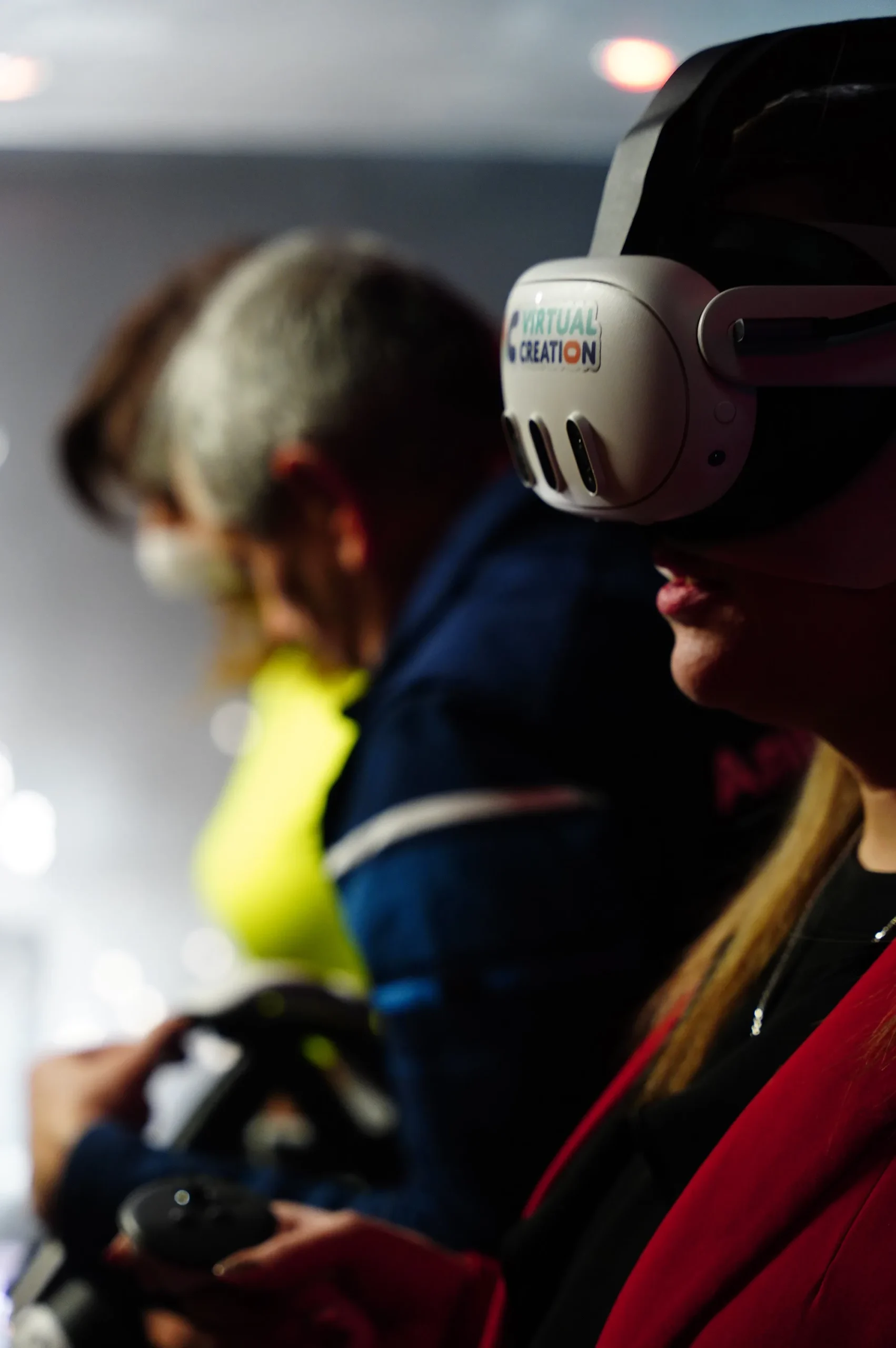
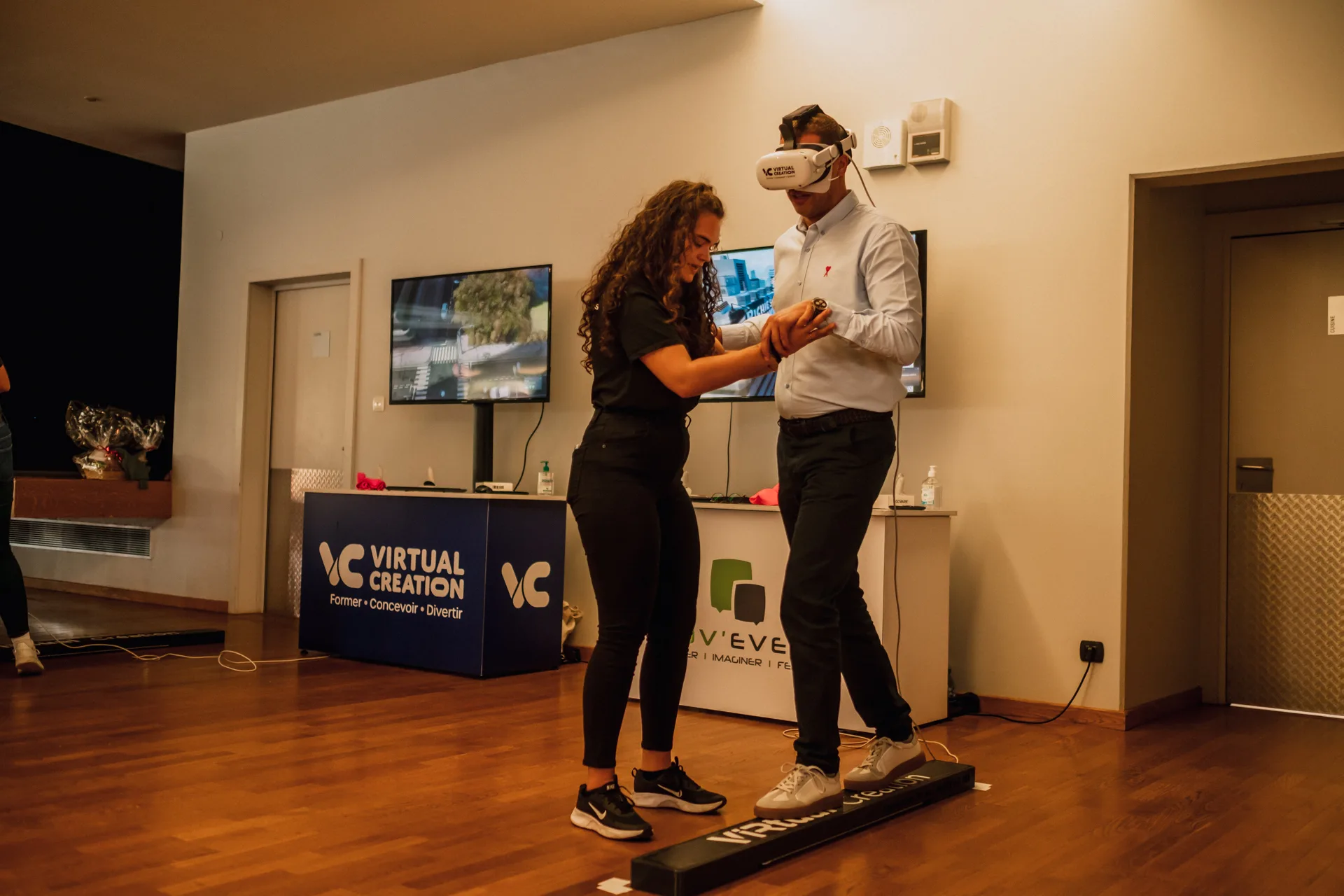
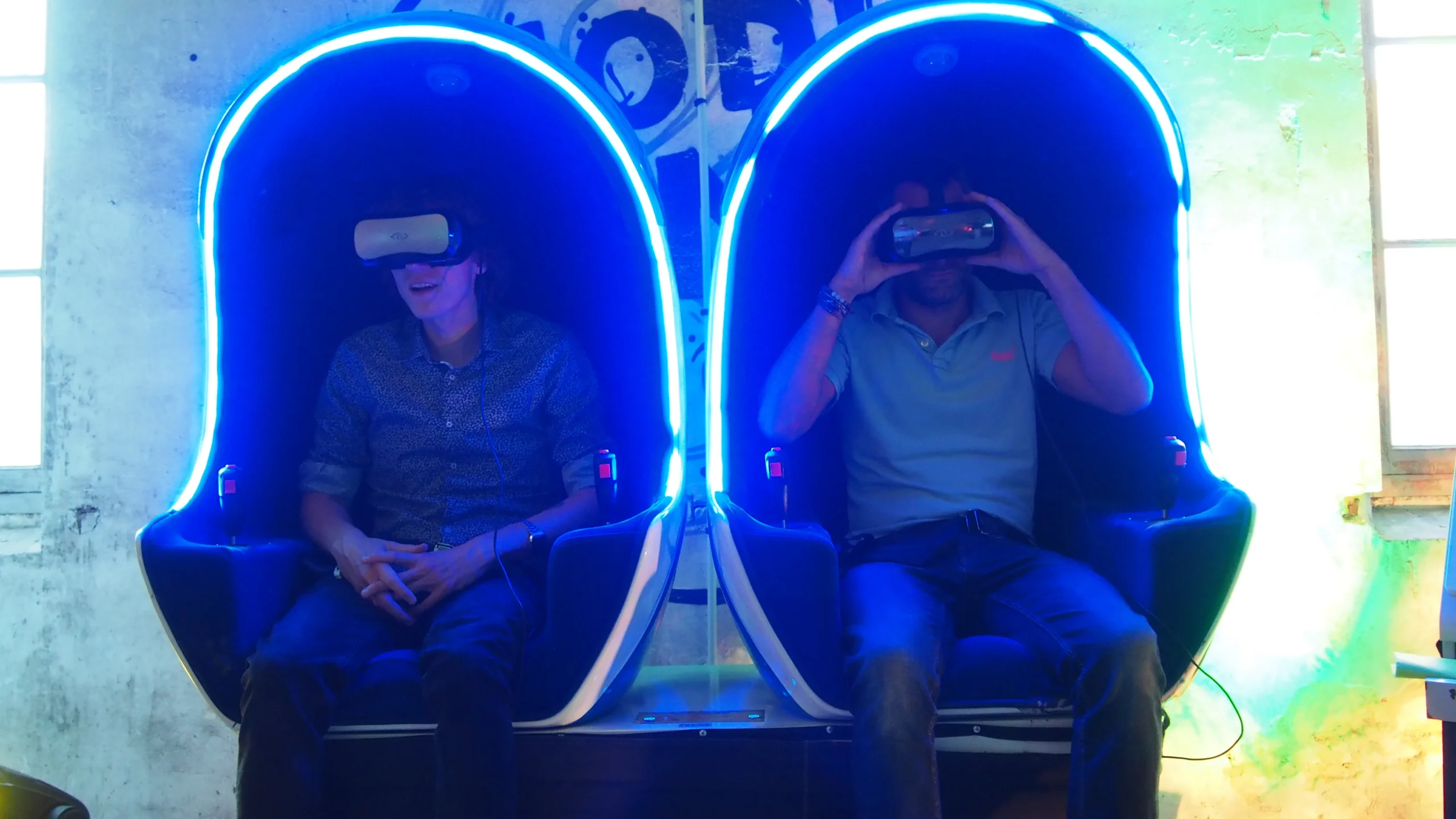
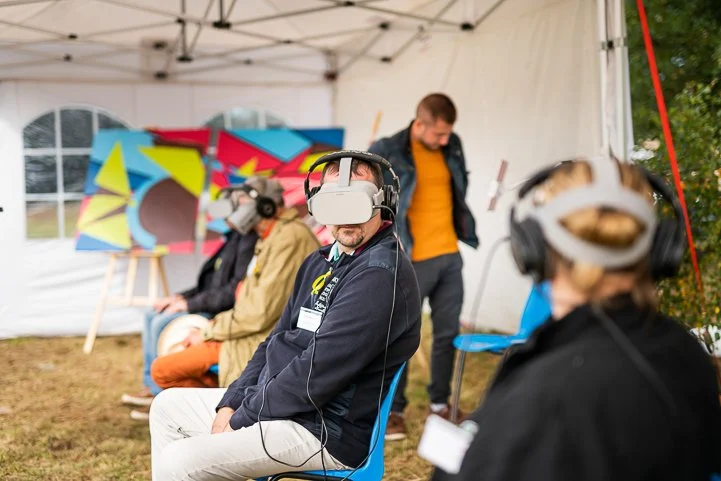
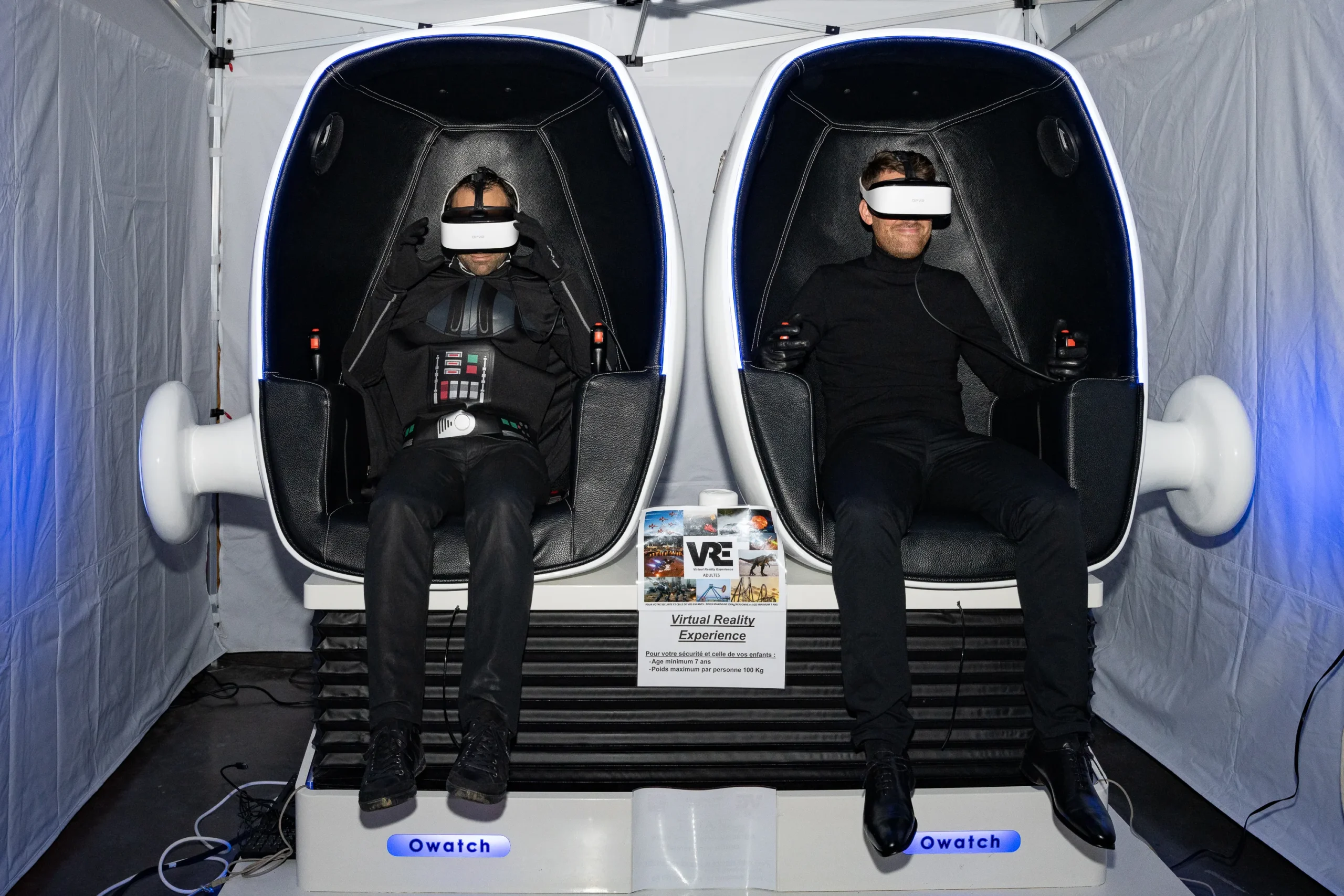
INNOV'events delivers a Virtual Reality Experience designed for executive audiences in Montréal, from 30 to 800+ attendees—without slowing down your agenda.
We handle the operational reality: headset logistics, hygiene protocols, queue management, bilingual facilitation, venue constraints, and on-site troubleshooting so your HR and communications teams don’t carry the risk on event day.
At a corporate event, entertainment is not “extra”—it’s a tool to control energy, networking flow, and attention. A well-run Virtual Reality Experience in Montréal creates a shared topic of conversation in minutes, which helps executives drive engagement without forcing icebreakers or dragging the program.
Local organizations expect clean execution: bilingual guest handling, strict schedules (often between plenary blocks), and a setup that respects venues with tight load-in windows downtown. In Montréal, the bar is high because attendees compare you to major conferences, product launches, and the tech ecosystem’s best practices.
We’re a event agency in Montréal with field experience managing VR activations in hotels, conference centers, office towers, and unconventional spaces. Our role is to make the experience feel effortless for guests while staying predictable for your stakeholders and brand standards.
10–15 minutes average VR cycle time per participant (briefing + experience + reset) used to build realistic run-of-show plans.
2–6 headsets typically deployed for corporate events, depending on throughput targets and space constraints.
1 lead technician + 1–4 facilitators on site to maintain guest flow, hygiene, and technical stability.
30 to 800+ attendees supported by a scalable queue system (time slots, QR check-in, or roaming invite teams).
15–90 minutes setup buffer planned beyond vendor load-in to account for Wi‑Fi checks, lighting, and calibration.
In Montréal, we work with organizations that run recurring moments—annual kickoffs, leadership offsites, employer brand events, and client receptions—where consistency matters as much as creativity. Many teams come back year after year because they want a partner who documents what worked, what caused friction, and how to improve the next edition without re-learning basics.
On VR projects, the stakeholders are rarely just “events.” It’s HR for engagement and wellness, Communications for brand image and shareable content, IT or Facilities for network and power constraints, and executives who want the activation to support the business message (change, innovation, safety, customer focus). Our approach is built for that reality: clear decision points, transparent constraints, and no surprises during the event.
If you share the company names you want us to cite as references, we will integrate them here in a compliant, professional way (e.g., “selected projects delivered for…”) aligned with your internal approvals and brand guidelines.
Nous vous envoyons une première proposition sous 24h.
A Virtual Reality Experience is strategically useful when you need fast engagement without consuming stage time. It gives people something to do between segments, reduces “hallway drift,” and can reinforce a theme (innovation, safety training, ESG immersion, product storytelling) in a format that feels concrete rather than abstract.
In Montréal, it also helps bridge mixed audiences—head office + regional teams, bilingual groups, external guests—because the experience is intuitive and does not rely on long explanations.
Executive control over event pacing: VR is modular. We can run it in waves (pre-reception, cocktail, after plenary) to prevent bottlenecks at registration or bar areas and keep foot traffic where you want it.
HR impact you can observe: When employees choose to participate (not forced), you get genuine interaction. We often see cross-department mixing around the queue and immediate peer-to-peer discussion, which is difficult to create with passive formats.
Communications-friendly content without staging: With the right setup (brand wall, lighting, short reaction shots), you can capture authentic content for internal comms and LinkedIn—without turning the room into a film set.
Message reinforcement: A VR scenario can support a transformation narrative (new operating model, customer journey, safety culture). Even with off-the-shelf content, the framing and facilitator script can connect it to your theme.
Inclusive participation options: Not everyone wants a headset. We plan spectator value (mirrored screens, “what you see” monitors, short demos) so non-participants still feel included.
Risk management: VR has operational and reputational risks (motion sickness, hygiene, delays). A professional plan reduces those risks and protects the brand experience.
Montréal is a city where innovation is credible only when it’s well executed. The activation must look controlled, safe, and consistent with your corporate standards—especially when clients, board members, or potential hires are in the room.
Decision-makers in Montréal tend to be practical: they want innovation, but not at the expense of schedule, privacy, or guest comfort. In real events, the pressure points are predictable. Hotels and downtown venues often have strict union rules or limited dock hours; office towers may have elevator reservations and tight security; conference spaces can have Wi‑Fi that’s reliable for emails but unstable for streaming or device syncing.
We plan VR accordingly: we assume limited load-in time, we bring the right power distribution, we avoid relying on venue Wi‑Fi when not required, and we set a floor plan that respects fire lanes and accessibility. We also prepare bilingual guest handling—simple, repeatable scripts in English and French—because in Montréal the quality of the welcome is part of brand perception.
Another expectation is professionalism around hygiene and comfort. Post-pandemic, guests notice whether wipes, face interfaces, and staff routines are consistent. It’s not “nice to have”; it’s part of trust. Finally, leadership teams want predictability: a clear throughput estimate (how many participants per hour), clear eligibility rules (minimum age, glasses, medical cautions), and a plan for lines so the activation does not take over the event.
Engagement comes when the activity is easy to understand, fast to access, and aligned with why people are there. In corporate settings, VR works best when it supports one of three objectives: (1) accelerate networking, (2) embody a message, or (3) showcase innovation in a controlled way. Below are formats we deploy in Montréal depending on the audience profile and venue realities.
High-throughput VR discovery bar: Multiple headsets running short experiences (3–5 minutes). Ideal for cocktails and after-plenary windows. We manage time with a simple queue system and a “next up” briefing area so headsets never sit idle.
Team challenge with live scoreboard: A VR mini-game where teams compete in short rounds. Works well for internal events when you want cross-team mixing. We recommend this only if noise levels and screen visibility are compatible with the venue; otherwise the energy can spill into other zones.
Guided executive demo sessions: Small groups (6–12) with a facilitator narrative that links the VR content to strategy (innovation, customer journey, safety). This is effective for leadership offsites where depth matters more than volume.
Immersive art gallery in VR: A calmer option for audiences less interested in gaming. It pairs well with museums or brand-culture events and reduces motion sensitivity issues.
360° cinematic immersion: Short films in VR that support storytelling. Useful for communications teams who want message control and consistent output across participants.
VR + tasting pairing: Guests experience a destination or narrative in VR, then move to a curated tasting station. This works when you have enough space to separate zones and prevent congestion. The value is the structured flow: VR creates curiosity; tasting creates conversation.
Chef moment with VR “behind the scenes”: A short VR visit of a kitchen, origin story, or production process, followed by a live bite. It’s credible when tied to your brand story (supply chain, quality, sustainability), not as a random gimmick.
Branded training-style simulation: For organizations in safety, customer service, or operations, we can structure a VR module as a learning moment. Even with off-the-shelf content, the facilitation and debrief can make it relevant (what you noticed, what good looks like, how it connects to our standards).
Mixed reality photo/video capture: A mirrored screen shows what the participant sees, enabling communications teams to capture clear, brand-safe visuals. We set a consent workflow (signage + verbal confirmation) to protect privacy.
Multi-user VR collaboration (where appropriate): Best for smaller groups and controlled networks. It can be powerful for executive innovation sessions, but we only recommend it when the venue and IT conditions are stable enough to avoid credibility loss.
Whatever the format, the question we ask first is: “What do you want people to say about your organization when they leave?” In Montréal, brand image is shaped by execution quality—clean staging, bilingual hosting, and a flow that respects your guests’ time.
The venue determines whether VR feels premium or improvised. Ceiling height, ambient light, floor noise, and circulation all affect the experience. In Montréal, we often adapt the VR footprint to the reality of the room: tight foyers in hotels, heritage buildings with limited power, or open industrial spaces that look great but require extra zoning to keep lines controlled.
| Venue type | For which objective? | Main strengths | Possible constraints |
|---|---|---|---|
Downtown hotel ballroom + foyer | High-volume corporate event entertainment in Montréal during cocktails and conferences | Predictable logistics, built-in power, easy integration with plenary agenda | Strict load-in windows, noise management, limited foyer footprint for queues |
Conference center / large event hall | Multiple VR stations + mirrored screens; sponsor or innovation zone | Space for throughput, clear zoning, strong visibility for communications | Can feel impersonal without scenic treatment; AV coordination must be tight |
Office tower common area / headquarters atrium | Employee engagement activation or recruitment open house | Brand proximity, easy leadership participation, good for short time slots | Security access, elevator reservations, acoustic echo, power distribution planning |
Industrial/loft venue in Montréal | Innovation-themed client event with premium staging | Visual impact, flexible layout, strong “tech” perception | Heating/cooling variability, extra drape needed for light control, additional permits |
We recommend a site visit (or at minimum a detailed floor plan review) before confirming the VR footprint. Small details—pillar placement, emergency exits, carpet thickness, nearby bar positioning—decide whether the activation runs smoothly or becomes a bottleneck.
The cost of a Virtual Reality Experience in Montréal depends less on “VR” and more on operational scope: number of headsets, staffing, duration, content type, and venue constraints. A responsible quote includes throughput assumptions and a staffing plan—not just a per-headset price.
For most corporate events, budgets typically fall in the $3,500 to $15,000+ range, with premium multi-station builds or customized content going beyond that. We prefer to frame budget around objectives (how many people should participate, what level of branding, what risk tolerance) so you can defend the spend internally.
Number of VR stations and throughput target: More headsets reduce lines but increase equipment, staffing, and space needs. We calculate expected participation per hour and propose the right ratio.
Event duration and access windows: A 2-hour activation during a cocktail is different from an 8-hour conference day. Longer durations require battery rotation, more staff breaks, and stronger redundancy.
Content choice: Off-the-shelf experiences are efficient and reliable; branded or custom modules increase creative and testing time. We’ll advise when customization is worth it—and when it’s an unnecessary risk for a single evening.
Venue constraints in Montréal: Tight load-in, union rules, limited power, or complex access can add labor and time. We budget for this up front so your team isn’t surprised by “day-of” add-ons.
Branding and scenic treatment: A clean branded zone (backdrop, lighting, signage, monitors) changes perceived quality. This matters for communications teams and executive-facing events.
Photography/video capture and consent workflow: If you want usable content, plan it. It affects layout, staffing, and timing.
Risk and compliance: Hygiene supplies, disposable face interfaces (if required), and documented safety procedures are part of a professional deployment.
ROI is usually measured through observable engagement (participation volume, dwell time), qualitative feedback from leaders and employees, and communications outputs (internal adoption, recruitment content). The best VR budgets are the ones tied to a clear event objective and a realistic participation model—not inflated expectations.
VR activations look simple until the room fills up. On event day, the difference between a smooth experience and a reputational headache is local execution: crew call times that respect venue rules, rapid access to backup gear, bilingual guest handling, and familiarity with Montréal suppliers and venues.
As a local team, we can do pre-visits quickly, coordinate with venue event managers in their usual operating rhythm, and react fast when something changes (a room flip delayed, an elevator blocked, an unexpected VIP visit). For executive stakeholders, that responsiveness is not comfort—it’s risk control.
We also understand how Montréal audiences behave at events: they value authenticity, they notice operational details, and they will disengage if a line feels unmanaged. Our role is to keep the experience credible and respectful of guests’ time.
ROI is usually measured through observable engagement (participation volume, dwell time), qualitative feedback from leaders and employees, and communications outputs (internal adoption, recruitment content). The best VR budgets are the ones tied to a clear event objective and a realistic participation model—not inflated expectations.
Our VR work spans different corporate pressures because the “right” deployment changes with the context. For a year-end event, the priority is often high throughput and entertainment value without disrupting speeches. For a leadership summit, it’s controlled small-group demos with a clear narrative and debrief. For an employer brand open house, it’s a visually clean zone that produces content and allows repetitive explanations without fatigue.
We’ve also handled the common “reality check” moments that teams rarely plan for: the CEO arrives earlier than scheduled and wants to try the experience immediately; a room flip runs 25 minutes late and the VR zone needs to be moved; the photographer blocks the queue; a portion of guests prefer French-only support; or the venue’s ambient lighting interferes with tracking and requires rapid reconfiguration. These are not exceptions—they’re typical in live production. Our job is to plan for them so the experience remains stable and professional.
When you brief us, we will propose a deployment model (open flow vs time slots), a footprint, and a staffing plan that matches your event type in Montréal, with realistic participation assumptions you can share with leadership.
Overestimating participation: expecting 300+ people to try VR in a short cocktail without enough stations leads to long lines and negative sentiment. We model throughput and set expectations early.
Understaffing the activation: one person cannot manage briefing, fitting, safety, hygiene, and queue control at corporate pace. We staff for flow, not for minimum cost.
Poor layout planning: placing VR near the bar, registration, or a narrow corridor creates congestion. We zone it like a micro-venue with entrance/exit logic.
Relying on venue Wi‑Fi unnecessarily: if the experience doesn’t need the internet, we keep it offline to reduce failure points. If it does, we test and bring alternatives.
No comfort policy: motion sensitivity happens. Without a discreet opt-out and seating option, guests feel pressured or embarrassed.
Neglecting brand optics: tangled cables, loud tech talk, and inconsistent hygiene routines damage perception—especially with clients present.
Last-minute content updates: pushing updates on event day is a reliability trap. We freeze versions and test in advance.
Our role is to absorb these risks before they reach your executives, your guests, or your brand. The activation should feel simple because the production behind it is disciplined.
Loyalty in corporate events isn’t about habit—it’s about risk reduction. When an organization rebooks, it’s usually because the partner documented decisions, respected internal stakeholders, and delivered a predictable event-day experience. For VR, that predictability matters even more because the technology is visible: a small failure becomes a big talking point.
We focus on operational continuity: we keep records of venue constraints, preferred run-of-show timing, audience profiles, bilingual messaging choices, and what improved engagement. The next event becomes easier to plan, easier to approve internally, and easier to execute.
0–2 minutes target downtime per station per hour through proactive resets and battery management.
1 documented playbook per recurring client: floor plan templates, staffing ratios, and queue approach aligned to their event style.
2-level staffing structure: lead technician for quality + facilitators for guest experience, which protects throughput and brand tone.
In Montréal, repeat business is earned through calm execution under pressure. If your team wants fewer unknowns next year, a stable partner is a strategic choice—not a convenience.
We start with your non-negotiables: agenda timing, audience mix, bilingual requirements, brand standards, privacy expectations, and venue realities. We also confirm what success looks like (participation volume, executive engagement, content capture, or message reinforcement) so the activation is built for a measurable purpose.
We propose 1–3 VR formats with clear pros/cons: number of stations, cycle time assumptions, space footprint, and staffing. This is where we prevent line problems by converting “how many attendees” into “how many realistic participants per hour,” with a recommendation you can defend internally.
We map the VR zone like a mini-operation: entry point, briefing area, headset area, exit flow, hygiene station, and mirrored screen placement. We confirm power needs, cable paths, and safety boundaries. If the venue is downtown, we plan load-in timing, dock constraints, and elevator reservations to protect your schedule.
We prepare concise English/French scripts for facilitators: welcome, safety cues, what to expect, and how it connects to your theme. We also align the visual presence (signage, backdrop, screen content) with communications requirements so the activation looks corporate-grade, not improvised.
On site, we arrive early enough to test tracking, lighting, and audio; we freeze device settings; and we assign clear roles (lead tech vs guest flow). We monitor queue length, adjust cycle timing, and can switch to time slots if volume spikes. If issues occur, we triage quietly so guests experience continuity.
We close with a quick debrief: what participation looked like vs forecast, what caused friction, what to change next time, and any content captured. This is especially useful for HR and communications teams who must report outcomes and recommendations.
Plan 10–15 minutes per participant end-to-end (briefing, fitting, experience, wipe-down). With 4 headsets, you typically process 16–24 participants per hour depending on content length and comfort needs. For 90 minutes, that’s roughly 25–35 people—unless you add stations or shorten the cycle.
For a professional setup, plan about 80–200 sq. ft. per station including safe boundaries and staff access. Add space for a queue and briefing area. In tighter Montréal foyers, we often use a compact seated format to reduce footprint and improve comfort.
Yes, with the right operating rules. We include a short safety briefing, define opt-out options, and avoid content known to trigger motion sensitivity. We provide seating on request and keep experiences short (often 3–7 minutes) for event settings. Guests with certain conditions should refrain; we communicate that discreetly.
Not always. Many VR experiences run fully offline, which is preferred for reliability. If we need internet (multi-user, streaming, or live content), we test in advance and recommend a dedicated connection when the venue’s public Wi‑Fi is unpredictable.
For standard activations, 3–6 weeks is workable. For peak season dates, complex venues, or branded content, plan 6–12 weeks. Earlier booking also improves your options for staffing, scenic treatment, and run-of-show integration.
If you’re comparing agencies, we suggest starting with three inputs: your attendee count, the time window where VR can run, and what you want VR to achieve (networking flow, message reinforcement, or innovation showcase). With that, we can propose the right number of stations, a floor plan approach, and a staffing model that protects your agenda.
Contact INNOV'events to receive a clear proposal for a Virtual Reality Experience in Montréal, including operational assumptions, constraints to validate with your venue, and options to scale up or down based on budget. The earlier we align on throughput and space, the smoother the event day will be for your executives, HR, and communications teams.
Thierry GRAMMER is the manager of the INNOV'events Montréal office. Reach out directly by email at canada@innov-events.ca or via the contact form.
Contact the Montréal agency