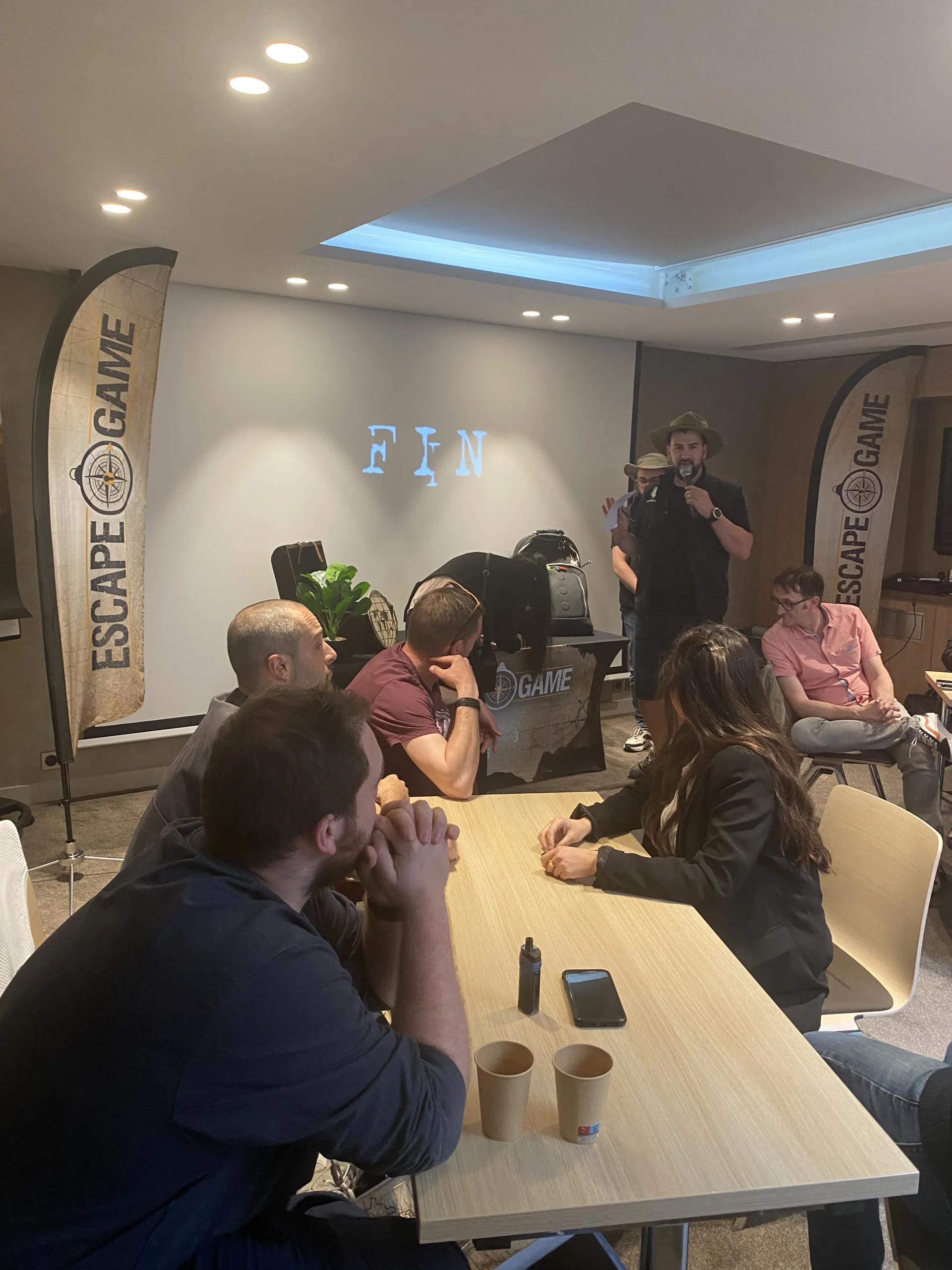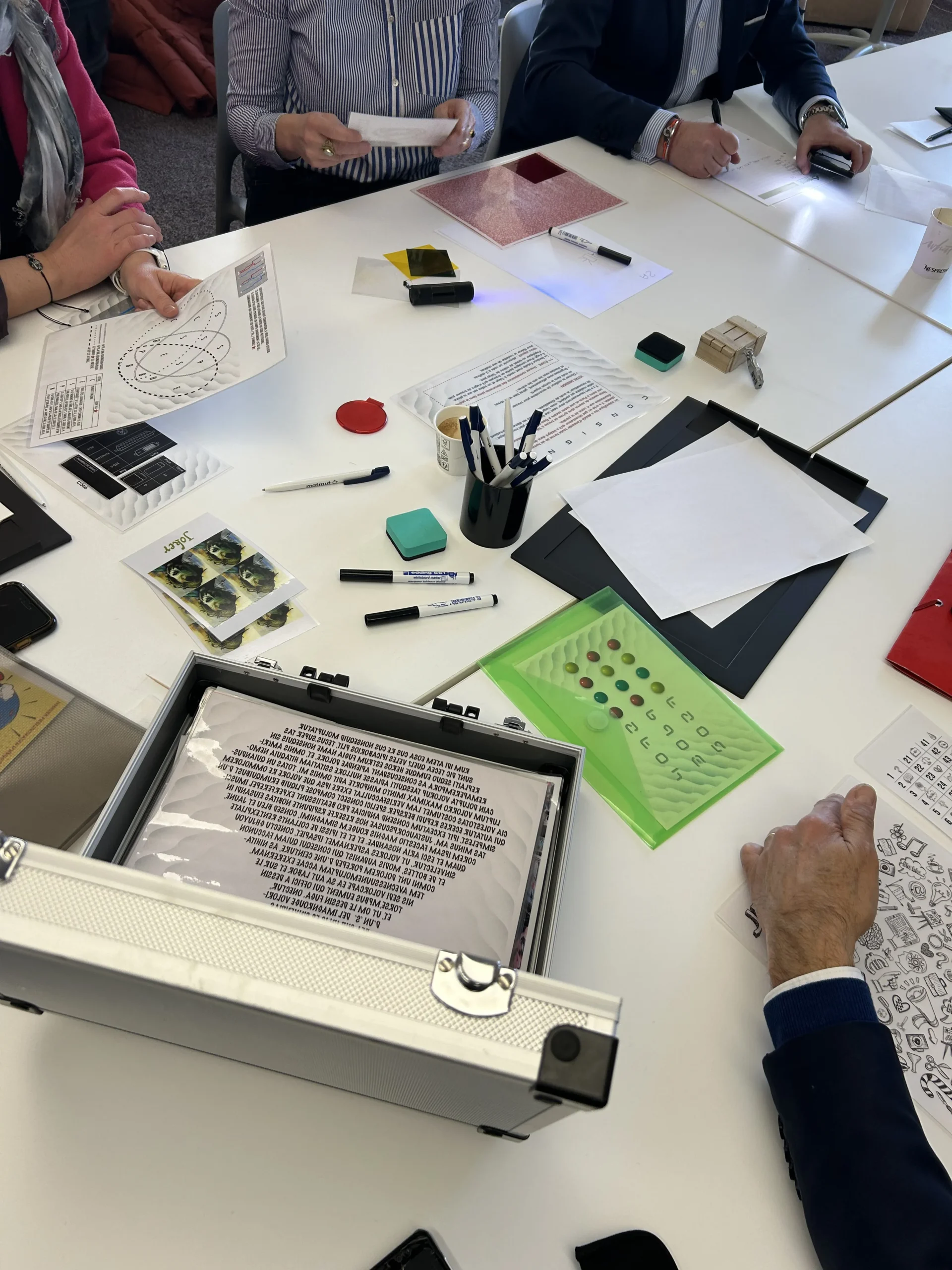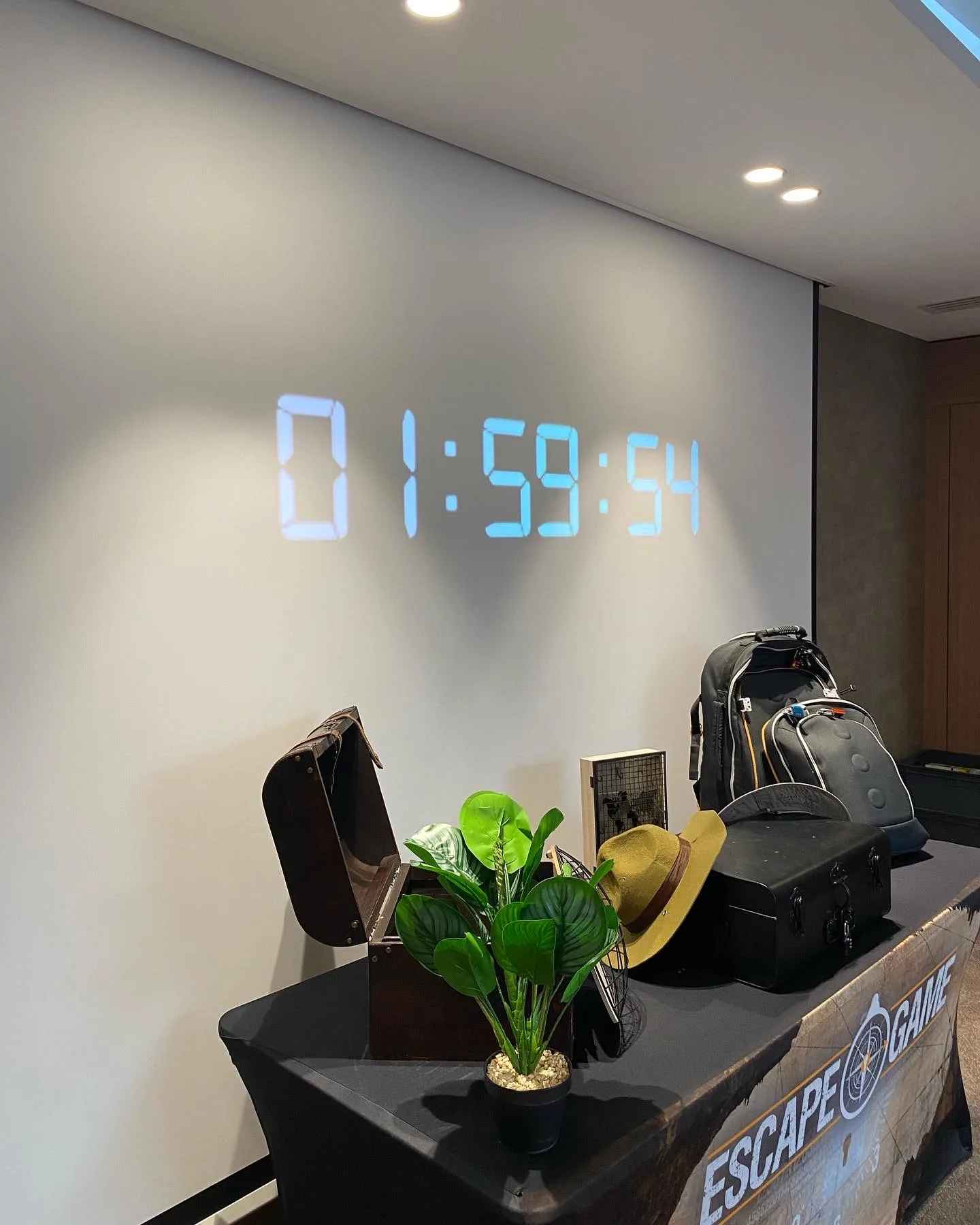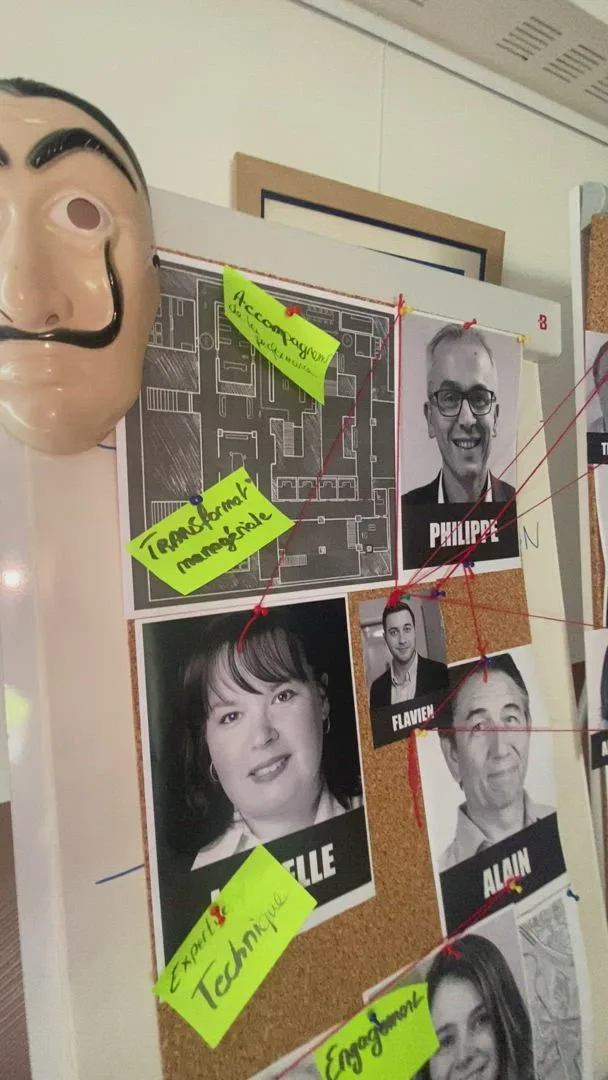
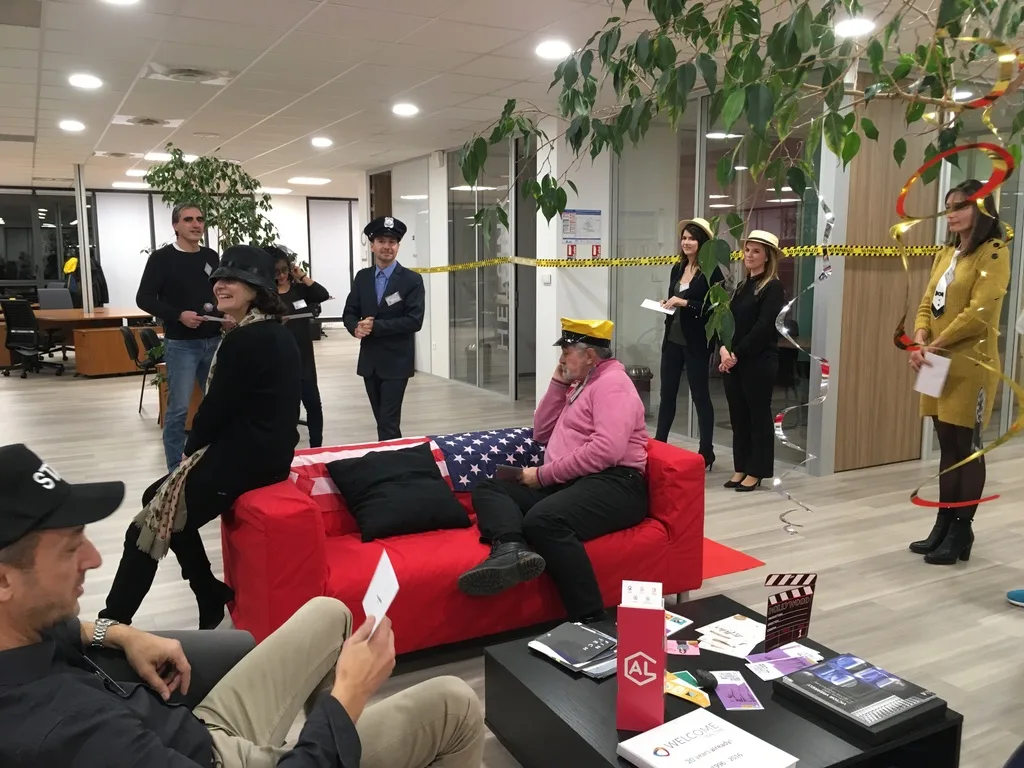
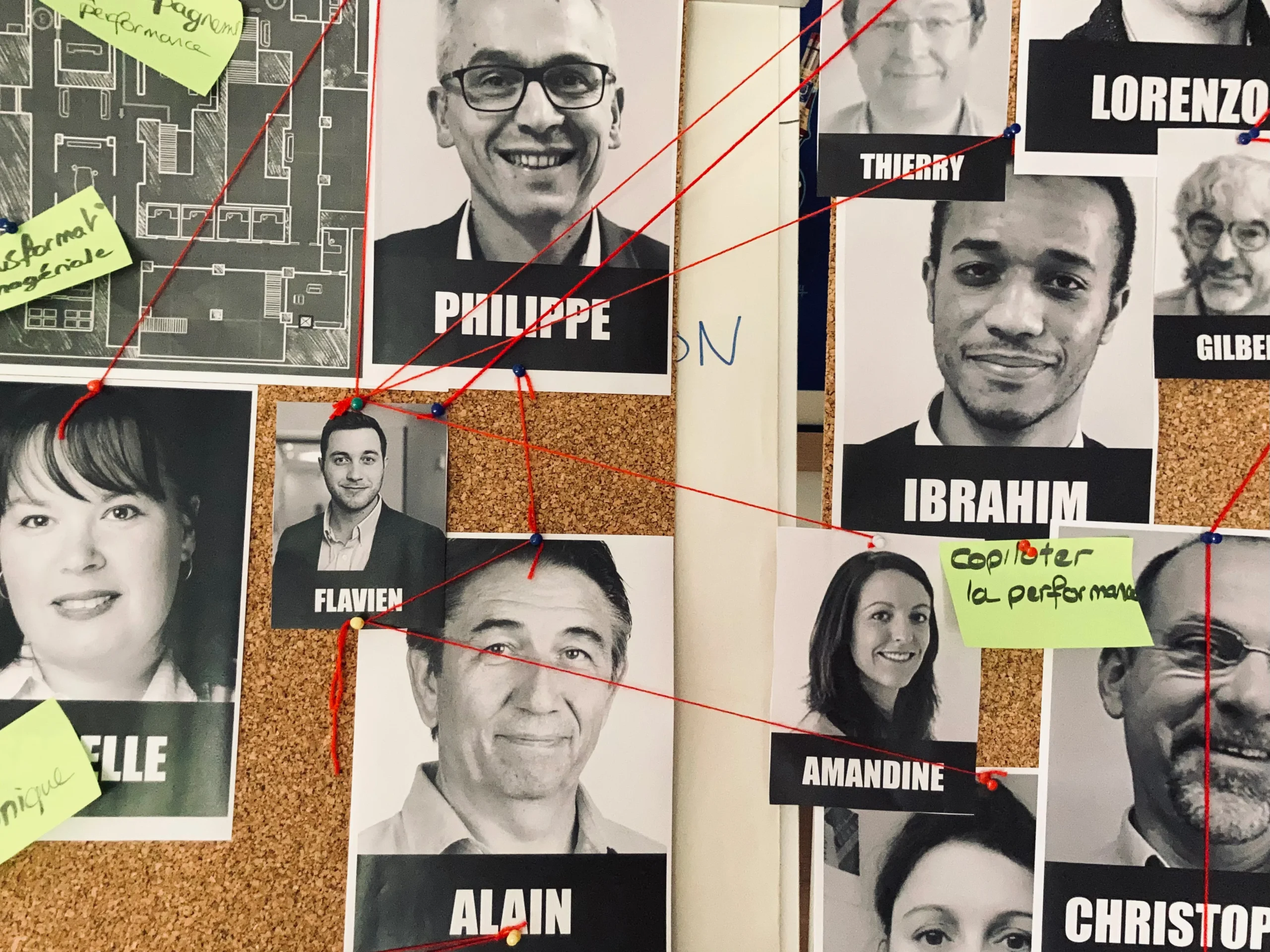
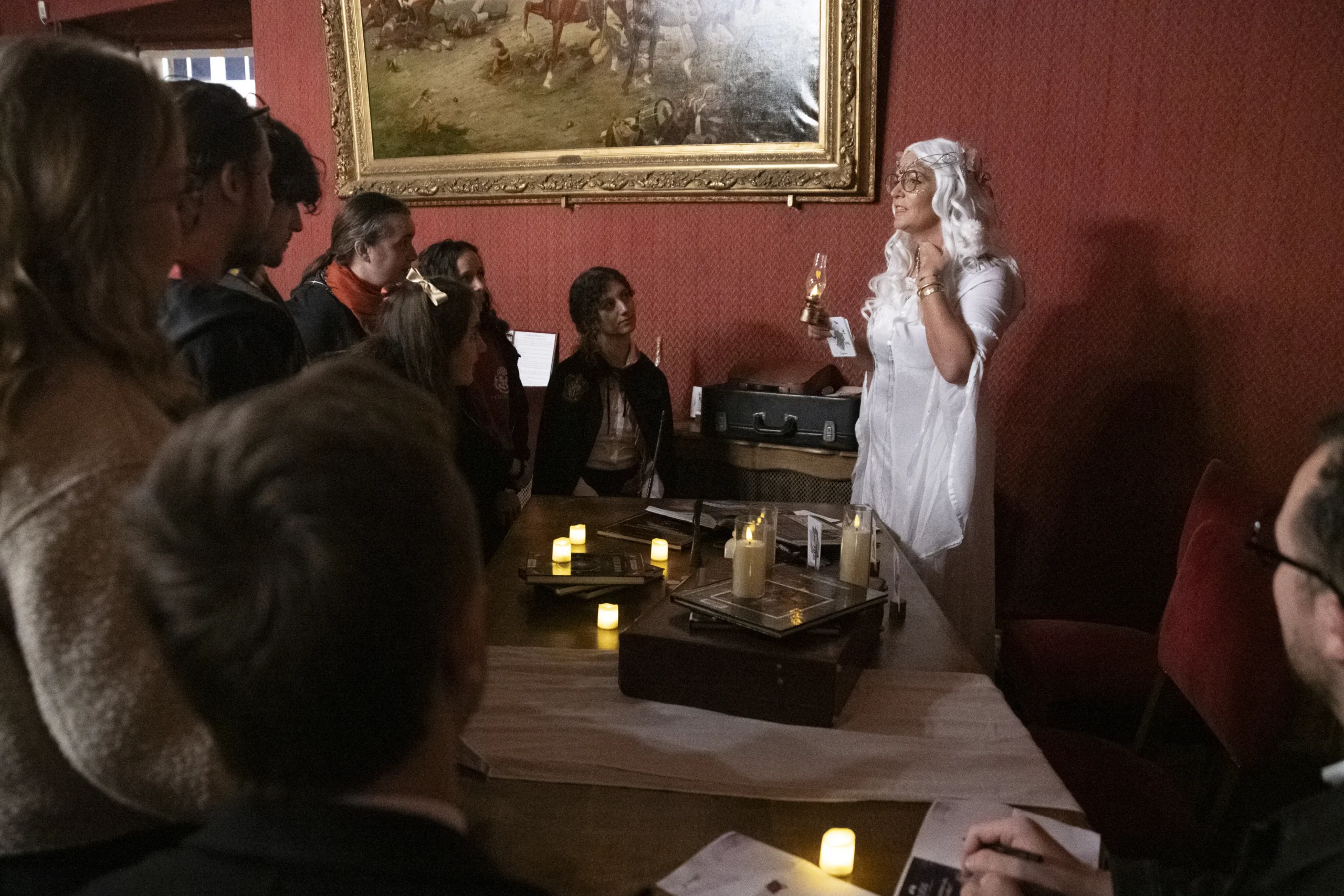
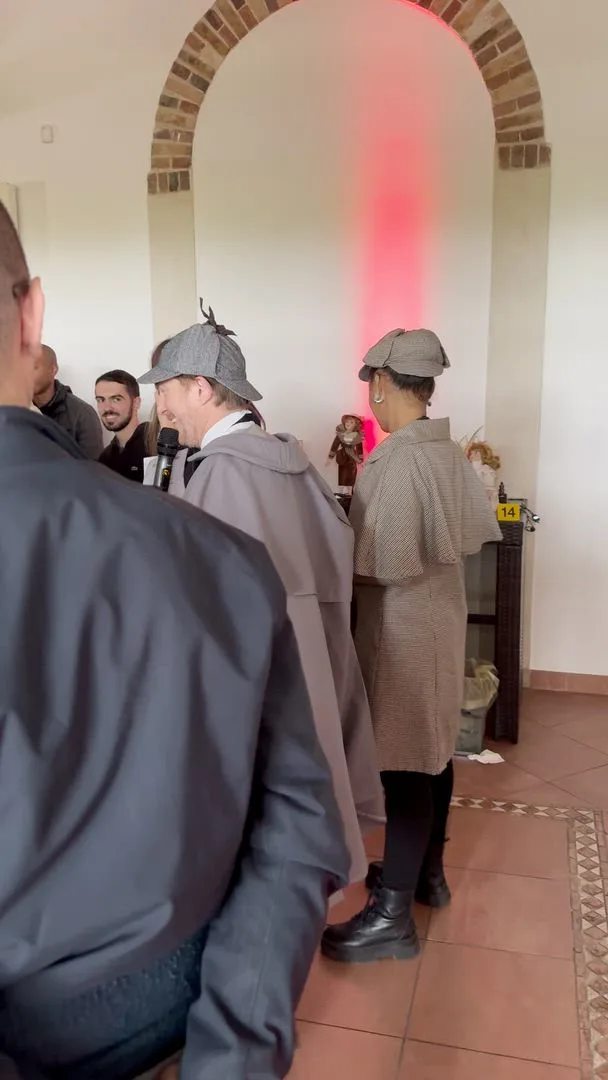
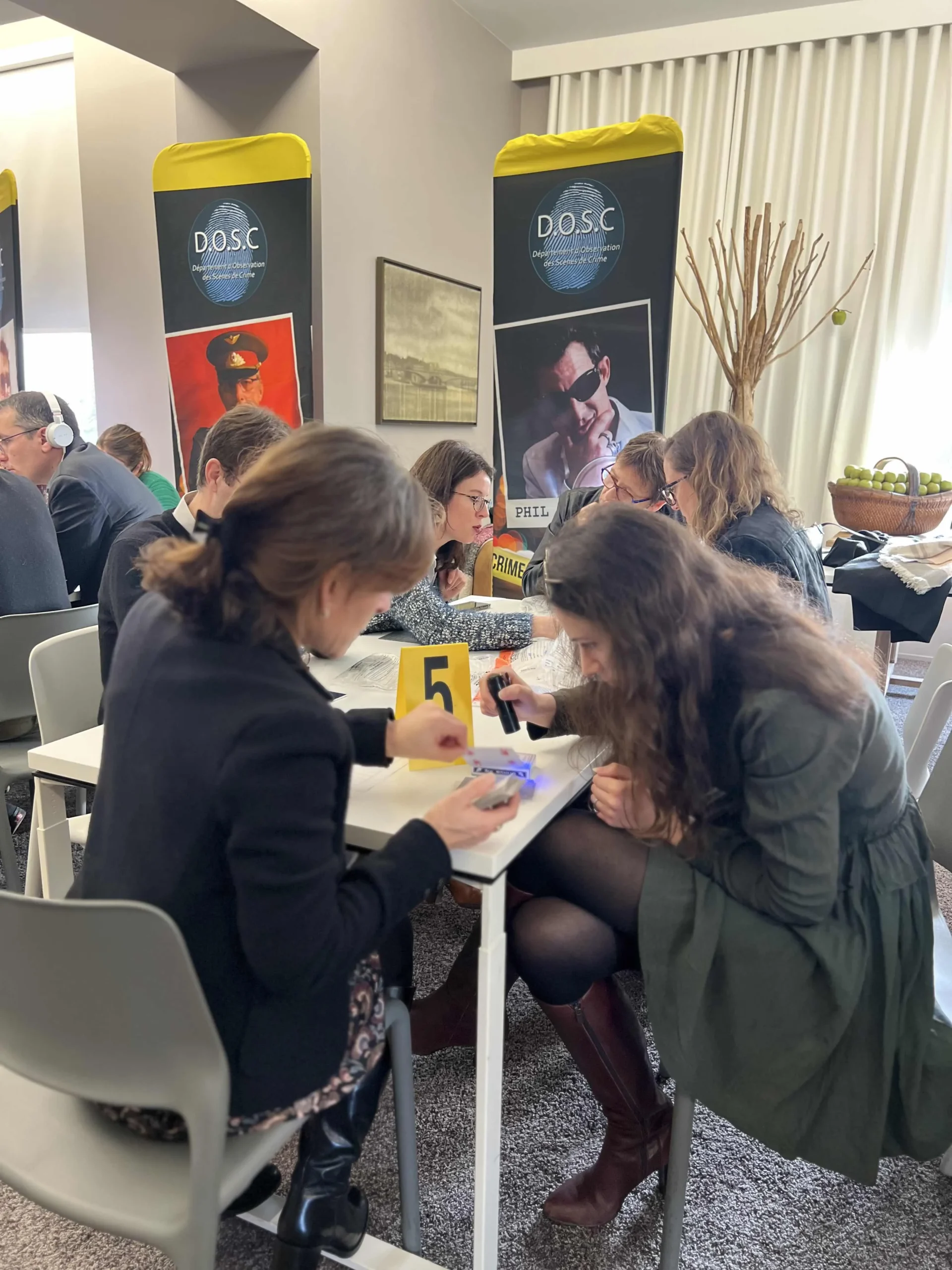
In a corporate agenda, entertainment is not “extra”: it’s a management tool. A well-built Immersive Mystery Night in Montréal creates structured interactions across departments, pushes decision-making under time pressure, and gives leaders a credible moment to recognize performance without forcing networking.
Montréal organizations expect rigor: bilingual facilitation, predictable timing (no overruns on a tight evening schedule), and a format that works for mixed seniority—from VPs who want substance to new hires who need a safe entry point.
As an event agency in Montréal, INNOV'events operates with local crews, local vendor relationships, and an execution mindset shaped by real on-the-ground constraints: unionized venues, loading docks, downtown traffic, and last-minute executive changes.
10+ years producing corporate experiences across Québec and Canada, including complex evening programs with tight run-of-show constraints.
Operational formats tested from 20 to 600 participants, including simultaneous play for large groups (multi-room or multi-team mechanics).
40–120 minutes is our most common mystery runtime, with controlled pacing and timed reveals to protect your schedule.
Standard production includes 2 to 12 performers depending on the level of immersion, number of teams, and room layout.
On-site supervision is structured: 1 producer + 1 stage manager + facilitators/actors, with clear escalation for VIP and venue issues.
In Montréal, trust is earned by consistency: same level of execution, even when the venue changes or the leadership team rotates. We support organizations that come back for annual kickoffs, holiday evenings, client receptions, and recognition nights because they need a partner who can protect their brand and their internal politics.
If you’ve shared internal references (client names) with us, we integrate them here in a controlled way—never as a “logo wall,” but as context for what we delivered (attendance, constraints, and outcomes). Many Montréal groups we support return because our process is stable: a clear brief, realistic timelines, bilingual facilitation, and an on-site team that can solve problems discreetly.
We also work alongside internal communications and HR teams who must justify decisions to procurement, finance, and leadership. Our documentation (scope, options, assumptions, schedule, and contingency plan) is designed for that reality.
Nous vous envoyons une première proposition sous 24h.
A mystery format only performs when it’s tied to a managerial objective. In practice, executives call us when they want a structured social experience that still feels “light”—but produces measurable outcomes: cross-team interaction, shared language, and a clear sense of momentum after the event.
Break silos without forcing small talk: teams must exchange information to advance. This is valuable for organizations where hybrid work has reduced informal cross-department contact.
Create a controlled stage for recognition: we integrate leadership moments (awards, milestone announcements, client wins) at pacing “safe points” so the message lands without killing energy.
Test collaboration under pressure: the mechanics naturally surface who delegates, who synthesizes, and who pulls quieter colleagues into the discussion—useful for leadership programs and high-potential cohorts.
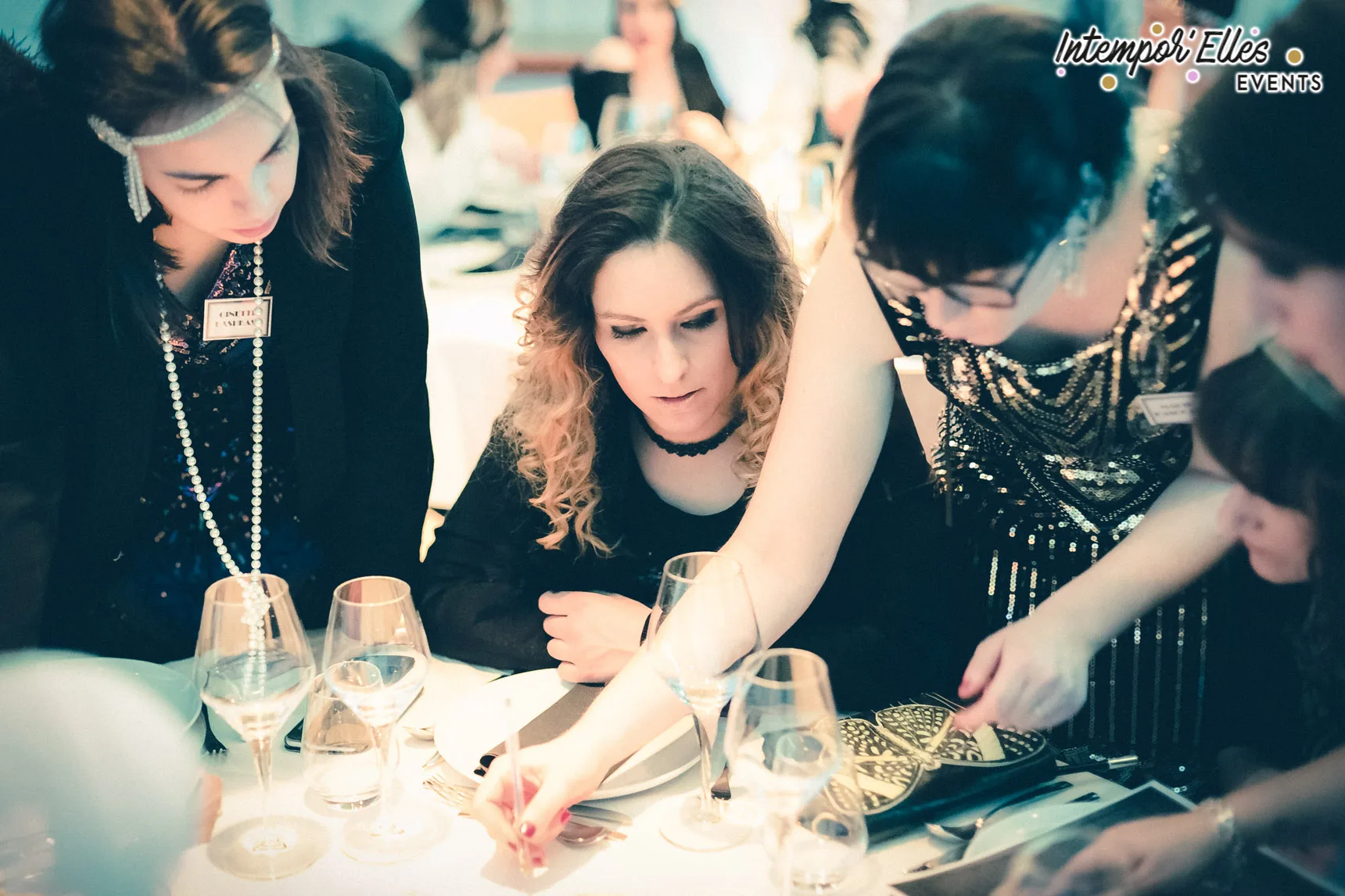
Protect inclusivity and psychological safety: unlike improvisation-heavy entertainment, a well-designed mystery gives every participant a role (analyst, witness, negotiator). We design so introverts and non-native speakers can contribute.
Provide a premium guest experience for clients: for a client evening, the storyline becomes the “shared conversation” that replaces awkward mingling and reduces the burden on account teams to constantly animate the room.
Reduce event-day risk: the format is scripted and timed. We can build hard stops for speeches, meal service, and venue constraints—critical for downtown Montréal venues with strict curfews.
Montréal’s business culture values competence and substance. When the entertainment respects the audience’s intelligence and the evening’s constraints, it’s perceived as professional—not as a gimmick.
We see the same decision criteria across Montréal-based head offices and fast-growing SMEs: the event must be engaging, but it cannot feel childish, improvisationally risky, or operationally messy. Your leadership team will judge the evening on details: transitions, sound, timing, and how participants are treated.
Bilingual reality: many groups are mixed EN/FR, sometimes with international employees. We design clue materials and facilitation in bilingual mode (or language-by-team) so no one is excluded. This affects printing, signage, briefing scripts, and actor training—details that matter when 20 minutes of confusion can derail the experience.
Downtown constraints: Old Montréal and Centre-Ville venues often have limited load-in windows, restricted parking, and strict decibel rules after a certain hour. We plan for these with a realistic tech rider, buffer time, and a simplified set design that still looks premium up close.
Brand and reputational sensitivity: Montréal industries like finance, life sciences, aerospace, and public institutions can’t afford jokes that land wrong. We use approved tone guidelines, pre-validate sensitive topics (legal, compliance, DEI), and keep the humor situational rather than personal.
Hybrid and multi-site teams: some organizations bring in colleagues from Laval, Longueuil, the South Shore, or out of province. We plan start times around traffic patterns and build an onboarding “ramp” so late arrivals don’t break the narrative.
Engagement is higher when the entertainment ecosystem supports the narrative instead of competing with it. In practice, the best corporate evenings in Montréal use a mystery as the backbone, then add complementary moments that solve real event problems: arrival flow, energy dips, and post-reveal socializing.
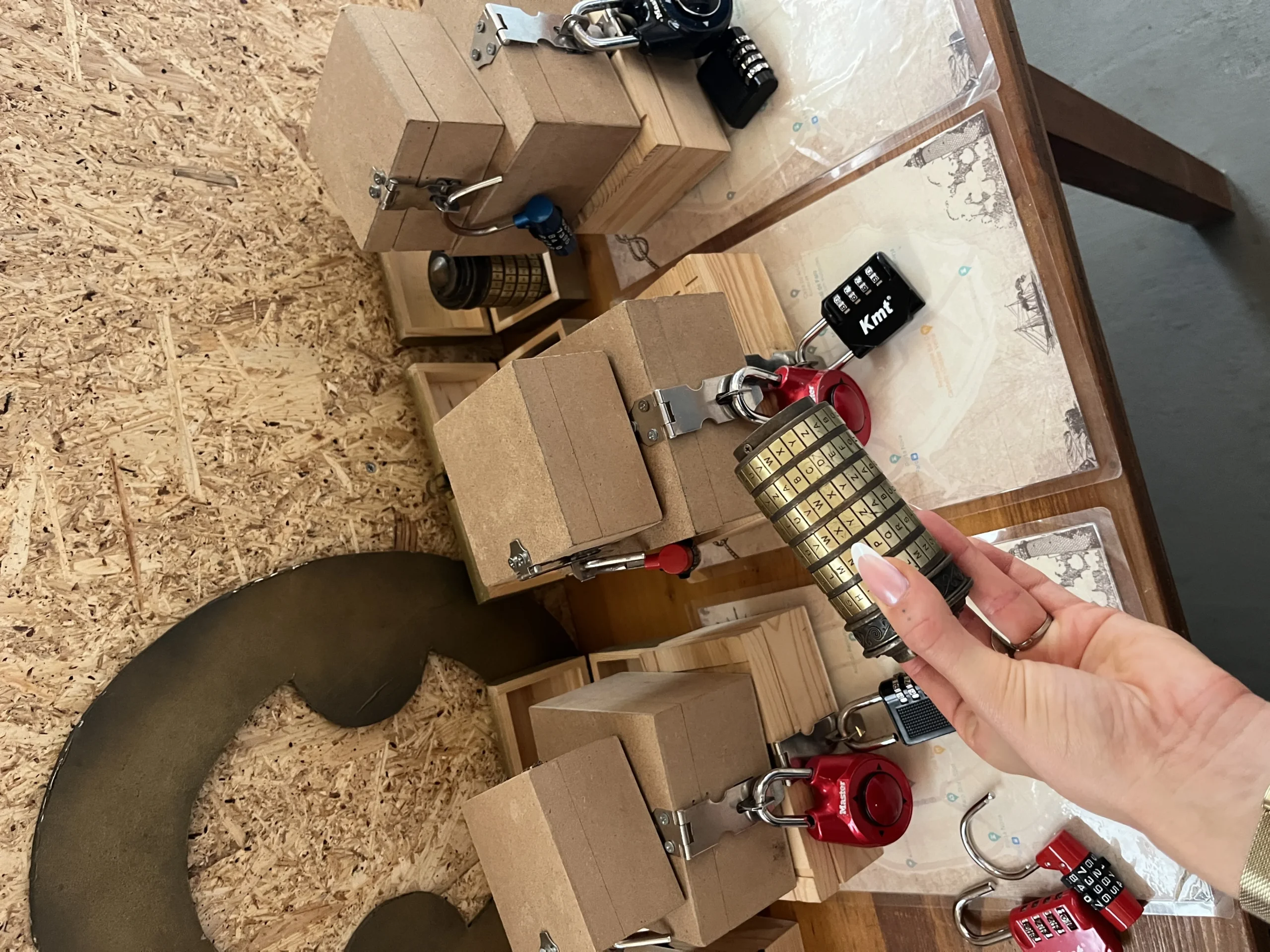
Evidence stations during cocktail hour: we set up 3–6 “mini-scenes” (props, documents, audio snippets) that guests can explore while they network. It prevents the typical arrival lull and gives people a natural conversation starter.
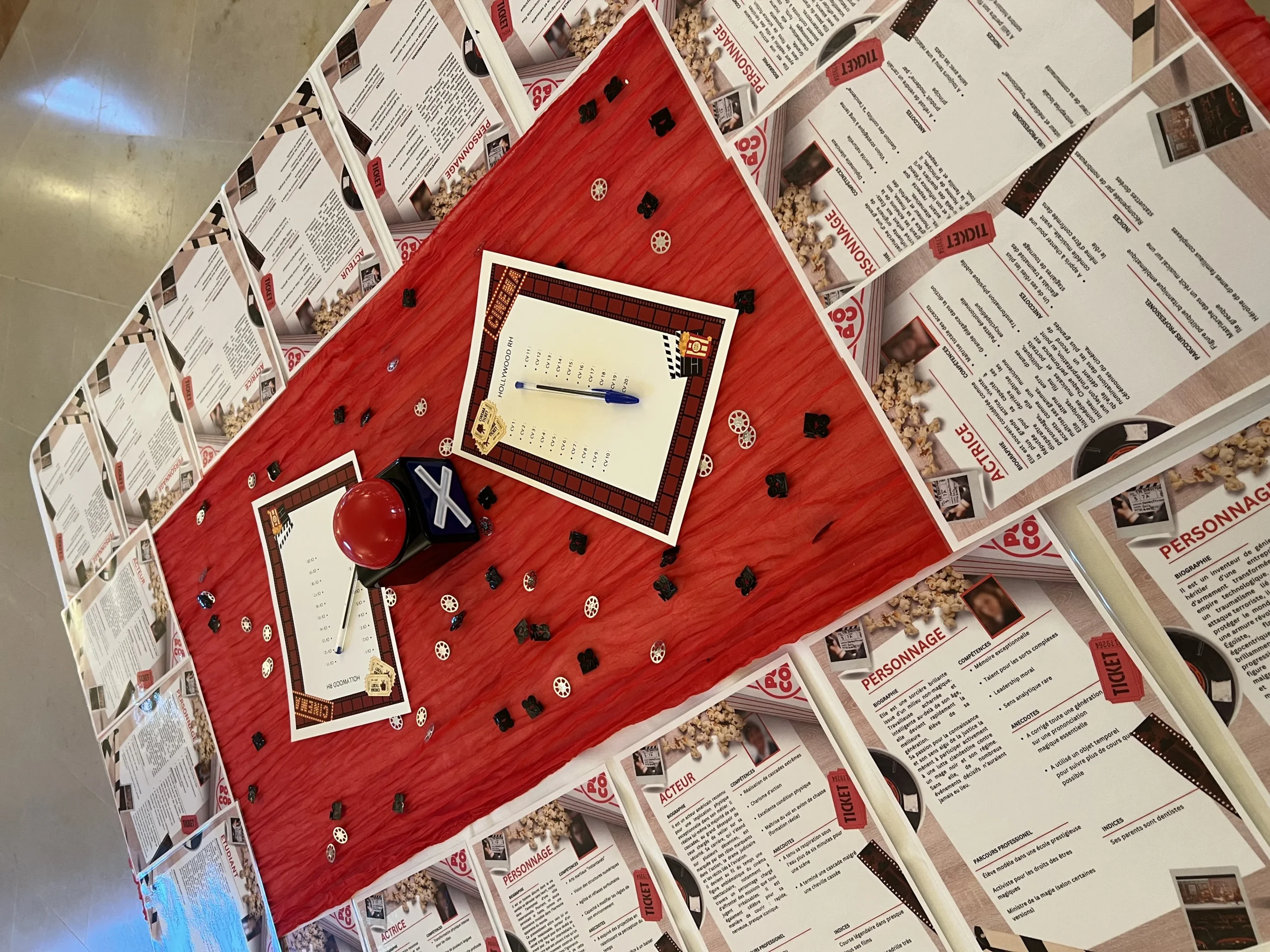
Team briefing with clear roles: each table gets role cards (lead investigator, analyst, negotiator, archivist). This prevents dominant personalities from taking over and improves inclusion for quieter participants.
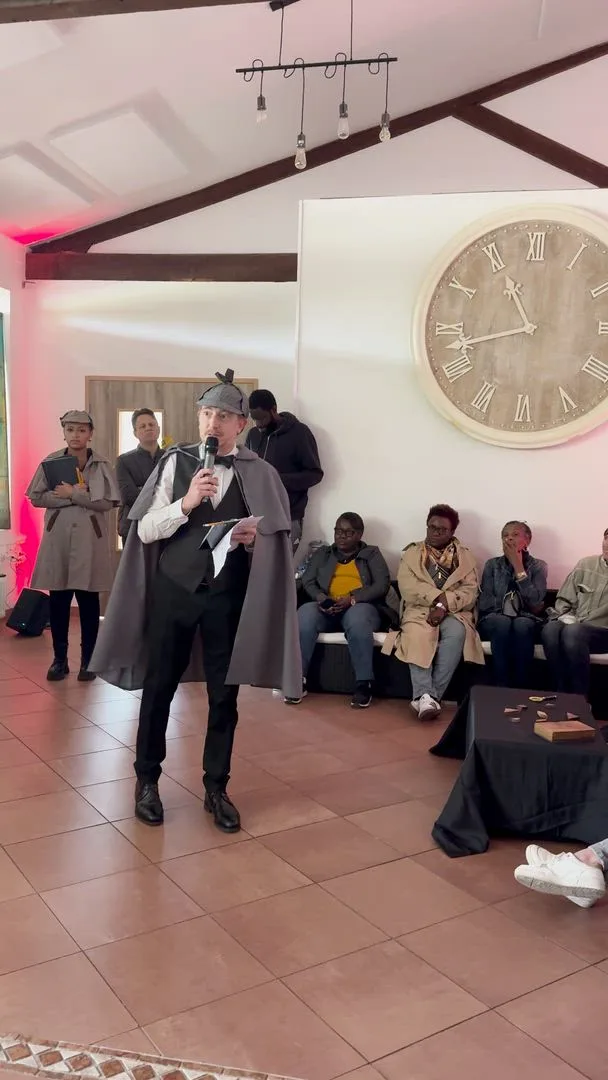
Live suspect interrogations: short, timed Q&A windows with performers. We moderate so it stays elegant and fast—important for senior audiences who dislike chaos.
Digital clue layer (optional): QR-based clue drops or a lightweight web app to collect hypotheses. Useful when you want measurable engagement data (participation rate by team, time to solve, etc.).
Characters integrated into the room: performers mingle as “witnesses” or “staff” with a clear behavioral brief. The key is subtlety: credible acting that fits a corporate environment.
Reveal scene with staged lighting and sound: we use a short scripted finale that feels like a high-end corporate moment, not theatre for theatre’s sake.
Music direction that supports pacing: background cues during investigation, then a controlled shift to networking music after the reveal. This helps the room transition without needing aggressive MC interventions.
Clue-linked cocktails or mocktails: a signature drink can carry a clue (color, garnish, label). This works well for client events where you want sophistication without turning it into a costume party.
Tasting stations with timed rotations: for large groups, stations are scheduled to avoid congestion. We coordinate with catering so the mystery does not interfere with service.
Dessert reveal moment: a plated dessert can be part of the story (seal, note, “evidence”). Done correctly, it creates a clean peak during the evening.
Hybrid-friendly mechanics: if you have remote participants (or a satellite group), we can run parallel clue work and bring them into the final vote. This is relevant for Montréal companies with distributed teams across Canada.
Compliance-safe personalization: instead of using real internal drama (risky), we use neutral but familiar business contexts (product launch, acquisition, data breach scenario) validated with your comms/legal team.
Post-event debrief toolkit: for leadership or L&D objectives, we provide a short debrief guide (5–7 questions) that managers can use the next day to connect behaviors observed to real work practices.
We always align the tone with your brand image. A bank, a SaaS scale-up, and a public institution do not need the same humor, the same pacing, or the same visual intensity. Our job is to make the entertainment feel “obvious” for your organization—because it matches your culture and standards.
The venue shapes how immersive the evening can be—and how stressful it will be to produce. For a mystery format, we look at sightlines, acoustics, circulation paths, and the ability to create “zones” (evidence, interrogations, reveal). In Montréal, we also plan around load-in rules and neighborhood constraints.
| Venue type | For which objective? | Main strengths | Possible constraints |
|---|---|---|---|
Hotel ballroom (downtown Montréal) | Large groups, predictable service, leadership speeches + awards | Reliable AV infrastructure, staff used to corporate timing, easy coat check and accessibility | Less architectural “character”; immersion must be built with lighting, props and performers; union/house AV rules may apply |
Old Montréal heritage venue | Client entertainment, premium brand perception, high “wow” factor without being loud | Natural atmosphere for mystery themes, photogenic spaces, multiple rooms for multi-scene play | Load-in restrictions, limited parking, sound limitations, sometimes complex accessibility |
Private event loft / converted industrial space | Modern culture, product launch, creative teams, flexible staging | Adaptable floor plan, strong immersion potential, easier to build distinct investigation zones | May require bringing in more AV and staging; permits and neighbor noise sensitivity vary by area |
We strongly recommend a site visit (or a technical walkthrough) before locking the scenario. Small venue details—pillars, ceiling height, echo, service corridors—determine whether guests feel smoothly guided or stuck in bottlenecks. In Montréal, that visit also helps validate load-in timing and the venue’s rules so there are no surprises on event day.
Pricing is driven by production reality, not by a “per-person trick.” The cost of a Immersive Mystery Night in Montréal depends on how immersive you want it to be, how many simultaneous interactions are needed, and how complex the venue and schedule are. We build budgets that procurement and finance can validate: clear scope, options, and assumptions.
Group size and play format: a 40-person single-room game is not the same as 300 guests across multiple zones. Larger groups require more facilitators/performers and stronger traffic management.
Number of performers and facilitation intensity: typically 2 to 12 actors. More performers increases immersion and reduces downtime, but it also increases rehearsal and backstage coordination.
Scenario customization level: light customization (company references, branding on materials) vs. deeper integration (industry-specific storyline, multilingual materials, bespoke props).
Technical and staging needs: microphones, lighting states, sound cues, projection, staging elements, and whether the venue provides AV in-house.
Venue constraints: union requirements, limited load-in, additional security, and whether we need extra staff for coat check flow or access control.
Timing within the evening: integrating a plated dinner, awards, and speeches adds complexity. We often create a run-of-show that protects meal service while keeping the investigation active.
Risk management: contingency planning (backup audio, spare props, redundancy in key roles) is part of professional delivery and is reflected in the scope.
We frame ROI in terms executives recognize: participation rate, cross-team interaction, sponsor/client satisfaction, and the ability to deliver key messages without losing the room. When the format is well-produced, it can replace multiple separate “activation” costs (MC, icebreaker, entertainment, networking structure) with one coherent program.
For complex entertainment, local presence is not a comfort—it’s a control lever. Montréal has specific operational realities: venue contracts, bilingual staffing, local supplier availability, and traffic/loading constraints. A team that produces here regularly anticipates these variables instead of discovering them during setup.
We also know how Montréal corporate audiences behave. Senior leaders want a premium tone and clean transitions. HR wants inclusion and psychological safety. Communications wants brand protection, photo-worthy moments, and a storyline that doesn’t generate internal backlash. Local experience helps reconcile those demands without creating an overly “safe” event that feels flat.
We frame ROI in terms executives recognize: participation rate, cross-team interaction, sponsor/client satisfaction, and the ability to deliver key messages without losing the room. When the format is well-produced, it can replace multiple separate “activation” costs (MC, icebreaker, entertainment, networking structure) with one coherent program.
We deliver across a range of corporate realities because the “same show” rarely fits. For leadership offsites, we run compact formats (often 60–75 minutes) with a strong debrief component, where the mystery becomes a mirror for collaboration patterns. For holiday parties, we build a higher-energy arc with optional participation so no one feels pressured.
For client receptions, we often use a premium, low-disruption approach: performers embedded as credible characters, evidence stations that encourage conversation, and a finale that allows account teams to pivot into relationship-building afterward. For large-scale internal events, we use a multi-team scoring system and synchronized reveals so the room peaks together rather than fragmenting.
Across these projects, the common denominator is executive-grade control: clear run-of-show, rehearsed cues, and a facilitation style that respects the room. We design so your VP can step out for a call without breaking the game, and so your comms team can predict exactly when the photo moments happen.
Underestimating sound and acoustics: an echoing room without a microphone plan turns instructions into confusion. We solve this with zone briefings, audio redundancy, and clear cueing.
A scenario that ignores service flow: when a plated dinner is running, you cannot ask guests to “go investigate” during entrées. We build investigation peaks between service moments.
Forcing executives into embarrassing roles: it risks brand damage and internal discomfort. We create VIP-safe participation options with pre-briefing.
Too many rules, not enough clarity: complex mechanics cause drop-off. We keep rules simple, then increase depth through clues and facilitation.
Single-point failure in props or clues: one missing envelope can stall 15 tables. We build redundancy: duplicate key clues and a controlled distribution system.
Ignoring bilingual flow: translating documents is not enough. If facilitation is unbalanced, half the room disconnects. We plan bilingual timing and team composition.
No contingency for late arrivals: Montréal traffic and parking are real. We design an entry ramp so late guests can join without resetting the story.
Our role is to prevent these risks before they exist: in the brief, the site walkthrough, the run-of-show, and the on-site command structure. The goal is simple—your event looks effortless because the planning was not.
Client loyalty in corporate events usually comes from one thing: predictability under pressure. Your internal stakeholders remember whether the evening ran on time, whether leadership looked good, and whether issues were handled quietly. That’s what drives renewals—not hype.
Recurring annual formats: many organizations repeat a similar evening each year (kickoff, holiday, recognition) with a refreshed storyline and updated mechanics.
Stable delivery teams: we keep a consistent producer/stage manager structure so your internal teams aren’t “retraining” a new supplier every time.
Documented playbooks: after the first event, we keep your run-of-show logic, brand guidelines, and venue learnings to accelerate future production.
In Montréal, loyalty is earned by doing the fundamentals exceptionally well: planning, timing, people management, and respect for your brand. Repeat business is the most concrete proof that the experience delivered what it promised.
We start with a focused working session with HR/Comms/Event lead (and procurement if needed). We confirm objectives, success criteria, audience profile, language needs, VIP sensitivities, and schedule immovables (speeches, awards, curfew). We also identify operational constraints: venue rules, union requirements, security, and accessibility. Output: a written brief with assumptions and decision points.
We propose 1–2 scenario directions with a clear structure: entry hook, investigation cycles, timed interrogations, and finale. We design team mechanics to match your culture (competitive vs. collaborative), and we define how participants join (opt-in layers, table roles, or roaming). Output: scenario outline + sample materials + staffing model.
We build a minute-by-minute run-of-show that integrates catering/service. We coordinate with the venue and AV teams on microphones, lighting states, stage positions, and loading. Output: technical sheet, cue list, and responsibilities grid (who does what, when).
We produce and QA all materials: clue packets, signage, digital elements, props, and scoring tools. Performers rehearse key beats and escalation paths (what to do if a team is stuck, how to manage crowding, how to keep tone executive-grade). Output: finalized kit + rehearsal report + contingency list.
On-site, we run a command structure: producer (client interface), stage manager (cues/tech), lead facilitator (guest flow), performers (immersion). We manage arrival flow, brief teams, control timings, and execute the reveal and awards cleanly. If something changes (speaker delay, room flip), we adjust without broadcasting the problem. Output: post-event recap and optional engagement metrics.
Most corporate formats run 60–90 minutes for the core game, plus 15–30 minutes for briefing and the final reveal. If you’re integrating a plated dinner and speeches, we often break it into 2–3 short investigation waves that fit between courses.
We commonly deliver from 20 to 600 guests. For groups above ~150, we design for simultaneous play with multiple facilitators/performers and clear zoning, so the experience doesn’t become passive or chaotic.
Yes. We can run EN/FR in parallel (language-by-team), bilingual facilitation on stage, and bilingual printed/digital materials. The key is timing: we design instructions so bilingual delivery doesn’t double the duration or lose the room.
Budgets vary by immersion level, staffing, and technical needs. As a practical range, many corporate clients invest from CAD 7,500 to 35,000+. A smaller, facilitator-led format tends toward the lower end; a multi-actor, multi-zone production with staging and AV tends toward the higher end.
For peak periods (September–December), plan 6–10 weeks ahead to secure venues and performers. For quieter months, 3–6 weeks can work, but earlier is always safer if you need bilingual talent, complex AV, or a premium downtown venue.
If you’re comparing agencies, we can make your decision easier with a disciplined proposal: staffing model, scenario direction, run-of-show, technical needs, and budget options (good/better/best) that procurement can validate. Share your date, estimated attendance, venue (or shortlist), language requirements, and any leadership moments you must include.
Contact INNOV'events to plan your Immersive Mystery Night in Montréal early—especially for fall and holiday calendars—so we can secure the right talent, build a scenario that fits your space, and deliver an evening that reflects your organization’s standards.
Thierry GRAMMER is the manager of the INNOV'events Montréal office. Reach out directly by email at canada@innov-events.ca or via the contact form.
Contact the Montréal agency