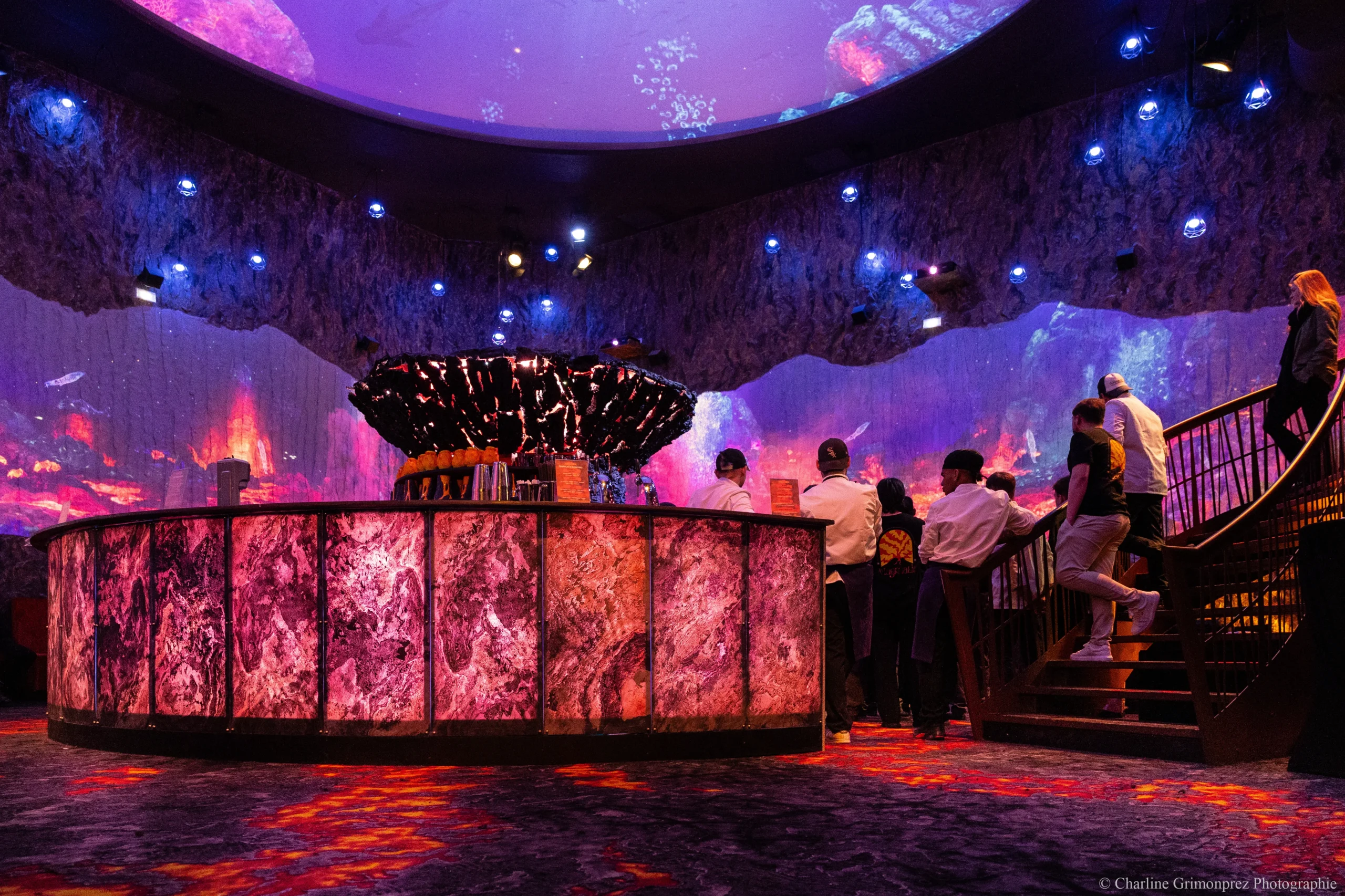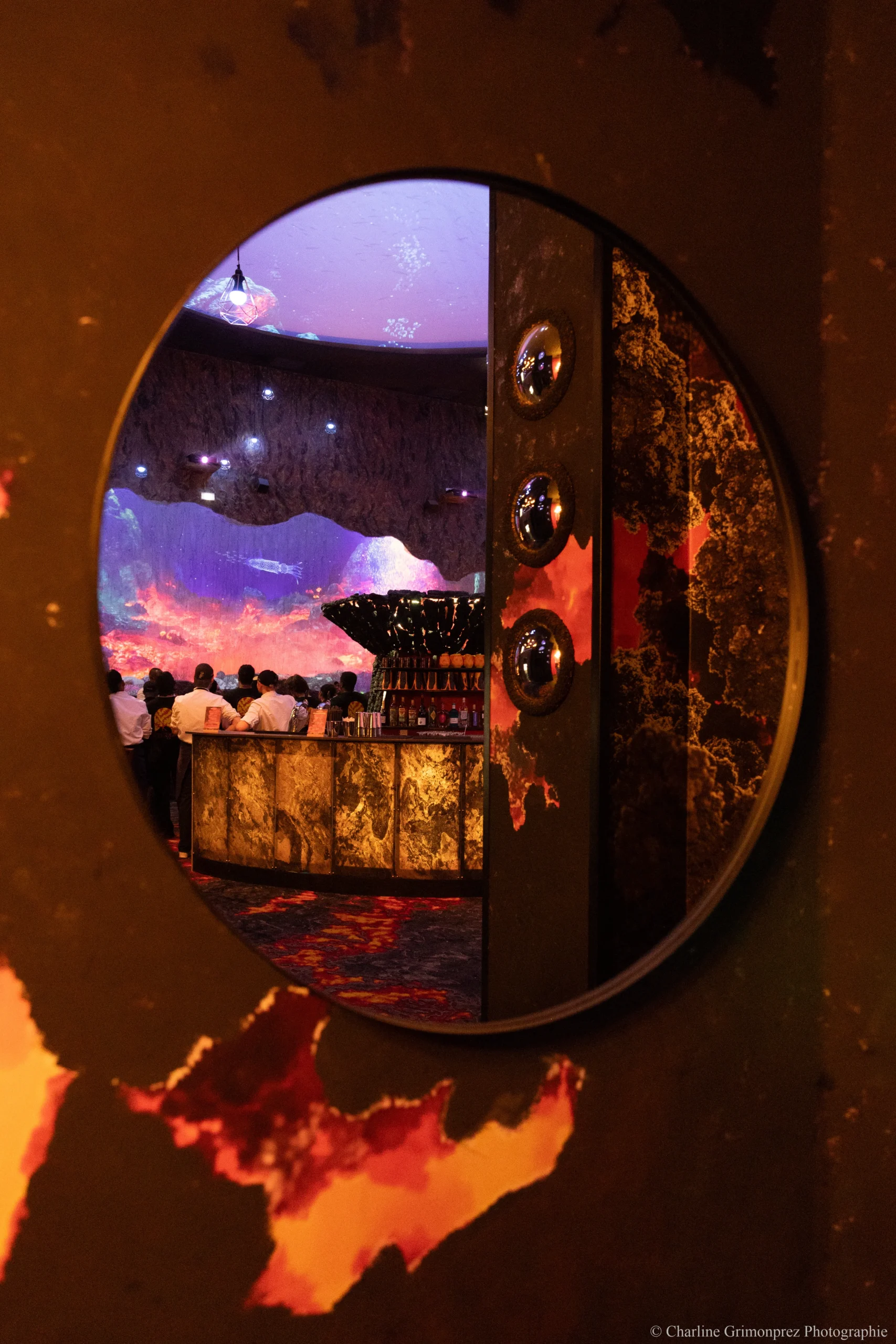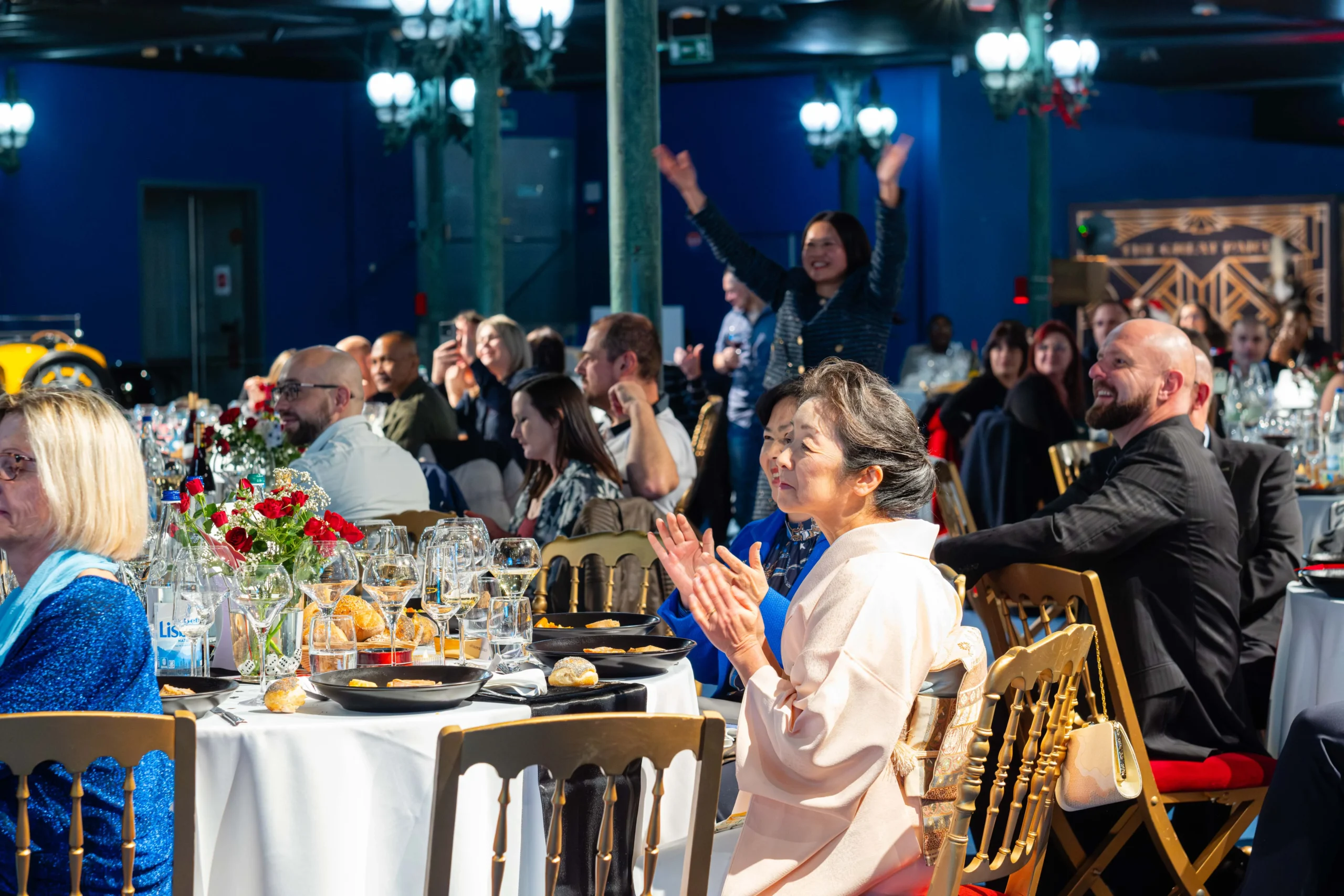
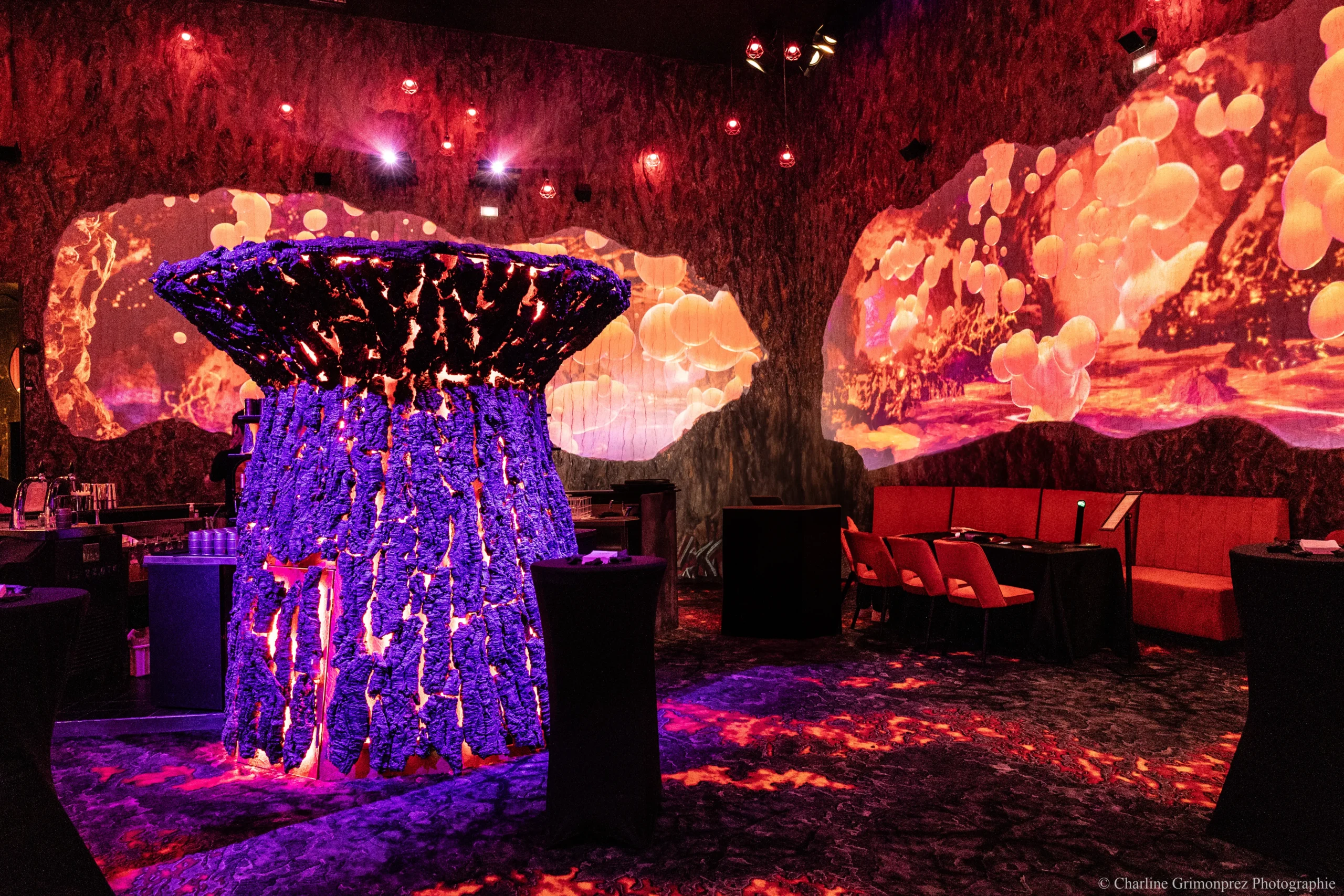
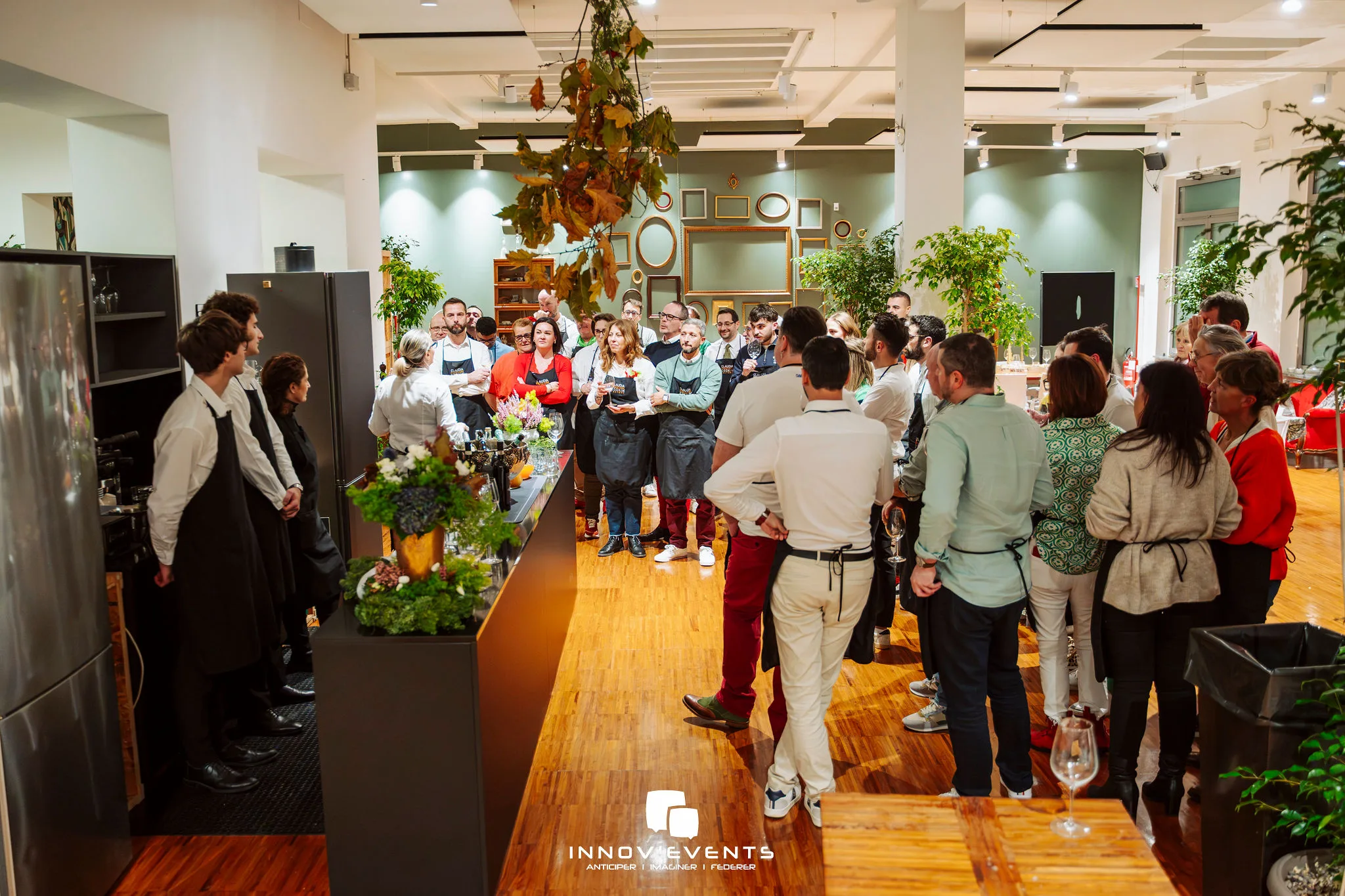
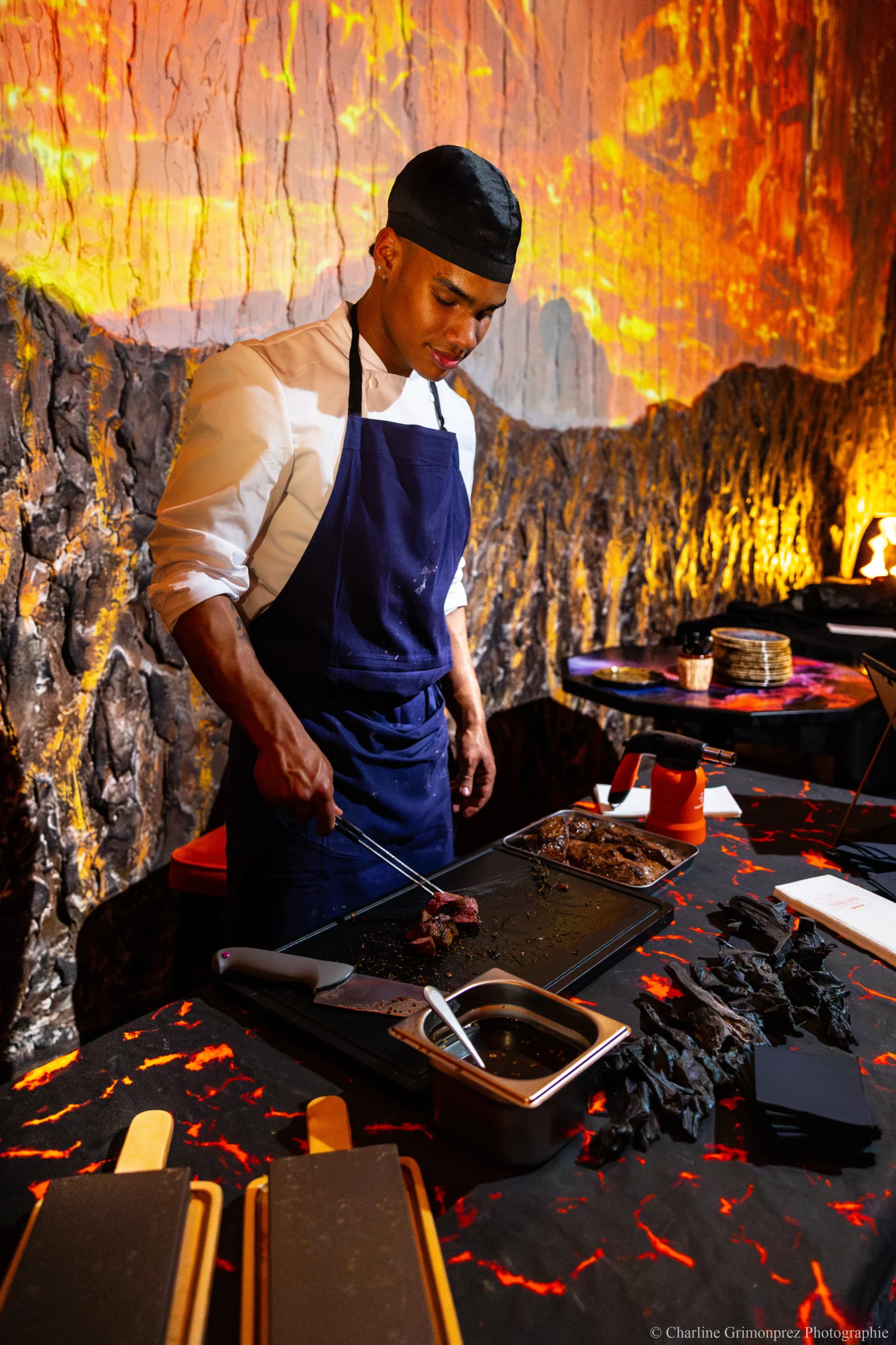
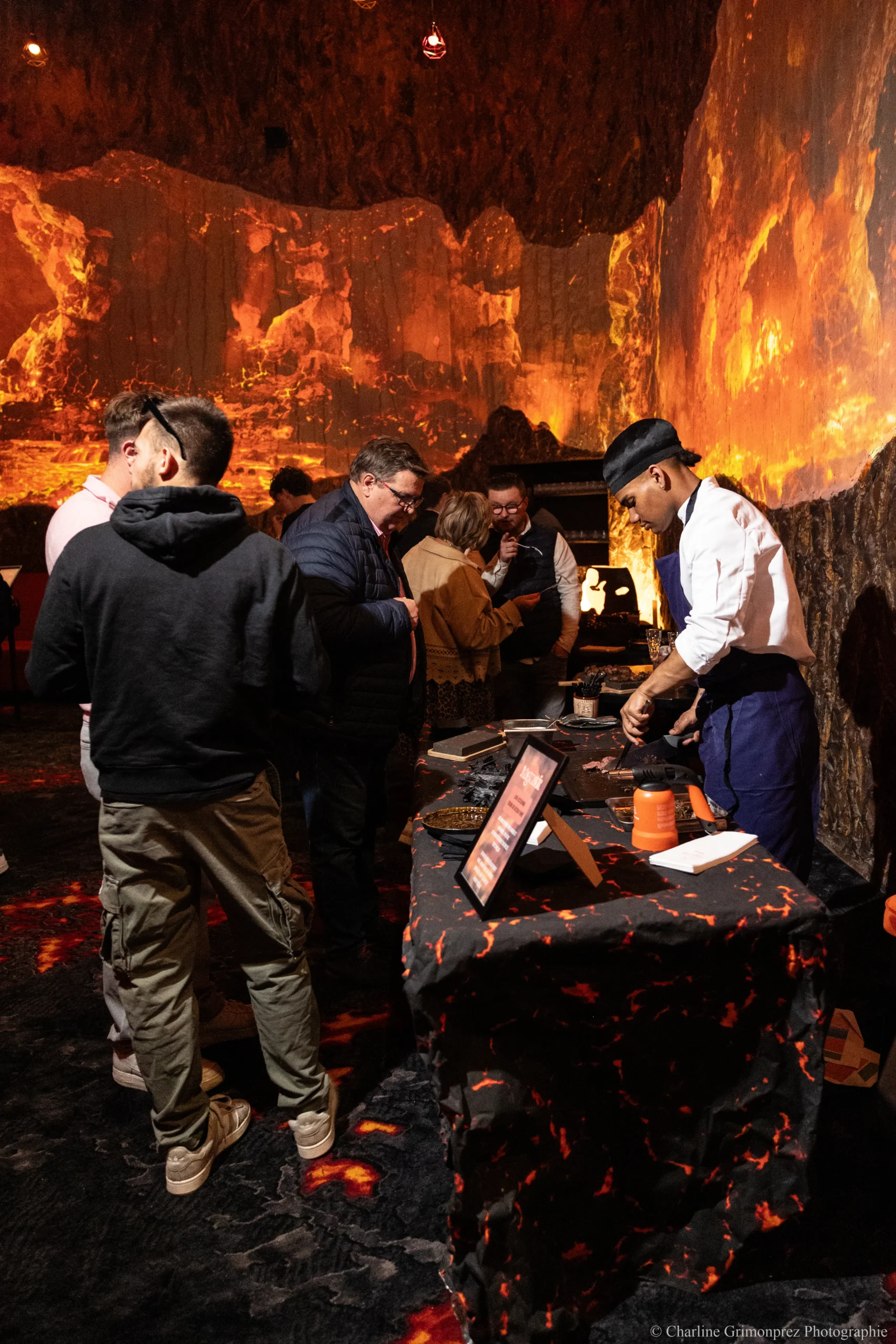
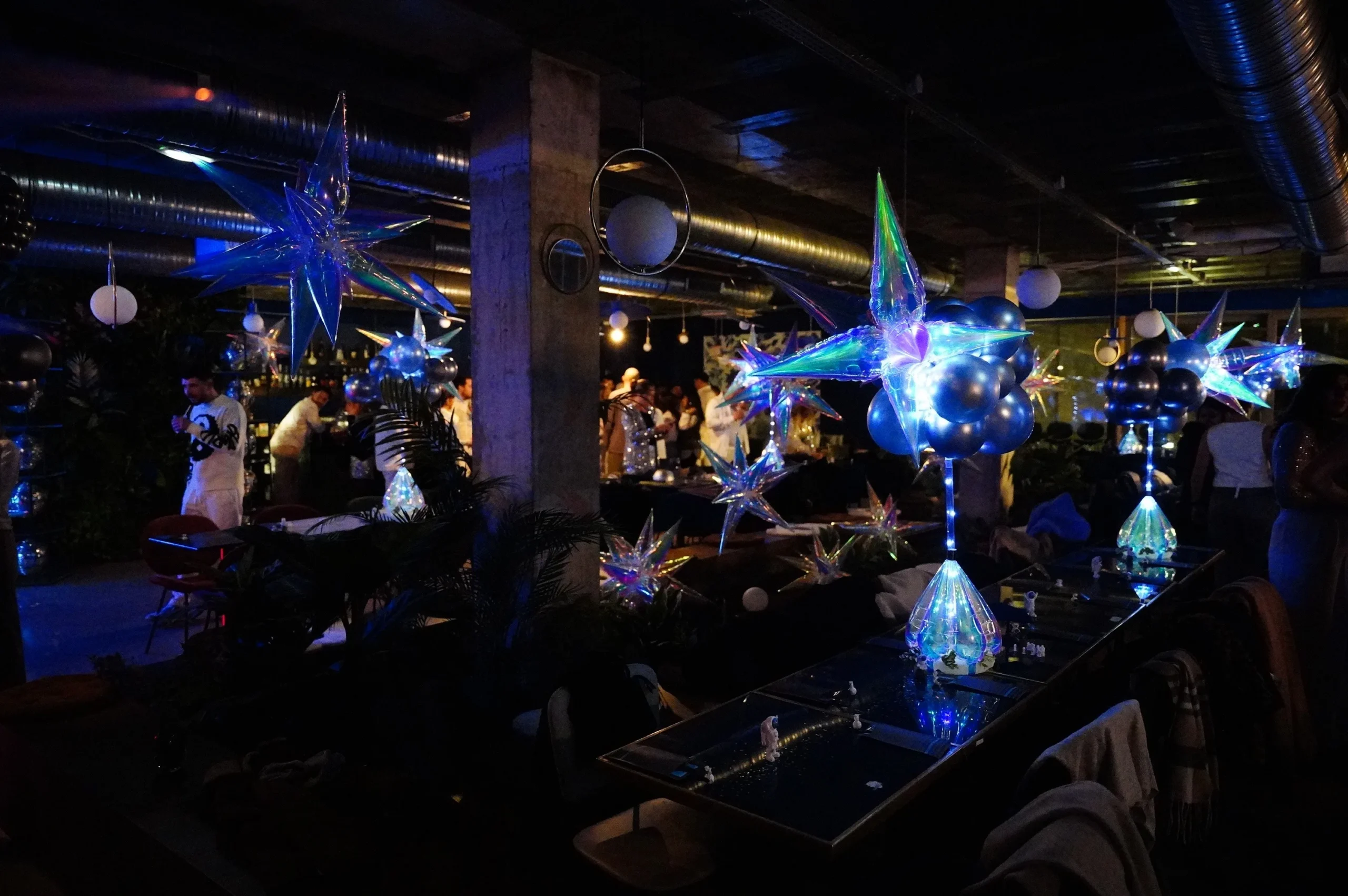
Immersive Culinary Experience in Montréal that executives can sign off with confidence
location_on Immersive Culinary Experience · Montréal

Immersive Culinary Experience in Montréal that executives can sign off with confidence

INNOV’events designs and produces Immersive Culinary Experience formats in Montréal for executive teams, HR and communications—typically 20 to 600 attendees, in French, English or bilingual settings.

We handle venue selection, chef sourcing, bar program, staffing, timing, guest flow, dietary constraints, permits, and on-site production so your leadership team can focus on hosting—not troubleshooting.

10+ Ans d'exp.
500+ Événements réalisés
4.9 / 5 Note clients
updateMis à jour le 21/04/2026 par Thierry GRAMMER.
Sommaire expand_more

In a corporate context, entertainment isn’t “a nice extra”; it’s what converts a gathering into a management tool. A well-built culinary immersion creates structured interaction, keeps attendance high through the full agenda, and gives leadership a credible moment to reinforce culture without forcing it.

In Montréal, organizations expect precision: bilingual guest experience, real food quality (not banquet clichés), and operations that respect downtown constraints, union rules, and tight run-of-show windows between speeches, awards, and networking.

As an established event agency in Montréal, INNOV’events brings local suppliers, vetted chefs, and a production mindset. Our team plans for crowd dynamics, service pace, and brand risks the same way your exec committee plans for stakeholder perception.

Organiser Immersive Culinary Experience in Montréal that executives can sign off with confidence
Immersive Culinary Experience https://innov-events.ca/en/event-agency-in-montreal/

Montréal delivery backed by measurable production capacity

12+ years producing corporate events across Québec and Canada, with consistent delivery standards.

Access to a network of 150+ vetted collaborators (chefs, mixologists, rental partners, captains, AV crews, décor and logistics) enabling rapid scaling without compromising quality.

Operational formats proven from 20 to 600 guests, including multi-station service, timed rotations, and hybrid programming with speeches and awards.

Typical planning horizons: 4 to 10 weeks for standard builds; 10 to 16 weeks when venues, branding, or multiple dietary programs increase complexity.

Montréal corporate clients who rebook because it runs smoothly

We deliver Immersive Culinary Experience in Montréal programs for organizations that operate under real pressure: brand scrutiny, internal politics, and limited executive time. Many clients come back year after year because they don’t want to re-live vendor onboarding, last-minute staffing issues, or service bottlenecks that reflect poorly on the host team.

You mentioned providing company names as references; to keep this page accurate, we can insert your approved list (and the right project context) once confirmed. In practice, our repeat collaborations tend to come from Montréal-based headquarters, Canadian regional offices, and fast-scaling teams who need a partner that can align procurement requirements, security rules, and hospitality expectations without constant follow-ups.

What executives appreciate most is predictability: clear production schedules, vendor coordination that doesn’t leak into internal workload, and an experience that feels elevated but still appropriate for corporate governance.

⚡ Besoin d’un devis rapide ?

Nous vous envoyons une première proposition sous 24h.

Votre devis sous 24h

Why Montréal leaders invest in an immersive culinary format

An Immersive Culinary Experience works when you need more than “networking with canapés” but less than a full gala. It’s a structured social environment where people interact naturally through food, movement, and shared tasks—without forcing icebreakers that senior audiences often dislike.

For HR and communications, the strategic value is that culinary immersion creates repeatable touchpoints: moments where your leaders can speak briefly, where teams cross silos, and where your employer brand shows up in execution quality (timing, inclusivity, and service standards).

  • Stronger cross-team connections without awkward facilitation: rotating stations and timed tastings make introductions happen organically between departments and seniority levels.

  • Higher participation than classic receptions: interactive components (chef demos, plating challenges, tasting cards) keep guests engaged past the first 30 minutes—useful when you need them present for key announcements.

  • A credible platform for leadership messaging: we build run-of-show “attention peaks” (welcome, milestone toast, recognition) that don’t collide with service waves or kitchen resets.

  • Inclusive experience design: dietary constraints (vegetarian, vegan, halal, gluten-free, allergies) are planned at station level with signage and staff scripts, reducing risk and avoiding guest embarrassment.

  • Employer brand reinforcement: in Montréal’s competitive talent market, guests notice details—local sourcing, bilingual signage, eco-responsible serviceware, and professional staff briefing.

  • Better control of alcohol and compliance: calibrated bar flow, drink tokens if needed, and trained staff reduce incidents and protect the host organization.

Montréal has a strong food culture and discerning guests—especially in finance, consulting, tech, pharma, and public sector networks. When the culinary side is executed with rigor, it supports your business message; when it isn’t, it becomes the only thing people remember. Our job is to make sure it’s remembered for the right reasons.

What Montréal companies expect from corporate culinary entertainment

Local decision-makers are rarely choosing between “fun” and “not fun.” They’re balancing reputation, internal workload, and operational feasibility. In Montréal, three constraints show up again and again in corporate briefs.

1) Bilingual experience without friction. Not just bilingual MC lines—bilingual station signage, tasting cards, dietary labels, and staff capable of greeting, answering questions, and guiding flow in both languages. When this is overlooked, your comms team ends up doing damage control on site.

2) Venue realities and access. Downtown loading docks, limited freight elevator access, strict install windows, union jurisdictions in certain venues, noise limits, and security protocols. Culinary immersion amplifies these constraints because it involves heat sources, refrigeration, water access, waste management, and frequent restocking.

3) Senior stakeholder optics. Montréal audiences—especially when clients or partners attend—are sensitive to quality signals: plate temperature, service pace, staff professionalism, and whether the concept feels intentional (vs. a collection of random food “activations”). The experience must support your brand positioning: conservative and polished, creative and bold, or community-focused and local.

We plan around these realities with pre-approved service scripts, technical checklists (power draw, prep zones, handwash stations), and clear timing so your hosts don’t get pulled into operations.

Organize your corporate event with INNOV\'events!

Which Immersive Culinary Experience formats work best in Montréal?

Culinary immersion works because it creates a reason to move, talk, compare, and collaborate. Instead of asking guests to “network,” you give them a shared objective: taste, vote, assemble, pair, or discover. In a corporate room, that structure lowers social friction and keeps senior leaders from feeling they must “entertain” everyone.

Interactive animations in Montréal

Chef-led station rotations (45–90 minutes): small groups rotate between 3–5 stations (tartare/ceviche build, pasta finish, local cheese pairing, dessert plating). We time rotations to avoid crowds and keep content consistent.

Tasting passport with voting: guests receive a bilingual tasting card; they rate items and the winning station is announced during a short leadership toast. This creates a natural attention moment without hijacking the event.

Team plating challenge: teams assemble a plate from pre-prepped components under chef guidance. It’s effective for leadership offsites because it shows collaboration without infantilizing guests.

Pairing lab: guided pairings (non-alcoholic and alcoholic options) with talking points that make conversation easy for people who don’t know each other.

gesture

Art animations in Montréal

Live culinary soundscape coordination: we work with musicians/DJs to manage volume and transitions so service remains comfortable. In Montréal venues with strict sound limits, we prioritize controlled ambiance rather than “loud equals fun.”

Tabletop storytelling: short, timed “origin stories” from chefs (local ingredients, cultural influences) delivered in bilingual micro-scripts. This reads as sophisticated for executive audiences—if kept concise and scheduled.

palette

Innovative animations in Montréal

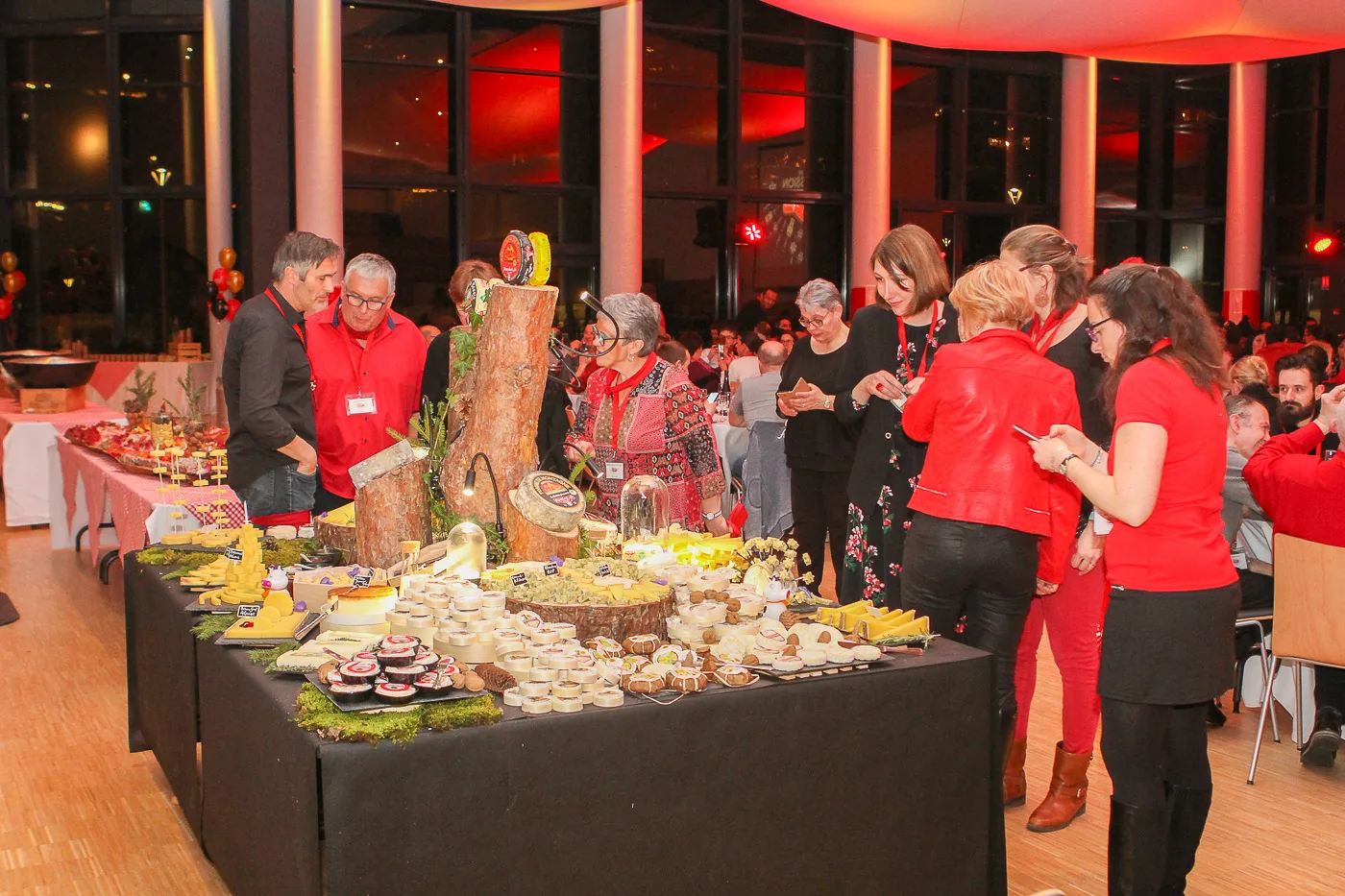
Montréal terroir bar: Québec cheeses, seasonal produce, local charcuterie with a structured narrative. We ensure portioning and replenishment are planned; otherwise it becomes a first-come-first-served issue.

Mixology with governance: cocktail creation stations with a non-alcoholic mirror menu, tokenized service if required, and clear signage to avoid over-service.

Warm service stations using induction or approved equipment: ideal for winter events when guests expect comfort food. We validate electrical load and venue permissions early to prevent day-of cancellations.

lunch_dining

Gourmand animations in Montréal

Data-driven menu design: pre-event dietary survey and preference clustering (e.g., spice tolerance, vegetarian ratio) so we build a menu that fits your actual population rather than assumptions.

Brand-integrated plating: subtle brand cues through color, garnish, and naming conventions—appropriate for corporate environments where overt logos on food can feel tacky.

Micro-learning stations: a short “how it’s made” segment (coffee, chocolate, fermentation) designed to fit between agenda items and maintain attention without extending the event.

tips_and_updates

Whatever the format, we pressure-test alignment with your brand image: conservative sectors usually need cleaner aesthetics and controlled alcohol service; creative industries may want bolder concepts but still need queue management and impeccable staff briefing. The goal is an experience that fits your organization’s tone in Montréal, not a concept borrowed from a consumer festival.

Where to host an Immersive Culinary Experience in Montréal

The venue dictates what’s feasible: cooking permissions, backstage space, load-in, acoustic comfort, and even how premium the event feels before the first bite. For executive audiences, the room must support conversation, movement between stations, and a clean visual line—especially if you have cameras, internal comms capture, or sponsor visibility.

We typically recommend venues based on three variables: (1) service style (seated vs. stations), (2) technical constraints (power, ventilation, prep space), and (3) stakeholder profile (internal-only vs. clients/partners invited).

Venue typeFor which objective?Main strengthsPossible constraints

Hotel ballroom / conference level (downtown)

Client-facing reception, awards, leadership town hall + culinary stations

Reliable back-of-house, established service teams, AV integration, weather-proof logistics in winter

Limited flexibility on outside caterers/chefs, union rules in some properties, fixed install windows

Industrial-chic event loft / converted space

Brand repositioning, creative team events, product storytelling through food

Strong ambiance, high perceived value, flexible layouts for station rotations

Power distribution and ventilation need validation, noise management, more rentals required

Private dining room / restaurant buyout

Executive dinner, leadership offsite, smaller VIP client group

High culinary credibility, controlled service, minimal production footprint

Less space for large interactive stations, branding restrictions, limited timing for speeches

We insist on a site visit (or a detailed technical walk-through) before locking the concept. In Montréal, two venues can look similar online but behave very differently in load-in, prep capacity, and guest flow. A 45-minute visit can prevent a full redesign one week out.

What does an immersive culinary experience cost in Montréal?

Budgeting for a Immersive Culinary Experience in Montréal is less about “price per head” and more about production complexity: number of stations, staffing intensity, venue constraints, and the level of culinary talent you want on the floor. Two events with the same guest count can differ significantly if one requires heavy rentals, restricted load-in, or bilingual content production.

For corporate planning purposes, most Montréal programs fall into predictable ranges when scoped properly. We prefer to build budgets by modules (food stations, bar, staffing, rentals, production management) so finance and procurement can validate line by line.

Guest count and service style: 60 guests in a private room vs. 250 guests with five stations and timed rotations are fundamentally different staffing and logistics problems.

Culinary talent level: reputable chefs, mixologists, or specialty stations (raw bar, pastry finishing, fermentation lab) affect both fees and the technical needs on site.

Number of stations and replenishment strategy: more stations can reduce lines but increases equipment, prep, and runners. We balance flow and cost rather than defaulting to “more is better.”

Venue restrictions: cooking limitations, exclusive catering clauses, union labor, freight access, and limited install windows often add labor hours and rentals.

Dietary program complexity: high allergy sensitivity or multiple dietary categories requires separate utensils, labeling, staff briefing, and sometimes duplicate menu items.

Branding and communications deliverables: bilingual signage, tasting passports, menus, stage moments, photo/video capture, and internal comms content can be included—but should be scoped early.

Timing: events with short windows (e.g., 2-hour reception between meetings) require higher staffing density to hit service targets.

From an ROI perspective, executives typically evaluate this format on three metrics: attendance retention (do people stay?), quality of interactions (are silos actually mixing?), and brand risk management (did anything feel improvised?). A well-produced culinary immersion often replaces multiple separate activities—networking, entertainment, and part of your recognition moment—without inflating overall production time.

Why choose a Montréal agency for culinary immersion production

Local presence is not a slogan; it changes your risk profile. In Montréal, the best culinary outcomes depend on reliable sourcing, venue relationships, and teams who know how local rooms “behave” during load-in, service, and teardown.

When we produce an Immersive Culinary Experience, we’re coordinating multiple moving parts: kitchen prep, rentals, staffing calls, AV cues, and sometimes building management approvals. A local agency reduces uncertainty because we can physically verify constraints, mobilize replacements quickly, and work with vendors who understand corporate expectations.

  • Faster resolution on event day: if a piece of equipment fails or staffing needs to be adjusted, local networks and short travel times matter.
  • Vendor accountability: we work with teams we can evaluate repeatedly, not one-off subcontractors discovered for a single project.
  • Venue-specific intelligence: knowledge of loading docks, freight elevators, noise rules, security procedures, and preferred setup sequences reduces day-of friction.
  • Bilingual delivery as standard: not an add-on—briefings, signage, and guest interaction are planned to match your audience.
  • Procurement and compliance readiness: clear documentation, insurance requirements, and structured budgeting that aligns with corporate purchasing processes.

From an ROI perspective, executives typically evaluate this format on three metrics: attendance retention (do people stay?), quality of interactions (are silos actually mixing?), and brand risk management (did anything feel improvised?). A well-produced culinary immersion often replaces multiple separate activities—networking, entertainment, and part of your recognition moment—without inflating overall production time.

+3000 clients referencesThey trust us

Examples of Montréal-ready culinary experiences we produce

Our projects range from leadership dinners to large-scale receptions where culinary immersion is the core “engine” of the event. The common thread is operational discipline: we design concepts that can actually be delivered in the chosen venue, within your time constraints, and with corporate-level risk management.

Leadership offsite (40–80 attendees). We often build a progressive evening: short executive remarks, a guided pairing station, then a collaborative plating segment that keeps conversation moving. The success metric is not spectacle—it’s whether leaders who rarely interact leave with shared reference points and a calmer interpersonal tone the next day.

Client reception (150–300 attendees). We structure stations to match business goals: a high-throughput welcome station to avoid early congestion, premium “anchor” stations for key client moments, and a closing dessert/coffee rhythm that extends dwell time for sales conversations. Comms teams appreciate that we create natural photo moments without interfering with privacy or brand guidelines.

Internal celebration (250–600 attendees). When you’re rewarding teams, fairness and access matter: consistent portioning, clear signage, and enough service points so it doesn’t feel like a line-up. We’ve seen morale suffer when VIPs are served differently or when dietary guests feel like an afterthought; we plan the opposite on purpose.

Organize your corporate event with INNOV\'events!

Common Montréal pitfalls with immersive culinary events (and how we prevent them)

close

Underestimating venue constraints: no prep space, limited refrigeration, restricted cooking methods. We validate technical needs early and adapt the concept to the room instead of forcing it.

close

Creating bottlenecks: one “signature” station that everyone wants first. We design station variety and pacing and place anchors strategically to distribute traffic.

close

Ignoring bilingual execution details: signage and staff scripting are often forgotten until the last week. We build bilingual deliverables into the production plan from day one.

close

Allergens treated as a last-minute note: this is a liability issue, not a preference issue. We implement labeling, separate utensils, and staff briefing protocols.

close

AV and service competing: speeches during loud service moments lead to poor perception. We coordinate quiet windows and cue chefs/bartenders accordingly.

close

Over-serving or unclear bar governance: corporate hosts need control. We plan bar pace, non-alcoholic parity, and, when necessary, token systems or service cut-offs.

close

No on-site decision structure: when problems arise, clients shouldn’t be pulled into operations. We assign a clear chain of command with a floor captain and producer.

Your internal team has enough to manage—VIPs, speeches, stakeholder relationships. Our role is to anticipate these risks and absorb operational pressure so the event feels effortless from the guest perspective.

Why Montréal teams keep INNOV’events on their shortlist

Repeat business in corporate events is rarely emotional—it’s rational. Teams come back when the agency reduces internal workload, protects brand reputation, and delivers consistent outcomes even when variables change (venue switch, new exec sponsor, tighter budget, or a mixed audience of staff and clients).

We build loyalty by documenting what worked, what didn’t, and what to standardize for next year—so your next planning cycle starts with a proven blueprint rather than a blank page.

1

70–85% of our corporate clients typically re-engage for additional mandates within 12–24 months (format dependent and subject to internal cycles).

2

For recurring annual events, we maintain a post-mortem + runbook approach: updated vendor lists, floor plans, timing notes, and stakeholder preferences to reduce planning time.

INNOV'events Quebec, Immersive Culinary Experience in Montréal that executives can sign off with confidence

Loyalty is the most practical proof point in our industry: it means the event worked operationally, politically, and financially—and that the internal team felt supported.

Our Montréal production process for immersive culinary experiences

👉 Montréal scoping call: objectives, stakeholders, constraints

We start with the realities: who the event is for (employees, clients, partners), what success looks like (retention, messaging, sales conversations, recognition), and the constraints (bilingual requirements, security, procurement, union/venue rules). You get a first feasibility read on guest count, service style, and timeline.

👉 Concept + operational design (stations, flow, run-of-show)

We propose 2–3 culinary concepts with a clear service architecture: number of stations, pacing, and how to integrate leadership moments. We map guest flow, identify pressure points, and define what needs to be produced (signage, tasting passports, menus, staff scripts).

👉 Budget build and options for Montréal procurement review

We present a modular budget with options (e.g., premium station vs. additional station; upgraded glassware vs. enhanced staffing). This format helps HR and communications defend choices internally and gives finance/procurement transparent lines for approval.

👉 Venue technical validation and supplier lock-in

We validate power, prep zones, refrigeration, cooking permissions, water access, and load-in routes. Then we lock chefs, bar, rentals, and staffing. If the venue has exclusive partners, we manage integration so standards remain consistent with your brief.

👉 Guest experience details: bilingual, dietary, signage, brand rules

We finalize bilingual content, allergen and dietary protocols, and brand alignment (tone, visuals, any sponsor constraints). We confirm staffing scripts so attendants can guide guests professionally—especially important for executive audiences who expect discretion and efficiency.

👉 On-site production in Montréal: setup, show call, teardown

We manage load-in scheduling, station builds, vendor check-in, and a documented show call with timing cues. During the event, a producer and floor captain monitor lines, replenish, coordinate AV moments, and resolve issues without escalating to your internal team. Teardown is planned to respect venue rules and minimize overtime exposure.

👉 Post-event debrief and rebooking blueprint

Within a few days, we share a debrief: what to keep, what to adjust, and what to standardize. If it’s an annual cycle, we create a practical runbook so next year’s planning starts faster and with fewer risks.

FAQ sur l'organisation Immersive Culinary Experience à Montréal

How far in advance to book chefs in Montréal?

For strong culinary talent and prime venues, plan 8–12 weeks ahead. For smaller groups or weekday dates, 4–6 weeks can work, but options narrow quickly during peak seasons (September–December and May–June).

What guest count works best for Montréal station rotations?

The format is most efficient from 60 to 350 guests. Below 60, a progressive seated experience often feels more refined. Above 350, we can do it, but it requires more stations, stronger staffing ratios, and careful flow engineering to avoid line-ups.

Can we run a Montréal event with severe allergies safely?

Yes, if planned properly. We implement clear allergen labeling, dedicated utensils, staff briefing scripts, and—when needed—separate prep/finish paths for key allergens. We’ll ask for a guest dietary list early and confirm what the venue/kitchen can support.

Do Montréal venues allow live cooking or open flame?

It depends on the venue and its permits. Many allow induction and controlled finishing, while open flame is often restricted or requires approvals. We validate cooking permissions during the technical walkthrough and design stations accordingly to avoid day-of cancellations.

What budget range for corporate culinary immersion in Montréal?

As a planning baseline, many corporate programs land between $120 and $300+ per person all-in, depending on venue, number of stations, staffing, bar program, rentals, and complexity. We build modular budgets so you can adjust scope without losing the operational integrity of the concept.

question_mark

Get a Montréal quote with a clear plan and a realistic budget

If you’re comparing agencies, we can make your decision easier: share your date range, guest count, audience mix (internal vs. clients), and any venue you’re considering. We’ll come back with a practical concept, a production approach that fits Montréal constraints, and a budget you can defend internally.

The earlier we’re involved, the more we can protect your outcomes—especially on venue feasibility, chef availability, bilingual deliverables, and dietary planning. Contact INNOV’events to scope your Immersive Culinary Experience in Montréal with a producer-level plan rather than a brochure concept.

Event agency Montréal
4.80
2,688 reviews
At INNOV'events Montréal, every moment matters, every smile does too.

INNOV'events Montréal Agency

Thierry GRAMMER is the manager of the INNOV'events Montréal office. Reach out directly by email at canada@innov-events.ca or via the contact form.

mailContact the Montréal agency

Toutes nos prestations & animations Montréal, Quebec

celebrationAnimez votre événement !

Découvrez nos animations événementielles disponibles au Quebec