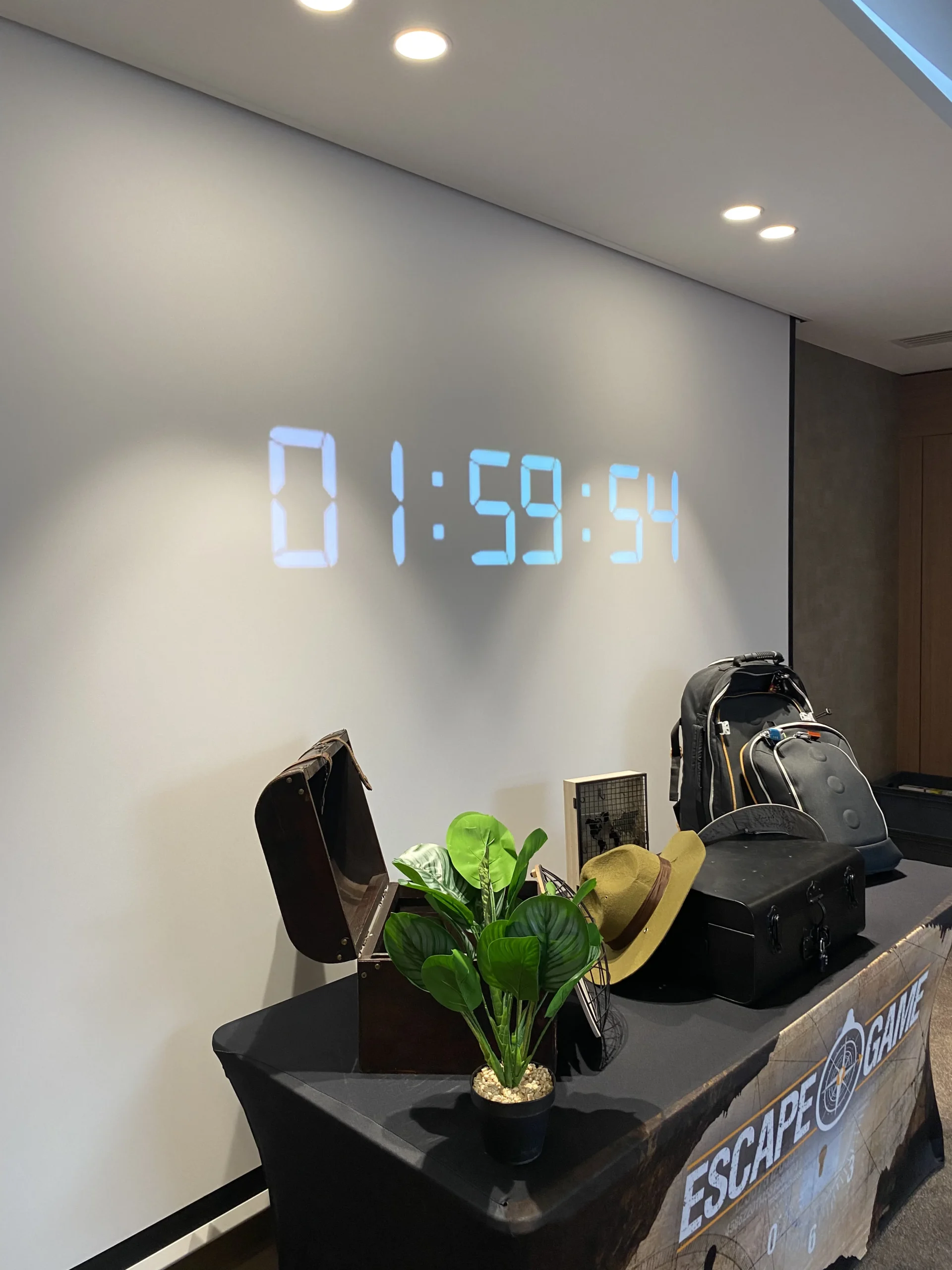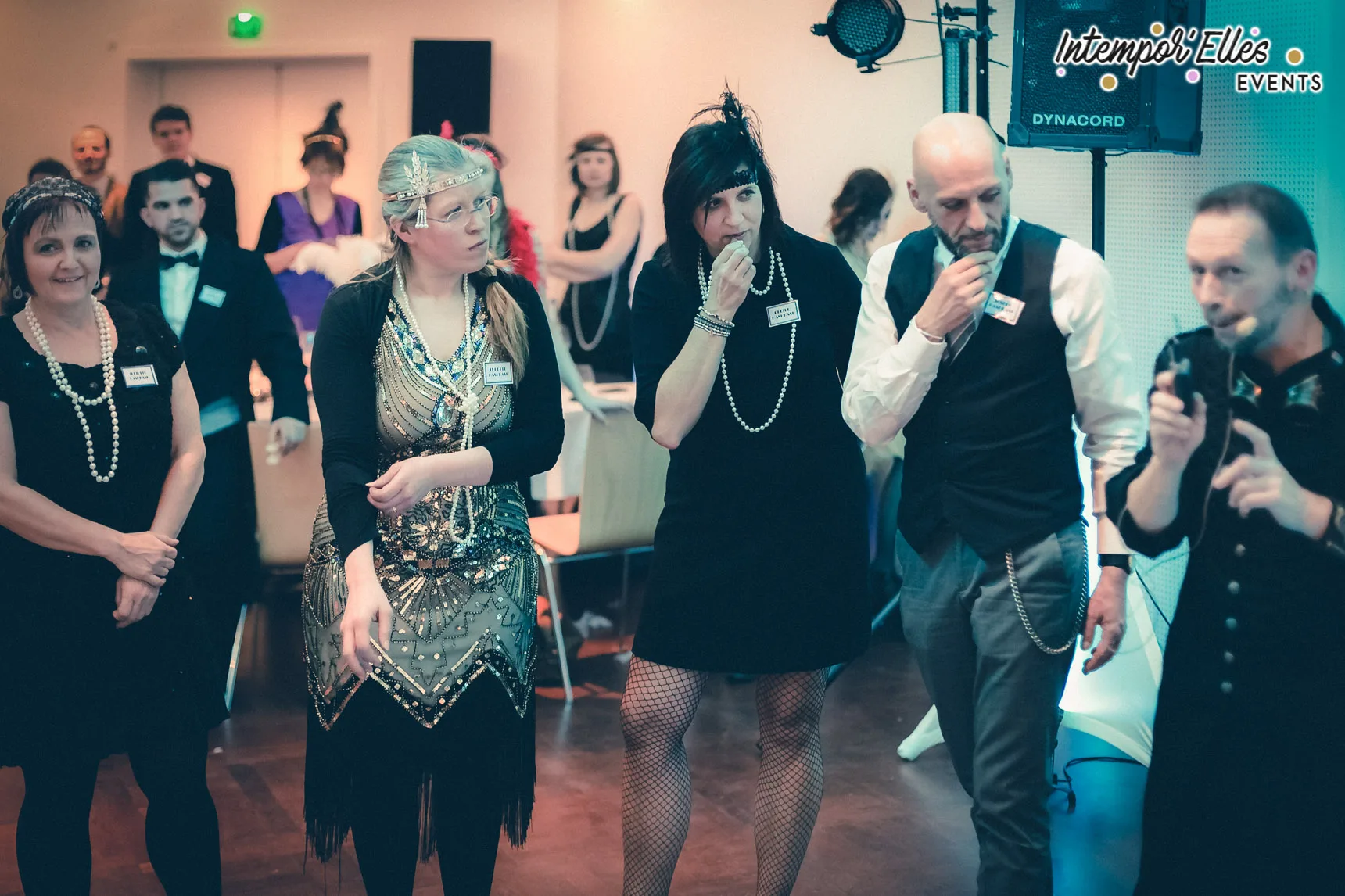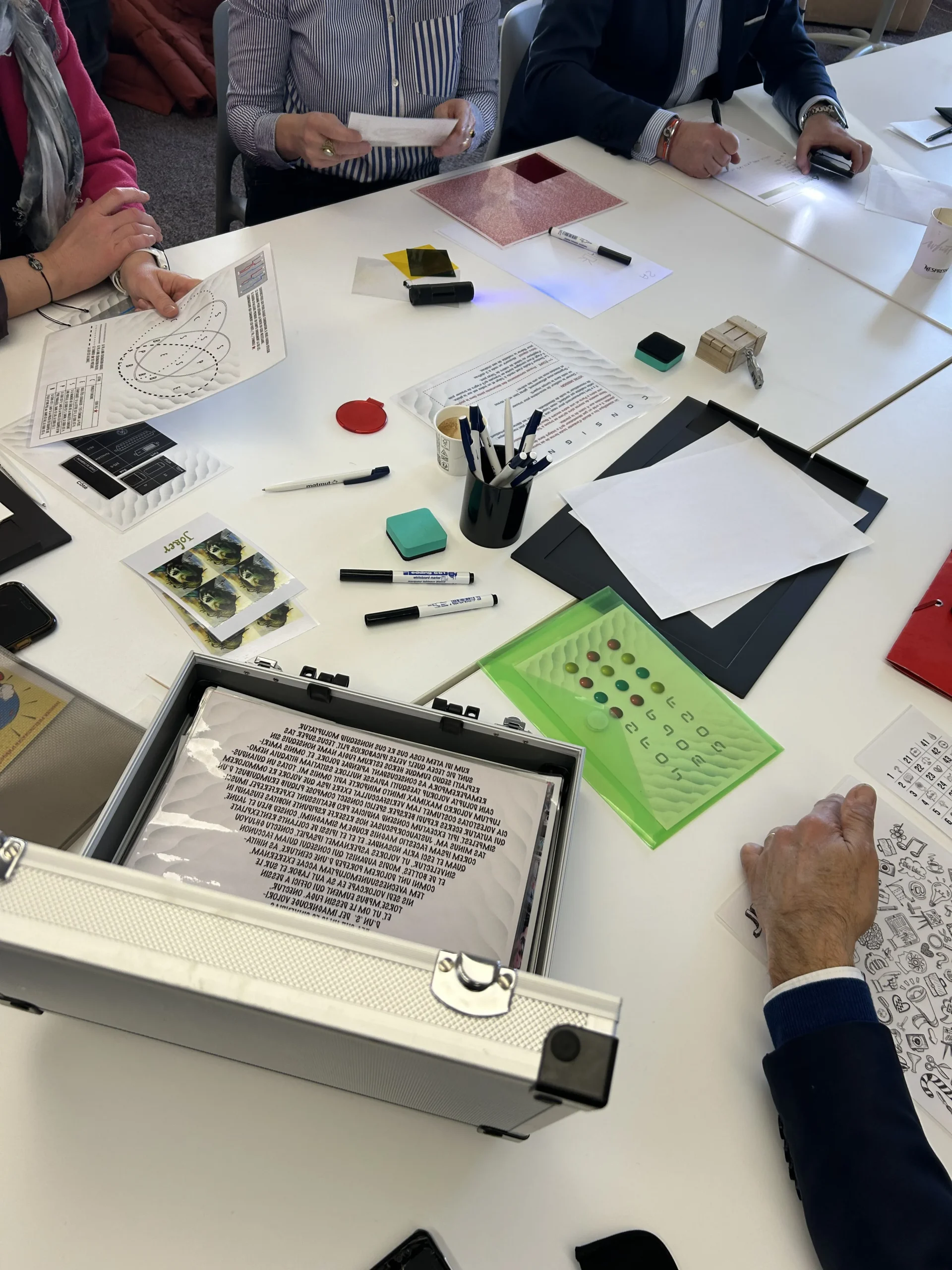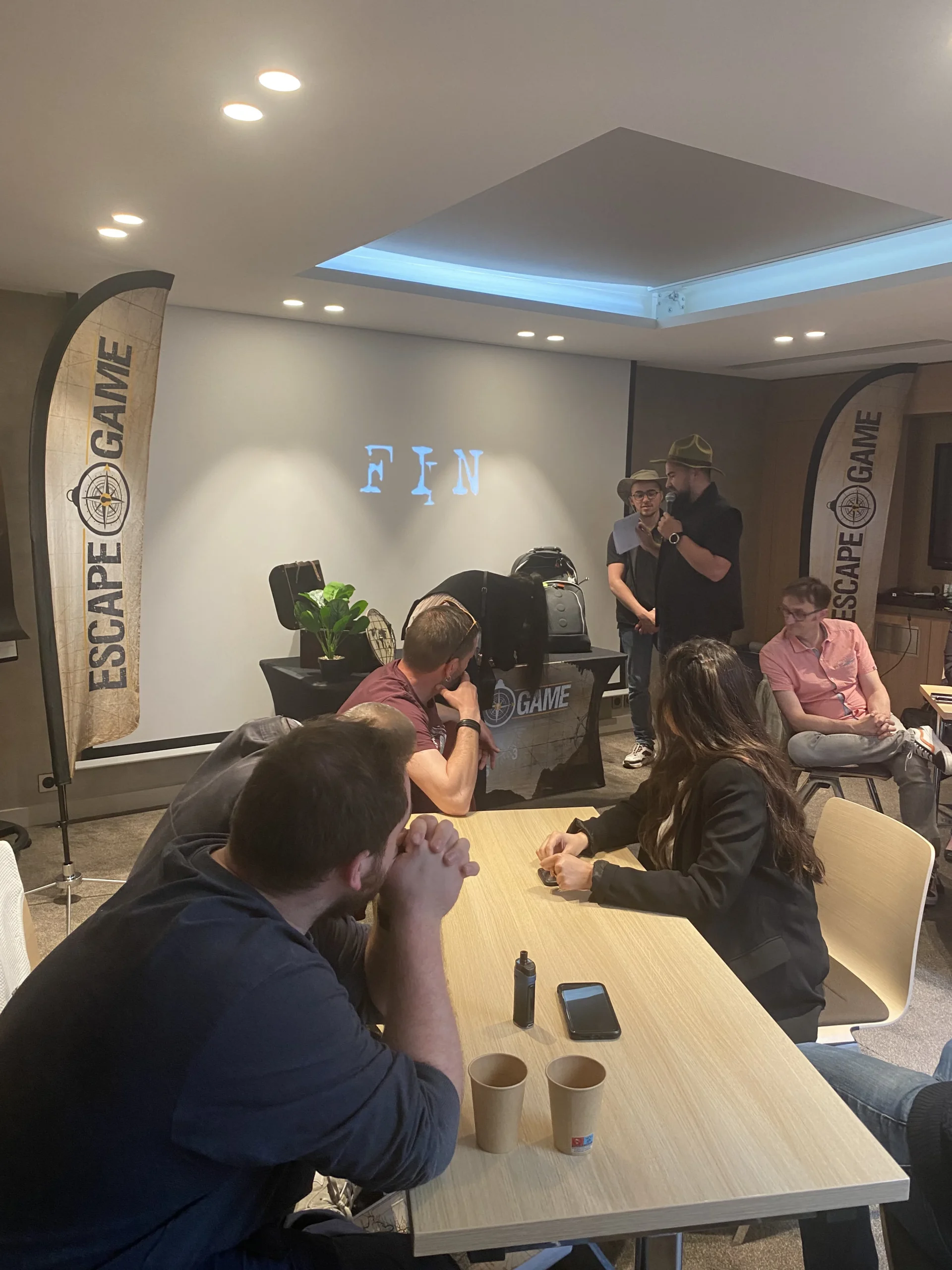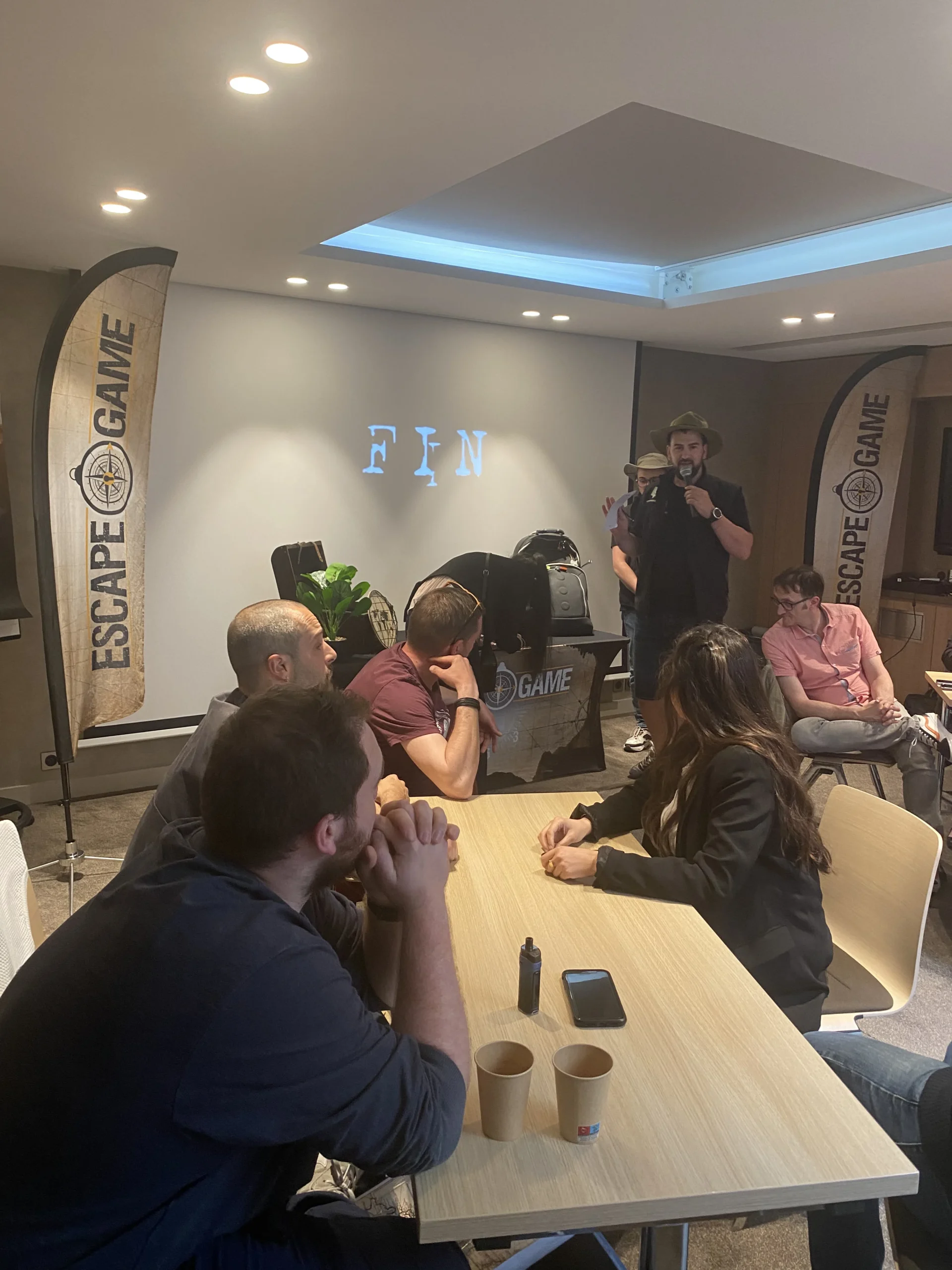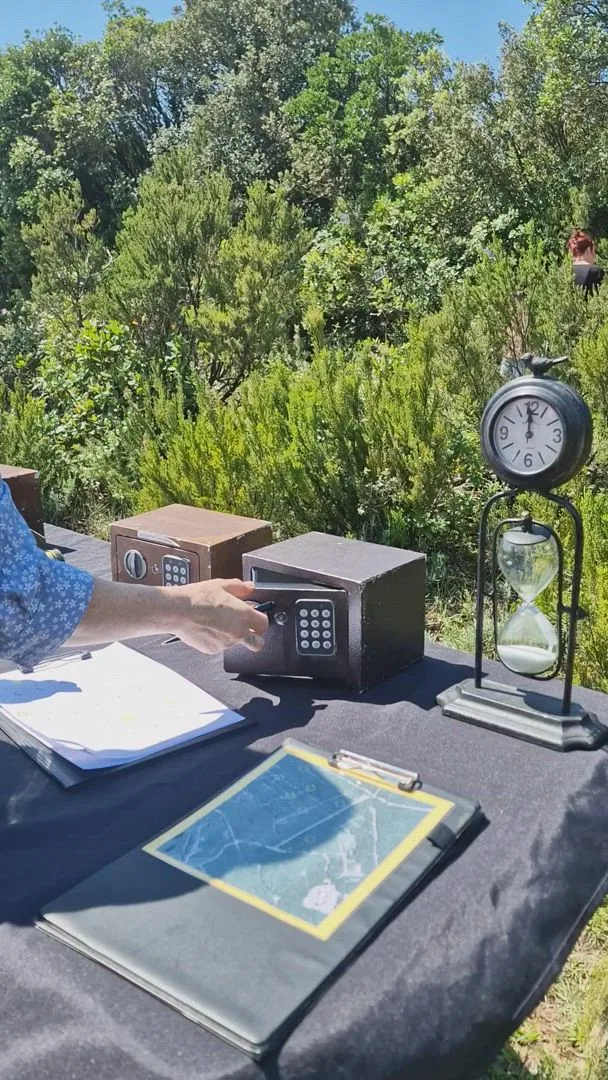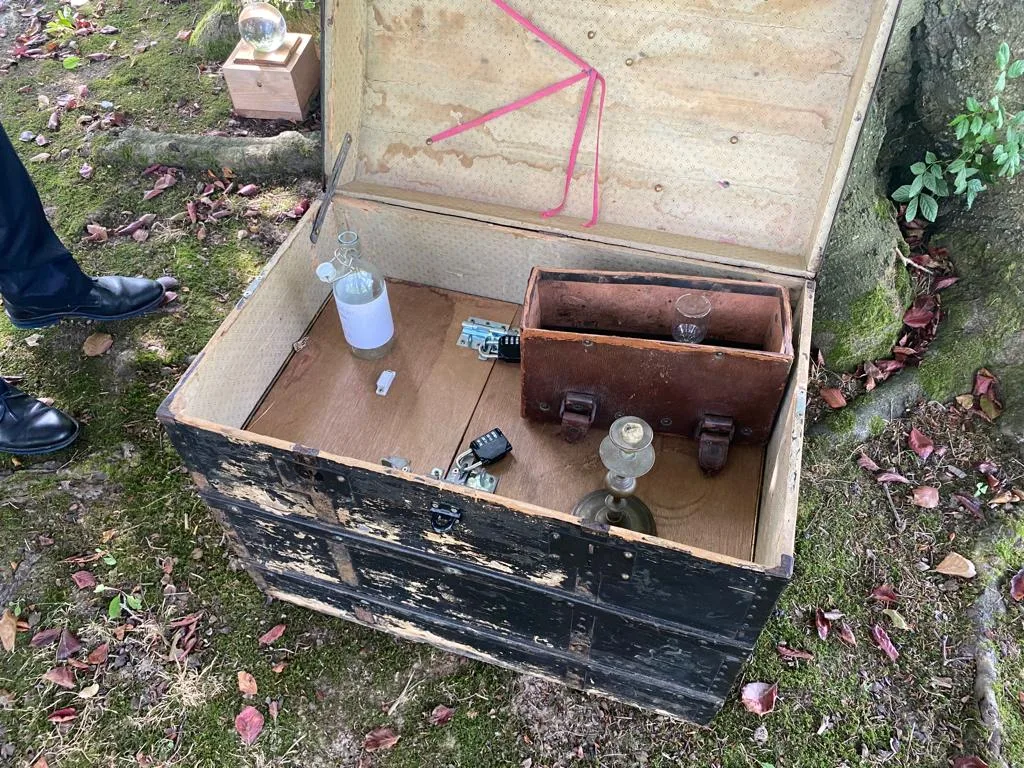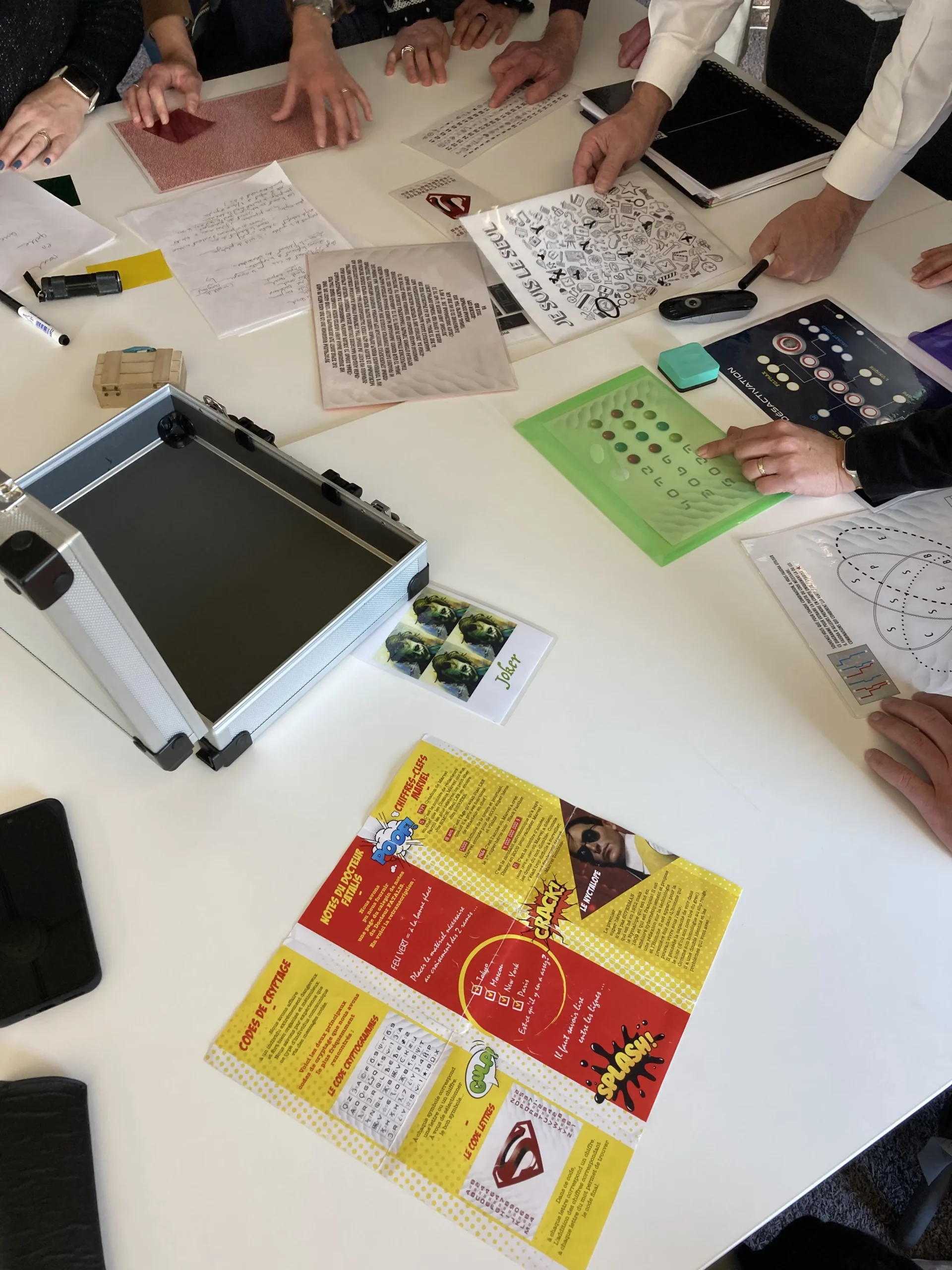
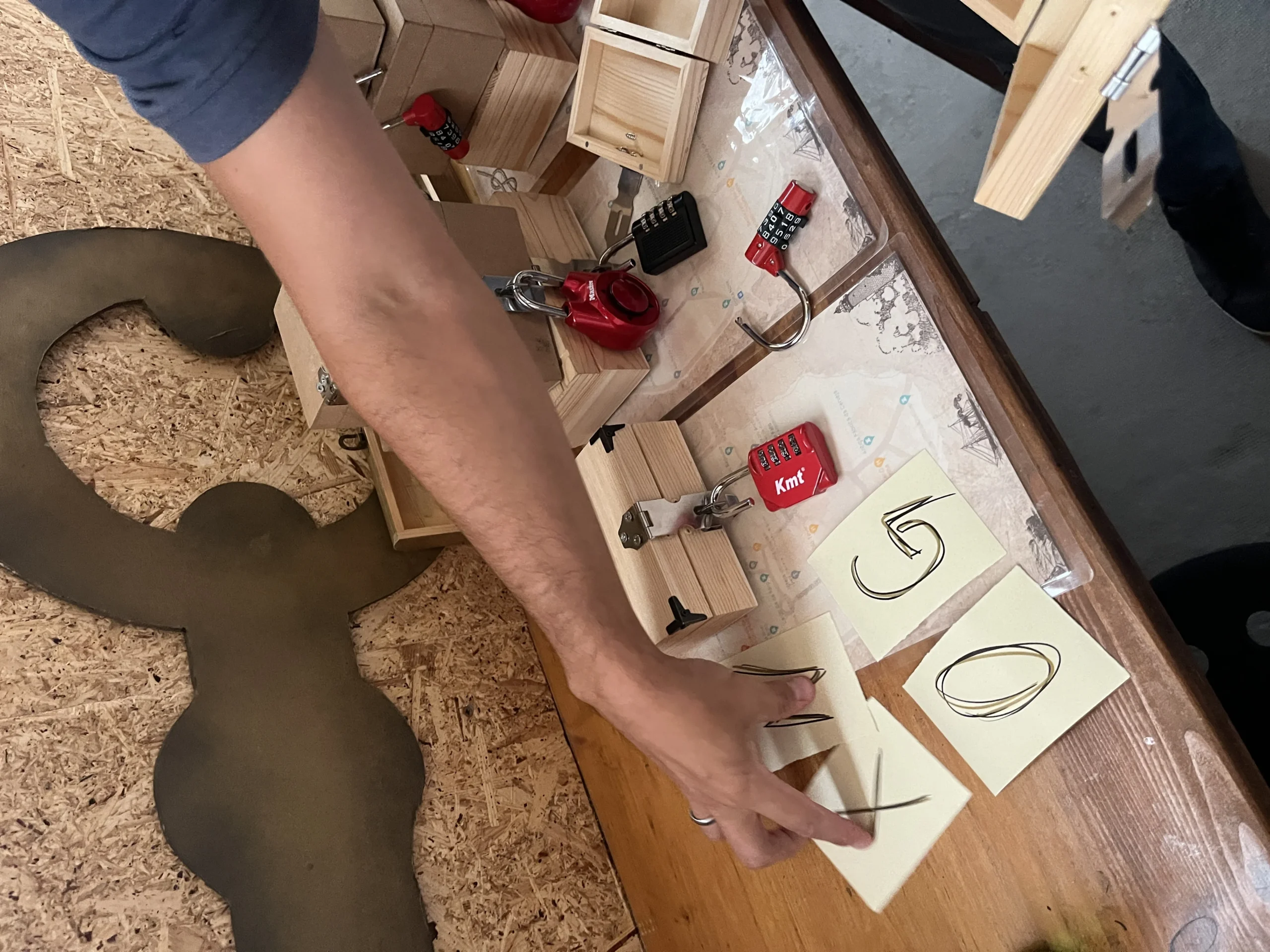
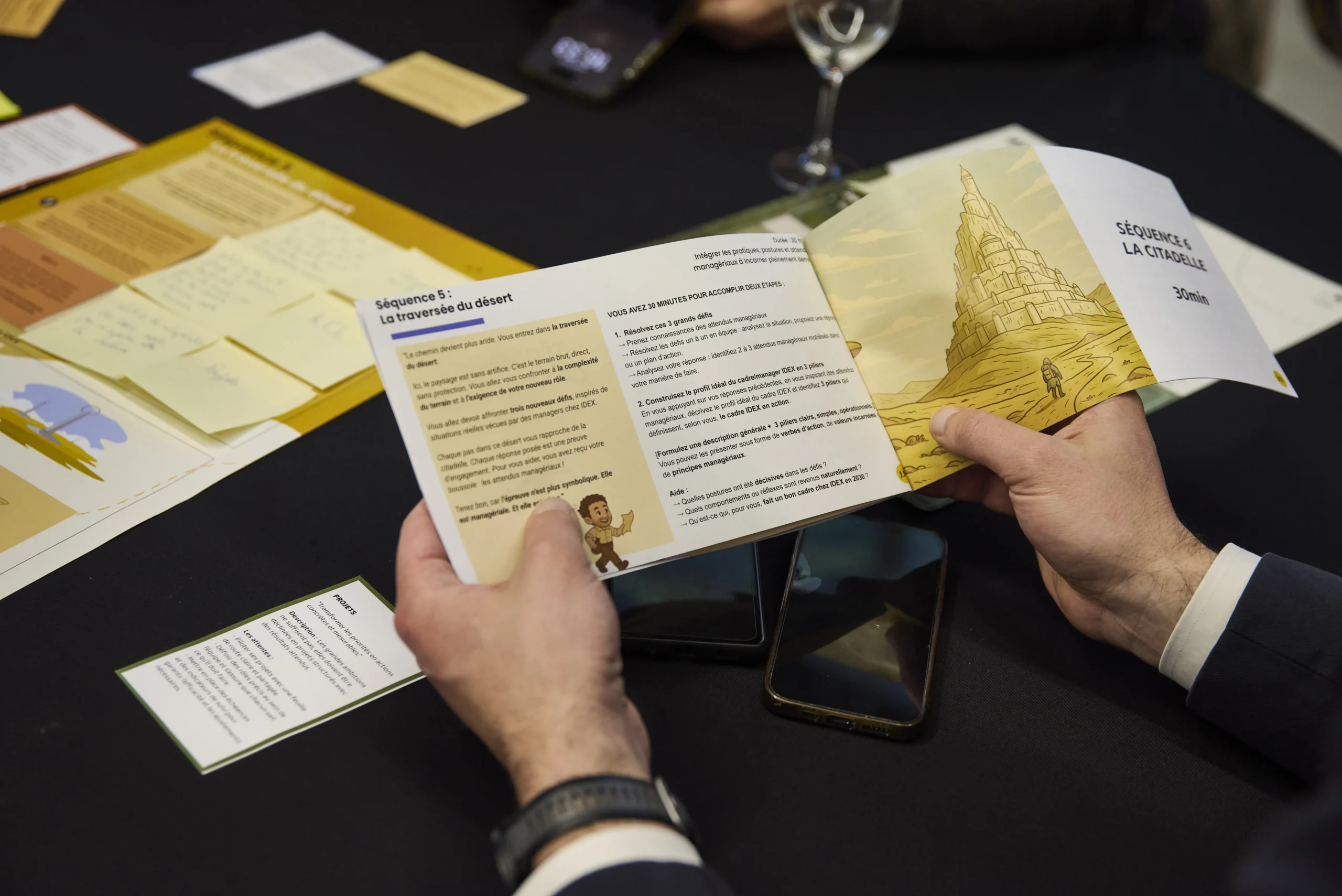
INNOV'events designs and delivers Escape Game formats in Montréal for executive offsites, leadership retreats, onboarding cohorts and multi-team corporate events, typically from 10 to 300+ participants.
We handle the full chain: scenario selection or custom adaptation, venue fit (office, hotel, or external site), bilingual facilitation, timing with your agenda, and risk management (tech, noise, safety, accessibility).
You get a structured activity that supports management objectives: collaboration under constraints, decision-making clarity, and cross-functional alignment—without losing control of brand image or event flow.
In a corporate agenda, entertainment is never “just a break”. A well-run Escape Game creates observable team behaviours—how people share information, manage time, and make decisions—while keeping energy high and transitions on schedule.
In Montréal, organizations expect operational rigour: bilingual delivery, punctuality with hotel and union timelines, respect for OHS rules in offices, and an activity that feels relevant for mixed seniority groups (executives, managers, new hires).
As an agency based in Montréal, INNOV'events plans with local realities in mind: winter logistics, downtown load-in restrictions, venue sound limits, and the pace of corporate calendars. Our role is to make the activity smooth, professional, and measurable.
10–300+ participants handled in one time slot using multi-room or multi-wave rotations, with clear timing and staffing ratios.
2–3 facilitators for groups up to ~60; scalable staffing for larger groups with a lead producer, floor captains, and bilingual game masters.
24–48h turnaround for a first budgetary estimate (scope, venue, format, staffing), and a production plan once the date is confirmed.
Proven ability to deliver across common corporate constraints: short setup windows, strict hotel schedules, and mixed-language audiences.
We work year-round with organizations across Montréal—from head offices downtown to industrial sites in the East and logistics hubs near the airport. Many clients renew because the activity is only one part of the success; what they value is event-day control: clean timing, predictable participant flow, and facilitation that respects corporate culture.
You mentioned providing company names as references; once you share the list, we will integrate them precisely (without exaggeration) and highlight what was delivered (format, group size, objective, and operational constraints). Until then, we keep this section factual and focused on how we operate locally: bilingual hosting, venue compliance, and a production approach aligned with executive expectations.
Nous vous envoyons une première proposition sous 24h.
A corporate Escape Game in Montréal works when it is treated as a management tool, not a novelty. The best outcomes happen when the scenario is chosen to mirror your real work environment: incomplete information, competing priorities, time pressure, and the need to coordinate across functions.
Accelerate cross-functional trust: when Finance, Operations, Sales and HR solve a shared problem in real time, collaboration becomes practical instead of theoretical. We see this especially in post-merger contexts where teams “know each other” but still hesitate to share information.
Reveal decision-making patterns without putting people on the spot: who drives clarity, who waits for permission, who over-controls, who delegates effectively. This is valuable during leadership retreats where you want discussion grounded in observed behaviours, not assumptions.
Create a shared language for collaboration: teams naturally start using phrases like “we need a single source of truth” or “let’s define roles” after the game—language you can reuse in project governance.
Improve onboarding integration: for cohorts of 15–40 new hires, the activity removes social friction quickly while giving managers a structured moment to observe communication styles.
Support internal communications goals: when paired with a short debrief and your key messages, the activity increases message retention (strategy, values, safety culture) because the brain anchors content to an emotional peak.
Protect your event schedule: compared to many “entertainment” options, an escape format is predictable. With the right staging, you can run 45, 60, or 75-minute blocks and keep meal service and speeches on time.
Montréal is a fast-moving business environment where teams often work hybrid, across languages, and under tight delivery commitments. A well-produced Escape Game fits this culture: structured, time-bound, and focused on execution—while still being engaging.
Decision-makers in Montréal rarely judge an activity only on “fun”. They judge it on operational control and reputational risk: does it respect the brand, does it feel inclusive, and will it run without embarrassing surprises?
In practice, we plan around four local expectations:
These expectations are why production discipline matters. The same Escape Game can feel professional or amateur depending on flow management, clarity of instructions, and staffing.
Entertainment creates engagement when it is aligned with your business context. In Montréal, the most effective corporate event entertainment is the kind that respects diverse teams (language, age, seniority) and fits the venue’s real constraints. Below are formats we deploy regularly, with the practical implications we discuss with HR and communications teams.
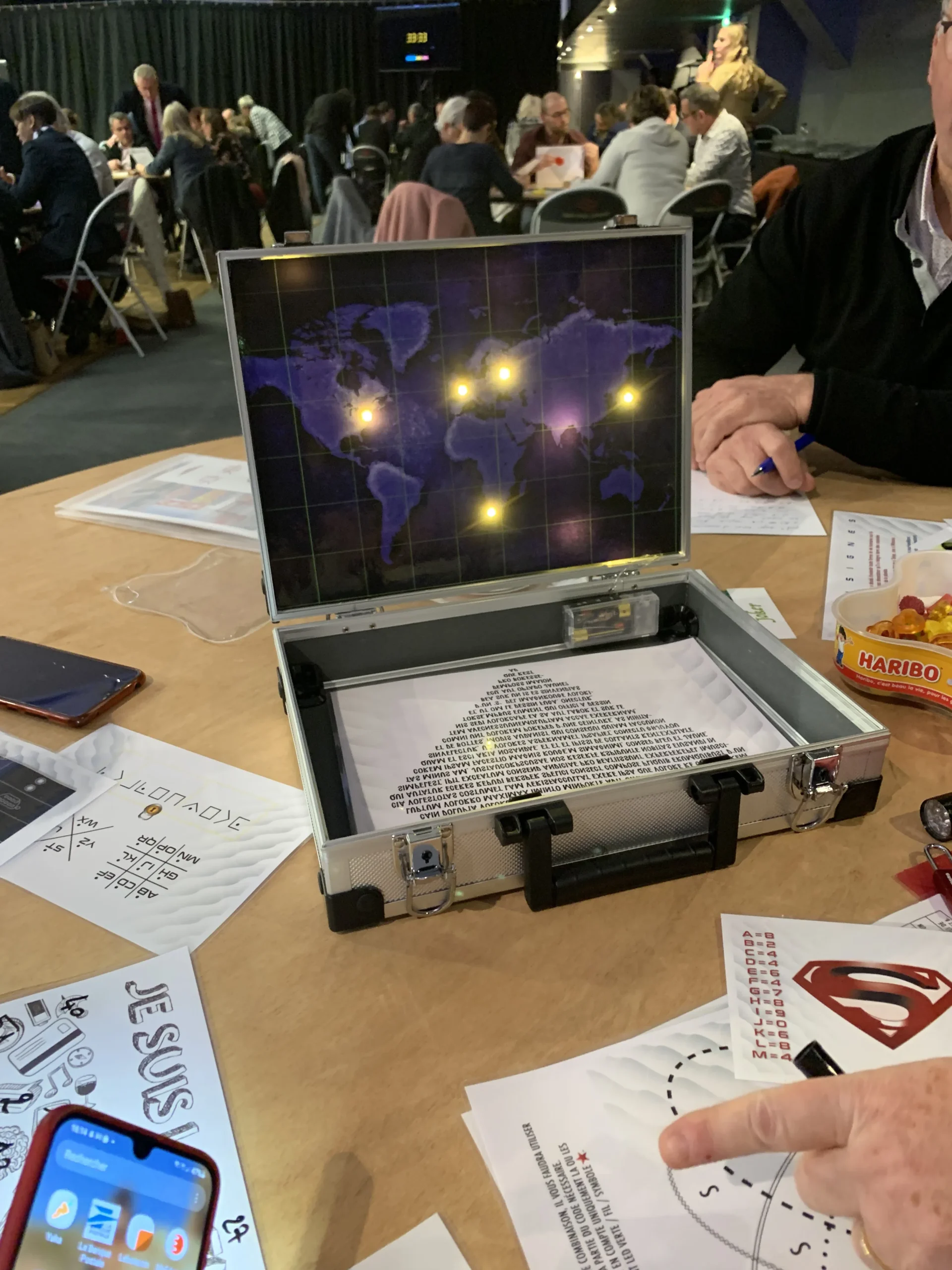
Tabletop Escape Game (boardroom-friendly): ideal for leadership offsites and meetings where you cannot dedicate a separate room. Teams solve puzzles at their tables; minimal noise and no heavy props. Works well for 12–120 participants in one slot.
Multi-station Escape Rally: a rotation-based approach where teams move between stations (codes, logic, observation, light physical tasks). Best for larger groups in a ballroom or large office floor. The producer controls timing like a conference segment.
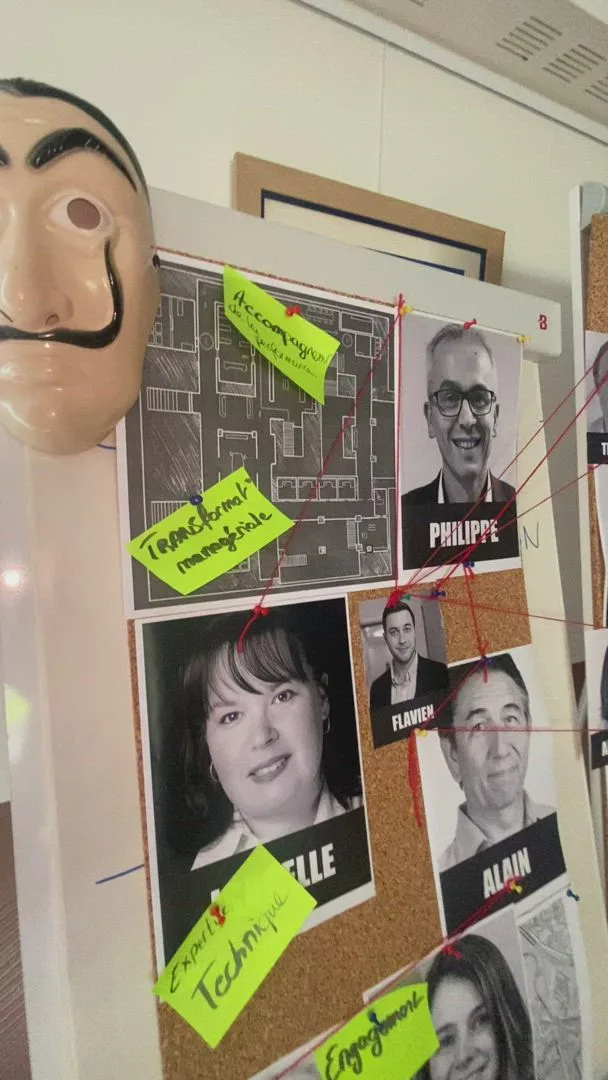
Office-based “Search & Solve”: designed around your own space (without involving sensitive areas). Useful for internal culture-building days; requires careful planning with security and facilities for access and reset.
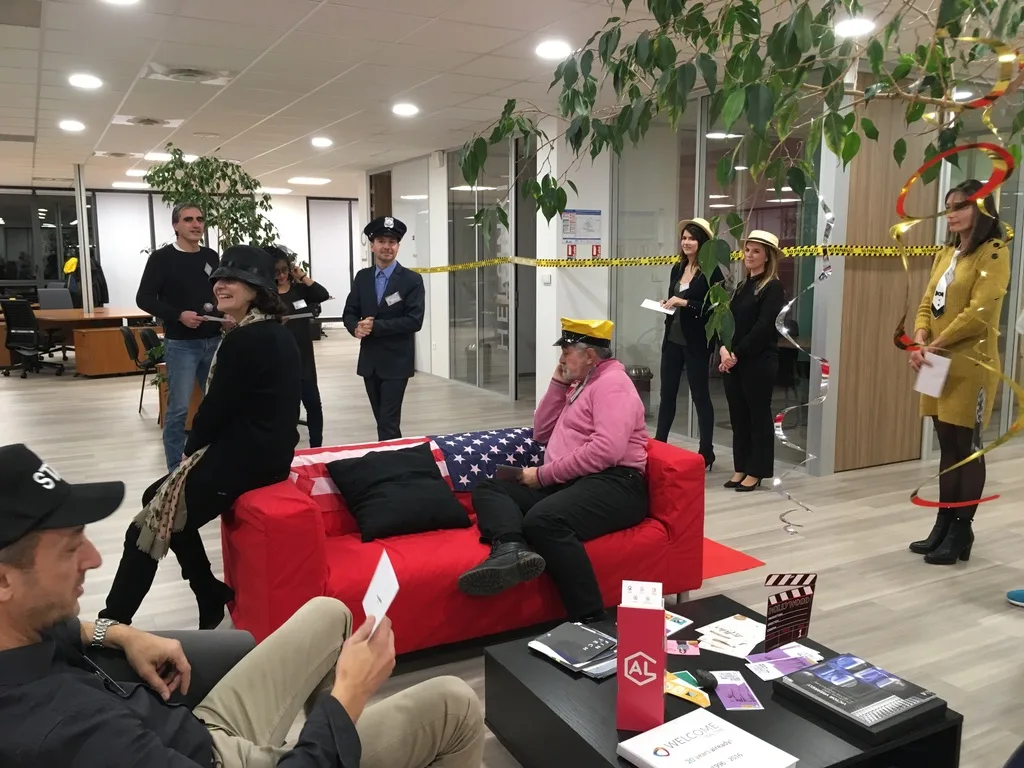
Character-led facilitation: a professional actor as “mission lead” can elevate immersion for groups that want a narrative tone, as long as it stays corporate-appropriate. We keep it optional and adapt the tone to your brand (serious vs playful).
Sound and lighting accents: subtle production cues (timed audio, lighting changes) can increase focus. In hotels, we confirm with AV teams to avoid conflicts with adjacent rooms.
Escape + cocktail pacing: a structured 45–60 minute game followed by a networking cocktail works well for client events. We plan the “release moment” so bar service starts exactly when teams finish.
Food-themed puzzle stations: for internal celebrations, puzzles can be tied to tasting elements (non-messy, allergy-aware). We coordinate with catering to avoid cross-contamination and to respect service timelines.
Hybrid clue delivery (QR + physical props): useful when you want clean logistics and fast resets across multiple waves. We still keep enough physical elements to avoid a “screen-first” feel.
Data-light gamification for conferences: for events where IT policies restrict apps, we use printed codes, controlled QR landing pages, or offline mechanics—so you don’t depend on Wi‑Fi quality in a venue.
ESG / compliance-friendly scenarios: when your culture is strict (regulated sectors, public organizations), we choose scenarios that avoid sensitive themes and focus on problem-solving, ethics, and teamwork.
The right choice is the one that protects your brand image and your agenda. A Escape Game should feel consistent with how your organization operates in Montréal: clear, respectful, well-managed, and results-oriented.
The venue is not a backdrop; it shapes behaviour and perceived professionalism. In Montréal, the same group will experience the activity differently depending on acoustics, ceiling height, circulation, and the ability to control access. We help you choose a setting that supports flow and confidentiality.
| Venue type | For which objective? | Main strengths | Possible constraints |
|---|---|---|---|
Downtown hotel ballroom / meeting suites | Executive offsite, annual meeting, conference agenda with strict timing | Predictable service standards, AV support, easy integration with meals and plenaries | Load-in windows, sound bleed between rooms, strict schedules and union rules |
Corporate office (conference floor) | Onboarding, culture day, internal engagement with minimal travel time | Convenient for employees, easy to align with internal messages and leadership presence | Security clearance, elevator booking, OHS constraints, limited storage for props |
Dedicated event space / loft in Montréal | Client entertainment, team celebration, brand-forward atmosphere | Stronger “offsite” feeling, flexible layouts for multi-station games | Variable acoustics, limited back-of-house, power distribution sometimes uneven |
Escape room venue (private buyout) | Small teams or department groups wanting full immersion | High immersion, turnkey rooms, minimal setup | Capacity limits, rotation time, less control over branding and agenda pacing |
Site visits matter. We verify access routes, staging space, washroom proximity, and where briefings happen—because these details determine whether your Escape Game in Montréal feels controlled or chaotic.
Pricing is driven by format and operational complexity, not by a single “per person” number. In Montréal, the same headcount can require very different staffing and setup depending on venue restrictions, schedule, and bilingual facilitation needs.
As practical benchmarks we often see for corporate groups:
Number of participants and wave design: 120 people can run in one large format or in 2–3 rotations; staffing and reset time change the budget.
Venue logistics in Montréal: downtown access, parking, freight elevators, and setup windows affect labour hours and transport.
Bilingual facilitation: true bilingual delivery often requires additional staffing or specific profiles, especially with mixed-language teams.
Production level: props, lighting cues, audio, signage, and how “immersive” you want the environment to be.
Risk controls and contingencies: spare materials, additional facilitators for large groups, and a lead producer for complex schedules.
Optional debrief or leadership tie-in: if you want structured observation and facilitated discussion, we plan it like a workshop (with a clear scope and timebox).
For executives, the ROI is typically in time and alignment: faster team integration, better cross-functional communication, and a program that stays on schedule. We build budgets that reflect what you actually need—no hidden “nice-to-have” layers that don’t serve your objective.
When your audience includes directors, VPs, or clients, the risk is rarely the game itself—it’s the execution: late start, unclear instructions, language friction, or a venue conflict that makes the experience feel improvised. A local team reduces these risks because we know how things work on the ground in Montréal.
We coordinate with venues, caterers, and AV teams as part of one production plan. If your event is downtown, we plan around freight elevator schedules and loading rules; if it’s in your office, we align with security and facilities; if it’s offsite, we verify access, staging, and reset space.
For a broader view of how we manage corporate programs, you can also see our approach as an event agency in Montréal and how we structure production planning from briefing to on-site delivery.
For executives, the ROI is typically in time and alignment: faster team integration, better cross-functional communication, and a program that stays on schedule. We build budgets that reflect what you actually need—no hidden “nice-to-have” layers that don’t serve your objective.
Our projects vary because corporate realities vary. Some clients want a tight 45-minute segment inside a half-day strategy session; others need a high-throughput activity for a large group, with multiple waves between plenary sessions.
Examples of situations we commonly manage in Montréal:
What stays constant is production discipline: pre-briefing, clear run-of-show, staffing ratios, and contingency planning so your internal team can focus on hosting—not troubleshooting.
Underestimating flow: 120 people arriving at once needs check-in, briefing, and team split in a controlled sequence. Without it, you lose 10–20 minutes and the room becomes noisy and hard to regain.
Choosing the wrong difficulty: too hard creates frustration; too easy feels childish. We calibrate based on your audience (executives vs mixed levels) and we adjust hint timing during the event.
Ignoring bilingual facilitation: mixed-language groups need more than bilingual slides. We plan facilitator placement and scripts so no one feels sidelined.
Not planning for venue limits: power availability, sound restrictions, elevator access, and setup windows in Montréal venues impact what is feasible. We validate these early.
Over-customizing too late: custom narratives require approvals and testing. When customization is rushed, quality drops. We propose “smart customization” that protects timelines.
No debrief, no takeaway: without a short wrap-up, teams enjoy the moment but the organization loses the managerial value. We keep it concise and aligned with your objectives.
Our role is to take accountability for these risks so your event feels intentional and controlled—especially when senior leadership or external guests are in the room in Montréal.
Repeat business usually comes from one thing: confidence that the agency will protect the event-day experience. In corporate settings, it’s not acceptable to “hope it goes well”. Clients come back when the run-of-show is respected, when participants are well managed, and when internal stakeholders are not pulled into last-minute problem solving.
Planning clarity: clients appreciate having a single production point of contact and a documented run-of-show.
Consistency across waves: for 100–300 participants, repeat clients often cite the fact that each wave receives the same quality of facilitation and instructions.
Stakeholder comfort: HR and Communications teams value that we can adapt tone, language, and photo policy without diluting the activity.
Loyalty is not about novelty. It’s proof that the Escape Game in Montréal delivered what was promised: operational control, participant engagement, and a clean fit with corporate expectations.
We confirm objectives (team cohesion, leadership behaviours, onboarding, client engagement), audience profile, languages, and non-negotiables (timing, venue rules, confidentiality, accessibility). We also ask what cannot happen on event day—late finish, noise issues, photo capture, etc.—so we design around those risks.
We propose 2–3 formats with clear pros/cons: tabletop, multi-station, office-based, or venue buyout. We calibrate difficulty and hint policy based on seniority mix and the event’s tone. If your organization has strict brand standards, we align narrative elements and facilitator tone early.
We produce a timing grid: briefing duration, game duration, wave rotations, reset times, and buffer. We define staffing roles (lead producer, game masters, floor captains), and we align with venue/AV/catering so the activity fits your Montréal agenda without conflicts.
We arrive with enough time for a full setup and a functional test of each station/room. We rehearse key moments: briefing script, hint delivery, and hard stop. During the activity, we manage flow: late arrivals, team imbalance, and wave timing—so the experience stays consistent.
We close with a short debrief aligned to your objective (communication, role clarity, decision-making). If requested, we provide a concise recap for HR/leadership: what worked, what to repeat, and how to build on the momentum—without turning it into a heavy report.
For corporate groups in Montréal, we commonly run 10–300+ participants. Small groups can play in a single room or tabletop setup; larger groups use multi-station formats or timed waves to keep flow controlled and start/end times reliable.
Plan 60–90 minutes total for a clean experience: 5–10 minutes briefing, 45–60 minutes gameplay, and 5–12 minutes wrap-up. For larger groups with rotations, we’ll confirm a run-of-show with wave timing and reset buffers.
Yes. We deliver fully bilingual facilitation (English/French) and design team instructions so mixed-language groups stay synchronized. In practice, bilingual delivery usually requires specific staffing and a tighter script, which we plan upfront to avoid confusion on event day.
Yes, if we can control access and noise. We’ll validate security check-in, elevator and loading rules, available rooms or open areas, and OHS constraints. Office delivery works best with tabletop or station-based formats that don’t rely on permanent installations.
Most corporate projects fall between $45–$110 per person for compact formats, or $6,000–$18,000+ for larger multi-station productions. Final pricing depends on participant waves, venue logistics, bilingual staffing, production level, and any custom adaptation.
If you’re comparing agencies, we can make this easy: send us your date window, estimated headcount, venue (or shortlist), timing constraints, and language requirements. We’ll come back with a structured recommendation (format options, staffing, run-of-show) and a realistic budget for a Escape Game in Montréal.
For the best venue availability and smoother approvals, we recommend starting planning 3–6 weeks in advance for standard formats, and 6–10 weeks if you want custom narrative elements or complex multi-wave logistics.
Contact INNOV'events to secure a date and get an operationally credible proposal—not a generic package.
Thierry GRAMMER is the manager of the INNOV'events Montréal office. Reach out directly by email at canada@innov-events.ca or via the contact form.
Contact the Montréal agency