
Team Building in Laval that strengthens execution, not just morale
INNOV’events is a Montreal-based agency delivering Team Building in Laval for executive teams, HR, and communications—from 20 to 500+ participants. We manage the full chain: program design, facilitation, venue coordination, supplier control, and day-of operations.
Our role is to create a concrete moment that improves collaboration and decision-making, while protecting your brand, schedule, and internal credibility.
Table of contents
In a corporate context, “fun” is not the objective—alignment is. A well-designed Team Building gives you a controlled environment to test behaviours you need back at work: cross-functional coordination, escalation habits, and decision velocity.
In Laval, organizations typically want pragmatic formats that respect shift schedules, hybrid realities, unionized environments, and strict time windows between operational peaks. The expectation is simple: a professional, well-run event with no improvisation.
We know the territory, the traffic patterns, the venue realities, and the procurement constraints. Our team builds programs with clear learning objectives, concrete facilitation, and a production plan that holds on event day.
INNOV’events in numbers (Quebec-wide delivery capacity)
10+ years producing corporate events across Greater Montreal, including recurring mandates in Laval and the North Shore.
200+ corporate activations delivered (team building, leadership offsites, employee recognition, client events), with structured run-of-show and risk controls.
20–500+ participants supported, with scalable facilitation (multi-room rotations, simultaneous workshops, bilingual staffing when required).
Single point of accountability: one project lead coordinating venue, suppliers, facilitators, and on-site logistics to reduce internal workload for HR and comms.
How to organize a professional event in Laval?
- Define the objective (cohesion, announcement, fidelity, performance).
- Set date, format and size (20–1 000 people).
- Secure the venue and accommodation according to seasonality.
- Lock down technical, suppliers and logistics.
- Drive the day J (timing, scene, entrance, flow).
Who we support in the Laval area (and why they rebook)
We regularly support organizations operating in and around Laval—from head offices to industrial sites—where teams need practical, results-oriented moments rather than generic activities. Many mandates come back year after year because the internal stakes are real: leadership credibility, employee climate, retention pressure, and operational continuity.
In practice, our clients often ask for the same three things: (1) a program that respects their culture (no forced vulnerability, no cringe), (2) facilitation that can manage senior personalities and frontline realities in the same room, and (3) flawless logistics so their internal teams aren’t firefighting on event day.
If you share your context (merger, reorg, growth, new plant, new leadership team, or a difficult year), we’ll propose a format that is credible for executives and still engaging for employees—without putting your brand at risk.
We send you a first proposal within 24h.
Why run a Team Building in Laval this year (for leadership outcomes)
A Team Building in Laval becomes strategic when it addresses friction that is already costing you time and credibility: unclear priorities, silo behaviour, slow decisions, and escalation that happens too late. The best programs create shared language and a few non-negotiable operating rules that teams can actually apply Monday morning.
Reduce execution drag between departments: We design challenges that mirror real workflow dependencies (handoffs, approvals, and bottlenecks). Executives see where the system breaks—and what behavioural changes remove friction.
Accelerate decision-making: Many teams suffer from “meeting inflation.” We build scenarios where teams must decide with incomplete info, document assumptions, and commit—then debrief how that maps to your governance.
Strengthen manager consistency: HR often tells us the issue isn’t training, it’s uneven leadership behaviours. A facilitated program makes expectations visible: how feedback is given, how conflict is handled, and how priorities are enforced.
Improve psychological safety without forcing it: We use structured roles and clear rules so people can participate without personal exposure. This is especially important with unionized teams, mixed tenure groups, or post-reorg fatigue.
Support retention and employer brand: Not through speeches, but through operational respect—on-time agenda, inclusive participation, accessible formats, and a consistent message that leadership listens and acts.
Create measurable follow-up: We can capture commitments (team charter, decision rules, escalation map) and provide a concise post-event summary that HR can use for internal comms and leadership tracking.
Laval has a strong operational and industrial culture: people value practicality, clarity, and respect for time. That’s why our approach is built around concrete behaviours and clean execution—not vague “bonding.”
What Laval organizations expect from a corporate Team Building partner
In the 450 territory, we often work with companies balancing head office needs with operational constraints. That creates very specific expectations that a generalist supplier can miss.
Time discipline is non-negotiable. Many Laval teams operate on tight production cycles, customer service coverage, or shift work. We build schedules that respect start/finish times, include realistic transition buffers, and avoid “one more thing” additions that break your day.
Accessibility and logistics matter more than aesthetics. Parking capacity, loading access, elevator flow, room acoustics, and the ability to run parallel sessions are often more important than a trendy space. We screen venues and formats to prevent crowding, noise fatigue, and dead time.
Comms and brand protection are real pressures. Communication teams need content that aligns with internal messaging and avoids backlash (“leadership is celebrating while teams are overloaded”). We help you position the event with a clear purpose, and we design moments that feel respectful of the year you’ve had.
Procurement and compliance realities are part of the job. We’re used to NDAs, supplier onboarding, insurance requirements, health and safety constraints, and bilingual communications. We can also adapt to internal vendor lists while keeping accountability clear.
Which Team Building formats work best in Laval right now
Engagement happens when participants understand the “why,” the rules are clear, and the challenge reflects real workplace dynamics. Below are formats we use for Team Building in Laval, selected based on your objectives, risk tolerance, and group profile.
Interactive animations in Laval
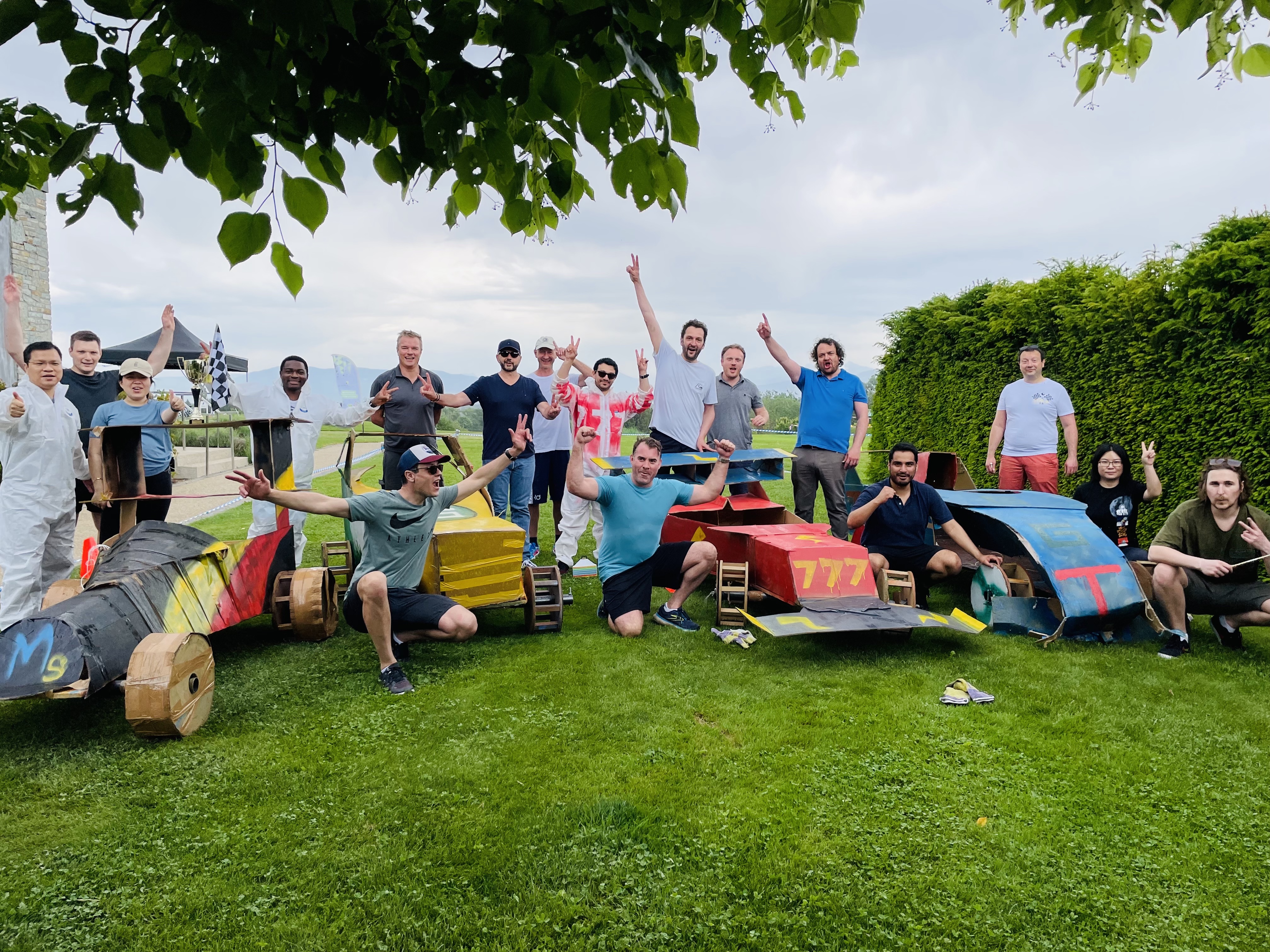
Operational escape game (process version): Teams solve a timed scenario built around handoffs, bottlenecks, and approvals. Best for cross-department friction. Debrief focuses on escalation timing and decision rights.
Leadership alignment workshops: A facilitated half-day that produces concrete outputs (decision principles, meeting rules, escalation map). Works well for exec teams or management layers after growth or reorg.
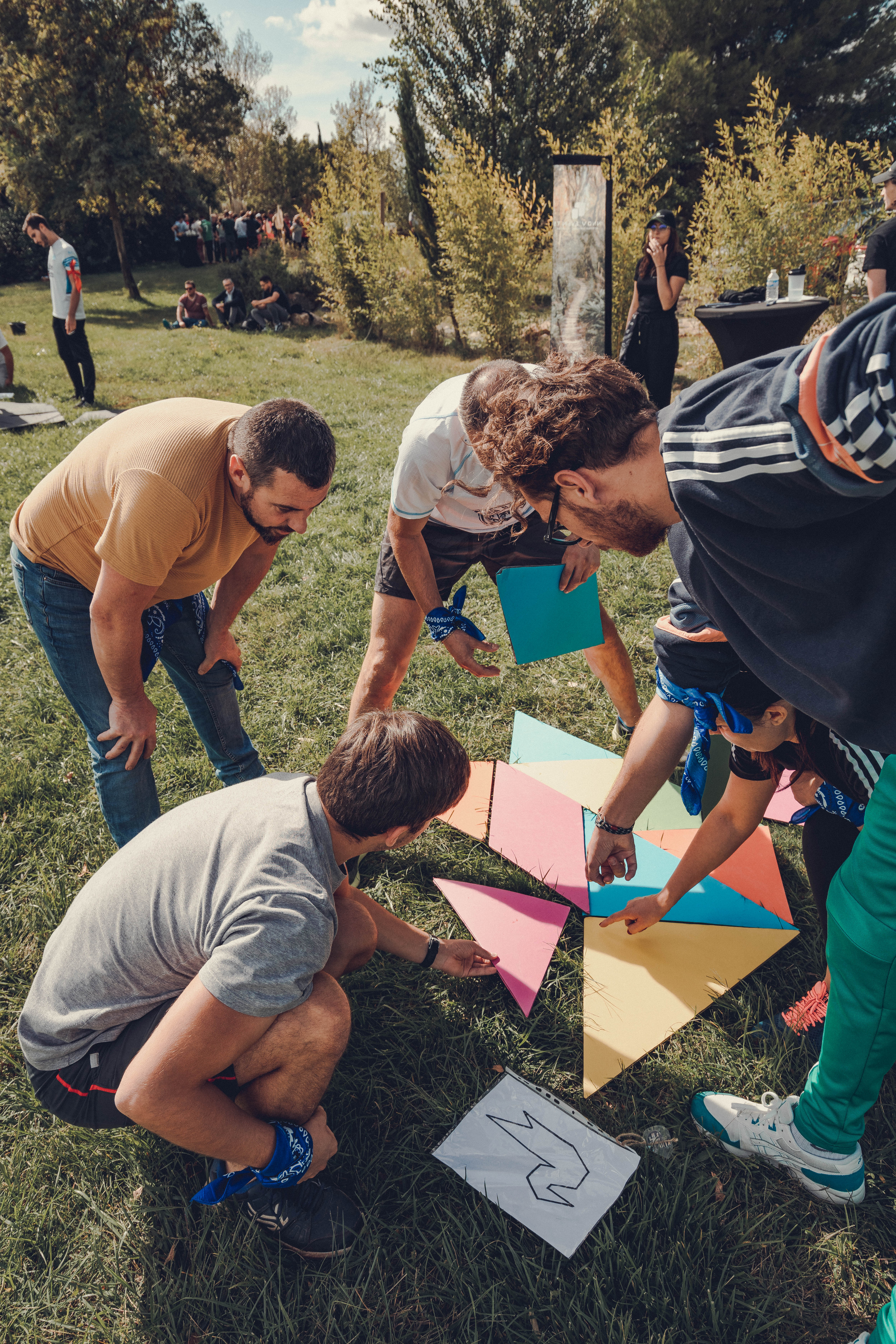
Strategic simulation with role constraints: Teams operate with limited budget/time/info while reacting to “market events.” Useful to reveal how teams handle ambiguity and how quickly they commit.
Hybrid-ready collaboration challenge: For organizations with remote staff, we build parallel tracks so in-person and remote participants contribute fairly (shared scoring, digital checkpoints, clear roles).
Art animations in Laval
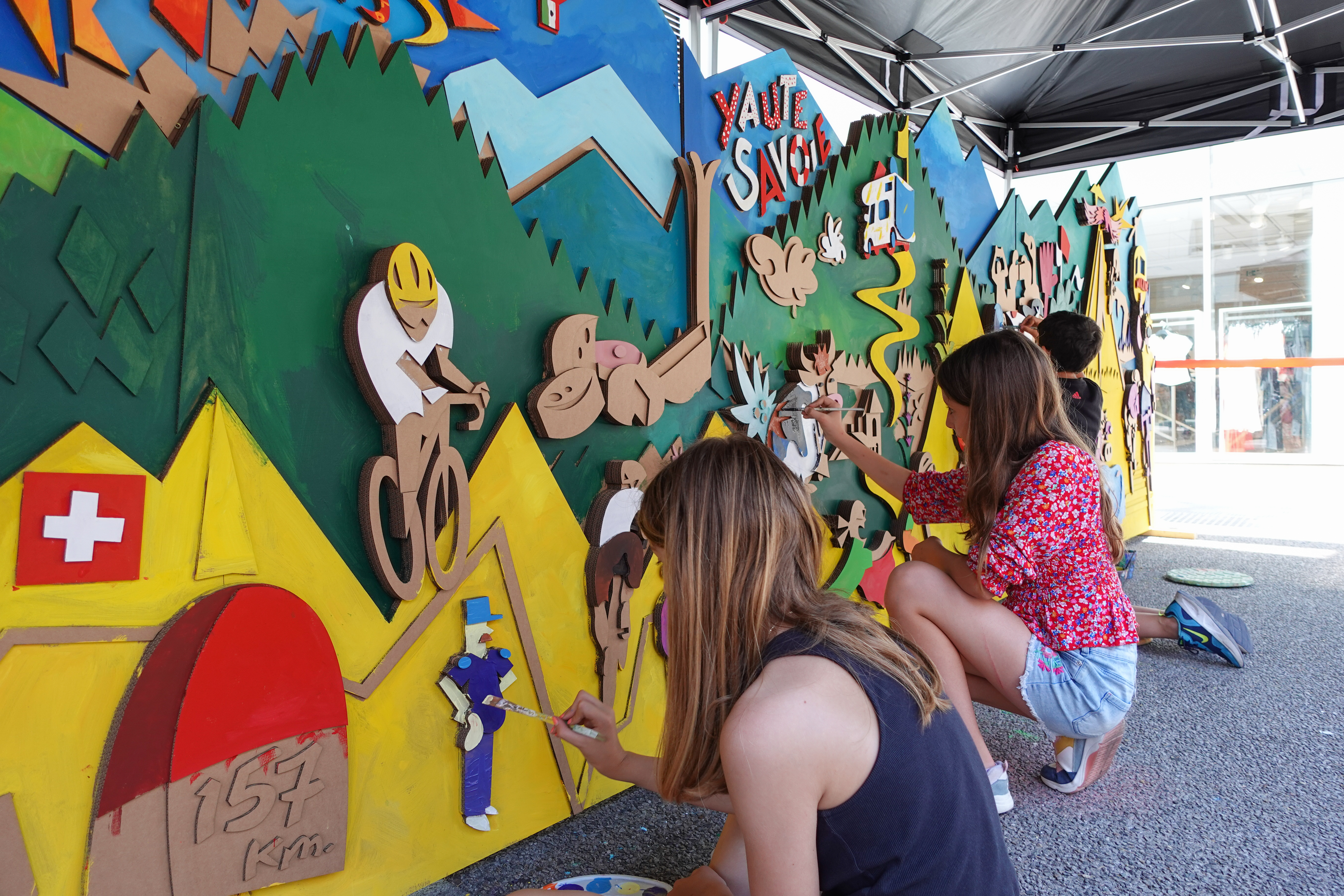
Collective mural with brand narrative: Not “paint for fun”—we structure it around values, client promise, or transformation story. Output can be displayed internally, and the process highlights collaboration patterns.
Rhythm and coordination labs: Short, high-energy sequences that test listening, synchronization, and non-verbal leadership. Works well as a segment inside a larger agenda to reset attention.
Innovative animations in Laval
Structured tasting with decision-making mechanics: Teams must build a menu or pairing strategy under constraints (budget, dietary needs, timing). Effective for inclusive groups when you want low physical demand but high interaction.
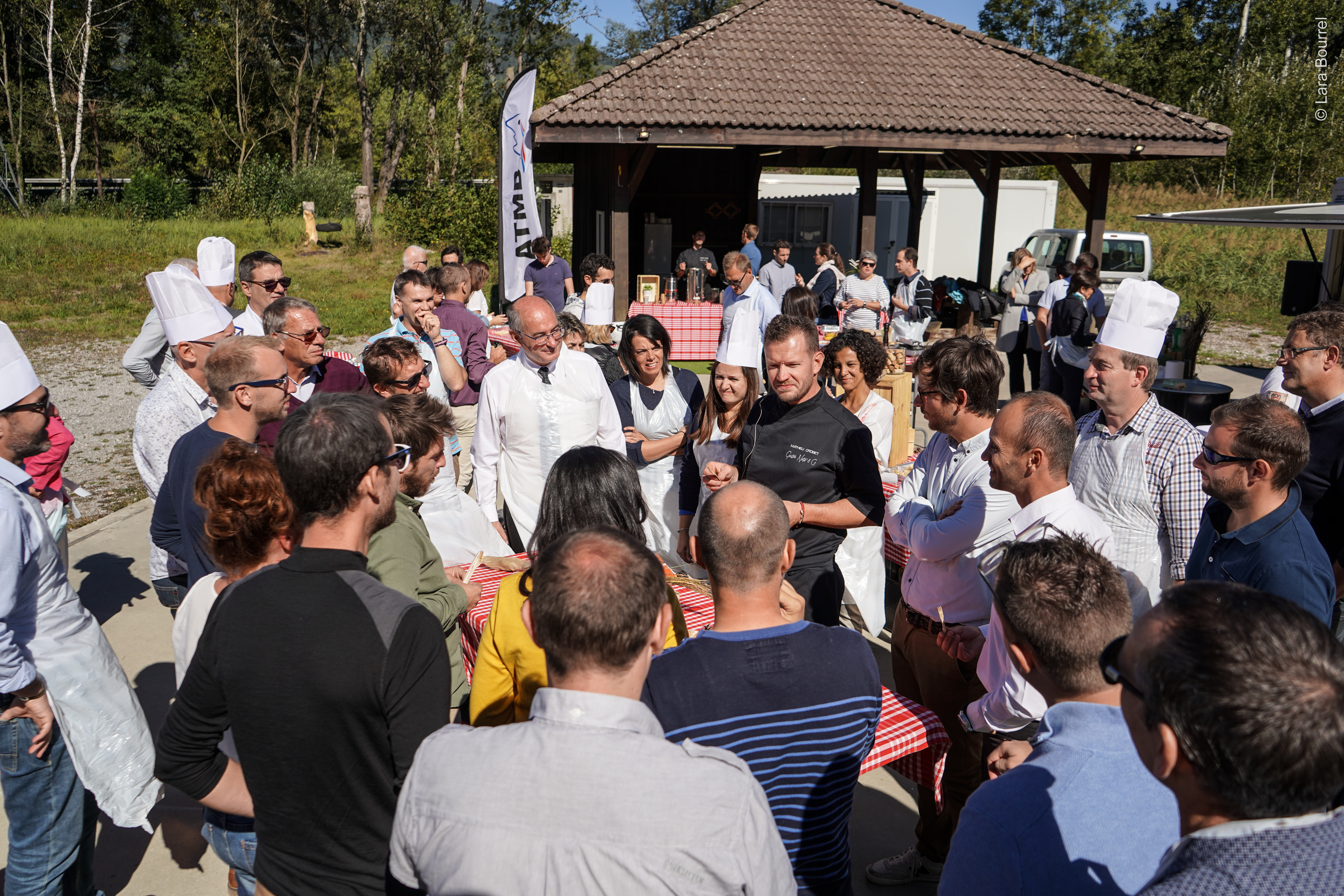
Kitchen challenge with clear roles: We assign responsibilities (quality control, timekeeper, procurement, plating) to mirror workplace accountability. Great for surfacing role clarity issues.
Gourmand animations in Laval
Data-driven team diagnostics + activity: Short pre-event pulse survey (5–8 questions) to identify friction points, then an activity designed to target them. Post-event recap links observations to survey themes.
CSR build with operational rigour: When you want purpose without performative optics, we select a cause and structure the build/logistics so output is real, traceable, and communicated responsibly.
Micro-learning stations: Rotating 20-minute stations (feedback, conflict, prioritization, customer empathy) with practical tools participants can reuse. Ideal for large groups in multiple rooms.
Whatever the format, we align the experience with your employer brand and internal narrative. If your organization is in cost-control mode, the program must feel responsible. If you’re in growth mode, it must reinforce execution and accountability. That alignment is what protects leadership credibility in Laval.
Where to host Team Building in Laval without compromising flow
The venue is not just a backdrop—it determines punctuality, energy, and perceived professionalism. For Team Building in Laval, we prioritize access, room geometry, acoustics, and the ability to control transitions (registration, breaks, rotations).
| Venue type | For which objective? | Main strengths | Possible constraints |
|---|---|---|---|
Hotel conference floors in Laval | Leadership offsite, multi-workshop day, reliable A/V | Predictable service levels, breakouts, catering timing, weather-proof logistics | Costs can rise with A/V and F&B minimums; room availability during peak dates |
Industrial/warehouse-style spaces (converted) | Large group dynamics, build challenges, immersive simulations | High capacity, flexible layouts, strong “reset” effect from office routine | Acoustics, heating/AC variability, stricter production planning for safety and flow |
Outdoor parks + nearby indoor fallback | High-energy collaboration, summer team reset | Natural engagement, lower venue cost, great for staggered stations | Weather contingency is mandatory; permits, sound limits, and transport coordination |
We strongly recommend a site visit or at least a technical walkthrough (photos aren’t enough). In the 450, a venue that looks perfect online can create real issues on the ground: bottlenecks at registration, echo in plenary, or insufficient breakout space. We validate flow before you commit.
What Team Building costs in the 450 (and what drives the price)
Budget for Team Building in Laval depends on the format, the facilitation intensity, and production complexity. What matters most is not the sticker price—it’s whether the program delivers a clear outcome without creating extra workload for your internal team.
Group size and facilitation ratio: A 40-person group can run with 1–2 facilitators; 200 people may require multiple facilitators, assistants, and room captains to keep timing tight.
Venue and food & beverage structure: Hotels often add service charges and minimums; alternative spaces may require rentals (chairs, staging, audio) that shift costs differently.
Complexity of the run-of-show: Rotations, parallel tracks, and multi-room setups increase staffing, signage, and coordination time—often worth it for engagement, but it must be planned.
Custom content vs. proven modules: If you need scenarios reflecting your processes (e.g., sales-to-ops handoff, quality incidents, customer escalation), we build and test those elements so they land credibly.
Risk controls and contingencies: Weather plans, safety management, insurance, and backup suppliers are invisible until you need them—then they’re everything.
Audio-visual and content capture: Executive teams often want clean sound, slides, and optionally a light photo package for internal comms. Professional A/V reduces day-of risk.
From an ROI perspective, we anchor your budget to operational impact: fewer meeting loops, faster decisions, cleaner escalation, and improved manager consistency. If the program doesn’t change how teams work, it’s not a business investment—so we design for application, not applause.
Why work with a Laval partner rather than importing a concept
Choosing a local partner reduces risk and internal workload. For organizations in Laval, the difference is often felt in the last 10%: venue reality, traffic timing, supplier reliability, and the ability to adapt on-site without compromising professionalism.
As an agency active across Greater Montreal, we can mobilize quickly in the territory and coordinate local suppliers with the same production standards we use downtown. When you need a program that lands with both executives and frontline teams, local context matters.
If you’re comparing providers, review how they handle operations: run-of-show detail, staffing plan, safety approach, and what happens when conditions change. That’s where the value of a strong event agency in Laval becomes measurable.
- Faster site coordination: easier walkthroughs, earlier issue detection, and fewer surprises on event day.
- Supplier network accountability: vetted A/V, catering, furniture, and facilitation resources with clear service expectations.
- Realistic scheduling: we plan around Laval traffic patterns, parking flow, and arrival waves to protect your agenda.
- On-site agility: when a room change, late bus, or tech issue happens, a local team can solve it quickly without breaking the experience.
From an ROI perspective, we anchor your budget to operational impact: fewer meeting loops, faster decisions, cleaner escalation, and improved manager consistency. If the program doesn’t change how teams work, it’s not a business investment—so we design for application, not applause.
They trust us


Examples of Team Building outcomes delivered in Laval contexts
Our mandates range from executive alignment to large-scale employee engagement. A few real situations we handle often in Laval:
Post-reorg trust rebuild: A management group needed a reset after role changes created duplicated approvals and tension. We ran a decision-rights simulation, then facilitated a working session that produced a one-page governance map (what decisions live where, when to escalate, and response-time expectations).
Operations + sales alignment: A business with strong growth faced internal friction between customer promises and delivery constraints. We designed a scenario-based challenge around “promise vs. capacity,” then turned the debrief into a practical escalation protocol and a shared vocabulary for trade-offs.
Large group with mixed tenure: A 150+ person session included new hires, long-tenured employees, and managers. We used station rotations with clear roles to avoid dominance by louder profiles, ensuring participation quality stayed consistent across the room.
Shift constraints: When teams couldn’t be away for a full day, we built two identical 2.5-hour blocks with the same objectives and outputs, enabling continuity without disrupting operations.
The common thread is operational relevance: the activity is a vehicle, but the deliverable is behavioural clarity that can be reinforced by leaders afterward.
Common Team Building pitfalls we prevent in Laval
Picking an activity before defining the business objective: it leads to high energy and zero transfer back to work. We start with the friction you want to reduce.
Underestimating facilitation: without structured debriefs, executives leave unconvinced and employees feel it was “just an activity.” We connect observations to real behaviours.
Ignoring mixed comfort levels: overly physical or overly personal formats can backfire. We design inclusive mechanics (role options, clear rules, opt-in intensity).
Weak run-of-show: late starts, unclear transitions, and missing tech checks damage credibility fast. We build timing buffers and technical checkpoints.
No plan for weather or last-minute changes: outdoor concepts without a true fallback create day-of panic. We document contingencies in advance.
Overloading internal teams: when HR becomes a production desk, the event feels unmanaged. We take operational ownership so your team can host.
Our job is risk prevention with professionalism: anticipate pressure points, put structure in place, and deliver an experience that protects your leaders and your brand in Laval.
Why teams in the 450 rebook INNOV’events
Repeat business in corporate events is earned through reliability. Clients come back when the program is relevant, the day runs on time, and the internal sponsor feels supported rather than exposed.
High rebooking intent: many clients ask us to reserve a window for the following year once they see how the first mandate reduces internal workload.
Stable delivery teams: we keep the same project lead from planning through on-site, which improves continuity and decision speed.
Documented playbooks: run-of-show templates, risk checklists, and facilitation structures that keep quality consistent even as group size changes.

Loyalty is the most credible indicator in our industry. In Laval, where teams value practicality and execution, rebooking happens when the event delivers tangible outcomes and runs without drama.
Our process for Team Building delivery in Laval
👉 Step 1 (Laval): Brief, constraints, and success metrics
We start with a structured call with HR, an executive sponsor, and—when possible—communications. We document constraints (headcount range, language needs, union realities, accessibility, shift coverage, budget guardrails) and define success metrics (e.g., decision principles produced, cross-team commitments, manager alignment).
👉 Step 2 (450): Concept selection tied to real behaviours
We propose 2–3 program options with clear pros/cons: engagement profile, risk level, operational complexity, and what it will change in day-to-day work. You choose based on your culture and the outcome you need—not on a trendy format.
👉 Step 3 (Laval): Venue and logistics engineering
We validate venue fit (room sizes, acoustics, breakout capacity, parking, loading, registration flow) and build a run-of-show with realistic buffers. We coordinate A/V, catering, rentals, and signage, and we confirm who approves what—so procurement doesn’t stall the timeline.
👉 Step 4 (450): Facilitation planning and participant experience
We finalize facilitation guides, team structures, scoring (if applicable), and debrief questions. We plan inclusivity: dietary needs, mobility constraints, and participation options. If you want internal comms content, we align messaging and plan photo moments without disrupting flow.
👉 Step 5 (Laval): On-site production and executive support
On event day, our lead runs production: supplier arrivals, room set, tech checks, timing, and troubleshooting. Executives and HR should be able to focus on people and message—not logistics. We also manage real-time adjustments (late arrivals, agenda changes) without creating visible disruption.
👉 Step 6 (450): Post-event recap and practical follow-up
Within days, we provide a concise recap: what we observed, what commitments were made, and suggested next steps (manager check-ins, charter publication, or a short pulse survey). The goal is to turn the event into operational change, not a one-off moment.
FAQ sur l'organisation Team Building à Laval
How far ahead should we book Team Building in Laval?
Plan for 4–8 weeks for standard formats and 8–12 weeks for large groups (150+) or custom scenarios. If you’re targeting peak dates (May–June, September–December), earlier is safer due to venue and A/V availability in Laval.
What budget range is realistic for Laval corporate team building?
For a professionally facilitated program in Laval, many companies land between $75–$200 per person depending on venue, duration, and production level. Executive workshops with strong facilitation can be structured as a fixed project fee, especially for smaller groups.
Can you run Team Building in Laval for 200+ people?
Yes. We scale via parallel stations, multi-facilitator staffing, and a tight run-of-show. For 200–500+, we typically use rotations, room captains, and pre-assigned teams to keep timing and participation quality consistent.
What if our Laval team has mixed French and English speakers?
We can deliver bilingual facilitation and bilingual participant materials. In mixed groups, we use clear visual instructions, dual-language briefing, and team structures that prevent one language group from carrying the task.
Do you offer indoor options in Laval during winter months?
Yes. We recommend indoor formats with strong energy management (breakouts, station rotations, and short debriefs) to avoid fatigue. For winter delivery in Laval, we also prioritize venues with reliable parking access and smooth coat/registration flow.
Request a Laval Team Building proposal with clear deliverables
If you’re planning a Team Building in Laval, send us your date range, estimated headcount, and what you want to improve (alignment, decision-making, cross-team execution, retention). We’ll respond with a practical recommendation, a production approach, and a budget framework you can defend internally.
For best venue and supplier availability in the 450, we recommend starting planning as soon as your quarter is confirmed.
INNOV'events Laval Agency
Thierry GRAMMER is the manager of the INNOV'events Laval office. Reach out directly by email at canada@innov-events.ca or via the contact form.
Contact the Laval agencyAll our services & entertainment Laval, Quebec
Discover our event services
Discover our event entertainment available in the Quebec
- Event Hostess in Laval
- Escape Game in Laval
- MasterChef-Style Cooking Workshop in Laval
- Corporate Magician in Laval
- Tent Rental in Laval
- Color Analysis Workshop in Laval
- Inflatable Games in Laval
- Valet Service in Laval
- Soccer Simulator in Laval
- LED Furniture Rental in Laval
- LED Branding Activation in Laval
- Immersive Culinary Experience in Laval
- Light Painting Activity in Laval
- Immersive Mystery Night in Laval
- Promotional Contest in Laval
- Promotional Materials (POS) in Laval
- Virtual Reality Experience in Laval
- Molecular Gastronomy Workshop in Laval
- Halloween Event in Laval
- Fireworks Show in Laval
- Sports Challenge – Giant Games in Laval
- Professional Event Host in Laval
- Photo Booth Animation in Laval
- Santa Claus Appearance in Laval
- Kids Entertainment in Laval
- Guided Tour in Laval
- Urban Rally in Laval
- Ball Pit Activity in Laval
- Flight Simulator in Laval
- Food Truck Rental in Laval
- World Record Attempt in Laval
- Surf Simulator in Laval
- Soccer Simulator in Laval
- Wine Casino in Laval
- Makeover Workshop in Laval
- Perfume Creation Workshop in Laval
- Acting Workshop in Laval
- CSR Activities in Laval
- Archery Activity in Laval
- Event Security Guard in Laval
- Wine Tasting Workshop in Laval
- Mime Performance in Laval
- TV Game Show Animation in Laval
- Funfair Event in Laval
- Crisis Management Workshop in Laval
- Crisis Negotiation Workshop in Laval
- Arcade Games in Laval
- Indoor Skydiving Simulator in Laval
- Ski Simulator in Laval
- Racetrack Driving Experience in Laval
- Introductory Flight Experience in Laval
- Tasting Experience in Laval
- Build Your Own Foosball Workshop in Laval
- 2CV Rally in Laval
- LEGO Challenge in Laval
- Casino Night in Laval
- Interpreter / Translator in Laval
- Promotional Merchandise in Laval
- Shuttle / Transportation Service in Laval