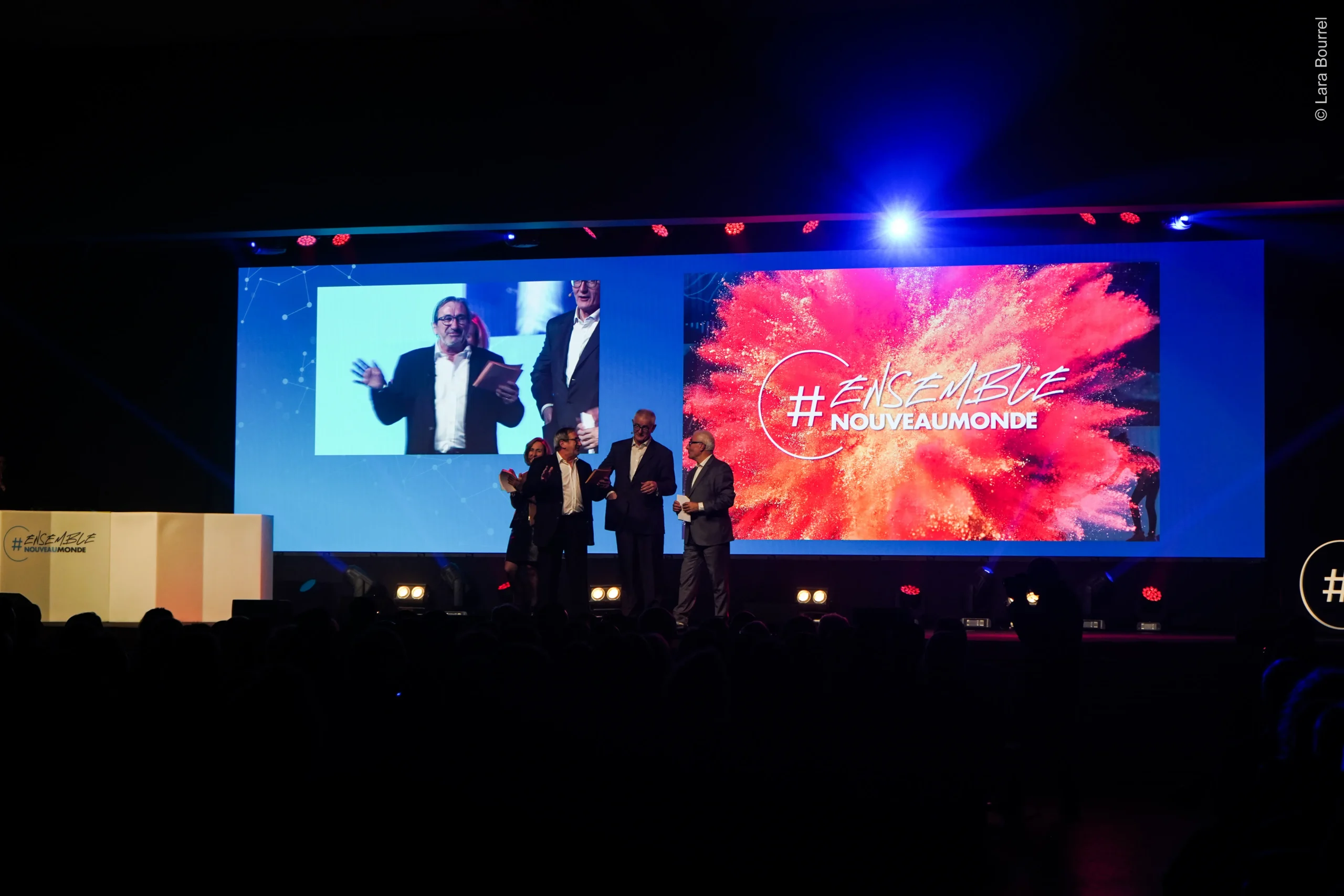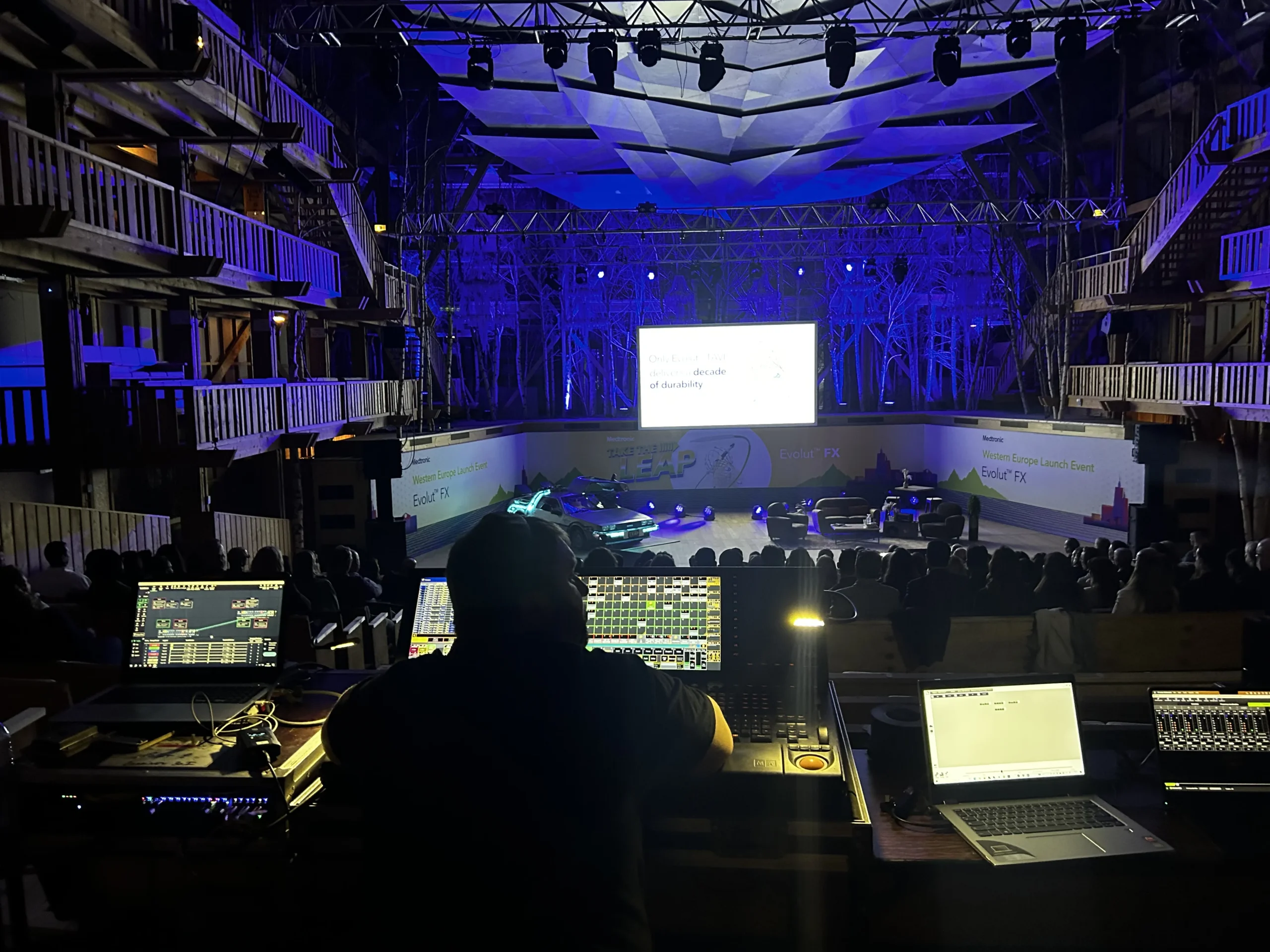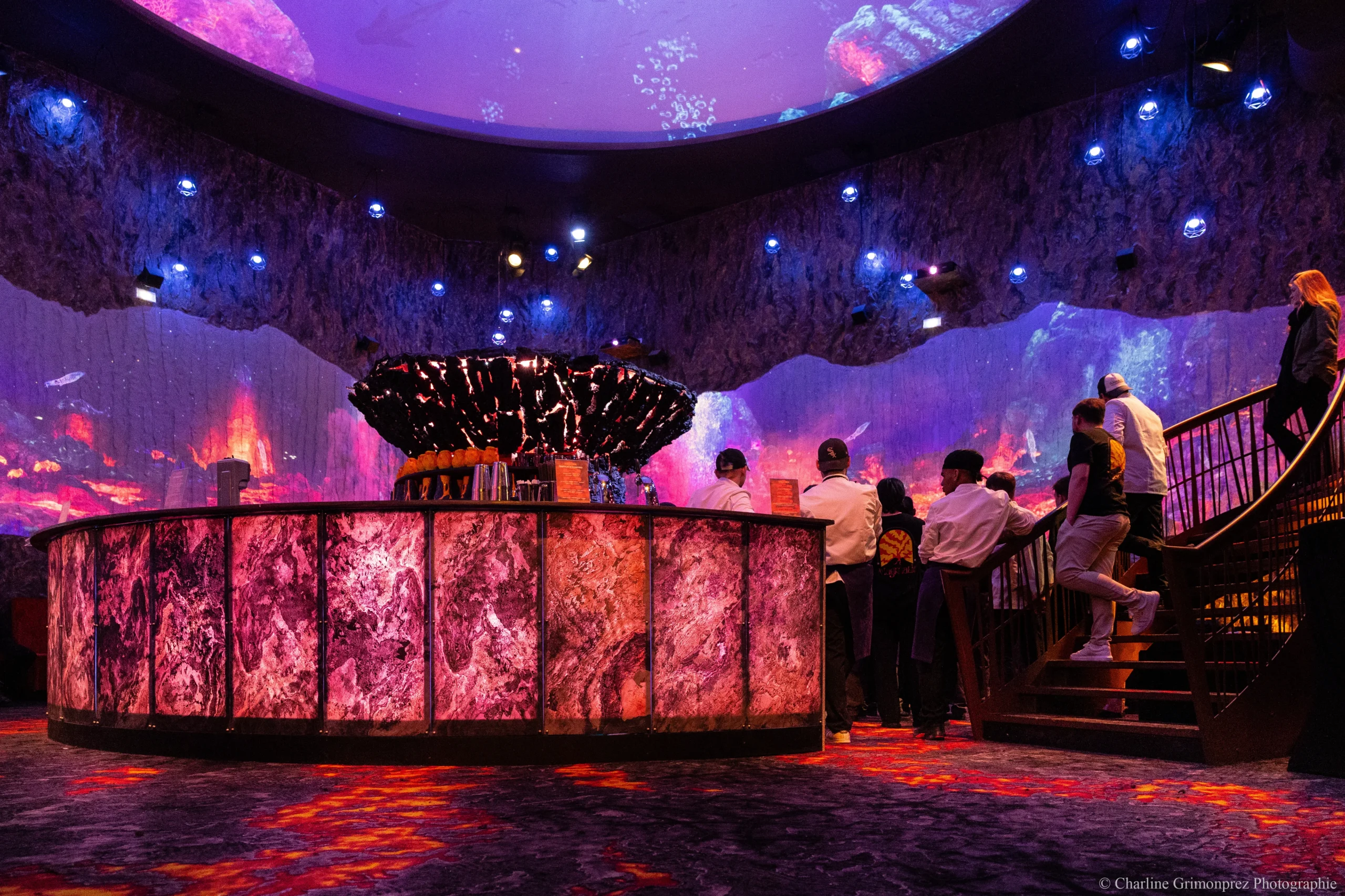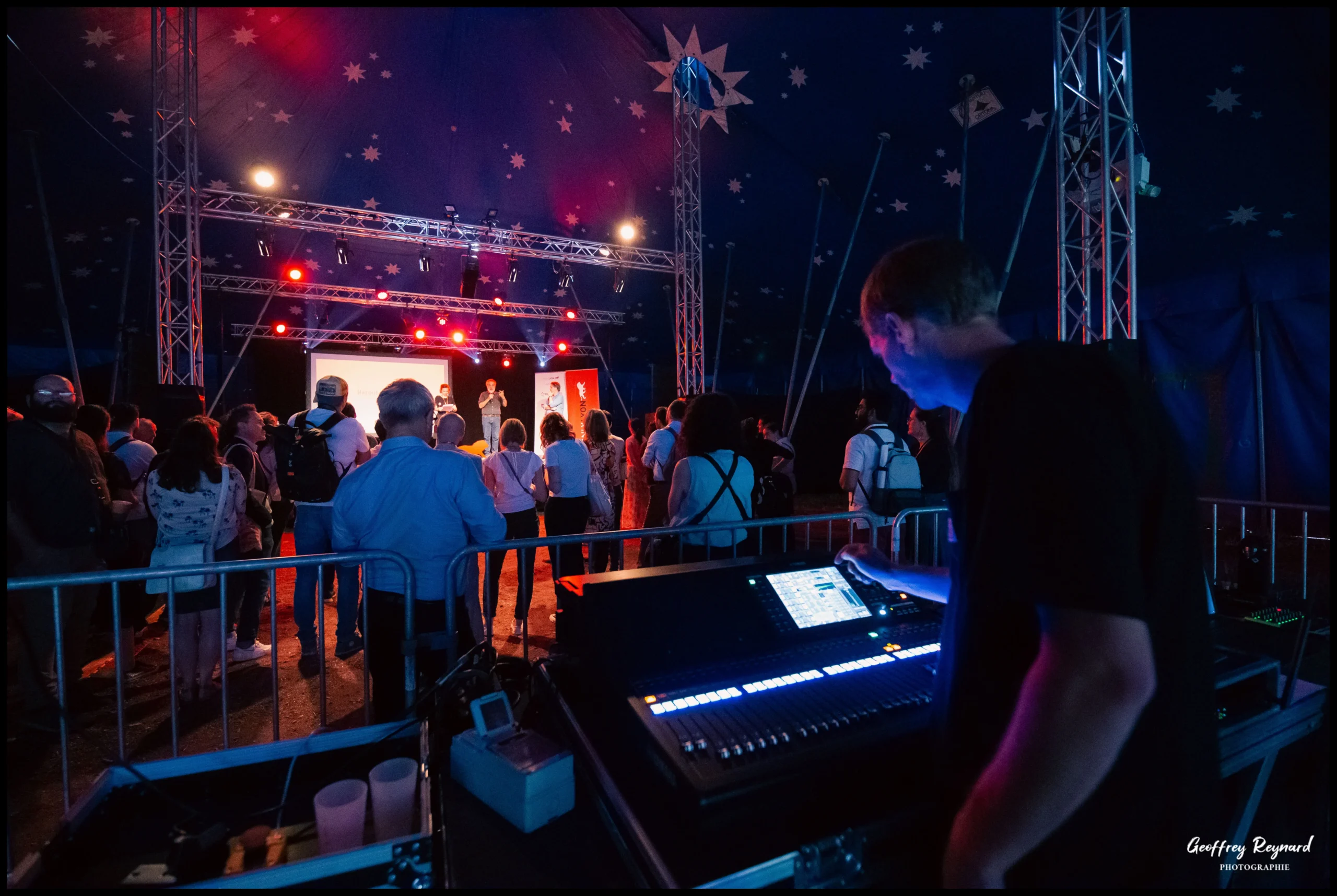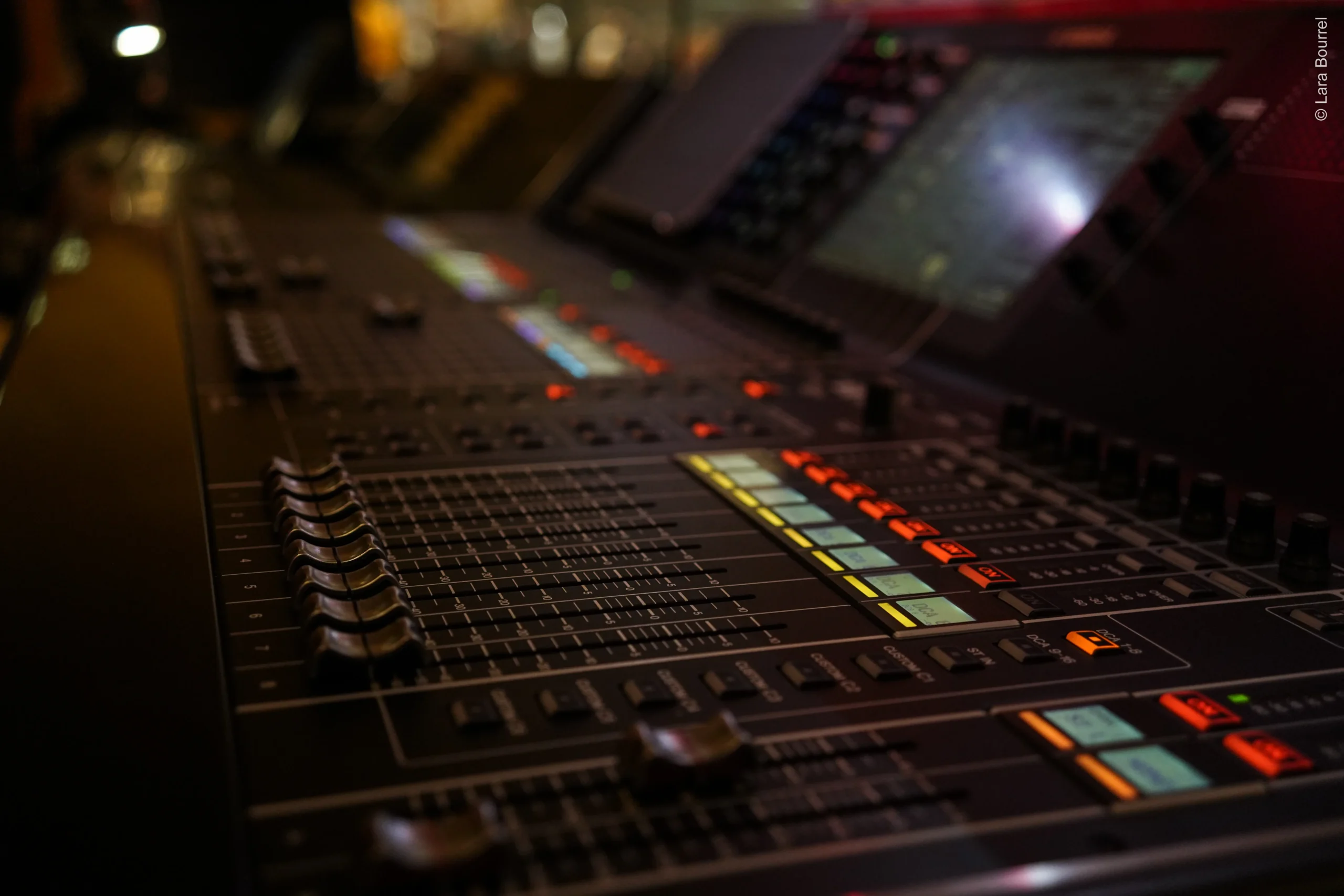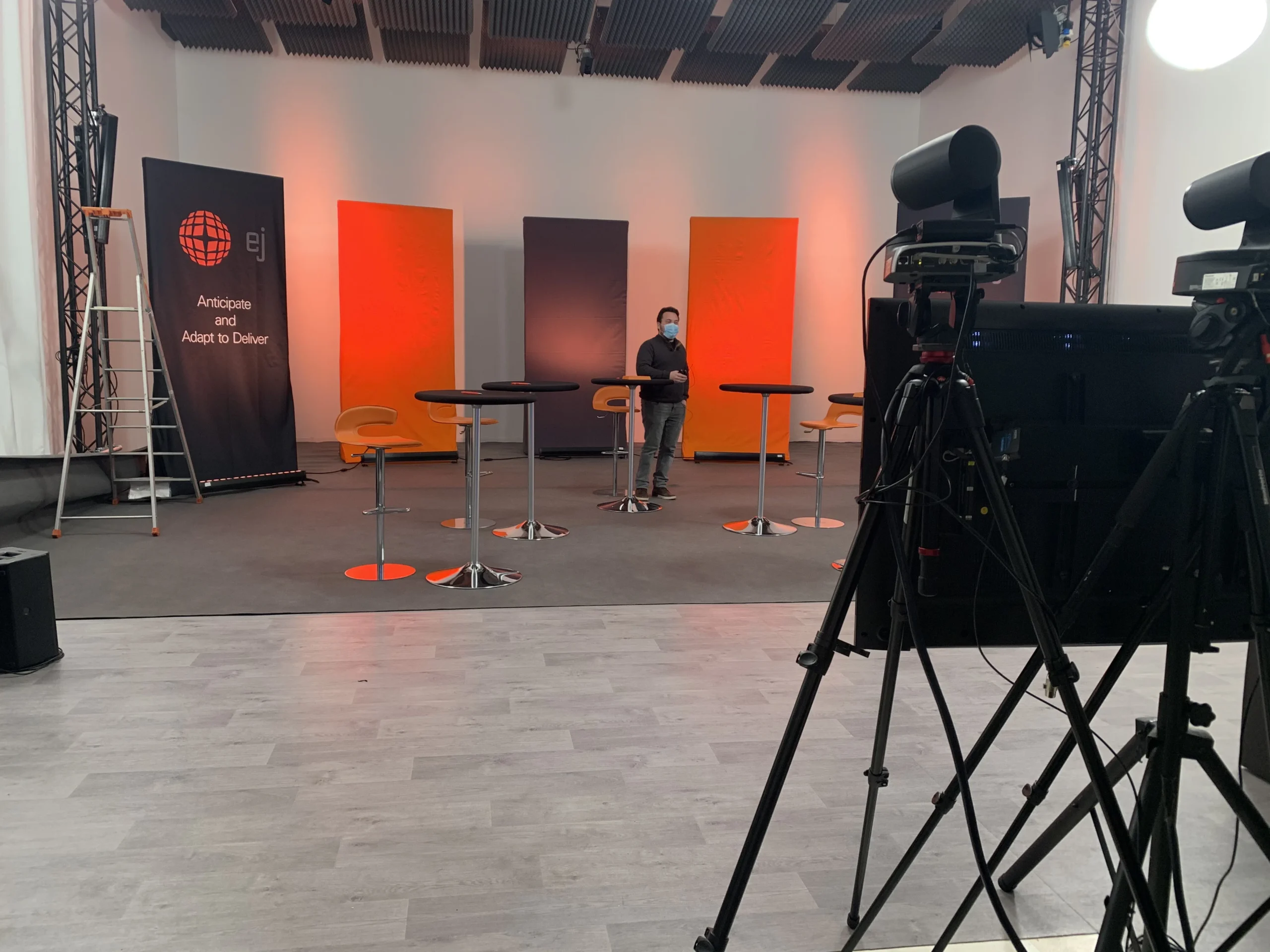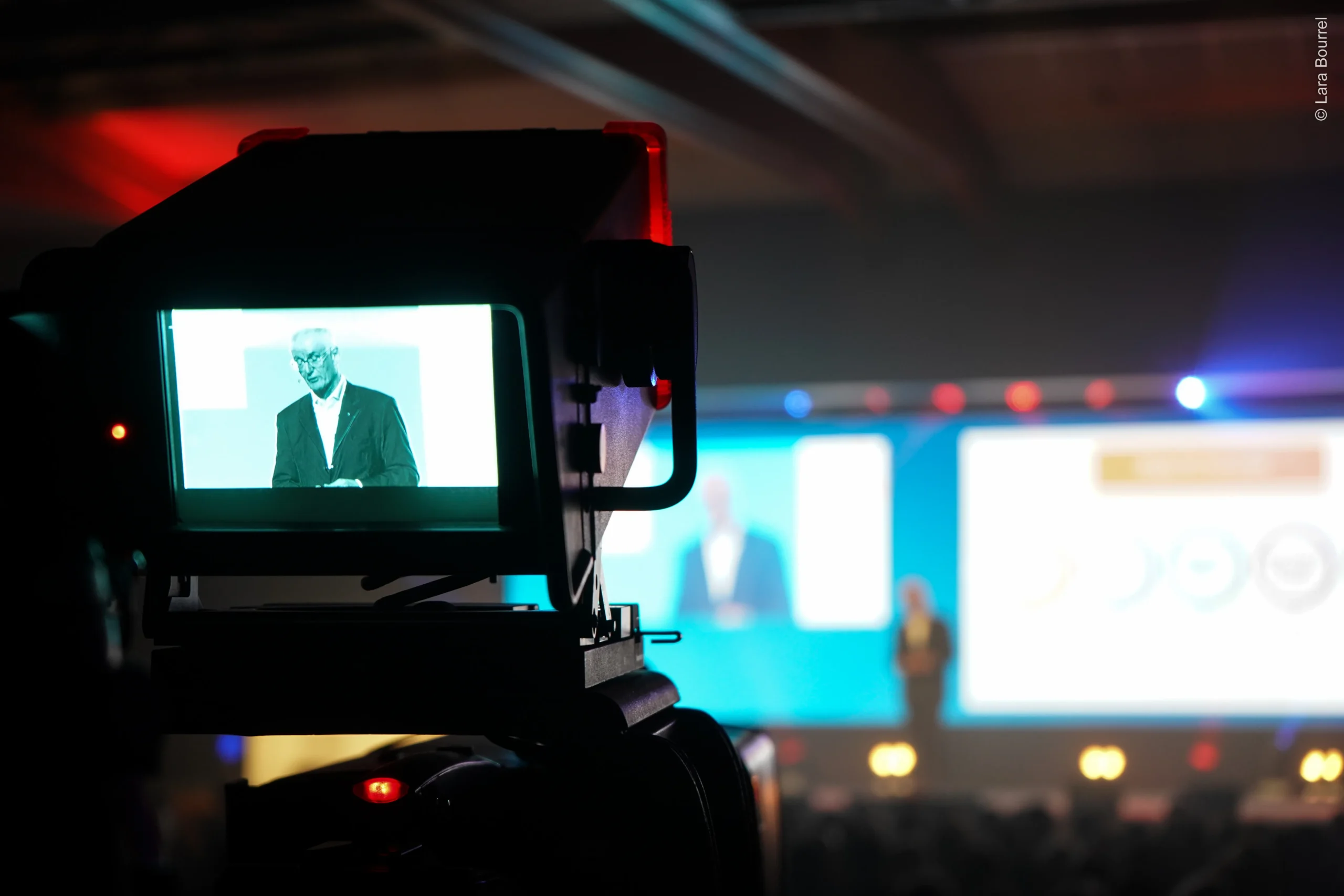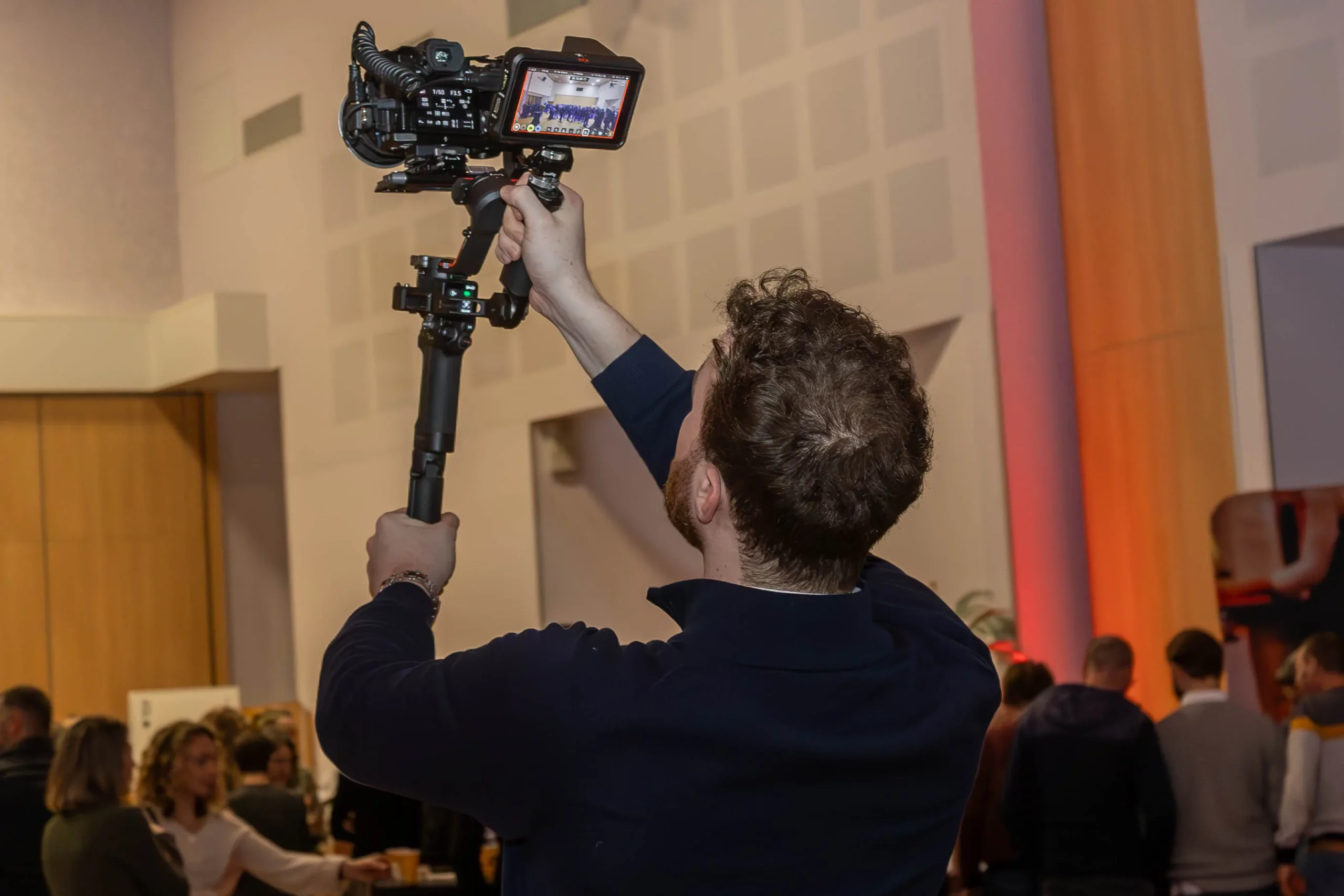
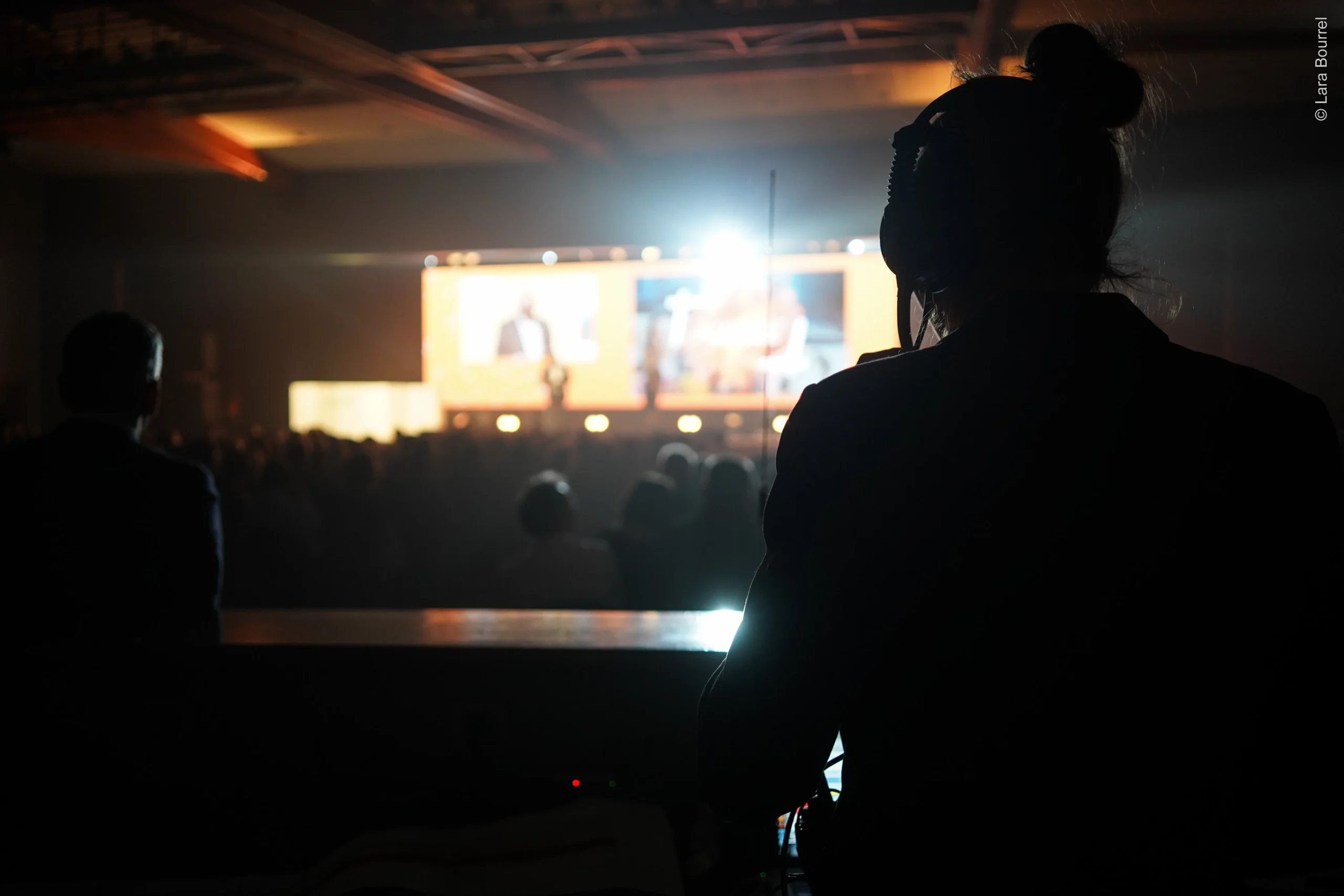
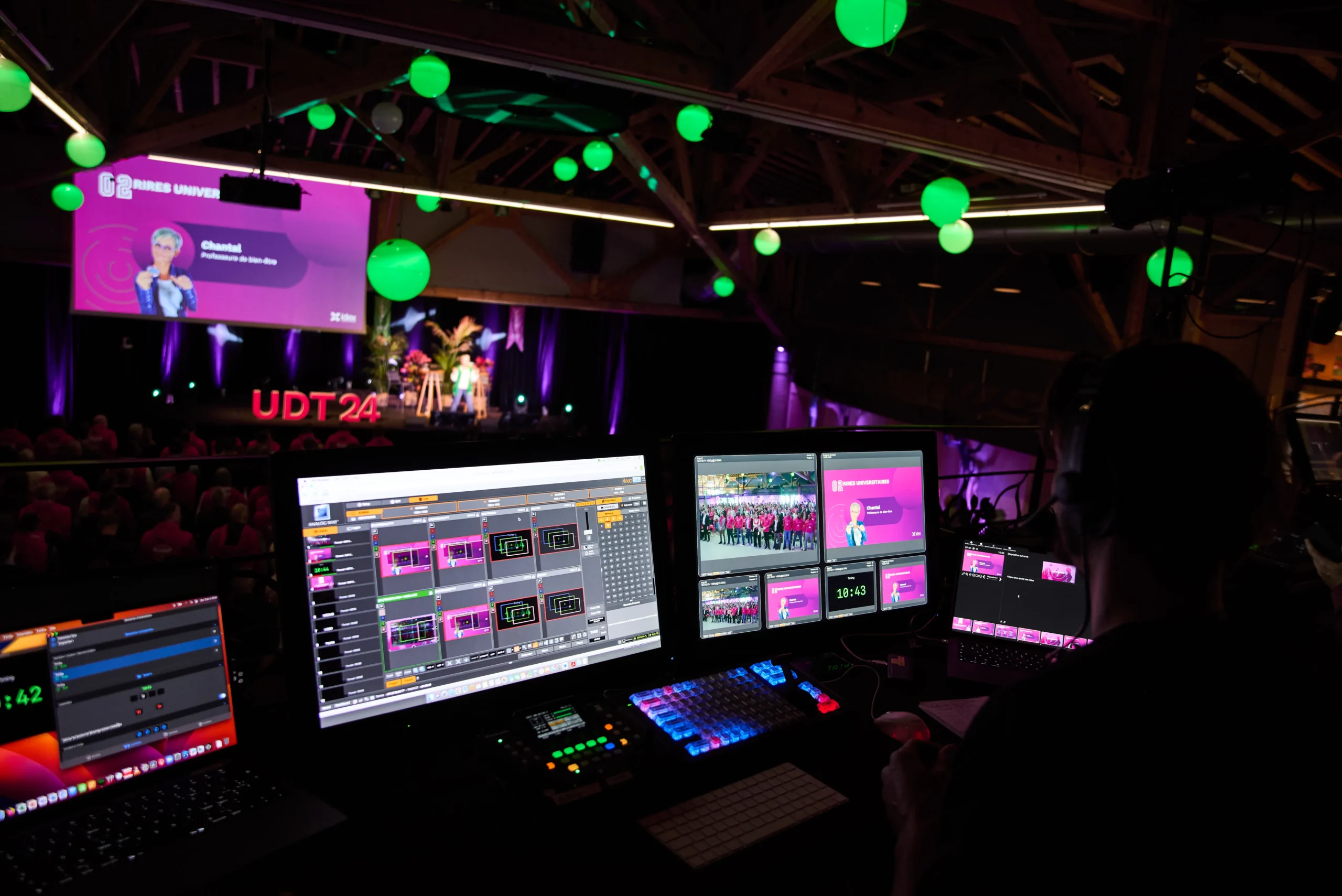
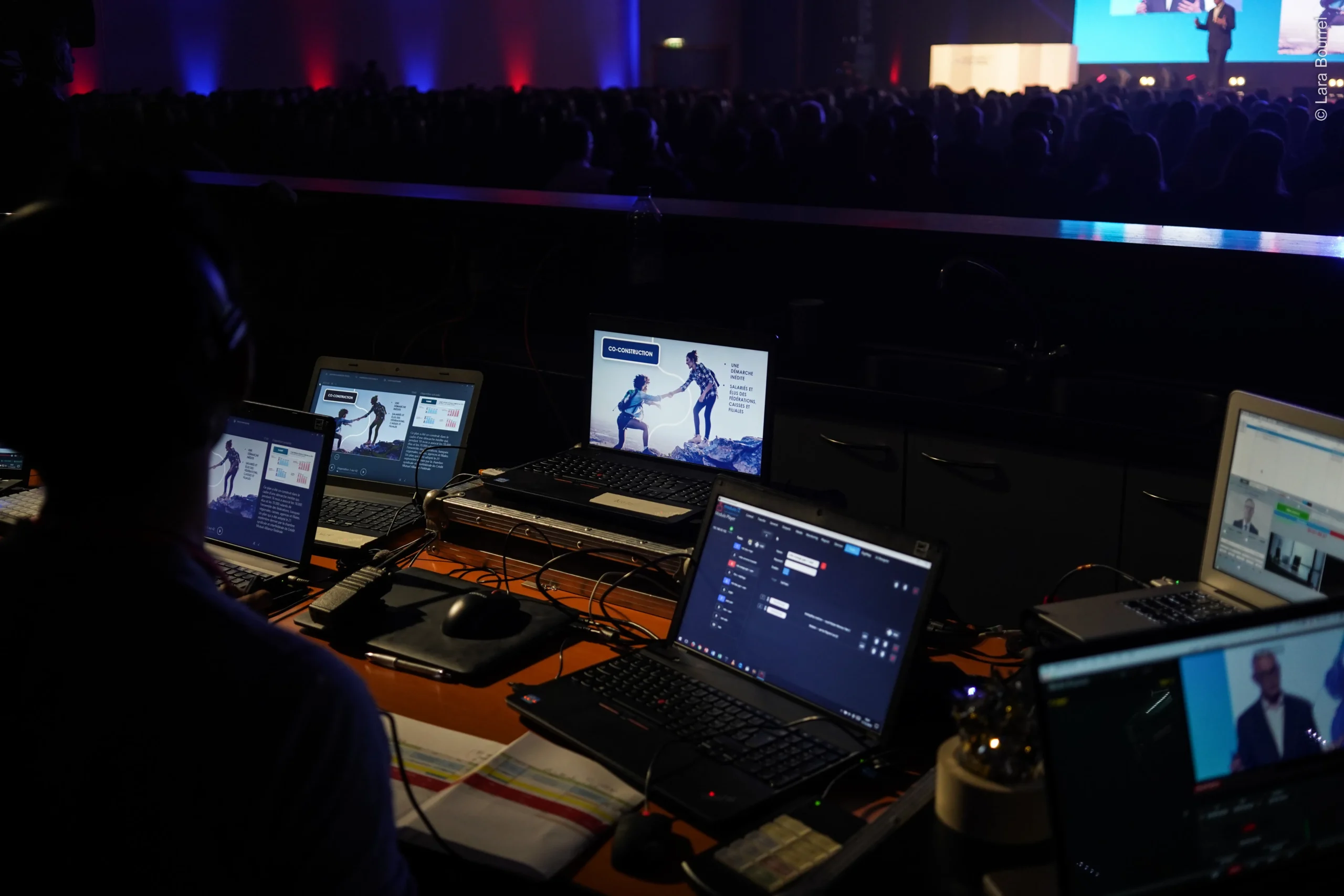
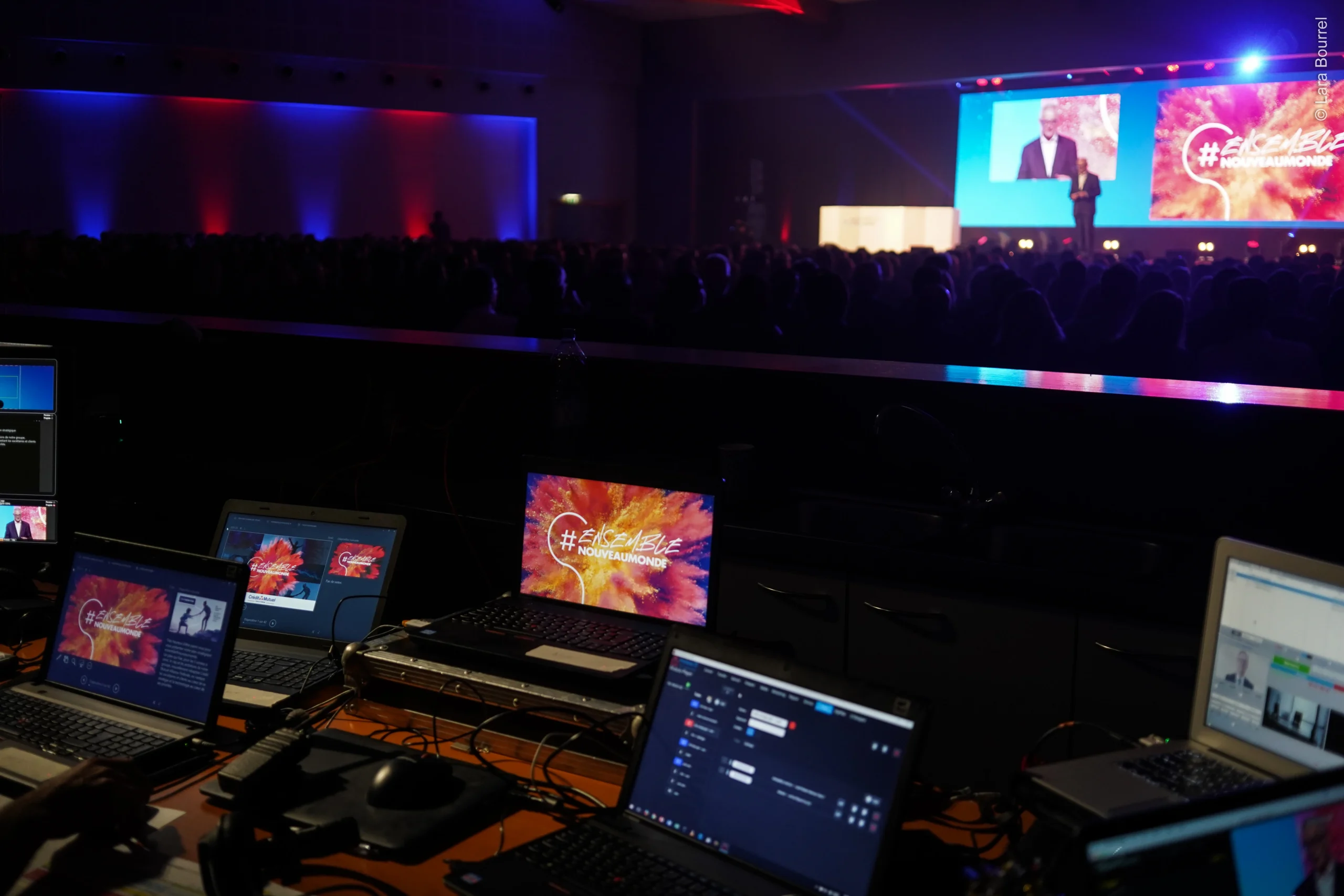
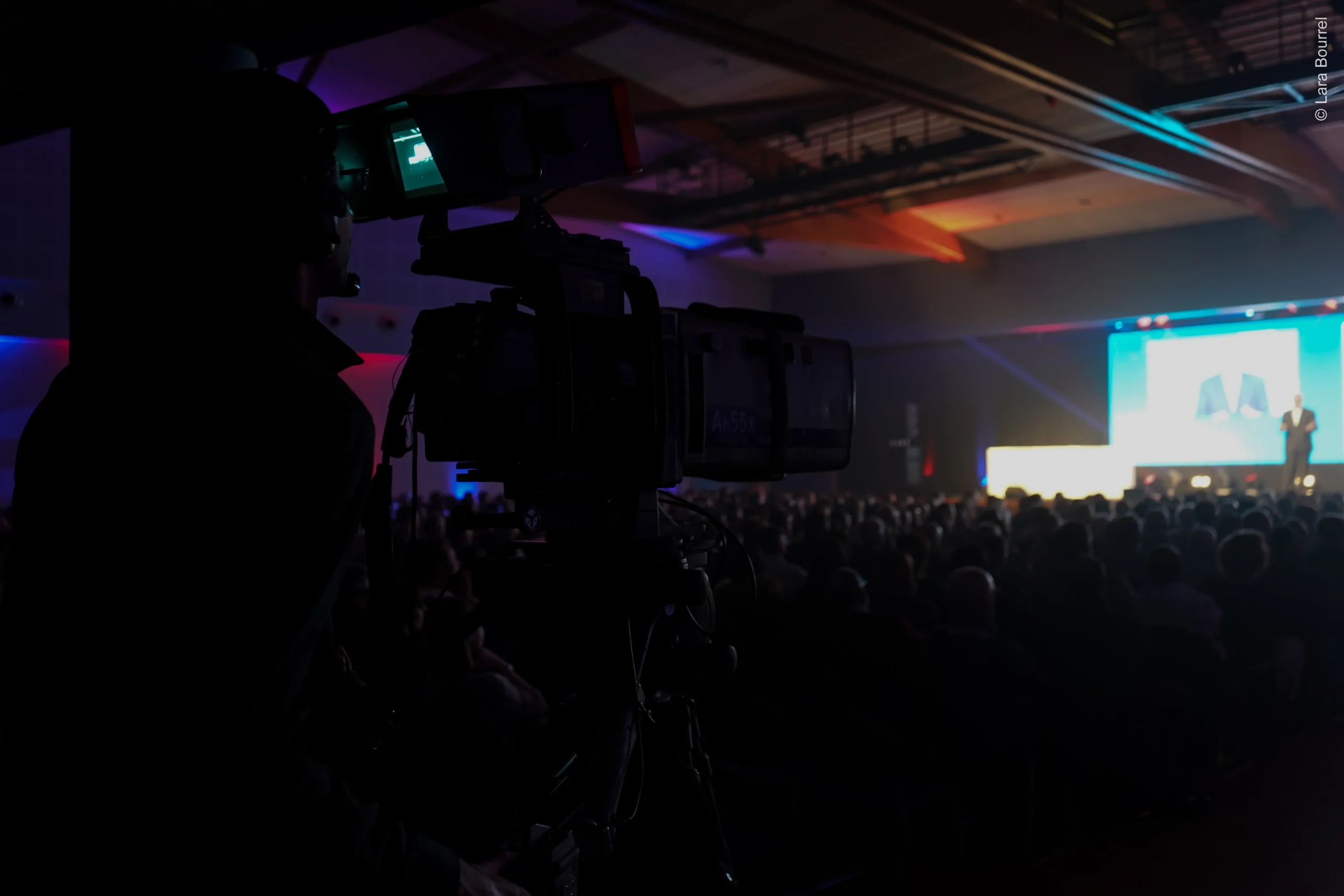
INNOV'events supports executives, HR, and communications teams with end-to-end Audiovisual Production Services for corporate events in Montréal, from planning to show call and strike. Typical formats: town halls, leadership conferences, awards, product launches, and hybrid meetings for 60 to 2,000+ attendees. We handle the technical direction, crew coordination, gear, rehearsals, run of show, and contingency planning so your speakers can focus on delivery.
In a corporate event, AV is not “tech in the background”: it’s the system that carries leadership credibility. When audio drops or slides lag, the room loses confidence in the message—especially in a town hall or strategy kick-off where alignment is the whole point.
In Montréal, organizations expect bilingual execution, tight cueing, and a production that respects union venues, downtown load-in realities, and hybrid audiences that will judge you through a screen as much as in the room.
Our team works locally with Montréal venues and suppliers every week, with show-ready processes: site surveys, cue sheets, comms protocols, rehearsals, and on-site technical leadership. The goal is simple: a clean show, delivered on time, with no surprises.
10+ years delivering corporate events and executive communications across Québec and Canada, with repeat clients who rely on consistent show standards.
150+ corporate productions per year (in-person, hybrid, and multi-room), including leadership meetings, trainings, awards, and product or brand moments.
20–60+ crew members mobilized on larger Montréal shows through our trusted technician network (A1/A2, V1/V2, LD, stage managers, riggers, camera ops, RF techs).
24–72 hours typical turnaround for a first technical approach and budget range after a structured needs call and venue basics.
INNOV'events is based in Montréal and we’re in local venues, hotels, and corporate offices week after week. Many of our collaborations renew because internal teams need a partner who documents decisions, keeps vendor coordination under control, and shows up with the same standards every time—especially when leadership is on stage.
We support communications and HR teams that run recurring moments: quarterly town halls, annual kick-offs, recognition programs, training cycles, and customer-facing events. In practice, that means we keep technical files (room plans, cue sheets, encoder settings, preferred mic types, branded graphics packages, interpretation routing) so the next edition starts faster and with fewer risks.
If you share the company names you want us to reference, we can integrate them here in a professional, compliant way (and align wording with your approval and brand guidelines).
We send you a first proposal within 24h.
Executives don’t measure AV by how “impressive” it looks; they measure it by whether the message lands, whether the schedule holds, and whether the experience matches the organization’s standards. Strong Audiovisual Production Services in Montréal reduce risk on the day-of and increase clarity before, during, and after the event.
Message control for leadership: clean audio, well-managed confidence monitors, teleprompter when needed, and a stage picture that supports authority—crucial for restructuring updates, strategic priorities, or sensitive Q&A.
Time discipline: a real run of show with cue-to-cue rehearsals, timers, and stage management. When you have multiple speakers and tight breaks, AV is what keeps the event from slipping by 30–45 minutes.
Better engagement and retention: cameras and screen content designed for attention (not just “slides on a screen”), with the right IMAG placement and sound coverage so participants at the back hear and see equally well.
Hybrid consistency: the online audience gets dedicated audio mixes, proper encoder redundancy, moderated Q&A, and a broadcast-minded approach rather than a simple “room feed.”
Risk reduction: backup microphones, spare playback systems, tested clickers, RF coordination, network checks, and a clear escalation protocol when something changes last minute.
Brand and employer image: stage design, lighting temperature, and camera framing that make your organization look credible—especially when recordings are re-used for onboarding or external communications.
Montréal is a relationship-driven market with high expectations for bilingual delivery and production discipline. Getting AV right is not a luxury here; it’s a baseline for credibility when stakeholders are in the room.
Local teams are often balancing ambitious communications goals with real operational constraints: building rules, union labour, limited load-in windows, and leadership schedules that leave little rehearsal time. A reliable AV partner in Montréal understands those realities and plans for them early.
In practice, we see the same expectations come back across sectors (finance, tech, pharma, professional services, public organizations):
We plan around these constraints with documented workflows: pre-production checkpoints, venue technical advances, and on-site leadership that can make decisions in real time without escalating every detail to your team.
Entertainment succeeds when it supports the event objective and fits the technical environment. In a corporate setting, the question is rarely “what’s the most spectacular idea?”—it’s “what will engage our people without risking timing, tone, or brand?” With strong Audiovisual Production Services in Montréal, entertainment can be integrated smoothly into the run of show, not bolted on at the last minute.
Moderated live Q&A with audience routing: ideal for town halls. We set up microphones, a moderation workflow, and confidence monitors so executives keep control while still showing openness.
Live polling with on-screen visualisation: best for HR or transformation communications. The key is testing Wi-Fi/cellular density in the room and having a fallback plan if connectivity fluctuates.
Panel format with controlled audio: we manage table mics vs. lavs, plus mix-minus for hybrid feeds so remote attendees aren’t listening to echo or room reverb.
Short musical sets between segments: effective for awards and recognition evenings. We plan changeovers, inputs, and sound checks so it doesn’t steal time from speeches.
Spoken word or bilingual MC: useful when you need tone management and smooth transitions. We align scripts, pronunciation, and cueing with the communications team.
Visual performance designed for camera: when the event is hybrid or recorded, we ensure lighting levels and shutter settings work together so the performance looks good on screen, not just in the room.
Chef demo on stage with IMAG: works well in Montréal for client receptions or internal celebrations. The AV challenge is camera placement, colour temperature, and handling sizzling audio without ruining speech clarity.
Guided tasting with timed cues: we coordinate lighting cues, background music, and on-screen prompts so service and show stay aligned—especially when catering teams are handling multiple stations.
Hybrid guest speaker with broadcast-quality setup: we build a reliable remote contribution path (platform choice, dedicated audio feed, rehearsal). This is common when a global exec is joining from another time zone.
Multi-room overflow with program feed: for crowded Montréal venues, we distribute the show to secondary rooms with delay compensation and clear wayfinding so the experience remains cohesive.
Content capture for internal communications: we can produce short cuts (highlights, leadership clips) while respecting approvals and privacy requirements, so your comms team can reuse the content post-event.
The best option is the one that matches your culture and risk tolerance. We’ll always ask: what is the purpose (alignment, recognition, employer brand, customer confidence), and what’s the acceptable complexity level given your timeline and venue? That’s how entertainment supports brand image instead of competing with it.
The venue is not just a backdrop—it defines rigging options, screen sightlines, audio coverage, loading constraints, and how quickly you can reset between segments. In Montréal, we often see AV success determined by early technical checks: ceiling height, power distribution, dock access, union rules, and the venue’s in-house equipment limitations.
| Venue type | For which objective? | Main strengths | Possible constraints |
|---|---|---|---|
| Downtown hotel ballroom | Town halls, awards, leadership meetings with dinner service | All-in-one logistics, built-in rigging points (often), predictable staffing and room turnover | Load-in windows can be tight; house AV may require integration; room acoustics can be reflective without treatment |
| Conference centre / large event hall | 1,000+ attendees, multi-room programs, sponsor zones | Scale, multiple breakout rooms, better back-of-house access for trucks and staging | Union labour and scheduling; longer walks for crew and attendees; more signage and comms needed |
| Industrial / converted creative space | Product launches, brand moments, filmed content | Strong visual identity, flexible layouts, “non-corporate” feel | Power and rigging may need reinforcement; acoustics can be challenging; requires more production build and safety planning |
| Corporate office / HQ space | Leadership updates, internal announcements, smaller hybrid meetings | Convenient for teams, lower venue cost, strong brand control | Freight access, noise restrictions, limited ceiling height; IT/security approvals for streaming can add lead time |
We strongly recommend a site visit or, at minimum, a technical advance with venue plans and a walk-through. It’s the fastest way to prevent the classic Montréal problems: insufficient power where the stage is planned, blocked sightlines due to columns, or load-in timing that forces rushed setup.
Pricing for Audiovisual Production Services in Montréal depends on the show design, venue constraints, and the level of risk you want to eliminate. A good budget is not “gear rental only”—it includes skilled labour, pre-production, rehearsals, and the on-site leadership that keeps the program stable.
Audience size and room geometry: larger rooms need more speakers, delays, and often additional screens to keep sightlines clean.
Program complexity: number of speakers, videos, remote contributors, awards walk-ups, and any live elements increase cueing and staffing needs.
Hybrid/streaming requirements: camera count, graphics, dedicated stream audio mix, redundancy, and platform moderation change the cost significantly.
Bilingual and interpretation: simultaneous interpretation can require booths, infrared or RF distribution, extra audio routing, and testing time.
Venue rules: union labour, in-house AV exclusivity, rigging policies, and limited load-in windows can add labour hours or mandate specific suppliers.
Rehearsal time: a single cue-to-cue vs. full run-through with executives impacts crew call length and availability.
Content support: last-minute slide clean-up, video formatting, lower-third design, and show graphics packages can be scoped as a separate line item.
We build budgets so you can make trade-offs consciously: where to keep redundancy, where a simpler screen plan is acceptable, and where cutting corners will create reputational risk. The ROI is usually measured in avoided failure (no audio issues during a key message), improved understanding (clear content), and reusable assets (recordings that become internal communications).
When stakes are high, proximity matters. A local team can do faster site visits, pull in the right technicians for the venue, and respond quickly when schedules shift. As an event agency in Montréal, we manage not only equipment and crew, but also the coordination that prevents friction between venue ops, catering, staging, and speakers.
For executives and internal teams, the practical advantage is governance: one accountable lead who keeps the technical plan aligned with your message, your risk tolerance, and your timeline.
We build budgets so you can make trade-offs consciously: where to keep redundancy, where a simpler screen plan is acceptable, and where cutting corners will create reputational risk. The ROI is usually measured in avoided failure (no audio issues during a key message), improved understanding (clear content), and reusable assets (recordings that become internal communications).
Our projects range from discreet executive communications to high-visibility corporate events with complex staging. What stays constant is the same discipline: pre-production, technical documentation, and calm execution.
Common real-life situations we manage for Montréal organizations:
If you want, we can provide a structured case study format (objectives, constraints, solution, staffing plan, gear overview, and outcomes) once we know your typical event formats and venue shortlist.
Underestimating audio needs: choosing the wrong microphones or skipping proper speaker coverage leads to poor intelligibility—even in a “small” room with 150 people.
No real rehearsal: without a cue-to-cue, you discover video format issues, clicker conflicts, or interpretation routing problems in front of the audience.
Unclear ownership: when nobody is responsible for calling cues, transitions drift and executives lose confidence in the control of the room.
Hybrid treated as an afterthought: sending the room feed to the web without a dedicated stream mix makes the remote audience feel excluded and reduces message retention.
Ignoring venue constraints: load-in restrictions, in-house AV exclusivity, or union labour requirements can force rushed setups or cost overruns.
Content not production-ready: heavy videos, missing fonts, incompatible aspect ratios, or last-minute changes without version control create show-time risk.
No contingency plan: no spare mics, single playback laptop, or no backup internet path for streaming is a gamble—especially downtown.
Our role is to remove these risks through planning, documentation, and the right staffing model. You shouldn’t be troubleshooting on the day-of; you should be welcoming stakeholders and protecting your message.
Repeat business comes from reliability more than creativity. Teams come back when they know the show will run, issues will be handled discreetly, and budgets will be explained clearly.
70%+ repeat collaboration rate on annual or recurring internal events (typical pattern: kick-off + town halls + recognition or holiday event).
Same-day debrief within 24–48 hours when required, with a clear list of improvements, updated technical files, and recommendations for the next edition.
Named points of contact (production + technical) so communications and HR teams aren’t re-explaining context every time.
Loyalty is a practical indicator: it means the partner protects executives, respects timelines, and keeps the experience consistent across venues and formats in Montréal.
We start with a structured call with your executive sponsor and/or comms/HR lead: objectives, audience profile, sensitivity level of content, bilingual requirements, must-not-fail moments, and success criteria. We also confirm constraints: venue shortlist, timing, union considerations, and whether you need recording or streaming.
We gather venue specs (plans, ceiling heights, rigging, power, dock access, in-house AV rules) and validate what’s realistic. When possible, we do a site visit in Montréal to confirm sightlines, projector throw, FOH position, backstage flow, and noise sources.
We translate your program into a technical design: audio coverage, mic plot, screen plan, lighting approach, camera plan (if needed), streaming architecture, and comms (intercom/headsets). We also define roles clearly—technical director, A1, V1, LD, stage manager—so responsibilities don’t overlap dangerously.
We build a detailed run of show with cue numbers and ownership. We set content delivery deadlines, define file formats, and implement version control so last-minute updates don’t create playback risk. For executive keynotes, we plan confidence monitors, timers, and any teleprompter workflow early.
On build day, we manage load-in sequencing, safety, and testing: line checks, RF coordination, playback testing (including embedded videos), and stream rehearsal if hybrid. We run a cue-to-cue and, when possible, a short presenter rehearsal to reduce stress for leadership.
During the event, we run a controlled show: clear cue calls, disciplined comms, and real-time adjustments without disrupting the program. If something changes (speaker order, missing presenter, late deck), we adapt while protecting timing and message clarity.
We strike efficiently within venue rules, deliver recordings or cutdowns as scoped, and provide a debrief with practical recommendations. For recurring Montréal events, we update the technical file so your next edition is faster, safer, and easier to budget.
For a standard corporate event, plan 4–8 weeks. For a hybrid show, interpretation, or a union venue, aim for 8–12 weeks. If your date is sooner, we can still help, but options and rehearsal time may be tighter.
As a practical range: a small corporate setup can start around $5,000–$12,000. Mid-size events with staging, multiple mics, screens, and a full crew often land at $15,000–$45,000. Hybrid events with cameras and streaming frequently run $25,000–$90,000+ depending on complexity and redundancy.
Yes. We plan bilingual show flows, on-screen graphics, and interpretation routing (booths, receivers, and audio paths). We also schedule testing time because interpretation affects mic gain structure and overall room mix.
The top causes are: no dedicated stream audio mix, unstable internet path, and insufficient rehearsal with remote speakers. We mitigate this with a dedicated streaming workflow, redundancy where needed (encoder/internet), and a platform rehearsal.
Yes. When a venue requires in-house AV, we integrate and manage the full production plan: roles and responsibilities, technical specs, cueing, and quality control. The goal is one coherent show standard—no gaps between suppliers.
If you’re comparing agencies, we can provide a structured proposal: recommended technical approach, staffing plan, run of show requirements, and budget options (baseline vs. enhanced vs. hybrid). Share your date, venue (or shortlist), attendee count, bilingual needs, and whether you require recording/streaming. The earlier we align on constraints in Montréal, the more we can protect quality while keeping the budget under control.
Thierry GRAMMER is the manager of the INNOV'events Montréal office. Reach out directly by email at canada@innov-events.ca or via the contact form.
Contact the Montréal agency