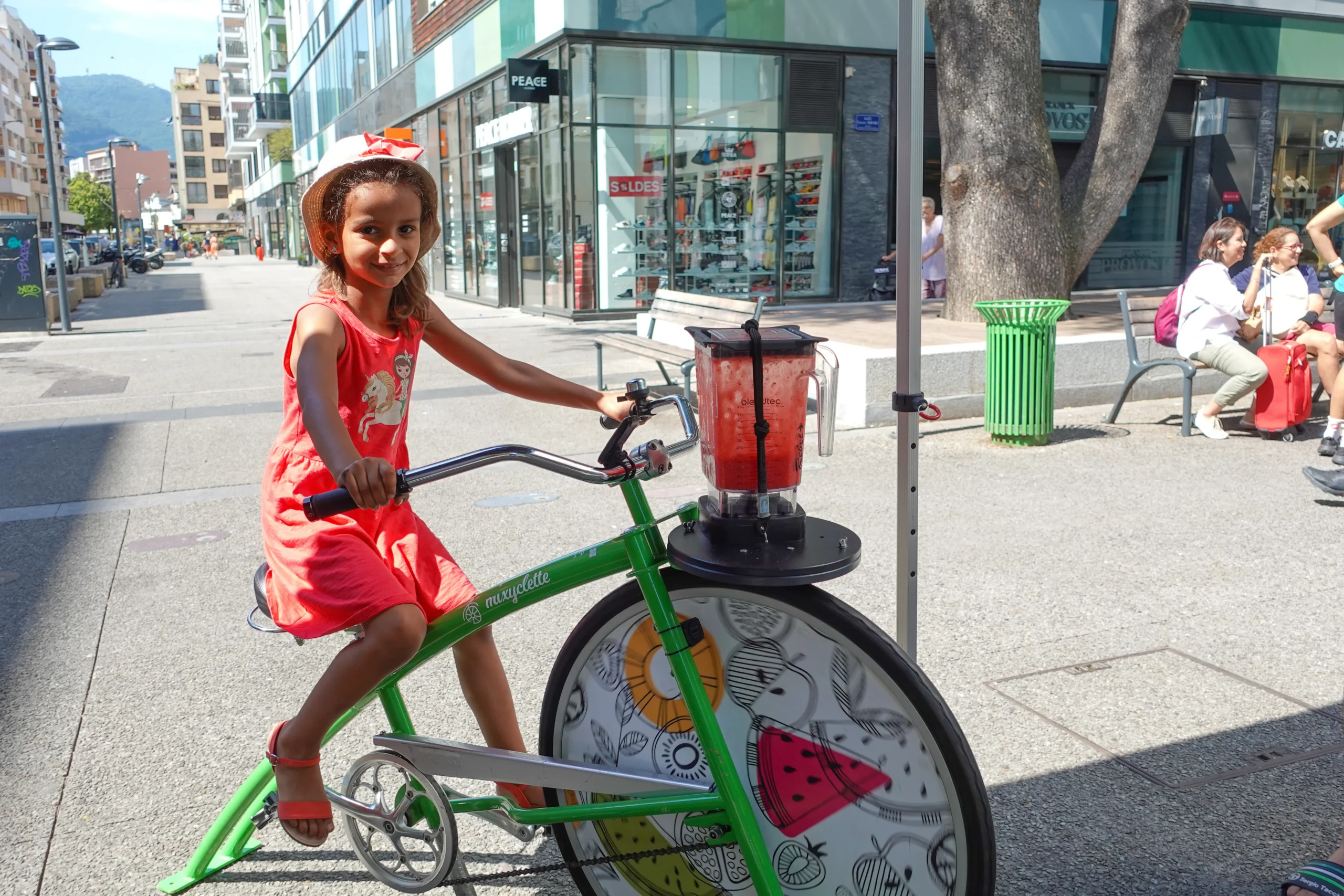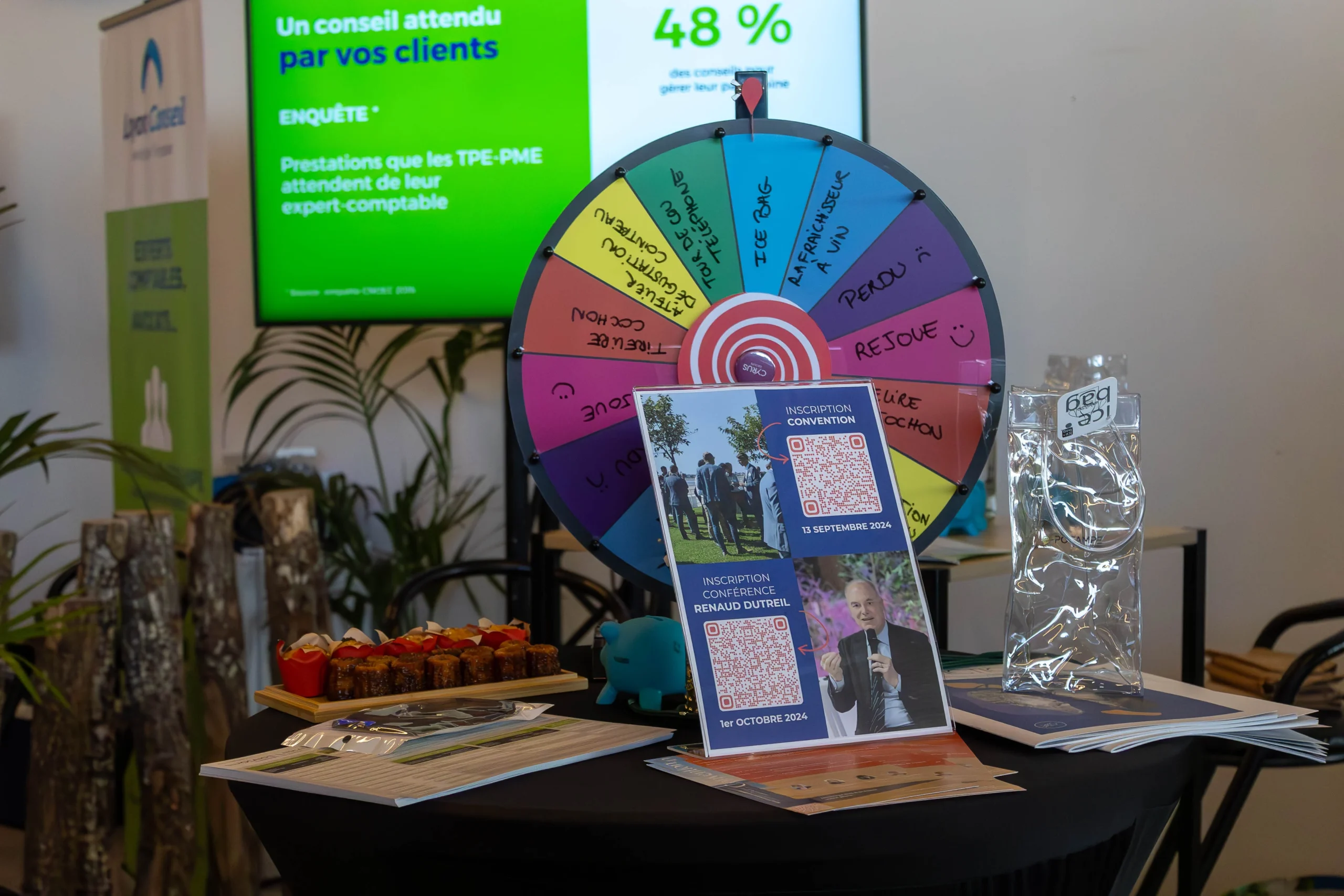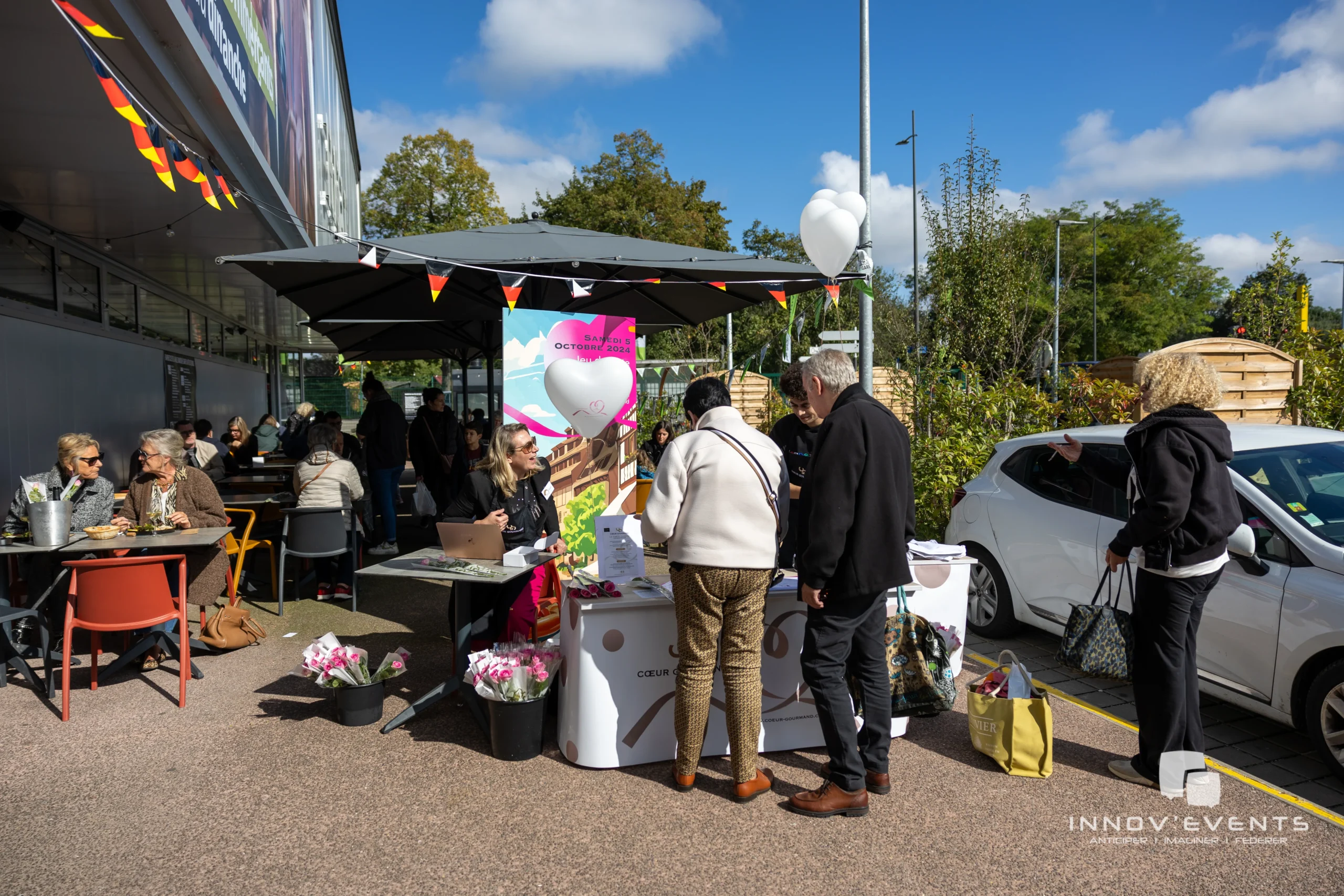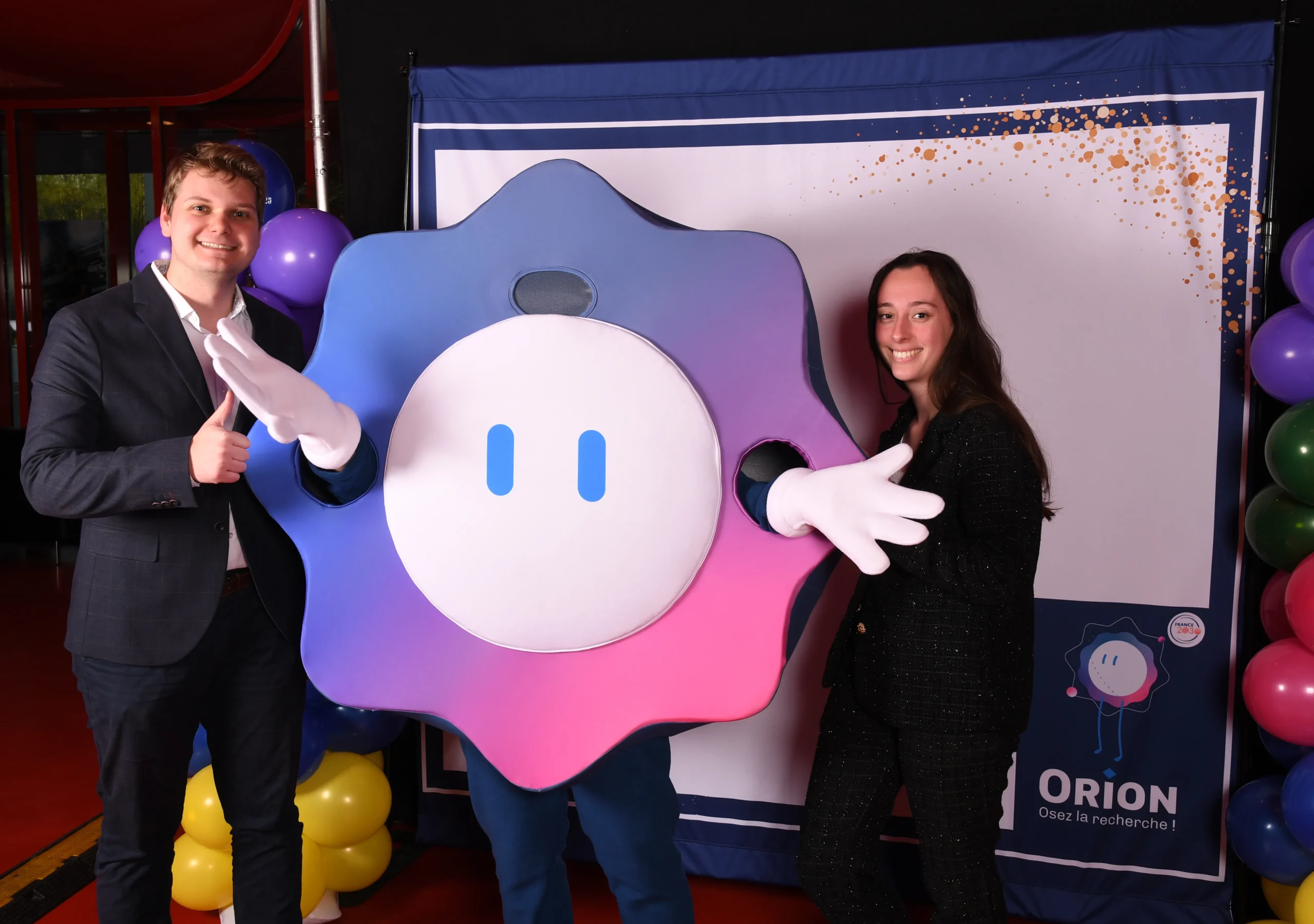
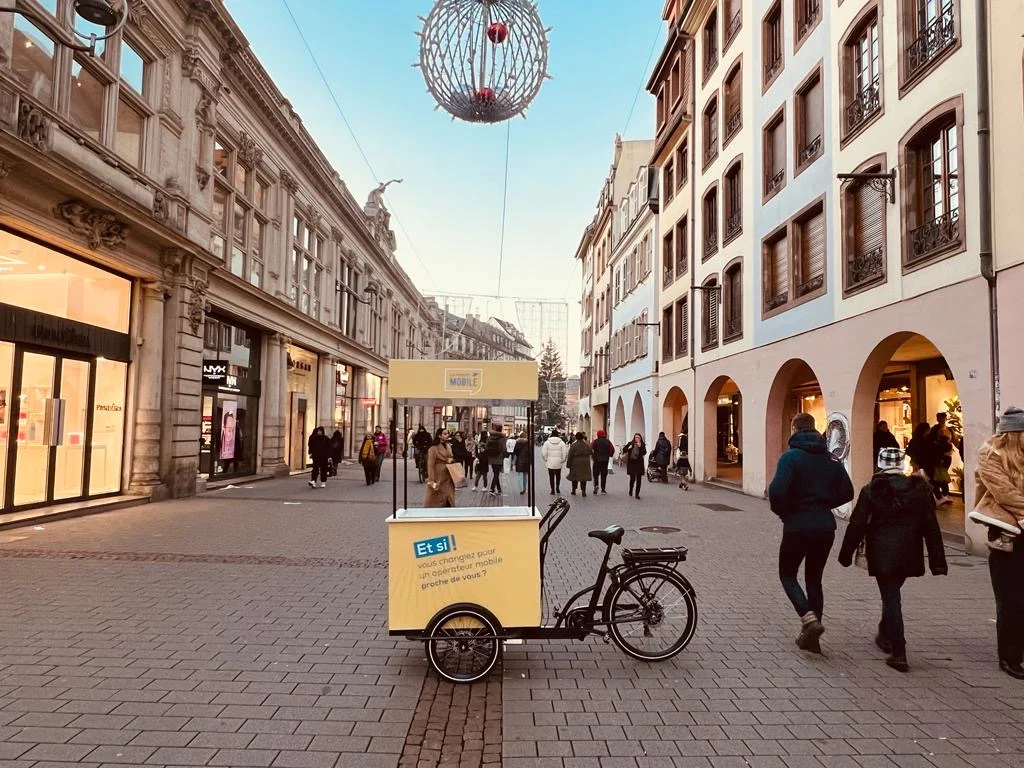
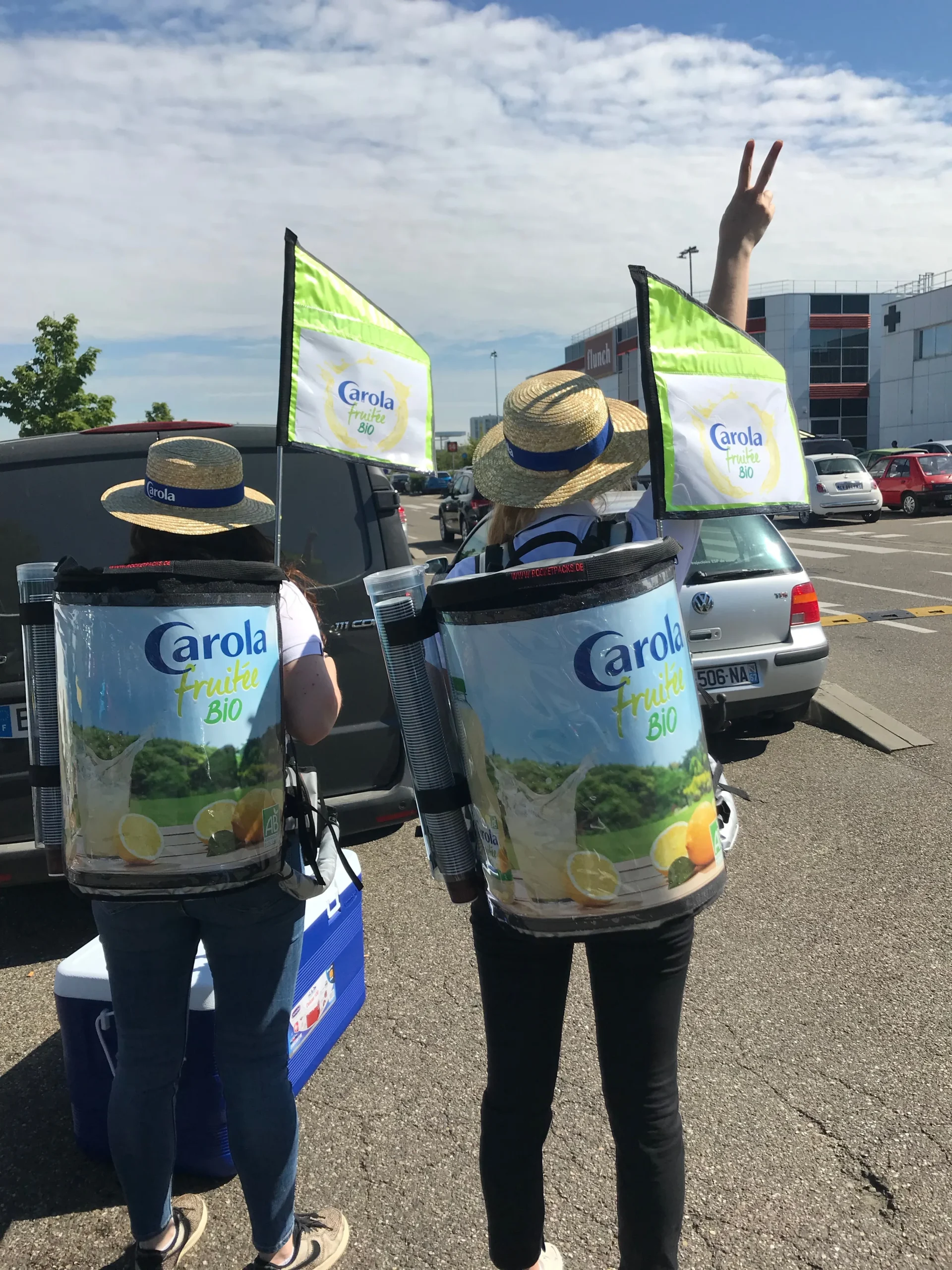
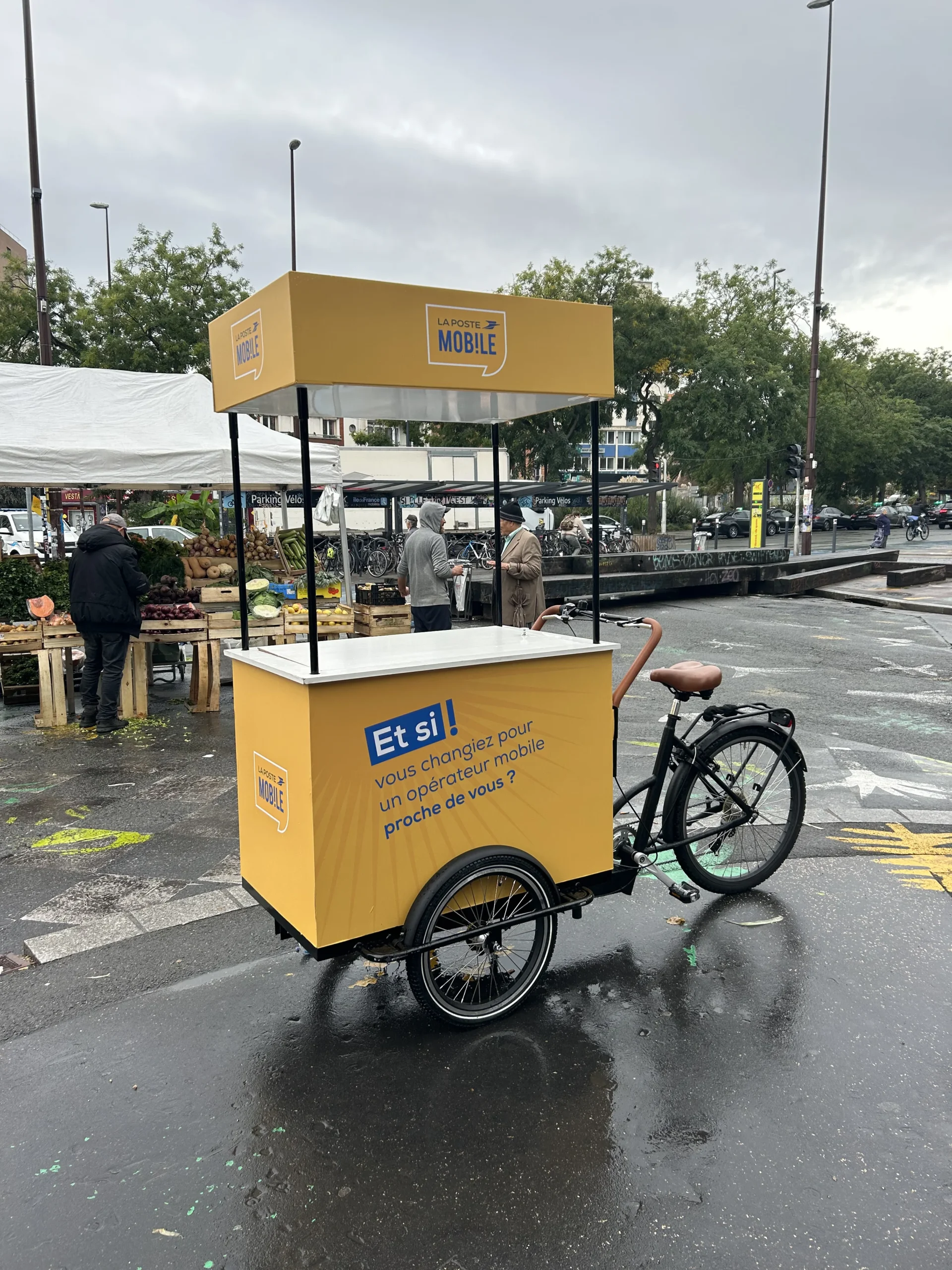
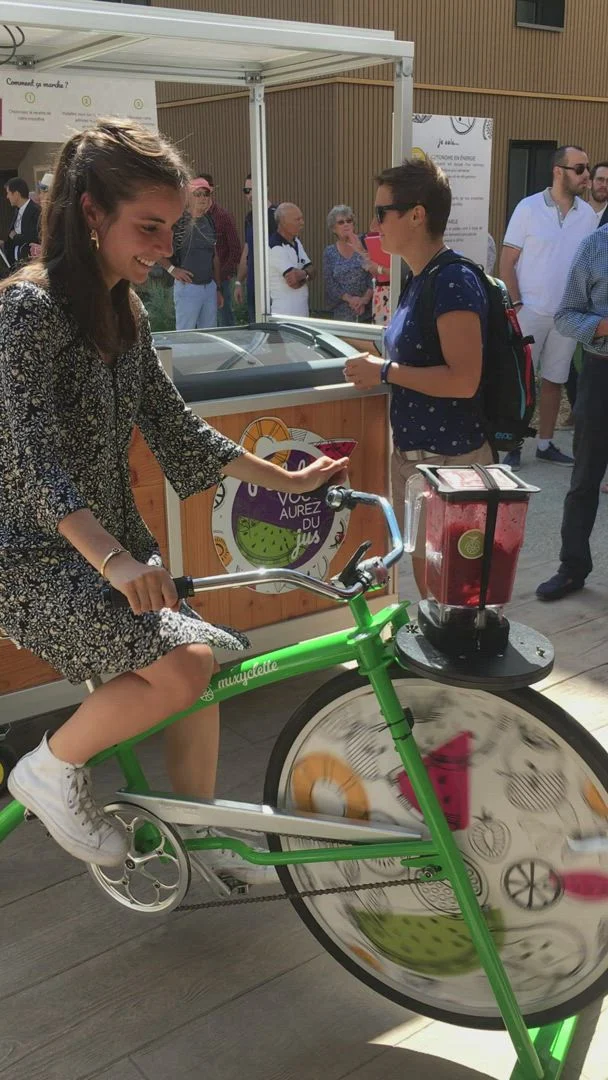
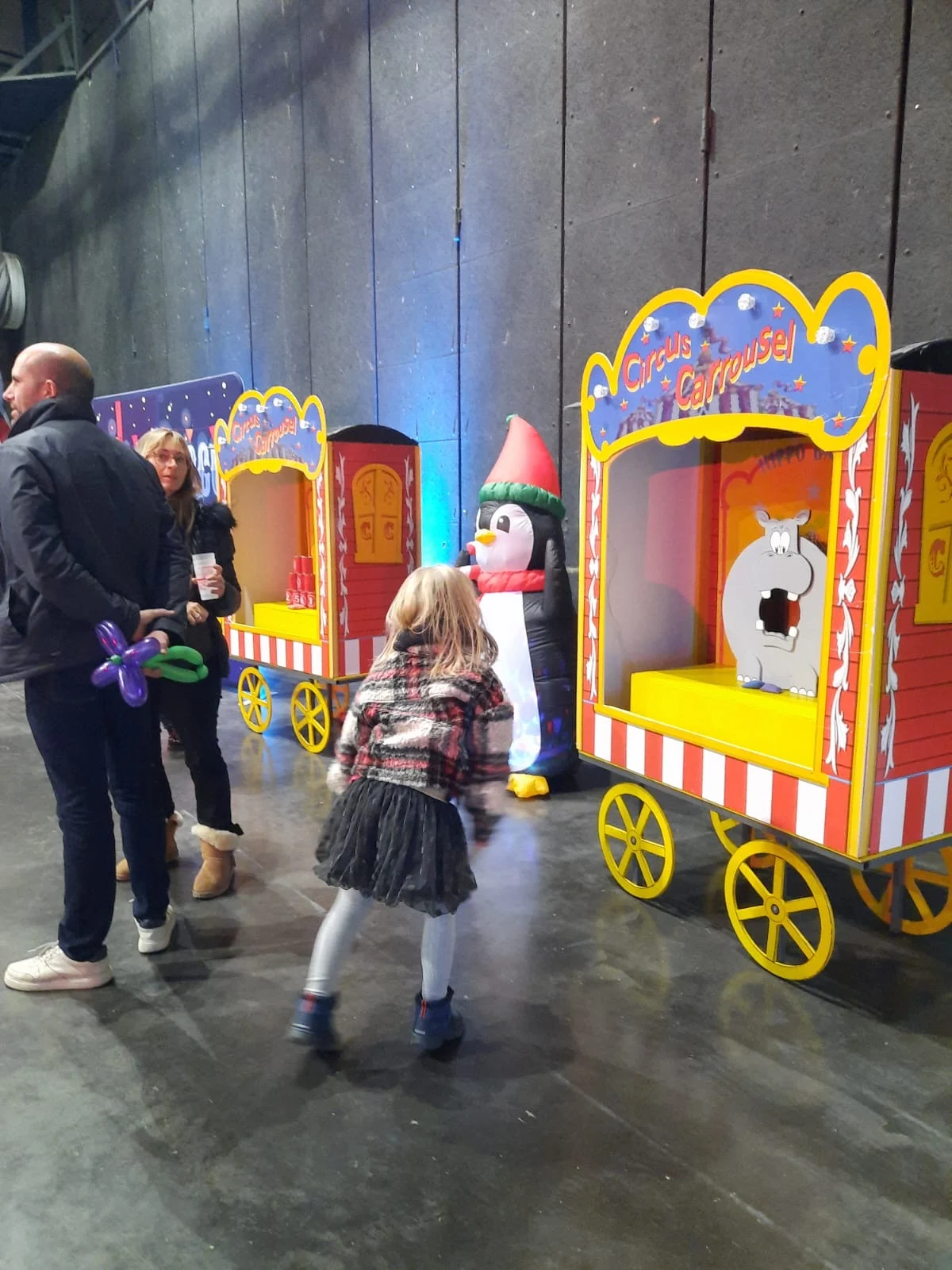
INNOV'events plans and runs Field Brand Activation programs across Montréal for corporate brands that need real-world visibility without operational surprises. Typical deployments range from 1 to 40 brand ambassadors, from a one-day burst to multi-week rotations. We handle location scouting, permits, staffing, bilingual scripts, logistics, onsite supervision, and post-campaign reporting your leadership can actually use.
In a corporate context, Field Brand Activation is not “entertainment for entertainment’s sake.” It is a controlled way to put your message in the hands of the public, generate qualified conversations, and create proof (photos, compliance logs, contact capture) that your executive team can validate against business objectives.
Organizations in Montréal expect precision: bilingual interactions, respectful brand presence, strict adherence to public-space rules, and an activation that fits their risk tolerance. Your HR and communications teams also need a plan that protects employees and ambassadors while keeping the experience smooth for the public.
As an event team based in Montréal, we work with local suppliers, understand borough-level realities, and build activations around real footfall patterns (downtown corridors, métro flows, festival spillover, and campus rhythms). Our job is to make your field program feel effortless from the inside, and credible from the outside.
10+ years delivering corporate events and brand programs across Canada, with repeat mandates in Quebec where bilingual execution is non-negotiable.
1 to 40+ ambassadors deployable per day, with scalable supervision ratios to maintain script compliance and brand tone under real-world pressure.
Operational coverage designed for 7 days/week activations when retail, sports, or festival calendars require weekend presence.
Standardized documentation: call sheets, risk assessments, incident logs, and post-campaign reporting that supports internal approvals and procurement audits.
We support organizations that activate in Montréal year after year because the operational context here is specific: borough rules vary, weather can turn quickly, and the public is highly sensitive to authenticity and respectful approaches. Many clients come back because they do not want to re-teach an agency how their approvals work, what their brand can and cannot say, and how risk is managed onsite.
If you want us to reference specific local brands you provided (and align on what can be disclosed publicly vs. privately), we can integrate them into a case-style discussion during the proposal phase. In practice, most corporate teams prefer a first conversation where we map your objectives and constraints, then we share comparable mandates and performance benchmarks under NDA when needed.
We send you a first proposal within 24h.
A well-run Field Brand Activation in Montréal solves a problem that digital alone cannot: it creates controlled, human interactions where your message is delivered consistently, with immediate feedback from the market. For executives, it is a disciplined way to test an offer, support a launch, or increase share-of-voice in a neighbourhood without committing to long-term media buys.
Acceleration of a launch: when a product, service, or employer-brand initiative needs fast awareness, a street-level or venue-adjacent deployment can compress learning into days instead of weeks.
Message discipline in the real world: we design scripts and role-play scenarios so ambassadors handle objections, pricing questions, and sensitive topics without improvisation that could trigger reputational risk.
Support for HR and internal comms: for recruitment pushes, campus outreach, or internal pride campaigns, the field presence becomes a visible proof point that leadership is investing in people and community.
Measurable outcomes beyond “impressions”: depending on your objective, we track samples distributed, conversations, qualified leads, QR scans, opt-ins, event registrations, or store footfall proxies—then reconcile them with your CRM or reporting format.
Operational relief for your teams: communications and HR teams often own the brief but cannot babysit logistics. We handle staffing, scheduling, equipment, transport, and onsite supervision so your internal stakeholders stay focused on approvals and outcomes.
Brand safety and compliance: we manage consent for photography, manage public-space conduct, and build escalation paths so issues are documented and contained quickly.
Montréal rewards brands that show up with clarity and respect. Done well, a field activation fits the city’s economic culture: direct, bilingual, community-aware, and results-driven.
Montréal is not a “copy-paste” market. In the same week, you can face a major festival footprint, a sudden temperature drop, and a shift in pedestrian flows due to roadwork. We design activation plans that tolerate real-world volatility: extra time buffers, alternate spots, backup power, and clear go/no-go rules your team can approve in advance.
Decision-makers here also expect bilingual service as a default. That means more than translating a script: it means training for tone, cultural references, and how to switch language naturally without losing the message. For HR-led activations, we also pay close attention to inclusivity and respectful interaction, especially around campuses and transit hubs where audiences are diverse and quickly moving.
Finally, corporate stakeholders in Quebec tend to be detail-oriented about governance: who approves the creative, who signs off on the script, what counts as “lead data,” and how consent is handled. We structure deliverables so procurement, legal, HR, and communications can each validate their portion without slowing the entire timeline.
Engagement comes from relevance and frictionless execution. The strongest Field Brand Activation in Montréal concepts are built around a simple exchange: a helpful interaction, a sample or demo that answers a real need, and a next step that is easy to complete (QR, opt-in, booking, or store visit). Below are formats we deploy frequently, with the operational implications executives care about.
Street-level product demo with guided micro-scenarios: ideal for showing how something works in under 90 seconds. We design a repeatable demo that stays consistent across ambassadors and withstands noise, crowds, and interruptions.
QR-driven lead capture with compliance controls: we set up a script that explains what the visitor receives and what data is collected. We define mandatory fields vs. optional fields, and we adapt to your privacy requirements and CRM constraints.
Pop-up “help desk” activation: effective for services (financial, telecom, insurance, public-interest programs) where the goal is to reduce confusion. We train ambassadors to triage questions and route complex requests to a follow-up channel.
Live illustration or custom calligraphy tied to your message: creates a visible crowd magnet without aggressive selling. We manage line flow, consent for photos, and brand-safe wording guidelines.
Small-format acoustic performance as a traffic builder: useful when permitted and appropriate, especially near private venues. We ensure sound levels, schedule windows, and transition moments so the activation does not become “a show” disconnected from the brand objective.
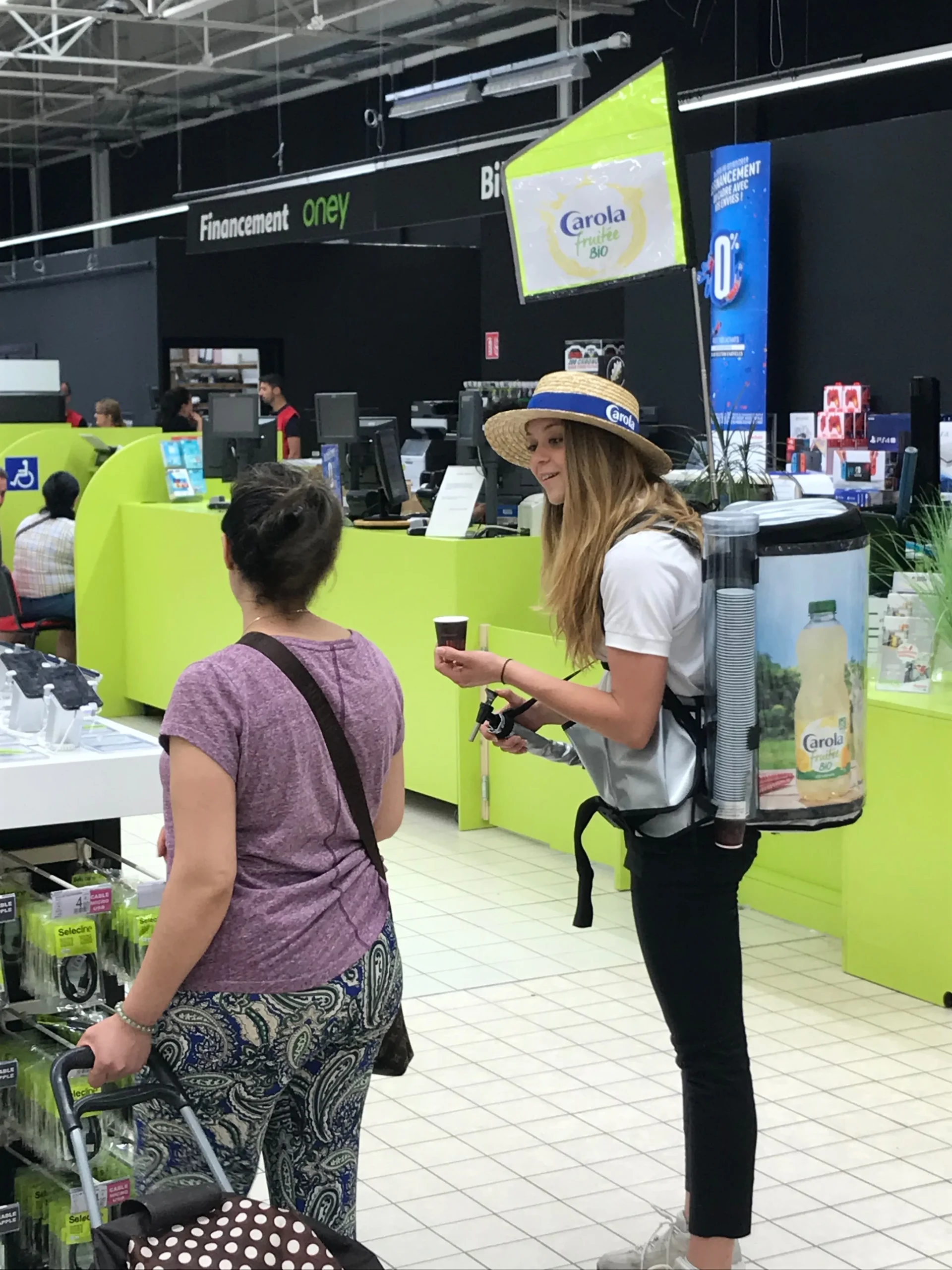
Curated sampling with controlled distribution: in Montréal, food brings people in, but it must be managed tightly. We plan cold chain needs, allergen messaging, hand hygiene, waste management, and a distribution pace that avoids bottlenecks.
Hot beverage station with branded touchpoints: strong in colder months, especially near commuter flows. We structure it so the beverage is the opener, and the brand message is delivered as a short, respectful conversation with a clear opt-in next step.
Mobile content capture unit: a compact setup that generates brand-approved photos or short clips for internal comms or employer branding. We manage consent, signage, and a process for rapid content review before anything is shared.
Neighbourhood-based activation route: rather than staying in one spot, we plan a timed route across 2–4 micro-areas with documented handoffs. This works well when you want coverage across multiple business districts or when foot traffic shifts through the day.
Whatever the format, we align the activation with your brand image and governance: the tone of approach, the wardrobe, what can be promised, and how data is captured. A field program that “looks fun” but creates off-brand interactions is expensive reputationally—so we design for consistency first, then creativity.
The venue and location choice shapes who you meet, how fast you can engage, and what operational constraints you inherit. For Field Brand Activation, we prioritise places where your audience has time to stop, where your presence is legitimate, and where the footprint can be controlled. We also assess practicalities that affect cost: access times, loading, storage, power, and proximity to transit.
| Venue type | For which objective? | Main strengths | Possible constraints |
|---|---|---|---|
Private corporate lobby or campus (multi-tenant office) | Employer brand, internal comms, employee engagement, partner visibility | Controlled access, brand-safe environment, easier data capture and content approval | Requires building approvals, security protocols, limited reach beyond occupants |
Retail corridor near a partner location | Drive store visits, promote an offer, validate messaging with real buyers | High intent, clear conversion path, easy to coordinate with in-store staff | Space and crowd management, distribution rules, weather exposure |
Event-adjacent footprint (sports, cultural, or conference perimeter) | Rapid awareness, sampling, PR-friendly content, audience targeting | Concentrated foot traffic, strong energy, predictable peaks | Permits and organiser rules, tight schedules, brand category restrictions |
We strongly recommend site visits in Montréal before finalising the plan. Photos rarely show choke points, wind corridors, noise levels, or where lines naturally form. A 30-minute walkthrough can prevent hours of onsite improvisation.
The price of Field Brand Activation in Montréal depends on scope and risk, not just “how many ambassadors.” Your budget must cover staffing, supervision, logistics, materials, and the governance layer that protects the brand. When teams under-budget, the first things to break are training time, backup plans, and onsite supervision—exactly what executives need to reduce risk.
Deployment length: one-day bursts vs. multi-week rotations change scheduling complexity, staff retention requirements, and reporting cadence.
Team size and seniority: a 1–3 person street team is not priced like a 15–30 person deployment with multiple leads and staggered shifts.
Supervision ratio: for high-stakes brands (regulated industries, sensitive messaging), we increase field lead coverage to ensure script compliance and documentation.
Materials and build: signage, uniforms, pop-up counters, heaters, power, storage, and transport. Mobile units and refrigerated needs add cost quickly.
Permits, security, and access constraints: some locations require security briefings, proof of insurance, strict load-in windows, or organiser fees.
Data capture and reporting requirements: basic tally sheets vs. integrated QR flows, daily summaries, photo logs, and KPI dashboards.
Weather contingency: tents, weighted bases, indoor alternates, and additional transport time for winter or shoulder seasons.
From an ROI perspective, the right question is not “What is the cheapest activation?” but “What is the cost per qualified interaction or lead, under brand-safe conditions?” We design budgets so you can defend the spend internally with clear KPIs and a reporting trail.
When the campaign is live, you are judged on execution speed and problem-solving. Working with a team established in Montréal means faster site access, quicker supplier substitutions, and a realistic understanding of where activations succeed (and where they simply create friction). It also reduces translation gaps: we operate bilingually in the field and in stakeholder communications, which matters when HR, legal, and communications are all involved.
INNOV'events is your event agency in Montréal for programs that require both creative clarity and operational discipline. We do not rely on last-minute staffing or generic scripts; we build a controlled field system around your brand governance.
From an ROI perspective, the right question is not “What is the cheapest activation?” but “What is the cost per qualified interaction or lead, under brand-safe conditions?” We design budgets so you can defend the spend internally with clear KPIs and a reporting trail.
Our mandates typically fall into a few real corporate scenarios. A national brand launches a new offer and needs a 5–10 day burst near partner locations to drive measurable visits. A large employer supports a recruitment push and wants a campus-style activation with consistent messaging, respectful outreach, and an easy sign-up funnel. A regulated organization needs public education, where ambassadors must handle sensitive questions without over-promising and where every interaction must remain compliant.
Across these contexts, our approach stays the same: define a measurable objective, build a field system that controls risk, and run the operation with enough supervision to keep the message consistent at hour eight as well as hour one. We also plan for what clients often forget: storage, break coverage, crowd flow, waste management, transit access for staff, and daily reporting that is usable by executives.
Choosing a location based on “it feels busy” without validating footfall patterns by time of day, audience fit, and stopping power.
Under-training ambassadors, leading to inconsistent claims, uneven tone, and avoidable reputational risk—especially in bilingual interactions.
No plan for line management: the activation becomes a sidewalk obstruction, creating complaints and forcing a shutdown or relocation.
Weak governance on photos and content: someone posts content that does not meet your brand or privacy standards, creating internal escalation.
Ignoring weather realities in Montréal: frozen devices, unsafe surfaces, wind issues, and drop-offs in staff performance without heat and rotation planning.
Collecting data without a clear consent script or without aligning fields to what sales/HR can actually use later.
No onsite authority: when something changes (security request, crowd surge, equipment failure), the team waits for approvals and loses momentum.
Our role is to anticipate and prevent these risks: we design the operating plan, set the governance rules, supervise onsite, and document what happened so your team is protected and informed.
Renewal happens when a client feels operationally safe. Communications teams come back when they know the brand will be respected in the field, and HR teams come back when they can trust the ambassador experience, the professionalism onsite, and the quality of reporting for internal stakeholders. Executives come back when the program delivers results without creating internal workload or reputational noise.
Many programs evolve from a 1-day pilot to a 2–6 week rotation once KPIs are validated and internal stakeholders see consistent execution.
Repeat activations typically reduce waste and rework: assets are standardised, scripts are refined, and training improves—bringing the cost per qualified interaction down over time.
Loyalty is not about habit; it is a consequence of predictable delivery. In field work, predictability is what protects your brand and your team’s credibility.
We start with a working session with your communications, HR, and operational stakeholders. We confirm the primary KPI (leads, sign-ups, store visits, sampling volume, awareness proxy), your brand constraints (claims you can/cannot make), and your risk tolerance (public space rules, photography, data capture). We also define what success looks like for leadership so reporting is aligned from day one.
We shortlist locations based on audience fit and stopping power, then validate practical feasibility: footprint, access, load-in, storage, power, noise, and weather exposure. Where needed, we align on permissions and operating rules early to avoid last-minute cancellations or forced redesigns.
We build the activation flow: opener, demo or exchange, close, and next step. Then we document it: scripts (bilingual), wardrobe guidelines, signage hierarchy, data capture procedure, consent language, and escalation paths. This package is what keeps execution consistent across shifts and protects internal approvals.
We recruit ambassadors suited to your brand and message, schedule shifts with realistic break coverage, and train with role-play. We include scenarios teams face in the field: pricing objections, aggressive passersby, media questions, and bilingual pivots. Supervisors are briefed on what must be corrected immediately vs. what is logged for post-day refinement.
On activation days, we run call times, setup, briefings, and quality checks. Supervisors monitor delivery, safety, crowd flow, and compliance. We provide daily summaries (counts + qualitative learnings), plus photo documentation where permitted, so your stakeholders can track performance without being onsite.
We close with a structured debrief: KPI results, what worked by location/time block, friction points, incidents (if any), and recommendations for the next wave. If you plan a repeat, we convert learnings into updated scripts, improved materials, and more efficient staffing models.
For a straightforward deployment on private property, plan 2 to 4 weeks. For public-space or event-adjacent footprints with multiple stakeholders, plan 4 to 8+ weeks. If you are under 10 business days, we can often propose a reduced-scope option with clear constraints.
Budgets vary by scope, but most corporate programs land between $7,500 and $60,000+. The main drivers are team size, number of days, supervision level, materials (pop-up, uniforms, power), and data/reporting requirements.
We use bilingual scripts with approved phrasing (not literal translations), role-play during training, and onsite supervision. We also define non-negotiables (claims, pricing language, sensitive topics) and coach in real time when we see drift.
Yes, with the right operating plan. We include device cold-weather readiness, shorter rotations, warm-up breaks, safer flooring, and weather-triggered decision rules. We also recommend indoor-adjacent locations or partner venues when the goal is longer conversations.
Typically: daily or end-of-campaign KPI counts (interactions, samples, leads, QR scans), location/time insights, qualitative objections heard, incident/compliance notes, and a photo log where permitted. If you need a specific format for procurement or leadership, we adapt to it from the outset.
If you are comparing agencies, we can move quickly with a structured proposal: objectives, recommended locations, staffing model, risk controls, and a budget you can defend internally. The earlier we align on governance (scripts, data capture, content rules), the smoother your approvals will be and the fewer surprises you will face onsite in Montréal.
Send us your target audience, desired dates, and success KPI. We will come back with a deployment plan and options (pilot vs. full rollout) so your executives, HR, and communications teams can make a confident decision.
Thierry GRAMMER is the manager of the INNOV'events Montréal office. Reach out directly by email at canada@innov-events.ca or via the contact form.
Contact the Montréal agency