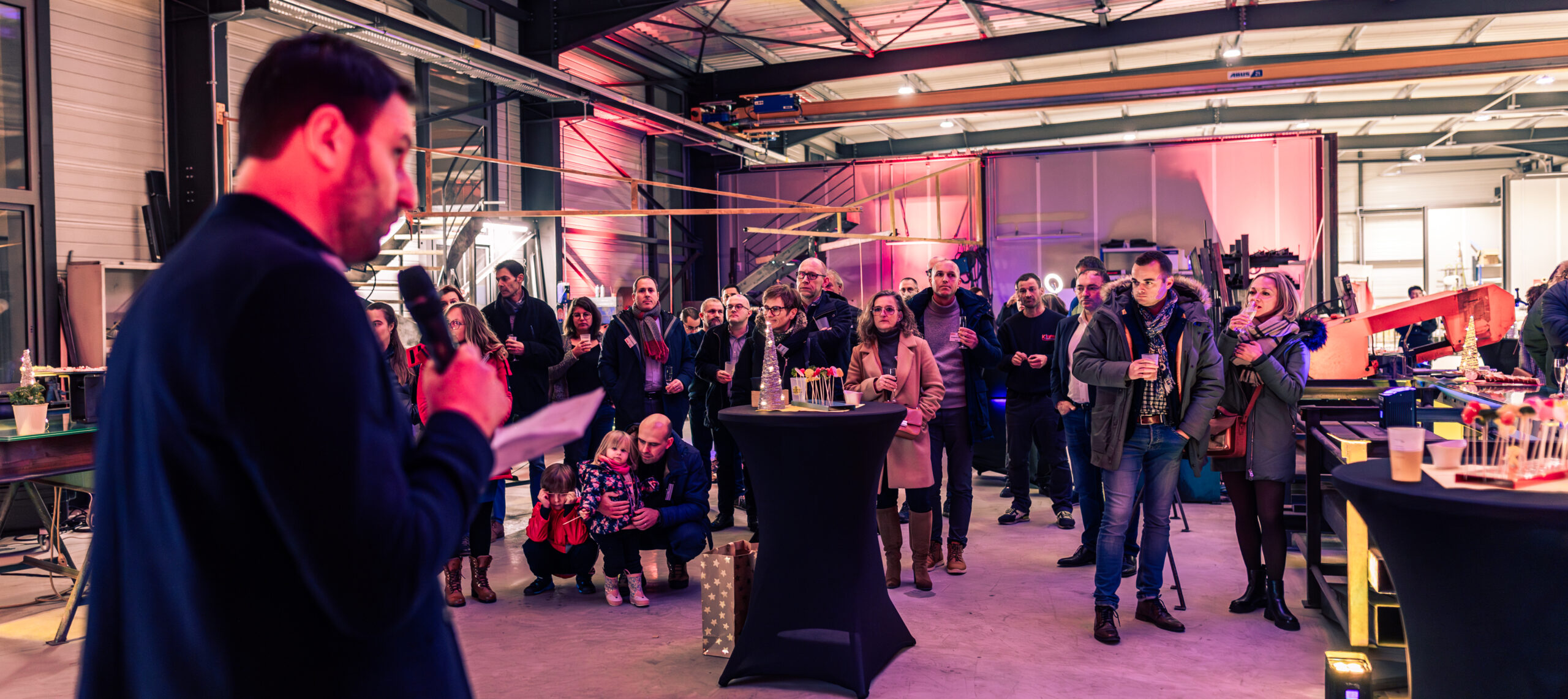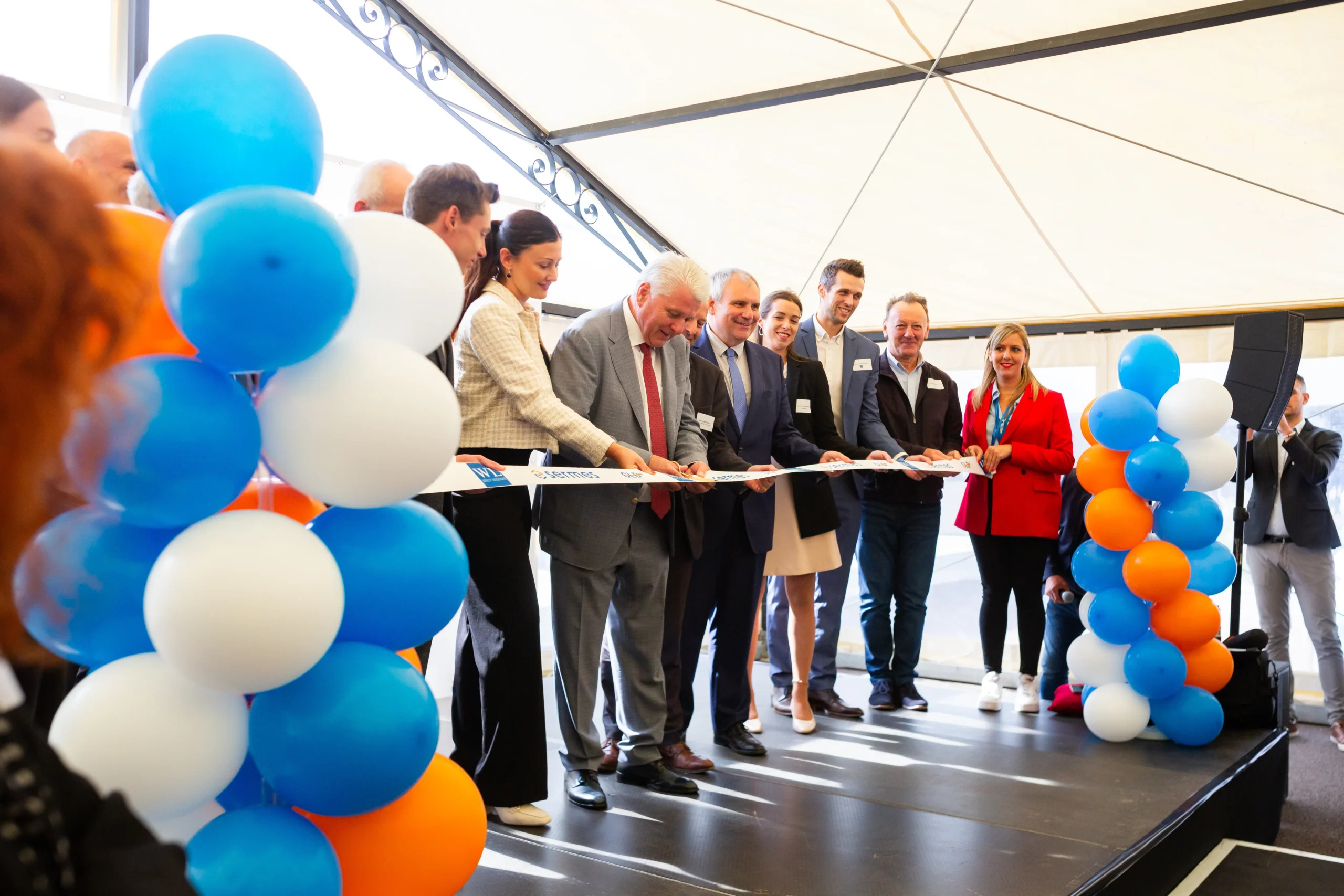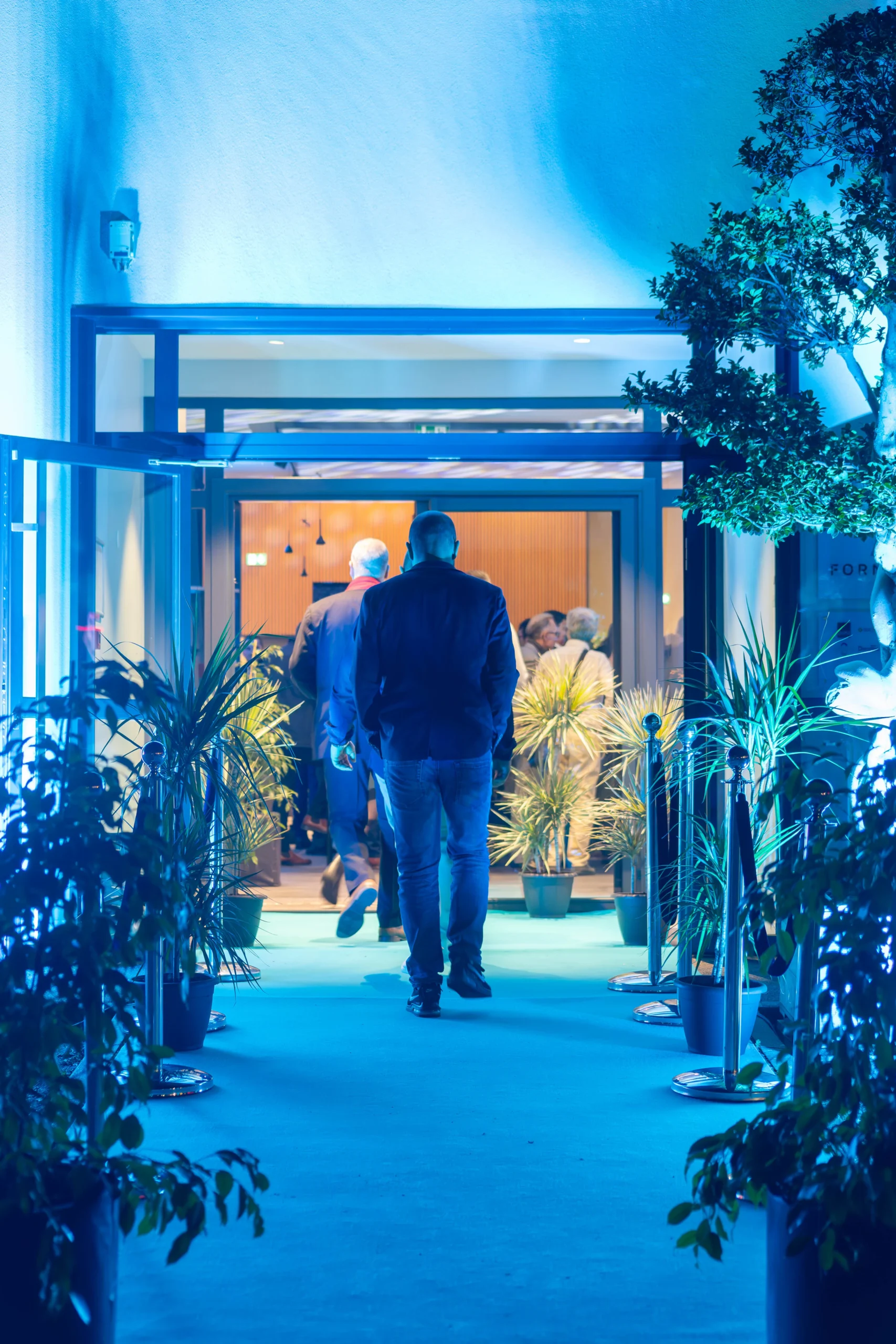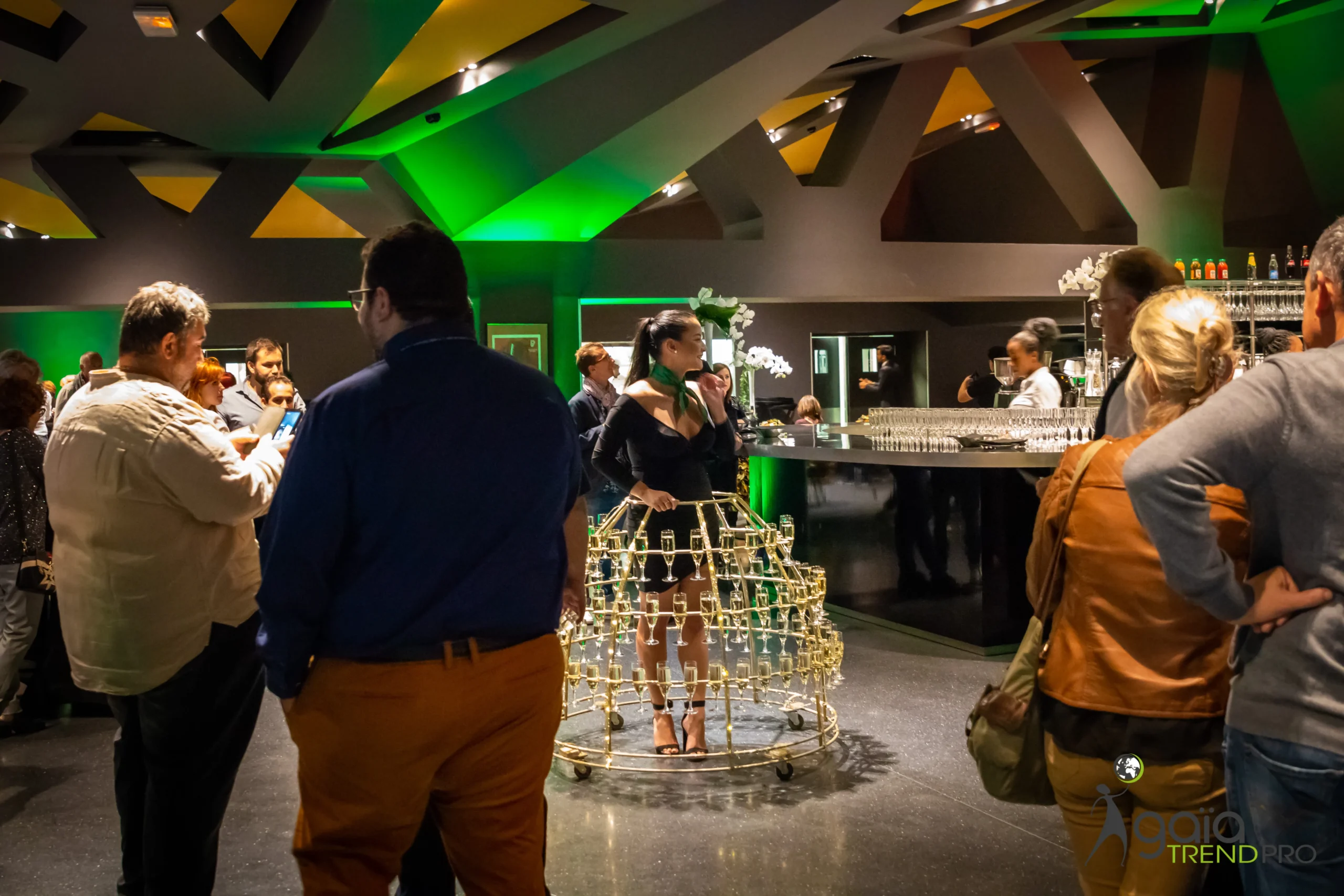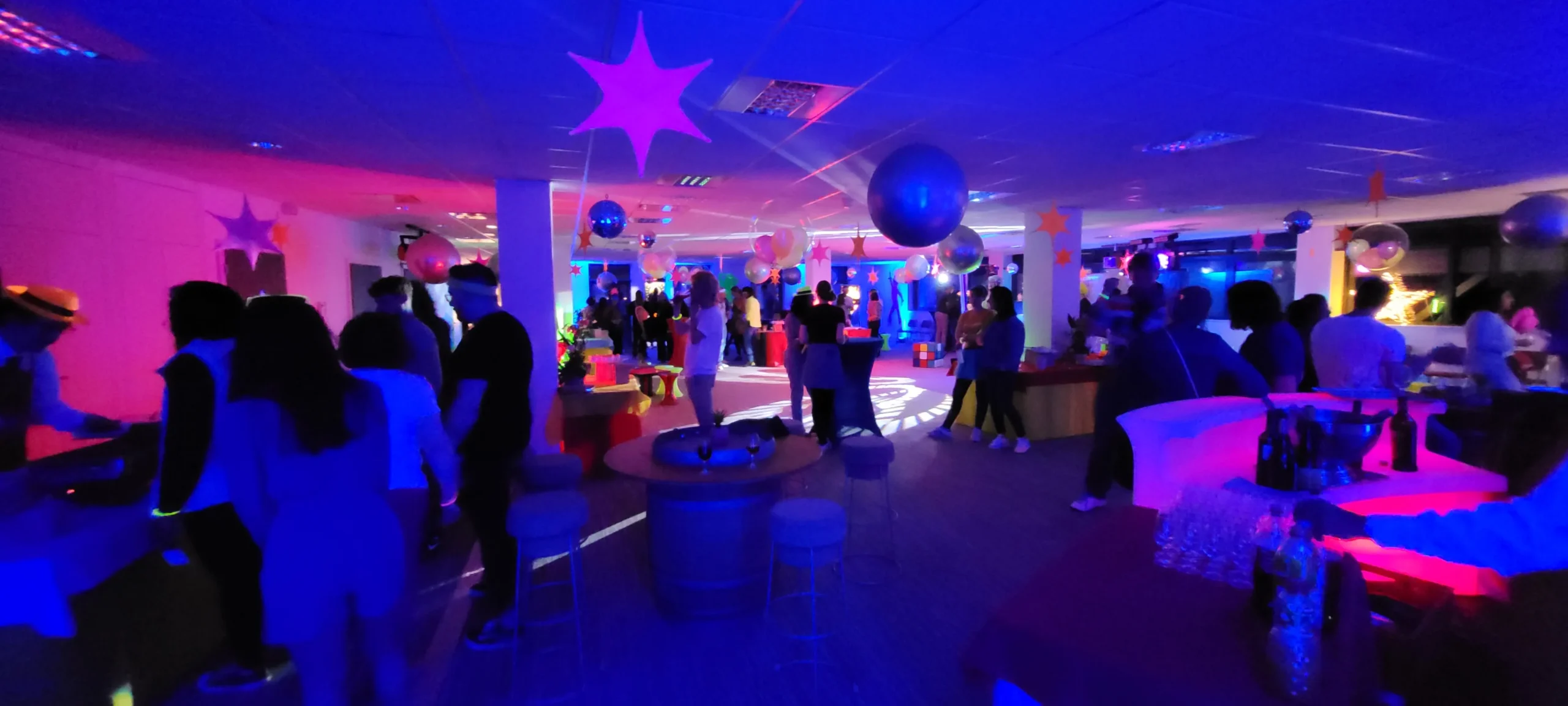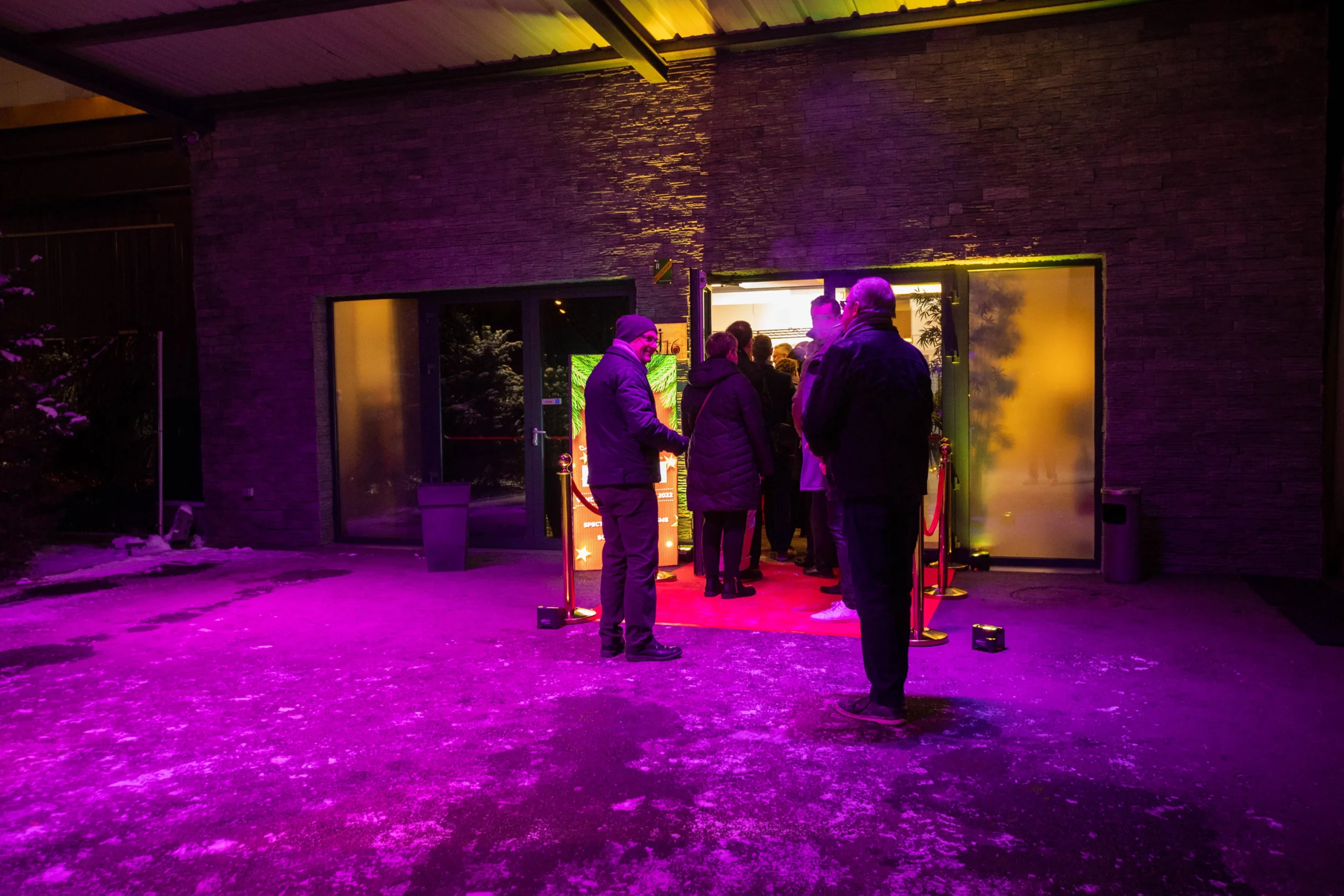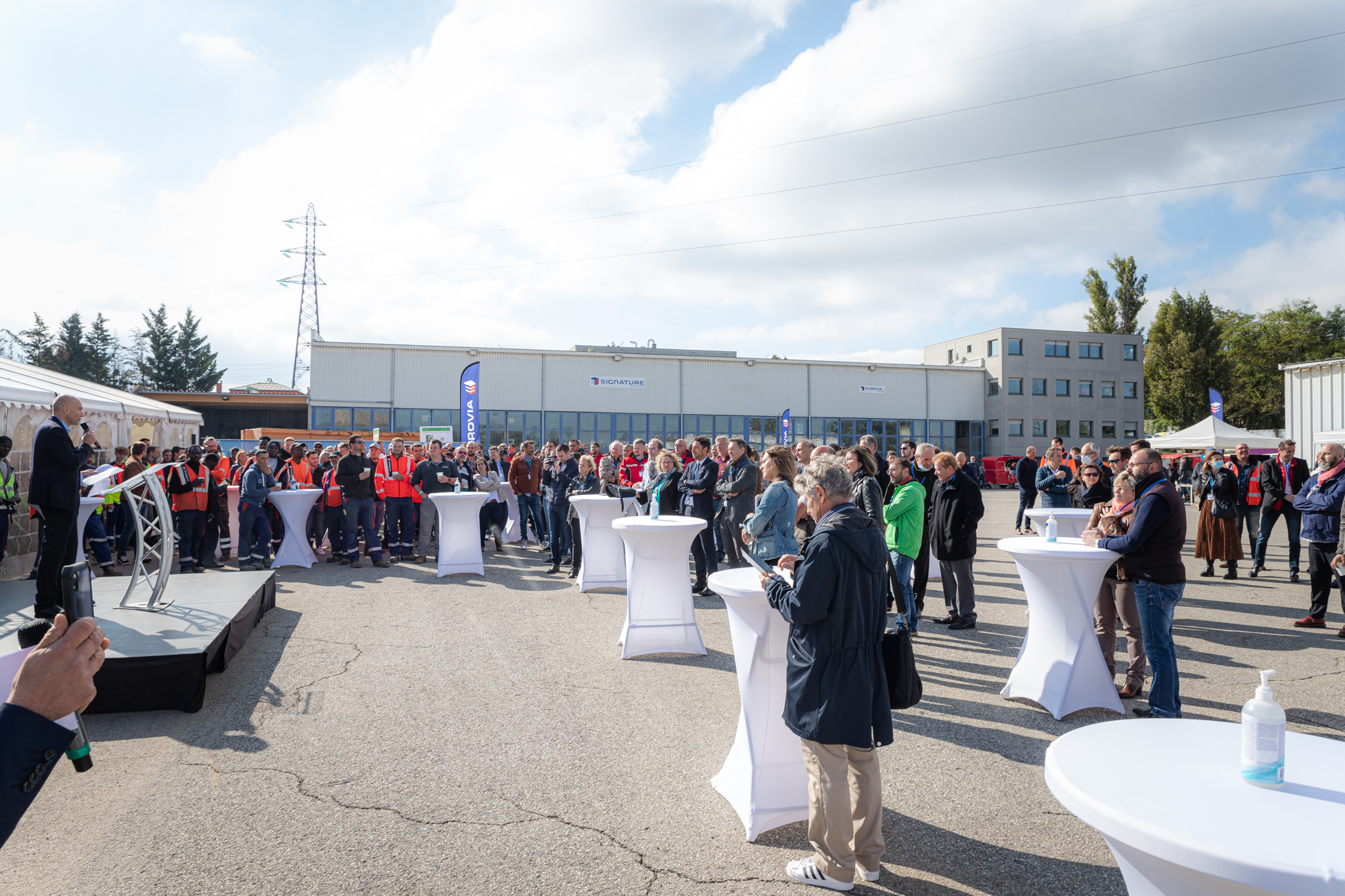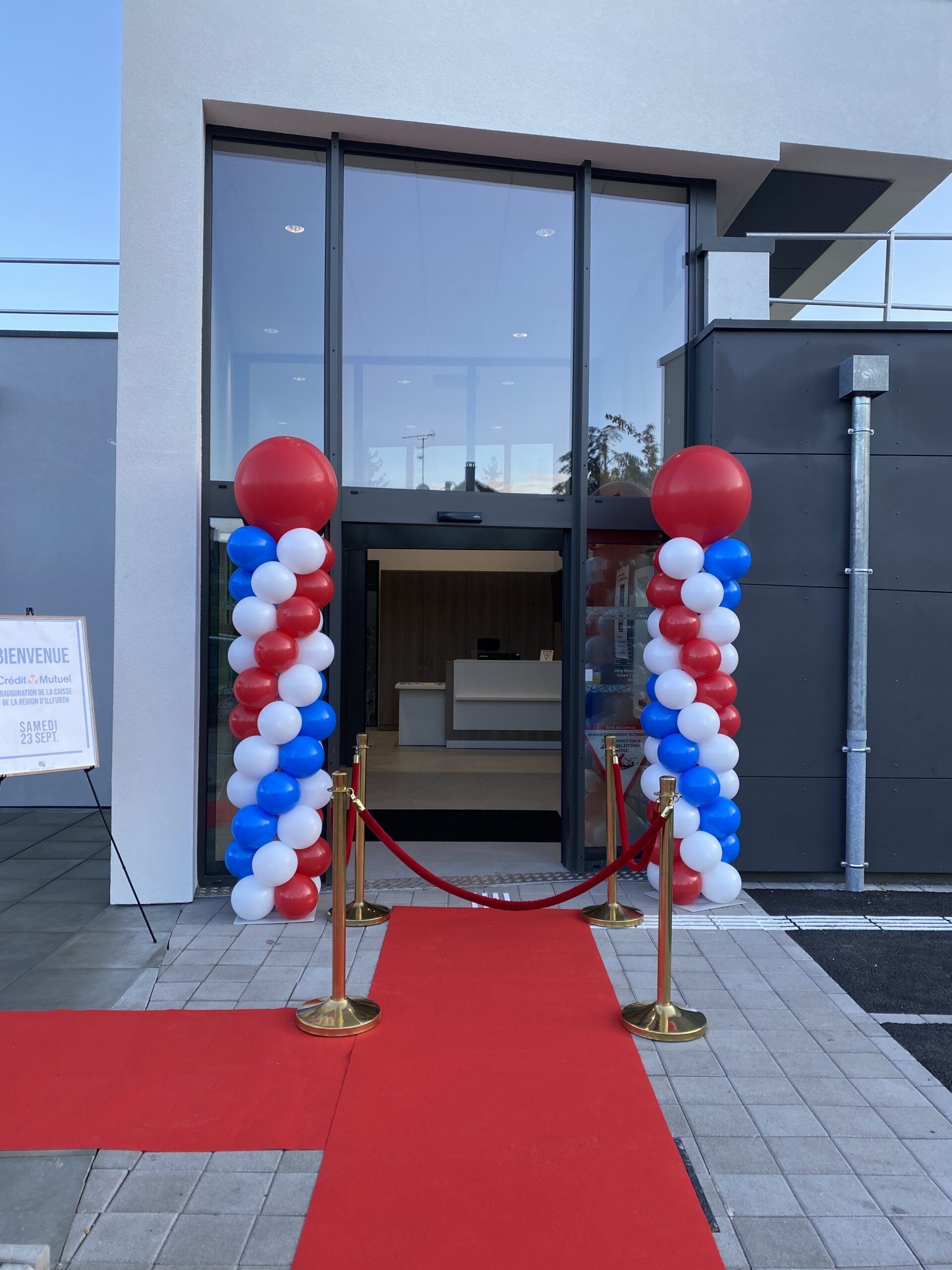
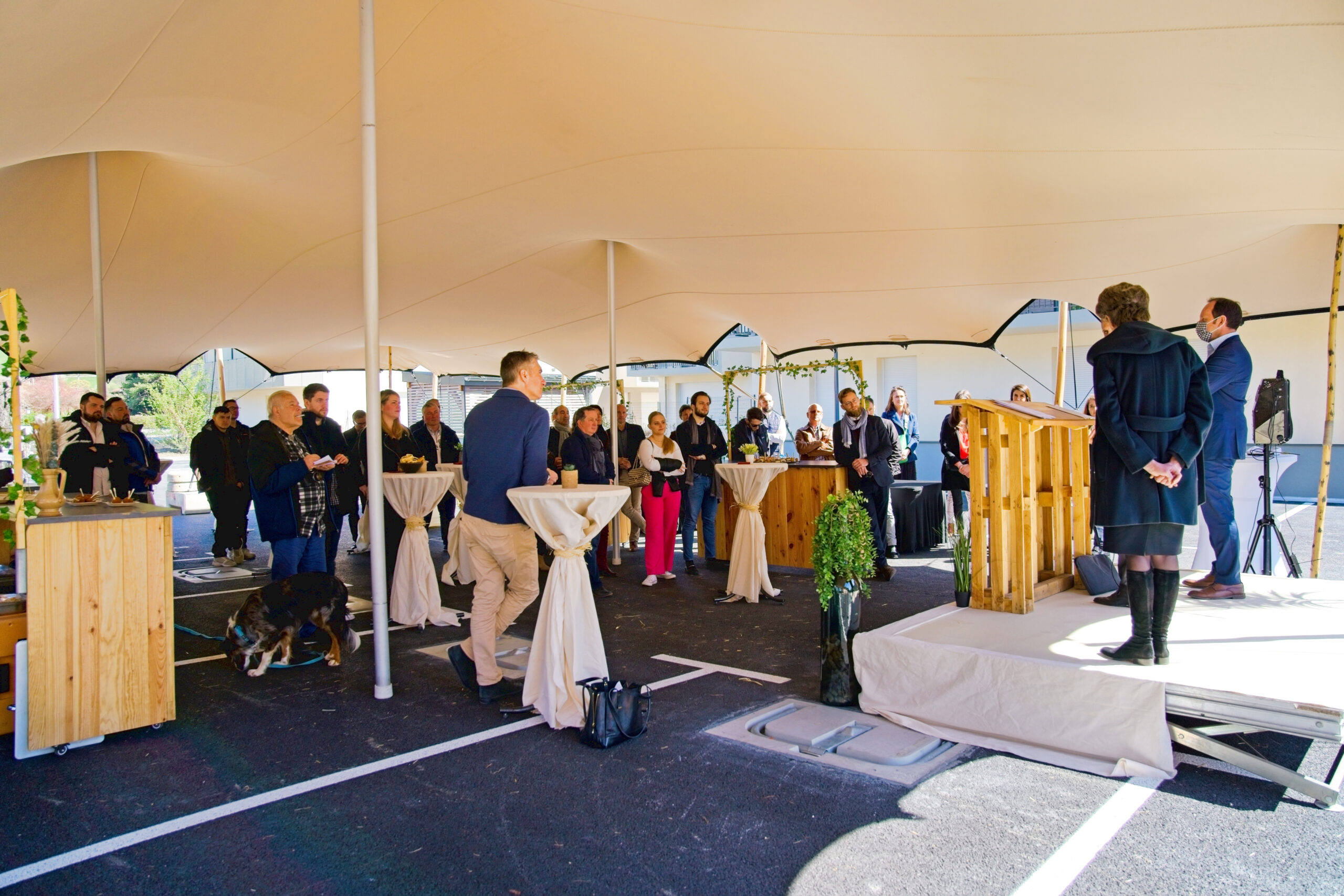
INNOV'events plans and produces Grand Opening Event programs for executive teams, HR, and communications across Montréal. From 40 to 1,500+ guests, we manage permits, production, programming, vendors, and day-of coordination so your leaders can stay visible and composed.
Whether your objective is retail foot traffic, partner relationships, talent branding, or a new office launch, we build a run-of-show that holds up under real-world pressure: late deliveries, VIP arrivals, bilingual remarks, and last-minute compliance checks.
Entertainment is not “extra” at a corporate opening; it is a tool to control pace, perception, and crowd behaviour. In a Grand Opening Event, programming helps you avoid dead zones between speeches, gives media and stakeholders clean moments to capture, and keeps guests on-site long enough to convert interest into conversations and sales leads.
Montréal audiences are savvy and multilingual. They expect a professional welcome, clear signage, smooth line management, and hospitality that feels efficient rather than showy. Your team also needs predictable timing: executives want a tight speaking window, HR wants inclusive guest experience, and comms wants content-ready visuals without blocking operations.
We are an event agency based in Montréal and we design openings with local constraints in mind: building rules, neighbourhood noise limits, union and vendor realities, winter logistics, and bilingual hosting. Our producers, technical leads, and on-site captains are built for execution, not just concepts.
10+ years coordinating corporate openings and brand activations across Canada, with a strong operational footprint in Montréal.
200+ corporate events delivered, including multi-stakeholder launches with public access, VIP sequences, and media moments.
40 to 1,500+ attendees managed with documented crowd-flow plans, staffing ratios, and safety checklists.
95%+ on-time run-of-show adherence (internal tracking) through rehearsal discipline, cueing systems, and contingency plans.
Single-point accountability: one producer owns vendors, schedules, and on-site decisions so your executives aren’t pulled into operational fire drills.
In Montréal, many of our projects come from organizations that return year after year because execution matters more than big promises. We routinely collaborate with local venues, caterers, AV teams, and security partners who know downtown loading constraints, plateau street access realities, and the timing pressures around commuter peaks.
When a client rehires an agency for a second opening or expansion, it is usually because the first event protected internal credibility: no overtime surprises, no messy VIP flow, no last-minute mic issues, and no brand compromises. That repeat pattern is what we aim to build with every client: a predictable process, transparent budgeting, and a day-of team that can make decisions calmly when conditions change.
If you have preferred vendors, internal procurement rules, or building management requirements, we integrate them early. If not, we propose shortlists that match your brand level and risk tolerance, including bilingual MCs, hospitality staffing, photographers who can work around privacy constraints, and technical directors who understand corporate approval cycles.
We send you a first proposal within 24h.
A Grand Opening Event in Montréal is a business milestone with operational consequences: it sets expectations for customers, employees, partners, landlords, and the local ecosystem. The difference between a “nice moment” and a strategic opening is structure: clear objectives, tight staging, and a guest journey that supports measurable outcomes.
Executives typically want three things from an opening: market signal, stakeholder alignment, and controlled risk. HR and communications add another layer: employer brand, inclusivity, and content production that can fuel weeks of internal and external messaging. We build openings that satisfy all of those priorities without overcomplicating the event.
Accelerate market credibility: a structured launch positions you as operationally ready, not “still getting set up.” For new locations, we plan the moment your leaders speak, the visual framing, and the first customer flow so perception aligns with your quality standards.
Align internal teams under one story: we translate corporate messaging into a run-of-show that employees can repeat. A common real situation: sales and operations don’t share the same talking points on day one. We solve this with briefings, cue cards for hosts, and pre-approved messaging blocks.
Protect executive time: we design a precise VIP path (arrival, green room, photo call, remarks, stakeholder greetings, exit). That prevents leaders from being stuck at the entrance when photographers and partners arrive simultaneously.
Generate content without disrupting the experience: comms teams need assets, but guests don’t want a film set. We pre-plan camera positions, light levels, and “content moments” (ex: product demo reveal at a defined time) so you get usable footage without crowding.
Drive foot traffic and conversion: for retail and public-facing sites, we coordinate queue management, timed incentives, and in-store flow so the event doesn’t block your own sales floor. This is where entertainment acts as pacing, not noise.
Reduce compliance and safety exposure: openings often involve alcohol service, public access, temporary staging, and high-density areas. We map responsibilities (permit holders, security, bartenders, door staff, emergency routes) and validate vendor insurance early.
Strengthen partner and community relationships: in Montréal, neighbours and borough expectations matter. We plan sound levels, outdoor timing, and clear communications to avoid friction, especially when you’re in mixed-use buildings.
Montréal rewards organizations that show professionalism and respect for local realities: bilingual communication, efficient hospitality, and smooth logistics in dense urban settings. A well-run opening is a credible signal that your operation will be equally dependable after the cameras leave.
Local expectations are practical, not theoretical. In Montréal, guests notice queue discipline, coat check throughput in winter, the quality of sound reinforcement in echo-heavy spaces, and whether staff can answer questions in French and English. A beautifully designed event that fails on basics (audio, signage, flow, temperature) immediately reads as “not ready.”
We also see specific executive constraints here: downtown towers have strict loading windows; many venues require approved supplier lists; and move-in rules can be non-negotiable. If your opening is in a newly delivered building, elevators may still be under commissioning and trades may be active. We plan for this with buffer windows, alternate access routes, and a plan for protecting finishes (flooring, walls, doors) to avoid landlord issues.
Montréal’s business environment is relationship-driven. Partners and municipal stakeholders often expect a short, respectful protocol: a clear welcome, concise remarks, and time for real conversation. Over-programming can work against you. Our role is to calibrate the pace so you look composed and the room feels managed, not “produced.”
Entertainment for a Grand Opening Event in Montréal should serve a business function: attract, guide, convert, and retain attention at key moments. We recommend formats that respect conversation, support bilingual delivery, and scale to your crowd density. Below are options we use frequently, with practical notes on where they work and what they require.
Guided micro-tours (6–10 minutes): ideal for new offices, clinics, studios, or showrooms. We script 3–4 “proof points” and train hosts so every guest receives consistent messaging. Works well when leadership wants fewer speeches and more product evidence.
Live demo stations with timed rotations: instead of one big reveal, we schedule multiple demo cycles to prevent bottlenecks. This is effective for technology, manufacturing, or professional services where your experts can explain value quickly.
Networking prompts and structured introductions: we provide an MC with a light framework (industry callouts, partner acknowledgements, short Q&A) so networking becomes productive, not random. Useful when your guest list mixes suppliers, clients, and community leaders.
Photo moment with operational purpose: a branded photo wall is common; we make it functional by placing it near the welcome zone, setting an attendant, and controlling lighting so it does not create a congestion point. If comms needs executive portraits, we schedule a dedicated 8–12 minute window before doors open.
Acoustic trio or jazz duo at controlled volume: supports conversation and reads as premium without taking over the room. We specify decibel limits with the venue and place musicians to avoid blocking service corridors.
Short-format performance (8–12 minutes) between protocol moments: useful when you have speeches, ribbon cut, or a symbolic “first service” moment. The goal is pacing and attention reset, not spectacle.
Bilingual MC with corporate protocol experience: often more valuable than a “show.” A strong MC keeps timing tight, manages partner acknowledgements correctly, and protects leadership from awkward transitions.
Chef-attended stations designed for throughput: we choose menus that can serve 150–300 guests per hour without long lines (ex: small plates, passed bites, controlled portioning). This matters more than novelty when your opening is time-bound.
Mocktail and coffee bar with branding: excellent for daytime openings, HR-focused launches, or wellness-oriented brands. We ensure bar placement supports flow and that power/water requirements are validated during the site visit.
Local tasting table with clear labelling: in Montréal, guests appreciate local products when presented cleanly and responsibly. We handle allergen signage and service staffing so it’s polished and compliant.
RFID or QR check-in with real-time attendance tracking: reduces entrance congestion and gives comms/HR accurate counts. For multi-wave arrivals (ex: employees first, partners later), this prevents the “everyone shows up at once” problem.
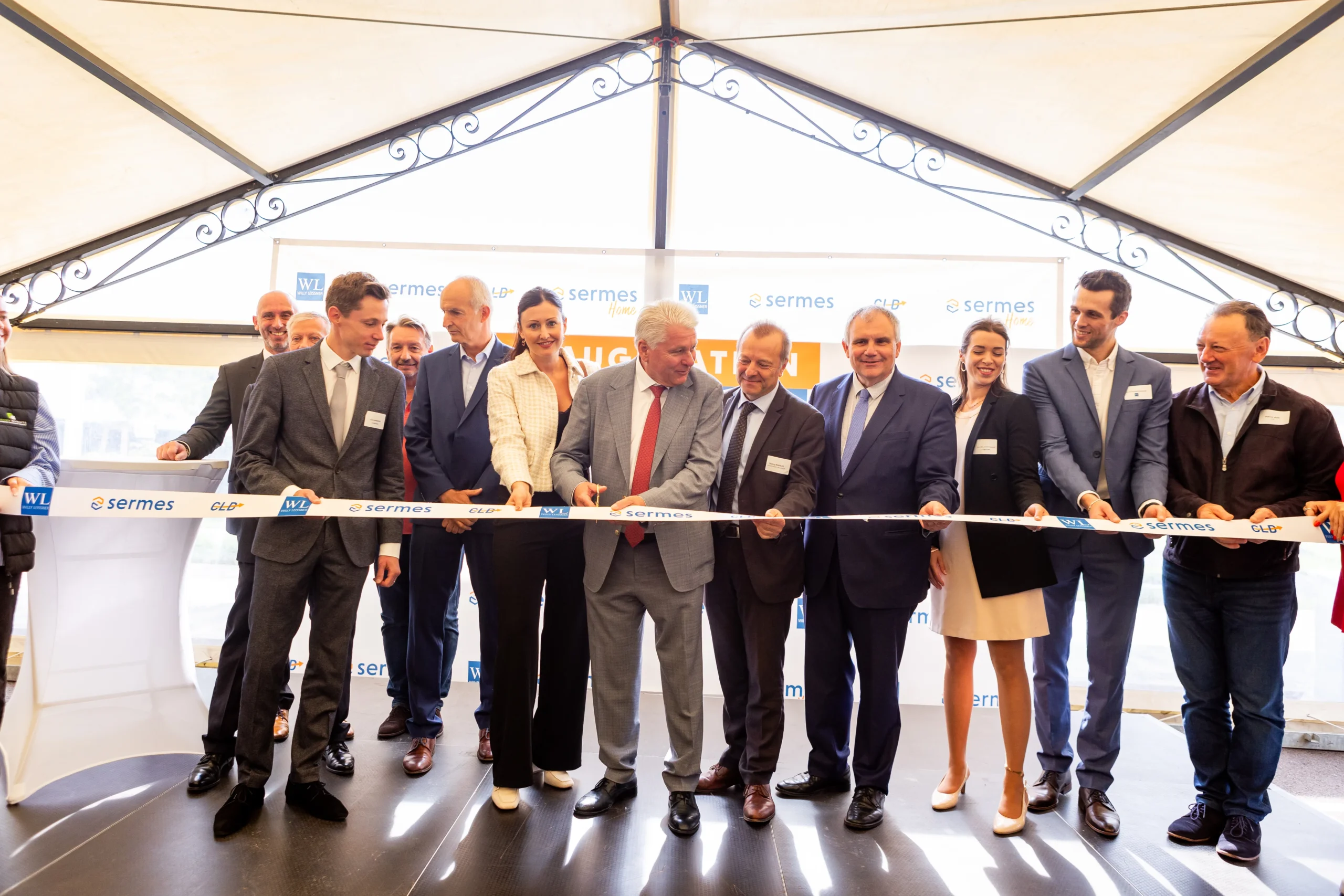
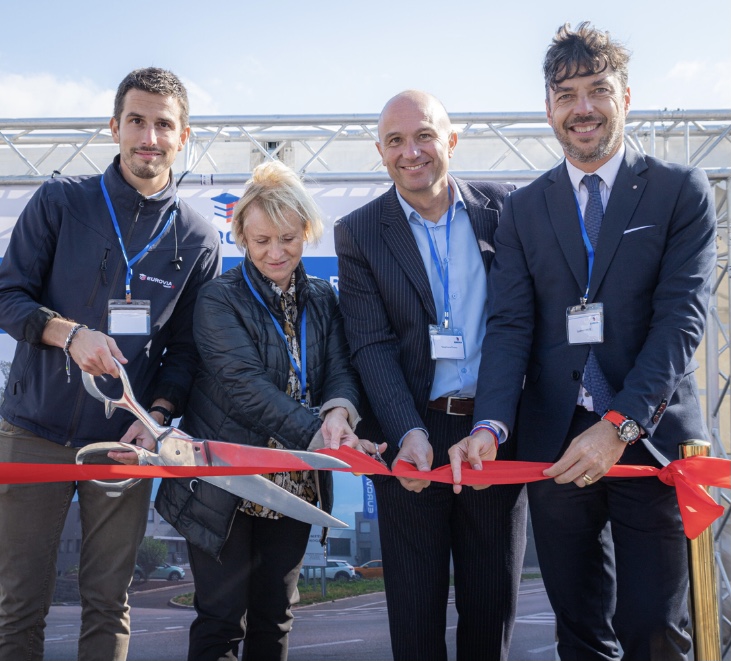
Content capture plan built into the run-of-show: we schedule 3–5 short “capture windows” (ex: ribbon moment, demo close-up, leadership handshake line) so your team gets usable assets without filming guests who prefer privacy.
Silent guidance for crowd flow: digital signage, floor arrows, and staffed wayfinding work better than loud announcements in echo-prone spaces. This is especially effective in galleries, lofts, and new office floors.
The best entertainment is the kind that reinforces your positioning. If your brand is premium, we control sound, lighting temperature, and service choreography. If your brand is community-first, we design more face-to-face interaction and a protocol that acknowledges local partners. In every case, entertainment must be aligned with brand tone, risk tolerance, and the practical constraints of your Montréal site.
The venue dictates guest flow, technical feasibility, and how credible your brand feels in the first five minutes. In Montréal, a great space can still fail if loading, power, acoustics, or permits were not validated early. We treat venue choice as an operational decision, not only an aesthetic one.
We evaluate each option against your objectives: do you need street visibility and walk-ins, or a controlled guest list? Will you serve alcohol? Do you need a stage and screens for leadership remarks? Are you expecting winter coats for most guests? These answers change the required square footage, staffing, and technical design.
| Venue type | For which objective? | Main strengths | Possible constraints |
|---|---|---|---|
On-site location (new office, store, showroom) | Brand proof, foot traffic, authentic “we’re open” signal | Guests experience the real space; easier product demos; strong content authenticity | Limited loading; elevator rules; crowd density; need to protect finishes; strict fire code capacity |
Loft or industrial event space (central neighbourhoods) | Partner reception, media moment, premium positioning | High ceilings for lighting; flexible layout; clean staging for speeches and visuals | Acoustics can be challenging; neighbour noise limits; additional rentals often required |
Hotel ballroom or conference floor | High guest counts, predictable operations, VIP comfort | Built-in AV options; staff infrastructure; coat check; reliable washrooms and back-of-house | Less brand-specific; union/house rules; catering minimums; less street-level visibility |
Restaurant buyout with private rooms | Executive-level stakeholder hosting, smaller openings | Service quality; conversation-friendly; minimal production needs | Limited speeches/AV; capacity constraints; timing tied to kitchen throughput |
We strongly recommend a site visit with your producer, AV lead, and catering lead before you lock the plan. In Montréal, a 30-minute walk-through can prevent costly surprises like insufficient power, restricted loading hours, or a room layout that creates bottlenecks at the entrance.
Budget depends on guest count, format (public vs invitation-only), venue constraints, and how much production you need for speeches, content, and brand presentation. We build budgets that are defensible internally: clear line items, realistic contingencies, and vendor scopes that match your risk profile.
As a planning reference in Montréal, many corporate openings land in these ranges:
$15,000–$35,000: smaller invitation-only opening (40–120 guests), light AV, cocktail service, basic décor, bilingual host.
$35,000–$85,000: mid-size opening (120–300 guests) with stronger production, staged remarks, enhanced hospitality staffing, photographers/videographers, and more structured programming.
$85,000–$200,000+: large-scale or public-facing opening (300–1,500+), significant AV/lighting, security, traffic/queue management, permits, content capture, and multiple vendor teams.
Guest count and arrival pattern: 250 guests arriving over 90 minutes is easier (and cheaper) than 250 arriving in 20 minutes. We adjust check-in, coat check, and bar staffing accordingly.
Venue infrastructure: built-in rigging, power, and house AV can reduce costs; blank spaces require rentals and more labour.
Program complexity: multiple speakers, videos, translations, or a timed reveal increases rehearsal and technical direction needs.
Food and beverage strategy: passed service vs stations, alcohol licensing, and staffing ratios drive both cost and guest experience.
Security and risk controls: public access, VIP presence, or high-value product displays require more staffing and clearer perimeter control.
Content production: photography is not the same as a full content plan with lighting, audio capture, interview setup, and deliverable timelines.
Contingency and weather planning: outdoor components in Montréal require tents, heaters, flooring, and weather call decisions, which should be budgeted rather than improvised.
We build the budget around your expected return: lead generation, partner retention, employer branding, or a measurable increase in visits and sales. A disciplined plan often saves money by avoiding the most common cost leak in openings: last-minute rentals, overtime, and rework caused by unclear scopes.
For an opening, proximity is operational leverage. A local team can conduct site visits quickly, pre-test vendor logistics, and respond when building management, weather, or street conditions change. In Montréal specifically, bilingual delivery is not a “nice to have”; it affects guest comfort, staff coordination, and how leadership is perceived by partners and community stakeholders.
When you work with INNOV'events, you’re not buying ideas; you’re buying a production system. As an event agency in Montréal, we can mobilize trusted technical crews, hospitality teams, and suppliers who already know local rules and the realities of move-in windows downtown and in dense neighbourhoods.
We also understand corporate procurement and legal requirements. We routinely manage COIs, vendor agreements, and compliance checklists so your internal teams don’t spend weeks chasing paperwork.
We build the budget around your expected return: lead generation, partner retention, employer branding, or a measurable increase in visits and sales. A disciplined plan often saves money by avoiding the most common cost leak in openings: last-minute rentals, overtime, and rework caused by unclear scopes.
Our opening work covers retail, professional services, head offices, health and wellness, and technology environments. We’ve delivered invitation-only stakeholder receptions, employee-first openings paired with community hours, and public-facing launches where crowd flow and safety were as important as branding.
In practice, projects often share the same pressures: a senior leader wants to keep remarks short; a partner expects visibility; HR wants employees to feel included; and operations needs business continuity the next morning. We design the event so those priorities don’t compete on site. That includes: a realistic run-of-show, a VIP path that protects key relationships, technical redundancy for speeches, and staffing that prevents bottlenecks.
We are comfortable working within strict brand guidelines and legal constraints. For regulated industries, we plan compliant messaging and control photography zones. For public openings, we coordinate signage, queue management, and security posture so the atmosphere stays welcoming without losing control of the space.
Underestimating arrival congestion: one check-in table for 200 guests creates a poor first impression. We design staffing ratios and a physical layout that keeps entrances clear.
Over-programming speeches: too many remarks reduce attention and frustrate guests. We consolidate messaging and time-box leadership segments (often 12–25 minutes total).
Audio that fails in “nice” spaces: lofts and glass-heavy offices can sound terrible. We choose appropriate speaker placement, microphones, and sound checks to protect intelligibility.
Ignoring building and landlord rules: loading times, open flames, hanging signage, and capacity limits can create last-minute conflicts. We validate constraints early and document approvals.
No weather plan for Montréal seasons: outdoor queues without cover, heaters, or flooring lead to discomfort and safety risk. We plan for temperature, precipitation, and wind exposure.
Unclear vendor authority: when no one knows who can decide on-site, small issues escalate. We establish a decision tree and a single point of command.
Content capture without consent management: filming guests in sensitive contexts can create reputational risk. We plan signage, opt-out options, and controlled capture zones.
Our role is to eliminate preventable risk and protect your internal credibility. A Grand Opening Event is not the moment to “see how it goes.” It’s the moment to execute with discipline.
Repeat business is earned on the hardest part of the job: how the day runs, how issues are handled, and how transparent the financials are. Many of our Montréal clients come back because they want a partner who can scale with them—new locations, expansions, internal celebrations, and stakeholder events—without restarting the learning curve each time.
We invest in documentation: vendor scopes, cue sheets, staffing plans, floor plans, and post-event debriefs. That means your next event gets easier, faster, and more cost-efficient.
Stable vendor teams: we prioritize consistent crews so quality doesn’t vary from event to event.
Post-event debrief within 5 business days: what worked, what didn’t, and what to fix before the next milestone.
Budget traceability: clear comparisons between estimate and actuals, with reasons for variances.
Loyalty is not a slogan; it’s operational proof. If clients return, it’s because the experience for executives, employees, and guests was controlled, respectful, and aligned with the brand.
We begin with a working session with leadership, HR, communications, and operations. We confirm the primary objective (foot traffic, partner relationships, employer branding, media assets, revenue), the non-negotiables (brand standards, compliance, bilingual requirements), and the risk profile (public access, VIPs, alcohol, product value). We translate that into a concise event brief that procurement and senior leadership can approve.
We visit the site or venue to validate capacity, access, loading routes, power, acoustics, and back-of-house space. We identify constraints early (elevator restrictions, noise limits, street access, coat check needs) and build a floor plan that supports guest flow. This is also where we confirm permit needs and venue rules that affect vendors.
We propose vendor options aligned with your brand level and budget parameters (AV, décor, catering, security, hosts, photographers). Each vendor scope is written to prevent common gaps: who provides power distribution, who supplies backup microphones, who owns waste removal, who is responsible for coat check racks, and what overtime rates apply. We typically recommend a contingency line of 7–12% for openings with public access or weather exposure.
We build a minute-by-minute run-of-show with cueing, responsibility assignments, and buffers. For bilingual moments, we write scripts that sound natural in both languages and plan the sequence (alternating speakers, bilingual MC, or concise translation). We also design the guest journey: invitations, confirmation flows, check-in steps, signage, accessibility needs, and privacy guidance for content capture.
For speeches, videos, or reveals, we schedule a technical rehearsal to test audio intelligibility, lighting looks, playback, and timing. On event day, our producer runs command, supported by an on-site captain and technical director. We manage vendor arrivals, cue the program, handle issues discreetly, and keep your leadership team focused on stakeholders rather than logistics.
We close with a post-event debrief: attendance counts, run-of-show performance, vendor feedback, and content deliverable tracking. If your opening supports a broader rollout (multiple locations or an internal culture plan), we provide a practical roadmap for repeatability and cost control.
Plan for 6–10 weeks for a standard corporate opening (venue, vendors, permits, content plan). If the opening is public-facing, involves outdoor elements, or requires complex production, aim for 10–16 weeks. We can execute faster, but rushing usually increases cost and risk.
Most projects fall between $15,000 and $85,000 depending on guest count and production level. Large public openings with significant AV, security, and staffing can reach $85,000–$200,000+. We provide a line-item estimate and a recommended contingency (often 7–12%).
In many Montréal contexts, yes. A bilingual MC reduces friction at key moments (welcome, safety notes, sponsor acknowledgements, transitions). If your audience is mostly internal or single-language, we can adapt; but for mixed stakeholders, bilingual hosting is usually the simplest way to protect professionalism.
We design a timed VIP path: arrival window, greeting, green room, photo call, remarks, key introductions, and exit. We assign a dedicated VIP handler and build buffers so a late arrival doesn’t derail the schedule. For high-profile guests, we also coordinate discreet security posture and reserved parking where feasible.
Yes, and it often performs best for authenticity. The key is feasibility: fire code capacity, washrooms, power, acoustics, coat storage, and safe crowd flow. We typically recommend a site visit and a simplified program if the space is tight, plus clear protection for floors/walls to meet landlord expectations.
If you are comparing agencies, we can help you make a decision with facts: a proposed run-of-show, a staffing and vendor plan, and a budget range you can defend internally. Share your date window, location, approximate guest count, and business objective, and we’ll respond with a realistic approach for your Grand Opening Event in Montréal.
Openings move quickly once construction, leasing, or operational readiness is confirmed. The earlier we validate venue constraints, permits, and technical needs, the more control you keep over cost, brand presentation, and executive time.
Thierry GRAMMER is the manager of the INNOV'events Montréal office. Reach out directly by email at canada@innov-events.ca or via the contact form.
Contact the Montréal agency