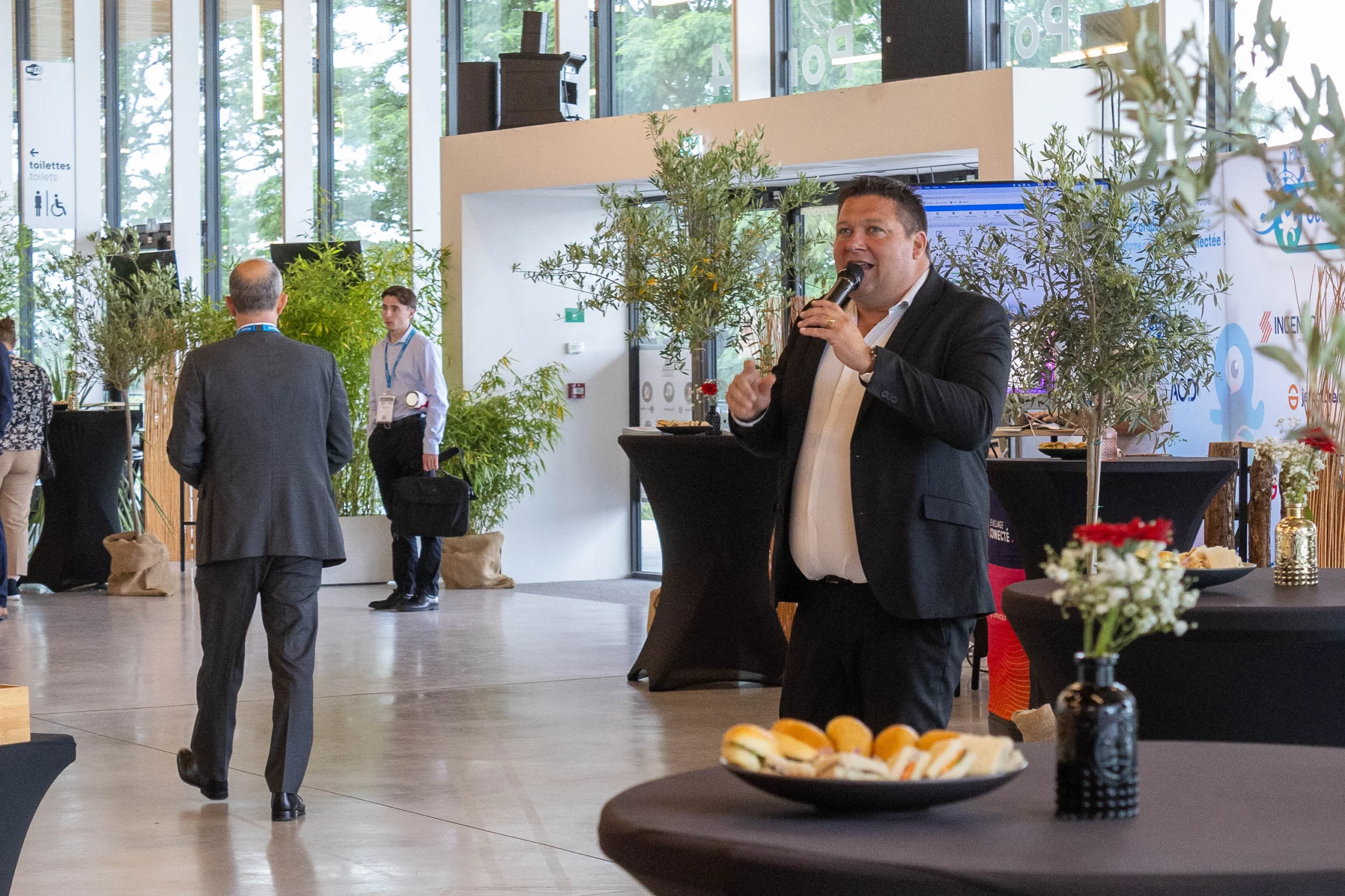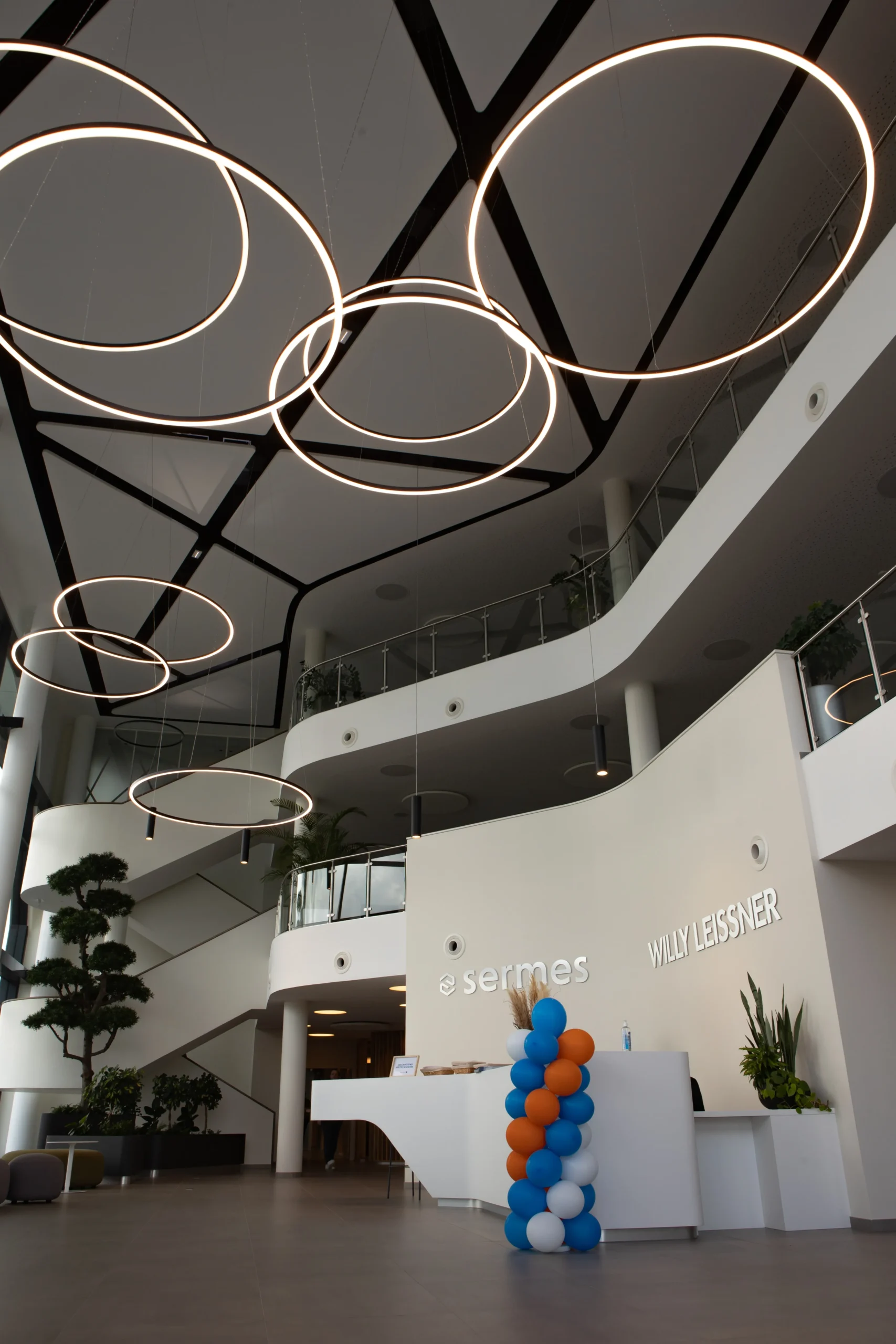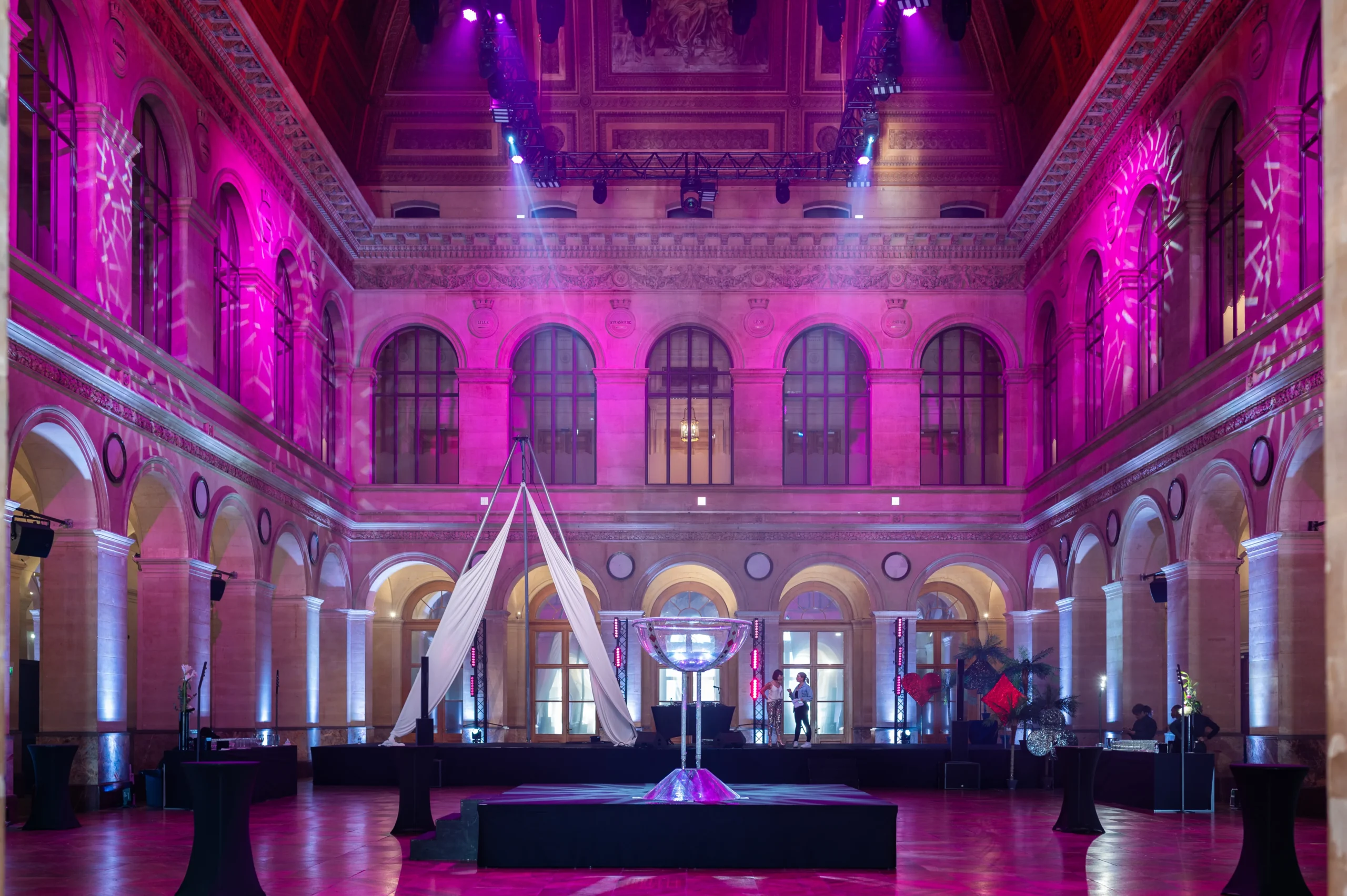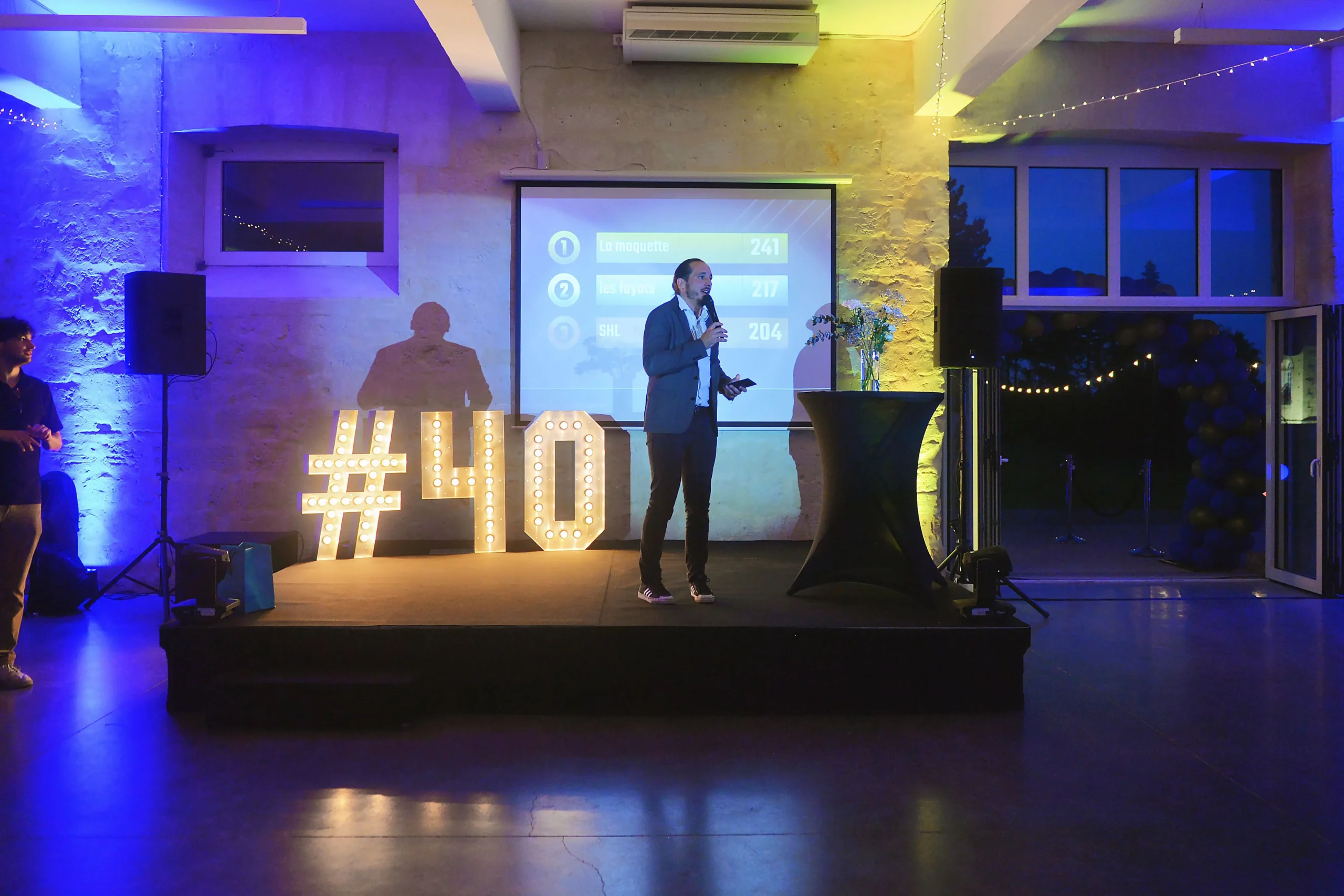
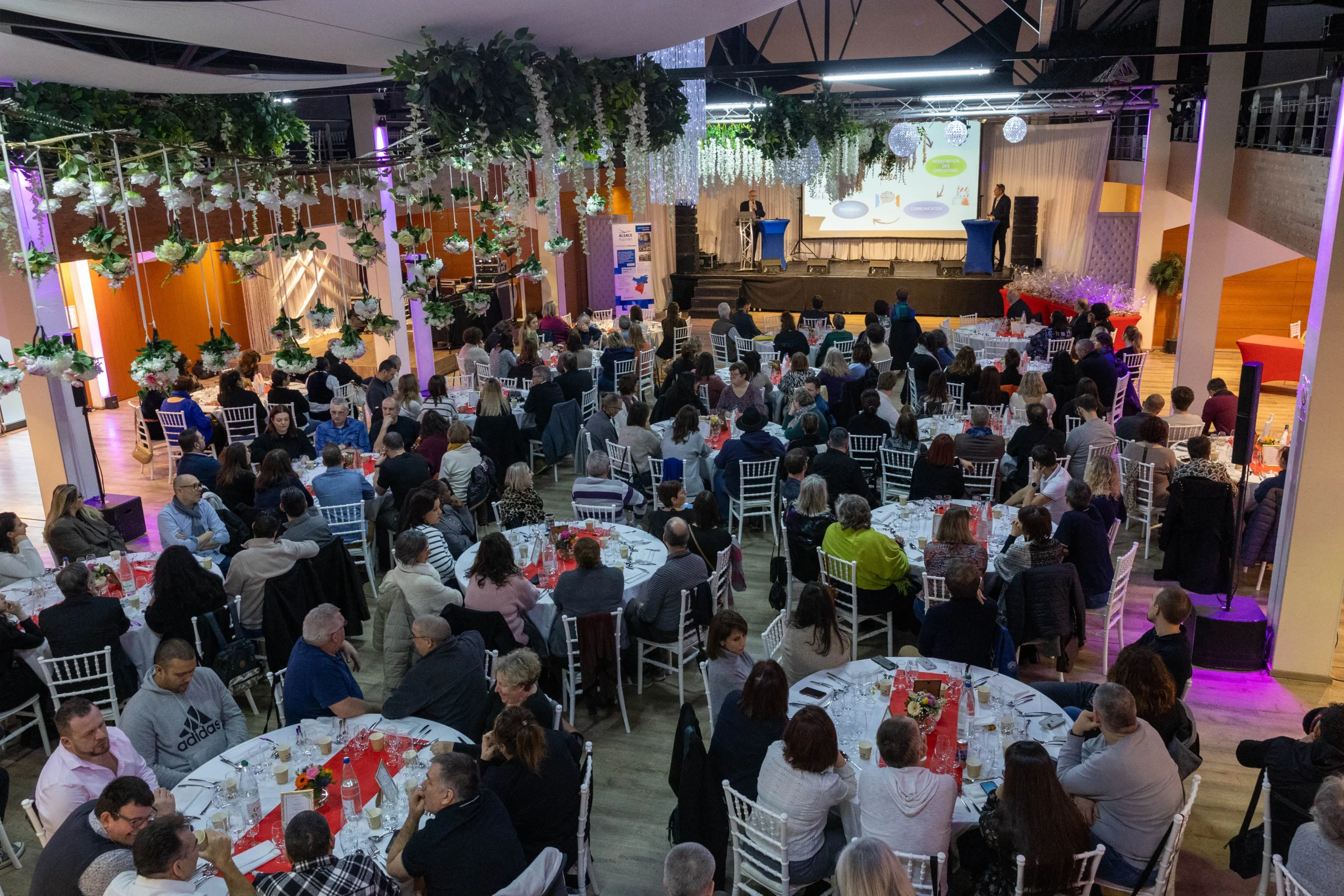
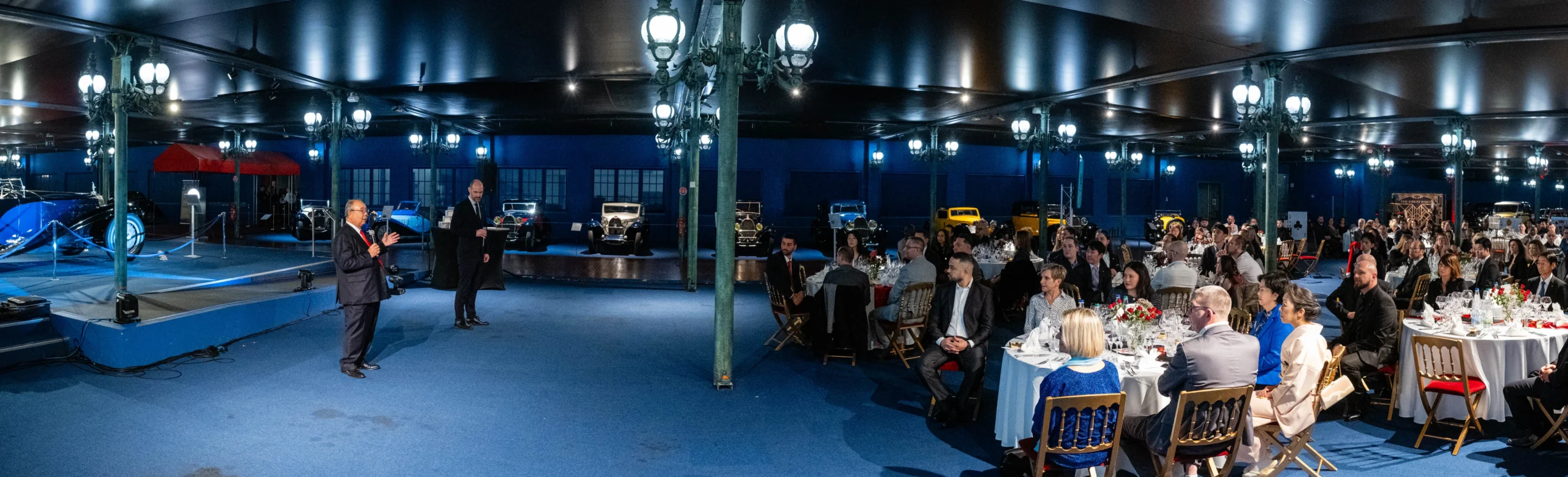
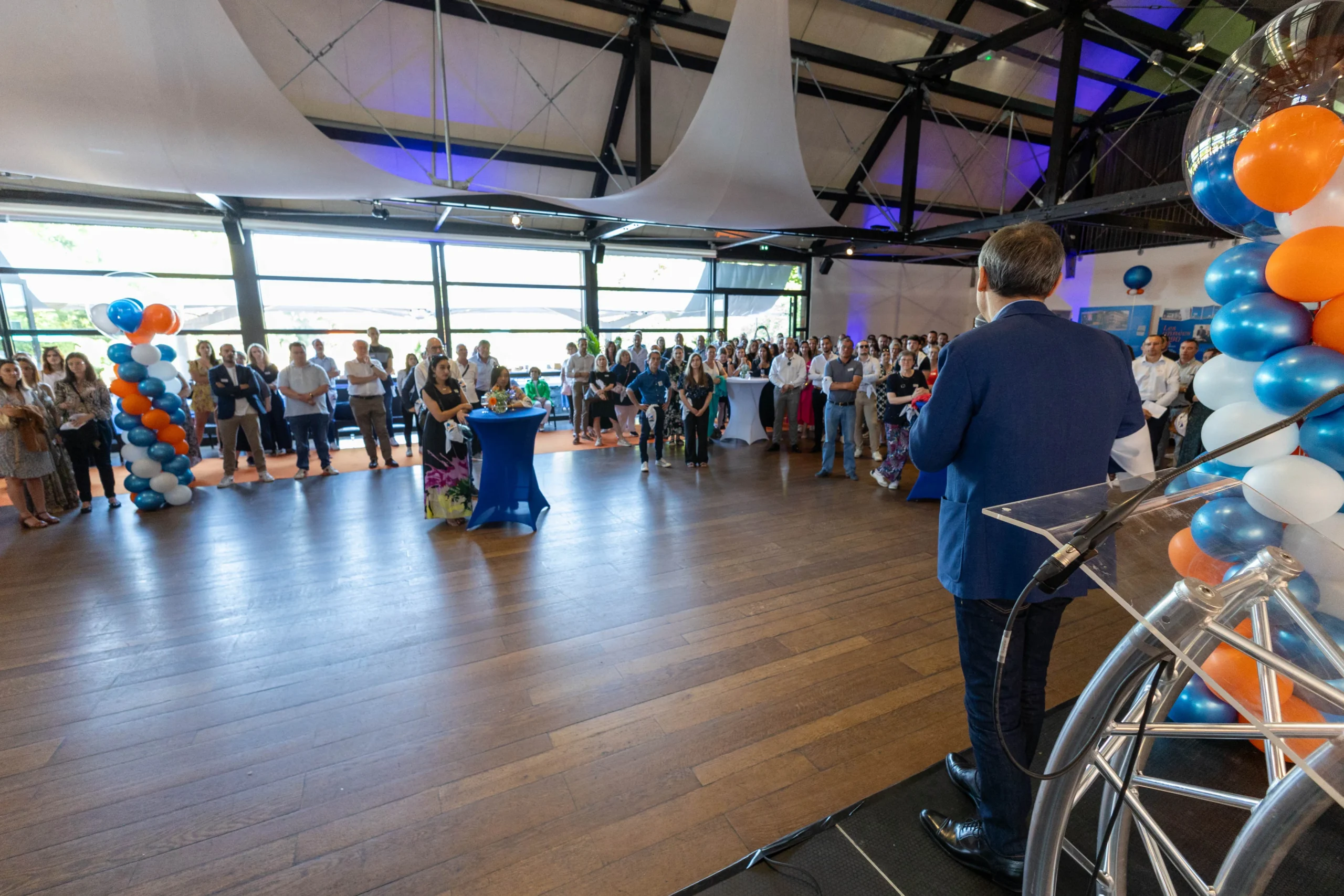
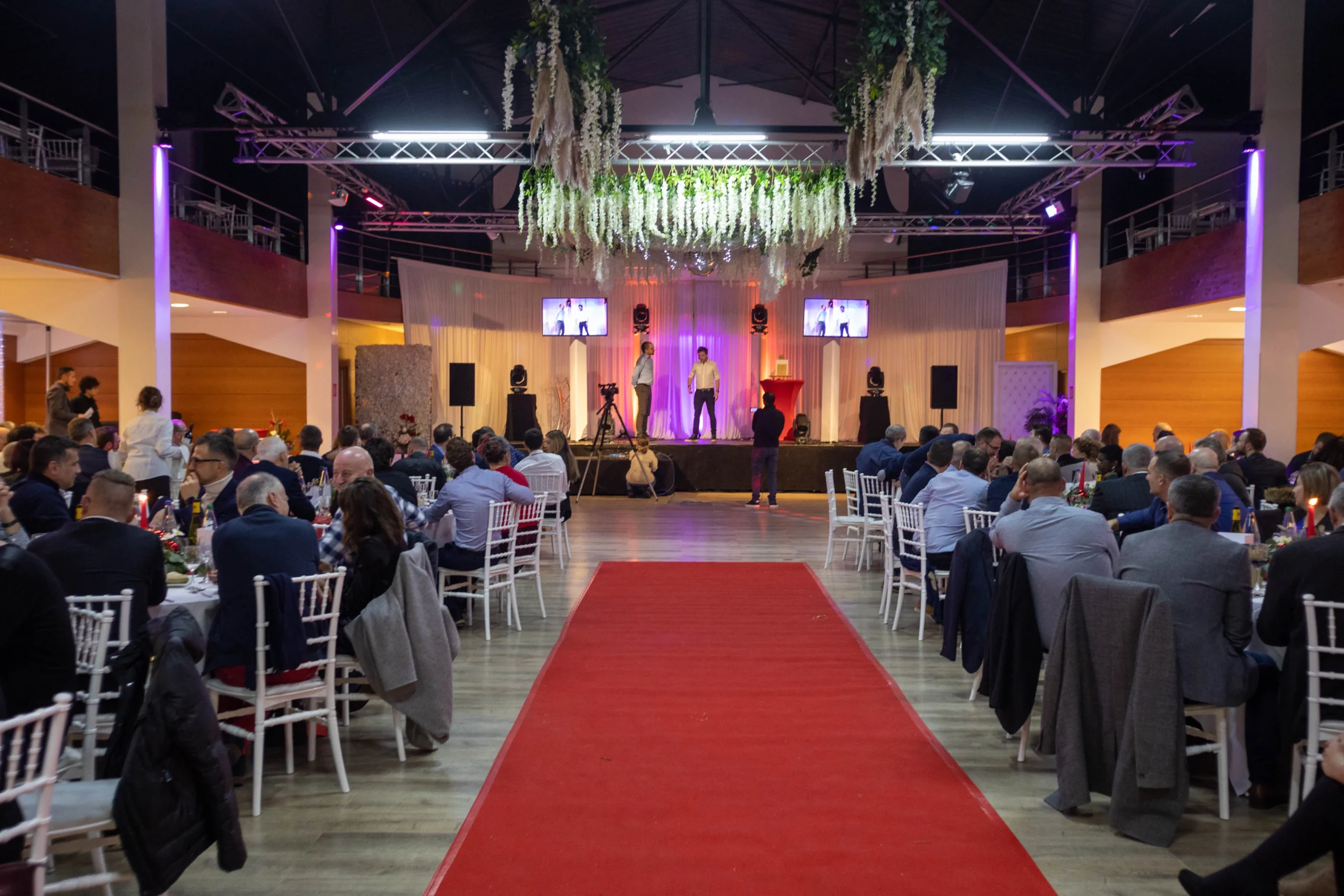
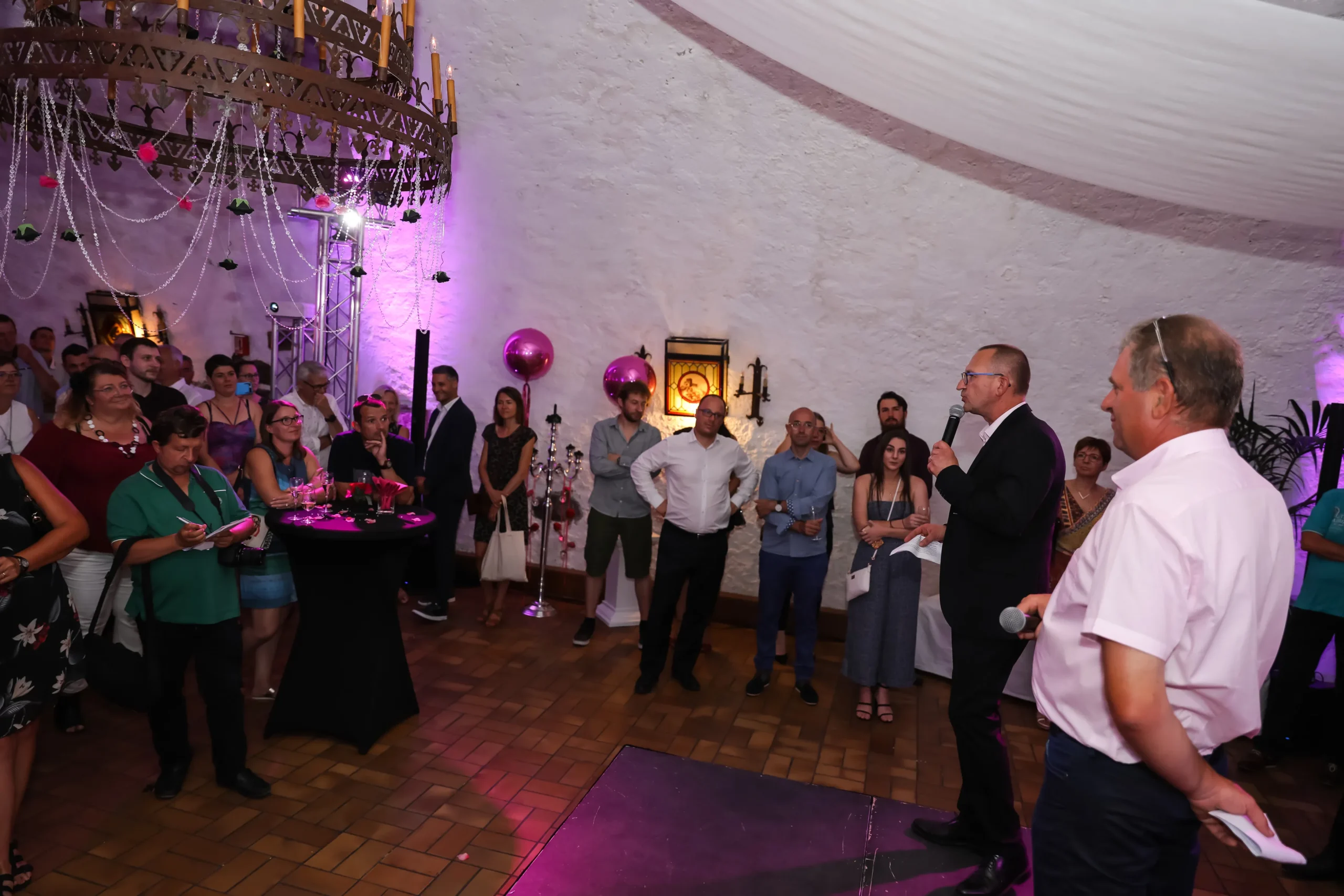
INNOV'events is a event agency in Montréal supporting executives, HR and communications teams with New Year’s Corporate Ceremony planning for 80 to 1,200+ attendees. We manage venue sourcing, show flow, bilingual scripting, AV, catering, suppliers and on-site operations so your leadership team can focus on people and messaging.
Whether you need a formal awards ceremony, a CEO address with a strong brand moment, or a ceremony blended into a cocktail or dinner, we build a controlled run-of-show that respects your timeline, your budget and your internal approvals.
In many Montréal organizations, a New Year’s Corporate Ceremony is where leadership sets direction, reinforces culture, and recognizes performance in a way that an email or a Town Hall can’t. Done properly, the entertainment and pacing keep attention high so your strategic message actually lands.
Local teams expect tight logistics: bilingual content, union-friendly load-ins where applicable, reliable winter transportation plans, and a guest experience that feels professional from registration to coat check. They also expect a format that respects diverse profiles—from head office leaders to operations staff.
Based in Montréal, we work with the city’s venues, technicians and caterers year-round. We bring field-proven event direction: rehearsal discipline, cue-to-cue management, and contingency planning that protects your brand on the day of the ceremony.
10+ years supporting corporate ceremonies, recognition nights and executive events across Québec and Canada.
150+ corporate events delivered with structured run-of-show, vendor coordination and on-site direction.
80 to 1,200+ attendees handled, from leadership ceremonies to multi-department recognition programs.
2-language operations: bilingual scripts, signage and stage management aligned with Montréal realities.
24–72 hour contingency readiness for speaker changes, AV swaps, weather constraints and last-minute agenda updates.
We regularly support Montréal-based organizations and teams with recurring annual moments—particularly when the event needs to be both inspiring and operationally disciplined. Many of our clients come back because they want the same calm execution year after year, with new content and fresh staging but without re-living last year’s production issues.
We also collaborate with local venues, AV teams, caterers and artists who understand Montréal constraints: winter load-ins, bilingual guest flows, and the reality of downtown access. When a client’s procurement or legal team requires documentation (insurance, CNESST-aligned safety practices, supplier contracts, and cancellation clauses), we know what to provide and how to keep the process moving.
If you share your industry and your internal stakeholders (HR, comms, procurement, IT/security, executive assistants), we’ll present relevant examples from similar corporate contexts and explain what worked operationally—not just what looked good.
We send you a first proposal within 24h.
For executive and HR teams, the start of the year is the cleanest moment to align people around priorities and behaviour. A ceremony is not just “a party”: it’s a controlled communication environment where leadership can recognize results, clarify direction, and reduce the noise that often follows organizational change.
In practice, we see three common triggers in Montréal organizations: a major transformation (new structure, new systems, post-merger integration), retention pressure in key roles, or a need to re-energize teams after a demanding year. The ceremony becomes the anchor point that says “this is what we value” and “this is where we’re going,” with enough energy to keep people engaged.
Executive alignment without internal friction: we build a show flow that keeps messaging consistent across the CEO address, awards, departmental recognition and any guest speakers—avoiding the typical “everyone adds five minutes” drift.
Recognition that’s fair and credible: we help HR and leaders define award categories, eligibility and approval gates so recognition doesn’t feel arbitrary or political. Clear criteria reduces post-event complaints.
Stronger employer brand in a competitive market: in Montréal, employees compare experiences. A professional ceremony—good audio, tight pacing, respectful hospitality—signals maturity and care.
Cross-site cohesion: for hybrid or multi-location organizations, we design moments that include remote staff (video shout-outs, live feed segments, and timed recognition blocks) without making the room feel like it’s “watching a screen” all night.
Operational credibility with stakeholders: a disciplined production reduces last-minute firefighting for comms and executive assistants, and protects leadership from on-stage surprises.
Montréal has a pragmatic corporate culture: leaders want warmth and celebration, but they also expect precision. A well-run New Year’s Corporate Ceremony in Montréal respects that balance—human, but operationally tight.
Montréal decision-makers are typically comparing multiple suppliers on risk, not on slogans. They want to know: will the agenda be respected, will the AV be stable, and will the experience match the company’s positioning? We approach the project as a production, not a “theme night.”
Bilingual delivery is often a baseline. That doesn’t mean duplicating everything word-for-word; it means designing a bilingual experience that feels natural—MC transitions, on-screen graphics, awards call-outs, and signage that doesn’t slow the room down.
Winter realities matter: guest arrival waves are less predictable, parking and drop-off zones get complicated, and coat check can become a bottleneck that affects the first impression. We build arrival timing, staffing and signage accordingly, and we recommend a buffer in the run-of-show so the ceremony doesn’t start with a half-empty room.
Downtown constraints are also real: loading docks, elevator schedules, noise limits, and union rules in certain venues. We confirm these early because they impact rehearsal time, staging options, and sometimes the feasibility of specific entertainment formats.
Finally, Montréal organizations tend to be rigorous on brand and reputational alignment. A joke that lands in one company may be inappropriate in another, particularly in regulated sectors. We validate tone, scripts and music choices with your comms team, and we create approval checkpoints so nothing controversial appears on stage “by surprise.”
Entertainment should serve the ceremony’s objective: attention, energy resets, and brand coherence. In a New Year’s Corporate Ceremony, the risk is choosing an act that is impressive but misaligned with the room—too loud for a leadership-heavy audience, too niche for a mixed workforce, or too complex to stage within tight load-in constraints.
We propose entertainment in modules that fit a run-of-show: a short opening that lifts energy, micro-interludes that keep momentum between awards, and a post-ceremony block (cocktail, networking or dance) that suits your culture. Below are formats we deploy regularly for corporate event entertainment in Montréal, with operational notes that executives and comms teams care about.
Live audience polling and recognition moments (5–12 minutes): quick, bilingual prompts tied to company priorities (safety, customer experience, innovation). Works best when questions are pre-approved and displayed cleanly on screens.
Leadership “fireside” Q&A with a professional moderator (12–20 minutes): we coach pacing, question selection and transition to awards. Particularly effective after a year of change when employees need clarity more than hype.
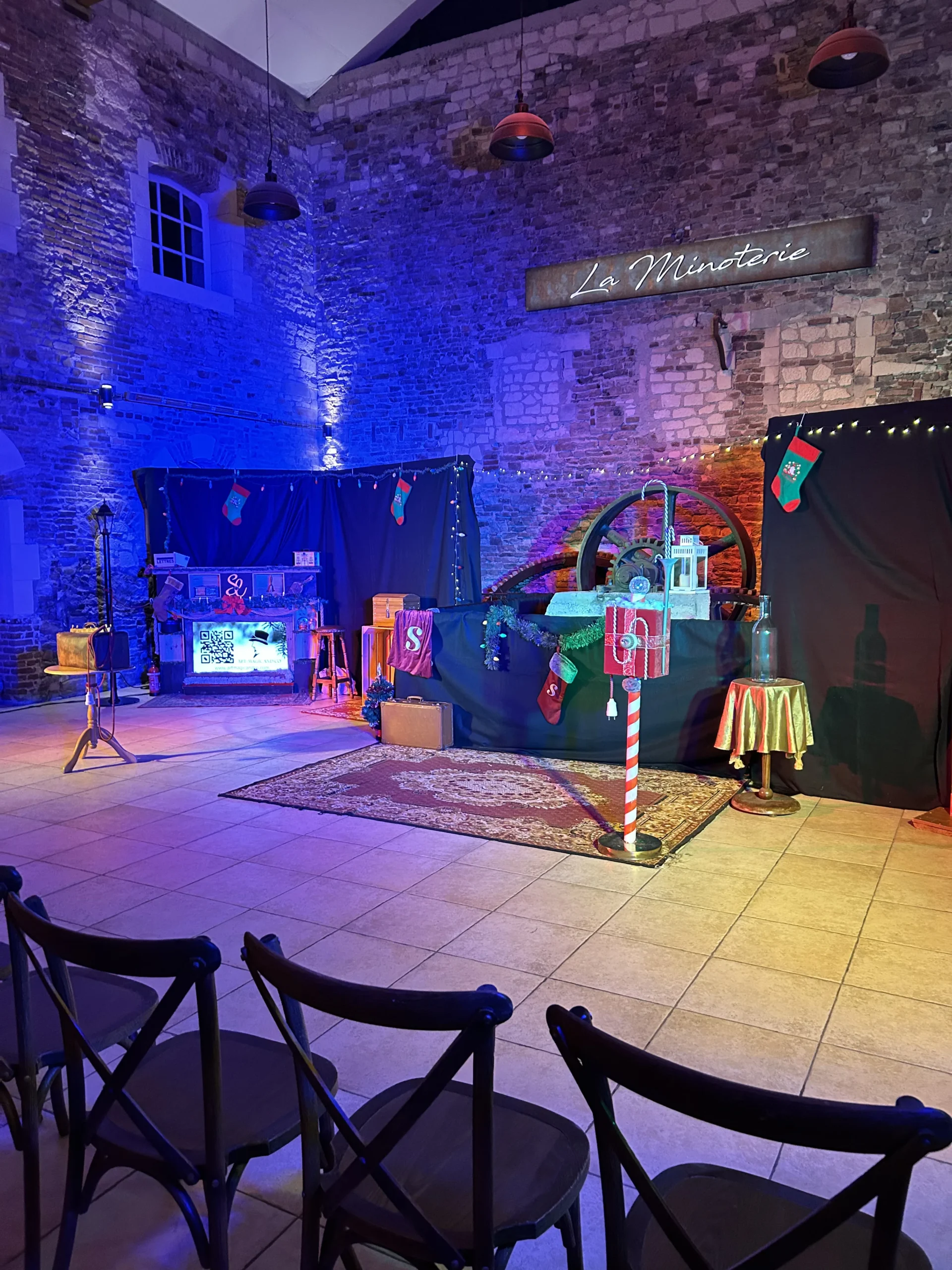
Photo activation with brand-safe output (continuous): a controlled photo station (lighting, backdrop, brand frame) generates internal content without creating a line that blocks traffic. We plan the footprint and staffing based on attendee volume.
String or jazz trio for arrivals and cocktail: adds polish without overpowering conversation; practical for venues with sound limits or tight schedules.
Contemporary circus-style interludes (2–4 short sets): works when staged safely and rehearsed with the venue’s rigging limitations. We validate ceiling height, rig points and insurance requirements early.
Spoken word or bilingual performance tied to values: effective for culture and DEI messaging when the text is co-developed and approved. We avoid risky improvisation for executive ceremonies.
Chef-led tasting stations: keeps movement in the room and reduces long dinner service. We coordinate timing so food doesn’t compete with key speeches.
Mocktail bar and low-alcohol pairing: supports inclusive hosting and safety messaging, especially for teams driving back to the South Shore or Laval in winter conditions.
Late-night comfort stations (poutine, smoked meat-inspired bites, vegan options): we schedule them after the formal portion to avoid plate noise during speeches.
Projection mapping on a clean architectural surface: powerful for a brand reveal or year-in-review, but requires technical site validation, controlled lighting and rehearsal time.
AI-assisted highlight reel (still human-reviewed): we can assemble a fast recap from pre-approved assets and on-site footage, provided your legal and brand teams validate rights and consent flows.
Hybrid recognition kits for remote employees: coordinated shipment, timed unboxing and live call-outs; works best with clear address collection and a cut-off date.
Whatever the format, we anchor it to brand and risk: tone, lyrics, wardrobe, staging, accessibility, and timing. The goal is not “more entertainment”; it’s the right level of corporate event entertainment in Montréal to support leadership messaging and recognition without losing control of the room.
The venue sets the tone before a single word is spoken. In Montréal, venue choice also determines operational realities: load-in access, AV infrastructure, ceiling height, union rules, and how smoothly guests move through coat check, bars and seating.
We start with the format (ceremony-only vs. ceremony + cocktail vs. ceremony + dinner), then we map it to a space that supports sightlines, audio clarity and screen placement. Many “beautiful rooms” fail on visibility, which is a critical issue when awards and leadership addresses are the core content.
| Venue type | For which objective? | Main strengths | Possible constraints |
|---|---|---|---|
Downtown hotel ballroom | Formal New Year’s Corporate Ceremony with dinner and awards | Built-in banquet operations, reliable power, easier winter guest access, strong staffing | Sometimes limited ceiling height for rigging; package pricing can reduce catering flexibility |
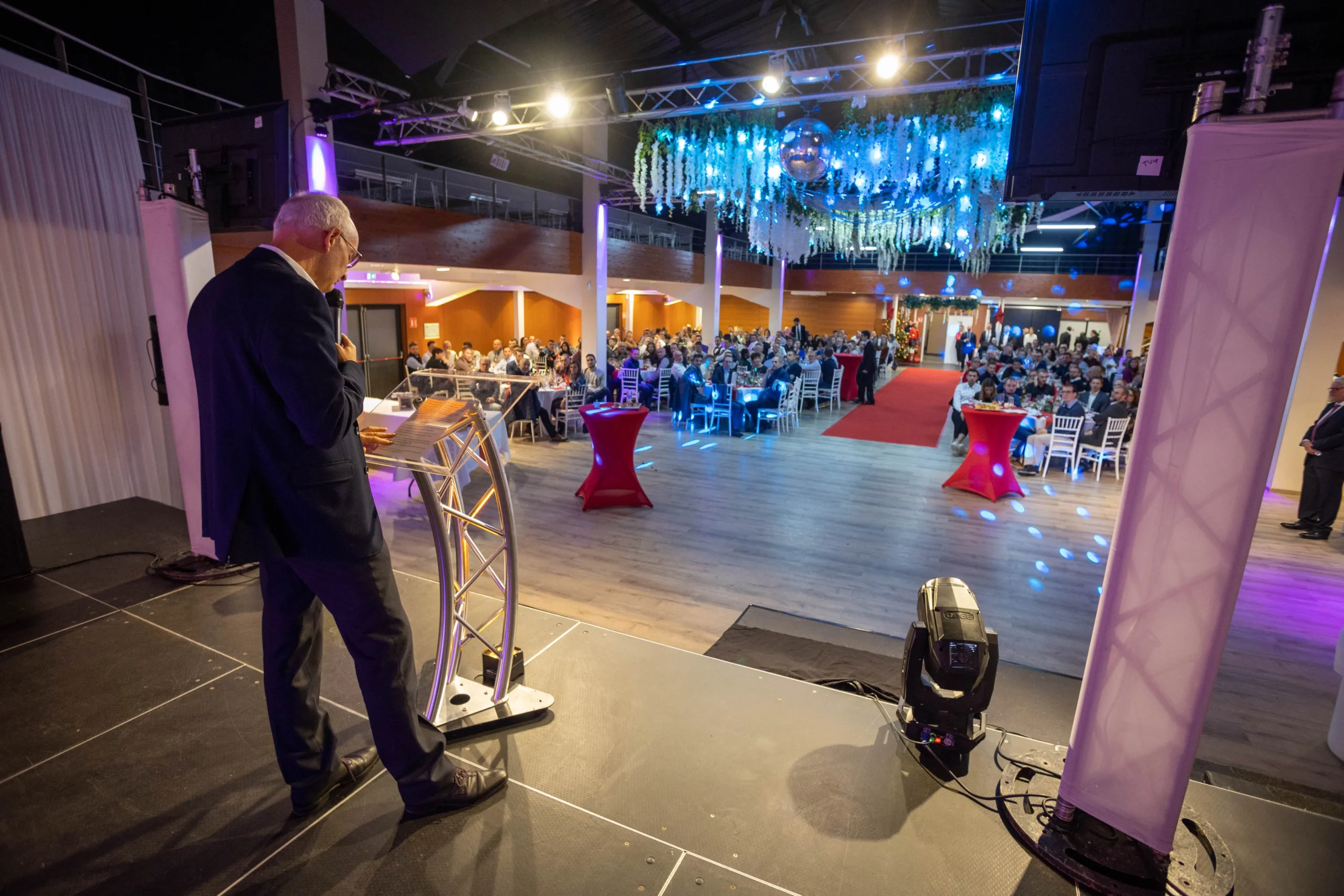
Converted industrial / loft event space | Modern ceremony + cocktail networking for mixed departments | High ceilings, strong visual character, flexible layouts for staging and activations | May require more AV rental; load-in and heating must be validated in winter |
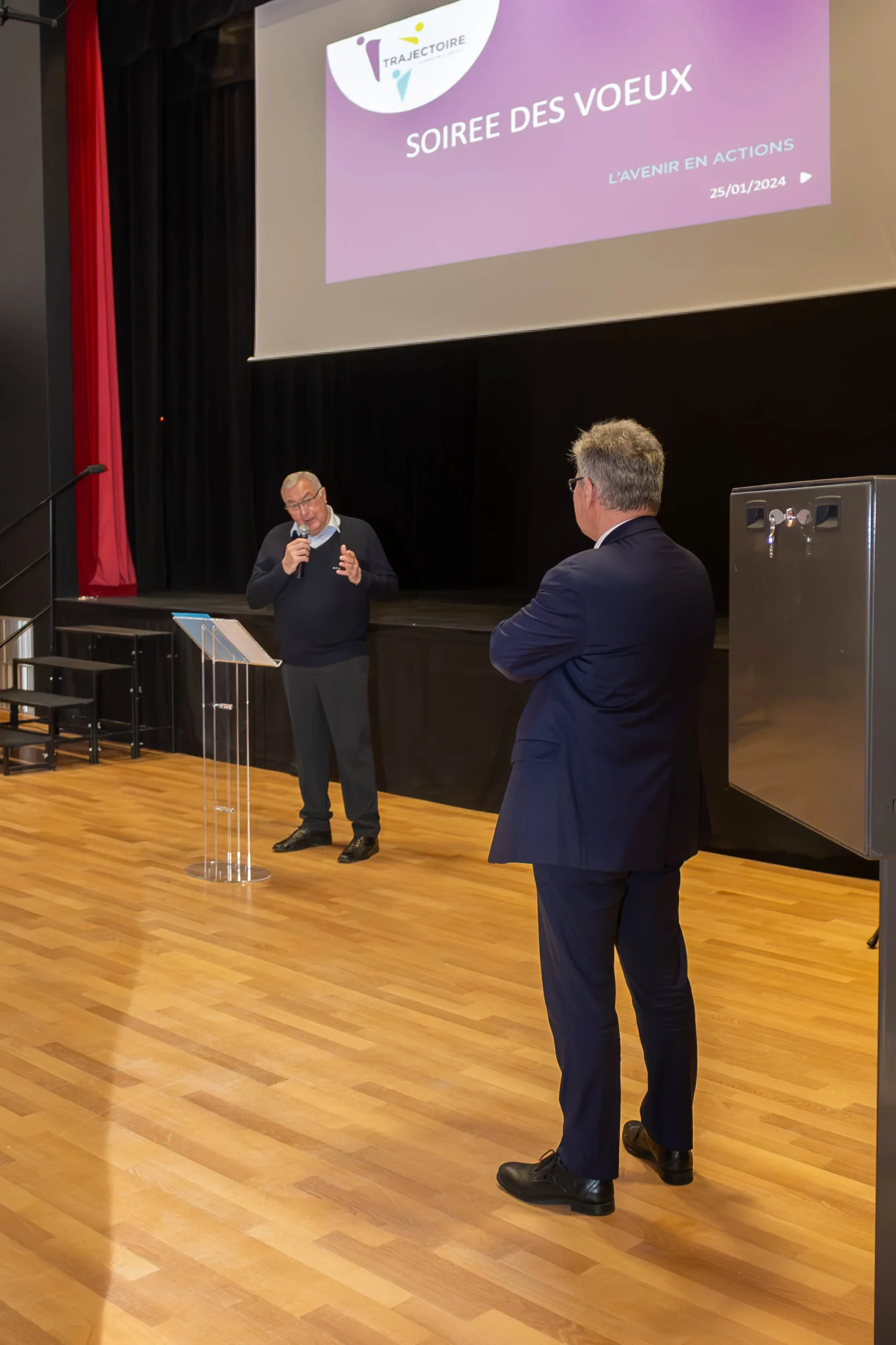
Performing arts theatre | Message-first ceremony with strong stage presence and video content | Excellent sightlines and acoustics, professional backstage workflow, clear audience focus | Less suited to dinner service; union/house crew requirements and strict schedules can apply |
We strongly recommend a site visit with your key stakeholders (comms, HR, and whoever approves brand and budget). Seeing sightlines, backstage paths and loading access in person prevents expensive surprises—especially in Montréal, where building constraints can change what’s feasible on stage.
Budgets for a New Year’s Corporate Ceremony in Montréal vary widely because the cost drivers are structural: venue and food & beverage minimums, AV complexity, talent, and how much your internal team expects the agency to take on (planning only vs. full production and on-site direction).
As a practical range, we often see total budgets between $35,000 and $250,000+ depending on attendee count, venue category, and the production level expected for leadership messaging (staging, multi-screen content, live stream, rehearsals). For large organizations or brand-sensitive launches integrated into the ceremony, budgets can exceed that range.
Attendee volume and seating format: theatre seating vs. rounds for dinner changes staging, screen placement and service labour.
Venue model: all-inclusive hotel packages vs. raw spaces requiring rentals (stage, drape, furniture, kitchen support).
Audio-visual scope: number of microphones, confidence monitors, projection vs. LED wall, show caller, recording, live stream, simultaneous translation if needed.
Content production: scripting, bilingual copy review, video editing, award nominee assets, on-screen graphics, rehearsal time.
Entertainment fees and technical riders: artists may require specific sound, lighting, staging, security, or backstage hospitality.
Guest experience logistics: registration platform, staffing levels, coat check capacity, security, accessibility accommodations.
Risk and schedule: tight timelines can increase labour (overtime, additional crew) and shipping costs for decor or branded elements.
We build budgets with decision-ready clarity: what is fixed, what is variable, and what levers reduce cost without weakening the executive impact. ROI isn’t only attendance happiness; it’s reduced attrition risk, stronger alignment, and leadership credibility delivered through a controlled experience.
For executive ceremonies, local presence isn’t a nice-to-have; it reduces operational risk. A Montréal-based team can physically validate venues, run rehearsals, and meet suppliers on-site—before your leadership team is on stage. We also understand the city’s constraints: winter transportation realities, downtown access, and the vendor ecosystem that actually delivers under pressure.
We act as an extension of your internal team, but with production discipline: procurement-ready supplier files, clear scopes of work, and a single chain of command on event day. When something changes at 4:30 p.m.—a delayed executive arrival, a video export issue, a seating shift—local coordination and relationships matter.
To see how we structure projects as an event agency in Montréal, we can walk you through our planning cadence, approval checkpoints and on-site roles.
We build budgets with decision-ready clarity: what is fixed, what is variable, and what levers reduce cost without weakening the executive impact. ROI isn’t only attendance happiness; it’s reduced attrition risk, stronger alignment, and leadership credibility delivered through a controlled experience.
Our projects range from formal leadership ceremonies with awards and structured speeches, to recognition-first evenings designed to stabilize retention and morale after intense operational periods. We also deliver hybrid formats where a core in-room ceremony is broadcast to satellite offices or remote employees, with recognition timed so everyone feels included.
In practice, we often step in when internal teams have the strategy but not the bandwidth to produce the show: HR owns recognition criteria, communications owns narrative and tone, and executives own key messages. We turn that into a run-of-show that works technically: stage blocking, cue sheets, bilingual MC scripts, video and slide standards, and rehearsal plans that respect executive schedules.
We are also used to sensitive contexts: organizational restructuring, labour relations realities, and brand risk constraints. In those cases, we tighten approvals: script lock dates, content review gates, music and performance guidelines, and a clear escalation path on the day of the event.
Overpacked agendas that leave no buffer for applause, stage walks, or speaker transitions—leading to rushed awards and a frustrated audience.
AV planned too late: videos not normalized, wrong screen sizes for the room, insufficient microphones, or no confidence monitor—creating visible on-stage discomfort.
Unclear ownership between HR, comms and the executive office—resulting in last-minute changes with no single decision authority.
Venue mismatch: a visually attractive space with poor sightlines or limited backstage access, making the ceremony feel improvised.
Inadequate coat check and arrival staffing—a Montréal winter classic that can ruin first impression and delay the start.
Entertainment misalignment: acts that are too loud, too long, or tone-deaf to the company’s culture and risk profile.
No contingency plan for weather, speaker delays, or technical failure—forcing executives to make operational calls in real time.
Our role is to remove those risks before they appear: we lock the show structure early, validate technical feasibility, and run the event with a clear chain of command so leadership can focus on people, not problems.
Renewal happens when the event day feels controlled and the internal effort feels lighter. Many of our repeat clients come from environments where the ceremony touches multiple stakeholders—HR, comms, procurement, IT, security, executive assistants—and where a single operational gap becomes very visible.
We build trust through predictability: transparent production schedules, written approvals, supplier scopes that match procurement standards, and on-site leadership that keeps the room calm even when adjustments are required.
High repeat rate driven by annual recognition and year-kickoff cycles (measured internally per client portfolio).
Reduced planning load: clients typically report fewer internal meetings once the run-of-show and approval gates are in place.
Fewer day-of changes: structured rehearsal and content lock reduces last-minute speaker and AV surprises.
Loyalty is not about habit; it’s proof that the ceremony delivered the right outcome with the right level of control—and that the organization is comfortable putting leadership on stage again with the same partner.
We start with your objectives (recognition, messaging, employer brand, fundraising, stakeholder relations) and your constraints (budget envelope, bilingual requirements, risk profile, internal approvals, union considerations if relevant). We confirm attendee count ranges, guest profiles, and whether the ceremony is stand-alone or tied to a meal and networking.
We build the ceremony structure: opening, leadership address, awards blocks, transitions, entertainment modules, and closing. We produce a timed run-of-show with responsibilities, cue numbers, and buffer strategy so the event can absorb real-life timing deviations without collapsing.
We propose venue options aligned with your objective and production needs, then validate feasibility on-site: sightlines, rigging possibilities, backstage paths, loading access, power, and noise constraints. This is where we prevent “beautiful but unworkable” choices.
We contract AV, staging, decor, catering coordination, entertainment, photo/video, security and staffing. Each supplier receives a written scope, schedule and deliverables list. We align contract terms with corporate expectations: insurance, cancellation clauses, confidentiality when needed, and clear payment milestones.
With HR and comms, we finalize award categories, nominee lists, pronunciation guides, on-screen graphics, and scripts for MC and speakers. We set content lock deadlines and build a review workflow so executive changes don’t disrupt technical production.
We run a technical check and a stage rehearsal adapted to executive schedules. On event day, a dedicated show caller manages cues, transitions and timing while an on-site producer manages stakeholders and vendor coordination. You get a single point of accountability throughout.
We provide a structured wrap: final supplier reconciliation, incident log if applicable, photo/video delivery timeline, and a debrief focused on what to keep, improve or simplify for next year’s cycle.
For prime dates in late December and January, plan 10 to 16 weeks ahead for mid-size groups, and 4 to 8 months ahead for 400+ attendees or premium venues. If you need a theatre or a complex AV setup, earlier is safer because rehearsal and crew schedules fill quickly.
Ceremony-only formats work well from 80 to 800+ if sightlines and sound are strong. If you add dinner service, the practical range depends on room size and service model, but many Montréal venues are comfortable around 120 to 600 for plated meals. We validate the format against the venue’s real capacity, not just the marketing number.
For attention and pacing, the formal ceremony segment typically performs best at 60 to 90 minutes. If you include awards-heavy recognition, plan 75 to 110 minutes with clear buffers. Cocktail, networking or dance can follow, but the leadership and awards portion should stay tight.
Often, yes. Many organizations choose bilingual MC transitions and bilingual on-screen elements to match Montréal audiences. The key is clarity: we avoid doubling every message and instead design bilingual delivery that keeps momentum (short bilingual prompts, clear visuals, and scripted transitions).
At minimum: 2 to 6 wireless microphones (depending on speakers and awards), a dedicated audio tech, projection or LED screen sized for the room, and a show caller for cue control when the program is tight. For higher-stakes ceremonies, add confidence monitors, recorded backup of videos, and a rehearsal block to test walk-ons, lighting looks and audio levels.
If your leadership team wants a New Year’s Corporate Ceremony that is disciplined, bilingual-ready, and operationally calm, we’ll map the right format for your attendee count and priorities. Share your target date window, estimated headcount, and whether you want ceremony-only or ceremony + cocktail/dinner, and we’ll come back with a realistic plan: venue options, production approach, timeline and a budget range you can take to approval.
For Montréal winter dates, earlier planning protects venue availability and AV crew scheduling. Contact INNOV'events to start with a 30-minute scoping call and a first proposal built for executive review.
Thierry GRAMMER is the manager of the INNOV'events Montréal office. Reach out directly by email at canada@innov-events.ca or via the contact form.
Contact the Montréal agency