
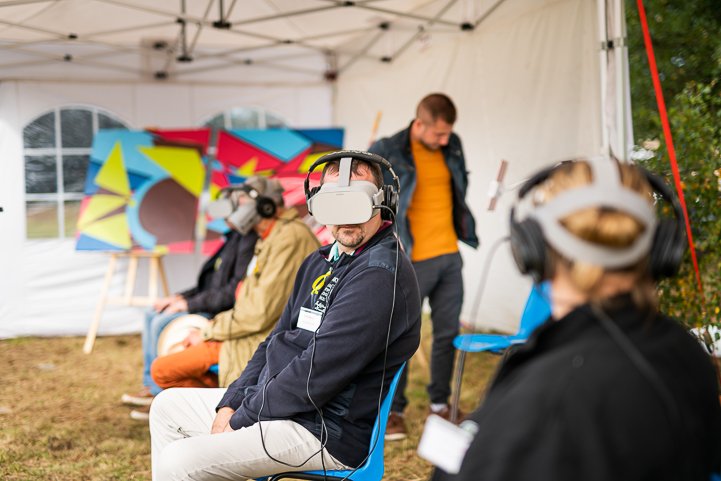
Virtual Reality Experience in Quebec that keeps teams engaged and events on schedule
INNOV'events delivers Virtual Reality Experience activations across Quebec for executives, HR, and communications teams who need reliable entertainment with real operational control. We typically support formats from 30 to 800 participants, from leadership offsites to large-scale conferences.
We handle the full chain: device selection, content, staffing, health & safety, traffic flow, AV coordination, and on-site troubleshooting—so your agenda stays tight and your brand standards are respected.
Sommaire
At a corporate event, entertainment is not “nice to have”: it’s the lever that changes attendee behaviour—participation, networking, message retention—when the agenda is dense and attention is scarce. A well-run Virtual Reality Experience turns downtime into structured engagement without derailing plenaries or meal service.
Organizations in Quebec expect professional execution: bilingual facilitation, clean installs in premium venues, and a queueing plan that avoids bottlenecks. The bar is high because events are often tied to employer branding, internal culture, and stakeholder visibility—one operational miss shows immediately.
Based in Montréal, INNOV'events runs VR activations throughout Quebec, with field teams who understand venue constraints, union/AV rules, and the reality of “show time” pressure. We design experiences that are enjoyable, but above all predictable, safe, and easy to integrate into a corporate schedule.
Operational credibility in Quebec in a few numbers
10+ years delivering corporate entertainment and experiential activations in Quebec, with repeat clients who prioritize execution over gimmicks.
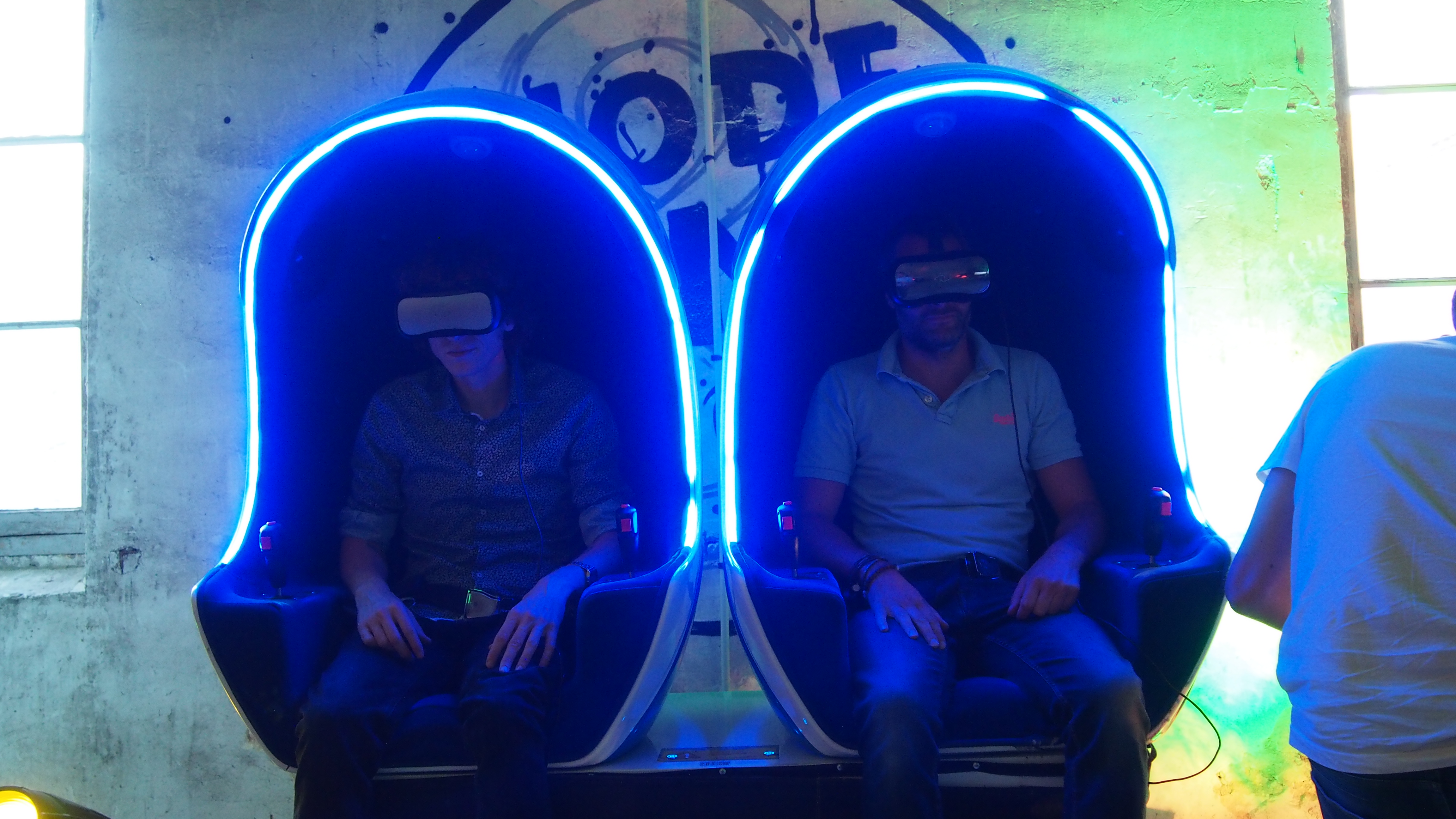
Typical VR deployment capacity: 2 to 12 VR stations per event, allowing throughputs from 60 to 350+ plays/hour depending on scenario length and onboarding needs.
On-site staffing ratio we plan for: 1 facilitator per 1–2 stations + a floor lead, ensuring hygiene, device resets, safety briefings, and queue management stay consistent.
We can support attendee volumes from 30 to 800 with the right format (rotation, timed sessions, or “VR lounge” hybrid).
Teams we support across Quebec (and why they come back)
In Quebec, many corporate event decisions are made with a “risk-first” mindset: leadership wants innovation, but they also want certainty—especially when VIPs, unionized venues, or media presence are involved. That’s exactly where VR can either shine or fail.
We regularly support Montréal and Québec City organizations that run multiple internal milestones each year: annual meetings, sales kickoffs, recognition events, recruiting moments, and client-facing showcases. Some teams bring us back because our approach is consistent: we plan the experience like an operational system (flow, staffing, tech redundancy) rather than a one-off “activity.”
Typical repeat scenarios we see locally: an HR team using VR as a culture touchpoint during a town hall; a communications team needing controlled photo/video moments without disrupting speeches; and an executive sponsor who wants innovation on stage—but insists the experience remain smooth for attendees who are not “tech people.”
 Besoin d’un devis rapide ?
Nous vous envoyons une première proposition sous 24h.
Why deploy a VR experience for a corporate event in Quebec?
A Virtual Reality Experience in Quebec works when it solves a business problem: creating structured interactions, reinforcing a message, or giving employees a shared reference point. In practice, VR is a high-impact tool when you have limited time and diverse audiences (tenure, roles, comfort with tech).
Accelerate networking without forcing it: VR naturally creates micro-groups (spectators + participants). We design queue zones and “watch screens” so people talk while waiting, which improves cross-team connections at leadership events.
Improve message recall: pairing a VR scenario with one key theme (innovation, safety, customer journey, ESG) gives communications teams a tangible anchor that people mention afterward—useful for internal comms and post-event surveys.
Offer inclusive engagement: not everyone wants to dance or do games. VR gives an alternative that feels modern and optional. We also propose “observer modes” and short formats for people who prefer to watch first.
Create measurable participation: we can track starts/completions, average time per session, peak times, and optional micro-feedback at exit—helpful for HR and comms reporting.
Support employer brand goals: for recruiting or recognition events, VR signals investment in people and modern tools—provided the experience is well branded and staff facilitation is polished and bilingual.
Quebec has a strong culture of pragmatic innovation: leaders want ideas that feel current, but they will judge execution first. VR earns its place when it’s integrated into the run of show, not stacked on top of it.
What Quebec organizations expect from VR on event day
In the field, we see recurring expectations from executive sponsors and internal producers in Quebec:
- Bilingual delivery: not only signage, but facilitation scripts, safety briefings, and user support in French and English. This reduces friction and keeps queues moving.
- Venue compatibility: many downtown Montréal venues have strict load-in windows, freight elevator schedules, and AV standards. VR needs a plan for power, Wi‑Fi/ethernet needs (if any), and a “quiet zone” for headset onboarding.
- Brand image control: comms teams often ask: Where will photos be taken? Will the space look clean? Will there be cables? We design a footprint that looks intentional: defined entrance/exit, discreet storage, clean signage, and optional backdrop.
- Health, safety, and hygiene: executives do not want last-minute concerns about motion sickness, trip hazards, or headset cleaning. We bring wipes, disposable masks when relevant, and clear rules (age limits, contraindications, seated vs standing experiences).
- Time discipline: in leadership conferences, the agenda is non-negotiable. VR must run independently of stage timing and be able to pause/resume around plenaries without creating frustration.
We build the VR activation like a mini-operation inside your event, with its own team lead, checklists, and contingency plan—because that is what keeps pressure off your internal organizers.
Which VR formats work best for corporate events in Quebec?
VR is strongest when it creates a shared experience people can talk about in the hallway after the plenary. For HR and comms, the goal is not “maximum wow”; it’s maximum participation with minimal friction, aligned to your message and the constraints of your venue in Quebec.
Interactive animations in Quebec
Competitive VR challenges (short format): timed tasks or score-based mini-games with a live leaderboard on screen. Works well for sales kickoffs and end-of-year celebrations; we manage fairness by standardizing scenario length and onboarding.
Cooperative VR missions: small teams solve a problem together. Useful when leadership wants collaboration signals without forcing group exercises. We typically run these as scheduled slots to protect flow.
Guided VR discovery stations: “touch and try” style with staff coaching. Effective for mixed audiences where some participants are unsure; it avoids abandonment and keeps satisfaction high.
Art animations in Quebec
VR art galleries and immersive storytelling: curated experiences that are calm and brand-safe, ideal for gala evenings where you want elegance and controlled volume.
Immersive music + VR visual journeys: works as a lounge element when you have a DJ or live music elsewhere; we design it to be a parallel experience, not competing with stage audio.
Innovative animations in Quebec
“Taste & travel” concept: pair a VR destination (e.g., a virtual visit) with real tasting stations managed by catering. This is effective in Quebec where food service is a core expectation; VR becomes a narrative layer rather than a replacement for hospitality.
VR timing synchronized with service: we coordinate rotation so participants don’t miss speeches or plated courses—typically by running VR during cocktail, dessert, or post-plenary networking.
Gourmand animations in Quebec
Branded VR onboarding: custom intro screen, branded environment elements, and a photo moment at exit. Communications teams appreciate that visuals look intentional in internal channels.
Safety and training VR modules (event-friendly): short scenarios adapted from operational training—useful when leadership wants to reinforce a safety culture message without turning the event into a classroom.
Hybrid VR + screen casting: spectators see what the participant sees. This increases engagement and reduces the “one person isolated in a headset” effect.
Whatever the format, we align the VR activation with your brand image: tone, visual cleanliness, bilingual signage, and the right level of “play” for your culture. A financial institution in Montréal does not need the same VR vibe as a tech employer in the Mile End—and we plan accordingly.
Where to host a VR activation in Quebec: what actually works
The venue can make or break a Virtual Reality Experience. VR needs predictable lighting, safe circulation, and enough space to keep participants comfortable while protecting the look of the room. In Quebec, we often adapt to heritage buildings, downtown hotels, and modern conference centres—each with different constraints.
| Venue type | For which objective? | Main strengths | Possible constraints |
|---|---|---|---|
Downtown hotel ballroom (Montréal / Québec City) | High-attendance receptions, conferences with tight schedules | Easy access, strong AV infrastructure, predictable load-in, adjacent breakout rooms for VR zones | Union rules, strict load-in windows, limited ceiling rigging, potential queue congestion near bars/foyers |
Convention centre or large corporate campus space | Large-scale participation targets, sponsor activations, multi-station VR “lounge” | Space for 6–12 stations, clean traffic flow, capacity for casting screens and signage | Distance between zones can reduce foot traffic; power distribution must be planned early |
Industrial / loft venue (converted warehouse) | Brand-forward events, product launches, creative employer branding | Strong aesthetic, flexible layouts, great for photo/video moments | Uneven floors, limited HVAC, variable lighting, load-in access may be tight; needs careful safety marking |
We strongly recommend a site visit (or at minimum, a detailed tech advance with photos, measurements, and venue rules). In Montréal especially, the difference between a smooth install and a stressful one is usually discovered in corridors, elevators, and power access—not on the floor plan.
How much does a corporate VR experience cost in Quebec?
Pricing for a Virtual Reality Experience in Quebec depends less on “VR” and more on operations: number of stations, scenario length, staffing, branding, and the complexity of your venue’s load-in. We quote based on your attendance model and run of show so you don’t pay for capacity you won’t use.
Number of VR stations (2–12): the main driver of throughput. More stations reduces queue pressure but increases staffing and footprint.
Duration per participant: a 3-minute experience can double the number of participants compared to a 7–10 minute experience, with a direct impact on satisfaction (“I actually got to try it”).
Staffing and bilingual facilitation: we budget for trained staff, a floor lead, and enough time for briefings, resets, and hygiene protocols.
Branding level: from clean signage to fully branded intro screens and a designed activation space.
Venue constraints in Quebec: load-in schedules, elevator access, union labour requirements, and distance from truck to room can change the setup time materially.
AV add-ons: casting screens, leaderboards, microphones for a host, or integration into a stage moment.
From an ROI perspective, VR is worth it when it replaces “passive time” with measurable engagement and supports a strategic message (culture, innovation, safety, recruiting). We help you choose a format that matches your participation target—so the investment shows in both attendee feedback and leadership perception.
Why choose a Quebec-based event partner for VR?
VR looks simple until you’re inside a real venue with a real agenda and real executives watching. A local team in Quebec reduces risk because we know the operational reality: venue protocols, bilingual facilitation standards, and the pace of corporate events here.
When you work with INNOV'events, you’re not buying headsets—you’re buying a controlled activation that respects your schedule, brand, and stakeholders. If your event is in Québec City, our network also supports local logistics through our event agency in Quebec presence and partners, which simplifies coordination when timelines are tight.
- Faster on-site decision-making: when something shifts (speaker delay, room change, power issue), we adjust in minutes with a local team lead empowered to act.
- Vendor and venue coordination: we speak the same operational language as local AV, security, and venue managers—reducing friction during load-in and show.
- Brand protection: we know what corporate audiences in Quebec consider “professional”: clean installs, discreet staffing, bilingual signage, and predictable flow.
From an ROI perspective, VR is worth it when it replaces “passive time” with measurable engagement and supports a strategic message (culture, innovation, safety, recruiting). We help you choose a format that matches your participation target—so the investment shows in both attendee feedback and leadership perception.






Examples of VR use cases we deliver in Montreal and across Quebec
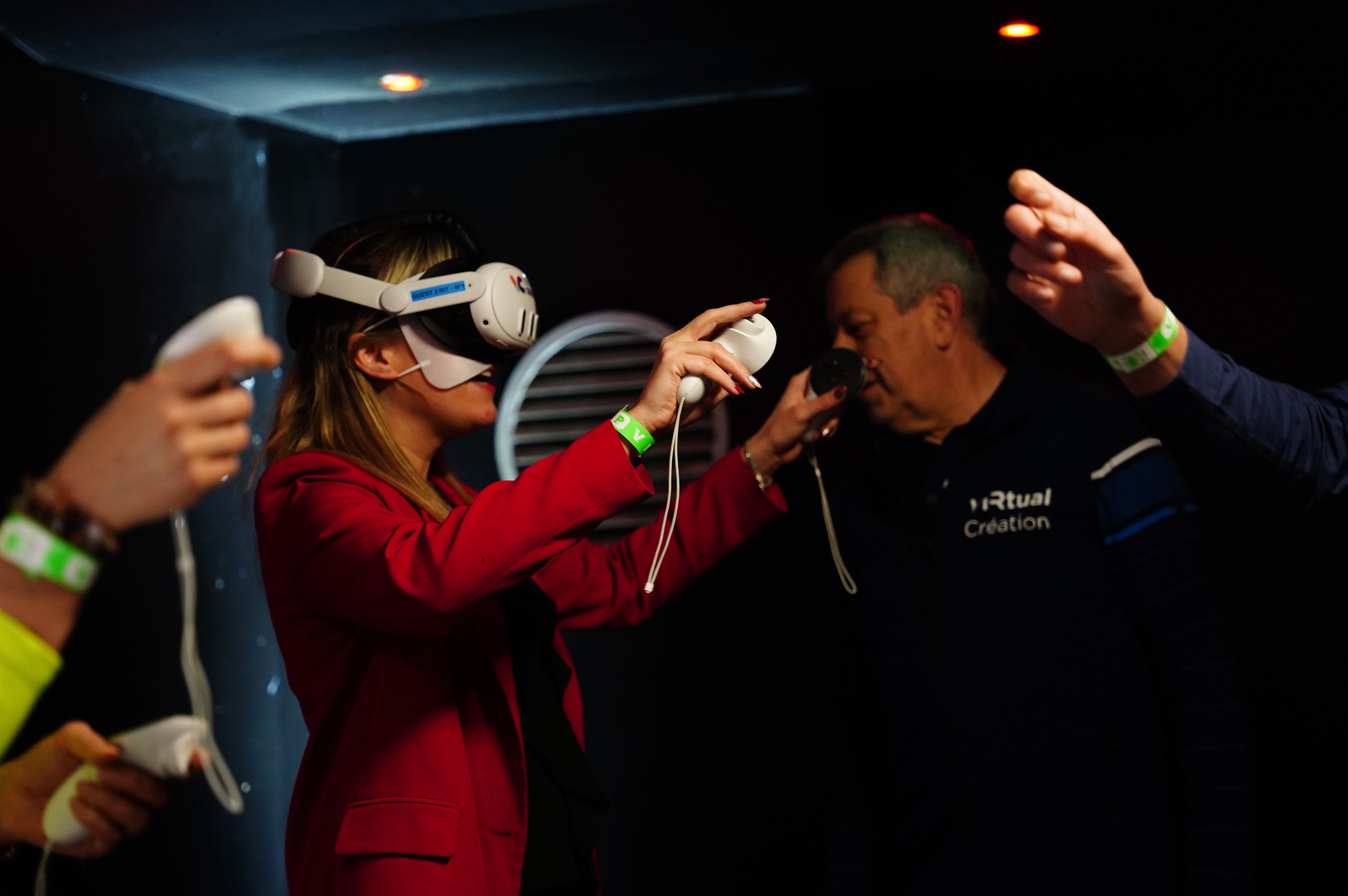
Our VR projects vary because corporate objectives vary. We’ve deployed VR as a high-throughput cocktail activation with leaderboard screens; as a quieter “innovation lounge” for executive retreats; and as a branded experience integrated into a conference sponsor area.
One recurring situation: the HR team wants engagement, but the executive sponsor is concerned about queue chaos and optics. We solve it with a structured footprint (entry/exit, watch screen, stanchions), short scenario design, and a staffing plan that keeps onboarding under 60–90 seconds per participant.
Another common reality in Quebec: bilingual audiences where participants switch languages mid-sentence. Our facilitators are trained to keep instructions concise and consistent, which reduces device handling mistakes and increases throughput—especially during the first 30 minutes when curiosity peaks.
We also design VR to coexist with stage priorities: running VR during cocktail, breaks, and post-plenary; pausing when needed; and coordinating with AV so casting screens don’t compete with sponsor visuals or keynote content.
Common pitfalls with VR entertainment in Quebec (and how we prevent them)
Underestimating queues: a single station with a 7-minute scenario will frustrate large groups. We calculate throughput and propose the right number of stations or a shorter module.
Putting VR in a high-traffic chokepoint: near coat check, bar, or main doors. We map circulation so VR doesn’t create safety issues or block service.
No clear safety and hygiene protocol: leads to inconsistent facilitation and discomfort for participants. We standardize cleaning, headset fitting, and contraindication checks.
Overcomplicated tech dependencies: relying on unstable Wi‑Fi, cloud logins, or last-minute downloads. We preload content and plan offline operation when possible.
Mismatch with brand tone: content too “gamey” for a conservative brand, or too slow for a sales crowd. We align scenario style and the physical setup with your corporate culture.
No contingency plan: if a headset fails, the entire activation stops. We bring spares, charging rotation, and a reset checklist to keep continuity.
Our role is to remove these risks before you feel them. For executives, the best VR activation is the one that looks effortless—because the operational work is done in advance.
Why Quebec clients renew year after year
Repeat business is rarely about novelty; it’s about confidence. In Quebec, internal event owners are judged on execution: schedule, attendee flow, stakeholder satisfaction, and brand perception. Clients come back when they know the supplier will protect those priorities.
Multi-event continuity: we maintain runbooks and learnings from one activation to the next (venue notes, best placement, throughput achieved), which reduces planning time for your team.
Stable staffing approach: we prioritize trained facilitators and a clear on-site chain of command, which clients notice immediately when comparing suppliers.
Post-event clarity: we can provide participation estimates, peak-time observations, and practical recommendations for the next edition—useful for HR/comms reporting.

Loyalty is not a slogan; it’s a proof point that the experience holds up under real event-day conditions in Quebec.
Our approach to delivering VR experiences in Quebec without surprises
👉 1) Brief aligned to your Quebec event reality
We start with your constraints: audience profile, bilingual needs, run of show, venue, and brand guidelines. We ask operational questions early (load-in, power, ceiling height, AV rules, union labour) because that’s where surprises come from in Quebec venues.
👉 2) Format and throughput design
We propose scenarios and station counts based on participation targets. We define experience length, onboarding script, and whether you need casting screens or a leaderboard. You get a clear footprint plan so you know exactly how it will sit in the room.
👉 3) Production and tech advance
We coordinate with your venue and AV partner: power drops, screen placement, cable management, signage, and safety markings. If needed, we schedule a site visit or request detailed venue photos and measurements to validate the plan.
👉 4) On-site setup, facilitation, and live management
We arrive with a setup checklist, spare equipment, and a team lead. Facilitators manage onboarding, hygiene, and queue pacing. We keep the activation self-sufficient so your internal team can focus on VIPs, speakers, and stakeholder management.
👉 5) Wrap-up and actionable debrief
After the event, we share what we observed: peak participation times, any friction points, and recommendations for improving flow or content for the next edition in Quebec. This is often what helps HR and comms teams justify budget and refine the experience.
FAQ sur l'organisation Virtual Reality Experience à Quebec
How many VR stations do we need in Quebec events?
As a planning baseline in Quebec, assume 60–120 plays/hour for 2 stations (short 2–4 minute scenario) and 180–350+ plays/hour for 6–10 stations. We confirm with your scenario length, onboarding time, and whether you want spectators to watch on screens.
What attendee count works for VR in Montreal?
VR can work from 30 to 800 attendees, but the format changes. Under 80, longer guided experiences are realistic. Over 200, we recommend short modules, multiple stations, and a defined queue plan so participation feels accessible rather than “only for a few.”
Do you provide bilingual VR facilitators in Quebec?
Yes. For corporate events in Quebec, facilitation is delivered in French and English, including safety briefings and signage. Bilingual support is not just comfort—it directly improves throughput and reduces device handling errors in the first hour.
Is VR safe for corporate events in Quebec venues?
Generally yes, with the right precautions. We use clear contraindication guidance, offer seated options when relevant, manage cables and floor markings, and run a hygiene protocol. We also design the footprint to avoid emergency exits and service paths—often the key issue in Quebec heritage and downtown venues.
How far in advance should we book VR in Quebec?
Ideally 4–8 weeks for standard deployments (content selection, staffing, venue coordination). For complex installs, peak season dates, or heavier branding, plan 8–12 weeks. If you’re within 2–3 weeks, we can often still deliver, but options may be narrower depending on inventory and venue constraints.
Request a VR quote in Quebec with a clear operational plan
If you’re comparing agencies, we can help you decide quickly whether a Virtual Reality Experience fits your agenda, venue, and participation goals in Quebec. Share your date, city, venue (if known), attendee count, and event schedule—we’ll come back with a concrete recommendation: station count, footprint, staffing, and a realistic budget range.
For the best results, involve us early—VR works when it is planned alongside AV, catering flow, and your run of show, not added at the last minute.
INNOV'events Quebec Agency
Thierry GRAMMER is the manager of the INNOV'events Quebec office. Reach out directly by email at canada@innov-events.ca or via the contact form.
Contact the Quebec agencyToutes nos prestations & animations Quebec, Quebec
Découvrez nos prestations événementielles
Découvrez nos animations événementielles disponibles au Quebec
- Event Hostess in Quebec
- Escape Game in Quebec
- MasterChef-Style Cooking Workshop in Quebec
- Corporate Magician in Quebec
- Tent Rental in Quebec
- Color Analysis Workshop in Quebec
- Inflatable Games in Quebec
- Valet Service in Quebec
- Soccer Simulator in Quebec
- LED Furniture Rental in Quebec
- LED Branding Activation in Quebec
- Immersive Culinary Experience in Quebec
- Light Painting Activity in Quebec
- Immersive Mystery Night in Quebec
- Promotional Contest in Quebec
- Promotional Materials (POS) in Quebec
- Virtual Reality Experience in Quebec
- Molecular Gastronomy Workshop in Quebec
- Halloween Event in Quebec
- Fireworks Show in Quebec
- Sports Challenge – Giant Games in Quebec
- Professional Event Host in Quebec
- Photo Booth Animation in Quebec
- Santa Claus Appearance in Quebec
- Kids Entertainment in Quebec
- Guided Tour in Quebec
- Urban Rally in Quebec
- Ball Pit Activity in Quebec
- Flight Simulator in Quebec
- Food Truck Rental in Quebec
- World Record Attempt in Quebec
- Surf Simulator in Quebec
- Soccer Simulator in Quebec
- Wine Casino in Quebec
- Makeover Workshop in Quebec
- Perfume Creation Workshop in Quebec
- Acting Workshop in Quebec
- CSR Activities in Quebec
- Archery Activity in Quebec
- Event Security Guard in Quebec
- Wine Tasting Workshop in Quebec
- Mime Performance in Quebec
- TV Game Show Animation in Quebec
- Funfair Event in Quebec
- Crisis Management Workshop in Quebec
- Crisis Negotiation Workshop in Quebec
- Arcade Games in Quebec
- Indoor Skydiving Simulator in Quebec
- Ski Simulator in Quebec
- Racetrack Driving Experience in Quebec
- Introductory Flight Experience in Quebec
- Tasting Experience in Quebec
- Build Your Own Foosball Workshop in Quebec
- 2CV Rally in Quebec
- LEGO Challenge in Quebec
- Casino Night in Quebec
- Interpreter / Translator in Quebec
- Promotional Merchandise in Quebec
- Shuttle / Transportation Service in Quebec