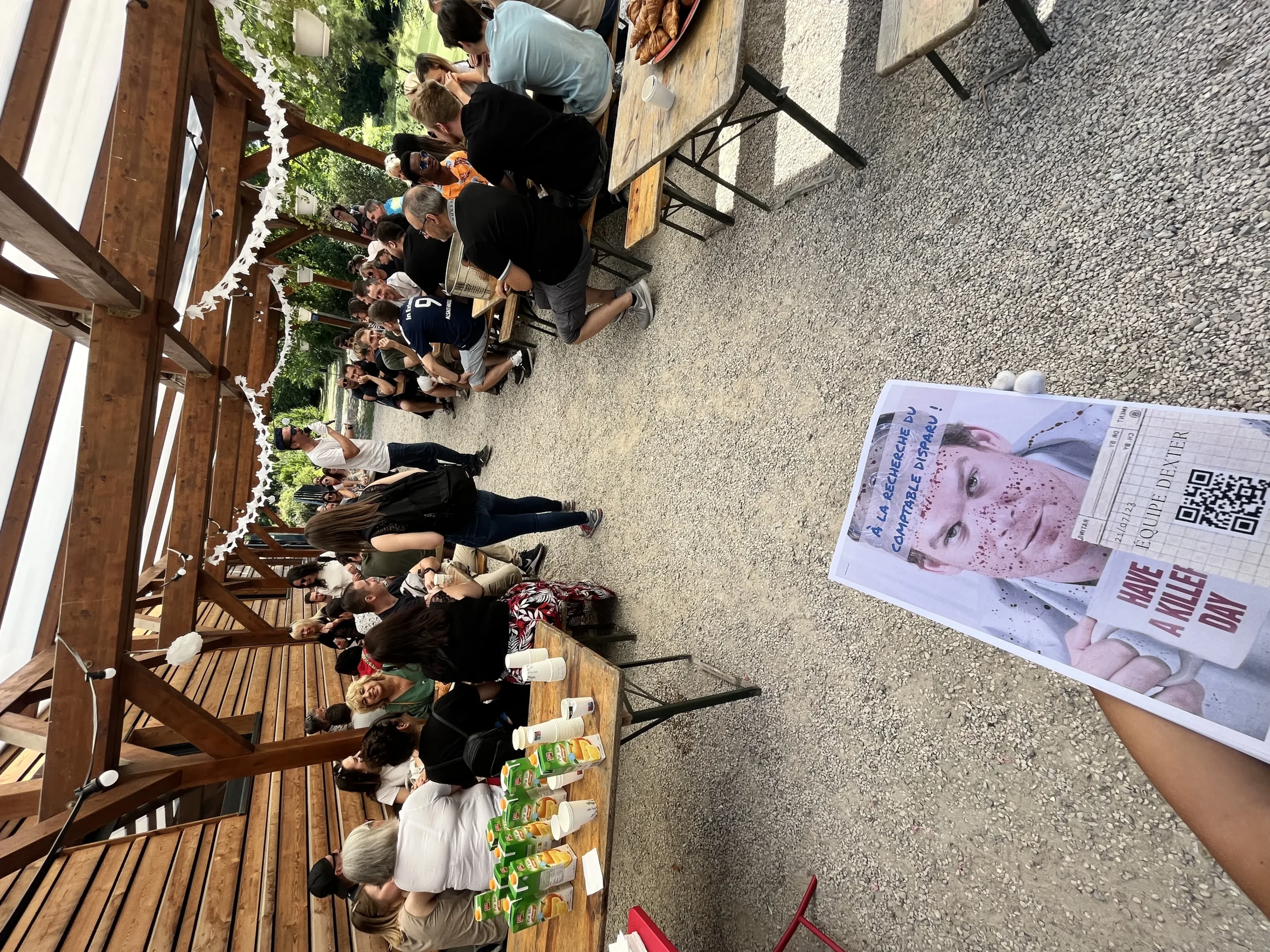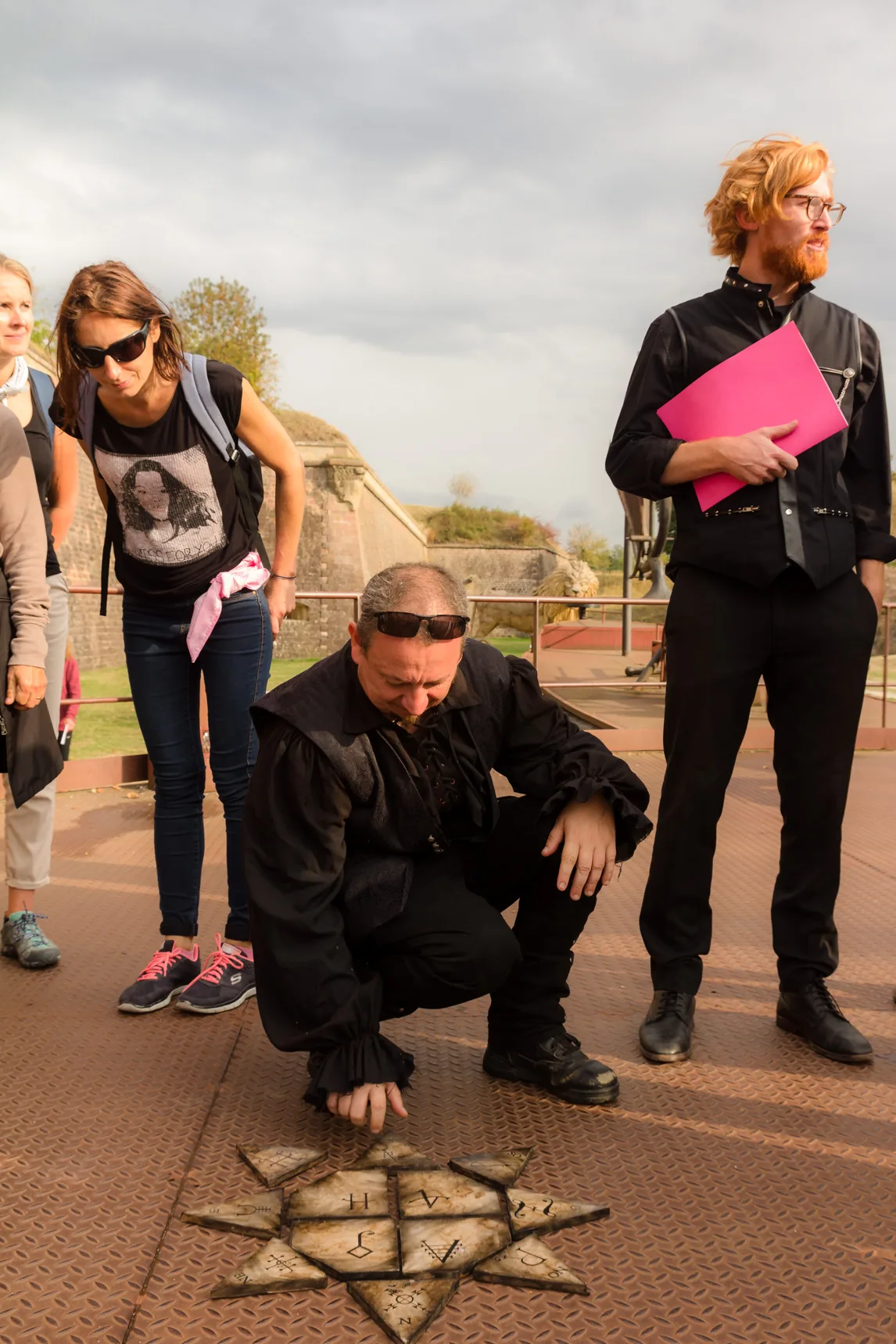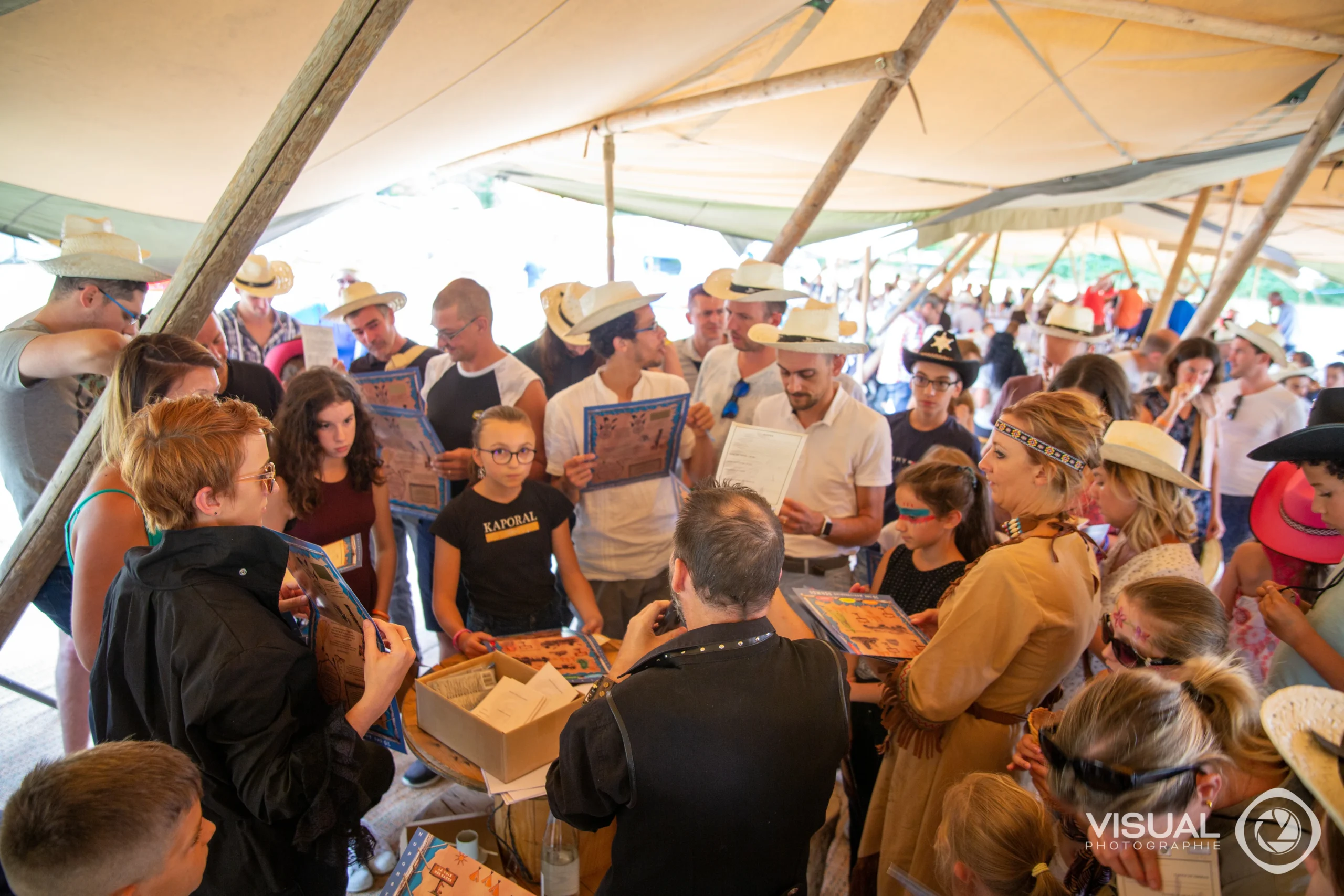
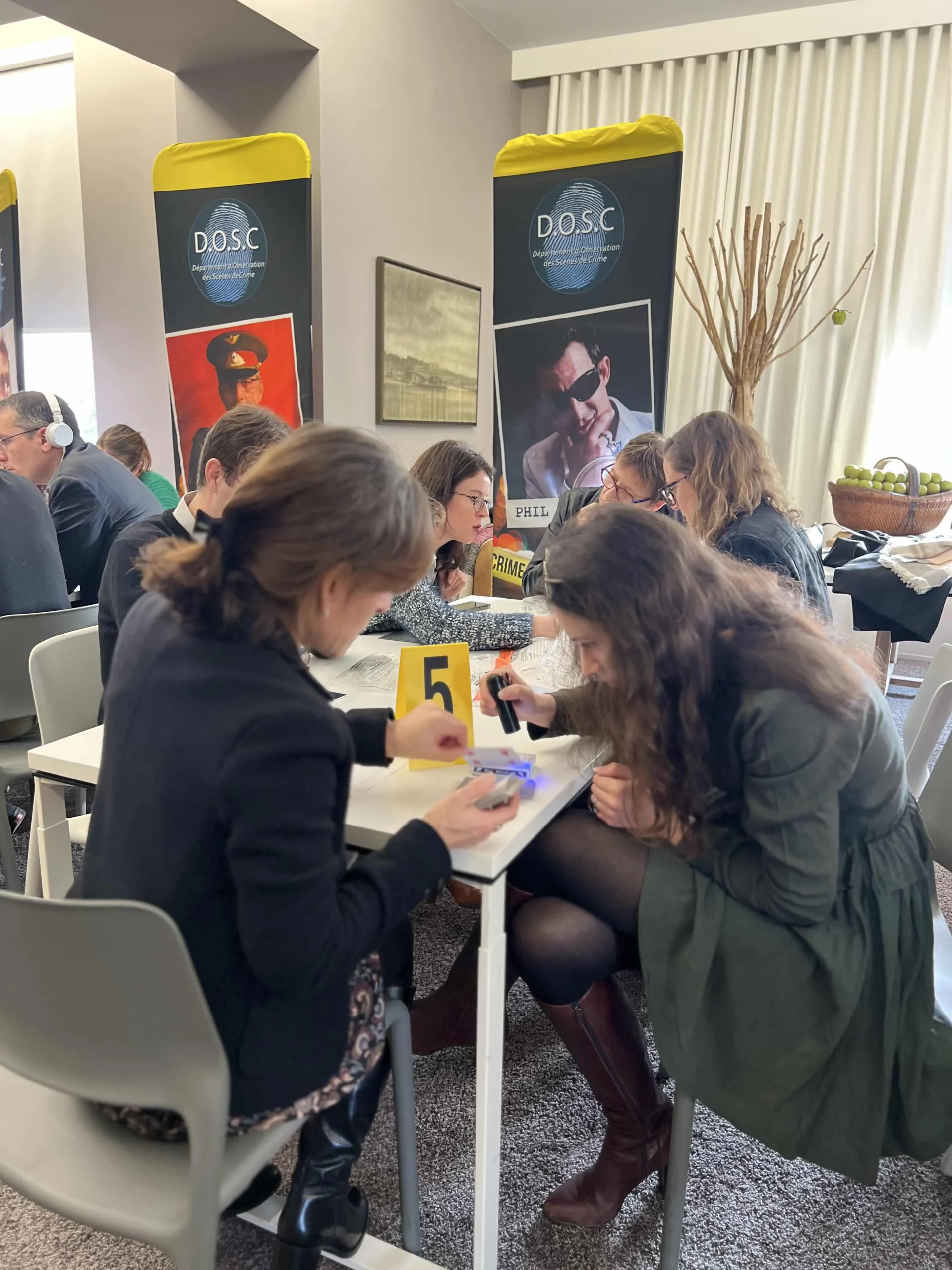
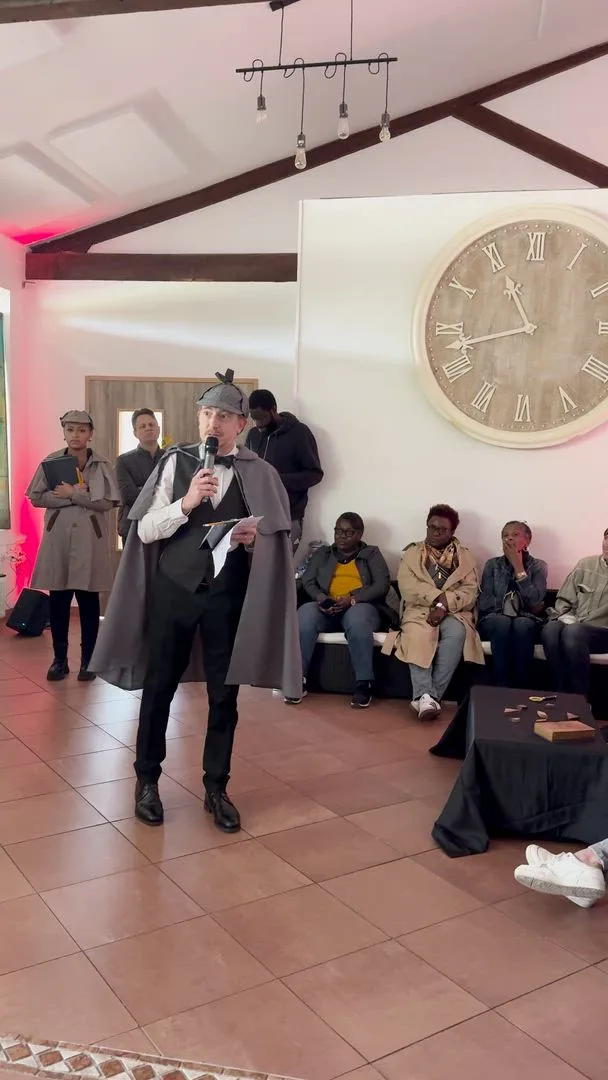
INNOV'events is a Montréal-based event agency delivering Immersive Mystery Night formats across Quebec for executive committees, HR and communications teams.
Typical formats range from 20 to 600 participants, in cocktail, seated dinner, or conference settings. We manage scenario design, casting, staging, guest flow, bilingual hosting, and venue constraints so your team can focus on hosting—not troubleshooting.
In a corporate event, entertainment isn’t a “nice-to-have”: it is the mechanism that protects your attendance rate, creates shared references for leadership messages, and avoids the classic risk of a room that disengages after the first drink. A well-run Immersive Mystery Night gives you structured interaction without forcing extroversion.
Organizations in Quebec expect high operational discipline: punctuality, clear bilingual communication when needed, respect for venue rules, and an experience that stays aligned with brand tone (especially in regulated sectors). Executives also expect tight control of reputational risks: no awkward improvisation, no questionable jokes, no unclear consent boundaries.
Our team operates from Montréal and works regularly in Québec City and throughout the province, with local partners for venues, A/V, security, transportation, and union considerations when applicable. We approach mystery formats like a production: scripts, rehearsals, run-of-show, risk plan, and accountability on event day.
10+ years delivering corporate experiences across Quebec, with repeat mandates from HR and communications teams who need predictability.
20–600 participants managed on a single mystery night format, including multi-room rotations and timed reveals.
2-language delivery (EN/FR) available with bilingual actors/hosts and dual-language clue systems when the room requires it.
0 improvisation without guardrails: every scene has approved boundaries, escalation paths, and an on-site producer to protect brand image.
We support companies and public organizations across Quebec, including teams that rebook yearly for holiday parties, leadership offsites, sales kickoffs, and internal culture moments. In practice, the organizations that come back are those that want a partner who remembers their internal constraints: security badges, union rules, venue limitations, executive speaking slots, brand approvals, and the real rhythm of a corporate evening.
If you shared specific client names, we integrate them here as references with the right level of discretion (industry + format + size), because directors need comparable proof—not vague claims. Our usual approach is to cite: (1) sector, (2) city, (3) participant range, (4) operational complexity handled (bilingual, multi-site, high-profile guests), and (5) the measurable goal (participation, cross-team mixing, leadership message uptake).
Our day-to-day reality in Quebec: tight winter logistics, venues with strict noise curfews, and the need to deliver a premium experience without slowing down service or blocking emergency exits. That’s why we plan mystery nights with venue managers and catering teams early, not “the week before.”
Nous vous envoyons une première proposition sous 24h.
When executives approve an evening budget, they are buying outcomes: retention, alignment, cross-functional relationships, and a controlled brand moment. A Immersive Mystery Night in Quebec works when it is designed as a leadership tool—paced, inclusive, and operationally safe—rather than a theatrical gimmick.
Accelerate cross-team connections without awkward networking: the investigation creates “permission” to approach colleagues from other departments, which is especially valuable after reorganizations, mergers, or leadership changes.
Keep attention high during key messages: we integrate executive speeches into the narrative at moments where attention is naturally elevated (e.g., after a reveal, before the final accusation), instead of forcing a speech into a noisy cocktail.
Support HR objectives (engagement, onboarding, recognition): you can structure teams to mix tenures, functions, and sites—then track participation by table/crew to ensure no one is isolated.
Protect inclusivity and psychological comfort: our formats offer multiple ways to contribute (analysis, observation, clue tracking, interviewing), so introverts and new hires can participate without being put on the spot.
Reduce event-day risk: scripted interactions, rehearsed scenes, and an on-site producer reduce the “anything can happen” factor that communications teams rightly fear.
Create usable internal content for communications: photo moments, branded clue cards, a “case file” recap, and post-event results that can be shared on intranet or newsletters without feeling like staged propaganda.
In Quebec, corporate culture values authenticity and competence: teams quickly spot when an activity is superficial. A properly produced mystery night respects that reality—clear structure, real pacing, and a tone that fits your organization.
Directors in Quebec are pragmatic: they want creativity, but never at the expense of execution. In our briefs with HR and communications, the same expectations come back—because they are the points that create friction on event day.
These expectations are exactly why we run our corporate event entertainment in Quebec like a controlled production: approvals, schedules, and contingency plans are not optional—they are the difference between a smooth evening and a reputational headache.
Engagement comes from structured interaction. In a Immersive Mystery Night, the entertainment is not “a show you watch,” it is a guided social system that moves people through investigation steps. Below are the formats we commonly deploy in Quebec, chosen based on guest profile, venue, and the level of intensity you want.
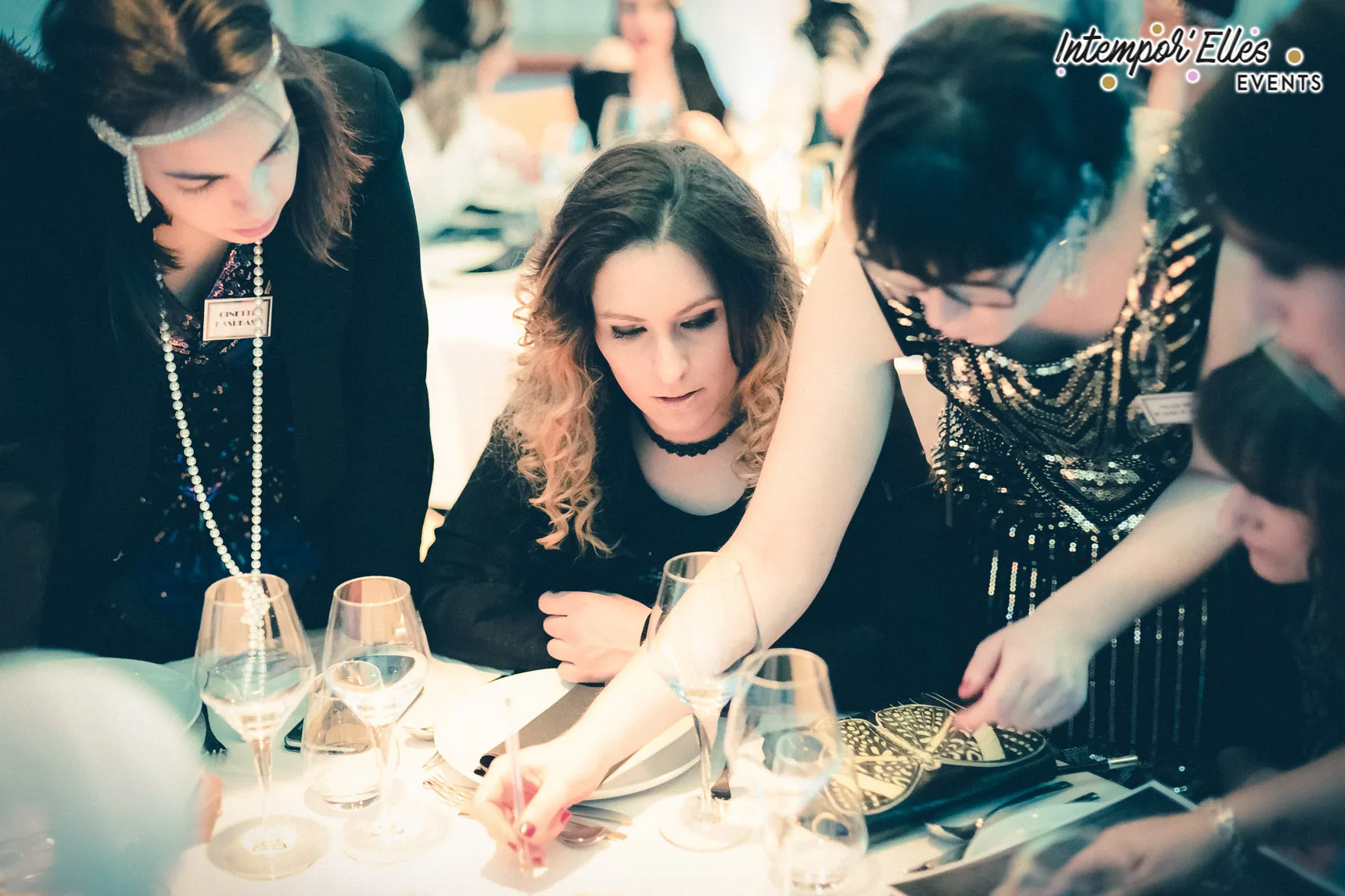
Table investigation with timed clue drops: ideal for gala dinners (120–400). Clues are delivered between courses, with short actor interventions. Advantage: it respects service flow and works in ballrooms with fixed seating.
Multi-room investigation rotation: effective for cocktail receptions (80–250) in venues with 3–5 distinct spaces. Guests move in groups, following leads. Advantage: natural networking and high energy; constraint: requires strict crowd flow and signage.
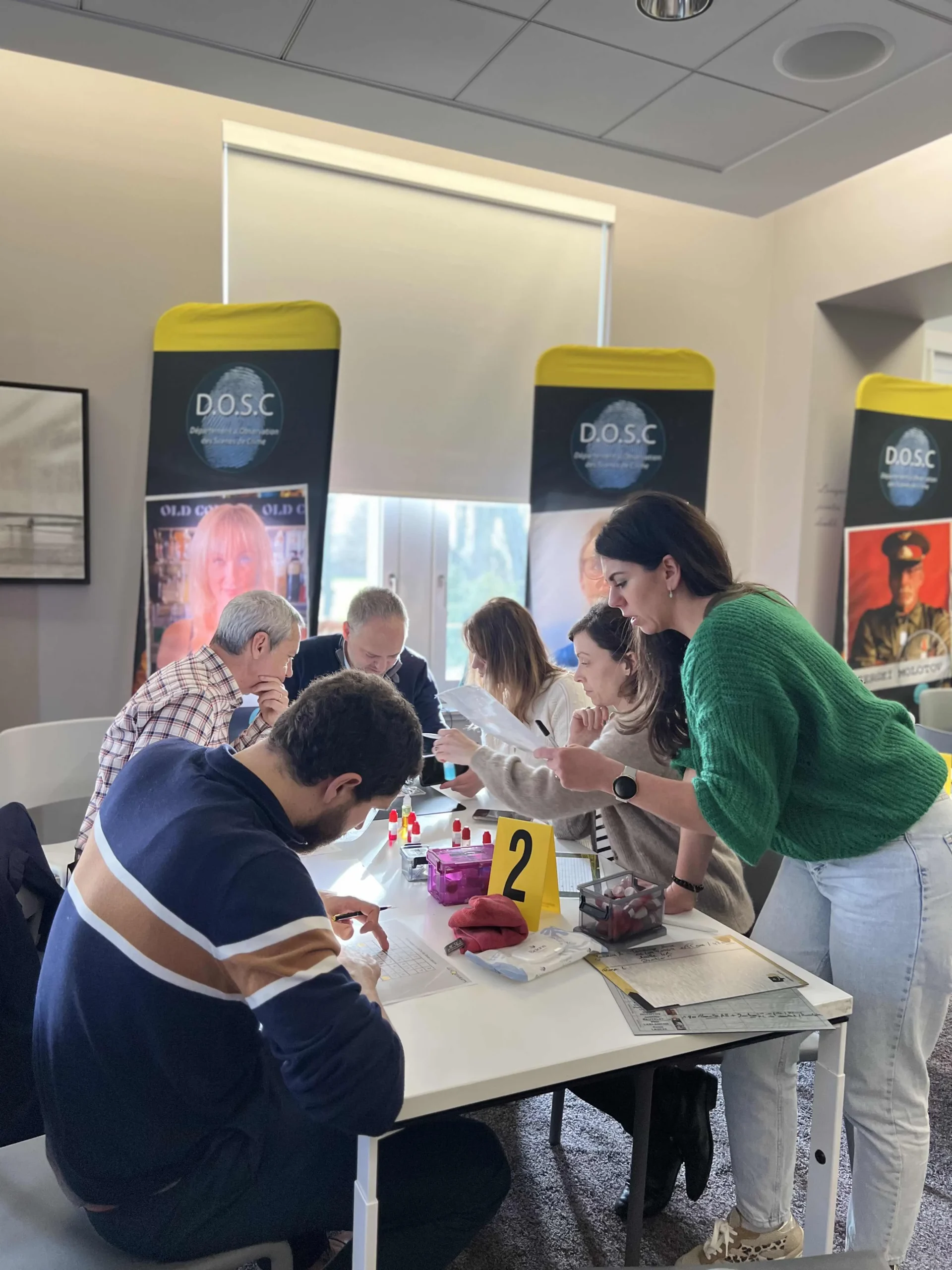
Digital evidence layer (QR + case file): we add controlled digital elements (witness statements, CCTV stills, timeline) so teams can collaborate without everyone needing to speak. Useful when you expect mixed language groups.
Executive-safe participation mechanics: for leadership-heavy audiences, we use optional “briefing roles” (e.g., sponsor of the investigation, judge, chief inspector) that allow visibility without improvisation risk.
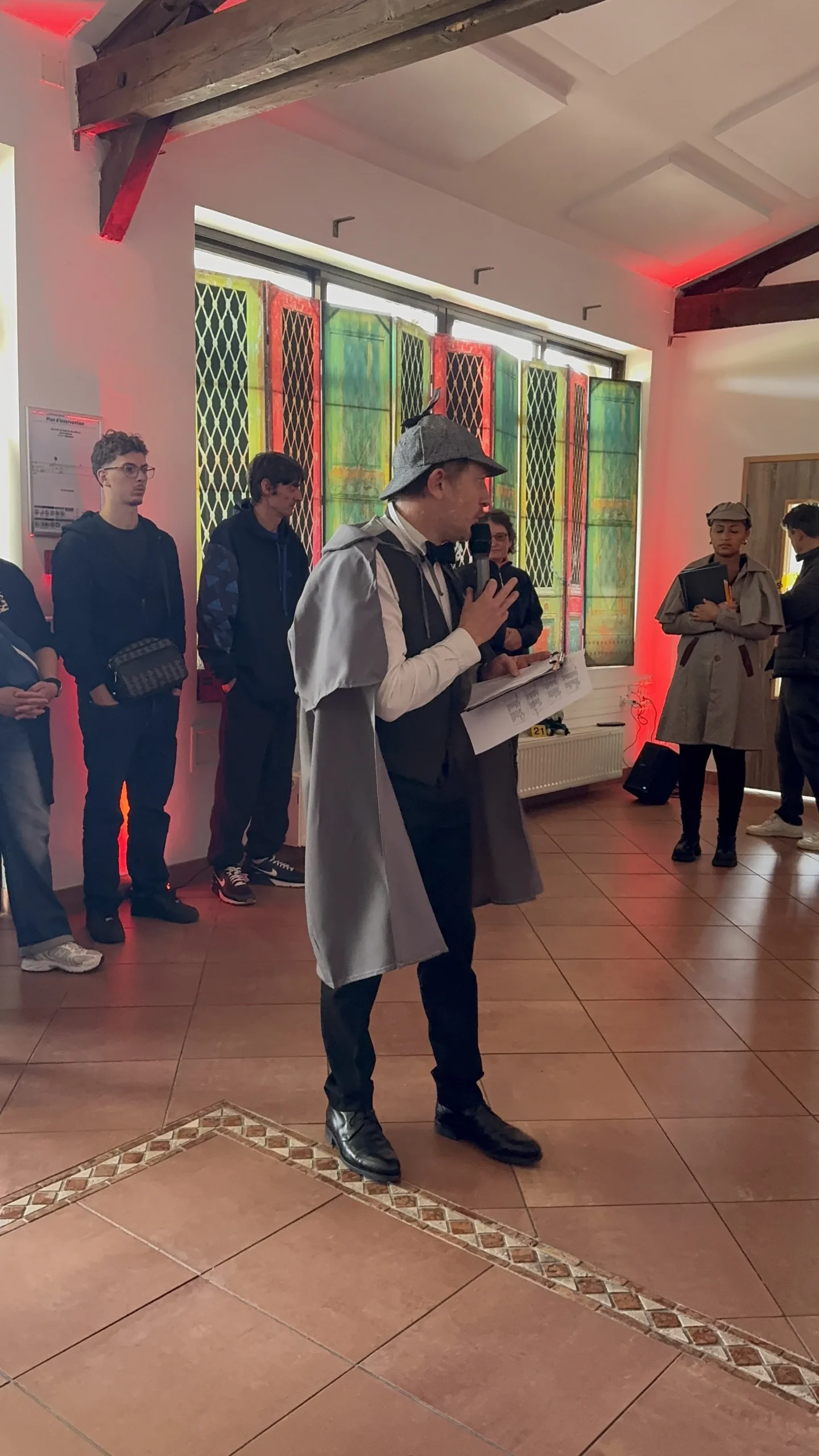
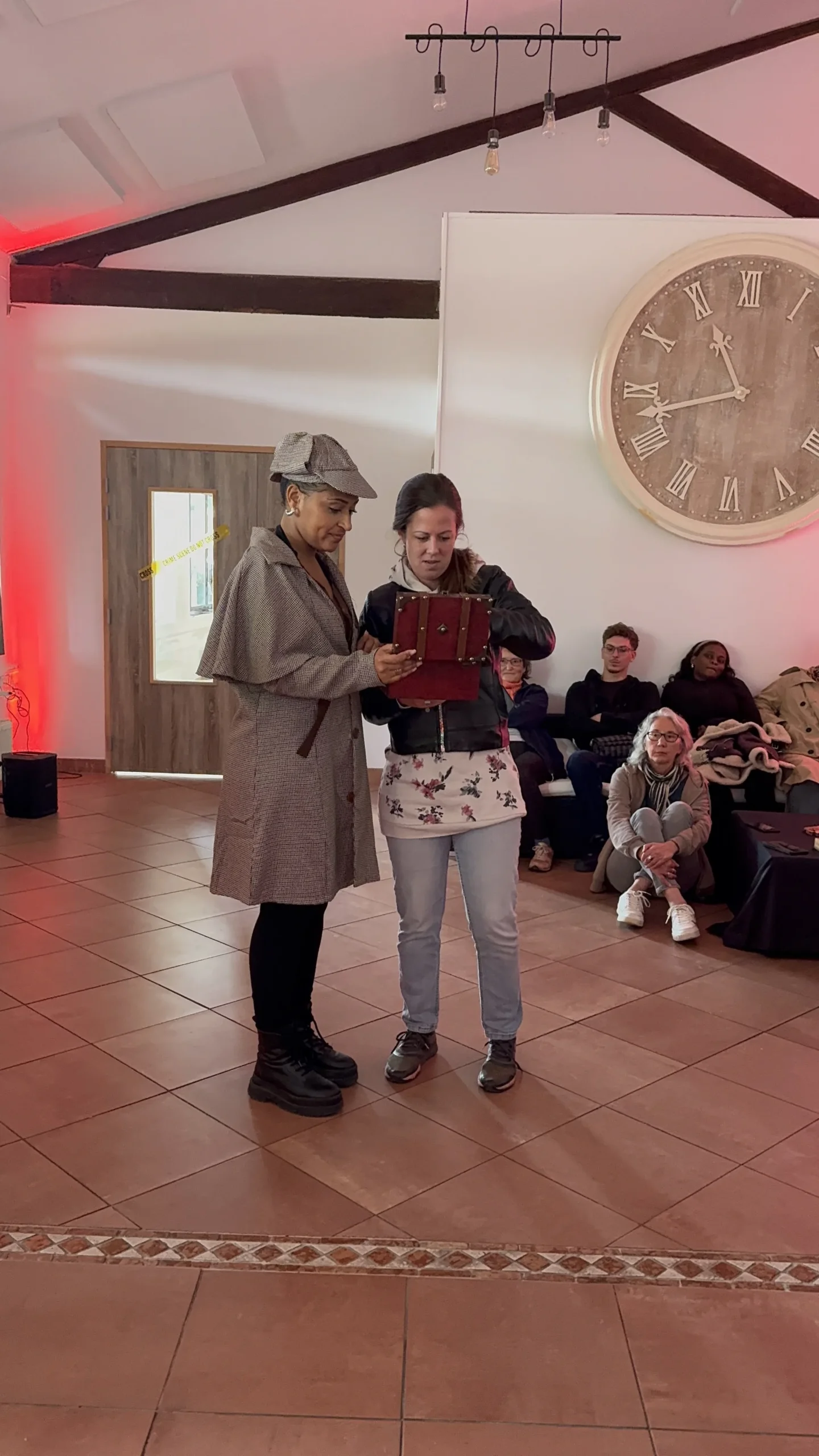
Actor-led scenes with rehearsed blocking: short, high-impact scenes (2–4 minutes) that introduce evidence. We keep them tight to avoid taking over the night like a theatre play.
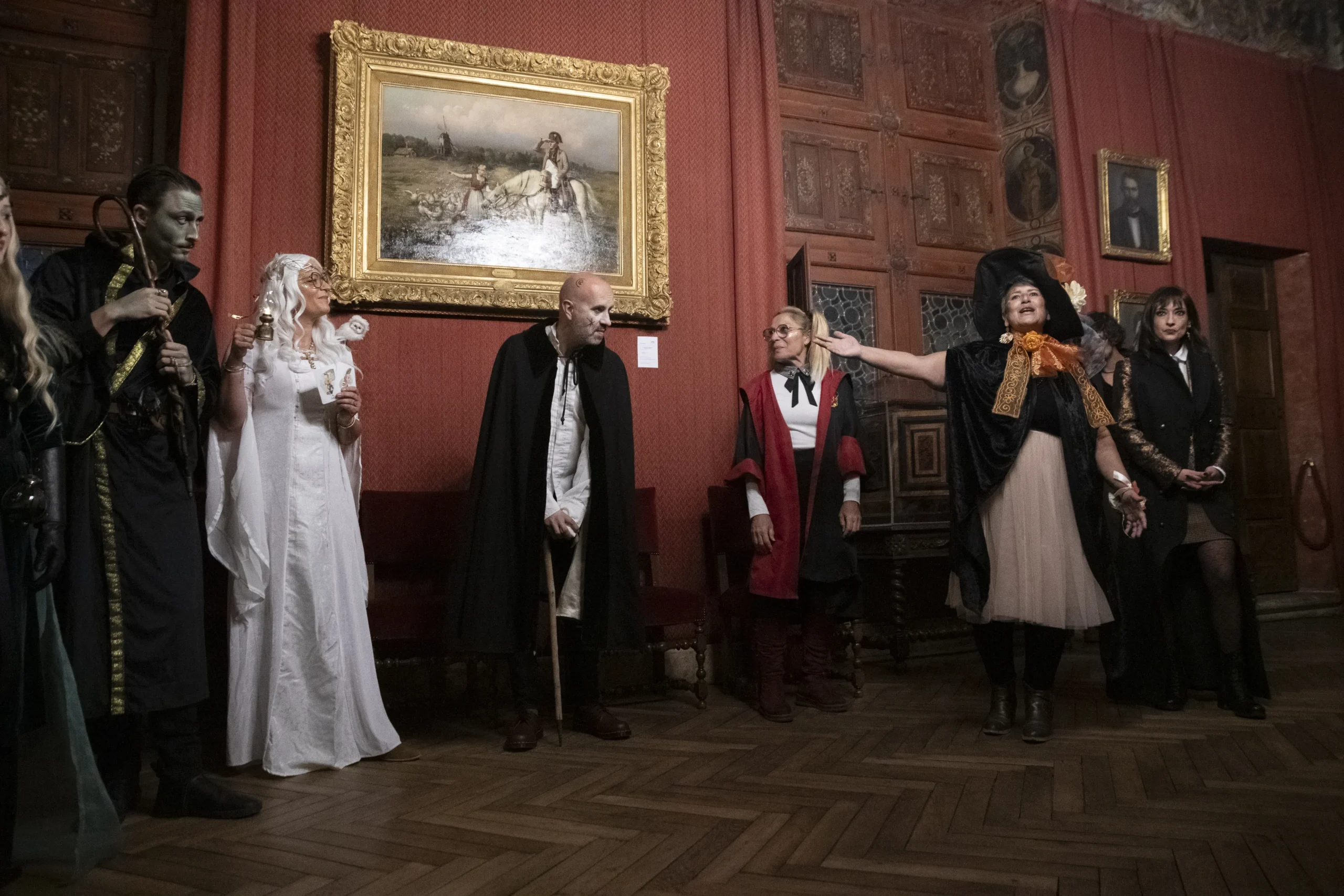
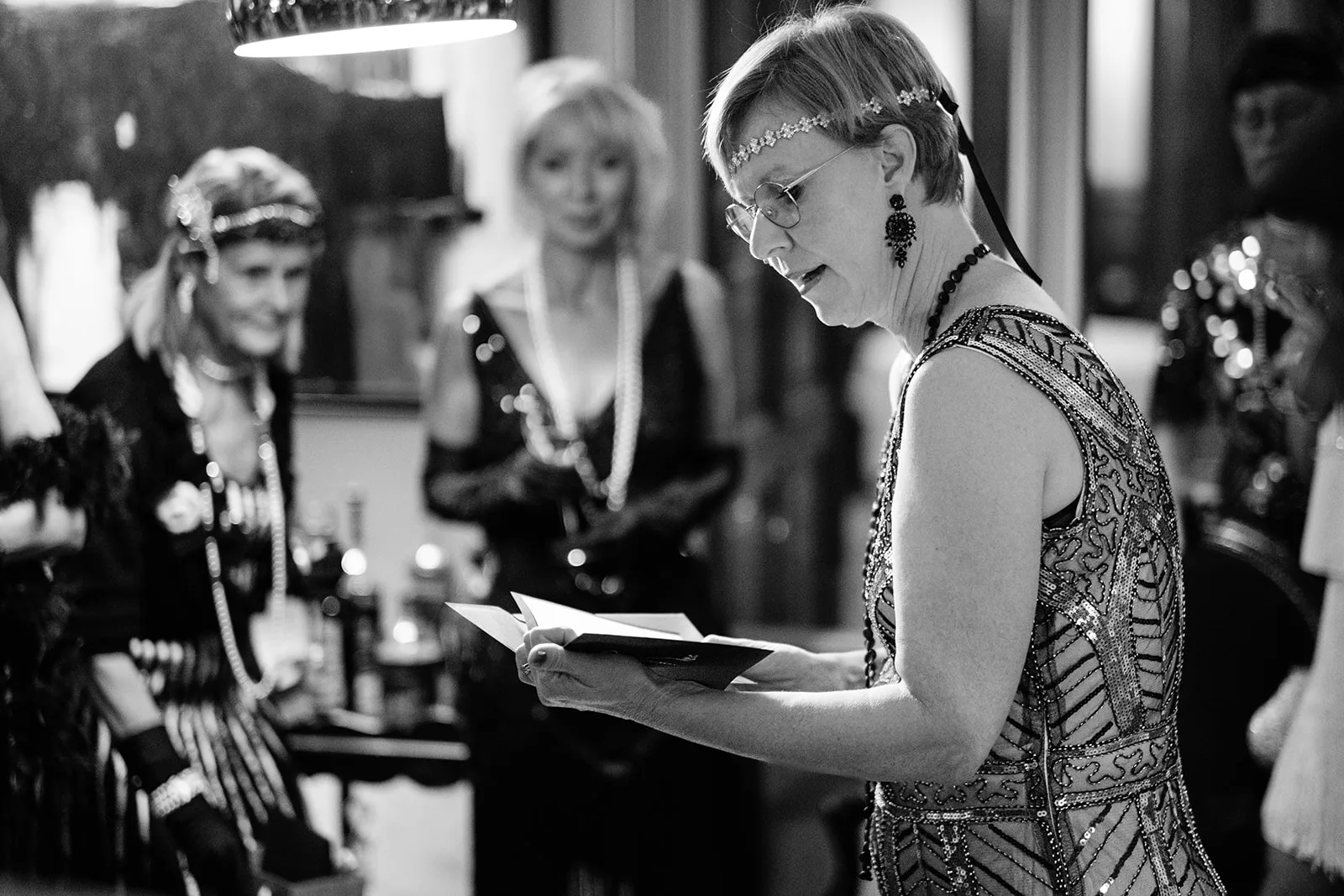
Period or industry-themed mystery: prohibition-era, art theft, corporate espionage, or “heritage of Quebec City” inspiration. The key is to keep it tasteful and brand-safe; we validate tone with communications early.
Interactive interrogation corners: small stations where guests question characters. Works well when you need to distribute the crowd and reduce lineups at the bar.
Evidence paired with service: clues integrated into menus, place cards, or dessert plates. It keeps attention during natural downtime and avoids additional “activity blocks.”
Non-alcoholic friendly mechanics: we design the experience so alcohol is not a participation vector. This matters for inclusive events and for organizations with strict policies.
Chef/venue collaboration: we align scene timing with kitchen constraints (hot course windows, speeches, dietary callouts) so the mystery never competes with the meal.
Hybrid scoring for large groups: teams submit conclusions through controlled channels (paper ballots + digital backup). This prevents bottlenecks and keeps the finale crisp for 300+ guests.
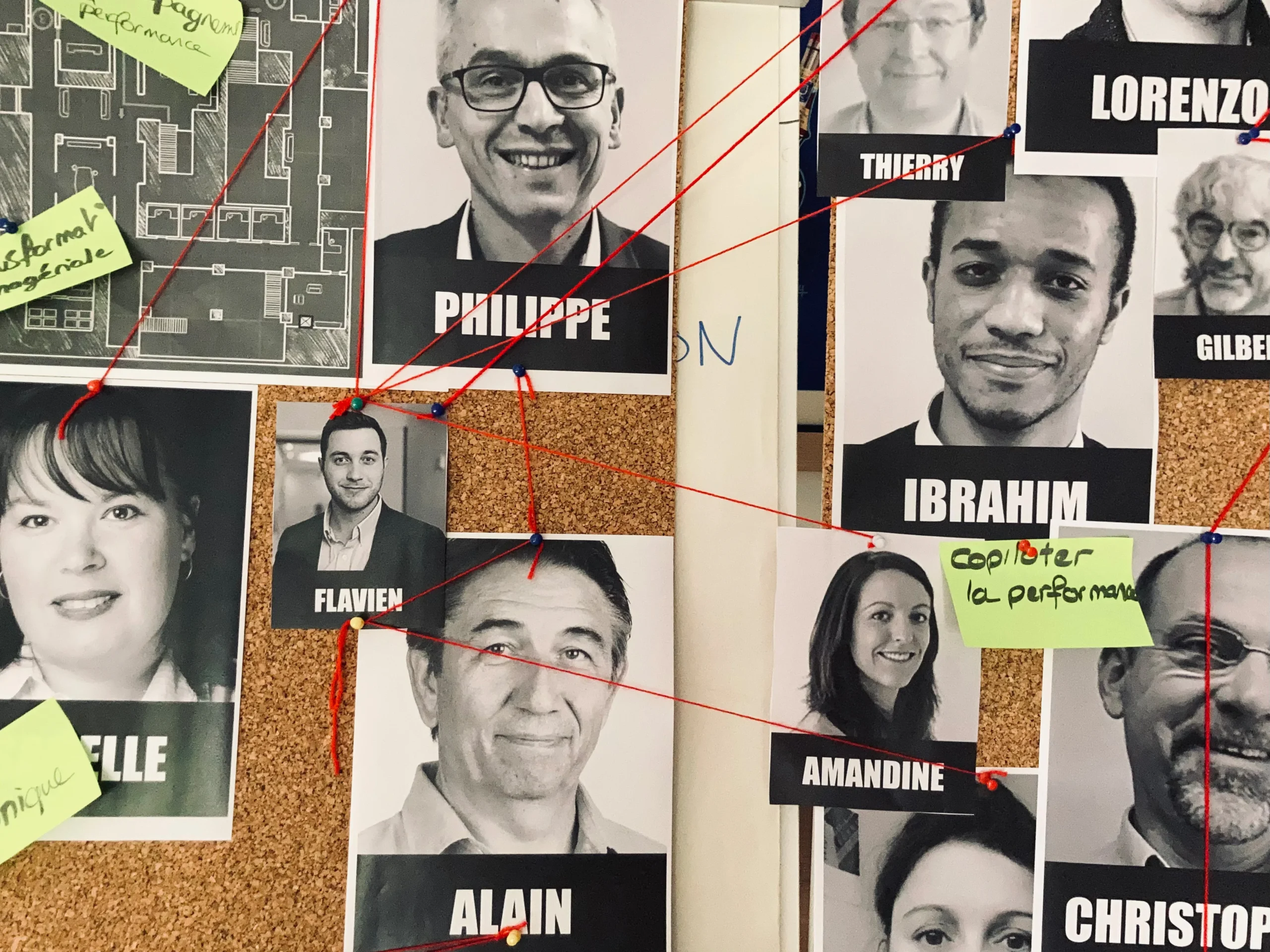
Brand-integrated props: case files, badges, and evidence boards designed with your visual identity—useful when communications needs photo assets that match brand standards.
Multiple endings (pre-approved): we can prepare alternate reveals depending on timing and guest engagement level, while keeping the story consistent. This is a practical tool, not a gimmick.
The strongest nights in Quebec are the ones where the mystery format matches your brand posture. A legal firm may want elegant, low-chaos investigation; a tech company may want faster rotations and digital evidence. Our role is to recommend the format that supports your image and your operational reality.
The venue doesn’t just host the activity—it shapes how credible and comfortable the experience feels. In Quebec, the same scenario can feel premium in a heritage space and confusing in a noisy open-plan room. We evaluate venues based on acoustics, circulation, backstage space for actors, and the ability to control guest attention.
| Venue type | For which objective? | Main strengths | Possible constraints |
|---|---|---|---|
Hotel ballroom (Québec City downtown) | Gala dinner + structured team interaction | Predictable service flow, built-in A/V options, easy for 150–600 guests | Acoustics can be challenging; requires tight mic strategy and scene blocking |
Heritage venue / historic hall in Quebec | High prestige, leadership hosting, client-facing evenings | Instant narrative support (architecture, ambiance), strong photo value for communications | Strict rules (decor, load-in), curfews, limited backstage space |
Restaurant buyout with private rooms | Executive retreat, board dinners, intimate recognition nights | Natural multi-scene setup, warm atmosphere, easier guest guidance | Capacity limits (20–120 typical), coordination needed to protect kitchen pacing |
We strongly recommend a site visit (or at minimum a technical walkthrough) before locking the scenario. In Quebec, small details—where coats are stored, where the bar line forms, how sound travels—decide whether the mystery feels controlled or chaotic.
Budget depends on parameters that affect labor, rehearsal time, materials, and technical requirements. We quote based on what you actually need to run a professional, brand-safe night—not on a generic “per person” guess.
Group size and format: a seated dinner for 200 requires different pacing and staffing than a cocktail rotation for 200. Larger groups often need additional hosts, runners, and a stronger scoring system.
Number of actors and complexity of scenes: a 2-actor format is not the same as a 6-actor production with multiple suspects, costume changes, and parallel interrogations.
Bilingual delivery requirements: dual-language clue design, bilingual moderation, and casting can impact prep time and staffing.
Technical environment: microphone needs, lighting cues, music rights if applicable, and whether the venue requires in-house A/V technicians.
Customization level: integrating your leadership narrative, corporate values, or an internal “case” (without making it cringe) takes writing and approvals. We can keep it subtle and professional, but it must be done carefully.
Logistics in Quebec: travel time, load-in windows, winter buffers, parking/loading constraints, and rehearsal space availability.
From an ROI perspective, the best indicator is not “cheapest entertainment,” but whether the activity protects participation and creates measurable internal value: cross-team mixing, leadership message retention, and reduced planning burden on your HR/communications staff. We can also structure options (core + add-ons) so you stay within budget without compromising execution quality.
For executive-level events, local presence is not a comfort—it is risk management. A partner established in Quebec understands venue practices, supplier realities, and the operational pace of corporate evenings here. It also means you get faster on-site decisions when timing shifts.
If you need a Quebec City anchor specifically, our network includes vetted local suppliers and producers; and when relevant, we collaborate with our regional page for an event agency in Quebec perspective to secure venues, technical crews, and logistics with local accountability.
From an ROI perspective, the best indicator is not “cheapest entertainment,” but whether the activity protects participation and creates measurable internal value: cross-team mixing, leadership message retention, and reduced planning burden on your HR/communications staff. We can also structure options (core + add-ons) so you stay within budget without compromising execution quality.
Our Immersive Mystery Night projects vary because corporate contexts vary. We regularly deliver formats such as:
Across these contexts in Quebec, the constant is operational control: clear run-of-show, rehearsals adapted to venue access, and a single production lead accountable to your internal stakeholders.
Underestimating acoustics: ballrooms and heritage spaces can swallow dialogue. We plan mic strategy, short scenes, and visual evidence so the story remains understandable.
Letting the activity fight dinner service: if scenes interrupt kitchen timing, you get delays and frustration. We synchronize clue drops with courses and confirm service constraints with the venue.
Over-customizing with internal jokes: what feels fun in a planning committee can become awkward in a mixed audience. We keep references subtle and validate tone with communications.
No contingency for late starts: traffic, speeches running long, late arrivals—very common. We design compressible sequences and pre-approved cut points.
Forcing participation: when guests feel pressured, engagement drops. We build multi-path participation so everyone can contribute at their comfort level.
Uncontrolled improvisation: it creates brand risk. Our actors work with scripted boundaries, and the producer has authority to redirect live.
Our job is to remove these risks before your executives notice them. On event day, your team should look like confident hosts—not crisis managers.
Renewal happens when a partner reduces internal workload and increases predictability. In corporate environments, the bar is simple: fewer surprises, better guest flow, and a clean post-event wrap-up that helps communications report value.
High repeat demand on year-end and leadership calendar moments: clients who run one successful mystery night often convert it into a recurring concept with new scenarios.
Consistent stakeholder satisfaction: HR values inclusivity and participation; communications values brand safety and usable content; executives value timing discipline and room energy.
Operational memory: we keep venue notes, floor plans, A/V configurations, and what worked/what didn’t—so the second year is smoother and often more cost-efficient.
Loyalty is not a slogan; it’s the market’s way of auditing quality. In Quebec, where networks are tight and reputations travel fast, we treat every mandate as a reference-worthy production.
We start with a working session (30–60 minutes) with HR/communications and, when possible, an executive sponsor. We confirm objectives, audience profile, bilingual needs, brand boundaries, and “non-negotiables” (speech timing, recognition segments, client sensitivities). We also collect venue constraints and any internal policies (alcohol, filming, accessibility).
We propose 1–2 formats with clear operational implications: number of actors/facilitators, A/V needs, floor flow, and a draft run-of-show. You receive a scenario outline with the interaction model (how clues move, how teams submit conclusions, how we prevent bottlenecks).
We lock casting, costumes/props, clue design, bilingual assets if needed, and the risk framework (what actors do, escalation, consent boundaries). Communications approves tone and any brand integration. We coordinate with venue, catering, and A/V on timing and backstage requirements.
Depending on complexity, we run a rehearsal with the actor team and a technical cue review (mics, music cues, lighting). For venues with limited access, we plan a “compressed rehearsal” and build a simplified blocking plan that still protects clarity and pacing.
On event day, an INNOV'events producer runs the show: call times, scene timing, liaison with venue and A/V, and real-time adjustments. After the event, we provide a short wrap-up: what worked, participation observations, and recommendations if you want to repeat the format next year with a fresh scenario.
Most corporate formats in Quebec work well from 20 to 600 guests. Under 80, we can run deeper interrogations; above 200, we use structured clue drops and scaled facilitation so the finale stays clear and on time.
Plan 90 to 150 minutes for the mystery portion. For dinner events in Quebec, the sweet spot is often 2 hours split across courses, with a 10–15 minute finale and awards for top teams.
Yes. We can provide bilingual hosts/actors and dual-language clue systems. In practice, we recommend one “primary language” for stage instructions, with bilingual table materials to avoid slowing pacing for the entire room.
We need: date and city, estimated attendance range (e.g., 150–200), venue status (booked or shortlist), format (cocktail/dinner), language needs, and any mandatory segments (speeches, awards). With that, we can usually provide options within 48–72 hours.
Yes—if designed correctly. For executive-heavy groups in Quebec, we build participation that is optional and dignified: leadership can sponsor the “briefing,” judge the final accusation, or simply observe while teams play. The tone stays professional and brand-safe.
If you’re comparing agencies, we suggest starting with a practical conversation: audience profile, venue reality, timing constraints, and what your executives need the night to achieve. We will propose a Immersive Mystery Night in Quebec format with a run-of-show, staffing approach, and a transparent budget range—so you can make a decision with confidence.
Reach out early if your event is between November and February: venues and technical teams book fast in Quebec, and winter logistics benefit from extra buffer. We can turn a first proposal in 48–72 hours once we have your key parameters.
Thierry GRAMMER is the manager of the INNOV'events Quebec office. Reach out directly by email at canada@innov-events.ca or via the contact form.
Contact the Quebec agency