
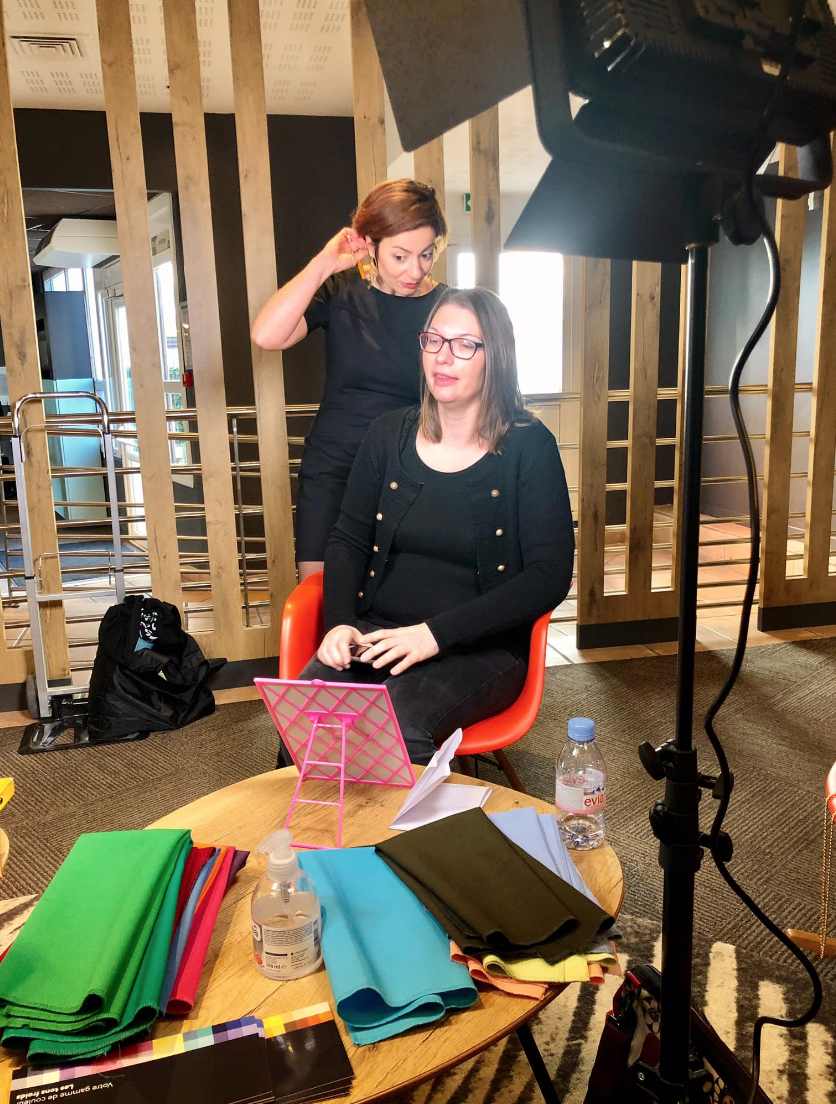
Color Analysis Workshop in Quebec to align image, confidence, and brand presence
INNOV'events is a Montréal-based event team delivering Color Analysis Workshop formats across Quebec for leadership groups, HR programs, and communication teams. Typical groups range from 12 to 80 attendees, with rotations and stations when needed. We manage the facilitator sourcing, scheduling, room flow, materials, and on-site coordination so your team stays focused on people—not logistics.
Sommaire
In a corporate context, “entertainment” is only useful if it serves a business purpose: engagement, cohesion, employer brand, and consistent image. A Color Analysis Workshop in Quebec works because it creates immediate, measurable participation: people test, compare, and decide—together—within a controlled framework.
Local organizations expect punctuality, bilingual facilitation when required, and respectful handling of identity topics (appearance, inclusion, accessibility). In Quebec, we also see strong expectations around professionalism: a well-run activity must not disrupt operations, must start on time, and must fit cleanly into a conference agenda or a recognition event.
INNOV'events operates from Montréal and deploys teams across the province. We bring field methods: pre-event intake with HR/Comms, clear participant instructions, a precise run-of-show, and contingency planning (late arrivals, lighting issues, last-minute room changes) so the workshop delivers reliably.
INNOV'events track record in Quebec you can verify
10+ years supporting corporate events and internal programs across Quebec, with repeat mandates from HR and communications teams.
Capacity to deliver workshops from 12 to 200 participants using station rotations, multiple consultants, and timed flows (without turning the room into a queue).
Standardized operational tools: run-of-show, supplier briefs, participant instructions, and on-site checklists used systematically to reduce day-of risks.
Bilingual delivery available (English/French), including participant documents and signage aligned with internal communications standards.
Companies across Quebec that trust structured workshops
In Quebec, many of our mandates come from HR leaders and communications directors who need an activity that is both engaging and “safe” operationally: no awkwardness, no improvisation, no brand misalignment. We regularly work with organizations that run recurring internal events (leadership kick-offs, recognition moments, women-in-leadership communities, onboarding cohorts) and want a consistent quality level year after year.
If you have specific internal reference requirements (industry, unionized environment, public sector constraints, multi-site realities), we can share comparable case examples during a discovery call. We understand that executive teams don’t choose an activity because it’s trendy; they choose it because it supports culture, retention, and professional image while staying on budget and on schedule.
 Besoin d’un devis rapide ?
Nous vous envoyons une première proposition sous 24h.
Why schedule a Color Analysis Workshop in Quebec for executives?
A Color Analysis Workshop is not a “beauty activity.” In the corporate world, it is a structured moment that connects personal presentation with leadership presence, confidence, and consistency—especially relevant for client-facing roles, managers in change, and teams representing the organization publicly.
Improves on-camera and on-stage presence: In hybrid work, internal videos and town halls are constant. Color choices affect perceived energy, contrast, and readability on camera—especially under office lighting or LED screens.
Supports leadership confidence without forcing a single style: Executives often have little time to think about attire. Practical guidelines (contrast level, key neutrals, accent colors) reduce decision fatigue while respecting individuality.
Creates a neutral, inclusive framework: When facilitated properly, the workshop avoids judgments (“good/bad”) and focuses on measurable effects (brightness, warmth/coolness, contrast). This helps HR manage sensitivity around appearance topics.
Strengthens employer brand and professional standards: For communications and client-facing teams, a shared vocabulary (palette, contrast, harmony) improves consistency in photos, conferences, recruitment content, and media appearances.
Boosts participation across seniority levels: Unlike many activities that favor extroverts, color analysis engages both quiet and outgoing participants because it’s hands-on, structured, and evidence-based.
Fits tight agendas: Formats can be designed for 60 to 120 minutes with optional add-ons (mini 1:1s, digital palette recap, coaching for speakers) without derailing a leadership offsite.
The economic culture in Quebec values authenticity and competence: people respond well to practical tools they can use the next day. That’s why we position the workshop as a skills-based experience—useful for visibility, communications, and leadership—not as a superficial moment.
What Quebec organizations expect from a corporate workshop provider
In the field, we see the same constraints repeatedly across Quebec: compressed schedules, multi-stakeholder approvals, and limited tolerance for day-of surprises. Executives want the activity to feel polished and intentional; HR wants it to be respectful and inclusive; communications wants it to protect the brand and look good in recap content.
Operationally, this translates into concrete requirements. First: timing discipline. If your workshop is embedded between a quarterly business review and an awards moment, we plan the run-of-show to the minute, including transitions, photo moments, and regrouping. Second: language readiness. Many Montréal-based companies have mixed teams; even outside Montréal, you can have bilingual leadership groups. We prepare bilingual participant instructions and ensure the facilitator can manage questions smoothly.
Third: privacy and comfort. People are open to learning but do not want to feel put on the spot. We design the flow so that participation is voluntary, feedback is professional, and no one becomes “the example” without consent. Fourth: space realities. In offices downtown, rooms can be tight and lighting can be harsh; in suburban campuses, rooms are bigger but acoustics can be challenging. We adapt materials, station placement, and lighting recommendations accordingly.
Which workshop formats work best in Quebec corporate events?
Engagement comes from doing, comparing, and deciding—not from watching. In Quebec corporate events, the most successful formats are those that respect time, avoid awkward exposure, and produce a clear takeaway participants can use immediately at work (camera, client meetings, conferences).
Interactive animations in Quebec
Station rotation workshop (recommended): Groups of 4–8 rotate through color draping tests, contrast assessment, and accessory pairing. Works well for 20 to 80 people in 90 minutes.
Executive presence lab: A practical segment for leadership and speakers: color contrast for authority, on-camera readability, and how to align attire with brand tone during announcements or media moments.
“Wardrobe reality check” clinic: Participants bring one jacket/scarf/tie. We test it live against their palette and discuss simple swaps. HR likes this because it stays practical and avoids personal judgments.
Art animations in Quebec
Brand color translation: For communications teams, we connect corporate brand colors to clothing and on-stage presence. Example: how to wear a strong brand blue without washing out on camera, or how to use accents for warmth in people-focused messaging.
Portrait corner with controlled lighting: Optional add-on when you want usable headshots. We coordinate with the photo vendor so lighting matches the color analysis logic (avoids “great workshop, bad photos” outcomes).
Innovative animations in Quebec
Color & flavor pairing break: A structured networking break where table themes match palettes (cool/warm, muted/bright). This works particularly well in Quebec when you want a subtle icebreaker without forcing extroversion.
Mocktail/cocktail color bar: If alcohol is permitted, we align beverage visuals with the workshop theme. We keep it optional and compliant with corporate policies (common in regulated industries).
Gourmand animations in Quebec
Digital palette follow-up: After the event, participants receive a short PDF with their key colors and shopping guidelines (neutrals, metals, contrast). This is often what executives appreciate most: a practical reference that saves time.
Hybrid-friendly version: For distributed teams, we can run an in-room workshop plus a short virtual recap session for remote colleagues, with pre-shipped swatches when the budget allows.
Whatever the format, we keep alignment with brand image central: dress guidance must support your culture (formal, creative, industrial, tech) and your external positioning. A workshop that contradicts your employer brand or makes participants uncomfortable will backfire; our job is to make it useful, respectful, and coherent.
Where to host a Color Analysis Workshop in Quebec without lighting issues
The venue impacts perceived quality more than most teams expect. Color analysis is sensitive to lighting, mirror placement, noise, and circulation. In Quebec, we often do quick venue audits focused on light temperature, available daylight, wall color cast, and the ability to create stations without bottlenecks.
| Venue type | For which objective? | Main strengths | Possible constraints |
|---|---|---|---|
Downtown corporate office (boardroom + adjacent meeting rooms) | Leadership cohort, HR program, low-disruption session | Easy access for executives; controlled agenda; no transport needed | LED lighting can distort colors; limited space for stations; privacy considerations |
Hotel meeting room in Quebec City / Montréal | Offsite + workshop integrated into a larger agenda | Neutral setup; good AV options; staff support for room flips | Ballroom lighting may be warm; costs for room rental and catering minimums |
Bright studio / loft with natural light | High-accuracy analysis + content capture (photos/video) | Best lighting conditions; strong perceived value; great for employer branding assets | Accessibility/parking may vary; requires stricter scheduling to manage arrivals |
Conference center breakout rooms | Large groups with rotations and timed stations | Space for multiple stations; easier flow control; scalable staffing | Noise bleed; signage and wayfinding required; strict time slots |
We strongly recommend a site visit (or at minimum a detailed photo/video walkthrough) before confirming. A quick check of lighting temperature and room flow can prevent the most common failure mode: a technically “fun” activity that produces inconsistent results and frustrates participants.
What does a Color Analysis Workshop cost in Quebec?
Budget depends on format, group size, deliverables, and the level of staffing required to avoid queues. In Quebec, most corporate workshops land within predictable ranges once scope is clear, but the difference between a smooth experience and a chaotic one is often the number of stations and qualified consultants.
Group size and rotation design: 12–20 people can run with one lead consultant; 40–80 typically needs multiple stations and at least one floor coordinator to protect timing.
Depth of analysis: A high-level palette orientation costs less than mini 1:1 assessments. Many executive groups choose a hybrid: group learning + short private slots.
Deliverables: Printed palette cards, digital PDFs, bilingual documentation, and post-event recap calls add real production time (and therefore cost) but improve adoption.
Venue and technical conditions: If the room lighting is poor, additional lighting solutions or a different room may be required. This is often cheaper than running an inaccurate workshop.
Travel and scheduling: Montréal, Québec City, and regional deployments can change costs depending on dates, access, and load-in constraints.
Brand and HR constraints: If you need a fully compliant approach (inclusion language, opt-out paths, privacy management), we build that into facilitation and briefing time.
From a return-on-investment standpoint, the value is in adoption: participants who leave with practical guidance use it for months (camera-ready presence, quicker wardrobe decisions, more consistent public-facing image). We help you scope the workshop so the budget follows outcomes—not the other way around.
Why choose a Quebec-based agency for this workshop?
Choosing an agency established in Quebec is not a patriotic argument—it’s operational. Local teams understand venue realities, union or building access rules, bilingual expectations, and the decision cycles of Québec-based organizations. When an agenda is tight, you need suppliers who can load in quickly, adapt to last-minute executive changes, and communicate clearly with internal stakeholders.
We also bring a broader ecosystem perspective: for clients who compare options across the province, we help align the workshop with the overall event architecture (plenary, breakouts, cocktail, content capture). If your event is in Québec City, you can also consult our page as an event agency in Quebec to see how we structure local supplier coordination and on-site delivery.
- Faster risk resolution: local access to backup materials and personnel if attendance changes or a station needs reinforcement.
- Language and cultural fluency: smoother facilitation for mixed teams; more natural tone in participant instructions.
- Venue familiarity: realistic load-in times, parking constraints, elevator rules, and room configuration options.
- Stakeholder management: we speak “HR/Comms/Executive” and know how to secure approvals without endless revisions.
From a return-on-investment standpoint, the value is in adoption: participants who leave with practical guidance use it for months (camera-ready presence, quicker wardrobe decisions, more consistent public-facing image). We help you scope the workshop so the budget follows outcomes—not the other way around.



Examples of Color Analysis Workshop delivery in Quebec contexts
We deliver Color Analysis Workshop in Quebec formats in multiple corporate realities, and we plan differently depending on the audience. For a leadership offsite, we prioritize pace, discretion, and high-level takeaways. The workshop often sits between strategic sessions; we design it to re-energize the room without creating delays (rotations, timers, clear regroup cues).
For HR programs (onboarding cohorts, emerging leaders, DEI-related communities), we focus on psychological safety: we set facilitation rules, provide opt-out options, and keep comments anchored in objective effects (warmth, contrast, saturation). We also provide a short organizer guide so internal leaders can position the activity properly: not as appearance policing, but as professional presence education.
For communications and client-facing teams, we add brand alignment: how to show up consistently in recruitment photos, on panels, and in media. We’ve seen practical wins like fewer last-minute wardrobe changes before filming, better visual cohesion in team headshots, and more confident speakers during town halls. These are small operational improvements that reduce friction for Comms teams over a full year.
Common mistakes we prevent in Quebec corporate workshops
Underestimating lighting impact: running the workshop under mixed-color LEDs and getting inconsistent results, which undermines credibility.
Creating long queues: one consultant for a large group leads to waiting, drop in engagement, and people leaving before their turn.
No pre-brief to participants: without simple preparation guidance, results vary and participants feel the exercise is “random.”
Uncontrolled commentary: if facilitation is not strict, participants may make personal remarks that create discomfort and HR risk.
Forgetting deliverables: if people leave without a recap (even a simple card), adoption drops sharply after the event.
Poor agenda integration: scheduling it right before a formal photo, a VIP arrival, or a tight plenary can cause stress and delays.
Our role is to protect your agenda, your people, and your image. We treat risk prevention as part of the service: clear rules, controlled conditions, and a run-of-show designed for real corporate constraints in Quebec.
Why Quebec clients rebook INNOV'events for HR and leadership moments
Repeat mandates happen when internal teams feel supported—not sold to. In Quebec, our clients come back because we reduce workload for HR and communications, and we deliver a predictable level of quality even when the context changes (new venue, new leadership group, hybrid constraints, or tight timelines).
High repeat rate on internal programs: many clients rebook for new cohorts (onboarding, emerging leaders, annual kick-offs) because the format is scalable and outcomes are consistent.
Operational predictability: run-of-show discipline and supplier briefing reduce day-of escalations to executives.
Stakeholder-friendly reporting: we provide clear summaries (attendance, schedule adherence, notes for improvement) that help HR justify the budget internally.

Loyalty is the clearest proof: when a client rebooks, it means the workshop delivered value and did not create additional risk. That’s the standard we target in every Color Analysis Workshop in Quebec.
How we deliver a Color Analysis Workshop in Quebec end-to-end
👉 Quebec discovery call: align outcomes and constraints
We start with a structured intake with HR/Comms: audience profile, sensitivities, dress culture, bilingual needs, agenda constraints, and what “success” looks like (confidence, cohesion, camera readiness, content capture). We also confirm group size and the level of privacy expected for assessments.
👉 Workshop design: format, stations, and run-of-show
We build a plan that prevents bottlenecks: station count, rotation timing, facilitator roles, and participant grouping. We define a precise run-of-show including transitions, intro framing (to avoid appearance-policing perceptions), and how Q&A is handled so the session stays on schedule.
👉 Venue and lighting validation in Quebec
We validate the room: natural light availability, bulb temperature consistency, mirror placement, seating, noise, and circulation. If needed, we propose simple fixes (room swap, station relocation, additional lighting) before the day-of, when changes are still easy.
👉 Participant communications and HR-safe framing
We provide a short participant brief (bilingual if needed): what to bring, how to prepare, and what to expect. We also provide facilitator rules to ensure respectful language and opt-out options, aligned with HR and inclusion standards.
👉 Day-of execution: timing discipline and on-site coordination
On-site, we manage setup, signage, station readiness, and timekeeping. We coordinate arrivals and keep the flow moving so executives are not waiting. If the schedule shifts (common in leadership offsites), we adjust the rotation plan without sacrificing the participant experience.
👉 Post-event recap and adoption support
We deliver agreed recap materials (palette summary, key guidelines, optional digital follow-up). For HR/Comms, we can provide a short debrief: what worked, what to adjust for the next cohort, and recommendations for integrating learnings into photo/video guidelines.
FAQ sur l'organisation Color Analysis Workshop à Quebec
How long should a Color Analysis Workshop run in Quebec?
Most corporate sessions in Quebec run 60–120 minutes. For 30–80 participants, 90 minutes with station rotations is often the best balance between learning and schedule discipline. If you want mini 1:1s, plan an extra 30–60 minutes or a separate block.
How many participants per workshop station in Quebec?
To avoid queues, we target 4–8 participants per station with rotations every 8–12 minutes. For groups above 40, multiple consultants or parallel stations are typically required to maintain pace and fairness.
Can this workshop be delivered bilingually in Quebec?
Yes. We can deliver bilingual facilitation (English/French) and provide bilingual participant briefs and recap documents. For mixed groups, we also plan the Q&A so it stays efficient and no one feels excluded.
Is a Color Analysis Workshop HR-safe in Quebec workplaces?
It can be, if framed and facilitated correctly. We use clear rules (no personal remarks, color effects only), opt-out options, and a professional objective (presence, camera readiness, confidence). We confirm any internal policies in advance to align with your HR and inclusion standards.
What budget range is typical in Quebec for this workshop?
Corporate budgets in Quebec vary based on group size, number of consultants, and deliverables. As a reference, a small-group session (12–20) is often a few thousand dollars, while a multi-station format for 40–80 with multiple consultants and recap materials typically lands in the mid four-figure to low five-figure range. We quote precisely after confirming scope, venue, and timing constraints.
Request a quote for a Color Analysis Workshop in Quebec
If you’re comparing agencies, we recommend starting with three concrete inputs: attendee count, desired duration, and whether you need bilingual delivery. From there, we’ll propose a format that protects your agenda, respects HR considerations, and produces clear takeaways participants will actually use.
Contact INNOV'events to scope your Color Analysis Workshop in Quebec and receive a structured quote with staffing plan, run-of-show approach, and deliverables. The earlier we validate venue lighting and flow, the more consistent and credible the results will be.
INNOV'events Quebec Agency
Thierry GRAMMER is the manager of the INNOV'events Quebec office. Reach out directly by email at canada@innov-events.ca or via the contact form.
Contact the Quebec agencyToutes nos prestations & animations Quebec, Quebec
Découvrez nos prestations événementielles
Découvrez nos animations événementielles disponibles au Quebec
- Event Hostess in Quebec
- Escape Game in Quebec
- MasterChef-Style Cooking Workshop in Quebec
- Corporate Magician in Quebec
- Tent Rental in Quebec
- Color Analysis Workshop in Quebec
- Inflatable Games in Quebec
- Valet Service in Quebec
- Soccer Simulator in Quebec
- LED Furniture Rental in Quebec
- LED Branding Activation in Quebec
- Immersive Culinary Experience in Quebec
- Light Painting Activity in Quebec
- Immersive Mystery Night in Quebec
- Promotional Contest in Quebec
- Promotional Materials (POS) in Quebec
- Virtual Reality Experience in Quebec
- Molecular Gastronomy Workshop in Quebec
- Halloween Event in Quebec
- Fireworks Show in Quebec
- Sports Challenge – Giant Games in Quebec
- Professional Event Host in Quebec
- Photo Booth Animation in Quebec
- Santa Claus Appearance in Quebec
- Kids Entertainment in Quebec
- Guided Tour in Quebec
- Urban Rally in Quebec
- Ball Pit Activity in Quebec
- Flight Simulator in Quebec
- Food Truck Rental in Quebec
- World Record Attempt in Quebec
- Surf Simulator in Quebec
- Soccer Simulator in Quebec
- Wine Casino in Quebec
- Makeover Workshop in Quebec
- Perfume Creation Workshop in Quebec
- Acting Workshop in Quebec
- CSR Activities in Quebec
- Archery Activity in Quebec
- Event Security Guard in Quebec
- Wine Tasting Workshop in Quebec
- Mime Performance in Quebec
- TV Game Show Animation in Quebec
- Funfair Event in Quebec
- Crisis Management Workshop in Quebec
- Crisis Negotiation Workshop in Quebec
- Arcade Games in Quebec
- Indoor Skydiving Simulator in Quebec
- Ski Simulator in Quebec
- Racetrack Driving Experience in Quebec
- Introductory Flight Experience in Quebec
- Tasting Experience in Quebec
- Build Your Own Foosball Workshop in Quebec
- 2CV Rally in Quebec
- LEGO Challenge in Quebec
- Casino Night in Quebec
- Interpreter / Translator in Quebec
- Promotional Merchandise in Quebec
- Shuttle / Transportation Service in Quebec