
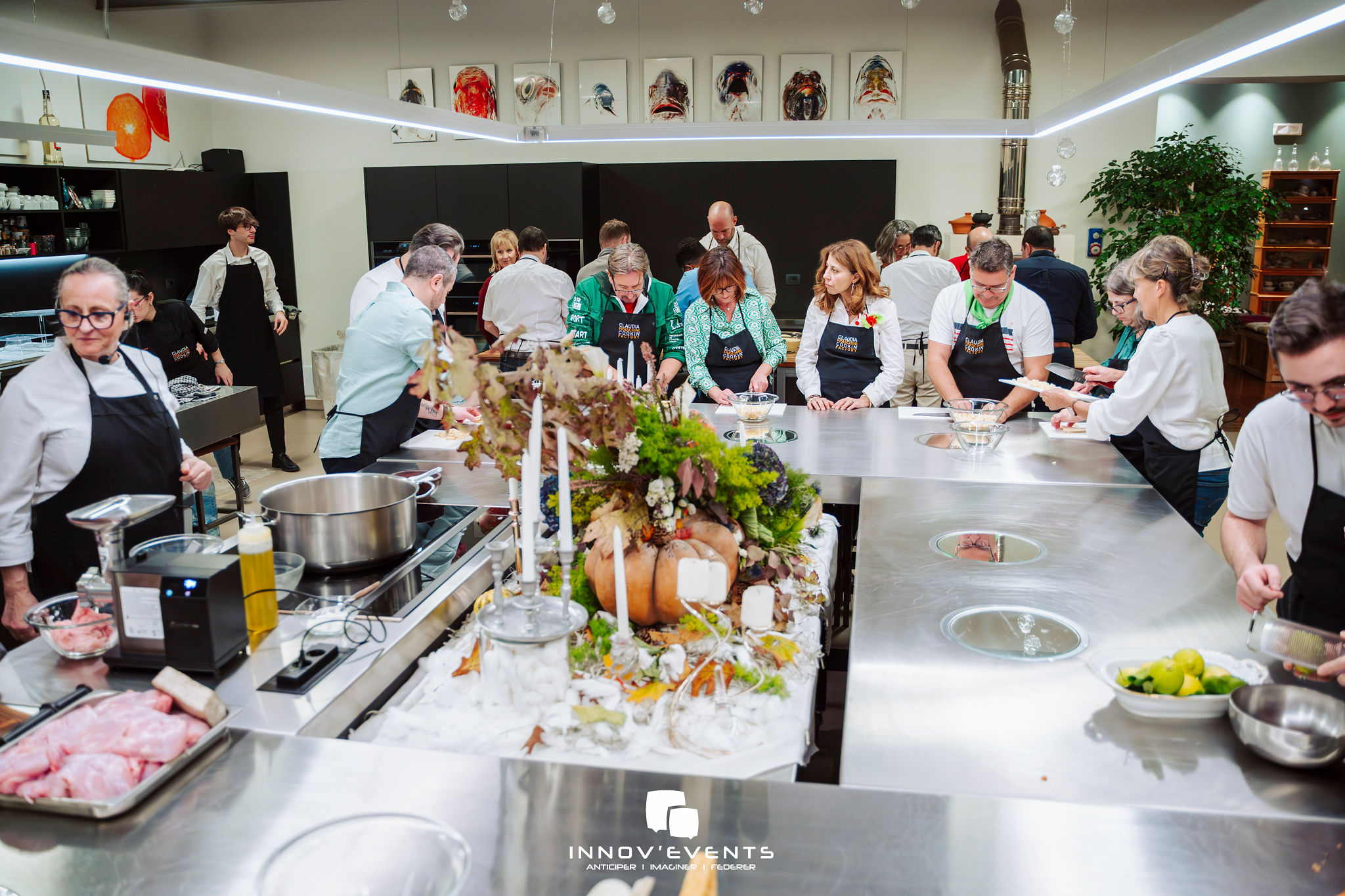
MasterChef-Style Cooking Workshop for corporate teams in Montreal
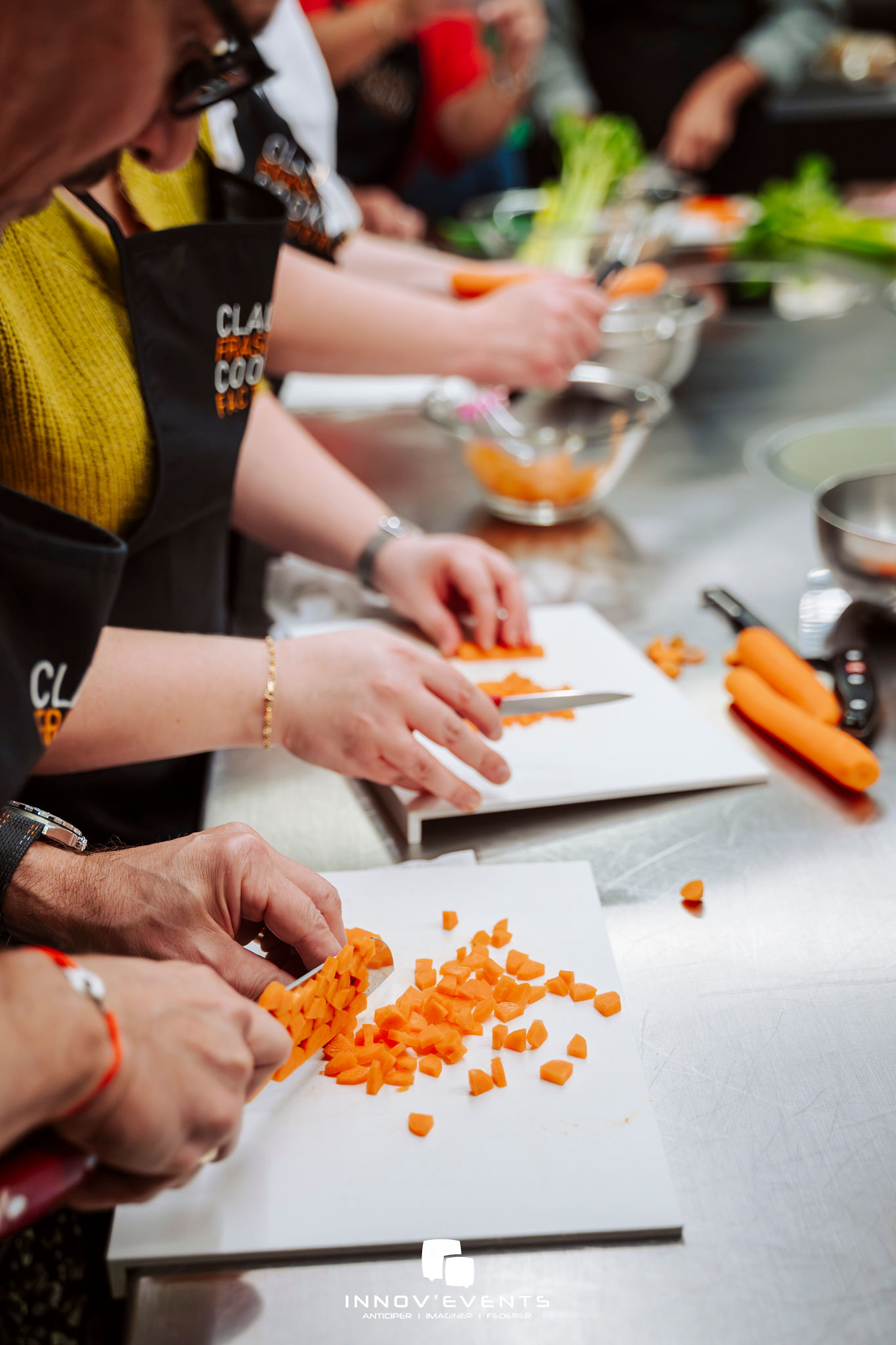
INNOV'events designs and produces a MasterChef-Style Cooking Workshop for executive teams, HR and communications: structured, time-boxed, and truly collaborative. Typical formats work from 12 to 200 participants, with stations, chefs, ingredients, judging, and service flow managed end-to-end. You keep control of the message and the schedule; we handle the operational reality on the floor.
Sommaire
In a corporate event, entertainment is not “extra”; it’s the lever that turns a room into a working group. A MasterChef-Style Cooking Workshop forces prioritization, role clarity, and rapid decision-making—exactly what leaders need after a quarter under pressure, a reorg, or a strategic shift.
In Quebec, organizations expect professional pacing, bilingual facilitation when needed, and logistics that respect real constraints: overtime rules, venue access windows, strict alcohol policies, and tight turnarounds between meetings and the activity. If the timing slips, it impacts speeches, awards, transport, and the executive agenda.
From our Montréal base, we deliver across Quebec with a proven local supplier network (chefs, rental, mobile kitchens, venues, AV). Our job is to make the activity feel effortless for your guests while keeping it precise and compliant for your internal stakeholders.
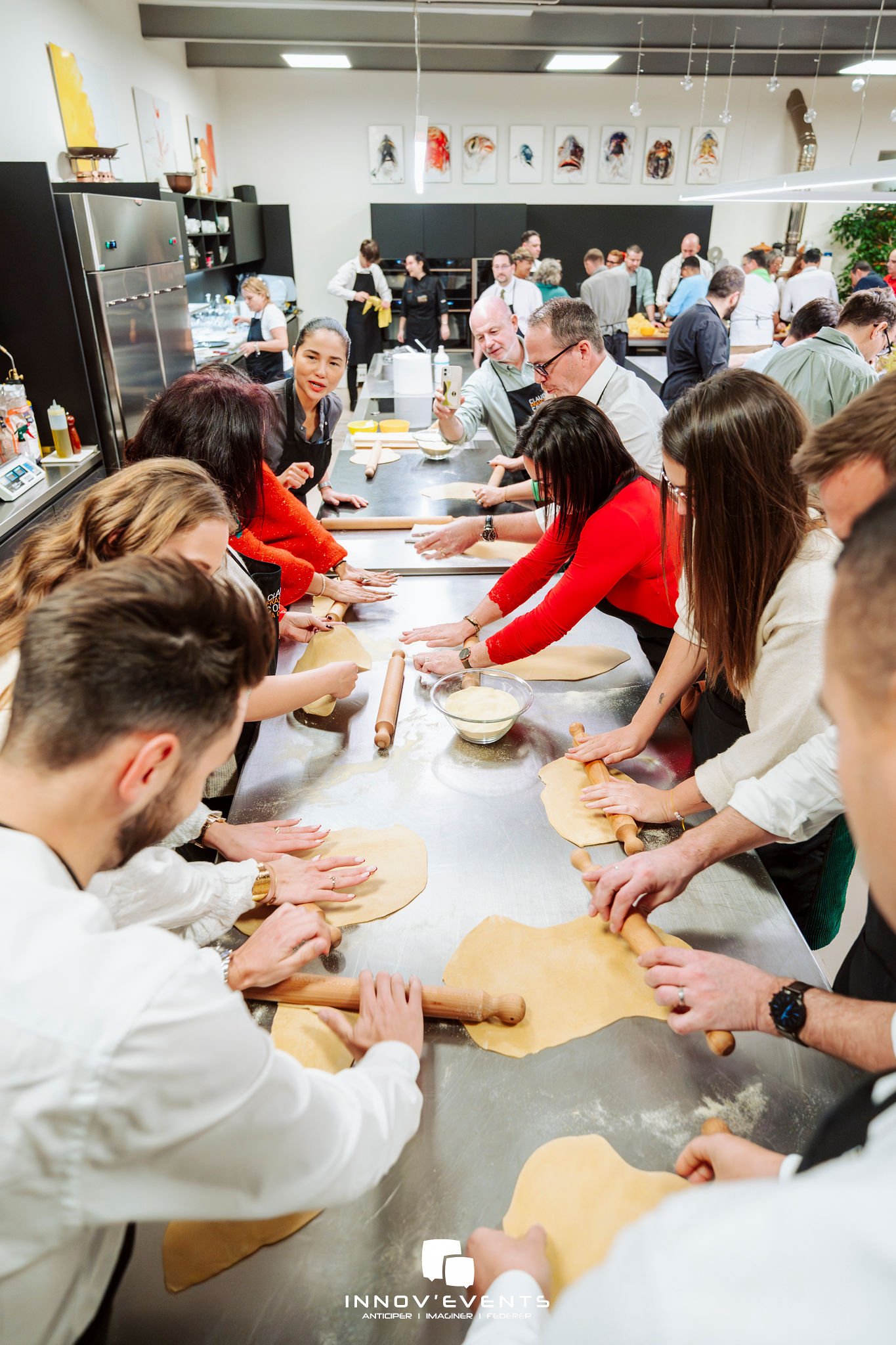
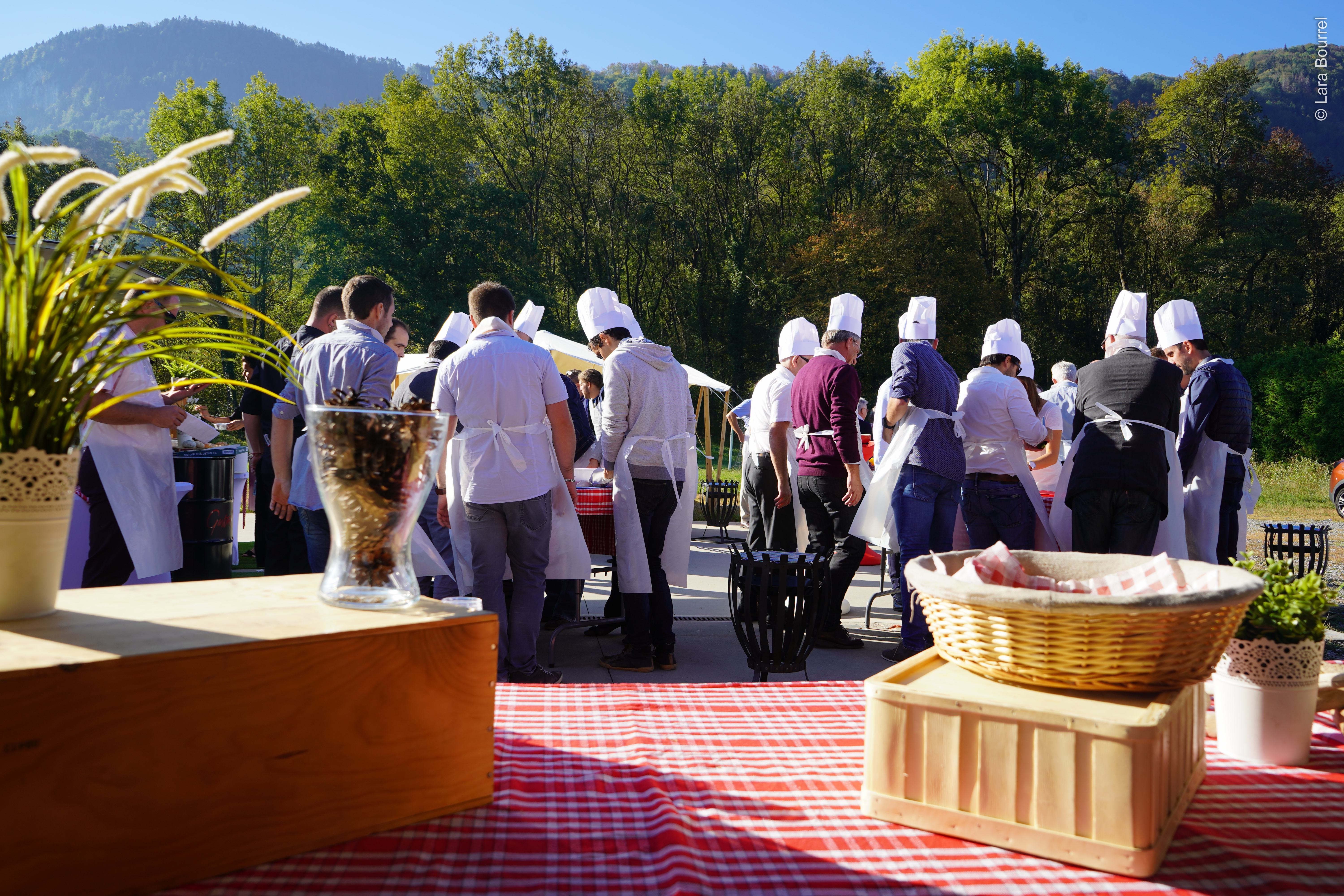
Operational benchmarks we bring to Quebec events
10+ years producing corporate team-building and executive offsites across Quebec, with repeat clients who require consistency from one year to the next.
Hundreds of corporate activations delivered in meeting venues, hotels, offices, and industrial sites—where access, freight elevators, and fire rules matter as much as creativity.
12–200 participants is our most common range for a MasterChef-Style Cooking Workshop in Quebec; beyond that, we scale via multi-room rounds and staggered service plans.
2–4 chefs on average per event (depending on menu complexity and participant count), plus production staff to protect your schedule and manage food safety.
Montreal delivery, Quebec-wide deployment for corporate clients
We support companies headquartered in Montréal as well as teams coming in from Québec City, Laval, the South Shore, the North Shore, and key industrial corridors. Many of our mandates are repeat engagements: the same HR and internal communications teams come back because they need an agency that remembers what worked, what didn’t, and what must be non-negotiable (timing, brand image, and executive protocol).
If you share the list of reference company names you want featured, we will integrate them exactly as provided (and only with your approval), in a way that fits procurement and brand guidelines. In the meantime, our approach is consistent with how Quebec organizations operate: clear scopes, documented run-of-show, vendor accountability, and bilingual readiness without turning the event into a “translation exercise.”
 Besoin d’un devis rapide ?
Nous vous envoyons une première proposition sous 24h.
What a cooking competition brings to Montreal leadership teams
A MasterChef-Style Cooking Workshop is one of the rare corporate formats where collaboration is measurable in real time. You can see how teams allocate roles, manage constraints, and deliver under a deadline—without turning it into a classroom or a personality test. For HR, it’s engagement with substance; for executives, it’s a controlled environment that still reveals how people operate.
Faster team alignment than a classic team-building game: each brigade needs a plan (menu, plating, timing) in the first 10–15 minutes, otherwise the kitchen punishes indecision. This creates immediate focus—useful after mergers, leadership changes, or departmental silos.
Cross-functional collaboration that feels legitimate: finance and ops can’t “opt out” when the risotto needs constant attention and the plating must match brand standards. We often see natural leadership emerge from unexpected profiles, which is valuable for succession planning conversations.
A safe way to work on communication under stress: teams must coordinate short, precise instructions. We design moments where information must be shared (allergies, timing, shared equipment) to mirror day-to-day operational dependencies.
Concrete recognition opportunities: judging criteria can include “execution,” “storytelling,” and “waste management.” It gives communications teams a clean framework to celebrate behaviours aligned with corporate values—without forcing a speech to do all the work.
Better networking than cocktail-only formats: when people cook together, they talk differently. For leadership retreats and sales kickoffs in Montréal, this format reliably breaks hierarchy and creates new internal connections.
In Montréal’s business culture—fast, pragmatic, and relationship-driven—this workshop works because it respects time, delivers a visible outcome, and keeps the tone professional. It’s not a “show”; it’s a structured activity where engagement is earned through execution.
What companies in Quebec expect from corporate entertainment
Corporate entertainment in Quebec is judged on execution, not promises. Decision-makers want to know: will it run on time, will it be safe, will it fit our brand, and will it survive last-minute changes?
In practice, here are the constraints we design around every week:
- Venue and union rules: load-in windows, elevator bookings, noise limits, and—depending on the site—unionized labour for certain AV or kitchen elements.
- Food safety and allergies: participants expect clear labelling and serious handling. We plan for gluten, nuts, seafood, lactose, vegetarian/vegan, and religious constraints, with documented station protocols.
- Bilingual environments: many Montreal teams are mixed. We build facilitation that works in English with French touchpoints (or fully bilingual), so nobody feels like a spectator.
- Brand image and internal optics: if an executive team is present, the activity must look premium and controlled—aprons, station signage, judging flow, and photography angles are planned, not improvised.
- Schedule discipline: corporate calendars are packed. We design for hard stops, including contingency buffers for late arrivals and speeches that inevitably run long.
When these realities are handled upfront, the MasterChef-Style Cooking Workshop in Quebec becomes a reliable tool for engagement rather than a risk to the agenda.
Which Montreal-ready options improve a MasterChef-style workshop?
The base concept is strong, but the difference between “fun” and “strategic” comes from how you design interaction, pressure points, and storytelling. We add options that improve participation without complicating logistics.
Interactive animations in Quebec
Ingredient auction with corporate currency: teams receive a budget and bid on premium ingredients (e.g., local cheeses, herbs, proteins). It triggers negotiation, prioritization, and resource management—useful for leadership groups.
Curveball challenge at minute 30: a controlled change (dietary swap, plating constraint, “use the mystery box”) mirrors real business change management. We time it so it creates intensity without causing failures.
Role rotation: captain changes halfway through. Great for preventing one dominant personality from taking over and for testing delegation under time pressure.
Art animations in Quebec
Brand-aligned plating brief: teams must interpret your brand values visually (colour palette, theme, sustainability). Communications teams appreciate that the “creative” element remains on-message.
Professional photo corner for finished plates: not a gimmick—done properly, it gives you clean internal content for recap emails, intranet, and recruitment messaging, with lighting and angles planned.
Innovative animations in Quebec
Quebec product spotlight: we can build the challenge around local ingredients (seasonal produce, cheeses, maple, regional grains) while remaining accessible for non-experts. It anchors the event in Quebec without turning it into folklore.
Non-alcoholic pairing bar: thoughtful mocktail or kombucha pairing helps inclusivity and policy compliance, especially for daytime events or organizations with strict alcohol guidelines.
Gourmand animations in Quebec
Real-time scoring dashboard: teams see standings during judging (without humiliating anyone). It keeps energy high and helps executives narrate results in a structured way.
Waste and efficiency metric: we track avoidable waste or station cleanliness as a scored criterion. For organizations with ESG commitments, it makes the message tangible.
Whatever options you choose, we validate alignment with your brand image and internal culture. A MasterChef-Style Cooking Workshop can be refined and executive-level—or more relaxed—depending on your objectives. The key is to decide intentionally, not by default.
Where to host a cooking workshop in Quebec City or nearby?
Venue choice directly impacts how “premium” and how “smooth” the workshop feels. The same concept can look highly controlled in a culinary studio, or chaotic in a room not designed for food production. We help you select a setting that fits your objectives, guest profile, and operational constraints.
| Venue type | For which objective? | Main strengths | Possible constraints |
|---|---|---|---|
Culinary studio / cooking school | High-quality cooking experience, executive offsite, client hosting | Purpose-built stations, strong ventilation, reliable equipment, professional service flow | Fixed layouts, peak-season availability, stricter time slots for set-up/tear-down |
Hotel ballroom with mobile kitchen build | Conference + activity in one place, large groups, schedule discipline | One contract for rooms/food/AV, easy accessibility, strong back-of-house support | Load-in rules, limited cooking methods depending on fire regulations, noise management |
Corporate office or private event space (converted) | Internal culture moment, post-townhall engagement, lower travel time | Convenient for teams, strong employer brand, flexible branding/signage | Power distribution, ventilation, waste management, building security and elevator bookings |
We strongly recommend a site visit (or a technical call with photos and measurements) before confirming. Details like access to sinks, floor protection, electrical load, and service corridors are what prevent last-minute compromises on the day of your MasterChef-Style Cooking Workshop in Quebec.
How much does a MasterChef-style workshop cost in Montreal?
Pricing depends on format, headcount, venue constraints, and the level of culinary and production ambition. For procurement and leadership teams, we build budgets that are defensible: clear line items, options, and what each choice changes operationally.
Group size and staffing ratios: more participants require more chefs, more production staff, and more equipment to keep the event safe and on time. For most corporate groups, we plan staffing to avoid queues and rushed judging.
Venue readiness: a culinary studio usually reduces rental equipment costs, while a ballroom or office conversion may require mobile kitchens, additional power distribution, floor protection, and increased load-in labour.
Menu complexity and ingredient quality: premium proteins, seasonal local products in Quebec, and multi-course formats raise food costs and prep time—but they also raise perceived value for executives and clients.
Timing and event architecture: a 60–90 minute workshop differs materially from a half-day program with multiple rounds, awards, and a hosted meal service.
Branding and content capture: aprons, station signage, judge scorecards, photography, and recap assets can be added as controlled options, especially when communications teams need internal content.
Risk and compliance needs: allergy management, additional sanitation, permits (if applicable), and insurance requirements can affect the final scope depending on venue and corporate policy.
We can propose a structured budget with “good / better / best” scenarios so you can arbitrate quickly. The ROI is usually visible in two places: higher participation (less passive attendance) and better post-event narrative for HR and internal comms—without losing executive control of timing and optics.
Why hire an event agency in Quebec for this format?
A cooking workshop looks simple on paper, but it’s a multi-vendor operation with real safety and timing stakes. An event agency in Quebec reduces risk because we understand local venue realities, supplier lead times, and how corporate approvals actually work here.
We also coordinate in a way that respects your internal stakeholders: HR (inclusion and safety), communications (brand narrative), facilities/security (access and building rules), and finance/procurement (documented costs and vendor compliance). When a last-minute change hits—VIP arrives late, headcount shifts, dietary constraints appear—the value of local operational control becomes obvious.
If your event is based closer to Québec City, our network and process still applies, and we can coordinate with our event agency in Quebec partners and suppliers to ensure continuity of standards across the territory.
- Faster site troubleshooting: last-minute access constraints, elevator bookings, or kitchen restrictions are resolved locally, not through remote assumptions.
- Supplier accountability: we work with chefs, rental teams, and venues that are used to corporate expectations in Quebec (punctuality, documentation, bilingual readiness).
- More realistic run-of-show: we build schedules that match local realities (traffic, seasonal weather, venue policies), which protects your executive agenda.
We can propose a structured budget with “good / better / best” scenarios so you can arbitrate quickly. The ROI is usually visible in two places: higher participation (less passive attendance) and better post-event narrative for HR and internal comms—without losing executive control of timing and optics.





What we’ve delivered for Quebec corporate event programs
Our MasterChef-Style Cooking Workshop mandates range from small leadership committees to large departmental gatherings where the goal is to mix teams that rarely work together. We’ve produced versions integrated into annual meetings (activity between plenary sessions), sales kickoffs (competitive energy + awards), and employer brand events (new hires + mentors cooking together to accelerate connection).
We also adapt to operational contexts that are typical in Quebec: venues with strict noise and ventilation policies, groups that require bilingual facilitation, and organizations with non-negotiable compliance requirements (food handling, incident reporting, and alcohol policies). The end result is not just “a fun activity,” but a controlled production that supports your internal message and leaves you with clean deliverables: a reliable schedule, documented responsibilities, and an experience that reflects leadership standards.
What goes wrong in Montreal cooking events without a producer
Underestimating venue constraints: insufficient power, no proper sinks, limited ventilation, or restricted cooking methods—leading to last-minute menu downgrades and delays.
Weak allergy and food-safety process: unclear ingredient lists, cross-contamination risks, or missing labelling. This is reputationally expensive for HR and leadership.
Queues and bottlenecks: too few stations or shared equipment, causing idle time and a “disorganized” perception among executives.
Judging that drags: long speeches, unclear criteria, and slow plating evaluation result in cold food and falling energy.
Misaligned tone: overly theatrical facilitation for a conservative culture, or the opposite—a flat tone for a sales team expecting competitive momentum.
Hidden costs: last-minute rentals, overtime fees, or additional labour due to load-in restrictions not discovered early enough.
Our role is to prevent these risks through technical planning, supplier coordination, and on-site production control—so your leadership team experiences a polished moment, and your internal teams don’t carry the operational stress.
Why Montreal HR teams rebook this workshop year after year
Repeat business in corporate events is rarely about novelty; it’s about reliability. When HR and communications teams rebook, it’s because the agency protects their internal credibility: fewer surprises, better stakeholder alignment, and a consistent experience even when the company changes.
High repeat-client patterns: many organizations come back because we keep documentation and learnings from the previous edition (station layouts, timing, preferred menu profiles, leadership expectations).
Predictable on-site control: the same production standards are applied whether it’s 20 leaders or 180 employees—briefings, signage, hygiene, and pacing are not improvised.
Stakeholder-friendly reporting: we can provide post-event notes (what worked, what to improve) to support internal debriefs and help plan the next edition in Quebec.

Loyalty is the simplest proof point in this industry: teams rebook when the event runs on time, looks right, and reduces internal workload—not because of buzzwords.
Our production process in Quebec for a MasterChef-style event
👉 Step 1: Objective and constraint mapping in Quebec
We start with a focused working call with HR, communications, and the executive sponsor. We confirm the objective (integration, recognition, leadership alignment, client hosting), success criteria, cultural tone, and constraints: schedule immovable points, bilingual requirements, allergy policy, alcohol policy, and brand guidelines. You receive a written summary that can be shared internally for approvals.
👉 Step 2: Format design and menu validation in Montreal
We propose 1–2 formats with timing blocks (briefing, cook, judging, awards, meal/networking). We validate a menu that is achievable for non-cooks, respects dietary constraints, and fits the venue. This is where we prevent common failures: unrealistic recipes, fragile plating, or equipment needs that a venue cannot support.
👉 Step 3: Venue technical plan and supplier lock
We confirm the venue or assess your shortlisted options. We produce a technical plan: station count, equipment list, power needs, load-in/load-out schedule, waste management, hygiene points, and service flow. Then we lock chefs, rentals, and any AV/MC needs with clear responsibilities and call times.
👉 Step 4: Participant journey and communications kit
We help you craft participant instructions that reduce no-shows and confusion: dress code, arrival time, allergy confirmation deadline, and how judging works. For internal comms, we can provide ready-to-send text that matches your tone (formal, friendly, or executive-level), plus basic signage content if needed.
👉 Step 5: On-site production and executive support
On the day, our producer runs the show: vendor check-in, station readiness, hygiene control, timing cues, and coordination with venue staff. Executives get what they need—short briefings, the right moments for remarks, and a controlled awards segment—without being pulled into operational decisions.
👉 Step 6: Debrief and next-edition recommendations
Within a few days, we share a debrief: what participants responded to, timing performance, and improvement points. For clients running recurring programs in Quebec, we document learnings so the next edition is faster to approve and even smoother to deliver.
FAQ sur l'organisation MasterChef-Style Cooking Workshop à Quebec
How long should a Montreal cooking workshop last?
Most corporate formats run 2 to 3 hours total: 15–20 minutes briefing, 60–90 minutes cooking, 20–30 minutes judging, and 15 minutes awards. If you want a full sit-down meal, plan 3.5 to 5 hours including service and networking.
What group size works best in Quebec for this format?
The sweet spot is 24 to 120 participants, divided into teams of 6 to 10. We can run smaller executive groups (12–20) with higher-end ingredients, or scale to 200 using multiple rounds and staggered judging/service.
Can you handle allergies and dietary needs in Montreal?
Yes—provided we collect constraints in advance. We typically set a confirmation deadline of 7–10 business days, label ingredients at stations, and design recipes with substitutions (gluten-free, vegetarian/vegan, nut-free). For severe allergies, we add separate tools and controlled prep steps to reduce cross-contamination risk.
Do we need a professional kitchen in Quebec City venues?
Not always. A culinary studio is easiest, but we can build a mobile setup in a hotel ballroom or event space if the venue allows it. The key checks are: power capacity, sinks, ventilation rules, fire policy on heating elements, load-in access, and waste management.
What is the typical budget in Montreal for a corporate cook-off?
Budgets vary by venue and menu, but many corporate groups land between CAD 150 to 350 per person for a structured MasterChef-Style Cooking Workshop with chefs, ingredients, equipment, production, and judging. Executive-grade formats with premium products, branding, and photography can be higher; we present clear options so you can arbitrate.
Get a quote for a MasterChef-style workshop in Quebec
If you’re comparing agencies, we suggest starting with three points: your objective (team alignment, recognition, client hosting), your non-negotiables (timing, bilingual needs, policies), and your estimated headcount. With that, we can propose a realistic format, venue approach, and budget options for your MasterChef-Style Cooking Workshop in Quebec.
Contact INNOV'events to schedule a short scoping call. The earlier we confirm venue constraints and dietary collection, the more control you keep on cost, schedule, and executive-level polish—especially during peak seasons in Montréal and across Quebec.
INNOV'events Quebec Agency
Thierry GRAMMER is the manager of the INNOV'events Quebec office. Reach out directly by email at canada@innov-events.ca or via the contact form.
Contact the Quebec agencyToutes nos prestations & animations Quebec, Quebec
Découvrez nos prestations événementielles
Découvrez nos animations événementielles disponibles au Quebec
- Event Hostess in Quebec
- Escape Game in Quebec
- MasterChef-Style Cooking Workshop in Quebec
- Corporate Magician in Quebec
- Tent Rental in Quebec
- Color Analysis Workshop in Quebec
- Inflatable Games in Quebec
- Valet Service in Quebec
- Soccer Simulator in Quebec
- LED Furniture Rental in Quebec
- LED Branding Activation in Quebec
- Immersive Culinary Experience in Quebec
- Light Painting Activity in Quebec
- Immersive Mystery Night in Quebec
- Promotional Contest in Quebec
- Promotional Materials (POS) in Quebec
- Virtual Reality Experience in Quebec
- Molecular Gastronomy Workshop in Quebec
- Halloween Event in Quebec
- Fireworks Show in Quebec
- Sports Challenge – Giant Games in Quebec
- Professional Event Host in Quebec
- Photo Booth Animation in Quebec
- Santa Claus Appearance in Quebec
- Kids Entertainment in Quebec
- Guided Tour in Quebec
- Urban Rally in Quebec
- Ball Pit Activity in Quebec
- Flight Simulator in Quebec
- Food Truck Rental in Quebec
- World Record Attempt in Quebec
- Surf Simulator in Quebec
- Soccer Simulator in Quebec
- Wine Casino in Quebec
- Makeover Workshop in Quebec
- Perfume Creation Workshop in Quebec
- Acting Workshop in Quebec
- CSR Activities in Quebec
- Archery Activity in Quebec
- Event Security Guard in Quebec
- Wine Tasting Workshop in Quebec
- Mime Performance in Quebec
- TV Game Show Animation in Quebec
- Funfair Event in Quebec
- Crisis Management Workshop in Quebec
- Crisis Negotiation Workshop in Quebec
- Arcade Games in Quebec
- Indoor Skydiving Simulator in Quebec
- Ski Simulator in Quebec
- Racetrack Driving Experience in Quebec
- Introductory Flight Experience in Quebec
- Tasting Experience in Quebec
- Build Your Own Foosball Workshop in Quebec
- 2CV Rally in Quebec
- LEGO Challenge in Quebec
- Casino Night in Quebec
- Interpreter / Translator in Quebec
- Promotional Merchandise in Quebec
- Shuttle / Transportation Service in Quebec