
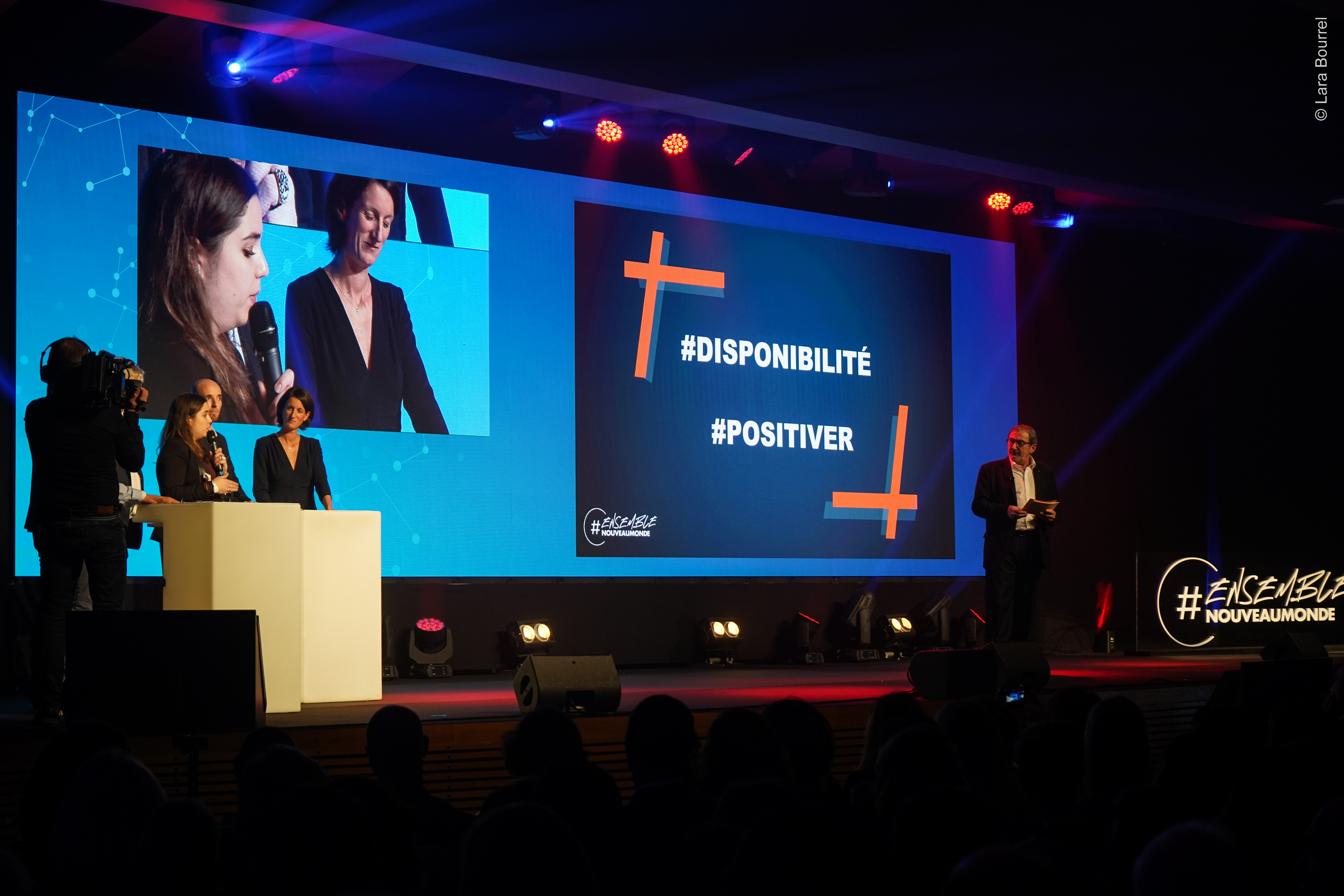
Interpreter / Translator in Montréal for high-stakes corporate events
Sommaire
In Montréal, bilingual delivery is rarely a “nice-to-have”: it directly impacts leadership credibility, employee trust, and how seriously your stakeholders take the content. The right Interpreter / Translator setup prevents confusion, keeps sessions on schedule, and protects the integrity of your message.
Local organizations expect more than fluent language: they expect mastery of executive tone, labour-law sensitive phrasing, and the ability to perform under pressure (town halls, restructuring announcements, investor updates). In practice, interpretation must be synchronized with slides, microphones, recordings, and room acoustics—otherwise the experience collapses quickly.
As INNOV'events, we operate on the ground in Montréal with event producers who are used to show flow, backstage realities, and last-minute changes. We coordinate interpreters, translators and AV so your teams aren’t stuck bridging gaps between vendors on the day of the event.
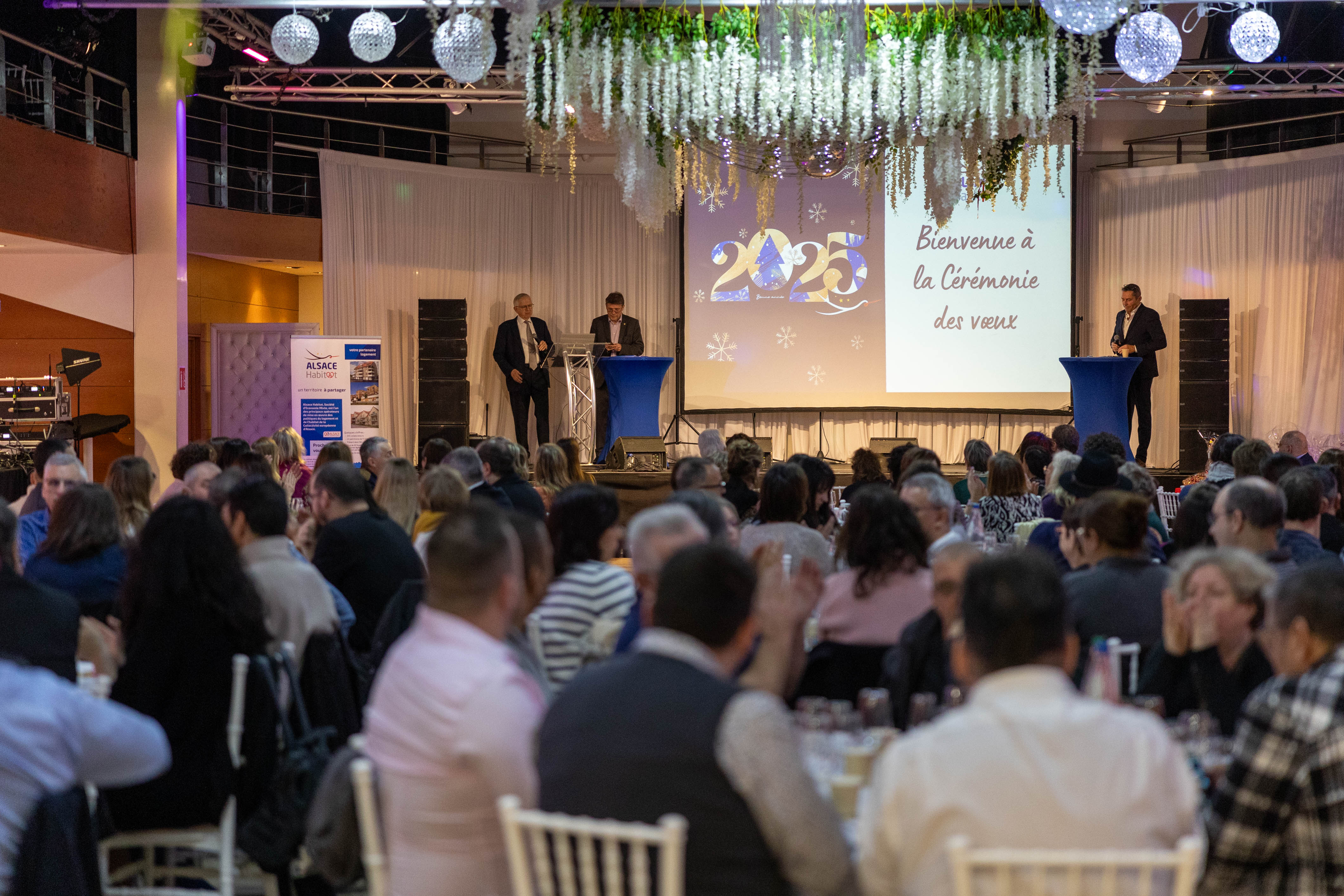
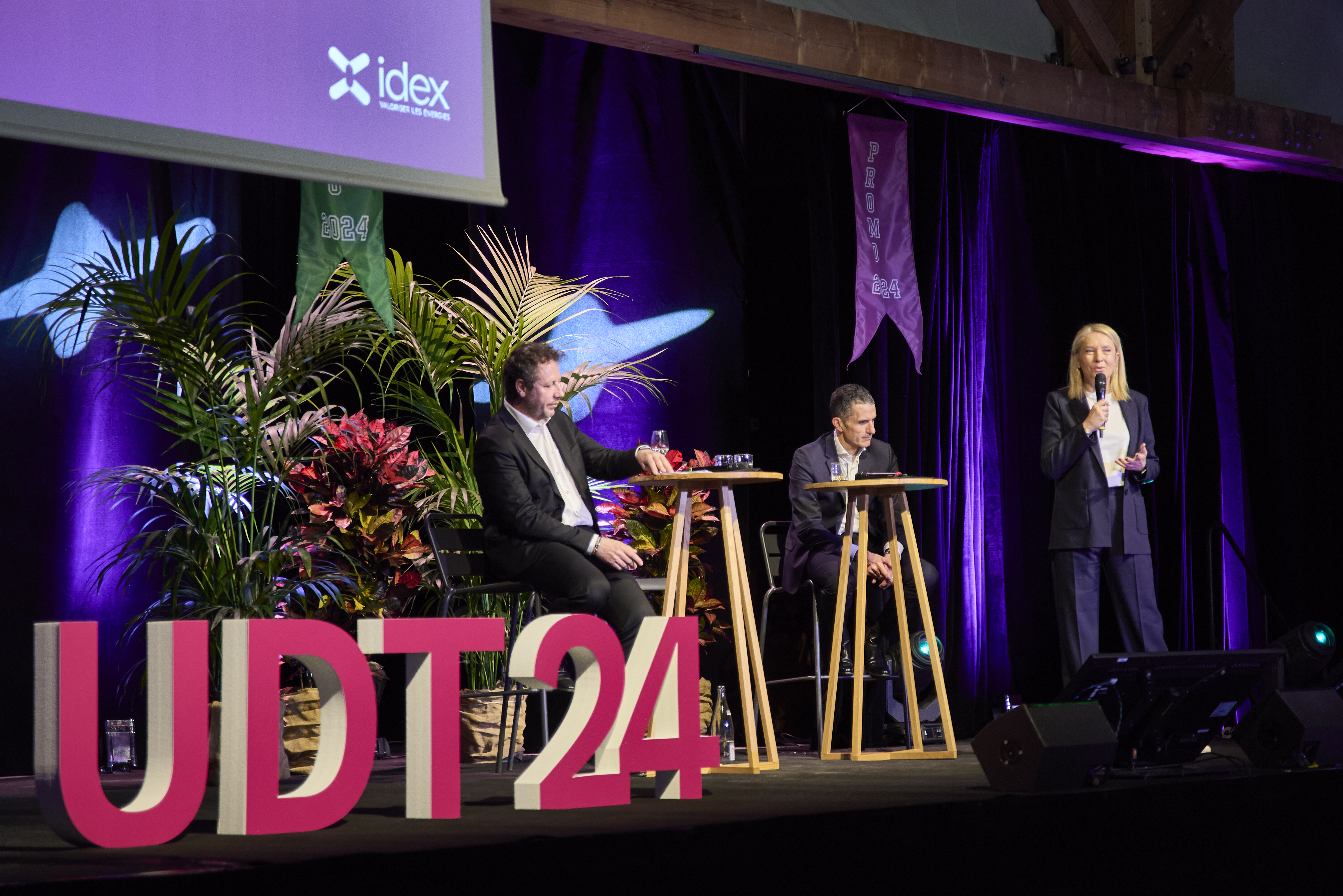
INNOV'events figures that matter in Montréal boardrooms
10+ years coordinating corporate event operations in Québec and across Canada, including multilingual formats where timing and accuracy are non-negotiable.
Access to a vetted pool of 50+ conference-level interpreters and specialist translators (finance, pharma, tech, public sector), mobilizable in Montréal within typical corporate lead times.
24–48h typical turnaround for a first quote and staffing plan once the agenda, languages and format are confirmed.
Formats covered: board-level meetings, town halls, AGMs, compliance training, union-sensitive communications, media-ready announcements, hybrid conferences with 200–2,000+ attendees.
Montréal experience that repeats year after year
We support organizations that operate in Montréal and across Québec where bilingual communication is part of daily governance: leadership town halls, annual kickoffs, client conferences, internal training, and change-management communications. In several cases, teams come back annually because interpretation is not a one-off purchase—it’s a risk-sensitive component of their communications strategy and employee experience.
In the field, the pattern is consistent: HR wants a respectful tone that lands equally in French and English; Communications wants brand consistency and clear spokesperson messaging; executives want delivery that is precise, fast, and doesn’t create additional questions. Our role is to translate intent, not only words, while keeping everything operationally stable (sound, staging, timing, recordings).
 Besoin d’un devis rapide ?
Nous vous envoyons une première proposition sous 24h.
Why hire an Interpreter / Translator in Montréal for leadership events?
When your audience is bilingual, you are judged on clarity, fairness, and consistency. A professional Interpreter / Translator setup makes your content accessible without slowing the event or diluting nuance—especially when the subject is sensitive or strategic.
Protect executive credibility: the right interpreter mirrors tone (firm, empathetic, precise) and avoids the “approximate bilingual” effect that can undermine leadership during Q&A.
Reduce HR and employee relations risk: clear language matters for policies, benefits, restructuring, return-to-office guidelines, and any union-adjacent communications. Interpretation that is consistent lowers the chance of conflicting understandings spreading internally.
Keep the run-of-show on time: simultaneous interpretation avoids doubling session length. In Montréal, where agendas are often packed (panels, awards, keynotes), timing discipline is a real KPI.
Improve engagement in Q&A: with the right microphone and headset plan, participants ask questions in their preferred language without hesitation—especially in larger rooms where speaking up is already a barrier.
Enable high-quality recordings and re-use: we plan interpretation so you can repurpose content (internal portal, training, compliance) without patchwork fixes afterward.
Montréal’s economic culture rewards organizations that communicate with equal respect in French and English. Doing it well isn’t optics; it’s operational leadership.
What Montréal audiences expect from bilingual delivery
In Montréal, your audience is rarely “half French, half English.” You often have mixed profiles in the same row: head office leadership, plant or site teams, new hires, international staff, partners, and sometimes external stakeholders. That mix creates two hard expectations: (1) nobody should feel like a second-class listener, and (2) the event should not feel slower because it’s bilingual.
We see recurring constraints that influence the interpretation plan:
- Hybrid reality: many corporate events now have a room audience plus remote viewers. Interpretation must be audible in-room and correctly routed to the streaming platform (separate audio channels, language selector, or parallel meeting rooms).
- Acoustics and room shape: Montréal venues vary widely—industrial-chic spaces, hotel ballrooms, heritage buildings. Glass walls, high ceilings, or long rooms can destroy intelligibility if you don’t plan speaker positioning, delays, and headset distribution.
- Speed of change: last-minute slide edits, a VP joining remotely, a legal wording adjustment, or a “we need to address this news today” situation. Interpretation needs a terminology and briefing process that tolerates volatility.
- Brand and cultural nuance: the same sentence can sound “too corporate” in French or “too casual” in English. Executives in Montréal are sensitive to register; the interpreter must land the intent appropriately.
Our job is to design the interpretation environment so your speakers can focus on content, not on language mechanics.
How to integrate interpretation into corporate event entertainment in Montréal
Interpretation is often treated as a purely functional service, but it can also elevate engagement when it’s built into the experience. For corporate event entertainment in Montréal, the goal is to keep energy high without sacrificing comprehension—especially when you have a mixed-language crowd and tight timing.
Interactive animations in Montréal
Bilingual moderated Q&A with live routing: we set a clear protocol: questions can be asked in either language, interpreted in real time, and displayed on confidence monitors for the moderator. This keeps the pace and reduces “can you repeat?” friction.
Live polling in both languages: the polling interface is bilingual and the moderator script is aligned with the interpreter’s terminology. It’s effective for HR topics (engagement surveys, culture values) or communications (brand perception) because results can be discussed immediately.
Breakout workshops with roaming interpreters: for leadership offsites, we can assign interpreters per room or deploy floating support at key tables. It prevents one group from going silent because the discussion shifts language midstream.
Art animations in Montréal
Host/MC with interpreter coordination: for awards nights or recognition events, we align the MC script with the interpreter to keep punchlines, names, and sponsor mentions accurate. The objective is not comedy—it’s flow and professionalism.
Panel discussions with bilingual speakers: we brief panelists on mic discipline and turn-taking. Interpreters cannot overlap multiple voices; the structure of the panel is an operational choice, not a stylistic one.
Innovative animations in Montréal
Bilingual culinary stations with scripted storytelling: if you’re highlighting Montréal identity (local products, Québec suppliers), we prepare short bilingual narratives for chefs or brand ambassadors so guests receive the same message at each station.
Wine/spirits tastings with interpretation: useful when hosting international guests. We coordinate pacing (tasting notes, pairings) so the interpreter can keep up without reducing the experience to fragmented phrases.
Gourmand animations in Montréal
Hybrid interpretation for livestreams: separate language audio channels, remote interpreters as backup, and a viewing experience that doesn’t force participants to hunt for links. This is increasingly requested by Montréal companies with Canada-wide teams.
Real-time captioning paired with interpretation: for accessibility and noisy environments, we can layer bilingual captions on screens while maintaining audio interpretation. It’s especially useful for compliance training or technical content.
Whatever the format, the baseline is alignment with your brand image: vocabulary, tone, and the level of formality must match your culture. In Montréal, audiences notice immediately when a company sounds “translated” instead of truly bilingual.
Which Montréal venues work best for interpretation setups?
The venue influences interpretation quality more than most teams expect. Booth placement, sightlines, ceiling height, and backstage access directly affect audio clarity and interpreter performance. When the room works against you, you end up compensating with more equipment and more risk.
| Venue type | For which objective? | Main strengths | Possible constraints |
|---|---|---|---|
Downtown hotel ballroom (Ville-Marie) | Town hall, awards night, AGM with 300–1,000 attendees | Built-in rigging, AV infrastructure, backstage corridors, predictable load-in/out | Union or in-house AV constraints, limited booth placement options, higher F&B minimums |
Convention centre-style spaces | Multi-track conferences, partner summits, simultaneous breakouts | Rooms designed for interpretation, strong power distribution, scalable registration flow | Long walking distances, stricter schedules, higher logistics complexity |
Loft/industrial venues (Griffintown, Mile End) | Leadership offsite, brand event, internal kick-off 80–250 | High perceived value, flexible staging, strong Montréal identity | Acoustics (echo), limited backstage, constraints for booths/headset distribution and cable runs |
We recommend a site visit (or at minimum a detailed tech walkthrough) before confirming interpretation. In Montréal, two venues can look similar online and behave completely differently once you add live microphones, streaming, and language channels.
What does an Interpreter / Translator cost in Montréal?
Pricing depends less on “hourly rate” and more on the operational reality of your event: number of languages, format (in-room vs hybrid), length, and the technical environment. The budget should reflect the risk level of the content—an internal training doesn’t carry the same exposure as a CEO address or investor-facing session.
Mode: simultaneous vs consecutive interpretation. Simultaneous usually requires headsets and either a booth or tabletop setup; consecutive can extend agenda time and is rarely ideal for large audiences.
Duration and scheduling: half-day vs full-day, evening event, rehearsal time, and whether sessions are continuous or include breaks. Conference-level work often requires team rotation to maintain accuracy.
Number of interpreters: for longer continuous programs, you typically plan 2 interpreters per language direction to avoid fatigue-related accuracy drops.
Technical package: number of headsets/receivers, transmitters, audio routing, recording needs, streaming platform configuration, and on-site technician support.
Content complexity: finance, legal, pharma, engineering, or highly acronym-heavy corporate decks increase briefing and terminology workload.
Translation scope: pre-event translation of decks, scripts, signage, registration pages, and post-event deliverables (transcripts, subtitles, internal comms summaries).
From an ROI perspective, interpretation pays for itself when it protects time (no doubled agenda), prevents misinterpretation on sensitive topics, and improves engagement across language groups. The cost of one confused workforce message can be higher than the entire interpretation line item.
Why choose a Montréal partner instead of sourcing interpreters yourself?
Many teams can book an interpreter. The challenge is delivering a bilingual event under real conditions: speakers who go off-script, rooms that aren’t acoustically friendly, last-minute VIP changes, and hybrid platforms that route audio incorrectly if not configured. A local partner reduces operational friction because we’re used to Montréal venues, vendor workflows, and the pace of corporate approvals.
INNOV'events acts as your single point of accountability across interpretation, translation and event operations. That means you’re not mediating between an interpreter, an AV supplier, and an internal stakeholder while the CEO is already on stage. When something shifts, we adjust the plan and communicate clearly in real time.
As a production partner, we also coordinate the broader environment around interpretation. If you need a stronger event backbone, we can integrate interpretation into a full-service approach through our event agency in Montréal team—without multiplying decision points.
- Venue-aware planning: we anticipate booth placement, cable paths, registration flows for headsets, and soundchecks that match the room.
- Vetted talent and backups: we staff based on subject matter and audience profile, and we plan contingencies for illness, travel delays, or remote substitution.
- Executive-ready process: clear briefing templates, terminology management, and a show-calling interface that respects your internal approval chain.
- Risk management: fewer points of failure on event day, and a practical escalation plan when something breaks (audio, streaming, timing).
From an ROI perspective, interpretation pays for itself when it protects time (no doubled agenda), prevents misinterpretation on sensitive topics, and improves engagement across language groups. The cost of one confused workforce message can be higher than the entire interpretation line item.







Montréal project examples: interpretation under real constraints
Our Montréal mandates cover a wide range of realities, which is exactly why process matters. We’ve delivered bilingual town halls where a CEO needed to address a sensitive business update followed by open Q&A; the key success factor was not only interpreter quality, but strict microphone discipline, an on-stage moderator with a clear question protocol, and a headset plan that prevented bottlenecks at entrances.
We’ve supported leadership offsites where English-speaking executives were in the room with predominantly French-speaking managers. In that context, the interpreter must preserve leadership tone while also keeping the workshop collaborative. We typically structure these as interpreted plenaries plus breakouts with targeted support, ensuring teams aren’t forced into awkward language compromises that reduce participation.
We also handle hybrid sessions where remote participants join from Toronto, Vancouver, or international offices. The operational complexity increases quickly: audio routing, latency, platform limitations, and the need for a backup plan if a speaker connection drops. Our approach is to design the language experience the same way we design AV: with redundancy, testing, and clear ownership.
Common interpretation mistakes we prevent in Montréal events
“We’ll figure out headsets on site”: without a distribution plan and spares, you create delays and frustration before the first speaker starts.
Underestimating fatigue: long sessions with a single interpreter increase the probability of omissions and drift in terminology—especially with financial or technical content.
No access to slides/scripts: interpreters can’t guess your internal acronyms, product names, or executive titles. Last-minute decks are manageable only with the right prep workflow.
Bad room positioning: placing interpreters with poor sightlines to the stage and screens leads to avoidable errors, especially during data-heavy presentations.
Hybrid audio misrouting: remote viewers hearing the wrong language, or hearing both at once, is a common failure when streaming configuration isn’t tested.
Ignoring Q&A mechanics: unstructured Q&A (multiple voices, no mic discipline) is where interpretation quality is judged most harshly.
Our role is to remove these failure points before they reach your executives, your employees, or your external audience. In practice, that means rigorous prep, tight coordination with AV, and a clear plan for the messy realities of live events.
Why Montréal clients rebook interpretation with INNOV'events
Rebooking happens when teams feel safe: they know the bilingual experience will be professional, predictable, and aligned with their culture. In corporate environments, trust is earned when we make the complexity disappear without creating new work for internal stakeholders.
60–70% of our corporate accounts request repeat support within 12–18 months for another event cycle (kickoff, town hall, partner day, training).
For leadership events, we typically see 2–4 touchpoints per year per account where interpretation or translation becomes necessary (major announcements, quarterly updates, strategic planning).
When hybrid is involved, clients often standardize a “house approach” after the first successful run—reducing internal coordination time by 30–40% on subsequent editions.

Loyalty is the most practical proof point in event services: teams come back because risk was managed, stakeholders were respected, and the day ran smoothly.
Our Montréal delivery process for Interpreter / Translator services
👉 Step 1 (Montréal): Rapid scoping call with your stakeholders
We align with Communications, HR and the event owner on the event objective, audience profile, language needs (FR/EN and any additional languages), and risk areas (sensitive messaging, legal constraints, media presence). We confirm format: in-person, virtual, or hybrid, plus attendee count and venue short list.
👉 Step 2 (QC): Staffing plan and interpreter matching
We select interpreters based on domain (finance, legal, technical, medical), register (executive, training, public-facing), and delivery mode. For longer programs, we staff teams to maintain accuracy. If translation is required, we assign separate translation resources to avoid compromising interpreter prep time.
👉 Step 3 (Montréal): Technical design and AV coordination
We coordinate with your AV supplier (or ours) to define the interpretation architecture: booth/tabletop, transmitters, number of receivers/headsets, audio routing, and streaming channels. We also plan backstage logistics: interpreter placement, sightlines, power, and access. This is where many self-managed projects fail, so we document responsibilities clearly.
👉 Step 4 (QC): Terminology, scripts and speaker briefing
We collect decks, scripts, executive bios, product names, KPIs, and internal acronyms. We build a glossary and review sensitive phrasing with your comms lead. If speakers are likely to improvise, we set expectations on mic technique and pace—without over-coaching or making the delivery feel scripted.
👉 Step 5 (Montréal): On-site rehearsal, show call, and live support
We run a tech check focused on interpretation: mic gain, routing, interpreter monitoring, channel labeling, headset distribution plan, and Q&A mechanics. During the event, we coordinate with the show caller and AV to manage cues, handle last-minute changes, and keep interpretation stable throughout the program.
👉 Step 6 (Montréal): Post-event wrap-up and reusable assets
When relevant, we deliver translated materials, updated glossaries for future events, and recommendations for improving the next edition (headset quantities, room layout, moderator scripting). This is how we reduce your workload over time while improving consistency across leadership communications.
FAQ sur l'organisation Interpreter / Translator à Montréal
Do I need 1 or 2 interpreters in Montréal?
For short segments (60–90 minutes) a single interpreter can sometimes work, depending on complexity. For continuous programs (half-day/full-day) or high-density content (finance, legal, technical), plan 2 interpreters so they can rotate and maintain accuracy. For panels with fast exchanges, a team is strongly recommended.
Simultaneous or consecutive interpretation for Montréal town halls?
For town halls, simultaneous is usually the right choice: it keeps timing tight and avoids repeating content twice. Consecutive can work for small leadership meetings (10–30 people) but it can extend your agenda by 30–80% depending on speaker style and Q&A volume.
How many headsets should we plan in Montréal venues?
We typically plan headsets for 30–60% of the room for a bilingual Montréal audience, then adjust based on registration language data and the audience mix (internal vs external, international guests, unionized sites, etc.). We also recommend a buffer of 5–10% for walk-ins and failures.
Can you support hybrid interpretation for Montréal livestreams?
Yes. We configure language channels (or parallel sessions) so remote participants can select their audio reliably. The critical point is testing the full chain (mic to platform to viewer) and having a fallback plan if a speaker goes remote or if latency increases. In most corporate setups, a full test run 3–7 days before the event prevents day-of surprises.
How early should we book an interpreter in Montréal?
For standard corporate events, booking 3–6 weeks ahead is comfortable. For peak periods (spring and fall), high-profile interpreters, or complex multi-track conferences, aim for 8–12 weeks. Rush bookings are possible, but you’ll have fewer choices and less time for terminology prep.
Request an Interpreter / Translator quote in Montréal
If your next event includes executive messaging, sensitive HR topics, or external stakeholders, secure interpretation early—availability, technical planning, and terminology prep are what protect quality. Send us your date, venue (or shortlist), attendee count, languages required, and whether the event is in-person, virtual, or hybrid. INNOV'events will return a clear staffing and technical plan with budget ranges, so you can make a decision quickly and defend it internally.
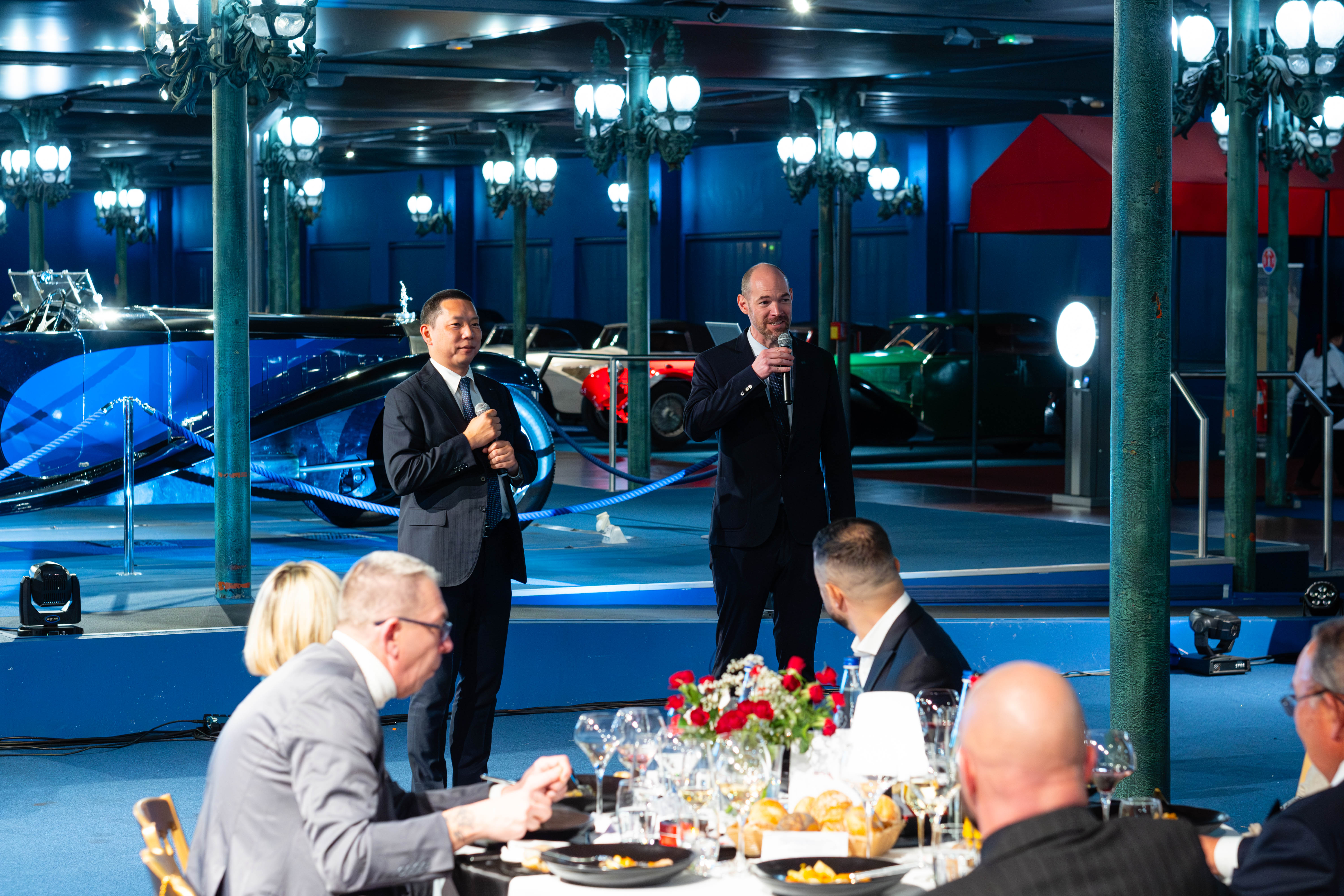
INNOV'events Montréal Agency
Thierry GRAMMER is the manager of the INNOV'events Montréal office. Reach out directly by email at canada@innov-events.ca or via the contact form.
Contact the Montréal agencyToutes nos prestations & animations Montréal, Quebec
Découvrez nos prestations événementielles
- Employee Party in Montréal
- Corporate Christmas Party in Montréal
- Networking Cocktail Event in Montréal
- Shopping Mall Activation in Montréal
- Grand Opening Event in Montréal
- Product Launch Event in Montréal
- Open House Event in Montréal
- Field Brand Activation in Montréal
- Event Catering Service in Montréal
Découvrez nos animations événementielles disponibles au Quebec
- Event Hostess in Montréal
- Escape Game in Montréal
- MasterChef-Style Cooking Workshop in Montréal
- Corporate Magician in Montréal
- Tent Rental in Montréal
- Color Analysis Workshop in Montréal
- Inflatable Games in Montréal
- Valet Service in Montréal
- Soccer Simulator in Montréal
- LED Furniture Rental in Montréal
- LED Branding Activation in Montréal
- Immersive Culinary Experience in Montréal
- Light Painting Activity in Montréal
- Immersive Mystery Night in Montréal
- Promotional Contest in Montréal
- Promotional Materials (POS) in Montréal
- Virtual Reality Experience in Montréal
- Molecular Gastronomy Workshop in Montréal
- Halloween Event in Montréal
- Fireworks Show in Montréal
- Sports Challenge – Giant Games in Montréal
- Professional Event Host in Montréal
- Photo Booth Animation in Montréal
- Santa Claus Appearance in Montréal
- Kids Entertainment in Montréal
- Guided Tour in Montréal
- Urban Rally in Montréal
- Ball Pit Activity in Montréal
- Flight Simulator in Montréal
- Food Truck Rental in Montréal
- World Record Attempt in Montréal
- Surf Simulator in Montréal
- Soccer Simulator in Montréal
- Wine Casino in Montréal
- Makeover Workshop in Montréal
- Perfume Creation Workshop in Montréal
- Acting Workshop in Montréal
- CSR Activities in Montréal
- Archery Activity in Montréal
- Event Security Guard in Montréal
- Wine Tasting Workshop in Montréal
- Mime Performance in Montréal
- TV Game Show Animation in Montréal
- Funfair Event in Montréal
- Crisis Management Workshop in Montréal
- Crisis Negotiation Workshop in Montréal
- Arcade Games in Montréal
- Indoor Skydiving Simulator in Montréal
- Ski Simulator in Montréal
- Racetrack Driving Experience in Montréal
- Introductory Flight Experience in Montréal
- Tasting Experience in Montréal
- Build Your Own Foosball Workshop in Montréal
- 2CV Rally in Montréal
- LEGO Challenge in Montréal
- Casino Night in Montréal
- Interpreter / Translator in Montréal
- Promotional Merchandise in Montréal
- Shuttle / Transportation Service in Montréal