
Crisis Negotiation Workshop in Montréal to protect decisions, people, and reputation
INNOV'events delivers a Crisis Negotiation Workshop designed for executives, HR, and communications teams who need calm, repeatable decision-making under pressure. Typical groups range from 12 to 60 participants, with options for leadership-only sessions or cross-functional cohorts.
We handle scenario design, facilitation, room setup, safety rules, and post-workshop debrief deliverables so your team leaves with usable language, clear escalation pathways, and stronger coordination on day one of a real incident.
Sommaire
In a real crisis, the “entertainment” value is not the point; the strategic value is rehearsal. A Crisis Negotiation Workshop in Montréal creates a controlled environment where leaders test messages, boundaries, and authority lines before the stakes are public, legal, and human.
Local organizations expect realism without risk: scenarios that mirror Montréal operations (hybrid teams, bilingual environments, unions, sensitive media cycles) while staying HR-safe and compliant. The workshop must be intense enough to reveal gaps, but structured enough to protect psychological safety.
From our base in Montréal, INNOV'events builds field-ready simulations with clear rules, timed injects, and measurable outcomes. Our facilitators have corporate crisis-room experience and know how to challenge executives without derailing governance or reputational constraints.
INNOV'events in numbers for Montréal decision-makers
10+ years coordinating corporate formats across Québec and national networks, including executive offsites, complex stakeholder events, and scenario-based workshops.
150+ facilitated workshops and simulations delivered through our partner roster (facilitators, mediators, security advisors, bilingual coaches) with repeatable methodologies and documented outputs.
24–72 hours typical turnaround to produce a first workshop architecture and budget ranges after an initial discovery call, depending on stakeholder availability and confidentiality requirements.
2 languages (EN/FR) supported for facilitation, role-play, and deliverables—important for Montréal teams that must operate seamlessly across internal and external audiences.
Montréal references and recurring clients in sensitive contexts
We support organizations in Montréal where brand risk, employee relations, and operational continuity intersect—head offices, manufacturing sites on the island and North/South Shore, tech scale-ups, public-facing services, and regulated environments. Several of our clients collaborate with us year after year because crisis readiness is not a one-time initiative: it evolves with leadership changes, new sites, mergers, and shifting social expectations.
If you share company names internally, we can align the workshop to the realities we’ve already seen in the Montréal market: bilingual communications approvals, media sensitivity, social escalation patterns, and the practical limits of what leaders can decide in the moment. For confidentiality reasons, we present references and case details on request in a controlled format (NDA if needed), with clear descriptions of scope, constraints, and outcomes rather than vague claims.
 Besoin d’un devis rapide ?
Nous vous envoyons une première proposition sous 24h.
Why run a crisis negotiation workshop in Montréal this year
Most organizations have crisis binders; fewer have leaders who have rehearsed the exact words, timing, and trade-offs when someone is distressed, threatening, or escalating publicly. A Crisis Negotiation Workshop is a practical drill: how to slow the moment down, keep authority clear, and protect people while preserving legal and reputational options.
In Montréal, the pressure is amplified by fast media cycles, high employee mobility, and an audience that expects ethical, transparent responses. When the phone rings—employee incident, customer confrontation, activist pressure, executive impersonation scam—your team needs a shared playbook and the muscle memory to use it.
Executive decision discipline under time pressure: participants practice how to separate negotiable items from non-negotiables, define “red lines,” and prevent on-the-spot commitments that create legal or operational exposure.
HR-safe communication in emotionally charged situations: we train language that de-escalates without admitting fault prematurely, and helps HR protect psychological safety while preserving investigative processes.
Clear division of roles between leadership, HR, comms, and operations: who speaks, who documents, who escalates, and who holds the boundary—especially when a senior leader is personally involved or the incident spans multiple sites.
Reduced reputational drift: teams rehearse internal updates, external holding statements, and “what not to say” moments that often trigger backlash in Montréal’s tightly connected business ecosystem.
More reliable escalation pathways: participants map who can authorize what (security, legal, EAP, shutdown decisions, public statements) and test those assumptions in a realistic sequence.
Operational continuity: leaders practice how to keep core services running while the crisis cell negotiates—especially relevant for public-facing locations, call centres, and 24/7 operations.
Montréal’s economic culture values competence over theatrics: stakeholders expect calm leadership, credible empathy, and fast coordination. This workshop is built for that reality—measurable skills, documented learnings, and a process you can repeat with new leaders.
What Montréal executives expect from a negotiation simulation
Directors in Montréal rarely have time for training that stays theoretical. They expect scenarios that reflect real exposures: a distressed employee after a termination meeting, a customer escalation at a flagship location, a supplier dispute with delivery disruption, a reputational flare-up on social media, or a fraud/impersonation attempt targeting an executive assistant. The workshop must feel close enough to reality to reveal decision gaps—without creating unnecessary risk for participants.
We also see consistent local constraints: bilingual communications approvals, union considerations, multiple cultural norms inside one workforce, and leadership teams split between downtown offices, Laval, and the South Shore. A crisis negotiation exercise has to respect these operational realities: it must be timed, documented, and designed to avoid triggering or humiliating participants. That’s why we use explicit ground rules, an opt-out protocol, and a clear “role vs. real life” separation during role-play.
Finally, Montréal organizations are sensitive to optics. If you invite cross-functional participants, the exercise must protect internal trust: no “gotcha” moments, no public scoring, and no facilitation style that undermines leadership credibility. We challenge decisions, not individuals, and we always translate pressure into usable behaviours and governance improvements.
Which crisis negotiation formats work best in Montréal corporate events
In this context, “entertainment” means engagement through realism. The right format keeps senior leaders mentally present and forces coordination across HR, comms, and operations—without turning the session into theatre. Below are the workshop components we most often combine for corporate event entertainment in Montréal that still delivers governance-grade outcomes.
Interactive animations in Montréal
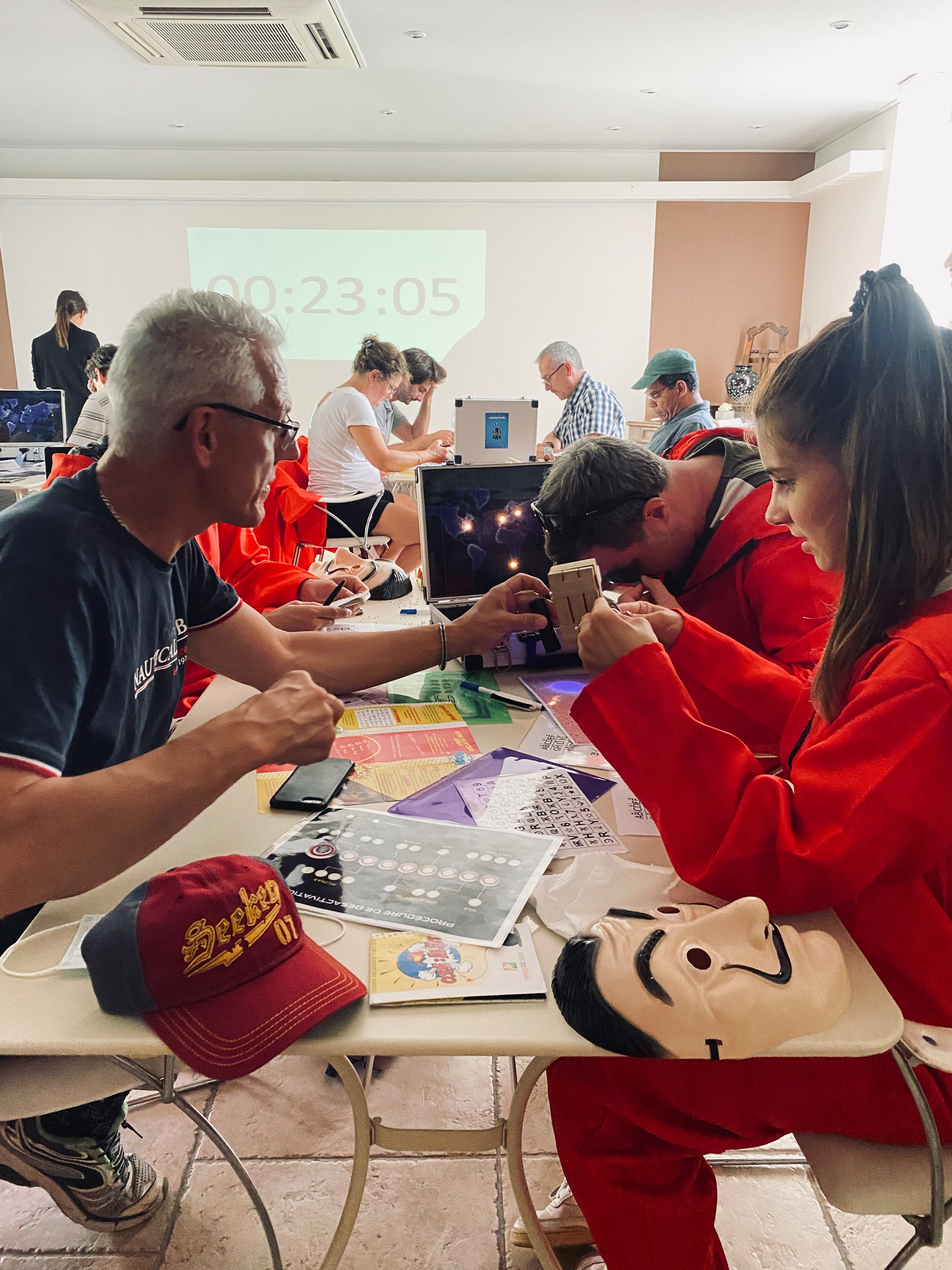
Timed negotiation rounds (10–15 minutes each): participants practice opening lines, slowing techniques, and boundary statements, then rotate roles to understand what the other side hears.
Crisis-room tabletop with live injects: a facilitated decision cell receives updates every 3–5 minutes (internal emails, screenshots, “media” calls) to test approvals, messaging, and escalation discipline.
Comms + HR alignment drill: teams draft a holding statement and an internal manager note in parallel, then reconcile contradictions (tone, responsibility, legal risk, empathy).
Art animations in Montréal
Professional role-players with corporate experience: not actors improvising wildly—trained professionals who can sustain realistic behaviours and adjust intensity based on the group’s maturity.
Video playback micro-review: optional recording of short segments for private coaching. We focus on concrete behaviours (pace, phrasing, escalation triggers), not performance critique.
Innovative animations in Montréal
Working lunch designed for debrief quality: we plan food and timing so leadership stays in the room and the debrief remains structured (no long offsite breaks that break momentum). Montréal venues often have excellent catering—our job is to use it to protect the agenda.
Gourmand animations in Montréal
Hybrid pressure test: simulate a negotiation where key decision-makers are remote, reflecting Montréal’s hybrid reality. We test handoffs, documentation, and what happens when the “right approver” is unavailable.
Dark social scenario: inject private group screenshots and anonymous posts to test how quickly misinformation spreads and how leadership calibrates public vs. internal messaging.
Stakeholder map sprint: a 20-minute exercise where teams list who must be informed in Montréal first (union rep, building security, landlord, key client, regulator, board), with timing and owner for each.
Whatever the mix, the key is brand alignment: a bank, a pharma company, and a tech scale-up do not negotiate the same way. We adapt intensity, vocabulary, and decision rights to your culture so the workshop strengthens credibility instead of creating internal friction.
Where to host a crisis negotiation workshop in Montréal
The venue shapes behaviour. If the room feels like a classroom, leaders default to passive learning. If it feels like a crisis cell—proper sightlines, breakout zones, controlled noise—participants behave more like they will on a real incident day. In Montréal, we also plan around logistics: downtown traffic, hybrid attendance, confidentiality, and the ability to isolate role-play from the rest of the site.
| Venue type | For which objective? | Main strengths | Possible constraints |
|---|---|---|---|
Private boardroom in your Montréal office | Test your real governance, tools, and escalation chain | Realistic environment, access to actual comms channels, easier to involve senior leaders between meetings | Confidentiality is strong, but interruptions are common; may require dedicated rooms for role-play and observers |
Hotel meeting suite downtown Montréal | Run a clean simulation with strong facilitation control | Neutral ground, strong AV options, easy access for multi-site teams, catering supports tight agenda | Must manage privacy (hallway noise, adjacent rooms); ensure NDA-friendly signage and controlled entry |
Dedicated training center / offsite venue on the island | Build shared muscle memory across functions in one day | Multiple breakout rooms, controlled flow, good for 20–60 participants and parallel scenarios | Transport and parking considerations; requires clear timing to respect operational coverage back at sites |
We strongly recommend a short site visit or virtual walkthrough before confirming: we check acoustics, circulation, privacy, Wi‑Fi stability, and where we can run sensitive role-play without exposing participants to the public or other groups.
What a Crisis Negotiation Workshop costs in Montréal
Pricing for a Crisis Negotiation Workshop in Montréal depends less on “duration” than on scenario complexity, number of role-players, and the level of pre-work required to make it relevant and HR-safe. A well-designed workshop is an operational product: discovery, scenario writing, facilitation, and actionable outputs.
To help you plan, most corporate formats in Montréal fall into these working ranges: $6,000–$12,000 for a half-day leadership simulation (12–20 participants) with one facilitator; $12,000–$25,000 for a full-day cross-functional workshop (20–40 participants) with role-play, injects, and a structured debrief; and $25,000–$45,000+ for multi-scenario programs with multiple role-players, bilingual delivery, and post-event documentation/training assets. Venue, catering, and AV are separate line items if offsite.
Participant volume and profile: executive-only sessions are faster to align but require higher facilitation seniority; mixed cohorts need more structure and psychological safety planning.
Scenario design depth: generic scenarios cost less; scenarios built from your real constraints (union context, multi-site operations, brand tone) require interviews and validation.
Role-player staffing: adding 1–3 professional role-players improves realism and learning speed; it also increases cost and coordination.
Bilingual delivery (EN/FR): simultaneous facilitation or bilingual materials can add coordination time, especially for comms templates.
Deliverables: a concise action memo is standard; a full crisis playbook refresh, template rewrite, or manager toolkit adds post-production time.
Confidentiality and compliance needs: NDAs, restricted attendee lists, secure document handling, and legal review cycles can affect timeline and management effort.
ROI is usually visible in avoided costs: fewer escalations, faster containment, cleaner internal messaging, reduced leadership drift, and less downtime. For many Montréal organizations, one avoided incident of miscommunication or delayed escalation justifies the investment.
Why choose an event agency in Montréal for crisis workshops
In crisis simulation work, local execution matters. An agency established in Montréal understands venue realities, bilingual stakeholder dynamics, and the practical ways corporate teams here coordinate across offices and sites. It also means faster onsite troubleshooting: last-minute room changes, AV constraints, participant confidentiality needs, and leadership schedule shifts are common—especially when an executive gets pulled into real operational issues on the same day.
At INNOV'events, we operate as an extension of your HR and communications governance. We bring the facilitation structure, role-play resources, and event logistics discipline needed to run a high-pressure session without reputational risk. When you need broader support around the workshop (venue sourcing, attendee management, production), our team functions as your event agency in Montréal with clear accountability and a single point of contact.
- Local network of vetted facilitators and role-players: professionals who can deliver realism while respecting corporate boundaries and participant wellbeing.
- Venue and logistics control: we know what works downtown vs. other areas, and we plan for traffic, access, privacy, and hybrid connectivity.
- Language and cultural fluency: smoother coordination between HR, comms, and leadership when terminology, tone, and escalation expectations differ across teams.
- Onsite risk management: clear ground rules, opt-out protocol, confidentiality handling, and structured debrief to prevent misinterpretation or internal fallout.
ROI is usually visible in avoided costs: fewer escalations, faster containment, cleaner internal messaging, reduced leadership drift, and less downtime. For many Montréal organizations, one avoided incident of miscommunication or delayed escalation justifies the investment.



Examples of crisis-ready workshop outcomes in Montréal organizations
Our work rarely looks identical twice because the risk landscape differs by sector. In Montréal, we frequently see organizations needing tighter coordination between front-line operations and head office messaging. For example, in a retail/service context, a customer confrontation can go public within minutes; we design scenarios where store staff escalate to the crisis cell, comms drafts a holding line, and leadership decides what authority the site has for immediate action.
In corporate environments, we often encounter negotiation failures caused by unclear authority: an executive offers concessions to “calm things down,” HR later discovers policy conflict, and comms is left to reconcile inconsistent narratives. In workshop design, we create decision gates that force leaders to clarify what they can promise, what must be investigated, and what must be escalated to legal/security.
We also run scenarios where the crisis is not dramatic but costly: a supplier dispute becomes a delivery stoppage; a cyber-related extortion email triggers leadership panic; an employee posts confidential information; or a misinterpreted internal message creates internal backlash. The practical deliverable is always the same: documented changes to escalation trees, message templates, meeting cadence, and decision ownership—so the next incident is handled with less improvisation.
Common mistakes in Montréal crisis simulations and how we prevent them
Making it too theatrical: participants disengage if the scenario feels unrealistic. We calibrate intensity to your sector and maturity, using role-players who understand corporate limits.
Skipping HR and legal alignment: workshops can create internal risk if boundaries aren’t set. We define what is and isn’t simulated, confirm language guardrails, and set confidentiality rules upfront.
No clear roles in the room: when everyone speaks, nothing gets decided. We assign roles (incident lead, comms, HR, operations, scribe) and enforce a decision cadence.
Debriefs that turn into opinions: people leave with “good discussion” but no changes. We run structured debriefs tied to behaviours and decisions, then translate them into a prioritized action plan.
Overloading the agenda: too many scenarios reduces learning. We prefer fewer scenarios with deeper repetition of key behaviours, especially for executive groups.
Ignoring bilingual realities: if the organization operates in two languages, messaging and approvals must be tested in both. We plan for that rather than treating translation as an afterthought.
Our role is to protect you from these risks while keeping the session demanding. Executives should feel the pressure of the moment, but you should also feel in control of the process, the optics, and the outcomes.
Why Montréal clients repeat crisis workshops with INNOV'events
Organizations come back when the workshop produces operational change—not just a strong day in the room. In Montréal, repeat engagements are usually driven by leadership turnover, new sites, updated comms governance, or a real incident that revealed a gap.
Year-over-year refresh cycles: many clients book an annual or semi-annual exercise to onboard new leaders and re-test templates and escalation chains.
Multi-cohort rollout: after an executive session, we often deliver a second wave for HR business partners, site managers, or customer-facing leaders, keeping language and governance consistent.
Measured improvements: clients track faster escalation decisions, clearer ownership, fewer contradictory messages, and improved confidence in difficult conversations.

Fidelity is proof of quality in this field because it means the organization trusted us in a sensitive setting—and saw enough value to make readiness a habit.
Our delivery process for Montréal crisis negotiation workshops
👉 Discovery call and risk framing in Montréal
We start with a 30–60 minute working call with an executive sponsor, HR, and communications. We identify the top 2–3 scenarios worth rehearsing, your “non-negotiables” (legal, policy, brand), and the participant mix. If confidentiality is high, we define document handling and who can see what.
👉 Scenario design and governance alignment
We run targeted interviews (usually 2–6 stakeholders) to capture real constraints: approval chains, union context, escalation to security/police, media sensitivity, and operational dependencies. We then produce a scenario brief with timed injects, decision gates, and role assignments for validation by HR/comms leadership.
👉 Logistics, room architecture, and safety protocol
We confirm venue setup (crisis cell + breakouts), AV needs, timing, and participant communications. We establish ground rules, an opt-out protocol, and a clear separation between role-play behaviours and real-life performance evaluation—critical for psychological safety and HR integrity.
👉 Facilitation, role-play, and live inject management
On the day, facilitators run the timeline, control intensity, and ensure decisions are documented. We keep executives focused on choices, language, and authority boundaries—preventing drift into endless debate. Role-players adapt based on the group’s responses to keep learning high and risk low.
👉 Debrief and actionable outputs within 5–10 business days
We deliver a structured debrief: what worked, where escalation broke down, which messages created risk, and what governance needs adjustment. Depending on scope, deliverables can include updated escalation trees, message templates, and a prioritized action plan with owners and timeframes.
FAQ sur l'organisation Crisis Negotiation Workshop à Montréal
How long is a crisis negotiation workshop in Montréal?
Most formats are 3.5–4 hours (half-day) for executive teams or 6–7 hours (full-day) for cross-functional groups. If you want role-play plus a full crisis-room tabletop and a deep debrief, plan a full day.
How many participants per workshop in Montréal is realistic?
The sweet spot is 12–24 participants for high-quality participation. You can go up to 40–60 with breakout teams and additional facilitators, but the format must be designed for parallel scenarios and structured reporting.
Can you run a bilingual workshop in Montréal (EN/FR)?
Yes. We can facilitate in English with French materials, French with English materials, or fully bilingual delivery. For comms exercises, we recommend drafting in the primary operating language first, then validating the second language to avoid contradictory tone or legal meaning.
Is role-play safe for HR and psychological safety in Montréal teams?
It can be, if designed properly. We set ground rules, intensity limits, and an opt-out protocol. We avoid scenarios that target personal traits, and we keep feedback behaviour-based (language, pacing, escalation choices) rather than evaluative of individuals.
What do we receive after the Crisis Negotiation Workshop in Montréal?
At minimum: a structured debrief and an action list. Most clients choose a short deliverable pack: 3–8 pages summarizing decision gaps, recommended governance changes, and improved templates (holding statement, internal manager note, escalation tree) within 5–10 business days.
Plan your Crisis Negotiation Workshop in Montréal with confidence
If your leadership team wants a negotiation simulation that is realistic, HR-safe, and operationally useful, we can help you scope it quickly. Share your sector, participant profiles, and the top two risks you want to rehearse, and we’ll propose a concrete agenda, facilitation plan, and budget ranges aligned with Montréal realities.
For best availability—especially for bilingual facilitation and role-players—plan 4 to 8 weeks ahead. Contact INNOV'events to schedule a discovery call and receive a clear proposal you can compare line by line.
INNOV'events Montréal Agency
Thierry GRAMMER is the manager of the INNOV'events Montréal office. Reach out directly by email at canada@innov-events.ca or via the contact form.
Contact the Montréal agencyToutes nos prestations & animations Montréal, Quebec
Découvrez nos prestations événementielles
- Employee Party in Montréal
- Corporate Christmas Party in Montréal
- Networking Cocktail Event in Montréal
- Shopping Mall Activation in Montréal
- Grand Opening Event in Montréal
- Product Launch Event in Montréal
- Open House Event in Montréal
- Field Brand Activation in Montréal
- Event Catering Service in Montréal
Découvrez nos animations événementielles disponibles au Quebec
- Event Hostess in Montréal
- Escape Game in Montréal
- MasterChef-Style Cooking Workshop in Montréal
- Corporate Magician in Montréal
- Tent Rental in Montréal
- Color Analysis Workshop in Montréal
- Inflatable Games in Montréal
- Valet Service in Montréal
- Soccer Simulator in Montréal
- LED Furniture Rental in Montréal
- LED Branding Activation in Montréal
- Immersive Culinary Experience in Montréal
- Light Painting Activity in Montréal
- Immersive Mystery Night in Montréal
- Promotional Contest in Montréal
- Promotional Materials (POS) in Montréal
- Virtual Reality Experience in Montréal
- Molecular Gastronomy Workshop in Montréal
- Halloween Event in Montréal
- Fireworks Show in Montréal
- Sports Challenge – Giant Games in Montréal
- Professional Event Host in Montréal
- Photo Booth Animation in Montréal
- Santa Claus Appearance in Montréal
- Kids Entertainment in Montréal
- Guided Tour in Montréal
- Urban Rally in Montréal
- Ball Pit Activity in Montréal
- Flight Simulator in Montréal
- Food Truck Rental in Montréal
- World Record Attempt in Montréal
- Surf Simulator in Montréal
- Soccer Simulator in Montréal
- Wine Casino in Montréal
- Makeover Workshop in Montréal
- Perfume Creation Workshop in Montréal
- Acting Workshop in Montréal
- CSR Activities in Montréal
- Archery Activity in Montréal
- Event Security Guard in Montréal
- Wine Tasting Workshop in Montréal
- Mime Performance in Montréal
- TV Game Show Animation in Montréal
- Funfair Event in Montréal
- Crisis Management Workshop in Montréal
- Crisis Negotiation Workshop in Montréal
- Arcade Games in Montréal
- Indoor Skydiving Simulator in Montréal
- Ski Simulator in Montréal
- Racetrack Driving Experience in Montréal
- Introductory Flight Experience in Montréal
- Tasting Experience in Montréal
- Build Your Own Foosball Workshop in Montréal
- 2CV Rally in Montréal
- LEGO Challenge in Montréal
- Casino Night in Montréal
- Interpreter / Translator in Montréal
- Promotional Merchandise in Montréal
- Shuttle / Transportation Service in Montréal