
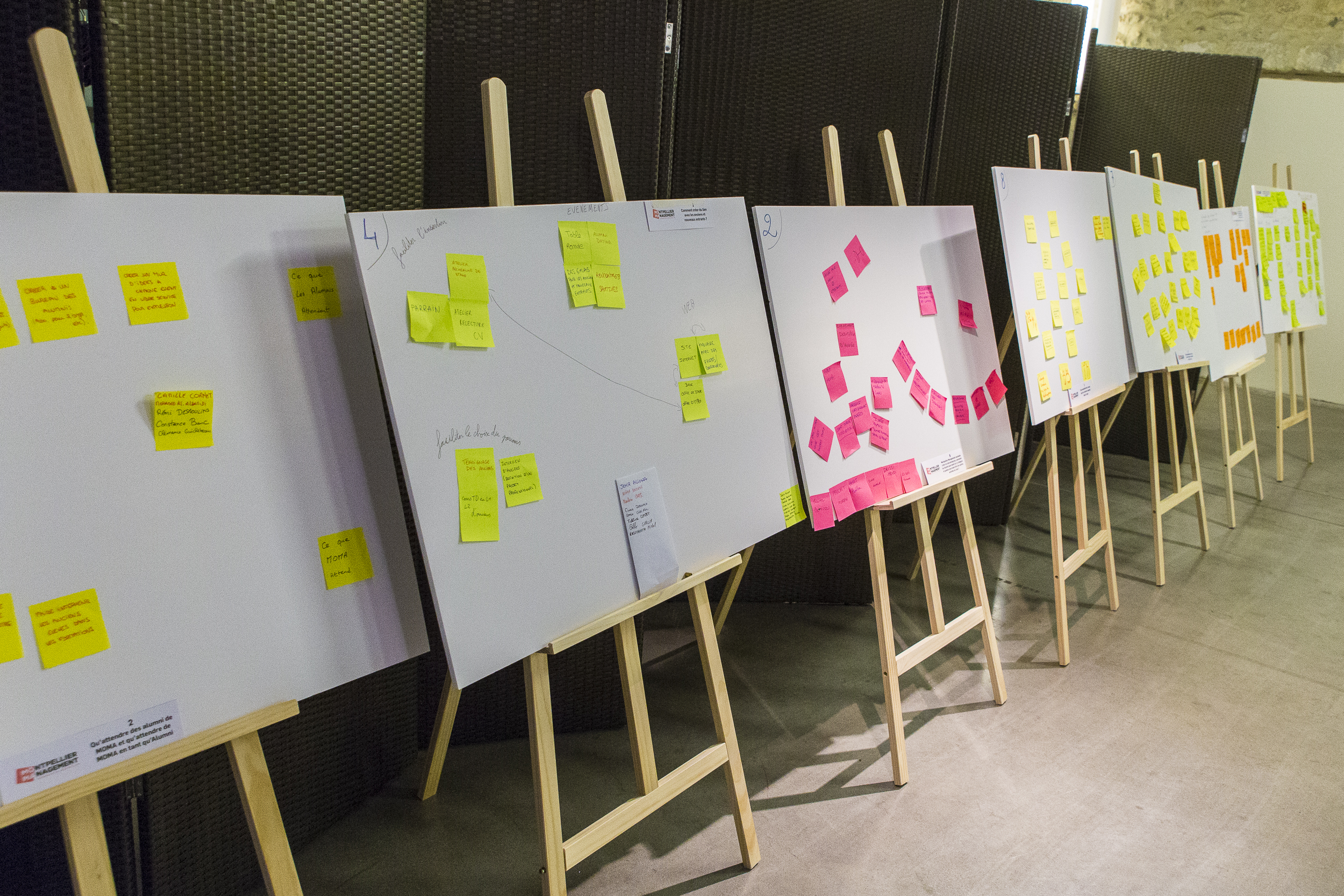
Crisis Management Workshop in Montréal that prepares leaders for the first 60 minutes
INNOV'events designs and delivers Crisis Management Workshop formats in Montréal for executives, HR, and communication teams—typically 12 to 80 participants, in one room or multi-room. We handle scenario design, facilitation, role distribution, timing, injects, and a structured debrief that turns stress into a workable playbook.
Whether your risk is operational, reputational, cyber, or people-related, we build a workshop that matches your organization’s real decision paths and constraints (approval loops, union context, media exposure, regulatory requirements).
Sommaire
In a crisis, “entertainment” is not about fun—it’s about engagement under pressure. A well-run simulation keeps leaders present, forces decision-making with incomplete data, and reveals bottlenecks that no slide deck will ever surface.
Montréal organizations expect realism and pace: bilingual dynamics, fast escalation, and credible external pressure (media, clients, regulators). They also expect the exercise to be respectful of time—tight agenda, clear outcomes, and actionable follow-ups.
We are a Montréal-based team used to high-stakes corporate timelines. Our facilitators run the room like an incident cell: clear roles, disciplined timekeeping, documented decisions, and a debrief built for executives.
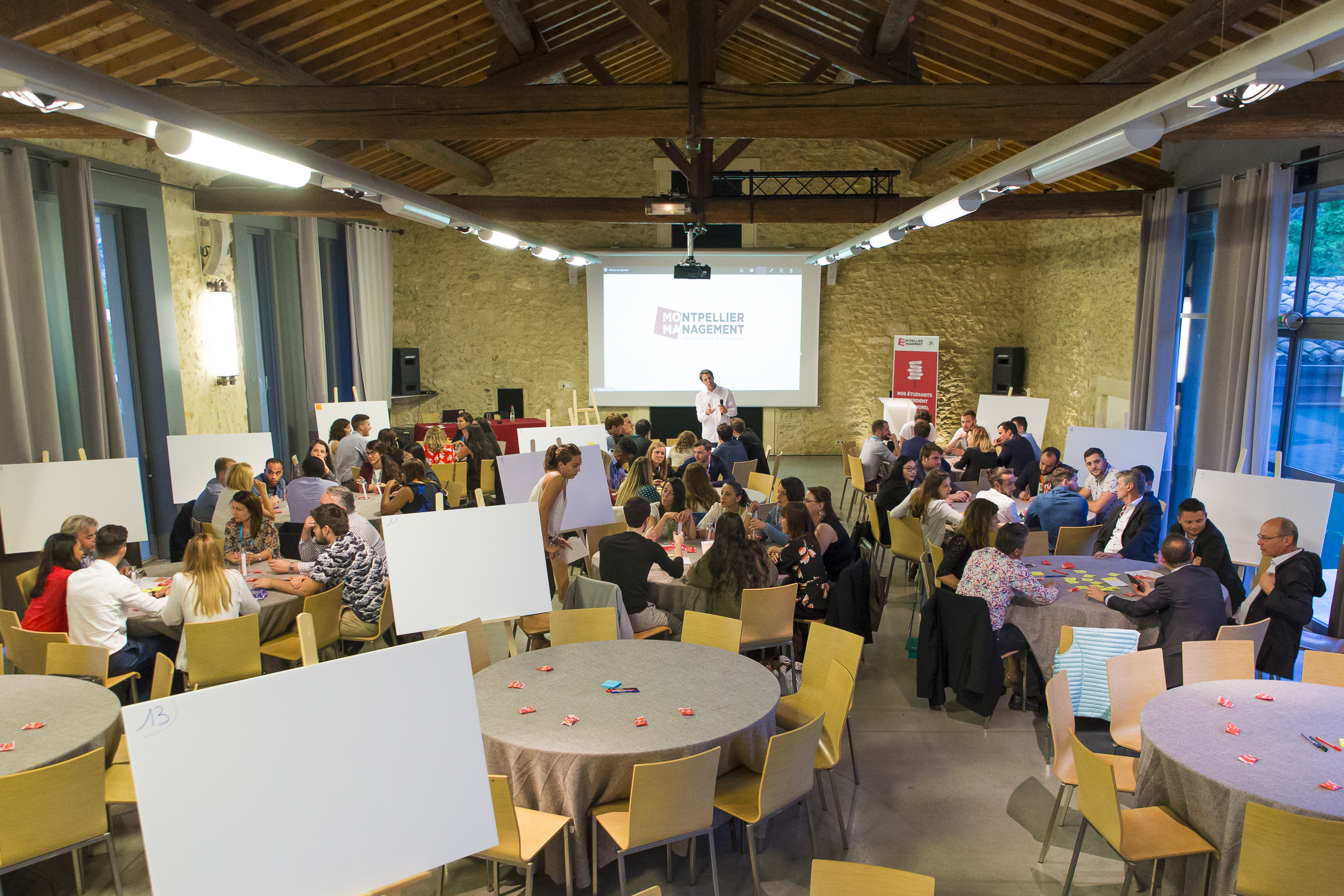
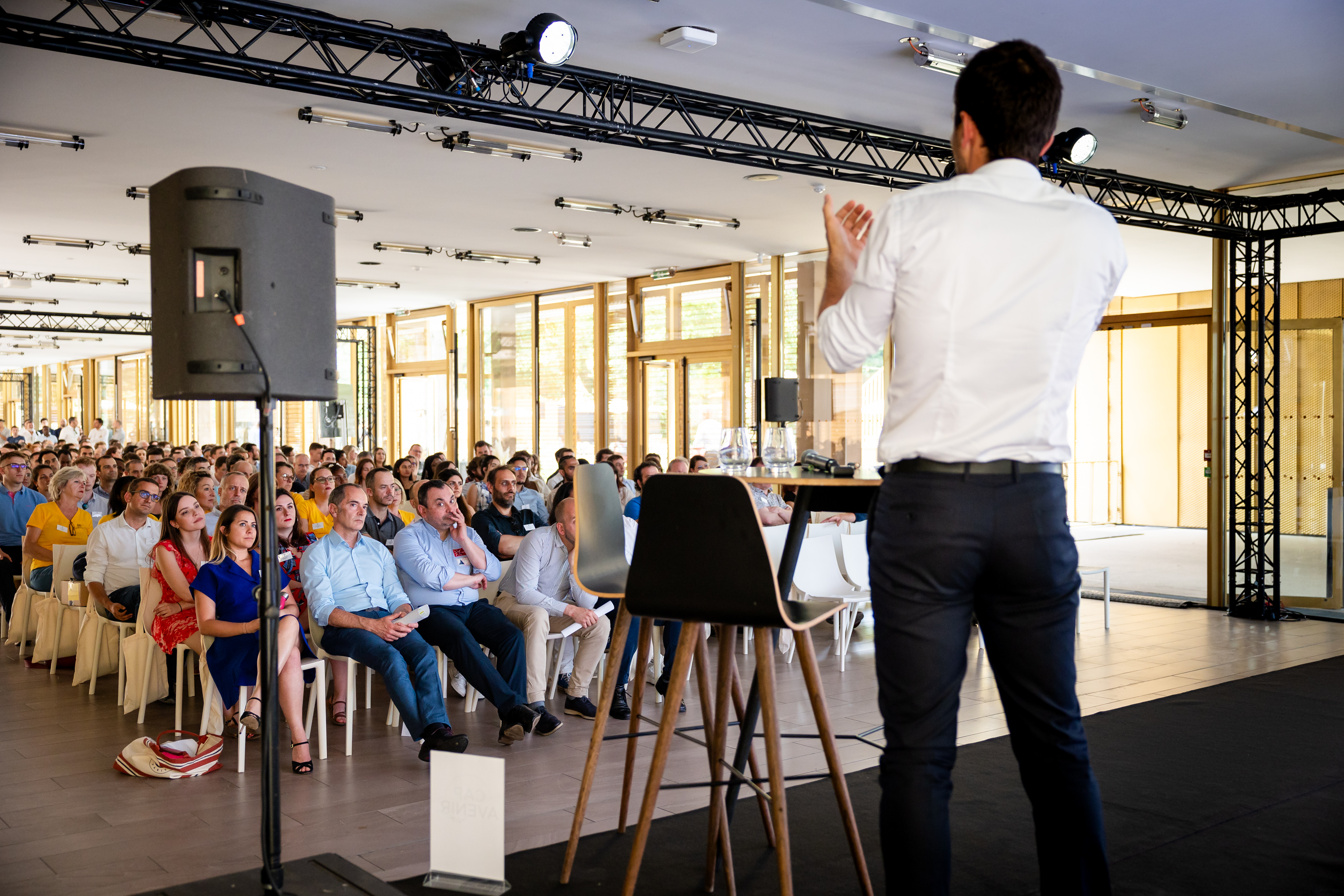
What INNOV'events delivers in Montréal, in numbers
200+ corporate workshops and executive sessions delivered across Canada (including crisis, leadership, change, and communication formats).
48 hours average turnaround to provide a first scope and budget range after a structured discovery call.
2 facilitators minimum for a realistic crisis cell (lead facilitator + control/injects), scalable up to 6 for multi-room or multi-stakeholder simulations.
0 “black box” deliverables: every project includes a written run-of-show, decision log template, and an executive debrief summary you can reuse internally.
Who we support around Montréal year after year
In Montréal, many organizations don’t want a one-off workshop—they want a repeatable capability. We regularly support teams that revisit their readiness every year (or after a major change like a merger, leadership turnover, a new product launch, or a shift in regulatory exposure).
You mentioned sharing company names as references; to keep this page accurate and compliant, we can integrate them once you confirm the exact spelling and what we are authorized to say (e.g., “delivered an executive simulation”, “supported internal comms drills”, “ran a multi-site exercise”).
What we can state today: our local work typically involves head offices downtown, operational sites in the East and West of the island, and hybrid teams spread between Montréal, Laval, the South Shore, and sometimes Toronto or the U.S. The workshop is built to reflect that reality: decision-making happens in one room, but consequences and communications travel across multiple locations.
 Besoin d’un devis rapide ?
Nous vous envoyons une première proposition sous 24h.
Why schedule a crisis management workshop in Montréal now
Most organizations don’t fail during a crisis because they lack a plan—they fail because the plan isn’t usable at speed. A Crisis Management Workshop in Montréal is a controlled way to test leadership behaviors, approval chains, and communication reflexes before the real pressure hits.
For executives, HR, and communications, the goal is not to “pass” an exercise. The goal is to surface friction points early: who decides what, with which information, in what time frame—and how the story is managed internally and externally.
Executive decision clarity: you validate who is accountable (not just responsible) for shutdowns, recalls, public statements, data breach disclosure, or workforce measures.
HR readiness for people-risk: managing employee safety, workplace violence prevention, psychological health, union communication, accommodations, and return-to-work decisions when facts are still evolving.
Communications under constraints: drafting holding statements, bilingual messaging, CEO spokesperson alignment, internal Q&A, and social monitoring—while legal and operations are still assessing impact.
Faster escalation and triage: establishing what triggers your crisis cell, how you separate “incident management” from “business continuity”, and when to activate external partners (law, PR, cybersecurity).
Reputation protection with proof: you practice documentation (decision logs, timestamps, approvals), which becomes critical when stakeholders ask, “What did you know and when?”
Cross-functional cohesion: the workshop forces real collaboration between operations, IT, finance, HR, legal, and comms—especially where priorities conflict.
Montréal is a dense market: media cycles move fast, word-of-mouth is tight, and bilingual communication is often non-negotiable. Organizations that train together reduce hesitation—and hesitation is usually what makes a local incident become a public crisis.
What Montréal leaders expect from a crisis exercise
In Montréal, we consistently see three expectations from demanding directors: realism, operational discipline, and measurable outputs.
Realism means the scenario reflects your world. For example: an employee video posted from a warehouse that goes viral; a service outage during a high-traffic moment; a product issue that triggers client escalations; a ransomware note while finance is closing month-end; or a sensitive HR complaint becoming public before facts are confirmed.
Operational discipline means the exercise runs like an actual incident cell. We set roles (Incident Commander, Ops lead, HR lead, Comms lead, Legal, IT/Cyber, Business continuity), define how decisions are recorded, and keep the tempo. Teams in Montréal appreciate a facilitator who can cut through debate, manage dominant voices, and protect psychological safety without “softening” the pressure.
Measurable outputs mean you leave with specific actions. Not “we should communicate better”, but “update the escalation matrix; pre-approve bilingual holding statements for top 3 risks; define who can authorize overtime and alternate sites; create a single internal channel for updates; set a 30-minute cadence for executive briefings.” The workshop must translate into a readiness roadmap that HR and comms can actually run with.
Which workshop formats work best in Montréal for crisis management
Engagement in a crisis workshop comes from credible pressure, clear roles, and a scenario that feels uncomfortably close to reality. We use “animation” in the facilitation sense: mechanisms that create momentum and reveal behavior, without turning the session into a show.
Interactive animations in Montréal
Executive tabletop with timed injects: the classic format, but run with discipline—decisions every 10–15 minutes, documented and challenged. Ideal for leadership teams that want a realistic test in 90 to 180 minutes.
Role-based crisis cell: participants are assigned fixed roles (Incident Commander, HR, Comms, Ops, IT, Legal). We observe handoffs, approval loops, and escalation. Strong for organizations that have a plan but haven’t practiced coordination.
Media pressure drill: we simulate journalist calls, stakeholder emails, and social posts. The comms lead drafts statements while executives approve under time pressure. This is where misalignment shows up fast: tone, transparency, and timing.
Employee communications sprint: HR and comms co-build internal messages, manager talking points, and FAQs. We test the risk of saying too little (rumors) vs too much (legal exposure).
Art animations in Montréal
Professional role-play for stakeholder interactions: instead of “actors for entertainment”, we use role-play to replicate a board member, key client, union representative, or regulator call. It’s uncomfortable in a productive way and quickly improves spokesperson discipline.
Voice and presence coaching for executives: short, targeted coaching before or after the simulation to reduce defensive tone, improve clarity, and maintain authority during tough questions—especially useful when you have bilingual spokesperson requirements in Montréal.
Innovative animations in Montréal
Working lunch with structured prompts: rather than a break that kills momentum, we use lunch to run short decision rounds (e.g., “approve statement v1”, “employee safety update”, “client retention message”). Catering is designed for speed and minimal mess—important when you’re using printed injects and laptops.
Stakeholder map wall: a practical “hands-on” station where participants build a stakeholder priority map while coffee is served. It improves focus and prevents comms from being an afterthought.
Gourmand animations in Montréal
Cyber + reputational blended scenario: realistic because incidents rarely stay in one box. Example: a system outage triggers operational delays, then a leaked internal email creates reputational damage. We force teams to manage both tracks.
Multi-room simulation: one room acts as the crisis cell, another as “external world” (media, customers, internal employees). This exposes the gap between what leadership thinks is being communicated and what people actually receive.
Decision latency measurement: we time key approvals (first internal message, first external holding statement, escalation to legal/cyber, decision to shut down operations). This gives you numbers to improve, not impressions.
The right format depends on your brand posture and risk profile. A public-facing consumer brand in Montréal needs sharper media and social response; a B2B services firm may need client-communication precision; a manufacturing site may prioritize safety and operational continuity. We align the workshop with your image standards, legal realities, and leadership style—so the exercise strengthens trust rather than creating internal friction.
Where to host a crisis workshop in Montréal for confidentiality and focus
The venue choice affects how seriously participants take the exercise. For crisis simulations, we prioritize confidentiality, controllable acoustics, stable connectivity, and the ability to run breakouts without losing tempo.
| Venue type | For which objective? | Main strengths | Possible constraints |
|---|---|---|---|
Private meeting rooms in a downtown business hotel (Montréal) | Executive tabletop and media drill with clean logistics | Discrete check-in, reliable AV, catering on-site, easy access for HQ teams | Cost per day can be higher; need to book early for peak periods |
Client office boardroom + adjacent breakout rooms | Test real internal workflows and on-site decision paths | Highest realism, access to internal tools, easier to involve key leaders briefly | Confidentiality management, interruptions, room availability, IT policies |
Training center in Montréal with modular rooms | Multi-room simulation and cross-functional training | Flexible layouts, separate “crisis cell” and “external world”, good for 25–80 participants | Less executive feel if not curated; requires stricter run-of-show to maintain intensity |
We strongly recommend a short site visit (or at least a technical walkthrough) before the session. Small details—door proximity, sound bleed, Wi‑Fi stability, where injects are printed, where observers sit—make the difference between a smooth simulation and a workshop that loses credibility.
How to budget a crisis management workshop in Montréal
Pricing depends on the level of realism, the number of roles, and how much customization is required. A crisis simulation is closer to a facilitated operational exercise than a standard training session: you are paying for scenario design, control, facilitation, and the debrief outputs that drive change.
In Montréal, we typically structure budgets around a clear scope: duration (2 hours, half-day, or full day), number of participants (12–80), and whether you want single-room tabletop or a multi-room simulation.
Scenario design depth: generic scenario adaptation vs fully custom scenario based on your actual risk register, business lines, and escalation matrix.
Bilingual delivery: English-only, French-only, or bilingual facilitation and materials (often required in Montréal organizations).
Number of facilitators and control staff: minimum two for a credible tempo; more for parallel inject streams, media role-play, or multiple teams.
Deliverables: decision log, updated contact trees, holding statement templates, internal comms packs, executive summary, and action plan with owners.
Venue and technical needs: room rental, AV, printing, secure Wi‑Fi, and any hybrid setup.
Confidentiality and sensitivity level: if legal/cyber details are involved, we adjust processes for secure document handling and limited distribution.
From an ROI perspective, the workshop pays for itself when it reduces decision latency, prevents contradictory messaging, and avoids one misstep that escalates reputational damage. For executives, the value is measurable: faster approvals, clearer accountability, and fewer “surprises” when the pressure is real.
Why choose an event agency in Montréal for crisis workshops
A crisis workshop is not just content—it’s execution. Having a team on the ground in Montréal reduces operational risk: quicker venue scouting, realistic stakeholder context, and facilitators who understand local media dynamics and bilingual expectations.
As an event agency in Montréal, we also manage the unglamorous details that make executives trust the session: room flow, privacy, timing discipline, and the calm handling of last-minute changes (participant swaps, schedule shifts, remote joiners, CEO arrival delays).
When leadership teams are comparing agencies, the difference is simple: do you get a “workshop” that feels like training, or an exercise that feels like operations? Our local delivery is built to feel operational—because that’s what real crises demand.
- Faster logistics and less friction: local vendors, shorter lead times, and immediate troubleshooting on-site.
- Context-aware facilitation: sensitivity to Montréal’s bilingual environment, stakeholder ecosystem, and corporate culture.
- Better risk control: venue confidentiality checks, realistic pacing, and reliable technical setup.
- Continuity: we can run yearly cycles (baseline exercise, then targeted drills) with consistent methodology and measurable progress.
From an ROI perspective, the workshop pays for itself when it reduces decision latency, prevents contradictory messaging, and avoids one misstep that escalates reputational damage. For executives, the value is measurable: faster approvals, clearer accountability, and fewer “surprises” when the pressure is real.





What we’ve delivered in Montréal: examples of crisis workshop outcomes
Our Crisis Management Workshop projects in Montréal vary widely, because the “crisis” depends on your operating reality. What stays consistent is the outcome: leaders leave with clearer roles, faster approvals, and communication tools that can be used tomorrow morning.
Example 1: Operational incident with public visibility. A service disruption during a high-demand period created client pressure, internal stress, and media interest. During the exercise, we identified that comms waited for perfect operational data before speaking—resulting in silence for too long. The fix was practical: pre-approved bilingual holding statements, a 30-minute update cadence, and a decision rule for what can be said with partial information.
Example 2: HR-sensitive allegation escalating online. A scenario where an employee claim spread on social media before internal investigation was complete. The workshop exposed a common gap: HR focusing on privacy while comms needed to protect brand trust. We built an internal Q&A for managers, a spokesperson stance that respected confidentiality, and a workflow that aligned HR, legal, and comms approvals within a defined time window.
Example 3: Cyber event with business continuity impact. A simulated ransomware situation forced IT, finance, and leadership to decide on shutdowns, customer notifications, and external partner activation. The debrief surfaced missing contact trees and unclear authority for engaging external cyber counsel. The result: updated escalation triggers, vendor call lists, and a first-hour checklist that executives could actually follow.
These are the kinds of deliverables that matter to directors: concrete changes to how the organization will behave under pressure, not a binder that stays on a shelf.
Common mistakes we prevent during crisis simulations in Montréal
Turning the workshop into a discussion panel: without timed injects and forced decisions, teams stay theoretical and avoid accountability.
No decision log: leaders make choices but don’t record rationale, timestamps, or owners—exactly what stakeholders will request later.
Comms isolated from operations: statements get drafted without operational reality, or operations refuses to provide updates—creating contradictions.
HR brought in too late: employee safety, internal rumor control, union considerations, and manager messaging are treated as secondary, when they often drive reputation.
Unclear authority: nobody knows who can approve shutdowns, external counsel, regulator notification, or public statements, so everything escalates to the CEO and stalls.
Hybrid participants sidelined: remote execs listen but don’t act, which breaks realism and hides decision bottlenecks.
Debrief without a plan: great insights disappear because there’s no owner, timeline, or governance to implement fixes.
Our role is to prevent these risks by structuring the exercise like a real incident: roles, tempo, documented decisions, and a debrief that converts pressure into operational improvements.
Why Montréal clients renew with INNOV'events for crisis readiness
Repeat engagements are common in crisis readiness because organizations evolve: new leaders, new risks, new systems, and new stakeholder expectations. Clients come back when the exercise feels credible, the facilitation is firm but fair, and the outputs actually change how teams operate.
We build continuity by keeping a consistent methodology while refreshing scenarios. Many clients start with an executive tabletop, then run targeted drills (media, HR, cyber) and eventually a multi-room simulation involving managers.
Year-over-year cycles: many organizations schedule readiness sessions every 12 to 18 months, or immediately after a major incident or transformation.
Progress metrics: we commonly track time-to-first-internal-message, time-to-first-external-holding-statement, and escalation speed—then compare on the next exercise.
Operational adoption: clients often request the same decision log structure and run-of-show format across multiple business units for consistency.

Loyalty is not about liking an agency; it’s about trusting the process under pressure. In Montréal, that trust is earned through disciplined facilitation, confidentiality, and deliverables that stand up to executive scrutiny.
Our Montréal delivery process for a Crisis Management Workshop
👉 Discovery and scope definition (Montréal)
We run a structured call with your executive sponsor, HR, and communications. We confirm objectives (decision speed, comms alignment, HR readiness, governance), constraints (bilingual needs, confidentiality, union environment, regulatory timelines), and participants. You receive a clear scope document: format, duration, roles, and what will be produced.
👉 Scenario build and inject design for your reality
We design a scenario anchored in your actual operating context (without exposing sensitive data). We create timed injects: emails, call notes, screenshots, media requests, employee messages, and stakeholder escalations. Each inject is linked to a decision objective—so the exercise cannot drift.
👉 Workshop logistics and room choreography in Montréal
We confirm venue, room layout, AV, and confidentiality measures. We assign roles, set ground rules, and define documentation (decision log, action tracker). If hybrid, we run a technical check and ensure remote participants have roles and speaking time.
👉 Live facilitation with control and time discipline
We facilitate the simulation in real time: inject delivery, timekeeping, decision forcing, and managing dynamics (dominant voices, silent stakeholders, conflict between functions). We keep the exercise realistic without humiliating participants—pressure, not theatre.
👉 Debrief, executive summary, and readiness roadmap
We debrief immediately and then deliver an executive summary: key decision points, what slowed down the team, communication gaps, and governance issues. We provide a prioritized action plan with owners and suggested timelines, so HR and comms can operationalize improvements quickly.
FAQ sur l'organisation Crisis Management Workshop à Montréal
How long is a Crisis Management Workshop in Montréal?
Most organizations choose 2–3 hours for an executive tabletop, half-day (3.5–4 hours) for deeper comms/HR work, or a full day (6–7 hours) for multi-room simulation plus detailed debrief.
How many participants should attend in Montréal?
For decision-making realism, 12–20 is ideal for a single crisis cell (execs + HR + comms + ops/IT/legal). For broader training, we scale to 25–80 with breakouts and additional facilitators.
Can you run a bilingual workshop in Montréal?
Yes. We can facilitate in English, French, or bilingual. Most Montréal organizations choose bilingual materials and at least one bilingual facilitator so spokesperson work and internal messaging reflect real conditions.
What deliverables do we get after the Montréal workshop?
You receive a run-of-show, a decision log template, and an executive debrief summary. Depending on scope, we also provide updated escalation triggers, a first-hour checklist, draft holding statements, internal manager talking points, and a prioritized action plan with owners.
How far in advance to book in Montréal?
For a standard tabletop, plan 2–4 weeks. For a fully custom scenario, multi-room setup, or peak calendar periods, plan 4–8 weeks to allow design, approvals, and a venue/technical walkthrough.
Request a Crisis Management Workshop quote in Montréal
If you’re comparing providers, we suggest starting with a 30-minute scoping call. We’ll confirm your top risks, participant mix, and the level of realism you need, then propose a clear format, timeline, and budget range.
Contact INNOV'events to schedule your Crisis Management Workshop in Montréal. The earlier we align on roles, approvals, and bilingual requirements, the more credible—and useful—the simulation will be for your executives, HR, and communication team.
INNOV'events Montréal Agency
Thierry GRAMMER is the manager of the INNOV'events Montréal office. Reach out directly by email at canada@innov-events.ca or via the contact form.
Contact the Montréal agencyToutes nos prestations & animations Montréal, Quebec
Découvrez nos prestations événementielles
- Employee Party in Montréal
- Corporate Christmas Party in Montréal
- Networking Cocktail Event in Montréal
- Shopping Mall Activation in Montréal
- Grand Opening Event in Montréal
- Product Launch Event in Montréal
- Open House Event in Montréal
- Field Brand Activation in Montréal
- Event Catering Service in Montréal
Découvrez nos animations événementielles disponibles au Quebec
- Event Hostess in Montréal
- Escape Game in Montréal
- MasterChef-Style Cooking Workshop in Montréal
- Corporate Magician in Montréal
- Tent Rental in Montréal
- Color Analysis Workshop in Montréal
- Inflatable Games in Montréal
- Valet Service in Montréal
- Soccer Simulator in Montréal
- LED Furniture Rental in Montréal
- LED Branding Activation in Montréal
- Immersive Culinary Experience in Montréal
- Light Painting Activity in Montréal
- Immersive Mystery Night in Montréal
- Promotional Contest in Montréal
- Promotional Materials (POS) in Montréal
- Virtual Reality Experience in Montréal
- Molecular Gastronomy Workshop in Montréal
- Halloween Event in Montréal
- Fireworks Show in Montréal
- Sports Challenge – Giant Games in Montréal
- Professional Event Host in Montréal
- Photo Booth Animation in Montréal
- Santa Claus Appearance in Montréal
- Kids Entertainment in Montréal
- Guided Tour in Montréal
- Urban Rally in Montréal
- Ball Pit Activity in Montréal
- Flight Simulator in Montréal
- Food Truck Rental in Montréal
- World Record Attempt in Montréal
- Surf Simulator in Montréal
- Soccer Simulator in Montréal
- Wine Casino in Montréal
- Makeover Workshop in Montréal
- Perfume Creation Workshop in Montréal
- Acting Workshop in Montréal
- CSR Activities in Montréal
- Archery Activity in Montréal
- Event Security Guard in Montréal
- Wine Tasting Workshop in Montréal
- Mime Performance in Montréal
- TV Game Show Animation in Montréal
- Funfair Event in Montréal
- Crisis Management Workshop in Montréal
- Crisis Negotiation Workshop in Montréal
- Arcade Games in Montréal
- Indoor Skydiving Simulator in Montréal
- Ski Simulator in Montréal
- Racetrack Driving Experience in Montréal
- Introductory Flight Experience in Montréal
- Tasting Experience in Montréal
- Build Your Own Foosball Workshop in Montréal
- 2CV Rally in Montréal
- LEGO Challenge in Montréal
- Casino Night in Montréal
- Interpreter / Translator in Montréal
- Promotional Merchandise in Montréal
- Shuttle / Transportation Service in Montréal