
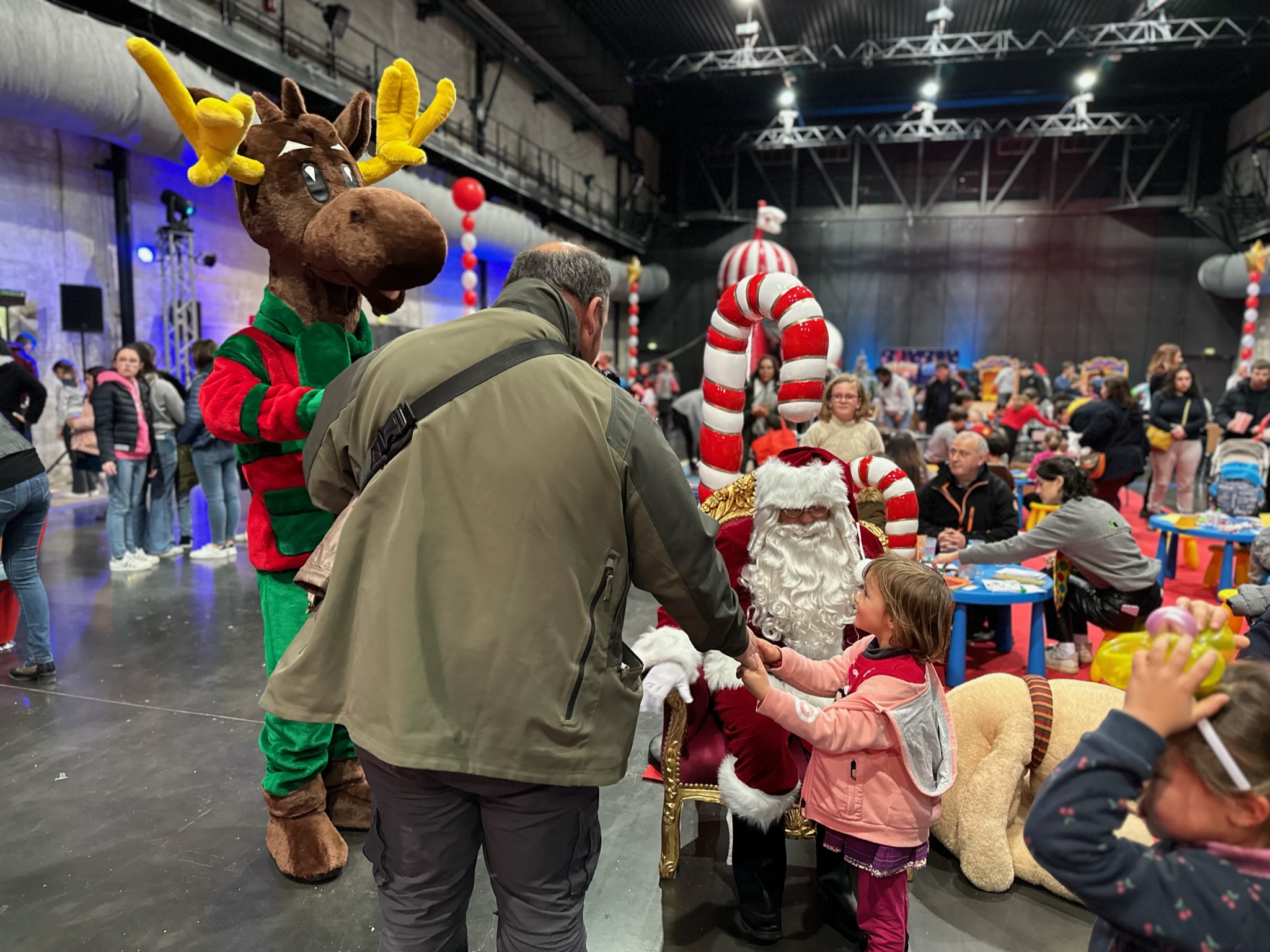
Kids Entertainment in Montréal that keeps families engaged—and your event under control
INNOV'events supports executives, HR and communications teams with Kids Entertainment solutions designed for corporate events in Montréal, from 30 to 3,000+ attendees. We manage programming, staffing, safety, timing, and vendor coordination so the family component strengthens your event instead of complicating it.
Whether it’s a holiday party, employee appreciation day, open house, brand activation, or a community day, we structure children’s zones that are operationally predictable, brand-aligned, and respectful of your venue constraints.
Sommaire
In a corporate event, the kids’ zone is not “extra.” It directly impacts attendance, dwell time, and the perception of your employer brand: if children are well supervised and stimulated, parents stay longer, participate more, and talk about the event positively—internally and on social channels.
Montréal organizations typically expect a balanced approach: fun that is visible and engaging, but never chaotic; bilingual facilitators; and a risk-managed setup that won’t stress security, building management, or your leadership team watching the floor.
As a Montréal-based team, we plan with real constraints in mind—loading docks, union rules in some venues, winter weather contingencies, sound limits, and last-minute attendance swings. Our role is to keep the kids’ experience high quality while protecting your timeline, reputation, and budget.

Key numbers that matter for Montréal event decision-makers
10+ years supporting corporate and institutional events with family programming in Québec and across Canada.
150+ vetted children’s entertainers and suppliers in our network (animators, face painters, balloon artists, circus performers, STEM facilitators, inflatable partners), with documented insurance and references.
98%+ on-time setup rate across our event operations, supported by standardized call sheets, load-in schedules, and backup staffing.
24–72h replacement capacity for most roles in Montréal (sick day coverage, weather issues, last-minute talent cancellation), depending on seasonality.
Montréal references and recurring collaborations
In Montréal, we regularly support organizations that need reliable execution—companies who cannot afford a public-facing misstep on event day. Many of our mandates come back year after year because the operational model is stable: predictable staffing, consistent quality control, and clear reporting after the event.
If you want, we can share relevant case summaries (without over-sharing confidential internal details): holiday parties with family zones, summer employee days, community activations, and HQ open houses. Our approach is always to align Kids Entertainment in Montréal with your brand tone, the venue’s rules, and your internal stakeholders (HR, comms, security, facilities).
We also work hand-in-hand with your preferred suppliers when required—caterers, A/V, security, photographers—so the children’s area integrates smoothly rather than competing for power, space, or attention.
 Besoin d’un devis rapide ?
Nous vous envoyons une première proposition sous 24h.
Why add kids programming to a Montréal corporate event?
Family-friendly events are rarely about “entertaining kids.” They’re a strategic lever for participation and retention. In Montréal, where commuting time, weather, and multi-cultural schedules can affect attendance, the family component often decides whether employees show up—and whether they stay for the full program.
Higher attendance and longer dwell time: when parents know children are busy and safe, they commit to the full schedule (welcome, speeches, meal, activities) instead of doing a quick pass-through.
Employer brand credibility: a well-run kids zone signals that the company plans carefully, respects work-life realities, and invests beyond “surface-level” engagement.
More inclusive employee experience: employees without local family support (or newcomers to Montréal) can participate without logistical stress.
Better control of noise and circulation: structured activity stations reduce free roaming, minimize risk near bar areas or stages, and protect your event flow.
Clearer messaging for comms teams: family-friendly content generates photo opportunities that feel authentic—craft stations, STEM corners, circus mini-shows—without forcing brand placement.
Montréal’s economic culture is pragmatic: leaders want meaningful engagement without operational surprises. When kids programming is designed professionally—with ratios, zones, schedules, and contingency plans—it becomes a measurable asset rather than an unpredictable add-on.
What Montréal organizations expect from kids entertainment suppliers
In Montréal, decision-makers typically have three non-negotiables: safety, predictability, and bilingual service. “Fun” is assumed; what differentiates an agency is how it runs on the floor when your VP walks through, when the fire marshal asks a question, or when the schedule shifts by 20 minutes.
On the ground, the constraints are very real. Venues often have strict rules about egress, ceiling height, rigging, and floor protection (especially for inflatables, crafts with paint, or anything that generates confetti/glitter). Downtown load-ins can be tight with limited freight elevator windows. In winter, you need a plan for coats/boots and wet floors near kids areas. In summer, outdoor setups require shade, hydration, and wind-safe anchoring.
For corporate events, we also see higher expectations around professionalism: staff who arrive in neutral branded attire, know how to interact with parents respectfully, can de-escalate when a child is overwhelmed, and keep the activity moving without creating a “school vibe.” HR and comms teams often ask for discreet brand integration (color palette, signage, themed stations) without turning children into marketing props. That balance is part of the craft.
Which kids entertainment options work best in Montréal corporate events?
Kids programming works when it creates visible engagement without disrupting adult networking. In Montréal, we often recommend a mix of “drop-in” stations (so families can come and go) plus a few timed highlights (short shows or challenges) to create structure and content for photos.
Interactive animations in Montréal
Activity passports: kids receive a small card and collect stamps at each station (craft, game, STEM). It reduces roaming and increases participation without needing constant announcements.
Mini-Olympics circuits: safe, low-impact challenges (ring toss, mini obstacle lanes, cooperative games). We design it to avoid bottlenecks and keep it inclusive for different abilities.
STEM discovery bars: supervised experiments (slime alternatives without mess, magnet stations, simple robotics demos). Great for brands in tech, engineering, or education—without forcing product placement.
Bilingual story corners: short readings in French and English on a rotating schedule; ideal for calmer moments and for venues with noise restrictions.
Art animations in Montréal
Face painting with hygiene protocol: professional-grade products, cleaning between children, and a queue system to keep lines controlled.
Balloon sculpting with controlled distribution: we predefine shapes to reduce wait time; we also manage latex-free options when required.
Close-up magic for families: roaming magician with short sets (3–5 minutes) to avoid crowds forming in circulation corridors.
Circus initiation: plate spinning, juggling scarves, balance basics—excellent for photos, but we plan floor protection and spacing.
Innovative animations in Montréal
Build-your-own snack stations: supervised toppings bar (cookies, fruit cups, popcorn). We coordinate allergen signage and separate utensils—important for corporate duty-of-care.
Chocolate or maple-themed workshops: Montréal guests respond well to local cues; these stations work best as timed workshops to manage sanitation and flow.
Mocktail kids bar: fun presentation, non-alcoholic, and visually aligned with adult cocktail service—helps families feel included without complicating service.
Gourmand animations in Montréal
Immersive digital coloring walls: kids color on paper, scan it, and see it animated on a screen. High engagement with a clean footprint if your venue supports the A/V needs.
AR scavenger hunts: a phone-based hunt designed to keep families in designated zones (useful in large venues). We adapt it to your brand values rather than pushing ads.
Quiet sensory stations: headphones, tactile objects, calm lighting—critical when you want a truly inclusive family event and a more professional atmosphere.
Photo booth with kid-friendly props: we set it away from entrances to avoid line spillover; instant prints can include subtle employer branding.
Whatever the activity mix, we validate alignment with your brand image and risk profile. A finance leader may want clean, controlled stations; a creative studio may accept higher-energy shows; a public institution may require stricter accessibility and privacy standards. The goal is coherence: the kids zone should feel like part of the event—not a separate festival dropped into your venue.
Where to host kids entertainment in Montréal without compromising flow
The venue dictates what is realistic: ceiling height, loading access, washroom proximity, acoustics, floor type, and security. For kids programming, we also consider sightlines for parents, stroller circulation, and the ability to create clear perimeters without making the space feel restrictive.
| Venue type | For which objective? | Main strengths | Possible constraints |
|---|---|---|---|
| Hotel ballroom in Montréal | Holiday party with a dedicated family zone and clear schedule | Controlled environment, strong logistics, easy power access, washrooms nearby | Sound limits, strict load-in windows, décor restrictions (tape, confetti, rigging) |
| Corporate office / HQ space (Montréal) | Employee open house, family day, brand culture showcase | High authenticity, easier brand integration, convenient for employees | Elevator capacity, security protocols, furniture protection, limited storage/back-of-house |
| Outdoor park or patio setting in Montréal | Summer family day with high attendance and multi-zone programming | Space for inflatables, sports circuits, food stations; natural “festival” feel | Weather plan required, permits/insurance, noise considerations, power/water access |
We strongly recommend a site visit (or at minimum a detailed technical walk-through) before confirming activities. The difference between a smooth event and a difficult one is often one detail: a narrow corridor that blocks stroller traffic, a single outlet that can’t support equipment, or an emergency exit that must remain clear. Site validation is where we protect your event day.
What does kids entertainment cost in Montréal?
Budgeting for Kids Entertainment in Montréal depends on scope and risk profile more than on “how many activities.” The key cost drivers are staffing ratios, duration, venue constraints (load-in complexity, security, power), and the type of equipment (inflatables, A/V-heavy activations, specialty performers).
Attendance and age distribution: a 200-guest event with 25 kids is not priced like a 200-guest event with 90 kids. We estimate capacity per station and build staffing accordingly.
Staffing and supervision level: family entertainment is not daycare, but corporate duty-of-care still matters. More structure and supervision increases cost—and reduces risk.
Duration and peak management: a 2-hour window is often more intense than a 5-hour open house because everyone arrives at once. We price for peak load, not averages.
Equipment and technical needs: inflatables require anchors, safety mats, attendants, and sometimes higher insurance; digital activations require screens, power conditioning, and tech support.
Compliance and administration: insurance certificates, venue forms, permits for outdoor spaces, and bilingual signage/content take time and should be accounted for.
Contingency planning: winter weather plans, backup indoor options, and replacement staffing are part of professional delivery.
From an executive standpoint, the ROI is straightforward: higher attendance, better retention signals, stronger internal communications content, and fewer operational escalations on event day. We structure budgets so you can make trade-offs intentionally—more stations vs. more supervision, one hero activation vs. broader coverage—without surprises after approval.
Why choose a Montréal event agency for kids entertainment?
When leadership is on site, you want partners who can solve problems in real time. A local team understands Montréal venue realities, supplier lead times, and seasonal constraints—and can physically deploy backups quickly if needed. This is exactly why many clients prefer working with an event agency in Montréal rather than coordinating multiple vendors remotely.
Local presence also improves collaboration with your internal stakeholders. We can join a site visit with facilities, align with security protocols, and anticipate how the kids zone will interact with catering, bars, stages, and entrances. That coordination is what keeps your event from feeling improvised.
- Faster vendor mobilization for replacements or last-minute additions (extra face painter, added craft station, more queue control).
- Better venue compliance because we know typical restrictions and documentation expectations in Montréal spaces.
- More accurate budgeting thanks to real local labor and transport costs, including downtown logistics.
- Smoother bilingual execution with facilitators who can switch naturally between English and French with families.
From an executive standpoint, the ROI is straightforward: higher attendance, better retention signals, stronger internal communications content, and fewer operational escalations on event day. We structure budgets so you can make trade-offs intentionally—more stations vs. more supervision, one hero activation vs. broader coverage—without surprises after approval.





Examples of kids entertainment delivered in Montréal settings
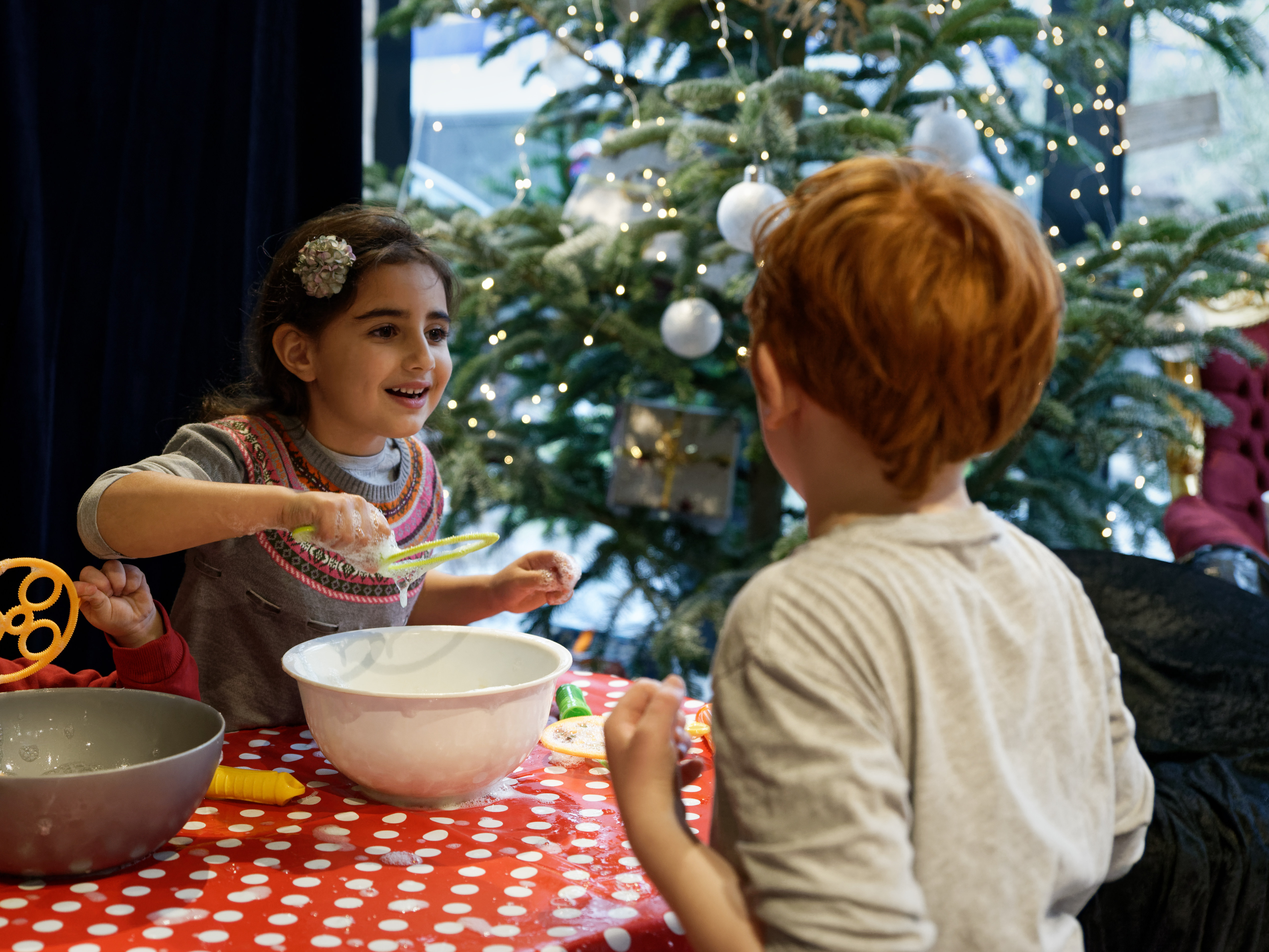
Our mandates vary from compact family corners during formal evenings to full multi-zone family days. For example, we’ve managed holiday party kids zones where the main constraint was keeping noise low during executive speeches: we built a quiet craft + story rotation near washrooms, added a timed magic set after speeches, and positioned queueing away from the ballroom doors so adult circulation stayed clean.
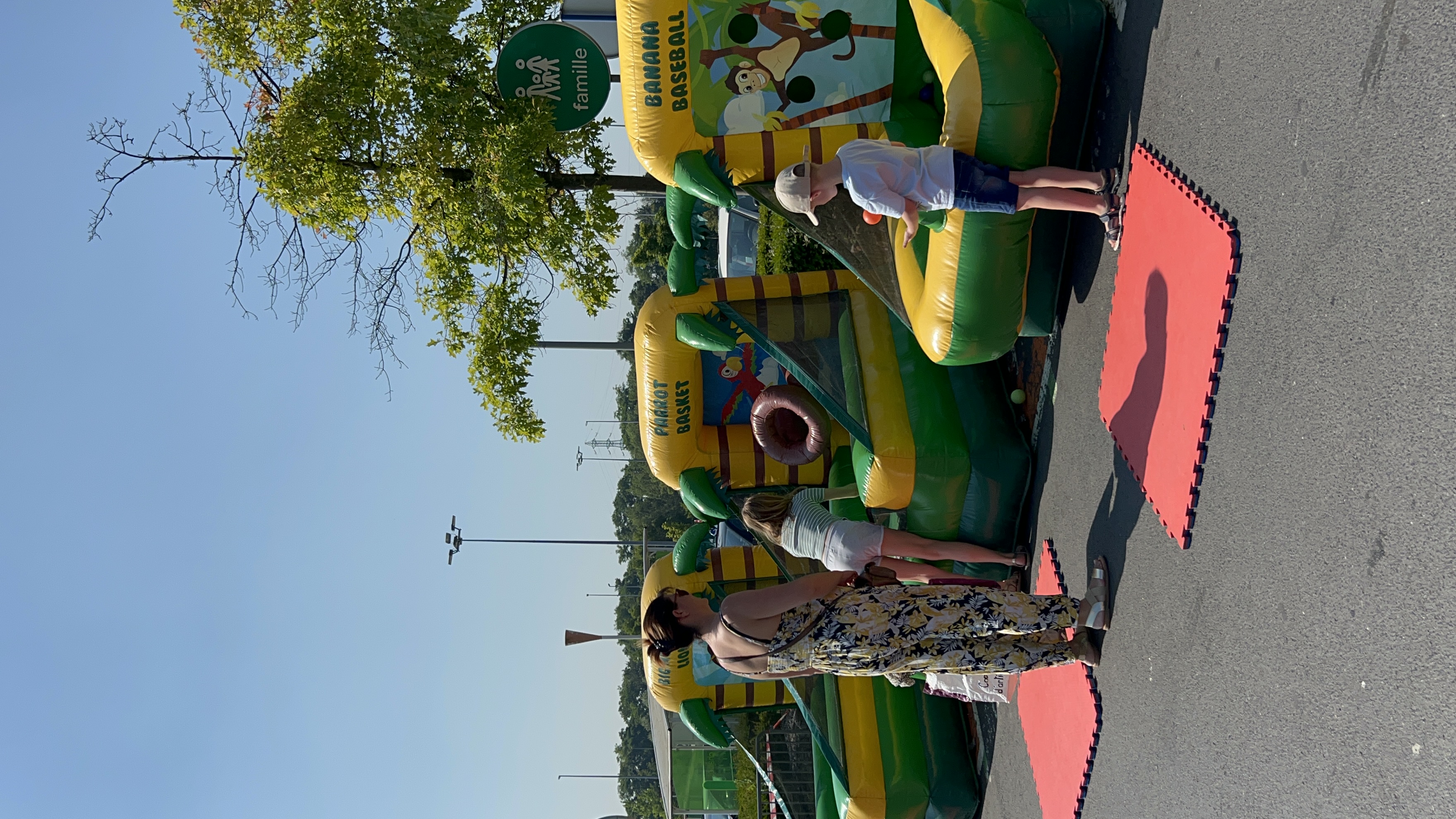
We’ve also delivered summer outdoor family days where the challenge was crowd flow and safety: we used a wristband/zone map approach, separated high-energy inflatables from toddler areas, and scheduled short “family challenge” moments so parents and kids had shared touchpoints without disrupting food service. In office open houses, we often focus on brand coherence and building protection—floor coverings, contained crafts, and clear signage that matches corporate standards.
What stays constant is our ability to adapt when reality changes: weather shifts, VIPs arrive late, attendance is higher than forecast, or a venue adjusts your access window. We plan for those scenarios so you don’t have to improvise in front of your teams.
Common mistakes companies make with kids entertainment in Montréal
Underestimating peak arrival: parents arrive together, and a single activity creates a line that spills into entrances or near the bar. We prevent this with parallel stations and queue design.
Choosing activities that don’t match the venue: inflatables in spaces with low ceilings, messy crafts on sensitive floors, or loud shows beside speeches. We validate feasibility during planning.
Vague supervision expectations: “the entertainers will watch the kids” is not a plan. We clarify boundaries, ratios, and escalation procedures with HR and security.
No allergy and hygiene protocol: food stations without signage/utensil separation or face painting without cleaning practices can create reputational risk.
Over-branding children’s activities: it can feel forced and reflect poorly. We integrate brand cues through theme, colors, and tone—subtle and professional.
Not planning for bilingual delivery: in Montréal, a kids zone that only operates in one language can create friction. We staff accordingly.
Our job is to remove these risks before they reach your leadership team. We design the kids component as an operational module with clear responsibilities, timing, and contingency plans—so your event remains calm, credible, and on message.
Why Montréal clients renew kids entertainment year after year
Repeat business in corporate events is earned on the floor. Clients come back when the kids component runs without constant decisions from HR or comms, when vendors show up prepared, and when the post-event feedback is consistent: “it was easy for us.”
70–80% of our family-event mandates include at least one returning client or an internal referral within the same organization (range varies by season and event cycle).
0 critical safety incidents reported across our recent managed kids zones when our supervision and layout recommendations were fully implemented.
15–30 minutes average buffer we build into load-in and readiness checks to avoid “opening late” stress at doors.

Loyalty is a practical metric: it reflects predictable delivery, stable staffing, and the ability to protect your internal teams from operational noise. That’s what executives notice—even if they never step into the kids zone themselves.
Our Montréal delivery process for kids entertainment
👉 Montréal discovery and risk scan (30–45 minutes)
We confirm your event goals (HR retention, community relations, employee appreciation), guest profile (expected number of children by age group), timing, and venue constraints. We also identify internal stakeholders: facilities, security, legal/privacy, and comms. This is where we set the supervision expectations and define what “success” looks like for leadership.
👉 Programming architecture and zone design
We propose a structured mix of stations and timed highlights, with capacity estimates per activity. We map a kids-zone layout that respects emergency exits, sightlines for parents, stroller flow, and sound management. You receive a clear plan: what happens when, where, by whom, and with which equipment.
👉 Vendor booking, documentation, and compliance
We book entertainers and suppliers with verified insurance, references, and professional standards. We handle venue documentation, certificates, and operational requirements (load-in times, power needs, floor protection). If your venue or company requires specific policies, we align vendors early to avoid last-minute refusals.
👉 Run-of-show integration with HR and communications
We integrate the kids plan into your master schedule: speeches, meal service, photo moments, and any brand messaging. For comms teams, we can suggest a short content plan (timed moments that are camera-friendly) while protecting privacy preferences and avoiding disruption.
👉 Event-day management and real-time adjustments
Our floor lead manages vendor check-in, station readiness, queue control, and timekeeping. If attendance spikes or timing shifts, we adjust station rotations, redeploy staff, or shorten/extend sets to keep the experience stable. You get a single point of contact, not multiple vendors asking you questions.
👉 Post-event debrief and improvement loop
Within days, we share a short debrief: what worked, what to adjust, and recommendations for the next edition (staffing, layout, activity mix). For recurring Montréal events, this is how we reduce planning time year over year while increasing consistency.
FAQ sur l'organisation Kids Entertainment à Montréal
How much supervision is needed for kids zones in Montréal?
It depends on ages and whether parents stay in the zone. As a planning baseline, we often build around 1 staff per 8–12 kids for structured stations (ages 5–12) and 1 per 4–6 for toddler areas. For inflatables, it’s typically 1–2 attendants per unit plus a floor lead for queue control.
What is a realistic budget range in Montréal for kids entertainment?
For corporate events in Montréal, a small, well-run kids corner often starts around $1,500–$3,500 (a few stations + staff). Mid-size family zones with multiple activities and a timed show are commonly $4,000–$12,000. Large family days with inflatables, multi-zone staffing, and tech activations can reach $15,000–$40,000+, depending on duration and infrastructure.
How far in advance should we book in Montréal?
For peak periods (December holiday parties, June family days), plan 8–12 weeks ahead to secure top talent and the right equipment. For smaller events, 3–6 weeks can work. We can sometimes deliver in 7–14 days if the scope is simple and the venue is flexible.
Can kids entertainment be bilingual for Montréal audiences?
Yes. We staff facilitators who can operate naturally in French and English. For signage and workshop instructions, we prepare bilingual materials when needed, and we brief entertainers on your audience mix so the experience feels inclusive rather than “translated.”
Are inflatables allowed at Montréal corporate venues?
Often yes, but it depends on ceiling height, floor load, access routes, and venue rules. Most venues require proof of insurance, trained attendants, and safety mats. Outdoors, anchoring and wind thresholds are critical. We confirm feasibility during the venue walk-through before you commit.
Request a quote for kids entertainment in Montréal
If you’re planning a family-friendly corporate event in Montréal, involve us early—especially if the venue is downtown, if you expect a high number of children, or if you need bilingual facilitation and strict schedule control. We’ll propose a clear activity plan with staffing ratios, layout logic, compliance requirements, and a budget you can defend internally.
Send us your date, venue (or shortlist), estimated attendance, and the type of event (holiday party, family day, open house, community activation). We’ll respond with practical options and the operational implications—so you can choose confidently and avoid last-minute stress.
INNOV'events Montréal Agency
Thierry GRAMMER is the manager of the INNOV'events Montréal office. Reach out directly by email at canada@innov-events.ca or via the contact form.
Contact the Montréal agencyToutes nos prestations & animations Montréal, Quebec
Découvrez nos prestations événementielles
- Employee Party in Montréal
- Corporate Christmas Party in Montréal
- Networking Cocktail Event in Montréal
- Shopping Mall Activation in Montréal
- Grand Opening Event in Montréal
- Product Launch Event in Montréal
- Open House Event in Montréal
- Field Brand Activation in Montréal
- Event Catering Service in Montréal
Découvrez nos animations événementielles disponibles au Quebec
- Event Hostess in Montréal
- Escape Game in Montréal
- MasterChef-Style Cooking Workshop in Montréal
- Corporate Magician in Montréal
- Tent Rental in Montréal
- Color Analysis Workshop in Montréal
- Inflatable Games in Montréal
- Valet Service in Montréal
- Soccer Simulator in Montréal
- LED Furniture Rental in Montréal
- LED Branding Activation in Montréal
- Immersive Culinary Experience in Montréal
- Light Painting Activity in Montréal
- Immersive Mystery Night in Montréal
- Promotional Contest in Montréal
- Promotional Materials (POS) in Montréal
- Virtual Reality Experience in Montréal
- Molecular Gastronomy Workshop in Montréal
- Halloween Event in Montréal
- Fireworks Show in Montréal
- Sports Challenge – Giant Games in Montréal
- Professional Event Host in Montréal
- Photo Booth Animation in Montréal
- Santa Claus Appearance in Montréal
- Kids Entertainment in Montréal
- Guided Tour in Montréal
- Urban Rally in Montréal
- Ball Pit Activity in Montréal
- Flight Simulator in Montréal
- Food Truck Rental in Montréal
- World Record Attempt in Montréal
- Surf Simulator in Montréal
- Soccer Simulator in Montréal
- Wine Casino in Montréal
- Makeover Workshop in Montréal
- Perfume Creation Workshop in Montréal
- Acting Workshop in Montréal
- CSR Activities in Montréal
- Archery Activity in Montréal
- Event Security Guard in Montréal
- Wine Tasting Workshop in Montréal
- Mime Performance in Montréal
- TV Game Show Animation in Montréal
- Funfair Event in Montréal
- Crisis Management Workshop in Montréal
- Crisis Negotiation Workshop in Montréal
- Arcade Games in Montréal
- Indoor Skydiving Simulator in Montréal
- Ski Simulator in Montréal
- Racetrack Driving Experience in Montréal
- Introductory Flight Experience in Montréal
- Tasting Experience in Montréal
- Build Your Own Foosball Workshop in Montréal
- 2CV Rally in Montréal
- LEGO Challenge in Montréal
- Casino Night in Montréal
- Interpreter / Translator in Montréal
- Promotional Merchandise in Montréal
- Shuttle / Transportation Service in Montréal