
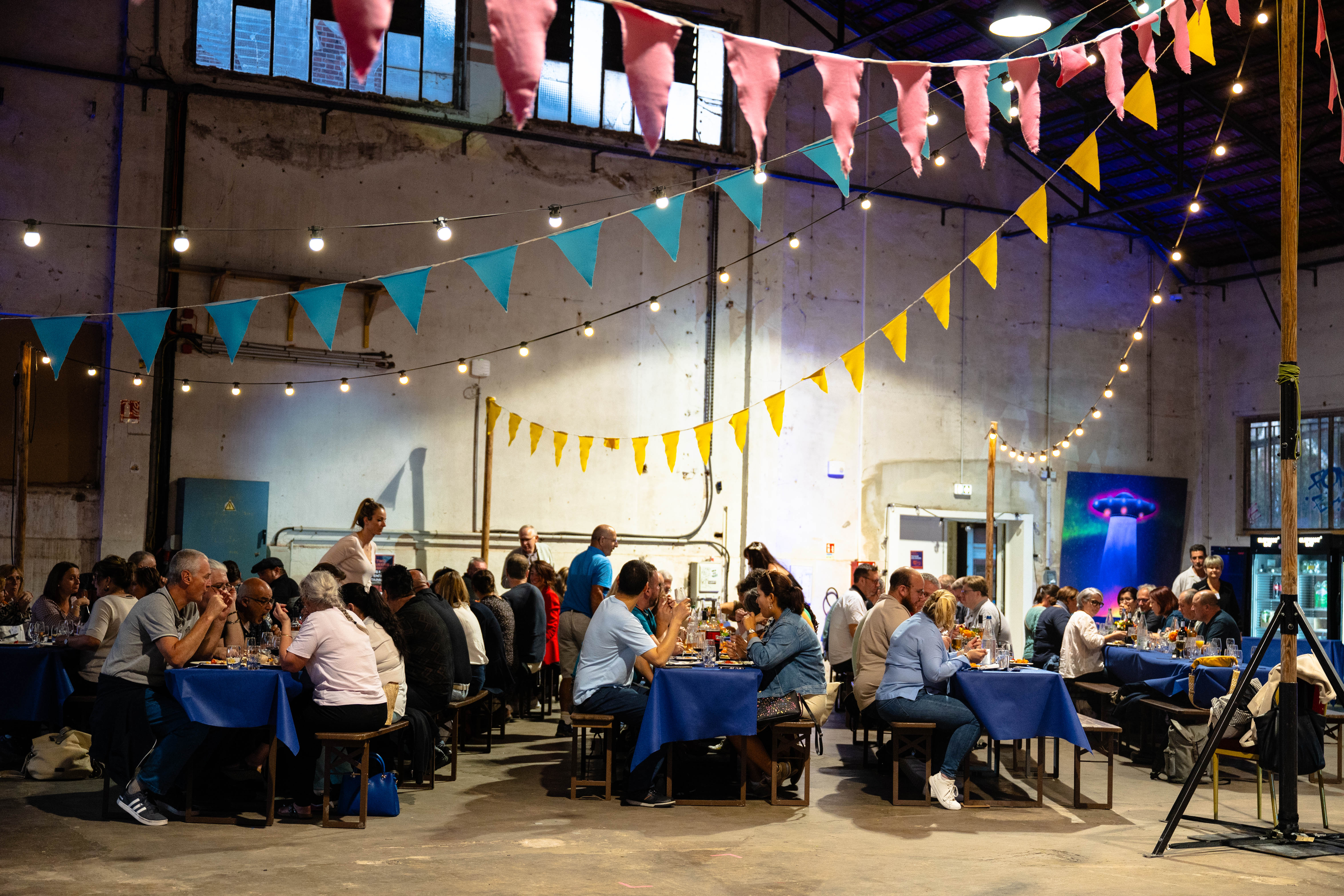
Immersive Culinary Experience in Montréal that keeps your agenda on time
INNOV'events designs and produces Immersive Culinary Experience in Montréal for executive teams, HR and communications—typically 30 to 600 attendees. We handle the culinary concept, venue-fit, staffing, run-of-show, and the operational details that protect your brand on event day.
If you need an experience that supports business objectives (engagement, culture, retention, client relations) while staying compliant with venue rules and Montréal realities, we build it with the same rigor as a product launch.
Sommaire
In a corporate agenda, an Immersive Culinary Experience is not “nice-to-have entertainment”: it’s a structured moment that drives conversation, keeps people present between program blocks, and creates a shared reference point you can reuse in internal communications.
Organizations in Montréal expect operational discipline: bilingual facilitation, punctual service windows between speeches, clear allergen management, and an experience that respects brand posture—especially when VIPs or clients are in the room.
Based in Montréal, INNOV'events brings field-tested production: vendor coordination, venue technical constraints, and a planning method designed for executive-level stakes and HR realities (participation, inclusion, safety).
INNOV'events Montréal in numbers you can validate
10+ years producing corporate events and experiential formats across Québec and Canada.
500+ corporate activations delivered (team building, client events, internal culture moments, brand experiences).
Operational capacity from 30 to 2,000 attendees via a vetted supplier network (chefs, venues, A/V, staffing, rentals).
One senior producer accountable from brief to breakdown—no handoff on the week of the event.
Standardized documentation: run-of-show, floor plan, staffing plan, risk log, and service timing grid.
Montréal references and recurring corporate partners
In Montréal, reliability is measured year over year. We support organizations that repeat the experience because it protects their schedule, their people, and their reputation. Our teams are used to executive constraints: last-minute VIP additions, strict timecodes between presentations, and communication teams who need consistent visual outcomes for photo/video deliverables.
We regularly deliver culinary and experiential concepts for Montréal-based employers and national groups with Montréal hubs, with projects that range from HR recognition evenings to client hospitality. Some partners renew annually because the format becomes part of their internal rhythm (end-of-quarter, holiday, leadership offsite) and because we keep institutional memory: what the venue allows, what the audience responds to, and which suppliers have proven dependable under pressure.
If you share your sector and audience profile (unionized staff, sales teams, executives, clients), we will reference comparable deployments and the operational choices we made in similar contexts in Montréal—service sequence, staffing ratios, allergen protocol, and how we protected the run-of-show.
 Besoin d’un devis rapide ?
Nous vous envoyons une première proposition sous 24h.
Why plan an Immersive Culinary Experience in Montréal for your teams
For executives and HR leaders, a culinary immersion works when it is designed as a management tool, not a party. Food is a universal touchpoint, but in a corporate context it must be engineered: flow, timing, inclusion, and the right level of interaction so people actually participate instead of watching from the sidelines.
In Montréal, where teams are often hybrid and multilingual, a culinary experience can rebuild informal ties quickly—if it’s structured to prompt conversation and give everyone a role (tasting, judging, assembling, pairing, learning).
Higher participation without forcing extroversion: interactive stations let people engage at their pace (taste, vote, build), which HR appreciates when audiences include introverts, new hires, or cross-functional groups.
Culture reinforcement you can communicate internally: we design “message anchors” (e.g., sustainability, local sourcing, innovation) so communications teams can reuse the content in newsletters, intranet posts, and recap videos.
Client-grade hospitality with controlled risk: for sales and executive hosting, we plan service windows, VIP routing, and staff scripting so the experience feels premium without operational improvisation.
Practical inclusion and duty of care: allergen labeling, non-alcoholic pairings, vegetarian/halal/kosher-friendly options when required, and a service plan that reduces cross-contact.
Better networking outcomes: curated seating prompts, tasting “missions,” and timed reveals create natural conversation starters—useful when departments rarely meet in person.
Time discipline: we build a production grid so your keynote, awards, or town hall remains the priority, with culinary beats that support—not fight—your agenda.
This approach fits the economic culture of Montréal: pragmatic, brand-aware, and diverse. When the experience is planned like an operational project, it delivers engagement without sacrificing governance, compliance, or executive time.
What Montréal decision-makers expect from corporate culinary events
Teams in Montréal are experienced event audiences. They notice when service is late, when lines block the room, when dietary needs are treated as an afterthought, and when bilingual facilitation is superficial. For executive assistants and internal comms, the pressure is specific: a tight schedule, a room that must look good for content capture, and zero tolerance for operational chaos.
We plan for the realities that frequently impact Montréal events:
- Venue constraints: load-in windows, noise curfews, limited back-of-house, and restrictions on open flames or cooking methods. Culinary immersion must match the building’s rules, not the mood board.
- Bilingual experience design: not just signage, but facilitation cues, station scripts, and staff briefings so service remains consistent in English and French.
- Mobility and timing: downtown traffic, winter conditions, and staggered arrivals. We design formats that still work when 20% of guests arrive in waves.
- Supplier reliability: staffing shortages happen. We mitigate with backup lists, call times, and documented standards so replacements can integrate quickly.
- Compliance and safety: MAPAQ-aligned food handling expectations, alcohol service controls, and incident readiness (first aid, clear escalation path).
For a demanding director, the difference between agencies is not the idea—it’s the operational plan that ensures the idea survives real conditions in Montréal.
Which Immersive Culinary Experience formats work best in Montréal
Engagement comes from participation, not from watching. In a corporate setting, culinary immersion works when it combines a clear task, a timebox, and a social mechanism (teams, scoring, tasting cards, or guided pairings). Below are formats we deploy in Montréal, selected based on audience profile, venue constraints, and the message you want to carry.
Interactive animations in Montréal
Chef-led tasting circuit with voting: guests rotate through 4–6 stations (e.g., local cheeses, smoked elements, seasonal bites). Each station has a 60–90 second story and a vote card. Communications teams like it because the content is structured and repeatable.
Team “assembly” challenge: groups build a plated bite or a boxed lunch concept under guidance (no open flame required). This format is strong for HR objectives because it encourages collaboration without putting people on stage.
Pairing lab (zero-proof and alcoholic): a guided discovery of pairings (tea, shrubs, local ciders, spirits when appropriate). We design it with clear consumption pacing and responsible service controls.
Market-style ingredient draft: teams “draft” ingredients with constraints (budget tokens, sustainability score). It aligns well with leadership themes like prioritization and resource allocation.
Art animations in Montréal
Plating as performance: a chef and a stylist demonstrate plating techniques while guests replicate at mini-stations. This works well in spaces where cooking is limited but visual impact is important.
Sound and lighting cues tied to service: subtle production (not nightclub) that signals transitions—useful when you must move 300 people without shouting. In Montréal venues with strict sound limits, we prioritize clarity over volume.
Live illustration of the menu story: an illustrator captures the “journey” on a board or digital canvas (ingredients, regions, team values). It provides a deliverable for internal comms without disrupting service.
Innovative animations in Montréal
Local terroir stations: Québec cheeses, seasonal produce, smoked fish, and bakery elements presented with sourcing transparency. Executives appreciate when “local” is documented (supplier names, regions, seasonality) rather than claimed.
Interactive dessert finish: a controlled finale (e.g., build-your-own plated dessert with pre-portioned components). It avoids long lines and keeps the room clean for post-event networking.
Late-night refined snack bar: for evening programs, a timed snack wave prevents people leaving early and supports responsible alcohol consumption.
Gourmand animations in Montréal
Data-driven tasting: QR voting that produces a live results screen (top pairing, favorite station). It creates a shared talking point and gives HR/Comms a post-event statistic they can use.
Hybrid-friendly culinary kit integration: when part of the team is remote, we align an on-site tasting with shipped kits and a shared facilitation segment. This is common for Montréal companies with distributed teams.
Sustainability scoring: stations display waste and sourcing metrics (e.g., compostable serviceware, local supply radius). This works when ESG reporting is not just a slogan but an internal KPI.
Whatever the format, we align the culinary immersion to your brand image and corporate posture: level of sophistication, tone of facilitation, inclusion standards, and how much “show” is appropriate for your leadership culture in Montréal.
Where to host an Immersive Culinary Experience in Montréal
The venue defines what is possible: cooking methods, service flow, acoustics, and the overall perception of quality. In Montréal, the right setting is often the difference between a smooth immersion and an experience that feels crowded or improvised. We shortlist venues based on back-of-house capacity, load-in practicality, guest movement, and restrictions (flames, fog, alcohol service, noise).
| Venue type | For which objective? | Main strengths | Possible constraints |
|---|---|---|---|
Loft-style event spaces (downtown/Griffintown) | Leadership offsite dinners, client hospitality, brand-forward experiences | Strong aesthetics for photo/video, flexible layouts for stations, good for 60–250 guests | Limited back-of-house; may require mobile kitchen buildout and strict noise management |
Hotel ballrooms and conference venues | Town halls, award nights, large-scale internal events | Built-in service infrastructure, predictable staffing, easier A/V integration for speeches | Less “experiential” by default; needs design work to avoid a standard banquet feel |
Restaurants with private buyouts | Executive dinners, client retention evenings, small leadership groups | High culinary credibility, existing kitchen, strong pacing for seated + station hybrid formats | Branding options can be limited; less control over room flow and timing if public areas remain active |
Industrial/warehouse venues (event-ready) | Product launches with culinary immersion and staging | Large footprint, strong set-build potential, easy to create multiple zones | Requires more rentals (heating, washrooms, power distribution), higher production complexity |
We strongly recommend site visits in Montréal before finalizing the concept. A 30-minute walkthrough with the venue manager often reveals decisive details: service elevator access, prep space, power availability, and how guests will queue without blocking emergency egress.
What does an Immersive Culinary Experience cost in Montréal
Budgeting for an Immersive Culinary Experience in Montréal depends on guest count, station complexity, venue constraints, and the level of production (A/V, lighting, scenic, facilitation). We price based on operational reality: staffing hours, prep requirements, rentals, and risk mitigation—not on vague “packages”.
As a planning reference for corporate decision-makers in Montréal, most professionally produced immersive culinary events fall in these ranges:
- 30–80 guests: typically $6,000–$18,000 depending on venue and service style
- 80–200 guests: typically $18,000–$45,000 (multiple stations, staffing, rentals)
- 200–600 guests: typically $45,000–$120,000+ (throughput engineering, larger teams, A/V, logistics)
These ranges help you frame internal approvals. The exact quote depends on choices that directly affect flow and risk.
Food format and throughput: à la minute cooking increases staffing and equipment; pre-portioned tasting reduces lines and stabilizes timing.
Venue infrastructure: a room with limited kitchen access requires mobile prep, additional refrigeration, and more load-in coordination.
Number of stations and facilitation level: each station needs setup, product, signage, and trained staff who can handle questions and dietary constraints.
Production elements: lighting for ambiance and content capture, sound reinforcement for hosts, and scenic elements that support brand standards.
Bar service and compliance: permits, certified staff, consumption pacing, and non-alcoholic alternatives.
Timing and labor rules: evening/weekend call times, union or venue staffing requirements, and overtime risk if the program drifts.
Communications deliverables: if you need video/photo outcomes, we plan the room and cues accordingly (which can affect lighting, staging, and timing).
From an ROI perspective, the best-performing culinary immersions reduce hidden costs: executive time lost to delays, negative employee feedback around inclusion, and reputational risk with clients. We’ll help you invest where it protects outcomes—usually flow, staffing, and a disciplined run-of-show in Montréal.
Why choose an event partner based in Montréal
For corporate teams, the advantage of a local partner is not proximity—it’s accountability and operational familiarity. An agency established in Montréal understands venue ecosystems, supplier reliability, and the constraints that appear in the last 72 hours: delivery windows, weather impacts, staffing replacements, and bilingual guest management.
As event agency in Montréal, we also reduce friction for your internal stakeholders. Executive assistants need quick answers; communications teams need predictable visuals; HR needs inclusion and safety; procurement needs clear scope and traceable costs. Local presence makes those loops faster and more pragmatic.
- Faster troubleshooting on site: when a venue changes load-in timing or a supplier is delayed, local teams can re-route, source backups, and keep the schedule intact.
- Vetted Montréal supplier network: chefs, staffing, rentals, A/V—selected based on performance under real event pressure, not only portfolio images.
- Better venue fit: we match the culinary concept to what the room can actually support (prep areas, ventilation, power, service corridors).
- Bilingual operations: staff briefings, signage, and guest interactions designed to feel natural, not translated at the last minute.
- Clear governance for corporate stakeholders: documented responsibilities, approvals, and day-of escalation paths that respect your internal decision chain.
From an ROI perspective, the best-performing culinary immersions reduce hidden costs: executive time lost to delays, negative employee feedback around inclusion, and reputational risk with clients. We’ll help you invest where it protects outcomes—usually flow, staffing, and a disciplined run-of-show in Montréal.







Examples of Montréal culinary immersions we produce for corporations
Our work in Montréal spans multiple corporate realities: high-stakes client events, internal recognition evenings, leadership offsites, and hybrid moments that include remote staff. The common denominator is disciplined production and the ability to adapt when constraints shift.
Typical projects include:
- Leadership dinner with interactive tasting: a 90-minute program with timed tasting waves between leadership messages. We design station layout to keep sightlines to the stage while maintaining service speed.
- HR culture event for mixed seniority: an immersion where participation is structured but optional—so senior leaders can network while new hires still have a clear activity path.
- Client hospitality with brand narrative: ingredient storytelling tied to corporate messaging (innovation, sustainability, local partnerships). We ensure the narrative is credible: sourcing details, menu rationale, and staff scripting.
- Large internal event with multiple dietary profiles: we implement a dietary tracking workflow, clear station labeling, and separate service tools to reduce cross-contact risk.
What executives usually value most is predictability: we confirm the service sequence, identify bottlenecks before they happen, and protect the agenda so leadership can focus on stakeholders—not logistics—during the event in Montréal.
Common mistakes companies make with culinary events in Montréal
Underestimating lines and flow: a single popular station can stall a room. We prevent this with throughput calculations, duplicate stations, and timed waves.
Choosing a venue before defining the cooking reality: some spaces look perfect but cannot support ventilation, refrigeration, or prep. We validate feasibility early.
Allergens treated as a last-minute note: corporate audiences expect structured accommodation. We build it into the menu, signage, and staff briefing.
Program drift: speeches slip, service slips, then everything slips. We run an integrated production grid and keep the show caller aligned with culinary leads.
Overproducing the concept: too many “wow” elements create noise and confusion. We prioritize what supports your objective and brand posture.
Insufficient staffing: trying to “save” on staff often costs more through overtime, guest dissatisfaction, and reputational impact.
No Plan B for weather and deliveries: in Montréal, seasonal volatility is real. We plan alternate load-in routes, buffer time, and backup equipment options.
Our role at INNOV'events is to eliminate these risks before they reach your executive team or your guests. A culinary immersion should feel effortless externally because it is tightly managed internally—especially in Montréal.
Why Montréal clients renew with INNOV'events year after year
Loyalty in corporate events is earned through repeatable delivery: consistent quality, transparent budgeting, and the ability to protect decision-makers from last-minute surprises. Many of our Montréal clients come back because we document what worked, what didn’t, and what to improve—so each edition becomes easier internally and stronger externally.
Recurring annual formats: leadership dinners, holiday recognition, client appreciation—planned earlier each year because stakeholders trust the process.
Reduced internal workload: we maintain templates (RSVP questions, dietary collection, staffing plan, run-of-show) so HR and comms don’t reinvent the wheel.
Operational consistency: the same senior producer remains accountable, preserving institutional memory and vendor standards.

In Montréal, repeat business is the most credible proof: it means the event delivered for leadership, the audience, and the internal teams who carried the risk.
Our production process for Montréal immersive culinary events
👉 Montréal brief and constraints mapping
We start with a structured briefing that executives and internal teams can align on: objective (HR, client, comms), audience profile, dietary and cultural considerations, timing constraints, and brand posture. We also map non-negotiables: venue rules, union or in-house staffing requirements, bilingual needs, and content capture expectations.
Deliverables: a written summary, initial risk list, and a proposed experience architecture (what happens, when, and why).
👉 Concept design and menu logic
We translate your objective into a culinary storyline that is operationally feasible in Montréal. This includes station count, interaction level, sourcing strategy, and a service model that matches your schedule. We avoid “concept-first” traps by validating cooking methods, equipment, and prep requirements before locking the design.
Deliverables: concept note, preliminary menu, station plan, and guest flow assumptions.
👉 Venue selection or venue adaptation
If the venue is not set, we shortlist options that can actually support the experience (back-of-house, ventilation, power, load-in). If you already have a venue, we adapt the concept to the space and confirm restrictions early. In practice, this is where many risks are removed: we validate elevator access, prep zones, storage, and guest circulation.
Deliverables: floor plan draft, load-in plan, and technical requirements list.
👉 Supplier sourcing and staffing plan
We secure chefs, culinary teams, service staff, bar, rentals, and A/V with clear scopes and call times. For corporate governance, we clarify who is responsible for what: venue team vs caterer vs agency. Staffing is sized to protect throughput and timing, with a clear leadership chain on site.
Deliverables: vendor matrix, staffing ratios, and contingency options for critical roles.
👉 Run-of-show and on-site execution in Montréal
We build a minute-by-minute run-of-show integrating culinary beats with speeches, awards, and transitions. On event day, a show caller manages timing while culinary leads manage station execution. We run a pre-shift briefing (allergens, scripting, escalation path) and maintain active issue tracking so your internal team isn’t pulled into operations.
Deliverables: final run-of-show, briefing notes, signage pack, and day-of contact tree.
👉 Post-event debrief and next-edition improvements
Within days, we provide a practical debrief: what drove engagement, where flow slowed, what guests asked for, and what to change next time. If you need internal reporting, we can include participation metrics (QR votes, station counts) and a short summary for HR or communications.
Deliverables: debrief report, recommendations, and budget learnings for the next Montréal edition.
FAQ sur l'organisation Immersive Culinary Experience à Montréal
How far in advance to book in Montréal?
Plan for 6–10 weeks for most corporate groups (80–250 guests). For peak dates (November–December) or complex venues, 10–16 weeks is safer. If you have a fixed date in Montréal, we can still deliver in 3–4 weeks when scope is streamlined and the venue is confirmed.
What attendee count works best in Montréal venues?
Most immersive formats perform best at 40–250 attendees, where flow can be managed without excessive duplication. We can scale to 600+ by multiplying stations, adding staffing, and using timed waves. The venue’s back-of-house and circulation in Montréal usually determines the upper limit more than the concept.
Can you handle allergies and dietary needs in Montréal?
Yes—this is planned, not improvised. We collect dietary data during RSVP, then implement station labeling, separate utensils, and a staff briefing for cross-contact prevention. For high-sensitivity profiles, we can provide sealed alternatives or a dedicated service point. Final approach depends on your risk tolerance and venue rules in Montréal.
Do Montréal venues allow live cooking stations?
Some do, some don’t. Common limitations include open flame restrictions, ventilation constraints, and insurance requirements. We propose cooking methods that fit the room (induction, controlled torch use where permitted, pre-finished items) and confirm approvals before contracting suppliers in Montréal.
What budget should HR plan for in Montréal?
For a professionally produced corporate culinary immersion in Montréal, HR typically plans $18,000–$45,000 for 80–200 attendees, depending on venue and production level. Smaller leadership groups often land around $6,000–$18,000. We can refine quickly with three inputs: guest count, venue status, and the level of interaction you want.
Request a Montréal quote with a clear operational plan
If you are comparing agencies, we recommend starting with a working session: objective, audience constraints, venue status, and timing. From there, we’ll propose 2–3 viable Immersive Culinary Experience concepts with a realistic production plan, budget ranges, and the decisions required from your side.
Contact INNOV'events in Montréal to lock the date early—especially for peak periods—and to secure the right culinary and staffing resources before availability becomes the limiting factor.
INNOV'events Montréal Agency
Thierry GRAMMER is the manager of the INNOV'events Montréal office. Reach out directly by email at canada@innov-events.ca or via the contact form.
Contact the Montréal agencyToutes nos prestations & animations Montréal, Quebec
Découvrez nos prestations événementielles
- Employee Party in Montréal
- Corporate Christmas Party in Montréal
- Networking Cocktail Event in Montréal
- Shopping Mall Activation in Montréal
- Grand Opening Event in Montréal
- Product Launch Event in Montréal
- Open House Event in Montréal
- Field Brand Activation in Montréal
- Event Catering Service in Montréal
Découvrez nos animations événementielles disponibles au Quebec
- Event Hostess in Montréal
- Escape Game in Montréal
- MasterChef-Style Cooking Workshop in Montréal
- Corporate Magician in Montréal
- Tent Rental in Montréal
- Color Analysis Workshop in Montréal
- Inflatable Games in Montréal
- Valet Service in Montréal
- Soccer Simulator in Montréal
- LED Furniture Rental in Montréal
- LED Branding Activation in Montréal
- Immersive Culinary Experience in Montréal
- Light Painting Activity in Montréal
- Immersive Mystery Night in Montréal
- Promotional Contest in Montréal
- Promotional Materials (POS) in Montréal
- Virtual Reality Experience in Montréal
- Molecular Gastronomy Workshop in Montréal
- Halloween Event in Montréal
- Fireworks Show in Montréal
- Sports Challenge – Giant Games in Montréal
- Professional Event Host in Montréal
- Photo Booth Animation in Montréal
- Santa Claus Appearance in Montréal
- Kids Entertainment in Montréal
- Guided Tour in Montréal
- Urban Rally in Montréal
- Ball Pit Activity in Montréal
- Flight Simulator in Montréal
- Food Truck Rental in Montréal
- World Record Attempt in Montréal
- Surf Simulator in Montréal
- Soccer Simulator in Montréal
- Wine Casino in Montréal
- Makeover Workshop in Montréal
- Perfume Creation Workshop in Montréal
- Acting Workshop in Montréal
- CSR Activities in Montréal
- Archery Activity in Montréal
- Event Security Guard in Montréal
- Wine Tasting Workshop in Montréal
- Mime Performance in Montréal
- TV Game Show Animation in Montréal
- Funfair Event in Montréal
- Crisis Management Workshop in Montréal
- Crisis Negotiation Workshop in Montréal
- Arcade Games in Montréal
- Indoor Skydiving Simulator in Montréal
- Ski Simulator in Montréal
- Racetrack Driving Experience in Montréal
- Introductory Flight Experience in Montréal
- Tasting Experience in Montréal
- Build Your Own Foosball Workshop in Montréal
- 2CV Rally in Montréal
- LEGO Challenge in Montréal
- Casino Night in Montréal
- Interpreter / Translator in Montréal
- Promotional Merchandise in Montréal
- Shuttle / Transportation Service in Montréal