
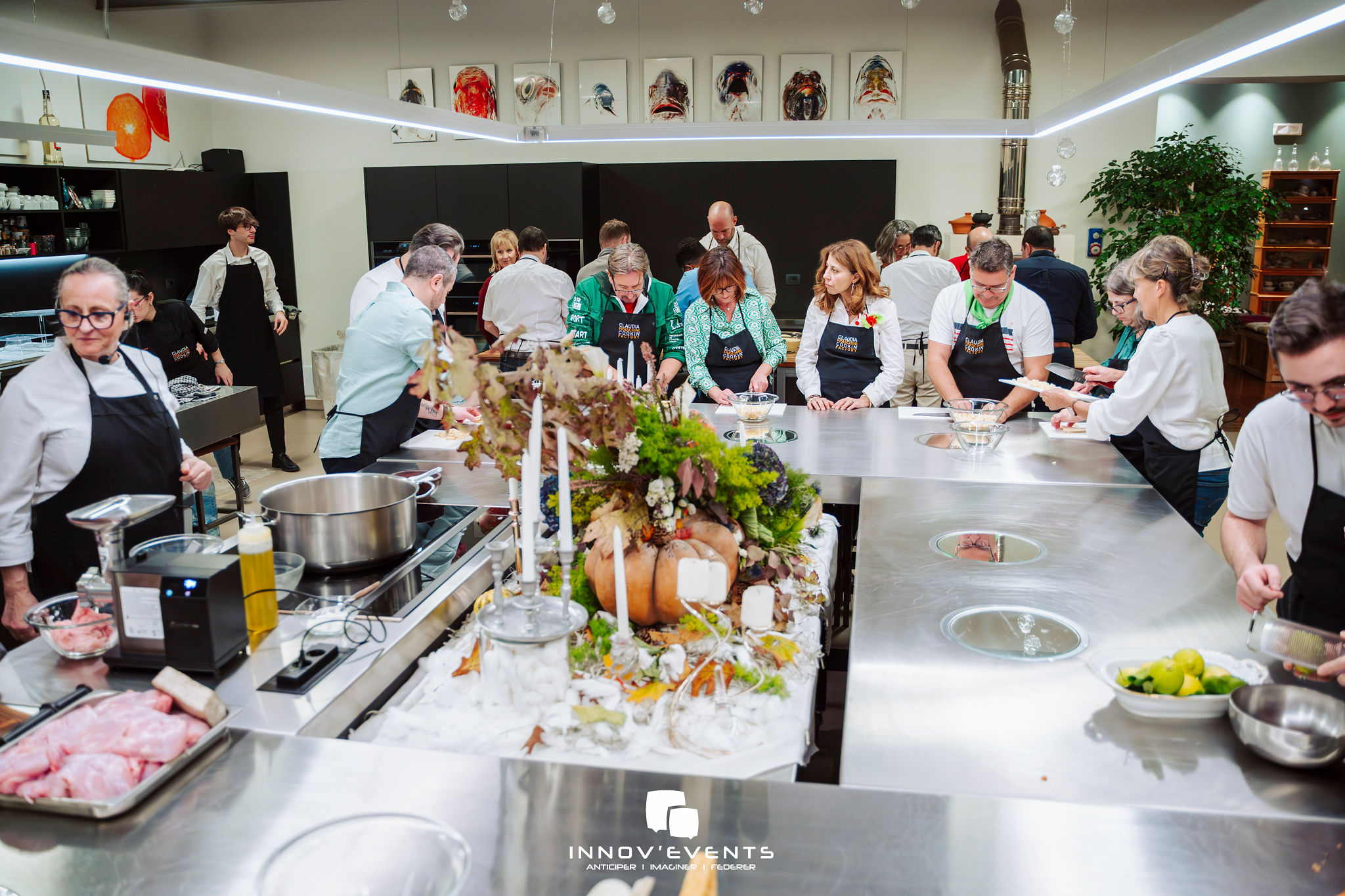
MasterChef-style cooking workshop in Montréal for stronger, more aligned teams
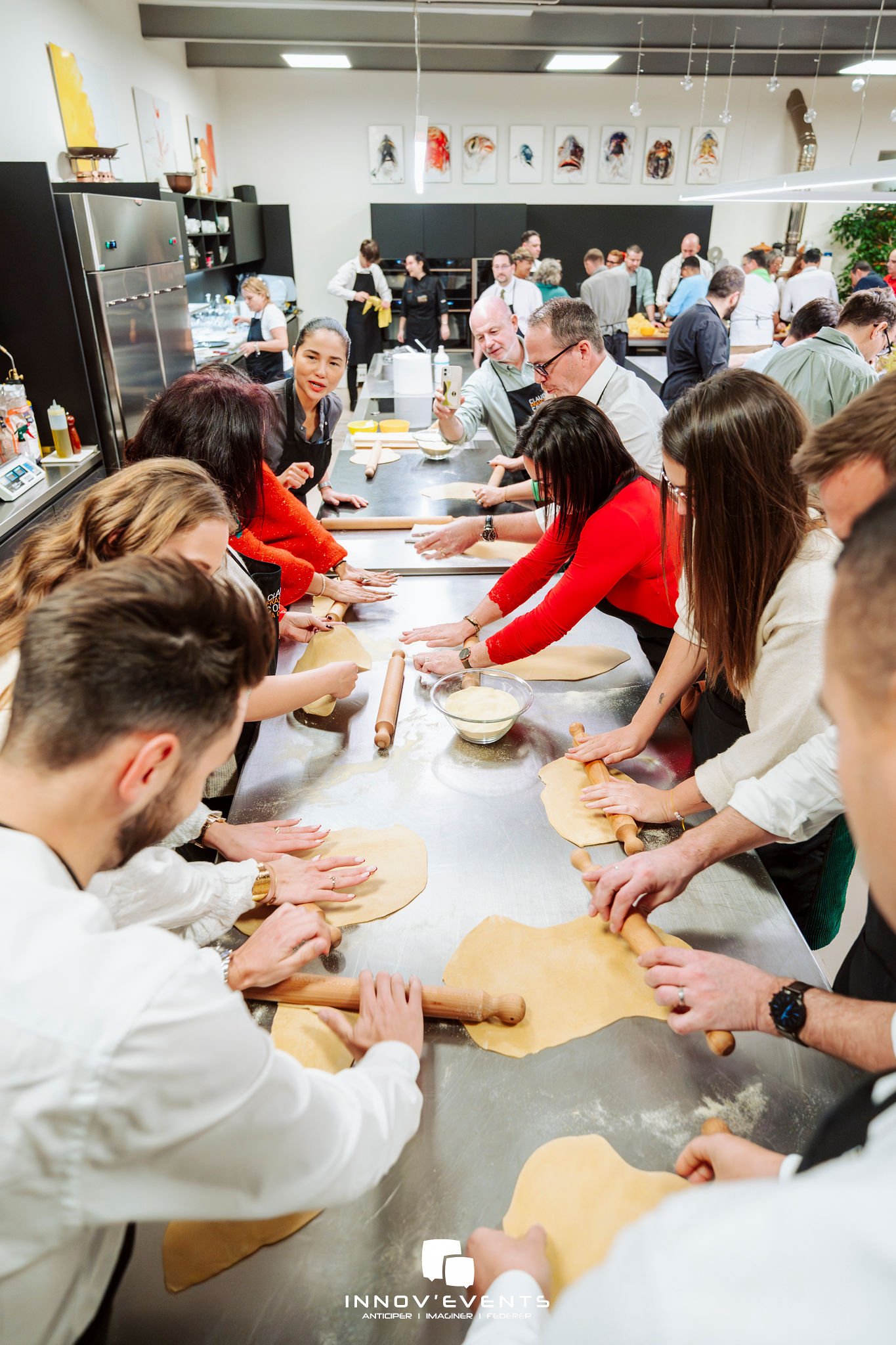
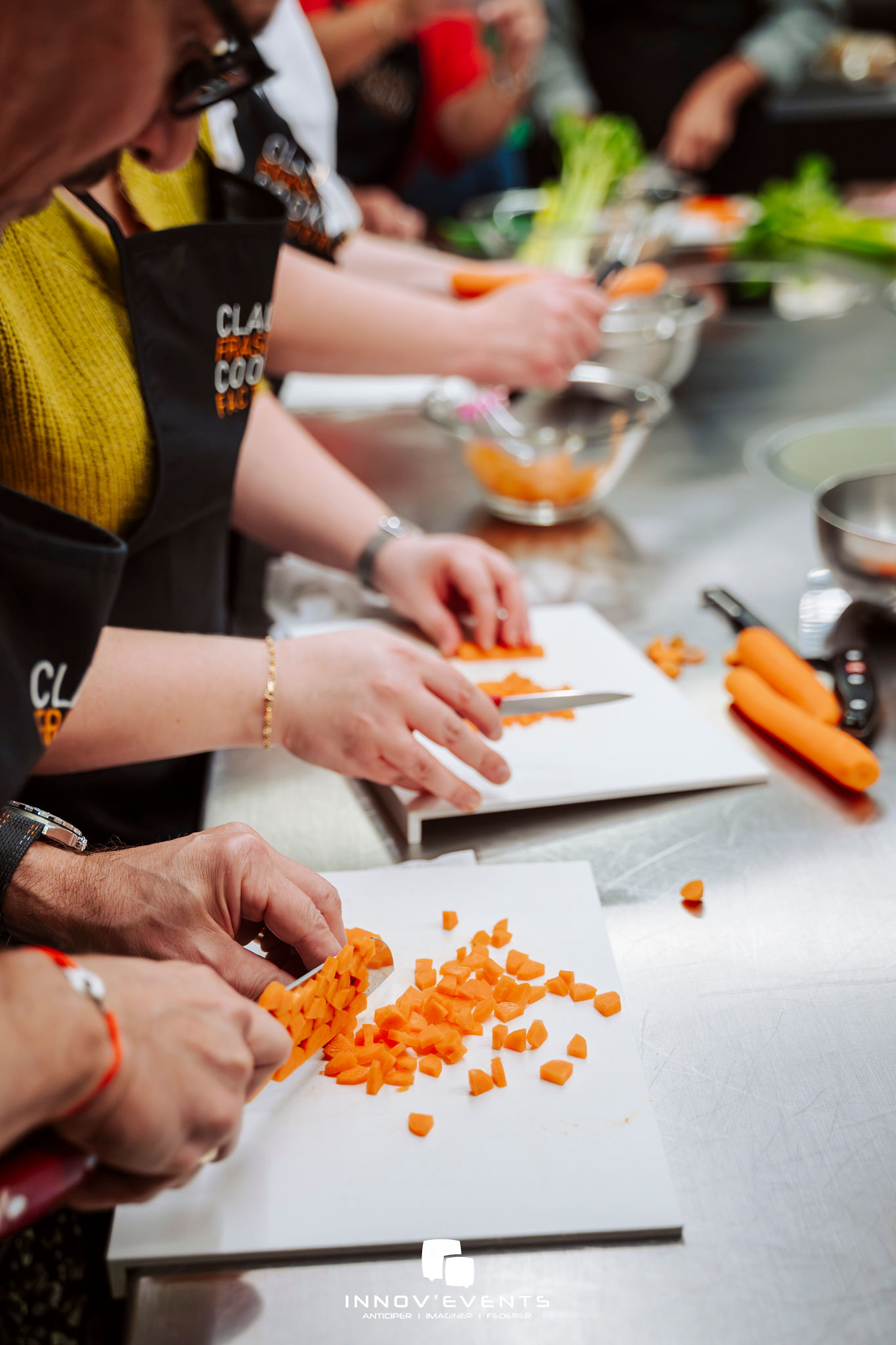
INNOV’events designs and runs MasterChef-Style Cooking Workshop in Montréal formats for executives, HR and communication teams looking for a clean, measurable team experience—not a “fun activity” that’s hard to justify. Typical groups range from 10 to 250 participants, split into kitchen brigades with clear roles, timing, and deliverables.
We handle the operational reality: venue sourcing, chef and sous-chef staffing, ingredient procurement, dietary management, run-of-show, scoring rubric, AV for briefings, awards, and on-site coordination so your leadership can focus on people—not logistics.
Sommaire
In a corporate agenda, entertainment only matters if it supports outcomes: faster collaboration, clearer communication, and a shared win. A MasterChef-Style Cooking Workshop works because it creates real constraints (time, resources, quality standards) that mirror day-to-day execution.
In Montréal, organizations expect professional delivery: bilingual facilitation when needed, punctual run-of-show, venue compliance, and food safety you can defend internally. Decision-makers also expect an activity that respects brand standards and doesn’t risk reputational issues.
INNOV’events is on the ground in Montréal, used to downtown access constraints, union or venue rules, and corporate procurement realities. We design the workshop like an operation: defined roles, clear success metrics, and contingency planning.
INNOV’events in numbers for Montréal decision-makers
10+ years delivering corporate events and team programs in Québec, with recurring mandates across HR, internal communications and executive offices.
50–200+ events/year across our networked delivery model (Québec + Canada), allowing us to staff peak periods without cutting corners.
10–250 participants supported on MasterChef-style formats, with scalable staffing (chef, sous-chefs, floor managers, runner, hygiene lead) and structured run-of-show.
Up to 4 dietary frameworks managed simultaneously (vegetarian/vegan, halal, gluten-free, nut-free) with labeled workstations and cross-contamination controls.
Montréal references and repeat clients you can verify
We work with organizations headquartered in Montréal as well as Canadian teams who fly in for leadership offsites. A significant part of our activity comes from clients who renew year after year because they know the risk profile of event day: last-minute executive schedule shifts, procurement constraints, venue rules, and brand visibility expectations.
If you want to validate operational reliability, we can share anonymized run-of-show samples, staffing plans, and post-event feedback summaries from similar mandates (leadership retreats, annual kickoffs, employer branding events, recognition evenings). For legal and confidentiality reasons, we confirm client names only when authorized and relevant to your RFP process.
What matters most for your comparison: our Montréal delivery is not outsourced at the last minute. We build the workshop with the same rigor as a corporate production: defined responsibilities, safety checks, and a clear escalation path if something changes on site.
 Besoin d’un devis rapide ?
Nous vous envoyons une première proposition sous 24h.
Why choose a MasterChef-style workshop in Montréal for leadership goals
A cooking competition is not a gimmick when it is designed like a corporate simulation. In a MasterChef-Style Cooking Workshop in Montréal, teams must interpret a brief, plan under time pressure, allocate tasks, and deliver a result that is judged against explicit criteria. This creates observable behaviors—exactly what executives and HR need when the goal is alignment, not just “bonding”.
Faster cross-functional collaboration: we assign brigade roles (chef de brigade, quality, plating, timing, procurement) so participants experience structured delegation, not chaotic “everyone does everything”. This is particularly effective for hybrid teams meeting in person for the first time.
Communication under constraints: teams must brief, re-brief, and escalate issues (missing ingredient, cooking time drift, dietary substitution). We observe and guide how information flows—useful for leadership and project teams.
Visible decision-making patterns: the workshop reveals who over-controls, who avoids decisions, and who synthesizes. With the right facilitation, it becomes a practical debrief on execution culture.
Recognition without discomfort: awards can be framed around corporate values (collaboration, innovation, client focus, operational excellence) rather than “who’s the funniest”, which helps HR and communications maintain a professional tone.
Employer brand and onboarding support: for growth companies, this format integrates new hires quickly. We can structure teams to mix seniority levels and ensure new staff have a defined, safe way to contribute.
Measured engagement: we can include simple, defensible indicators—team self-assessment, rubric scoring, and a short pulse survey—so you can report impact to leadership without overpromising.
Montréal has a strong execution culture: fast-moving tech, finance, life sciences, and creative industries operating with tight timelines and high standards. A MasterChef-style format resonates here because it respects competence, structure, and results—while still being human and energizing.
What Montréal companies expect from corporate entertainment today
In Montréal, the bar is high because teams are used to well-produced experiences and diverse culinary standards. For HR and communications, the challenge is not “finding an activity”—it’s choosing something that fits risk management, inclusion, and brand image while still creating real engagement.
Common expectations we see in local mandates:
- Operational punctuality: your event often sits between board meetings, sales kickoffs, or client dinners. We build a run-of-show that tolerates late arrivals (staggered briefing, role assignments ready, mise en place staged) without derailing the schedule.
- Bilingual reality: some groups require English facilitation with French support, or vice versa. We plan signage, briefing documents, and judging criteria accordingly so nobody feels “second-class” during instructions.
- Food safety and liability: clients increasingly ask about allergen management, kitchen certification, and hygiene controls. We implement labeled stations, separate utensils where needed, and a hygiene lead responsible for compliance checks.
- Dietary inclusivity without compromising the competition: Montréal teams are diverse. We design menus where dietary adaptations still allow fair scoring (texture, seasoning, presentation) so no team is penalized for having a vegan or gluten-free participant.
- Brand sensitivity: for public companies and regulated industries, the tone must stay professional. We avoid “forced humor” scripts and instead use clear, respectful facilitation—competitive but never humiliating.
In short: the expectation is a program that looks simple from the participant’s perspective while being tightly controlled behind the scenes.
Which Montréal-friendly MasterChef workshop formats drive real engagement
Engagement comes from clarity and stakes: people participate when they understand what “good” looks like and when the activity rewards coordination, not loud personalities. Our MasterChef-Style Cooking Workshop in Montréal formats are built to fit corporate constraints: timeboxed, inclusive, and easy to debrief.
Interactive animations in Montréal
Executive briefing + mission cards: we open with a short, CEO-style brief (2–4 minutes) that frames the competition around your priorities (quality, client experience, speed, innovation). Teams receive mission cards that force trade-offs—useful for debrief.
Timed “market run”: each team has limited tokens to “buy” ingredients. This creates planning discipline and mirrors budget constraints. It also reduces waste—important in corporate responsibility narratives.
Blind tasting rotation: teams anonymously taste each other’s dish and score one criterion (e.g., presentation). It increases attention and fairness, and it keeps people engaged during judging.
Art animations in Montréal
Plating and storytelling coaching: we integrate a short segment on plating and how to present a dish like a pitch—useful for sales, marketing and client-facing teams. This is controlled and professional, not theatrical.
Photo-ready station setup: for internal communications, we plan clean visuals (branded apron options, controlled background, consistent lighting). This avoids the common issue where photos look messy and can’t be used on intranet or LinkedIn.
Innovative animations in Montréal
Local ingredient challenge: we can integrate Québec products (seasonal produce, local cheeses, maple-based elements) in a way that remains inclusive for dietary constraints. This anchors the experience in Montréal without turning it into a tourist cliché.
Three-course brigade format: for larger groups, we split responsibilities by course (starter, main, dessert) and run judging per course. It reduces kitchen congestion and keeps timing predictable.
Gourmand animations in Montréal
Hybrid scoring dashboard: we can collect scoring digitally (QR form) and display results live for transparency. This is useful when leadership wants a clean award moment without long deliberations.
Values-based awards: beyond “best dish”, we award categories aligned with your culture (best risk management, best client mindset, best collaboration). It keeps the competitive tone positive and HR-friendly.
The key is alignment with your brand image: a bank, a law firm, a biotech, and a creative studio do not need the same tone. We calibrate competitiveness, language, and visuals so the workshop supports your internal narrative and external reputation in Montréal.
How to choose a Montréal venue for a MasterChef-style workshop
The venue shapes how your event is perceived: serious leadership work or casual party. For a MasterChef-Style Cooking Workshop in Montréal, the venue also determines whether the experience runs smoothly—kitchen capacity, access, ventilation, and service flow can make or break timing.
| Venue type | For which objective? | Main strengths | Possible constraints |
|---|---|---|---|
Professional cooking studio in Montréal | High-quality culinary execution, leadership offsite, client-grade experience | Purpose-built stations, predictable equipment, strong hygiene standards, easier timing control | Limited capacity for very large groups; fixed layout; premium dates can book out |
Hotel conference venue with culinary capacity (downtown) | All-in-one day (meetings + workshop + dinner), out-of-town attendees | AV and meeting rooms on site, predictable service staff, easy for executives | Kitchen may be designed for banquet service rather than hands-on cooking; union/venue rules can limit setup times |
Industrial/loft event space with temporary kitchen build | Brand activation, internal communications, “wow” visual environment | Flexible branding, larger capacities, creative staging options | Requires additional equipment rentals, power/load planning, stricter hygiene workflow, higher production complexity |
Office location with adapted catering-style stations | Convenience, limited time, lower travel friction for teams | Minimal attendee logistics, easier attendance, strong internal culture feel | Often limited ventilation and dishwashing; higher risk of timing issues; building rules and insurance requirements |
We strongly recommend a site visit (or a detailed technical walk-through) before confirming: access routes, elevator dimensions, loading rules, and kitchen utilities are not details—they determine whether your schedule holds and whether the experience feels controlled. In Montréal, traffic and downtown loading constraints alone can justify early validation.
What budget to plan for a MasterChef-style workshop in Montréal
Pricing for a MasterChef-Style Cooking Workshop in Montréal is driven by operational variables more than “the concept.” The same format can be straightforward in a dedicated studio, or significantly more complex in a raw venue requiring temporary kitchens and additional staff.
For corporate planning purposes, many clients see realistic all-in ranges between $150 and $350+ per person, depending on venue model, menu complexity, and production level. We’ll confirm a tighter range after a short scoping call and venue approach.
Group size and brigade structure: 12 people can run with one chef and one assistant; 120 people requires multiple chef teams, floor management, additional equipment, and stricter timing control.
Venue choice: cooking studio vs hotel vs raw space. Raw spaces typically increase costs through equipment rentals (cooktops, ovens, refrigeration), power distribution, transport, and additional hygiene controls.
Menu and ingredient strategy: protein choices, seasonal availability, and the complexity of techniques influence prep time and staffing. A smart menu can be “executive-grade” without being fragile to execute.
Dietary and allergen management: the more diverse the dietary profile, the more labeling, separation, and supervision is required. This is manageable, but it must be budgeted correctly.
Facilitation and judging level: do you want a light competition, or a stronger coaching/debrief component? Adding structured debrief, bilingual facilitation, or leadership participation changes staffing and timing.
Branding and communications assets: branded aprons, signage, photo coverage, and a results reveal (screen/AV) can be added for internal communications—useful, but it must match your brand standards.
Schedule constraints: if your program must fit a tight window (e.g., 90 minutes between meetings), we increase prep and staffing to protect timing.
From an ROI perspective, the best value is not the lowest per-person price; it’s the program that delivers your intended behavior change (collaboration, decision clarity, integration) without operational risk. In executive environments, avoiding one public failure often justifies investing in a production-grade setup.
Why work with a Montréal agency for your MasterChef workshop
When you’re accountable for an executive event, local execution matters. A Montréal-based team reduces risk because we understand venue realities, supplier lead times, local staffing availability, and last-minute city constraints (weather, traffic, loading access). We also know what “good” looks like for Montréal audiences—professional, efficient, and respectful of diverse teams.
As an event agency in Montréal, INNOV’events can quickly validate options, visit venues, and coordinate tastings or technical checks without adding delays or travel costs. This is particularly valuable when your internal calendar moves fast and the event date cannot shift.
- Vendor reliability under pressure: we work with chefs, studios, rental partners and venues we can hold accountable, with clear service levels and backup options.
- On-site decision speed: if a station runs behind or equipment fails, local producers know how to re-route service, adjust timing, and protect the client-facing moments (briefing, judging, awards).
- Compliance and documentation: COIs, venue rules, food handling standards, and corporate procurement requirements are handled in a way that reduces back-and-forth for HR and communications.
- More accurate budgeting: local knowledge prevents hidden costs (access fees, overtime rules, transport timing) that often appear late when an out-of-town provider estimates remotely.
From an ROI perspective, the best value is not the lowest per-person price; it’s the program that delivers your intended behavior change (collaboration, decision clarity, integration) without operational risk. In executive environments, avoiding one public failure often justifies investing in a production-grade setup.





Montréal corporate cooking workshops we deliver in real conditions
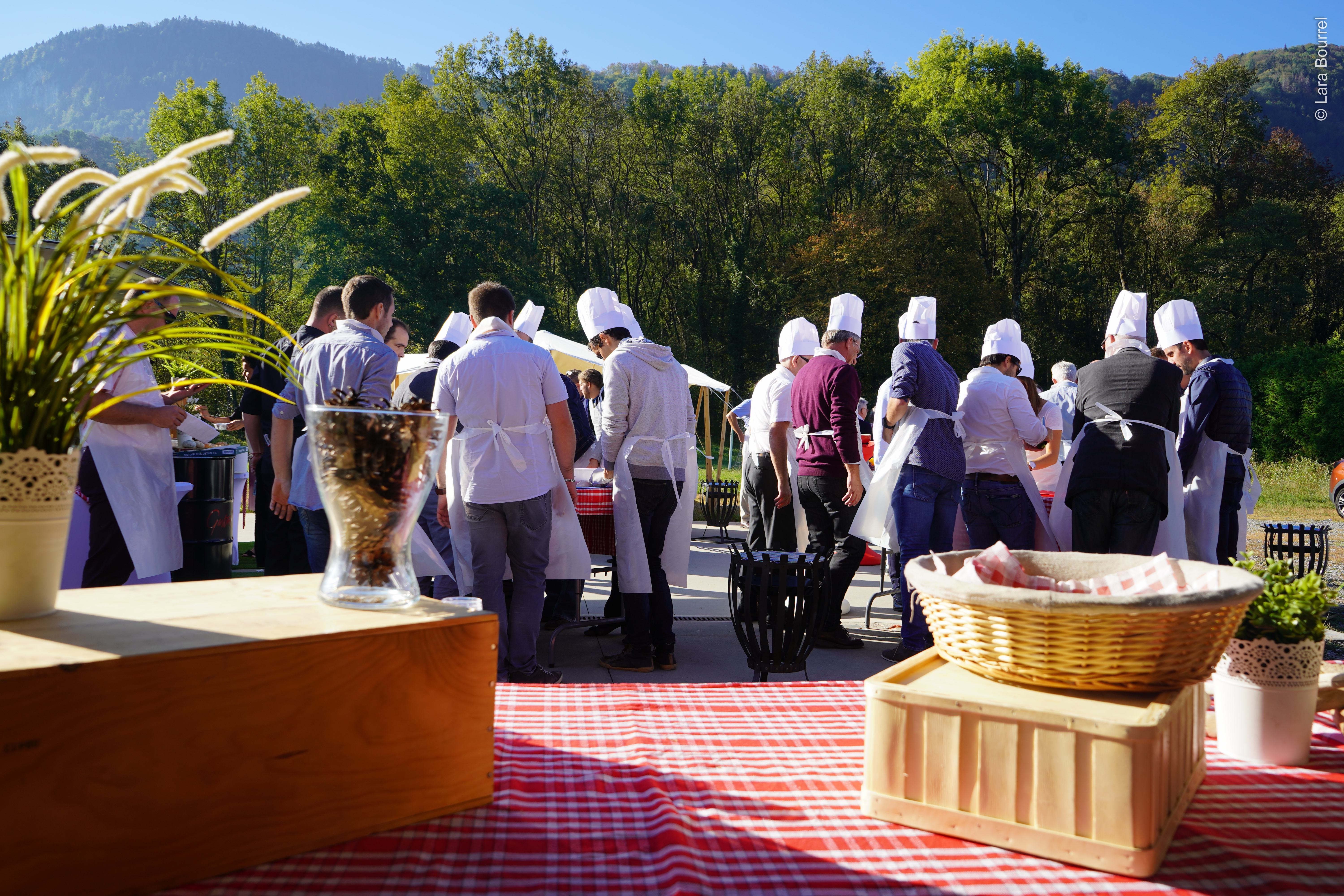
Our projects vary because corporate realities vary. We deliver MasterChef-style programs for:
- Leadership offsites: a tighter group (15–40) where the emphasis is on execution discipline and debrief quality. Here, we often add a short facilitated discussion on planning, delegation, and decision speed.
- Department kickoffs: mid-size groups (40–120) where the goal is to reset energy, mix teams, and create shared reference points. We design brigade composition to break silos (sales/ops/finance/marketing) and we control the competitive tone to keep it inclusive.
- Recognition and retention events: we focus on appreciation and shared achievement, with awards aligned to values and internal communications needs (photos, short recap, executive message integration).
- New manager cohorts: the workshop becomes a practical training moment—how to brief, coordinate, and deliver quality under time constraints, without micromanaging.
In every case, we adapt to the real constraints we see in Montréal: limited time windows, bilingual audiences, and venues with strict access rules. The deliverable is a controlled experience that supports your internal narrative and respects executive standards.
Common mistakes Montréal teams want to avoid on event day
Underestimating venue constraints: insufficient cooktops, limited refrigeration, or poor ventilation leads to delays and a compromised participant experience. We validate equipment and flow before confirming the format.
Overly complex menus: dishes that look good on paper can collapse under corporate-group conditions. We design menus that are robust, teachable, and still impressive.
Weak dietary planning: trying to “handle allergies on the day” is not acceptable in corporate environments. We plan labeled stations, alternative ingredients, and clear briefing rules.
No clear judging criteria: if participants don’t understand how they’re evaluated, the competitive element becomes frustration. We define and communicate the rubric early.
One facilitator for a large group: beyond a certain size, a single chef cannot manage flow, safety, and engagement. We staff appropriately (kitchen + floor + producer) to keep control.
Not protecting the executive moments: if the CEO message, awards, or group photo are rushed, the communications value drops. We lock those moments into the run-of-show and protect timing.
Missing contingency plans: ovens fail, traffic delays deliveries, key participants arrive late. We plan buffers and backups so the program remains stable.
Our role is to prevent these risks before they become visible to your teams. In a Montréal corporate context, professionalism is judged in the details: cleanliness, timing, clarity, and calm on site.
Why Montréal clients renew with INNOV’events
Repeat business is rarely about “creativity.” It’s about reliability, transparency, and the feeling that your partner understands the pressure on HR and communications when leadership is present. Clients come back when the event is easy to manage internally and defensible after the fact.
Recurring mandates: many clients rebook within 6–18 months for another team cohort, a yearly kickoff, or a different department—often because the first experience created a shared reference and was operationally clean.
Stable vendor ecosystem in Montréal: we maintain a bench of chefs and partners so quality does not depend on one individual’s availability.
Low “surprise rate”: our planning approach reduces last-minute additions and overtime—two common sources of budget friction for corporate teams.

Loyalty is proof of quality because corporate clients do not repeat experiences that create internal risk. In Montréal, where word travels quickly across industries, consistent delivery matters as much as the concept itself.
Our Montréal delivery process from brief to on-site execution
👉 Montréal scoping call and objective alignment
We start with a 20–30 minute call to define what success means for your executives, HR, and communications: team integration, leadership alignment, recognition, culture, or client hosting. We confirm headcount, date, schedule constraints, language needs, and any corporate policies (alcohol, dietary handling, brand guidelines).
Deliverable: a clear format recommendation (competition level, menu direction, duration), plus the information we need to quote accurately.
👉 Venue and technical validation in Montréal
We propose venue types based on your objectives and risk tolerance (cooking studio, hotel, raw space, office setup). We validate kitchen capacity, power, ventilation, access rules, and service flow. If you already have a venue, we run a technical check and confirm what’s feasible.
Deliverable: a feasibility confirmation and a preliminary run-of-show that reflects the venue’s constraints.
👉 Menu design, dietary plan, and scoring rubric
We finalize a menu that is robust for group execution and respectful of dietary constraints. We build the allergen/dietary workflow (labeled stations, separate utensils where required, briefing rules). We confirm the scoring criteria and how judging will be run (chef judges, peer component, or mixed).
Deliverable: menu sheet, dietary handling plan, and scoring rubric you can share internally if needed.
👉 Production plan, staffing, and run-of-show lock
We staff the event according to group size and venue complexity: lead chef, sous-chefs, producer, floor manager, runners, and hygiene lead as needed. We lock timing and define responsibilities so you know who owns each part of the experience (briefing, cooking phase transitions, judging, awards, cleanup).
Deliverable: final run-of-show, staffing plan, and on-site contact structure.
👉 Event-day execution and post-event wrap-up
On site, we manage setup, participant flow, timing, safety, and judging so your internal team does not have to “produce” the activity. After the event, we can provide a short recap: attendance confirmation, scoring summary, and any communications assets agreed in advance (photos, winners list, key moments).
Deliverable: a clean closeout that supports internal reporting and makes it easy to rebook.
FAQ sur l'organisation MasterChef-Style Cooking Workshop à Montréal
How many people can join a MasterChef workshop in Montréal?
Most corporate groups fall between 10 and 250 participants. We scale by splitting into brigades (usually 4–8 people per team) and adding chef teams and floor management so timing and safety remain controlled.
How long should we plan for in Montréal on a tight agenda?
A solid format runs in 2.5 to 3.5 hours including briefing, cooking, judging and awards. If your schedule is tight, we can compress to 90–120 minutes by increasing prep (mise en place) and simplifying the menu—but we’ll confirm feasibility based on venue and group size.
Can you manage allergies and dietary needs in Montréal groups?
Yes. We routinely handle mixed needs (vegetarian/vegan, halal, gluten-free, nut-free). The key is collecting constraints early and using labeled stations, controlled ingredient swaps, and briefing rules. For high-risk allergies, we may recommend specific station separation and stricter utensil controls.
What’s a realistic budget per person in Montréal?
In many corporate cases, plan $150 to $350+ per person all-in, depending on venue, menu complexity, staffing, and production level. Raw venues with temporary kitchens typically cost more than a dedicated cooking studio due to equipment, power and logistics.
Do you offer bilingual facilitation for Montréal corporate teams?
Yes. We can deliver English facilitation with French support (or the reverse), and we adapt briefing materials, signage and scoring criteria accordingly. We confirm language needs during scoping to avoid confusion during safety instructions and timing cues.
Request a Montréal quote with a clear plan and clean execution
If you’re comparing agencies, the easiest way to decide is to assess who can protect your schedule, your brand, and your internal stakeholders on event day. Send us your date, estimated headcount, preferred area in Montréal, and any dietary or language requirements.
INNOV’events will come back with a concrete recommendation (venue type, duration, staffing approach, and a realistic budget range) so you can validate internally and move fast. For the best venue availability and chef staffing, we recommend starting planning 4–8 weeks in advance—or sooner for peak dates.
INNOV'events Montréal Agency
Thierry GRAMMER is the manager of the INNOV'events Montréal office. Reach out directly by email at canada@innov-events.ca or via the contact form.
Contact the Montréal agencyToutes nos prestations & animations Montréal, Quebec
Découvrez nos prestations événementielles
- Employee Party in Montréal
- Corporate Christmas Party in Montréal
- Networking Cocktail Event in Montréal
- Shopping Mall Activation in Montréal
- Grand Opening Event in Montréal
- Product Launch Event in Montréal
- Open House Event in Montréal
- Field Brand Activation in Montréal
- Event Catering Service in Montréal
Découvrez nos animations événementielles disponibles au Quebec
- Event Hostess in Montréal
- Escape Game in Montréal
- MasterChef-Style Cooking Workshop in Montréal
- Corporate Magician in Montréal
- Tent Rental in Montréal
- Color Analysis Workshop in Montréal
- Inflatable Games in Montréal
- Valet Service in Montréal
- Soccer Simulator in Montréal
- LED Furniture Rental in Montréal
- LED Branding Activation in Montréal
- Immersive Culinary Experience in Montréal
- Light Painting Activity in Montréal
- Immersive Mystery Night in Montréal
- Promotional Contest in Montréal
- Promotional Materials (POS) in Montréal
- Virtual Reality Experience in Montréal
- Molecular Gastronomy Workshop in Montréal
- Halloween Event in Montréal
- Fireworks Show in Montréal
- Sports Challenge – Giant Games in Montréal
- Professional Event Host in Montréal
- Photo Booth Animation in Montréal
- Santa Claus Appearance in Montréal
- Kids Entertainment in Montréal
- Guided Tour in Montréal
- Urban Rally in Montréal
- Ball Pit Activity in Montréal
- Flight Simulator in Montréal
- Food Truck Rental in Montréal
- World Record Attempt in Montréal
- Surf Simulator in Montréal
- Soccer Simulator in Montréal
- Wine Casino in Montréal
- Makeover Workshop in Montréal
- Perfume Creation Workshop in Montréal
- Acting Workshop in Montréal
- CSR Activities in Montréal
- Archery Activity in Montréal
- Event Security Guard in Montréal
- Wine Tasting Workshop in Montréal
- Mime Performance in Montréal
- TV Game Show Animation in Montréal
- Funfair Event in Montréal
- Crisis Management Workshop in Montréal
- Crisis Negotiation Workshop in Montréal
- Arcade Games in Montréal
- Indoor Skydiving Simulator in Montréal
- Ski Simulator in Montréal
- Racetrack Driving Experience in Montréal
- Introductory Flight Experience in Montréal
- Tasting Experience in Montréal
- Build Your Own Foosball Workshop in Montréal
- 2CV Rally in Montréal
- LEGO Challenge in Montréal
- Casino Night in Montréal
- Interpreter / Translator in Montréal
- Promotional Merchandise in Montréal
- Shuttle / Transportation Service in Montréal