
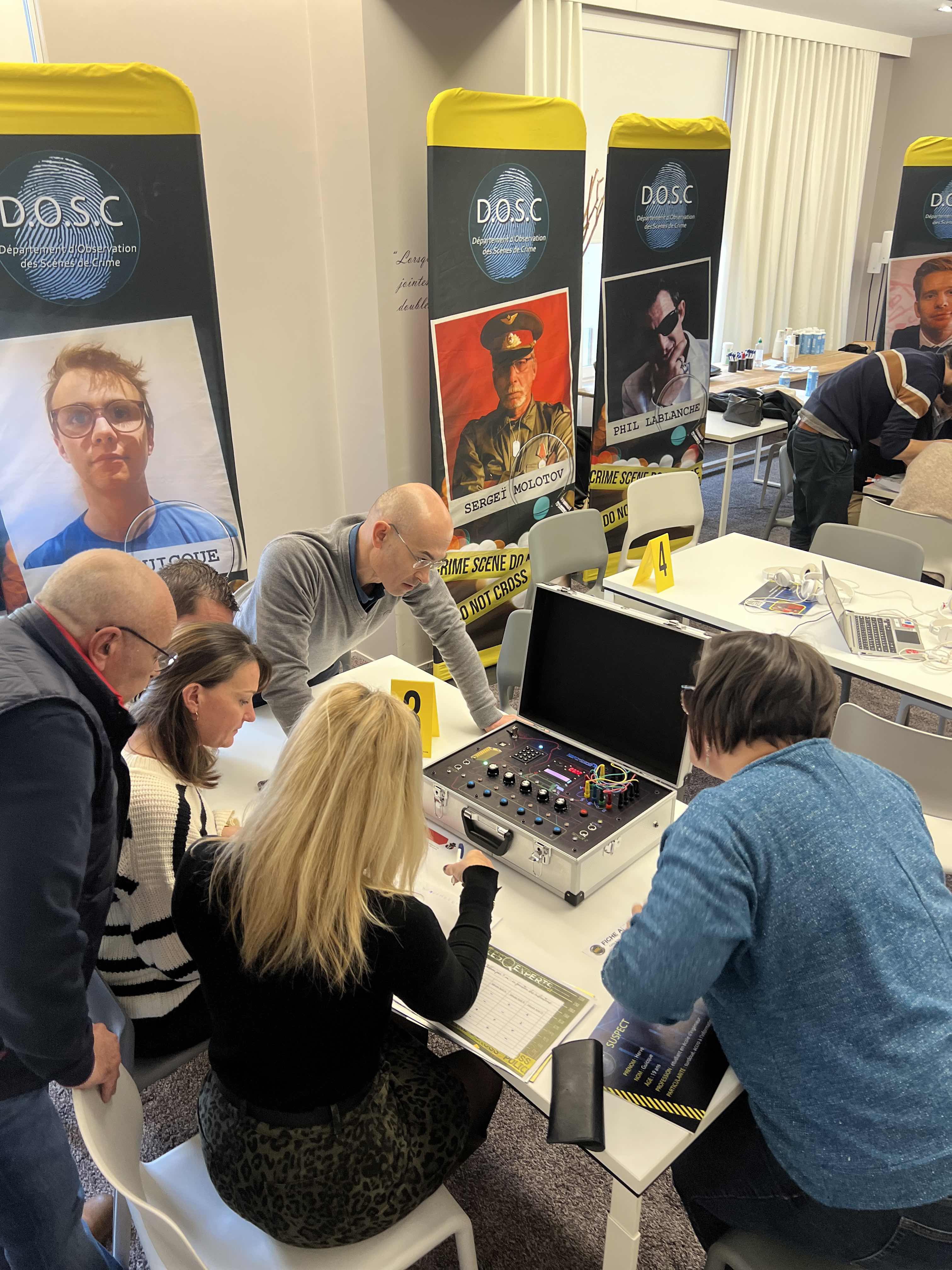
Escape Game in Montréal for teams who need real alignment
INNOV'events designs and runs Escape Game programs for executive teams, HR and communications in Montréal, from 10 to 500 participants. We manage scenario selection, logistics, facilitation, timing, risk controls and reporting—so your event stays on message and on schedule.
Whether it’s a quarterly offsite, a reorg integration, a leadership retreat or a client-facing moment, we deliver a controlled experience with measurable team behaviours—not a “game for the sake of a game”.
Sommaire
In a corporate agenda, entertainment is only “nice” if it protects your objectives: engagement, cross-functional collaboration, and a smooth program where executives don’t lose time. A well-run Escape Game in Montréal creates a shared pressure-cooker moment that reveals decision-making patterns—then turns that into actionable debrief points.
Organizations here expect operational rigour: bilingual facilitation, punctual starts, clear safety rules, and venues that respect privacy. In Montréal, the bar is high because teams have seen many activities; what stands out is flow, relevance to culture, and zero friction for participants.
INNOV'events is a local agency with field experience running multi-room rotations, on-site deployments in offices downtown, and evening formats in event venues across the island. We build the plan like a production: roles, run-of-show, contingency, and a clean handoff to your internal stakeholders.
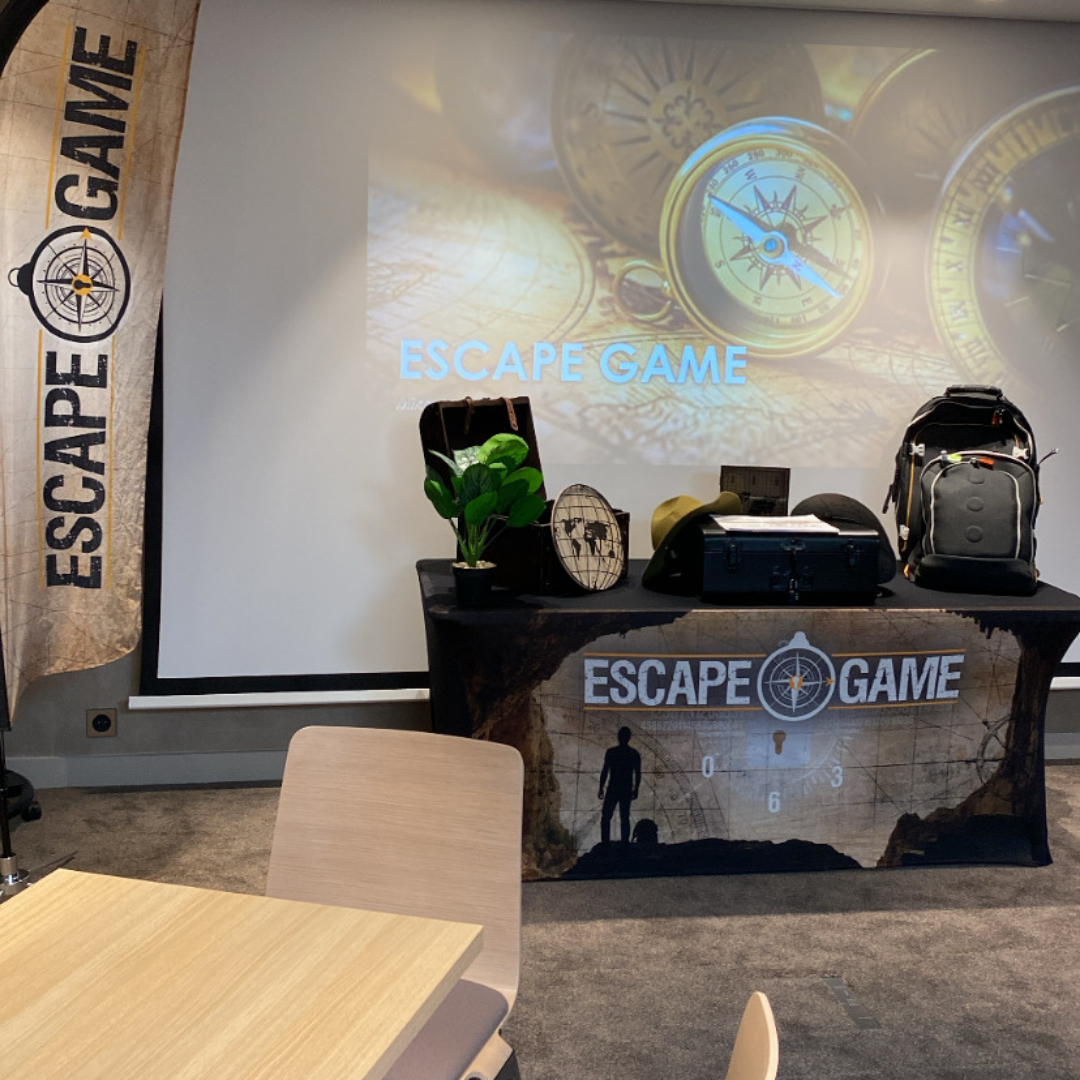
Montréal delivery capacity in numbers
10–500 participants managed through rotation formats (multiple rooms, staggered starts, and parallel facilitation).
2 languages (EN/FR) available for briefings, clue delivery, and debrief—critical for mixed Montreal teams.
15–20 minutes typical buffer built into each rotation to protect the global agenda (registration, transitions, reset).
24–48h to produce a first operational proposal (format, venue direction, staffing, and budget range) after a qualified call.
1 accountable producer on every project (single point of contact + on-site authority on event day).
Corporate Escape Games in Montréal with repeat clients
In Montréal, many of our mandates come from teams who return year after year—often because the first experience ran cleanly, respected internal constraints, and made their leaders comfortable. We work with Montreal-based head offices, regional branches, and North American teams coming in for offsites.
You asked us to use the company names you provided as references; since none were included in your message, we won’t invent client logos. If you share 5–10 names you’re authorized to publish, we can integrate them here in a compliant way (e.g., “annual leadership offsite”, “post-merger integration day”, “client appreciation event”).
What we can say, from real field patterns: recurring clients typically rebook because we protect their internal brand (no awkward moments), we manage participant energy across a long program, and we handle the practical Montreal realities—loading dock rules, unionised building constraints, noise limits, and late-day traffic planning.
 Besoin d’un devis rapide ?
Nous vous envoyons une première proposition sous 24h.
Why choose an Escape Game in Montréal for leadership goals
A corporate Escape Game is not a party trick. Used properly, it’s a structured simulation: time pressure, incomplete information, and cross-functional dependencies—exactly what executives manage daily. The difference is that, in a controlled environment, you can observe behaviours and reinforce the standards you want.
Accelerate cross-team trust without forcing vulnerability: participants collaborate on facts, constraints and priorities, which is more comfortable for analytical profiles and senior leaders.
Surface decision-making styles (consensus vs. directive, risk appetite, who dominates airtime) and make it discussable in a short debrief.
Improve meeting discipline: the game rewards clear role allocation, timeboxing, and communication loops—transferable to recurring operational meetings.
Support change management: post-reorg or post-merger groups often need a neutral space to “practice” collaboration without re-litigating structure or titles.
Strengthen employer brand internally: HR teams use the format to show investment in culture—especially effective with hybrid teams who rarely share a single, focused moment.
Create usable comms content: photos, short clips and quotes that reflect teamwork (not just cocktails), with clear consent handling and brand-safe framing.
Montréal has a pragmatic business culture: people appreciate experiences that are well-produced, respectful of time, and anchored in purpose. When the objective is clear, an Escape Game in Montréal becomes a credible management tool—not a distraction.
What Montréal teams expect from a corporate Escape Game
Local expectations are specific, and they’re not negotiable when you’re dealing with executives, HR and communications. First: punctuality and flow. Downtown schedules often include back-to-back meetings, and the moment you lose control of transitions, you lose the room. We design rotations with buffers, dedicated marshals for hallways/elevators, and reset plans so the experience doesn’t drift.
Second: bilingual delivery. In Montréal, mixed groups are common—even when the company’s official language is one or the other. That means your brief, rules, clue mechanics and debrief must work in EN and FR without slowing down the game. We plan language paths up front (bilingual facilitators, bilingual props, or language-specific rooms) and we test comprehension on the first rotation.
Third: discretion. Many teams use this format during leadership offsites, strategic planning days or client-facing events. Participants need to feel safe that internal dynamics won’t be exposed in the wrong way. We control filming rules, we secure private spaces when required, and we ensure the tone is professional (no humiliating challenges, no “gotcha” moments).
Finally: a realistic understanding of Montreal logistics—parking constraints, loading docks, building access lists, elevator reservations, and rush-hour travel. If you’ve ever watched a VP arrive late because of a last-minute detour around downtown roadwork, you know why we lock timing early and build redundancy into the plan.
Which Escape Game formats work best in Montréal corporate events
Engagement comes from relevance and pacing. In Montréal, teams have strong cultural literacy and quick pattern recognition—so the format must feel intentional. We typically position the Escape Game in Montréal as either the anchor moment of a team day (with a structured debrief) or as a high-energy segment inside a larger event (with lighter insights and strong time control).
Interactive animations in Montréal
Classic multi-room rotations: best for 30–120 participants when you want clean comparisons across teams (same challenge, different approaches). Useful for leadership behaviours and cross-functional collaboration.
Pop-up Escape Game in a ballroom: ideal when the event venue is fixed (hotel, conference centre). Multiple stations + timed rounds reduce waiting. Strong for annual meetings where you cannot move attendees across the city.
On-site office deployment: great for HQ culture building and for teams with tight schedules. We adapt to your meeting rooms and security rules; we plan discreet set-up and fast tear-down.
Hybrid challenge + debrief: for HR-led programs where the objective is skill reinforcement. Shorter game rounds plus a facilitated synthesis keep it executive-friendly.
Art animations in Montréal
Role-based facilitation (in-character game masters): used carefully for corporate audiences. Done right, it increases immersion; done wrong, it feels childish. We calibrate tone to your brand and leadership level.
Sound and lighting accents: subtle design elements that elevate focus without turning the room into a nightclub. Particularly effective in neutral venues like hotels or corporate training floors.
Innovative animations in Montréal
Timed coffee service between rotations: not an afterthought—planned as an energy management tool. We schedule service to avoid bottlenecks and keep executives available for networking.
Post-game cocktail + reveal: works well for recognition events. We integrate a “solution reveal” moment that creates a shared story and smooth transition to speeches.
Gourmand animations in Montréal
Data-light scoring: instead of gimmicky leaderboards, we track simple indicators (time to first breakthrough, number of role switches, hint usage). It supports a credible debrief without over-quantifying.
Brand-safe customization: integrating company vocabulary (values, product lines, internal acronyms) in a way that feels natural. We avoid forced slogans; we choose elements that participants actually recognize.
Client-facing “mystery mission”: for communications teams hosting partners. The game becomes a relationship-building tool, with facilitation designed to be inclusive and not overly competitive.
The best results come when the activity matches your brand posture. A conservative financial institution, a fast-moving tech scale-up and a public-sector organization can all run a Escape Game—but the tone, pacing, and debrief framing must align with how you want your organization perceived in Montréal.
Where to host an Escape Game in Montréal for corporate groups
Venue choice directly impacts perceived quality, confidentiality, and timing. If your agenda includes executives or clients, you need predictable access, controlled noise, and a layout that supports rotations. In Montréal, the right venue also reduces risks linked to traffic, weather, and last-minute building restrictions.
| Venue type | For which objective? | Main strengths | Possible constraints |
|---|---|---|---|
Dedicated Escape Game venues | Team building with strong immersion and reliable puzzle infrastructure | Purpose-built rooms, trained game masters, predictable timing, minimal setup | Capacity limits, fixed scenarios, travel between venue and your main event location |
Hotel ballroom / meeting rooms (pop-up) | Offsites, annual meetings, multi-segment programs where you must keep everyone on site | Centralized logistics, easy AV integration, controlled environment, scalable rotations | Requires strong production to avoid “conference room” feel; reset and storage planning needed |
Your office in Montréal (on-site) | Culture building, onboarding cohorts, post-reorg integration with minimal travel | Zero transport, fits workday schedule, high participation rate, strong internal relevance | Security protocols, elevator/access coordination, noise considerations with other teams on site |
Event venues / lofts in Montréal | Recognition events and comms-driven moments mixing networking + activity | Brand-forward atmosphere, flexible layouts, easier to combine with catering and speeches | Load-in rules, neighbour noise limits, needs strong signage and staff to manage flows |
We strongly recommend a site visit (or at minimum a detailed technical call) before confirming. In Montréal, small details—service elevators, hallway widths, coat check placement, or a strict end time—can make or break the experience. Our role is to catch those issues early and build a plan that protects your schedule.
What does an Escape Game in Montréal cost for companies
Pricing for a corporate Escape Game in Montréal depends on format, staffing, venue model, and the level of production required to protect your agenda. The most common budgeting mistake is to compare a public ticket price with a corporate deployment—corporate requirements typically include private time slots, bilingual facilitation, strict timing, and sometimes confidentiality constraints.
Participant volume and rotation structure: 10–30 people can run as a single wave; 40–150 often requires rotations; 150+ typically needs parallel tracks, more facilitators, and additional reset capacity.
Venue model: going to a dedicated venue is usually simpler; bringing the game to your venue (hotel/office) adds transport, setup, testing, and teardown labour.
Bilingual staffing: if your group needs true bilingual facilitation, we allocate facilitators accordingly and avoid “live translation” that slows down play.
Level of customization: light customization (company terminology, branded briefing) is different from scenario writing, bespoke props, or multi-room narrative arcs.
Schedule pressure: evening load-in limits, short setup windows, or tight agenda integration can increase staffing needs and rehearsal time.
Risk controls and compliance: insurance requirements, security access lists, and venue rules (including noise and fire code) can affect planning time and equipment choices.
From an ROI perspective, the relevant question is not “what’s the cheapest activity,” but “what’s the cost of a program that fails in front of leaders or clients.” A well-produced Escape Game protects your credibility, keeps the agenda on time, and delivers usable outcomes (alignment, integration, engagement) that justify the investment.
Why work with a Montréal agency for your Escape Game
For decision-makers, local execution is about risk reduction and accountability. A team established in Montréal understands venue realities, supplier standards, and the practical constraints of corporate buildings—especially downtown. It also means faster on-site support when something changes at the last minute (a room reassigned, an elevator out of service, a speaker running late).
As an event agency in Montréal, we coordinate the entire chain: supplier selection, staffing, run-of-show, and the “unseen” tasks that keep things smooth (access lists, signage, transitions, contingency).
- Venue and supplier coordination with people who know Montreal standards (loading docks, noise bylaws, building security).
- On-site production leadership: one accountable producer with authority to make real-time decisions to protect timing.
- Faster iteration: site visits, rehearsals, and last-minute adjustments are realistic when your partner is local.
- Brand protection: tone calibration for executive audiences and client-facing groups, with clear rules and professional facilitation.
From an ROI perspective, the relevant question is not “what’s the cheapest activity,” but “what’s the cost of a program that fails in front of leaders or clients.” A well-produced Escape Game protects your credibility, keeps the agenda on time, and delivers usable outcomes (alignment, integration, engagement) that justify the investment.








Examples of Escape Game mandates delivered in Montréal
Our projects vary because corporate realities vary. We’ve run leadership rotations where the objective was to observe collaboration across functions—finance, operations, sales, HR—and then translate that into a short debrief aligned with internal leadership language. In those cases, we design teams intentionally (mixing departments) and we control the competitive element so it doesn’t become counterproductive.
We also deliver office-based deployments for organizations that can’t lose a full day to transport. That requires practical planning: elevator reservations, quiet corridors, signage that respects building standards, and a setup plan that doesn’t disrupt other floors. The success metric is simple: participants start on time, understand the rules quickly, and return to work energized—not confused or delayed.
For communications teams, we’ve integrated Escape Game segments into evening events where brand image matters. The approach is different: shorter rounds, elegant facilitation, and a reveal moment that transitions cleanly into speeches and networking. The goal is to create a shared story while keeping the atmosphere professional in Montréal’s client-facing context.
Common mistakes Montréal companies want to avoid
Underestimating timing: a “60-minute game” rarely fits into 60 minutes door-to-door. Without buffers, you’ll break the agenda and lose executive trust.
Choosing a format that doesn’t scale: a single-room experience for 80 people creates waiting, disengagement, and noise issues in shared spaces.
Ignoring language reality: last-minute translation slows down play and increases confusion. Plan bilingual delivery from the first proposal.
Over-customizing the wrong things: adding logos everywhere doesn’t increase relevance. What helps is a briefing and debrief tied to your culture and objectives.
No contingency plan: a late keynote, a room change, or a delayed bus happens. Without a clear fallback run-of-show, your activity becomes the variable that breaks.
Facilitation that feels amateur: corporate audiences accept play, but they require professionalism—clear rules, respectful tone, and efficient transitions.
Our role is to prevent these risks before they appear—by designing the right format for your constraints in Montréal, and by running the day with production discipline, not improvisation.
Why Montréal clients rebook INNOV'events
Loyalty in corporate events is earned on event day. HR and communications teams come back when they don’t have to “manage the supplier,” when executives feel the program was worth their time, and when there are no awkward moments to explain internally afterward.
Single accountable producer per mandate, from kickoff to on-site delivery.
10–15 minute debrief option included for teams who want business value, not only entertainment.
Structured run-of-show shared in advance with stakeholders (timing, roles, escalation path).

When a client rebooks, it’s because the experience was controlled, on-brand, and easy to approve internally. In Montréal, that repeat trust is the most reliable proof of quality.
Our Montréal delivery process for corporate Escape Games
👉 Step 1 (Montréal): Objective and constraints call
We start with a 20–30 minute call to confirm the business goal (integration, leadership, recognition, client moment), participant profile, language needs, and event context. We also collect constraints that matter in real life: agenda immovables, venue restrictions, security access, and internal sensitivities. This avoids proposing a “fun” format that fails executive expectations in Montréal.
👉 Step 2 (06): Format design and first budget range
We propose 2–3 workable structures (venue-based, pop-up at your venue, or on-site) with a clear capacity plan: number of teams, rotation timing, facilitator count, and the participant journey from arrival to debrief. You receive a budget range and the drivers behind it, so you can arbitrate internally without surprises.
👉 Step 3 (Montréal): Venue and logistics validation
We validate the space: entry/exit flows, waiting areas, sound constraints, storage, and reset zones. If needed, we perform a site visit. We align with your venue contact on load-in, elevator usage, and end times—crucial in Montréal where building rules can be strict.
👉 Step 4 (06): Production plan and staffing
We lock the run-of-show and staffing plan: bilingual facilitators, marshals, registration support, and the escalation path if something changes. We also confirm insurance requirements and any security procedures. For larger groups, we schedule a rehearsal or dry run to ensure resets and transitions are realistic.
👉 Step 5 (Montréal): Event-day execution and debrief
On the day, the producer runs timing and coordinates with your internal lead. Facilitators brief, manage pacing, and keep the experience professional. At the end, we deliver the agreed debrief format and a quick recap to stakeholders (what worked, what to adjust next time), so your team can reuse learnings beyond the activity.
FAQ sur l'organisation Escape Game à Montréal
How many participants can an Escape Game in Montréal handle?
Most corporate formats work smoothly from 10 to 120 in standard rotations. With parallel tracks and additional facilitators, we can scale to 150–500 in pop-up formats (ballroom/venue), provided the space supports multiple stations and clear traffic flow.
How long should we plan for an Escape Game in Montréal?
Plan 90 to 120 minutes door-to-door for one wave: briefing (10–15), gameplay (45–60), transition/photo (5–10), and a useful debrief (10–15). For rotations, add buffers per wave; we usually protect the agenda with 15–20 minutes per rotation for transitions and resets.
Can you deliver bilingual facilitation in Montréal events?
Yes. We can run bilingual briefings and bilingual facilitation, or split teams by language when that improves speed and clarity. The key is planning language early so the game remains fast and fair; live translation inside the room is usually avoided because it slows momentum.
Is an Escape Game in Montréal suitable for executives?
Yes—when the tone and pacing are designed for senior audiences. We avoid childish roleplay, keep instructions crisp, protect timing, and offer a 10–15 minute debrief focused on decision-making, prioritization and communication loops. Executives engage when the experience feels professionally facilitated and respectful of their time.
What information do you need for a quote in Montréal?
We need: date window, participant count, preferred language(s), venue (or area), objective (team building, integration, leadership, client event), and your agenda constraints. With that, we can return a first proposal in 24–48h with format options, staffing approach, and a budget range.
Plan your Escape Game in Montréal with a production-ready team
If you’re comparing agencies, we recommend booking a short qualification call early—especially if your event falls between September and December when Montreal calendars compress. We’ll confirm capacity, the right format for your space and audience, and a realistic run-of-show that protects your leaders’ time.
Send us your date window, approximate headcount, venue context and language needs. INNOV'events will respond with an operational proposal (not a vague brochure): format options, staffing plan, timeline, and budget drivers for your Escape Game in Montréal.
INNOV'events Montréal Agency
Thierry GRAMMER is the manager of the INNOV'events Montréal office. Reach out directly by email at canada@innov-events.ca or via the contact form.
Contact the Montréal agencyToutes nos prestations & animations Montréal, Quebec
Découvrez nos prestations événementielles
- Employee Party in Montréal
- Corporate Christmas Party in Montréal
- Networking Cocktail Event in Montréal
- Shopping Mall Activation in Montréal
- Grand Opening Event in Montréal
- Product Launch Event in Montréal
- Open House Event in Montréal
- Field Brand Activation in Montréal
- Event Catering Service in Montréal
Découvrez nos animations événementielles disponibles au Quebec
- Event Hostess in Montréal
- Escape Game in Montréal
- MasterChef-Style Cooking Workshop in Montréal
- Corporate Magician in Montréal
- Tent Rental in Montréal
- Color Analysis Workshop in Montréal
- Inflatable Games in Montréal
- Valet Service in Montréal
- Soccer Simulator in Montréal
- LED Furniture Rental in Montréal
- LED Branding Activation in Montréal
- Immersive Culinary Experience in Montréal
- Light Painting Activity in Montréal
- Immersive Mystery Night in Montréal
- Promotional Contest in Montréal
- Promotional Materials (POS) in Montréal
- Virtual Reality Experience in Montréal
- Molecular Gastronomy Workshop in Montréal
- Halloween Event in Montréal
- Fireworks Show in Montréal
- Sports Challenge – Giant Games in Montréal
- Professional Event Host in Montréal
- Photo Booth Animation in Montréal
- Santa Claus Appearance in Montréal
- Kids Entertainment in Montréal
- Guided Tour in Montréal
- Urban Rally in Montréal
- Ball Pit Activity in Montréal
- Flight Simulator in Montréal
- Food Truck Rental in Montréal
- World Record Attempt in Montréal
- Surf Simulator in Montréal
- Soccer Simulator in Montréal
- Wine Casino in Montréal
- Makeover Workshop in Montréal
- Perfume Creation Workshop in Montréal
- Acting Workshop in Montréal
- CSR Activities in Montréal
- Archery Activity in Montréal
- Event Security Guard in Montréal
- Wine Tasting Workshop in Montréal
- Mime Performance in Montréal
- TV Game Show Animation in Montréal
- Funfair Event in Montréal
- Crisis Management Workshop in Montréal
- Crisis Negotiation Workshop in Montréal
- Arcade Games in Montréal
- Indoor Skydiving Simulator in Montréal
- Ski Simulator in Montréal
- Racetrack Driving Experience in Montréal
- Introductory Flight Experience in Montréal
- Tasting Experience in Montréal
- Build Your Own Foosball Workshop in Montréal
- 2CV Rally in Montréal
- LEGO Challenge in Montréal
- Casino Night in Montréal
- Interpreter / Translator in Montréal
- Promotional Merchandise in Montréal
- Shuttle / Transportation Service in Montréal